Tag: Kerala

  • PADMA AWARDS 2016

    PADMA AWARDS 2016

    NEW DELHI (TIP): Former Comptroller and Auditor General of India Vinod Rai, actor Rajinikanth, spiritual guru Sri Sri Ravishankar and tennis player Sania Mirza are on the list of 112 Padma awardees whose names were announced on Monday by the government.

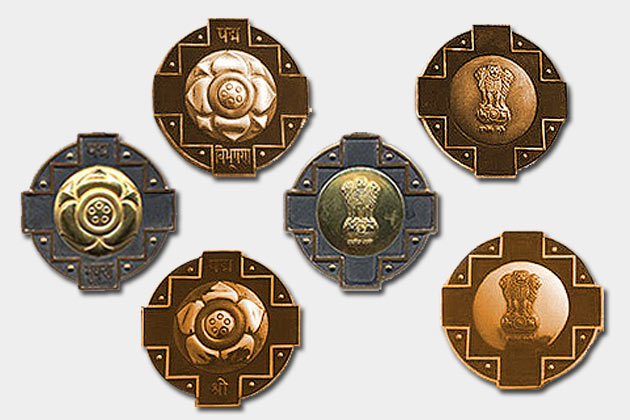
    The awards will be given across three categories: the Padma Vibhushan, Padma Bhushan and Padma Shri. These awards are given on Republic Day, for the over six decades now, to people who the government recognises have excelled in their fields.

    Padma Vibhushan

    1. Shri Rajinikanth    Art-Cinema    Tamil Nadu
    2. Ms. Yamini Krishnamurthi Art- Classical dance Delhi
    3. Smt. Girija Devi    Art-Classical Vocal    West Bengal
    4. Shri Ramoji Rao    Literature & Education-Journalism   Andhra Pradesh
    5. Dr. Viswanathan Shanta    Medicine- Oncology    Tamil Nadu
    6. Shri Shri Ravi Shankar    Others-Spiritualism    Karnataka
    7. Shri Jagmohan    Public Affairs    Delhi
    8. Dr.Vasudev Kalkunte Aatre    Science & Engineering    Karnataka
    9. Shri Avinash Dixit (Foreigner)    Literature & Education
    10. Late Shri Dhiru Bhai Ambani (Posthumous)    Trade & Industry    Maharashtra

    Padma Bhushan

    11. Shri Anupam Kher Art-Cinema Maharashtra
    12. Shri Udit Narayan Jha Art-Playback Singing Maharashtra
    13. Shri Ram V. Sutar Art-Sculpture Uttar Pradesh
    14. Shri Heisnam Kanhailal Art-Theatre Manipur
    15. Shri Vinod Rai Civil Service Kerala
    16. Dr. Yarlagadda Lakshmi Prasad Literature & Education Andhra Pradesh
    17. Prof. N. S. Ramanuja Tatacharya Literature & Education Maharashtra
    18. Dr. Barjinder Singh Hamdard Literature & Education – Journalism Punjab
    19. Prof. D. Nageshwar Reddy Medicine-Gastroenterology Telangana
    20. Swami Tejomayananda Other-Spiritualism Maharashtra
    21. Shri Hafeez Contractor Others-Architecture Maharashtra
    22. Shri Ravindra Chandra Bhargava Public Affairs Uttar Pradesh
    23. Dr.Venkata Rama Rao Alla Science & Engineering Andhra Pradesh
    24. Ms. Saina Nehwal Sports-Badminton Telangana
    25. Ms. Sania Mirza Sports-Tennis Telangana
    26. Ms. Indu Jain Trade & Industry Delhi
    27. Late Swami Dayanand Sarawasati (Posthumous) Others- Spiritualism Uttarakhand
    28. Shri Robert Blackwill (Foreigner) Public Affairs USA
    29. Shri Pallonji Shapoorji Mistry (NRI/PIO) Trade & Industry Ireland

    Padma Shri

    30. Smt. Prathibha Prahlad Art- Classical Dance Delhi
    31. Shri Bhikhudan Gadhvi Art- Folk Music Gujarat
    32. Shri Sribhas Chandra Supakar Art- Textile Designing Uttar Pradesh
    33. Shri Ajay Devgn Art-Cinema Maharashtra
    34. Ms. Priyanka Chopra Art-Cinema Maharashtra
    35. Pt. Tulsidas Borkar Art-Classical Music Goa
    36. Dr. Soma Ghosh Art-Classical Vocal Uttar Pradesh
    37. Shri Nila Madhab Panda Art-Film Direction and Production Delhi
    38. Shri S.S. Rajamouli Art-Film Direction and Production Karnataka
    39. Shri Madhur Bhandarkar Art-Film Direction and Production Maharashtra
    40. Prof. M. Venkatesh Kumar Art-Folk Artist Karnataka
    41. Ms. Gulabi Sapera Art-Folk Dance Rajasthan
    42. Smt. Mamta Chandrakar Art-Folk Music Chhattisgarh
    43. Ms. Malini Awasthi Art-Folk Music Uttar Pradesh
    44. Shri Jai Prakash Lekhiwal Art-Miniature Painting Delhi
    45. Shri K. Laxma Goud Art-Painting Telangana
    46. Shri Bhalchandra Dattatray Mondhe Art-Photography Madhya Pradesh
    47. Shri Naresh Chander Lal Art-Theatre & Cinema Andaman & Nicobar
    48. Shri Dhirendra Nath Bezbaruah Literature & Education Assam
    49. Shri Prahlad Chandra Tasa Literature & Education Assam
    50. Dr.Ravindra Nagar Literature & Education Delhi
    51. Shri Dahyabhai Shastri Literature & Education Gujarat
    52. Dr.Santeshivara Bhyrappa Literature & Education Karnataka
    53. Shri Haldar Nag Literature & Education Odisha
    54. Shri Kameshwaram Brahma Literature & Education – Journalism Assam
    55. Prof. Pushpesh Pant Literature & Education-Journalism Delhi
    56. Shri Jawaharlal Kaul Literature & Education-Journalism Jammu & Kashmir
    57. Shri Ashok Malik Literature &Education Delhi
    58. Dr.Mannam Gopi Chand Medicine-Cardio Thoracic Surgery Telangana
    59. Prof. Ravi Kant Medicine-Surgery Uttar Pradesh
    60. Prof. Ram Harsh Singh Medicine- Ayurveda Uttar Pradesh
    61. Prof. Shiv Narain Kureel Medicine- Paediatric Surgery Uttar Pradesh
    62. Dr.Sabya Sachi Sarkar Medicine -Radiology Uttar Pradesh
    63. Dr. Alla Gopala Krishna Gokhale Medicine-Cardiac Surgery Andhra Pradesh
    64. Prof. T.K. Lahiri Medicine-Cardio Thoracic Surgery Uttar Pradesh
    65. Dr. Praveen Chandra Medicine-Cardiology Delhi
    66. Prof. (Dr) Daljeet Singh Gambhir Medicine-Cardiology Uttar Pradesh
    67. Dr.Chandrasekar Shesadri Thoguluva Medicine- Gastroenterology Tamil Nadu
    68. Dr. (Mrs.) Anil Kumari Malhotra Medicine-Homeopathy Delhi
    69. Prof. M.V. Padma Srivastava Medicine-Neurology Delhi
    70. Dr. Sudhir V. Shah Medicine-Neurology Gujarat
    71. Dr. M. M. Joshi Medicine-Ophthalmology Karnataka
    72. Prof. (Dr) John Ebnezar Medicine-Orthopaedic Surgery Karnataka
    73. Dr. Nayudamma Yarlagadda Medicine-Paediatric Surgery Andhra Pradesh
    74. Shri Simon Oraon Other -Environment Conservation Jharkhand
    75. Shri Imitiaz Qureshi Other-Culinary Delhi
    76. Shri Piyush Pandey Others-Advertising & Communication Maharashtra
    77. Shri Subhash Palekar Others-Farming Maharashtra
    78. Shri Ravinder Kumar Sinha Others-Wildlife Conservation Bihar
    79. Dr. H.R. Nagendra Others-Yoga Karnataka
    80. Shri M. C. Mehta Public Affairs Delhi
    81. Shri M. N. Krishna Mani Public Affairs Delhi
    82. Shri Ujjwal Nikam Public Affairs Maharashtra
    83. Shri Tokheho Sema Public Affairs Nagaland
    84. Dr. Satish Kumar Science & Engineering Delhi
    85. Dr.Mylswamy Annadurai Science & Engineering Karnataka
    86. Prof. Dipankar Chatterji Science & Engineering Karnataka
    87. Prof.(Dr.) Ganapati Dadasaheb Yadav Science & Engineering Maharashtra
    88. Smt. (Prof.) Veena Tandon Science & Engineering Meghalaya
    89. Shri Onkar Nath Srivastava Science and Engineering Uttar Pradesh
    90. Ms. Sunita Krishnan Social Work Andhra Pradesh
    91. Shri Ajoy Kumar Dutta Social Work Assam
    92. Shri M. Pandit Dasa Social Work Karnataka
    93. Shri P. P. Gopinathan Nair Social Work Kerala
    94. Smt. Madeleine Herman de Blic Social Work Puducherry
    95. Shri Srinivasan Damal Kandalai Social work Tamil Nadu
    96. Shri Sudhakar Olwe Social Work Maharashtra
    97. Dr. T.V. Narayana Social Work Telangana
    98. Shri Arunachalam Murugantham Social Work Tamil Nadu
    99. Ms. Deepika Kumari Sports-Archery Jharkhand
    100. Shri Sushil Doshi Sports-commentary Madhya Pradesh
    101. Shri Mahesh Sharma Trade & Industry Delhi
    102. Shri Saurabh Srivastava Trade & Industry Delhi
    103. Sh Dilip Sanghvi Trade & Industry Maharashtra
    104. Dr. Keki Hormusji Gharda Trade & Industry Maharashtra
    105. Late Shri Prakash Chand Surana (Posthumous) Art – Classical Music Rajasthan
    106. Late Shri Saeed Jaffrey (NRI/PIO/Posthumous) Art- Cinema UK
    107. Shri Michael Postel (Foreigner) Art-Archaeology France
    108. Shri Salman Amin Sal Khan (NRI/PIO) Literature & Education USA
    109. Smt. Hui Lan Zhang (Foreigner) Others-Yoga China
    110. Shri Predrag K. Nikic (Foreigner) Others-Yoga Serbia
    111. Dr.Sundar Aditya Menon (NRI/PIO) Social Work UAE
    112. Shri Ajaypal Singh Banga (NRI/PIO) Trade & Industry USA

  • Meet India’s bravehearts

    Meet India’s bravehearts

    NEW DELHI (TIP): National Bravery Award-winning boys and girls drew applause from the audience at the Republic Day parade here for saving human lives in dangerous situations.

    As 23 out of the 25 award winners were driven in a jeep at the parade.

    From a 16-year-old who fought off a tiger to a 13-year-old who lost his life while trying to save his friend from drowning, three girls and 22 boys showed incredible bravery in the face of dangerous situations.

    Bharat Award, the highest of the National Bravery Awards, has been posthumously awarded to Gaurav Kawduji Sahastrabuddhe from Maharashtra who sacrificed his life during an attempt to save four of his friends.

    Shivansh Singh, who lost his life while undertaking a valiant effort to save his friend from drowning in Sarayu river was also awarded posthumously.

    The prestigious Geeta Chopra award has been given to eight-year-old Shivampet Ruchitha of Telangana who displayed exemplary valour in saving two lives when a train hit her school bus.

    Sixteen-year-old Arjun Singh was honoured with Sanjay Chopra Award for displaying outstanding bravery in fighting off a tiger to save his mother. Ramdinthara (15) of Mizoram, who saved two persons from electrocution, was awarded Bapu Gaidhani Award, along with Rakeshbhai Shanabhai Patel (13) of Gujarat and Aromal SM (12) from Kerala.

    While Rakeshbhai saved a boy who accidentally fell into a deep well, Aromal rescued two women from drowning.

    Other recipients of the bravery awards are Kashish Dhanani (Gujarat), Maurice Yengkhom and Chongtham Kuber Meitei from Manipur, Angelica Tynsong (Meghalaya), Sai Krishna Akhil Kilambi (Telangana), Joena Chakbraborty and Sarwanand Saha (Chhattisgarh) and Dishant Mehndiratta (Haryana). Beedhovan, Nithin Philip Mathew, Abhijit KV, Anandu Dillep, Muhammad Shamnad (all from Kerala), Mohit Mahdenrda Dalvi, Nilesh Revaram Bhil, Vaibhav Ramesh Ghangare (all from Maharashtra), Abinash Mishra (Odisha) and Bhimsen from Uttar Pradesh were also given the award.

  • Supreme Court questions the Sabarimala Temple Entry Ban for Women

    Supreme Court questions the Sabarimala Temple Entry Ban for Women

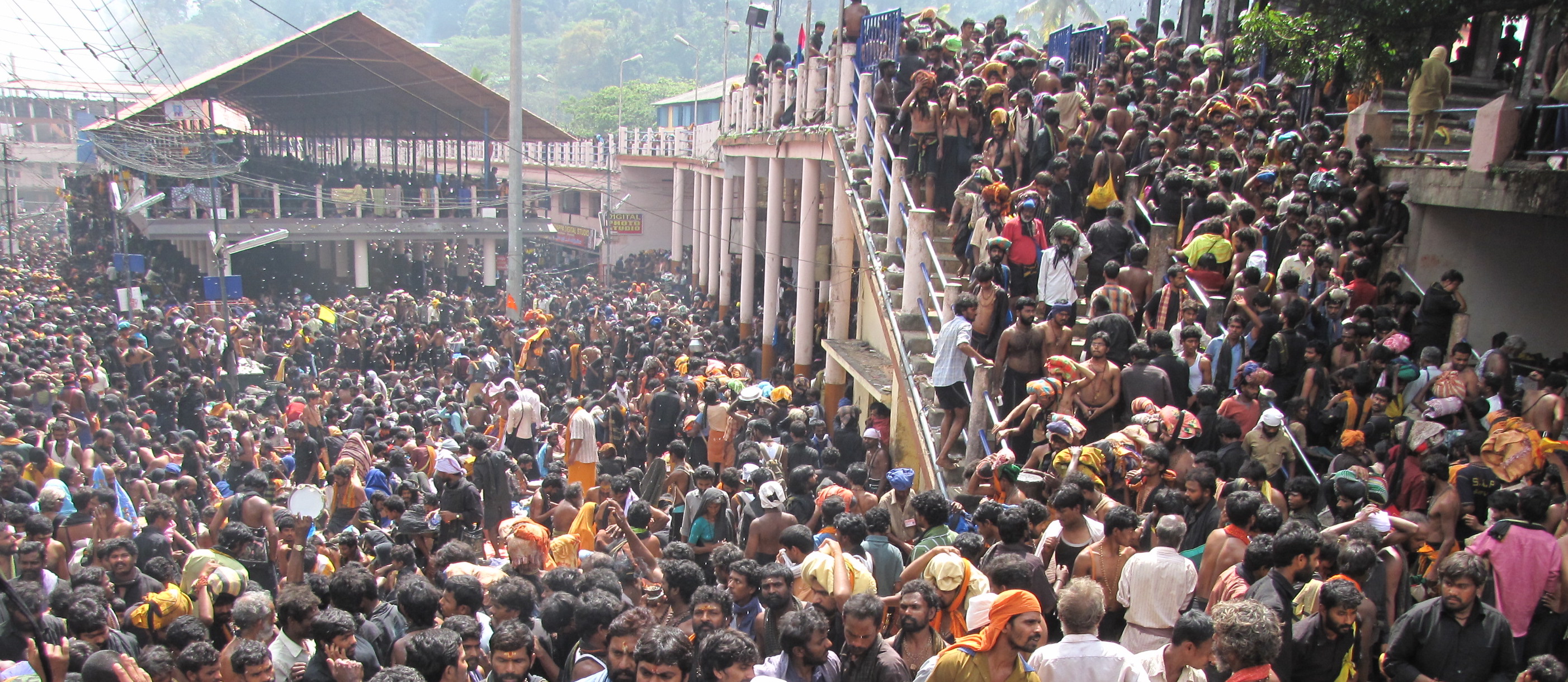
    NEW DELHI (TIP): Supreme Court of India has said that the Sabarimala temple in Kerala has no “constitutional basis” to ban the entry of women.

    The Kerala government clarified that it would not interfere in the customs and traditions of Lord Ayyappa temple at Sabarimala where entry of women in the age group of 10-50 years is banned. “Government has a declared stand on matters like this. It will not interfere on issues of customs and beliefs,” Chief Minister Oommen Chandy said after a Cabinet meeting. “This is the state government stand and it will be conveyed to the Supreme Court,” Chandy added.

    “The temple cannot prohibit entry, except on the basis of religion. Unless you have a constitutional right, you cannot prohibit entry. Anyway, we will examine it on February 8,” a bench of Justices Dipak Misra and N V Ramana said.

    Hinduism regards menstruating women as unclean and many temples impose restrictions on women’s entry during the cycle.

    In November, a group of women students started a campaign to protest against the practice which led to the Supreme Court questioning the state government and Sabarimala temple officials on the ban.

    The Sabarimala temple chief told reporters that he would allow women to enter the shrine only after a machine was invented to detect if they were “pure” – meaning that they weren’t menstruating.

    “A time will come when people will ask if all women should be disallowed from entering the temple throughout the year,” Prayar Gopalakrishnan said.

    “These days there are machines that can scan bodies and check for weapons. There will be a day when a machine is invented to scan if it is the ‘right time’ for a woman to enter the temple. When that machine is invented, we will talk about letting women inside,” he added.

    Meanwhile, the lawyers involved have started getting life threatening calls from within India and countries in the Middle East.

    Advocate Naushad Ahmed Khan, president of the Indian Young Lawyers Association that filed the PIL, and advocate Ravi Prakash Gupta, who is fighting the legal battle for the petitioners, were taken aback when they started receiving calls from cities like Chennai and Kerala apart from Kuwait, Bahrain, Saudi Arabia and other countries.

    Comment by our Guest Writer Karan Beri: First the beef ban and now this!!!! – A chutzpah of epic proportions

    Prayar Gopalakrishnan’s shallow thinking provoked me to think about the direction this Hindutva ideology is taking; and I ask you what is going wrong with our country?

    Will this RSS ideology or diktat cause the ruling party going to take a deaf and dumb stand on everything which is not related to the Gandhis.

    I have no love for the Gandhis and when I voted for Modi, I said to myself – finally a man with guts is at the helm; but he has become Manmohan part 2 (no offense meant) with govt. remote controlled by RSS.

    How can a lead priest suggest that women can only enter the temple after the invention of a machine which can scan and judge the purity of women?

    Purity becomes a biological issue instead of morality, how bizarre is this logic?

    As twinkle Khanna a.k.a Mrs. Funny Bones puts it – if rules have to be followed strictly, then it should be both ways. To get to Sabarimala, men are meant to prepare themselves with 41 days of rigorous fasting and celibacy.

    So along with a machine that scans women, poet and activist Ravi Shankar rightly points out, there should also be a machine that checks if the men entering have adhered to their 41-day regime as well.

    If such a device is invented, perhaps even Mr. Gopalakrishnan and his band of merry men may then be barred entry.

  • Hindu Sena Attacks Pakistan International Airlines Office In Delhi, 1 Arrested

    Hindu Sena Attacks Pakistan International Airlines Office In Delhi, 1 Arrested

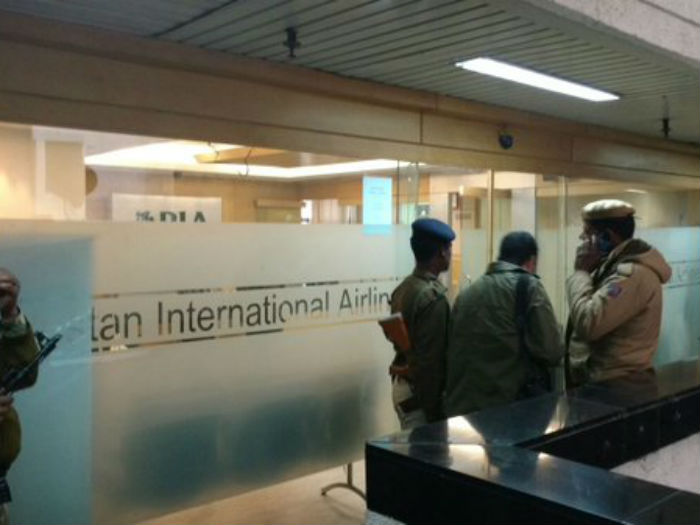
    Members of a right-wing group (Hindu Sena) allegedly on Thursday vandalised the office of Pakistan International Airlines (PIA) near Barakhamba Road in New Delhi area here, following which one person was arrested.

    The four activists of Hindu Sena went to all the three rooms in the office, vandalising furniture and computers. They also scattered some pamphlets while they dismantled a miniature replica of an airplane installed near the reception desk.

    The outfit blamed Pakistan in connection with the attacks at Pathankot and the Indian consulate in Afghanistan.

    “There should be no talks with Pakistan unless they take stern action against people who have caused damage to India and hand over people like Dawood Ibrahim and Hafiz Saeed to India,” it said.

    “The arrested person has been identified as Lalit Singh, who is a member of Hindu Sena. Efforts are on to nab his associates,” DCP (New Delhi) Jatin Narwal told reporters.

    According to the police, the incident took place around 3.15 PM when four Hindu Sena members entered the premises of PIA’s city office on the fifth floor of Narayan Manzil in the outer fringes of Connaught Place.

    By the time police teams reached the spot, three of them had fled and Singh was nabbed. Security was stepped up near the PIA office after the incident. A central security force team was also rushed there later, police said.

    Owning responsibility for the incident, Hindu Sena chief Vishnu Gupta said, “Through this act, the members of our Delhi unit have expressed their anger and sent a message to Pakistan that they should respect our sentiments and keep in mind that we are not weak.”

    Gupta himself was arrested last October, days after he called up the police alleging that “beef” (cow meat) being served at Kerala house canteen here.

    Police intervention in the case, which Delhi top cop B S Bassi refrained from calling a raid, attracted severe criticism from several quarters, including the office of Kerala Chief Minister Oommen Chandy.

    The PIA office here was vandalised in August 2013 too allegedly by a right wing group in the wake of the death of an Indian soldier in a ceasefire violation by Pakistan forces along the LoC.

  • THE COOLEST THINGS TO DO IN PONDICHERRY  Incredible India

    THE COOLEST THINGS TO DO IN PONDICHERRY
    Incredible India

    A destination like no other, Pondicherry is fascinating. Owing to its popularity as a laid back destination, also a great hit with expats and backpackers, this town boasts of a number of things to do. Dabble in surfing, take cooking classes, sweat away stress in a yoga session, go diving amid corals and more?there is plenty to keep your hands busy in this beautiful, once French, settlement. Add to this list, volunteering at one of the many NGOs in town or Auroville and you are in for an experience of a lifetime.

    SHOPPING FOR SOUVENIRS

    Pondicherry is the place for artsy souvenirs and other such stuff. You will fall for handmade lampshades, trinkets, paintings, candles, Indian wear among other items that are sold in the many stores here. Most of these are made with expert precision in the self-sustainable, experimental town of Auroville. A huge hit with backpackers, markets in Pondicherry offer an interesting line up of a number of stores selling such souvenirs. Get ready to pack your bag with a lot of memories from the lanes here.

    POLISH YOUR CULINARY SKILLS

    Wish to dabble in a culinary experience of a different kind in Pondicherry? If yes then this is for you. This town is home to Sita Cultural Centre, hailed as one of the best places in India, for anyone eager to learn South Indian or French cuisine. Their short haul two-three-day cooking courses aimed at foodies is a key highlight of the city. You can choose one or more courses to learn the art of traditional Tamil menu (both vegetarian and non-vegetarian), an exclusive Kerala menu and basics of French cuisine, including some amazing desserts. Be prepared to have folks at home pleasantly surprised with your new found culinary prowess.

    PONDICHERRYYOGA AT YOGANJALI NATYALAYAM

    Learn the ancient practice of yoga at some of India’s best yoga schools in Pondicherry. Choose from vinyasa, hatha yoga, Iyenagar, Bikram, ashtanga or therapeutic form of yoga, Pondicherry has expert teachers for it all. You can also go for day long yoga and meditation retreats for a more spiritual experience. Some of the best names for these classes and retreats are Yogaalayam and Yoganjali Natyalayam. While Yogaalayam is run by Mr RK Gopinath, a yoga practitioner from decades, Yoganjali Natyalayam is a 160 years old institution. Both the places offer beginners as well as advanced courses. You can also go for a teacher’s training course at any of the places. Experience bliss sweeping over as you practice yoga at one of the solitary beaches, waves for a background score.

    PONDICHERRY2VOLUNTEERING AT AUROVILLE

    If travelling for a cause is on your mind, Pondicherry has a lot to offer. Pondicherry’s neighbour Auroville wears the tag of India’s first experiential town, a major centre for volunteers interested in healthcare, education, women empowerment, child development, gender equality, organic farming and more. Other than Auroville, Pondicherry itself has a number of NGOs that take volunteers. The town sees a huge number of travellers from outside India owing to these volunteering activities, making it a perfect opportunity for some cultural exchange as well.

    SURFING ON SERENITY BEACH

    Riding waves is probably the coolest thing to do in Pondicherry. Visiting Kallialay Surf School? run by two brothers fromSpain? should be on the top of your to-do list if adventure is on your mind. The school has won accolades from various tourism boards and is a huge hit with travellers as well. Classes start from around INR 1000 per person and range from beginners to expert level. Lessons on surfing take place in the inviting blue waters of Serenity Beach that lies at a distance of some 10 km from the city centre. While group lessons are more fun, private classes are also available on request. If you have landed in Pondicherry and wish to experience surfing from your wishlist, this is the place to be at.

    Source: Happy Trips

  • 4 Indians vie for the Global Teacher Prize

    4 Indians vie for the Global Teacher Prize

    WASHINGTON (TIP): Four Indian teachers have been shortlisted for a USD 1 million annual prize, dubbed the ‘Nobel Prize for teaching’, for their outstanding contribution to the profession.

    Kerala-born entrepreneur Sunny Varkey, founder of the Dubai-based Varkey GEMS Foundation, launched the prize at the Global Education & Skills Forum 2014 to draw attention to the achievements of teachers.

    The teachers, two from Mumbai, one each from Delhi and Bangaluru, were selected from nearly 8,000 nominations from 148 countries for the Varkey GEMS Foundation Global Teacher Prize.

    The Varkey Foundation Global Teacher Prize 2016, dubbed the ‘Nobel Prize for teaching’ was set up to recognize one exceptional teacher who has made an outstanding contribution to the profession.

    The Indian teachers among the global top 50 include Robin Chaurasiya, founder of Kranti – a non-profit which empowers marginalized girls from Mumbai’s red-light areas, Dhaval Bathia from Genesis Education in Mumbai, Santhi Karamcheti from EDventure Academy in Bangaluru and Rashmi Kathuria from Kulachi Hansraj Model School in Delhi.

    “We were overwhelmed by the huge support the Global Teacher Prize received in its first year. We intend to keep this momentum going as our journey continues to return teachers to their rightful position as one of the most respected professions in society.”

    “The thousands of nominations and applications we received from every corner of the planet is testimony to the achievements of teachers and the enormous impact they have on all of our lives,” said Sunny.

    The top 50 shortlisted teachers have now been judged by a Prize Committee and 10 finalists will be announced in February 2016.

    All the finalists will be invited to Dubai for the award ceremony at the Global Education and Skills Forum (GESF) in March next year where the winner will be announced.

    “However much we achieve in life, we all began learning the basics from a teacher in a classroom. Those that teach, devoting their talents and time to nurturing the talents of others, deserve to be respected and celebrated,” said Oscar- winning actor Kevin Spacey, who sits on the Global Teacher Prize Academy that chooses the final winner.

    The Global Teacher Prize winner is paid the prize money in equal installments over 10 years and the Varkey Foundation also provides the winner with financial counseling.

  • 11-Year-Old Indian-Origin Girl Gets Top Score in Mensa

    11-Year-Old Indian-Origin Girl Gets Top Score in Mensa

    LONDON:  A 11-year-old Indian-origin girl, Anushka Binoy, is one of Britain’s brainiest students. She bagged the highest possible score in the IQ test of Mensa, the largest high IQ society in the world.

    Binoy has joined the one per cent of all entrants to attain the highest mark in the Cattell III B paper supervised by Mensa, the society for people with high IQs.

    Anushka scored 162 to gain membership of the exclusive society, where entry is reserved for Britain’s brainiest 2 per cent.

    Proud father Binoy Joseph, Kerala-born IT consultant, said he always knew his daughter was smart but hadn’t realised quite how remarkable.

    “She loves reading quite advanced books and she memorises a lot of what she reads, so I knew she was pretty special but I was amazed when we got the results back. We’re very proud of her,” he told Get West London.

    “There was no pressure on her, there was no extra preparation, except to prepare for her 11+ examination. She loves reading quite advanced books and she memorises a lot of what she reads. So I knew she was pretty special but I was amazed when we got the results back. We’re very proud of her,” Joseph told HT.

    Hailing from Kottayam district, Anushka’s family has been living in Isleworth in London in 2007. She is a student of St Mary’s Catholic Primary School in Isleworth, west London counts tennis, swimming and playing the violin among her hobbies.

    A Mensa spokesperson said it did not keep a record of members’ IQs so it was impossible to say how rare an achievement this is, but she said it was certainly “exceptional”.

    Cattell III B has 150 questions, often assessing comprehension through passages of texts, while the maximum score that can be achieved is 161 for adults, and 162 for under-18s.

    Both Hawking and Einstein are thought to have an IQ of 160.

    Mensa is believed to be the largest and oldest high IQ society in the world. Membership is open to anyone who can demonstrate an IQ in the top 2 per cent of the population, measured by a recognised or approved IQ testing process.

  • Deadly floods bring Chennai to a Standstill

    Deadly floods bring Chennai to a Standstill

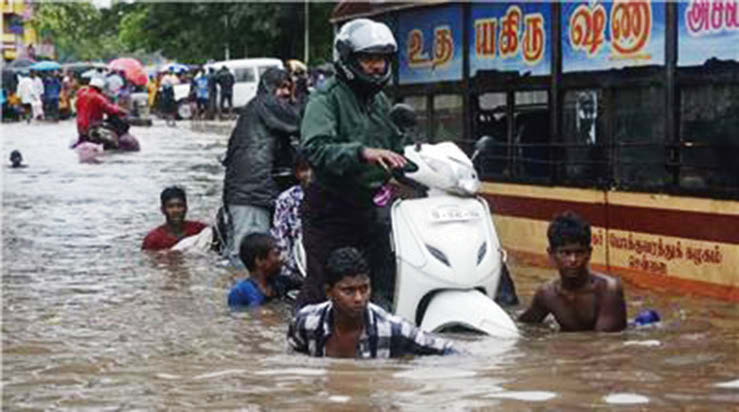
    CHENNAI (TIP) While the world is talking about climate change. Delhi is smog laden; Chennai is flooded. Lakshadweep, Andamans, Kolkata, Mumbai may face annihilation, if earth’s temperature keeps rising at the pace it has been since industrial revolution.

    The severe flooding in Chennai again questions India’s preparedness for extreme weather events like rains, droughts and cyclonic storms which are becoming more frequent and intense.

    Flooding in Chennai, the country’s fourth-largest city, has killed more than 40 people in the past 48 hours, authorities said Thursday, December 3, bringing the death toll to 260 since last month.

    A large-scale rescue operation is under way, amid neck-high water in some areas as Chennai continues to bear the brunt of the deluge. Daily downpours threaten to worsen the already severe flooding situation around Chennai, into early next week after the city endured its wettest December day in more than 100 years of record-keeping.

    Rainfall from both a weak tropical low and moisture from the Bay of Bengal will continue put southern India at risk for new and worsening flooding problems into early next week.

    New flooding problems may develop in eastern Tamil Nadu and far southern Kerala with additional rainfall of 100-200 mm (4-8 inches) expected through Sunday.

    Hundreds of soldiers and sailors from India’s armed forces have been deployed to assist in relief efforts after weeks of heavy rains since the start of November.

    Home Minister Rajnath Singh told lawmakers that the government had released 9.4 billion rupees ($141 million) for flood relief and restoration. On his arrival in Chennai Thursday, December 3, evening, PM Modi announced an additional 10 billion rupees for relief operations. “The Government of India stands shoulder to shoulder with the people of Tamil Nadu in this hour of need,” he said.

    In November, PM Modi had said the torrential rains in Chennai were a result of climate change. “We are feeling climate change’s fast-growing impact now,” he said.

    Others blamed rampant construction, including building in areas close to the city’s rivers, for the flooding. “Development in the city has not taken into account that many parts are low-lying,” said Anil Kumar Gupta, head of policy planning at India’s National Institute of Disaster Management.

    Television footage showed residents in the city wading through muddy waters and complaining about the sluggish pace of relief operations.

    Tamil Nadu’s chief minister, J. Jayalalithaa, was quoted as saying in November that “losses are unavoidable when there’s very heavy rain.”

    “Swift rescue and relief alone are indicators of a good government,” NDTV quoted Ms. Jayalalithaa as saying during the first spell of downpours during the monsoon.

    Chennai’s international airport, closed on Wednesday, November 2, because the runway was under seven feet of water, will remain shut until at least midday on Sunday, according to the state-run Airports Authority of India.

    The rains have left more than 30 aircraft stranded at the airport, the Airports Authority of India said in a statement. Almost 300 passengers had been sent by bus to the neighboring city of Bangalore to catch flights from there, but over 2000 more remained stranded at the airport, the AAI said.

    Anurag Gupta, a senior official in the National Disaster Management Authority, said efforts are underway to ferry stranded passengers in helicopters to a naval air station in Arakonnam, about 60 miles away. They are to be flown from there to other cities.

    The inundated airport, lack of mobility owing to poor roads and a breakdown of telecommunication links has severely hampered rescue operations, Mr. Gupta said.

    The National Disaster Response Force has deployed more than 1,000 personnel and 130 boats to Chennai.

    So far, they have evacuated more than 2,000 people. Meanwhile, on Twitter, social-media users were organizing help through hashtags #ChennaiRainsHelp and #ChennaiRains, with users offering food, medicines and tweeting details of shelters where those affected could take refuge.

  • KERALA’S BACKWATERS

    KERALA’S BACKWATERS

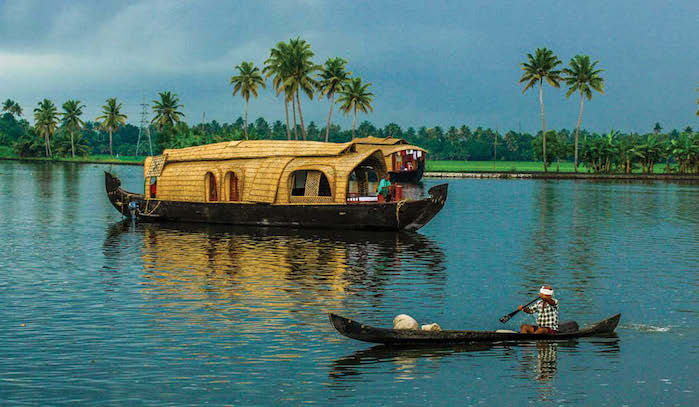
    Kerala’s backwaters—a network of natural waterways, lagoons and lakes—run parallel to its coast. The rich vegetation, biological diversity and gentle pace of village life in the backwaters leave an indelible impression on visitors. The Alappuzha-Kumarakom stretch is the most popular, but there are several other routes which offer quieter yet equally scenic experiences. The backwaters are synonymous with ‘kettuvallams’—houseboats designed like rice barges—but country canoes and public ferries are interesting options for those looking for some local flavour.

    Alappuzha

    Often likened to Venice, Alappuzha, also known as Alleppey, in central Kerala, is the most popular entry point into the backwaters around Vembanad Lake. There’s a pretty beach with an old pier and lighthouse, but the real draw is the network of canals which can be explored on luxury houseboats, speedboats and ferries.

    The Alappuzha District Tourism Promotion Council offers the cheapest cruises, including the popular one between Alappuzha and Kollam which operates every day, from August to January (Rs 300 including lunch for 8 hours). There’s also a daily three-hour-long sunset cruise (Rs 200), canoe rides (Rs 200 per hour) and overnight stays in houseboats (Rs 4,000 for non-AC and Rs 4,500 for AC, all-inclusive).

    Alappuzha is at its festive best during the Nehru Boat Snake Boat Race, generally held on the second Saturday of August every year. The regatta takes place on the Punnamada Lake, and also features ceremonial processions and magnificent floats. The highlight of the event is the synchronised rowing of traditional 30-metre-long snake-boats or ‘chudan valloms’, which have a raised prow resembling a snake.

    Kumarakom

    Part of the Kuttanad region, picturesque Kumarakom is an archipelago scattered on the eastern edge of the Vembanad Lake. This area’s natural splendour and way of life were vividly described in Arundhati Roy’s Man Booker Prize-winning, ‘The God of Small Things’. Kumarakom has a string of luxury resorts including the Coconut Lagoon, Kumarakom Lake Resort and Vivanta by Taj – Kumarakom, located right on the backwaters and guests can rove about the canals on boating and fishing trips. The 14-acre Kumarakom Bird Sanctuary is an ornithologist’s paradise and home to egrets, darters, herons, herons, waterfowls and kingfishers. The sanctuary also welcomes seasonal guests including the elusive Siberian stork, between the months of November and May.

    Kollam

    The backwaters around Kozhikode are also not as touristy and consequently much less crowded. Houseboats can be hired at the pier near the Purrakkattiri Bridge on the Ullery-Perambra road, 10 kilometres outside Kozhikode. The prettiest routes wind along the Canoly Canal, Kallai River and Elathur. An excursion to the scenic Kadalundi Bird Sanctuary, set amidst hillocks and by an estuary, is highly recommended. The sanctuary comprises of a group of small isles where the Kadalundi River meets the Arabian Sea, and is home to over 100 species of native birds and 60 kinds of migratory birds.

    KERALA’S BACKWATERS2Kozhikode

    Less-known than the backwaters of central Kerala, the backwaters around Kozhikode are also not as touristy and consequently much less crowded. Houseboats can be hired at the pier near the Purrakkattiri Bridge on the Ullery-Perambra road, 10 kilometres outside Kozhikode. The prettiest routes wind along the Canoly Canal, Kallai River and Elathur. An excursion to the scenic Kadalundi Bird Sanctuary, set amidst hillocks and by an estuary, is highly recommended. The sanctuary comprises of a group of small isles where the Kadalundi River meets the Arabian Sea, and is home to over 100 species of native birds and 60 kinds of migratory birds.

    KERALA’S BACKWATERS3Valiyaparamba

    The northern backwaters in Valiyaparamba are the quietest of the lot. Around 30 kilometres away from Bekal, Valiyaparamba is located in the Kasaragod district of north Kerala. Fed by four rivers, this sprawling backwater has several small and scenic islands. For a short visit, take a Kerala State Water Transport Development ferry from Kotti near the town of Payyannur, towards Ayitti Jetty.

    The comfortably furnished Bekal Boat Stay offers one of the few overnight houseboat trips to the area.

    You can also stay at the Valiyaparamba Retreat, which has two rooms and two bungalows sandwiched between a pristine beach and the backwaters. It is located 15 kilometres north of the town of Payyannur, and also organises excursions on motor boats and country canoes.

  • India steps up surveillance on ISIS propaganda: over 150 Indians under the scanner

    India steps up surveillance on ISIS propaganda: over 150 Indians under the scanner

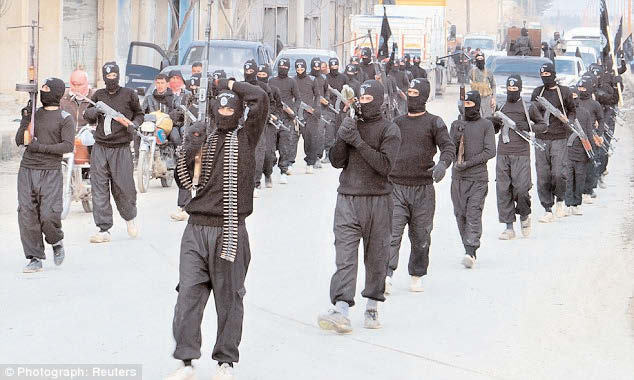
    NEW DELHI (TIP) : Nearly 150 Indians are on the radar of intelligence agencies for actively following Islamic State propaganda and engaging on social media with pro-IS elements, according to government sources.

    A majority of those under surveillance are from the southern states, sources said.

    Though agencies are not planning any action or crackdown on the youth who may be showing a more-than-keen interest in pro-IS websites or social media posts, the tracking is meant to pre-empt the possibility of their becoming indoctrinated enough to join the IS. As and when those under surveillance show signs to radicalization, an intervention may be made to alert their families and facilitate their counseling, if need be.

    Online tracking of pro-IS websites, Twitter handles and Facebook accounts is a key part of India’s counter-IS strategy. Agencies, with the help of experts from the National Technical Research Organization (NTRO), track online traffic related to IS across the country, and constantly flag any unusual trend or activity.

    Sources in the security establishment told TOI that 23 Indians, including about a dozen from the diaspora, had joined the IS and traveled to Iraq-Syria for ‘jihad’. These include four youth from Kalyan, one of whom Areeb Majeed returned to India and is now in custody here, a Kashmiri based in Australia, a Singapore-based Indian, an Oman-based man and one person each from Karnataka and Telangana and a journalist from Kerala.

    Of the six Indian recruits believed to have got killed in IS territory are three Indian Mujahideen cadre including Bada Sajid and Sultan Ajmer Shah who joined the outfit from Pakistan, two from Maharashtra and one from Telangana.As many as 30 Indians, including a woman based in Delhi, have been prevented from joining the IS. Besides, around 8-10 Kerala-origin men and an alleged woman recruiter, Afsha Jabeen, were recently deported by the UAE after they were found to be in touch with active IS members.

    A senior government officer said there was threat of an Indian IS recruit indulging in a “lone wolf” attack here upon return from Iraq-Syria. “Unlike other countries that strip their citizens who join and fight for IS of their passports, we have no such plan. We’d rather let them return and intercept them here,” said the officer.

    In an advisory sent on Monday, the home ministry had warned of the possibility of an IS-sponsored terrorist action on Indian soil. “Though the IS has not been able to establish any significant presence in India, its success in radicalizing some youth, attracting certain sections of the local population or the Indian diaspora to physically participate in its activities or the possibility of piggy-backing on terrorist groups operating in India have opened up the possibility of IS-sponsored terrorist action on Indian territory,” said the advisory issued to all the states and Union Territories.

  • Tipu row: tension grips parts of Karnataka

    Tipu row: tension grips parts of Karnataka

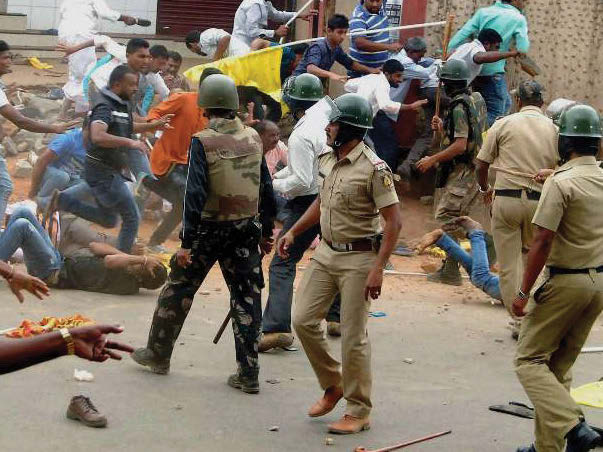
    BENGALURU (TIP): Three days after a VHP sympathizer was killed during violence in Madikeri, right-wing groups blocked roads in several parts of Karnataka and blocked traffic as part of a statewide protest. Skirmishes and stabbings were reported from several parts of the state on November 13.

    Chief minister Siddaramaiah ordered a magisterial inquiry by Mysuru deputy commissioner C Shikha into Tuesday’s violence that left two persons dead. AM Kunjappa, the stand-in Mysuru regional commissioner, had earlier been asked to probe the violence. Since a regional commissioner doesn’t have magisterial powers, the Mysuru DC, who is also a district magistrate, will conduct the investigation.

    Two stabbings were reported on Friday night from Mogaveerapatna and Ullal in Dakshina Kannada. The two persons injured in the attacks are stable. Police have arrested four persons for stoning a place of worship at Bunder. They have been identified as Manju, Sushanth, Guru and Nitin Shetty.

    Traffic on the Bengaluru-Mysuru highway was thrown out of gear as activists blocked it at different points. Protests were simultaneously held in Mandya, Srirangapatna, Maddur and other places. VHP and Bajrang Dal supporters disrupted traffic for an hour in Mysuru, Mangaluru, Tumakuru, Chitra durga, Shivamogga and Hassan districts, police said.

    Most parts of Kodagu, Chikkamagaluru, Hassan and Dakshina Kannada districts came to a standstill. Bike-riding miscreants stabbed a youth on his back and hands at Golithottu in the Uppinangady police limits around 3pm. His condition is said to be stable. The victim was returning home after offering prayers when he came under attack, police super intending SD Sharanappa said. A sub-inspector reportedly suffered injuries in a stone-throwing incident at Puttur. Dakshina Kannada deputy commissioner AB Ibrahim declared a holiday for schools and colleges on Saturday too, and extended the ban orders till 10pm on November 15. In Hassan, Sri Rama Sena chief Pramod Muthalik was arrested hours after a dozen people were injured in stone-throwing incidents in the town late Thursday night. The district administration has clamped prohibitory orders on Hassan town for four days.

    Forests minister B Ramanath Rai announced a Rs 5-lakh compensation to the kin of Harish, a resident of Sarapady, near Bantwal, who was killed by a car-borne gang on Thursday. In Bengaluru, rightwing groups staged a protest in front of Town Hall to protest the CM’s decision to celebrate Tipu Jayanti from this year. The celebration was held on November 10.

    The state BJP rejected the magisterial probe ordered by the CM. The opposition party demanded a CBI inquiry into the Madikeri violence, and a ban on Popular Front of India and Karnataka Forum for Dignity. The party said activists of these outfits were allegedly involved in the violence. “We will take up this issue in the legislature session starting next week,” said Jagadish Shettar. The CM blamed the BJP and RSS for the escalation of tension, and spiked suggestions of Kerala hitmen’s alleged involvement in the Madikeri violence.

    The current weather is a perfect foil to tourism in Kodagu, Chikkamagalur and Hassan, but tourists are having second thoughts on travel plans. Industry sources blamed it on Madikeri violence and traffic disruption.

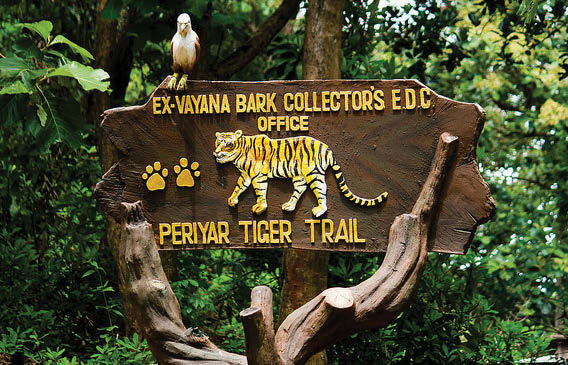
  • PERIYAR TIGER SANCTUARY

    PERIYAR TIGER SANCTUARY

    Periyar Wildlife Sanctuary, locating in Thekkady is the perfect example of nature’s bounty with great scenic beauty and rich biodiversity. In this astounding location of Kerala, the Periyar National Park and Wildlife Sanctuary is considered as the most protected area for the elephants and the tigers. One of the most renowned national parks in South India, the Periyar National Park is set high at the Western Ghat ranges. The protected area is widespread along the area of 925 sq km (357 sq mi). The rest of 350 sq km (140 sq mi) of the core zone was declared as the Periyar National Park in the year 1982.

    The park is being adorned with a picturesque lake at the heart of the sanctuary which is an artificial 100 years old lake at Thekkady and is basically known for its wild elephants and thickly established Western Ghats forests. Many of the intense valleys of Periyar contain tropical evergreen forest with extremely thick tree cover with hardly any sun-rays to get penetrated. These trees are fully grown at the amazing heights of up to 130-140 feet. Some of the areas in the park contain marshy grasslands near the edges of the lake and other water bodies. Spread out across the park are also patches of semi-evergreen forest used as important cover by many of the animal species.

    History

    Earlier was under the reign of the Pandayas in 12th century a dam named Mullaperiyar was constructed across the west flowing river Periyar. As a result, it created an artificial lake in the area which today stands at the centre of the sanctuary, enhancing its beauty to greater extents. With the creation of this lake, the landscape and the features of the valley changed drastically.

    During the 18th and 19th centuries, the reserve was the hunting ground of the Travancore kings, which is today the part of most of the Southern Kerala. In 1899, the area was declared as a forest reserve called the Periyar Lake Reserve with an intention of protecting the hunting areas of the kings from the encroachment of tea plantations. Further, in 1934, the lake reserve was converted into a game sanctuary, the Nellikkampatty Game Sanctuary. The Game Sanctuary covered an area of about 500 sq km. In 1950, some more area was added to create the Periyar Wildlife Sanctuary. In 1978, the sanctuary was included in the Central Government initiative to be known as the Project Tiger and was renamed as

    In 1992, the reserve also became a part of Project Elephant when it was launched by the Central Ministry of Environment and Forests to protect the free ranging populations of wild Asian elephants in various states of India.

    Wildlife in Periyar

    PERIYAR1Apart from Elephants, the other animals can be found in the Periyar Sanctuary are, Wild Pigs, Sambar, Gaur, Mouse Deer, Dole or Barking Deer, Indian Wild Dog and Tiger. There are, now estimated counts of 40 tigers in the Periyar National Park. The major four species of primates are also found at Periyar – the rare lion-tailed macaque, the Nigiri Langur, Gee’s Golden Langur, Common Langur and Bonnet Macaque. Periyar is also being considered as the habitat of the elusive Nilgiri Tahr, which can rarely be seen but commends its presence.

    Flora

    The Periyar Tiger Reserve consists of tropical evergreen, semi- evergreen and moist deciduous forests. Its legal status as a National Park is still pending and only one notification has been issued. It was declared as Project Tiger Reserve in 1978 and the first research for its status was tracked in 1991. The research followed 49 species of mammals, 246 species of birds, 28 species of reptiles, 8 species of amphibians, 22 species of fishes and 112 species of butterflies.

    The terrain of Periyar ripples with lofty peaks of over 1700 meters bordering the north and east. Towards the west, it merges into an extensive table-land of Mount Plateau with an average elevation of 1200 meters. From the edge of this plateau, the land falls steeply to the thickly forested tracts of Sabarimala hills in the Pamba River basin.

    Attractions

    The wildlife lovers and the tourists can enjoy excursion at the zone of the sanctuary and can visit Cradomom Hills and Pandalom Hills that bring the most splendid Kerala’s natural beauty along with visiting the town of Kumily which is a growing town to fetch the spice trades in Kerala, which is the major occupation of its residents. Besides, these two fascinations the tourists can also enjoy boat cruising at the famous Periyar Lake. With boat cruising, the tourists can get to visit the wilds of Periyar Wild Sanctuary by the water’s edge.

    Tourist Places

    Periyar LakePeriyar Lake – the Periyar Lake is situated at the sanctuary area and the reserve is named after this lake only. The tourists can enjoy the full scenario of the sanctuary by boating around this lake.

    Kumily

    A small town near Thekkady and Periyar which is best known for cardamom hills located in the district of Idukki in Kerala. Due to the abundance of presence of holy temples this place attracts both the nature lovers as well as the spiritual people.

    Mangla Devi Temple – the Mangla Devi Temple is located at the distance of 15 kms from the region of Thekkady. With ancient Pandian type architecture at the height of 1337 m on the Kerala-Tamil Nadu border, the temple attracts many pilgrims. Prayers are conducted in this 2000 years old temple only once in a year on a full moon day in between the month of April and May

    Pullumedu

    Located at the distance of 43 kms from Thekkady, Pullumedu is the area famous for wildlife sanctuaries and greeneries. Besides, tourists can also get to visit Shri Ayappa Temple and the Makara Jyothi temple at this region.

    Safari 

    In Periyar one can find tremendous ways to catch the wilderness of the sanctuary. The availability of Jeep Safari, elephant safari, and most charming boat cruises at Periyar Lake will bring the wildlife experience more rewarding. Find the best part of the Boat Cruises here:

    PERIYAR2Boat cruises calls the best option to check out the wilds of Periyar Sanctuary. Today the Periyar Lake is adorned with an excellent boating spot for the tourists. Although it is unusual to see many animals from the boats, still you spot a family of Elephants, Wild Boar, and Sambar Deer by the water’s edge along with some water-bodies. The upper deck is best for wildlife viewing when taking a boat cruise, but better turn up half an hour early to get the best seat. To maximize the chances of sighting, the tourists can also take the 7.00 am boat. Besides, they can also book for their own boat (on renting).

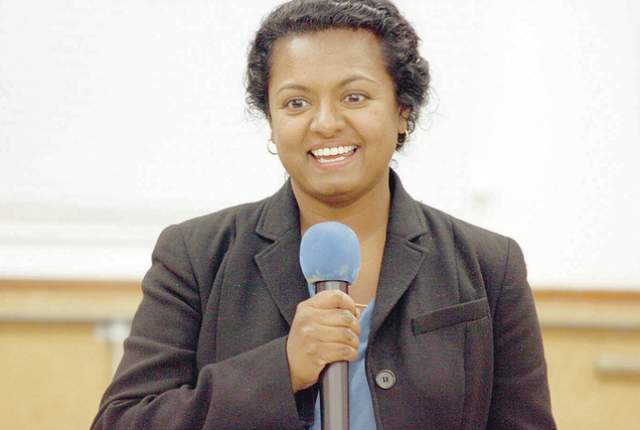
  • Attorney Vini Samuel Elected First Indian American Female Mayor

    Attorney Vini Samuel Elected First Indian American Female Mayor

    WASHINGTON (TIP): In a first, Montesano attorney Vini Samuel was elected mayor of Montesano, Washington by landslide victory making her the first Indian American female mayor in the United States. Samuel received more than 67 percent of the vote, leading 762 to 366.

    “It’s wonderful, it’s exciting and I’m overwhelmed with gratitude,” Samuel said on November 03, 2015. “This has always been about Montesano and coming together as one town and trying to get things done. I think the race went perfectly. We worked really hard and I appreciate the show of confidence. I think we ran a pretty solid, positive campaign. The goal was always about coming together and keeping the city of Montesano as the focus of the conversation,” she added.

    Samuel, who was born in Quilon, Kerala, and raised in Juneau, Alaska, characterized the tiny town of Montesano as “a little piece of Americana.” Samuel attended Western Washington University, where she received a B.A. in history and English literature; she obtained her law degree from Seattle University.

    Samuel, who has previously served on Montesano’s city council, said she was campaigning on the issue of transparency in city politics.

    The tiny town of Montesano in northwest Washington State has approximately 2,300 registered voters.

    All results on November 03, 2015 were preliminary results. Ballots mailed were still valid and ballot drop boxes throughout the county remained uncounted.

    The election will be certified on Nov. 24. However, Incumbent Ken Estes conceded the race soon after the initial tally of votes by the Grays Harbor County Auditor’s office.

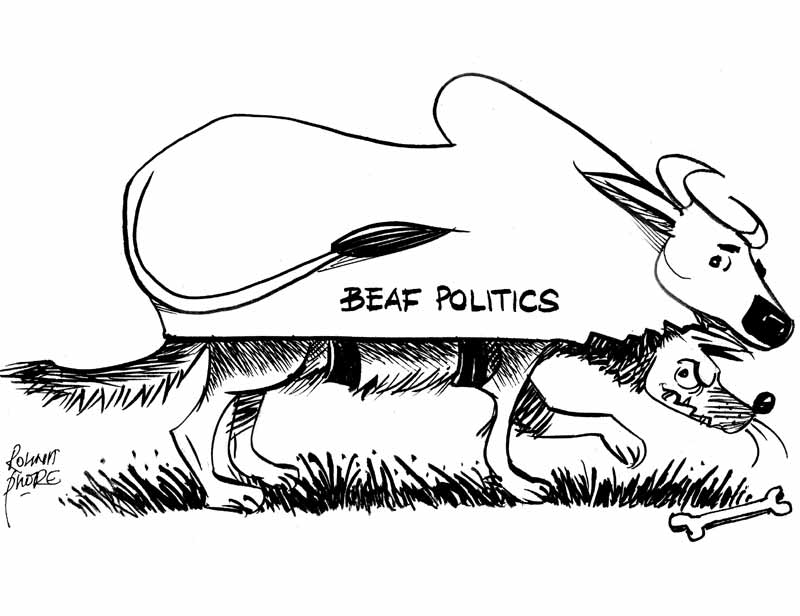
  • Why the Ban on Cow Slaughter is not just Anti-Farmer but Anti-Cow as well

    Why the Ban on Cow Slaughter is not just Anti-Farmer but Anti-Cow as well

    The recent killings of Mohammad Akhlaq, Noman and Zahid Ahmad Bhatt on the claim that they were slaughtering cows is not only an attack on the right to life, livelihood and diverse food cultures but an assault on the entire agrarian economy.

    The cynical fetishisation of cows by Hindutva politicians is not only profoundly anti-farmer but, paradoxically, also anti-cow.

    What these bigots fail to realize is that the cow will survive only if there are pro-active measures to support multiple-produce based cattle production systems, where animals have economic roles. The system must produce a combination of milk, beef, draught work, manure and hide, as has been the case in the rain-fed food farming agriculture systems of the sub-continent over the centuries.

    In meat production systems – whether meat from cattle, buffaloes, sheep, goat, pigs or poultry – it is the female which is reared carefully in large numbers to reproduce future generations, and the male that goes to slaughter. It is only the sick, old, infertile and non-lactating female that is sold for slaughter. In every society where beef consumption is not politicized, farmers known that eating the female bovine as a primary source of meat will compromise future production, and hence they are rarely consumed.

    On the other hand, the destiny of a male bovine is clear: it will either become a work animal (bullock), a breeding bull, or be sold for meat – which is the fate of the vast majority. In the end, the male bovine will reach a slaughterhouse. Villages earlier had a system of having one community breeding bull which roamed around servicing village cows that came to heat. Typically, 70% of a cattle herd or sheep/goat flock is female breeding stock; the rest comprises a couple of breeding males, and young male and female offspring.

    Indian cows do better in Brazil than India

    Today, rural indigenous cows are a rarity in India and community breeding bulls are history. Farmers no longer want to rear cattle, particularly cows. This trend is validated by an analysis of India’s livestock census: Between 2003 and 2012, the annual growth of young female bovines – a key indicator of future growth trends of animal populations -on a compound annual growth rate basis declined from 1. 51% to 0.94% in indigenous cattle and from 8.08% to 5.05% in crossbred cattle. On the other hand, it increased from 2.12% to 3.13% in young female buffaloes.

    Whilst India’s population of fine indigenous cattle breeds keeps decreasing year by year, Brazil’s cattle populations of Ongole, Kankrej and Gir breeds – imported from the Indian sub-continent nearly 200 years ago – keep increasing. We have laws to ‘protect’ cows, ban cow slaughter and ban the consumption of beef: the whole of the North-East, Kerala and West Bengal have no restrictions on cattle slaughter, nine states allow all cattle slaughter except cows, and the rest have a ban on all cattle slaughter. In Brazil, on the other hand, beef-based cattle production systems are the driving force behind its flourishing indigenous Indian cattle breed populations.

    Between 1997 and 2012, according to the government’s successive livestock censuses, India’s indigenous cattle population declined by over 15% from 178 million to 151 million, less than what we began with at the time of independence (155 million), when all cattle were indigenous breeds. Fifty years of sustained white revolution policy interventions to enhance milk production have actively advocated and financed replacement of indigenous cattle with high yielding breeds. Cross breeds like Jersey and Holstein Friesan now comprise some 21% of India’s cattle population. But even India’s total cattle population, including crossbreds has increased by a mere 23% (from 1951 to 2012) and stands at 190 million.

    In stark contrast, Brazil’s cattle population -comprising 80% pure Indian cattle breeds
    (Indicine) or Indian cattle breed crossed cattle – grew by 74% from 56 million in 1965 to 214 million today. The Gir, which is the favored dairy breed, comprises 10% of Brazil’s cattle population. The Ongole (or Nellore), which is the mainstay of beef production, makes up most of Brazil’s cattle population.The Ongole of India, however, is a threatened breed in its own homeland.

    While Brazil continues to have acres of lands for their cattle to graze, here in India we have successfully done away with common grazing lands where animals can be put to pasture. In the land of the Ongole, pre-2014 united Andhra Pradesh, permanent pastures and grazing lands declined by 78% from 1.17 million hectares in 1955-56 to 0.56 million hectares in 2009-10. The rate of decline was much faster in the post economic liberalization decades of 1990-2010 – a time of aggressive industrial growth and Hindutva influence.[1]

    As bullocks are displaced, less cows are reared

    In today’s India, cattle have been displaced from their productive role in agricultural livelihoods: tractors have replaced bullocks/draught animals that were used to plough, thresh, and anchor rural transportation. India’s population of work cattle or bullocks declined by 28% between 1997 and 2012. This has been the result of economic policies that have strived to industrialize, and “green” and “white” revolutionize our agriculture and livestock production.

    Chemical fertilizers have replaced manure. A shift from diverse food cropping systems of cultivation to mono-cropped production of commodity crops like cotton, sugarcane, and tobacco, or palm oil has depleted crop residues as a rich fodder source, and made bullock ploughing virtually redundant. The bullock is no longer needed to extract oil from oil seeds (in any case we now import 60% of our edible oil and even poor oil millers have closed shop), extract juice from sugarcane, pull water out of wells or be the main mode of rural transportation.

    Hence why should farmers keep indigenous bullocks? Or rear indigenous cows for that matter, which produce bullocks? Once animals stop having an economic value, they stop being reared. Simple.

    Lessons from a growing buffalo population

    Contrast the sorry state of India’s cattle with its thriving buffalo population. Our buffalo population has grown by 21% since 1997. Why? Very simple: buffaloes anchor milk and beef production in India. We are the 2nd largest exporters of buffalo beef in the world, with an annual export of nearly 2.4 million tons. Bovine meat contributes nearly 60% of total Indian meat production, as against small ruminants (15%), pigs (10%) and poultry
    (12%). Buffaloes survive well on limited, coarse, less nutritious crop residues, whilst cattle need more green fodder and green grass. This is evidence itself that given all other conducive input factors for the animal to be reared (primarily feed, fodder, water, ecological adaptability, knowledge, labor, health care and a remunerative livelihood), allowing the slaughter of an animal actually drives its numbers up. The same holds true for goat and sheep. Between 1997 and 2012, the sheep population increased overall by 13%, and goats by 10%, despite a 33-38% slaughter rate.

    In short, the secret to flourishing animal populations appears to be meat consumption.

    The highly industrialized beef producing nations of the world – the United States, Australia and New Zealand – produce beef by replacing large acres of land where food could be grown to feed human beings, with animal feed. Regrettably, in Latin America, large beef corporations are steadily converting huge tracts of natural prime Amazonian forests, home to indigenous peoples, into grazing lands: in short these systems are unsustainable, contributing hugely to carbon emissions.

    India’s beef production on the other hand, is one of the most sustainable and least ecologically damaging in the world. Beef is a by-product of buffalo rearing livelihood practices, and not its primary objective, which continue to be milk and milk products. Whilst male buffaloes end up in the slaughter houses, farmers also sell their infertile, old, diseased and non-lactating females. Our animals are not fed on predominantly grain-based concentrate diets, but on crop-residues, and natural vegetation.

    Allow slaughter to save the indigenous cow

    Threats to impose a nationwide ban on beef consumption and cattle slaughter also ignore the close relationship between those who eat beef and those who look after cattle. In India, cattle have always been relished and their meat is a critical source of nutrition for various communities – including Adivasis, Dalits, Christians, Muslims and several other castes (many of whom are too scared to admit they eat beef).

    A Dalit social activist asserts: “The Brahmins and other agraha (upper) castes who are cow worshippers have never in their lives ever grazed the animal, fed it, cleaned its dung or buried its carcass. For all that they have used our labor: we graze, we feed, we clean the sheds and dung, we bury the carcass, and we eat beef.”

    “The so-called upper castes visit our hamlets in search of beef, and are scared to publicly acknowledge their beef eating practices”, says an adivasi community leader from Telangana. “This year, Hindu families hired cows from us for the Godavari Pushkaralu, because there are no cows left in caste rural Indian villages, where people worship cows and shun beef ! We adivasis, on the other hand, eat beef, plough our fields with cattle, and farm with cattle manure; therefore we continue to own cows and cattle herds!”

    In this land of the holy cow, depleting grazing resources of common lands and forests, disappearing roles for indigenous cattle breeds in agriculture production as providers of milk, energy, manure and beef, policies to replace indigenous breeds with crossbreds, coupled with a ban on slaughter of cattle in several parts of India, have led to plummeting cattle populations and the cow fast becoming a creature of the past.

    There is only one conclusion to be drawn. If you really want to protect the cow, do not ban beef, cattle slaughter and the ecological culture that sustains the bovine economy.


    (The author has a Masters in Animal Breeding and Genetics from the University of California, Davis, USA. She is a trained veterinarian and works with the Food Sovereignty Alliance, India. He can be reached at Sagari.ramdas@gmail.com; foodsovereigntyalliance@gmail.com.)

    [1] Compendium of Area and Land Use Statistics of Andhra Pradesh 1955-56- 2004-05. Directorate of Economics and Statistics: An Outline of Agricultural Situation in Andhra Pradesh 2007-08. DES. Hyderabad.

  • Six Indian American Malayalees to be honored by Kerala Center, NY

    Six Indian American Malayalees to be honored by Kerala Center, NY

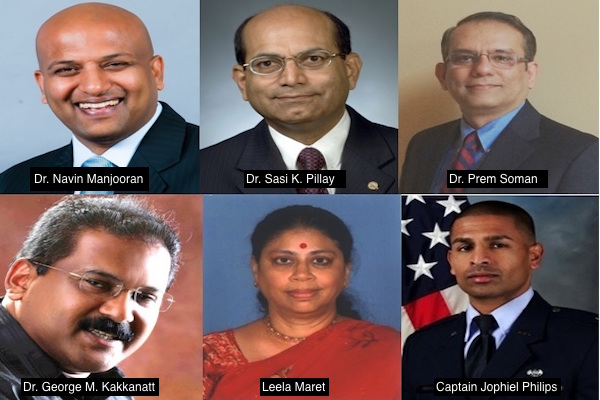
    The Indian American Kerala Cultural and Civic Center will honor six Indian Americans for outstanding achievement in their field of specialization or for their service to the society.

    The awardees were selected by a committee consisting of four members headed by Kerala Center Board Member and Trustee Dr. Thomas Abraham, according to a press release.

    “Every year we invite nominations and the committee has to make a unanimous choice for a candidate in a category to be selected to receive the award and this year is no different from previous years in terms of their achievements,” said Dr. Abraham, in a statement.

    “For the last 23 years, the Kerala Center has recognized the most outstanding achievers among the Indian American Kerala Community and they are role models for our community,” said Kerala Center President Thambi Thalappillil.

    Kerala-Center-press-releaseThe awardees will be honored at the Kerala Center’s 23rd Annual Awards Banquet on Saturday, November 7th starting at 6.30 p.m. at World’s Fair Marina in Flushing (Queens, New York City, address: 1 World’s Fair Marina, Flushing).  The chief guest is Ambassador Dnyaneshwar Mulay, Consul General of India in New York and the keynote speaker is Mr. K. Mohandas, former Secretary of the Ministry of Overseas Indian affairs and Shipping, Govt. of India.

    This year’s honorees are: 
    Recognition for Outstanding Contribution in Engineering – Dr. Navin Manjooran 

    Dr. Navin Manjooran ​is ​the Global Director (Energy) for Siemens AG ​ and ​​is responsible for the​  entire Siemens energy portfolio. He also serves as an engineering professor at Virginia Tech. Navin graduated with a BE degree from NIT (Warangal), a MS from University of Florida (Gainesville, USA), Ph.D. from Virginia Tech (Blacksburg, USA), all with the highest honors and later on completed MBA from University of Chicago. Navin has 11 patents/ disclosures, 9 books, 37 publications and 51 presentations at national/international conferences. He has received several awards including TMS Young Leader, ASM International Leadership Award ​and ​Siemens Performance Award. ​Navin is a Member of the US Technology Advisory Board and ​Virginia Tech Univ. Board  and the Board of Trustees of Univ. of Chicago.

    Recognition for Outstanding Contribution in Information Technology – Dr. Sasi K. Pillay

    Dr. Sasi K, Pillay serves as the CIO of the University of Wisconsin System comprising 26 campuses where he has started several initiatives such as the Innovation Program and Business Intelligence,  while managing a portfolio of shared services totaling $45million.  In his prior roles at NASA, Dr. Pillay oversaw the IT innovation program consisting of global crowd sourcing and the launch of the innovation program which have won several national awards.  He is the recipient of the NASA Outstanding Leadership Medal, NASA Exceptional Service Medal and the U.S. President’s Rank Award as a Meritorious Executive.

    Recognition for Outstanding Contribution in Medicine – Dr. Prem Soman

    Dr. Prem Soman MD, PhD, FRCP (UK), FACC is Director of Nuclear Cardiology, and Associate Professor of Medicine, and Clinical and Translation Science at the University of Pittsburgh Medical Center. He is internationally recognized for his research contributions to the field of nuclear cardiology, with more than 100 publications  and text book chapters. He has coauthored national guidelines on imaging and Appropriate Use Criteria. Dr. Soman is the current chair of the Imaging Council of the American College of Cardiology, Vice-President elect of the American Society of Nuclear Cardiology, and Immediate Past President of the Cardiovascular Council of the Society of Nuclear Medicine and Molecular Imaging.

    Recognition in Journalism and for Community Service – Dr. George M. Kakkanatt

    Dr. George Kakkanatt, a former US Air Force Captain is a professional psychotherapist. George is one of the founding members and former Global General Secretary of the World Malayalee Council (WMC), Green Kerala Foundation, and ALTIUS youth program. He is the President of the South Indian US Chamber of Commerce and also the President of the Houston Chapter of India Press Club of NA.  George is the Managing Director and Editor in Chief of Azchavattom Malayalam News weekly published from Houston. George received several awards for his creative commitment to serve the global community.

    Recognition for Community Service  Leela Maret


    Leela Maret has been doing superb job as a volunteer in many community organization for the last three decades. Working as a scientist for last 29 years at New York City’s Environmental Protection, Leela is also adjunct lecturer in Bronx Community College. Leela serves as Recording Secretary of Local Employees Union 375 for the city, delegate for Central Labor Council, FOKANA National Women’s Forum Chair, Vice President of South Asians for Labor and Vice President of INOC. She had served as the President of Kerala Samajam and in other capacities of several other organizations including FOKANA. She has helped to organize Asian Heritage, Diwali function at New York City Hall, Kerala Piravi and other events in Indian Consulate, actively participated in Voter Registration, taught Malayalam at St. John’s University, and took part in the testimony of redistricting of Richmond Hill to unite South Asians. She is the recipient of various Community awards such as NYC Comptroller’s Community Service award, and two Pravasi awards.

    Recognition for Service to the Nation – Captain Jophiel Philips – Service to the Nation

    Capt. Jophiel Philips was born in Queens, New York, were he developed a passion for football leading him to earn a football scholarship at St. Francis Prep High School.  He went on to play four years of college football, where he started at Wide Receiver.  After coaching football at the University level, Capt Philips went to law school where he won numerous academic awards and was chosen to give the commencement speech.  Capt Philips is a Judge Advocate General in the U.S. Air Force.  During his recent deployment, he was awarded the Purple Heart, as well as the Bronze Star, for his actions in protecting service members from harm, after an insurgent attack- where eight of his comrades died.

  • India’s leading Ayurveda destinations

    India’s leading Ayurveda destinations

    From being the ‘science of life’, Ayurveda has become the ‘slice of life’ for many with the advent and positive growth of rejuvenation centres and Ayurvedic resorts in the country.
    People are willing to experience a ‘healthier’ side to an otherwise indulgent holiday by touring healing resorts as an escape from the mundane, hectic everyday existence. These resorts located at the outskirts of the cityscape over sprawling and pristine forests lure tourists into its peaceful and quiet edifices.

    Let’s discover and learn about some of the best Ayurveda resorts our country has:

    Somatheeram Ayurveda Resort, Kerala: Nestled on a hillock a few kilometres south of the Kovalam beach is the world’s first Ayurvedic resort Somatheeram. Spread across a wide expanse of greenery, Kerala prides in Somatheeram as a getaway destination for those in search of an Ayurvedic haven away from the cacophony of city life. Established in 1985, Somatheeram has emerged as one of the frontrunners in encouraging a culture of Ayurvedic holidays and meditation tours among travel enthusiasts. The serenity of the resort by the sea, goodness of traditional Ayurvedic therapies and a healthy diet routine help people unwind here.

    Acute health conditions of paralysis, fluctuating levels of blood pressure, arthritis, high cholesterol and breathing problems are first examined by a team of yoga experts and doctors after which a series of corresponding healing exercises and diet regime ensue.

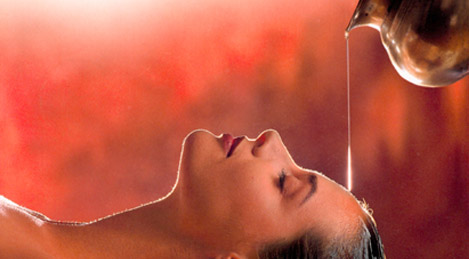
    Massage therapies: The massages here at Somatheeram serve more than a short-term purpose; the sessions are extensive and extend till days. ‘Pizhichil’ for instance is a special massage that uses a variety of herbal oils (lukewarm) and has been effective in curing diseases like paralysis and nervous disorders. Every session lasts 60-90 minutes over a span of 7-21 days. People with diabetes and obesity can go for the Ayurvedic ‘Abhyangam’ treatment which is again a type of oil massage for 45 minutes a day. ‘Nasyam’, ‘Snehapanam’ and ‘Kizhi’ are among the many treatments that have been proven medically capable of battling severe skin diseases, leukemia and sports injuries.

    Yoga classes and boat tours in the backwaters too are included in Ayurveda packages at Somatheeram.

    Where: Somatheeram Ayurveda Resort, South of Kovalam, Thiruvananthapuram. About 21 kms from International Airport at Thiruvananthapuram and about 9 kms south of the famous Kovalam beach.

    1)Ananda in the Himalayas, Uttarakhand: As the name suggests, the experience too replicates a blissful journey amid the towering and guarding Himalayas. Ananda focuses on an interesting and fruitful blend of Ayurveda and Aromatherapy with contemporary spa technology for complete wellness of the human body. Located 260 kms north of New Delhi, Ananda stands tall around Maharaja’s palace estate with the views of the Ganges on one side and the mountain peaks on the other pleasing the tourist’s eyes, mind and spirit upon waking up every morning. Yoga pavilions, landscaped gardens, terraces facing a clear sky, spas equipped with hydrotherapy services, a golf course on its Himalayan axle and Rejuvenation Cuisine are some of the many distinguishing features of the resort you can indulge in.
    Ayurveda, yoga & meditation:

    European and Thai treatments are employed in the spa boutiques here at Ananda. The Viceregal Hall is the quaint hillside garden that doubles as a refuge post an exhaustive yoga session. Marvel at the breathtaking panorama as you sip on the Himalayan tea. For couples, the Kama Suite with steam shower and exclusive massage facilities can surely add a sensual flavour to the Ayurveda tour. The Ayurvedic treatments are fashioned according to the Himalayan conditions. Use of less oil, slow and synchronised massages and regulation of a nutritious diet go into the making of customised treatments for guests under the supervision of physicians and therapists. An aftercare programme is planned for the benefit of the client at the last leg of the Ayurveda trip.

    Where: The Palace Estate, Narendra Nagar, Dist. Tehri-Garhwal, Uttarakhand

    Air: A 45-minute flight from New Delhi to Dehradun Jolly Grant airport followed by a one-hour drive.

    Train: A four-hour journey from New Delhi to Haridwar railway station followed by a one-hour drive.

    Road: The driving time between New Delhi and Narendra Nagar is approximately five and a half hours.

    1)Devaaya, The Ayurveda and Nature Cure Centre, Goa: If beaches and nightlife are the first things that come to mind upon hearing Goa, then probably it’s time to widen your horizon. As much as it is a ‘party’ destination, Goa as a city has carved an identity that appreciates art, culture and holistic living. And speaking of holistic living, the city has emerged as one of the potential tourist spots on the map of Ayurveda tourism in India. Coconut palms swinging to the rhythm of the breeze and the Mandovi River flowing alongside one of the islands in Goa complete the scenery at Devaaya Ayurveda Centre in Goa. Naturopathy becomes a way of life at this Ayurvedic paradise that brings together the essential elements of ‘Panchakarma’ treatments with yoga, meditation, music, lifestyle correction, diet planning and medicines for tourists. The centre has been designed on the science of ‘Vaastu Shastra’ that adds to the harmony of the overall rejuvenation process.

    Where: Devaaya – Ayurveda & Nature Cure Centre, Divar Island, Goa

    1)Kairali Ayurvedic Health Village, Kerala: The captivating beauty of the Western Ghats and the rich flora define the picturesque town of Palakkad in Kerala which is home to the Kairali Ayurvedic Health Resort. Ram Mohan, Vice President of the Resort is proud to declare how the Ayurveda village has travelled miles over the recent years, “Today, we have over 20 centres abroad apart from the 25 centres across India.” Ask him about the future of Ayurveda tourism in India and he has his reservations, “The Indian mindset is still not ready to embrace the culture of Ayurveda in a manner that the European market has possibly built an industry around. Patience is a virtue we have still not mastered the art of. It is believed that Ayurveda is an expensive affair but so is allopathy. If we are willing to shed a fortune on a bypass surgery then why not spend half the money on a recreational therapy that will guarantee the elimination of the ailment from its root?”, asks Ram. The system of Ayurveda he asserts is “not superficial but comes with permanent and effective results.”

    Agrees Niika Quistgard, Founder and Director Rasa Ayurveda Traditional Healing Centre for Women, Kerala and says, “People are often dissatisfied with allopathic medicines and are wary of the side-effects of drugs; natural alternatives and organic methods of healing are the preferred options. At Rasa Ayurveda we offer free consultation and treatment to women. All remedies are derived from herbal plants, a tradition that dates back to the era of our grandmothers,” adds Niika.

    The Leela, Udaipur:

    The city of lakes and palaces, The Leela’s ESPA Spa is yet another hot spot for Ayurvedic retreat. The ‘haveli’ style architecture of spas, tents done up in shades of royalty and opulence and the welcoming gardens contribute to the development of a relaxed mind and soul of the human body. Tricia Bannister, Group Spa Manager, says, “Our clientele has grown from in-house guests to both in-house and local guests requesting for a wellness experience set amidst the cultural heritage of Rajasthan.” From hot stone massages, facials, yoga and meditation, The Leela also features private yoga studio for visitors. On being asked if Ayurveda treatment is a rich man’s pastime Bannister replies, “There is a range of Ayurvedic resorts available for spa travellers, from more relaxed, to 5-star properties. Ayurveda tourism is growing dramatically in India; both for pure Ayurvedic treatments as well as Ayurvedic-inspired experiences. Travellers from all income-levels are curious to experience new wellness treatments,” adds Tricia.

    Where: The Leela Palace, Lake Pichola, Udaipur

  • Delhi Police raids Kerala government canteen over #BEEF causes outrage

    Delhi Police raids Kerala government canteen over #BEEF causes outrage

    New Delhi Oct 27: The canteen of ‘Kerala House’ which is run by Kerala Government in New Delhi was raided yesterday by police after a rightwing Hindu group called ‘Hindu Sena’ complained it had beef on its menu.

    Police said they only went to Kerala House as a “preventive measure”, not to investigate the complaint or take meat samples.

    Kerala is one of the few Indian states in which cow slaughter is legal. But most states, including Delhi, ban the slaughter of cows, considered sacred by India’s majority Hindu community.

    Kerala Chief Minister Oommen Chandy on Tuesday took strong exception to Delhi Police action at state-owned Kerala House in Delhi over beef served at its canteen. Chandy told the media in Kozhikode that the police should have shown restraint. “The state guest house is not a hotel. The police should have followed certain amount of guidelines while raiding a canteen at a government guest house. We would make our protest formal by writing to the Delhi government,” the Chief Minister said.

    “I would like to inform you that the Kerala House staff canteen serves authentic vegetarian and non-vegetarian Kerala cuisine and the items in the menu are entirely within law,” the letter is reported to have said.

    It is also reported that the kitchen will continue to serve the buffalo meat.

    Following Monday evening’s incident, the police picked up the caller from the Hindu Sena group for further questioning.

    “We dealt with the matter with necessary alertness and took our position. The objective was to ensure that law and order is not disrupted,” Jatin Narwal, a senior police officer, told the NDTV news site.

  • Why  is the Cow a Political Animal?

    Why is the Cow a Political Animal?

    Vinoba  Bhave said, ” We stand on the shoulders of our ancestors so we can see much further than they saw, not be limited by their limitations.”

    Chaturvedi said the most appealing explanation he found for this transition was in the thoughts of Vinoba Bhave, MK Gandhi’s spiritual successor. A Sanskrit scholar who trusted his own reading over any rhetoric, Bhave was a complex figure, an ascetic with a fine aesthetic sense; one of modern India’s least understood leaders.

    “Several scholars have shown how the existing Hindu identity – or at least a significant part of it -draws from the colonial encounter. So, while some groups in India have eaten meat and beef since forever, the values of vegetarianism, non-violence and cow veneration have also been common”, says the author.

    In 1979, Bhave sat on a fast, demanding a ban on cow slaughter in Kerala and West Bengal, perpetrating a political crisis for the Morarji Desai government. (In fact, the satyagraha Bhave began became India’s longest-running fast, ending only recently after the Maharashtra government banned cow slaughter in the state.) Yet, in his speeches, he made it clear that if tractors kept rolling in, people should prepare to slaughter bullocks and eat them.

    Bhave’s most striking observation, Chaturvedi stressed, was his frank acknowledgement that ancient Sanskrit texts mention the eating of beef. So I pulled out my copy of Bhave’s Gita-Pravachan and found the section where he says we should not be surprised when we find out that some ancient rishis ate beef and meat was commonly eaten in India. He maintained it is a sign of evolution that such a large population accepted non-violence and turned vegetarian. Bhave said, “we stand on the shoulders of our ancestors so we can see much further than they saw, not be limited by their limitations.”

    I have looked for years, and not met any cow protection activists with the courage to accept the uncomfortable truth with such courage. They tend to emphasize only their reading of the Vedas, determined to bring back the Golden Vedic Age through cow protection. Which alienates me.

    My upbringing in a Hindu family has exposed me to the Gita and the Ramcharitmanas and the Bhagwat Puran, but never to the Vedas. When they need recourse to faith, most Hindus draw upon the devotional poetry of Tulsidas, Gyaneshwar, Meerabai, Raheem and scores of others; they do not chant verses from the Rigveda. In fact, ‘Vediya Dhor’ is an old term in folk culture to mock the carrier of Vedic knowledge as a beast of burden. The Vedic figure of Indra attracts little devotion, even as his nemesis Krishna is perhaps the most popular Hindu god.

    A summary for those not familiar with the story from the Bhagwat Puran: the boy Krishna stops his father from making sacrificial offerings to Indra. The god of rain gets angry and sends down a seven-day-seven-night deluge, causing a flood. Krishna lifts the Govardhan hill as refuge from the flood. Indra is humiliated. The story is as much about appreciating nature and ecology over and above a tyrannical god, as it is a lesson in karma-yog, which is explained in greater detail in the Gita.

    “Laws against cow slaughter will only criminalize the livestock trade, not protect the animals, said Ghotge. Only the smugglers and the law enforcement officials will benefit from the ban on cow slaughter, not the poor farmers or the livestock. Like the agriculture scientist Ramanjaneyulu, Ghotge holds that the cow protection laws are unjust; it is about powerful urban people outsourcing the burden of cow protection on the rural poor.”

    I noticed even at a young age that the term ‘Hindu’ doesn’t occur in any religious text. Several scholars have shown how the existing Hindu identity – or at least a significant part of it – draws from the colonial encounter. So, while some groups in India have eaten meat and beef since forever, the values of vegetarianism, non-violence and cow veneration have also been common – and not just in one or two caste groups, either. Despite the practice of sacrificing animals coming down sharply in the past century or so, several Hindus in India and Nepal still practice the rites of Bali, most prominently during the festival of Gadhimai and at the Kamakhya temple in Assam.

    This co-existence of meat-eating and vegetarianism is unique to India. How did this happen? In his Indian Food: A Historical Companion, after several pages describing meats eaten in India, Achaya explored the roots of vegetarianism and the beef taboo. He referred to the “sheer abundance and wide range of foodstuffs available even from Harappan times that could fashion vegetarian meals of high nutritional quality, and gustatory and aesthetic appeal. It is perhaps no exaggeration to say that nowhere else in the world except in India would it have even been possible to be a vegetarian in 1000 BC.”

    Then I stumbled into a remarkable book: The History of Vegetarianism and Cow-Veneration in India. First published in German in 1962, its English translation appeared in 2010. The author, German Indologist Ludwig Alsdorf, had spent several years studying Jainism, and is regarded the first man to apply the historical method to the vegetarianism question. While it extensively deals with material that Jha also uses, Alsdorf’s writing is free of polemics.

    Vegetarianism and cow-veneration are not directly related in history, neither was vegetarianism the basis of ahimsa (non-violence) to begin with, Alsdorf wrote. The idea of non-violence predates Jainism and Buddhism, even if it was the two movements that really made it popular in the face of Vedic sacrificial rituals. For example, it is believed that the ritual offering of coconut smeared with vermilion is a substitute for the severed head of an animal or even a human sacrificed at the altar; even Achaya refers to it. Which points to what Vinoba Bhave said about accepting our gory past.

    The Buddha was against ritual sacrifice of animals, but not against consumption of meat. His instruction to his monks was that no animal should be killed to feed them; but they were allowed to eat any food they received in alms, including meat. It is widely understood that the Buddha had consumed pork before he died. Yet the origin of vegetarianism and cow-veneration may never get elucidated by available sources, Alsdorf concluded: “For the Indologist, it is indeed not a new experience that the pursuit of pressing problems in the present leads him back to the dim and distant past.”

    The father of the ideology of Hindutva, Vinayak Damodar ‘Veer’ Savarkar, had a complex position on cow protection and cow worship. He saw cow protection as a symbol of compassion and humanism, but no holiness was above logic and nationalism for him. “When humanitarian interests are not served and in fact harmed by the cow and when humanism is shamed, self-defeating extreme cow protection should be rejected,” he wrote. “A substance is edible to the extent that it is beneficial to man. Attributing religious qualities to it gives it a godly status. Such a superstitious mindset destroys the nation’s intellect.”

    Every now and then, an admirer of Savarkar raises the topic. “Can anyone imagine that the ‘Father of Hindutva’ advocated beef-eating (in special circumstances), rejected the divinity of the Vedas, denounced the sanctity of the caste system and launched a virulent attack on the hypocrisy of the priests?” wrote Ved Pratap Vaidik, a journalist close to several Hindutva figures. “Incidentally, Savarkar was a beef-eater,” wrote Varsha Bhonsle on Savarkar’s birth anniversary, February 26, in 1998. “For he was, above all else, a rationalist – a true Hindu – and eons ahead of contemporary Hindutvawadis.”

    The cow’s holiness has long been a source of hurt and humiliation for Dalit communities.
    “There is no untouchable community which has not something to do with the dead cow. Some eat her flesh, some remove the skin, some manufacture articles out of her skin and bones,” wrote BR Ambedkar, the architect of India’s Constitution, in his 1948 book The Untouchables: Who Were They And Why They Became Untouchables.

    Dalit activists and scholars find the ban on cattle meat unethical and another example of caste hypocrisy. “Such laws are immoral,” said ‘Kuffir’ Naren Bedide, a thinker and social activist in Hyderabad, one of the editors behind Round Table India. He said this is about powerful castes imposing their sensibility on people who have consistently consumed beef, a source of cheap nutrition for poor people.

    “Caste-Hindus say this is a matter of their religious sensitivity. What about Dalit traditions and sensitivities? Are they worth nothing?” he asked.

    Why is an animal so sacred when human beings are considered so impure?

    Who needs cow protection laws?

    Not the farmers who are getting rid of cows and bullocks in favor of buffaloes and tractors. So will livestock breeders benefit from it? “Such laws will harm the poorest,” said Nitya Sambamurti Ghotge, a veterinary surgeon who heads Anthra, a group in Pune that has worked with rural livestock rearers since 1992.

    Giving the example of the Rajasthan government amending its cow protection laws to register cattle breeders, and track their animals through microchips, Ghotge called cow protection laws “environmentally daft”, because this will put a great burden on shrinking pastures and fodder resources. “The rich will anyway get what they want, but how will the poor farmers and animal rearers get so much fodder?” she asked. Historically, farmers and animal rearers have been able to get rid of animals in difficult times for their survival, she said; now, that will become difficult.

    Laws against cow slaughter will only criminalize the livestock trade, not protect the animals, said Ghotge. Only the smugglers and the law enforcement officials will benefit from the ban on cow slaughter, not the poor farmers or the livestock. Like the agriculture scientist

    Ramanjaneyulu, Ghotge holds that the cow protection laws are unjust; it is about powerful urban people outsourcing the burden of cow protection on the rural poor, she said.

    (Excerpted from the article “Why is the Cow a Political Animal?” by  Sopan Joshi. Read Full article: https://in.news.yahoo.com/why-is-the-cow-a-political-animal-110119929.html)

  • Honda makes history, sells over 1 million Activas in first 5 months

    Honda makes history, sells over 1 million Activas in first 5 months

    MUMBAI: Despite the two-wheeler industry de-growing from many months in a row, Honda Motorcycle & Scooter India has set new record by selling over 1 million of its flagship scooter Activa during the first five months of the current fiscal.

    “The over 1 million sale-mark makes Activa the largest selling two-wheeler in the country. April through August, we’ve sold 1,001,350 Activas, registering a growth of 20 per cent over the previous year. Not just that the Activa volume has grown 20 times that of the two-wheeler industry,” senior vice president for sales and marketing Yadvinder Singh Guleria said.

    The numbers are interesting as the two-wheeler market as a whole has been de-growing all through this period, with the market leader Hero MotoCorp reporting high double-digit contraction in sales, as the rural markets, which are the mainstay of two-wheeler makers has been in distress due to poor rains and lower realisation from farm produce.

    Speaking on the milestone, Keita Muramatsu, president and chief executive, Honda Motorcycle & Scooter India said, “we are excited to have started the festive season on a high note, with Activa creating a hat-trick as the No. 1 selling two-wheeler for three consecutive months. From reactivating the scooter segment here in 2001, our iconic Activa has slowly started market penetration”.

    Guleria said the massive spike in sales was driven by a 35-40 per cent increase in volumes during the festive season that began with Onam in Kerala.

    He also said the rising numbers are not driven by any festive offers from the company, except that some special finance schemes.

    Guleria said the highest selling model from the Activa platform is still the automatic version with the 125 cc variant and though it is being marketed as a family scooter, as many as one-third of its over 10 million users are women.

    It can be noted that Honda redefined the scooter market in the country after the market leader Bajaj Auto discontinued.

    Today, scooters constitute more than a third of the two-wheeler market and for Honda it gets 59 per cent of its sales, led by the Activa that alone contributes 51 per cent of sales. In the overall two-wheeler space, Honda enjoys 27 per cent market share, he said.

  • 36th annual convention of the Association of Kerala Medical Graduates held in Philadelphia

    36th annual convention of the Association of Kerala Medical Graduates held in Philadelphia

    The 36th annual convention of the Association of Kerala Medical Graduates (AKMG) at the Downtown Marriott in Philadelphia, September 5-7, was attended by hundreds of doctors and their family from the US, Canada, England and India. The AKMG is a pioneering organization of Indian physicians in the US, which was formed three years earlier than the American Association of Physicians of Indian Origin.

    Dr. Seema Jain, president of AAPI, noted that AKMG inspired the formation of AAPI. At the concluding public meeting, Dr. Jain said there are more than 110,000 doctors and medical students of Indian origin in the US. The number of medical students is estimated at 38,000. In some universities, more than 30 percent of the students are of Indian origin.

    “In several states, one in four patients, consult a doctor of Indian origin. Nationally it is one in seven. It means that the Indian physicians play a major role in the healthcare in the US and their absence would disrupt the health sector,” Dr. Jain said. “AAPI continues to play a major role in in the health care in this country. We played a crucial role in securing the approval of Dr. Vivek Murthy as Surgeon General.” Prime Minister Narendra Modi, whom she met recently, is keenly watching the activities of AAPI and in his future plans AAPI has a special place. She asked all the Indian physicians to join AAPI.

    The three day convention began with a cruise around Philadelphia. On the second day, Onam was celebrated with traditional festivities including a reception to King Mahabaili with Thalapoli and Chenda Melam followed by an Onam feast. Various seminars, CME classes and campus comedy night which showcased the artistic talents of the doctors were the highlights of the convention. At the literary seminar several doctors read their literary works including poems. Dr. MV Pillai, who moderated the event noted the contributions of doctors like Dr. Siddharth Mukherji and Dr. Abraham Vergese for literature.

    During the gala on the concluding night, Dr. Alex Thomas handed over the charge to incoming president Dr. Sunil Kumar from Fort Lauderdale, Florida. Dr. Kumar, in his in augural address, said, he will work to strengthen the organization and improve relations with other organizations like Fokana and Fomaa and also with organizations of other medical professionals. The attitude of the physicians keeping aloof from other medical professionals has no place in the US.

    Dr. Joseph Mathew, convention chair, Dr. Narendra Kumar, former president of AKMG and AAPI, Dr. Aravind Pillai, former president of AKMG and current chair of the AAPI Board of Trustees, addressed the delegates at the convention. The cultural events include Amrutha Sandhya, a dance program by New Jersey based Kalashri School led by Bina Menon.  The entertainment for the concluding night on Sept 6th was the Bobby Chemmanur Jayaram show 2015 directed by Nadirshah with star performers Padmasree Jayaram the film actor, Priyamani, the award winning film actress, Pisharodi & Dharmajan of Badai Bangalaw fame and an ace singer Unnimenon.

    An aggressive move to enroll more members, especially youngsters will be launched soon. To attract youngsters, AKMG members will work as mentors for the medical students and those who wish to study medicine. As always, AKMG will continue the focus on charity activities and helping the medical colleges back in Kerala. He said AKMG will strengthen the relations with AAPI, which can work nationally. Dr. Kumar also promised to help Indian American candidates running for elections pointing that they deserve our support as part of our community irrespective of party affiliations. Dr. Kumar announced that the next convention will be held in Miami Beach in July 14-16 in 2016.

  • ‘Indian physicians play a major role in the healthcare in the US’: Dr. Seema Jain

    ‘Indian physicians play a major role in the healthcare in the US’: Dr. Seema Jain

    PHILADELPHIA (TIP): The 36th annual convention of the Association of Kerala Medical Graduates (AKMG) at the Downtown Marriott in Philadelphia, September 5-7, was attended by hundreds of doctors and their family from the US, Canada, England and India. The AKMG is a pioneering organization of Indian physicians in the US, which was formed three years earlier than the American Association of Physicians of Indian Origin.

    Dr. Seema Jain, president of AAPI, noted that AKMG inspired the formation of AAPI. At the concluding public meeting, Dr. Jain said there are more than 110,000 doctors and medical students of Indian origin in the US. The number of medical students is estimated at 38,000. In some universities, more than 30 percent of the students are of Indian origin.

    “In several states, one in four patients, consult a doctor of Indian origin. Nationally it is one in seven. It means that the Indian physicians play a major role in the healthcare in the US and their absence would disrupt the health sector,” Dr. Jain said.

    “AAPI continues to play a major role in the health care in this country. We played a crucial role in securing the approval of Dr. Vivek Murthy as Surgeon General.” Prime Minister Narendra Modi, whom she met recently, is keenly watching the activities of AAPI and in his future plans AAPI has a special place. She asked all the Indian physicians to join AAPI.

    Anto Antony MP, the only political leader from India to attend the event, praised the achievements of the Indian doctors using the knowledge gained from India. Once their departure from India was considered as brain drain, but now they are the brain bank of the country.

    He pointed out the fast changing technology and the difficulties to cope up with it. More than 85 percent of technology and innovation happens in the US. America conquers the world with it. People may say that America gains importance through its armed strength. “The truth is that their gains are mostly through technology. Many nations tried to compete or challenge America and are unsuccessful till now.” Companies from India have employed 10,000 Indian is the US while they have given jobs to more than 22,000 Americans. He also congratulated the organization for keeping its unity even after 36 years, which should be a model for other organizations that split frequently.

    Dr. Azad Mooppan, who runs upscale hospitals in several countries and five states in India, employing more than 13,500 people, quoted Silicon Valley experts who said that machines will replace 80 percent of the work currently done by the doctors. In future, the patient could sit at home and consult the doctor. “Yet the importance of the physicians or the profession will not be diminished. The roles may change,” he said.

    Dr. Alex Thomas, president of AKMG, noted the revival of AKMG in recent years. Yet many of the doctors and medical students would not take membership in AKMG or AAPI, which needs to be changed. He noted that there about 4000 doctors of Kerala heritage, but only a few are associated with AKMG. “I am humbled and honored by the opportunity to serve as your president for its 36th year,” he said. He commented on partnership between Jefferson University and Aster Medcity, in Kochi , India , spearheaded now by a second generation AKMG member from Jefferson University in Philadelphia. He asked to strengthen local AKMG chapters and encourage them to invite more participation from prospective members. He thanked the convention team with Dr. Joseph Mathew as the Convention Chairman, who had put together the event that included CMEs and a great cultural and entertainment program.

    AAPI Honorees
    AAPI Honorees

    Dr. Kurian Abraham, patron of the convention noted the reasons for the lack of participation of the young doctors. He said the medical education is very expensive in America and many young doctors are more concerned about repaying the huge student loan they have taken, which has high interest rate too. They are more focused on career and money than social activities, he pointed out.

    Dr. Joseph Mathew, convention chair, Dr. Narendra Kumar, former president of AKMG and AAPI, Dr. Aravind Pillai, former president of AKMG and current chair of the AAPI Board of Trustees, addressed the delegates at the convention. The cultural events include Amrutha Sandhya, a dance program by New Jersey based Kalashri School led by Bina Menon. The entertainment for the concluding night on Sept 6th was the Bobby Chemmanur Jayaram show 2015 directed by Nadirshah with star performers Padmasree Jayaram the film actor, Priyamani, the award winning film actress, Pisharodi & Dharmajan of Badai Bangalaw fame and an ace singer Unnimenon.

    The three day convention began with a cruise around Philadelphia. On the second day, Onam was celebrated with traditional festivities including a reception to King Mahabaili with thalapoli and chenda melam followed by an Onam feast. Various seminars, CME classes and campus comedy night which showcased the artistic talents of the doctors were the highlights of the convention. At the literary seminar several doctors read their literary works including poems. Dr. MV Pillai, who moderated the event noted the contributions of doctors like Dr. Siddharth Mukherji and Dr. Abraham Vergese for literature.

    During the gala on the concluding night, Dr. Alex Thomas handed over the charge to incoming president Dr. Sunil Kumar from Fort Lauderdale, Florida. Dr. Kumar, in his in augural address, said, he will work to strengthen the organization and improve relations with other organizations like Fokana and Fomaa and also with organizations of other medical professionals. The attitude of the physicians keeping aloof from other medical professionals has no place in the US.

    An aggressive move to enroll more members, especially youngsters will be launched soon. To attract youngsters, AKMG members will work as mentors for the medical students and those who wish to study medicine. As always, AKMG will continue the focus on charity activities and helping the medical colleges back in Kerala. He said AKMG will strengthen the relations with AAPI, which can work nationally. Dr. Kumar also promised to help Indian American candidates running for elections pointing that they deserve our support as part of our community irrespective of party affiliations. Dr. Kumar announced that the next convention will be held in Miami Beach in July 14-16 in 2016.

  • A Wedding in Sylvan Surroundings

    A Wedding in Sylvan Surroundings

    My friend George Abraham and his lovely wife Lona invited me over to the wedding of their son Vilas with Suneela Tandra, September 5, 2015. Though the venue of the wedding was an hour plus drive from my Long Island residence, I decided in favor of attending the wedding. As I  let it be known that I would join at the wedding reception, if not at the wedding ceremony, two of my friends, Malini Shah and Sudha Acharya called up to say they would take a ride with me. And you don’t say “no” to good company. So, we set off around 4 in the afternoon, to be with the Abrahams , a neat 45 miles away. The drive was smooth and we made it in a little over an hour. As we drove, Sudha Acharya admired the greenery and the topography. I am myself a lover of hills and tall trees and any scenic beauty quite thrills me. In India, Shimla and Dalhousie were my favorite escapades.

    Once at the venue of the wedding, we were simply thrilled. The  lone house on a hillock which had  a lake behind it with  hills all around the lake was an altogether different world for us who have been living in crowded New York . The sylvan surroundings added to the  happy experience of all, I believe. Many people were seen taking photographs with the background of the lake and the hills. And, as the Sun went down, it created a psychedelic atmosphere with its changing hues. Great experience in deed. Wordsworth would have loved it. Readers might like to know what this  charming place was. Well, here it is: Monteverde at Oldstone in Cortland Manor, New York.

    Good food, a lot of dancing and singing and the warmth of hospitality of Abrahams were the other pleasant experiences.

    It was quite late in the evening when we drove back. And it was not an easy drive. Malini was uncomfortable with the enveloping dark and was quite afraid of the speed  at which I drove. All the way she was tense, clutching the seat  on either side. Poor girl! Next time, I have to give somebody a ride I am going to ask whether the person would let me drive at the speed I like and whether the person  had the paranoia of any thing.

    And before I forget in my speed to tell you  a little more about the families that got together in the happy bond, here we go. Vilas Abraham is the elder  son to George Abraham, a former Chief Technology Officer with the  United Nations & Chairman, Indian National Overseas Congress, USA, and Lona Abraham, Asst. Director, Coler Memorial Hospital   in New York. They are  originally from Kerala is Equity Research Analyst with Nomura Securities International, New York.

    The bride Dr. Suneela Tandra is a Pediatrician from New Jersey. She is a daughter of Drs. Usha and Brahmaiah Tandra. Both are Physicians from Cleveland, Ohio, originally from Andhra Pradesh.

    Present on the occasion were family and friends. The more notable were Abrahams’   younger son Steven and his wife Danielle. Also present was Prof. P. J. Kurien, Deputy Chairman of Rajya Sabha.

    Congratulations, Abrahams and Tandras!

  • Community pays homage to Dr. A.P.J Abdul Kalam

    Community pays homage to Dr. A.P.J Abdul Kalam

    NEW YORK (TIP): Community leaders from the Tri-state area came together to honor the memory of the former President A.P.J Abdul Kalam on Sunday, August 2. The condolence meeting was organized by George Abraham, Lal Motwani  and B. Aravindakshan , the chair persons of the organizing committee that had received Dr. Kalam in New York  in 2008.

    Harbachan Singh, the General Secretary of the Indian National Overseas Congress opened the meeting paying glowing tribute to a man so great and highly educated and yet so humble and simple that his rich legacy which is second to none and bodes well with the culture and milieu of India will be long remembered . Singh believed that he uplifted the mood and desires of the Indians by inculcating dedication, honesty, mutual respect and perseverance in their daily lives. He felt immensely grateful and proud of his presidency.

    George Abraham, the Chairman of INOC, USA spoke about his humility while recalling his experience by getting invited to ride with him in a car to the airport on his return trip. ‘He thanked me for organizing the community reception bringing 33 Indian organizations together and said he wouldn’t like to have it any other way and then added if there is unity of minds, you can solve anything’.

    Lal Motwani spoke of his immense talent and how he related with young people and requested that we all do our best to keep his great legacy alive. Aravindakshan spoke about his days working with Dr. Kalam in ISRO and talked about his simplicity in everything including the way he dressed and the food he has consumed. ‘He was just one of us, an ordinary worker, though he was the program director’.

    Dr. Surinder Malhotra, President of World Punjabi Organization spoke about his commitment to pluralism and how he stayed above the fray of mixing politics and religion. Dr. Jit Chandan, professor at the City University talked about how Dr. Kalam redefined leadership. ‘ To Dr. Kalam the leadership entails taking responsibility when there is a failure and sharing credit with others  when success is attained’ Dr. Chandan added.

    Mr. Juned Qazi, President of INOC, USA spoke about how Dr. Kalam made India stronger in the field of science and Technology and paid tribute to his many contributions in that arena.

    Prof. Indrajit Saluja, Chief Editor of the  Indian Panorama spoke about how Dr. Kalam epitomized the best in a human being and said he has set a high benchmark for all of us.

    Satnam  Singh Parhar, President of IALI (Indian Association of Long Island) reminded that Dr. Kalam is an example of how simplicity could win over the hearts and minds of the common man and said he was a noble soul and totally unpretentious.

    R. Jayachandran, President of the Kerala Chapter spoke about his unique ability in motivating  young people and encouraging them to dream for a brighter future. Vinod Kearke, legal advisor for the Kerala Chapter described Dr. Kalam as a teacher above everything while Prasad Kambhampaty, the Executive Committee member of INOC, USA recalled the days when he worked for the Bhabha Atomic Research Center listening to visiting Dr. Kalam who used to give motivational speeches that energized the young scientists.

    Imran Mohammed of NRI-SAHI lauded the people’s president while Leela Maret, Vice-President of INOC, Kerala Chapter and the President of the Women’s  Forum of FOKANA paid tribute Dr. Kalam as an extra-ordinary human being whose legacy will continue to motivate the youth of India in the years to come.

    K.G. Janardhanan of Sree Narayana Association  stated that Dr. Kalam shined like a Sun and he will be sorely missed while Father John Thomas, Diocesan Secretary of Orthodox Churches in North America paid tribute to Dr. Kalam as a noble soul who has set an  example for everyone with his principled life. John Joseph, President of Tamil Chapter of INOC praised his life for using the Presidency of India as a bully pulpit to create an enormous impact on so many lives, especially the young ones.

    The audience expressed heartfelt condolences and left with a great sense of pride and honor to have had him as the former President of India.

  • People’s President laid to rest with public outpouring of grief

    People’s President laid to rest with public outpouring of grief

    RAMESHWARAM (TIP): This small temple town, with a population of just about 50,000, turned into mini India as one of the country’s most loved sons was laid to rest with full state honors on Thursday, July 30.

    Hundreds of thousands turned up to pay homage to former President Abdul Kalam, many of them trudging several

    miles for a glimpse of their hero. People waited patiently in a queue stretching four kilometers and those who could not make it in time to pay their last respects walked further to the 1.5 acre ground earmarked as the burial ground for the People’s President.

    After a prayer session was conducted in his house, the mortal remains of the former president draped in the Tricolor were taken to the nearby Juma Masjid.

    Top leaders across party lines including Prime Minister Narendra Modi, a host of his ministers including  Manohar Parrikar, M Venkaiah Naidu besides the Tamil Nadu Governor K Rosaiah, Congress Vice President Rahul Gandhi, chief ministers of Kerala, Karnataka and Andhra Pradesh among others were present.

    Among them was the 99 years old elder brother of the former president, Mohd Muthu Meeran Lebbai Maraicker, some of playmates, relatives as also members of his personal staff.The three services chiefs also paid their respects to the former Supreme commander of the country’s armed forces.

    Tamil Nadu chief minister J Jayalalitha had expressed her inability to attend the funeral, citing health grounds.

    At around noon, Kalam’s body was lowered into the grave by his family members amid a 21 gun salute and strains of the Last Post played by army band. Cries of Bharat Mata ki Jai and Vande Matram rent the air.

    The town as well the areas around it had come to a complete standstill. All shops were shut, educational institutions were closed, so were offices and private institutions. Even petrol stations and eateries were closed as mark of respect for Abdul Kalam.

    A massive security ring was thrown around the town and the surrounding areas in view of the hanging of Mumbai serial blasts accused Yakub Memon in the morning.

    There are already demands for naming several institutions after the former president and words of grief continue to pour in from all parts of the country and abroad.

  • MONSOON DESTINATIONS THAT YOU SHOULDN’T MISS

    MONSOON DESTINATIONS THAT YOU SHOULDN’T MISS

    The sun is tired of spewing fire and it’s pouring in many parts of the country. If you haven’t yet, this is your chance to escape to one of these hand-picked destinations to unwind like never before, and enjoy the rains without all the irritants that monsoons come along with in the cities.

    MONSOON DESTINATIONS 1Peora

    A small tea-cultivating town on the Anamalai hills in Coimbatore, Valparai looks much like Ruskin Bond’s Dehra. The meadows, the pasture, the tea gardens and the streams make Valparai an ideal monsoon getaway.

    Don’t be surprised if you spot wild animals strolling about a tea estate. Valparai shares its boundaries with the Anamalai Wildlife Sanctuary. The place is abundant with waterfalls, within a 50km radius. The reservoirs around offer magnificent views of cloud covered hills.

    For boarding and lodging, you can choose between homestays, hotels and the more expensive tea-estate resorts.

    Access: Valparai is a three hour drive from Coimbatore, which is 105km away. Pollachi and Coimbatore railway stations are the nearest. Pollachi is located 65km from Valparai.

    Attractions: Here are some of the waterfalls and reservoirs around –Athirapally (30km), Charpa (33km), Vazhachal (35km), Peringakuthu
    (40km).

    Mawsynram

    Dubbed the wettest place on earth, this town perched on the Khasi hills in Meghalaya (in the East Khasi Hills district), offers breathtaking views of waterfalls streaming through the valleys. Walk alongside clouds, and while you are at it, sport a knup, a turle shell-like traditional Khasi umbrella made of bamboo and banana leaf.

    One of the valleys in Mawsynram is home to the best-maintained living bridges and tree roots curled up as ladders . One of nature’s most exquisite artistry, stalagmites, are tucked inside the Mawjymbuin Caves.

    The town lies 15km to the east of Cherrapunji. You can choose between resorts and hotels in Cherrapunji but we suggest you try the homestays there.

    Access: Mawsynram lies 15km to the east of Cherrapunji and is about a 2-hour-drive from Shillong.

    Attractions: Nohkalikai and Mawsmai waterfalls, Mawsmai caves, Cherrapunjee.

    Mawlynnong Village

    Mawlynnong is another of the marvels of the Khasi Hills in Meghalaya. Thatched huts line clean pathways criss-crossing through green gardens.

    This picturesque village was dubbed the cleanest village in Asia in 2003. The inhabitants have imbibed a culture of cleanliness and this can be seen from the streets, the houses and the bamboo leaf dustbins lining the streets. This village is also known for its beautiful gardens.

    Feel closer to nature. Stay in a thatched roof hut or a tree house, walk down a living root bridge. And since Mawlynnong is about a two-hour drive from Cherrapunji, a long weekend spent in Mawlynnong, Mawsynram and Cherrapunji is worth it.

    Access: Mawlynnong is about 90km from Shillong and 92km from Cherrapunji. Nearest airport is in Shillong. From Guwahati it is a slightly longer drive (about 175km)

    Attractions: Thatched huts, tree houses, gardens, living root bridges, Nohkalikai and Mawsmai waterfalls, Mawsmai caves, Cherrapunjee.

    Ganpatipule

    Can anything be better than walking on cloud-kissing hills overlooking the sea? The Konkan coast is in full glory during monsoon. While Goa and Tarkarli are the most popular destinations of Konkan, this small hamlet in the Ratnagiri district of Maharashtra, though less trodden, is quiet and serene. If you are looking for a tranquil location to unwind over a weekend, this is the place for you.

    Ganpatipule derives its name from an ancient Ganpati temple tucked away on the shores of the Arabian Sea. Walk along the pristine white sand beach. Enjoy the lipsmacking Konkani cuisine (especially the fish preparations) and down a few glasses of Kokum sherbat.

    The ideal place to stay is the Maharashtra Toursim Development Corporation’s guest house which is the only resort located on the beach. All the others are inland and you may have to walk a few minutes to reach the sea. Visit the Jaigad fort, perched on a cliff, and marvel at the brillient view.

    Access: A seven-hour-drive from Mumbai, nearest railway station Ratnagiri from where autorickshaws are available.

    Attractions: While all the places in and around Ganpatipule are picturesque, there are other tourist attractions like the Arevare seaface, Marleshwar temple and waterfall and the Jaigad fort.

    Ramakkalmedu

    In God’s own country, is a tiny hamlet very close to Munnar. Canvassed in greenery, the hill-top hamlet in Idukki district of Kerala, is also famous for the wind effect. Ramakkalmedu receives gusts of wind at 25km/hr and hence has many wind farms.

    The Kuruvan and Kuruthy statue atop the Ramakkalmedu hills honours the aborigines of the hamlet. Standing there, you can have a spectacular view of the plains of Tamil Nadu.

    Access: Distance from Munnar is about 56 kilometers. The nearest railway station is Changanacherry, which is about 93 km away. Madurai in Tamil Nadu is the nearest airport, about 140 km.

    Attractions: Kuruvan and Kuruthy statue, Thekkady, Munnar, Vagamon, Vineyards of Kambum, spice garden tour, wind farms.