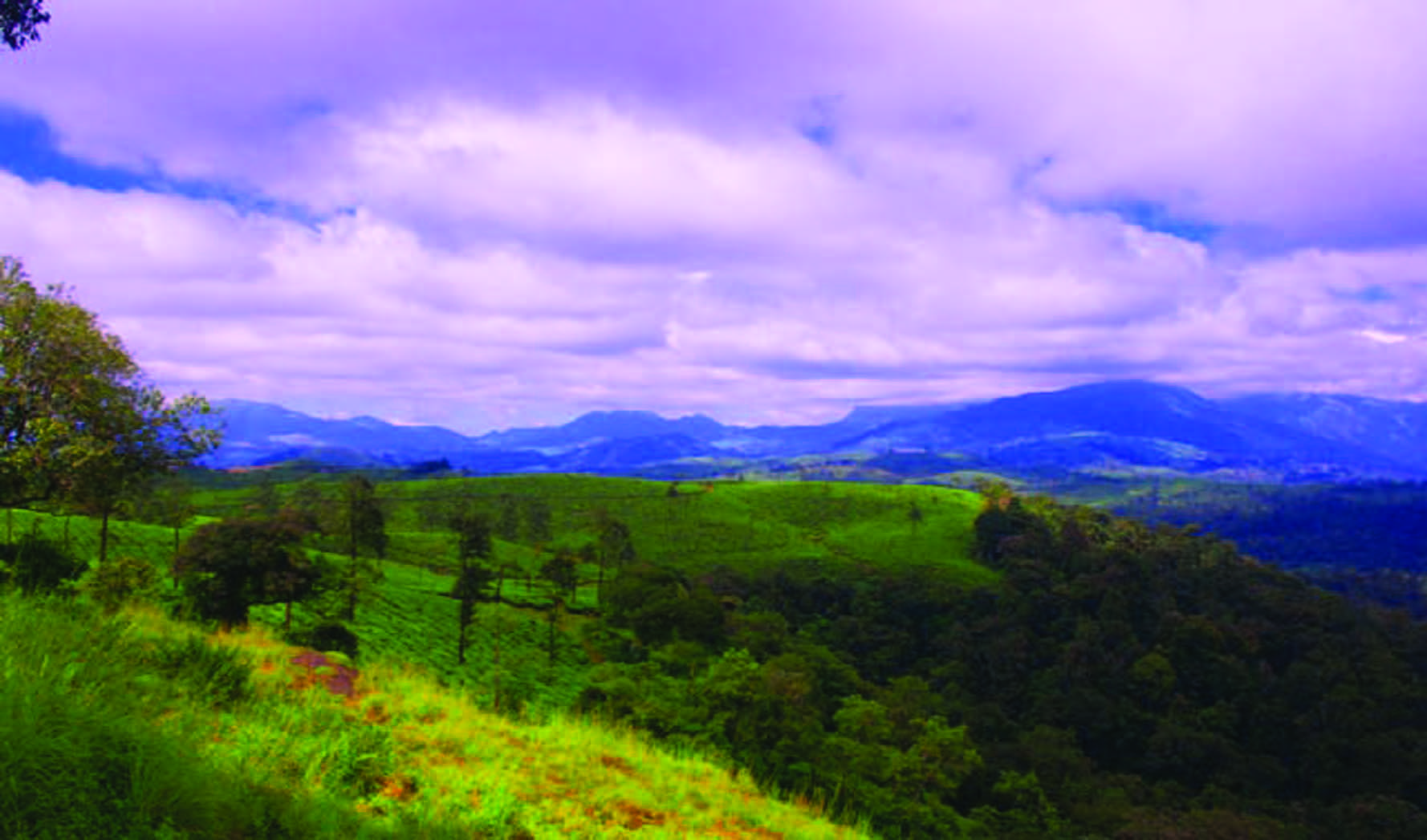
Tag: Kerala

  • OFF THE BEATEN TRACK – ROMANTIC GETAWAYS FOR COUPLES

    OFF THE BEATEN TRACK – ROMANTIC GETAWAYS FOR COUPLES

    Goa, Shimla, Lonavala – trying to plan a trip with your partner, but stuck with these names in your head? Go beyond the usual, and explore some beautiful locations across the country that can serve as great options for your romantic escape. From the riverside view of Majuli in Assam to the snow-capped mountains of Tawang in Arunachal Pradesh, let your wanderlust take you places.

    [quote_center]Lachen, Sikkim[/quote_center]

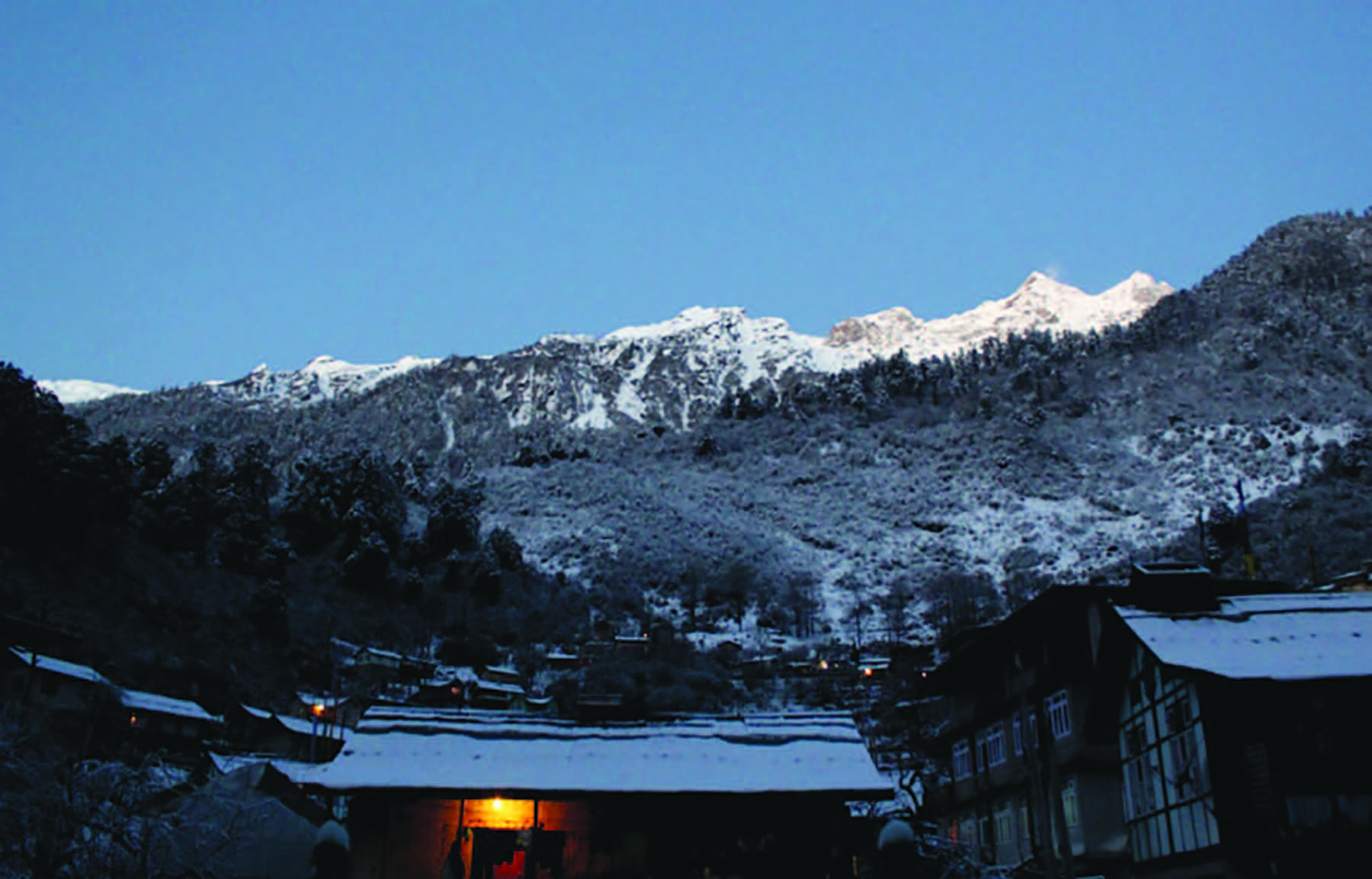
    Located 9,600 feet above sea level, at the confluence of Lachen and Lachung rivers, this picturesque town commands a panoramic view of the Himalayan range. The best time to visit the place is from November to June.

    On your itinerary

    • Thangu, a small village, not very far from Lachen, makes for a spectacular view.
    • Mountain treks.
    • Yumthang Valley is popularly known as the Valley of Flowers.
    • Gurudongmar Lake – one of the highest lakes in the world.

    [quote_center]Auli, Uttarakhand[/quote_center]

    Located in the Chamoli district, Auli has a generous population of coniferous and oak forests, and also offers a panoramic view of the Himalayas. With its moderate temperature during the summer months, it serves as a great vacation spot in the hot season.

    On your itinerary

    • Day hike to Gorson Meadows that provides scenic views.
    • A ride on one of the longest cable cars (Gondola) in Asia.
    • Chattrakund, a man-made lake close to Auli.

    [quote_center]Tawang, Arunachal Pradesh[/quote_center]

    This hill station is situated in the north-west part of Arunachal Pradesh. It shares its border with the Sela range in the east, Tibet in the north and Bhutan in the south-west. Away from the maddening buzz of a big city, Tawang serves as a quiet vacation spot.

    On your itinerary

    • Tawang Monastery is the largest monastery in India.
    • Jang Waterfalls are famous for its beauty.
    • Sela Pass remains covered with snow for most part of the year.
    • Tawang Handicrafts Centre promotes small-scale industries for local handicraft.

    [quote_center]Dhankar Gompa, Himachal [/quote_center]

    Dhankar Gompa is a village and also a Gompa (meditation room in urban Buddhist centres) in the district of Lahaul and Spiti in Himachal Pradesh. Gurgling rivers and crystal clear lakes dot the highlands of Lahaul, while an ancient civilisation has survived for nearly a thousand years, and has preserved its culture against the onslaught of modernity in Spiti.

    On your itinerary

    • Dhankar Monastery.
    • Dhankar Lake, which is a 1.5 km trek up from the monastery.
    • Nearby villages of Kaza, Key, Kibber and Tabo.

    [quote_center]Kovalam, Kerala[/quote_center]

    This small town in Kerala consists of three separated parts of three beaches – Hawah, Samudra and Light House. The largest among these is the Light House beach, which is a must-visit. It is close to Thiruvananthapuram.

    On your itinerary

    • Boating in the Karamana river provides spectacular views of the backwaters
    • Sunset at Edakkal.
    • Vizhinjam Rock Cut Cave temple has ancient sculptures on display.
    • Valiyathura Pier offers an amazing view of the coastline of Kovalam.

    [quote_center]Khajjiar, Himachal Pradesh[/quote_center]

    Often referred to as the ‘Mini Switzerland of India’, Khajjiar is a beautiful hill station in the Chamba district of Himachal Pradesh. It has thick deodar forests covering the slopes, and a breathtaking snow-line that rests above these woods.

    On your itinerary

    • Exciting hikes through the deodar thickets of the Dhauladhar Mountains.
    • 12th century temple dedicated to Khajji Nag that houses life-size wooden images of the Pandav brothers.
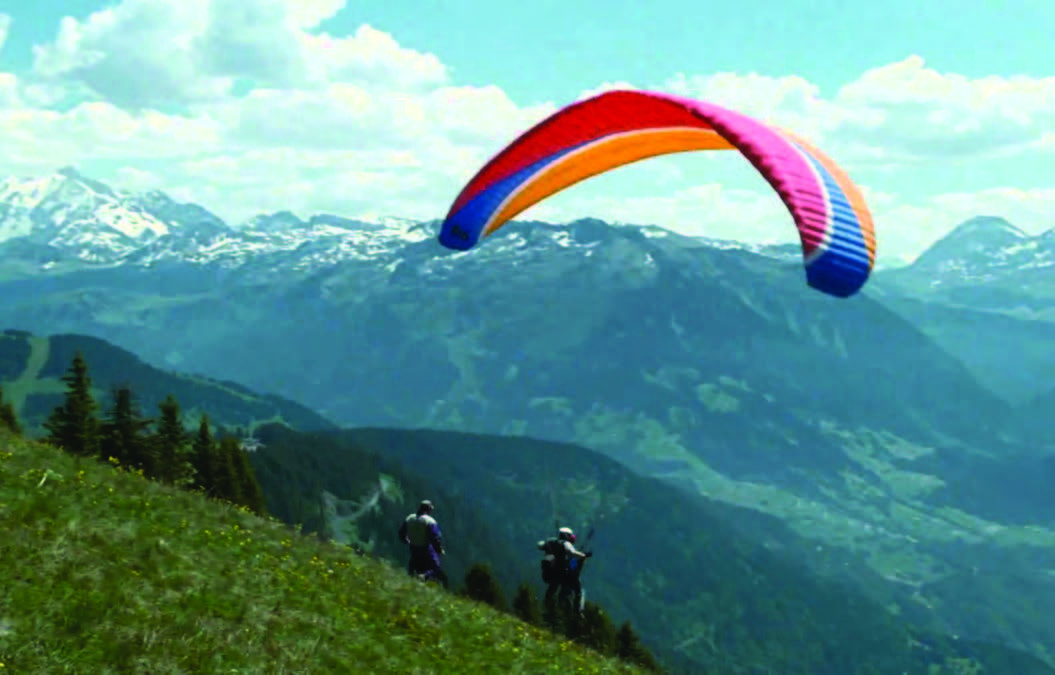
    • Several equestrian sports, paragliding and horse riding.

    [quote_center]Majuli, Assam[/quote_center]

    This is a large river island, nestled amidst the Brahmaputra in the upper region of Assam. Majuli is considered as one of Assam’s most well-kept and unexplored secrets, which leaves visitors awestruck with its natural beauty. To explore the island, travellers can either book a motorised private boat or travel like the locals in a ferry. The cultural exhibitions, exotic Assamese cuisine and the friendly local population make Majuli a picture-perfect destination to spend time with your loved ones.

    On your itinerary

    • Several Satras or monasteries like Daksinpath, Garamur and Auniati.
    • Mask-making workshops.
    • Raja Maidam, which has a vault of King Purandar Sinha. The monument was built as a tribute to the king.

    ROMANTIC GETAWAYS2[quote_center]Wayanad, Kerala[/quote_center]

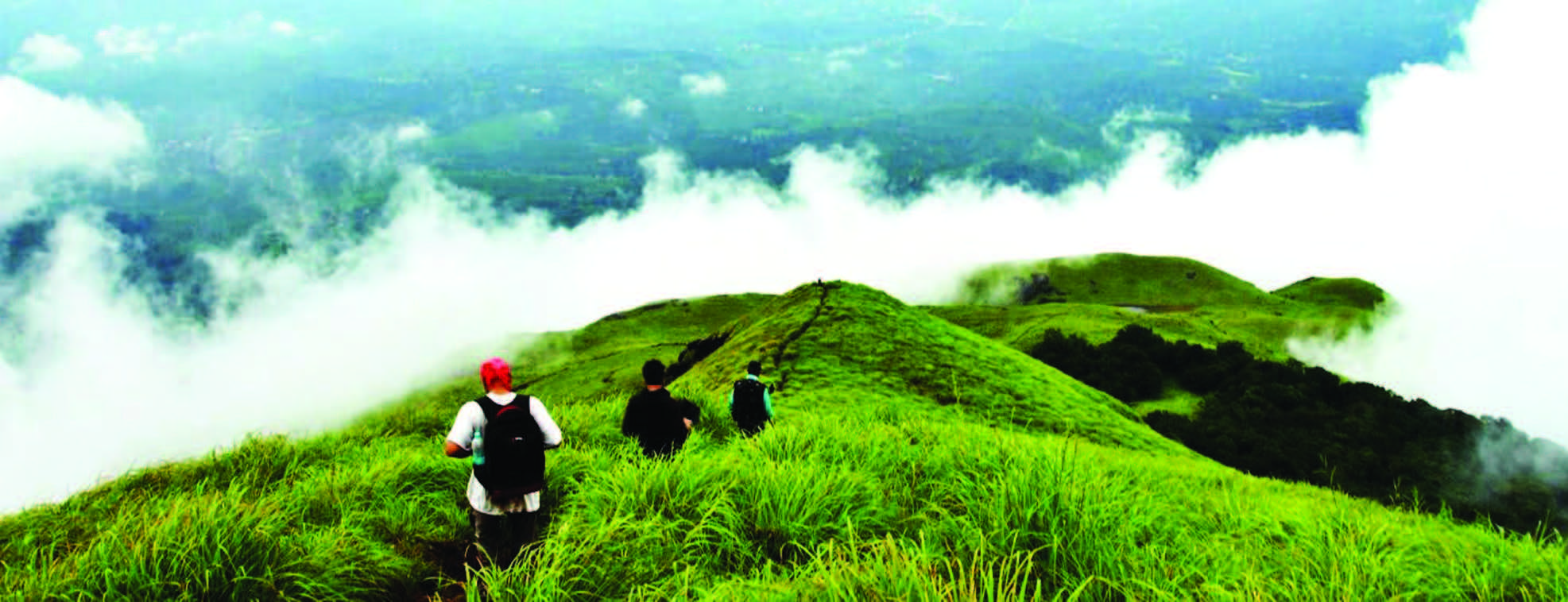
    This district-town was formed by extracting areas from the Kozhikode and Kannur districts. The rugged terrain of the Western Ghats is its main attraction. It is situated at the tip of the Deccan Plateau, and shares borders with Karnataka and Tamil Nadu.

    On your itinerary

    • Neelimala, a great trekking destination, located in the southeastern part of the region.
    • Meenmutty Falls, the largest waterfall in the district.
    • Caves in Pakshipathalam.
  • No way to go about it

    No way to go about it

    Tests conducted in Kerala, West Bengal, UP and Delhi have reportedly found that Maggi noodles contain an undeclared taste enhancer called monosodium glutamate (MSG) and lead levels beyond the permissible limits. This is bound to worry parents since the branded noodles are popular among children. Its sales account for 30 per cent of the revenue of Nestle India. The negative reports, which are disputed by the manufacturer, have cost the company dearly. Its image has been tarnished and share price has plunged at the bourses.

    This is not the first time the food regulators in India have been caught napping. Maggi noodles have been on sale for the past many years. It took a junior UP food official to get some samples tested and publicize the findings. The Central food regulator has asked states to test samples of Maggi noodles and submit reports to him. Shouldn’t the food tests be done by a reliable Central laboratory with a reputation for fairness, that too at the production facilities of the company? And should celebrities be hauled up for endorsing products whose quality they may not be aware of its quality? Film heroines may be in trouble if fairness creams they endorse turn out to be harmful. Should the publishers/broadcasters of advertisements selling defective products be also proceeded against? What about politicians who lie in their advertisements?

    Food adulteration has to be checked through a foolproof process. There has to be a reasonable way of enforcing minimum acceptable standards for products consumed by people without introducing one more minatory inspector in the process. The Prevention of Food Adulteration Act itself allows certain amount of rodent droppings and hair in food items. Reason rather than emotion should guide action. Since Nestle is a multinational company, sentiment can easily be aroused against it in India, which had earlier seen cola companies being at the receiving end. Given the easy availability of adulterated and substandard products in Indian markets, ensuring quality and safety, particularly of food products and medicines, is a huge challenge.

  • Mother’s Day – FEATURE Special – Mother is the Ultimate Definition of Selflessness

    [vc_row][vc_column width=”2/3″][vc_column_text]Every religious tradition has elevated mother to nearly the status of God, because she possess many a qualities of God; kind, merciful, beneficent and caring among thousand other qualities. Mother is the reason for our existence; sustenance, nurturance and shaping who we are. I dedicate this write-up to my Mother, and all the Mothers out there. There is a beautiful song in Urdu/Hindi language.

    [quote_center]

    Us ko nahin dekha hum ne kabhi, per us ki zaroorat kya hogi

    Ai maa teri soorat say alag bhagwan ki soorat kya hogi.

    [/quote_center]

    I have not seen him (God) ever, but what is the need for it?

    Dear Mother, your face cannot be different than God’s own face

    Video Link on Youtube Full translation by Rajiv Chakravarti at www.Urduhindi.net

    Mother is the ultimate definition of selflessness! No matter what happens to the world or even her, she is there for you in your need; she recognizes your need much before you know it. Of course every day is Mother’s day, and each one of us honors her in a variety of ways. From simple caring to doing things for her that makes her happy.

    Mothers don’t need a whole lot; they just need to know that you care. Remember you were showered by her attention when you needed it.

    Thanks to this beautiful tradition of America, a day to honor Mother. No mother should be alone today; some one or the other must give her a call.

    I appreciate all the mothers who have raised their kids well, particularly the single mothers, and it is not easy! Getting them ready, taking them to school, playground, tuition, and taking care of them, and going to work. There is a lot of sacrifice made by mothers and no amount of appreciation will be enough. Whatever you are today, it is because of your mother. If you have tensions with her, seek her forgiveness today, if she is not around, spend half an hour meditating about her and see the sense of completeness you feel within you.

    A majority of us are fortunate to have the love and affection of the mother to bless our lives. However, there are some mothers who have not been good to their kids and I feel your anguish if you are the one, but I assure you that, you are a blessed one to have made it in life without mothers love and it is time for you to give that love to others.

    It’s time to express gratitude to her; it restores the spiritual balance in each one of us. Life is about transactions, each time we received a “good” we become indebted to the giver, but when we give back to the giver or find alternate ways of giving back, then we regain our spiritual balance, bringing us nirvana, salvation, mukti, moksha, nijaat and freedom.[/vc_column_text][vc_column_text]Cont. After Messages below[/vc_column_text][/vc_column][vc_column width=”1/3″][vc_single_image border_color=”grey” img_link_target=”_self” image=”35314″ img_size=”medium” img_link_large=””][vc_column_text]Photo Caption : Prof. Indrajit S  Saluja’s mother Mohinder Kaur who passed away in 2009 at the age of  91, was  a  saintly person , created in God’s own Image.

    [quote_center]Remembering my mother on Mother’s Day, 2015[/quote_center]

    That’s my mother who gave me birth,
    Breastfed me to grow in to a healthy child,
    Trained me to walk , taught me to talk;
    I am her creation and gift to the world;
    Whoever and whatever I am , it’s because of her. I miss her and wish she were around
    To chide me for the mistakes I make ,
    And hug , pat and kiss me for the good I do;
    But she’s gone and left behind memories to haunt; I love you Mata Ji, I miss you, Mata Ji.

    I know she looks at me from her heavenly abode,

    She watches all my actions and doings;
    She guides my steps even now from afar,
    And exhorts me to justly and honestly play my part
    In the theatre of the world to which I am assigned.
    When I am done with my part that God has assigned me,

    I only long to go to my mother in heavens above, And be the child that I was , learning at her feet, And  be folded in to her protective arms for ever.

    – Prof. Indrajit S saluja


    [/vc_column_text][/vc_column][/vc_row][vc_row][vc_column width=”1/2″][vc_single_image image=”35311″ border_color=”grey” img_link_large=”” img_link_target=”_self” img_size=”medium”][vc_column_text][quote_center]My mother is the anchor of my life[/quote_center]

    This morning when you asked, “What does my Mother mean to me?”  I realized that this was one relationship that I have taken for granted since my childhood years. I wondered why I had not reflected on this statement and the answer was apparent. The selfless, untiring love that I have received from my Mom was the culprit. She never allowed me and my siblings to feel that she was giving us anything. We took her warmth, affection and love for granted !

    As I step back and reflect, I see my mother as a warm, generous, ever caring pious lady, someone who has stood by us through all our trials and tribulations, kept her needs away in front of the wants of the family. A gracious host to neighbors and visitors, ever ready to help. An excellent cook and a good seamstress. The best grandmother to her grandchildren… always ready to wipe that tear, always ready to pray for the success of her family. She joined to share others’ grief as willingly. Her indomitable spirit to Never Give up. All these and many more made her the anchor of my life and indeed of the whole family growing up, shaping our formative years. A mother is super special and a symbol of selfless love like none other.

    Happy Mother’s Day to all the Mamas of the world !!!

    – Rishikant Singh


    [/vc_column_text][vc_single_image image=”35310″ border_color=”grey” img_link_large=”” img_link_target=”_self” img_size=”medium”][vc_column_text]

    Photo Caption: Two and a half year old Ashishpal Saluja (now 37) with mom Gurdarshan Kaur who passed away in 2007.

    I realize that everything important that I know, I either learned from my mother, or my father probably before I was 15. Every child considers his or her mom and dad as the best parent in the world. And I believe that every child is right in doing so. Growing up as a child, I always looked up to my parents, especially to my mother. She was my greatest teacher and the source of inspiration for my many interests. Generous, kind, loving, sweet, caring, honest, elegant, brave, strong, bubbly, energetic, resilient, thoughtful, hopeful, selfless. My mother possessed all of these qualities for sure. Right now I’d probably have a million reasons to thank my mother for. Because she brought me to this world, because she made me all I am, for knowing me inside and out, for believing in me. But I do not need a reason. It matters the least. Whether she knew it or not, she was always, and forever will be the queen of my heart and my guiding light of life. Love you always MOM.

    – Ashishpal Saluja


    [/vc_column_text][vc_single_image image=”35304″ border_color=”grey” img_link_large=”” img_link_target=”_self” img_size=”medium”][vc_column_text]

    [quote_center]I just miss you![/quote_center]

    Growing up in a remote village in Kerala, I have fond memories of my mother who has nurtured, inspired and influenced my life through thick and thin. My only regret is that I couldn’t spend more time with her as I have come away from ‘God’s own country’ as Kerala is described, looking for better opportunities!

    This tribute by an unknown author summarizes my sentiment in its entirety:

    ‘Death changes everything! Time Changes nothing. I still miss the sound of your voice and wisdom of your advice and stories of your life and being in your presence. So No, time changes nothing, I miss you as much today as I did the day you died. I just miss you!’

    – George Abraham


    [/vc_column_text][vc_single_image image=”35305″ border_color=”grey” img_link_large=”” img_link_target=”_self” img_size=”medium”][vc_column_text][quote_center]A mother is the truest friend we have[/quote_center]

    Mom, Nani, Gail Mommy, Cathy Chachi & Sunil Aunty. “A mother is the truest friend we have.” Lucky for us, we have more than one individual whom we love and consider as our mother. Without the love and care from such selfless mothers and aunts, we would not be where  we are today.

    -Bobby, Jessica, Pavneet, Amy, Matthew & Rohan


    [/vc_column_text][vc_single_image image=”35306″ border_color=”grey” img_link_large=”” img_link_target=”_self” img_size=”medium”][vc_column_text]“Yaad na jaye beete dinon kee. Jaskiran (center) now 35,  with mom Gurdarshan Kaur and  brother Ashishpal (left), now 37.”

    [quote_center]You are the words inside my song[/quote_center]

    Dear mom, how do I explain the most sacred relationship on this earth in a few words. here are a few lines that can help let all know what you meant to me and how I survive without you. You are my friend, my heart, and my soul You are the greatest friend I know.
    You are the words inside my song,
    You are my love, my life, my Mom.
    You are the tree I lean upon,
    You make the troubles be gone.
    You are the one who taught me life,

    How not to fight, and what is right. You are the words inside my song, You are my love, my life, my mom. You are the one who cares for me, You are the eyes that help me see.

    You are the one who knows me best,
    When it’s time to have fun and time to rest.
    You are the one who has helped me to dream,
    You hear my heart and you hear my screams.
    Afraid of life but looking for love,
    I’m blessed for God sent you from above.
    Though you may be far but this heart has missed you all the time.

    – Jaskiran Saluja Beri


    [/vc_column_text][vc_column_text]Cont. From Top

    [quote_center]RELIGIONS ON MOTHERS: [/quote_center]

    In the native traditions, be it American, European, African, or Asian, Mother is creator in the form of mother Earth.

    Christianity and Judaism: “Honor your father and mother. Then you will live a long, full life in the land the LORD your God will give you.In Jewish tradition, your heritage is determined by your Mother, you are a Jew because of your mother.

    “Diverse images of what are believed to be Mother Goddesses also have been discovered that date from the Neolithic period, the New Stone Age, which ranges from approximately 10,000 BCE when the use of wild cereals led to the beginning of farming, and eventually, to agriculture.” Wikipedia

    The Baha’i faith, “For mothers are the first educators, the first mentors; and truly it is the mothers who determine the happiness, the future greatness, the courteous ways and learning and judgment, the understanding and the faith of their little ones.”

    In the Hindu tradition Mother is worshiped and is represented in many attributes like Ma Saraswati (source of knowledge), Ma Lakshmi (source of income) and the likes… Mother’s face is equated with God’s face, a song celebrates Mother by saying, if I have seen your face mother, and I have seen God.

    Sikh’s consider God as a parent, a mother and a father. Guru Granth Sahib advises “Always remember the boundless, limitless God, remembering whom all our sins are destroyed. My son, this is a mother’s prayer for you.”[/vc_column_text][vc_column_text]Prophet Muhammad was asked by his associates, who is the most important person in one’s life – he says, “Mother”; they ask again, the answer was “Mother again” and same response was given for the third time, such is the importance given to mother. He said, your heaven, your paradise and your peace of mind comes to you by serving your mother.

    You will find mother is placed at the highest spiritual level in all religions or non-religious traditions and life forms. Those who have a mother to see, you are the blessed one, those who don’t, you have her blessings.

    “Paradise is under the feet of your mother” is the mantra probably every Muslim recites and it is part of Hindu, Sikh, Jain and South Asian culture as well. The idea is of gratitude, if you are grateful to you mother, then you would be grateful to the creator and other benefactors around you.

    2001, my Mother passed away in one of the most beautiful manners one could embark on the eternal journey; a clean slate with no loose ends. She was incredible; she tied all the loose ends before she took her last breath, she called every one and cleared the air and said goodbye that was the biggest lesson of my life; to tie the loose ends. The Jain tradition calls it Michami Dukadam.

    I guess, all of us kids and her grand kids turned out that way; boundless. No barriers between us and another soul and our relationships have always been multi-cultural and multi-religious. Thanks Mom for pounding those values in our hearts and minds.[/vc_column_text][/vc_column][vc_column width=”1/2″][vc_single_image border_color=”grey” img_link_target=”_self” image=”35313″ img_link_large=”” img_size=”full”][vc_column_text]Photo caption: Reliving the  hapy moments. Ambassador Dnyaneshwar M Mulay with  his mother Akkatai Mulay (left) and her best friend Shara Kaku

    [quote_center] Happy Mother’s Day![/quote_center]

    It is obvious that on this day, I remember my mother. She stays in my village near Kolhapur. While I have been flying the flag of India all over the world, it is she who has sacrificed the most. right from my early education till now, she continues to work hard so that all of us lead a happy life. For me she is the source of inspiration.

    In modern times, mother’s role has undergone a huge change. She is a teacher too who actively shapes her children’s future. Unlike yester year mothers, she is educated, aware and helps in decision-making. the core of mother’s role vis-a-vis a child has not changed. Her caring, her attention and her love remain unchanged and civilization grows on those qualities!

    My mother did not go to school, worked from 4am to 10pm everyday and ingrained in us qualities like hardwork and dedication. I salute her on this day – likewise salute all mothers – past, future and present – for their gift to humanity.

    – Ambassador Dnyaneshwar M Mulay


    [/vc_column_text][vc_single_image border_color=”grey” img_link_target=”_self” image=”35312″ img_size=”medium” img_link_large=””][vc_column_text]Photo Caption: Ravi Batra’s mother Raj K Batra with husband Hon. Sada Nand Batra in a 1954 photograph

    [quote_center]I continue to adore my mother, and am proud to be her son too[/quote_center]

    While my late great Dad is known to be my greatest hero, it is my mother – who is the unsung hero I took and took from her well of unqualified love – and miss her always. A mother with ideal attributes of a giving love that never runs dry.

    Like every child, I was dependent upon my mother even before birth and without knowing so. Such remained throughout her life. She was born in what’s now Pakistan, got married at an early age – as was then the custom – started having kids and the country partitioned. Uprooted and on a refugee train, she was shot in her foot and lay bleeding until the 7th Calvary arrived – in the form of the Indian Forces -and saved the stopped-train from a certain massacre in the hot sectarian violence that engulfed the subcontinent in 1947.

    Taken to a refugee camp, she functioned as a mother would, with a bullet for 3 months, until her foot was gangrene and amputation was possible. My dad found in the Camp a general practitioner, not a surgeon, who operated upon her without any anesthesia with a barber’s straight edge razor and stitched her up with regular needle and thread. Miraculously, my mom healed. She went on to have 4 more babies, I being one of them.

    She went on to be the wife of an unusual man, driven to unusual achievements, and started to achieve in her own right. By 1960, she was a mother when the kids were home and a businesswoman employing dozens of mother-employees when kids were in school. The duality of a woman we now take for granted – was nearly unheard of then. And, then there was much more…

    I continue to adore my mother, and am proud to be her son too.

    Happy Mother’s Day to all.

    – Attorney Ravi Batra


    [/vc_column_text][vc_single_image image=”35309″ border_color=”grey” img_link_large=”” img_link_target=”_self” img_size=”medium”][vc_column_text]Photo Caption: Good old days! Bidisha with mom Tripti Roy, who passed away in 2014

    [quote_center]My mother is the epitome of humanity[/quote_center]

    My mother Tripti Roy was my best friend ever. I’ve never seen a simple, honest, affectionate person like her who dedicated her life for others. She was a renowned teacher and used to teach poor students. She used to help so many needy families without any publicity. For me she is the epitome of humanity. Miss you Maa!

    – Bidisha Roy


    [/vc_column_text][vc_single_image image=”35307″ border_color=”grey” img_link_large=”” img_link_target=”_self” img_size=”medium”][vc_column_text][quote_center]AYE MAA TERI SURAT SE ALAG BHAGWAN KI SURAT KYA HOGI[/quote_center]

    Mother’s love. Unconditional. Forever. Mother-child relationship is like no other. Mother’s love is a fuel that enables a normal human being to do the impossible. A mother is the truest friend we have

    We are always so grateful for the love you have  always shown  and guided us in each phase of our lives.

    Even if you are  far away, your blessings and love have always been unconditional

    USKO NAHIN DEKHA JISNE ABHI, AB ISKI JAROORAT KYA HOGI

    AYE MAA TERI SURAT SE ALAG BHAGWAN KI SURAT KYA HOGI

    HAPPY MOTHERS DAY TO ALL OUR FRIENDS AND FAMILY

    – Indu Jaiswal


    [/vc_column_text][vc_single_image image=”35308″ border_color=”grey” img_link_large=”” img_link_target=”_self” img_size=”medium”][vc_column_text]

    [quote_center]Everyday is Mother’s Day[/quote_center]

    Being born a Hindu is a privilege”. I was told this by a Christian who converted to Hinduism. This opened my mind and made me think about my life on earth. The only reason you and I and every one else on this planet have an existence is because of the great mothers who bear us. From the second we’re made till the time of our departure, the amount of attention and focus that is put on us is unbelievable. From the time of the mothers 9-10 month pregnancy, nourishing us while we’re in their bodies, from being born and helping us grow and develop as small individuals. From schooling, to kids, to adults, teaching us from right and wrong, preparing food and making us strong, day in and day out, every day of their of lives. Without any thought of a mother’s own, their vision is only on us.

    A selfless mother is a blessing and because of them we are enjoying good health and enjoying life.

    Hindu culture is a way of life, it’s a great culture with developed ideas and so many research and experiments that have been performed over so many years.

    There is no life without wife. Just like that, there is no child without mother. Hindus see females in everything. We see the beauty in everything. Mother earth. Goddess of wealth, Sri Laxmi Mata. Goddess of Knowledge, Shri Saraswati Mata. Goddess of Power, Shri Durga Mata. My mother. And your mother. These are the powerful women who make us.

    Everyday is Mother’s Day. Lets start the day by touching the feet of our mother and accepting her blessing. Lets care for her and protect her when she’s old, after all we are here because of her.

    Hindus are taught to treat all women as their own sister, aunt or mother. To respect them and help them when in need without any reservation.

    Our existence is because of our mothers. We exist because of their love and respect. I guarantee you, you’ll have a better and great life – just love and be there for your mom!

    -Arish Sahani


    [/vc_column_text][/vc_column][/vc_row][vc_row][vc_column width=”1/1″][/vc_column][/vc_row][vc_row][vc_column width=”1/2″][vc_column_text]Here is how Mom is called in different languages, please add yours….

    I called my mother, ” Amma” and at times “Ammi” while addressing her it was Ma. Languages Spoken in South Asia

    ● Arabic – umm

    ● Assamese – Aayi, mA, mAtri Aayi, mA,

    ● Baluchi – Ma

    ● Bengali – Mata or jononi,

    ● Bhojpuri – Mayee

    ● English- Mother, Mama, Mom

    ● French- Mère, Maman

    ● German – Mutter

    ● Gujurati – Ma

    ● Hindi – Ma, Maji, Mata

    ● Kannada -Amma

    ● Konkani – Amma

    ● Kashmiri – Muoj

    ● Latin – Mater

    ● Marathi – Aayi

    ● Malyalam – Amma

    ● Nepali – Aamaa

    ● Oriya – Bou

    ● Pashtu- Mor

    ● Persian- Madr, Maman

    ● Portugese- Mae

    ● Punjabi – Mai, Mataji, Pabo

    ● Sanskrit – Mata

    ● Sindhi – Mau

    ● Sinhalese- Amma

    ● Tamil – Amma

    ● Telegu- Amma

    ● Urdu -Ammee, Maa, Amma[/vc_column_text][/vc_column][vc_column width=”1/2″][vc_column_text]There are more languages out there…

    It’s time to express gratitude to her; it restores the spiritual balance in each one of us. Life is about transactions, each time we received a “good” we become indebted to the giver, but when we give back to the giver or find alternate ways of giving back, then we regain our spiritual balance, bringing us nirvana, salvation, mukti, moksha, nijaat and freedom.[/vc_column_text][vc_single_image image=”32953″ alignment=”center” border_color=”grey” img_link_large=”” img_link_target=”_self” img_size=”large”][vc_column_text]

    Main Article  – By Mike Ghouse

    [/vc_column_text][vc_column_text]

    (The author is a public speaker, thinker, writer and a commentator on Pluralism, Islam, India, Israel-Palestine, Politics and other issues of the day. He is committed to building cohesive societies and offers pluralistic solutions on issues of the day.

    [/vc_column_text][/vc_column][/vc_row]

  • 4 Kerala athletes attempt suicide, one dies

    4 Kerala athletes attempt suicide, one dies

    THIRUVANANTHAPURA (TIP): A promising 17-year-old rowing athlete, training with the Sports Authority of India (SAI) centre in Alappuzha, died early on May 7, hours after she consumed poisonous fruit following harassment by seniors at her hostel.

    The rower – identified as Aparna Ramabhadran from Aryad in Alappuzha district – had, along with three other rowers in the centre, entered into an apparent suicide pact on Wednesday. Aparna had participated in the 35th Junior National Rowing Championship in Lucknow in 2014.

    Three other rowers, all aged 17, are in hospital with the condition of one reported as critical. Unconfirmed reports said one of the three girls was a National Games gold-winning rowing athlete.

    Amid a flurry of investigations and announcements of monetary relief, the relatives of the rowers have raised the pitch of their protest claiming that the girls were victims of relentless “physical and mental” harassment by trainers and seniors in the sports centre. The girls had consumed “othalanga” (Cerbera odollam), a locally found poisonous fruit, at about 3 pm on Wednesday and were found unconscious in a hostel room at 7 pm.

    They were taken to the Alappuzha Medical College Hospital. A suicide note was recovered from the hostel. Alappuzha North Police have registered a case of unnatural death.

    Ernakulam Range IG M R Ajithkumar said a Crime Branch DySP will head the investigation into the incident. The police said the girls – all rowing athletes undergoing training in the SAI water sport centre at Punnamada – were traumatised after their hostel warden and senior inmates, who “found out” that they had consumed beer, confronted them.

    “According to statements given by the girls late on Wednesday, their action was the result of mental trauma over the incident. But at the moment, the investigation is not directed at any individual,” M K Ramesan, sub-inspector, Alappuzha North, told Deccan Herald.

    In the suicide note, the girls are learnt to have named the seniors who harassed them over a “minor mistake”. One of Aparna’s relatives said the girls were repeatedly harassed and were also forced to wash seniors’ clothes.

    In New Delhi, Sports Minister Sarbananda Sonowal promised the ‘strictest possible action’ if any official from SAI is found guilty of aiding or abetting the attempted suicide by four female trainees at the SAI Centre in Alappuzha, leading to the death of one of the girls.

    “The young girl who has died was a very promising sportsperson. It is a big loss to the country in general and Sports Authority of India and sports fraternity in particular. I convey my condolences to the bereaved family. We will give all possible help to the bereaved family,” Sonowal said in a statement. “While the law will take its own course, at this stage I would only like to say that if anyone from Sports Authority of India is found guilty in connection with this tragic incident, strictest possible action will be taken against him or her.” SAI Director General Injeti Srinivas, who was intimated about the incident on Wednesday night, and has left for Kerala, called it shocking. “I will first look into the medical treatment of the three girls in the ICU, meet with the parents and convey the highest assurances to them of doing justice in every manner and extending all possible support,” he said.

  • Govt likely to delay land bill

    Govt likely to delay land bill

    NEW DELHI (TIP): The government is taken aback by events following the suicide of a farmer at the Aam Admi Party (AAP) rally.

    The Opposition in Parliament squarely blamed the “anti-farmer” policy of the Narendra Modi government  for  driving farmers to take the drastic step.

    Consequently, there is perceptible worry among BJP ministers and MPs that it could cast shadow on the government’s plans to legislate a bill to replace the land acquisition ordinance, which had to be re-promulgated. The government did not place the bill in the Rajya Sabha because it does not have majority there.

    There is every possibility that the bill will not be allowed to come up in the Upper House again, said BJP floor managers.

    Given the political atmosphere following the suicide episode, the government itself could decide not to bring the bill to replace the ordinance until the fag end of the session, which ends in the second week of May.

    As yet, however, there is no indication that Modi will back down on his resolve on the matter though he may want more safety measures to end the distress of farmers.

    In fact, shortly before he addressed the Lok Sabha on Thursday, Modi met seniors ministers Rajnath Singh, Arun Jaitley, Venkaiah Naidu and Nitin Gadkari to formulate the government’s response. The PM’s line was that the issue of farmer suicides should not be allowed to be mixed up with the issue of amending the land acquisition law passed by the UPA, which is blamed for hurdles in acquiring land for key infrastructure project.

    In keeping with the PM’s statement that “we have to find a way and we can’t leave farmers helpless”, the government might re-examine relief package for agriculturists, which have been announced from time to time. An all-party meet could also be called on the subject. As a counter measure, the BJP has blamed Congress for the suicide, saying misrule by the previous Congress-led UPA is responsible to present situation. Over 3,000 farmers have committed suicide in the past three years and nearly three lakh farmers took their lives since 1995, according to the National Crime Research Bureau.

    The five worst-hit states are Maharashtra, Andhra Pradesh, Karnataka, Madhya Pradesh and Kerala. Maharashtra alone has recorded over 10,000 suicides between 2011 and 2013. Its Marathwada region has seen over 200 suicides in three months.

    “It should be our determination to find a solution to this problem. The issue has been there for long, we will take all good suggestions: For years the issue of farmers committing suicide is a matter of great concern,” Modi said on April 23.

  • ‘Suicide will soon become India’s number 1 killer’: Vikram Patel

    LONDON (TIP): India’s foremost mental health expert who spends most of his time between Goa and London has now been named as among TIME magazine’s 100 most influential people in the world.

    Professor Vikram Patel, who has done seminal research on suicides in India hopes that his presence in the list makes the Indian government wake up to the serious shortage of programmes and experts meant specially to deal with mental health problems.

    Speaking to TOI from Montreal, professor Patel who teaches at the London School of Hygiene and Tropical Medicine in UK and heads an organisation called Sangath in Goa said “the vast majority of people with mental disorders do not receive care which can greatly improve the quality of their lives. The treatment gap exceeds 90% for community based psychosocial interventions”.

    He added ” hope very much that this recognition will increase the attention that the world’s governments and donors afford to mental health, not just in India where issues like suicide, alcohol abuse, depression, autism and schizophrenia are almost entirely ignored by public health systems leading to enormous unmet needs and human rights abuses”.

    On being asked whether he thought the government of India was doing enough for mental health problems in India, Patel told TOI “Nowhere near the need, witness the complete absence of public health approach to suicide for example”.

    An earlier research by professor Patel on suicides in India had thrown up shocking findings. Four of India’s southern states — Tamil Nadu, Andhra Pradesh, Karnakata and Kerala — that together constitute 22% of the country’s population were found to have recorded 42% of suicide deaths in men and 40% of self-inflicted fatalities in women in 2010. Nadu, Andhra Pradesh, Karnakata and Kerala — that together constitute 22% of the country’s population were found to have recorded 42% of suicide deaths in men and 40% of self-inflicted fatalities in women in 2010.

    Maharashtra and West Bengal together accounted for an additional 15% of suicide deaths. Delhi recorded the lowest suicide rate in the country. In absolute numbers, the most suicide deaths in individuals, aged 15 years or older, were found to be in AP (28,000), Tamil Nadu (24,000) and Maharashtra (19,000).

    This was the first national study of deaths in India which was published in the British Medical journal The Lancet.

    Patel said suicide has become the second-leading cause of death among the young in India. Of the total deaths by suicide in individuals aged 15 years or older, about 40% suicide deaths in men and about 56% in women occurred in individuals aged 15-29 years. Suicide deaths occurred at younger ages in women (average age 25 years) than in men (average age 34 years). Educated persons were at greater risk of completing a suicide. The risk of completing a suicide was 43% higher in men, who finished secondary or higher education, in comparison to those who had not completed primary education. Among women, the risk increased to 90%.

    So what is professor Patel who is also from the Centre for Chronic Conditions and Injuries, Public Health Foundation of India, working on now? 

    He told media “I am working in five major areas – developing psychological treatments which can be delivered by community health workers, working in rural communities to increase awareness about and strengthen community responses to mental health problems, working with colleagues in cardiology and diabetes to develop integrated approaches for the care of chronic conditions, working with neuroscientists and computer engineers to develop novel diagnostic tools for brain disorders and working with government departments of health to scale up evidence based interventions for mental disorders through the district mental health programme”.

    The TIME 100 list describes Prof Patel as a “well-being warrior” and includes a tribute from Dr Barbara Van Dahlen, a psychologist and the founder of Give an Hour, a network of volunteer mental-health professionals, as well as the Campaign to Change Direction. She writes “It is hard to imagine a more difficult challenge than addressing the unmet needs of those from resource-poor countries who live with and suffer from mental-health disorders. And yet Vikram Patel has spent his career doing just that. He is a gifted psychiatrist, a dedicated researcher, a successful author of books and academic papers, and he is an effective communicator. In fact, he seems to have an unending supply of these critical skills. And as a co-founder of the NGO Sangath and the Centre for Global Mental Health at the London School of Hygiene & Tropical Medicine, he helps spread the simple yet profound idea of mental health for all. He provides hope that mental illness and trauma make us neither weak nor unworthy of love and respect”.

  • THEKKADY – A LUXURIOUS STAY IN THE WILD

    THEKKADY – A LUXURIOUS STAY IN THE WILD

    Thekkady in Kerala, offers a great opportunity to find animal sightings in the deciduous forests along with some interesting luxury resorts…

    Around 185 kms from the Kochi airport, a traveler itinerary to Kerala cannot be complete without visiting Thekkady – the popular destination for visiting the Periyar National Park. Only around a distance of 2 hours from Munnar, Thekkady has an array of luxurious resorts located in the small town. Carmelia Haven, is one of them. With its tea plantations, spice plantations, luxurious independent cottages overlooking the swimming pool in the centre of the resort as you go down from your cottage, the resort is an ideal destination to experience comfort, luxury and calm in the wild.

    SIGHT SEEING – The Periyar Tiger Reserve

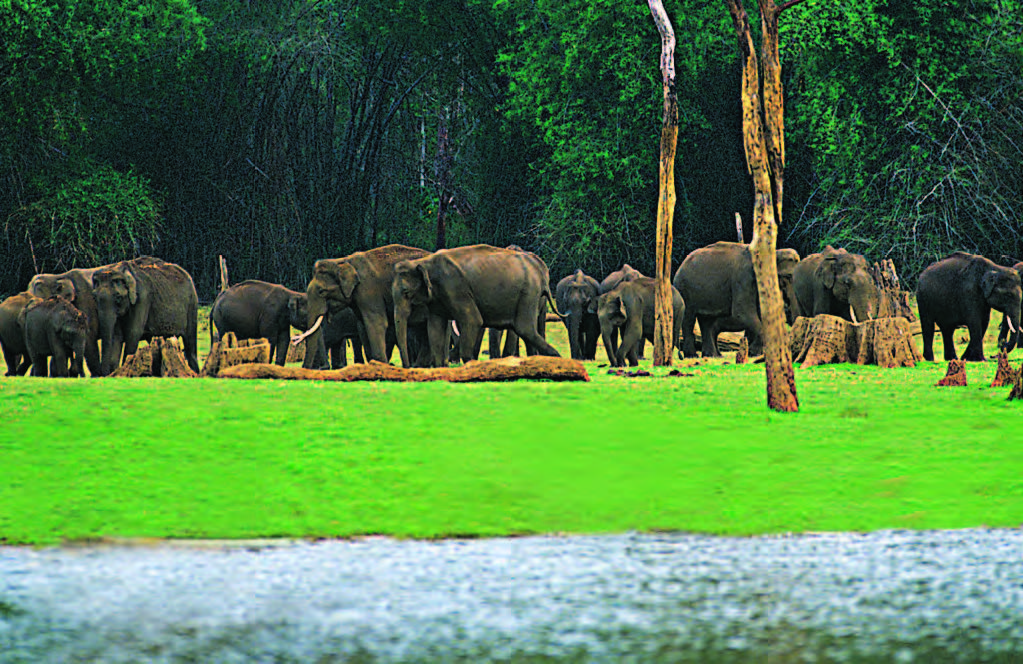
    Lying close to the plantations, in the rich jungles of Periyar in Thekkady is one of the world’s most fascinating natural wildlife reserves – the Periyar Wildlife Sanctuary. Covering 777 sq. kilometres, of which 360 sq. kilometres is thick evergreen forest; the Periyar Wildlife Sanctuary was declared a Tiger Reserve in 1978. Noted for its geomorphology, diversity of wildlife and scenic beauty, the Reserve attracts visitors from all over the world. The splendid artificial lake formed by the Mullaperiyar Dam across the Periyar adds to the charm of the park. This is the only sanctuary in India where you can have the unique experience of viewing wildlife at close quarters from the safety of a boat on the lake. The greatest attraction of Periyar however are the herds of wild elephants that come down to play in the lake.

    Chellarkovil

    This sleepy little hamlet with its breathtaking view of the plains and cascading waterfalls is a veritable feast for the eyes. The village slopes down to the famous coconut groves of Cumbum in neighbouring Tamil Nadu. A must visit.

    Kumily

    This plantation town, closely associated with Thekkady, is situated on the outskirts of the Periyar Tiger Reserve. It is an important shopping centre and spice trade centre and is worth a visit.

    Ramakalmedu

    Undulating green hills and fresh mountain air make Ramakalmedu an enchanting retreat. The hilltop offers one a panoramic view of the picturesque villages of Bodi and Cumbum on the eastern slope of the western ghats.

    Pullumedu

    The meandering journey to this hill town, along the Periyar River, offers a stunning view of the rolling hills draped in lush greenery. Velvet lawns and rare flora and fauna add to the beauty of Pullumedu, which can be accessed only by jeep. The famous Sree Ayyappa Temple at Sabarimala and the Makara Jyothi illumination at the shrine are also visible from here. One needs to remember it is part of the restricted forest zone, so permission needs to be taken to visit here.

    Murikkady

    Washed in fresh spice-scented air, Murikkady is a panorama of cardamom, coffee and pepper plantations.THEKKADY 3

    Kurisumala

    This is the place to be if adventure tourism and trekking fascinates you. You can also treat yourself to a stunning view of Kumily town and the Periyar Tiger Reserve.

    Vandanmedu

    One of the world’s largest auction centers for cardamom, this place really grabs ones senses. A walk through the sprawling cardamom plantations of Vandanmedu is a heady experience.

    Vandiperiyar

    The River Periyar flowing through the centre of this town nourishes its vast tea, coffee and pepper plantations. A major trade centre, Vandiperiyar is also home to a number of tea factories. One should make a trip to the Government Agriculture Farm and Flower Garden and delight in the array of roses, orchids and anthuria.

    Spice Plantations Tour

    Inhale and exhale the lovely scents on this tour, as you visit the tea, coffee, cardamom, pepper and orange plantations, along with the stunning Anayirangal Dam.

    Trekking

    Thekkady is a lovely place to indulge in trekking. Kurisumala, Pullumedu and Ottakathalamedu near Kumily and Grampi near Vandiperiyar are ideal trekking places. One can also take the Forest Department daily treks from the boat landing station at Thekkady to the Nellikkampetty area and Manakkavala.

    Idukki Dam

    One of the highest arch dams in Asia and the only arch dam in India, the Idukki Dam, at 167.68 metres, is built on the Periyar River, in the ravine between the Kuravan and Kurathi Hills. It supports a 780 MW hydroelectric power station maintained by the Kerala State Electricity Board. One can take a trip to Idukki Town, a small hill town surrounded by beautiful, wooded valleys and meandering streams. This small place is famous for the Wildlife Sanctuary located at Thodupuzha, about 450-748 metres above sea level and spread over 77 sq. kilometres. At this sanctuary one can meet a host of wild animals, which include elephants, bison, sambar deer, wild dogs, jungle cats, tigers, wild boars etc. and a number of birds like the Great Indian hornbill, paradise flycatcher, whistling thrush, bulbuls, laughing thrush, hill myna, jungle fowl, pigeons. A trip that is really worth it.THEKKADY 2

    Elephant Ride

    With a name like Tusker Trails, one can’t help but conjure up images of the beautiful beasts. One can take elephant rides through the jungle and really enjoy the beauty that is Thekkady.

    Mangala Devi Temple

    This ancient temple is hidden in the dense woods at the top of a peak 1,337 metres above sea level. Built in the traditional Kerala style of architecture, this place is open to the public only once in a year during the Chitra Poornima festival. One should truly make the most of it.

  • HONEYMOON DESTINATIONS

    HONEYMOON DESTINATIONS

    From picturesque beaches to tranquil mountain hideaways—India has an abundance of post-wedding getaways.

    Here are some of the most popular honeymoon destinations that you and your significant other can reminisce about in the years to come.

    Lakshadweep

    Exotic and sun-kissed beaches, verdant landscapes and turquoise-hued waters—what more could you ask of a tropical honeymoon?The real attraction of the Lakshadweep islands, however, rests underwater: the pristine lagoons, unspoiled coral reefs and warm waters are a magnet for honeymooners.

    Goa

    GOA
    GOA

    Goa has always been a natural choice amongst honeymooners—home to miles and miles of scenic beaches, swaying coconut palms, old colonial Portuguese buildings, delicious cuisine and an easy-going, laid back atmosphere. In Goa, there’s a sense of revelry, merriment and abandon in the air that is totally contagious.

    The Andamans

    Jet-setting couples favour Andaman and Nicobar Islands for the near-deserted beaches, incredible corals and marine life, and an intriguing colonial past. Newlyweds can enjoy everything from scuba diving and snorkelling to spending time soaking in spectacular views of deep forests and magnificent hills. Plus, the resorts here know only one standard of luxury—extravagant.

    Coorg (Kodagu)

    Spread out across the Western Ghats, the misty valley of Coorg makes for the perfect honeymoon destination. Fondly referred to as the ‘Scotland of India’ due to its verdant beauty and pleasant climes, Coorg has a special place among all hill stations in India. Elite resorts nestled into the landscape offer couples an unparalleled window into the Coorg’s lush flora and fauna

    Udaipur

    Fantastical palaces, temples, havelis and countless narrow, crooked streets add to the charm of this Rajasthan destination. Even if you are just wandering around the city taking in the majestic sights or cruising the calm lakes on multiple boat rides—the city is bound to sweep you off your feet.

    Nainital

    Nainital
    Nainital

    An erstwhile summer retreat of the British, Nainital is a small town settled amidst Uttrakhand’s Kumaon range. The cool waters of the the Naini Lake, the busy town bazaar and a web of walking tracks around the forested hillsides make for the perfect honeymoon backdrop.

    Kerala

    The rich vegetation, biological diversity and gentle pace of village life in the backwaters beckon all kinds of honeymooners to Kerala. Spend an evening lounging on a serene beach or a day exploring the splendid backwaters, and you have your perfect getaway.

  • KERALA ASSEMBLY BUDGET PRESENTED AMIDST CHAOS

    THIRUVANANTHAPURAM (TIP): Kerala Assembly on March 13 witnessed unprecedented and ugly scenes as opposition members went on a rampage destroying Speaker’s podium and indulged in scuffle with the watch-and-ward staff even as Finance Minister K M Mani, facing charges in bar bribery scam, managed to present the state budget.

    The agitation against Mani also turned violent outside the House with police using batons and teargas shells to chase away angry LDF and Yuva Morcha activists. The irate crowd also set fire to a police jeep in the city.

    Braving the LDF opposition onslaught, Mani read some portions of the budget as ruling UDF members and watch-and-ward staff formed a strong cordon around him to prevent the opposition to physically obstruct the minister from presenting the budget.

    Opposition members were adamant in their stand that the “tainted” minister should not present the budget.

    Trouble started even before the beginning of the session as LDF members blocked all entrance to the House including that of the Speaker’s dais.

    As the time approached for the budget presentation, some of the senior LDF members sat on the podium and raised slogans “inquilab zindabad” and scuffle started when watch-and-ward staff tried to evict them from the podium.

    Situation turned worse as a free-for-all ensued between LDF members and security personnel at the podium as leaders including K Kunjahmed, E P Jayarajan, James Mathew, T V Rajesh and V Sivankutty threw the speaker’s chair and damaged loud speakers, computers and lights.

    In a fit of rage, some members even climbed the table in front of the podium and challenged the ruling front who were also on their feet to help Mani to present the budget.

    Amidst this din, Mani made a dramatic entry into the House through a side door when LDF members were jostling with security at the speaker’s podium entrance.

    The LDF’s strategy was to prevent speaker N Sakthan to enter the House as a move to thwart the budget presentation.

    As Mani entered the House, attention of LDF members turned to him and many of them trooped towards him. But their attempt was foiled by a strong presence of security personnel inside the House.

    As Mani started reading out the budget, some of the women MLAs including Bijumol (CPI) and K Lathika (CPI-M) even climbed on the table and tried to break the cordon of security guards.

    With Mani formally completing the budget by reading out some portions of it in 10 minutes, jubilant UDF members raised slogans in support of the Finance Minister and some of them were even seen distributing sweets.

    Chief Minister Oommen Chandy and his cabinet members arrived in the Assembly well before the budget presentation, scheduled at 9 AM.

    Opposition leader V S Achuthanandan and Deputy Leader of the opposition Kodiyeri Balakrishnan, both CPI(M), were seen watching the developments.

    In the commotion, some of the LDF members including senior CPI(M) leader and former minister Thomas Isaac fell down on the dais. The situation remained tense for some more time with the LDF members sitting in the well of the House and raising protest in the presence of the large number of security staff.

  • INVESTMENT PROPOSALS DON’T MEET PROMISES

    INVESTMENT PROPOSALS DON’T MEET PROMISES

    NEW DELHI (TIP): Investment proposals by corporates are generally associated with improving business sentiment and often linked with the possibility of job creation. The comparison of proposed investment with actual implementation and job creation in the past 23 years, however, shows that the actual delivery has fallen well short of the promise.

    Data from the department of industrial policy and promotion shows that between August 1991 and March 2014, the government received about 94,000 investment proposals. These proposals include Industrial Investment Intentions through Entrepreneurs Memorandum — IEMs (delicensed sector) and Direct Industrial Licences (licensable sector).

    Put together, these proposed the investment of more than Rs 102 lakh crore and were supposed to create 2.3 crore jobs. The data on actual implementation of these proposals shows that only Rs 5.1 lakh crore was actually invested and just 20.1 lakh jobs created. That’s less than 5% of the proposed investments and 8.9% of the promised jobs.

    A state-wise analysis of proposals shows that between August 1991 and March 2014 corporates proposed to invest Rs 15.4 lakh crore in Orissa —the highest in the country. It was followed by Gujarat and Chhattisgarh receiving over Rs 10 lakh crore of proposed investments and Maharashtra just a tad below that mark. Overall, there were 15 states, which were each supposed to get over Rs 1 lakh crore of investments in these 23 years.

    When one analyses actual investments, Haryana has been the most successful among these 15 states in converting proposals to reality as 18.9% of the proposed money actually reached the state. It is followed by Gujarat (12.6%) and Uttar Pradesh (11.4%). The states that fared the worst in this conversion are Bihar, Jharkhand, Chhattisgarh and Orissa, where less than 1% of the proposed money actually arrived.

    So, what is the investment to job creation ratio? Overall, the Rs 5 lakh crore actually invested created a little over 20 lakh jobs, which amounts to four jobs per crore of investment. There were 25 states which witnessed the actual investment of more Rs 1,000 crore. Among these states, Jammu and Kashmir witnessed the most labour intensive investments, while Gujarat had the most capital intensive ones. Every crore of rupee invested in Jammu and Kashmir created about 12 jobs, while in Gujarat a crore of investment yielded only two jobs.

    In the investment to job creation ratio, Jammu and Kashmir is followed by Goa, Uttarakhand, Kerala and Punjab, where ten or more jobs were created per crore of investment. The worst state/UTs in this list are Madhya Pradesh, Jharkhand, Daman & Diu, Uttar Pradesh and Gujarat.

  • KERALA’S CHARMING HILL STATIONS

    KERALA’S CHARMING HILL STATIONS

    From Munnar’s expansive tea gardens to Vagamon’s unspoilt meadows, there are plenty of places to visit in Kerala that are far removed from urban chaos. Home to dense forests which are marked by walking trails and scenic verdant valleys, these hill stations have spectacular landscapes and a salubrious climate throughout the year. If you’ve had your fill of the snow-clad Himalayas, then head down south to explore the hills in God’s own country—Kerala.

    MUNNAR

    Pluck tea leaves while you explore Munnar’s dense tea plantations; prance about in gurgling brooks while hiking on cloud-covered slopes; or wander through the hill town’s winding lanes—Munnar is an idyllic escape into the natural wonders of God’s own country, Kerala. Perched at the confluence of three mountain streams—Madhurapuzha, Nallathanni and Kundaly—the charming hill town lies about 130 km east of Kochi and 100 km north of the Periyar Wildlife Sanctuary in Thekkady. A haven for bird-watchers, photographers and wildlife-enthusiasts, the Eravikulam National Park is just a short drive away from the hill town. Thrill-seekers can go hiking to the highest peak in the Western Ghats in India—Anamudi—located about 13 km away from Munnar. At an altitude of 1600 m, Munnar is a delight for adventure-enthusiasts, honeymooners and families.

    WAYANAD

    Located between the Kannur and Kozhikode districts in Kerala, Wayanad is a sparkling green emerald sprawled across the slopes of the Western Ghats. The monsoons persevere here—the rainy season starts in June and lasts all the way till mid November—during which the already lush landscape takes on an even more vibrant shade of green, and everything is washed squeaky clean. The most enjoyable way to experience it is by checking into a jungle resort—even better if it has a treehouse. During the occasional dry spells in between, venture out and enjoy everything else the region has to offer. Wayanad ploughs tourists with some interesting prehistoric archaeological sites, tea plantations and thick forests, and is home to some of the oldest (and most insulated) tribes in India.

    PERIYAR NATIONAL PARKkerala national parkPeriyar National Park is a protected area in the districts of Idukki and Pathanamthitta in Kerala, south India. Famous as an elephant and tiger reserve, the Park is often called the Periyar Wildlife Sanctuary or Thekkady. Set high in the Western Ghats, the Park surrounds a picturesque lake and is home to several speices including the Gaur, wild pig, Sambar, barking deer, mouse deer, Dole or Indian wild dog and the ocassional tiger. The bird life here comprises of darters, cormorants, kingfisher, the great Malabar hornbill and racket-tailed drongo.

    VAGAMON

    Still untouched by the kind of commercialisation that mars many hill towns, Vagamon’s allure lies in its scenic lush valleys, cascading waterfalls, enchanting pine forests, verdant tea gardens and gushing rivulets. This quaint hill town perched at 1100 m above sea level sits between the Thangal, Murugan and Kurisumala hills. Abundant trekking trails and adventure activities like paragliding, mountaineering and rock climbing attract hordes of adventure-enthusiasts to the valleys of Vagamon. Located near Kottayam-Idukki border of Kottayam district of Kerala, the hill station houses Kurisumala (a Christian pilgrimage), which is frequented by pilgrims especially during the holy week of Good Friday. If you’ve had your fill of Kerala’s beautiful backwaters and stunning beaches, then head to Vagamon for its misty mornings, warm sunlight and chilly nights.

    PONMUDI

    Surrounded by thick coverlets of tropical forests, Ponmudi is another addition to stunning hill stations in Kerala. Connected to Trivandrum by a narrow winding road, Ponmudi is one of the lesser-explored hill destinations of the state and an idyllic escape from the trappings of city life. Admire its gushing water streams, verdant hill slopes and picturesque hilltop spots, as you explore the hill town on foot. If you’re an adventure-lover, then head to Agasthyarkoodam—the highest peak of the district—for a strenuous hike. Located in the outskirts of Ponmudi, Peppara Wildlife Sanctuary, is home to Asian elephants, sambar, leopards, lion-tailed macaques, Malabar grey hornbills, and makes for a good day trip from Ponmudi.

  • Indian workers win $14 million in US labor trafficking case

    Indian workers win $14 million in US labor trafficking case

    NEW ORLEANS (TIP): A New Orleans jury on February 18 awarded$14 million to five Indian men who were lured to the United States and forced to work under inhumane conditions after Hurricane Katrina by a US ship repair firm and its codefendants.

    After a four-week trial, the US district court jury ruled that Alabama-based Signal International was guilty of labor trafficking, fraud, racketeering and discrimination and ordered it to pay $12 million. Its co-defendants, a New Orleans lawyer and an India-based recruiter, were also found guilty and ordered to pay an additional $915,000 each.

    The trial was the first in more than a dozen related lawsuits with over 200 plaintiffs that together comprise one of the largest labor trafficking cases in US history.

    Signal recruited about 500 Indian men as guest workers to repair oil rigs and facilities damaged by Hurricane Katrina in 2005, according to plaintiffs.

    The workers paid $10,000 apiece to recruiters and were promised good jobs and permanent U.S. residency for their families, according to the suit. When the men arrived at Signal shipyards in Pascagoula, Mississippi, they discovered that they would not receive promised residency documents.

    Signal also charged the men $1,050 per month to live in guarded labor camps where up to 24 men lived in single 1,800-square-foot (167-square-metre) units, according to the suit.

    An economist who reviewed Signal’s records for the plaintiffs estimated the company saved more than $8 million by hiring the Indian workers.

    “The defendants exploited our clients, put their own profits over the lives of these honorable workers, and tried to deny them their day in court,” plaintiffs’ attorney and Southern Poverty Law Center board chairman Alan Howard said in a statement.

    The center identified plaintiffs as Jacob Joseph Kadakkarappally, Hemant Khuttan, Andrews Issac Padaveettiyl, Sony Vasudevan Sulekha and Palanyandi Thangamani. Most of them are from Kerala.

    Signal said in a statement that it is weighing an appeal.

    “Signal strongly disagrees with rulings from the court in the case which impacted its ability to present defenses and is disappointed with the verdict,” the company said.

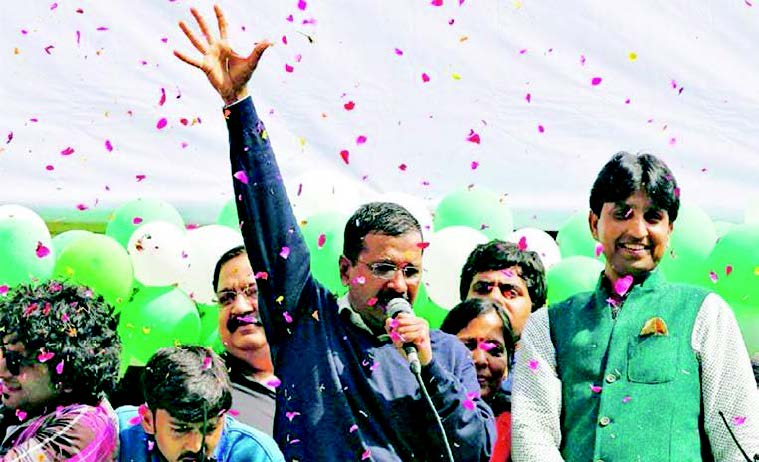
  • The AAP’s Second Coming

    The AAP’s Second Coming

    In the winter of 2013, at a dinner party hosted by a prominent Janata Dal (United) leader in the national capital, shortly after the Delhi Assembly elections, I was witness to an extraordinary conversation. Seated at a table on the lawns of a Lutyens’ bungalow, senior leaders from the Congress, the Nationalist Congress Party (NCP), the Bharatiya Janata Party, the Communist Party of India (Marxist), the JD (U) and the Samajwadi Party discussed the dramatic electoral debut of Arvind Kejriwal’s Aam Aadmi Party (AAP) that stood a close second to the BJP in the State polls. The surprise?Despite their differing world views, they unanimously described Mr. Kejriwal’s politics as the most serious threat to the future of their own parties.

    But 13 months later – a period that saw Mr. Kejriwal become Chief Minister, then quit and fade away, and Narendra Modi’s BJP achieve spectacular success in the general election – many of those opposition parties including the JD (U), the Trinamool Congress and those from the Left declared solidarity with the AAP ahead of this year’s Delhi Assembly polls. When the results arrived, the significance of the barely two-year-old party’s victory sank in, and congratulations started pouring in from opposition parties including the Shiv Sena and the People’s Democratic Party, BJP allies, old and new. The message?Thank you for stopping the BJP.

    So what does the AAP’s second coming in Delhi – a microcosm of India, with its privileged, powerful urban centre widening out into a hinterland of migrants – mean for the traditional opposition parties? Is it an opportunity or a challenge, as they read it in 2013? 


    Ending era of ‘anti-Congressism’

    Last year, the BJP became the first party other than the Congress to win a majority at the Centre, ending the era of “anti-Congressism.” If the BJP was to be defeated, the message of the electorate was that as many non-BJP parties as could unite would have to come onto one platform, flipping the concept of “anti-Congressism” formulated by the socialist leader Ram Manohar Lohia over half a century ago.

    It is, therefore, not surprising that those at the forefront of the emerging “anti-BJPism” in the country are Lohia’s disciples: Janata Parivar members who have, on several occasions, since the 1960s, worked closely with the BJP or the Jan Sangh against the Congress.

    Today, the Janata Parivar’s constituents are struggling to merge their identities to form one party to protect their turf in Bihar, Uttar Pradesh, Karnataka and Haryana against the imminent BJP onslaught, their efforts slowed down by the crisis within the JD (U) in Bihar where they will face their first challenge in State elections later this year.


    Challenging BJP in Parliament

    Simultaneously, the Janata Parivar has also been playing a key role in challenging the BJP on the streets and in Parliament. The Janata Parivar-sponsored agitations questioning the government’s failure to act on the BJP’s electoral promises of bringing back black money, enhancing prices of farm produce, etc. may have gone largely unnoticed. But in Parliament, along with other opposition parties, they have caused serious discomfort to the ruling dispensation.

    In the winter session, the opposition deployed its superior numbers to block the Modi government’s reforms agenda. Divided on economic issues, the opposition joined hands to demand a clarification on religious conversions and communal statements made by BJP MPs, before cooperating on legislative business. The government walked into the opposition trap, failing to clear the Insurance Bill and the Coal Mines Bill. Eventually, it issued a slew of ordinances, providing fresh fodder for the opposition, which accused the BJP government of bypassing Parliament.

    This show of opposition solidarity (that saw nine parties including the Dravida Munnetra Kazhagam, the Bahujan Samaj Party and the NCP working jointly) will be repeated in this month’s budget session of Parliament, with the AAP’s clean sweep in the capital only strengthening that unity. Indeed, the government will find it hard now to push the land acquisition ordinance, for it was on this issue that the AAP campaigned in Outer Delhi where it had failed to get even a single seat in 2013, thanks largely to its inability to crack the caste factor among the migrant population. In 2015, the AAP won 12 of the 14 seats here.

    But replicating opposition unity outside Parliament will be far more difficult. The compulsions of State politics will ensure that regional parties such as West Bengal’s Trinamool and Odisha’s Biju Janata Dal will continue to work alone in their States, especially when it comes to electoral politics. The All India Anna Dravida Munnetra Kazhagam and the DMK will remain the dominant parties in Tamil Nadu, joining hands with parties with smaller presence at election time. Of course, any of these parties might at some stage join a broader national opposition front, provided potential partners don’t encroach upon their own areas of influence.

    For the steadily declining Left parties, which are in power in Tripura and have a notable presence in West Bengal and in Kerala, forging issue-based unity with other parties in Parliament is even less likely to translate into electoral solidarity. At best, it will participate in street agitations and its trade unions may make common cause with similar organisations on specific issues. The Left parties – the CPI(M), the CPI, the Forward Bloc and the Revolutionary Socialist Party – are currently engaged in trying “to broaden the Left” by including the Communist Party of India (Marxist-Leninist) and the Socialist Unity Centre of India. But with its focus still on creating an alternative policy framework, one that still remains at odds with most other political parties, it is unlikely that it would have any meaningful electoral alliances.

    That leaves us with the country’s largest opposition party, the Congress. If party president Sonia Gandhi had forged electoral alliances ahead of the 2004 general election to lead the United Progressive Alliance to victory, one that sustained for a decade, her successor is not cut from the same cloth. Rahul Gandhi, poised to become party president, has not yet demonstrated the leadership qualities necessary to revive the Congress that touched a historic electoral low last year. Worse, say despairing members of the Congress Working Committee, he is unwilling to work towards building electoral alliances to regain political ground.

    Most opposition parties were looking to the Congress for revival of the opposition. But now with the party scoring a duck in a State that it had earlier ruled for 15 uninterrupted years, that hope will diminish further.

    Where does the AAP now fit into the opposition? A quick check with some opposition leaders suggests that while they would like Mr. Kejriwal to endorse their dying brands, they are wary of entering into an alliance with him. They know that his David-like slaying of the Modi Goliath means he could only join such a platform in one capacity – as the leader.

    The AAP’s historic win may have shattered the air of invincibility that Mr. Modi had acquired, but for traditional opposition parties to get another life outside Parliament, they must build a younger leadership, re-invent themselves or simply perish. The Delhi election reflected a change in the national mood and if they don’t adjust to it, their irrelevance will further grow. Arithmetic can only help up to a point.

    The AAP, on its part, is in no hurry. It first wishes to make Delhi a model State, then build its unit in Punjab where it has four MPs, and then gradually grow in the rest of the country. Any success – or failure – in Delhi, the AAP knows, will get it nationwide attention. For the traditional parties, the threat they spotted in 2013 still looms large.


  • LC GOYAL TAKES CHARGE AS UNION HOME SECRETARY

    LC GOYAL TAKES CHARGE AS UNION HOME SECRETARY

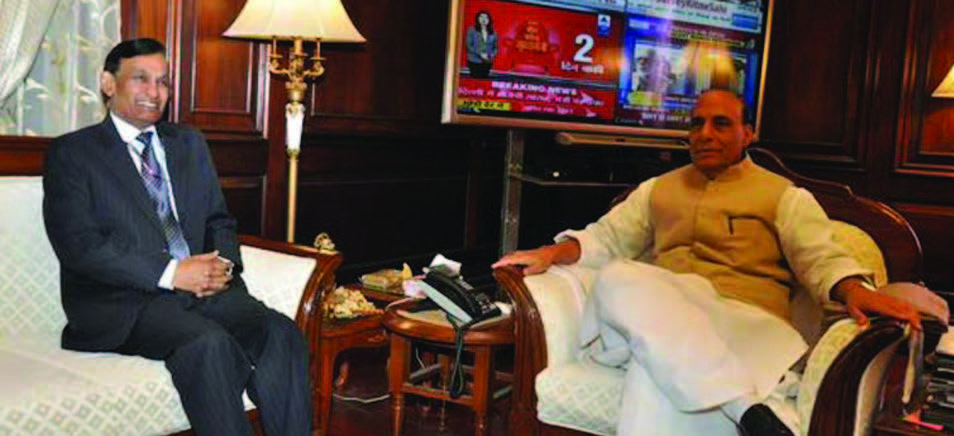
    NEW DELHI (TIP): LC Goyal on February 5 took charge as the new Union home secretary replacing Anil Goswami who had resigned on February 4.


    Anil Goswami was given the marching orders after he admitted that he had called up CBI officers to dissuade them from summoning former Union minister Matang Sinh in the Saradha scam.


    Goyal, a 1979 batch IAS officer belonging to the Kerala cadre, was secretary, rural development ministry. He has earlier served as joint secretary (internal security) in the home ministry from 2002 to 2007. He will have a fixed tenure of two years.

  • PBD 2015 ROUND-UP

    PBD 2015 ROUND-UP

    Chief Ministers beckon overseas Indians to cash in on Investment opportunities in States

    GANDHINAGAR (GUJARAT) (TIP), January 9, 2015. Chief Ministers of as many as 9 States made a strong pitch for investments by overseas Indians as they laid bare the opportunities and facilities for investors here today at the CMs session on the concluding day of the three-day Pravasi Bharatiya Divas. Presiding over the session, Mr. Rajnath Singh, Union Home Minister, said that the real Bharat was the villages of India and therefore it was important to develop villages to ensure a balanced and an inclusive growth.

    He added that every state in India has a success story to tell and have been able to make a mark in one sector or the other. The Central government, he said, believed in promoting cooperative federalism and therefore the States and the Centre have to work in tandem to make India an economic super power. NRIs, he said, will have to play an important role in fulfilling the Centre’s

    ‘Make in India’ vision.

    GUJARAT: ‘Smart State’ is the mantra of the State Government for which a five-point agenda has been adopted. These are smart schemes for welfare, smart economy, smart governance, smart energy and smart human resources. These schemes are expected to help the Indian diaspora to channelize the flow of investments into the State, set up industrial units and contribute to the social sector schemes to light up the lives of the common man. Kerala: Some of the path-breaking projects being undertaken by the State Government are: e Kochi Metro Rail project, Smart City Project, Vizhinjam port development, Light Metro Rail, Kannur Airport Project, Surface Transport Development, National Waterway and a Student Entrepreneurship Programme. These projects demonstrate that this is the right time to invest in the State and be part of the overall growth of the State. The State Government will offer full support to all who extend their help in further developing the State. Kerala has seen a rapid increase in its growth performance. The state has the highest literacy rate, best human development indicators and has many structural advantages such as a vast coastal line and high productivity due to historical reasons.

    PUNJAB: The immediate investment opportunities in the State are in the fields of IT, bio-sciences and healthcare and futuristic development of 147 cities and towns. The focus areas of the government are agro and food processing, education & skills, electronics manufacturing, textiles & garments and infrastructure development. The top five reasons for investing in Punjab are: easiest place to do business, robust infrastructure, abundant skills and enterprise,responsive, accountable & transparent governance and fiscal incentives. A lot of facilities have been initiated for the NRIs in the State of Punjab. A special court has been set for NRIs in the State to expedite the process of litigation, special police thanas have been put in place and a special commission has been set up to address property related issues of the NRIs.Jharkhand: The State Government offers ample opportunities to investors to partner in sectors such as industry and industrial infrastructure, electronics & IT/ITeS, road & road transport infrastructure, skill development, knowledge & education, healthcare, power generation & distribution, tourism, hospitality, leisure & entertainment and urban infrastructure. The key enablers for attracting investments are nearness to natural resources, skilled manpower due to existing industrial base, investor friendly policies and land bank. To leverage these enablers through a comprehensive and partnering module, the Government of Jharkhand has focused on industrial and economic development of the state through implementation of various infrastructure projects on PPP format.

    MADHYA PRADESH: The State has come a long way from being counted amongst the BIMARU states. It has state-of-the-art infrastructure including roads, power, railways etc. The state has been witnessing double digit growth and has the most investment friendly environment. The industrial policy of the state is investor friendly, the state is very peaceful and there are no man day losses and has single window clearances. The State houses India’s best national parks and world heritage sites.

    ANDHRA PRADESH: The state of Andhra Pradesh has a long coast line and is the gateway to India and south east Asia, has 30 urban centres, extensive road and rail network, natural gas and 24X7 power, young and skilled population and deposits. The state is looking at building five grids- water, gas, power, road and fibre. It has a very strong agriculture and marine and diary sector besides having a niche in high technology sectors like information technology. The state has formulated specific policies to give customised impetus for thrust sectors like industry, port, electronics, textile and agro processing. Also, a land bank has been created with 400 thousandhectares of land. The state is ideally poised for river linking and has the potential to become a drought proof state in the next 5 years.

    MAHARASHTRA: The state of Maharashtra is a land of investment opportunities. The State Government has started fast tracking approvals, simplifying processes and initiated the process of reducing timelines to facilitate investors, inflow of FDIs and make the state conducive for ease of doing business. The state has commenced work in full earnest to take ahead Prime Minister Narendra Modi’s call for ‘Make in India’. The State offers immense opportunities for infrastructure development as the government is planning to create a new urban city which would be bigger than the city of Mumbai. Also, the Government looks forward to providing affordable housing to middle and lower strata of society, and hence the State invited the Pravasis to take advantage of these investment opportunities.

    GOA: The State possesses talented human resource, natural reserves, captivating beauty which makes a great tourism destination. The Goa Government has now identified thrust areas such as creation of knowledge hub, focus on R&D, pharmaceuticals, biotechnology, aviation, aerospace, defence, IT, agro-based & food processing industries, to synergize its efforts with the ‘Make in India’ campaign of the Prime Minister. The aim is that the fruits of development percolate to the underprivileged of the society.

    HARYANA: The state of Haryana witnessed rapid growth in various sectors and is also an integral part of Delhi’s National Capital Region. Earlier, known as an agricultural state, Haryana has come a long way and now witnesses the presence of some of the well-known multinational companies. Haryana is focusing on skill development for both its urban and rural population toprovide them with employment opportunities, particularly, in MSMEs. Known for achieving milestones in sports, the Government desires to establish Haryana as a ‘Sports Hub’.

  • I’m not a machine, I’m human, says Saina Nehwal

    I’m not a machine, I’m human, says Saina Nehwal

    THIRUVANANTHAPURAM (TIP): India’s ace shuttler Saina Nehwal is keen to get her priorities right. She doesn’t want to overburden herself by playing back-to-back tournaments in the days ahead. A strong performance in the Jakarta World Championship in August next year and Rio Olympics in 2016 are her twin targets.

    In order to optimize her potential, she has decided to give some of the important national events a miss next year. The Hyderabad shuttler has stated that she will not feature in the National Games to be held in Kerala as well as the National Senior Badminton Championships to be held in Vijayawada. Both these events are scheduled to be held in January-February 2015.

    “I’m not a machine. I’m a human being. I can only play according to what my body permits. I play at least 12 to 15 tournaments around the globe a year. I have to prioritise the tournaments I play in and that will be done in consultation with my coach U Vimal Kumar, Badminton Federation of India and my back-up team that includes my family. And I don’t think I will be part of National Games and the Senior National Badminton Championship,” the World No. 4 said on the sidelines of a promotional event here.

    Though Andhra Pradesh is not likely to field a team in the team events of National Games, Saina could have played in the individual singles event. But she has ruled out that option.

    “Right now I’m taking a week’s break and I am here today only because of my obligation towards my sponsors. I’ll resume training from Monday or Tuesday with my coach in Bangalore. I can only take it from there. I’m going to start off with some light training. Usually, it takes two to three weeks to get into competition mode,” Saina said. “The World Championship is in August and Olympics in Rio is happening in another year’s time. I have to concentrate on these two as both are big tournaments for me. It will be tough. I want to stay fit in 2015. So I have to be choosy about the tournaments I participate in,” Saina said.

  • GOVT DECLARES BIRD FLU IN CHANDIGARH

    GOVT DECLARES BIRD FLU IN CHANDIGARH

    CHANDIGARH (TIP): The Central Governmenton December 18 notified the outbreak of AvianInfluenza in captive ducks and geese at SukhnaLake in Chandigarh, putting into operation the birdflu prevention and surveillance plan to sanitise theaffected area and prevent the infection fromspreading.The UT Administration late on December 18evening began culling and destroying around 150ducks and geese on the island in the lake after theAnimal Husbandry Division of the Ministry ofAgriculture confirmed H5N1 (highly pathogenicavian influenza) and instructed the administrationto cull the birds.Culling was restricted to the lake, where at leastone sample of the dead geese tested positive for birdflu at the National Institute of High SecurityAnimal Diseases Laboratory (HSADL), Bhopal.Migratory birds in and around the lake will not beculled, officials said.The operation was jointly launched by theAnimal Husbandry Department, Forest and WildlifeDepartment and Chandigarh Tourism DevelopmentCorporation (CITCO) under the supervision ofPrince Dhawan, Director, UT Animal HusbandryDepartment.Rajbir Singh Rana, Joint Secretary (LivestockHealth), Animal Husbandry, and the nodal officerfor the animal disease outbreaks in the country, saidthe lake would have to be sanitised for three monthsas part of the surveillance plan to end the infection.“We have notified the outbreak of H5N1 incaptive ducks and geese at Sukhna Lake and theculling operations are on.We are also sending analert on avian influenza in Chandigarh to the WorldOrganization for Animal Health. The next step afterthe culling operations will be to sanitise the areaand undertake active surveillance for threemonths,” Rana said.“The movement around the lake will remainrestricted for a month to begin with and possibly forthree months, which is our normal drill as part ofthe surveillance programme. The idea is to sanitisethe area,” he said. The Animal HusbandryDepartment said samples of the lake water will alsobe screened to rule out infection. “Teams from ourBhopal lab will be sent for environmental samplingof water and droppings of infected birds at SukhnaLake. The future course of action will depend on theresults of those samplings,” Rana said.Around 60 samples taken from migratory birdshave come out negative at a Jalandhar laboratory.The samples of around 25 ducks at Golf Club inChandigarh were also negative.Anup Kumar Thakur, secretary, AnimalHusbandry, said there was no reason to panic sincethe infection was localised around the Sukhnaisland. “The scale of the problem in Chandigarh isnot the same as was reported recently in Kerala.Weare keeping a close watch,” Thakur said.Dr Lovelesh Kant Gupta, Joint Director, UTAnimal Husbandry Department, and nodal officerfor the operation, said the island would have to bekept out of bounds for people for a year. Onconsumption of eggs or poultry products, he saidthe avian influenza virus vanished if the food wascooked at 70 degree heat. “Once you cook yourchicken or eggs properly, there is no problem,” hesaid. The UT Administration will send its report onculling to the Centre on December 19. The Ministryof Health dispatched a central team to assess publichealth consequences of the culling operations andbird flu in and around Sukhna. The central teamwill assist the team engaged in culling and watchout for respiratory tract infections in the populationwithin a 3-km radius of the lake

  • FIR?against Kerala minister in graft case

    FIR?against Kerala minister in graft case

    THIRUVANANTHAPURAM (TIP): The Kerala Vigilance and Anti-Corruption Bureau (VACB) on Thursday registered a case against Finance Minister K M Mani on charges of accepting Rs 50 lakh as bribe from bar owners to ensure favourable decisions from the state government. The FIR on the case, submitted at a special vigilance court, comes after a Quick Verification initiated by the VACB following the request for a probe made by Leader of the Opposition V S Achuthanandan. Biju Ramesh, working president of the Kerala Bar Hotel Owners Association, had alleged that Mani accepted Rs 1 crore as bribe to ensure favourable decisions on issuance of bar licences in the state. Mani is also chief of Kerala Congress (M), a powerful ally of the Congress party in the ruling United Democratic Front (UDF).

  • WINTER HOLIDAY DESTINATIONS

    WINTER HOLIDAY DESTINATIONS

    The onset of winter is marked by poetic misty mornings, a crisp breeze, and nights when all you want to do is snuggle into a quilt and read a book. But the winter months are also a fantastic time to discover a completely new side of some of India’s popular travel destinations. Immerse in the snow-laden beauty of Gulmarg, set up a tent amidst sand dunes of Jaisalmer, or warm up to a steaming cup of tea in Munnar’s expansive tea plantations—there are many wintry experiences to choose from, once you don the layers and buttress yourself against the cold. From the Himalayan peaks blanketed in glistening snow to verdant hill towns down south, here are some of the best escapes in India that are ideal for your winter vacation.

    MANALI

    Manali gets its first snowfall around mid December, when it transforms into a winter wonderland replete with snow-covered peaks, and a blanket of pristine white draped all across the hill station. With the stunning backdrop of the Himalayas, it offers the perfect balance between tranquility and adventure, making it one of the most popular hill destinations in northern India. Fringed by thick pine trees and the Beas river gurgling along, you can decide to spend your holiday doing nothing at all or pack in your itinerary with interesting activities.


    30


    Approached by road from Chandigarh, which is about 300 kilometres away, there are a number of Himachal Tourism buses that run from Delhi and Chandigarh at frequent intervals, though the distance from Delhi is best undertaken in one of the comfortable overnight buses. For those who wish to partake in adventurous activities, there’s fishing, white water rafting, paragliding, skiing, mountaineering, and hiking in and around Manali. If you’re looking to go off the beaten path, try one of the packages organised by Trans Himalayan Adventures, which focus on healing and rejuvenation. Solang Valley is a good option for the kids, offering a bunch of fun winter sports including skiing.

    SHIMLA

    One of the preferred winter destinations in the country, mostly for its proximity to the larger cities and its good mix of entertainment, Shimla in Himachal Pradesh is another great place to get snowed in. Plan your trip some time after the third week of December for guaranteed snowfall. Getting there is easy, take a flight, train or bus from any of the neighbouring cities of Delhi and Chandigarh, or then just hire a taxi and do the seven-hour-long drive at your convenience. In accommodation, there are options aplenty.

    If you’re looking to pamper yourself, stay at the Oberoi Cecil or the heritage Woodville Palace, or downsize your budget with umpteen number of mid-range and budget hotels dotting the town. There’s lots to do here. Some of the major tourist spots include the Viceregal Lodge & Botanical Gardens, the Ridge which offers beautiful views of the hills, the Mall for a spot of shopping, cafes and restaurants, Chadwick Falls, Elysium Hill, the Dorje Drag Monastery, Christ Church & St. Michael’s Cathedral, Jakhoo Temple, Sankat Mochan and Tara Devi. A perfect white getaway which is enchantingly beautiful and entertaining too.

    GULMARG

    If you’re looking for a destination which is as breathtakingly beautiful as it is adventurous, then look no further than Kashmir. The Kashmir valley is considered heaven on earth, and when it’s blanketed in snow, it exudes a charm few other places do. The tiny and isolated hill village of Gulmarg is situated at the western extremity of the Himalayas in a subsidiary range called the Pir Panjals. Lying about 50 kilometres from Srinagar, it can be easily accessed by tourist buses, taxis and even by air.


    31


    Owing to its location, Gulmarg gets some of the heaviest snowfalls in the Himalayas and has earned the distinction of being the best ski resort in the country. So once you’ve feasted your eyes on all the beauty, immerse yourself in some activity by hitting the slopes. Catering to both beginners and pros, skiing here can be one of the most powerful experiences. For the more mild adventure enthusiasts, there’s the option of sledging, cable-car rides and snow boarding. Ski season starts mid December and lasts till the beginning of April. As for accommodation, there are various options. From state-owned huts and cottages, and beautifully appointed midrange hotels like Nedous Hotel, to luxury accommodation at Hotel Highlands Park, there’s something to suit every budget. In addition, Gulmarg offers several other sites of interest for tourists. It has the highest golf course in the world, the frozen Alpine lake of Alpather, the Baba Reshi shrine and the Gulmarg Biosphere Reserves.

    JAISALMER

    A magnificent fort looming over the city, picture-postcard vistas of sand dunes and an array of illuminated sandstone buildings—Jaisalmer is nothing short of a scene straight out of Arabian Nights. Once a sleepy desert city, Jaisalmer now attracts many couples, honeymooners and families by dint of its erstwhile royal splendour. The Jaisalmer Fort (also known as the Golden Fort of Rajasthan) is the most splendid attraction of the city, perched on an elevated patch looking over the city. Surrounded by numerous golden-hued shrines, the Gadsisar Lake is ideal for an evening picnic or a short paddleboat ride.

    The city’s most popular activity is taking a camel ride over the desert sands; best enjoyed at sunrise and sunset, the ride gives an insight into Rajasthan’s rural life and stunning vistas of the horizon. Jaisalmer’s winding alleys are home to vibrant markets from where you can pick up quintessential Rajasthani souvenirs. Rajasthani cuisine, famous for its spicy veg curries, mouth-watering meat dishes and delectable sweets is the icing on the cake.

    WAYANAD

    Located between the Kannur and Kozhikode districts in Kerala, Wayanad is a sparkling green emerald sprawled across the slopes of the Western Ghats. The monsoons persevere here—the rainy season starts in June and lasts all the way till mid November—during which the already lush landscape takes on an even more vibrant shade of green, and everything is washed squeaky clean. The most enjoyable way to experience it is by checking into a jungle resort—even better if it has a treehouse. During the occasional dry spells in between, venture out and enjoy everything else the region has to offer. Wayanad ploughs tourists with some interesting prehistoric archaeological sites, tea plantations and thick forests, and is home to some of the oldest (and most insulated) tribes in India.

  • 22 STATES, UTS SUPPORT BILL TO PREVENT ‘HONOUR KILLINGS’

    22 STATES, UTS SUPPORT BILL TO PREVENT ‘HONOUR KILLINGS’

    NEW DELHI (TIP): The government has initiated the process of drafting a law against honour killings by treating crimes in the name of honour as a separate category of offences. The moves comes after 22 states, including Punjab, Haryana, Himachal Pradesh and Chandigarh (UT), supported the recommendations of the Law Commission of India to treat honour crimes as a standalone offence. Law Minister Sadananda Gowda said in Parliament today that the government would, after considering the comments from states, hold consultations on the enactment of the legislation against honour crimes. “After considering the responses of all states and UTs and consultations with stakeholders, the policy decision to enact the legislation on the subject will be taken. It would be difficult to fix a timeline but the department has initiated the process of implementation of the report of the Law Commission in this respect,” Gowda said.

    The Law Commission had in its 242nd Report on “Prevention of Interference with the Freedom of Matrimonial Alliances in the Name of Honour and Tradition” recommended a strict law against honour crimes being perpetuated by community panchayats working by different names in different parts of the country. The proposal to bring the law was first initiated during Congress-led UPA-II which had formed a Group of Ministers to make recommendations. The GOM never presented its report and was disbanded once its chairman – Pranab Mukherjee – proceeded to become President. At that time, Haryana had opposed the move. The BJP government, after coming to power, circulated the proposal again and 22 states, including Haryana (which now has a BJP government), have supported the recommendations of the Law Commission.

    Apart from Punjab, Haryana, Himachal and Chandigarh, the states that have backed the law are: Andhra, Assam, Chhattisgarh, Goa, Jharkhand, Karnataka, Kerala, Meghalaya, Mizoram, Nagaland, Odisha, Uttar Pradesh, West Bengal and the UTs of Dadra and Nagar Haveli; Daman and Diu, Lakshadweep and Puducherry. The responses of the remaining states are awaited. Consensus of states on the law to curb honour crimes is critical because the subject falls in List III (Concurrent List) of the Seventh Schedule of the Constitution and the Centre alone cannot legislate on it.

  • GOPIO Cosponsors First Successful Health Fair

    GOPIO Cosponsors First Successful Health Fair

    WASHINGTON (TIP): Healthcare is a big issue for new immigrants, especially elderly people. While Medicare is available to virtually all citizens, starting at age 65, immigrants legally present in the U.S. for less than five years are not eligible and private insurance companies generally do not offer health insurance plans for those over 65. Although there are health insurance options, but these are usually catastrophic traveler’s insurance.


    48
    Organizers. From L to R: Sam Mukherjee, Mayur Modi, Zafar Iqbal, Dr. Surinder Singh Gill


    They usually have a very high deductible and they are very expensive. In view of these harsh realities facing elderly community members from the Subcontinent, the Masjid Gulzar E Madina of Islamic Center Millford Mill Road, Pikesville, Maryland took a bold initiative to organize a first health fair on Sunday 23rd November2014. A number of area community organizations, such as the Global Organization of People of Indian Origin (GOPIO) – Metropolitan Washington, Philippines Nurses Association, Chinese Culture and Community Center, Muslim Community Clinic Inc., Silver Spring, Capital Region Telugu Society, Kerala Cultural Organization and Hindu Seva, co-sponsored this event.

    A large number of physicians, nurses, and healthcare workers volunteered their resources and worked tirelessly to provide their services for a large number of attendees covering a wide range of ages. An easy access to physicians of diverse specialties under one roof provided convenient consultation for wide range of medical issues. In addition to primary care, the medical specialties available for free consultations in a privacy setting included primary care, endocrinology, gastroenterology, hematology-oncology, otolaryngology, orthopedics, rheumatology, and medical ID cards for the community.

    Colgate-sponsored dental van provided dental consultation for children ages 1 to 12. Maryland Physicians Care Van made nutritional healthy food, Amerigroup sponsored Moon Bounce for children, and Columbia Lite House Van did eye sight screenings. The health fair also provided massage therapy and yoga enthusiasts displayed their skills and love for healthy living. Besides yoga sessions on site, there were diabetes and cancer prevention education vendors, healthy living demos and advice booths.

    Mental and behavioral health information, often a taboo topic, was sensitively offered by Counselors Helping South Asians/Indians (Chai). The Samar Group obtained bone marrow sign ups and the Washington Regional Transplant enrolled organ donor. Volunteers from a local Farm Market gave a wide range of fresh vegetables to all attendees. “The outstanding accomplishments of the day were made possible by the cohesive and dedicated collaboration of the Health Fair planning team, physicians, allied medical personnel, county and state health agencies, voluntary charitable organizations countless volunteers, Masjid management, and the Health Fair Advertising team as well as the support of the local organizations,” said Dr. Zafar Iqbal, President GOPIO DC Chapter.

    This successful event was coordinated by Mayur Mody and the management of Islamic Center thanked him for providing excellent leadership with efficient and indefatigable energy. The logistics for medical team was coordinated by Dr. Surinder Singh Gill and Dr. Alif Manijwala, and Dr. Sukhpal headed the team of volunteers. The health fair was open to people of all different ethnic, religious and socioeconomic backgrounds and over 400 people were able to get medical consultation.

  • Eminent jurist Krishna Iyer is dead

    Eminent jurist Krishna Iyer is dead

    THIRUVANANTHAPURAM (TIP): Eminent jurist and member of Kerala’s first Communist government Justice V R Krishna Iyer, 99, died at a private hospital in Kochi at 3:30 pm on Dec 4 Justice Iyer was admitted to Medical Trust Hospital with breathing difficulties on November 24. The former Supreme Court judge celebrated entry into his 100th year on November 15 when prominent citizens from all walks of life came together to greet him. Born in 1915 to advocate V V Rama Iyer and Narayani Ammal in Palakkad district, Justice Iyer was one of Kerala’s most revered sons who continued to be responsive to social issues all through his post-retirement life in Kochi.

    Justice Iyer is celebrated for his admission of PILs in court and for his Supreme Court judgments that interpreted law in the context of fundamental human rights. He retired as a Supreme Court judge in 1980. Iyer is survived by two sons. His wife Sharada died in 1974. A member of the Madras Legislative Assembly in 1952, Iyer was minister for Home, Law, Social Welfare, Power, Inland Navigation, Irrigation and Prisons in the 1957 Communist government of the state under E M S Namboodirippad. In 1987 he contested, unsuccessfully, in the presidential election against R Venkataraman. He was also a prolific writer with more than 50 titles on varied legal aspects to his name. ‘Wandering in Many Worlds’, an autobiography and ‘Maranaananthara Jeevitham’, a collection of essays on the concept of life after death, are also among his important works. He was conferred with the Padma Vibhushan in 1999.

  • A mixed Blessing for India

    A mixed Blessing for India

    Lower petroleum prices hold obvious advantages for Indian consumers, but a bearish global oil market could also hurt several segments of the country’s economy

    The Oil Ministers of 12 member states of Organization of the Petroleum Exporting Countries (OPEC) concluded their meeting in Vienna on November 27 by deciding to continue with their three-year-old production quota of 30 million barrels per day (mbpd). Thus, they calculatingly ignored nearly one mbpd oversupply in the global oil market which has pushed the crude prices down by over 30 per cent since June 2014.

    The global oil glut, in turn, has been caused by a number of factors which include OPEC’s own overproduction, rising non-OPEC production (particularly by the U.S.- based “Shale Revolutionaries”) and lower demand from China and Europe. By declining to cut their output to shore up the prices, OPEC in general, and Saudi Arabia in particular, have refused to play the role of global “swing producer.” As most factors responsible for the current global demand-supply disequilibrium are systemic in nature, the world faces prospects for relatively bearish oil prices over the foreseeable future.

    Indeed, the prices have continued to fall with the Indian basket touching $72.51/barrel on November 27 – a decline of nearly $9 from the average during the first fortnight of the month. As the world’s fourth largest importer of crude, India can afford to exult at this precipitous crude price decline. Still, given the strategic importance of this development, a more comprehensive analysis is desirable.

    A virtuous cycle in the economy From the limited perspective of India’s consumer economy, lower global oil prices undoubtedly augur well. Lower pump prices reduce pressure on the consumer who can spend the savings elsewhere, spurring the demand side of the economy. As petroleum products form a large part of the consumer price indices, lower crude prices result in reduced inflation, which in turn paves the way for lower interest rates and greater buoyancy in investments.

    Thus, lower oil prices can trigger a virtuous cycle in the Indian economy. After all, with India’s imports running at an estimated 3.7 mbpd in 2013, a $30/barrel decline in oil prices amounts to a $40 billion savings bonanza on annual imports. The impact would be best felt on the petroleum sector where marketers have been groaning under subsidy burden. The transport sector would also be a direct beneficiary. If we widen the impact analysis to consider the totality of the Indian economy, some challenges also appear.

    First, as oil producers are India’s major markets and investment destinations, their economic decline may affect the country. Recent decline in the share prices of Bharti Airtel and Bajaj Auto due to the devaluation of the Nigerian Naira illustrates this more complex trend. Second, apart from being the fourth largest oil importer, India is also the world’s sixth largest petroleum product exporter earning over $60 billion annually – nearly a fifth of global exports.

    A bearish oil market would hurt this segment with reduced demand, lower unit prices and lower margins. Third, the oil price decline coincides with resumed foreign interest in investing in India. It is difficult to assess their mutual correlation, but lower oil revenues may attenuate arrival of petrodollars into India. Fourth, whenever oil revenues decline, countries that export Gulf oil try to tighten their belts by emphasizing local production and downsizing their foreign labor force in which Indians dominate. Thanks largely to over five million Indian expatiates there, India was the world’s largest recipient of remittances which topped $70 billion in 2013. The possibility of these remittances being reduced cannot be ruled out. This would have a serious impact on remittance-dependent States such as Kerala and Goa.

    Fifth, lower crude prices may cast a shadow over the sputtering controversy over natural gas pricing norms in India as the latter generally follow the oil prices. Future investment decisions in oil-related sectors may get delayed. Sixth, lower pump prices may cause higher fuel consumption as sales of automotive products soar. This would worsen commuter woes as well as cause increased urban pollution. Finally, a decline in oil prices generally accompanies a global decline in commodity prices, particularly those of minerals and agricultural products. India remains a major exporter of these and would see lower realization, particularly of Guar Gum, a critical input for the shale industry.

    The long-term impact of lower oil prices is likely to be felt beyond the economic domain. Geopolitically, persistent lower oil revenue could propel a number of emerging exporters towards domestic political instability as the ruling elites lose their capacity to provide “stomach infrastructure” to the common man. Countries with lower per capita oil revenue such as Nigeria, Iran, Algeria and Venezuela may be more at risk. In general, however, lower oil revenues may have a dampening effect on regional or domestic disputes. Measures to leverage oil prices India can leverage the current low oil prices for long-term gains. To this end, the following measures can be considered.

    One, it can foster long-term crude supply relationships with exporters in return for stable prices, upstream engagements, inbound investments, etc.

    Two, it can enter into oil-for-infrastructure barter deals to boost project exports.

    Three, it can restructure public sector oil companies to make them more productive and globally proactive for leaner times ahead.

    Four, it can channel some of the oil bonanza to mitigate the increased cost disadvantage of renewable and alternative energy sources.

    Five, it can build its own strategic oil reserves. The current downturn in oil prices underlines the cyclic nature of commodity trade and illustrates OPEC’s reduced regulatory capacity consequent to it supplying only a third of global demand.

    While Shale Revolution may be a new and price-sensitive factor, it is unlikely to vanish with time or with lower prices. During past oil bear-hugs in 1986, 1993-99 and 2008, the lower prices invariably spurred consumption and the oil bounced back.

    There is no reason to believe that the oil prices shall not rise again. India would do well to recall an old oil adage, “The cure for high oil price is high oil price itself” – and use this rare, cyclic opportunity for long-term gains.

    (The author has served as Indian ambassador to Algeria, Norway and Nigeria – all major oil exporting countries.)

  • COURT ISSUES ARREST WARRANT AGAINST RAILWAY MINISTER’S SON

    COURT ISSUES ARREST WARRANT AGAINST RAILWAY MINISTER’S SON

    Karthik Gowda, accused of rape and cheating by Kannada actress Maithreyi, had earlier failed to appear for the hearing

    BANGALORE (TIP): In a blow for Karthik Gowda, son of Railway Minister D.V. Sadananda Gowda, a Bangalore court issued arrest warrant and lookout notice for him after he failed to appear in a trial against him. “As Karthik failed to appear before our investigation team despite repeated summons since Aug 29 for questioning on the charges alleged against him by Maithreyi, the eighth additional city metropolitan magistrate issued the warrant to arrest him,” Deputy Commissioner of Police (East) T.R. Suresh said.

    Police have formed two teams to look for 30-year-old Karthik in Bangalore and across the state. Police in Goa and Kerala have also been alerted to look out for him. A search team has left for Madikeri in Kodagu district, about 230 km from here, as he got engaged there Aug 27 and was later seen in Mangalore. “Once arrested, we will present him (Karthik) in the court and seek his custody for interrogation.

    The case is booked against him Aug 27 under Sections 376 (rape) and 420 (cheating) of the IPC (Indian Penal Court) on the basis of complaint filed by Maithreyi,” said Suresh. arthik was accused of rape and cheating by Kannada actress Maithreyi.Maithreyi has claimed that Karthik tied the wedding knot with her June 5 at his other house in Mangalore, about 350 km from Bangalore, and that they consummated the informal marriage after he forced himself upon her.

    On September 30, Karthik moved a court for anticipatory bail in the case. The city sessions court, however, adjourned the case for further hearing to Sep 4 after issuing notice to the R.T. Nagar police station where the complaint was filed on September 3. The court also asked the police station if it would file objections to Karthik’s anticipatory bail plea.

  • ONAM- the biggest festival of Kerala

    ONAM- the biggest festival of Kerala

    Onam is celebrated in the beginning of the month of Chingam, the first month of Malayalam Calendar (Kollavarsham). There are actually four days of Onam. The most important day of Onam (known as Thiru Onam) is the second day. Festivities actually commence around 10 days before this day (on Atham), with the preparation of floral arrangements (pookalam) on the ground in front of homes. This year Thiru Onam is on September 7. (Atham was on August 29).

    ONAM is like a Dream!

    Kerala is known for its enchanting beauty. The swaying palms, the sky kissing hills, the sun-bleached plains, the lush paddy fields, the placid lakes, the shimmering lagoons, all make it a veritable paradise on earth. I often hear the phrase ‘God’s on country’ as Kerala is often characterized. We are all too familiar with the legend behind the festival. For the sake of the young people, let me briefly state two versions of the story. Maveli, the king Mahabali, the legendary king who was unjustly pushed down into the Nether world by Vamana, the fifth ‘avatar’ of Vishnu.


    25
    Thiruvathira is a popular folk dance performed by women at Onam


    It is said that, there was perfect equality, peace and happiness in his kingdom. No one dared to lie or cheat. However, gods grew envy at his acts of benevolence and growing popularity. After the banishment, Mahabali was given the special privilege to visit his subjects once a year. Historians give a different twist to the legend. According to them, Mahabli, who was a Buddhist, defeated by Hindu kings from Narmada (currently Maharashtra) in the North.

    Subsequently, they conquered the land and sent him into exile in Ezahm which is currently known as Sri Lanka. It was believed that permission was granted to Mahabali to come and visit his subjects during the period when they traditionally celebrated Sravanolsavam. Therefore, for Keralites, it may be a symbolic description of the Aryan invasion and the imposition of its culture on the native Dravidian populace of Kerala.


    26
    Snake boat races are popular attractions during Onam celebrations. The most famous snake boat race that’s held during Onam celebrations is the Aranmula carnival, along the Pampa River


    Regardless, Onam is a grand harvest festival which is celebrated with flowers, sumptuous feasts, and swings under mango trees. Onam represents the spirit of Kerala transcending the people of Kerala the world over to an enchanting mood of thanksgiving, idyllic pleasure and music and dance. People irrespective of religion celebrate Onam with traditional gaiety and fervor. It is stated that where there is a Keralite there will be Onam.

    Now the celebration is extended to the Diaspora, Mahabali needs to travel around the globe to visit all his subjects. Onam embodies the message of basic goodness of man who is selfless in his deeds towards fellow man. It is also about a dream; it is a dream about peace and tranquility in the world. It is dream about economic well-being and resource sharing; it is a dream about love and brotherhood, it is a dream about high ethics and morals; and it is a dream about human justice and preservation of nature.

    Great men in history dreamed before they embarked on a course to achieve them. Mahatma Gandhi had a dream. He set out to gain freedom for the 300 million Indians from the colonial rule and slavery. He mobilized and motivated the masses through non-violent protests which eventually gained the long cherished independence. Fulfilling own dream was fraught with dangers. He paid the ultimate price with his own life to preserve what he dreamed about.

    Jawaharlal Nehru had a dream which was set out in the preamble of the Indian constitution: to setup a secular republic with equal rights for everyone with freedom to think and speak and freedom to worship; to build a democratic society which fights fascism and communism; to promote equal opportunity and justice for the common man and independence in International relations. Today, that dream is being challenged by the forces of communalism which would like turn India on a path towards Hindutva.

    It is quite a surprise to see that this divisive philosophy are tacitly endorsed by some in our own community who enjoy the secular freedom in this country yet, want to deny the same freedom to others who live in India The great Martin Luther King who emulated the non-violent method which Gandhi has pioneered had a dream of his own. He had a dream to deliver his people from the slavery and second-class status – We are all too familiar with his ‘I have a dream’ speech. – ‘I have a dream that one day this nation will rise up and live out the true meaning of its creed. We hold these truths to be self-evident that all men are created equal ‘With the voting rights acts in 1964, his dreams were come to fruition.

    Yes, there are continuing challenges faced by the black community at the social level which may require further attention. America as a nation had a dream as well. When the pilgrims took the boat and landed on the Plymouth seeking religious freedom, their dream was to develop the most democratic, secular and prosperous society based on capitalism. They seemed to have accomplished that by making America a superpower, second to none, economically and militarily.

    Yet there are great challenges ahead of this nation as it is falling victim to a valueless culture which could eat away the core of the principles on which this nation was founded. Yes, there are challenges; however, we all need to dream as individuals, as a society and as a nation. For many of us the dream of prosperity is only half of the puzzle. We might have accomplished them. We may be still missing that spiritual and moral dimension which made Kerala once a land of prosperity, justice and brotherhood.


    27
    A colorful float that’s part of the Onam Pulikkali festivities


    All of us should have clear goals in life. This is a non-optional component of a spiritually healthy life. You can see from many of these examples I have elicited, there Is a close connection between dreams or in other words, goalorientation and motivation and fulfillment? The lack of those dreams is a big reason why so many of us are unmotivated in our tasks. It is said that performance is equal to motivation and ability. The component motivation requires expectancy and that is where the dream fits in. If it is motivating, it has to be making progress and accomplishing something.

    This week as we celebrate Onam, let us once again become nostalgic. Let Onam transcends our thoughts and process. Above all, it remains a dream. Attainable or not it symbolizes human yearnings; which keep the dreams alive. It motivates us to go on. Bible says, without vision, people perish; keep dreaming and let the spirit of Onam burn within us forever. Happy Onam to everyone

    (The author is a former Chief Technology Officer, United Nations)