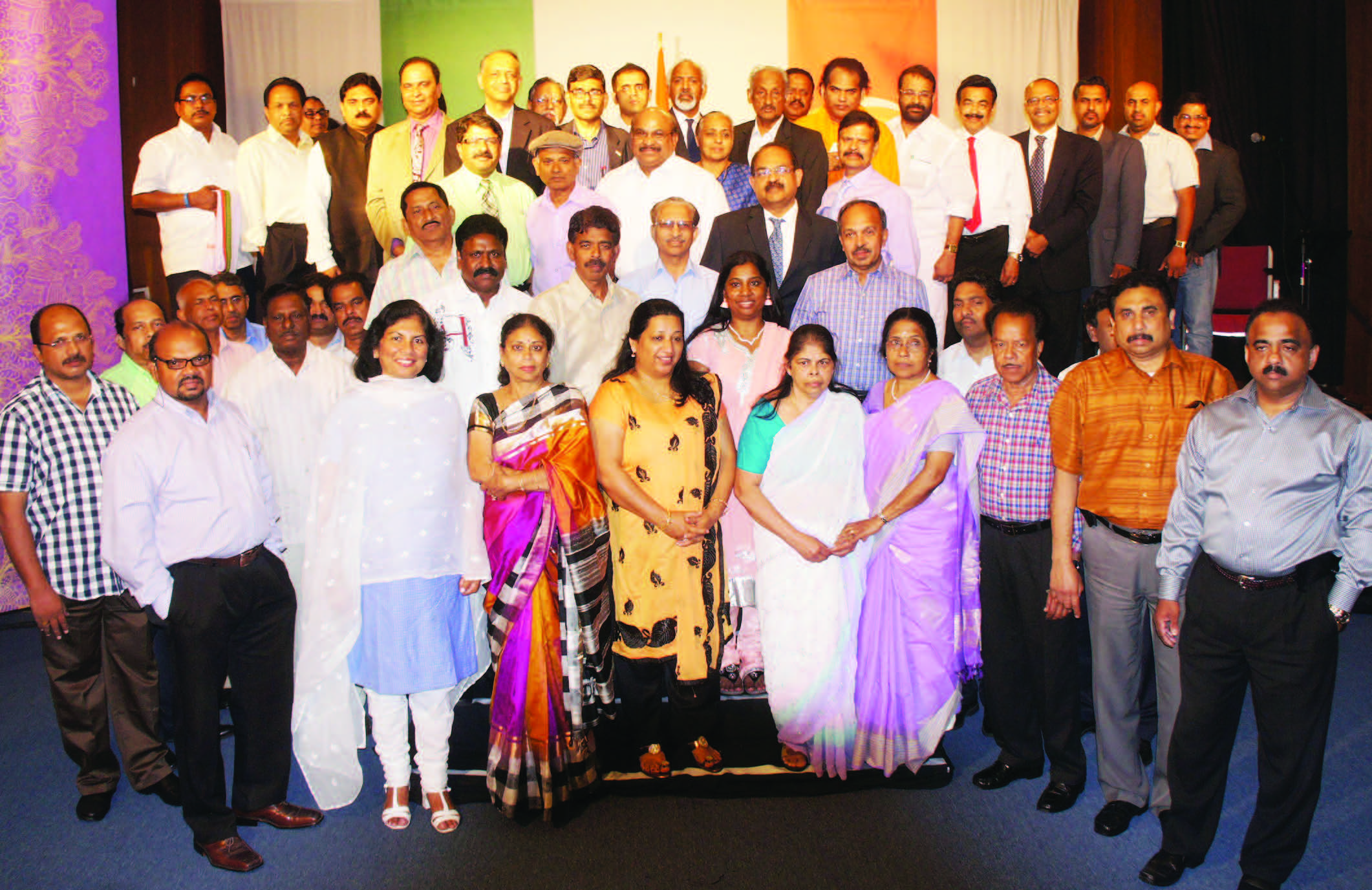
NEW YORK (TIP): ‘Kerala is the real model for inclusive development and governance that has applied the philosophy of Congress party of uplifting the poor and aiding the minorities and the backward sections of the society thereby achieving the highest rank as the most developed state in India based on the United Nations Human Development Index’ said K.C. Joseph, Minister for Non- Resident Keralites Affairs and Rural development. Joseph was addressing a meeting organized by the Kerala Chapter of Indian National Overseas Congress (I), at Charis Center, in Floral Park, New York. ‘For those who are asking what Congress has done in the last 60years ought to go back and revisit the pre-independent India’ he challenged.
‘Congress party had not only led the country to its independence, but also led the green revolution and the IT revolution that catapulted the nation to become the 5th largest economy in the world. People tend to have short memories and the debacle in the last election might have been due to a critical ‘message gap’ across the voting population, primarily the young ones, that was clearly exploited by the opposition’ he added. He also assured the gathering of giving prompt attention to the Pravasee issues and promised full cooperation from the Kerala Government in that regard.
George Abraham, the Chairman of INOC (I), presiding over the meeting lauded the minister for his 4 decades of selfless service to the people of Kerala and the non-resident Keralites in particular. ‘Mr. Joseph is truly a man of integrity and honor and someone who has an unblemished record in public life and someone we could all be truly proud of” Abraham added. President Juned Qazi thanked Kerala for being a stronghold for the Congress Party and thanked the minister for his efforts on behalf of the non-Keralites across the globe. He also congratulated the new team of leadership for the Kerala Chapter consisting of Thomas T. Oommen as the Chairman and R. Jayachandran as the President. Mr. Harbachan Singh, the General Secretary spoke of the activities of INOC (I), in US over the years and urged the Minister to strengthen the ties with the organization at the state level. He emphasized the formidable strength of the NRIs and how it could fuel the mutual benefit of the Indians in India and USA. Jaychandran in his address urged the Congress loyalists to stay focused in these difficult times for the party and promised to work hard to promote a truly democratic and pluralistic India while strengthening the bond between our two countries.
A number of guest speakers also spoke on the occasion that included Swami Guru Ratnam Thapasi of Santhigiri, Kottayam DCC President Tomy Kallani, K.A. Francis of Manorama, P.T. Chacko, the press secretary of the Chief Minister of Kerala and Advocate Bino George. INOC (I) National and State leaders also spoke passionately at the session that included Zach Thomas, Jose Charummood, U.A. Naseer, Jose Thekkedom, Leela Maret, Balachandra Panickar, Varghese Thekkekara, Jaison Alex and Guru Dilip ji, Jose Kanatt and many others. They thanked the Minister for the assurance that he would attempt to strengthen the bond of cooperation and understanding between Indians in India and USA. Thomas T. Oommen, the Chairman of Kerala chapter was the Emcee and Jose Charummood expressed the vote of thanks.
Tag: Kerala
-

Kerala is the model for inclusive development and governance – K.C. JOSEPH
-

POOR MONSOON THREATENS FIRST DROUGHT IN FIVE YEARS
New Delhi (TIP): Weak rainfall in India since the start last month of the monsoon season, crucial to the country’s agricultural earnings, has raised concerns of a first drought in five years, although weather experts are hopeful rains will revive in the next week. A poor monsoon cuts exports, stokes food inflation and leads to lower demand for products ranging from cars to consumer goods, while a slow start could delay exports of some crops and increase the need for imports.
Rains last week spread to soybean areas in central parts of India and cane areas in the north, but overall rains stood at 43 percent below the seasonal average, a weather office update showed. In 2009 the worst drought in nearly four decades forced India, the world’s top sugar consumer, to buy large quantities of the sweetener from top producer Brazil, driving benchmark New York futures to a 30-year high. The farm sector accounts for around 14 percent of India’s nearly $2 trillion economy, and two-thirds of its 1.2 billion population live in rural areas.
“The monsoon appears to be more unpredictable,” Finance Minster Arun Jaitley said, presenting his maiden budget on July 10. India, one of the world’s top producers and consumers of rice, corn, cooking oil, sugar and cotton, relies heavily on the summer rains as nearly half its farmland lacks irrigation. The lacklustre monsoon could push up edible oil imports by the world’s top palm oil buyer. That in turn could underpin benchmark Malaysian prices of the tropical oil that have plunged more than a tenth this year.
The monsoon this year arrived five days late on the southern Kerala coast, and then covered half of India four days later than the usual date of June 15. Usually, the monsoon covers the entire country around mid-July. “The water-stressed western region is expected to receive good rainfall next week as conditions have become favourable for a revival,” said M. Rajeevan, a senior meteorological scientist with the ministry of earth sciences.DROUGHT CONCERNS
Delayed progress of monsoon rains towards the grain belt of northwest India and oilseed-growing regions of central and western India has prompted concerns about a shortfall in grains output, causing prices of some food items to rise. Jaitley said last week there was no cause to panic about the possibility of higher inflation, after a private forecasting agency said there was a 60 percent chance India would face a drought this year.
“Even if due to inadequate rainfall there is a marginal decline in agricultural production, stocks in the central pool are adequate to meet any exigency (emergency),” Jaitley said. India’s government under new Prime Minister Narendra Modi has moved to ease market concerns over supply shortages and price speculation with a number of steps, including raids against hoarders.
Policy makers in New Delhi fear a failure of this year’s monsoon could push up retail food inflation by at least one percentage point. Soaring prices of basic goods such as milk and potatoes lifted retail food inflation in May to 9.4 percent and the poor monsoon has fanned fears of worse to come. -

31 ACs, 25 heaters, 15 coolers at Sheila Dikshit’s Chief Ministerial home
NEW DELHI (TIP): As Chief Minister of Delhi, Sheila Dikshit had 31 air-conditioners and 25 heaters in her fourbedroom official bungalow in the heart of the capital. The government’s response to an RTI or Right to Information query has also revealed that Dikshit’s home on 3 Motilal Nehru Marg had 15 coolers, 12 geysers and 16 air purifiers.
Dikshit, who was Delhi’s Chief Minister for 15 years, vacated the bungalow after being voted out of power in the December state polls. Former Prime Minister Manmohan Singh has now shifted into it. (Manmohan Singh Checks in at New Residence) The Central Public Works Department, the civic body in charge of government residences, has said nearly Rs. 17 lakh was spent on the “electrical renovation” of the bungalow according to Dikshit’s requirements.
The 76-year-old former Chief Minister was appointed the Governor of Kerala by the Congress-led government days before the national election, in which the party was routed. (Sheila Dikshit appointed Governor of Kerala) The array of appliances and fixtures removed from the bungalow after Dikshit shifted to a private 2,000-sq ft, three-bedroom flat on Ferozeshah Road in central Delhi, are now being used in various government departments.
“The remaining air conditioners and fixtures shall be utilised as and when the requirement arises,” the civic body said in its reply to RTI activist Subhash Agrawal. The four-bedroom bungalow, constructed in 1920 as part of the shaded and well-guarded Lutyen’s zone in the heart of Delhi, is spread over 3.5 acres. Before Manmohan Singh moved in, the bungalow was renovated and all the floor, roof and plaster damages were repaired at the cost of Rs. 35 lakh.
-

Appointment of Juned Qazi as INOC(I), USA President celebrated
NEW YORK (TIP): A large gathering of INOC (I) workers celebrated, June 17, the appointment of Juned Qazi as the new President of INOC (I) USA. Introducing Juned Qazi, George Abraham, Chairman of INOC(I) said Qazi is a dedicated leader with charisma and youthful vigor who is capable of taking INOC (I) to the next level. He recollected the time he was with Qazi in India during the recent election cycle to secure a seat to run from Aligarh constituency on a Congress ticket.
” I have personally witnessed his ability to motivate and mobilize the cadre at the grass-roots level; if he is to employ the same amount of stamina and focus, INOC could be rebuilt very soon to face up to the challenges on hand”, Abraham added. General Secretary Harbachan Singh who was master of ceremonies for the event, said that Juned Qazi was a consensus builder and a very talented leader who has earned the trust of fellow members of the organization both in USA and India.

Mrs. George Abraham presenting a bouquet to Juned Qazi
He is a very amiable and dynamic leader, and we are confident that he will fully and very ably discharge his duties as President of INOC (I) and overwhelming support for him was the order of the day. He added, ” A sense of relief was felt all around the reception hall that the stagnant INOC(I) over the last one year was now once again geared up to function fullswing to respond to the aspirations of the people.” Mohinder Singh Gilzian, senior Vice- President lauded Qazi for his commitment to the values and principles of the Congress Party and wished him all the success. Juned Qazi thanked everyone for the great show of support and committed himself to work hard for the Indian Americans and motherland India, and to foster greater cooperation and friendship ties between the two.

” I have been a Congress worker and loyalist all my life and I mean to remain one and serve the organization in the best possible manner. Of course, I will need your support to restore strength and vibrancy to the organization”, said Juned. Photos/ Gunjesh Desai/ Masala Junction
He also vouched that he will go the extra mile to help the needy and will not hesitate to stand for what is right. Those who felicitated included Dr. Dayan Naik (President, Karnataka Chapter), Dr. Neil Mandava (Chairman, AP Chapter), John Joseph (President, Tamil Nadu ), T. J. Gill (President, Punjab), Zinda Singh (President, Delhi), Sonia Sodhi (President, MP Chapter), Chander Prakash Sukhval (V.P. Rajasthan Chapter), U.A. Naseer (Secretary, Kerala chapter), Sawaran Singh (President, Haryana Chapter) and Executive Committee members; Zach Thomas, Sabina Ali, Prasad Kambahpaty, Karamjit Dhaliwal. Others who felicitated included R. Jayachandran, Dr. Vaijinath Chakote, Jose George, Thomas T. Oommen, Dr. Uday Singh, Ram Gadula, Vidya Bhushan Sharma, Harkesh Thakur, Jose Jacob, Rev. Dr. Abraham and Rev. Wilson Jose, Mahesh Bhai and Rumpy Bindra. Earlier, at the beginning of the function, Mrs. George Abraham, the first lady of the INOC (I) presented, on behalf of the INOC (I) family a bouquet to Juned Qazi.
-

BJP MAKES INROADS INTO NEW AREAS
The party has increased vote shares in states that are not its strongholds
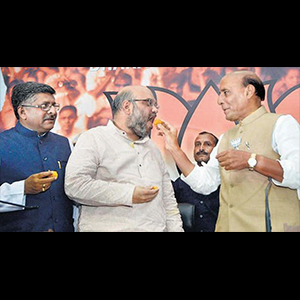
NEW DELHI (TIP): Announcing the BJP’s historic victory, party president Rajanth Singh quoted former Prime Minister Atal Bihari Vajpayee’s famous lines, “Andhera Chatega, Suraj Nikalega, Kamal Khilega [the darkness will dissipate, the sun will shine and the lotus will bloom]” and with unmistakable pride added: “Aaj kamal khil chuka hai aur asha ki nayi subah ho gayi hai [the lotus has bloomed and there is a new dawn of hope].”
What the party has accomplished in Uttar Pradesh, Rajasthan and Madhya Pradesh is not as is its performance in States such as Tamil Nadu (5 per cent of votes polled), Odisha (21 per cent) , Jammu and Kashmir (32 per cent), Assam (36 per cent), and West Bengal (16 per cent). By winning Ladakh in Jammu and Kashmir for the first time, it has also stormed into the Congress and the National Conference bastion.
This improved performance in areas that were not BJP strongholds is being attributed to the acceptance of Narendra Modi as a national leader and Prime Minister. “This is the love of the people from across the country that reflects in the increased vote share even in areas like the North East, East and South. Mr. Modi’s leadership converted the mood in these areas to a pro-BJP wave,” said senior leader Ravi Shankar Prasad. He said the “political witch-hunt” and “motivated campaigns” against Mr. Modi were not enough to block his ascend.
“His promise of good governance attracted people to him. He was seen as the embodiment of hope and change.” The BJP’s revised election strategy in the Lok Sabha polls had been to cover the last mile. Extensive campaigns were undertaken in distant parts of the country and people were promised employment, development, security and growth. Separate manifestoes were drafted for each of the North-Eastern States and at rallies in the region Mr. Modi focused on development, protection of border areas, illegal immigration and even the ecology.
For instance, in Manipur, where the party has a vote share of 11 per cent, construction of arterial roads has been promised, the contentious issue of the Armed Forces (Special Powers) Act, 1958 has been touched upon and decentralisation of administration has been spoken of. In West Bengal, between the Left and the Trinamool, it has managed to carve out a space for itself. Here again, the promise is of growth and a better economy.
The BJP may not have bagged seats, but by securing 16 per cent of the votes it has made a beginning. Similarly, with a vote share of 10 per cent in Kerala, 32 per cent in Jammu and Kashmir, 36 per cent in Assam, 21 per cent in Odisha, eight per cent in Meghalaya and 11 per cent in Manipur, the BJP is no longer confined to the North, West and Central India and is staking its claim as a true national party.
-

High voter turnout in 91 seats in LS polls, crosses the 2009 mark
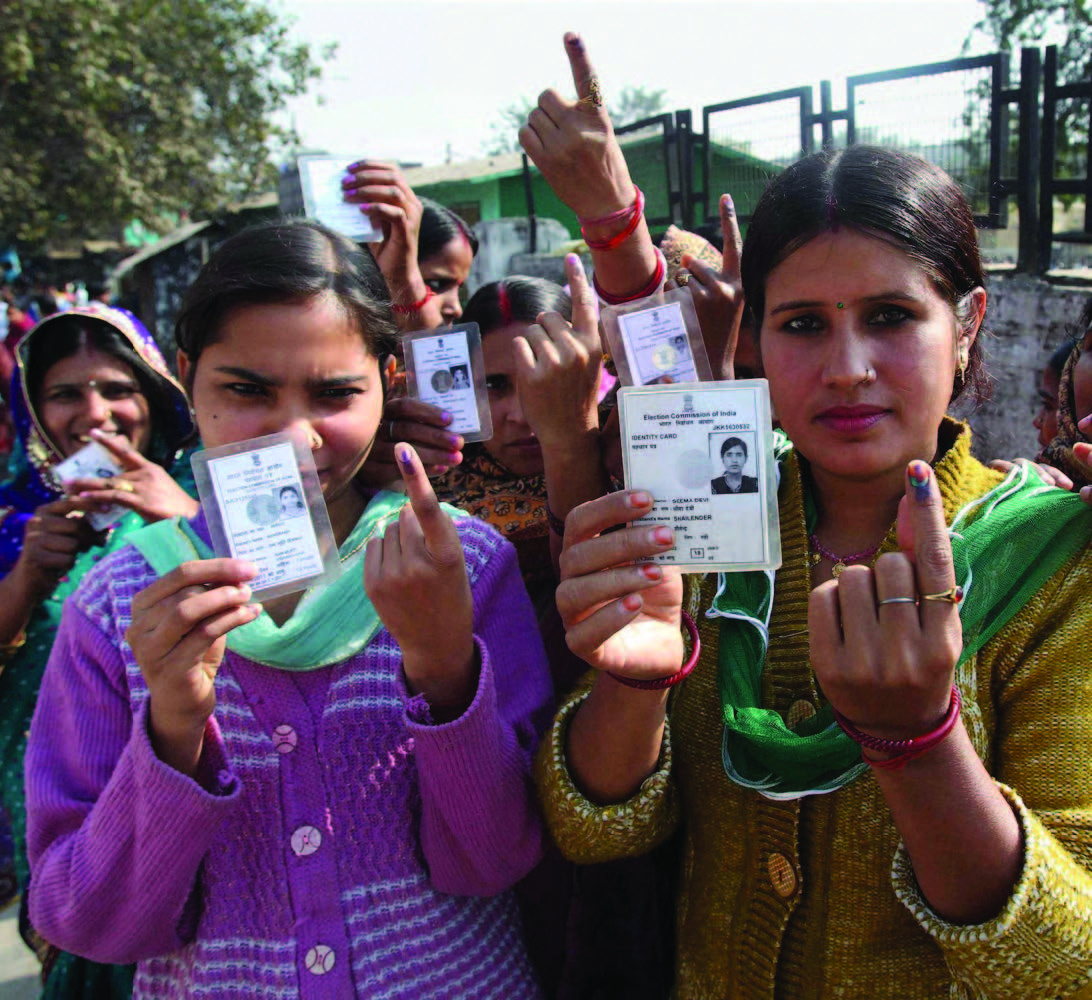
NEW DELHI (TIP): Marking a considerably high voter turnout as compared to the 2009 Lok Sabha elections, India voted for 91 constituencies in 14 states and Union Territories which went to polls in the third and substantial phase on April 10, with Chandigarh witnessing the highest percentage of 74.
The national capital of Delhi, too, recorded a 64 per cent voter turnout in the mega-battle for seven Lok Sabha seats where a faction-ridden BJP tried to sail on ‘Modi wave’ while AAP and Congress attempted to regain the lost ground. A substantial increase of 12 per cent was seen in the voter turn in Delhi as compared to the 2009 polls. Muzaffarnagar and Shamli in Uttar Pradesh, which witnessed communal riots in August 2013, recorded “above average” voter turnout of 67.78 per cent and 70.85 per cent, respectively.
The 10 seats of Uttar Pradesh, which went to polls on Thursday, reported a record turnout of 65 per cent as compared to 51.30 per cent recorded in the last LS polls. The turnout in Delhi was 64 per cent, up by 12 per cent as against 2009 elections. Chandigarh constituency recorded the highest turnout of 74 per cent, against 64 per cent in 2009 polls. Kerala, which went to polls in single phase, recorded 73.4 per cent voter turnout, up from 73.2 per cent last time. Chhattisgarh’s Bastar seat witnessed the lowest voter turnout among the 91 seats of 51.4 per cent.
But it was higher as compared to 47.33 per cent recorded in the last LS polls. There was a voter turnout between 67 and 55.9 per cent for the 21 Lok Sabha seats in three states and a union territory, besides 70 Assembly constituencies in Odisha in eastern India. An estimated 50 per cent of the 191 million electorate had voted in eight hours of brisk polling, with men and women of all age groups queuing up at the 140,850 voting centres from the time they opened at 7 am. EC maintained that the turnout could be “much higher” in all the seats as final reports were yet to come in with voting still on after the stipulated hours in various areas.
Although the polls were mostly peaceful, there were some incidents of violence reported from Chhattisgarh, Odisha and Bihar in Naxal related violence. In Bihar, two Central Reserve Police Force (CRPF) personnel were killed when Maoists exploded a concealed land mine in Munger district when they were on their way to neighbouring Jamui where polling was on. Maoists also blasted a school in Bihar’s Lakhisarai district. In Odisha, Maoists snatched EVMs and took away the battery of one voting machine. Though the staggered nine-phase balloting began April 7, the first two rounds involved only 13 constituencies from the country’s northeast where the BJP is not a major player. While the people of India have made their choice, the results will be known when the votes are counted on May 16.
CONSTITUENCY-WISE VOTER TURNOUT FOR LS SEATS IN 2014
BIHAR
1. Sasaram – 54 per cent
2. Karakat – 51 per cent
3. Aurangabad – 47.5 per cent
4. Gaya – 51.64 per cent
5. Nawada – 49 per cent
MAHARASHTRA
1. Buldhana -44 per cent
2. Akola -39 per cent
3. Amravati – 46 per cent
4. Wardha – 42 per cent
5. Ramtek -40.3 per cent
6. Nagpur – 48 per cent
7. Bhandara-Gondiya – 53 per cent
8. Gadchiroli-Chimur – 59 per cent
9. Chandrapur -43.49 per cent
10. Yavatmal-Washim -40 per cent
JAMMU & KASHMIR
1. Jammu – 68 per cent
CHHATTISGARH
1. Bastar – 47 per centUTTAR PRADESH
1. Saharanpur – 68.40 per cent
2. Kairana – 64.90 per cent
3. Muzaffarnagar – 63.53 per cent
4. Bijnor – 62.96 per cent
5. Meerut – 60.50 per cent
6. Baghpat – 61.52 per cent
7. Ghaziabad – 60.20 per cent
8. Gautam buddha nagar – 47.20 per cent
9. Bulandshahar – 61.60 per cent
10. Aligarh – 55.60 per cent
DELHI
1. Chandni chowk – 66.8 per cent
2. West Delhi – 65.64 per cent
3. East Delhi – 65.59 per cent
4. South Delhi – 62.67 per cent
5. Northwest Delhi – 61.38 per cent
6. North-East Delhi – 67.08 per cent
HARYANA
1. Ambala – 70.7 per cent
2. Kurukshetra – 75.8 per cent
3. Sirsa – 76 per cent4. Gurgaon – 70.02 per cent
5. Faridabad – 60.08 per cent
JHARKHAND
1. Chatra – 53.88 per cent
2. Kodarma – 60.97 per cent
3. Lohardaga – 59 per cent
4. Palamau – 59.30 per cent
LAKSHADWEEP
1. Lakshadweep – 71.36 per cent
ANDAMAN & NICOBAR ISLANDS
1. Andaman & Nicobar Island – 70 per cent
MADHYA PRADESH
1. Satna -53.77 per cent
2. Rewa -53.99 per cent
3. Sidh -56.45 per cent
4. Shahdol -60.79 per cent
5. Jabalpur -48.14 per cent
6. Mandla -65.53 per cent
7. Balaghat -62.52 per cent
8 Chhindwara -70.93 per cent
9. Hoshangabad -65.01 per cent -

Indian loses passport in jet, stuck for 5 days at UAE airport
DUBAI (TIP): An Indian was stranded for five days at Abu Dhabi airport as he forgot his passport in the plane while transiting for another flight to Saudi Arabia, according to a media report on Wednesday. Mohammed Ali, a resident of Kerala, had set out from Calicut to Riyadh via Abu Dhabi on March 6.
The flight he took was diverted to Al Ain due to heavy fog and thus reached Abu Dhabi airport after some delay, Emirates 24/7 quoted sources as saying. Later, Ali and other Riyadh-bound passengers were asked to board a connecting flight but after waiting in the aircraft for some time they were again asked to deboard the plane for some reason.
Ali mistakenly left back his passport on the seat in an envelope in the plane during the deboarding. He could not retrieve the passport as it was against security rules for passengers to board the plane again. He was issued an emergency certificate by the Indian Embassy only after five days when Abu Dhabi Police and his friends in Riyadh alerted the Indian Embassy in Abu Dhabi. An official from the Embassy went to the airport and issued the Emergency Certificate to Ali, the report said.
-

CPM bats for gay rights in manifesto
NEW DELHI (TIP): The CPM on March 20 sought decriminalization of section 377 of Indian Penal Code — the only Indian political party to have taken such a stand so far — and scrapping of the Armed Forces (Special Powers) Act as it unveiled its manifesto for the Lok Sabha polls.
In a break from the stand taken by other parties in the wake of the Supreme Court declaring gay sex illegal, overturning a Delhi high court ruling, the CPM had recently come out in support of the TOI manifesto to do away with archaic laws. In the backdrop of Telangana bill being passed by Parliament even though Andhra Pradesh assembly had returned it, the manifesto said the Constitution should be amended to make it mandatory to seek the state legislature’s consent in case of division.
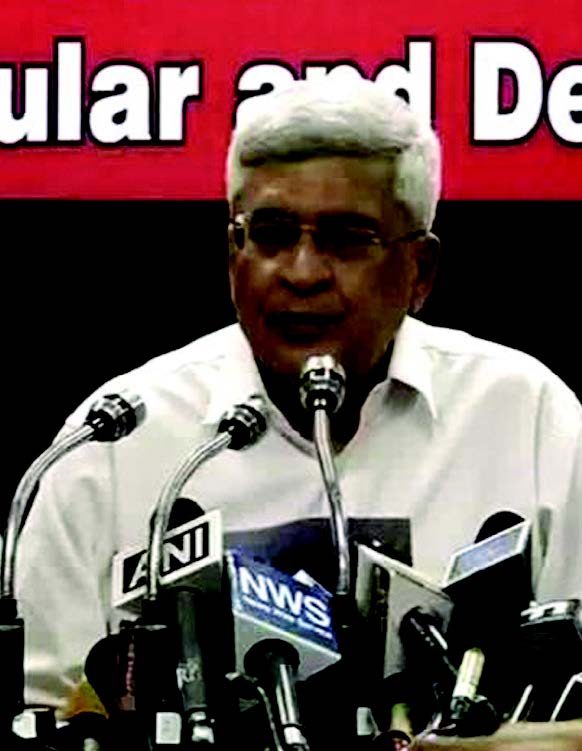
Despite the desertion by key partners of Third Front, the CPM has not lost hope of cobbling up an alliance after the elections. Releasing the manifesto, party general secretary Prakash Karat said efforts would be made to form a non-Congress, non-BJP government after the results. “We (Left and regional parties) have decided to fight both Congress and BJP. We are going together…We are working to maximise our strengths and seats in respective states or areas of strength. A concrete shape will emerge after the elections,” Karat said.
The CPM manifesto is high on a secular democratic alternative. Karat said, “We will pool in our resources and strengths after the elections…that is going to happen.” He also insisted that CPM or any constituent never called the 11-party alliance ‘Third Front. “Our coming together was not predicated on any alliance with each other,” he said. Karat also dismissed the viability of a federal front’, an idea floated by Mamata Banerjee. “Without Left no alternative is possible.” CPM general secretary said the left parties would contest about 100 seats across the country.
He said there will be no impact on Left Front’s fortune in Kerala after the state unit of Revolutionary Socialist Party crossed over to Congress-led United Democratic Front. Taking on both Congress and BJP for turning the election into a personality battle, Karat said, “It is clear that the elections are being projected as a battle between certain leaders or personalities but devoid of major issues and policies afflicting the people.” While he criticized the Congress for its misrule, price rise, corruption and scams, BJP, Karat said, is “not only not an alternative to Congress, but a retrograde and reactionary alternative.”
He said BJP is as corrupt as Congress. Party’s manifesto promises to reverse the deregulation of petroleum products, ban futures trade in agricultural commodities, enlarge resource base by taxing the rich and corporate profits; crackdown on tax evaders, black money and money laundering. Karat said party is not happy with the Food Security Act and promised to bring a new law which will be based on universal public distribution system. CPM manifesto also says there should be devolution of 50 per cent of the total collection of central taxes to states and transferring of centrally sponsored schemes under state subjects with funds to the Centre.
-

Indian expats in Saudi Arabia demand online voting rights
DUBAI (TIP): Expatriate Indians in Saudi Arabia have demanded that the Indian authorities facilitate online voting for them through biometric system in the general elections due next month.
Although non-resident Indians (NRIs) have been permitted to register online and granted the right to vote in the elections, the registered voters can only exercise their franchise by being present in their respective constituencies in India.However, millions of NRIs continue to demand online voting rights as most consider it impractical to travel and spend money just for voting.
Zubair Siddique, a resident of Jeddah, a coast city in western Saudi Arabia, regrets not being able to participate in the elections for the last 15 years. “I am never able to travel back home due to my hectic work schedule. I was hoping that the government would at least consider online voting this year,” Arab News quoted Siddique as saying Wednesday.
At 2.8 million, Indians account for the largest expatriate community in Saudi Arabia.At least 65 per cent of expatriate Indians in that Gulf nation come from the south Indian state of Kerala. The state boasts of near-full literacy and hence, awareness of general affairs among its expatriate community is broad. Faiz Ahmed Kidawi, India’s consul-general in the Saudi city of Jeddah, welcomed the idea of online voting.
But he is of the view that such a facility should only be implemented after a proper system and precautions are put in place by the Indian government. Ahmed Naseem, an Indian expatriate based in Saudi Arabia’s capital Riyadh, observed that several countries have implemented online voting and that India was still lagging behind.Naseem wondered why the government was not able to solve the NRI voting issue, despite spending huge amounts of money on the Pravasi Bharatiya Divas, annual conclave of the Indian diaspora to keep overseas Indians connected to their home country.
-

Nine days, five weeks
India votes between April 7 and May 12
NEW DELHI, MARCH 5: The process of constituting the 16th Lok Sabha got underway on March 5 with the Election Commission announcing the poll schedule. Polling to elect 543 members to the Lok Sabha will be spread over nine days, between April 7 and May 12. Simultaneously, elections will also be held for three State Assemblies: Andhra Pradesh, Odisha and Sikkim.
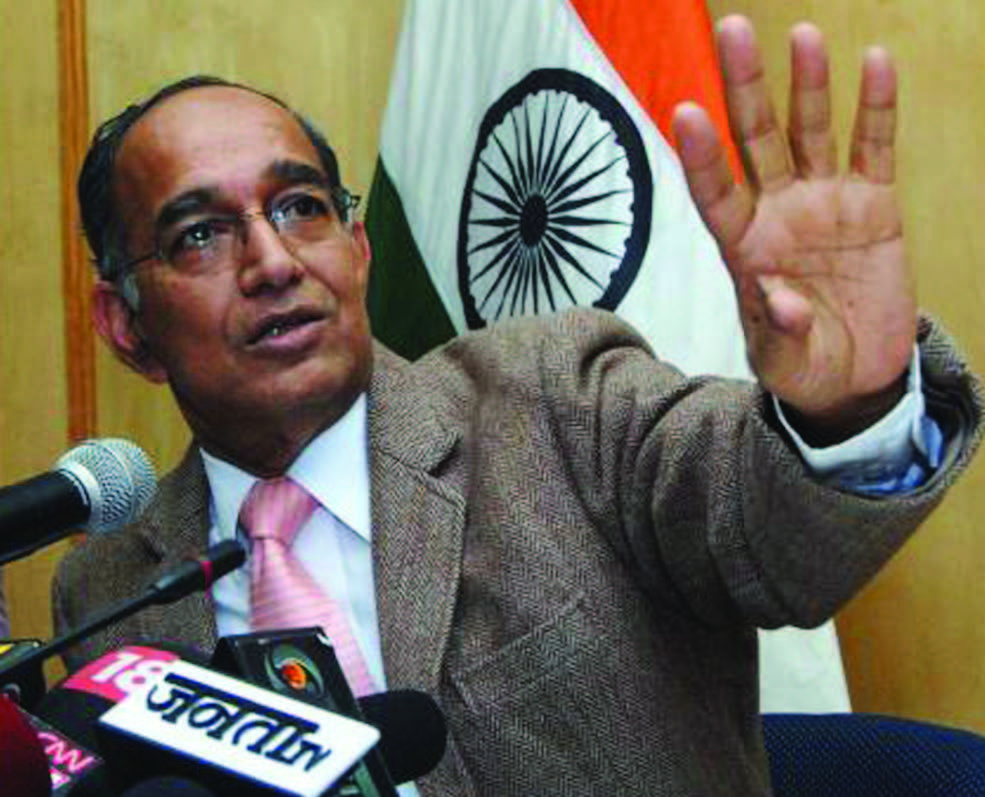
With the announcement of poll dates, the model code of conduct, which prohibits the Government from taking any policy decisions that can influence the decision of a voter, comes into effect. The counting of votes for both the Lok Sabha and Assemblies will take place on May 16 and all the results are expected to be announced on the same day, Chief Election Commissioner V Sampath told newspersons here on Wednesday.
Nine-day affair
The Lok Sabha election process is spread over nine days and not over nine phases, Sampath said and added that 814 million electors will be eligible to cast their vote, an increase of about 10 crore voters from the last General Elections, in 2009. The 21 States that will complete the election process in a day include Tamil Nadu (April 24), Karnataka (April 17), Delhi and Kerala (April 10). In five States, including Andhra Pradesh, Odisha and Rajasthan, elections will be spread over two days while Uttar Pradesh and Bihar will complete the process over six poll days.Young voters
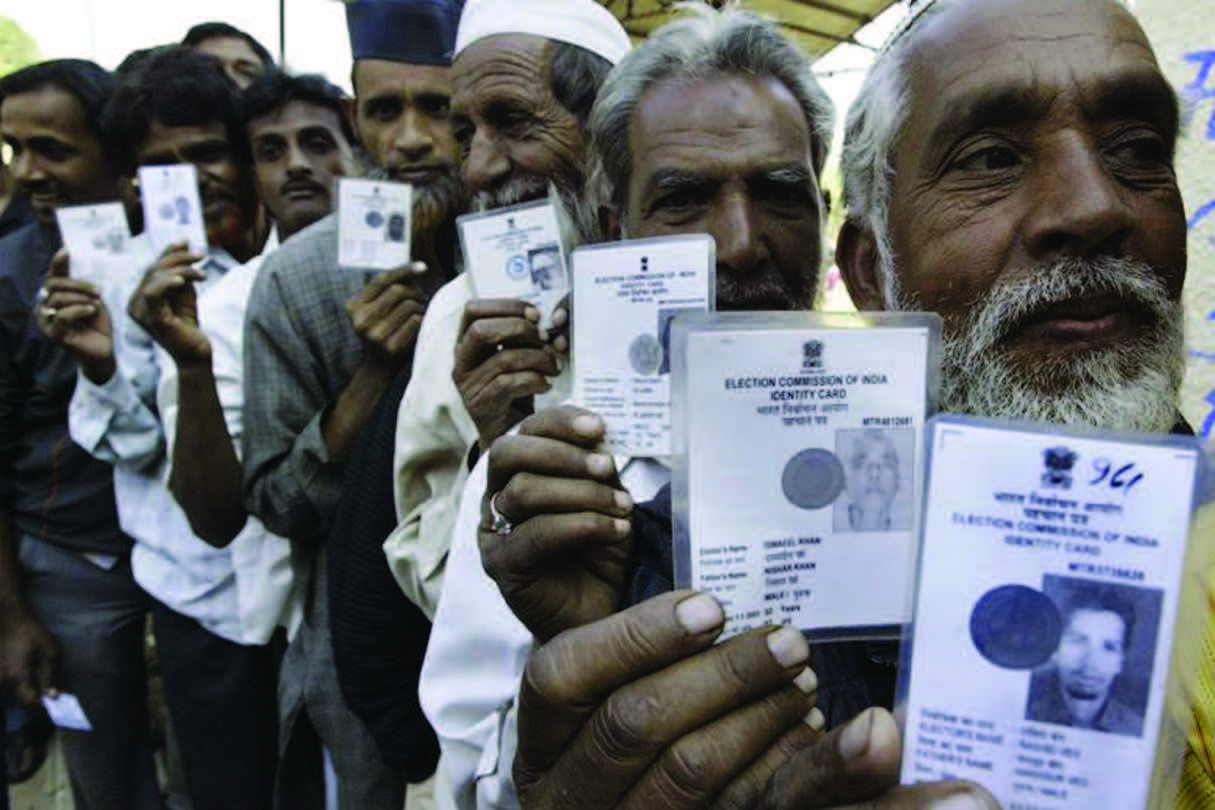
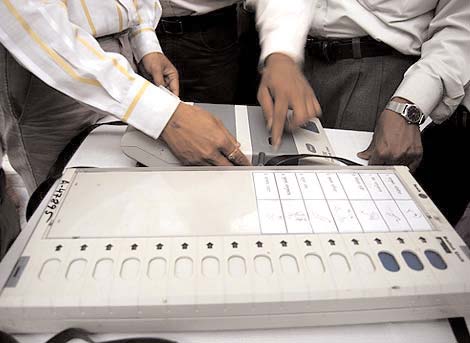
Over 23 million voters in the 18-19 years age group have been added to the electoral rolls, constituting 2.88 per cent of the electorate, up from 0.75 per cent in the last elections. There will also be a 12 per cent increase in the number of polling stations across the country with 930,000 polling stations to be set up, compared to 830,000 during the last elections, Sampath said. Electronic voting machines will be used at all polling stations.In order to ensure that the maximum number of people exercise their franchise, the Election Commission has directed that a special camp be organised on March 9 during which people can view the electoral rolls. Those whose names are missing can fill up application forms and get their voter cards. The poll schedule has been drawn keeping in mind the weather conditions in various parts of the country and the examination schedule, as educational institutions and personnel are deployed for poll duty, and also to ensure that the elections are peaceful, Election Commission officials said.
Sampath added that adequate steps had been taken to prevent the use of black money. On the issue of elections in Andhra Pradesh, Sampath said: “We conduct elections according to the law, whether they are for Assembly or Parliamentary constituencies, as per description of the State today. When the new State comes into being, as per law, elected representatives will automatically become MPs and MLAs of the newly created State from the appointed day. It is seamless.” The total cost of the elections is estimated at ?4,000 crore, officials said.
Poll dates
● April 7 polling will cover six constituencies in two states.
● April 9 will cover seven constituencies in five states.
● April 10 to cover 92 constituencies in 14 states.
● April 12 to cover three States and five constituencies.
● April 17, the largest chunk of 122 Lok Sabha seats will go to polls in 13 states.
● April 24 will cover 117 constituencies in 12 States.
● April 30 in 89 constituencies in nine states.
● May 7 will be held in seven States covering 64 constituencies.
● May 12 will cover three States and 41 constituencies. -

Two Indian-origin men get prestigious award in US
NEW YORK (TIP): Two Indian-origin men are among this year’s prestigious Heinz Awards recipients in the US. Abraham Verghese, a professor at Stanford University Medical School, and Sanjeev Arora, a computer scientist, of Albuquerque in the US state of New Mexico will be honoured in Pittsburgh April 3, the foundation announced on its website on Tuesday.
The five recipients will receive a cash award of $250,000 each as well as a medallion inscribed with an image of late US senator John Heinz. Abraham Verghese, who was born to parents from Kerala in Ethiopia, was given the award in recognition of his best-selling authorship. In his first book, ‘My Own Country’, he wrote extensively about AIDS in rural areas of Tennesse. Verghese did his MBBS degree from Madras University in 1979.
Sanjeev Arora, born at Kota in Rajasthan and now a San Franciscobased entrepreneur, was recognized for revolutionizing community healthcare using video conferencing technology. The awards recognize outstanding individuals for their contributions in the fields of arts, humanities, environment, human Condition, public policy,technology, economy and employment. The awards are conferred annually by the Heinz Family Foundation and were instituted in 1993.
-

GAINING INDEPENDENCE FROM ILLITERACY
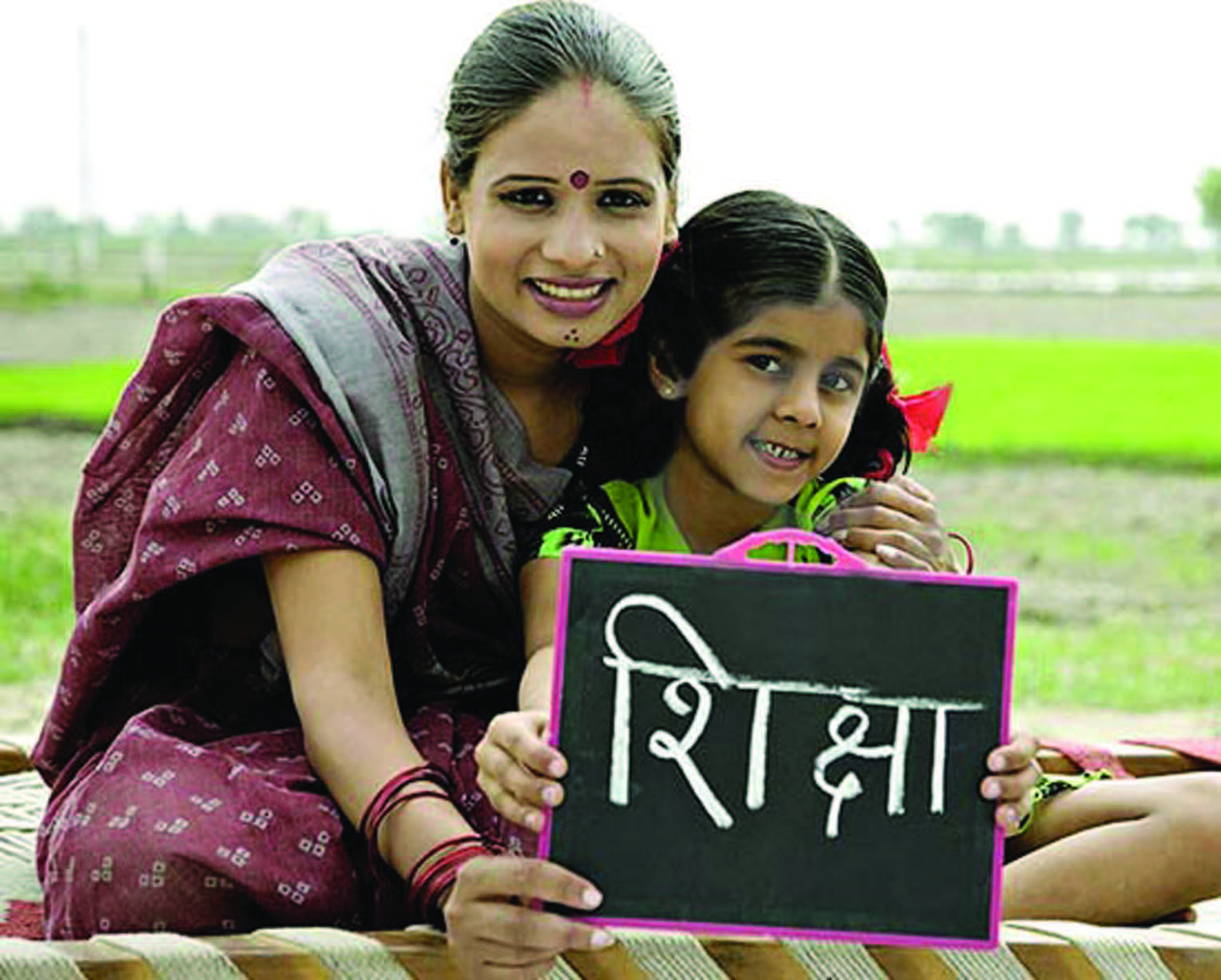
Statistics mentioned above indicate that while progress has been made, measures have been far from adequate. We therefore need to upgrade our education system so that illiteracy can be completely uprooted from India. No matter how hard we try to fight the problem, it simply seems to persist.
That even after 66 years of independence we have to lay stress on this issue is a shamebut at least it’s better than brushing it under the carpet. India, the land of Vedas, where we have learnt over the years that culture flourishes with literature, is one of the nations with highest illiteracy rates. Even underdeveloped countries like Sri Lanka, Myanmar, Vietnam and Thailand have achieved higher literacy levels in shorter time.
In his India Development Report 2002, Kirit S. Parikh pointed out, “With a literacy rate of 65, we have 296 million illiterates, age seven years and above, as per the 2001 census. The number of illiterates today exceeds the population of the country of around 270 million at Independence, age seven and above.” Our society faces several challenges in the form of poverty, unemployment, child labour, female feticide, overpopulation etc. But all of them evolve from illiteracy which is actually the mother of most our problems. A high literacy rate can contribute to valuable social and economic participation by the people which will go a long way in human development and poverty eradication.
Spread of education is necessary for modernization, urbanization, industrialization, communication and commerce. You name an issue and literacy will be a prerequisite for its solution. Illiteracy in India can be easily characterized by the wide gaps between the urban and rural populations. The urban population is more educated and therefore desires a life of comfort and luxury. On the other hand, the rural population depends on agriculture for their survival. They are the food providers of our country, who work for basic necessities and thus feel no need for education in their lives. Children in rural areas drop out of schools for a variety of reasons: some leave because of a sheer lack of interest; others quit so that they can work in fields or elsewhere, while some have no other choice due to inaccessibility and lack of school teachers.
In villages, a large percentage of the dropouts are females. Forced by their parents, they are limited to performing household chores. They are married at a very early age and are taught since birth that what is important for them is their family and the looking after the house. Education is not even a secondary item on their to-do lists. Inadequate number of teachers and their absence in schools across the country is another roadblock towards complete literacy. A large number of teachers refuse to teach in rural areas and those who do, are usually under-qualified. Many teachers lack the necessary enthusiasm because of their meagre salaries. In one of his research papers, Nobel laureate Amartya Sen has mentioned, ‘Absenteeism of comparatively well-paid teachers, particularly where bulk of the students come from scheduled castes and tribes, poses a major problem.
Students are circumstantially forced to go in for private tuitions. Sometimes the very institutions that were created to overcome disparities and barriers tend to act as reactionary influences in reinforcing inequality.’ Lack of infrastructure like buildings, benches, books etc is a widespread problem too. Some schools are located in warehouses while others in small thatched rooms which are of little use during rains. Many rural schools operate without electricity. The distribution of government funds is another major hindrance in the reform of our educational system. According to World Bank, ‘30 % of the total educational funding goes toward higher educational institutions.’ What with announcements of quota in higher education and an increase in the number of IIMs & IITs, the government clearly cares little for primary education. Even private institutions are seen to be a hindrance in the progress of children. In such schools, the children from poor households are seen as lowly, below average and thus not fit to sit and study with the children of upper caste or class.
Untouchability has been abolished but this new rift between rich and poor students continues to take its toll on the country’s fortunes. Our education system is more or less a remnant of the long gone colonial system of the British Empire. No emphasis is ever laid on vocational courses, which can provide many job opportunities. “We are bumbling along with this out modeled system of elementary education, which is a real shame,” says Krishna Kumar, director of the Central Institute of Education in New Delhi. Reservation is yet another problem. Though it exists in other countries as well, reservation in India has a totally different approach. Our government grants reservations on the basis of caste when the correct basis of granting quotas must be the economic standards of the people. As a result, even better off backward caste students seek to get an entry in venerable institutions like the AIIMS through petty quotas. Quality be damned, seems to be the motto of such policies.
Amidst this gloom, a recent welcome measure has been the passage of the Right to Education bill, during this session of Parliament. Its guidelines are like this: – Compulsory education for children between 6-14 yrs – Rs 10,000 fine if any child prevented from going school – No selection and screening process to choose preference over candidates – No physical punishments – States need to plan techniques to monitor advancements in the program – Roping in private schools to keep 25% seats reserved at entry level – Banning capitation fees It is a commitment that has taken decades to get fulfilled, but more efforts will be needed to implement it properly. As we have seen all these years, only directions and guidelines cannot resolve any crisis in the country. Various organizations and schemes have been fighting this problem.
In 2003, the Magsaysay Award was awarded to Shantha Sinha in recognition of her work to end child labour, a major reason for illiteracy. The Supreme Court, in 1993, ruled that children had a fundamental right to free education. The Sarva Siksha Abhiyan launched in 2001 was to ensure that all children in the age group 6–14 years attend school and complete eight years of schooling by 2010. District Primary Education Programme launched in 1994 has so far started more than 160,000 new schools, including almost 84,000 alternative schools. The National Literacy Mission, launched in 1988 aimed at attaining a literacy rate of 75% by 2007. India is developing but at a very slow rate and one of the main reasons is the low level of literacy.
Literacy enables a person to think rationally- for himself and others around him. A literate person is aware of all his fundamental rights and duties. It is a kind of panacea to fight problems like communalism, terrorism and under development. Not only the government, but also every literate citizen should contribute in battling the demon of illiteracy. Each one should teach one if we are to become a superpower. Mahatma Gandhi once said, ‘Be the change you want to see in the world.’ So let us enlighten the world by bringing this change into our and everybody’s lives.
EDUCATION AS A DRIVER OF GROWTH
India’s need for an enormous skilled work force that can drive its growth story forward is now a well accepted fact. But developing and honing these skills is where the real challenge lies. The first-ever Education Investment Conclave, 2013, in London, backed by India Inc, explored some of the complex issues linked with meeting the country’s educational demands. India is poised for its much-talked-about demographic dividend to kick in, which roughly translates into a requirement of around 200 million graduates and 500 million skilled people by 2022 – by which time nearly 25 per cent of the global work force will come out of the country.The Literacy rate of India has shown as improvement of almost 9 percent. It has gone up to 74.04% in 2011 from 65.38% in 2001, thus showing an increase of 9 percent in the last 10 years. It consists of male literacy rate 82.14% and female literacy rate is 65.46%. Kerala with 93.9% literacy rate is the top state in India. Lakshadweep and Mizoram are at second and third position with 92.3% and 91.06% literacy rate respectively. Bihar with 63.08% literacy rate is the last in terms of literacy rate in India. The Government of India has taken several measures to improve the literacy rate in villages and towns of India. State Governments has been directed to ensure and improve literacy rate in districts and villages
-

CREED GUIDING MATURE REPUBLIC
Modern societies emerge out of their primitive forms. As India enters its 65th year as a republic, it is not what it used to be for the past several centuries: ruled by kings and nawabs, brutalised by Hindu orthodoxies of caste and sati, or dependent on agriculture.
“India has changed more in last six decades than in six previous centuries,” said president Pranab Mukherjee on the eve of the Republic Day last year, adding: “It will change more in the next ten years than in the previous sixty.” The motor of change is democracy, or the republic’s politics reaffirmed every five years through the conscious act of voting.
Democracy refers to demokratia—a political system that began in 5th to 4th centuries BC when the people (demos) of Athens revolted against the dynasties of tyrants and established their own kratos (rule). Over past decades, democracy in India has emerged as a revolt against caste and other social inequalities, empowering millions of dalits, minorities and women.

India still subjugates its women, but it will change as more than a million women, elected to political nurseries of panchayati raj, are about to alter the balance of gender relations. The Indian republic is a Greek city state in microcosm, whose citizens interact with philosophical concepts every day, acquiring new understandings of liberty and rationality. As it matures, it inculcates egalitarian ideals in its citizens who in turn guard demokratia, the republic’s dharma, or creed. The egalitarian Indian defends the order, defeating Indira Gandhi after the Emergency when democracy appeared to be failing, or producing an Aam Aadmi Party when corruption of an industrial scale emerged.
The republic is nurtured from below. It just gave Kashmiri secessionists a recurring opportunity to prove their worth through the ballot option of NOTA, none of the above. In primitive societies, consensus emanated from similarities of beliefs and identities; in modern India consensus is derived from differences and moderated by media, political parties, voters, and the judiciary. The voter is the sane oracle, inaugurating an era of coalition politics in 1989 and shifting the polity towards federalism, in tune with the diversity of India. From the post-Emergency rise of anti-Congress parties to the AAP, the republic births new parties. It secures the confidence of minorities.
According to a BJP research, India has seen the emergence of “smaller Muslim parties” that are determining outcomes in states from Assam to Kerala. Indian polity is ripe where any new party could transform into a countrywide behemoth by practising simple politics: electing leaders through organisational polls. There is space for all, as no party has got 50 per cent votes. In some way, parties are dying, or being obscured, eclipsed and forgotten. The Congress is forgotten in UP, Bihar, West Bengal, Delhi and many states; the BJP was reduced to irrelevance as a national opposition until Narendra Modi rose from below; the Rashtriya Janata Dal was dumped; and demokratia caught up with communists in West Bengal in 2011. It happens due to parties’ failure to abide by the republic’s dharma: more politics, more democracy. Politics has its own independent dignity.
More parties could thrive if their funds were audited and if they held polls to elect party leaders or used secret ballot to elect chief ministers or Prime Minister. If the Congress practised politics, US-style primaries to elect party leaders could herald a revolution. Among democracies, some are religious states such as Britain whose societies are overwhelmingly secular; some are secular states like the US and India whose societies are predominantly religious. Religious neutrality, established first by Akbar, characterises the Indian state. The founders—Gandhi, Nehru and Ambedkar— wrote an array of liberties into the Constitution: equality of rights, multi-party elections, free press, individual freedoms, rule of law, independent judiciary, etcetera. Speaking at Oxford in 2005, Prime Minister Manmohan Singh noted that the founders were “greatly influenced by the ideas associated with the age of Enlightenment in Europe.”
The political and religious freedoms Indians enjoy would not be possible if the British hadn’t arrived in India. Democracy is defined as the majority rule, but the majority is of the people, not of communities. For those who feed pessimism among minorities, the day is not far when India will see a Muslim prime minister, as religion will become irrelevant. For now, a Muslim politician is yet to be born who could read the republic’s political mind, the way Barack Obama read the American mind. There are reasons: Muslims must shed the fear of the BJP; the politics of secularism and reservation must be defeated by effective policing and through job creation by people. Primitive societies were dependent on agriculture.
In a modern nation, while the agricultural output grows, its share in the gross domestic product must decline, accompanied by growth in knowledge sectors like biotechnology and financial services. Once seen by the West as the land of snake charmers, India is transformed into an information technology destination today. However, it is an inward-looking mystical civilisation, failing to grasp notions of power. India contemplated sending troops to Iraq in 2003, but succumbed to a perennial weakness to comprehend its place in the international state system. There were military roles in Bangladesh, Sri Lanka and Maldives that indicate India could exercise hard power abroad. Amid problems, the republic is maturing, aided by the Supreme Court which forced candidates to declare assets and criminal antecedents, disqualified elected representatives upon conviction in criminal cases, and enshrined negative voting through NOTA.
If T N Seshan alone could retrieve autonomy of the election commission, it appears the Central Bureau of Investigation and other government institutions could cease being the ruling party’s mistress. At the heart of the country’s politics is the sane oracle, the voter: the elderly who walk to polling booths, tribesmen who defy Naxalites to vote, women who stand with men, youth who secure their aspirations in ballots. Of 790 million voters, 120 million are 18-23-yearolds, the first-time voters who must establish a relationship with people, not leaders, to secure the republic for their next generations. (The writer, Tufail Ahmad, is director of South Asia Studies Project at the Middle East Media Research Institute, Washington DC.)
-

Improving travel experience of NRI youth is high on Civil Aviation Ministry’s agenda: KC Venugopal
New Delhi (TIP): K.C. Venugopal, Minister of State for Civil Aviation, has underlined the Govrnment’s commitment to improve the travel experience of the youth who search for greener pastures across the world. Addressing a session on ‘Young Achievers’ at the Youth Pravasi Bharatiya Divas, the Minister said, “Air India as the National Carrier is indebted to the Overseas Indians and always offers you the opportunity to fly you around. Air India had a bad time combating with debts. Now we are regaining the ground. We are happy that the improved customer confidence is being reflected in the bookings as well.
There were certain issues and concerns about the performance of Air India Express, the low cost carrier from Air India Group. Air India Express is specially designed for Gulf sector services. The process of empowering Air India Express as an independent business entity is progressing. We have rolled out many initiatives to make Air India Express complaint free. We have also increased our services to Gulf Sector, and on time performance is monitored at the apex level to ensure customer satisfaction. To hear from the NRIs personally about their concerns about Air India Express, I started a mail service too”, he said. The Minister said that every generation of NRIs has its own specific opportunities and challenges.
The long cultural exchange and bartering between the countries have set the soil ready for larger acceptance of young Indians. He said, “The second generation NRIs are the ambassadors of a resurgent India, which has opened its doors for the world. Ambition, innovation and management expertise in international trade are the trademarks of a successful Young Indian. They have enhanced footsteps of Indian business across the world. Even in Kerala, we have many such young investors who ventured to go out from their middle class houses in small towns to international business hotspots. However, the expectation levels and competencies of new generation NRIs are manifold compared to their predecessors. They deserve more handholding and enabling policies by the Indian Government.
It is a fact that there are initiatives to motivate the young investors back home in India. But I do believe that we have to expand our net so that a government umbrella for Young Overseas Indians can be set up. Such a body will have to extract data regarding investment potential in each sector, may tie up prospective cash flow for various PPP models, may ensure single window clearance for NRI investments etc.” “As a country and a responsible government we are committed to provide young Indians similar opportunities elsewhere, so that they can confidently invest in India. It is high time that we need to develop our own engineering research and reduce dependence on the borrowed technologies. In this liberalized economy now we can afford to integrate R&D into the prime business of Indian companies. The companies also need to promote the synergy between industries & education,” said Shri Venugopal.
-

IPCNA demonstrated how we can think and act ‘outside the box’
SOMERSET, NJ (TIP): On November 1st of 2013, the Kerala Piravi day, the Malayali Pravasis of USA witnessed the grant inauguration of the three day National conference of IPCNA [India Press Club of North America]. All Malayali media activists of North America assembled in Holiday Inn of Somerset, New Jersey to have self evaluation and education on modern trends in journalism with the help of stalwarts from India and the future promises of young media professionals in USA and in India. Very informative and educative sessions were very useful and enjoyable not only for the media activists and community activists but for their families too. The large hearted sponsors of the conference events made it totally free for all. It was definitely a big loss for many who missed the conference. The organizers of the conference, especially the President Mathew Varghese, General Secretary Madhu Kottarakara, VP Joby George, Treasurer Sunil Thymatom and Joint Treasurer George Chirayil deserve special appreciation for the excellent and exemplarary way the conference was conducted. They demonstrated to the public how a public function must be conducted by avoiding long speeches of many self imposed, photo opportunity ‘ leaders’ who still fail to understand the public feeling of their boring and useless show offs in the community.
This national conference was very different from any other national level conferences of Pravasi organizations in USA that carefully avoided all ministers from Kerala/India. By bringing from India the dare devils in media industry like Jose Panachipuram of Manorama, Gopi Krishna of Pioneer paper of Delhi, Vinu of Asianet, Sreekandan Nair of visual media and the young political leaders with excellent track record such as KN Balagopal MP, VC Satheesan, MLA and VT Balaram MLA, the IPCNA has declared to the whole world that the young generation will only identify themselves with and listen to only such voices for their future in India and abroad. ‘Let those who have eyes see and those who have ears listen’ to this message. While appreciating the young media and political leaders from India , the audience representing millions of Pravasis voiced their concern on the indifference of political and bureaucratic leaders of India towards their issues. They requested the Parliament members to take up the issues like OCI card, Passport renunciation and Pravasi property protection in the parliament and the media leadership investigate into the day by day deteriorating public relation of India missions abroad leading to repulsion of investments in India.
Another bold step taken by the organizers of the conference is their determination to keep away the faith based ‘leaders’ and their neo community leaders who use religious platform for popularity. Some of such ‘leaders’ are entering the ‘journalism’ field by introducing different media with the help of religions and faith orientation. Professional media people should guard the public from such foxes with sheep skin working in the community and disintegrating the community. IPCNA is the silver line in the cloud of all negative and destructive tendencies on the air by many media and community organizations. Its leadership has taken bold and correct steps to keep their association as a model for all community/religious/political organizations. Let Almighty God lead the team of IPCNA with wisdom and spirit of unity and team work to instill that moral standard in our community activists for giving positive and beneficial activities for our people. As I write this, our motherland’s Mars exploration rocket was launched very successfully even dismaying all advanced countries. A VERY BIG LEAP FOR OUR MOTHER INDIA!! Every Indian and people of India origin can be proud of this achievement of their brothers and sisters in India who demonstrated their excellence in different fields that led to this achievement.
-

12 CRORE FIRST-TIME VOTERS HOLD KEY TO 2014 LOK SABHA POLLS
CHENNAI (TIP): Close to 12 crore youths will be eligible to vote for the first time in the 2014 Lok Sabha elections. To put that in perspective, no single party garnered more than 12 crore votes in the 2009 polls, showing how significant this segment can be if all of them register to vote. In the 2009 polls, the Congress polled 11.9 crore votes, the BJP 7.8 crore, BSP 2.6 crore and CPM 2.2 crore. No other party polled even a crore of votes across the country.
79 crore eligible voters
The draft electoral rolls published by various states at this stage show that the national total is just under 79 crore votes. Uttar Pradesh will have the highest potential firsttime voters with 2.3 crore young people crossing 18 in time for the polls. They will account for 17.6% of the state’s electorate of 12.9 crore. Maharashtra comes next with 1.05 crore first-time voters or 13.2% of the state’s electorate. Bihar is third with 94.3 lakh youths, followed by West Bengal with 90 lakh. These figures are derived from the age data released recently by the census, and are based on all those aged between 15 and 19 at the time of the 2011 census. All of them will be old enough to register to vote in 2014; none of them would have been eligible in 2009. The numbers have been reduced on the basis of the age-specific death rate for people between 15 and 19 years to account for people in this age group dying between 2011 and the polls. The state-wise numbers may vary slightly if one takes into account interstate migration from this age group, but the national number would be unaffected. “As per the latest census, UP and Bihar have the maximum number of children due to high birth rate. Naturally, there will be more young people eligible to vote,” said P Arokiasamy of the International Institute for Population Sciences. The Election Commission (EC) does a study to arrive at the number of eligible voters before every general election.“It examines the data of those in the 18 to 25 age group. If enrolment is low, state chief electoral officers conduct special campaigns to enlist more young people. On the other hand, if there are too many voters over the age of 80, officials check again to ensure that names of all dead voters have been deleted,” said N Gopalaswami, former chief election commissioner. Among the southern states, Andhra Pradesh will have more than 80 lakh potential first-time voters followed by Tamil Nadu with 62 lakh. Karnataka and Kerala could have 58 lakh and 26 lakh such voters respectively. Delhi, which goes to the assembly polls in December, has 16.6 lakh youths eligible to register as voters. Rajasthan has 72.9 lakh and Madhya Pradesh 74 lakh. Smaller states like Himachal Pradesh and Union territories will have less than 10 lakh first-timers each. “We have tied up with internet browsing centres to make it easy for first-time voters and others to be included in the electoral rolls,” said Tamil Nadu chief electoral officer Praveen Kumar. “Volunteers are running campaigns in universities and colleges to register eligible students to vote.”
-

PROGRESS BLOW TO GUJARAT
Human indicators put state that brags about growth behind Tripura and Sikkim
NEW DELHI (TIP): A new development index has identified Gujarat as a less developed state, while ranking Odisha and Bihar along with eight others as “least developed” and Goa and Kerala among the seven “relatively developed” states. A panel headed by Raghuram Rajan, now the RBI governor, which submitted its report to finance minister P Chidambaram, also recommended a fresh approach to devolution of funds to states and moved away from the special category classification to devise three categories – least developed, less developed and relatively developed. According to the index, there are 10 least developed states, 11 less developed and seven relatively developed states in the country. The slotting of Gujarat, which has attracted attention due to its development model, in the “less developed” category is likely to escalate the already bitter political debate on the ‘Gujarat model of development’.
The other states in this category are Manipur, West Bengal, Nagaland, Andhra Pradesh, Jammu and Kashmir, Mizoram, Tripura, Karnataka, Sikkim and Himachal Pradesh. The least developed states include, apart from Odisha and Bihar, Madhya Pradesh, Chhattisgarh, Jharkhand, Arunachal Pradesh, Assam, Meghalaya, Uttar Pradesh and Rajasthan. The relatively developed states according to the index are Haryana, Uttarakhand, Maharashtra, Punjab, Tamil Nadu, Kerala and Goa. The panel has developed a multidimensional index of backwardness based on monthly per capita consumption expenditure, education, health, household amenities, poverty rate, female literacy, percent of SC-ST population, urbanisation rate, financial inclusion and connectivity.
The panel said less developed states rank higher on the index and would get larger allocations based on the need criteria. “The committee has proposed a general method for allocating funds from the Centre to the states based on both a state’s development needs as well as its development performance,” Chidambaram told reporters. “The committee has recommended that each state may get a fixed basic allocation of 0.3% of overall funds, to which will be added its share stemming from need and performance to get its overall share,” Chidambaram said. The panel was set up after persistent demand from Bihar CM Nitish Kumar who insisted a the special category status to help access more funds for its development. This sparked off a demand from several other states such Odisha for the special category state status. While the new index will ensure more funds for Bihar from the central kitty, it has stopped short of conferring the “special category” tag on the state, Shaibal Gupta, seen as Nitish’s nominee on the panel to submit a 10-page dissent note.
However on Thursday, Nitish concealed his disappointment, if any, to celebrate the recommendation as a triumph even as BJP taunted him for failing to have his way despite cozying up to Congress. “It is a very decent report. For example under this index Odisha is at the bottom of the list and then Bihar. Therefore it recognizes that Odisha, Bihar, Madhya Pradesh are among the most backward states of India. That is I think the demand,” Chidambaram said. “The demand of these states is please recognize the fact that for a variety of reasons we are the most backward states. I think this index captures the degree of backwardness and acknowledges that Bihar is among the most backward states of India. Special category is the present categorisation. Now they are moving away from that,” finance minister said while detailing the recommendations of the panel.
“This is not an answer to all the demands of the states. This is meant only to be a way forward on how to devolve funds to the more backwards states and areas of India. He said the index better captures the stage of development in a state, how backward it is or how relatively less backward it is and is a good measure for planning and devolution of funds. “Because some states are small very limited resources it is necessary to have a threshold below which the devolution of funds does not fall. So the committee has recommended that each one of the states will get a basic allocation of 0.3%,” Chidambaram said. The finance minister said that the report will be examined by various stakeholders before being implemented. “It will not be in the current year. It has to go through the examination process and will be implemented in an appropriate time in the next financial year.
To which funds this should be applied a decision will be taken,” Chidambaram said. The report said that the National Development Council had accorded the status of special category state to eleven out of 28 states. They were based on a number of characteristics such as hilly and difficult terrain, low population density and or sizeable share of tribal population, strategic location along the borders with neighbouring countries, economic and infrastructural backwardness and non-viable nature of state finances. State under this category have a low resource base and are not in a position to mobilise resources for their developmental needs even though the per capita income of some of these states is relatively high, the report said.