New Delhi (TIP)- India’s 1983 World Cup-winning squad extended its support to top wrestlers protesting against sexual harassment on Friday, June 2, the loudest endorsement of the ongoing stir and one that added to mounting pressure for action against six-time parliamentarian and former wrestling federation chief Brij Bhushan Sharan Singh after grisly allegations against the strongman by the complainants became public.
In a joint statement, the world champions said they were distressed after seeing the visuals of wrestlers being manhandled but also hoped that the law of the land will prevail. The statement came on a day leaders from 170 khaps or clan-based bodies gave the government a week’s ultimatum to take action against Singh, and said they will march to Delhi and launch a fresh agitation.
“We are distressed and disturbed at the unseemly visuals of our champion wrestlers being manhandled. We are also most concerned that they are thinking of dumping their hard-earned medals into river Ganga,” said the statement released by the players. “We urge them not to take any hasty decision in this matter and also fervently hope that their grievances are heard and resolved quickly. Let the law of the land prevail,” it added.
The backing of the legendary team — led by Kapil Dev, and with Sunil Gavaskar, Mohinder Amarnath, K Srikanth, Roger Binny, Syed Kirmani, Yashpal Sharma, Madan Lal, Balwinder Singh Sandhu, Sandeep Patil, Kirti Azad, Dilip Vengsarkar, Ravi Shastri, Sunil Valson — is the most high-profile endorsement so far of the stir led by Tokyo Olympics bronze medallist Bajrang Punia, Rio Games bronze medallist Sakshi Malik, and double World Championship medallist Vinesh Phogat. “Wrestlers have done so much for the country. They deserve respect. We feel this issue should be resolved swiftly. Both parties should come together and resolve it amicably,” Roger Binny, a member of the iconic team who is also the Board of Control for Cricket in India (BCCI) chief, told HT.
Madan Lal said the team decided to issue a statement after the dramatic developments on Tuesday, when the wrestlers made an emotional appeal and decided to immerse their medals in the Ganga. “Athletes should not be treated in this way. There has to be a better way to deal with this. To the wrestlers, I want to say, please continue your fight,” he added.
Despite growing demand for the arrest of Singh on charges of intimidation, sexual harassment and assault, the Bharatiya Janata Party (BJP) leader has remained defiant. Source: HT
Tag: Kirti Azad
-

1983 cricket World Cup heroes back wrestlers
-

Do sportsmen make better politicians?

By Prabhjot Singh Barring a few exceptions, most of sports stars were all introduced on the political horizon as “bold and big game changers”. Finding their wings clipped and sans all powers, they attempted to walk free to end up “loners” and “failures”. What they did on playfields, they could not repeat even one per cent of that in politics.
Politics in sports and sportspersons in politics are two diverse, interesting and highly debatable issues. Come elections and itch for getting into public life as a representative of one party or the other becomes uncontrollable for some of the former sports stalwarts. Latest on the list is the captain of the 1975 World Cup champion Indian hockey team and Olympian Ajitpal Singh Kular. He comes from Sansarpur, the famous nursery of hockey.
Ajitpal Singh, after a distinguished career in sports, left the Border Security Force (in Jalandhar), and moved to the union capital for a new innings by owning a gas station at a posh location. He is now looking for yet another innings and this time it is politics. He has chosen a constituency that is contiguous to his native village. Intriguingly, Sansarpur falls in the Jalandhar Cantonment area from where fellow Olympian and also a former Indian captain, Pargat Singh, will be contesting his third consecutive election to the State Assembly. Pargat represents the ruling Congress though his first election was as an Akali. Interestingly, Ajitpal has joined a party that has a hockey stick and a ball as its election symbol. What could be more ideal icon for a political party for its public campaign with Ajitpal Singh wielding a hockey stick. His joining politics is perhaps a part of the trend that has been luring eminent sports stars, artists, singers, Bollywood and Pollywood stars into politics.
Incidentally, the Chief Ministerial face of Aam Aadmi Party (AAP) is a comedian and small screen star Bhagwant Mann. Though sports stars joining politics has been there for decades, it got a big boost when a former Test cricketer rose to be the Prime Minister of Pakistan. Emergence of Imran Khan on the global political scenario in general and South Asian politics in particular had activated an animated discussion on whether sportspersons make better politicians or not. Never before in the history of the world had a Test cricketer been chosen to lead a country tormented by internal strife, economic turn down, corruption and armed conflicts.
For a sports person looking to build a career in politics on his or her athletic legacy may not be easy unless he or she had a high popularity profile as the shift from peak of a sports celebrity to a political bigwig may not be possible without a deluge of publicity and unconditional support from rank and file of the political outfit he or she intends to head or lead.
Even before Imran Khan emerged on the political horizon of Pakistan, there have been lots of Olympians and cricketing heroes who wandered into politics and made a name for themselves. Sportspersons turned politicians have held limelight not only in India but also in developed nations like the United States, England, Australia, Canada and Japan besides developing nations like Pakistan. Not only men, even women athletes have had successful second innings in politics. Sprinters Ralph Metcalfe and Jim Ryun, cagers Bill Bradley and Tom McMillen, decathlete Bob Mathias and judoka Nighthorse are some of the names who have had successful innings in US politics after their successful youth years in sports.
Dr Richard Charlesworth of Australia belongs to a rare category, who excelled not only in more than one sport but also hawked limelight and honor as a trainer, as a coach and also as a politician. A Test cricketer, Olympic hockey gold medalist and MP all made one Richard Charlesworth. Then there is Australian aboriginal Nova Perry, an Olympic gold medalist in hockey and Commonwealth Games gold medalist in athletics, she became the first indigenous woman to be elected to Australian Parliament and later to Senate.
Ryoko Tami of Japan, a renowned judoka, who won silver in the Barcelona Olympic Games and gold medals in Sydney and Athens and a bronze in Beijing turned to politics at the end of her career in sports. She won a seat in the House of Councilors of Japan. In Canada also, former hockey Olympian Ravi Kahlon is a member of the British Columbia Provincial Parliament.
Before Imran Khan made it to Pakistan’s National Assembly, his contemporaries in sports – Sarfraz Nawaz (cricket) and Akhtar Rasool (hockey) – also sat in Punjab provincial assembly and held Ministerial posts.
India has a much longer history of sportspersons in politics . This diminishes the role of conventional politicians and their families. In a way it may slow down a long debated issue of dynastic politics.
There have been numerous instances when eminent sports persons joined politics, both at State and national level. Olympian Jaipal Singh (hockey), Raja Karni Singh, Chetan Chauhan, Kirti Azad, Navjot Singh Sidhu, Sachin Tendulkar, Aslam Sher Khan, Mohammed Azharuddin, Pargat Singh, Dilip Tirkey and Rajyavardhan Singh Rathore have been among some of the sports stalwarts, who after or during their innings in sports, dabbled in politics. But their entry was either through established political parties or as independents.
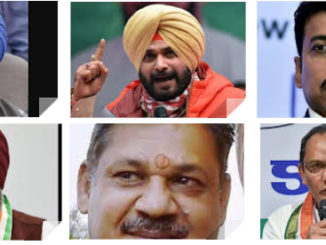
Kirti Azad represented BJP in Lok Sabha, His long innings in cricket and then in politics almost brought him to the brink for alleging wrong doings in the DDCA. Ultimately, he had to quit BJP. Another cricketer to make it to Parliament in the last general elections was former Test opener Gautam Gambhir.
Why are sports stars damp squibs in politics? Or are they content with membership of Parliament or State Assemblies and do not look beyond?
Athens Olympic medalist Rajyavardhan Singh and Test cricketer Navjot Singh Sidhu may be exceptions. Rajyavardhan Singh Rathore remained a part of Narendra Modi ministry. And his portfolio was sports. And Navjot Singh Sidhu remained a cabinet minister in Punjab. But his portfolio did not include sports.
It is more than a question of political rehabilitation for those leaving sports and opting for a new career. If politicians are not a welcome to National Sports Federations how could sports stars expect warm welcome or assimilation in political administration, it may be the corollary to have the answer for the vexed question of sports into politics. The last election to the 15th Punjab Vidhan Sabha, was, however, different as not only a large number of sportspersons, bureaucrats, technocrats, small and big screen artistes, singers, academicians, realtors and others evinced extra interest in politics.
Besides Navjot Singh Sidhu (cricket) and Olympian Pargat Singh (hockey), who were successful in the last Punjab Assembly elections, Asian Games gold medalist Kartar Singh (wrestling), Sajjan Singh Cheema (Olympian, basketball) and Gulzar Singh (kabaddi) were in the fray while several others including Olympians Surinder Singh Sodhi and Hardeep Singh Grewal and internationals Jagdeep Singh Gill and Asian Games gold medalist Rajbir Kaur Rai (all hockey) did not get a chance to enter the electoral politics.
Sajjan Singh Cheema, now back again in AAP as its candidate from Sultanpur Lodhi, hopes to script success in his second attempt. In all previous instances, sportspersons may have stirred hornets’ nests here and there but in the longer run their actions remained far too small to impact national or provincial politics. Both Navjot Singh Sidhu and Pargat Singh played a pivotal role in getting the Punjab Congress Legislature Party’s leadership changed. If Capt Amarinder Singh had to quit Chief Ministership in September last year, it was primarily because of the flag of revolt raised by Navjot Singh Sidhu closely followed by Pargat Singh. Navjot Singh Sidhu has risen to head the Punjab Pradesh Congress Committee.
Barring a few exceptions, most of sports stars were all introduced on the political horizon as “bold and big game changers”. Finding their wings clipped and sans all powers, they attempted to walk free to end up “loners” and “failures”. What they did on playfields, they could not repeat even one per cent of that in politics. It is all the more intriguing that Indian sports is mired much deeper in politics than the politics of running world’s biggest liberal democracy, but our sports personalities have failed on that front too.
One may not be able to name a sport that is free from politics. Political affiliations apart, sports administrators defy rules, regulations and guidelines to monopolize State and National Sports associations. Governments come and go but our sports politicians, who have perfected the art of staying in office irrespective of the political party in power, remain indispensable. It is but natural to come to one’s mind that if our sports are so deep into politics, why sports personalities have been generally non-performers in the political scenario.
For further reading and related content visit www.probingeye.com