Tag: Korea

  • A Christmas Wish for a World at Peace

    A Christmas Wish for a World at Peace

    By Prof. Indrajit S. Saluja

    As the world prepares to merrily celebrate Christmas on December 25, with carols, candles, gifts and gatherings my kids have been so enthusiastic about, my thoughts drift, inevitably and uneasily, to people across continents who will mark this season not with joy, but with fear, deprivation and grief. When one surveys the globe today, a grim common thread binds distant lands and diverse societies: conflict. It manifests in many forms—economic, political, ethnic, ideological and military—but its consequences are uniformly cruel. Peace, despite humanity’s bitter experiences, continues to elude us.

    History offers no shortage of warnings. The twentieth century alone witnessed two World Wars whose scale and savagery reshaped the world. World War I, sparked by nationalism, imperial rivalries and diplomatic failure, left nearly 20 million dead and shattered empires. Instead of ushering in lasting peace, it sowed the seeds of resentment and economic despair that gave rise to fascism and World War II. That second conflagration, the most destructive in human history, claimed over 60 million lives, devastated Europe and Asia, and culminated in the nuclear annihilation of Hiroshima and Nagasaki, grim reminders of humanity’s capacity for self-destruction.

    In the aftermath of World War II, leaders vowed “never again.” Institutions such as the United Nations were created to resolve disputes through dialogue, not arms. Yet the decades that followed tell a sobering story. The Cold War divided the world into hostile blocs, bringing proxy wars in Korea, Vietnam, Afghanistan, Africa and Latin America. While nuclear deterrence prevented direct confrontation between superpowers, millions perished in regional conflicts fueled by ideological rivalry.

    The end of the Cold War briefly raised hopes for a “peace dividend.” Instead, the world entered a new phase of instability. Ethnic conflicts tore apart Yugoslavia. Genocide scarred Rwanda. The Middle East remained trapped in cycles of war and retaliation. The US-led interventions in Iraq and Afghanistan, launched in the name of security and democracy, produced long wars whose human and economic costs far outweighed their gains. Terrorism emerged as a global threat, feeding on unresolved grievances and failed states.

    Today, conflict has returned with alarming intensity to Europe itself, a continent that once prided itself on having learned the lessons of history. The war between Russia and Ukraine has inflicted immense suffering on ordinary people: cities reduced to rubble, millions displaced, families torn apart, and an entire generation growing up amid sirens and uncertainty. Whatever the geopolitical arguments advanced by either side, the human cost is undeniable and indefensible.

    This is not an isolated tragedy. From Gaza to Sudan, from the Sahel to Myanmar, violence continues to uproot lives. Economic conflict, too, is pervasive: trade wars, sanctions, debt crises and widening inequality pit nations and classes against one another. Even societies not directly at war feel the consequences through inflation, refugee flows, energy shortages and a growing sense of global insecurity.

    One might ask: how, after centuries of bloodshed, does humanity still fail to learn? Part of the answer lies in the persistence of ego, power politics and short-term thinking among leaders. War is often justified in the language of national interest, honor or security, yet it is invariably paid for by civilians. Children lose schools, the sick lose hospitals, and the poor lose whatever fragile stability they possess. Reconstruction takes decades; trauma lasts generations.

    Christmas, at its core, is a celebration of peace, compassion and goodwill. The image of a child born in a manger has endured precisely because it speaks to humility and humanity, not conquest. At this moment, therefore, it is worth articulating a simple, perhaps unfashionable wish: that this Christmas brings wisdom to leaders who command armies and shape destinies.

    In particular, one hopes that Russia’s President Vladimir Putin and Ukraine’s President Volodymyr Zelensky pause, even briefly, to reflect not on strategy or prestige, but on their people, the soldiers in trenches, the civilians in bomb shelters, the parents who bury their children. History will not judge them by how long they fought, but by whether they found the courage to stop.

    Peace, contrary to popular belief, is not weakness. It requires moral strength to shed ego, to compromise, and to accept that no victory built on ruins can truly be called a triumph. Europe learned this lesson after 1945; it must not be forgotten now.

    In this context, any genuine effort toward peace deserves encouragement, regardless of who undertakes it. If President Donald Trump seeks to play a role in ending the conflict, one can only wish him success. The world has seen enough failed wars and broken promises. A negotiated settlement, however imperfect, is infinitely preferable to endless bloodshed. If peace were to come to a ravaged region through such efforts, it would indeed be a gift worthy of global recognition.

    One might even indulge in a Christmas metaphor: Santa Claus, bearer of goodwill, presenting the Nobel Peace Prize not as a personal accolade, but as a symbol of what humanity values most, the saving of lives. Such symbolism matters, because it reminds leaders that history honors peacemakers long after warriors are forgotten.

    Ultimately, however, responsibility does not rest with leaders alone. Citizens, media and institutions must resist the idea that war is something normal. We must question narratives that glorify violence and demand accountability for decisions that destroy futures. Future generations will inherit the world we leave behind. They should not look back on us as idiotic warmongers who knew the costs of conflict yet chose it anyway.

    As candles are lit this Christmas, let them illuminate not just homes, but consciences. Let the season renew our collective commitment to dialogue over destruction, empathy over enmity, and peace over pride. For without peace, no celebration—Christmas or otherwise—can ever be complete.

    Merry Christmas, and may it bring the world closer to the peace it so desperately deserves!

  • Indian Americans top in family stability: Institute of Family Studies

    Indian Americans top in family stability: Institute of Family Studies

    CHARLOTTESVILLE, VA (TIP):  As a group, immigrant families tend to be more stable than families of native-born Americans with Indian Americans ranking at the top in family stability, according to new study.

    But not all immigrant families are equal when it comes to family structure, according to an analysis of census data by the Institute of Family Studies (IFS), a Charlottesville, Virginia, -based think tank.

    Among the 30 largest groups of working-age immigrants in the US, Indian Americans rank at the top in family stability, noted Wendy Wang, director of research at the IFS.

    Almost all (first-generation) Indian immigrants with children are stably married (94%), according to an IFS analysis of the 2019 American community survey. About 4% are remarried, and the share of unmarried Indian immigrants with children is only 2%. Family stability is also higher among immigrants from other parts of Asia, such as Bangladesh, Pakistan, Taiwan, Korea, China, and Japan, the study noted.

    More than 80% of immigrant families from these countries comprise two stably married adults with their children.

    The conventional wisdom that higher education and higher income drive family stability applies to immigrant families to some extent, says Wang, For example, immigrants from Asia tend to have higher educational levels than other immigrants and their family stability is also higher.

    More than six-in-ten Asian immigrants with children are college-educated (64%), compared with 13% of their Hispanic peers.And Indian immigrants not only top the list of family stability but also are one of the most highly educated and financially successful immigrant groups, IFS noted.

    Compared with native-born American parents, however, immigrants with children overall have lower levels of education and higher rates of poverty.

    Some 48% of immigrant parents have a high school or less education, compared with only 29% of native-born parents. And the poverty rate is 15% for immigrant families with children, compared to 11% for native-born American families. Yet, immigrant families are more stable than native-born American families.

    In fact, after controlling for education, income, race/ethnicity and age, immigrants with children are twice as likely to be in an intact family than native-born parents.

    Native-born Asian Americans with children are less likely to be in a stable marriage than first-generation Asian immigrants (78% vs. 85%), even though their income is higher. While Indian immigrants have the highest family stability: 94% of Indian immigrants with children are stably married, the share of intact marriage drops to 87% among native-born Indian Americans with children, the study noted.

    This is so despite the fact that they have higher incomes than the first-generation Indian immigrants, and their educational levels are equally high, Wang wrote. After controlling for education, income and age, Indian immigrants are more than twice likely to be in an intact family than native-born Indian Americans.

    “Obviously, education and income alone cannot explain this family advantage of first-generation immigrants. So, what is it that makes immigrants stand out?” Wang asked and suggested, “In a word: culture.”

    Immigrants are more likely than native-born Americans to embrace a family-first mindset when it comes to marriage and children.

    The families that immigrants embrace not only provides them a safe harbor when facing the challenges as newcomers, it also helps to provide a better environment for their children to advance in life, the study noted.

    According to a recent analysis by IFS senior fellow Nicholas Zill, children of immigrants are doing surprisingly well in school: they are more likely to get “As” and are less likely to have behavior problems.

    The reason for their academic success is not because these children are from better-off families (in fact, the majority of them are not), it is partly because they are more likely to live in intact families with two married parents, Wang wrote. With the share of immigrants in the US population near a historic high of about 14% or 45 million, the IFS study highlighting their cultural diversity noted the strength of immigrant families. Specifically, 72% of immigrants with children are still in their first marriage, whereas the share among native-born Americans is just 60%, it noted. Behind these numbers are the relatively higher marriage rates and lower divorce rates of immigrants in general. For every 1,000 unmarried immigrants ages 18 to 64 in 2019, 59 got married.

    The corresponding number for native-born Americans was 39. Likewise, only 13 out of 1000 married immigrants ages 18-64 got a divorce in 2019, compared with 20 out of 1000 among native-born Americans of same age.

    While immigrants represent a diverse array of cultures and traditions, what many new immigrants have in common is a dedication to family that translates into better performance in school and a stronger shot at realizing the American Dream, Wang wrote.

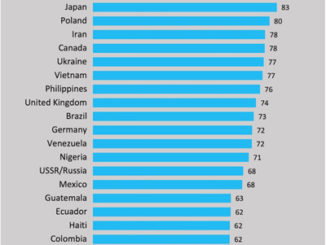
    Top 10 US immigrant groups leading in marriage stability:

    1. India – 94%
    2. Bangladesh – 90%
    3. Pakistan – 87%
    4. Taiwan – 86%
    5. Korea – 85%
    6. China – 84%
    7. Japan – 83%
    8. Poland – 80%
    9. Iran – 78%
    10. Canada – 78%

  • China and South Korea Pushing for Trump-Kim Summit-Advantage Trump

    China and South Korea Pushing for Trump-Kim Summit-Advantage Trump

    By Ven Parameswaran

    China and North Korea want the U.S. to withdraw its base in South Korea and recall 40,000 of its army.  China and North Korea are asking for total denuclearization of the entire Korean Peninsula, including B-52 nuclear equipped bombers in South Korea.  The U.S. could save by withdrawing, provided North Korea fully complies, says the author.  

    The Korean War ended in the Armistice Agreement of 1953.  This Agreement was made possible because V. K. Krishna Menon’s proposal for the repatriation of prisoners belonging to different countries was accepted by the United Nations.  President Eisenhower acknowledged and thanked India for its positive contribution that ended the Korean war.

    President Trump deserves credit for his statesmanship and courage in negotiating with North Korean leader Kim-Jong-Un.   This is made possible only because Ambassador Nikki Haley was able to convince China and Russia to vote for the severest sanctions against North Korea.  Nobody knows why China changed its policy and decided to support the USA against its client State, North Korea.   It must be pointed out that after the severest sanctions, North Korea has had no choice but to depend on China for its existence and political support.  This is the reason Kim-Jong-Un made a private trip to Beijing by train before taking the initiative to seek a summit meeting with Trump.  He also had meeting with Chinese leader Xi, after Trump canceled the meeting.   Does this not show that China is more interested in getting along with Trump, and therefore, was prepared to be tough on North Korea?  What are China’s goals?

    China and North Korea want the U.S. to withdraw its base in South Korea and recall 40,000 of its army.  China and North Korea are asking for total denuclearization of the entire Korean Peninsula, including B-52 nuclear equipped bombers in South Korea.    The U.S. could save by withdrawing, provided North Korea fully complies.  The U.S. Naval power and airpower are second to none and because of the latest and sophisticated technology, the U.S. can win wars without a land base.

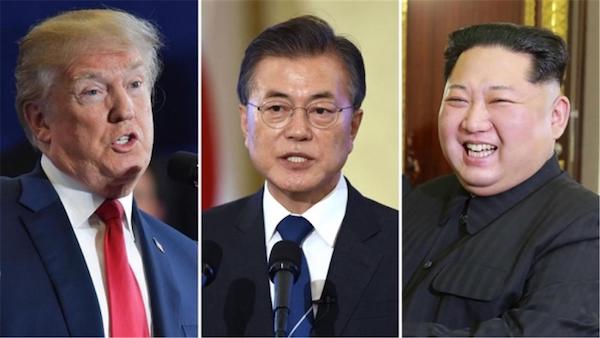
    North Korea cannot afford to be the victim of the severest sanctions.  North Korea is interested in economic development.   Therefore, North Korea is trying to demonstrate that it can be trusted by destroying the nuclear test sites in front of the world media.  Kim also created goodwill by releasing the U.S. prisoners.   When Trump cancelled the June 12 Summit, Kim reacted positively.  To prove, Kim of North Korea and Moon of South Korea met again, and the world saw mutual embrace and goodwill.  

    South Korea also seems to be more enthusiastic and positive about making sure the Summit takes place.  Towards this end, Moon has been applying diplomatic pressure on Trump and the U.S. Secretary of State.  

    Trump has reiterated that the U.S. will not remove sanctions until North Korea is ready and willing to denuclearize North Korea first with international inspection control.  Trump has also said that the US will be happy to help North Korea’s economy.  

    So far, Moon and Kim have demonstrated to the world that they are interested in ending the war and signing a peace accord with the approval of the US and China.  Reunification of Koreas is also a possibility in the future as happened with the Germanys.    

    Japan was almost defenseless when North Korea dared to test its missiles over Japanese airspace.  Japan is also interested in denuclearization of North Korea.   

    As of now, it appears that the historic Summit may take place on June 12, 2018 in Singapore, based on President Trump’s decision.  Trump is a tough negotiator.  He has decided to go for the Summit after calling it off.  This is only because he could feel the goodwill generated by South Korea, North Korea and China.   Preparations are going on and the diplomatic intercourse is heavy between Beijing, Pyongyang, Seoul and Washington.  

    President Trump said that he was willing to take the risk for the sake of peace of the Koreas and the world.  If indeed the Summit takes place in Singapore as scheduled, Trump will be cheered by the world.  ” Presidents Bill Clinton, George W Bush, and Obama tried and failed, but Trump succeeded” will be the headline of the world media on the 12th June.    

    This is a great and golden opportunity for Kim-Jong-Un of North Korea to create trust and demonstrate that he really wants peace.  So far, Trump has succeeded in changing the attitude of Kim, who has been uncompromising.  It is heartening to note that Kim changed though he was provoked by John Bolten, National Security Adviser and the remarks by the US Vice President.  

    (The author, a 64-year resident of the USA is a Diplomat-in-Residence and Senior Adviser for the New Delhi Think Tank, Imagindia Institute. He resides in New York, and can be reached at vpwaren@gmail.com) 

  • A bang and a whimper- Trump scraps Kim summit, citing NK’s ‘open hostility’

    A bang and a whimper- Trump scraps Kim summit, citing NK’s ‘open hostility’

    Trump’s announcement came hours after North Korea carried out what it said is the demolition of its nuclear test site.

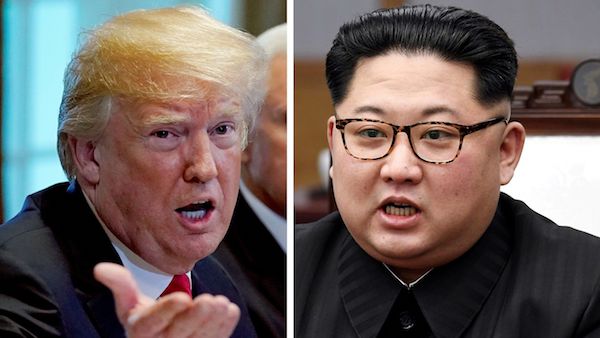
    WASHINGTON(TIP): US President Donald Trump on Thursday, May 24, called off a historic summit with North Korean leader Kim Jong Un scheduled for next month, even after North Korea followed through on a pledge to blow up tunnels at its nuclear test site.

    Trump announced his abrupt withdrawal from what would have been a first-ever meeting between a serving US President and a North Korean leader in Singapore on June 12 in a letter to Kim.

    A White House official said a North Korean official’s condemnation of US Vice-President Mike Pence as a “political dummy” was “the last straw” that led to cancelling the summit.

    “Sadly, based on the tremendous anger and open hostility displayed in your most recent statement, I feel it would be inappropriate, at this time, to have this long-planned meeting,” Trump wrote to Kim.

    “Please let this letter serve to represent that the Singapore summit, for the good of both parties, but to the detriment of the world, will not take place.” Trump called it “a missed opportunity” and said he still hoped to meet Kim someday. However, the chances for a quick rescheduling appear remote and cancellation of the summit will renew fears of a return to conflict on the Korean peninsula.

    Earlier on Thursday, North Korea had repeated a threat to pull out of the summit with Trump next month and warned it was prepared for a nuclear showdown with Washington if necessary.

    South Korea’s presidential Blue House appeared taken off guard by Trump’s letter and an official said it was “trying to figure out what President Trump exactly meant.” South Korean President Moon Jae-in had met with Trump at the White House on Tuesday, May 22, to urge him to follow through on the summit and not let a rare opportunity with reclusive North Korea slip away.

    A few hours before Trump announced the cancellation, a small group of international media selected by North Korea witnessed the demolition of tunnels at the Punggye-ri site on Thursday, May 24, which Pyongyang said was proof of its commitment to end nuclear testing.

    Meanwhile, alarm bells began to ring at the world body. Antonio Guterres, UN Secretary-General said, “I am deeply concerned by the cancellation of the planned meeting in Singapore between the President of the United States and the leader of the Democratic People’s Republic of Korea. Both the parties must continue their dialogue so as to find a path to the peaceful and verifiable denuclearization of the Korean peninsula”.