Tag: Kuldip Singh

  • Why Chandigarh still eludes Punjab

    Why Chandigarh still eludes Punjab

    Every change in Chandigarh’s governance brings Punjab back to the unresolved promise of 1966

    “The political resonance of the territorial issues like Chandigarh has not faded. The importance of the issue of transfer of Chandigarh to Punjab, which has defined the politics of the state for decades, remains intact. It is bound to remain so till a solution acceptable to the politically dominant class of peasants is found. And for this class, Punjab’s claim on Chandigarh is indisputable.”

    By Kuldip Singh

    The proposed Bill of the Central government to put Chandigarh under Article 240 of the Constitution so as to bring it on a par with the other union territories without legislatures has triggered condemnation from across the political class of the state. For Punjab-based political leaders, it is just not a move to reverse the change introduced in 1984 whereby the Punjab Governor was made the administrator of Chandigarh or merely a step to put the union territory under the Lieutenant Governor, as is the case elsewhere in the country. In Punjab, any move to alter Chandigarh’s governance takes stakeholders back to the question as to why a city built as Punjab’s capital has not been returned to it even decades after the 1966 reorganization.

    Let us first understand why the city could not be given to the state of Punjab on the eve of its reorganization in 1966. It is noteworthy that the three-member Boundary Commission headed by Justice JC Shah, appointed in April 1966, to identify the Hindi and Punjabi regions of the state recommended by majority vote that Chandigarh should go to Haryana. The third member, S Dutt, dissenting with the majority verdict, pleaded that the city should instead go to Punjab. There was an inbuilt problem with the commission regarding its terms of reference.

    The commission was asked to take into consideration the Census figures of 1961, which, as was well known, could not be trusted because in the then politically surcharged atmosphere of the state, a large section of Punjabi Hindus was persuaded to disown their mother tongue, Punjabi. Secondly, instead of the village being taken as a unit, as was the practice in the past, the commission was required not to break up the tehsils. Since Kharar tehsil, in which Chandigarh fell, was shown to have 55.2 per cent Hindi-speaking population as per the 1961 Census figures, it led the two members of the commission to recommend that the city should go to Haryana.

    The Central government realized the flaws in the terms of reference of the commission. To come out of the messy situation, which was essentially its own creation, the Central government decided to declare the city a union territory to be shared by both Punjab and Haryana.

    Ever since the reorganization of Punjab, political leaders across parties, with the Akalis being in the forefront, have been proclaiming that the boundaries of the state need to be redrawn along linguistic lines and that Chandigarh should be transferred to Punjab.

    Akali Dal leader Sant Fateh Singh was accused of breaking his fast-unto-death or the vow to immolate himself on December 27, 1966, if Chandigarh was not given to Punjab. Darshan Singh Pheruman of the Swatantra Party died for the cause on October 27, 1969, after a 74-day hunger strike.

    On January 26, 1970, Sant Fateh Singh began a fast for the transfer of Chandigarh to Punjab, following which Prime Minister Indira Gandhi announced that Chandigarh would be given to Punjab while Haryana would get a part of Fazilka tehsil and Abohar. Haryana was also to be given an outright grant of Rs 10 crore for building a new capital. In view of the problem of contiguity of the areas proposed to be given to Haryana, the plan of the transfer of Chandigarh to Punjab got stuck.

    After the launch of the Nehar Roko Morcha in April 1982, the Akali Dal participated in many rounds of talks with the Central government, negotiating on its demand charter submitted to the Centre in October 1981. The transfer of Chandigarh and Punjabi-speaking areas to Punjab were the major demands. Subsequently, in July 1985, Prime Minister Rajiv Gandhi signed the Accord with Akali Dal president Harchand Singh Longowal, wherein he the PM gave a solemn undertaking that Chandigarh would be transferred to Punjab on Republic Day, ie, January 26, 1986.

    But like the earlier occasion, this promise was also not honored. The official excuse given by the Centre was that the Matthew Commission — despite two extensions having been given to it — had failed to identify the areas to be given to Haryana in lieu of Chandigarh. However, the real reason was the fear of the loss of Hindu votes in Haryana in the state Assembly elections which were due the following year.

    This is why the issue has remained unresolved for so long, even though leaders of Punjab from across the political spectrum have all along been very vocal on the subject.

    The politics played on the territorial issues of Punjab pushed the state into the throes of a prolonged political turmoil in the 1980s, which lasted for more than a decade.

    The Akali Dal-sponsored agitation, which had the backing of Punjab’s peasantry, eventually took a violent form. This led the peasantry, which had earlier supported the movement wholeheartedly, to move away from the violent struggle. Thus, the movement ended without achieving any closure.

    However, the political resonance of the territorial issues like Chandigarh has not faded. The importance of the issue of transfer of Chandigarh to Punjab, which has defined the politics of the state for decades, remains intact. It is bound to remain so till a solution acceptable to the politically dominant class of peasants is found. And for this class, Punjab’s claim on Chandigarh is indisputable.

  • Indian American Sikh attacked in a robbery bid

    Indian American Sikh attacked in a robbery bid

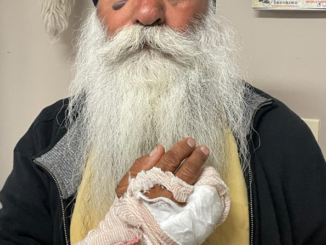
    RICHMOND HILL, NY (TIP): In less than a month and a half a third targeted attack on an Indian American  Sikh has taken place in Queens neighborhood of Richmond Hill, which is considered a neighborhood dominated by Punjabis. Kuldip Singh, 62  who hails from Dasuya in Hoshiarpur ( Punjab) was taking a walk at around 10.30 in the morning of Sunday,  May 8 near his home in 115 Street between Liberty Avenue and 107 Avenue in Richmond Hill when a Black young man between 25 and 30 years on a bicycle stopped by him, threw his bike on the road, took out a pistol and asked for money. Kuldeep said told The Indian Panorama  that he impulsively caught hold of the Black guy’s right arm  in which he was holding the gun. What followed was a kind of wrestling  match between the two. The young man proved stronger than the old Kuldeep Singh and punched him ferociously.

    As a result, Kuldeep Singh suffered a few injuries on many parts of the body, including a fractured  nose and  a fractured finger of the left hand. The assailant managed to escape. The incident – the third attack on a Sikh- in the neighborhood has shocked and angered the community. A  Sikh community leader Harpreet Singh Toor said that the community should get together and instead of being silent spectators should come immediately to the rescue of a victim. Many  people in the Sikh community have  expressed admiration for the courage of Kuldip Singh who instead of sheepishly handing over the wallet faced the assailant. In the ongoing investigation, the police have impounded the attacker’s bicycle and the hunt for the assailant is on. The Indian Panorama contacted Kuldip Singh on May 13 evening to know about his health. He complained of terrible pain in his spine and head.