Tag: Ladakh

  • LAC situation stable but unpredictable: Army Chief

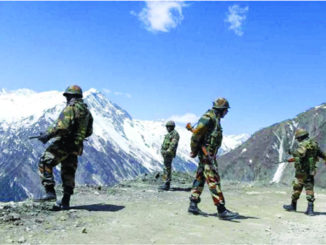
    Army Chief Gen Manoj Pande on Thursday said the security situation along the northern borders (with China) was stable but remained unpredictable. Addressing a press conference ahead of Army Day (Jan 15), the Army Chief said: “We have resolved five of the seven friction points along the Line of Actual Control (LAC) in eastern Ladakh.” The pending friction points are at Depsang and Demchok in eastern Ladakh, sources said. General Pande praised the troops on the ground for being able to maintain a “robust defensive posture” to prevent the adversary from changing the status quo along the LAC, the de facto boundary with China.

    On China’s aggression, the Army Chief said there was a slight increase in the number of troops of the People’s Liberation Army (PLA) facing the Eastern Command. “Their (Chinese) troops which came for training have remained,” the General said, adding that “we have adequate deployment and we have the reserves to meet any challenge.” The Army has decided to go in for transformation in five key domains. These include force re-structuring and optimisation; modernisation and technology infusion; manpower management like Agnipath; jointness with other forces; and refining own systems and processes.

    General Pande said 2023 would be the year of transformation and the force had laid out a specific roadmap aiming for certain outcomes that could be achieved. “This process will continue beyond the current year.”

    On modernisation, General Pande said: “As of now, 45 per cent of our equipment is vintage, 41 per cent is of current technology and some 12 to 15 per cent is state-of-the-art. “By 2030, we aim to have 45 per cent equipment in the state-of-the-art category and 35 per cent of current technology.”

  • Trip to Ladakh, the ‘Moonland’

    Trip to Ladakh, the ‘Moonland’

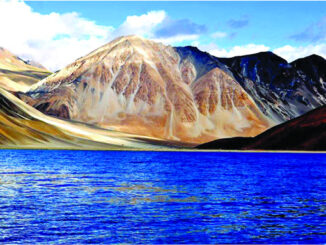
    Ladakh is a union territory in the Kashmir region of India. Formerly falling in the state of Jammu & Kashmir, Ladakh was administered a union territory on 31st October 2019. Extending from the Siachen Glacier to the main Great Himalayas, Ladakh is a land like no other. Dominated by dramatic landscapes, Ladakh is known as the world’s coldest desert. Stunning Gompas (Tibetan Buddhist monasteries), fluttering prayer flags, whitewashed stupas, Ladakh is a riot of intricate murals and red-robed monks. It is said that only in Ladakh can a man sitting in the sun with his feet in the shade suffer from sunstroke and frostbite at the same time. With a culture similar to Tibetan culture, the people of Ladakh are friendly and welcoming to tourists. Ladakh is an adventure playground for rafting and high-altitude trekking. Note that Leh Ladakh is inaccessible by road outside the summer months. The route passes close altogether from around October to May, and the only way to reach is by air. Chadar trek on frozen Zanskar river takes place in January to the end of February.

    For those of us living in the constant confusion about the difference between these twin locations, Leh-Ladakh, here is something that might help you. Ladakh is divided into two districts: district Leh and district Kargil. The former district has a famous town, “Leh”, and is a great tourist attraction because of its beautiful monasteries nearby, Shanti Stupa, cafes and Leh Bazaar defining the place’s culture.

    While most of the people believe that Ladakh is inaccessible in the winters, this may be the best time to visit Ladakh for the adventurous souls. Winters in Ladakh hardly see any tourists and you can have all of its stunning barrenness to yourself. Visiting Ladakh in winters is a chance to see this magic land as it has existed for centuries.

    Winter in Ladakh is very harsh and temperatures can plummet to lesser than -30 degree Celsius at night. So, be prepared for cold (brrr very cold) days and even colder nights. Everything will be frozen and there will be no running water in the taps. The streets look deserted and yet life goes on as usual. If you are lucky (or unlucky, depending on the severity of the snow), there is a huge possibility of experiencing snowfall while in Ladakh in the winters. While the aim of this winter travel guide to Ladakh is to help prospective travellers prepare, it is best to prepare yourself for thinking practically and trusting the locals when it comes to dicey situations. Follow this winter guide to Ladakh and it is quite possible to have a holiday to remember and boast about!

    A warning—if you are someone who is not fond of the cold or cannot bear cold climates, please give up the idea of visiting Ladakh in winter. The biggest battle will be with the cold, and it is more a mind game than anything else. It is better to be prepared for extreme cold conditions before landing at 3300m above sea level.

    How to reach?

    Travelling by both the road routes, the Manali-Leh Highway and Srinagar-Leh Highway, is not possible since they are not open in the snowy winters of Ladakh. Flying is the only way to reach Ladakh once roads are closed for the winter due to snow at the high passes. The Manali-Leh and Srinagar-Leh highways are generally closed by October-November and November-December respectively.

    There are several airlines that operate regular flights to Leh in the winter. You can get on to one of the early morning flights from Delhi or Jammu and Srinagar; the frequency of flights from Delhi is impressively high. The airfare is quite cheap (if you book in advance) as there only a handful of people come to Ladakh in the winters.

    Tip: It is better to wear 4-5 layers of clothing at the departing airport itself to prepare yourself for the imminent cold of the Leh airport.

    While you are in the flight, there are dazzling endless views of the snowy Himalayas on a clear day. There are chances of flights being cancelled or postponed due to fog and sudden changes in weather, so do remember to keep buffer of a day or two while flying into/out of Leh in winter.

    Transportation in Ladakh

    There are a few buses that ply in the winters in Ladakh and proper information about them can be obtained at the bus station in Leh. Depending on the snowfall at various places, the frequency and routes of the buses is decided. Buses are a great way to travel for budget travellers, also giving a chance to mingle with the locals. Commuting by motorcycle is not advised due to the harsh cold and increased chances of slipping on snow.

    If you are looking for a comfortable way to travel, hired taxis (SUVs) are the best bet for travelling in the winter in Ladakh. Although taxi fares in Ladakh are quite steep, it is the most convenient option and also gives the flexibility to stop as often as you want for photography and sightseeing. Add to it the fact that the drivers, usually, will know someone at the destination to provide for a home stay in the bitter cold. Shared taxis run for some places near the Polo Ground early in the morning, and it is best to make a reservation. The taxi drivers will be reluctant to take direct bookings and will, instead, direct you to a travel agent. The main reason for it lies in the fact that if they get stuck somewhere the travel agents are liable to send another car to take you out safely. Dreamland Tours & Travels is a trusted choice and is a well-known name; remember to bargain when you are making a deal.

    A recommended tip for winter travel within Ladakh, is to make sure that you arrive before dark to arrange for accommodation and food without any hassle.

    Places that can and cannot be visited

    Most of the internal roads in Ladakh are open even in the winter and traffic is sparse. So it is possible to visit most of the places in Ladakh even in the winter. Roads to Nubra Valley, Pangong Tso, Tso Moriri, remnants of the Indus Valley Civilisation, Sham Valley, Lamayuru, Kargil etc are all open and accessible throughout the winter.

    It is important to know that in case of heavy snowfall, there are chances of the road being closed for a day or two and might hamper your plans. It is better to keep a day or two extra as heavy snowfall at Khardung La and Chang La may cause the roads to be shut for vehicular traffic.

    The weather is bitterly cold in Changthang (near Tso Moriri) and the regions of Chushul and Hanle may be out of bounds in the winters. Stay prepared, for the unbearable cold (sometimes -40 degrees Celsius) makes Changthang a difficult place to visit in the winters even if you reach it.

    It is also advisable to make have the vehicle window panes always rolled up so that there is minimal contact with the frigid air. Also remember that it is unbearably cold at Khardung La and Chang La (two of the highest passes in the world) and it makes sense to stay back in the vehicle while the driver makes the entries with the Army at the check post.

  • Gasping for air, gasping for answers

    Gasping for air, gasping for answers

    By Vikram Patel

    The people of India are entitled to a full and honest account of what led more than a billion people into a catastrophe

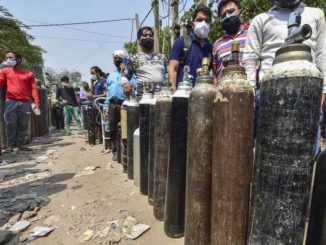
    The struggle to breathe, or asphyxia, is the most terrifying human experience. Something one takes for granted, which we do more than a dozen times every minute, suddenly becomes an ordeal. I know how this feel having lived through tormenting bouts of asthma in my younger years and, more recently, when I found myself trapped under a raft in the freezing, raging, Zanskar river in Ladakh. The memories of gasping for air and the fear of dying are seared into my brain. Death typically comes as a relief from the terror, as multiple organ systems collapse due to the lack of oxygen, a colorless, odorless, tasteless gas which we are not even aware of until we cannot get enough of it. Oxygen. A word which should signify vitality and exuberance, but which in recent weeks has become synonymous with death and suffering. Who would have ever imagined that the India of 2021 which boasts sending rockets to the stars and manufactures oxygen on an industrial scale, would one day be unable to supply oxygen to save her own people?

    The trauma of asphyxia

    The word ‘trauma’ typically evokes extreme events such as rape, sexual abuse and war-related violence. This is not surprising given that the word gained currency as a medical condition in the aftermath of the Vietnam war when tens of thousands of soldiers from the United States returning from the brutal conflict exhibited a range of distressing symptoms, giving birth to the diagnosis of Post-traumatic Stress Disorder (PTSD). But the truth is that trauma can occur in many more diverse ways, and it is only now, with COVID-19 sweeping the world, that gasping for air has been recognized as a traumatic event. What ties these seemingly unconnected experiences together is that they all evoke the same intense emotions: a toxic brew of extreme fear and utter helplessness. These experiences, especially when sustained over hours or days, literally leave an imprint in the brain so that the hallmark features of PTSD symptoms such as nightmares, flashbacks and feeling on edge, recur at any time, sometimes triggered by a totally unrelated event which bear similarity to the trauma.

    A recent study from the United Kingdom of over 13,000 survivors of COVID-19 reported a strong correlation between the severity of the infection and subsequent PTSD. While just over 1% of the patients reported breathing problems or hospital admission, the prevalence of PTSD in the months which followed were staggering: 35% of the sickest, and 15% of even those who only needed home assistance. The most prominent symptoms were frightening intrusive images of being breathless or ventilated. Thus, for those who do survive these nightmarish moments on the edge of life, the ordeal is far from over. Even as we struggle to keep those gasping for air alive, we must simultaneously attend to the long-term mental health consequences of survivors, a task even more daunting in a country where trauma-related mental health problems are barely even acknowledged.

    A traumatized country

    But there is also another kind of trauma which is sweeping across India, as millions of stories of suffering, despair and death percolate into the consciousness of every person. There has been a feverish rise of anxiety and fear across the population, twinned with helplessness as the comfort of knowing that there is a government which they can rely on has evaporated. India has been engulfed, in a matter of a few weeks, into the world’s most serious humanitarian crisis, fueled not just by a more infectious strain of the virus, but also a stunning level of arrogance, greed, incompetence and complacency. The terror reminds me of the weeks that followed the brutal lock-down imposed on the same population a year ago, without any warning or preparation. A year on, the horrors have returned to their lives, only this time for exactly the opposite reason: the state did nothing at all as tens of thousands, and then hundreds of thousands, of people were getting infected every day, watching millions congregate at religious festivals and election rallies, oblivious or uncaring about the inevitable cataclysm this would lead to.

    The concept of collective trauma has emerged only in recent times, in the aftermath of terrifying events which have affected entire populations, such as following the 9/11 attacks in New York or disasters such as the tsunami in 2004. These events were followed by a dramatic increase in symptoms of psychological distress, including the cardinal features of trauma, for months and years after the event itself had passed into history. And so we also must prepare the country for healing from this mass traumatic experience and we can draw upon lessons from other humanitarian crises to guide our actions. Most immediately, we must find a place to park our anger and rage, as justified as these reactions may be, and search for the compassion lurking beneath it, and support in any way we can the efforts of the thousands of civil society organizations to support those who are gasping for air, not forgetting the continuing support they will need after they can breathe again. The outpouring of community action we are witnessing is a soothing balm for the anxiety many are experiencing as they fear that the state seems to have collapsed.


    Healing through truth

    But, long-term recovery of the collective trauma will need resolution of the pent-up rage that is burning a hole in our souls. This will need the equivalent of the Truth and Reconciliation Commissions which have served to heal the collective traumas of events which affected entire populations, such as apartheid in South Africa. Such an independent Commission would document the facts behind the tragedy unfolding across India, hold individuals and institutions accountable, and offer a path towards restorative justice to heal a deeply wounded nation. Last week, when the Delhi High Court issued an order to the Central Government to ensure the supply of oxygen, I was puzzled by its statement that “As it stands, we all know this country is being run by God.” I will never know who was being referred to as God, but I am assuming it must be the spiritual being we pray to in our myriad places of worship. If so, then we must ensure that this is not the final judgment of the apocalypse that has befallen India. The people of this country are entitled to a full and honest account of what led more than a billion people into a catastrophe, if only to put at rest our troubled minds, restore the fractured trust between the people and the state, and be better prepared for the next pandemic.

    (The author is The Pershing Square Professor of Global Health at Harvard Medical School, and a member of the Lancet Citizen’s Commission on Re-imagining India’s Health System)

  • Nelong Valley – The Ladakh of Uttarakhand

    Nelong Valley – The Ladakh of Uttarakhand

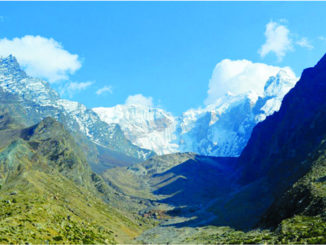
    The much talked about Nelong Valley was finally opened for the tourist in 2015 and since then it has become one of the hot spots for the adventure buffs. It bears a striking resemblance to Ladakh and features high peaks having a similar climate and landscape to that of Lahaul, Spiti Valley, and Ladakh. The cold deserted mountain area of Nelong valley looks like a replica of Tibet in terms of its geography. Since this valley falls under the Gangotri National Park, the travelers are not allowed to have an overnight stay, within the 25 km area between Bhairavghati and Nelong.

    Location of Nelong Valley

    Beautiful Nelong valley is located in the Uttarkashi district within the Gangotri National Park which is 23 km from Bhaironghati. The place is recognized as a cold desert with lush green backdrop, scarce vegetation as well as wildlife. The region is an abode to infrequent and indefinable Snow Leopard and also offers many stunning Himalayan landscapes to make your trip to Nelong valley memorable. This amazing valley is also a segment of grueling Sino Indian trade route with hand built wooden bridge which is still there from early days. This mesmerizing valley is situated at an altitude of about 11000 feet above sea level. It comes under the Gangotri National Park in Uttarkashi and is approximately 315 kilometers from Dehradun. It is just 23 kilometers from Gangotri shrine

    History

    The Word Nelong generally means the place of blue stones, and it is one of the best-unspoiled places of Uttarkashi. The beautiful Nelong valley is a cold desert like region located in Uttrakhand Himalayas close to Indo China border. During the 60s Nelong valley was a bustling trade route amid India as well as Tibet. However from the time of Indo Chinese War the region was closed for civilians as the police of both the countries were the only people who are permitted to enter it. In 2015 May government opened up the Nelong valley region for the general public.

    Best time to visit Nelong valley

    Best time to visit Nelong valley is in the months of April to June and September to October before Diwali.

    April to June- visiting Nelong Valley in summers is very much enjoyable as at this time the average temperature of the region is 25 degree Celsius. At this time snowfall also starts melting which offers amazing views of the landscape. July to September- visiting Nelong valley in monsoon is sometimes risky as there is a possibility of landslide owing to rainfall. There are many chances of road accidents, and so this is not considered as the best time to visit this place. December to March- visiting Nelong valley in winters is not comfortable enough as at this time the weather is very harsh and extreme. During these months snowfall starts and which stops the travelers and trekkers from entering the glacier area. Due to heavy rainfall during these months roads are prohibited from entering.

    How to reach

    Nelong valley welcomes visitors in the months of May till November, however owing to security reasons the place is prohibited for camping. You can reach Nelong valley from all the way through Bhairon Ghati from where you can easily hire a cab. This beautiful valley is well connected by road from Haridwar, Dehradun and Rishikesh. Every traveler should know that there is no proper accommodation and restaurants in Nelong valley. However, you can book hotels in Bhairon Ghati, Gangotri, Harsil and Dharali. However, Nelong valley do not have a flight, bus or train connectivity but is well connected with road so that you can easily hire cab or taxi or also can self drive to reach this adventurous valley.

    Reaching By Bus: The nearest bus station, which is well connected with buses to other cities is Reckong Peo Bus Stand. Harsil Bus Stand is a local bus stop with limited bus frequency.

    Reaching By Train: Nearest major railway station to reach Nelong valley is Dehradun Railway Station. There is also one local train station too but with limited railway connectivity, i.e. Harrawala Railway Station.

    Reaching By Air: Nearest major international airport to reach Nelong valley is Chandigarh Airport. There is also a small airport too with limited flight routes, i.e. Jolly Grant Airport.

    Points to remember

    Nelong valley is now open for public and is the perfect place to visit for adventure seekers and mountain lovers. This picturesque valley of Uttrakhand is a part of Gangotri National Park and is also an abode to many rare animals like snow leopard and musk deer. There are several points which you should keep in mind before planning a trip to Nelong valley:

    Nelong valley is located at a distance of about 315 km from the main city of Dehradun. First of all, you have to reach Bhairavghati which is about 100 km from Uttarkashi and then it will take a 25 km ride to reach the mesmerizing valley. Just remember that private vehicles are not permissible here; thus you have to take a forest department vehicle.

    Forest department is very much strict in terms of permission to visit Nelong valley. Only registered operators are permitted to take tourists into the valley and that too upto Nelong and beyond that you cannot go in any case.

    To enter the valley only six forest department vehicles are allowed in one day with four people each. Surely it will change in some times as government is trying up hard to promote Nelong valley tourism. Before entering you will need a permit which should be taken from the sub-divisional magistrate. You will also require a fitness certificate to enter the valley. The entry of foreigners is not allowed owing to its strategic location.

    Night stay is not permitted in the valley as you can find out accommodation options in Bhairavghati. There are numerous budget hotels which offer comfortable stay to tourist. There is also a semi-government guest house there that offers comfortable stay to its guest.

    At the time of packing for your Nelong valley trip don’t forget to pack sports shoes and woolens, alleys carry a power bank with you along with sunglasses and first aid box.

    There are many nearby attractions in Nelong valley where you can enjoy at your best. One of the best Nelong valley attractions is Padang Temple which is located at about 3500 ft and is devoted to Kaal Bhairav. Don’t miss out to seek blessings at the famous Gangotri Temple and exploring many other scenic destinations.

    You should take water, snacks and food with you as you will not find anything to eat when you are in the valley. In case you are lucky you can somehow get tea and biscuits at the camp of ITBP.

    The Nelong valley which is similar to Ladakh landscape presenting clear blue skies, deep valleys, winding roads. This tiny valley terrain is a cold desert which will relax your mind and soul for sure. Plan a trip to this beautiful destination as it is a sheer delight for adventure enthusiasts, nature lovers as well as photographers.

  • LAC disengagement in phased manner, coordinated and verified way: Rajnath Singh

    LAC disengagement in phased manner, coordinated and verified way: Rajnath Singh

    New Delhi (TIP): Defence minister Rajnath Singh said on Thursday,  India and China have maintained communication with each other through military and diplomatic channels since September last year to resolve the nine-month border standoff in eastern Ladakh. Singh made the comments while making a statement on the situation in eastern Ladakh in the Lok Sabha. “Since September last year, both sides have maintained communication with each other through military and diplomatic channels. Our objective was to effect disengagement and maintain status quo along the LAC (Line of Actual Control) so as to restore peace and tranquillity,” the defence minister said in the Lower House. “The agreement that we have been able to reach with the Chinese side for disengagement in Pangong lake area envisages that both sides will cease their forward deployments in a phased, coordinated and verified manner,” Singh said in the Lok Sabha.

    He also praised India’s armed forces for their “valour and courage”. “We maintained the edge because of the bravery of our armed forces in harsh adverse climatic conditions. Our armed forces proved yet again that territorial integrity of our country remains safe in their hands and their grit and determination is unwavering,” he said.

    “Our armed forces responded to challenges by unilateral Chinese action and have shown valour and courage on both south and north bank of Pangong Tso. Many strategic points were identified and our troops positioned themselves at locations very important from our point of view,” the minister added. He had informed the Rajya Sabha earlier in the day that India and China have reached an agreement for disengagement on the north and south bank of Pangong Lake through sustained talks. He had said that both the countries have reached an agreement on disengagement on the north and south bank of Pangong lake in eastern Ladakh that mandates both sides to cease forward deployment of troops in a “phased, coordinated and verifiable” manner.

    “I am happy to inform the House today that as a result of our well thought out approach and sustained talks with the Chinese side, we have now been able to reach an agreement on disengagement on the north and south bank of the Pangong Lake,” he had said. “It has also been agreed to convene the next meeting of the Senior Commanders within 48 hours after the complete disengagement in the Pangong Lake area so as to address and resolve all other remaining issues,” he added.

    India and China will withdraw the forward deployment in a phased and coordinated manner as per the agreement reached by the two sides, Singh had said. “The agreement that we have been able to reach with the Chinese side for disengagement in the Pangong lake area envisages that both sides will cease their forward deployments in a phased, coordinated and verified manner,” he said.

    The two countries have been engaged in a stand-off along the LAC since April-May last year. They had agreed to push for an early disengagement of the frontline troops in eastern Ladakh during the ninth round of the corps commander Level meeting held on January 24 to address the border standoff.