Tag: Law & Order

  • Obama administration to launch new effort on heroin crisis

    Obama administration to launch new effort on heroin crisis

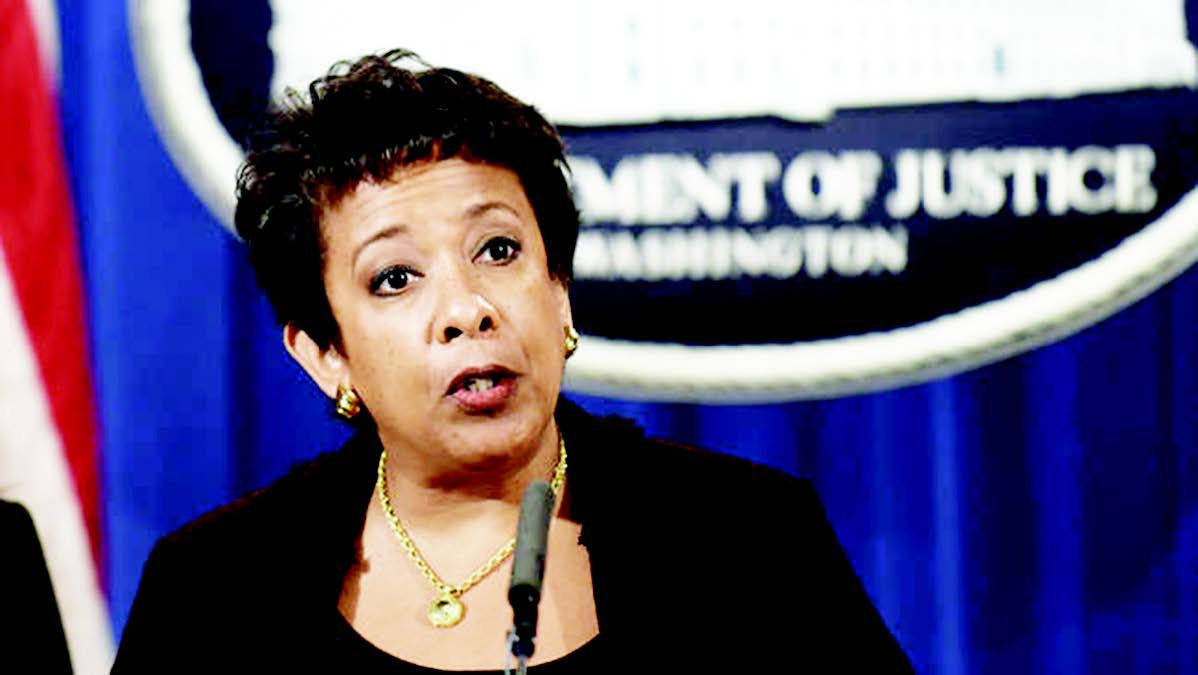
    WASHINGTON (TIP): The Justice Department is preparing to launch a renewed strategy to address the unrelenting scourge of heroin and opioid addiction, in part by placing greater emphasis on identifying links between over-prescribing doctors and distribution networks across the country, reports USA TODAY.

    The plan, outlined by Attorney General Loretta Lynch in an interview with USA TODAY, is part of an eleventh-hour push by the Obama administration against a public health crisis that continues to claim nearly 100 people each day in the United States.

    In a memo that is expected to be circulated next week to all 94 U.S. attorney offices, Lynch said prosecutors are being urged to more readily share information across state lines about prescription drug abuses by physicians that could identify traffickers and far-flung trafficking routes more quickly.

    At the same time, Lynch said federal prosecutors will be directed to coordinate their enforcement efforts with public health authorities in their districts as part of an overall strategy that puts equal emphasis on prevention and treatment.

    “I’m not calling anybody out, because I think the people who look at this problem realize quickly how devastating it has been to families, to communities, to public health dollars, to law enforcement resources,” the attorney general said. “There is no one magic bullet for this.”

    While opioid and heroin addiction have earned the distinction as the single greatest drug threat in the U.S., largely due to a casualty rate that has nearly quadrupled since 1999, the federal government’s effort to counter it – or even slow it – has been spotty.

    Earlier this year, the Obama administration requested nearly $1.1 billion as part of a plan to pay for drug treatment, invoking a common refrain that drug overdoses – driven increasingly by heroin and other opioids, such as oxycodone, hydrocodone and methadone – are responsible for more deaths than car crashes. Yet after Congress approved landmark legislation in July for expanded drug addiction treatment and prevention, it did not include the $181 million to actually fund the measure.


  • Barack Obama Nominates Indian-American Diane Gujarati to the US District Court bench in New York

    Barack Obama Nominates Indian-American Diane Gujarati to the US District Court bench in New York

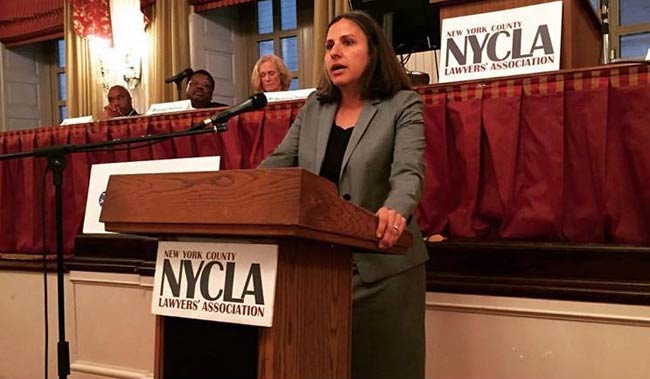
    US President Barack Obama has nominated a 47-year-old Indian-American woman attorney to the US District Court bench in New York, the White House has said.

    “I am pleased to nominate Diane Gujarati to serve on the United States District Court bench. I am confident she will serve the American people with distinction,” Obama said in a statement yesterday.

    Gujarati, the Deputy Chief of the Criminal Division of the US attorney’s office for the southern district of New York since 2012, has been nominated on the US District Court for the Eastern District of New York. She will serve as a federal judge after approval from the Senate.

    She is the daughter of Damodar M Gujarati, a professor of economics at the US Military Academy at West Point. Her father received M.Com degree from the University of Bombay in 1960 and Ph.D from the University of Chicago in 1965. Her mother is Ruth Pincus Gujarati.

    A well-known federal prosecutor, she served as an Assistant US Attorney in the Criminal Division since 1999.

    Prior to her tenure as Deputy Chief of the Criminal Division from 2008 to 2012, she served as Deputy Chief and then Chief of the White Plains Division of the United States Attorney’s Office for the Southern District of New York.

    From 2006 to 2008, Gujarati was Deputy Chief of the Appeals Unit in the Criminal Division of the United States Attorney’s Office for the Southern District of New York.

    She began her legal career as a law clerk to the Honourable John M Walker, Jr of the United States Court of Appeals for the Second Circuit from 1995 to 1996.

    Gujarati received her JD from Yale Law School in 1995 and her BA summa cum laude from Barnard College of Columbia University in 1990.

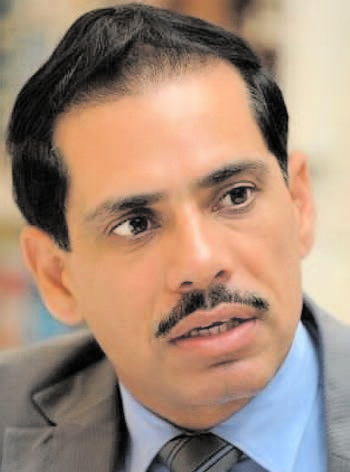
  • UP Guv says law and order in state a matter of concern

    UP Guv says law and order in state a matter of concern

    LUCKNOW (TIP): UP Governor Ram Naik, whose comments on the issue of law and order and coal shortage in the state did not go down well with the SP government, today maintained that law and order and electricity shortage were areas of concern.

    “Law and order and power scarcity have been two major areas of my concern and sometimes I have also given open expression to it”, he said.

    On the issue of power shortage, the governor said he had also made an intervention by facilitating talk between Union Minister Piyush Goyal and Chief Minister Akhilesh Yadav.

    “The chief minister had assured that he would personally talk to the union minister after by elections”, the Governor said.

    Refusing to elaborate on the reasons hampering improvement of law and order situation in the state, Naik said, “Law and order is a serious issue but I will not go into who is responsible for it or not… that would be a political comment”.

    On the BSP making a demand for the dismissal of the state government on this count, Naik said so far no one has specifically made the demand to him.

    Some of the moves of the Governor including seeking status report on Lokayukta recommendations, returning an ordinance granting cabinet minister status to chairman of the state minority commission besides his stand on the law and order situation have irked the government.

    Apparently upset over the remarks, the Samajwadi Party yesterday raised the issue of the “significance of the post of Governor and its framework.”

    In its resolution passed at its national convention, the SP has regretted that some people occupying constitutional posts worked against its dignity.

    “Some Governors took unconstitutional steps as representative of a political party due to which a debate has started on the relevance of the post of Governor,” it said.

    The governor said his stress is on maintaining good relations with all political parties for development of the state.

    “There is no reason for anyone to be afraid of my being in the Raj Bhawan… I have met leaders of almost all political parties after taking office and also have good relations with some of them since my days in Lok Sabha”, he said to a question on reservations in the government over his perceived active role.

  • GOVT SEEKS TO NEGATE SC ORDER ON CONVICTED LAWMAKERS

    GOVT SEEKS TO NEGATE SC ORDER ON CONVICTED LAWMAKERS

    NEW DELHI (TIP): Days after a Bill to amend the Right to Information (RTI) Act to keep political parties out of its purview was tabled in the Lok Sabha, the Union Cabinet on Aug 22 gave its nod to amend the Representation of People Act (RPA) to ensure that convicted lawmakers are not disqualified from either Parliament or Legislative Assemblies. The Cabinet also cleared the setting up of a Judicial Appointments Commission (JAC) Bill that seeks to replace the existing collegium system for judicial appointments to higher courts. The Cabinet meeting — chaired by Prime Minister Manmohan Singh — gave its clearance to amend the Representation of People Act that makes it clear that an MP or MLA cannot be disqualified after conviction if his or her appeal is pending before a court and sentence is stayed.

    The Law Ministry had moved the proposal to amend the Act in the backdrop of a recent Supreme Court ruling for immediate disqualification of convicted lawmakers. Under the Law Ministry proposal, such (convicted) MPs and MLAs will be barred from voting in the House and drawing salary till the court decides their appeal. The Cabinet nod to amend the RPA reflects that despite serious political disagreements that have virtually rendered Parliament dysfunctional, there’s convergence on the issue of the recent SC ruling, which has been seen by members of the legislature and their political parties as judicial over-reach into the domain of lawmaking.

    The proposal clearly seeks to negate the apex court verdict on immediate disqualification. Reports suggested that as per the Law Ministry’s proposal, a proviso would be added to sub-section (4) of Section 8 of the RP Act which makes it clear that the convicted member shall continue to take part in proceedings of Parliament or Legislature of a state, but he or she shall neither be entitled to vote nor draw salary and allowances till the appeal or revision is finally decided by the court. The second amendment states that a lawmaker would not lose his right to vote if under arrest even for a short duration and thereby would retain his right to contest a poll. Politicians had feared registration of false cases by their rivals, especially around election time.

    The Law Ministry has proposed that the amendment to the RPA come into effect from July 10, 2013, the day the Supreme Court gave the landmark judgment. An earlier plan to amend the Constitution to negate the Supreme Court ruling has apparently been dropped. In its July 10 verdict, the Supreme Court had struck down a provision in the electoral law that protects a convicted lawmaker from disqualification on the ground of pendency of appeal in higher courts. The apex court also made it clear that MPs, MLAs and MLCs would stand disqualified on the date of conviction. The draft bill says, “A disqualification under any of the said sub-sections shall not, in the case of a person who on the date of the conviction is a member of Parliament or the legislature of a state, take effect, if an appeal or application for revision is filed in respect of the conviction and sentence within a period of 90 days from the date of conviction and such conviction or sentence is stayed by the court.”

    The Cabinet also cleared the setting up of the Judicial Appointments Commission (JAC) Bill, which would give the government greater say in the appointment of judges of the Supreme Court and the 24 high courts. It seeks to replace the existing collegium system for appointments to the higher courts. The proposal to set up a JAC has been opposed by the judiciary, which now has complete control over the process. The Centre is keen to broad-base the judicial appointment system by setting up a panel comprising the Law Minister, Secretary Justice, two eminent persons and two judges of the apex court, headed by the Chief Justice.