Tag: LeadStory

  • Reflections of Readers of The Indian Panorama on India’s 72nd Independence Day

    Reflections of Readers of The Indian Panorama on India’s 72nd Independence Day

    After 71 years of independence, India is a highly developed country with developing country problems

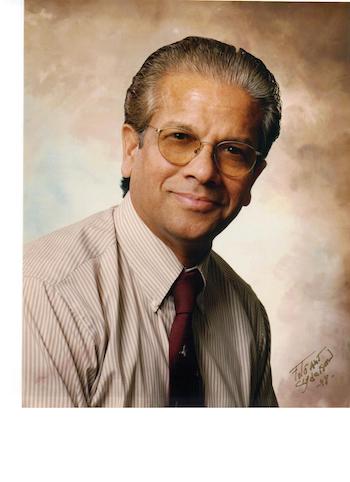
    Dr. VK Raju, Eye Foundation of America
    Dr. V.K. Raju

    Barbara Wootten, one of the greatest champions of higher education for women died at the age of ninety-one. Her autobiography, entitled” In a World I never made” is a fascinating book. She observed “the laughable idealism of one generation evolves into the accepted common place of the next.” She lived to see the truth of her dictum proved right time and again, particularly in the field of female education.

    When Lee Kuan Yew was asked on the BBC as to what attributed the phenomenal success of Singapore, his answer was “education”.

    Education has been (correctly) defined as the technique of transmitting civilization. It is unfortunate that the country with the oldest and greatest civilization should be lackadaisical about the technique of transmitting. Education has never been a high priority item in any Indian political party’s manifesto though there were some changes in the recent years. But still there are enormous gaps between the promises and execution.

    It is only through female education at all levels and the private initiative of well educated women, that India will be of our dreams and will ever be transformed into what our constitution intended it to be. The criminalization of politics and the deplorably low moral tone of our public life may be the direct consequences of the failure to impart value-based education. India ranks very high in innate intelligence, but low in wisdom. (what the ancient Rishis called “Buddhi”). Today India has islands of excellence in a sea of mediocracy or even worse.

    May I end by saying that I am an eternal optimist, but when I learn that of the girls under five years: 48% are stunted, 19% are wasted, 70% are anemic (moderate progress was made during the last few years), how can they learn? This is totally unacceptable in a country that sent a mission to Mars in the first attempt. And any country that ignores almost half of its population will fail to reach its true place in the modern world

    Finally, to quote Nani Palkhivala “To my Countrymen”:

    -who gave unto themselves the constitution but not the ability to keep it.

    -who inherited resplendent heritage but not the wisdom to cherish it

    -who suffer and endure in patience without the perception of their potential.

    We need only one change: the MINDSET!

    India has abundant natural resources and all the man-power she needs. Then what is the problem? Real problem? In India, power is in one group and knowledge is in another group.

    Dr. V.K. Raju, M.D., F.R.C.S, F.A.C.S.

    Founder & President, Eye Foundation of America,

    Morgantown, WV

    vkrajumd@gmail.com

    ————————————

    A Mixed Bag for India in 72 Years
    Actively involved in various organizations, including Rajasthan Association of North America, Jain Center of America, Vegetarian Vision, Indian Association of Long Island
    Anu Jain

    India completes 72 years of independence on August 15, 2018. But when we look back on what we have achieved or lost in these years, it is difficult to point out a single achievement or failure. There are countless achievements in many different fields, whether it’s science, technology, medicine, society, or culture, our country has witnessed a tremendous transformation and progress.

    One of our biggest achievements is our progress in technology. Today economic growth in the last twenty-five years has made India a super power. Information Technology being at the heart of our education system has created large pool of global entrepreneurs. India will soon become a technological and economic powerhouse for the world with a billion people achieving an improved standard in day to day life.

    But still in certain areas there is no change, for example; religious diversity has been a defining characteristic of India’s population for centuries. Religion continues to play a central role in India in daily life through its temple ceremonies, festivals, pilgrimages, and family religious traditions among others. Religion is taken far more seriously in India than it often is in the West and by virtually the entire population across India.

    Another popular link is the ideas of songs and dances in Indian movies, people enjoyed then also, and they are still enjoying. Mostly there are no movies without songs and dance

    Our biggest failure is corruption because this is one thing, which has caused maximum damage to our country. We could have done much better if our political system had not been as corrupt as it is today. Another concern or failure is the growing gap between the rich and poor which has not been reduced.

    If India has to progress, deliver inclusive growth and lift many more millions out of poverty, the government needs to prioritize on a comprehensive educational policy and healthcare system to fast track the country’s growth. The nation suffers from inadequate infrastructure and deep skills deficit. Without jobs the demographic dividend of youthful population can turn into a massive social and economic problem. India doesn’t need nationalistic rhetoric and mere promises of prosperity. It needs real and faster development and a society that’s just, peaceful and equal, which the country’s leaders had promised at the time of independence. Otherwise, despite the boom years, India will continue to remain a struggling country.

    Anu Jain

    New York

    Jainanu2005@gmail.com

    —————–

    India’s greatness lies in its respect for diversity
    Zafar Iqbal, Ph. D

    On this auspicious day of 15th August, when we are celebrating the independence of India from British occupiers, let us also remember the sacrifices of Azadi movement heroes. The Ghadar Movement was an important episode in India’s freedom struggle. A group of a few dedicated people comprising of Hindus, Muslims, Sikhs, and other communities started the Ghadar Party and launched the movement. Most of them were hanged publicly by the British government. The movement gained strength and thousands of freedom fighters were subjected to capital punishment for their participation in the movement. Let us also not forget the contributions of Mahatma Gandhi, Subash Chandra Bose, Jawaharlal Nehru, Sardar Patel, Maulana Azad, Rajendra Prasad, and many others who piloted post-independence India to an established democracy. Let us vow to maintain the secular nature of the constitution where people of all faith, caste, and color have equal rights. India is the largest democracy in the world and we need to work hard to become a world-leading democracy. Let us hope appropriate steps are taken to maintaining an independent judiciary, participation of all communities in sharing the power, and freedom of the press with an expectation that they would fulfill their role of a watchdog.

    Jai Hind, Hindustan Zindabad.

    Zafar Iqbal, Ph.D., Washington, DC

    Raabta.india@gmail.com

    ———

    India’s Unity in Diversity
    Gunjan Rastogi

    I am extremely proud of collaboration among the community organizations and believe it is a testament to the national pride we all feel for India. It is only fitting that we all unite to celebrate our beloved country’s 72nd Independence Day. We need to recognize esteemed Indians of four major religions (Hindu, Muslim, Sikh and Christian) and other community leaders from other regions of India with the main goal of bringing the community together. As we all know, India is a beautiful mosaic of different regions which have different languages, dressing style, dance, music, regional festivals, customs and traditions, yet we all are united to celebrate our national holiday and show unity in diversity.”

    Mrs. Gunjan Rastogi

    President

    India Association of Long Island, New York

    Gunjan.p.rastogi@gmail.com

    _________________

    India needs to unite to exploit its full potential
     Ven Parameswaran

    I am very proud of India for many reasons.  India was the most civilized and affluent country in the world.  Mohan Jo Daro civilization demonstrates this.  India invented zero, fraction, decimal algebra and geometry including the theorem that was renamed as Pythagoras theorem by Greece. Kautilya’s Arthasastra was the first book on Political Science.  Aristotle and Machiavelli published their books based on Arthasastra.   I am proud the largest capitalized corporations — Microsoft and Google are headed by Indians.  I am proud the Dean of Harvard Business School is an Indian.  I am proud Ireland and Portugal are headed by Indians.  I am also proud America elected two Indian American Governors.   India needs to unite to exploit its full potential.

    Ven Parameswaran

    Chairman, Asian American Republican Committee, Scarsdale, New York

    Former President & CEO, First Asian Securities, New York

    vpwaren@gmail.com

    ___________________

    Stay vigilant and never take freedom for granted
    Priya Mukhi

    August 15th represents a plethora of positive and joyous feelings of pride for all Indians, as it represents the date that more than 200 years of British colonial rule came to an end. Since that day in 1947, Indians around the world gather each year to celebrate and honor the freedom fighters who dedicated their lives to the independence of this great, beautiful nation.

    The Indian Independence Day is a meaningful event for everyone, an opportunity for people of all ages and from all different parts of India to unite and celebrate the diversity and strength of our nation. The holiday gives younger ones the chance to learn more about their culture and connect in various ways with the earlier generations. In my personal experience, I have learned how much my grandparents and their parents coped and survived living under the rule of a foreign power.  I have come to appreciate even more the benefits of living in a free country. Everyone who has endured the hardships and seen or heard about the independence struggles has a story, and I encourage everyone to listen and pass these stories down. These memories of suffering and privation should not be forgotten, as history teaches us integral lessons, such as a nation must stay united to retain its strength, as divided we fall.

    Independence Day is celebrated in various ways across the globe. In India, there are numerous flag hoisting and patriotic presentations throughout different states, and the main event takes place at the Red Fort in New Delhi where India’s first prime minister, Jawaharlal Nehru, unfurled the Indian flag to officially mark the nation’s independence. Every year since then on Independence Day, the Prime Minister hoists the beautiful tricolor flag and presents a speech on the history and progress of the country. In other parts of the globe, parades, flag hoisting events, and kite flying festivals are held to celebrate the holiday.

    On this festive occasion, the freedom fighters are also honored. Leaders such as Sarojini Naidu, Mahatma Gandhi, Rajendra Prasad, the Rani of Jhansi and many more are remembered and celebrated for their efforts to bring peace and sovereignty to India. Arya Samaj leaders such as Swami Dayananda Saraswati, Swami Shraddhanand, Lala Lajpat Rai, and Bhagat Singh also took part in the great struggle for India’s freedom. In fact, Swami Dayanand wrote one of the most influential works of the movement, Satyarth Prakash.

    In midst of celebration for this joyous holiday, it is important not to forget the significance and message of the freedom movement that took place over 71 years ago. We must look forward, stay vigilant, and never take freedom for granted. As Pandit Nehru said just before midnight on August 15th, 1947, “At the stroke of the midnight hour, when the world sleeps, India will awake to life and freedom. A moment comes, which comes but rarely in history, when we step out from the old to the new, when an age ends, and when the soul of a nation, long suppressed, finds utterance. It is fitting that at this solemn moment we take the pledge of dedication to the service of India and her people and to the still larger cause of humanity.” And surely, as freedom rung, and the nation progressed, India has become a power to be reckoned with on the world stage.

    Priya Mukhi

    Youth Leader of Arya Samaj of Long Island, New York

    aryasamajoflongisland@yahoo.com

    Time for India and Pakistan to move forward
    Tajuddin Ahmad

    Let forget all differences of the past and resolved all issues on table, as new elected government coming into effect led by former cricketer Imran Khan as new Prime Minister taking oath on August 18th, 2018 in the capital Islamabad. Both leaders Modi and Imran are known by both nations for years and it’s time now to move forward and bring peace in the regions.

    Tajuddin Ahmad

    tajahmad717@yahoo.com

    _____________

    Let us work together for a progressive and clean India
                                                                                                                                                                                                                            Indu Jaiswal

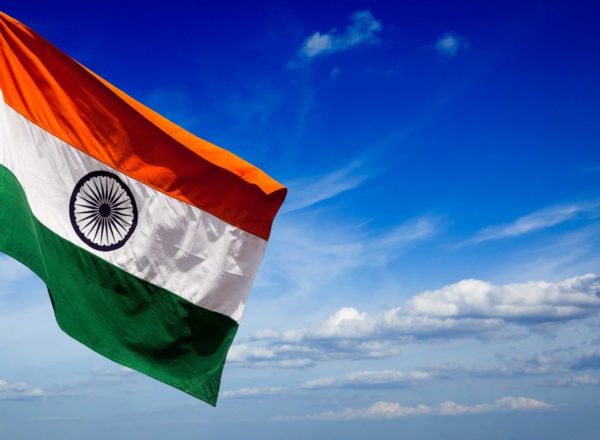
    On August 15 Indians will celebrate its 72 ND Independence Day. We remember and Salute the people who fought for the freedom of India. We feel the pride that we are from such a glorious Land.  With Freedom in the mind, faith in the words, pride in our souls, let us all salute the Nation on Independence Day. May the nation’s Tricolor always fly high and wishing our dreams of anew tomorrow, Progressive and Clean India come true for us. Happy Independence Day

    Naye Daur mein Likhenge Mil Kar Nai kahani

    HUM HINDUSTANI HUM HINDUSTANI

    JAI HIND and VANDE MATRAM

    Indu Jaiswal RDN CDN

    Chair Indian American Forum

    New York

    indu@jaiswal.net

    ————–

    Nothing stops India from becoming a golden sparrow again
    Rajiv Khanna

    India has made progress since independence. Yet its potential is largely unexploited. If only India moved from its 100th position on ease of doing business to the top 20, it would open floodgates of investment and prosperity. Nothing stops India to be the golden sparrow again, expect India itself. It is time to correct this grave injustice that the Indian bureaucracy inflicts on India!

    Rajiv Khanna

    New York

    rkhannany@gmail.com

    ———-

    Observance of 71st Anniversary of India’s Independence
    Ashook Ramsaran

    The Indian Diaspora Council International (IDC) and its global affiliates, on the occasion of the 71st anniversary of India’s independence, extend warm and special congratulations to people of India and Indians living in other countries who take much pride in this annual celebration.

    Indians sacrificed for many years with struggle and lives in attaining their hard-fought and wrenching freedom from Britain on 15th August 1947. They used various independence movements, in particular, nonviolent resistance led by Mahatma Gandhi, to become free and independent. The partition with Pakistan resulted in violent riots, mass casualties and dislocation of millions of people.

    Despite many initial difficulties, India has made enormous strides and progress since independence from dependency to becoming a major entity in the global arena.

    A nation’s culture resides in the hearts and in the soul of its people. Freedom is never dear at any price. It is the breath of life – Mahatma Gandhi

    We end today a period of ill fortune and India discovers herself again. The achievement we celebrate today is but a step, an opening of opportunity, to the greater triumphs and achievements that await us. Are we brave enough and wise enough to grasp this opportunity and accept the challenge of the future? – Jawaharlal Nehru

    “Freedom is not given; it is taken” – Subhas Chandra Bose

    “India’s stature in the world is rising. Our India is at the door of great achievements. New India must include that integral humanist component that is in our DNA, and which has defined our country and our civilization. New India must be a society rushing towards the future, but also a compassionate society. Gone are the days when people gave up all hope from the government”, Hon. PM Narendra Modi ‘2017.

    Ashook Ramsaran

    New York

    ashookramsaran@gmail.com

    __________________

    Remember those who sacrificed their lives for India’s freedom
    Gobind Bathija

    On the 72nd celebration of India Independence Day, on behalf of our Asamai Hindu temple and myself, I want to extend my sincere best wishes to our community as well Mr. Indrajit Saluja and The Indian Panorama Newspaper. We must remember those who sacrificed their lives to obtain independence. May India always enjoy freedom and continue to flourish and prosper.

    Gobind Bathija

    Founder, P. President, trustee and Board mem

    Asamai Hindu Temple, Flushing and Hicksville, NY USA

    Gobind.bathija@gmail.com

    _________________

    72 Years of Independence has bought India to where it is today
    Devraj Aiyar

    As much as we ought to be proud, lets us not take our Freedom and Independence for granted. Many have sacrificed their breath for this to happen. We must celebrate this true spirit of Freedom by giving back to society as much as we could.

    India is a country of rich diversity in culture, religion, arts and every field we can think of.

    As we rally together, behind our great leader Narendra Modi, we pray that the next decade will witness the India that we dream of.  India whose richness will filter down to every single state, every city, every home.

    I take this opportunity to congratulate and thank the Chief editor of Indian Panorama, Prof Indrajit Saluja and his entire team for their outstanding effort in bringing the Indian community closer.

    Devraj Aiyar

    CEO, Indo American Quartz LLC

    New Jersey

    dev@indoameriacanstone.com

                                              ______________

    Indian Diaspora has contributed much to India’s growth
    Paul Sihota

    It was a Mahatma Gandhi in South Africa who led the movement for India’s independence. It was a whole lot of Indians abroad who struggled and suffered for India’s freedom from British rule. In independent India’s history, again, it is the Indians abroad who have contributed significantly to India’s growth. It is not just the remittances and investments; they introduced a culture which led to India’s modernization characterized by a scientific temper which changed the face of India. I am glad, India has recognized the contribution of Indian Diaspora. However, much more needs to be done by government of India to attract their fullest cooperation. One, for example, is a right to them to contest elections to legislative bodies and get involved in governance of India. I hope, this demand from the Indian Diaspora will be met soon.

    Paul Sihota

    Fresno, CA

  • The Man, the Vision, the Task-Elimination of Avoidable Blindness among Children

    The Man, the Vision, the Task-Elimination of Avoidable Blindness among Children

    The execution of his vision, affordable and accessible healthcare, has provided innumerable individuals with the invaluable gift of sight. In children, this gift results in 75 years of a full and productive life. These children, who would be considered a burden to society, are then able to contribute and to their families and to society.

    While living in London, Dr. V.K. Raju traveled home to India on vacation, where a farmer asked him to examine his eyes. Dr. Raju complied, but without any instruments. In 1977, Dr. Raju returned to rural India with personnel and equipment and offered his first eye campnear his hometown; this was the inception of the Eye Foundation of America (EFA).

    For the past 4 decades, Dr. Raju and the EFA have been actively and tirelessly on a crusade to eliminate avoidable blindness in areas plagued by poverty and poor access to medical care. Because Dr. Raju feels so incredibly thankful for his personal and professional gifts, he makes great effort to share those gifts with those in need of his services. He believes that medical professionals in the United States are afforded many material comforts, and as such, only voluntary service can alleviate the feeling of intellectual poverty. He gives freely of his own time, money, and medical expertise to help the less fortunate.

    The EFA’s mission is to eliminate avoidable blindness under the guiding principles of service, teaching, and research. This is accomplished througheye camps and brick-and-mortar hospitals in developing countries, training of medical personnel to serve the needy, and educating the population at large on preventative eye care and healthy lifestyle choices. Dr. Raju quotes his mentor in London as saying, “There are 3 solutions for any problem. The first is education, the second is education, and the third is education.” With this education, patients are empowered to take charge of their lives and their own health and prevent further deleterious consequences of their poor lifestyle choices, while sharing this knowledge with their friends and families.

    When education and preventative measures are insufficient, medical and surgical interventions are performed. With the aim of permanently providing world-class state-of-the art services to populations with poor access to health care, the EFA helped to build 2 hospitals in rural India: the Srikiran Eye Institute and the Goutami Eye Institute. The Goutami Institute has a wing dedicated to exclusively to children, and the EFA has future plans to build a service and research eye hospital in India where no child will be denied treatment and children from around the world can come to receive services. Dr. Raju and the EFA are also committed to finding new cures for age-old eye disease in children.

    With all of Dr. Raju’s momentous achievements, he has also ensured that his life’s work and vision are self-sustaining. Dr. Raju has passed on his knowledge, plans, and vision to the future leaders of this movement: Dr. Leela Raju, Dr. Raju’s daughter and fellow ophthalmologist, is the EFA’s Secretary and Coordinator for Education and actively participates in its mission. “Our work is only just beginning,” affirms Dr. Raju.

    Dr. Raju was born in Rajahmundry, Andhra Pradesh, India. He earned his medical degree from Andhra University and completed an ophthalmology residency and fellowship at the Royal Eye Group of Hospitals in London, England. He is board certified in ophthalmology and is a Fellow of the Royal College of Surgeons and the American College of Surgeons. He has resided in Morgantown, WV since 1976, where he is currently a Clinical Professor of Ophthalmology at West Virginia University (WVU), the Section Chief of the Ophthalmology Department at Monongalia General Hospital, runs a private practice at the Monongalia Eye Clinic, and is the Founder and Medical Director of the EFA, a registered non-profit organization.

    Dr. Raju began the work of the EFA in 1977 by offering eye camps. The West Virginia Ophthalmology Foundation was subsequently created in 1982 and became the EFA in 1992. The realization of Dr. Raju’s vision, the EFA, has a reach that currently extends to 30+ developing countries and the USA. The EFA has served approximately 2 million patients and performed 300,000+ vision-saving surgeries, with 25,000+ surgeries performed on children alone.

    Awards/Recognition Received by Dr. Raju

    State

    Dr. Raju has received many honors and awards, including 26 distinguished awards and 17 gold medals. In Dr. Raju’s adopted home state of West Virginia, he was awarded both the Lions Club International (Morgantown) Jarrett Award and the WVU International Service Award in 1995. Morgantown Rotary International presented Dr. Raju with an award for community service in 2000. He also received the Martin Luther King Jr. Achievement Awardfrom WVU in 2008.

    National

    The American Academy of Ophthalmology (AAO) has awarded Dr. Raju 4 times for his teaching and research contributions, including the Outstanding Humanitarian Awardin 2002. Dr. Raju received this honor because of the more than $1 million dollars of his own money that went into building hospitals in India, teaching, and providing services to needy patients. At the same meeting in which Dr. Raju was presented with this award, he also received a Lifetime Achievement Award from The Association of Asian Indians in Ophthalmology. That same year, Dr. Raju received the Free to Achieve Award from the Maryland chapter of the American Association of Physicians of Indian Origin (AAPI) for his philanthropy. The AAPI also awarded Dr. Raju with their prestigious Distinguished Community Service Award in 2007 for his service, patient care, teaching, research, and professional and community involvement. In 2011, he received a Senior Achievement Award from the AAO. He has received awards from Lions International and Rotary International. For his humanitarian work, the American Medical Association Foundation acknowledged him with the prestigious Dr. Nathan Davis International Award for Excellence in Medicine in 2013. For the past 2 years, Dr. Raju has expanded his humanitarian efforts in African countries by joining the Carter Center’s Ambassador Program. President Barack Obama presented Dr. Raju with the 2016 President’s Lifetime Achievement Award. He was recently inducted into the University of Toledo Global Medical Missions Hall of Fame Class of 2017.

    International

    Dr. Raju’s international awards date back to the 1970s, when he received 2 separate awards for service for the blind: Lions (India) and Jaycees (Vijayawada, India). He received several gold medals, including the AP (India) Gold Medal for Contributions to Advance Ophthalmology in 2001; the Dr. Hardia Gold Medal for Best Paper on Refractive Surgery for the All Indian Ophthalmology Society in 2002; Gold Medal from the President at the All Indian Ophthalmology Society Meeting in Cochin in 2012; the Rameshwar Sharma, MD Gold Medal Oration from the Indian Academy of Medical Sciences, Rajasthan Chapter, in 2012; the Gold Medal Oration at the Vijayawada Academy of Ophthalmology in 2014; and the Gold Medal Award from the International Academy for Advances in Ophthalmology, Bombay Ophthalmologists Association, in 2014. He received the Vaidya Ratna in 2002, as well as an achievement award from the House of Lords, London, and the Mahatma Gandhi Pravasi Samman Award for Achievement in Medicine in 2014. He was also recognized as one of the Leading Physicians of the World by the International Association of Ophthalmologists in 2014. Dr. Raju was an invited guest of honor at GITAM University and the All Indian Ophthalmology Society Meeting in 2012.

     Since its inception, the EFA has facilitated 600+ physician exchanges and trained 200+ ophthalmologists, equipping these medical practitioners with the tools to join the global fight against blindness. The EFA not only trains medical practitioners to join the global fight against blindness through exchange programs, but also provides workshops and training opportunities for medical students and physicians. Dr. Raju’s charisma and vision inspire the EFA’s trainees return to their native countries to prevent and/or alleviate blindness in the field. For example, India and Ghana are actively engaged in avoidable blindness elimination projects with cooperation from their governments. In 2016 in India, 4,889 vision and 374 retinopathy of prematurity screenings were conducted; 779 eye glasses were distributed, and 162 pediatric surgeries were performed. In Ghana in 2016, the Avoidable Blindness Elimination Project (abep@5) and the World Sight Day Kids Funfair screened 9,763 people, including 7,453 children, and detected ophthalmologic diseases in more than 1,000 individuals who consequently received treatment, which included 157 surgeries. More than 11,560 children received vision screenings in Ghana schools; eye glasses and follow-up care were provided when necessary.

     Dr. Raju contributes to society in his home country of India and his adopted home state of WV. He believes in and practices Ayurveda, an ancient Indian health care philosophy that emphasizes a holistic approach in which prevention is preferable to treatment. In some cases, blindness and visual impairment can be prevented in developing countries by simply providing a pair of corrective glasses costing less than $10 or delivering vitamin A supplements for just a few cents per dose. The public is educated on eye care and injury prevention, and local teachers are taught how to screen for early eye problems in children. Patients, their families, and the greater community benefit from preventative medical care, free procedures, and access to education.

    In WV, Dr. Raju accepts patients that do not have medical insurance and performs surgical procedures that are not covered. If a patient is unable to pay for the costly services rendered, he asks for a small donation to the EFA. Dr. Raju performs free procedures that amount to an estimated $25,000–45,000 per year. This allows many of these patients to remain functional members of society.

    The execution of his vision, affordable and accessible healthcare, has provided innumerable individuals with the invaluable gift of sight. In children, this gift results in 75 years of a full and productive life. These children, who would be considered a burden to society, are then able to contribute and to their families and to society.


  • Congresswoman Grace Meng Praises India as a Great Democracy

    Congresswoman Grace Meng Praises India as a Great Democracy

    Consulate General of India celebrates India’s 72ndIndependence Day

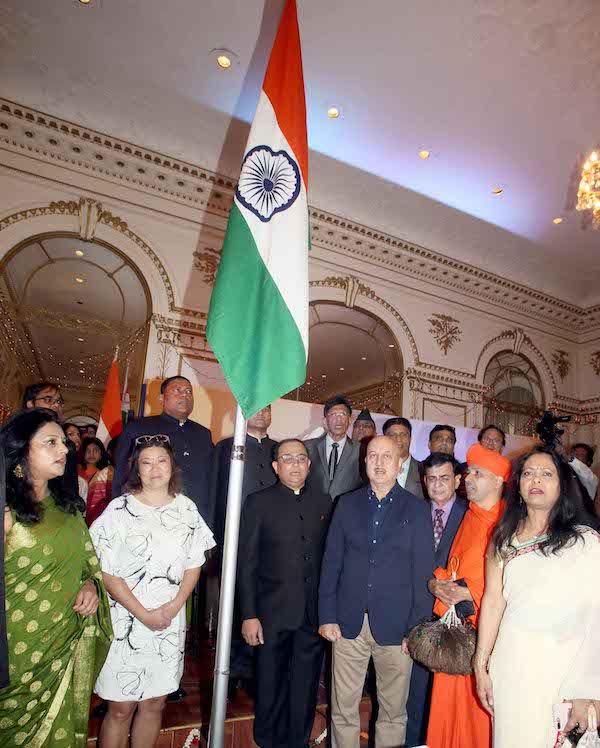
    NEW YORK CITY(TIP): India’s 72ndIndependence Day was celebrated by a very large gathering at the Indian Consulate in New York on August 15.

    Congresswoman Grace Meng was the chief guest. Also present were Assemblyman David Weprin, New Jersey Senator Vin Gopal, Bollywood actor Anupam Kher, and a couple of other politicians and officials, besides a large number of Indian Americans.

    Consul General extends congratulations on India’s 72nd Independence Day

    Consul General Sandeep Chakravorty hoisted the Indian National Flag to the singing of the Indian national Anthem.

    Consul General read out Indian President’s address to the nation and offered his congratulations to the gathering on the historic day. He spoke briefly about the achievements India has made in its 71-year journey as a democratic nation.

    Congresswoman Grace Meng praised India as a great democratic nation

    Congresswoman Grace Meng in her brief address, spoke of the greatness of India as a democratic nation and praised the contribution of the Indian American community in “so many ways”.

    Bollywood actor Anupam Kher described India as a country with opportunities

    Anupam Kher spoke feelingly about India, emphasizing the opportunities the country offers to all to grow.

    A Kathak presentation
    Photos / Jay Mandal-on assignment

    Speeches were followed by a cultural presentation, which included a Kathak presentation.

  • The Colossus of Indian Politics bids good bye

    The Colossus of Indian Politics bids good bye

    Former PM Atal Bihari Vajpayee dies at 93

    NEW DELHI(TIP): Former Prime Minister Atal Bihari Vajpayee passed away at All India Institute of Medical Sciences (AIIMS), August16 evening at 5.05 bringing to an end a glorious political innings.The 12-time Parliamentarian   was 93.

    Vajpayee, a bachelor, is survived by his adopted daughter Namita Kaul Bhattacharya.

    AIIMS announced the demise of the BJP veteran saying, “It is with profound grief that we inform about the sad demise of former PM of India Shri Atal Bihari Vajpayee at 5.05 pm on August 16.”

    Vajpayee was admitted to AIIMS on June 11 and was stable in the last nine weeks under the care of a team of AIIMS doctors.

    “Unfortunately, his condition deteriorated over the last 36 hours and he was put on life support systems. Despite the best of efforts, we have lost him today. We join the nation in deeply mourning this great loss,” the bulletin issued by Dr Aarti Vij, chairperson, media and protocol division, AIIMS said.

    In his condolence message, President Ram Nath Kovind stated, “His leadership, foresight, maturity and eloquence put him in a league of his own. Atalji, the Gentle Giant, will be missed by one and all.”

    “It was Atalji’s exemplary leadership that set the foundations for prosperous and inclusive India in the 21st century,” Modi said.

    Vajpayee, who joined the Rastriya Swamsevak Sangha (RSS) in 1947 rose through ranks to become a stalwart of the BJP and was the first non-Congress prime minister to complete a full term in office.

    “It was due to the perseverance and struggles of Atal Ji that the BJP was built brick by brick,” Modi said in a tweet.

    “He travelled across the length and breadth of India to spread the BJP’s message, which led to the BJP becoming a strong force in our national polity and in several states,” he added.

    India grieves the demise of our beloved Atal Ji.

    His passing away marks the end of an era. He lived for the nation and served it assiduously for decades. My thoughts are with his family, BJP Karyakartas and millions of admirers in this hour of sadness. Om Shanti.

        — Narendra Modi (@narendramodi) August 16, 2018

    It was Atal Ji’s exemplary leadership that set the foundations for a strong, prosperous and inclusive India in the 21st century. His futuristic policies across various sectors touched the lives of each and every citizen of India.

        — Narendra Modi (@narendramodi) August 16, 2018

    Atal Ji’s passing away is a personal and irreplaceable loss for me. I have countless fond memories with him. He was an inspiration to Karyakartas like me. I will particularly remember his sharp intellect and outstanding wit.

        — Narendra Modi (@narendramodi) August 16, 2018

    Vajpayee was born on December 25, 1924 in Gwalior, Madhya Pradesh to a schoolteacher, Krishna Bihari Vajpayee, and Krishna Devi. Today, his birthday is celebrated as ‘Good Governance Day’.

    Mr. Vajpayee was Prime Minister thrice in 1996, 1998-1999 and 1999-2004. As his health deteriorated, he slowly withdrew himself from public life and was confined to his residence for several years.

    In his tribute, BJP president Amit Shah said he was a “rare politician, brilliant speaker, poet and patriot, his demise is not just an irreparable loss for the BJP but also for the entire country.”

    Congress president Rahul Gandhi said on Twitter: “Today India lost a great son. Former PM, Atal Bihari Vajpayee ji, was loved and respected by millions. My condolences to his family and all his admirers. We will miss him.”

    (With inputs from PTI)

  • August 17 New York & Dallas Print Editions

    August 17 New York & Dallas Print Editions

    [vc_row][vc_column][vc_column_text]

    Print Replica ~ Digitally

    E-Editions

    [/vc_column_text][/vc_column][/vc_row][vc_row][vc_column width=”2/3″][vc_custom_heading text=”New York & Dallas Edition” font_container=”tag:h2|text_align:center” google_fonts=”font_family:Istok%20Web%3Aregular%2Citalic%2C700%2C700italic|font_style:700%20bold%20regular%3A700%3Anormal” link=”url:https%3A%2F%2Fwww.theindianpanorama.news%2Fwp-content%2Fuploads%2F2018%2F08%2FTIP-August-17-NYC.pdf|||”][vc_single_image image=”94053″ img_size=”full” add_caption=”yes” alignment=”center” onclick=”custom_link” link=” https://www.theindianpanorama.news/wp-content/uploads/2018/08/TIP-August-17-NYC.pdf”][/vc_column][vc_column width=”1/3″][vc_single_image image=”82828″ img_size=”medium” alignment=”center” onclick=”custom_link” link=”https://www.theindianpanorama.news/advertising-media-kit-portal-indian-panorama/”][vc_single_image image=”82829″ img_size=”medium” alignment=”center” onclick=”custom_link” link=”https://www.theindianpanorama.news/advertising-media-kit-portal-indian-panorama/”][/vc_column][/vc_row][vc_row][vc_column][td_block_ad_box spot_id=”custom_ad_3″ tdc_css=””][/vc_column][/vc_row][vc_row][vc_column width=”2/3″][vc_custom_heading text=”Lead Stories This Week” font_container=”tag:h2|text_align:center” google_fonts=”font_family:Istok%20Web%3Aregular%2Citalic%2C700%2C700italic|font_style:700%20bold%20regular%3A700%3Anormal” link=”url:https%3A%2F%2Ftheindianpanorama.news%2Feditions%2F|||”][td_block_5 separator=”” limit=”12″ tdc_css=””][/vc_column][vc_column width=”1/3″][vc_widget_sidebar sidebar_id=”td-default”][/vc_column][/vc_row]

  • End of an epoch: on M. Karunanidhi’s death

    End of an epoch: on M. Karunanidhi’s death

    By Gopalkrishna Gandhi
    “He will be long remembered for three outstanding accomplishments — his passion for Tamil as a language and a metaphor for the dignity of its users; his refusal to be bullied by political hubris during the national emergency; and his uncompromising secularism.
    “Jakkirathaiya irunga,”he said in Tamil, over which his command was legendary. “Take care” is how the phrase would translate. But in the way he said it, laying stress on the double ‘kk’, I could see he meant to say, “Take every care.” This was on August 13, 2000. I was on my way to Colombo to join duty as High Commissioner.

    A federal mind

    Calling on Tamil Nadu Chief Minister M. Karunanidhi would have been on the wish list and task list of any Indian envoy on her or his way to Sri Lanka. But, for me, this was not just about protocol. Nor was it about politics, the Dravida Munnetra Kazhagam (DMK) then being a crucial presence in the National Democratic Alliance government led by Atal Bihari Vajpayee. It was about plain common sense, sheer self-interest. There was no way I would present letters of credence in Colombo without finding out what Tamil Nadu’s senior-most and completely wide-awake leader thought about the island nation’s travails, the present and future state of its Tamil population and that of the Liberation Tiger of Tamil Eelam’s supremo, Velupillai Prabhakaran. To go to Colombo without the ‘input’ — to use a crassly opportunistic expression — of a veteran of Tamil Nadu’s political chemistry would be absurd. What I needed and was to get from him was the insight, as knowledgeable as it was detached, of ‘one who knew’. The hinterland of any foreign policy is ground knowledge of the roots of that policy in the soil of its origin.

    It was not easy, even for one on ‘relevant’ official duty, to get an appointment with the Chief Minister. He had his hands more than full with the complexities of Tamil Nadu’s polity, where facing the All India Anna Dravida Munnetra Kazhagam and its charismatic leader J. Jayalalithaa meant being alert 24×7; where running a government of which he was the alpha and the omega meant working harder than the mind and body could take. And where, to make matters more complex for him, explaining to the people of Tamil Nadu how and why India-Sri Lankan relations were a foreign policy matter and foreign policy was the prerogative of the Union government was just about impossible. He was on the cusp of India’s federal dilemmas.

    A lesser politician could have played politics on that fluid crest, just to remain ‘on top’. But, as the direct successor-in-office to C.N. Annadurai (CNA) who had given up secession as the DMK’s policy goal, he was going to do nothing of the kind.

    The Chief Minister was seated in the sitting room on the first floor of his Gopalapuram residence in Chennai. He half-rose to greet me, a gesture that neither his age — he was 76 at the time — nor his high office necessitated. “Sir… sir… Please do not get up,” I protested. Sitting back, he commenced what was for me a lesson on the limitations of diplomacy and of politics. He said I was going to a highly troubled land at a highly incendiary time. “Ranil Wickremesinghe [now Prime Minister of Sri Lanka] met me the other day,” he said, “and we spoke for more than an hour. He is a visionary… He wants to build a physical bridge from Rameswaram to Talai Mannar… I welcomed the idea and told him that our own Bharathiar [Subramania Bharati] had envisioned the very thing…palamaippom… But today who is going to be crossing that bridge and in which direction?” Then followed an analysis of the ethnic problem on the island which for its crisp pragmatism could not have been equaled, let alone bettered.

    “Nobody knows Prabhakaran’s mind,” he said. “Nobody from our side is in touch with him… Nobody can be… We used to know his deputies… Amirthalingam… Now they are all dead… assassinated. But militancy is no solution… Secession will never be countenanced by Sri Lanka… And it will never be given up by Prabhakaran… We grope in the dark.” And then doing a fast-forward: “Yet, we have to keep trying for our Tamil kin’s urimai (rights) there.” The insights continued for some 10 more minutes and then he rose to conclude the call, saying, as if in a summing-up: “Prabhakaran will never have a change of heart.” As I thanked him and prepared to leave, he gave the advice I started this tribute with, very softly, “Jakkirathaiya irunga.”

    I had received briefings, each very helpful, very skilled, from officials, ministers, politicians, military leaders, strategists. But the one I got at Gopalapuram that afternoon covered every facet of the Sri Lankan scene in brief sentences, replete with historical, geopolitical and diplomatic nuances, topped with an intuitive sense of urimai being the long-shot aim and jakkirithai an immediate concern.

    Another meeting

    Seventeen years later, last year, I was to see him again, in the same room. He was seated on a wheelchair. And this time he did not — could not — get up. His son, M.K. Stalin, and his daughter, Kanimozhi, who were beside him, gave him the caller’s name. The 93-year-old looked long and steadily at me. No sign of recognition appeared on his face. There was no immediate response, but a few seconds later, when everyone present was waiting for a response, a wisp of a half-smile played across his face for but a fleeting moment. I will not presume to imagine he recognized me. But that was not really necessary.

    Kalaignar Karunanidhi was now a legend, an icon of the old mold, but without the patina of obsolescence on its form or features. He was a living legend, an icon of the here and now as a symbol of aspirational politics negotiating electoral quicksand. In his case the aspirational politics was Dravida self-esteem combined with social radicalism, derived from Periyar and C.N. Annadurai (CNA). And the quick sands were Tamil Nadu’s political uncertainties, with his mentors having become history and rivals from a different ‘stage’ scripting a very new, very glitzy theatre. Here was an idealism being taunted by reality to be pragmatic, a pragmatism being haunted by history to be idealistic. Some predicaments are cruel.

    And yet, he emerged from it, un-bowed, the see-saw of electoral results being another matter.

    He will be long remembered for three outstanding accomplishments — his passion for Tamil as a language and a metaphor for the dignity of its users; his refusal to be bullied by political hubris during the national emergency; and his uncompromising secularism.

    Such a long journey

    CNA was in office for far too little for the dust of any controversy to settle on him. The Kalaignar was in office for far too long for that dust to stay away. Did he shake it off?

    Did the flatterer and the tale-carrier manage to reach ear-distance? Was the sponger spurned, the money-spinner, the corrupter, family-splitter, the party-breaker turned away? Was the fear-instiller, the superstition-planter, the suspicion-sower shown the door? Equally, was the caring critic, the daring dissenter, the worried warner given welcome? Was the frank friend, the bold biographer shown in, given time, consideration?

    Only his family would know.

    On it — all generations of it — falls the privilege and the challenge now to stay and work together, to take the legacy of this extraordinary statesman further afield and make it a force for Tamil Nadu’s redemption from localism, myopia and the power of floating cash. And beyond that, a force for India’s federal intelligence, her plural wisdom and, above all, her Constitution-enshrined mandate for justice — social, economic and political.

    (The author is a former administrator, diplomat and Governor)

  • PepsiCo chief executive Indra Nooyi to step down on October 3

    PepsiCo chief executive Indra Nooyi to step down on October 3

    Ramon Laguarta to replace Ms Nooyi, who will continue as chairwoman until next year

    WASHINGTON(TIP): PepsiCo said on Monday, August 6, that Indra Nooyi would step down as chief executive after 12 years at the helm and named president Ramon Laguarta as her successor.

    Mr Laguarta will take over from Ms Nooyi on October 3rd and will also join the board, the company said in a statement.

    Ms Nooyi (62), who has been with the company for 24 years, will continue as chairwoman of the board until early 2019.

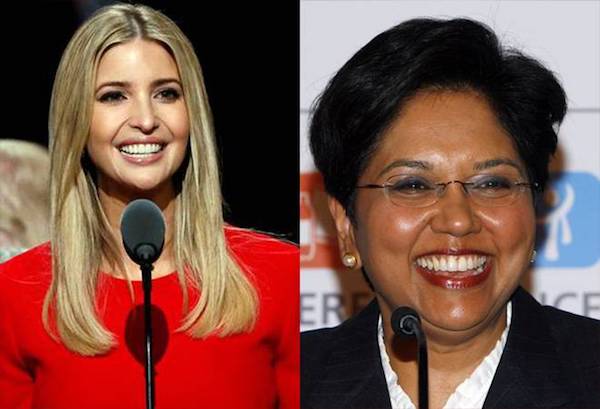
    Ivanka Trump who looks upon Indra Nooyi as her inspiration and mentor commented: “The great Indra Nooyi is stepping down as PepsiCo CEO, after 12 years. Indra, you are a mentor + inspiration to so many, myself included,”

    Indra Nooyi has been a darling of Indian Americans who have always taken pride in her as a shining example of the achievements of women of Indian origin abroad.

    Commenting on her stepping down as CEO of one of the largest companies of the world, Dr. VK Raju, eminent Indian American ophthalmologist who hails from Andhra Pradesh, said, “Indra Nooyi has been a towering personality in the corporate world of America and is responsible for the growth of PEPSICO”.

    Ms. Nooyi grew up in Chennai, India, where during food shortages in the 1960s her middle-class family stood in line for rice rations studded with stones. When Indra and her sister were young, their mother challenged them at the dinner table each night to give speeches about what they would do if they were prime minister or another world leader. After the speeches, their mother would vote.

    Ms. Nooyi came to the U.S. in 1978 on a scholarship to the Yale School of Management and worked at several companies before joining PepsiCo in 1994 as head of strategy. She was chief financial officer and president before she was named chief executive, succeeding Steve Reinemund.

    After becoming CEO in 2006, Ms. Nooyi said she wanted to make PepsiCo “a defining corporation of the 21st century.” “Nobody’s going to remember you for delivering earnings to stockholders; they will remember you for the lasting impact you made on society,’’ she said in a 2009 speech.

    The company’s shares have gained 78 per cent since Ms Nooyi took the top job in 2006.

    Mr Laguarta, a 22-year veteran of PepsiCo, oversaw global operations, corporate strategy, public policy and government affairs in his role as president.

    He also served as head of the company’s Europe Sub-Saharan Africa division before becoming president.

  • August 10 New York & Dallas Print Editions

    August 10 New York & Dallas Print Editions

    [vc_row][vc_column][vc_column_text]

    Print Replica ~ Digitally

    E-Editions

    [/vc_column_text][/vc_column][/vc_row][vc_row][vc_column width=”1/3″][vc_custom_heading text=”New York Edition” font_container=”tag:h2|text_align:center” google_fonts=”font_family:Istok%20Web%3Aregular%2Citalic%2C700%2C700italic|font_style:700%20bold%20regular%3A700%3Anormal” link=”url:https%3A%2F%2Fwww.theindianpanorama.news%2Fwp-content%2Fuploads%2F2018%2F08%2FTIP-August-10-NYC.pdf|||”][vc_single_image image=”93925″ img_size=”full” add_caption=”yes” alignment=”center” onclick=”custom_link” link=”https://www.theindianpanorama.news/wp-content/uploads/2018/08/TIP-August-10-NYC.pdf”][/vc_column][vc_column width=”1/3″][vc_custom_heading text=”Dallas,Texas Edition” font_container=”tag:h2|text_align:center” google_fonts=”font_family:Istok%20Web%3Aregular%2Citalic%2C700%2C700italic|font_style:700%20bold%20regular%3A700%3Anormal” link=”url:https%3A%2F%2Fwww.theindianpanorama.news%2Fwp-content%2Fuploads%2F2018%2F08%2FTIP-August-10-Dallas-TX.pdf|||”][vc_single_image image=”93926″ img_size=”full” add_caption=”yes” alignment=”center” onclick=”custom_link” link=”https://www.theindianpanorama.news/wp-content/uploads/2018/08/TIP-August-10-Dallas-TX.pdf”][/vc_column][vc_column width=”1/3″][vc_single_image image=”82828″ img_size=”medium” alignment=”center” onclick=”custom_link” link=”https://www.theindianpanorama.news/advertising-media-kit-portal-indian-panorama/”][vc_single_image image=”82829″ img_size=”medium” alignment=”center” onclick=”custom_link” link=”https://www.theindianpanorama.news/advertising-media-kit-portal-indian-panorama/”][/vc_column][/vc_row][vc_row][vc_column][td_block_ad_box spot_id=”custom_ad_3″ tdc_css=””][/vc_column][/vc_row][vc_row][vc_column width=”2/3″][vc_custom_heading text=”Lead Stories This Week” font_container=”tag:h2|text_align:center” google_fonts=”font_family:Istok%20Web%3Aregular%2Citalic%2C700%2C700italic|font_style:700%20bold%20regular%3A700%3Anormal” link=”url:https%3A%2F%2Fwww.theindianpanorama.news%2F|||”][td_block_5 separator=”” limit=”12″ tdc_css=””][/vc_column][vc_column width=”1/3″][vc_widget_sidebar sidebar_id=”td-default”][/vc_column][/vc_row]

  • Imran Khan Favors Austere Oath Ceremony: No Foreign Leader will be invited

    Imran Khan Favors Austere Oath Ceremony: No Foreign Leader will be invited

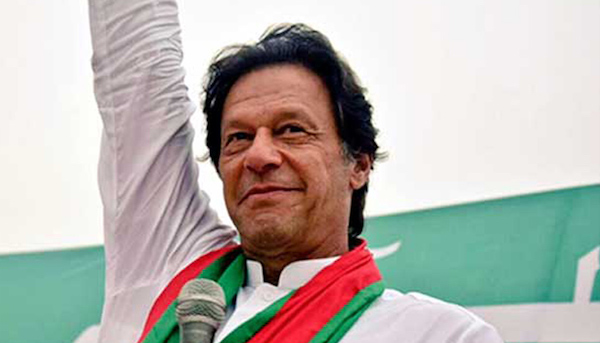
    ISLAMABAD(TIP): A Pakistan Foreign Office spokesman, on Thursday, August 2, said that no foreign leader will be invited to the oath-taking ceremony of Imran Khan, as the prime minister in-waiting wants to keep the event very simple and dignified.

    Imran’s Pakistan Tehreek-i-Insaf (PTI) emerged as the single largest party in the elections held on July 25. The 65-year-old leader is expected to take oath on August 11.

    Foreign Office spokesman Dr Mohammad Faisal said a simple ceremony will be held at the President House for which no date has been fixed.

    “No dignitary from abroad except a few close friends of Chairman PTI Imran Khan would attend the simple and dignified oath-taking at Aiwan-e-Sadar (President House),” said Faisal.

    President Mamnoon Hussain will administer Khan the oath of the office.

    Imran’s party had initially planned to invite several foreign leaders and personalities, including Prime Minister Narendra Modi. However, in an apparent change of heart today, Khan has opted against a fancy ceremony.

    Faisal said that the PTI also announced that no foreign leaders would attend the oath-taking ceremony.

    In a tweet, the PTI announced that the oath taking will be a simple and dignified ceremony and “it has been decided not to invite foreign dignitaries”.

    (Source: PTI)

  • Shiromani Akali Dal (SAD) demands citizenship rights for Afghan Sikhs and Hindus

    Shiromani Akali Dal (SAD) demands citizenship rights for Afghan Sikhs and Hindus

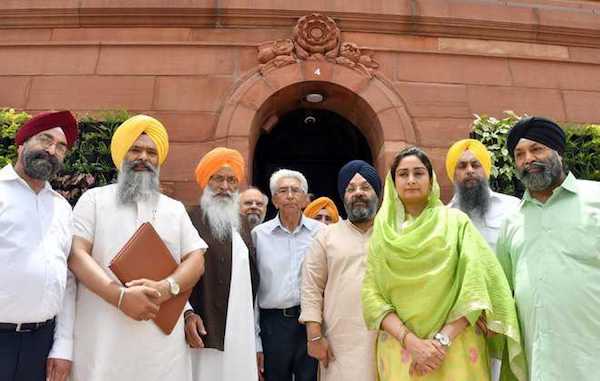
    NEW DELHI(TIP): The Shiromani Akali Dal (SAD) on Thursday, August 2, urged the central government to grant full citizenship rights to the minority Hindu and Sikh immigrants from Afghanistan who have been forced to flee to India. Also, it sought Central intervention for granting minority status to Sikhs in Jammu and Kashmir.

    A delegation of SAD MPs, led by Union Minister Harsimrat Kaur Badal, met Union Home Minister Rajnath Singh pressing for citizenship rights to the immigrants from Afghanistan.

    The delegation comprised SS Dhindsa, Naresh Gujral and Prem Singh Chandumajra. Former MP Tarlochan Singh, president of Delhi Sikh Gurdwara Management Committee (DSGMC) Manjit Singh (GK), and representatives of Hindu and Sikh immigrants from Afghanistan accompanied the delegation.

    Making a distinction between the immigrants in Assam, the delegation said the Hindus and Sikhs were forced to flee Afghanistan on account of religious persecution by the Taliban. They settled in India more than three decades back.

    Besides, their parents are from India. “It is lamentable that even though the Government of India’s standing policy is to welcome people of Indian origin if they are forced to leave their adopted countries, the immigrants from Afghanistan are made to run from pillar to post to get citizenship rights,” the delegation said.

    A memorandum was submitted to Rajnath Singh in the regard.

    Gujral said Rajnath Singh’s attention was also drawn to Sikhs not given minority status in the state of Jammu and Kashmir by the state government.

    Rajnath Singh was urged to intervene to ensure safety of life and property of Sikhs residing in Meghalaya and in other north-eastern states.

    Raising the issue of Chandigarh Administration amending the Motor Vehicle Act making it mandatory for even the Sikh women to wear helmets, the SAD urged the Centre to intervene.

    Gujral said Rajnath Singh assured the delegation of giving a sympathetic consideration to the issues. With regard to granting citizenship rights to the immigrants from Afghanistan, he assured he would convene a meeting of officials, probably on August 14.

    (Source: Tribune)

  • Intelligence heads warn of foreign interference in US elections

    Intelligence heads warn of foreign interference in US elections

    “We know that, through decades, Russia had tried to use its propaganda and methods to sew discord in America. However, they stepped up their game big time in 2016.”-  Director of National Intelligence Dan Coats.

    WASHINGTON(TIP): A number of top intelligence community officials gathered, August 2, at White House briefing to discuss U.S. efforts going forward to combat election interference attempts. White House press secretary Sarah Huckabee Sanders was joined by FBI Director Christopher Wray, Director of Homeland Security Kirstjen Nielsen, Director of National Intelligence Dan Coats, National Security Advisor John Bolton, and National Security Agency Director Gen. Paul Nakasone.

    The briefing came after a Senate intelligence hearing Tuesday, July 31 in which key officials criticized the Trump administration for not taking foreign election threats more seriously.

    Each intelligence official opened with a statement on what their agency is doing ahead of the 2018 midterm elections while also cautioning that election meddling efforts are real and pervasive.

    Nielsen said that “our democracy is in the crosshairs.”

    Ahead of the briefing on Thursday, Bolton also sent a letter to Democrat Senators outlining how the Trump Administration is taking action to ensure election integrity.

    “I think the president has made it abundantly clear to everybody who has responsibility in this area that he cares deeply about it and that he expects them to do their jobs to their fullest ability, and that he supports them fully,” Bolton said in the briefing.

    Coats, who fielded most of the reporter questions following each official’s opening statement, said that while the U.S. is just “one keyboard click away” from encountering a previously unidentified means of Russian meddling, there appears to be a lesser effort ahead of the 2018 midterm elections than there was in 2016.

    “Relative to what we have seen for the midterm elections, it is not the kind of robust campaign that we assessed in the 2016 election,” Coats said. “We know that, through decades, Russia had tried to use its propaganda and methods to sew discord in America. However, they stepped up their game big time in 2016. We have not seen that kind of robust effort from them so far.”

    Coats said the current efforts do not appear to target one specific party but mentioned that the U.S. is aware of actors other than Russia with meddling capabilities and who considered attacking.

    “The Russians are looking for every opportunity regardless of party, regardless of whether or not it applies to the election, to continue their pervasive efforts to undermine our fundamental values,” he said.

    Wray said the FBI has not yet seen foreign attempts at interfering with election infrastructure for the midterms, but that divisive information is being spread from overseas.


  • August 03 New York & Dallas Print Editions

    August 03 New York & Dallas Print Editions

    [vc_row][vc_column][vc_column_text]

    Print Replica ~ Digitally

    E-Editions

    [/vc_column_text][/vc_column][/vc_row][vc_row][vc_column width=”1/3″][vc_custom_heading text=”New York Edition” font_container=”tag:h2|text_align:center” google_fonts=”font_family:Istok%20Web%3Aregular%2Citalic%2C700%2C700italic|font_style:700%20bold%20regular%3A700%3Anormal” link=”url:https%3A%2F%2Fwww.theindianpanorama.news%2Fwp-content%2Fuploads%2F2018%2F08%2FTIP-August-3-NYC.pdf|||”][vc_single_image image=”93844″ img_size=”full” add_caption=”yes” alignment=”center” onclick=”custom_link” link=”https://www.theindianpanorama.news/wp-content/uploads/2018/08/TIP-August-3-NYC.pdf”][/vc_column][vc_column width=”1/3″][vc_custom_heading text=”Dallas, Texas Edition” font_container=”tag:h2|text_align:center” google_fonts=”font_family:Istok%20Web%3Aregular%2Citalic%2C700%2C700italic|font_style:700%20bold%20regular%3A700%3Anormal” link=”url:https%3A%2F%2Fwww.theindianpanorama.news%2Fwp-content%2Fuploads%2F2018%2F08%2FTIP-August-03-Dallas-TX.pdf|||”][vc_single_image image=”93845″ img_size=”full” add_caption=”yes” alignment=”center” onclick=”custom_link” link=”https://www.theindianpanorama.news/wp-content/uploads/2018/08/TIP-August-03-Dallas-TX.pdf”][/vc_column][vc_column width=”1/3″][vc_single_image image=”82828″ img_size=”medium” alignment=”center” onclick=”custom_link” link=”https://www.theindianpanorama.news/advertising-media-kit-portal-indian-panorama/”][vc_single_image image=”82829″ img_size=”medium” alignment=”center” onclick=”custom_link” link=”https://www.theindianpanorama.news/advertising-media-kit-portal-indian-panorama/”][/vc_column][/vc_row][vc_row][vc_column][td_block_ad_box spot_id=”custom_ad_3″][/vc_column][/vc_row][vc_row][vc_column width=”2/3″][vc_custom_heading text=”Lead Stories This Week” font_container=”tag:h2|text_align:center” google_fonts=”font_family:Istok%20Web%3Aregular%2Citalic%2C700%2C700italic|font_style:700%20bold%20regular%3A700%3Anormal” link=”url:https%3A%2F%2Fwww.theindianpanorama.news%2F|||”][td_block_5 limit=”12″][/vc_column][vc_column width=”1/3″][vc_widget_sidebar sidebar_id=”td-default”][/vc_column][/vc_row]

  • Facebook loses $123 billion in value in a single day

    Facebook loses $123 billion in value in a single day

    NEW YORK(TIP): In possibly the biggest one-day drop of all time, Facebook shares, on July 26, opened at $174.89, down 19.6 percent compared to yesterday’s closing price of $217.50 (NASDAQ: FB).

    When it comes to market capitalization, Facebook was worth $629.6 billion yesterday. The company is now worth $506.2. In other words, Facebook has lost $123.4 billion in value overnight.

    Today’s performance isn’t due to yet another data misuse or election interfering scandal. The company has reported disappointing earnings. For the first time, Facebook’s growth is stalling.

    There are barely more people checking Facebook every day compared to previous quarter. Even worse, Facebook’s user base shrank in Europe. Facebook is still growing, but it’s clear that GDPR combined with a saturated market aren’t helping the company.

    That’s why Facebook is trying to change the narrative. For the first time, the company shared a new “family of apps audience” metric. There are 2.5 billion people using at least one of the company’s app — Facebook, Instagram, Messenger and WhatsApp.

    It’s clear that Facebook thinks Instagram and ephemeral stories represent the future of the company. But this is going to be a question mark in the coming months as it’s unclear if Instagram can generate as much money as Facebook’s main app.

    Most people have been focused on Facebook’s losses for now. It’s a staggering event. But it’s now time to look at Facebook’s business model and understand what’s happening.

    Facebook is an incredible success story. It became a massive business in just a few years. But the company has a dangerous business model. Thousands of employees are looking for ways to collect more data. Business teams can then sell expensive ads because they’re perfectly targeted.

    And the best way to optimize those efficient ads is by making addictive products. If you spend more time looking at stories, you’re going to be exposed to more ads.

    That’s why Facebook optimizes for engagement. You get outraged, you become sad, you like and you share. And Facebook makes money.

    This year is a turning point for Facebook. People will look back at this moment as an inflection point in the company’s trajectory. But it’s still unclear if Facebook has the answer to its structural issues.

    (Source: Queens Daily News Ticker)

  • Set to be Pakistan’s PM, Imran Khan pitches for peace; says “Blame game hurting both nations”

    Set to be Pakistan’s PM, Imran Khan pitches for peace; says “Blame game hurting both nations”

    Ready to resolve all issues with India, including J&K

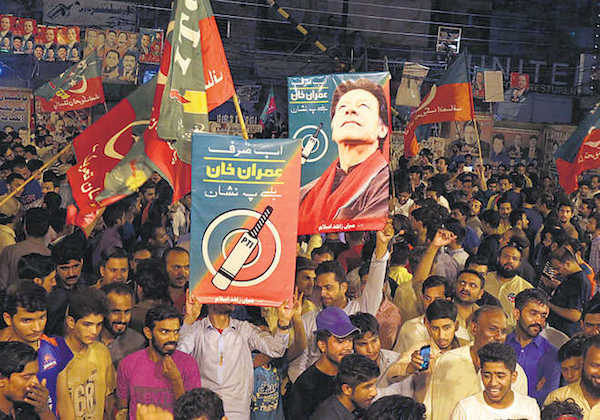
    ISLAMABAD(TIP): Pakistan is ready to improve its ties with India and his government would like the leaders of the two sides to resolve all disputes, including the “core issue” of Kashmir, through talks, Pakistan Tehreek-e-Insaf chief Imran Khan said on Thursday, July 26, asserting that the blame game between the two neighbors, detrimental to the sub-continent, should stop.

    “If they take one step towards us, we will take two, but at least (we) need a start,” 65-year-old Khan said at his first public address after leading his party to victory in the general elections held on Wednesday. His party emerged as the single largest party in the National Assembly elections, amid rival parties’ claim of “blatant” rigging by the army in Khan’s favor.

    Khan, who is set to be the next Pakistan PM, said Kashmir was the “core” issue between the two countries and it should be resolved through talks.

    “I am a person who arguably knows most people in India because of my days in cricket. We can resolve the poverty crisis in S-E Asia. The biggest problem is Kashmir,” he said, suggesting that the two sides should come to the table.

    “We want to improve our ties with India, if their leadership wants it too. This blame game that whatever goes wrong in Pakistan’s Balochistan is because of India and vice versa brings us back to square one,” he said. He said good India-Pakistan relations would be beneficial for the entire region and suggested increased trade ties between the two neighbors.  Ties deteriorated after the terror attacks by Pakistan-based groups in 2016 and India’s surgical strikes in PoK.

  • July 27 New York & Dallas Print Editions

    July 27 New York & Dallas Print Editions

    [vc_row][vc_column][vc_column_text]

    Print Replica ~ Digitally

    E-Editions

    [/vc_column_text][/vc_column][/vc_row][vc_row][vc_column width=”1/3″][vc_custom_heading text=”New York Edition” font_container=”tag:h2|text_align:center” google_fonts=”font_family:Istok%20Web%3Aregular%2Citalic%2C700%2C700italic|font_style:700%20bold%20regular%3A700%3Anormal” link=”url:https%3A%2F%2Fwww.theindianpanorama.news%2Fwp-content%2Fuploads%2F2018%2F07%2FTIP-July-27-NYC.pdf|||”][vc_single_image image=”93780″ img_size=”full” add_caption=”yes” alignment=”center” onclick=”custom_link” link=”https://www.theindianpanorama.news/wp-content/uploads/2018/07/TIP-July-27-NYC.pdf”][/vc_column][vc_column width=”1/3″][vc_custom_heading text=”Dallas, Texas Edition” font_container=”tag:h2|text_align:center” google_fonts=”font_family:Istok%20Web%3Aregular%2Citalic%2C700%2C700italic|font_style:700%20bold%20regular%3A700%3Anormal” link=”url:https%3A%2F%2Fwww.theindianpanorama.news%2Fwp-content%2Fuploads%2F2018%2F07%2FTIP-July-27-Dallas-TX.pdf|||”][vc_single_image image=”93781″ img_size=”full” add_caption=”yes” alignment=”center” onclick=”custom_link” link=”https://www.theindianpanorama.news/wp-content/uploads/2018/07/TIP-July-27-Dallas-TX.pdf”][/vc_column][vc_column width=”1/3″][vc_single_image image=”82828″ img_size=”medium” alignment=”center” onclick=”custom_link” link=”https://www.theindianpanorama.news/advertising-media-kit-portal-indian-panorama/”][vc_single_image image=”82829″ img_size=”medium” alignment=”center” onclick=”custom_link” link=”https://www.theindianpanorama.news/advertising-media-kit-portal-indian-panorama/”][/vc_column][/vc_row][vc_row][vc_column][td_block_ad_box spot_id=”custom_ad_3″ tdc_css=””][/vc_column][/vc_row][vc_row][vc_column width=”2/3″][vc_custom_heading text=”Lead Stories This Week” font_container=”tag:h2|text_align:center” google_fonts=”font_family:Istok%20Web%3Aregular%2Citalic%2C700%2C700italic|font_style:700%20bold%20regular%3A700%3Anormal” link=”url:https%3A%2F%2Fwww.theindianpanorama.news%2F|||”][td_block_5 separator=”” limit=”12″ tdc_css=””][/vc_column][vc_column width=”1/3″][vc_widget_sidebar sidebar_id=”td-default”][/vc_column][/vc_row]

  • Rs 1,484 crore ($223.06 million) spent on PM Modi’s foreign travel since 2014, RS told

    Rs 1,484 crore ($223.06 million) spent on PM Modi’s foreign travel since 2014, RS told

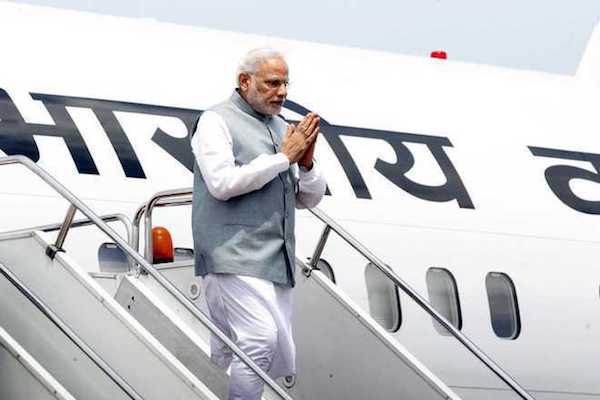
    NEW DELHI(TIP): An expenditure of Rs 1,484 ($223.06 million) crore was incurred on chartered flights, maintenance of aircraft and hotline facilities during Prime Minister Narendra Modi’s visits to 84 countries since June 2014, according to the government.

    The details of Modi’s foreign travel expenditure under the three heads were shared in the Rajya Sabha by Minister of State for External Affairs V K Singh.

    According to the data, a total of Rs 1088.42 crore was spent on maintenance of the prime minister’s aircraft and Rs 387.26 crore on chartered flights during the period between June 15, 2014 and June 10, 2018.

    The total expenditure on hotline was Rs 9.12 crore.

    Modi visited a total of 84 countries in 42 foreign trips since taking over as prime minister in May 2014.

    The details provided by Singh did not include expenditure on hotline facilities during his foreign visits in financial years 2017-18 and 2018-19. The cost of chartered flights for visits in 2018-19 was also not included.

    According to Singh’s reply, the prime minister visited a maximum of 24 countries in 2015-16 followed by 19 in 2017-18 and 18 nations in 2016-17.

    In 2014-15, Modi had visited 13 countries with first one as prime minister to Bhutan in June 2014. In 2018, he travelled to 10 countries with the last one being to China last month.

    The cost for chartered flights to overseas destinations in 2014-15 was Rs 93.76 crore while in 2015-16, it was Rs 117 crore. In 2016-17, the cost was Rs 76.27 crore and in 2017-18, the expense on chartered flight was Rs 99.32 crore.

    “Diplomatic outreach during this period (since May 2014) has included first ever visits from India to several countries at the head of government level,” Singh said.

    He said the outreach has led to enhanced engagement of India’s foreign partners in its flagship programs.

    (Source:  PTI)

  • Trump takes U-turn, now blames Putin for 2016 US poll meddling

    Trump takes U-turn, now blames Putin for 2016 US poll meddling

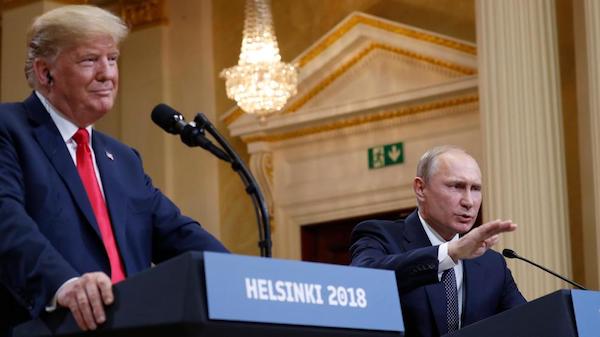
    WASHINGTON(TIP): US President Donald Trump said, July 19, he holds his Russian counterpart Vladimir Putin personally responsible for the alleged meddling into the 2016 presidential elections, as he went into damage-control mode to douse a flurry of criticism over his recent comments about Russia.

    Trump has been on the defensive for the past two days after failing to defend the American intelligence community during a much-talked about press conference with Putin in Helsinki on Monday, July 16, after their first summit.

    The US President seemed to lend credence to his Russian counterpart’s insistence that his government was not involved in the effort to influence the 2016 election campaign. Trump, a Republican, defeated his Democratic party rival Hillary Clinton in the election. Trump’s comments sparked a barrage of criticism from the media and lawmakers across the political spectrum, with many calling on him to correct himself.

    Speaking to CBS News, Trump said he would consider Putin culpable because he was Russia’s leader. “I would because he’s in charge of the country just like I consider myself to be responsible for things that happen in this country,” Trump said.

    “So, certainly as the leader of the country you would have to hold him responsible,” he said. Facing huge criticism, Trump quickly took a U-turn and attributed his comments at the joint press conference with Putin to a simple mistake.

     Looking forward to 2nd meeting with Putin

    US President Donald Trump said on Thursday, July 19, he looked forward to his second meeting with Russian President Vladimir Putin, insisting that the first meeting was a success despite howls of criticism at home and abroad

    “The Summit with Russia was a great success, except with the real enemy of the people, the Fake News Media. I look forward to our second meeting so that we can start implementing some of the many things discussed,” he wrote on Twitter

    Forces in US trying to derail Peace: Putin

    President Vladimir Putin on Thursday, July 19, accused forces in the United States of trying to undermine the success of his first summit with US President Donald Trump, and said the two leaders had managed to begin to improve US-Russia ties anyway

    Putin, speaking to Russian diplomats from around the world assembled in Moscow, said on Thursday that the summit had been a success overall, but complained about what he described as “powerful” US efforts to sabotage it.

    (With inputs from PTI)

  • July 20 New York & Dallas Print Editions

    July 20 New York & Dallas Print Editions

    [vc_row][vc_column][vc_column_text]

    Print Replica ~ Digitally

    E-Editions

    [/vc_column_text][/vc_column][/vc_row][vc_row][vc_column width=”1/3″][vc_custom_heading text=”New York Edition” font_container=”tag:h2|text_align:center” google_fonts=”font_family:Istok%20Web%3Aregular%2Citalic%2C700%2C700italic|font_style:700%20bold%20regular%3A700%3Anormal” link=”url:https%3A%2F%2Fwww.theindianpanorama.news%2Fwp-content%2Fuploads%2F2018%2F07%2FTIP-July-20-Dallas-TX.pdf|||”][vc_single_image image=”93693″ img_size=”full” add_caption=”yes” alignment=”center” onclick=”custom_link” link=”https://www.theindianpanorama.news/wp-content/uploads/2018/07/TIP-July-20-Dallas-TX.pdf”][/vc_column][vc_column width=”1/3″][vc_custom_heading text=”Dallas, Texas Edition” font_container=”tag:h2|text_align:center” google_fonts=”font_family:Istok%20Web%3Aregular%2Citalic%2C700%2C700italic|font_style:700%20bold%20regular%3A700%3Anormal” link=”url:https%3A%2F%2Fwww.theindianpanorama.news%2Fwp-content%2Fuploads%2F2018%2F07%2FTIP-July-20-NYC.pdf|||”][vc_single_image image=”93694″ img_size=”full” add_caption=”yes” alignment=”center” onclick=”custom_link” link=”https://www.theindianpanorama.news/wp-content/uploads/2018/07/TIP-July-20-NYC.pdf”][/vc_column][vc_column width=”1/3″][vc_single_image image=”82828″ img_size=”medium” alignment=”center” onclick=”custom_link” link=”https://www.theindianpanorama.news/advertising-media-kit-portal-indian-panorama/”][vc_single_image image=”82829″ img_size=”medium” alignment=”center” onclick=”custom_link” link=”https://www.theindianpanorama.news/advertising-media-kit-portal-indian-panorama/”][/vc_column][/vc_row][vc_row][vc_column][td_block_ad_box spot_id=”custom_ad_3″ tdc_css=””][/vc_column][/vc_row][vc_row][vc_column width=”2/3″][vc_custom_heading text=”Lead Stories This Week” font_container=”tag:h2|text_align:center” google_fonts=”font_family:Istok%20Web%3Aregular%2Citalic%2C700%2C700italic|font_style:700%20bold%20regular%3A700%3Anormal” link=”url:https%3A%2F%2Fwww.theindianpanorama.news%2F|||”][td_block_5 separator=”” limit=”12″ tdc_css=””][/vc_column][vc_column width=”1/3″][vc_widget_sidebar sidebar_id=”td-default”][/vc_column][/vc_row]

  • ’84 anti-Sikh riots: New SIT fails to start work as member’s position remains vacant

    ’84 anti-Sikh riots: New SIT fails to start work as member’s position remains vacant

    NEW DELHI(TIP): A new SIT headed which was set up in January this year to further investigate 186 cases relating to the 1984 anti-Sikh riot cases in Delhi, has failed to start its work, the Supreme Court was informed on Thursday.

    Counsel for the petitioner who has been instrumental in getting the order for a fresh SIT probe told a Bench headed by Chief Justice of India Dipak Misra that a member’s position was vacant in the SIT headed by former Delhi High Court judge SN Dhingra.

     The SIT which is to probe 186 cases closed by the police, has yet to commence its work despite the court’s order to submit its first report in August, the petitioner’s counsel told the Bench.

    CJI Misra said he was aware of the matter and he would soon look into it.

    The Centre had on February 5 told the Supreme Court that ex-IPS officer Rajdeep Singh has refused to be a part of the new SIT and he would be replaced by former Indian Police Bureau Director General of Police NR Wasan. Serving IPS officer Abhishek Dular is the third member of the SIT.

    Justice Dhingra was a trial judge when punishments were handed out in 1990s to the accused of the Trilokpuri massacre of 1984. Kishori Lal, dubbed as the ‘butcher of Trilokpuri’, was among those sentenced by him.

    Almost 3,000 people were killed, most of them in Delhi, in the anti-Sikh riots that broke out following the assassination of then Prime Minister Indira Gandhi on October 31, 1984.

     The Bench had in January noted that the previous SIT had not carried out further probe into these 186 cases in which closure reports were filed. It had taken the decision after perusing the report of a two-judge supervisory panel which scrutinized 241 cases relating to 1984 anti-Sikh riots in Delhi closed by an earlier SIT formed by the NDA government for re-investigation.

     Submitted on December 6, the report of the supervisory committee comprising Justice JM Panchal and Justice KSP Radhakrishnan was perused by the court.

     The court had already made it clear that it would not reopen cases in which accused had been acquitted.

     It had assigned the task of examining the said 241 cases closed by SIT to the supervisory committee which was to make recommendations as to whether the cases were rightly closed or not.

    Counsel for the petitioner who has been instrumental in getting the order for a fresh SIT probe told a Bench headed by Chief Justice of India Dipak Misra that a member’s position was vacant in the SIT headed by former Delhi High Court judge SN Dhingra.

     The SIT which is to probe 186 cases closed by the police, has yet to commence its work despite the court’s order to submit its first report in August, the petitioner’s counsel told the Bench.

    It had assigned the task of examining the said 241 cases closed by SIT to the supervisory committee which was to make recommendations as to whether the cases were rightly closed or not.

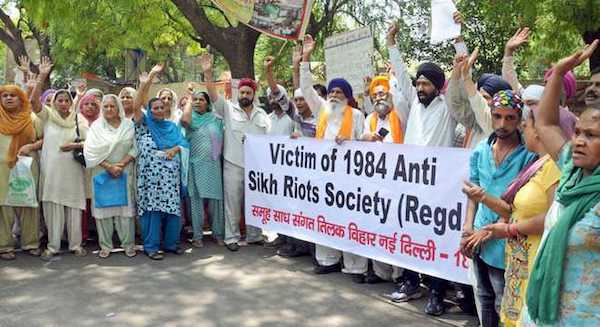
     More than two years after the Narendra Modi government set up the SIT to re-investigate serious anti-Sikh riots cases of 1984 that had been closed, it has managed to file charge sheets only in very small number of cases taken up for further probe.

  • Trump claims he subdued NATO allies with his  ‘go it alone’ ultimatum

    Trump claims he subdued NATO allies with his ‘go it alone’ ultimatum

    Tells European allies to increase spending or lose US support

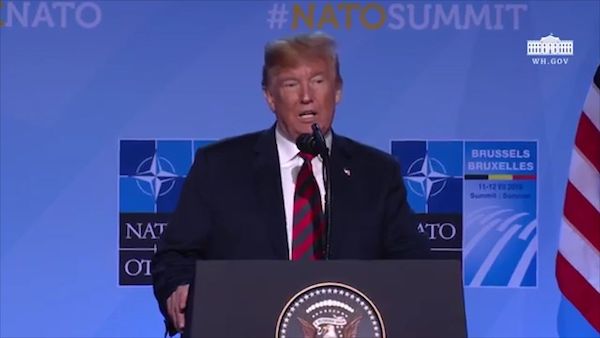
    BRUSSELS(TIP): Donald Trump claimed a personal victory at a NATO summit on Thursday, July 12 after telling European allies to increase spending or lose Washington’s support, an ultimatum that forced leaders to huddle in a crisis session with the US President. Trump emerged declaring his continued commitment to a Western alliance built on US military might that has stood up to Moscow since World War Two.

     People present said he had earlier warned he would “go it alone” if allies, notably Germany, did not make vast increases in their defense budgets for next year.

    “I let them know that I was extremely unhappy,” he said, but added that the talks ended on the best of terms: “It all came together at the end. It was a little tough for a little while.”

    German Chancellor Angela Merkel, who called the summit “very intense”, and other leaders including French President Emmanuel Macron, played down the extent to which they had pledged to accelerate spending plans as fast as Trump wanted.

     Macron and others said they did not interpret Trump’s words as a direct threat to quit the alliance Washington founded in 1949 to contain Soviet expansion. Trump, asked if he thought he could withdraw from NATO without backing from Congress, said he believed he could but it was “unnecessary”. Others say Congressional approval would be required—and would be unlikely to be forthcoming.

     Trump hailed a personal victory for his own strategy in complaining loudly that NATO budgets were unfair to US taxpayers, and the emergence of what he said was a warm consensus around him.

     Several diplomats, however, said his undiplomatic intervention, including pointing at other leaders and addressing Merkel as “you, Angela”, had irritated many.

    Spending targets

    • NATO members have committed to spending at least 2% of their national income on defense by 2024, though the terms allow for stretching that in some cases to 2030
    • The United States, far the biggest economy, spent 3.6% last year, while Germany, the second biggest, paid out just 1.2% and only a handful of countries met the 2% target.
    • Trump said he wanted them all to hit that target by January, prompting consternation. Many have already settled their 2019 budgets and the sums involved are immense.
  • July 13 New York & Dallas Print Editions

    July 13 New York & Dallas Print Editions

    [vc_row][vc_column][vc_column_text]

    Print Replica ~ Digitally

    E-Editions

    [/vc_column_text][/vc_column][/vc_row][vc_row][vc_column width=”1/3″][vc_custom_heading text=”New York Edition” font_container=”tag:h2|text_align:center” google_fonts=”font_family:Istok%20Web%3Aregular%2Citalic%2C700%2C700italic|font_style:700%20bold%20regular%3A700%3Anormal” link=”url:%20https%3A%2F%2Fwww.theindianpanorama.news%2Fwp-content%2Fuploads%2F2018%2F07%2FTIP-July-13-NYC.pdf|||”][vc_single_image image=”93633″ img_size=”full” add_caption=”yes” alignment=”center” onclick=”custom_link” link=” https://www.theindianpanorama.news/wp-content/uploads/2018/07/TIP-July-13-NYC.pdf”][/vc_column][vc_column width=”1/3″][vc_custom_heading text=”Dallas, Texas Edition” font_container=”tag:h2|text_align:center” google_fonts=”font_family:Istok%20Web%3Aregular%2Citalic%2C700%2C700italic|font_style:700%20bold%20regular%3A700%3Anormal” link=”url:https%3A%2F%2Fwww.theindianpanorama.news%2Fwp-content%2Fuploads%2F2018%2F07%2FTIP-July-13-Dallas-TX.pdf|||”][vc_single_image image=”93634″ img_size=”full” add_caption=”yes” alignment=”center” onclick=”custom_link” link=”https://www.theindianpanorama.news/wp-content/uploads/2018/07/TIP-July-13-Dallas-TX.pdf”][/vc_column][vc_column width=”1/3″][vc_single_image image=”82828″ img_size=”medium” alignment=”center” onclick=”custom_link” link=”https://www.theindianpanorama.news/advertising-media-kit-portal-indian-panorama/”][vc_single_image image=”82829″ img_size=”medium” alignment=”center” onclick=”custom_link” link=”https://www.theindianpanorama.news/advertising-media-kit-portal-indian-panorama/”][/vc_column][/vc_row][vc_row][vc_column][td_block_ad_box spot_id=”custom_ad_3″ tdc_css=””][/vc_column][/vc_row][vc_row][vc_column width=”2/3″][vc_custom_heading text=”Lead Stories This Week” font_container=”tag:h2|text_align:center” google_fonts=”font_family:Istok%20Web%3Aregular%2Citalic%2C700%2C700italic|font_style:700%20bold%20regular%3A700%3Anormal” link=”url:https%3A%2F%2Fwww.theindianpanorama.news%2F|||”][td_block_5 separator=”” limit=”12″ tdc_css=””][/vc_column][vc_column width=”1/3″][vc_widget_sidebar sidebar_id=”td-default”][/vc_column][/vc_row]

  • Supreme Court seeks response from Sajjan Kumar in 1984 anti-Sikh riots cases

    Supreme Court seeks response from Sajjan Kumar in 1984 anti-Sikh riots cases

    The Supreme Court on Thursday sought response from Congress leader Sajjan Kumar, accused in the 1984 anti-Sikh riots cases, on a plea filed by SIT challenging the anticipatory bail granted to him by Delhi HC. The apex court said it is high time that these cases are tried at the earliest

    NEW DELHI (TIP): The Supreme Court on July 5 sought response from Congress leader Sajjan Kumar, accused in the 1984 anti-Sikh riots cases, on a plea filed by the Special Investigation Team (SIT) challenging the anticipatory bail granted to him by Delhi high court.

    A bench of Justice AK Sikri and Ashok Bhushan said it is high time that these cases are tried at the earliest.

    The bench said it was an over 30- year-old case and it took around “200 pages” for the high court to grant anticipatory bail when it could have been done in just “40-50 pages”.

    Additional solicitor general Maninder Singh, appearing for the SIT, said the investigation started against Kumar only in 2016 and now he has come armed with a battery of lawyers and dictates his statement to the investigating officer of the case.

    The ASG said that while granting anticipatory bail to him, the high court had said that everything will be tested in trial of the case but at the end it granted him the relief saying there was no evidence.

    To this, the bench said whether all this was considered at the time of anticipatory bail. Singh said, “Yes. This is totally contrary to the established procedure of law.” The bench then issued notice.

    The Delhi HC had on February 22 upheld a trial court order granting anticipatory bail to Kumar in two anti- Sikh riots cases of 1984, saying that according to records, he was available throughout the investigation.

    The Congress leader was granted anticipatory bail by the trial court on December 21, 2016, in two cases of killing of three Sikhs during the riots which had occurred after the assassination of then prime minister Indira Gandhi.

    Kumar had submitted that his name was never taken earlier and it was a case of fresh allegations coming up after 32 years.

    Source: PTI

  • ISIS claims suicide bomb attack on Sikhs and Hindus in Afghanistan

    ISIS claims suicide bomb attack on Sikhs and Hindus in Afghanistan

    KABUL(TIP): ISIS has claimed responsibility for a suicide bombing in eastern Afghanistan on July 1 that killed at least 19 people, mostly Sikhs and Hindus.

    The bomber targeted a delegation from the minority communities as it was traveling to the governor’s residence in the eastern city of Jalalabad on Sunday for a meeting with President Ashraf Ghani.

    Avtar Singh Khalsa, a long-time leader of the Sikh community, was among those killed. Another 20 people were wounded.

    In a statement released on Monday, ISIS said it had targeted a group of “polytheists.”

    Sikhs and Hindus face discrimination in the conservative Muslim country and have been targeted by Islamic extremists in the past, leading many to emigrate. The community numbered more than 80,000 in the 1970s, but today only about 1,000 remain.

    Under Taliban rule in the late 1990s, they were told to identify themselves by wearing yellow armbands, but the dictate was not wholly enforced. In recent years, large numbers of Sikhs and Hindus have sought asylum in India, which has a Hindu majority and a large Sikh population.

    Afghan President Ashraf Ghani arrived in Jalalabad earlier on Sunday to open a hospital, part of a two-day visit to the province bordering Pakistan.

    Mr Ghani’s spokesman said the president was still in Nangarhar but was “away from danger”.

    The attack came a day after Mr Ghani ordered Afghan security forces to resume offensive operations against the Taliban following the expiry of the government’s 18-day ceasefire.

    The government’s unilateral truce overlapped with the Taliban’s three-day ceasefire for Eid, but the militants refused to prolong it.

    The unprecedented ceasefire over the holiday capping Ramadan triggered spontaneous street celebrations involving Taliban fighters, security forces, and war-weary civilians.

    ISIS, which has an affiliate in the province, was not part of the ceasefire. The group fights both government forces and the Taliban, which has shown no sign of letting up its campaign of violence.

  • US-China Trade War Begins

    US-China Trade War Begins

    Beijing vows to strike back against tariffs on US$34 billion worth of Chinese goods

    NEW YORK(TIP): The big question is now that the first shots have been fired, what goods will be affected, who will pay the price and what could happen next?

    China’s Ministry of Commerce, on July 5 (July 6 in China) said China will fight back against the US and report to the World Trade Organisation.

    The remarks were in response to Washington’s decision to impose 25 per cent duties on a similar amount of Chinese imports, which also came into effect on Friday.

    US President Donald Trump had threatened to target another US$400 billion in Chinese products with tariffs if Beijing continued to hit back.

    On top of that, each country has prepared a second tariff list of goods worth about US$16 billion. The effective dates are pending as the office of the US trade representative is in the midst of a public comment period on its list.

    The trade war became official after Trump repeatedly said he wanted to reverse the United States’ massive trade deficit with China, which rose to about US$375 billion last year. That number is US$100 billion higher than China’s own calculation.

    In an updated list published on June 15, Washington dropped many China-made consumer goods, such as TVs and flat panel screens, and added more intermediary products like semiconductors and plastics, after opposition during a public hearing in May.

    The second tariff list, which is still under review, focuses particularly on “Made in China 2025”, a Chinese industrial policy aimed at getting ahead in hi-tech industries. It includes electronic integrated circuits and the machines that produce them.

    Washington has dropped many China-made consumer goods, such as TVs and flat panel screens, and added more intermediary products like semiconductors and plastics to its tariff list. Photo: Reuters

    China struck back in April with a list of US$50 billion worth of US imports, many of which were agricultural products. Beijing later removed US$16.3 billion worth of US aircraft from the list and added more food such as fish and nuts.

    The primary US goods affected are soybeans and vehicles, while it is mostly Chinese industrial goods hit by US tariffs.

    Who bears the brunt of these rounds of tariffs? Eventually consumers.

    Analysts said imposing tariffs on Chinese goods such as semiconductors would eventually increase prices for American consumers because they were key components of electronic products. And it’s not an easy business decision for US manufacturers to shift sourcing after tariffs are in place.

    “Alternative sources do exist for most of the Chinese products on the targeted list, but less expensive products purchased by less affluent consumers are likely to see larger price hikes as manufacturers substitute more expensive parts for Chinese inputs facing tariffs,” Mary Lovely, a senior fellow at the Washington-based Peterson Institute for International Economics, wrote.

    “These consumers may not see much difference in performance due to one higher-quality part, but they are likely to see a difference at the cash register.”

    Chinese consumers, on the other hand, could pay higher prices for imported seafood and fruit.

    It is just the beginning. What happens in the longer run will impact economic policies of many countries across the world.