Tag: LeadStory

  • FIA hosts farewell reception for Ambassador Riva Ganguly Das

    FIA hosts farewell reception for Ambassador Riva Ganguly Das

    FORDS, NJ (TIP):  The Federation of Indian Associations (FIA) of New York, New Jersey and Connecticut in collaboration with the Indian American community, hosted a farewell reception July 18 for Riva Ganguly Das, India’s Consul General in New York, at the Royal Albert’s Palace in Fords, NJ.

    Ambassador Das, who assumed charge in New York in March 2016, was recently named Director General of Indian Council for Cultural Relations by the Government of India, and is scheduled to leave for New Delhi later this week.

    The event, attended by more than 250 members of the Indian American community in New York and New Jersey, was hosted by FIA and sponsored by H R Shah, Dr Sudhir Parikh, Albert Jasani, AAPI (American Association of Physicians of Indian Origin), Drs Sanjay and Kavita Gupta, TV9, Anil Bansal, The Indian Panorama, Malini Shah and FOKANA (Federation of Kerala Associations in North America).

    Presenting a plaque to India’s Consul General in New York, Riva Ganguly Das (center left)

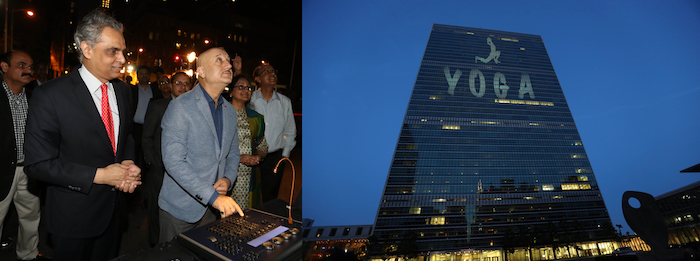
    Many speakers, including FIA chairman Ramesh Patel and president Andy Bhatia, H R Shah, chairman of TV Asia, Anil Bansal, chairman of Indus American Bank, and Prof. Indrajit S Saluja, President of Indo-American Press Club recounted how Ambassador Das had steadfastly interacted with the Indian American community. Speakers also pointed out that Ambassador Das was instrumental in co-sponsoring the International Yoga Day celebrations this year with the New York City Public Advocate’s Office and the Parks Department. Despite her short stint in New York, Ambassador Das was also credited with engaging several US Congressmen and Senators as well as New York city elected officials.

    “When we had a welcome dinner for you over a year ago, there were more than 500 people and at your farewell dinner today we have much less,” said Andy Bhatia. “It is because many are sad to see you leave so soon and have decided not to be here and have you see them in tears.”

    FIA chairman Ramesh Patel was exuberant yet emotional while introducing Ambassador Das at the event. “

    “You have been very helpful and gracious to the cause of FIA and India Day Parade and we wish you all the best,” said Patel.

    Ambassador Das joined the Indian Foreign Service in 1986. A post-graduate in political science from Delhi University, Das was a lecturer at Delhi University before joining the Indian Foreign Service. Following her first foreign posting in Spain, Das has had stints in Nepal, Bangladesh, China, The Hague and Romania.

    Ambassador Riva Ganguly Das speaking at the farewell reception, hosted by FIA, July 18

    In her remarks, Ambassador Das lauded the FIA in “showcasing Indian culture to mainstream communities in New York, aiding in better understanding of Indian immigrants.” She pointed out that it was imperative a direct channel of communication always existed between the Indian Diaspora and the Indian Consulate in New York. “I have always tried to encourage fortnightly meetings between the Indian Consulate and Indian organizations, both cultural and corporate, to be able to understand the concerns of the Diaspora.”

    Among FIA partner organizations represented at the event included, FOKANA (Federation of Kerala Associations in North America), TANA (Telugu Association of North America), Haryana Global Chamber of Commerce, Asian Indian Chamber of Commerce and AAPI (American Association of Physicians of Indian Origin), BAJANA (Bihar-Jharkhand Association of North America).

    The FIA of NY-NJ-CT was formed in 1970 and is among the largest umbrella organization representing over 500,000 Indian Americans in the tristate region. The centerpiece of its efforts culminates in the India Day Parade in New York each year.

    The 37th India Day Parade in New York this year is scheduled for Sunday, Aug 20. The gala banquet is set for Aug 21 at the Royal Albert’s Palace in Fords, NJ.

  • Ram Nath Kovind elected as the 14th President of India

    Ram Nath Kovind elected as the 14th President of India

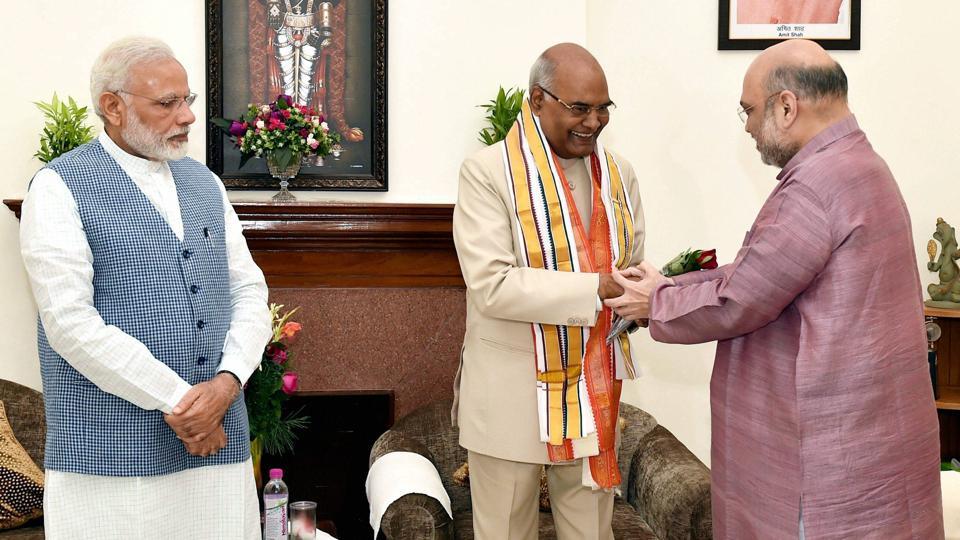
    NEW DELHI (TIP): Ram Nath Kovind has won the presidential election after securing over two-thirds of the total electoral college votes. Mr Kovind will be sworn-in as the 14th President of India on July 25. Prime Minister Narendra Modi congratulated Ram Nath Kovind for winning the presidential election. PM Modi tweeted: “Congratulations to Shri Ram Nath Kovind Ji on being elected the President of India! Best wishes for a fruitful & inspiring tenure.” Flowers and extra security had arrived at the former Bihar governor’s home in Delhi long before the official announcement and sweets were passed around at his hometown in Uttar Pradesh. The counting of votes for the presidential election began at 11 am today. The contest, between the ruling NDA’s Ram Nath Kovind and the Opposition’s Meira Kumar, both Dalits, had seen nearly 99 per cent lawmakers and legislators cast their vote – the highest ever. Voting had taken place on July 17.

    Speaking after his victory, President-elect Ram Nath Kovind said, “Me being elected President is a message for a person who has walked on an honest path. Thoughts of serving my nation have brought me this far”. He went on to say that “My job will be to uphold and protect the Constitution of India”.

    “I salute all the people of India,” Mr Kovind said as he narrated that “I never thought that I will become president one day. It was never my goal. But for the country, for society, my hard work has brought me till here”.

    “I congratulate and thank opposition candidate Meira Kumar,” he said. Speaking about his responsibility as India’s first citizen, Mr Kovind said, “It is a great responsibility to be elected to the post that has been graced by great men like Dr Rajendra Prasad, Dr Sarvapalli Radhakrishnan, Dr APJ Abdul Kalam and Shri Pranab Mukherjee”.

    On his victory, he said “Personally this is an emotional moment for me.”

    Speaking about his humble background as a farmer’s son, Mr Kovind said, “It has been raining in Delhi since the morning. Rains remind me of my village, of our kachcha home with walls of mud and a roof that could not repel water during the monsoon. My siblings and I used to stand and wait for the rains to end. Today there are many Ram Nath Kovinds who are getting wet in the rain, working hard, toiling in the fields for one square meal in the evening. Today I want to tell them that I will be their representative in the Rashtrapati Bhavan.”

    Meanwhile, Meira Kumar who lost to Kovind, congratulated President- elect, saying her fight for secularism and the oppressed will continue.

    “I congratulate Sh. Ram Nath Kovindji for becoming the President of India.

    “My best wishes are with Sh. Kovindji as it has fallen upon him to uphold the Constitution in letter & spirit in these challenging times,” she tweeted.

  • July 14 New York & Dallas Print Editions

    July 14 New York & Dallas Print Editions

    [vc_row][vc_column][vc_column_text]

    Print Replica ~ Digitally

    E-Editions

    [/vc_column_text][/vc_column][/vc_row][vc_row][vc_column width=”1/3″][vc_custom_heading text=”New York Edition” font_container=”tag:h2|text_align:center” google_fonts=”font_family:Istok%20Web%3Aregular%2Citalic%2C700%2C700italic|font_style:700%20bold%20regular%3A700%3Anormal” link=”url:https%3A%2F%2Fwww.theindianpanorama.news%2Fwp-content%2Fuploads%2F2017%2F07%2FTIP-Edition-July-14-NYC.pdf|||”][vc_single_image image=”86188″ img_size=”full” add_caption=”yes” alignment=”center” onclick=”custom_link” link=”https://www.theindianpanorama.news/wp-content/uploads/2017/07/TIP-Edition-July-14-NYC.pdf”][/vc_column][vc_column width=”1/3″][vc_custom_heading text=”Dallas, Texas Edition” font_container=”tag:h2|text_align:center” google_fonts=”font_family:Istok%20Web%3Aregular%2Citalic%2C700%2C700italic|font_style:700%20bold%20regular%3A700%3Anormal” link=”url:https%3A%2F%2Fwww.theindianpanorama.news%2Fwp-content%2Fuploads%2F2017%2F07%2FTIP-Edition-July-14-Dallas-TX.pdf|||”][vc_single_image image=”86187″ img_size=”full” add_caption=”yes” alignment=”center” onclick=”custom_link” link=”https://www.theindianpanorama.news/wp-content/uploads/2017/07/TIP-Edition-July-14-Dallas-TX.pdf”][/vc_column][vc_column width=”1/3″][vc_single_image image=”82828″ img_size=”medium” alignment=”center” onclick=”custom_link” link=” https://www.theindianpanorama.news/advertising-media-kit-portal-indian-panorama/”][vc_single_image image=”82829″ img_size=”medium” alignment=”center” onclick=”custom_link” link=” https://www.theindianpanorama.news/advertising-media-kit-portal-indian-panorama/”][/vc_column][/vc_row][vc_row][vc_column][td_block_ad_box spot_id=”custom_ad_3″][/vc_column][/vc_row][vc_row][vc_column width=”2/3″][vc_custom_heading text=”Lead Stories This Week” font_container=”tag:h2|text_align:center” google_fonts=”font_family:Istok%20Web%3Aregular%2Citalic%2C700%2C700italic|font_style:700%20bold%20regular%3A700%3Anormal” link=”url:https%3A%2F%2Fwww.theindianpanorama.news%2F%20_blank|||”][td_block_5 separator=”” limit=”8″ tdc_css=””][/vc_column][vc_column width=”1/3″][vc_widget_sidebar sidebar_id=”td-default”][/vc_column][/vc_row]

  • Zaheer Dravid fine complements to Shastri upon being announced as the new coaches

    Zaheer Dravid fine complements to Shastri upon being announced as the new coaches

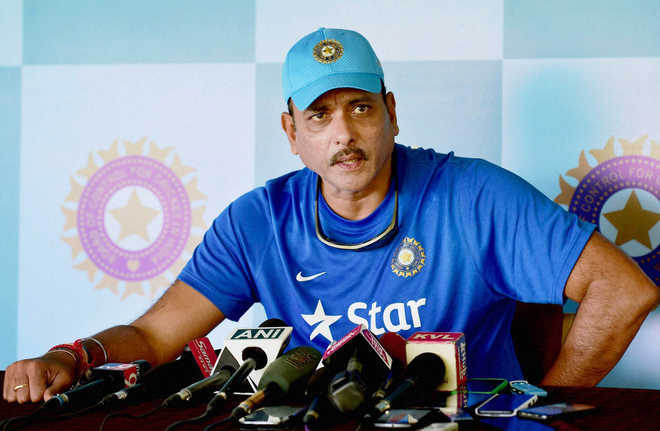
    After some uncertainty and confusion, Ravi Shastri has been appointed the head coach of the Indian cricket team. Shastri’s appointment was a foregone conclusion because of the good vibes he shares with captain Virat Kohli; the icing on the cake is the appointment of Zaheer Khan as the bowling consultant and Rahul Dravid as the batting consultant for overseas Test series. In his playing days, Shastri was a very intelligent cricketer, considered by many as the best captain India never had. As a coach, his main quality is the optimism and confidence he brings in — as the master of hortatory speeches, he has no equal.

    The selection of Zaheer as the bowling coach and Dravid as the batting consultant on tours are inspired choices. The three men who made this decision — Sourav Ganguly, Sachin Tendulkar and VVS Laxman — have all played a lot of cricket with both Zaheer and Dravid. Zaheer was a very fine pace bowler who lost his way in the initial part of his career before becoming a very skillful bowler. Even as a player, he was a fine mentor to the fast bowlers in the Indian team. Dravid, the most technically adept Indian batsman since Sunil Gavaskar, has shown a great appetite for coaching, finding success with India’s junior and A teams. As India play a lot of Test cricket away from home in the next couple of years, Dravid can play a very important role in mentoring the batsmen.

    A word about the selection of the coaches — the process was muddled and confused. Anil Kumble, the previous head coach, was simply chucked out despite a fine record with the team. Ganguly did not wish to name the replacement coach/coaches “in a hurry”, making a mockery of the process and deadlines. It was left to the Supreme Court-appointed Committee of Administrators to direct BCCI to end the confusion. Hopefully, all associated with the process have learnt their lessons, which they would bear in mind when the time comes to repeat this exercise.


  • Trump arrived in Paris to a red carpet welcome with Russia in tow

    Trump arrived in Paris to a red carpet welcome with Russia in tow

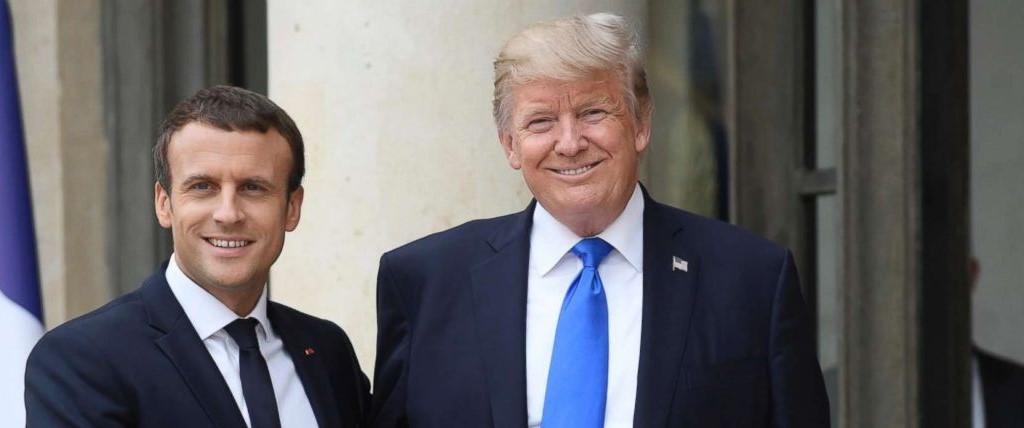
    PARIS (TIP): France rolled out the red carpet, July 13, to welcome Donald Trump on a presidential visit laden with military pomp that the White House hopes will offer respite from a growing scandal back home.

    The US president’s brief 24-hour trip to the French capital coincides with celebrations for Bastille Day, France’s national day which is marked on Friday, and the 100th anniversary of US involvement in World War I.

    Accompanied by First Lady Melania Trump, the 71-year-old stepped onto French soil for the first time as President hoping the visit will distract from weighty allegations that his family and inner circle colluded with Russia to win the 2016 US election.

    The scandal has put his son and top aides in legal jeopardy, cast a pall over his efforts to remake the political agenda and may yet imperil his presidency.

    During the brief visit, Trump—who sees himself as a transformative figure in US history—will be the guest of honor for Friday’s Bastille Day festivities that mark a pivotal point in the French Revolution. This year’s event also coincides with the centenary of America entering World War I.

     (Source: AFP)

  • Dilemma of a two front war

    Dilemma of a two front war

    By Maj Gen Ashok K Mehta (retd)

    Obsessed with Pakistan, India has grossly neglected the real adversary. In point-to-point skirmishes and standoffs, battle- hardened Indian soldiers will deter, if not defeat, the PLA. However, across a broad front spectrum in an unlikely all-out war, it is advantage China, Says the author.

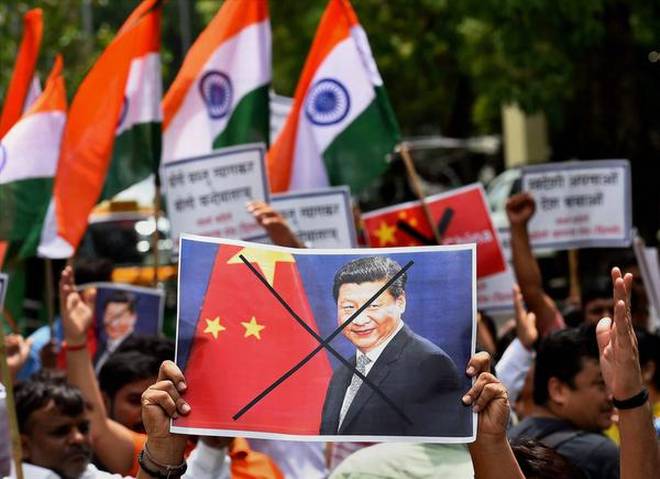
    At a time when China is threatening to teach India another lesson and warning not to engage in a two-front conflict over the standoff in Doklam, our Service Chiefs, it seems, are not on the same page about fighting a two-front war especially as Beijing might try to emulate the New Delhi-Thimpu alliance in “disputed territory” with one with Islamabad in PoK. While General Bipin Rawat has more than once asserted the Army’s preparedness for a two-front war, Air Chief Marshal BS Dhanoa has highlighted the critical shortfall in the number of fighter squadrons — 32 against the required 42 squadrons — to dominate a two-front conflict, saying: “It is akin to a cricket team playing with seven players instead of 11”. The deficiency in air assets has existed for decades but this is the first time an Air Chief has related it to a two-front war.

    The Chief of Naval Staff, Sunil Lanba, when asked about the disparity in preparedness of the services, said: “The way national security is being handled is not commensurate with the security environment which is extremely serious at the moment”. Recently, Gen Rawat told a military audience that the military was not getting enough funds for modernization — repeated ad nauseum by every Chief — due to the perception that expenditure on defence is a burden on the economy. This set the cat among the pigeons as Finance Minister Arun Jaitley, a regular fill-in for Defence Minister, is believed to have told Gen Rawat: “Don’t worry about funds. When you run out, call me”. In the mid-1990s, when the Naval Shipyard order books had gone dry, CNS, admiral Vijay Shekhawat went public about the Navy’s operational deficiencies, prompting Defence Minister Mulayam Singh Yadav to invite him to discuss dwindling fleet numbers. Ad hocism has become the hallmark of modernization of the military.

    Power differential

    The Chinese are constantly reminding India about the power differential — military, economic and infrastructural — between them. Being obsessed with Pakistan, India has grossly neglected the real adversary. The reason for this is the institutionalized absence of strategic thinking and higher political direction of war and conflict in the face of growing threats and challenges to internal and external security. Prime Minister Modi’s boast about big defence reforms is hollow: had he been serious about defence, he would have named a full-time Defence Minister. The appointment of a Chief of Defence Staff has not overcome the hesitation of history — read bureaucracy. The country has never produced a “Defence White Paper” or done a “Strategic Defence and Security” review. Something called the “Raksha Mantri’s Directive” masquerades as higher political direction on deterrence and war. This bit of literature drafted by the military has its origin in 1983, with periodic face-lifts to make it contemporary.

    The Parrikar doctrine covering surgical strikes was included in the Joint Military Doctrine, scripted by the Integrated Defence Staff, which attracted extraordinary flak from the defence community for being substandard. In its present organization, each service essentially fights single-service combat. In the last border skirmish at Kargil, the Army’s operation was called Vijay while the IAF campaign in support was named Safed Saagar. So much for jointness.  So the Raksha Mantri’s Directive passes off as political guidance by the highest echelons of government. When I once asked a former Air Chief how he evolved his service’s span of responsibility, he replied: “Most of the time, from speeches made by the Prime Minister during the Combined Commanders’ Conferences.”

    Are we surprised that while President Xi Jinping who heads the Central Military Commission, has personally ordered and supervised the reorganization of the combat formations facing India, reducing them from three commands to one command — a single Western Theatre Command headed by the powerful Gen Xhao Zongqi — the China front in India is managed by four Army and three Air commands deployed at seven locations.

    Integrated command

    A forward-looking proposal made by a defence committee recommending three integrated operational commands — North, West and South instead of 17 single service commands — was shot out of hand by (no guesses) the Air Force. The CDS and accompanying Joint Staff ordered by the UK in 1984 was a fait accompli. It was introduced by a political class which understood defence and strategic security. In India, countless defence reforms are languishing for want of decision making.

    It is instructive to recall how the two-front strategy was formally enunciated in December 2009 by the Army Chief Gen Deepak Kapoor. It followed the 2008 Mumbai terrorist attack, after Prime Minister Manmohan Singh ordered the Service Chiefs to prepare for war. Defence Minister AK Antony then had “preparation for a two-front war” added in his Directive but did little to implement it. Both in 1965 and 1971 wars with Pakistan despite the collusive threat from China, there was no cross-border intervention by China though sizeable formations of the Eastern Command remained deployed against it and forces could not be switched to the west or east for fighting in East Pakistan in 1971. In a real two-front war, swing forces in east and west will not be able to reinforce either front and only dedicated formations will fight the war. Given the paucity in current force levels, inadequate sophistry of combat support and terrain and infrastructure handicaps, it will be an uphill task to match the PLA’s strength and versatility across a 3,488-km front of undefined borders.

     In point-to-point skirmishes and standoffs, battle-hardened Indian soldiers will deter if not defeat the PLA. Across a broad front spectrum in an unlikely all-out war, it is advantage China unless India is prepared to rethink its “no first use” nuclear doctrine. As an offset in the western front, Gen Rawat has suggested creating a two-front situation for Pakistan: either in Afghanistan or Iran. Doklam may go the 1986 Sumdorong Chu way; the 10-month-long standoff challenging the Chinese intrusion at Thandrong, west of Tawang over the interpretation of watershed, without a shot being fired. India need not invoke its doubtful capacity to fight a two-front war; instead, speedily augment its deterrence against China. This may not win votes for Modi but it will prevent Chinese pinpricks that he famously called “toothache”.

    (The author is a former Major General of the Indian Army, and a radio and television commentator, and a columnist on defence and security issues. He is founder-member of the Defence Planning Staff in the Ministry of Defence)         

  • G20 HAMBURG SUMMIT

    G20 HAMBURG SUMMIT

    The G20 (or G-20 or Group of Twenty) is an international forum for the governments and central bank governors from 20 major economies founded in 1999. The G20 aims to discuss policy issues pertaining to the promotion of international financial stability. It seeks to address issues that go beyond the responsibilities of any one organization.The G20 heads of government or heads of state have periodically conferred at summits since their initial meeting in 2008, and the group also hosts separate meetings of finance ministers and central bank governors.

    Membership of the G20 consists of 19 individual countries plus the European Union (EU). The EU is represented by the European Commission and by the European Central Bank. Collectively, the G20 economies account for around 85% of the gross world product (GWP), 80% of world trade (or, if excluding EU intratrade, 75%), and two-thirds of the world population.

    With the G20 growing in stature after its inaugural leaders’ summit in 2008, its leaders announced on 25 September 2009 that the group would replace the G8 as the main economic council of wealthy nations. Since its inception, the G20’s membership policies have been criticized by numerous intellectuals, and its summits have been a focus for major protests by left-wing groups and anarchists.

    The heads of the G20 nations met semiannually at G20 summits between 2009 and 2010. Since the November 2011 Cannes summit, all G20 summits have been held annually.

    History

    The G20 is the latest in a series of post-World War II initiatives aimed at international coordination of economic policy, which include institutions such as the “Bretton Woods twins”, the International Monetary Fund and the World Bank, and what is now the World Trade Organization.

    The G20 was foreshadowed at the Cologne Summit of the G7 in June 1999, and formally established at the G7 Finance Ministers’ meeting on 26 September 1999 with an inaugural meeting on 15-16 December 1999 in Berlin. Canadian finance minister Paul Martin was chosen as the first chairman and German finance minister Hans Eichel hosted the inaugural meeting.

    The Brookings Institution claims the group was founded primarily at the initiative of Eichel, the concurrent chair of the G7. Canadian sources identify the G20 as a joint creation of Germany and the United States. The G20 membership was decided by Eichel’s deputy Caio Koch-Weser and then US Treasury Secretary Larry Summers’ deputy Timothy Geithner.

    “Geithner and Koch-Weser went down the list of countries saying, Canada in, Portugal out, South Africa in, Nigeria and Egypt out, and so on; they sent their list to the other G7 finance ministries; and the invitations to the first meeting went out.”

    Early topics

    The G20’s primary focus has been governance of the global economy, and summit themes have varied from year to year. The theme of the 2006 G20 ministerial meeting was “Building and Sustaining Prosperity”. The issues discussed included domestic reforms to achieve “sustained growth”, global energy and resource commodity markets, reform of the World Bank and IMF, and the impact of demographic changes due to an aging world population.

    In 2007, South Africa hosted the secretariat with Trevor A. Manuel, South African Minister of Finance as chairperson of the G20. In 2008, Guido Mantega, Brazil’s Minister of Finance, was the G20 chairperson and proposed dialogue on competition in financial markets, clean energy, economic development and fiscal elements of growth and development.

    On 11 October 2008 after a meeting of G7 finance ministers US President George W. Bush stated that the next meeting of the G20 would be important in finding solutions to the burgeoning economic crisis of 2008.

    WHICH COUNTRIES ARE G20 MEMBERS?

    Argentina, Australia, Brazil, Canada, China, France, Germany, India, Indonesia, Italy, Japan, Mexico, Russia, South Africa, Saudi Arabia, South Korea, Turkey, United Kingdom, United States of America, The European Union, represented by the European Council.

    When and where is the 2017 G20 summit being held?

    This year’s main G20 forum is being held from 7-8 July in Hamburg, Germany. As well as permanent members of the committee, the leaders of Guinea, the Netherlands, Norway, the Philippines, Senegal, Singapore, Spain and Vietnam will also be in attendance.

    This will be the 12th G20 summit and the first time it has been hosted by Germany. It is being hosted at the Hamburg Messe and Congress, a large convention centre which regularly hosts trade fairs.

    There were surreal scenes ahead of the event, as hundreds of activists dressed up as zombies in a “Welcome to hell” demonstration. The protests on the eve of the summit’s opening became more violent, with riot police firing water cannons at demonstrators after they pelted cops with rocks.

    What will be discussed at the G20 meeting?

    Theresa May is set to issue a rallying cry to leaders to develop technology to prevent future “lone wolf” terror attacks following the Manchester and London Bridge atrocities. The Prime Minister will call for new tools to be introduced to spot suspicious transfers of small sums of money in order to detect terrorist funding.

    She will also urge world leaders to share more intelligence on the movement of known jihadi fighters returning from battle in Syria and Iraq. Donald Trump will meet Vladimir Putin at the summit – and the US president offered rare public criticism of Russia’s “destabilising” behaviour ahead of their talks.

    Trump is also set for talks with May, who is poised to challenge him over climate change after he pulled out of the Paris Agreement in June. Their discussions will also focus on missile testing by North Korea in the face of escalating nuclear weapon development from Kim Jong-un’s state in recent months.

    Germany and the US could find themselves on collision course in Hamburg after Angela Merkel signalled that climate change, free trade and migration would be key themes of the summit.

    Summit agenda

    Apart from usual, recurring themes “relating to global economic growth, international trade and financial market regulation”,the G20 Hamburg summit is expected to focus on the following “issues of global significance”:

    More inclusive growth

    Implementation of the 2030 Agenda for Sustainable Development: In spite of the recent US withdrawal from the Paris Agreement, the German presidency wants to make the most of the “renewed public policy interest for environmental sustainability, gender equity and social inclusiveness, in the spirit of the UN’s Sustainable Development Goals (SDGs)” – notably through the promotion of renewable energy and further fossil fuel divestment in both industrialised and developing nations.

    Women’s rights and economic empowerment Refugees and European migrant crisis Counter-terrorism and national security

    Cross-cutting policy recommendations Wolfgang Schäuble, the veteran German Federal Minister of Finance, has insisted on the “interconnected” nature of many of the issues facing G20 nations and, thus, on the need to preserve a strong consensus in favor of concerted, crosscuting policy measures: “Globalization has lifted hundreds of millions out of poverty, but there is also a growing rise in frustration in some quarters Development, national security and migration are all interlinked”

  • July 7 New York & Dallas Print Editions

    [vc_row][vc_column][vc_column_text]

    Print Replica ~ Digitally

    E-Editions

    [/vc_column_text][/vc_column][/vc_row][vc_row][vc_column width=”1/3″][vc_custom_heading text=”New York Edition” font_container=”tag:h2|text_align:center” google_fonts=”font_family:Istok%20Web%3Aregular%2Citalic%2C700%2C700italic|font_style:700%20bold%20regular%3A700%3Anormal” link=”url:https%3A%2F%2Fwww.theindianpanorama.news%2Fwp-content%2Fuploads%2F2017%2F07%2FTIP-Edition-Jul-7-NYC.pdf|||”][vc_single_image image=”85831″ img_size=”full” add_caption=”yes” alignment=”center” onclick=”custom_link” link=”https://www.theindianpanorama.news/wp-content/uploads/2017/07/TIP-Edition-Jul-7-NYC.pdf”][/vc_column][vc_column width=”1/3″][vc_custom_heading text=”Dallas, Texas Edition” font_container=”tag:h2|text_align:center” google_fonts=”font_family:Istok%20Web%3Aregular%2Citalic%2C700%2C700italic|font_style:700%20bold%20regular%3A700%3Anormal” link=”url:https%3A%2F%2Fwww.theindianpanorama.news%2Fwp-content%2Fuploads%2F2017%2F07%2FTIP-Edition-Jul-7-Dallas-TX.pdf|||”][vc_single_image image=”85830″ img_size=”full” add_caption=”yes” alignment=”center” onclick=”custom_link” link=”https://www.theindianpanorama.news/wp-content/uploads/2017/07/TIP-Edition-Jul-7-Dallas-TX.pdf”][/vc_column][vc_column width=”1/3″][vc_single_image image=”82828″ img_size=”medium” alignment=”center” onclick=”custom_link” link=”https://www.theindianpanorama.news/advertising-media-kit-portal-indian-panorama/”][vc_single_image image=”82829″ img_size=”medium” alignment=”center” onclick=”custom_link” link=”https://www.theindianpanorama.news/advertising-media-kit-portal-indian-panorama/”][/vc_column][/vc_row][vc_row][vc_column][td_block_ad_box spot_id=”custom_ad_3″][/vc_column][/vc_row][vc_row][vc_column width=”2/3″][vc_custom_heading text=”Lead Stories This Week” font_container=”tag:h2|text_align:center” google_fonts=”font_family:Istok%20Web%3Aregular%2Citalic%2C700%2C700italic|font_style:700%20bold%20regular%3A700%3Anormal” link=”url:https%3A%2F%2Fwww.theindianpanorama.news%2F%20_blank|||”][td_block_5 limit=”8″][/vc_column][vc_column width=”1/3″][vc_widget_sidebar sidebar_id=”td-default”][/vc_column][/vc_row]

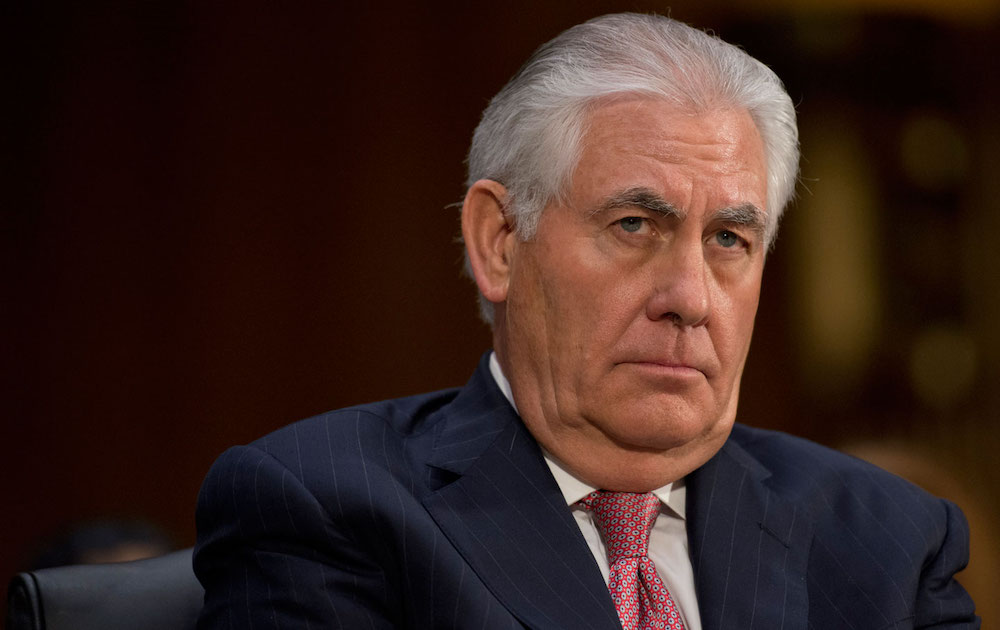
  • Tillerson in focus as ExxonMobil investigation intensifies

    Tillerson in focus as ExxonMobil investigation intensifies

    New York Attorney-General probing if company misled investors on impact of climate change when Secretary of State was its chief executive

    NEW YORK (TIP): Secretary of State Rex Tillerson, may be questioned as New York Attorney General Eric Schneiderman expands his sweeping probe into whether Mr. Tillerson’s former employer, ExxonMobil, misled investors about the impact of climate change.

    Mr. Schneiderman’s office considers the nation’s chief diplomat a central figure in a case that pits the ambitious Democrat against a Texas energy giant and has divided attorneys general nationwide.

    It remains unclear whether he will ultimately force Mr. Tillerson to answer questions under oath, but he told The Associated Press he has the legal authority to question the secretary of state, who served as Exxon’s CEO until joining the Trump administration.

    “We haven’t gotten to the point where that’s necessary, but yeah, we have the legal right to conduct depositions. I don’t know that we’re going to have to get to Mr. Tillerson, but sure,” Mr. Schneiderman said when asked whether he has the right to question Mr. Tillerson.

    Mr. Schneiderman opened the Exxon investigation in November 2015, shortly after reaching a settlement with another fossil fuel giant, Peabody Coal. In that case, Mr. Schneiderman’s office determined that the coal company misled shareholders, regulators and the public about the company’s financial risks related to climate change.

    Now, Mr. Schneiderman is using the subpoena power of his office to determine whether Exxon did the same.

    After being forced to produce internal communications about the impact of climate change on its business, Exxon earlier this year acknowledged that Mr. Tillerson used the “Wayne Tracker” alias during email communications. The company says the alias was created to help the former CEO avoid a flood of messages after environmental activists obtained his actual email address.

    Most of the “Tracker” emails have been deleted, Exxon says, citing the company’s practice of automatically deleting emails after a certain period of time. Exxon officials testified that the company allowed several months of Mr. Tillerson’s emails to be deleted even after Mr. Schneiderman’s office flagged them for preservation.

    For now, Exxon says that many of the messages can be retrieved by collecting emails from those he communicated with.

    The New York Attorney General’s office will depose nine Exxon witnesses in the coming weeks in a series of lower-level depositions in a chain that is ultimately expected to lead to Mr. Tillerson. The State Department declined to comment on Mr. Tillerson’s involvement in the Exxon probe. The secretary of state has retained a private attorney to represent him in the matter.

    The judge presiding over Mr. Schneiderman’s investigation, New York Supreme Court Justice Barry Ostrager, has so far allowed the Attorney General to use his broad subpoena power to investigate Exxon. But he has been critical about both sides’ behaviour.

  • Israel backs India’s fight on terror

    Israel backs India’s fight on terror

    CEOs hope to take bilateral trade to $20 billion in 5 years


    NEW DELHI (TIP): Prime Minister Narendra Modi wrapped up a three-day visit to Israel with a meeting with CEOs of various companies who reportedly signed agreements worth about $4.3 billion.

    Businessmen attending the first meeting of the “CEO forum” for India-Israel cooperation, which also met Mr. Modi and Israeli Prime Minister Netanyahu, said the focus was on building ties currently overshadowed by one-way defense trade between the countries. A document of “joint intentions” issued by the forum, organized by FICCI, said that it hoped to take current bilateral trade of about $4-5 billion to $20 billion in five years “if untapped potential is fully harnessed.” The document listed the biggest problems as restrictive “laws for investors” in India, and Indian business visas, which are only granted for one year presently. “The real potential is allowing Israeli technology to access the Indian market by manufacturing products for the world,” Shiv Khemka, Vice-Chairman of the Sun Group that partners with hi-tech Israeli companies like Eccopia that produces robotic non-water cleaners for solar panels at a factory in Haryana, and water purifiers told media.

    “We’ll share our technology with India & provide clean water for millions. I’m proud of Israel!” Mr. Netanyahu wrote in a tweet, adding to a photo of him and Mr. Modi standing in the shallows that there is “nothing like going to the beach with friends.”

    On Wednesday, India and Israel also launched a research and development fund for innovation worth $40 million contributing, $20 million each. While the figure is small, officials say they hope to kickstart the process of helping students to take their inventions to product lines, and that their success would spur more such innovations.

    Earlier, Israel supported India in its fight against terrorism. Israel believes that there is no difference between Pakistan based “Lashkar-e-Taiba” and the Hamas group operating in Israel and Palestine, senior officials in Jerusalem said, pointing out that the Israeli government has unequivocally supported India on the issue of terrorism.

  • Making of a monumental crisis

    Making of a monumental crisis

    Parliament must resist a proposed amendment that compromises the 100-m no-construction zone

    By Nayanjot Lahiri

    India’s monuments form an irreplaceable archive of our civilizational heritage. Our pride in our heritage has always been surplus while caring for that heritage suffers a huge deficit. Surely, India’s archaeological heritage, as diverse and priceless as our natural heritage, seventy years after Independence, deserves better than what has fallen to its lot, says the author.

    India’s monumental heritage is on the brink of a shameful shift. The Central government is poised to introduce an amendment to the Ancient Monuments and Archaeological Sites and Remains Act, 1958, in Parliament, which would remove the security net that exists around our nationally protected monuments.

    Endangered structures

    Why is this security net necessary, and why is its proposed infringement shameful? Our protected monuments, from the Taj Mahal to the monuments of Mamallapuram, have a designated prohibited area — at least a 100-m radius — to protect them, where no new construction is allowed. It is similar to the zoning around tiger reserves where the core area is set apart for the animals to live in, and where human disturbance is not permitted. Just as this is done to prevent human-animal conflict, zoning around monuments is necessary to prevent monuments from defacement and to prevent the present from displacing the past by marring historical landscapes. Monuments, it needs to be remembered, are endangered structures and vulnerable to human interference. If tigers have disappeared across large parts of the habitats they occupied even till the early part of the last century, so have several of India’s protected monuments. As it is, there are a mere 3,650 monuments which are nationally protected in a country where the records with the government show some 5,00,000 unprotected and endangered monuments.

    The track record of the government in maintaining our nationally protected monuments, to put it most charitably, is an indifferent one. There are encroachments by government agencies and individuals. The 2013 report of the Comptroller and Auditor General (CAG) noted that of the 1,655 monuments whose records were scrutinized and which were physically inspected, 546 of them were encroached. This may well be because of a lack of basic manpower in the form of monument attendants. In 2010, the Archaeological Survey of India (ASI) stated on record that its staff strength did not permit the deployment of even a single person on a regular full-time basis at more than 2,500 of its monuments. This meant that more than two-thirds of India’s monuments that the Central government is supposed to protect were poorly guarded. At the same time, the CAG pointed to connivance by ASI officials as well. As the files of the ASI reveal, there are also numerous instances where politicians have proactively protected those who have illegally occupied the prohibited zone around monuments.

    The only protection for our defenseless heritage has come from courts of law because there are legal provisions which, at least on paper, prevent the encroachment of the prohibited zone around monuments. The idea itself, that a security net ought to be created around heritage buildings, can be traced to Jawaharlal Nehru. As Prime Minister, he complained to the Union Minister of Education in 1955 that India’s old and historical places were getting spoilt by new buildings being put up around them. In order to prevent intrusions, Nehru suggested that the government “lay down that within a certain area no building should be put up without permission”. An example of his proactive approach in creating such protective barriers is the enclosure encircling the tomb of Abdur Rahim Khan-i-Khana in Nizamuddin. This was built after Nehru had visited the site and suggested that the adjacent grounds be converted into a garden because, as he put it, he did not want the colony of Nizamuddin East to extend into the area around the tomb. This idea eventually found its way into the Ancient Monuments and Archaeological Sites and Remains Rules of 1959 which unambiguously, for the first time, noted a prohibited and a regulated zone around protected sites and monuments.

    Because of these rules, the High Court of Delhi in 2009 struck down all permissions that had been illegally granted by the ASI through an Expert Advisory Committee. As a consequence of this judgment, in 2010, the Government of India set up a committee which recommended a new bill to Parliament. It is now known as the Ancient Monuments and Archaeological Sites and Remains (Amendment and Validation) Act. Unanimously passed in March 2010, this legislation brought the prohibited and regulated zones around monuments within the ambit of the Act itself.

    As a consequence of this statute, the National Monuments Authority was set up. It is shocking that even after these years, a major task of this authority remains to be done, that of preparing heritage bye-laws for nationally protected monuments. If India’s rulers cared at all for our monuments, by now not only would the bye-laws pertaining to the 3,650 national monuments have been prepared, they would also have been tabled in Parliament as was required by law. Instead of expediting the preparation of those bye-laws, the government has sought to dilute the 100 m prohibited area around nationally protected monuments. The proposed amendment aims to allow the Central government to construct within that area all kinds of structures. Incidentally, the Cabinet note shows that the Ministry of Culture, instead of protecting monuments, is now acting a clearing house for the Ministry of Road Transport and Highways. The amendment is necessary, the Cabinet note states, because, among other things, an elevated road needs to be built in front of Akbar’s tomb in Agra! The Ministry of Culture needs to be reminded that it is the nodal agency for protecting our monuments, not endangering them. Otherwise, it is better for the government to abolish this ministry since cultural protection is far from what it seems to be doing.

    One people, two norms

    What makes this amendment shameful is that our Ministers live in the Lutyens Bungalow Zone in New Delhi where overhead metro lines have not been permitted because, quite rightly, they would have permanently marred the aesthetics of the area. Hundreds of crores of rupees have been spent to ensure that there are no ugly railway corridors across that area. Yet, the ruling class has no compunction in pushing for a legislation which would allow overhead contraptions in the vicinity of our national monuments. Does the government believe that the aesthetics around government bungalows matter but not around monuments? Or is it possible that they believe that monuments do not matter and only highways do?

    India’s monuments form an irreplaceable archive of our civilizational heritage. Our pride in our heritage has always been surplus while caring for that heritage suffers a huge deficit. Surely, India’s archaeological heritage, as diverse and priceless as our natural heritage, seventy years after Independence, deserves better than what has fallen to its lot

     (The author is a historian and archaeologist of ancient India and a professor of history at Ashoka University)

  • Another successful visit

    Another successful visit

    Modi-Netanyahu chemistry alchemizes ties

    Judging even by the high standards of personalized diplomacy set in place in the last three years, Prime Minister Narendra Modi’s three-day visit to Israel has to be judged as an astounding success. The Prime Minister was serenaded in lavish terms; the reddest of red carpet was rolled out for him, just as stiff protocol niceties were rolled away to honor him; we are told that the standards and excellence of hospitality and courtesies extended to him were so far reserved only for the mightiest of global leaders. Narendra Modi had always had, reportedly, a special relationship with his Israeli counterpart, based on mutual respect and admiration that leaders reserve for strong, tough practitioners of hard politics. Israel’s Prime Minister Benjamin Netanyahu naturally went out of his way to lionize our Prime Minister; and, it was only natural that the visit should have produced a ‘strategic partnership’.

    A ‘strategic partnership’, in many ways, has become a charming amulet, diplomats have devised to upgrade a relationship. We have, for example, a strategic partnership with the United States, but we have very many valid and legitimate reasons to feel disappointed at Washington’s lack of appreciation of our strategic concerns and sensibilities.  On the other hand, even without a strategic partnership, New Delhi has had a steadily growing, pragmatic, working relationship with Tel Aviv. Both countries have a shared sense of victimhood against global terror. This working arrangement already had in place all the ingredients of a strategic partnership. What the Modi visit has done is to put the de jure stamp on a de facto relationship.

    Over the decades our relationship with Israel had got hyphenated with the knotty Palestine issues. There were both domestic and geostrategic reasons for a cultivated ambivalence; the India-Israel ties were overdue for an upgrade as most of these reasons for diffidence have melted away. Domestically, for the first time New Delhi has is a ruling regime that believes that it does not need to get bogged down by the Muslim community’s traditional sensitivities, at home or abroad. It is this substantive change in our internal political calculus that has lent a new substance to our ties with Israel.

    (Tribune India)

  • Air India to Celebrate Inaugural Flight from Dulles International to New Delhi

    Air India to Celebrate Inaugural Flight from Dulles International to New Delhi

    Governor McAuliffe, Mayor Bowser Join Indian Ambassador to the U.S. and MWAA Officials for Morning Flight Arrival and Press Conference

    WASHINGTON (TIP): Washington Dulles International Airport and Air India will host a delegation from the Commonwealth of Virginia, the District of Columbia and the Indian Embassy on Friday, July 7, to celebrate the first ever nonstop connection between New Delhi and the National Capital Region. The morning event will include escorted airside views of the Boeing 777-200LR arrival, a ceremonial water cannon salute and a press conference with Indian Ambassador Navtej Sarna, Governor Terry McAuliffe and Mayor Muriel Bowser.

    PROGRAM

    Morning of Friday, July 7, 2017

    o    Escorted Airside Arrival: Arrival is scheduled for Friday, July 7, at 7:15 a.m., though an early arrival is expected. Media planning to attend for the escorted airside arrival must check-in at the Main Terminal by 6:00 a.m. RSVP by 3:00 p.m. on Thursday, July 6, to publicaffairs@mwaa.com or (703) 417-8370.

    Press Conference: Scheduled to start at 8:30 a.m.

    Press conference will include remarks from: –

    o    H.E. Navtej Sarna, Ambassador to the United States, Government of India

    o    Terry McAuliffe, Governor, Commonwealth of Virginia

    o    Muriel Bowser, Mayor, District of Columbia

    o    Ashwani Lohani, Chairman and Managing Director, Air India

    o    Pankaj Srivastava, Director of Commercial, Air India

    o    Margaret E. McKeough, Executive Vice President and Chief Operating Officer, MWAA

    o    Jerome L. Davis, Executive Vice President and Chief Revenue Officer, MWAA

    o    Mike Stewart, Vice President of Air Service Development, MWAA

     Air India’s inaugural flight is the first nonstop route between the National Capital Region and New Delhi, directly connecting the world’s strongest democracy and the world’s largest democracy with three weekly round-trip flights.

  • Government shutdown in the State of New Jersey: Republican Governor Christie’s Legacy

    Government shutdown in the State of New Jersey: Republican Governor Christie’s Legacy

    The move comes after New Jersey lawmakers failed to pass a budget by the annual deadline

     By I.S. Saluja

    TRENTON, NJ (TIP): As if the existing woes were not enough for Chris Christie who is heading into his final six months as governor, a crisis in the form of government shutdown has added to his worries. Described as New Jersey’s biggest government crisis in more than a decade, the   shutdown will literally turn the lights out in Trenton, beginning July 1. What a way to prepare for celebration of 4th of July!

    New Jersey lawmakers failed to pass a budget by the annual deadline at midnight of June 30th, as required and Christie promptly issued an order prompting closure of “government offices and services deemed non-essential”. State parks and beaches are also closed, as will motor vehicle offices. Courts could be closed from Monday. Tens of thousands of state government employees will be furloughed.

    And while the origins of the shutdown are complex, only one person is likely to bear the blame in the public eye: Governor Chris Christie.

    “It’s all going to come down to when folks get up tomorrow for the July 4th weekend and drive down to Island Beach State Park to spend the day and a sign says it’s closed,” said Patrick Murray, director of the Monmouth University Polling Institute. “They’re going to blame Gov. Christie and nobody else.”

    “I’m not happy about this,” Christie said in a press conference just eight hours before the shutdown deadline. “This is completely avoidable.”

    After two terms that saw his rise to GOP superstardom derailed by Bridgegate and then a fallout with the Trump team, Christie — the least popular governor in New Jersey recorded history, with an approval rating at 15 percent — is already so politically toxic that his own lieutenant governor, Kim Guadagno, is running away from him while campaigning to succeed him.

    Such a fiscal debacle had been avoided since 2006, when New Jersey Democrats shut down the government in an argument over raising the state sales tax despite controlling the governorship and both chambers of the Legislature.

    But that streak was broken at midnight.

  • June 30 New York & Dallas Print Editions

    June 30 New York & Dallas Print Editions

    [vc_row][vc_column][vc_column_text]

    Print Replica ~ Digitally

    E-Editions

    [/vc_column_text][/vc_column][/vc_row][vc_row][vc_column width=”1/3″][vc_custom_heading text=”New York Edition” font_container=”tag:h2|text_align:center” google_fonts=”font_family:Istok%20Web%3Aregular%2Citalic%2C700%2C700italic|font_style:700%20bold%20regular%3A700%3Anormal” link=”url:https%3A%2F%2Fwww.theindianpanorama.news%2Fwp-content%2Fuploads%2F2017%2F06%2FTIP-June-30-NY-1-1.pdf|||”][vc_single_image image=”85621″ img_size=”full” add_caption=”yes” alignment=”center” onclick=”custom_link” link=”https://www.theindianpanorama.news/wp-content/uploads/2017/06/TIP-June-30-NY-1-1.pdf”][/vc_column][vc_column width=”1/3″][vc_custom_heading text=”Dallas, Texas Edition” font_container=”tag:h2|text_align:center” google_fonts=”font_family:Istok%20Web%3Aregular%2Citalic%2C700%2C700italic|font_style:700%20bold%20regular%3A700%3Anormal” link=”url:https%3A%2F%2Fwww.theindianpanorama.news%2Fwp-content%2Fuploads%2F2017%2F06%2FTIP-June-30-Dallas-TX.pdf|||”][vc_single_image image=”85607″ img_size=”full” add_caption=”yes” alignment=”center” onclick=”custom_link” link=”https://www.theindianpanorama.news/wp-content/uploads/2017/06/TIP-June-30-Dallas-TX.pdf”][/vc_column][vc_column width=”1/3″][vc_single_image image=”82828″ img_size=”medium” alignment=”center” onclick=”custom_link” link=”https://www.theindianpanorama.news/advertising-media-kit-portal-indian-panorama/”][vc_single_image image=”82829″ img_size=”medium” alignment=”center” onclick=”custom_link” link=”https://www.theindianpanorama.news/advertising-media-kit-portal-indian-panorama/”][/vc_column][/vc_row][vc_row][vc_column][td_block_ad_box spot_id=”custom_ad_3″][/vc_column][/vc_row][vc_row][vc_column width=”2/3″][vc_custom_heading text=”Lead Stories this Week” font_container=”tag:h2|text_align:center” google_fonts=”font_family:Istok%20Web%3Aregular%2Citalic%2C700%2C700italic|font_style:700%20bold%20regular%3A700%3Anormal” link=”url:https%3A%2F%2Fwww.theindianpanorama.news%2F%20_blank|||”][td_block_5 custom_title=”” limit=”8″][/vc_column][vc_column width=”1/3″][vc_widget_sidebar sidebar_id=”td-default”][/vc_column][/vc_row]

  • Former Oyster Bay Supervisor Venditto and six others Indicted for Official Misconduct

    Former Oyster Bay Supervisor Venditto and six others Indicted for Official Misconduct

    Nassau County DA Singas announces the indictment of seven individuals related to corruption in Oyster Bay

    MINEOLA, NY (TIP): Nassau County District Attorney Madeline Singas announced, June 29 that former Town of Oyster Bay Supervisor John Venditto, former Parks Commissioner Frank Nocerino and Richard Porcelli, the deputy executive leader of a political club, were arraigned, June 29, on charges related to the illegal hiring and firing of a town employee.

    John Venditto, 68, of Massapequa, was arraigned today, June 29 before Supreme Court Justice Charles Wood and charged with Corrupt Use of Position or Authority (an E felony), three counts of Official Misconduct (an A misdemeanor) and Conspiracy in the Sixth Degree (a B misdemeanor). If convicted of the top count, the defendant faces up to 1-1/3 years to four years in prison.

    Richard Porcelli, 70, of Ronkonkoma, the deputy executive leader of the North Massapequa Republican Club was arraigned today before Supreme Court Justice Charles Wood and charged with two counts of Official Misconduct (an A misdemeanor) and Conspiracy in the Sixth Degree (a B misdemeanor). If convicted of the top count, Porcelli faces up to a year in prison.

    Frank Nocerino, 65, of Massapequa, was arraigned today before Supreme Court Justice Charles Wood and charged with Official Misconduct (an A misdemeanor). If convicted, Nocerino faces up to a year in prison.

    The defendants pleaded not guilty and are due back in court on September 26. They were released on their own recognizance.

    “Former Supervisor Venditto and his associates are charged with corruptly orchestrating the hiring of a town employee at an inflated salary and firing him months later at Frederick Ippolito’s self-serving request,” said DA Singas. “Taxpayers are victimized when public employment is abused to advance the personal interests of the powerful.”

    DA Singas said after the federal conviction of Town of Oyster Bay Commissioner of Planning Development Frederick Ippolito on tax evasion, Ippolito continued to exercise influence over town matters.

    According to the indictment, Supervisor Venditto directed Parks Commissioner Nocerino to hire Individual B to work in the town Parks Department at the behest of Ippolito.  Venditto directed the hiring of Individual B even though the town was not hiring new employees and openly discussing laying off existing employees because of a financial crisis. Nocerino knew that hiring Individual B was wrong for the above reasons, as well as others, including that Individual B was to be paid more than twice the appropriate salary for his position. Months later, Ippolito directed that Individual B be fired. Venditto and Richard Porcelli – deputy executive leader of the North Massapequa Republican Club and close associate of the supervisor – agreed to fire Individual B and that the Town of Oyster Bay would fire other employees to divert attention from the firing of Individual B.

    Individual B was paid more than other employees and was instructed not to discuss his terms of employment. Months later, Ippolito directed that Individual B be fired. Venditto and Richard Porcelli – deputy executive leader of the North Massapequa Republican Club and close associate of the supervisor – agreed to fire Individual B and that the Town of Oyster Bay would fire other employees to divert attention from the firing of Individual B.

    Venditto is represented by Mark Agnifilo, Esq., Porcelli is represented by Frank Casale, Esq. and Nocerino is represented by Christopher Devane, Esq.

    The charges are merely accusations and the defendants are presumed innocent until and unless found guilty.

    (Source: NCDA website)

  • United States of America and India View Prosperity through Partnership

    United States of America and India View Prosperity through Partnership

    President Trump accepted Prime Minister Modi’s invitation to visit India

    WASHINGTON (TIP):US President Donald Trump and Indian Prime Minister Narendra Modi resolved to expand and deepen the strategic partnership between the two countries and advance common objectives. Above all, these objectives include combating terrorist threats, promoting stability across the Indo-Pacific region, increasing free and fair trade, and strengthening energy linkages. President Trump and Prime Minister Modi expressed confidence that, together, the United States and India will provide strong leadership to address global challenges and build prosperity for their citizens in the decades to come.


    Democratic Stalwarts in the Indo-Pacific Region

    As responsible stewards in the Indo-Pacific region, President Trump and Prime Minister Modi agreed that a close partnership between the United States and India is central to peace and stability in the region. Recognizing the significant progress achieved in these endeavors, the leaders agreed to take further measures to strengthen their partnership. In accordance with the tenets outlined in the U.N. Charter, they committed to a set of common principles for the region, according to which sovereignty and international law are respected and every country can prosper. To this end, the leaders:
    reiterate the importance of respecting freedom of navigation, overflight, and commerce throughout the region; call upon all nations to resolve territorial and maritime disputes peacefully and in accordance with international law;support bolstering regional economic connectivity through the transparent development of infrastructure and the use of responsible debt financing practices, while ensuring respect for sovereignty and territorial integrity, the rule of law, and the environment.

    Call on other nations in the region to adhere to these principles.

    President Trump welcomed further Indian contributions to promote Afghanistan’s democracy, stability, prosperity, and security. Recognizing the importance of their respective strategic partnerships with Afghanistan, the leaders committed to continue close consultations and cooperation in support of Afghanistan’s future.

    In accord with India’s Think West policy, President Trump and Prime Minister Modi resolved to increase cooperation, enhance diplomatic consultations, and increase tangible collaboration with partners in the Middle East.

    The leaders strongly condemned continued provocations by the Democratic People’s Republic of Korea (DPRK), emphasizing that its destabilizing pursuit of nuclear and ballistic missile programs poses a grave threat to regional security and global peace. The leaders called on DPRK to strictly abide by its international obligations and commitments. The leaders pledged to work together to counter the DPRK’s weapons of mass destruction programs, including by holding accountable all parties that support these programs.

    Shoulder-to-Shoulder Against Terrorism

    The Leaders stressed that terrorism is a global scourge that must be fought and terrorist safe havens rooted out in every part of the world. They resolved that India and the United States will fight together against this grave challenge to humanity. They committed to strengthen cooperation against terrorist threats from groups including Al-Qaeda, ISIS, Jaish-e-Mohammad, Lashkar-e-Tayyiba, D-Company, and their affiliates. India appreciated the United States designation of the Hizb-ul-Mujahideen leader as a Specially Designated Global Terrorist as evidence of the commitment of the United States to end terror in all its forms. In this spirit, the leaders welcomed a new consultation mechanism on domestic and international terrorist designations listing proposals.

    The leaders called on Pakistan to ensure that its territory is not used to launch terrorist attacks on other countries. They further called on Pakistan to expeditiously bring to justice the perpetrators of the 26/11 Mumbai, Pathankot, and other cross-border terrorist attacks perpetrated by Pakistan-based groups.

    The leaders announced increased cooperation to prevent terrorist travel and to disrupt global recruitment efforts by expanding intelligence-sharing and operational-level counterterrorism cooperation. They welcomed commencement of the exchange of information on known and suspected terrorists for travel screening. They further resolved to strengthen information exchange on plans, movements and linkages of terrorist groups and their leaders, as well as on raising and moving of funds by terrorist groups.

    The leaders also affirmed their support for a U.N. Comprehensive Convention on International Terrorism that will advance and strengthen the framework for global cooperation and reinforce the message that no cause or grievance justifies terrorism. They also pledged to work together to prevent proliferation of weapons of mass destruction and their delivery systems and to deny access to such weapons by terrorists and non-state actors.

    Growing Strategic Convergence

    President Trump and Prime Minister Modi pledged to deepen defense and security cooperation, building on the United States’ recognition of India as a Major Defense Partner. The United States and India look forward to working together on advanced defense equipment and technology at a level commensurate with that of the closest allies and partners of the United States. Reflecting the partnership, the United States has offered for India’s consideration the sale of Sea Guardian Unmanned Aerial Systems, which would enhance India’s capabilities and promote shared security interests.

    Resolving to expand their maritime security cooperation, the leaders announced their intention to build on the implementation of their “White Shipping” data sharing arrangement, which enhances collaboration on maritime domain awareness. President Trump welcomed Prime Minister Modi’s strong support for the United States to join as an Observer in the Indian Ocean Naval Symposium. Noting the importance of the upcoming MALABAR naval exercise, the leaders determined to expand their engagements on shared maritime objectives and to explore new exercises.

    As global nonproliferation partners, the United States expressed strong support for India’s early membership in the Nuclear Suppliers Group, the Wassenaar Arrangement, and the Australia Group. President Trump reaffirmed the support of the United States for India’s permanent membership on a reformed U.N. Security Council.

    Increasing Free and Fair Trade

    The leaders committed that the United States and India — leading engines of growth in the global economy — should intensify their economic cooperation to make their nations stronger and their citizens more prosperous. Noting that extensive economic and tax reforms launched in their respective countries will unlock immense economic opportunities for both countries, the leaders committed to further expanding and balancing the trade relationship and to removing obstacles to growth and jobs creation. They also resolved to pursue increased commercial engagement in a manner that advances the principles of free and fair trade. To this end, the United States and India plan to undertake a comprehensive review of trade relations with the goal of expediting regulatory processes; ensuring that technology and innovation are appropriately fostered, valued, and protected; and increasing market access in areas such as agriculture, information technology, and manufactured goods and services. President Trump and Prime Minister Modi further committed to strengthening cooperation to address excess capacity in industrial sectors. They called on their teams to find creative ways to improve bilateral trade.

    Surveying United States-India energy ties and the two countries’ respective energy strategies, the leaders affirmed the continued importance of their Strategic Energy Partnership and of leveraging new opportunities to elevate cooperation to enhance global energy security. The leaders called for a rational approach that balances environment and climate policy, global economic development, and energy security needs.

    President Trump affirmed that the United States continues to remove barriers to energy development and investment in the United States and to U.S. energy exports so that more natural gas, clean coal, and renewable resources and technologies are available to fuel India’s economic growth and inclusive development. Prime Minister Modi and President Trump looked forward to conclusion of contractual agreements between Westinghouse Electric Company and the Nuclear Power Corporation of India for six nuclear reactors in India and also related project financing. Both leaders welcomed upcoming visits between India and the United States that will expand energy and innovation linkages across the energy sector and deepen cooperation, including on more efficient fossil fuel technologies, smart grids, and energy storage. They supported financing of energy projects, including clean coal projects, by Multilateral Development Banks to promote universal access to affordable and reliable energy.

    Recognizing that we are in an increasingly digital world, the leaders agreed to intensify the mutually beneficial partnership to fully harness their innovation capabilities to solve global developmental challenges. As global partners, the United States and India resolved to further strengthen their collaboration in health, space, oceans, and other areas of science and technology. The leaders also agreed to strengthen their cooperation to address the growing threats and challenges from malicious cyber activity and committed to work together to promote an open, interoperable, secure, and reliable cyberspace environment that supports innovation, economic growth, and commerce.

    Applauding the entrepreneurship and innovation of Indians and Indian-Americans that have directly benefitted both nations, President Trump welcomed India’s formal entry into the International Expedited Traveler Initiative (Global Entry program) in order to facilitate closer business and educational ties between the citizens of India and the United States.

    President Trump gladly accepted Prime Minister Modi’s invitation to visit India. They look forward to working together in a spirit of friendship in the years to come.


  • Fourth of July – Celebration of birth of American Independence

    Fourth of July – Celebration of birth of American Independence

     We wish our readers a happy 4th of July

    The Fourth of July—also known as Independence Day or July 4th—has been a federal holiday in the United States since 1941, but the tradition of Independence Day celebrations goes back to the 18th century and the American Revolution.
    On July 2nd, 1776, the Continental Congress voted in favor of independence, and two days later delegates from the 13 colonies adopted the Declaration of Independence, a historic document drafted by Thomas Jefferson. On July 4, 1776, the thirteen colonies claimed their independence from England, an event which eventually led to the formation of the United States.

    Benjamin Franklin, John Adams, Thomas Jefferson, Roger Sherman, and Robert R. Livingston comprised the committee that drafted the Declaration. Jefferson, regarded as the strongest and most eloquent writer, wrote most of the document. The committee and Congress as a whole made a total of 86 changes to Jefferson’s draft.

    First two paragraphs of the Declaration of Independence read:

    “When, in the course of human events, it becomes necessary for one people to dissolve the political bonds which have connected them with another, and to assume among the powers of the earth, the separate and equal station to which the laws of nature and of nature’s God entitle them, a decent respect to the opinions of mankind requires that they should declare the causes which impel them to the separation.

    We hold these truths to be self-evident, that all men are created equal, that they are endowed by their Creator with certain unalienable rights, that among these are life, liberty and the pursuit of happiness. That to secure these rights, governments are instituted among men, deriving their just powers from the consent of the governed. That whenever any form of government becomes destructive to these ends, it is the right of the people to alter or to abolish it, and to institute new government, laying its foundation on such principles and organizing its powers in such form, as to them shall seem most likely to effect their safety and happiness.”

    From 1776 to the present day, July 4th has been celebrated as the birth of American independence, with festivities ranging from fireworks, parades and concerts to more casual family gatherings and barbecues.

    • In 1777, thirteen gunshots were fired in salute, once at morning and once again as evening fell, on July 4 in Bristol, Rhode Island. Philadelphia celebrated the first anniversary in a manner a modern American would find quite familiar: an official dinner for the Continental Congress, toasts, 13-gun salutes, speeches, prayers, music, parades, troop reviews, and fireworks. Ships in port were decked with red, white, and blue bunting.
    • In 1778, from his headquarters at Ross Hall, near New Brunswick, New Jersey, General George Washington marked July 4 with a double ration of rum for his soldiers and an artillery salute (feu de joie). Across the Atlantic Ocean, ambassadors John Adams and Benjamin Franklin held a dinner for their fellow Americans in Paris, France.
    • In 1781, the Massachusetts General Court became the first state legislature to recognize July 4 as a state celebration. In 1783, Moravians in Salem, North Carolina, held a celebration of July 4 with a challenging music program assembled by Johann Friedrich Peter. This work was titled The Psalm of Joy. This is recognized as the first recorded celebration and is still celebrated there today.
    • In 1870, the U.S. Congress made Independence Day an unpaid holiday for federal employees. In 1938, Congress changed Independence Day to a paid federal holiday

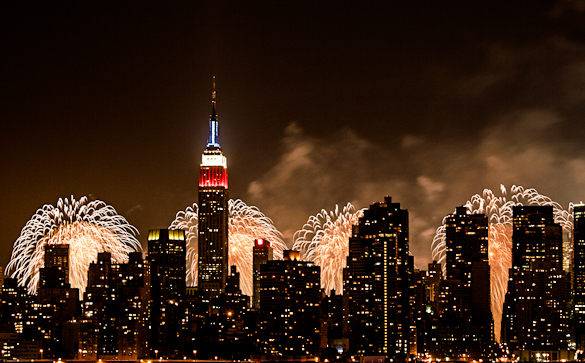
    In New York City, Annual Macy’s 4th of July Fireworks show celebrates America’s birthday with patriotic standards and dazzling sparkles that light up the New York skyline in a show unlike any other.  Macy’s works hand-in-hand with the best pyrotechnic team in the business to design and install more than 40,000 effects, all choreographed to an Independence Day medley.Macy’s 4th of July Fireworks is the largest Independence Day fireworks display in the nation and the single show against which all others are measured. The Fireworks are broadcast live on NBC-TV and has featured celebrity musical performances from world-famous artists such as Beyoncé and Katy Perry. Macy’s has up to six fireworks barges detonating simultaneously from either one or several locations around New York City. In addition to 3,000 invited guests seated in the Macy’s VIP Grandstands, 15 million viewers tune into NBC’s telecast and nearly 3 million spectators view the live show from positions along the river.

    By Bidisha Roy


  • June 23 New York & Dallas Print Editions

    June 23 New York & Dallas Print Editions

    [vc_row][vc_column][vc_column_text]

    Print Replica ~ Digitally

    E-Editions

    [/vc_column_text][/vc_column][/vc_row][vc_row][vc_column width=”1/3″][vc_custom_heading text=”New York Edition” font_container=”tag:h2|text_align:center” google_fonts=”font_family:Istok%20Web%3Aregular%2Citalic%2C700%2C700italic|font_style:700%20bold%20regular%3A700%3Anormal” link=”url:https%3A%2F%2Fwww.theindianpanorama.news%2Fwp-content%2Fuploads%2F2017%2F06%2FTIP-June-23-NYC.pdf|||”][vc_single_image image=”85430″ img_size=”full” add_caption=”yes” alignment=”center” onclick=”custom_link” link=”https://www.theindianpanorama.news/wp-content/uploads/2017/06/TIP-June-23-NYC.pdf”][/vc_column][vc_column width=”1/3″][vc_custom_heading text=”Dallas, Texas Edition” font_container=”tag:h2|text_align:center” google_fonts=”font_family:Istok%20Web%3Aregular%2Citalic%2C700%2C700italic|font_style:700%20bold%20regular%3A700%3Anormal” link=”url:https%3A%2F%2Fwww.theindianpanorama.news%2Fwp-content%2Fuploads%2F2017%2F06%2FTIP-June-23-Dallas-TX.pdf|||”][vc_single_image image=”85431″ img_size=”full” add_caption=”yes” alignment=”center” onclick=”custom_link” link=”https://www.theindianpanorama.news/wp-content/uploads/2017/06/TIP-June-23-Dallas-TX.pdf”][/vc_column][vc_column width=”1/3″][vc_single_image image=”82828″ img_size=”medium” alignment=”center” onclick=”custom_link” link=”https://www.theindianpanorama.news/advertising-media-kit-portal-indian-panorama/”][vc_single_image image=”82829″ img_size=”medium” alignment=”center” onclick=”custom_link” link=”https://www.theindianpanorama.news/advertising-media-kit-portal-indian-panorama/”][/vc_column][/vc_row][vc_row][vc_column][td_block_ad_box spot_id=”custom_ad_3″][/vc_column][/vc_row][vc_row][vc_column width=”2/3″][vc_custom_heading text=”Lead Stories This Week” font_container=”tag:h2|text_align:center” google_fonts=”font_family:Istok%20Web%3Aregular%2Citalic%2C700%2C700italic|font_style:700%20bold%20regular%3A700%3Anormal” link=”url:https%3A%2F%2Fwww.theindianpanorama.news%2F|||”][td_block_5 limit=”8″][/vc_column][vc_column width=”1/3″][vc_widget_sidebar][/vc_column][/vc_row]

  • Padma Vibhushan Pandit Jasraj inaugurates AAPI’s 35th annual convention in Atlantic City

    Padma Vibhushan Pandit Jasraj inaugurates AAPI’s 35th annual convention in Atlantic City

    ATLANTIC CITY, NJ (TIP): With ribbon cutting and lighting of the traditional lamp Padma Vibhushan Pandit Jasraj officially inaugurated the 35th annual convention of American Association of Physicians of Indian Origin (AAPI) at the Harrah’s Resort in Atlantic City in New Jersey on June 22, 2017. Pt. Jasraj led the more than 1.000 delegates at the Convention Centre at the prestigious Harrah’s Resort to a prayer song, moving everyone’s heart seeking God’s bountiful blessings.

    AAPI leaders with Pandit Jasraj, lighting the lamp at the inaugural ceremony


    A section of the audience at the gala

    In his opening remarks, Pandit Jasraj shared with the audience his heartfelt gratitude for inviting him and making him the special guest of honor. “This is the warmest welcome I have ever received in my life,” the Padma Vibhushan awardee told the AAPI delegates.

    In his warm inaugural address, Dr. Ajay, President of AAPI, reminded the delegates from across the nation of the historic nature of the convention. “It’s very great joy that I want to invite you all to come and be part of the 35th annual American Association of Physicians of Indian Origin (AAPI) Convention 2017,” he said.

    AAPI Regional Director are being honored with plaques during the 54th convention in New Jersey

    Dr. Lodha shared with the audience the many programs and initiatives he and his executive committee have taken in the past year since assuming charge as the President of the largest ethnic medical organization in the nation, representing nearly 100, 000 physicians of Indian origin. Dr. Lodha, among others, highlighted the successful organization of Global health Summit in Rajasthan and the many initiatives at the Summit, Crash Courses in India for police officers as first responders in accidents, EPS lab studies, AYUSH, first ever international research contest and the many charitable works through AAPI the Charitable Foundation.

    Physicians of Indian origin are well known around the world for their compassion, passion for patient care, medical skills, research, and leadership, he said. “Indian-Americans constitute about one percent of the country’s population, but we account for nine percent of the American doctors and physicians, serving one out of seven patients being treated across the nation.” Also, he said, nearly 20% of the new Medical students enrolling in the US schools are of Indian origin. Dr. Lodha was particularly appreciative of the contributions of young physicians and said, “You are the future of AAPI.”

    William W. Pinsky, MD, President and CEO, ECFMG, provided the audience with the details on the demography of medical students and physicians in the US. Neal Simon, President, American University of Antigua, shared with the audience his close association with AAPI and the numerous initiatives AAPI and AUA have been doing together for the betterment of the society. During the luncheon, AAPI honored AAPI members, who had worked hard to make the convention a memorable one for all. Mammen Verghis of Prudential Life addressed the audience on the many valuable service his company offers, particularly, focusing on the diverse needs of physicians of Indian origin.

    In her key note address during the gala, Sadhvi Ji, showed the audience who listened with total attention and silence, the ways to true joy and peace. In her eloquent and passionate address, she said, “Having all the successes, comforts and luxuries in life does not lead one to happiness or real joy and peace. It’s found within and that’s what the Indian culture is teaching us, which emphasizes as you think so you become.” According to her, stress is leading us into disconnection from family and ourselves. “When there is something wrong in us, we blame everyone and everything else. Mind is the source and solution to all the problems.” Quoting research done at elite US schools, she pointed out how people who are religious are less likely to have strokes.

    Humayun J. Chaudhry, DO, MS, MACP, FACOI, President, FSMB, presented the process of obtaining accreditation to medical school programs. Michael Nisanov, COO, Empire City Labs was honored for his support for AAPI. Dr. Lodha, in his welcome address, praised the contributions of Regional Directors to the growth and expansion of AAPI. “For the very first time, AAPI is glad to recognize and honor your hard work and dedication for the cause of AAPI by having a gala in honor of AAPI’s 12 Regional Directors.

    A 2 AAPI convntion inaugural night on the podium

    The day was packed with back to back seminars and CMEs and conferences. Dr. Nani Bhalla of AstraZeneca led the CME on Understand the Ongoing Risk of Atherothrombosis Beyond the Culprit Lesion. The Medtronic team offered an insightful session on Multidisciplinary Approach to Managing Ischemic Stroke: From Acute Management to Transition of Care.

    The India Global Engagement Forum showed about concrete ways AAPI delegates can contribute to the growth of the nation. The day began with an hour-long yoga session led by professionals. Children were engaged in several activities challenging their minds. A beautifully choreographed fashion show was a treat to the hearts and souls of all as beautiful women and handsome men cat walked wearing elegantly designed Indian attire.

    Several non medical topics were also offered to educated physicians and others. Dr. Benjamin Dyches offered insights into “Keys to Locking Out Lawsuits and Lowering Taxes.”  Sam Takkar of Perfect Tax explained to the audience why Warren Buffet, Mit Romney, and Donald Trump don’t pay more than 15% tax. For those who want to invest in India, Kotak Mahindra Bank offered insights into “How India has emerged as the favorite investment destination.”

    The night ended with a fabulous performance by Standup Comedian Shailesh Lodha. The AAPI has got talent event was a super hit with the event bringing out the hidden talents from AAPI delegates from across the nation.

    AAPI QLI host committee being honored at the convention

    Earlier, on June 21, AAPI’s 35th annual Convention began with a record attendance of delegates and guests. Welcoming the gathered CEO’s at the at the CEOs Forum attended by a distinguished panel of experts from around the world. AAPI President Ajay Lodha said: “Delivery and access of healthcare in the United States and around the world is rapidly changing, leading to many describing the healthcare environment as dynamic, complex, and highly uncertain”. Dr. Lodha reminded the panelists of how healthcare impacts everyone and economics play a crucial role. Engaging leaders of healthcare, business, academia and community is an essential component for any debate, discussion or development of a robust healthcare system.

    “With the changing trends and statistics in healthcare, we are refocusing our mission and vision and AAPI would like to make a positive meaningful impact on the healthcare delivery system. What we discuss today on ‘Healthcare Beyond 2020’ and recommend will be presented to the US lawmakers on behalf AAPI, who represent almost 100,000 physicians of Indian origin.”

    Anwar Feroz, Honorary Advisor of AAPI, moderated the CEOs Forum, consisting of a very diverse group of leaders representing a broad segment of society, said, said, the Forum was  being organized with a view to create an opportunity to discuss and gain key insights and perspectives and the recommendations that were suggested by the distinguished panel will be presented in the form of a white paper to the Department of Health and Human Services and the Lawmakers in Washington, DC as they are in the midst of drafting a Healthcare Bill, replacing Obama Care.

    CEO Forum discussing Healthcare Beyond 2020 during the inaugural day of AAPI’s 35th annual convention

    The CEO Forum focused on the changing trends in the healthcare sector and how they impact the providers, hospitals, pharmaceutical, medical devices, technology and corporations as well as the patients. The Forum offered insights into managing efficiently the growing costs in the delivery of healthcare services.

    Panelists who provided their insightful thoughts on the issues included, Sangita Reddy, Joint Managing Director Apollo Hospital Group; Dr. Arthur Klein, President & CEO Mt.Sinai Health Network;. William W. Pinsky, MD, President and CEO, Educational Commission for Foreign Medical Graduates (ECFMG); Dr. Humayun Chaudhry, President and CEO, Federation of State Medical Boards; Chintu Patel, Founder, Chairman and CEO, Amneal Pharmaceuticals; Robert Levine, Executive Vice President & COO, Flushing Hospital NY; Suresh Venkatachari, Chairman and CEO at 8K Miles Software Services Inc.; Amit ”Al” Limaye Logistic Solutions, Inc (LSI); Dr. Sudhir Parikh, Padma Shri Awardee, Philanthropist, CEO Parikh Worldwide Media; Dr. Amit Powar, Chief Executive Officer of Reading Health Physician Network (RHPN); Saleem Iqbal, CEO, President and Director Habib-American Bank; Neal Simon, President American University of Antigua; Manjul Bhargava, R. Brandon Fradd Professor of Mathematics at Princeton University, Dr. Madhu Aggarwal, Chair, BOT of AAPI; and Dr. Ajay Lodha, President of AAPI.

    The round table discussion focused on two areas: innovation in healthcare and healthcare policy. Speakers shared their views with passion on innovation, emerging medical technology, new drug delivery pathways, newer medications, and medical equipment. “Technology is changing the way healthcare is delivered,” Sangita Reddy said. “However, it’s  the mindset of the people that shapes the system. Technology is a tool in the hands of the physicians empowering them to provide the best care for patients.”

    Suresh Venkatachari of India Abroad said, “Technology is a game changer. The Cloud innovation has a tremendous impact on how healthcare is delivered.” While acknowledging that technology is not a substitute for human power, he added, “Technology helps make human lives better.” The importance of telemedicine was another major topic discussed during the Forum. Neal Simon referred to numerous rural areas across the United States that could benefit from telemedicine. “Use technology wisely for new discovery,” he said.

    Another area of discussion was on AAPI’s views on healthcare policy even as the new administration is determined to abolish “Obama Care.” As leaders in healthcare delivery system, the panelists were asked to offer their perspectives that a robust health plan must have to enable business to deliver quality and affordable health plan. Panelists shared their views on individual ownership and responsibility for wellness and prevention vs. entitlement and Government role in healthcare. Other recommendations that came out of the panel included the need for portability of insurance across state lines and of the need to increase the number of medical schools and Residency slots that will meet the growing needs of millions of patients around the world.

    AAPI QLI host committee being honored at the convention

    Later on, at the inaugural gala attended by nearly 1,000 participants from around the nation, Dr. Ajay Lodha while welcoming delegates to the 35th annual convention praised the hard work and efforts of AAPI host chapter, AAPI QLI and members from several other chapters. Describing AAPI as his extended family, Dr. Lodha called AAPI QLI as his own family, and thanked them for their dedication and leadership in hosting the convention.

    Elaborating on the efforts and preparations that have been devoted to put together this unique event, Raj Bhayani, MD, 2017 Convention Chair, said. “We have been working hard to put together an attractive program for our annual get together, educational activity and family enjoyment. I and the Co-Chairs are fortunate to have a dedicated team of convention committee members from the Tri-State region helping us. We are happy to have a record turnout and active participation of all delegates at the convention.”

    “We have come a long way since the inauguration of the first ever gala of the AAPI QLI Chapter, with a few dozen physicians joining in to give shape to this noble initiative by Association of Physicians of Indian Origin in the state of New York,” Dr. Rakesh Dua said. Today, I am so proud to welcome you all, on behalf of the hundreds of physicians and fellows of Indian origin, representing AAPI QLI, the largest Chapter of AAPI with nearly 800 members. AAPI’s AAPI QLI Chapter has been actively engaged in harnessing the power of Indian Diaspora.”

    Saleem Iqbal, CEO, President and Director Habib-American Bank, presented a detailed description of similarities between AAPI and his Bank and invited the AAPI delegates to utilize the financial services offered by Habib Bank. Dr. Richard A. Shlofmitz, Chairman, Department of cardiology at St. Francis Hospital, Roselyn, NY gave an insightful talk on Precision PCI. The evening concluded with a delicious dinner and a mesmerizing classical rendition by Pandit Jasraj and was followed by a musical nite by Kailash Kher that went beyond midnight.

    The 35th annual American Association of Physicians of Indian Origin (AAPI) Convention 2017 is being held at brand new state of the art Convention Centre, the prestigious Harrah’s Resort in Atlantic City, New Jersey from June 21 – 25, 2017. Many of the physicians who are attending this convention have excelled in different specialties and subspecialties and occupy high positions as faculty members of medical schools, heads of departments, and executives of hospital staff.

    The AAPI Convention offers an opportunity to meet directly with physicians who are leaders in their fields and play an integral part in the decision-making process regarding new products and services. “Physicians and healthcare professionals from across the country and internationally are participating in the scholarly exchange of medical advances, to develop health policy agendas, and to encourage legislative priorities in the coming year. We are so excited to have a record turn out in Atlantic City, New Jersey”, said Dr. Lodha

     For more information on AAPI and the 34th convention, please visit: www.aapiconvention.org

  • Uniting the World through Yoga: Third International Day of Yoga celebrated at the UN and the Indian Consulate

    Uniting the World through Yoga: Third International Day of Yoga celebrated at the UN and the Indian Consulate

    NEW YORK CITY (TIP):  A large number of people from the Indian community participated in special yoga sessions organized by the Indian Consulate here to commemorate the third International Yoga Day.

    Consul General Riva Ganguly Das led the Yoga Day celebrations at the Consulate premises on Monday, June 19 and participated in the yoga and Art of Living (AOL) sessions.

    Prime Minister Narendra Modi’s message on Yoga Day was played before practitioners led the gathering through the two-hour yoga and meditation sessions.

    “Our message is to take yoga to the world. New York is the crossroads of the world and in its fast-paced life, we feel that yoga has much to contribute,” Das said on the occasion.

    The Consulate had planned a flagship event for the day at the city’s historic and popular Battery Park where hundreds of people were expected to participate in the Yoga Day celebrations.

    However, due to inclement weather, the event had to be relocated at the Consulate premises.

    A large number of people attended the yoga sessions at the Consulate and performed the ‘Surya Namaskar’, ‘Pranayam’, AOL sessions and other yoga exercises.

    Das said resonance for the Yoga Day has grown in three years since the day was first marked in 2015.

    “With the focus on one particular day, it helps promote the message,” she said, adding that lot of people who normally would not have done yoga are also getting interested and participating in the Yoga Day events.

    “People realize the benefits of yoga, and India’s name is intrinsically associated with the day,” she said.

    Das also attended yoga celebrations at various other locations in New York. She attended one on June 10 at the Queens Museum. On June 21, she attended a yoga session at the Times Square where thousands of people descended on one of the most iconic American destinations and practiced yoga.

    In commemoration of the day, the UN headquarters were lit up for the second year in a row with images of yoga postures.

    The Permanent Mission of India to the UN organized on June 20 a ‘Yoga Session with Yoga Masters’ at the world body’s headquarters led by Swami Chidanand Saraswati and Sadhvi Bhagawati Saraswati of Parmarth Niketan Ashram, India and Swami Sivadasananda of Sivananda Yoga Retreat, Austria.

    Chef de Cabinet of the UN Secretary general Maria Luiza Ribeiro and President of the General Assembly Ambassador Peter Thomson were special guests on the occasion.

    The mission organized ‘Conversation on Yoga for Health’ at the UN on Wednesday, June 21, in association with the Department of Public Information and World Health Organization. Speakers at the event included Bollywood actor Anupam Kher, World Health Organization Executive Director Nata Menabde, Swami Chidanand Saraswati and Sadhvi Bhagawati Saraswati, former NFL athlete turned yogi Keith Mitchell, Bluechip Marketing Worldwide CEO Stanton Kawer and Swami Sivadasananda.

  • IS chief may be dead, says Russia: No information to support claim: US

    IS chief may be dead, says Russia: No information to support claim: US

    MOSCOW (TIP): Russia said June 16 it was verifying whether the elusive Islamic State terror group chief Abu Bakr al-Baghdadi had been killed in a targeted Russian airstrike in strife-torn Syria last month.

    The airstrike on May 28 was carried out on the outskirts of the dreaded militant group’s de facto capital Raqqa, on a command post where IS leaders were holding a meeting, according to Russian state media reports.

    “According to information, which is being verified via different channels, the meeting was also attended by the (IS) leader Ibrahim Abu Bakr al-Baghdadi, who was eliminated in  the strike,” the ministry said, according to the TASS news agency.

    The leaders were discussing their exit from the city through the so-called southern corridor, the ministry said. The airstrike was carried out following drone footage confirmation of the council’s meeting location, state-run Sputnik reported.

    Other state media reported that more than 300 “terrorists” were killed in the strike. Earlier, the Russian army, in a statement, said Sukhoi warplanes carried out a 10-minute night-time strike on May 28 at a location near Raqqa, where IS leaders had gathered to plan a pullout by militants from the group’s stronghold.

    There have been a number of previous reports of Baghdadi’s death. This is the first time, however, that Russia has said it may have killed the IS leader. Other media reports have previously claimed he had been killed or critically injured by US-led coalition air strikes.

    Reacting to the report, Russian Foreign Minister Sergey Lavrov told journalists that there is no one-hundred-per cent confirmation yet that leader of the Islamic State terror group outlawed in Russia, al-Baghdadi, has been killed, ” So far, I have no one-hundred-percent confirmation of this information,” Lavrov said.

    The Pentagon said on Friday, June 16, it did not have information to support Moscow’s claims that its forces may have killed Islamic State leader Abu Bakr al-Baghdadi in an air strike near the Syrian city of Raqqa last month. “We have no information to corroborate those reports,” Pentagon spokesman Navy Captain Jeff Davis said, Reuters reported.

    US defense officials said they were unable to confirm the reports. Col. Ryan Dillon, a spokesman for the US-led coalition’s operation against IS in Syria and Iraq, said the coalition “cannot confirm these reports at this time.” There has been no official comment from Syria’s government, the BBC reported.

    So far, there has been minimal reaction from online supporters of IS to news of the reported death of the group’s leader, it said. One high-profile IS supporter on the messaging app Telegram shared a post denying the news and saying that when an IS leadership figure is killed, the group does not hide it.

    He expected Baghdadi to come out soon with a message to prove he was still alive. The IS has earned global notoriety for imposing a hardline form of Islam that has included stonings, beheadings and amputations. (Source: PTI)

  • Mueller investigating Jared Kushner’s business dealings, says Washington Post

    Mueller investigating Jared Kushner’s business dealings, says Washington Post

    Mueller is also investigating Trump for obstruction of justice?

    WASHINGTON (TIP): Amidst all kinds of rumors, including the one that Trump may feel impelled to fire the Special Counsel Robert Mueller, the fact is the Russia inquiry seems to be widening with every passing day.

    The latest, according to a report published on June 15 in Washington Postciting officials familiar with the matter, is that Justice Department special counsel Robert Mueller is investigating the business dealings of Trump’s son-in-law and “trusted aide” Jared Kushner.

     The news comes as the Justice Department continues its investigation into Russian meddling in the 2016 election and the Trump administration’s potential ties to Russia. The Washington Post report suggests that scrutiny has been folded into the special counsel office and includes Kushner’s business dealings, though it offers no details on what that scrutiny is.

    The interest in Kushner’s activities by the special counsel’s office is no more extensive than the FBI’s interest in his multiple roles on both the Trump campaign and transition team, earlier reported by CNN. The new development Thursday appears to be that the inquiry  has shifted to Mueller. His investigation is still in a relatively early phase, and it is unclear if any criminal charges will be brought when it is complete, the Post pointed out. CNN, quoting sources said that there is no indication Kushner is currently a target of the probe and there are no allegations he committed any wrongdoing.

    On Thursday, Kushner’s lawyer said any such scrutiny of Kushner’s business would be “standard practice.” Kushner has agreed to talk to the Senate Intelligence committee and is expected to discuss these matters with the Senate intelligence staff, though the timing is still being worked out.

    In March, CNN reported Kushner had “relationship meetings” with Russia’s ambassador Sergey Kislyak and with Russian banker Sergey Gorkov to discuss issues like sanctions. Last month, news surfaced that Kushner may have discussed creating a secret communications channel between the Trump transition team and the Kremlin with Kislyak.

    The Justice Department’s investigation into Russian involvement in the 2016 election is looking at Kushner’s multiple roles in the Trump administration, including the Trump campaign’s 2016 data analytics operation; his relationship with former national security adviser Michael Flynn; and Kushner’s own contacts with Russians, according to US officials briefed on the probe.

    The Post reported that FBI agents and federal prosecutors are also looking into the financial dealings of Flynn, former campaign chairman Paul Manafort and former campaign policy adviser Carter Page.

    Mueller is also investigating Trump for obstruction of justice, the Post reported Wednesday. He is reportedly interviewing three top intelligence officials — Director of National Intelligence Dan Coats, National Security Agency Director Mike Rogers and retired deputy NSA director Richard Ledgett — as part of the probe as early as this week.

    In a tweet Thursday morning, Trump, who has been putting together his own team of outside lawyers to represent him, called the Post’s report Wednesday that he is being investigated for collusion “phony.”

    “They made up a phony collusion with the Russians story, found zero proof, so now they go for obstruction of justice on the phony story,” he wrote on Twitter. “Nice.” Vice President Mike Pence on Thursday hired his own lawyer to represent him in the special counsel’s Russia investigation.

  • All Eyes on Modi-Trump Meeting on June 26

    All Eyes on Modi-Trump Meeting on June 26

    Community Reception for Modi on June 25

    NEW YORK (TIP): Prime Minister of India Narendra Modi will be heading out on a three- nation tour of Portugal, USA and Netherlands from June 24 to 27, 2017. The trip comes after a recently concluded six-day four -nation trip of Europe.

    In a week that promises some hectic diplomatic activity, the PM’s US trip is the most anticipated one as that will see him meet US President Donald Trump for the first time.

    Sources in the government said there should not be any expectations of any major agreements or outcomes being announced. Among the many issues that are likely to be discussed between the two leaders are the proposed changes in the H1B visa regime, defense cooperation and terrorism.

    Trump’s anti-India tirade while withdrawing from the 2015 Paris Climate Agreement will play out in the backdrop as that has left a bad taste with many in India. It will be interesting to watch whether the PM can achieve the kind of personal rapport that existed between him and former US President Barack Obama. The talks between the two leaders are scheduled to be held on June 26. As of now,

    Washington DC is the only city on the PM’s US itinerary.

  • June 16 New York & Dallas Print Editions

    June 16 New York & Dallas Print Editions

    [vc_row][vc_column][vc_column_text]

    Print Replica ~ Digitally

    E-Editions

    [/vc_column_text][/vc_column][/vc_row][vc_row][vc_column width=”1/3″][vc_custom_heading text=”New York Edition” font_container=”tag:h2|text_align:center” google_fonts=”font_family:Istok%20Web%3Aregular%2Citalic%2C700%2C700italic|font_style:700%20bold%20regular%3A700%3Anormal” link=”url:https%3A%2F%2Fwww.theindianpanorama.news%2Fwp-content%2Fuploads%2F2017%2F06%2FTIP-June-16-NYC.pdf|||”][vc_single_image image=”85111″ img_size=”full” add_caption=”yes” alignment=”center” onclick=”custom_link” link=”https://www.theindianpanorama.news/wp-content/uploads/2017/06/TIP-June-16-NYC.pdf”][/vc_column][vc_column width=”1/3″][vc_custom_heading text=”Dallas, Texas Edition” font_container=”tag:h2|text_align:center” google_fonts=”font_family:Istok%20Web%3Aregular%2Citalic%2C700%2C700italic|font_style:700%20bold%20regular%3A700%3Anormal” link=”url:https%3A%2F%2Fwww.theindianpanorama.news%2Fwp-content%2Fuploads%2F2017%2F06%2FTIP-June-16-TX.pdf|||”][vc_single_image image=”85108″ img_size=”full” add_caption=”yes” alignment=”center” onclick=”custom_link” link=”https://www.theindianpanorama.news/wp-content/uploads/2017/06/TIP-June-16-TX.pdf”][/vc_column][vc_column width=”1/3″][vc_single_image image=”82828″ img_size=”medium” alignment=”center” onclick=”custom_link” link=”https://www.theindianpanorama.news/advertising-media-kit-portal-indian-panorama/”][vc_single_image image=”82829″ img_size=”medium” alignment=”center” onclick=”custom_link” link=”https://www.theindianpanorama.news/advertising-media-kit-portal-indian-panorama/”][/vc_column][/vc_row][vc_row][vc_column][td_block_ad_box spot_id=”custom_ad_3″][/vc_column][/vc_row][vc_row][vc_column width=”2/3″][vc_custom_heading text=”Lead Stories This Week” font_container=”tag:h2|text_align:center” google_fonts=”font_family:Istok%20Web%3Aregular%2Citalic%2C700%2C700italic|font_style:700%20bold%20regular%3A700%3Anormal” link=”url:https%3A%2F%2Fwww.theindianpanorama.news%2F|||”][td_block_5 limit=”8″][/vc_column][vc_column width=”1/3″][vc_widget_sidebar sidebar_id=”td-default”][/vc_column][/vc_row]