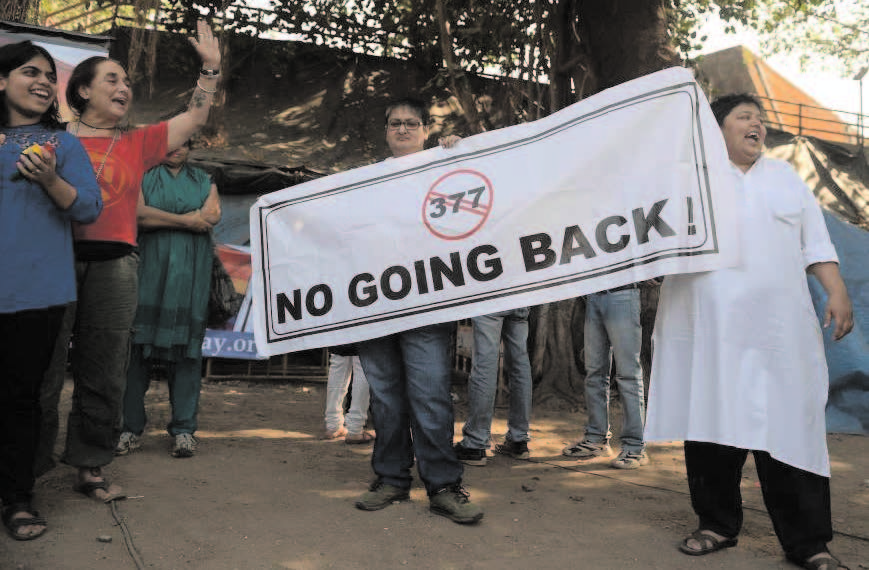
Tag: LGBT Rights

  • The right to love: The Supreme Court ruling on Section 377 furthers the frontiers of personal freedom

    The right to love: The Supreme Court ruling on Section 377 furthers the frontiers of personal freedom

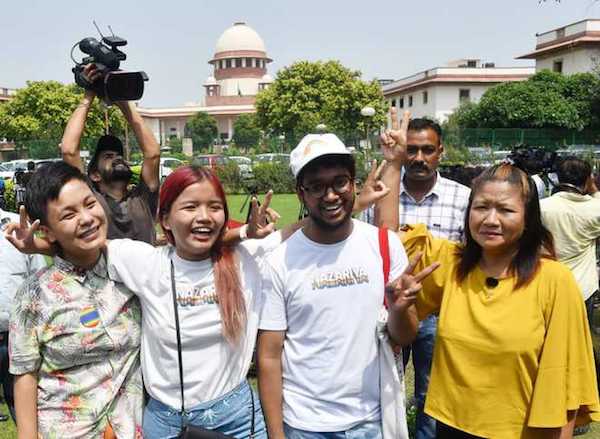
    The stirring message from the Supreme Court’s landmark judgment decriminalizing gay sex is that social morality cannot trump constitutional morality. It is a reaffirmation of the right to love. In a 5-0 verdict, a Constitution Bench has corrected the flagrant judicial error committed by a two-member Bench in Suresh Kumar Koushal (2013), in overturning a reasoned judgment of the Delhi High Court reading down Section 377 of the IPC. The 2013 decision meant that the LGBTQ community’s belatedly recognized right to equal protection of the law was withdrawn on specious grounds: that there was nothing wrong in the law treating people having sex “against the order of nature” differently from those who abide by “nature”, and that it was up to Parliament to act if it wanted to change the law against unnatural sex. The court has overruled Koushal and upheld homosexuals’ right to have intimate relations with people of their choice, their inherent right to privacy and dignity and the freedom to live without fear. The outcome was not unexpected. When the courts considered Section 377 earlier, the litigation was initiated by voluntary organizations. When those affected by the 2013 verdict approached the Supreme Court, it was referred to a larger Bench to reconsider Koushal.

    In the intervening years, two landmark judgments took forward the law on sexual orientation and privacy and formed the jurisprudential basis for the latest judgment. In National Legal Services Authority (2014), a case concerning the rights of transgender people, the court ruled that there could be no discrimination on the basis of sexual orientation and gender identity. In Justice K.S. Puttaswamy (2017), or the ‘privacy case’, a nine-judge Bench ruled that sexual orientation is a facet of privacy, and constitutionally protected. Chief Justice of India Dipak Misra’s opinion lays emphasis on transformative constitutionalism, that is, treating the Constitution as a dynamic document that progressively realizes various rights. In particular, he invokes the doctrine of non-retrogression, which means that once a right is recognized, it cannot be reversed. Taken together, the four opinions have furthered the frontiers of personal freedom and liberated the idea of individual rights from the pressure of public opinion. Constitutional morality trumps any imposition of a particular view of social morality, says Justice R.H. Nariman, while Justice D.Y. Chandrachud underscores the “unbridgeable divide” between the moral values on which Section 377 is based and the values of the Constitution. Justice Indu Malhotra strikes a poignant note when she says history owes an apology to the LGBTQ community for the delay in providing the redress. The dilution of Section 377 marks a welcome departure from centuries of heteronormative thinking. This is a verdict that will, to borrow a phrase from Justice Chandrachud, help sexual minorities ‘confront the closet’ and realize their rights.

    (The Hindu)

  • Supreme Court of India legalizes homosexuality; Says Section 377 is irrational, arbitrary

    Supreme Court of India legalizes homosexuality; Says Section 377 is irrational, arbitrary

    UN lauds SC verdict

    NEW DELHI(TIP): In a historic verdict, the Supreme Court, on Thursday, September 6, de-criminalized homosexual acts between consenting adults in private, bringing cheers to millions of members of the LGBT community who had been hounded for their sexual orientation under Section 377 of the Indian Penal Code that made it a punishable offence.

    A five-judge Constitution Bench, headed by Chief Justice of India Dipak Misra, read down the British-era law, terming it “irrational, indefensible and manifestly arbitrary”.

    It reversed the top court’s 2013 judgment which re-criminalized consensual gay sex. The 2013 verdict had overturned a 2009 judgment of the Delhi High Court which had de-criminalized homosexual acts between consenting adults in private.

    The verdict will not reopen concluded cases under Section 377 but can be relied upon in pending matters against the LGBT community members.

    The five judges wrote four concurring verdicts. While CJI Misra and Justice AM Khanwilkar delivered one verdict, Justices Rohinton Nariman, Dhananjay Chandrachud and Indu Malhotra wrote separate verdicts.

    The top court said homosexuality was a type of sexual orientation and not a disease and members of the lesbian, gay, bisexual and transgender (LGBT) community deserved to be treated with human dignity. Terming sexual orientation a “biological phenomenon”, it said any discrimination on this ground was violative of their fundamental rights.

    Section 377 refers to ‘unnatural offences’ and says whoever voluntarily has carnal inter-course against the order of nature with any man, woman or animal shall be punished with imprisonment for life, or with imprisonment of either description for a term which may extend to 10 years and shall also be liable to pay a fine.

    The judgment came on petitions by dancer Navtej Jauhar, journalist Sunil Mehra, chef Ritu Dalmia, hoteliers Aman Nath and Keshav Suri, business executive Ayesha Kapur and 20 IITians challenging the validity of Section 377.

    “Section 377, so far as it penalizes any consensual sexual relationship between two adults, be it homosexuals (man and a man), heterosexuals (man and a woman) or lesbians (woman and a woman), cannot be regarded as constitutional.

    “However, if anyone, by which we mean both a man and a woman, engages in any kind of sexual activity with an animal, the said aspect of Section 377 is constitutional, and it shall remain a penal offence,” the CJI ruled. Any act without the consent of the other person would also invite penal liability.

    The SC also declared parts of Section 377 as an unreasonable restriction on right to freedom of speech and expression. In his separate but concurring verdict, Justice Chandrachud, said, “Members of LGBT community are entitled, as all other citizens, to the full range of constitutional rights.”

    Justice Nariman directed the Centre to ensure that the verdict was given wide publicity. He also asked for “programs to reduce and finally eliminate the stigma associated with such persons” and sensitize government officials, particularly police officials, about the plight of LGBT persons.

    Meanwhile, United Nations India Thursday, September 6, lauded the Supreme Court for striking down a “key component” of IPC’s Section 377 which criminalizes “specific sexual acts between adults” and said the judgment will boost efforts to eliminate stigma and discrimination against LGBTI persons.

    It also hoped the ruling will be the first step towards guaranteeing the full range of fundamental rights to LGBTI persons.

    Sexual orientation and gender expression form an integral part of an individual’s identity the world over, and violence, stigma and discrimination based on these attributes constitute an “egregious” violation of human rights, it said.

    “The United Nations in India welcomes the landmark ruling by the Supreme Court of India striking down a key component of Section 377 of the Indian Penal Code which criminalized specific sexual acts between adults, a law dating back to British colonial rule that has targeted in particular lesbian, gay, bisexual, transgender and intersex (LGBTI) individuals and communities,” it said in a statement.

  • Donald Trump administration lifts transgender bathroom guidance

    Donald Trump administration lifts transgender bathroom guidance

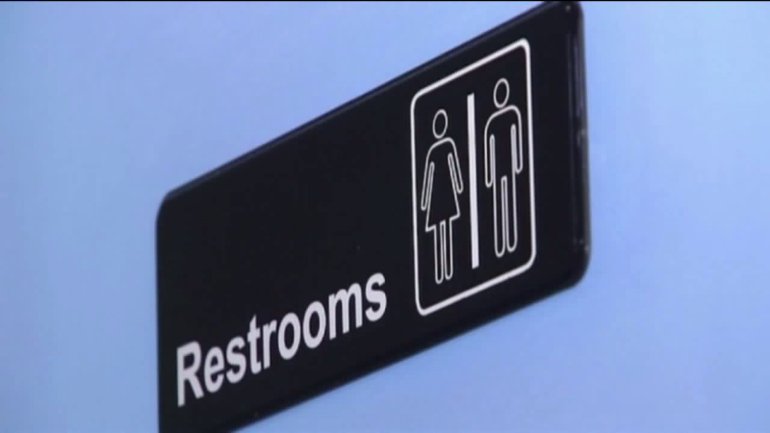
    WASHINGTON (TIP): The Trump administration has ended federal protections for transgender students that instructed schools to allow them to use bathrooms and locker rooms matching their gender identities. Stepping into an emotional national debate, the administration yesterday came down on the side of states’ rights, lifting federal guidelines that had been issued by the Obama administration and characterized by Republicans as a legal overreach.

    Without the Obama directive, it will be up to states and school districts to interpret federal anti-discrimination law and determine whether students should have access to restrooms in accordance with their expressed gender identity and not just their biological sex. “This is an issue best solved at the state and local level,” Education Secretary Betsy DeVos said. “Schools, communities and families can find a” and in many cases have found solutions that protect all students.” In a letter to the nation’s schools, the Justice and Education departments said the earlier guidance “has given rise to significant litigation regarding school restrooms and locker rooms.” The agencies withdrew the guidance to “in order to further and more completely consider the legal issues involved.” Anti-bullying safeguards would not be affected by the change, according to the letter.

    “All schools must ensure that all students, including LGBT students, are able to learn and thrive in a safe environment,” it said. It was not clear what immediate impact the change would have on schools, as a federal judge in Texas put a temporary hold on the Obama guidance soon after it was issued after 13 states sued.

    Even without that hold, the guidance carried no force of law. But transgender rights advocates say it was useful and necessary to protect students from discrimination. Opponents argued it was federal overreach and violated the safety and privacy of other students.

  • Taiwan set to legalize same-sex marriages, a first in Asia

    Taiwan set to legalize same-sex marriages, a first in Asia

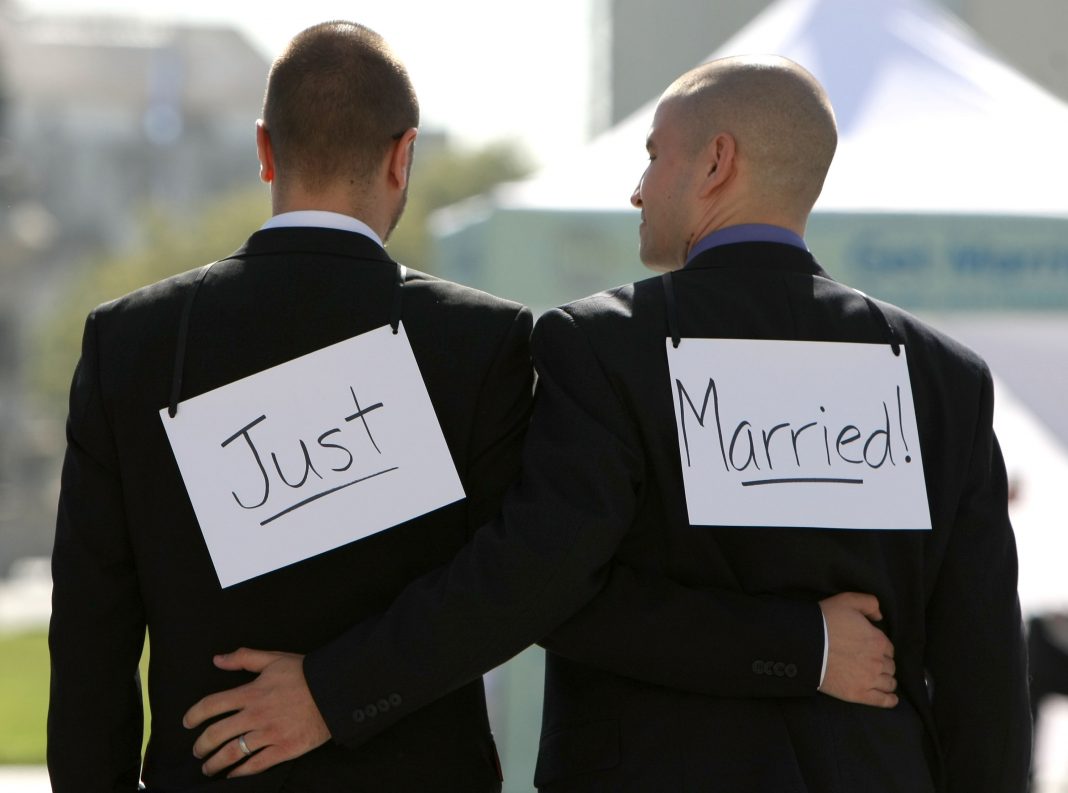
    TAIPEI (TIP): Su Shan and her partner are raising 5-month-old twins together, but only one of the women is their legal parent. That could soon change as Taiwan appears set to become the first place in Asia to legalize same-sex marriage.

    “Now, if something happens to the child, the other partner is nothing but a stranger,” said Su, a 35-year-old software engineer in Taipei. By contrast, either partner in a legally recognized marriage could make legal, medical and educational decisions, she says.

    Taiwanese lawmakers are currently working on three bills in support of marriage equality, one of which is already listed for review and could be passed within months. Same-sex marriage also has the prominent support of President Tsai Ing-wen, Taiwan’s first female head of state.

    About 80 percent of Taiwanese between ages 20 and 29 support same-sex marriage, said Tseng Yen-jung, spokeswoman for the group Taiwan LGBT Family Rights Advocacy , citing local university studies. Taiwan’s United Daily News found in a survey taken four years ago that 55 percent of the public supported same-sex marriage, with 37 percent opposed.

    That’s seen as a reflection of Taiwan’s ready acceptance of multi-party democracy and other inclusive attitudes, as well as the fact that Taiwan’s 23 million people largely follow Buddhism and traditional Chinese religions that take no strong positions on sexual orientation or gay marriage.

    Gay and lesbian relationships began to find wide acceptance in the 1990s, aided by the already well-established feminist movement, said Jens Damm, associate Professor in the Graduate Institute of Taiwan Studies at Chang Jung University in Taiwan.

    “The elite became in favor of a kind of gender equality,” Damm said.

    Still, same-sex marriage still had to overcome traditional perceptions of gender roles and the strong pressure on children to marry and have kids. The self-ruled island also lacks many openly gay and lesbian celebrities to lead the way; the writer and television talk show host Kevin Tsai is among the few exceptions.

    Taiwan would join Canada, Colombia, Ireland, the United States and 16 other countries that have legalized same-sex marriage over the past 15 years, according to the Washington, DC-based LGBT rights advocacy group Human Rights Campaign. But it would be a notable exception among Asian and Middle Eastern countries, at least 20 of which continue to ban same-sex intercourse.

    “It’s a big step forward for the history of human rights,” said Yu Mei-nu, a ruling Democratic Progressive Party lawmaker who is sponsoring the same-sex marriage bill now in line for parliamentary debate. “If Taiwan can get this passed … it will give other Asian countries a model.” Taiwan’s Justice Ministry has not backed a specific bill, but pledged on its website last month to maintain an “attitude of openness” toward same-sex marriage. (AP)

  • Kerry likens Uganda anti-gay law to Nazism, apartheid

    Kerry likens Uganda anti-gay law to Nazism, apartheid

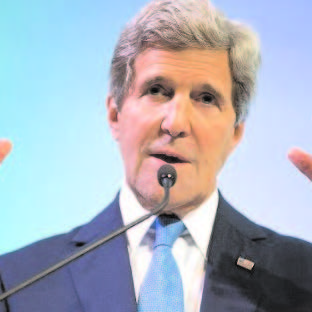
    WASHINGTON (TIP): US secretary of state John Kerry on February 26 compared tough new anti—gay laws enacted in Uganda to anti—Semitic legislation in Nazi Germany or apartheid in South Africa. “You could change the focus of this legislation to black or… Jewish, and you could be in 1930s Germany or you could be in 1950s, 60s apartheid South Africa,” the top US diplomat told a small group of reporters.

    On Monday, Ugandan President Yoweri Museveni signed a bill into law which holds that “repeat homosexuals” should be jailed for life, outlaws the promotion of homosexuality and requires people to denounce gays. “What has happened in Uganda is atrocious, and it presents all of us with an enormous challenge, because LGBT rights are human rights.

    It’s that simple,” Kerry told reporters. “The signing of this anti—homosexuality bill is flat—out morally wrong.” Referring to anti—Semitism in Nazi Germany and apartheid in South Africa, the top US diplomat said “it was wrong there egregiously, in both places, and it is wrong here.”

    But he also warned that discrimination against gays was “bigger than just Uganda” saying there were currently 78 other countries in which “you have these laws that are just contrary to human rights and contrary to human nature.” Referring to the spread of anti—gay legislation, Kerry said “it’s not just an African problem, it’s a global problem, and we’re wrestling with it.” Activists working for lesbian, gay, bisexual and transgender (LGBT) rights had pushed Museveni to block the legislation.

  • US raps India on SC cop-out on gay sex

    US raps India on SC cop-out on gay sex

    WASHINGTON (TIP): The Obama administration on December 11 came out sharply against the Indian Supreme Court’s decision that has led to re-criminalizing gay sex, and urged New Delhi to advance freedom, including rights for LGBTs. There was no ducking the issue with the boilerplate “it’s an internal matter for India to consider” when the Indian apex court’s ruling came up at the state department briefing. “We oppose any action that criminalizes consensual same-sex conduct between adults. LGBT rights are human rights … we call on all governments to advance equality for LGBT individuals around the world,” spokesperson Jen Psaki said bluntly.

    The United States, she added, places great importance on the protection of human rights and fundamental freedoms of all people, and that includes lesbian, gay, bisexual, and transgender (LGBT) persons around the world. Unlike the Bush administration, which was weighed down by conservative values, and the Clinton administration before that which was constrained by social mores of the last century, the Obama administration has been in tune with the changing public sentiment on LGBT issues. Opposition to same-sex marriage in US is dropping all the time and polls now show a majority of Americans (52 per cent in a recent poll) would vote in favor of a law legalizing gay marriage in the country. Even US lawmakers, including many Republicans, are starting to change their tune. It came as no surprise that the Indian Supreme Court decision figured in foreign secretary Sujatha Singh’s exchanges on Capitol Hill with New York’s democratic congressman Joe Crowley, co-chair of the India Caucus, who has a strong record on LGBT rights, raising the issue.

    There was also widespread dismay and condemnation of the SC ruling from USbased LGBT groups and even advocates of Indian cultural values, most notably the Hindu-American Foundation (HAF), which saw the decision as a legacy of India’s colonial past rather than any religious stricture. Expressing disappointment at the apex court decision, HAF spokesman Harsh Voragunti said Section 377 of IPC which criminalizes even consensual gay sex is “based on arcane, Victorian mores … and does not reflect the understanding of many contemporary Hindu lay and spiritual leaders who emphasize the teachings of every individual’s inherent divinity — be they heterosexual or homosexual.”

    HAF, he said, has repeatedly taken a stand in support of equal rights for LGBT individuals in the United States, from joining an amicus brief asking the Supreme Court to strike down the Defense of Marriage Act (DoMA) to advocating for the passage of the Employment Non-Discrimination Act (ENDA) which is current making its way through the US Senate. The Foundation’s policy brief on the subject maintains that Hinduism provides no spiritual basis to discriminate against homosexuals and also does not provide a basis for broad-based punishments. “The essential core of Hindu teachings is that an individual’s value is not based on his or her sexual orientation, but on one’s ability to transcend the body, senses, and ego,” says Swaminathan Venkataraman, an HAF’s Director who developed the brief. “And unlike many interpretations of Abrahamic scripture, Hinduism does not provide a fundamental spiritual reason to reject or ostracize homosexuals.”

    The brief says it would like to evolve a uniquely Hindu perspective on this issue rather than follow existing social mores blindly and end up aping the Semitic religions. “We feel comfortable anchoring ourselves to the eternal truths of our religion and letting social practices change with time as they indeed have on so many other matters,” the brief said. Change with the times is also what a growing South Asian LGBT community in the US is chiming. Candlelit vigils are planned before Indian missions by South Asian LGBT organizations, including the oldest of them, Trikone in the Bay Area, which said in reference to the Supreme Court judgment that it wanted “to show light to those who have lost their way.” There was also editorial condemnation. New York Times called the Supreme Court’s decision “disgraceful,” and said its statement inviting Parliament to amend the law is “disingenuous.” “Given the fractious nature of India’s Parliament, the conservative views of many of its members, and the political stakes in the run-up to general elections next spring, the Legislature is unlikely to take up this issue on its own,” it said. “Prime Minister Manmohan Singh now has an opportunity to leave a lasting legacy of progress before his government steps down next spring. His cabinet should act immediately to seek a repeal of Section 377. This 1861 law has no place in a 21st-century democracy,” it added.