Tag: Louis Armstrong

  • History This Week- July 30, 2021, to August 5, 2021

    “History is a cyclic poem written by time upon the memories of man.” – Percy Bysshe Shelley

     July 30

    July 30, 1975 – Former Teamsters Union leader James Hoffa was last seen outside a restaurant near Detroit, Michigan. His 13-year federal prison sentence had been commuted by President Richard M. Nixon in 1971. On December 8, 1982, seven years after his disappearance, an Oakland County judge declared Hoffa officially dead.

    Henry Ford

    Birthday – Automotive pioneer Henry Ford (1863-1947) was born in Dearborn Township, Michigan. He developed an assembly-line production system and introduced a $5-a-day wage for automotive workers. “History is bunk,” he once said.

    July 31

    July 31, 1776 – During the American Revolution, Francis Salvador became the first Jew to die in the conflict. He had also been the first Jew elected to office in Colonial America, voted a member of the South Carolina Provincial Congress in January 1775.

    July 31, 1790 – The U.S. Patent Office first opened its doors. The first U.S. patent was issued to Samuel Hopkins of Vermont for a new method of making pearlash and potash. The patent was signed by George Washington and Thomas Jefferson.

    August 1

    August 1, 1838 – Slavery was abolished in Jamaica. It had been introduced by Spanish settlers 300 years earlier in 1509.

    August 1, 1944 – Anne Frank penned her last entry into her diary. “[I] keep on trying to find a way of becoming what I would like to be, and what I could be, if…there weren’t any other people living in the world.” Three days later, Anne and her family were arrested and sent to Nazi concentration camps. Anne died at Bergen-Belsen concentration camp on March 15, 1945, at age 15.

    August 1, 1944 – The Warsaw Uprising began as the Polish Home Army, numbering about 40,000 Polish patriots, began shooting at German troops in the streets. The Nazis then sent eight divisions to battle the Poles, who had hoped for, but did not receive, assistance from the Allies. Two months later, the rebellion was quashed.

    Francis Scott Key

    Birthday – Star-Spangled Banner author Francis Scott Key (1779-1843) was born in Frederick County, Maryland. After witnessing the British bombardment of Fort McHenry on the night of September 13-14, 1814, he was enthralled to see the American flag still flying over the fort at daybreak. He then wrote the poem originally entitled Defense of Fort McHenry which became the U.S. National Anthem in 1931.

    Herman Melville

    Birthday – Moby Dick author Herman Melville (1819-1891) was born in New York.

    August 2

    August 2, 1776 – In Philadelphia, most of the 55 members of the Continental Congress signed the parchment copy of the Declaration of Independence.

    August 2, 1923 – President Warren G. Harding died suddenly in a hotel in San Francisco while on a Western speaking tour. His administration had been tainted by the Teapot Dome political scandal and his sudden death prompted many unfounded rumors. He was succeeded the next day by Calvin Coolidge.

    August 2, 1939 – Albert Einstein wrote a letter to President Franklin D. Roosevelt concerning the possibility of atomic weapons. “A single bomb of this type carried by boat and exploded in a port, might very well destroy the whole port together with some of the surrounding territory.” Six years later, on August 6, 1945, the first Atomic Bomb, developed by the U.S., was dropped on the Japanese port of Hiroshima.

    August 2, 1990 – The Iraqi army invaded Kuwait amid claims that Kuwait threatened Iraq’s economic existence by overproducing oil and driving prices down on the world market. An Iraqi military government was then installed in Kuwait which was annexed by Iraq on the claim that Kuwait was historically part of Iraq. This resulted in Desert Shield, the massive Allied military buildup, and later the 100-hour war against Iraq, Desert Storm.

    August 3

    Christopher Columbus

     August 3, 1492 – Christopher Columbus set sail from Palos, Spain, with three ships, Nina, Pinta and Santa Maria. Seeking a westerly route to the Far East, he instead landed on October 12th in the Bahamas, thinking it was an outlying Japanese island.

    Birthday – War correspondent Ernie Pyle (1900-1945) was born in Dana, Indiana. His syndicated column offered sympathetic insights into the experiences of common soldiers during World War II. He received a Pulitzer Prize for his reports of the bombing of London in 1940 and later war reports from Africa, Sicily, Italy and France. He was killed by machine-gun fire near Okinawa in the South Pacific on April 18, 1945.

    Birthday – Gray Panthers founder Maggie Kuhn (1905-1995) was born in Buffalo, New York. After she was forced into mandatory retirement at age 65, she founded the Gray Panthers organization to fight age discrimination and succeeded in the banning of mandatory retirement in most professions.

    August 4

    August 4, 1962 – Apartheid opponent Nelson Mandela was arrested by security police in South Africa. He was then tried and sentenced to five years in prison. In 1964, he was placed on trial for sabotage, high treason and conspiracy to overthrow the government and was sentenced to life in prison. A worldwide campaign to free him began in the 1980s and resulted in his release on February 11, 1990, at age 71 after 27 years in prison. In 1993, Mandela shared the Nobel Peace Prize with South Africa’s President F.W. de Klerk for their peaceful efforts to bring a nonracial democracy to South Africa. In April 1994, black South Africans voted for the first time in an election that brought Mandela the presidency of South Africa.

    August 4, 1964 – Three young civil rights workers, James Chaney, Andrew Goodman and Michael Schwerner, were found murdered and buried in an earthen dam outside Philadelphia, Mississippi. They had disappeared on June 21 after being detained by Neshoba County police on charges of speeding. They were participating in the Mississippi Summer Project organized by the Student Nonviolent Coordinating Committee (SNCC) to increase black voter registration. When their car was found burned on June 23, President Lyndon Johnson ordered the FBI to search for the men.

    Louis Armstrong

    Birthday – Jazz trumpet player Louis Armstrong (1901-1971) was born in New Orleans, Louisiana. Known as “Satchmo,” he appeared in many films and is best known for his renditions of It’s a Wonderful World and Hello, Dolly.

    Birthday – Swedish diplomat Raoul Wallenberg (1912-1947) was born in Stockholm. During the Holocaust, Wallenberg saved an estimated 33,000 Jews by issuing thousands of protective documents, by securing the release of Jews from deportation trains, death march convoys, labor service brigades, and by establishing the International Ghetto, a network of 31 protected houses. He was detained by Soviet agents on January 17, 1945 and is believed to have died in prison in 1947.

    Barack Obama

    Birthday – Barack Obama the 44th U.S. President was born in Honolulu, Hawaii, on August 4, 1961. His father was from Kenya, Africa, while his mother was originally from Kansas. Upon completing his college education, young Obama moved to Chicago, becoming active in community affairs. He then attended Harvard Law School, becoming the first African-American president of the Harvard Law Review in 1990. He returned to Chicago, worked in a law firm, then entered politics. Elected to the Illinois State Senate in 1996, he went on to become a U.S. Senator in 2004. Four years later, he successfully challenged former First Lady Hillary Rodham Clinton for the Democratic presidential nomination and went on to defeat Republican John McCain in the general election, November 4, 2008, thus becoming the first President of African-American origin.

    August 5

    August 5, 1583 – The first British colony in North America was founded by Sir Humphrey Gilbert, a British navigator and explorer. He sighted the Newfoundland coast and took possession of the area around St. John’s harbor in the name of the Queen. He was later lost at sea in a storm off the Azores on his return trip to England.

    August 5, 1861 – President Abraham Lincoln signed into law the first Federal income tax, a 3 percent tax on incomes over $800, as an emergency wartime measure during the Civil War. However, the tax was never actually put into effect.

    Marilyn Monroe

    August 5, 1962 – Film star Marilyn Monroe died at age 36 from an overdose of sleeping pills. She made 29 films during her career and came to symbolize Hollywood glamour.

    August 5, 2011 – Standard & Poor’s credit rating agency downgraded the United States debt from its highest rating of AAA to a lesser AA+ rating, marking the first-ever decline of credit worthiness for the U.S. The agency cited America’s $14 trillion in outstanding debt and ineffective political leadership regarding debt reduction.

     Birthday – John Eliot (1604-1690) was born in Hertfordshire, England. Known as the “Apostle to the Indians,” his translation of the Bible into an Indian tongue was the first Bible to be printed in America.

  • WHARTON CELEBRATES BLACK HISTORY

    WHARTON CELEBRATES BLACK HISTORY

    “Jazz Education is an important part of our mission here at Wharton Arts and we are committed to offering our students high-level opportunities to learn and perform jazz throughout the year. The free Jazz Listening Series is a way for us to extend an invitation to the wider community to learn about jazz history and celebrate the legacies of early Black jazz artists, recognizing jazz as the foundation of popular music such as rock n’ roll, R&B, soul, and more.”- Helen H. Cha-Pyo, Artistic Director-Principal Conductor

    Black Civil Rights protestors (Photo : JCC NYC)

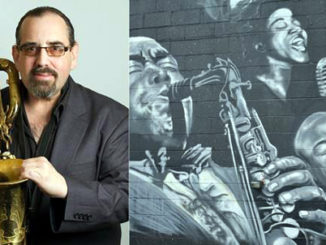
    The Wharton Institute for the Performing Arts (WIPA) celebrates Black History Month with a virtual Jazz History and Masters Listening Hour Series every Saturday from 9:00 – 10:00 a.m. EST during the month of February. Learn about the origins and development of jazz genres, including historical icons and their influence on particular jazz styles and trends, as well as an exploration of jazz’s social implications in a broader historical context. Led by award-winning saxophonist Dave Schumacher, the Jazz History and Masters Listening Hour Series is free and open to the public. To register to attend, visit WhartonArts.org

    “I hope many people will join our esteemed jazz faculty, Dave Schumacher, on Saturday mornings in February,”, continued Cha-Pyo, “and listen to this ‘triumphant music’ as best described by Martin Luther King, Jr.: ’Jazz speaks for life. The Blues tell the story of life’s difficulties, and if you think for a moment, you will realize that they take the hardest realities of life and put them into music, only to come out with some new hope or sense of triumph. This is triumphant music.’”

    Jazz History & Masters Listening Hour Series

    All classes take place at 9:00 a.m. EST via Zoom. Classes are FREE.

     Saturday, February 6: Jazz History and Listening Survey I

    Part I of a survey of the history of Jazz music through listening, briefly touching on each of the eras from Early Jazz in the late 19th century through the Bebop Era ending in the ’50s.

    Saturday, February 13: Jazz History and Listening Survey II

    Part II of a survey of the history of Jazz music through listening, briefly touching on each of the eras of Jazz from the mid-50s Hard Bop/Cool eras through the present.

     Saturday, February 20: Jazz Masters Series – Louis Armstrong

    An examination through listening and commentary of Jazz Master Louis Armstrong, considered by many the greatest soloist and one of the most influential Jazz artists of all time.

    Saturday, February 27: Jazz Masters Series – Mary Lou Williams

    An examination through listening and commentary of Jazz Master Mary Lou Williams. Williams was a great pianist, arranger and informal educator who influenced many younger Jazz musicians including Thelonious Monk, Bud Powell, and Tadd Dameron at informal sessions at her apartment. Mary Lou Williams came to prominence in the 1930s when very few women in Jazz received their due.

    About Dave Schumacher

    Chicago native Dave Schumacher has been a key player in the New York jazz scene for more than three decades, touring throughout the United States and internationally with the Lionel Hampton Orchestra, the Art Blakely Big Band, T.S. Monk on Monk Ensemble, Nicholas Payton’s Louis Armstrong Tribute Big Band, and as an original member of the Harry Connick, Jr. Orchestra. To learn more, visit jazzbarisac.com

    About WIPA

    The Wharton Institute for the Performing Arts’ (WIPA) mission is to provide the highest quality performing arts education to a wide range of students in a supportive and inclusive environment, where striving for personal excellence inspires and connects those they teach to the communities they serve.

    Wharton is New Jersey’s largest independent non-profit community performing arts education center serving over 1,200 students through a range of classes and ensembles including the 15 ensembles of the New Jersey Youth Symphony, which serve 500 students in grades 3 – 12 by audition. WIPA is located in Berkeley Heights, New Providence and Paterson, NJ and reaches students from 10 counties. All of Wharton’s extraordinary faculty members and conductors hold degrees in their teaching specialty and have been vetted and trained to enable their students to achieve their personal best. To learn more, visit WhartonArts.org

     Events of Note

    Jews and Blacks in the Civil Rights Era and Now — Fact and Fiction

    Why were there Jews on both sides, and the sidelines, of the civil rights movement? What was the role of Judaism in the activism of young people in the 1960s? What are the implications for the streets of America today? Explore these questions and others on the reality of the relationship between the Jewish and Black communities in this session led by Billy Planer, director and founder of Etgar 36

    Tue, Feb 9 pm, 7–8:15 pm, Free. To register, visit

     mmjccm.org/programs/jews-and-blacks-civil-rights-era-and-now-fact-and-fiction#utm_source=CSR&utm_medium=JIAmulti1-28-21&utm_campaign=jbcivilrights

    Justice in Action: Desegregating NYC’s Public Schools

     New York City public schools are among the most segregated in the nation, more than 65 years after Brown vs Board of Education. Students, educators, and activists have been organizing for the past five years to demand change. Join JCC Social Justice Activist in Residence Ruth Messinger and NYC Council Member Brad Lander for a virtual conversation on NYC’s history of school segregation and what it would take to build a better and fairer school system.

    Thu, Feb 18, 7:30–8:30 pm, Free. For tickets, visit

    mmjccm.org/programs/justice-action-desegregating-nycs-public-schools#utm_source=CSR&utm_medium=JIAmulti1-28-21&utm_campaign=desegregating

    (Mabel Pais writes on Social Issues, The Arts and Entertainment, Spirituality, and Health & Wellness)