Tag: Luv Puri

  • New fault-lines to the fore in US presidential race

    New fault-lines to the fore in US presidential race

    A greater concern for the world is the impact of a changing of the guard on the US foreign policy
    “For the outside world, there will be two main consequential and immediate outcomes that are shaped by any change in the US administration, as evidenced during the Trump years. One is the impact on high-skilled immigration as US tech enterprises draw talent from across the world, particularly from India. At least 70 per cent of the H1-B visas are bagged by Indians every year, the bulk of them by software engineers and, now, artificial intelligence professionals. Little discussed is the perceived sense of insecurity amid heightened white nationalism that borders on racism, particularly for the high-skilled people from Asian countries. The Trump years demonstrated that safety as a factor to migrate or not became important for high-skilled migrants, particularly from non-European countries.”

    By Luv Puri

    The support for former President Donald Trump in the Iowa caucus and within the Republican Party establishment has created a buzz about a what-if scenario: the return of the Trump era and the concomitant unpredictability in the governance of a country that accounts for a quarter of the global economy.

    In the polarized US polity, the congressional districts in some of the swing/battleground states of the 2016 and 2020 elections, such as Arizona, Georgia, Michigan, Pennsylvania and Wisconsin, may decide the 2024 presidential contest. The suburban and rural parts remain conservative and racially homogenized — mostly white. New political, social and economic fault-lines are being drawn within the states, and this may fuel fresh social and ideological tensions, even as Florida has remained a battleground state since the 2000 elections.

    For the outside world, there will be two main consequential and immediate outcomes that are shaped by any change in the US administration, as evidenced during the Trump years. One is the impact on high-skilled immigration as US tech enterprises draw talent from across the world, particularly from India. At least 70 per cent of the H1-B visas are bagged by Indians every year, the bulk of them by software engineers and, now, artificial intelligence professionals. Little discussed is the perceived sense of insecurity amid heightened white nationalism that borders on racism, particularly for the high-skilled people from Asian countries. The Trump years demonstrated that safety as a factor to migrate or not became important for high-skilled migrants, particularly from non-European countries.

    Even in arguably the most cosmopolitan city in the world like New York, with nearly half of the population being foreign-born, the Police Benevolent Association, NYC’s largest police union, reportedly “broke with a longstanding tradition of not endorsing presidential candidates and had thrown its support behind President Trump in the 2020 elections, as many officers viewed him as more of an ally to their pro-police ‘Blue Lives Matter’ movement than Joe Biden.”

    A greater concern for the world is the impact of a changing of the guard on the US foreign policy. The US is the pre-eminent power in the international system as its support or withdrawal of support on global issues is consequential. Take, for instance, the challenge of climate change. In the 2017 book, Dark Money: The Hidden History of the Billionaires Behind the Rise of the Radical Right, Jane Mayer illustrates how Charles and David Koch, the enormously rich proprietors of an oil company based in Kansas, laid the foundations for conservative movements that were anti-government and opposed climate change. The funding of various movements, think tanks and newspapers inadvertently created a fertile landscape for Trump to exploit in the 2016 elections. It wasn’t a surprise when he decided to formally withdraw from the Paris climate agreement in June 2017.

    Also, there are peace and security issues that are shaped by the US directly or indirectly. There are three foreign policy domains that have dominated Biden’s presidency — Ukraine, West Asia and China. All three affect every corner of the world, including India, though the US-India bilateral engagement will essentially retain the momentum despite any change. Russia’s invasion of Ukraine has given the European Union (EU) a renewed sense of purpose. Russia’s perceived threat is now internalized by eastern European Baltic states, such as Estonia, Latvia and Lithuania, which were earlier part of the Soviet Union, and by other eastern European countries like Poland, Romania and Moldova. This has instilled a pan-continental unity that no event has catalyzed since 1993, the year of the EU’s foundation. Recent developments have also turned the spotlight within the US on European security. Since the February 2022 invasion, more than $75 billion in assistance to Ukraine, including humanitarian, financial and military support, has reportedly been given by the US. Trump’s current stance on the US financial support to Ukraine is not clear. In fact, during his presidency, he had angered EU allies with his repeated criticism of European countries for not commensurately funding the NATO.

    West Asia has witnessed greater instability after the Hamas attacks and the consequent Gaza assault by Israel. Among the 19 September 11 attackers, 15 were from the Kingdom of Saudi Arabia and they cited the purported partial US role in West Asia, including the Israel-Palestine conflict, as the reason for carrying out the suicide attacks. The US establishment doesn’t want to give fresh ammunition to the violent extremists working against it. This explains repeated words of caution by Biden to Israeli Prime Minister Benjamin Netanyahu, urging him not to be blinded by rage. In 2017, then President Trump had decided that the US would move its embassy from Tel Aviv to Jerusalem and this was seen as a reckless move as it may directly play into the hands of extremists who slam the US for being pro-Israel. Then, there are other tensions, such as with Iran and its alleged support to proxies like the Houthis in Yemen that are threatening Red Sea’s shipping lanes. This requires a calibrated and coordinated approach, with allies anchored in patience and wisdom that was clearly lacking in President Trump.

    Finally, another Trump term has the potential to reconfigure the Asia-Pacific security calculus. China’s multi-dimensional challenge had been at the heart of President Biden’s Asian engagement. Biden continued with Trump’s import tariffs on China. It is the US strategy to meet the challenge of China’s military projection that may have a greater impact with a change in the US administration. For instance, China has never given up the use of force as an option to bring Taiwan under its control. On the other hand, the US strategic ambivalence over defending the island if it were attacked has been its consistent position. In the recent Taiwanese presidential elections, the ruling Democratic Progressive Party, which invokes China’s ire for its nationalist stance, retained power. A Trump term may spur Beijing to invade Taiwan and exacerbate China’s perennial tensions with Japan, South Korea and even India.
    ( Luv Puri is a Journalist and Author)

  • Indian-Americans test the waters in run-up to US primaries

    Indian-Americans test the waters in run-up to US primaries

    In a nutshell, relatively richer Indian-Americans, as their number becomes bigger, may reflect the current US political landscape, which is more or less evenly divided between the Democrats and the Republicans.

     “Given the peculiarities of migration, the trend of Indian-Americans being represented in both parties will further solidify as more and more get citizenship. The struggle of other minority groups is not reflected in the lives of many relatively younger Indian-Americans, who were born to highly educated first-generation Indian-American parents. Backed by quality education, timing and the available ecosystem, the younger cohort has struck success in many financially lucrative professional fields.”

    By Luv Puri

    The  contest for the primaries is hotting up a year ahead of the US presidential election. A few Indian-Americans are vying to be the Republican Party’s presidential candidate.

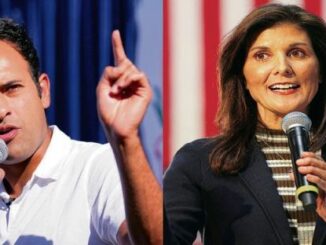
    Indian-Americans, with a population of four million, account for nearly 1.3 per cent of the US population. In the past decade, the US Congress reportedly has had five Indian-Americans. Former South Carolina Governor and US Permanent Representative to the UN Nikki Randhawa Haley is in the race to become the Republican nominee. She has a proven record in governance.

    The spotlight, however, is on 38-year-old entrepreneur Vivek Ramaswamy, who founded a successful biotech startup. Flush with money, a Midwest upbringing and Ivy League credentials, Ramaswamy has been profiled by leading media establishments. There is an element of exaggeration in terms of his narrative, though he has been impactful as he has a good understanding of the target audience and their soft spots.

    Ramaswamy’s messaging may be anathema to the larger Indian community in the US or other minority groups, who are overwhelmingly Democrat, as he speaks against diversity in workplaces, though cleverly adding that he favors diverse ideas. In a profile on him in The New Yorker, the author noted, “To Ramaswamy, such corporate do-gooderism — and especially environmental, social and governance investing, known as ESG — is a smoke screen designed to distract from the less virtuous things that companies do to make money.” He has proposed a constitutional amendment that would require citizens aged between 18 and 24 years to pass a civics test in order to vote. This is again cunning messaging, keeping in mind the disdain middle-aged Republican voters have for the younger population, which is largely Democrat.

    But none of the Indian-American contenders stands a chance against former President Donald Trump when it comes to getting the Republican Party nomination. Still, these trends have their own importance in the US landscape as to why Indian-Americans, who usually vote for the Democrats, are gaining spotlight in the Republican Party.

    This goes against the truism that the Democratic Party, with its progressive ideals, is a natural party for minority groups, who are victims of majoritarian politics and its consequent discriminatory policies. One needs to pay attention to particular aspects of migration of Indians to the US and the strata they are coming from. The first phase of migration of Indians, prominently from Punjab, started in the early years of the 20th century through the modern tech hub of San Francisco. The immigrants, marginal in number due to legal restrictions for Asians, looked for railroad, lumber or agricultural jobs. Even Congressman Dalip Singh Saund, who had got his doctorate from the University of California, Berkeley, in 1924, had to work as a farmer as he was denied citizenship till 1949. Born in Amritsar, he later became the first Asian-American, the first Indian-American and the first Sikh to be elected to the US Congress, from California in 1956 on the Democratic Party ticket.

    Then there is a pool of Indian-Americans who are the children of a very successful grouping who migrated after the immigration Bill was signed by then President Lyndon B Johnson on October 3, 1965, which removed stipulations on migration from Asian countries. This enabled highly educated Indians to study and work in the US. Many of them went there on scholarships. Journalist Anita Raghavan, in her book The Billionaire’s Apprentice: The Rise of the Indian-American Elite and the Fall of the Galleon Hedge Fund, made the expression ‘generation twice blessed’ famous as she described this group of immigrants. This group benefited from both the relaxation of US immigration laws and the enormous investment that India made in education following Independence, particularly in research and engineering institutes.

    The post-1995 migration was triggered by a sudden explosion in the demand for technological workers, including the Y2K migration project, coupled with an interest in India’s emerging markets, which opened avenues for many finance professionals as well. Equipped with a strong background in science, technology, engineering and mathematics and a functional knowledge of the English language, nearly 75 per cent of the H-1B non-immigrant visa programme applicants came from India and many who got the visa became American citizens in a decade or so. A number of them, who migrated after 2000 or in the past 10 years, are permanent residents and in the process of acquiring citizenship.

    Given the peculiarities of migration, the trend of Indian-Americans being represented in both parties will further solidify as more and more get citizenship. The struggle of other minority groups is not reflected in the lives of many relatively younger Indian-Americans, who were born to highly educated first-generation Indian-American parents. Backed by quality education, timing and the available ecosystem, the younger cohort has struck success in many financially lucrative professional fields.

    Some from the Generation Z or the Millennial generation will support policies such as lower income tax and a private healthcare system, and there may also be a general antipathy towards welfarism, unlike other minority groups — which is more or less the present-day mantra of the Republican Party. Indian-American political affiliations may not strictly be a derivative of our understanding of politics of other minority groups in the US. In a nutshell, relatively richer Indian-Americans, as their number becomes bigger, may reflect the current US political landscape, which is more or less evenly divided between the Democrats and the Republicans.

    (Luv Puri is journalist and author)