Tag: M Suresh Babu

  • Where tariffs trump economics

    Where tariffs trump economics

    The proposed tariffs are expected to deliver a blow to India’s merchandise exports to the U.S.

    “Though the idea behind reciprocal tariffs is to create balance in trade, they can lead to a back-and-forth increase in trade barriers with negative impacts on both economies. The evolution of reciprocal tariffs can be traced to when countries began using tariffs to shield their local industries, boost economic growth, and negotiate better trade deals. While reciprocal tariffs can help local industries in the short run, they lead to higher prices for consumers, disrupt supply chains, and slow down growth. Tariffs were a major source of income for governments, but this has greatly reduced. They now serve as protective measures or negotiation tools.”

    By M Suresh Babu

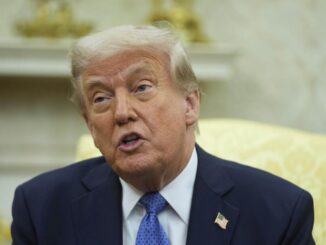
    The recently announced reciprocal tariffs by U.S. President Donald Trump have led to a decline in the prices of key commodities, crude oil, volatility, and a downturn in stock markets. Since the tariff announcement, crude oil prices have declined by nearly 14%. This drop is driven by fears that the global economy, particularly trade between major economies, may slow down, which could lead to reduced demand for oil. The responses to the announcement have reinforced concerns that a full-scale global trade war is now under way. New trade tensions could lead to higher inflation, slower economic growth, and escalating disputes. More importantly, the announcement has ushered in an extended period of uncertainty, opening up new challenges to economic policy making. While higher-income economies have the time and armory to retaliate to U.S. policies, lower-income ones face a double disadvantage. They have to cope with a new world order, while addressing pressing domestic economic issues.

    The role of reciprocal tariffs

    Reciprocal tariff is a tax that one country places on another in response to similar actions taken by that country. The rationale for this response is to protect local businesses, preserve jobs, and fix trade imbalances. Though the idea behind reciprocal tariffs is to create balance in trade, they can lead to a back-and-forth increase in trade barriers with negative impacts on both economies. The evolution of reciprocal tariffs can be traced to when countries began using tariffs to shield their local industries, boost economic growth, and negotiate better trade deals. While reciprocal tariffs can help local industries in the short run, they lead to higher prices for consumers, disrupt supply chains, and slow down growth. Tariffs were a major source of income for governments, but this has greatly reduced. They now serve as protective measures or negotiation tools.

    Targeting Asia

    Two aspects of the tariff tirade stand out. First, no other regions have been hit as hard as South Asia and Southeast Asia. Economic development over the past three decades in these regions has largely been driven by exports to the rest of the world, particularly the U.S. Exports to the U.S. contribute around 30% of Vietnam’s GDP and 25% of Cambodia’s. Vietnam and Cambodia have been hit by some of the highest tariffs (46% and 49%, respectively). Thailand, Indonesia, Malaysia, the Philippines, and Singapore have been hit by tariffs of varying magnitudes. Among countries of that region, this round of tariffs poses perhaps the greatest threat for Cambodia. The garment industry, which employs close to 750,000 workers, has been crucial in providing steady incomes to the poor. Thousands of jobs in this sector are now likely to be lost. The smaller economies of Southeast Asia are not in a position to retaliate, unlike China, which has hit back with its own measures. These economies can only negotiate. And the interests of the U.S. would primarily guide such negotiations.

    The second is the curious case of calculation of tariffs. The formula underpinning reciprocal tariff is the country’s trade deficit with the U.S., divided by its exports, and then divided by two. The U.S. also implemented a 10% baseline tariff on almost every country. However, the formula for calculating tariff rates for nations around the world is based on an elasticity rate lower than it should be in practice. The formula assumes an elasticity of import prices with respect to tariffs of about 0.25, but economists are of the view that the number should be closer to one. This one-size-fits-all formula is blunt as it applies the same math to countries whether they have substantial trade barriers or wide-open markets. It considers only the size of the trade deficit, not why the deficit exists. Also, the trade deficit is calculated using only goods (items that can be shipped) and not services (technology, banking). This benefits countries which export few goods but plenty of financial services to the U.S.

    Prospects for India

    The proposed tariffs are expected to deliver a blow to India’s merchandise exports to the U.S. If tariff plans are implemented after the current pause, India could see a $7.76 billion drop (6.4%) in exports to the U.S. this year, according to an estimate by Global Trade Research Initiative. In 2024, India exported $89 billion worth of goods to the U.S. This underscores the need for India to broaden the trade base necessitating swift trade policy actions. First, India has to secure a balanced trade deal with the U.S., which requires continuous negotiations. Second, it needs to fast-track trade agreements with the European Union, the U.K., and Canada. Third, it needs to deepen ties with Russia, Japan, South Korea, ASEAN, and the UAE. Fourth, it needs to handle ties with China with deftness and strategic intent.

    Some believe that India could convert the situation into an opportunity. These beliefs are partly driven by the spectacular success of Apple’s iPhone exports from India (by 54% last year). Hidden behind this achievement is the fact that the total goods exports for 2024-25 was $437 billion, which is the same as last year. Given this reality, cashing on the present situation requires enormous homework. A set of coherent reforms encompassing rationalized tariffs, simpler GST, easier trade processes and fair implementation of quality standards and controls are prerequisites for such an ambition. Easier straightforward responses to intensify inward orientation runs the risk of missing a global moment.

    (The author is  Director, Madras Institute of Development Studies. Views are personal)

  • Budget 2024 – long on intent, short on details

    Budget 2024 – long on intent, short on details

    The policy slant highlights good intentions, but the ways and the means to accomplish the ambitious goals set out are hazy

    ‘The fiscal arithmetic and the macro-policy stance in the Budget signal continuity and a carrying on with fiscal consolidation efforts’

    “Barring the announcement of tax benefits for Indian start-ups and their investors, including scrapping the contentious angel tax for all classes of investors and aligning capital gains rates between listed and unlisted equity and the increased limit of Micro Units Development and Refinance Agency Ltd. (MUDRA) loans from ₹10 lakh to ₹20 lakh, the big push for the industrial sector is conspicuously absent in the Budget. Neither was there any mention of the Railways, PLI Scheme, Gati Sakthi and the Census. The list of omissions could be longer, but a lack of clear initiatives towards the education and health sectors to tap demographic dividend might not augur well with the vision of 2047. Equally important is to strike a balance between cities and rural economy and to make a distinction between jobs and internships. With the macroeconomy well poised at the moment, some bold steps and details of the journey to 2047 could have been outlined.”

    By M. Suresh Babu

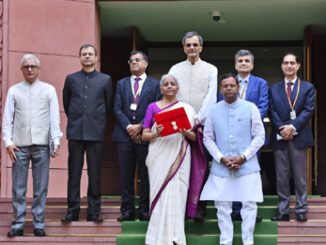
    The short Budget speech by the Union Finance Minister is marked by clarity on three aspects. First, the intentions and vision for Vikisit Bharat@2047 are spelt out through the nine priority areas, a long-term vision, to which we expect that subsequent Budgets would adhere, to accomplish these goals. Second, there is an explicit recognition of the problem of unemployment in the economy. Addressing this has been a challenge and the Budget devotes considerable space in listing out initiatives towards generating employment. Third, the compulsions of a coalition government surface in parts, but are hidden in some of the specificities. These three have guided the strategy and the approach of the Budget. On the face of it, the policy slant reveals good intentions, but the ways and the means to accomplish the ambitious goals set out are not divulged, casting a shadow on the possibility of realizing the targets set.

    A signal of continuity
    The fiscal arithmetic and the macro-policy stance in the Budget signal continuity and a carrying on with fiscal consolidation efforts. The overall fiscal deficit has been lowered to 4.9% compared to 5.1% targeted in the interim Budget. A large part of the surplus received from the Reserve Bank of India has been used to buttress fiscal prudence. The anticipated reiteration of the reduction in the fiscal deficit to below 4.5% of GDP in FY2026 is welcome. The new medium-term fiscal consolidation path has been linked to a reduction in the debt/GDP ratio instead of continued compression of the fiscal deficit/GDP ratio. This will allow the government flexibility to chart an appropriate fiscal course that builds in higher capital spending as well as support to meeting climate goals in an uncertain global environment.

    The size of the Budget has gone up only marginally. This also means that the overall borrowing programme of the government is almost unchanged — in fact, it has come down marginally though the cut in borrowings is smaller than what could have been possible with the buoyant revenue collections.

    While there has been a slight increase in overall expenditure, capital expenditure remains more or less unchanged. There are two discomforting trends on the expenditure side. First, the Budget estimates for 2024-25 show only marginal increase in allocation in most of the items of expenditure compared to that of 2023-24. In fact, in some of the key items, it shows a decrease. In the case of commerce, industry and energy, we find a decline in Budget estimates for 2024-25. Second, in many items of expenditure, the revised estimates for 2023-24 are lower than the Budget estimates for the same year. Social welfare and scientific departments are notable in this context.

    Effective capital expenditure, which is capital expenditure plus the grant in aid for creation of capital assets, have come down when we compare revised estimates and provisional actuals for 2023-24. The decline in revised estimates compared to Budget estimates is an indication of the lack of capacity of the government to spend, which is likely to undermine the expected multiplier effects of such expenditures. Thus, we need to wait and watch as to how much of the proposed outlays are utilized. Further, the same levels of capital expenditure imply that the government would bank more on private investments, as indicated in the Economic Survey, which has not yet registered a significant increase in recent years.

    Consumption and employment
    The Budget relies on two measures to bolster demand and increase private consumption. It takes the route of tinkering with the new income-tax regime to leave slightly more disposable incomes for a section of taxpayers, which is expected to stimulate demand. Given the growth in indirect tax collections, there was more room for income-tax reliefs, which could have been useful to not only stimulate demand but also increase dwindling household savings. This is an opportunity missed. Second, the Budget expects employment growth to take place, imparting more incomes, and, hence, higher demand in the economy.

    The internship scheme, the direct thrust on channeling funds to first-time employees with commensurate benefits to companies to incentivize a hiring of more people and providing salary top up for first time employed are unlikely to create more jobs as they do not address the questions of social aspirations and technological changes which directly impinge labor market outcomes. Moreover, implementing these schemes is not straightforward. The internship scheme has the additional risk of becoming a short-term urban employment programme, which only creates a pool of the unemployed in the future.

    Employment growth is also expected to take place with the revival of the Micro, Small and Medium Enterprises (MSME) sector through the credit route with a guarantee scheme being launched, besides asking banks to have their own models for lending that is not linked with collateral. Assistance to States such as Andhra Pradesh, Bihar, Odisha and Jharkhand is also expected to give an indirect push to investment and employment along with the thrust to housing in urban and rural areas.

    It needs to be noted that MSMEs need to have not only credit but also a conducive environment to operate for their growth. Hence, the efficacy of providing only credit and leaving the rest to market forces might not generate the desired results.

    The omissions
    Barring the announcement of tax benefits for Indian start-ups and their investors, including scrapping the contentious angel tax for all classes of investors and aligning capital gains rates between listed and unlisted equity and the increased limit of Micro Units Development and Refinance Agency Ltd. (MUDRA) loans from ₹10 lakh to ₹20 lakh, the big push for the industrial sector is conspicuously absent in the Budget. Neither was there any mention of the Railways, PLI Scheme, Gati Sakthi and the Census. The list of omissions could be longer, but a lack of clear initiatives towards the education and health sectors to tap demographic dividend might not augur well with the vision of 2047. Equally important is to strike a balance between cities and rural economy and to make a distinction between jobs and internships. With the macroeconomy well poised at the moment, some bold steps and details of the journey to 2047 could have been outlined.
    (M. Suresh Babu is Director, Madras Institute of Development Studies)