Tag: MADHYA PRADESH

  • MAHASWETA DEVI 1926-2016 | She gave voice to those on the margins

    MAHASWETA DEVI 1926-2016 | She gave voice to those on the margins

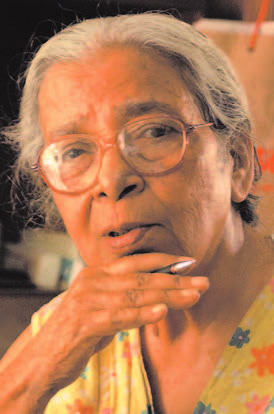
    Mahasweta Devi, the 90-year-old eminent writer-activist who passed away, July 28, symbolized writing for life’s sake. As she herself said, “It is my conviction that a storywriter should be motivated by a sense of history that would help her readers to understand their own times. I have never had the capacity nor the urge to create art for art’s sake. Since I haven’t ever learnt to do anything more useful, I have gone on writing. I have found authentic documentation to be the best medium for protest against injustice and exploitation.”  Mahasweta was no ivory-tower writer, a crusader’s zeal propelled her. Be it her involvement with the Singur agitation in West Bengal or welfare of tribals of Bihar, Orissa, Bengal and Madhya Pradesh that won her the Padma Shri in 1986, she chronicled the struggles of the subaltern classes. She fought for the rights of the landless and peasants, taking on corporate and politically entrenched interests. The recipient of the Jnanpith Award for 1996, explored motifs in modem Indian life through figures and narratives of indigenous tribes of India.

    Born in 1926, she was reared in a Dhaka family whose bread-winner, a lawyer, chose against all odds to fight the imperialists. As she said: “My grandfather had to suffer a lot for fighting the cases of freedom fighters. But right from childhood, I was brought up in an atmosphere where compromise was taboo…”. Her father, poet Manish Ghatak, uncles Sachin Choudhury, the founder-editor of the Economic and Political Weekly, and Ritwik Ghatak, an avant garde filmmaker were dominant influences. Her mother and grandmother too wrote. In fact, the women in the family had a lively relationship with books. In 1948, Mahasweta married the legendary playwright Bijon Bhattacharya of IPTA, the author of Navanno.

    Mahasweta studied literature but loved history and experienced life in varied ways – be it as a teacher or during a stint at the office of the DAG Posts and Telegraphs, assignments as a roving village reporter of the Bengali daily Jugantar. All these combined to hone the social realism that characterized her fiction. Besides 42 novels, 20 collections of short stories, five books for children, a collection of plays and translations, she also co-authored a book in Hindi – Bharat Mein Bandhua Mazdoor. Mahasweta created a span of history, allowing individuals to evolve through their interactions with the historical process. While chronicling history, she captured tones of oral narratives, in the raw idiom of everyday speech, often drawing words from several sources simultaneously. She was aghast at the casual way in which peasant up risings had been dismissed by chroniclers of India’s freedom movement. By documenting the lives and times of folk heroes, Mahasweta felt she was lending voice to the voiceless sections of society. Winning the Sahitya Akademi award for Aranyer Adhikar (1977) was a personal triumph. She had reconstructed the career of Birsa Munda, leader of a millenarian tribal revolt at the turn of the century. Her first published work, Jhansir Rani (1956), was a fictional reconstruction of the career of feudal chieftain Laxmibai, who fought against the British for her rights. For this, Mahasweta delved into archival records and travelled through the desert villages and plateau where the queen had lived and fought more than a 100 years ago.

    With painstaking care, she collected scraps of legends and folk ballads treasured in the collective memory of the region. Some of her other works are Not, (1957), Ki Basantj Ki Sorate (1958), Amrita Sanchay (1964), Andhar Manik (1967), Hajar Churashir Ma (1974), Aranyer Adhikar (1977), Agnigaritha (1978) and Chotti Munda o Tar Teer (1979). Besides this, Sunghursh, (1968) Rudaali (1993), Hazar Churasi Ki Ma (1998), Maati Maay (2006) and Gangor were movies made on her stories.

    From the late 1970s, the subjects of her stories became the subjects of her life and she got more and more involved with her work with tribals and underprivileged communities in the districts of Mednapur, Purulia, Singhbhum and Mayurbhanj. She set up several voluntary organizations for their welfare and helped bring their grievances to the view of an indifferent bureaucracy. With the funds sent by her translator Gayatri Spivak, she set up five schools in the tribal heartland of Purulia.

    While working with the tribals, Mahasweta noticed the peculiar paradox of tribal women’s life – their almost superhuman lifestyle and their fierce independence. From this flowed greatest short stories – Standayini, Draupadi, Douloti and Gohuinni.

    She was surprised at, the red-carpet treatment given to her when she visited Delhi to receive her Sahitya Akademi Award in 1979. All those who listened to her, at the India International Centre were struck by her sharp manner. No glib urban sophistication. After all, she came to Delhi very often and made the rounds of offices to collect funds for her cause. This time it was in the air-conditioned confines where she was being questioned about feminism. For a woman with a cause, her preoccupations transcended boundaries of gender and facile generalizations.

    Two classes of characters dominate Mahasweta’s stories The first are mothers bearing the brunt of social and political oppression and resisting with indomitable will. The other are sensitive individuals, initially apolitical, bound to the community with strong ties. As the individual absorbs the dehumanizing experience of exploitation, he grows to the role of a leader. Mahasweta’s Bashai Tudus, Chotu, Mundas and Mastersaabs are products of exploitation, direct and inhuman. Right from Chandi, cast out by a superstitious community in Baoen (1971), to the tribal Naxalite Draupadi in the story named after her, Mahasweta’s mothers are too earthy and emotion-charged to bear overtones of any mystical, mythical or archetypal motherhood.

    The most famous novel, Hajar Churashir Ma (Mother of 1084) is set against the climactic phase of the annihilation of urban Naxalite movement and its aftermath. Sujata,the mother of corpse number 1084, can find a moral rationale for her son Brati’s revolt only when she can piece together, exactly two years after his killing, part of her son’s life she had never known. She can see in Brati’s revolt an articulation of the silent resentment she has against her corrupt but respectable husband, her other children, their spouses and friends.

    Urvashi o Johnny,the story about the relationship between a ventriloquist and his talking doll, is just about the Emergency.The cancer of the throat of the doll is a metaphor for the suppression of democratic rights. The shock, pain and utter helplessness which the Emergency plunged Indian sensibility is captured in this strange story. In an age where books are more about hype and market-savvy tricks, writers like Mahasweta are rare. Digging a well is a leitmotif in her stories and that is what she did even in life – digging away and carving out an existence for the people whom she had given herself to. In an era of liberalization and, fast-changing beliefs (if any), the much-awarded writer embodied the triumph of substance over style.

    (The author can be reached at arutinayar@gmail.com)

  • Sahara properties to be auctioned at Rs 722 crore reserve price

    Sahara properties to be auctioned at Rs 722 crore reserve price

    NEW DELHI (TIP) : Tasked by markets regulator Sebi to sell land parcels of Sahara, HDFC Realty will e-auction on July 4 five properties owned by the beleaguered group at a reserve price of Rs 722 crore.

    HDFC Realty has been asked to auction a total of 31 land parcels at Rs 2,400 crore, while SBI Cap has been tasked to auction another 30 land properties with an estimated market value of about Rs 4,100 crore.

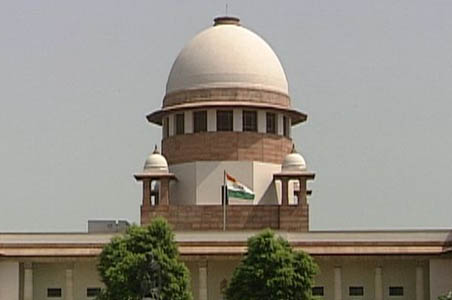
    The Securities and Exchange Board of India (Sebi) roped in HDFC Realty and SBI Cap after being asked by the Supreme Court to initiate the process of selling Sahara properties whose titles have been deposited with it by the group.

    Following a go-ahead from the Court, the two entities have put in place a mechanism to auction these properties.

    In a public notice issued on Thursday, HDFC Realty said it will e-auction as many as five land parcels on July 4 between 11 am and 12 pm. These properties will fetch around Rs 722 crore at reserve price.

    These properties are located in Andhra Pradesh, Tamil Nadu, Madhya Pradesh, Chhattisgarh and Uttar Pradesh. The assets being sold include agricultural non-agri land.

    Interested bidder can inspect these land parcels on June 10. As per the court directions, these properties cannot be sold at less than 90% of circle rates.

    After spending two years in jail, Sahara chief Subrata Roy is currently out on parole. He was sent to jail on the orders of the Supreme Court in a long running dispute with Sebi.

  • IAS officer in MP who praised Nehru in FB post transferred

    IAS officer in MP who praised Nehru in FB post transferred

    BHOPAL (TIP): IAS officer Ajay Singh Gangwar and Barwani district Collector, who praised the country’s first Prime Minister Pandit Jawaharlal Nehru in a Facebook post, was transferred by Madhya Pradesh government.

    Gangwar was transferred as Deputy Secretary in the Secretariat in Bhopal. “The state government has transferred Barwani Collector Gangwar as Deputy Secretary in the Mantralaya in Bhopal,” a state Public Relation department official said. In the Facebook post written in Hindi, which has gone viral on other social media platforms, Gangwar has written that “let me know the mistakes that Nehru should not have committed…Is it his mistake that he prevented all of us from becoming Hindu Talibani Rashtra in 1947? Is it his mistake to open IIT, ISRO, BARC, IISB, IIM, BHEL steel plant, dams, thermal power? Is it his mistake that he honoured Sarabhai, Homi Jehangir in place of intellectuals like Asaram and Ramdev?”

  • Ambassador Richard Verma Visits Bhopal

    Ambassador Richard Verma Visits Bhopal

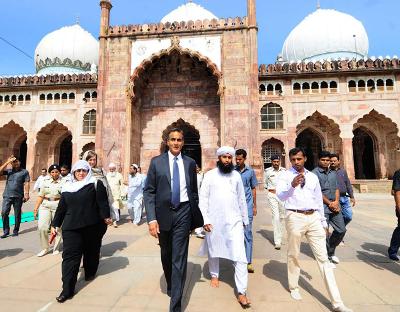
    United States Ambassador to India, Richard R. Verma, visited Bhopal on May 25, 2016 for his first official visit to the state of Madhya Pradesh.

    During his visit, Ambassador Verma met with the Honorable Chief Minister Shivraj Singh Chouhan to discuss U.S.-India cooperation, including investment opportunities for U.S. companies and clean energy initiatives.

    The Ambassador also met Chief Secretary Anthony De Sa, and Minister for Commerce, Industry and Employment, Public Sector Undertakings, Sports and Youth Welfare, Religious Trusts and Religious Affairs, Ms. Yashodara Raje Scindia.

    In addition to his official meetings, Ambassador Verma met religious leaders and students at Taj-ul-Masajid, the largest mosque in India.  “This stunning mosque is a symbol of India’s architectural treasure and represents the richness of India’s cultural heritage,” said Ambassador Verma.  “Among India’s strongest assets are its diverse religious communities, and it was very special to spend some time learning about the work and education that takes place here at the Taj-ul-Masajid.”

    Later in the day, Ambassador Verma visited the “Gauravi” One Stop Crisis Center and interacted with staff and survivors gender-based violence (GBV).  At the Center, Ambassador Verma learned about joint efforts by civil society groups and government to address and counter GBV issues.  “The Gauravi Center does absolutely incredible work,” said the Ambassador.  “The collaboration between the government and NGO are commendable, and I applaud their work to address gender based violence.”

    Ambassador Verma also spent time with students at the “Parvarish” Museum School, which was founded in 2005 by the NGO Organization for Awareness of Integrated Social Security (OASIS) to serve slum children.  Ambassador Verma interacted with current students and several program graduates who are now in college.  During his interactions, Ambassador Verma stressed the need for these students to continue working towards their goals.  “It was a joy to interact with the students at Parvarish,” said the Ambassador.  “The engaging, hands-on learning environment made me think anew about innovative options for meeting educational needs.  To see the good and important work going on at Parvarish was truly inspirational.”

    The U.S. Consulate General in Mumbai looks forward to deepening and broadening its partnership with Bhopal and Madhya Pradesh across all sectors: more two-way trade and investment, along with greater collaboration in health, science, and clean energy.

    USAmbIndia - Bhopal visit1 - Image Coutesy Getty Images / Hindustan Times
    Image Coutesy Getty Images / Hindustan Times

    USAmbIndia - Bhopal visit - Image Coutesy Getty Images / Hindustan Times
    Image Coutesy Getty Images / Hindustan Times
  • Lutyens’ Delhi, 19 others make cut for smart cities

    Lutyens’ Delhi, 19 others make cut for smart cities

    NEW DELHI (TIP): Lutyens’ zone, already considered among the most pampered areas in India, has made it to the list of 20 cities to be turned into Smart Cities as part of the Modi government’s ambitious urban modernisation programme.

    For the capital, initially, the scheme will be focused on “retrofitting” (redesigning existing infrastructure) 550 acres in and around Connaught Place in what will mark a big push to the historical shopping district which has just overcome decades of decay to re-emerge as a hot spot.

    The list released on Thursday had Bhubaneswar at the top, with a Rs 4,500-crore plan to retrofit and redevelop 985 acres around the railway station with modern amenities.

    The race for inclusion in the Smart City league – a concept centered on provision of basic amenities such as 24X7 power and drinking water supply as well as contemporary attributes like e-governance and IT infrastructure -saw Madhya Pradesh bagging the maximum three spots, while populous states such as UP, Bengal and Bihar failed to make it in the first round.

    The 20 cities which feature in the first list are expected to spend almost Rs 51,000 crore to upgrade the quality of life – a generous step-up of allocation of funds for upgrade of a significant urban swathe even if some of the projects would have possibly been taken up in normal course. The concept of Smart City marks a big departure from the traditional municipal body-led model of urban development to one marked by corporate features such as a CEO who can even be drafted from the private sector and will have job security, special purpose vehicle route for raising funds and execution of the development plan.

    Unlike in the past, when the burden of development was on the states and the Centre, this time over 60% of the resources are proposed to be generated by the cities concerned. The selection of cities has been influenced by their capacity to deliver as determined on the basis of their past performance and financial strength.

    Importantly, only one of the 20 selected cities, Kochi, will focus on taking up a green project. This might mean the revival of the localities which are groaning under burgeoning population and are hamstrung by woefully inadequate infrastructure for current and future requirements.

    The selected cities will get central funding of Rs 500 crore each in the next five years and states will put up an equal amount to kickstart the project. Almost 60% of the investment will come in the form of private investment and innovative mechanisms that the cities will adopt. To begin with, only selected areas in the cities proposed by municipal bodies will be developed or redeveloped within two to five years.
    “These will work as catalysts and will become lighthouse to expand similar projects or work to make cities better,” minister of urban development Venkaiah Naidu said.

    Source: TOI

  • PADMA AWARDS 2016

    PADMA AWARDS 2016

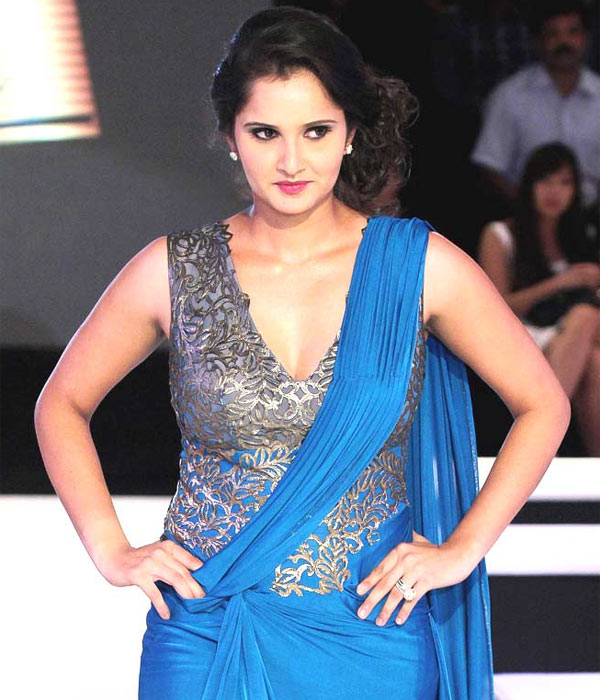
    NEW DELHI (TIP): Former Comptroller and Auditor General of India Vinod Rai, actor Rajinikanth, spiritual guru Sri Sri Ravishankar and tennis player Sania Mirza are on the list of 112 Padma awardees whose names were announced on Monday by the government.

    The awards will be given across three categories: the Padma Vibhushan, Padma Bhushan and Padma Shri. These awards are given on Republic Day, for the over six decades now, to people who the government recognises have excelled in their fields.

    Padma Vibhushan

    1. Shri Rajinikanth    Art-Cinema    Tamil Nadu
    2. Ms. Yamini Krishnamurthi Art- Classical dance Delhi
    3. Smt. Girija Devi    Art-Classical Vocal    West Bengal
    4. Shri Ramoji Rao    Literature & Education-Journalism   Andhra Pradesh
    5. Dr. Viswanathan Shanta    Medicine- Oncology    Tamil Nadu
    6. Shri Shri Ravi Shankar    Others-Spiritualism    Karnataka
    7. Shri Jagmohan    Public Affairs    Delhi
    8. Dr.Vasudev Kalkunte Aatre    Science & Engineering    Karnataka
    9. Shri Avinash Dixit (Foreigner)    Literature & Education
    10. Late Shri Dhiru Bhai Ambani (Posthumous)    Trade & Industry    Maharashtra

    Padma Bhushan

    11. Shri Anupam Kher Art-Cinema Maharashtra
    12. Shri Udit Narayan Jha Art-Playback Singing Maharashtra
    13. Shri Ram V. Sutar Art-Sculpture Uttar Pradesh
    14. Shri Heisnam Kanhailal Art-Theatre Manipur
    15. Shri Vinod Rai Civil Service Kerala
    16. Dr. Yarlagadda Lakshmi Prasad Literature & Education Andhra Pradesh
    17. Prof. N. S. Ramanuja Tatacharya Literature & Education Maharashtra
    18. Dr. Barjinder Singh Hamdard Literature & Education – Journalism Punjab
    19. Prof. D. Nageshwar Reddy Medicine-Gastroenterology Telangana
    20. Swami Tejomayananda Other-Spiritualism Maharashtra
    21. Shri Hafeez Contractor Others-Architecture Maharashtra
    22. Shri Ravindra Chandra Bhargava Public Affairs Uttar Pradesh
    23. Dr.Venkata Rama Rao Alla Science & Engineering Andhra Pradesh
    24. Ms. Saina Nehwal Sports-Badminton Telangana
    25. Ms. Sania Mirza Sports-Tennis Telangana
    26. Ms. Indu Jain Trade & Industry Delhi
    27. Late Swami Dayanand Sarawasati (Posthumous) Others- Spiritualism Uttarakhand
    28. Shri Robert Blackwill (Foreigner) Public Affairs USA
    29. Shri Pallonji Shapoorji Mistry (NRI/PIO) Trade & Industry Ireland

    Padma Shri

    30. Smt. Prathibha Prahlad Art- Classical Dance Delhi
    31. Shri Bhikhudan Gadhvi Art- Folk Music Gujarat
    32. Shri Sribhas Chandra Supakar Art- Textile Designing Uttar Pradesh
    33. Shri Ajay Devgn Art-Cinema Maharashtra
    34. Ms. Priyanka Chopra Art-Cinema Maharashtra
    35. Pt. Tulsidas Borkar Art-Classical Music Goa
    36. Dr. Soma Ghosh Art-Classical Vocal Uttar Pradesh
    37. Shri Nila Madhab Panda Art-Film Direction and Production Delhi
    38. Shri S.S. Rajamouli Art-Film Direction and Production Karnataka
    39. Shri Madhur Bhandarkar Art-Film Direction and Production Maharashtra
    40. Prof. M. Venkatesh Kumar Art-Folk Artist Karnataka
    41. Ms. Gulabi Sapera Art-Folk Dance Rajasthan
    42. Smt. Mamta Chandrakar Art-Folk Music Chhattisgarh
    43. Ms. Malini Awasthi Art-Folk Music Uttar Pradesh
    44. Shri Jai Prakash Lekhiwal Art-Miniature Painting Delhi
    45. Shri K. Laxma Goud Art-Painting Telangana
    46. Shri Bhalchandra Dattatray Mondhe Art-Photography Madhya Pradesh
    47. Shri Naresh Chander Lal Art-Theatre & Cinema Andaman & Nicobar
    48. Shri Dhirendra Nath Bezbaruah Literature & Education Assam
    49. Shri Prahlad Chandra Tasa Literature & Education Assam
    50. Dr.Ravindra Nagar Literature & Education Delhi
    51. Shri Dahyabhai Shastri Literature & Education Gujarat
    52. Dr.Santeshivara Bhyrappa Literature & Education Karnataka
    53. Shri Haldar Nag Literature & Education Odisha
    54. Shri Kameshwaram Brahma Literature & Education – Journalism Assam
    55. Prof. Pushpesh Pant Literature & Education-Journalism Delhi
    56. Shri Jawaharlal Kaul Literature & Education-Journalism Jammu & Kashmir
    57. Shri Ashok Malik Literature &Education Delhi
    58. Dr.Mannam Gopi Chand Medicine-Cardio Thoracic Surgery Telangana
    59. Prof. Ravi Kant Medicine-Surgery Uttar Pradesh
    60. Prof. Ram Harsh Singh Medicine- Ayurveda Uttar Pradesh
    61. Prof. Shiv Narain Kureel Medicine- Paediatric Surgery Uttar Pradesh
    62. Dr.Sabya Sachi Sarkar Medicine -Radiology Uttar Pradesh
    63. Dr. Alla Gopala Krishna Gokhale Medicine-Cardiac Surgery Andhra Pradesh
    64. Prof. T.K. Lahiri Medicine-Cardio Thoracic Surgery Uttar Pradesh
    65. Dr. Praveen Chandra Medicine-Cardiology Delhi
    66. Prof. (Dr) Daljeet Singh Gambhir Medicine-Cardiology Uttar Pradesh
    67. Dr.Chandrasekar Shesadri Thoguluva Medicine- Gastroenterology Tamil Nadu
    68. Dr. (Mrs.) Anil Kumari Malhotra Medicine-Homeopathy Delhi
    69. Prof. M.V. Padma Srivastava Medicine-Neurology Delhi
    70. Dr. Sudhir V. Shah Medicine-Neurology Gujarat
    71. Dr. M. M. Joshi Medicine-Ophthalmology Karnataka
    72. Prof. (Dr) John Ebnezar Medicine-Orthopaedic Surgery Karnataka
    73. Dr. Nayudamma Yarlagadda Medicine-Paediatric Surgery Andhra Pradesh
    74. Shri Simon Oraon Other -Environment Conservation Jharkhand
    75. Shri Imitiaz Qureshi Other-Culinary Delhi
    76. Shri Piyush Pandey Others-Advertising & Communication Maharashtra
    77. Shri Subhash Palekar Others-Farming Maharashtra
    78. Shri Ravinder Kumar Sinha Others-Wildlife Conservation Bihar
    79. Dr. H.R. Nagendra Others-Yoga Karnataka
    80. Shri M. C. Mehta Public Affairs Delhi
    81. Shri M. N. Krishna Mani Public Affairs Delhi
    82. Shri Ujjwal Nikam Public Affairs Maharashtra
    83. Shri Tokheho Sema Public Affairs Nagaland
    84. Dr. Satish Kumar Science & Engineering Delhi
    85. Dr.Mylswamy Annadurai Science & Engineering Karnataka
    86. Prof. Dipankar Chatterji Science & Engineering Karnataka
    87. Prof.(Dr.) Ganapati Dadasaheb Yadav Science & Engineering Maharashtra
    88. Smt. (Prof.) Veena Tandon Science & Engineering Meghalaya
    89. Shri Onkar Nath Srivastava Science and Engineering Uttar Pradesh
    90. Ms. Sunita Krishnan Social Work Andhra Pradesh
    91. Shri Ajoy Kumar Dutta Social Work Assam
    92. Shri M. Pandit Dasa Social Work Karnataka
    93. Shri P. P. Gopinathan Nair Social Work Kerala
    94. Smt. Madeleine Herman de Blic Social Work Puducherry
    95. Shri Srinivasan Damal Kandalai Social work Tamil Nadu
    96. Shri Sudhakar Olwe Social Work Maharashtra
    97. Dr. T.V. Narayana Social Work Telangana
    98. Shri Arunachalam Murugantham Social Work Tamil Nadu
    99. Ms. Deepika Kumari Sports-Archery Jharkhand
    100. Shri Sushil Doshi Sports-commentary Madhya Pradesh
    101. Shri Mahesh Sharma Trade & Industry Delhi
    102. Shri Saurabh Srivastava Trade & Industry Delhi
    103. Sh Dilip Sanghvi Trade & Industry Maharashtra
    104. Dr. Keki Hormusji Gharda Trade & Industry Maharashtra
    105. Late Shri Prakash Chand Surana (Posthumous) Art – Classical Music Rajasthan
    106. Late Shri Saeed Jaffrey (NRI/PIO/Posthumous) Art- Cinema UK
    107. Shri Michael Postel (Foreigner) Art-Archaeology France
    108. Shri Salman Amin Sal Khan (NRI/PIO) Literature & Education USA
    109. Smt. Hui Lan Zhang (Foreigner) Others-Yoga China
    110. Shri Predrag K. Nikic (Foreigner) Others-Yoga Serbia
    111. Dr.Sundar Aditya Menon (NRI/PIO) Social Work UAE
    112. Shri Ajaypal Singh Banga (NRI/PIO) Trade & Industry USA

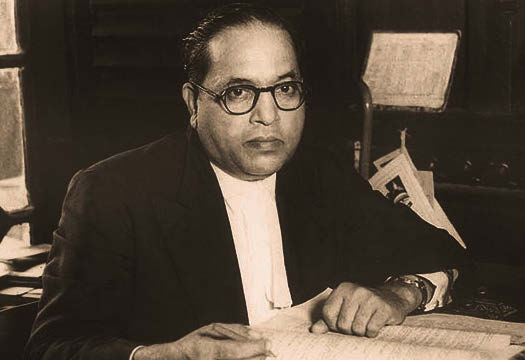
  • ARCHITECT OF INDIA’S CONSTITUTION DR. BHIMRAO AMBEDKAR

    ARCHITECT OF INDIA’S CONSTITUTION DR. BHIMRAO AMBEDKAR

    Dr B R Ambedkar, popularly known as Babasaheb Ambedkar, was one of the architects of the Indian Constitution. He was a well-known politician and an eminent jurist. Ambedkar’s efforts to eradicate the social evils like untouchablity and caste restrictions were remarkable. The leader, throughout his life, fought for the rights of the dalits and other socially backward classes. Ambedkar was appointed as the nation’s first Law Minister in the Cabinet of Jawaharlal Nehru. He was posthumously awarded the Bharat Ratna, India’s highest civilian honor in 1990.

    “Unlike a drop of water which loses its identity when it joins the ocean, man does not lose his being in the society in which he lives. Man’s life is independent. He is born not for the development of the society alone, but for the development of his self.”

    Bhimrao Ambedkar was born to Bhimabai Sakpal and Ramji on 14 April 1891 in Madhya Pradesh. He was the fourteenth child of his parents. Ambedkar’s father was a Subedar in the Indian Army and posted at Mhow cantonment, MP. After the retirement of his father in 1894, the family moved to satara. Shortly after, his mother passed away. Four years later, his father remarried and the family shifted to Bombay, where he cleared his matriculation in 1908. His father Bhimabai Sakpal died in Bombay, in 1912.

    Ambedkar was a victim of caste discrimination. His parents hailed from the Hindu Mahar caste, which was viewed as “untouchable” by the upper class. Due to this, Ambedkar had to face severe discriminations from every corners of the society. The discrimination and humiliation haunted Ambedkar even at the Army school, run by British government. Fearing social outcry, the teachers would segregate the students of lower class from that of Brahmins and other upper classes. The untouchable students were often asked by the teacher to sit outside the class. After shifting to Satara, he was admitted to a local school but the change of school did not change the fate of young Bhimrao. Discrimination followed wherever he went. In 1908, Ambedkar got the opportunity to study at the Elphinstone College. Besides clearing all the exams successfully Ambedkar also obtained a scholarship of twenty-five rupees a month from the Gayakwad ruler of Baroda, Sayaji Rao III. Political Science and Economics were the subjects in which he graduated from the Bombay University in 1912. Ambedkar decided to use the money for higher studies in the USA.

    “Political tyranny is nothing compared to the social tyranny and a reformer who defies society is a more courageous man than a politician who defies Government.”

    After coming back from the US, Ambedkar was appointed as the Defense secretary to the King of Baroda. Even, there also he had to face the humiliation for being an ‘Untouchable’. With the help of the former Bombay Governor Lord Sydenham, Ambedkar obtained the job as a professor of political economy at the Sydenham College of Commerce and Economics in Bombay. In order to continue his further studies, in 1920 he went to England at his own expenses. There he was awarded honor of D.Sc. by the London University. Ambedkar also spent few months at the University of Bonn, Germany, to study economics. On 8 June, 1927, he was awarded a Doctorate by the University of Columbia.

    After returning to India, Bhimrao Ambedkar decided to fight against the caste discrimination that almost fragmented the nation. Ambedkar opined that there should be separate electoral system for the Untouchables and lower caste people. He also favored the concept of providing reservations for Dalits and other religious communities.

    Ambedkar began to find ways to reach to the people and make them understand the drawbacks of the prevailing social evils. He launched a newspaper called
    “Mooknayaka” (leader of the silent). It was believed that, one day, after hearing his speech at a rally, Shahu IV, an influential ruler of Kolhapur dined with the leader. The incident also created a huge uproar in the socio-political arena of the country.

    In 1936, Ambedkar founded the Independent Labor Party. In the 1937 elections to the Central Legislative Assembly his party won 15 seats. Ambedkar oversaw the transformation of his political party into the All India Scheduled Castes Federation, although it performed poorly in the elections held in 1946 for the Constituent Assembly of India.

    “For a successful revolution it is not enough that there is discontent. What is required is a profound and thorough conviction of the justice, necessity and importance of political and social rights.”

    Ambedkar objected to the decision of Congress and Mahatma Gandhi to call the untouchable community as Harijans. He would say that even the members of untouchable community are same as the other members of the society. Ambedkar was appointed on the Defense Advisory Committee and the Viceroy’s Executive Council as Minister for Labor. His reputation as a scholar led to his appointment as free India’s first, Law Minister and chairman of the committee responsible to draft a constitution.

    Bhimrao Ambedkar was appointed as the chairman of the constitution drafting committee. He was also a noted scholar and eminent jurist. Ambedkar emphasized on the construction of a virtual bridge between the classes of the society. According to him, it would be difficult to maintain the unity of the country if the difference among the classes were not met.

    In 1950, Ambedkar traveled to Sri Lanka to attend a convention of Buddhist scholars and monks. After his return he decided to write a book on Buddhism and soon, converted himself to Buddhism. In his speeches, Ambedkar lambasted the Hindu rituals and caste division. Ambedkar founded the Bharatiya Bauddha Mahasabha in 1955. His book “The Buddha and His Dhamma” was published posthumously.

    On October 14, 1956 Ambedkar organized a public ceremony to convert around five lakh of his supporters into Buddhism. Ambedkar traveled to Kathmandu to attend the Fourth World Buddhist Conference. He completed his final manuscript, “The Buddha or Karl Marx” on December 2, 1956.

    Since 1954-55 Ambedkar was suffering from serious health problems including diabetes and weak eyesight. On 6 December, 1956 he died at his home in Delhi. Since, Ambedkar adopted the Buddhism as his religion, a Buddhist-style cremation was organized for him. The ceremony was attended by hundreds of thousands of supporters, activists and admirers.

  • Defence Ministry gets NHRC notice over security risk to Jabalpur

    BHOPAL (TIP): The NHRC has issued a notice to the Union Ministry of Defence over security risk to the city of Jabalpur in Madhya Pradesh.

    The notice was issued after taking suo motu cognizance of a media report that the spontaneous combustion of thousands of unexploded and rejected bombs, which are buried and awaiting disposal at the Ordinance Factory, Khamaria has posed risk to the city.

    The factory is located in a densely populated area. “Giving two weeks’ time to the Defence Secretary to respond with a factual report, Justice D Murugesan has observed that the contents of the press report, if true, raise a serious issue of violation of right to life and right to health of the workers and local residents,” National Human Rights Commission (NHRC) said in a press release.

    According to the media report, carried on the 14th December, 2015, Jabalpur city also happens to be quake prone and the danger can be huge given reports of sporadic explosions in the premises in the last few years. The latest was on the 11th December, 2015 when two employees were injured. Besides, explosives from 1999 Kargil War, a stockpile of unexploded and rejected bombs are also awaiting disposal at the Ordinance Factory, it said. While referring to the variety of mortars, shells and explosives stored, the report also mentions that the detonators have corroded to the point where it is dangerous to defuse them and there was a risk of spontaneous combustion due to rapid deterioration of the duds.

    The report also quotes a member of Joint Consultation Machinery at Khamaria, under the Union Ministry of Defence, that the issue was taken up with authorities several times, but nobody was willing to take the risk, it said.

  • Sania Mirza counters MP government’s charges

    Sania Mirza counters MP government’s charges

    NEW DELHI (TIP): Seeking to counter charges levelled against her by the Madhya Pradesh government, tennis star Sania Mirza on Thursday issued a statement justifying the need for a chartered plane to attend the central Indian state’s annual sports awards ceremony. Reports emerged earlier this week that the 29-year-old had asked for a chartered plane and a make-up kit worth Rs.75,000 to attend the function on Saturday which was postponed to Dec 1.

    When the demands were heard, state Sports Minister Yashodhara Raje Scindia declined to meet them and instead brought in chief national badminton coach Pullela Gopichand as the chief guest for the event.

  • BANDHAVGARH NATIONAL PARK

    BANDHAVGARH NATIONAL PARK

    Bandhavgarh National Park, the most popular national parks in India is located in the Vindhya Hills of the Umaria district in Madhya Pradesh. Declared as a national park in 1968 the Bandhavgarh National Park is spread across the area of 105 km². The name Bandhavgarh has been derived from the most prominent hillock of the area of Umaria. The area of Bandhavgarh is being flourished with a large biodiversity, the place which is also being famed to grip highest density of tiger population in India. Similarly, the park also beholds the largest breeding population of leopards and various species of deer. Over the years, the park has shown a great number of increases in the count of the tiger species and this is the reason why tiger tours is so famed to attract large amount of tourists at its vicinity.

    BANDHAVGARH2The park has been divided into three major zones named as Tala, Magdi and Bamera out of which the Tala zone attracts major number of tourists by offering the tiger sighting opportunities. The park authorities are also focusing on the Magdi Zone by providing more opportunity to spot tigers. Elephant shows are also organized in Magdi zone of the Bandhavgarh national park to increase the chances of spotting the elusive king of the jungle.

    Bandhavgarh National Park consists of mixed vegetations ranging from tall grasslands to thick Sal forest and so is the perfect habitat of variety of animals and birds. Due to varied topography, the Bandhavgarh national park provides ample opportunity to spot the majestic Indian tiger and some rarely seen animals like leopard and sloth bear. Due to high wildlife sighting it is becoming popular amongst tourists visiting India.

    BANDHAVGARH1

    Wildlife in Bandhavgarh

    There are more than 22 species of mammals and 250 species of birds. Common Langurs and Rhesus Macaque represent the primate group. Carnivores include the Asiatic Jackal, Bengal Fox, Sloth Bear, Ratel, Gray Mongoose, Striped Hyena, Jungle Cat, Leopard and Tiger. The artiodactyls frequently sighted are Wild Pigs, Spotted Deer, Sambar, Chausingha, Nilgai, Chinkara and Gaur. Mammals such as Dhole, the smallIndian Civet, Palm Squirrel and Lesser Bandicoot Rat are seen occasionally. Among the herbivores, Gaur is the only coarse feeder. There are two main ways of getting about in the park- in a motor vehicleoron elephant back. Many of the animals are now accustomed to both; evenso,it is best to talk quietly and not make rapid movements. Jeep safaris are best undertaken from dawn until about 10am and from about 4pm until dusk, as the animals are most active during these periods. A Forest Department guide must always accompany you. This guide will be able to direct you and point out wildlife. Elephants are used every morning by the Forest Department for Tiger- tracking. If a Tiger is found, then the elephant will take you directly to the Tiger either from the lodge or from a nearby point reached by jeep/car.

    Wildlife Viewing

    Getting a closer view of the wild creatures in the dense jungles of Bandhavgarh brings immense pleasure and enthusiasm among the tourists but a proper care and instructions are equally important for a safe and protected safari trip. For your knowledge, there are generally two main ways of getting about in the reserve; either in a motor vehicle or on an elephant back. And the pleasing fact is that many of the animals are accustomed to either of the mediums and don’t get annoyed of it but still it is advisable to talk quietly and to avoid making rapid movements.

    Tips

    • If you are choosing for the jeep safari, it should be best undertaken from dawn until 10 am and from about 4 pm until dusk, as most of the animals are active during these periods.
    • A forest department guide must always accompany you who will be able to direct you and point any particular wild species.
    • Elephant safari is the safest medium for tiger tour and is preferred mostly by the forest department. If a tiger is found, then the elephant will take you directly to the tiger either from the lodge or from a nearby point reached by jeep/car.
    • You must pick safe and comfortable clothing so that you can find easy movement. Preferably cotton is the perfect choice which is safe and comfortable in every respect. Additionally, the color of the cloth should not be too bright to catch the attention of the animals (since it may disturb them) but a camouflage color can be the good option.
    • You must pay attention to your movements and activities that should surely not disturb the wild creatures.
    • Carrying almost every necessary item can be very helpful for you but mind it you should not be over-luggage. This can help you to avoid the extra burden of carrying weight and you can enjoy your trip completely by avoiding fatigue.
    • Carrying first aid ailments while travelling is a smart move as you never know when you will meet any inconveniences while enjoying jungle trip.
    • Photography is the most important part of any kind of wildlife tour when you can click the special moments and take them along with you. But while clicking on the object, your aim should be not to disturb them and you should silently click their shots.
    • You must be patient while observing the wild creatures and should note down their movement, behavior and features for your records.
    • Observe the birds carefully with a constant eye and be active throughout the observation since you are going to read the movements of nature’s most active creature.
    • Your observation should include everything, right from their movement, appearance and voice that will certainly help you to distinguish every species from another.
    • You must keep a permanent record of your observation so that you can make a careful distinction of the color and pattern of the birds, their hood shape, the size and shape of their beaks and wings and of course if possible their flying style and movements.
    • Your observation should also include the feeding habits and their style of eating.
    • Observing the general habitat, climate and the regions where the most common birds are found will definitely increase your knowledge of birds and will complement your bird-watching.
    • Above all a patient and careful observation and keeping a documented record of all of it will bring about a successful birding trip in Bandhavgarh which is the most perfect location for almost more than 150 species of birds.
  • Jaitley releases ‘Vision Document’ for Bihar poll

    Jaitley releases ‘Vision Document’ for Bihar poll

    PATNA (TIP): Taking a potshot at the ‘Grand Alliance’ of the RJD, JD(U) and Congress in Bihar, BJP leader Arun Jaitley today said they were running a “three-legged race” that cannot be won even as he warned voters of “anarchy” and “jungle raj” if the rival coalition came to power.

    Releasing his party’s ‘Vision Document’ for the upcoming Bihar Assembly poll, Jaitley also promised that the BJP-led National Democratic Alliance (NDA) would help bring the state out of its backwardness and put it on the path of progress and development as had happened in Madhya Pradesh under the BJP rule.

    Charging that the grand alliance was a contradictory coalition, he said, “Participants of the grand alliance are opportunists. Political consistency is not their virtue. There can be no other result but to push Bihar into anarchy in case they win.”

    Jaitley, the Union Finance Minister, said that while one could never comprehend an alliance between the BJP and Congress, it was even more difficult to imagine the followers of Ram Manohar Lohia joining hands with the Congress given their differing thoughts and ideologies.

    “We see such political inconsistency and such a contradictory alliance. A three-legged race cannot be run and even if it is run, it cannot be won,” he said.

    Jaitley also attacked Bihar Chief Minister Nitish Kumar, saying that he had allied himself with the creators of ‘jungle raj’.

    Despite Kumar having won the last three polls in Bihar on the promise of freeing the state from ‘jungle raj’, Jaitley claimed that nothing would change under a coalition of which Lalu Prasad was a part.

    He also slammed Lalu Prasad for his attack on the BJP over the reservation issue in the wake of RSS chief Mohan Bhagwat’s call for a review of the quota policy.

    “The RJD knows it cannot win on the issue of development and that is why it is trying to divide society over other issues,” alleged Jaitley.

    Talking about the ‘Vision Document’ for Bihar, he said it was for ushering in development in the state through the creation of roads and infrastructure, agro-based industry and employment opportunities. He also talked about Bihar’s rich human resources and agriculture to propel such progress.

    “The Centre will always stand behind Bihar to help it. If a BJP-led government is formed in Bihar, which we hope will happen, Bihar will rewrite its history,” he said.

  • Vyapam scam: CBI conducts massive raids

    Vyapam scam: CBI conducts massive raids

    NEW DELHI (TIP): Two months after it took over the investigation in the multi-layered Vyapam (Vyavsayik Pariksha Mandal) scam, CBI sleuths on Thursday conducted raids at around 40 places in Madhya Pradesh and Uttar Pradesh.

    Searches were also conducted at the residences of MP’s former BJP minister Laxmikant Mishra; former Vyapam system analyst Nitin Mahindra; Dhanraj Yadav, former officer on special duty to MP Governor Ram Naresh Yadav, in Lucknow, alleged mastermind Jagadish Sagar and several others.

    “We have conducted searches relating to Vyapam cases in around 40 places in Madhya Pradesh and Uttar Pradesh. In MP, the searches were conducted in the districts of Bhopal, Indore, Gwalior, Ujjain, Jabalpur and Rewa; the headquarters of Vyapam in Bhopal and in Sironj in Vidisha district. In Uttar Pradesh, the searches were conducted in Lucknow and Allahabad,” a senior CBI official overseeing the probe said.

    The searches hinted at an alleged nexus between politicians and high-placed officials in receiving bribes from the job-seekers to clear Madhya Pradesh Professional Examination Board or Vyapam examinations. The Supreme Court, which  had directed the CBI to take over the probe on July 9, has sought a status report by October 9.

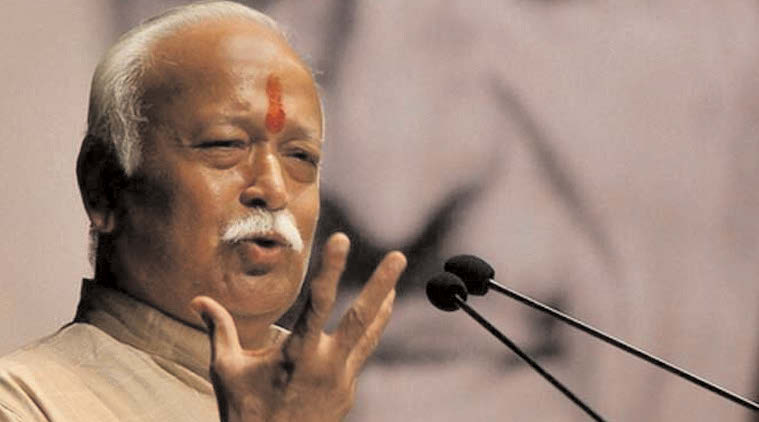
  • A Sarsanghchalak’s very own Sarkaar

    A Sarsanghchalak’s very own Sarkaar

    15 years ago, this month, a prime minister of India had traveled to the United States for the annual United Nations General Assembly mela. During that visit, he found time to attend a Vishwa Hindu Parishad event in Staten Island where he declared himself a swayamsevak – yes, as in the Rashtriya Swayamsevak Sangh. This was music to the ears of the Nagpur Gharana. A prime minister who all along was pretending to have little to do with this Hindu outfit suddenly got into a confessional mood.

    Back in New Delhi, Atal Behari Vajpayee’s exuberance did not last long. The conflict between the demands the RSS would make on a prime minister and his constitutional oath was too palpable to permit any kind of meaningful jugalbandi. Though Vajpayee continued to mark his token attendance at the annual guru dakshina rites, he was not afraid to antagonize the Nagpur crowd. After the 2002 anti-Muslim riots in Gujarat, it was simply not possible for Vajpayee to maintain any civilized conversation with these comrades among the swayamsevaks. The gurus never forgave Vajpayee for wanting to draw outside the lines.

    And, again, 10 years ago, July 2005 to be precise, three designated gurus of the Nagpur Gharana traveled to Delhi to tell the then BJP president, LK Advani, to put in his papers. Advani had committed the solecism of saying something vaguely in praise of Muhammad Ali Jinnah. All the top leaders of the BJP held their collective peace as the “unknown, unelected, unaccountable” Nagpur-empowered busybodies roughed up Advani as if he was just a taluka-level politician. Advani was rendered hors de combat. By the end of the year, he was gone as the party president. The Nagpur bosses wanted to reaffirm the first principle: No BJP leader would be allowed any deviation. They had had enough of Vajpayee and his liberal tantrums.

    And, last week, it was this very first principle that was re-asserted when the Sarsanghchalak summoned Prime Minister Modi and his ministers. Well, if you are a swayamsevak, you do respond to summons from the superior in the hierarchy. Period. That is the code of the saffron brotherhood. Admitted, Sushma Swaraj is not an RSS bhakt. Nor is Arun Jaitley. Unless, he has managed to keep this fact away from his “moderate and decent” friends in Delhi. But neither of them had any choice.

    Why are the liberal souls losing their shirt just because the Prime Minister and his ministerial colleagues had all chosen to put in an appearance before the RSS chief and his advisers? After all, the Modi-RSS connection is not new.

    It was no secret that it was the RSS’s unequivocal endorsement of Modi that proved decisive in the BJP making him its prime ministerial mascot. Nor was the RSS’s involvement on behalf of Narendra Modi in the 2014 electoral process a secret affair. It was open and fairly well documented.

    From his Gujarat days, Modi has written the blue book on how to look after the RSS and its functionaries. Modi is smarter – which is not the same thing as being wiser – than Vajpayee. He has shrewdly sized up the small men and their small needs.

    To be fair, Modi never kept anyone in the dark about his RSS links. Yet, if the best and the brightest among the New Delhi-based intellectuals and others ‘thought leaders’ chose to be taken in by the ‘vikas’ mantra, it is their problem – not Modi’s.

    Instead of having the buyer’s regret, every moderate voice should welcome this national-level seduction of the RSS. There is no dark side to it.

    Look at what has already happened: The RSS, which has arrogated to itself the role of the sole arbiter of moral values, is now wasting its breath on explaining the excesses and aberrations of the BJP chief ministers – Shivraj Singh Chouhan in Madhya Pradesh and Vasundhara Raje in Rajasthan. It would be instructive to find out how that fly-by-night entrepreneur, Lalit Modi, is described in the morning shakha meetings in Jaipur. Just as it would be revealing to know what explanation the swayamsevaks in Bhopal offered regarding the horror of a scandal called Vyapam.

    Indeed, none seems to have noticed that the RSS has reduced itself to being a BJP spokesperson.

    Its two other chief ministers – in Haryana and Maharashtra – both proud products of the Sangh brain-washing factory system – have turned out to be such poor advertisements for good governance or for the RSS brand. Apart from exhibiting a new willingness to provoke -Manohar Lal Khattar’s absurd infatuation with Baba Ramdev and Devendra Fadnavis’ with petty preoccupations with bans – these two have hardly enhanced the reputation of the RSS.

    More interestingly, the BJP apologists have cockily explained Modi and his ministers’ attendance at the Sangh Shivir as not very dissimilar to some Congress ministers and Prime Minister Manmohan Singh’s response to the Sonia Gandhi-led National Advisory Council.

    Never mind that the NAC was a government-constituted, gazetted body; it has now been easily done away with. Never mind that Sonia Gandhi is the head of a legally recognized political party, which enters the electoral fray with its own symbol. Yet any suggestion of a moral equivalence between Sonia Gandhi and Mohan Bhagwat should not be resented.

    Perhaps, it should even be a matter of some satisfaction that the RSS has come out of its bogus pretence of being just a cultural organization. The democratic forces should welcome it and demand that it should be brought within the ambit of the Right-to-Information regime.

    Nonetheless, a matter of grave concern is the new attempt aimed at an intellectual hegemony. For instance, the culture minister in the Modi government.

    Mahesh Sharma, a black-belt saffronite, has argued that by voting for Modi and the BJP, the voters have given a mandate for “saffronisation” of education, culture and other institutions. With just 31 per cent of the votes, the Modi sarkaar would like to believe that it has been given a license to operationalize the RSS agenda?

    This is an anti-democratic argument and is laced with morally unpleasant smells. Whatever obedience the Prime Minister and his ministers may choose to render to the Sarsanghchalak, they need to be reminded that they are still governed and bound by something called the Constitution of India. India is still a constitutional democracy and its rulers, irrespective of the number of seats in the Lok Sabha, are still answerable to a robust Parliament and an independent judiciary.

  • Census 2011: Hindus dip to below 80% of population; Muslim share up

    Census 2011: Hindus dip to below 80% of population; Muslim share up

    NEW DELHI (TIP): The percentage of Muslims in the country’s population increased 0.8 percentage points between 2001 and 2011 to 14.23% or 17.22 crore. In the previous decade, i.e. between 1991 and 2001, their share in the total population had increased by a bigger measure or 1.73 percentage points to 13.43%. They were, however, the only community to register a growth in terms of their share in the total population. The Census 2011 data on Population by Religious Communities, released by the Registrar General of India on Tuesday, also showed that the percentage of Hindus dipped by 0.7 percentage points (PP) in the decade 2001 to 2011, pulling it for the first time below 80%. Hindus now constitute 79.8% of the country’s total population. In the previous decade, the proportion of Hindus in the population showed a sharper fall by 1.94 percentage points.

    In January this year, The Indian Express had reported about the fall in percentage of the Hindu population. According to the 2011 Census data, India’s population in the 2001-2011 grew 17.7% to 121.09 crore, with Hindus numbering 96.63 crore. The decadal growth rate of Hindus was 16.8% during the period. The previous UPA government did not release the census data on religious composition in the last couple of years for political reasons.

    The data release coincides with Assembly elections due in three states with significant Muslim population —Bihar in October this year and Assam and West Bengal in 2016. Except Madhya Pradesh, the increase in the Muslim population in all big states remained above the national average of 24.6%. In Rajasthan, it increased by 29.81%, Bihar 27.95%, Gujarat 27.3%, Maharashtra 26.3% and in Uttar Pradesh by 25.19%. In Madhya Pradesh,the increase was marginally less than the national average at 24.29%. Among the other big states which have sizeable Muslim numbers, Assam has seen their count increase 29.59% and West Bengal 21.81%, both of which are poll-bound. Barring Manipur and Puducherry, Muslims as a percentage of the population increased in all other states. In Assam, their share increased 3.3 percentage points to 34.22%. In Manipur and Puducherry, it fell 0.41 and 0.04 percentage points respectively to 8.4% and 6.05%. According to the 2011 data, Christians formed 2.3% of the total population at 2.78 crore. The Sikh population stood at 2.08 crore making up 1.7%, Buddhists at 84 lakh accounted for 0.7%, and 45 lakh Jains accounted for 0.4% of the total population. While there has been no significant change in the proportion of Christians and Jains, that of Sikhs has declined by 0.2 percentage points and of Buddhists by 0.1 percentage points during the decade.

    The growth rate of Christians over the decade stood at 15.5%, Sikhs at 8.4%, Buddhists at 6.1%and Jains 5.4%.

  • FALL IN LOVE WITH BEST WATERFALLS IN INDIA

    FALL IN LOVE WITH BEST WATERFALLS IN INDIA

    The revival of the – monsoon will see people head to hill stations in the hope of making the most of the rains. These travel escapades are especially -popular at this time of the year for multiple waterfalls that sprout at every other corner.

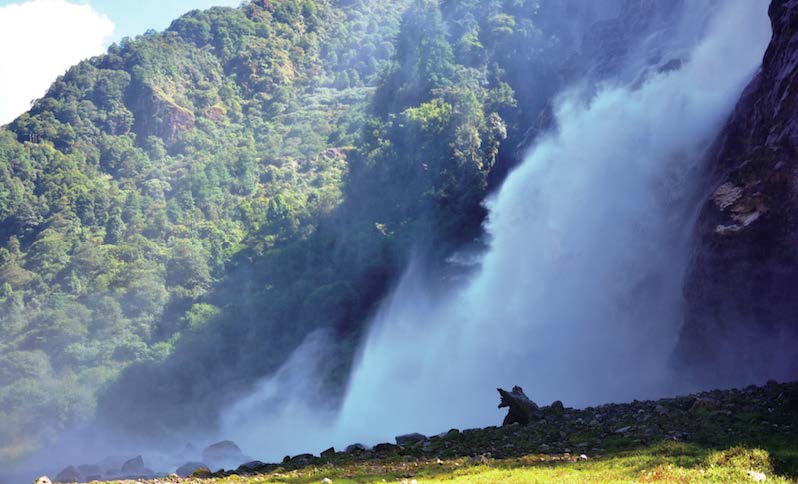
    Nuranang Falls : Where: Near Jang, Arunachal Pradesh

    Should you plan a trip to Tawang, a town close to the India-China border, then there is no escaping a tryst with this waterfall. You may ask about the significance of the place or the name, but the guides here will only be interested in -showing you the exact spot where some scenes of the Shah Rukh, Madhuri Dixit-starrer Koyla (1997) were shot.

    Nohkalikai Falls : Where: Near Cherrapunji, Meghalaya

    Legend has it that this was the spot where a young mother (named Likai) threw herself over the precipice after finding out that her husband killed her daughter. Her act gave the falls its name. It literally means ‘Leap of Ka Likai’, which the locals will tell you with a sad shake of the head.

    Jog Falls : Where: Near Shimoga, Karnataka

    The onset of the monsoon sees the four distinct streams of the Sharavathi river -locally known as Raja, Roarer, Rani and Rocket – go from being trickles to the world-famous Jog Falls. Joga, incidentally, ranks among the highest waterfalls in the country.

    Dudhsagar Falls : Where: Goa-Karnataka border

    The name literally means ‘Sea of Milk’, and the tiered waterfall makes for such a picturesque frame, with a railway line – running in front of it. The film Chennai Express (2013) was shot here. Incidentally, the makers of the 23rd Bond film, Skyfall (2012), too, were interested in filming an action sequence here, but that plan did not work out.

    Nohsngithiang Falls : Where: Near Mawsmai, Meghalaya 

    Also referred to as the Mawsmai Falls or the Seven Sisters, these waterfalls are a sight to behold in the rainy season. Considered one of the most photogenic spots in the country, it is best captured during sunset.

    Ethipothala Falls : Where: Near Hyderabad 

    A two-hour drive from Hyderabad, this waterfall is -powered by the waters of the Krishna River and flows with maximum force in the monsoon. There is a crocodile breeding -centre in the area, since the waters are infested with the -reptiles. Once daylight fades, the falls are illuminated with lights placed at strategic areas which makes for a breathtaking sight.

    Chitrakoot Falls : Where: Near Jagdalpur, Chattisgarh

    One of the broader falls in the country, local touts are happy to sell the place as the ‘Niagara Falls of India’. Tourists frequent it during the rains when the Indravati River shows off its raw power.

    Dhuandhar Falls : Where: Near Jabalpur, Madhya Pradesh

    Although just 10m high, these falls pack a mighty punch and can be heard from miles away. A little ahead lies the famous Marble Rocks. Incidentally, the word ‘dhuandhar’ comes from two Hindi words, ‘dhuan’ -meaning smoke and ‘dhar’ -meaning to own. The fall gets its name from the smoky cascade seen around it.

  • SHIVRAJ SINGH CHOUHAN PLANS ORDINANCE TO RENAME, REVAMP VYAPAM

    SHIVRAJ SINGH CHOUHAN PLANS ORDINANCE TO RENAME, REVAMP VYAPAM

    BHOPAL (TIP): The Madhya Pradesh government will take the ordinance route to rechristen and overhaul the tainted examination and recruitment agency, Vyapam, after it failed to bring a bill in the monsoon session of the state assembly, which lasted all of three days. Ruckus over the Vyapam scam forced the Speaker to adjourn the assembly sine die on Wednesday.

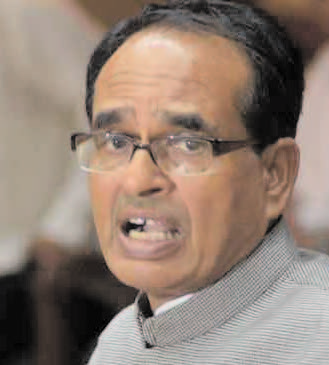
    Chief minister Shivraj Singh Chouhan wants to change Madhya Pradesh Vyavsayik Pariksha Mandal, better known as Vyapam, to MP Pravesh Evam Bharti Pariksha Mandal as Vyapam has become a dirty word. However, Chouhan ran into trouble at a meeting of senior ministers that he had called on Monday to discuss the draft bill for rechristening Vyapam, sources said.

    At present, only an officer of the chief secretary rank is eligible for appointment as Vyapam chairman and Chouhan wants to change this provision to include retired chief secretaries. However, known Chouhan baiter and his cabinet colleague Babulal Gaur opposed this proposal despite chief secretary Anthony DeSa’s plea that at times it becomes difficult to get an officer of CS level for the post.

    “My only concern was that it would be difficult to fix accountability of a retired chief secretary,” Gaur said.

    Technical education minister Umashankar Gupta, who also attended the meeting, confirmed the move on the ordinance. “The government wants to further streamline Vyapam by bringing autonomy. There should be more monitoring and period of the officials on deputation should be fixed,” he said.

    However, he refused to reveal more, saying: “When would it (ordinance) be done can’t be said.”

    Ironically, the day the government was discussing how to cleanse the scam-ridden body, Vyapam received an ISO certification.

  • Monsoon session set for a washout as NDA, Opposition take rigid stand

    Monsoon session set for a washout as NDA, Opposition take rigid stand

    NEW DELHI (TIP): “In one year, Parliament runs for eighty days during sessions. Each day, business in both Houses are transacted for around six hours. If we take into account the total annual expenditure on Parliament, then for each minute of running the House costs Rs. 2.5 lakh,” the author of this statement could be the Parliamentary Affairs Minister of the Modi Government after the continued logjam in Parliament.

    However, ironically, this statement was made by a former Parliamentary Affairs Minister Pawan Kumar Bansal to the Opposition as the monsoon session of Parliament was almost completely washed out in 2012 over the controversy on coal block allocations with BJP insistent on Prime Minister Manmohan Singh’s resignation.

    Pawan Kumar Bansal, who later had to resign as the union Railways minister, went on to say that Parliament will lose its relevance and significance if only disruptions take place in the House. He added that “77 % of the session’s business time in Lok Sabha and 72 % in Rajya Sabha was lost due to disruptions in this session and asked the Opposition to realize that “enough is enough”.

    According to official estimates, Parliament meets on an average 100 days in a year. The total budgeted cost of running Parliament is around Rs 600 crore per year which translates in to Rs six crore every day.

    The BJP had on several occasions in the past declined to let Parliament function and is now finding itself in a similar situation. The current Minister of State for Parliamentary Affairs Mukhtar Abbas Naqvi had this to say for the current impasse: We pray for wisdom to the protesting Congress and other opposition members to help allow smooth functioning of Parliament….. We hope better sense prevails upon Congress and other members.

    The conflict between the treasury benches and the opposition stems from the fact that while the opposition is demanding resignation of external Affairs minister Sushma Swaraj and Madhya Pradesh chief minister Shivraj Chauhan, the treasury benches assert they are willing to discuss and debate the issue but the ministers shall not resign. The government has also ruled out a statement by Prime Minister Modi, as demanded through a notice in Rajya Sabha, to speak on the issue.

    As the left leader Sitaram Yechuri put it, Parliament is not an investigative agency and , therefore, a debate on the issue would not serve the purpose. He said that as per tradition, and the law, the accused must be placed under suspension till the investigation in to the allegations are complete as there is a chance of the investigations getting hampered by the accused in office. He said discussion was no substitute for investigations.

    Given the adamant stand on both the sides, it is unlikely that the House would be allowed to function and important legislations awaiting Parliament’s nod – like the GST Bill and amendments to the land acquisition Bill, are not likely to be passed.

    Political experts point out that though brief disruptions had taken place in parliament over the years but there were leaders would fund a way through discussions or involve neutral senior parliamentarians to sort out the issues. However, with stakes high and with Rahul Gandhi trying to assert himself, there is little possibility of an early resolution of the situation. With the elections to the critical Bihar Assembly looming large, it has become a prestigious issue for the rival parties to hold on to their stand despite the high cost of the functioning of parliament and wastage of public resources in the process. Perhaps there would be lesson for them in the outcome of the Bihar elections.

  • What is the Vyapam scam

    What is the Vyapam scam

    NEW DELHI (TIP): The Madhya Pradesh Professional Examination Board (MPPEB) scam also known commonly by its Hindi acronym as the “Vyapam scam” hits headlines on and off throughout the year. Last week a reporter with Aaj Tak news channel collapsed while interviewing kins of victims, reports say post-mortem does not indicate foul play, but viscera reports are awaited. ext day , the dean of a college from Jabalpur who was assisting the Special Task Force in the investigations was found dead at a hotel in New Delhi. Activists say that the English media has not reported the scam as extensively as they should have.

    But what is the Vyapam scam?

    One of the first complaints were registered way back in 2000, but it was only by 2007 that the scam came to fore as a full fledged professional racket. Investigations and arrests started in 2013 after new details emerged.

    The MPPEB has been responsible for conducting entry into professional courses like the Pre-Medical examinations for the state since 1982. Complaints of irregularities while conducting the examinations first surfaced in 2009, and the scam blew over in 2013. The Vyapam scam pertains to manipulation in the selection process for government jobs conducted by MPPEB which came to light after a report by the Madhya Pradesh Local Fund Audit office for 2007-08 found alleged financial and administrative irregularities, including unauthorized disposal of application forms, worth crores of rupees by the MPPEB. In July 2013, the crime branch at Indore arrested 20 people, 17 from Uttar Pradesh for impersonating MPPMT candidates. The lid blew over what was apparently an entirely rigged system.

    A list containing names of 317 candidates was confiscated from Dr Jagdish Sagar, considered to be the mastermind of the scam. He was arrested by the Indore police on July 12, nine days before the PMT counselling.

    Modus operandi

    Impersonation: In this, all the detail is in the admit card, including name, date of birth, and roll numbers, of the candidate who is applying for the seat. However, the photograph is of the impersonator. An impersonator is one who writes an exam on behalf of someone else. In such cases, they are brilliant students who can score very high marks. The concerned officers on the examination board change the photograph back to that of the original candidate after the exam.

    Engine and bogie system: A person is fixed by people on the board whose work is like that of an engine. He/She is seated strategically between two other candidates who want a seat. The engine helps them copy from his/her own paper. The examiners are usually bribed to fix the seating arrangements.

    OMR sheets: The select candidates are advised to leave their answer sheets blank. They are randomly given high percentages after the exam. They then fill in the answers in the OMR booklet according to the marks they have already been given.

    Arrests and accusations

    In December 2013, the Special Task Force investigating the scam under the supervision of SIT formed by the Madhya Pradesh High Court produced a supplementary charge-sheet against the 34 accused in the Indore district court. The charge-sheet ran into 23,000 pages and 30 out of the accused were the parents of children.

    In April next year, 27 students of MGM College were expelled for fraudulently clearing PMT-2012. These were only those who could be identified, the total number of fraudulent candidates was 286 that year. In June 2014, the STF said that the police had arrested close to 100 medical candidates in connection with the scam. On the 16th of the same month, the former technical education minister in the BJP govt in the state, Laxmikant Sharma was arrested for his involvement in the contractual teachers scam. Those arrested in connection with the impropriety also include MPPEB’s exam controller Pankaj Trivedi, MPPEB’s system analysts Nitin Mahendra and Ajay Sen and state PMT’s examination in-charge C. K. Mishra.

  • CBI to Probe Vyapam Scam and Deaths, Says Supreme Court

    CBI to Probe Vyapam Scam and Deaths, Says Supreme Court

    NEW DELHI (TIP): The CBI will investigate the Vyapam scam in Madhya Pradesh and more than 40 deaths allegedly linked to the job recruitment scandal, the Supreme Court ruled on July 9.

    Two days ago, Chief Minister Shivraj Singh Chouhan, whose government has been badly bruised by the controversy, called for a CBI inquiry, attributing his decision to “a wish to honor public sentiment”.

    The Supreme Court judges today were sharp in their criticism of the Madhya Pradesh High Court, which refused yesterday to rule on whether to reassign the Vyapam inquiry from the Madhya Pradesh police to the CBI. “Instead of taking a decision, the Madhya Pradesh High Court washed its hands off (the case) and put the ball in our court,” the court said.

    Responding to the order, Chouhan said: “There was a burden in my heart. I am relieved that the CBI will probe and get to the truth.”

    The Vyapam scam is named for a state board that conducts qualifying tests for colleges and jobs as government teachers, doctors and policemen. Lakhs of candidates paid bribes to manipulate the exam process, including hiring proxies to take the test for them. Since 2012, at least 36 people who have died were investigators, accused or witnesses, alleges the opposition Congress.

    Chouhan, for years, had rejected the allegation that a state-level inquiry – even one monitored by the High Court – would not be impartial. His call for a CBI investigation came as the Supreme Court agreed to hear petitions asking for the CBI to be entrusted with the probe. The petitioners include Digvijaya Singh, Congress leader and former Madhya Pradesh Chief Minister, and whistle-blowers who say they regularly receive death threats but are determined to prove that the Chief Minister and other top leaders are party to the swindle.

    The Supreme Court’s decision to order the CBI to examine not just the swindle but the spate of deaths undermines the claim of the former judge who has so far supervised the inquiry.

  • Aligarh Alumni Association, Washington organizes fundraiser to promote education

    Aligarh Alumni Association, Washington organizes fundraiser to promote education

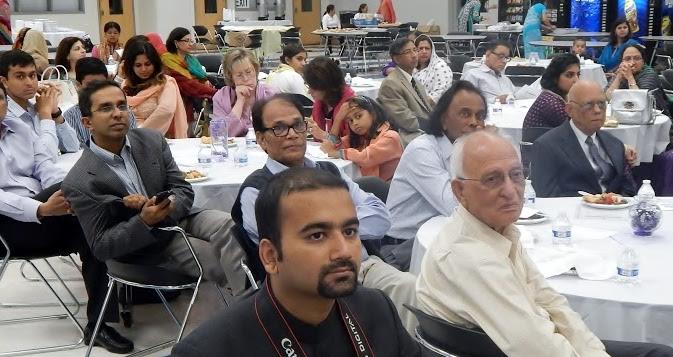
    WASHINGTON (TIP): “Education is the gift that keeps on giving. Education empowers the mind and uplifts the soul. It is a powerful equalizer opening door to all to lift themselves out of poverty. Education is the best investment we can make to build next generations of leaders and entrepreneurs and innovators and problem solvers,” said Frank Islam delivering keynote address at the annual Iftar-fundraiser organized by the Aligarh Alumni Association of Washington.  It was held on Saturday, June 27, 2015, at James Blake High School, Silver Spring, Maryland.

    "Education is the best investment we can make to build next generations of leaders and entrepreneurs and innovators and problem solvers", said Frank Islam  delivering keynote address at the annual Iftar-fundraiser organized by the Aligarh Alumni Association of Washington on Saturday, June 27, 2015
    “Education is the best investment we can make to build next generations of leaders and entrepreneurs and innovators and problem solvers”, said Frank Islam delivering keynote address at the annual Iftar-fundraiser organized by the Aligarh Alumni Association of Washington on Saturday, June 27, 2015

    Islam, an Aligarian, added that education also provides avenues for participation in 21st century workforce and careers, the competencies to compete in a globally economy, and the capacity to contribute to lifting fellow Muslims out of poverty and deprivation. He appealed to fellow Aligarians saying, “Let us together change the face of India. One life, one family, one village at a time,” Islam and his wife have committed $2 M to support the building of the Frank and Debbie Islam School of Management at Aligarh Muslim University. The building will be dedicated in October of this year.

    The program started with the recitation of a Qur’anic Sura and its translation by teen-agers Hiba Usmani and Aizah Usmani, respectively. Welcoming the audience, President Mrs. Farzana Farooqi thanked them for their attendance and briefly outlined the significance of the program that supports education of underprivileged children.

    A number of senior Aligarians, dignitaries, including Mr Tufail Ahmad and his wife Mrs Salma Ahmad, Mr Yazdani Siddiqui, Ambassador Islam Siddiqui and Mrs Tabassum Islam Siddiqui, senior Aligarian Syed Haider Abbas Zaidi, and Begum Zainab Zaidi. Eight out of 25 members who started the association, in 1974 (including founding president, vice-president, and secretary), were present at this event.  Besides AAA participants and supporters, a large number of members of different literary, educational and cultural organizations like the University of Karachi Alumni Association, Hyderabad Association Washington, Islamic Society of Frederick, Global Organization of People of Indian Origin, and Montgomery County Muslim Council, were also present at this important event.

    Chairman of the fundraising committee, Dr. Aftab Ansari
    Chairman of the fundraising committee, Dr. Aftab Ansari

    The Chairman of the fundraising committee, Dr. Aftab Ansari, updated the audience on the status of the Association’s highly successful scholarship and Feeder programs. He stated that in the year 2014, the AAA provided 248 scholarships and free tuition and coaching facilities at over 800 school-level children at different centers in India. Also, reassuring was the information that the AAA scholarship endowment funds had grown steadily over the years and scholarships are funded through the income generated by investment of the endowment fund.

    Periodically, the Association institutes scholarships to honor prominent AMU alumni. Recently, it established two scholarships in the name of Professor Abdul Majid Siddiqui and Narendra Kumar Singh for their extraordinary services to the community. Professor Siddiqui taught at the University for many decades and was very popular teacher.  Singh, who earned a Masters in Economics degree from AMU, was an IPS officer. He was killed in the line of duty by the mining Mafia in Madhya Pradesh, India. Ambassador Islam Siddiqui, emphasized the importance of education and need for uplifting the educational status of the community to empower them to compete for jobs in the modern world.  He appealed to the audience for donation saying that a small token from our bounty can help the future of many students.

    Dr. Habib Ashraf, Guest Speaker
    Dr. Habib Ashraf, Guest Speaker

    Guest speaker Dr. Habib Ashraf, a physician and a longtime proponent of educational program, narrated how his grandmothers were instrumental in uplifting his family through education. His speech was very motivational and he emphasized how a small support from people can make a big difference in the lives of underprivileged children.

    It was pleasing to know that the expenses for Iftar and dinner were donated by a member, who wished to remain anonymous.

    It is very reassuring to see that younger generation is joining the ranks of their elders in organizing these activities. Many a younger generation members donated generously, including full scholarships of $3,000.

    Hamad Usmani.—a freshman in college—did a splendid job as Master of Ceremony.  Zakaria Khan, a young college student has inherited the “Alig” spirit. He emphasized how his parents inculcated in him the importance of education and it helped him to succeed academically as well as socially.

    It was also remarkable to note that in spite of bad weather and two competing fundraisers so many proponents for education attended the event.

    Mrs. Shakila Raza thanked the speakers, donors, audience, and enthusiastic AAA volunteers for making the program a great success.

    The program was coordinated by Dr. Rafat Husain.


  • Drinking liquor a fundamental right claims BJP MP Home Minister Babulal Gaur

    Drinking liquor a fundamental right claims BJP MP Home Minister Babulal Gaur

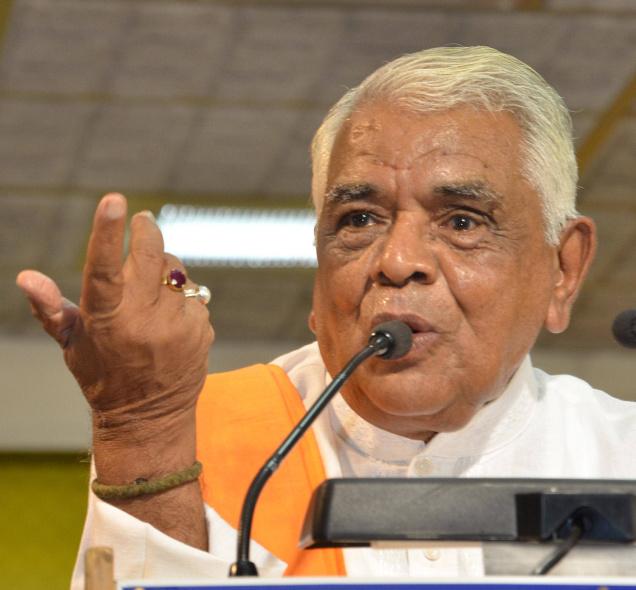
    Madhya Pradesh Home Minister Babulal Gaur fuelled another controversy with his remarks that drinking liquor is a “fundamental right” and that it is a status symbol too.

    “Alcohol does not increase crime. People lose their consciousness after consuming alcohol and that’s how it causes crime. The person who drinks within control does not cause crime,” he said, adding, one should not over drink. It is one’s fundamental right. Drinking is a social status symbol these days.

    He was asked by reporters on Sunday for his reaction to extending the timing for sale of alcohol in Bhopal from 10 pm to 11.30 pm.

    Mr. Gaur had previously said that sexual crime in Chennai is low as women wear “full clothes”.

    “Women in Tamil Nadu wear full clothes and hence the crime rate is lower there as compared to other States,” he said.

    Congress Hits Back

    In a strong reply to Babulal Gaur’s comment on Vyapam Scam accused deaths, Congress general secretary Digvijaya Singh on Monday questioned the Madhya Pradesh government’s decision not to probe into the death of the two accused in the MPPEB scam.

    “Babulal’s comments were callous.How can it be a natural death and how can Madhya Pradesh government give clean chit even before post-mortem. We have no faith in the High Court Ordered SIT probe..we are hence appealing to supreme court” Said Singh

  • Govt to save Rs 1,500 cr from new note printing lines

    New Delhi (TIP): The government is expected to save foreign exchange worth Rs 1,500 crore by commissioning two new bank paper lines in Hoshangabad and Mysore for indigenously printing Indian currency.

    The New Bank Note Paper Line of 6,000 million tonnes (MT) capacity at Security Paper Mill
    (SPM), Hoshangabad in Madhya Pradesh will be inaugurated tomorrow by Finance Minister Arun Jaitley, while the Bank Note Paper Line in Mysore with 12,000 MT capacity is expected to be commissioned by the year end.

    “The combined savings of foreign exchange from these two Bank Note projects will be about Rs 1,500 crore in the coming years,” a finance ministry said in a statement.

    The production of the Bank Note paper from these two units will reduce the import considerably, it said.

    This will also reduce possibility of diversion of the paper supplied by the foreign suppliers to the other destinations for the purpose of generating the fake currency, it said.

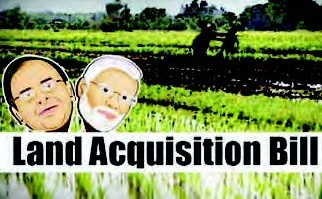
  • Govt likely to delay land bill

    Govt likely to delay land bill

    NEW DELHI (TIP): The government is taken aback by events following the suicide of a farmer at the Aam Admi Party (AAP) rally.

    The Opposition in Parliament squarely blamed the “anti-farmer” policy of the Narendra Modi government  for  driving farmers to take the drastic step.

    Consequently, there is perceptible worry among BJP ministers and MPs that it could cast shadow on the government’s plans to legislate a bill to replace the land acquisition ordinance, which had to be re-promulgated. The government did not place the bill in the Rajya Sabha because it does not have majority there.

    There is every possibility that the bill will not be allowed to come up in the Upper House again, said BJP floor managers.

    Given the political atmosphere following the suicide episode, the government itself could decide not to bring the bill to replace the ordinance until the fag end of the session, which ends in the second week of May.

    As yet, however, there is no indication that Modi will back down on his resolve on the matter though he may want more safety measures to end the distress of farmers.

    In fact, shortly before he addressed the Lok Sabha on Thursday, Modi met seniors ministers Rajnath Singh, Arun Jaitley, Venkaiah Naidu and Nitin Gadkari to formulate the government’s response. The PM’s line was that the issue of farmer suicides should not be allowed to be mixed up with the issue of amending the land acquisition law passed by the UPA, which is blamed for hurdles in acquiring land for key infrastructure project.

    In keeping with the PM’s statement that “we have to find a way and we can’t leave farmers helpless”, the government might re-examine relief package for agriculturists, which have been announced from time to time. An all-party meet could also be called on the subject. As a counter measure, the BJP has blamed Congress for the suicide, saying misrule by the previous Congress-led UPA is responsible to present situation. Over 3,000 farmers have committed suicide in the past three years and nearly three lakh farmers took their lives since 1995, according to the National Crime Research Bureau.

    The five worst-hit states are Maharashtra, Andhra Pradesh, Karnataka, Madhya Pradesh and Kerala. Maharashtra alone has recorded over 10,000 suicides between 2011 and 2013. Its Marathwada region has seen over 200 suicides in three months.

    “It should be our determination to find a solution to this problem. The issue has been there for long, we will take all good suggestions: For years the issue of farmers committing suicide is a matter of great concern,” Modi said on April 23.

  • Treat acid attack victims for free, Supreme Court orders private hospitals

    NEW DELHI (TIP): The Supreme Court on April 10 directed private hospitals to provide free treatment, including specialized surgeries, to acid attack victims and asked government authorities to take action against them if they fail to comply with its order.

    After laying down a stringent regulatory mechanism for sale of acid to curb acid attacks on women, the court asked private hospitals to bear the entire cost of medical treatment of acid attack survivors, including costly plastic and corrective surgeries.

    A social justice bench of Justices Madan B Lokur and U U Lalit said hospitals must also provide free medicine, food and other facilities to such victims. Meanwhile, the Centre informed the court that 309 cases of acid attacks were registered in the country in 2014 out of which 185 incidents were from Uttar Pradesh.Madhya Pradesh witnessed the second highest number of cases with 57. No acid attack incident was reported in any Union Territory except Delhi where 27 such cases were registered last year.

  • When will Rahul return, asks BJP; Soon, says Sonia

    When will Rahul return, asks BJP; Soon, says Sonia

    NEW DELHI (TIP): The BJP on Thursday took a dig at Congress vice president Rahul Gandhi wondering when he will return but Congress chief Sonia Gandhi asserted that he will soon be back among the people.

    BJP spokesperson Shahnawaz Hussain on April 2 took a jibe at Rahul Gandhi, wondering if he was really set to return and attend the April 19 rally of his party against the new land acquisition law.

    “We do not know if reports about the date are true…Is his vacation finally over,” asked Hussain.

    Sonia Gandhi however asserted that Rahul Gandhi will come back soon.

    “He will come back soon and will be among people,” she said to questions on her son’s return after her visit to Neemuch in Madhya Pradesh to meet farmers whose crops have been damaged in the recent untimely rains.

    Rahul Gandhi had gone on “leave of absence” ahead of the budget session of parliament and there has been recurring speculation about the date of his return.

    The party had initially said that he had gone on two weeks’ leave but the period has extended to over a month now.

    Senior party leader Digvijaya Singh had indicated earlier this week that Rahul Gandhi is likely to attend a farmers’ rally being held by the party in the capital on on April 19.

    Noting the rally will be attended by all senior leaders, he said that “when I say senior leaders, it includes Rahul Gandhi as well.

    The Congress meanwhile said it had no specific information of Rahul Gandhi’s date of return.

    “I have no official intimation in this regard,” party spokesperson Meem Afzal said.