Tag: MAGA

  • The MAGA turn: Global fallout and India’s dilemma

    The MAGA turn: Global fallout and India’s dilemma

    India cannot blame Western xenophobia while succumbing to it at home

    “Normally, domestic and foreign policies of countries are inter-related. The Trump administration demonstrates that by aligning its foreign policy with its MAGA supremacism. The BJP managed to largely insulate domestic politics from foreign policy, except in South Asia. While adopting nationalist-majoritarian politics at home, with boundaries between religion and politics removed, its foreign policy continued the old secular line, at least superficially. The US State Department’s reports on human rights practices in India berated the constriction of religious, individual and press freedoms. The 2024 report listed the Citizenship Amendment Act and anti-conversion laws as raising concerns. It, however, ignored the BJP’s non-liberal political trajectory weakening democracy. India-US relations were considered more crucial to the global American strategy.”

    By KC Singh

    US President Donald Trump completes one year in office on January 20. The Economist magazine says he has “turned domestic and international politics on its head”. During the campaign, he looked past Project 2025, produced by the conservative Heritage Foundation. However, in office his barrage of executive orders began implementing Project 2025. This included mass, forceful deportation of suspected aliens without hearing, domestic military involvement (now halted by the Supreme Court), dismantling of the bureaucracy, outsourced to Elon Musk, whose Department of Government Efficiency failed drastically.

    The external policy changes began with the April “Liberation Day” arbitrary tariffs on imports. Then emerged a closer alignment with Israel, a pro-Russia tilt in handling the Ukraine war, an escalated trade standoff with China and a transitory compromise. European NATO allies played along, preferring non-confrontation while examining self-reliance, to manage the US pullback from defense commitments. The National Security Strategy (NSS) of December 4-5 confirmed major US policy mutations.

    The new foreign policy priorities list the “Western Hemisphere” on the top. It refers to the Americas — North and South — resurrecting the 19th century’s Monroe Doctrine, which barred European rivals from interfering in Latin-American affairs. Next comes Asia, with focus on the Indo-Pacific. Unlike the past NSS documents, China is not named as a threat, though it colors the Asian strategy. On December 8, the US allowed the sale to China of Nvidia’s advanced H200 chips.

    India figures as a subtext, expected to help ensure Indo-Pacific security. Then follows Europe. Under the subtitle “Promoting European Greatness”, the NSS document argues that the European challenge exceeds economic stagnation and low military spending. The “real and more stark” prospect is of “civilizational erasure” due to migration policies. Europe’s loss of self-confidence is attributed to the regulatory check on the “growing influence of patriotic parties”. This refers to the far-right’s ascendancy in major European nations. This theory is MAGA-inspired, with the US administration desiring a “new Western order”, dominated by governments led by white Christian nationalist-populists.

    In the UK, the Nigel Farage-led Reform UK is polling 30 per cent support; while in France, Marine Le Pen’s National Rally is at 33.4 per cent and Germany’s AfD is scaling 26 per cent. Europeans saw this support-signaling as regrettable interference in their internal affairs. German Foreign Minister Johann Wadephul retorted that they did not “need to get advice from any other country or party”. German intelligence sees AfD as an extremist group.

    In this disrupted post-1945 global order, where does India fit? Normally, domestic and foreign policies of countries are inter-related. The Trump administration demonstrates that by aligning its foreign policy with its MAGA supremacism. The BJP managed to largely insulate domestic politics from foreign policy, except in South Asia. While adopting nationalist-majoritarian politics at home, with boundaries between religion and politics removed, its foreign policy continued the old secular line, at least superficially. The US State Department’s reports on human rights practices in India berated the constriction of religious, individual and press freedoms. The 2024 report listed the Citizenship Amendment Act and anti-conversion laws as raising concerns. It, however, ignored the BJP’s non-liberal political trajectory weakening democracy. India-US relations were considered more crucial to the global American strategy.

    The BJP would welcome the NSS document now, recommending non-interference in the internal affairs of other nations. The US bureaucracy handling those issues stands disbanded. But domestically, the rising xenophobia in the US is impacting the Indian diaspora, especially their religious practices. The New York Times wrote about the troubles of Sikh truck drivers in the US after two August accidents. Sikhs in the trucking business, many on asylum-related visas, number 1,50,000, probably a quarter of the Sikh diaspora. Federal authorities have asked states like California to review their driving license policy. Canada and Australia have capped student visas, raised fees, heightened scrutiny of forms, etc. The transition to work visas may also be tightened. In New Zealand, a Sikh religious procession was last month disrupted by a far-right Christian group.

    The rising xenophobia in Christian Anglophone and western nations raises concerns. The BJP surely realizes that Hindu groups in India targeting Christians, particularly this year, can provoke retaliation against the Hindu diaspora. Occasional lynchings of Muslims did not impact India’s relations with the Islamic world because the Modi government had successfully engaged the principal Gulf-ruling families. Pakistan only had Turkey and an isolated Iran to join the condemnation. A divided Organisation of Islamic Conference (OIC) lacked the thrust to target India. But Pakistan stands diplomatically revived after wooing Trump and engaging Saudi Arabia and the UAE. It is now better positioned for India-baiting.

    Plus, Bangladesh may elect next month a right-wing government, probably under Islamist Jamaat-e-Islami’s influence. Pakistan and its ISI would celebrate that. Simultaneously, Assam and West Bengal face elections. Communal polarization helps the BJP electorally, especially by brandishing Bangladeshi illegal migration. Can India blame the western xenophobia while succumbing to it internally?

    Punjab may suffer if deportations from the US mount. Narrowing opportunities abroad will block the Punjabi youth’s escape route. Thus, Punjab must develop economic opportunities. Green Revolution 2.0 is overdue. The agricultural and dairy sectors need production and supply chain modernization. If over two lakh Sikhs could salvage the Italian dairy industry and parmesan cheese production, why not the same in Punjab? Similarly pioneering work exists in turning rice stubble into biofuel and organic fertilizer. The chemical fertilizer lobby suppresses such new approaches.

    Punjab needs pro-innovation leadership. Delhi requires non-partisan statesmanship.

     (K.C. Singh is a retired diplomat)


  • Why is Trump interested in Greenland? Look at the thawing Arctic ice.

    Why is Trump interested in Greenland? Look at the thawing Arctic ice.

    By Gaby Hinsliff

    Forecasts suggest that global heating could create a shortcut from Asia to North America, and new routes for trading, shipping – and attack.

    Another week, another freak weather phenomenon you’ve probably never heard of. If it’s not the “weather bomb” of extreme wind and snow that Britain is hunkering down for as I write, it’s reports in the Guardian of reindeer in the Arctic struggling with the opposite problem: unnaturally warm weather leading to more rain that freezes to create a type of snow that they can’t easily dig through with their hooves to reach food. In a habitat as harsh as the Arctic, where survival relies on fine adaptation, even small shifts in weather patterns have endlessly rippling consequences – and not just for reindeer.

    For decades now, politicians have been warning of the coming climate wars – conflicts triggered by drought, flood, fire and storms forcing people on to the move, or pushing them into competition with neighbors for dwindling natural resources. For anyone who vaguely imagined this happening far from temperate Europe’s doorstep, in drought-stricken deserts or on Pacific islands sinking slowly into the sea, this week’s seemingly unhinged White House talk about taking ownership of Greenland is a blunt wake-up call. As Britain’s first sea lord, General Sir Gwyn Jenkins, has been telling anyone prepared to listen, the unfreezing of the north due to the climate crisis has triggered a ferocious contest in the defrosting Arctic for some time over resources, territory and strategically critical access to the Atlantic. To understand how that threatens northern Europe, look down at the top of a globe rather than at a map.

    By the early 2040s, forecasts suggest global heating could have rendered the frozen waters around the north pole – the ocean separating Russia from Canada and Greenland – almost ice-free in summer. That potentially opens a new shortcut from Asia to North America, not around the planet’s middle but over the top, creating new routes for trading, shipping, fishing – and, more ominously, for attack.

    A new theatre of conflict is consequently emerging from under the melting ice, and China, Russia and the US are increasingly locked in a battle for dominance over it. Meanwhile as rising temperatures turn the high north into an autocrat’s chessboard, territories unlucky enough to be in the way – from Greenland to Canada to the Norwegian archipelago of Svalbard, long coveted by Russia – risk becoming pawns.

    Almost as dangerous for these countries as the threats exposed by a thawing pole are, in a way, the opportunities. Why on earth does the US think it needs to annex friendly Greenland in order to defend this critical Arctic frontier? After all, they’ve had troops stationed on this autonomous Danish territory since the second world war, and Denmark has obligingly made clear they’re more than welcome to bring more. The one benefit that does come uniquely with ownership, interestingly, is rights to the underground riches that could be unlocked as this frozen country heats up.

    Greenland is a rare, untapped source not just of oil and gas but of the rare earth minerals used to make everything from electric car batteries to datacenter processors – which are to US hopes of winning a technological race with China as rubber from Malaya or cotton from India were to the old colonial economies. Though it’s often a mistake to read too much logical method into the apparent presidential madness, there is no shortage of ideologues and tech bros in Trump’s orbit capable of putting all this together and selling it to him. And while mining the Arctic might not be economically viable for many years yet, Trump’s grumbles this week about Greenland being “full of Chinese and Russian ships everywhere” suggests someone has convinced him that he can’t let rivals beat him to a valuable potential development opportunity, a concept any former real estate mogul can grasp. After all, in Ukraine, Trump sought rights to mine rare earths in exchange for security guarantees, and in Gaza he mused about building hotels on its bombed-out ruins: why not seek to make a quick buck from environmental catastrophe?

    And while to Britons all this looks like a new age of empire, for the Maga faithful perhaps there’s an echo of a much more American story, that of settlers making their fortune by joining the wagon trail west, pushing the nation’s frontiers endlessly outwards, staking their claim to Indigenous people’s lands and holding grimly on to them through a brutal mix of trade and violence. The aim isn’t to invade Greenland, US secretary of state Marco Rubio explains, but to buy it, or at least rent exclusive military access. It’s a mark of how fast the relationship between the US and its former allies has collapsed – in just over a year – that this is meant to be reassuring: hey friends, we just want to exploit you, not kill you!

    Given the president’s legendarily short attention span, it’s difficult to know what fate awaits Greenland. Maybe he’ll simply get bored and move on, especially once the midterms are over and there is less need for drama abroad to distract from failures at home. Or maybe the White House will borrow instead from the Putin playbook, exploiting Greenlanders’ yearning for independence from Denmark to foment the kind of domestic unrest that is so easily whipped up in the age of social media – before pitching the US as a benign savior riding into town to keep them safe and make them rich.

    But either way, we had better get used to the idea this is the beginning, not the end, of the conflicts that may come as global heating redraws our maps, unpicks old alliances, and creates new deadly rivalries for land, water and natural resources.

    Of course, it will be worse for those already living on the edge of sustainability, in deserts too parched for anything to grow or in coastal towns already struggling with rising sea levels, or in places too poor to protect themselves from increasingly violent storms, than it will for lucky old temperate Europe. And of course, these risks could always be better managed by collaborative governments treating events like the unfreezing of the north as a collective challenge for humans to face together, rather than a deadly race for national advantage.

    But in the week Trump announced he would be pulling the US out of a raft of international climate initiatives, that clearly isn’t the world we live in. So if nothing else, let poor beleaguered Greenland be a reminder that the climate crisis will have geopolitical consequences we have barely yet begun to understand, and that whatever we can still do to cap the rising temperature or mitigate its effects still matters. Even, or maybe especially, if we can’t yet undo the damage that has already been so willfully done.

    (Gaby Hinsliff is a Guardian columnist)


  • The Trump NSS, Europe’s existential crisis

    The Trump NSS, Europe’s existential crisis

    With the Trump Administration’s National Security Strategy making it clear that American support to Europe is now faint, it remains to be seen how Europe responds

    By Priyanjali Malik

    Hope is not a strategy. For most of this year, European leaders have hoped that the Trump Administration has not actually meant its President’s oscillating support for the North Atlantic Treaty Organization (NATO), its Vice-President’s berating his European hosts in Munich over their liberal values and immigration policies, President Donald Trump’s tirade against migration at the United Nations, and of course his mercurial support for Ukraine. The hope was that, all things considered, America would ultimately stand with Europe.

    The Trump Administration’s National Security Strategy — a 33 page document that spends much time congratulating the President for saving America from apparently terminal decline as it charts an unapologetically MAGA-esque America-first mercantilist position — appears not to notice Africa, Australia and New Zealand. It sweeps by Asia as it focuses strongly on perceived trade imbalances with China and lands squarely on a defense of the ‘Western Hemisphere’ according to American interests while lamenting the decline of Europe. Europe is a problem, not an ally.

    The stand on Europe

    In ‘Promoting European Greatness’, the NSS warns of Europe’s ‘civilizational erasure’, precipitated by the European Union (EU)’s policies on migration and freedom of speech, ‘the suppression of political opposition’, and the ‘loss of national identities and self-confidence’. In case there was any doubt about which migrants were unwelcome, the NSS declares that if Europe continues on its present trajectory, ‘within a few decades … certain NATO members will become majority non-European.’ The U.S. will help Europe regain its ‘former greatness’ by choosing ‘patriotic European parties’ to promote what this administration views as ‘genuine democracy’ and ‘unapologetic celebrations of European nations’ individual character and history’. To most Europeans, at best this reads as a meddling in the internal politics of sovereign nations, and at worst as regime change.

    Europe, the NSS states, needs to stand on its own feet, assume ‘primary responsibility for its own defense’ and re-establish ‘strategic stability with Russia’. NATO ‘cannot be a perpetually expanding alliance’, a warning of course to Ukraine, but also an interesting glossing over of Sweden and Finland’s accession to the alliance after Russia invaded Ukraine in 2022. In this document, the threat is not Russia and its invasion of a sovereign nation, but Europe’s cultural decay. The tramp of the jackboots of 1930s Europe echoes with every mention of civilizational decline.

    Of course, an administration’s national security strategy is not policy, but a guide to its thinking. They can and have been over-ridden by events, most notably George H.W. Bush’s 1990 NSS, which was overtaken by the fall of the Berlin Wall, German reunification and the first Gulf War. Observers could chart the evolution of the administration’s thinking in the two subsequent iterations of 1991 and 1993.

    As a high-level document, the NSS often provides the lens through which to interpret an administration’s foreign policy goals and is assumed to set the tone for the administration’s national defense strategy, its Quadrennial Defense Review and national military strategy. Mr. Trump’s famously mercurial nature might caution against viewing it as declared policy. However, given that this is a Congress-mandated document, it is more than just a rhetorical exercise: while it should not be taken literally, it should be taken seriously.

    What Europe’s response could be

    As the dust settles, Europe now faces three options in responding: it can ignore the NSS and hope that it will go away; its leaders can dial up their flattery of Mr. Trump in the hope that he will change his mind on Europe; or Europe can face up to the prospect that Mr. Trump’s America is not a reliable ally and that they will need to fend for themselves.

    Europe tried a mixture of the first two strategies after J.D. Vance’s outburst at the Munich Security Conference. After some tepid talk of needing to pull together to see off Russian President Vladimir Putin’s ‘imperialist’ ambitions in trying to ‘rewrite history’ or the need for Europe to wean itself off U.S. dependence, Europe doubled down on doing whatever it would take to keep America in NATO and Europe. Britain flattered Mr. Trump with an invitation for an unprecedented second state visit. Germany’s Friedrich Merz forgot about his observations of February this year as Chancellor-in-waiting that his ‘absolute priority will be to strengthen Europe … so that … we can really achieve independence from the USA’.

    Germany has since abandoned half-explored plans of developing European capabilities and ordered more American military kit, which is dependent on American intelligence to work. NATO’s Hague Summit of June this year will be remembered as much for European states agreeing to raise their military spending to 5% of GDP as for Secretary-General Mark Rutte’s calling Mr. Trump ‘Daddy.’

    The third option will not be easy. Europe has never defended itself as an entity and there is no concept of integrated European defense. Even limited projects of joint development of military kit tend not to get very far, as the stalled Franco-German project on sixth generation fighter jets demonstrates. If the U.S. pulls American troops out of Europe — as this administration has periodically hinted it might do — then Europe will have a serious manpower problem that experiments in ‘voluntary’ conscription will not even begin to address. Then there is the question of nuclear deterrence and Britain’s uneasy post-Brexit relationship with the EU and Europe. 

    The state of the world order

    How Europe responds will have implications beyond the continent. Mr. Trump’s NSS, with its attack on transnational institutions (that he insists ‘undermine political liberty and sovereignty’), its dismantling of the post-war trading order in favor of a mercantilist America-first policy; and the signaling of a U.S. retreat into its own ‘Hemisphere’ (however that might be defined, and with the implication that China and Russia are free to carve up the rest of the world as long as they do not impinge on America’s trading footprint) have profound implications for the rest of the world. The post-war world order that America helped shape and uphold is imperfect and crumbling. The power imbalances at the United Nations and the Bretton Woods Institutions that help anchor expectations of peace, security, development and trade reflect an outdated world order. But, however imperfect this rules-based system might be, it is still a bulwark against a descent into a Hobbesian free-for-all, where might makes right.

    The debate about this National Security Strategy is, therefore, not about a document that might shed light on an administration’s thinking. It is about whether Europe chooses to defend a rules-based liberal order or defers to a President whose transactional and racist view of the world will have consequences that stretch far beyond his borders.

    (Priyanjali Malik writes on nuclear politics and security)

  • It’s time Trump introspects, is shown the mirror

    It’s time Trump introspects, is shown the mirror

    Trump has been equally unsparing and insulting to India, despite his avowed friendship with PM Modi.

    “Whatever has happened thus far (the bewildering variety of utterances and actions of absurdity) under the POTUS can be compared, to an extent, with the 26-year chapter (1325-1351) of Indian history’s Delhi Durbar monarch Muhammad-bin-Tughlaq. Historians have graciously judged Tughlaq as “an amazing compound of contradictions” for making the impossible possible, even if for a fleeting moment, and then trying to unscramble the scrambled egg (like scenario) through equally fancy actions of ethereal fiction.”

    By Abhijit Bhattacharyya

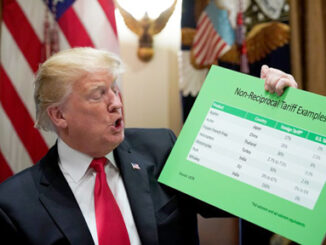
    The President of the US (POTUS) is deeply aggrieved over what he describes as global attempts to fleece America through tariffs on US goods that are going to foreign countries. Consequently, he has taken a vow to retaliate with tariff-for-tariff in equal measure to make his mission to “Make America Great Again” (MAGA) a grand success during his tenure in the White House itself. In the process, a multi-front strategy is being implemented at battle speed, affecting the entire country and shaking large sections of the populace.

    To suggest that the US today is in turmoil would be an understatement because of the unexpectedly astonishing opposition to a broad spectrum of Trump’s policy and against a few of his favorite high-profile personnel. The opposition is by no less than some people who were once either close to the POTUS or important officials implementing state policy decisions in the recent past.

    The developments in the US today appear far from refreshing or reassuring to assuage the feelings of either Trump or the common people. Consequently, mission MAGA of the POTUS is creating a headache every day owing to Trump’s uncontrollable and uncontrolled lack of appropriate vocabulary. It is, thereby, putting both friends and foes alike under psychological stress. Trump thinks that his method would succeed in making people all around to kowtow to him and make them succumb to his whims and fancies during his four-year occupancy of the White House.

    Not exactly. Today, the POTUS, too, needs to do some self-introspection and reflect on his acts through a full-sized mirror to reassess whether he is overstretching himself to put his pet MAGA to an acute angle of futility and resorting to an act of no return.

    Psychologically, therefore, Trump has made himself an enigma; a classic case study of a grievously make-belief wounded soul who has managed to pile loads of pending unaddressed grievances during his days of being a common American, without the glitz and glamour of the official paraphernalia.

    Whatever has happened thus far (the bewildering variety of utterances and actions of absurdity) under the POTUS can be compared, to an extent, with the 26-year chapter (1325-1351) of Indian history’s Delhi Durbar monarch Muhammad-bin-Tughlaq. Historians have graciously judged Tughlaq as “an amazing compound of contradictions” for making the impossible possible, even if for a fleeting moment, and then trying to unscramble the scrambled egg (like scenario) through equally fancy actions of ethereal fiction.

    In fact, Trump’s every move and management style seems to be taking his unpredictably predictable course of absurdity to a new height of diplomatic embarrassment. From Panama to Canada, Denmark to Germany, each friendly state is feeling hurt, being insulted, ridiculed and snubbed by the POTUS.

    Also, the growing list of impossible demands being claimed by Trump gives the impression of an urban land mafia don on the prowl to possess immovable property in prime locations.

    However, one thing glitters amidst this gloom. Trump is “honestly” non-discriminatory about his indiscriminate howling at all, however mighty or muscular he/she may be, belittling or ridiculing (officially invited) foreign Heads of Government or State. Thus, all foreign dignitaries are under pressure when face to face with the POTUS, notwithstanding its being unlikely to be good news for the USA in the long run.

    Thus, Trump has been equally unsparing and insulting to India, notwithstanding his avowed personal friendship with the Prime Minister, Narendra Modi. “I have exposed India on tariff,” declared a condescending Trump and followed it up with a unilateral declaration that “India has reduced tariff”.

    What absurdity! No meeting, no talks, no discussion between India and America, but the ordained verdict arrives from the White House! Is it a delusion of grandeur? The gross act of the POTUS amounts to the humiliation of successive Indian establishments.

    His command of demands is reaching an intolerable height, hence unacceptable to this Indian, at least. So, let Trump recall his own country’s tariff saga which put the USA on the road to prosperity.

    Alexander Hamilton, the first US Treasury Secretary (1789), wanted his country to be on “firm commercial basis”. In 1791, he defended the “protection” of the local US manufacturing industry as a fundamental prerequisite. “Not only wealth, but independence and security of country were materially connected to prosperity of manufacturers.” Hamilton laid the foundation of the subsequent belief of Americans in their “manifest destiny”, whatever that means, internally or otherwise.

    The US soon became a strongly protectionist country throughout the second half of the 19th century as the victorious Republicans post US Civil War, in 1865, emerged as a party of “national economic might” with a very high level of protection and very low-income tax.

    The “high priest of high protection” was the Republican, William McKinley, the 25th POTUS. Before becoming President, his 1890 McKinley tariff raised import duties to an average of 49.5 per cent because he was convinced that “tariff created jobs, generated revenue for the government and preserved the US industrial power”.

    Consequently, the story of US unilateralism in economics, commerce and tariffs developed a long narrative of its own. It has usually been extremely self-centered through the ages, but for the two World Wars, which turned tariff protection into free trade, owing to the mobilization of vast resources and an equally vast investment in the US’ war economics.

    Trump, therefore, must stop slighting India at every step — from handcuffing its deportees to using abusive language on everything about New Delhi tariffs. Indian tariffs, good or bad, are for the 1.4 billion Indians. Let Trump deal with China, which finished the US industry, led by the Republican Nixon-Kissinger duo. Incidentally, was Kissinger right or wrong to suggest “it may be dangerous to be US’ enemy but to be US’ friend is fatal”? Is India’s US friendship destined to be fatal? Was Indira Gandhi prophetic to push back the USA in 1971?

    (Abhijit Bhattacharya is a Supreme Court lawyer, ex IRS Officer, Author and Columnist, Defense and Security Analyst and a China specialist)

  • Indian American Vivek Ramaswamy announces he will run for president

    Indian American Vivek Ramaswamy announces he will run for president

    WASHINGTON, D.C. (TIP): Vivek Ramaswamy, the multi-millionaire biotech entrepreneur and self-described intellectual godfather of the anti-woke movement, announced on Tuesday, February 21 that he is running for president.
    “We are in the middle of a national identity crisis,” he declared in an online video launching his campaign, offering that the current political climate constituted a form of “psychological slavery.”
    Speaking straight to the camera, with an American flag draped in the background and a flag pin on his lapel, Ramaswamy framed his campaign as a broad counteroffensive to what he called the “woke left” — describing it as a threat to open speech, the free exchanging of ideas and American exceptionalism itself.
    Ramaswamy is the third high-profile candidate to declare for the presidency in 2024. Though he filed forms with the FEC declaring he would be running on the Republican side of the aisle, his announcement video made no mention of the party itself — an indication that he hopes to frame his candidacy as outside the conventional political framework.
    He has already done barnstorming in early nominating states, including Iowa, where he was well received even as some of the state’s political bigwigs professed to not having familiarity with the planks on which he was running.
    Ramaswamy made his fortune in biotech investing, but he is best known for his appearances on Fox News and for the New York Times bestselling book he has written.
    While his chances of securing the nomination are certainly long, Ramaswamy’s entry into the contest was greeted with a traditional flare from opposition Democrats. Shortly after he appeared on Fox News to elaborate on his decision to run, the Democratic National Committee sent out a statement. “As Vivek Ramaswamy uses Tucker Carlson’s show to announce his campaign for president, one thing is clear: The race for the MAGA base is getting messier and more crowded by the day,” it read. “Over the next few months, Republicans are guaranteed to take exceedingly extreme positions on everything from banning abortion to cutting Social Security and Medicare and we look forward to continuing to ensure every American knows just how extreme the MAGA agenda is.”

  • White House insists debt ceiling be dealt with without conditions

    White House insists debt ceiling be dealt with without conditions

    WASHINGTON, D.C. (TIP): The White House on Tuesday, January 17,  insisted that the looming debt ceiling crisis be dealt with without conditions and there is no room for negotiations on this.

    “This should not be political brinkmanship. We should be dealing with the debt ceiling without conditions. It is important. We’re not going to work our way around this; we’re not going to negotiate on this. This is the basic duty of Congress,” White House Press Secretary Karine Jean-Pierre told reporters at her daily news conference.

    In the last administration, the Democrats and Republicans were able to deal with the debt limit three times. “Let’s not forget that,” she said. Last week, Treasury Secretary Janet Yellen in a letter to Congress raised the red flag on an imminent debt crisis. Given the sharp differences between the ruling Democrats and the opposition Republicans, who enjoy a majority in the House of Representatives, not handling the issue on time might result in the United States defaulting on its debt commitment, which has never happened in the past.

    Republicans have so far insisted on not raising the debt limit which currently is USD 31.381 trillion as approved by Congress last month. This debt limit is the total amount of money that the US government is authorized to borrow to meet its existing legal obligations and is scheduled to reach its statutory limit on January 19. The United States is the only industrialized nation to have such an arbitrary institution as a debt ceiling, but the players who keep ending up in the same standoff aren’t exactly looking to kill it, Time magazine said Tuesday.

    The New York Times warned that a default would most likely rattle markets and carry big risks, no matter how the Federal Reserve and Treasury try to curb the fallout. In her letter to the Congressional leadership, Yellen asserted that it is “critical that Congress act in a timely manner to increase or suspend the debt limit”. Failure to meet the government’s obligations would cause irreparable harm to the US economy, the livelihoods of all Americans, and global financial stability, she warned.

    Indian American Congressman Raja Krishnamoorthi, who is a Democrat, has called for an increase in the debt limit. “If we don’t raise the debt ceiling, we’ll go into default, and only one default is enough to nuke the economy,” he said.

    Opposing an increase in the debt limit, Republican Congressman Ralph Norman, said that USD31.4 trillion, is a massive amount of debt. “The government owes this money because politicians in Washington simply will not stop spending. This has been the case for decades, and Republicans are just as much to blame as Democrats,” he said.

    “We’ll have to see how negotiations play out, but the bottom line is this: Republicans need to see some degree of incremental spending cuts in these debt ceiling negotiations. An agreement without some reasonable cuts is unacceptable,” Norman said.

    “Our national debt is approaching a level not just harmful to economic growth and irresponsible to future generations, but dangerous to our national security today. We are entering treacherous waters and must couple any debt ceiling increases with real reforms,” said Congresswoman Victoria Spartz.

    “Huge amounts of politically directed spending and crony capitalism have created a significant oligopoly problem in nearly every market sector – not much different from oligarchs ruling in post-socialist countries,” she said.

    Senate Majority Leader Chuck Schumer and House Democratic Leader Hakeem Jeffries in a joint statement said that the Congress must act on legislation to prevent a disastrous default, meet America’s your obligations and protect its full faith and credit.

    “A default forced by extreme MAGA Republicans could plunge the country into a deep recession and lead to even higher costs for America’s working families on everything from mortgages and car loans to credit card interest rates,” they said.

    “America pays its debts. Period. There should be no political brinkmanship with the debt limit. It’s reckless for Speaker McCarthy and MAGA Republicans to try and use the full faith and credit of the United States as a political bargaining chip. A default would be catastrophic for America’s working families and lead to higher costs,” Schumer said in another statement.

    (Source: PTI)