Tag: Maghi Mela

  • Maghi Mela: Punjab’s sacred confluence of faith, sacrifice and liberation

    Maghi Mela: Punjab’s sacred confluence of faith, sacrifice and liberation

    Every January, as the Sun begins its northward journey and Punjab emerges from the depths of winter, thousands of devotees converge at a sacred town whose very name echoes redemption-Sri Muktsar Sahib. Here, on the occasion of Maghi, Punjab observes one of its most solemn and spiritually charged gatherings: Maghi Mela.
    Held a day after Lohri and coinciding with Makar Sankranti, Maghi Mela is not a festival of revelry but of remembrance, repentance and renewal. It commemorates the unparalleled sacrifice of the Chali Mukte-the Forty Liberated Ones-whose martyrdom transformed this land into a symbol of spiritual emancipation within Sikh history.
    Sri Muktsar Sahib: The Land of Liberation
    At the heart of Maghi Mela lies Sri Muktsar Sahib, a revered Sikh pilgrimage centre in southern Punjab. The town derives its name from the historic transformation it witnessed-Muktsar, meaning “the pool of liberation”.
    Originally known as Khidrana, this site became sacred following the battle fought here in 1705 between Guru Gobind Singh’s followers and the Mughal forces. It was here that forty Sikhs, who had earlier renounced their allegiance to the Guru under duress, returned to defend him, driven by remorse and unshakable faith.
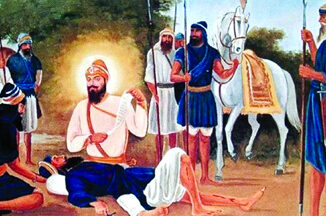
    After the fierce battle, Guru Gobind Singh personally blessed the martyrs, tearing up the document of renunciation and declaring them “Mukte”-those who had attained liberation. The transformation of Khidrana into Sri Muktsar Sahib stands as one of the most powerful moments of forgiveness and grace in Sikh tradition.
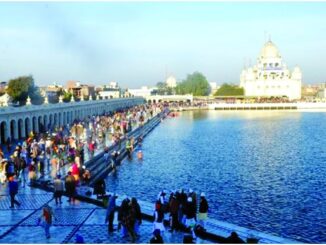
    Today, the town is dotted with historic gurdwaras, sacred sarovars and memorials associated with the Chali Mukte, making it the epicentre of Maghi observances.
    Origins of Maghi Mela: History Forged in Sacrifice
    The origins of Maghi Mela are inseparable from the Battle of Muktsar. During the prolonged siege of Anandpur Sahib by Mughal and hill chieftain forces, forty Sikhs-exhausted and fearful-signed a document disavowing Guru Gobind Singh. However, their conscience soon awakened.
    Under the leadership of Mai Bhago, a formidable Sikh woman warrior, the forty Sikhs pursued the Guru and confronted the Mughal army at Khidrana. Despite being vastly outnumbered, they fought with extraordinary bravery, attaining martyrdom while ensuring the Guru’s safety.
    Their sacrifice was not merely martial-it was moral and spiritual, exemplifying the Sikh ideals of responsibility, repentance and selfless courage.
    Spiritual Significance: From Repentance to Redemption
    Maghi Mela occupies a unique place in Sikh spirituality because it commemorates not only martyrdom but the possibility of redemption. The story of the Chali Mukte teaches that spiritual liberation is attainable through sincere remorse and righteous action.
    The observance coincides with Uttarayan, reinforcing the symbolism of turning toward light-both cosmically and inwardly. For pilgrims, Maghi becomes a moment of introspection, encouraging them to confront personal failings and renew commitment to truth and justice.
    Pilgrimage and the Sacred Sarovar
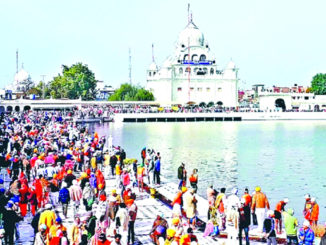
    A defining ritual of Maghi Mela is the holy dip at the sacred sarovar of Sri Muktsar Sahib. Pilgrims arrive in the pre-dawn hours, braving the winter cold to bathe in waters believed to carry the blessings of the Chali Mukte.
    After the dip, devotees visit key gurdwaras, including:
    – Gurdwara Tuti Gandi Sahib, marking where Guru Gobind Singh tore the renunciation letter
    – Gurdwara Tibbi Sahib, associated with the Guru’s strategic position
    – Gurdwara Shahid Ganj, commemorating the martyrs
    These visits transform the mela into a living historical journey, where faith and memory merge.
    Traditions and Observances: Faith in Action Ardas, Kirtan and Katha
    Special prayers are offered throughout the day, accompanied by continuous kirtan and historical discourses recounting the battle and its lessons. The emphasis remains on humility, courage and moral responsibility.
    Langar: The Spirit of Equality
    Massive langars operate day and night, feeding thousands. Volunteers from across Punjab and beyond serve meals selflessly, reflecting the Sikh principle that service to humanity is service to the Divine.
    Charity and Community Service
    In keeping with the spirit of Maghi and Makar Sankranti, acts of charity-donations of food, clothes and money-form an integral part of the observance.
    Maghi Beyond the Shrine:
    Cultural and Agrarian Dimensions
    While Sri Muktsar Sahib remains the spiritual nucleus, Maghi is observed across Punjab as:
    – The beginning of the new agricultural year
    – A time for settling land leases and accounts
    – A marker of seasonal transition and renewed labour
    Folk gatherings, local fairs and markets accompany the religious observance, lending Maghi a gentle cultural vibrancy without diminishing its solemn tone.
    Maghi Mela in Contemporary Times
    Today, Maghi Mela draws pilgrims from across India and the global Sikh diaspora. Modern civic arrangements support the massive turnout, while educational initiatives-exhibitions, lectures and publications-ensure the historical and spiritual essence of Sri Muktsar Sahib is preserved for future generations.
    Maghi Mela is ultimately a tribute to the idea that faith is not defined by perfection, but by the courage to return, repent and rise. The Chali Mukte did not erase their past-they redeemed it through sacrifice.
    As pilgrims gather each year at Sri Muktsar Sahib, they are reminded that liberation is not distant or abstract. It lies in truthful living, moral courage and unwavering devotion.
    In the quiet prayers by the sacred sarovar and the echo of Gurbani across the winter air, Maghi Mela continues to affirm Punjab’s timeless lesson:
    that even in failure, the path to liberation remains open.

  • Maghi Mela at Muktsar

    Maghi Mela at Muktsar

    Maghi da Mela is held at the holy city of Sri Muktsar Sahib each year in January or the month of Magh according to Nanakshahi calendar and it is one of the most important melas or fairs of India and the most important of all religiously significant gatherings of the Sikhs.
    The tenth Sikh master Guru Gobind Singh Ji chose Maghi as one of the three festivals to be celebrated by Sikhs (the others are Baisakhi and Bandhi Chhor Divas. After the battle of Sri Muktsar Sahib which took place on 8 May 1705, Maghi came to be associated with the forty Sikhs and the battle of Sri Muktsar Sahib.
    Maghi is the occasion when Sikhs commemorate the sacrifice of forty Sikhs, who fought for Guru Gobind Singh, the tenth Sikh master. Maghi, Makara Sankranti, the first day of the month of Magh. The eve of Maghi is the common Indian festival of Lohri when bonfires are lit in Hindu homes to greet the birth of sons in the families and alms are distributed. In the morning, people go out for an early-hour dip in nearby tanks.
    For Sikhs, Maghi means primarily the festival at Muktsar, a district town of the Punjab, in commemoration of the heroic fight of the Chali Mukte, literally, the Forty Liberated Ones, who laid down their lives warding off an attack by an imperial army marching in pursuit of Guru Gobind Singh.
    Etymologically, mukta from Sanskrit mukt means ‘liberated, delivered, emancipated,’ especially from the cycle of birth and death. Mukti (liberation, emancipation) in Sikhism is the highest spiritual goal of human existence, and mukt or mukta is the one who has achieved this state of final beatitude. Mukta, also means a pearl, and the word would thus signify a title or epithet of distinction. It was probably in this sense that the five Sikhs, who on 30 March 1699 received the vows of the Khalsa immediately after the first five Panj Piare, were blessed with the title mukta, plural mukte.
    The term Chali Mukte is also used sometimes for the martyrs whom were attacked by a huge army, which had been in pursuit of the 40 Sikhs, their Guru and the two older Sahibzadas since the evacuation of Anandpur by Guru Gobind Singh during the night 5-6 December. Encircled and hopelessly outnumbered at Chamkaur on 7 December, they engaged the enemy in small sorties throughout the day. Two of those sorties were led by their Guru’s two oldest sons the Sahibzadas.
    The Guru had previously created the Khalsa making his men his equal. Now Sri Guru Gobind Singh Ji told the survivors of his plan to challenge his attackers the next morning joining his sons, the Sahibzadas, in Sach Khand. The five remaining Singhs were Bhai Dharam Singh, (the two remaining Panj Pyare), Bhai Man Singh, Bhai Sangat Singh and finally Bhai Sant Singh. They begged Guru Ji to escape, they said, “At Kesgarh Sahib we watched you beseeching the five beloved ones to initiate you with Amrit. You had said then, I am of the Khalsa, and the Khalsa is mine. Today we ask in the capacity of the Khalsa beseeching you to leave Chamkaur and escape to a safer place.”
    Guru Saheb had no choice now but to accept their demands. It was decided that Guru Ji, Man Singh and the two Panj Pyare would leave the fort and that they would dress Sant Singh to look like Guru Ji because he had an uncanny resemblence to Guru Saheb. Guru Ji killed the few soldiers that were on watch. Then they left in the pitch dark the Guru clapped his hands three times saying “PeerÚ Hind Rahaavat” (“The “Peer” of India is Leaving”).
    They all shouted Sat Sri Akal and scattered in different directions. The mughals who couldn’t see where anyone was, ended up killing several of their own while Guru Ji and the three Sikhs escaped.
    Wazir Khan, the faujdar of Sirhind, denied the next day of the prize he had so eagerly and treacherously hounded, must have been furious. He would soon release that fury on the Guru’s remaining sons and their grandmother who, betrayed by their old family cook Gangu, soon fell into his hands back at Sirhind.
    While there is no unanimity over the names of the martyrs of Sri Muktsar Sahib and Chamkaur Sahib, the five Muktas who comprised the first batch of Sikhs to receive amrit at the hands of the Panj Piare are given in Rahitnama by Bhai Daya Singh as Ram Singh, Fateh Singh, Deva Singh, Tahil Singh and Isar Singh. No other details of these five are available except that an old manuscript of Bhai Prahlad Singh’s Rahitnama is said to contain a note associating Ram Singh and Deva Singh with the village of Bughiana, Tahil Singh and Isar Singh with Dall-Van and Fateh Singh with Kurdpur Mangat.
    According to Bhai Chaupa Singh, his Rahitnama or code of conduct was drafted by muktas. The text is said to have received Guru Gobind Singh’s approval on 7 Jeth 1757 Bk / 5 May 1700. It appears that the title of mukta was bestowed subsequently also on persons other than the original five. The number of muktas is recorded variously in old Sikh texts. For instance, Kesar Singh Chhibbar, Bansavallnama Dasan Patshahlan Ka, mentions 14, and Kuir Singh, gurbilas Patshahi X, 25.
    But the muktas universally celebrated in the Sikh tradition are the forty martyrs of Sri Muktsar Sahib who earned this title by sacrificing their lives for the Guru and who redeemed their past apostasy of having disowned their Guru and deserted him, when driven to desperation by the prolonged siege of Anandpur by the Rajput hill chiefs and Mughal forces by having their disclaimer torn by the Guru.
    Sikhs celebrate the Maghi with an end to end recital of the holy Guru Granth Sahib and religious rituals in all the Sikh Gurudwaras. On the eve of Maghi falls the common Indian festival called the Lohri when bonfires are lighted in Hindu homes and alms are also distributed. . however The largest assembly, however, takes place at Muktsar (Punjab) where big fairs are organized and pilgrims take a holy dip in the sacred waters of sarovar and also visit several shrines. A mahala or big march of pilgrims from the main shrine to gurdwara Tibbi Sahib, sacred to Guru Gobind Singh, concludes the three-day celebration.

  • Maghi Mela at Muktsar

    Maghi Mela at Muktsar

    Maghi is the occassion when Sikhs commemorate the sacrifice of forty Sikhs, who fought for Guru Gobind Singh, the tenth Sikh master.

    Maghi, Makara Sankranti, the first day of the month of Magh. The eve of Maghi is the common Indian festival of Lohri when bonfires are lit in Hindu homes to greet the birth of sons in the families and alms are distributed. In the morning, people go out for an early-hour dip in nearby tanks.

    For Sikhs, Maghi means primarily the festival at Muktsar, a district town of the Punjab, in commemoration of the heroic fight of the Chali Mukte, literally, the Forty Liberated Ones, who laid down their lives warding off an attack by an imperial army marching in pursuit of Guru Gobind Singh.

    Mela Maghi, held at the holy city of Sri Muktsar Sahib each year in January, or the month of Magh according to Nanakshahi calendar is one of the most important melas (fairs) of India and the most important of all religiously significant gatherings of the Sikhs.

    Etymologically, mukta from Sanskrit mukt means ‘liberated, delivered, emancipated,’ especially from the cycle of birth and death. Mukti (liberation, emancipation) in Sikhism is the highest spiritual goal of human existence, and mukt or mukta is the one who has achieved this state of final beatitude. Mukta, also means a pearl, and the word would thus signify a title or epithet of distinction. It was probably in this sense that the five Sikhs, who on 30 March 1699 received the vows of the Khalsa immediately after the first five Panj Piare (q.v.), were blessed with the title mukta, plural mukte.

    The term Chali Mukte is also used sometimes for the martyrs whom were attacked by a huge army, which had been in pursuit of the 40 Sikhs, their Guru and the two older Sahibzadas since the evacuation of Anandpur by Guru Gobind Singh during the night 5-6 December. Encircled and hopelessly outnumbered at Chamkaur on 7 December, they engaged the enemy in small sorties throughout the day. Two of those sorties were led by their Guru’s two oldest sons the Sahibzadas.

    The Guru had previously created the Khalsa making his men his equal. Now Sri Guru Gobind Singh Ji told the survivors of his plan to challenge his attackers the next morning joining his sons, the Sahibzadas, in Sach Khand. The five remaining Singhs were Bhai Dharam Singh, (the two remaining Panj Pyare), Bhai Man Singh, Bhai Sangat Singh and finally Bhai Sant Singh. They begged Guru Ji to escape, they said, “At Kesgarh Sahib we watched you beseeching the five beloved ones to initiate you with Amrit. You had said then, I am of the Khalsa, and the Khalsa is mine. Today we ask in the capacity of the Khalsa beseeching you to leave Chamkaur and escape to a safer place.”

    Guru Saheb had no choice now but to accept their demands. It was decided that Guru Ji, Man Singh and the two Panj Pyare would leave the fort and that they would dress Sant Singh to look like Guru Ji because he had an uncanny resemblence to Guru Saheb. Guru Ji killed the few soldiers that were on watch. Then they left in the pitch dark the Guru clapped his hands three times saying “PeerÚ Hind Rahaavat” (“The “Peer” of India is Leaving”).

    They all shouted Sat Sri Akal and scattered in different directions. The mughals who couldn’t see where anyone was, ended up killing several of their own while Guru Ji and the three Sikhs escaped.

    Wazir Khan, the faujdar of Sirhind, denied the next day of the prize he had so eagerly and treacherously hounded, must have been furious. He would soon release that fury on the Guru’s remaining sons and their grandmother who, betrayed by their old family cook Gangu, soon fell into his hands back at Sirhind.

    While there is no unanimity over the names of the martyrs of Sri Muktsar Sahib and Chamkaur Sahib, the five Muktas who comprised the first batch of Sikhs to receive amrit at the hands of the Panj Piare are given in Rahitnama by Bhai Daya Singh as Ram Singh, Fateh Singh, Deva Singh, Tahil Singh and Isar Singh. No other details of these five are available except that an old manuscript of Bhai Prahlad Singh’s Rahitnama is said to contain a note associating Ram Singh and Deva Singh with the village of Bughiana, Tahil Singh and Isar Singh with Dall-Van and Fateh Singh with Kurdpur Mangat.

    According to Bhai Chaupa Singh, his Rahitnama or code of conduct was drafted by muktas. The text is said to have received Guru Gobind Singh’s approval on 7 Jeth 1757 Bk / 5 May 1700. It appears that the title of mukta was bestowed subsequently also on persons other than the original five. The number of muktas is recorded variously in old Sikh texts. For instance, Kesar Singh Chhibbar, Bansavallnama Dasan Patshahlan Ka, mentions 14, and Kuir Singh, gurbilas Patshahi X, 25.

    But the muktas universally celebrated in the Sikh tradition are the forty martyrs of Sri Muktsar Sahib who earned this title by sacrificing their lives for the Guru and who redeemed their past apostasy of having disowned their Guru and deserted him, when driven to desperation by the prolonged siege of Anandpur by the Rajput hill chiefs and Mughal forces by having their disclaimer torn by the Guru.

    Sikhs celebrate the Maghi with an end to end recital of the holy Guru Granth Sahib and religious rituals in all the Sikh Gurudwaras. On the eve of Maghi falls the common Indian festival called the Lohri when bonfires are lighted in Hindu homes and alms are also distributed. . however The largest assembly, however, takes place at Muktsar (Punjab) where big fairs are organized and pilgrims take a holy dip in the sacred waters of sarovar and also visit several shrines. A mahala or big march of pilgrims from the main shrine to gurdwara Tibbi Sahib, sacred to Guru Gobind Singh, concludes the three-day celebration.

  • Maghi Mela

    Maghi Mela

    Maghi is the occassion when Sikhs commemorate the sacrifice of forty Sikhs, who fought for Guru Gobind Singh, the tenth Sikh master.
    Maghi, Makara Sankranti, the first day of the month of Magh. The eve of Maghi is the common Indian festival of Lohri when bonfires are lit in Hindu homes to greet the birth of sons in the families and alms are distributed. In the morning, people go out for an early-hour dip in nearby tanks.
    For Sikhs, Maghi means primarily the festival at Muktsar, a district town of the Punjab, in commemoration of the heroic fight of the Chali Mukte, literally, the Forty Liberated Ones, who laid down their lives warding off an attack by an imperial army marching in pursuit of Guru Gobind Singh.
    The action took place near a pool of water, Khidrane di Dhab, on 29 December 1705. The bodies were cremated the following day, the first of Magh (hence the name of the festival), which now falls usually on the 13th of January. Following the custom of the Sikhs to observe their anniversaries of happy and tragic events alike, Maghi is celebrated with end-to-end recital of the Guru Granth Sahib and religious divans in almost all gurdwaras.
    Significance
    The day of Maghi is observed to honour the heroic fight of the Chali Mukte, or the Forty Liberated Ones, who sacrificed their own lives defending an attack by the imperial army marching in pursuit of Guru Gobind Singh. The action took place near a pool of water, Khidrane di Dhab, on 29 December 1705.
    Celebration
    Sikhs celebrate the Maghi with an end to end recital of the holy Guru Granth Sahib and religious rituals in all the Sikh Gurudwaras. On the eve of Maghi falls the common Indian festival called the Lohri when bonfires are lighted in Hindu homes and alms are also distributed. . however The largest assembly, however, takes place at Muktsar (Punjab) where big fairs are organized and pilgrims take a holy dip in the sacred waters of sarovar and also visit several shrines. A mahala or big march of pilgrims from the main shrine to gurdwara Tibbi Sahib, sacred to Guru Gobind Singh, concludes the three-day celebration.