Tag: Maharashtra

  • Rahul’s vote theft charge:  Election Commission  seeks signed declaration or apology to the nation

    Rahul’s vote theft charge: Election Commission seeks signed declaration or apology to the nation

    NEW DELHI (TIP): A day after Congress leader Rahul Gandhi levelled allegations of over one lakh “stolen” votes in the Mahadevapura Assembly segment of Bangalore Central Lok Sabha seat — which the opposition narrowly lost to the ruling BJP in 2024 — the Election Commission of India (ECI) hit back on Friday.
    In a direct attack on the Leader of Opposition, the poll body asked him to either submit a signed declaration of his charges under oath or apologize to the nation.
    ECI sources said that if Gandhi believes his analysis and allegations are true, then he should have no problem in signing a declaration to that effect.
    However, if he does not do so, then it will mean that his allegations are absurd and then he should apologize to the nation, they said.
    On Thursday, soon after the Congress MP had given a detailed presentation to the media on how “vote theft” was effected at various levels in the assembly segment of Bangalore Central Lok Sabha constituency, the ECI had retaliated by asking him to send a signed declaration under oath to that effect, through the Chief Election Officer (CEO) of Karnataka.
    Congress leader Rahul Gandhi alleged that in the 2024 Lok Sabha polls, PM Narendra Modi and BJP leaders made an assault on the Constitution. Gandhi alleged that the Election Commission and the BJP colluded to steal the Lok Sabha election from people.
    He said, “In Lok Sabha election our alliance won in Maharashtra; surprisingly after four months the BJP won the assembly polls. In the Maharashtra Assembly polls, one crore (10 million) new voters, who did not vote in the Lok Sabha election, cast their votes. The INDIA bloc votes did not reduce in the Maharashtra Assembly polls; we got the same number of votes as in the Lok Sabha polls.”
    Fake voters in bulk are shown as residing in one-bedroom houses owned by BJP leaders, he alleged.
    CEOs of Haryana and Maharashtra also later in the day had sought written declarations from him detailing his allegations against the poll body.
    Leader of Opposition(LOP) Rahul Gandhi on Friday reacted to Election Commission’s demand for an affidavit about his explosive claims of a “huge criminal fraud” in elections through collusion between the BJP and the poll body, saying he has “already taken the oath of the Constitution in Parliament”.
    “The Election Commission demands an affidavit from me. It says that I must take an oath. I have already taken the oath of the Constitution in Parliament,” the Congress leader Rahul Gandhi said in Karnataka’s Bengaluru.
    The Lok Sabha LoP’s reaction comes a day after his scathing attack on EC of a “vote theft”.
    Following the Congress leader’s claims of electoral fraud, EC officials had demanded a proof, while requesting for a signed declaration detailing specific instances of voter-list manipulation.
    Meanwhile, taking a further jibe at Gandhi, ECI sources said that as usual, he might present his claims and objections against special intensive revision (SIR) of electrical rolls in Bihar only after the assembly elections in the state are over.
    They went on to add that ever since the draft electoral roll for Bihar was published on August 1, not a single political party has come forward to present its objections on addition or deletion of voters in the rolls.
    The Congress-led INDIA bloc has alleged that 65 lakh voters faced the risk of being deleted from the state’s electoral roll following the SIR exercise.
    The Supreme Court has sought a detailed response from the ECI to an application seeking the particulars and reason for each of the 65 lakh voters deleted from the Bihar draft electoral roll.
    On August 6, a Bench headed by Justice Surya Kant told the poll body to file the particulars by August 9. A hearing has already been scheduled for August 12 on the matter.

  • Rahul Gandhi Addresses US NRIs gathered at Boston: Champions Democratic Reform, Youth Empowerment, and Electoral Integrity

    Rahul Gandhi Addresses US NRIs gathered at Boston: Champions Democratic Reform, Youth Empowerment, and Electoral Integrity

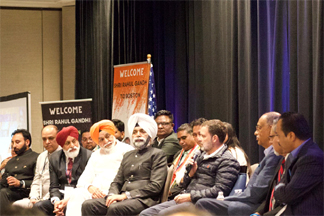
    BOSTON, MA (TIP): In a warm and impactful address to the Indian diaspora, Hon. Shri Rahul Gandhi, Member of Parliament and Leader of the Opposition spoke to a packed audience at the Marriott Boston Long Wharf during a special Meet and Greet hosted by the Indian Overseas Congress, USA. The event drew attendees from across New England and beyond, eager to hear his vision for India’s future.

    Gandhi ji began by expressing heartfelt appreciation for the community’s discipline and dedication. He noted that the Indian Overseas Congress and its members serve as vital ambassadors for the Congress Party and India itself. “Your presence and commitment bring great respect to our country abroad. This relationship we share is not merely political—it’s a bond of family, rooted in love, values, and mutual respect,” he said.

    The core of his address focused on ongoing efforts to transform the Indian National Congress from within. Gandhi detailed a reform initiative underway in Gujarat aimed at decentralizing power within the party’s structure. He emphasized empowering local leaders by giving decision-making authority to district presidents and their committees. “We’re building a system where voices from the ground—including those of our overseas brothers and sisters—will be heard and respected. Constructive competition, accountability, and accessibility will shape the new Congress,” he affirmed.

    In a stirring reflection on India’s diversity, Gandhi spoke against the growing tide of ideological centralization under the RSS-BJP regime. “India is not defined by one language, one religion, or one tradition. Its soul is pluralistic, where a Punjabi, a Malayali, and a Gujarati can sit together in harmony. This is India, which is under attack today.” He warned that attempts to impose a singular ideological narrative threaten the very foundation of Indian democracy and unity.

    He also drew attention to the challenges the opposition faces in today’s India, including the capture of mainstream and social media, which limits public access to alternative viewpoints. Despite these roadblocks, Gandhi pointed to the recent Lok Sabha elections, where the BJP faced unexpected resistance, as a sign that the tide is turning. “This is a fight between two ideologies—one that believes India belongs to everyone and another that seeks to concentrate power and wealth among a select few. We’ve faced harder battles before, and we will prevail.”

    Following his keynote, Gandhi opened the floor to an unscripted Q&A session, responding to critical questions from the audience. When asked about voting irregularities in Maharashtra, he raised serious concerns about the integrity of India’s electoral system. He cited that between 5:30 and 7:30 PM during the state election, over 650,000 votes were reportedly cast—a physical impossibility based on voter speed and capacity. Requests for official videography, as required by law, were denied and followed by changes to the law to prevent such requests in the future. “This indicates a compromised Election Commission,” he said. “The issues with Electronic Voting Machines (EVMs) and voter trust are not just ours—even international voices like Tulsi Gabbard have called them hackable. We will continue to raise these issues despite resistance.”

    A young student in the audience asked how the youth could play meaningful roles in politics despite barriers. Gandhi responded candidly, emphasizing that politics is not easy—it is often grueling and requires resilience. However, he encouraged passionate young minds to get involved through internships and party programs. “If you are patient and committed, we will gladly open the way for you. The future belongs to those who are willing to work for it.”

    Another question addressed the growing ideological infiltration in India’s universities, particularly the appointment of RSS-aligned faculty. Gandhi agreed that the educational system is being misused as a tool for ideological indoctrination rather than academic excellence. “This is damaging our intellectual foundation, and when we return to power, we will look into these appointments seriously.”

    In his closing remarks, Gandhi acknowledged the short nature of this U.S. visit, having been invited primarily to speak at Brown University. However, he promised to return soon, with plans to visit cities such as in Illinois, California, Washington, and New Jersey. To enthusiastic applause, he also committed to bringing his sister, Priyanka Gandhi Vadra, along on a future trip.

    Following the great speech of Dr. Sam Pitroda ji, President Mohinder Singh Gilzian welcomed everyone and emphasized that “…This is not just a political battle – this is a moral struggle to protect the very soul of India, a struggle to defend our Constitution, preserve our democracy, and uphold the values our freedom fighters once dreamed of.” He added that we are witnessing a government that, even after losing its moral mandate, continues to operate with authoritarian arrogance.
    George Abraham, the vice-chair of the Indian Overseas Congress, in his speech, encouraged the Boston Diaspora to be a more visible advocate on behalf of democracy, freedom, and equal justice. ” Indians are the largest group of economic refugees anywhere in the world where we would like to have our culture respected and religious freedom protected; however, if our motherland is failing to defend those values towards its minority citizens, what message are we sending abroad?” he further implored.
    Secretary-General Harbachan Singh thanked Sri Rahul Gandhi ji, Dr. Sam Pitroda ji, all the Boston group and all other supporters, Working Presidents Pradeep Samala of North East Zone, Devinderpal Bhullar of West Coast Zone, Gurdev Singh Hayer of South West Zone, Vice President John Joseph, Vice President Baldev Randhawa, Treasurer Dr. Joshua Jayasingh, and other senior members such as Chapter Presidents and General Secretaries of the IOC.USA by recognizing each one by name, and expressed gratitude to the overall jam-packed massive audience for their enthusiastic rendering of the event a very successful one.
    The evening concluded with a renewed sense of solidarity among attendees, many of whom had traveled great distances to engage with a leader they see as a torchbearer of truth, democracy, and compassion. As Gandhi ji reminded the audience, “In the marketplace of hatred, we must open a shop of love.” His message was clear—India’s soul is plural, resilient, and worth fighting for.
    (Based on a press release issued by Harbachan Singh,, General Secretary, IOCUSA)

  • Guru Gobind Singh Ji : The Saint Soldier

    Guru Gobind Singh Ji : The Saint Soldier

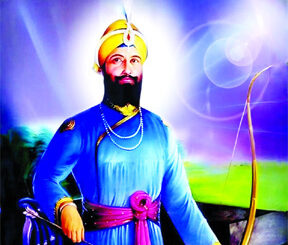
    Guru Gobind Singh, (1666–1708) the 10th and last master of the Sikhs, was born on 7th day of the month of POH, samvat 1723, (22nd December, 1666 AD ) at Patna Sahib in Bihar. Guru ji was a great revolutionary whose greatest achievement was the creation of the Khalsa Panth on Baisakhi Day of 1699 at Anandpur Sahib in Punjab. Guru ji was a linguistic familiar with many languages Iike, Persian, Arabic, Sanskrit as well as his native Punjabi. Guru ji codified Sikh law,wrote martial poetry and music ,fought many battles and won.
    Guru ji wrote the renowned holy Granth called the Dasam Granth..The noted prayers included in this Granth are Jaap Sahib, Chandi Di Vaar, Tav-Prasad Savaiye, Zafarnamah, Bachittar Natak, Akal Ustat, Chaupai Sahib and more.
    Guru Gobind Singh Sahib Ji was a revolutionary prophet who practiced his spiritual ideals to counter the forces of tyranny and injustice. Tyranny in all its forms – social, political, and religious was to be countered and annihilated. A state which could not provide basic human rights, social justice, equality and religious freedom was to be opposed.
    Guru Gobind Singh Ji’s contributions not only shaped Sikhism into a vibrant, sovereign, and spiritual tradition, but also inspired resistance against tyranny and uplifted the downtrodden. His establishment of the Khalsa in 1699 and his declaration of Guru Granth Sahib Ji as the eternal Guru remain the two most defining moments in Sikh history.
    Early Life of Guru Gobind Singh Ji
    – Birth Name: Gobind Rai
    – Born: December 22, 1666 (7 Poh, Samvat 1723), Patna Sahib, Bihar
    – Father: Guru Tegh Bahadur Ji (9th Sikh Guru)
    – Mother: Mata Gujri Ji
    Childhood in Patna and Anandpur Sahib
    Guru Gobind Singh Ji was born in Patna Sahib, where his early years were marked by brilliance in language, philosophy, and martial training. His family later moved to Anandpur Sahib, which became the center of Sikh learning and resistance under his leadership.
    Martyrdom of Guru Tegh Bahadur Ji
    In 1675, Guru Tegh Bahadur Ji was publicly executed in Delhi by Mughal Emperor Aurangzeb for defending the religious rights of Kashmiri Hindus. At the young age of nine, Guru Gobind Rai was formally anointed as the Tenth Guru, taking on an enormous spiritual and social responsibility.
    Leadership and Transformation of the Sikh Community
    From the age of nine onward, Guru Gobind Singh Ji led the Sikh Panth with vision, strength, and purpose, shaping it into a resilient and sovereign spiritual order.
    Creation of the Khalsa (1699)
    On Vaisakhi Day in 1699, Guru Gobind Singh Ji summoned thousands of Sikhs at Anandpur Sahib. Through a dramatic call for sacrifice, he created the Khalsa Panth, a community of initiated warrior-saints who embodied the virtues of:
    – Spiritual devotion (bhakti)
    – Martial courage (shakti)
    – Equality, justice, and righteousness
    The Khalsa was required to uphold the Five Ks (Kakaars) and live by a strict code of conduct, known as the Rehat Maryada.
    “When all other means fail, it is righteous to draw the sword.”
    -Guru Gobind Singh Ji
    This transformation empowered the Sikhs to resist religious persecution, caste oppression, and political tyranny.
    Teachings and Philosophy
    Guru Gobind Singh Ji’s teachings combine devotion, discipline, and dharam yudh (righteous warfare). He emphasized internal purity, service to humanity, and unwavering faith in One God.
    1. God is One and Formless
    Guru Ji reinforced the belief in Ik Onkar-the One Universal Creator. He rejected idol worship and rituals, calling instead for:
    – Meditation (Simran)
    – Honest living (Kirat Karni)
    – Sharing with others (Vand Chakna)
    2. Equality of All
    He denounced the caste system, declared all human beings equal, and promoted gender equality.
    “Manas ki jaat sabhe ek pehchaanbo” – Recognize the whole human race as one.
    3. The Ideal Saint-Soldier
    Guru Gobind Singh Ji conceptualized the ideal Sikh as a Saint-Soldier (Sant-Sipahi)-a person of high spiritual awareness, humility, and martial readiness to fight for justice, never out of anger or greed.
    4. Fearlessness and Self-Sacrifice
    He emphasized the cultivation of Nirbhau (fearlessness) and Nirvair (without hatred). His own life, and the sacrifices of his family, are unparalleled in Indian history.
    Literary Genius and Writings
    Guru Gobind Singh Ji was a scholar of Persian, Braj, Sanskrit, and Punjabi, and composed an extensive body of spiritual and philosophical literature.
    Major Works
    – Jaap Sahib – A poetic composition praising the attributes of God
    – Akal Ustat – Hymns in praise of the Timeless One
    – Chandi di Var – Heroic ballads of the divine feminine (Chandi/Devi)
    – Zafarnama – A Persian epistle to Aurangzeb, criticizing his tyranny and dishonesty
    These texts form a part of the Dasam Granth, a collection of Guru Gobind Singh Ji’s writings.
    Personal Sacrifices and Battles
    Family Martyrdom
    Guru Gobind Singh Ji’s life was marked by immense personal loss:
    – His father, Guru Tegh Bahadur Ji – Beheaded for defending religious freedom
    His four sons:
    – Sahibzadas Ajit Singh and Jujhar Singh – Martyred in the Battle of Chamkaur
    – Sahibzadas Zorawar Singh and Fateh Singh – Bricked alive by the Mughals in Sirhind
    – His mother, Mata Gujri Ji – Passed away in captivity upon hearing of her grandsons’ death
    Despite these tragedies, Guru Ji remained steadfast in faith, mission, and purpose.
    Key Battles
    He fought several defensive wars against the Mughal and Hill Rajput rulers, including:
    – Battle of Bhangani (1688)
    – Battle of Chamkaur (1704)
    – Battle of Muktsar (1705)
    These battles were fought not for power, but for dharma (righteousness) and freedom of belief.
    Declaration of the Guru Granth Sahib as the Eternal Guru
    Before his passing in 1708, Guru Gobind Singh Ji abolished the line of human Gurus and declared the Guru Granth Sahib Ji as the eternal, living Guru of the Sikhs:
    “Sabh Sikhan ko hukam hai, Guru manyo Granth.”
    This ensured that the Word of God, not a person, would guide the Panth forever.
    Martyrdom at Nanded
    Guru Gobind Singh Ji passed away on October 7, 1708, in Hazur Sahib, Nanded (Maharashtra), after being attacked by an assassin. Even in his final moments, he remained composed, instructing the Sikhs to uphold the Khalsa and revere the Guru Granth Sahib.
    Legacy of Guru Gobind Singh Ji
    – Founder of the Khalsa Panth
    He gave Sikhs a unique identity and unified purpose-to be selfless, courageous, disciplined, and God-fearing.
    – Champion of Human Rights and Freedom
    – Guru Gobind Singh Ji’s message resonates universally: stand for the oppressed, live truthfully, and never bow before injustice.
    – He was not only a warrior but also a visionary poet and philosopher. His writings inspired generations to live lives of spiritual and ethical excellence.

  • Israeli tourist, homestay operator gang-raped, their male friends attacked in Karnataka

    Israeli tourist, homestay operator gang-raped, their male friends attacked in Karnataka

    KOPPAL, KARNATAKA (TIP): Two women, including a 27-year-old Israeli tourist, were allegedly gang-raped while stargazing on the banks of Sanapur Lake near Hampi, police said on Saturday, March 8. The incident occurred around 11 pm on Thursday , March 6, when, after dinner, a 29-year-old woman operator of the homestay—where the Israeli tourist and three other male tourists were staying—was sitting by the canal with them, enjoying music and stargazing, they said.

    Among the male tourists, one was from the United States, while the others were from Odisha and Maharashtra, police said.

    According to the police, in her complaint, the homestay operator alleged that while they were stargazing and playing music near Sanapur Lake, three men on a motorcycle approached them, asking where they could get petrol. When she informed them that there were no petrol pumps nearby, the accused demanded Rs 100.

    When she and the tourists refused to give them money, the accused—who spoke Kannada and Telugu—started abusing them. They then allegedly raped her and the Israeli tourist and pushed the three male tourists into the canal, a senior police officer said.

    Of the male tourists, two sustained injuries, while the one from Odisha has been reported missing, he added. Based on the complaint, a case was registered at Gangavathi Rural Police Station under sections related to extortion, robbery or dacoity with intent to cause death or grievous hurt, gangrape, and attempted murder under the Bharatiya Nyaya Sanhita, police said.

    The two women are undergoing treatment at a hospital, police added.

    “We have registered the case and identified the suspects. Six teams have been formed, and efforts are underway to nab them,” police said.
    (Source: PTI)

  • Modi returns, Rahul finds foothold: Revisiting the grand political tamasha India witnessed this year

    Modi returns, Rahul finds foothold: Revisiting the grand political tamasha India witnessed this year

    The year 2024 was significant for Indian politics as the Election Commission carried out the world’s largest electoral exercise with 642 million people voting to decide who would rule the nation for the next five years.
    The elections were carried out in seven phases between April and June with thousands of government functionaries — who were manned by an even greater number of security forces — managing a whopping 10.5 lakh polling booths across the country.
    The year also witnessed several states electing their new governments, with all but two retaining those in power. The opposition also got a new lease of life this year despite being on the losing side in the general elections.
    Congress leader Rahul Gandhi became the Leader of Opposition in Lok Sabha as his party won 99 seats, nearly double the number it had scrambled to in 2019. The grand old party celebrated the performance like a win against the larger-than-life figure of Narendra Modi, who became the Prime Minister for the third consecutive time, though with figures far below the BJP’s expectations.
    In the national capital, the tug of war between the Centre and the elected Aam Aadmi Party government witnessed strong pulls and drags this year. The tension peaked when AAP chief Arvind Kejriwal was jailed in March for his alleged role in the Excise Policy Scam. He functioned as Delhi Chief Minister behind bars for the next seven months until the Supreme Court granted him bail with conditions, following which he quit, paving the way for his party leader Atishi to take over as Delhi CM.
    The resignation, arrest, and return of Hemant Soren in Jharkhand, the fall of the Biju Janata Dal government in Odisha after 24 years, the return of Chandrababu Naidu as Andhra Pradesh Chief Minister, the maiden Assembly Elections in the Union Territory of Jammu and Kashmir, and the NDA’s landslide victory in Maharashtra Elections were some of the other major political developments the country witnessed in 2024.
    Here is a sneak peek into these and other landmark events in Indian politics this year.
    Hemant Soren’s Fall And Rise
    Four-time Jharkhand Chief Minister, Hemant Soren dogged it out against the central government in the very first month of 2024 but managed to retain power amid a high-decibel political drama at the fag end of the year.
    The gripping political potboiler saw Soren quitting as chief minister hours before he was arrested by the Enforcement Directorate in a land scam case on January 31. Ahead of his arrest, the agency could not confirm his whereabouts for around 24 hours before he showed up in Ranchi. Soren claimed the charges against him were nothing but a vindictive action on the part of the BJP-led central government.
    His chosen replacement Champai Soren functioned as Jharkhand CM for barely five months till Hemant was released on bail on June 28. Less than a week later, Champai Soren resigned as CM, making way for Hemant who took oath as CM on July 4. The move did not go down well with Champai Soren who quit JMM and joined the BJP on August 30.
    In the November Assembly Elections, Hemant Soren signed off the year with flying colours as the JMM-led alliance won 56 seats, the party’s best performance since inception. Soren was unanimously elected as leader of the legislature party and again took oath as Chief Minister on 28 November.
    Delhi CM Arvind Kejriwal Is Jailed
    Embroiled in controversies that saw him running the Delhi government from behind bars for several months, Aam Aadmi Party National Convener Arvind Kejriwal was on a political roller-coaster in 2024.
    With several of his key party members and ministers in the Delhi government already arrested in the alleged excise policy scam, Kejriwal also was on the Enforcement Directorate’s radar.
    He managed to dodge multiple summons by the central agency before he was arrested on March 21 after the Delhi High Court rejected his plea for anticipatory bail. Kejriwal knew his arrest was around the corner and had time and again mentioned it in his prior public speeches.
    The BJP were all but sure of him resigning from his post but Kejriwal stayed put and ran the Delhi government from jail for several months. He attempted to get bail from the Delhi High Court however the same was rejected multiple times.
    During his jail time, Kejriwal’s legal battles took several twists and turns. He was granted interim bail by the Supreme Court from May 10 to June 1, 2024, to allow him to campaign for the Lok Sabha elections. After his interim bail expired, Kejriwal surrendered at Tihar Jail on June 2.
    Delhi Rouse Avenue Court granted him bail on June 20. However, the Enforcement Directorate challenged the trial court order before the Delhi High Court which stayed the bail order on June 21. Five days later, the CBI arrested Kejriwal in a different case linked to the alleged excise policy scam.
    The Supreme Court granted Kejriwal interim bail on July 12, but he remained in jail due to the CBI arrest. He was finally granted bail by the Supreme Court on September 13, 2024, after spending over five months in prison.
    The bail, however, came with certain conditions including prohibiting him from making public statements about his arrest by the CBI. He was also ordered not to enter the office of the Delhi Chief Minister and sign any official files in his capacity as the Chief Minister.
    Just four days later, on September 17, Kejriwal resigned as the Chief Minister of Delhi. He made it clear that he would only consider taking up the role again if he received a public mandate. On September 21, Atishi, the Delhi education minister till then, replaced Kejriwal as the youngest woman CM of Delhi.
    2024 General Elections:
    A Mammoth Exercise
    India witnessed its 18th general elections this year as the entire country voted to choose the next central government. Of the 96.8 crore (968 million) people who were eligible to vote, 64.2 crore exercised the right including 312 million women, the highest-ever participation by female voters.
    The 44-day electoral exercise was the second longest in country after the first parliamentary elections of 1951-52, which lasted for more than four months. The polls were conducted in seven phases beginning April 19 and ending June 1. The results were declared on June 4.
    The BJP-led NDA alliance won the elections with Narendra Modi returning as Prime Minister for the third consecutive time. The BJP’s performance, however, was below expectations and it had to heavily rely on two main allies—the Telugu Desam Party of Andhra Pradesh and Janata Dal (United) of Bihar—to form a coalition government.
    Eyeing 400 of the 543-seat Lok Sabha, BJP managed to win only 240 while its main partners TDP and JD(U) won 16 and 12 seats respectively. Overall, the NDA won 293 seats.
    In 2019, the BJP won 303 seats with the NDA’s final tally at 353. In contrast, Congress recorded a turnaround winning 99 seats, nearly double its 2019 tally of 52, thereby coming back as a potent opposition.
    Narendra Modi Takes Oath As PM For Third Consecutive Time
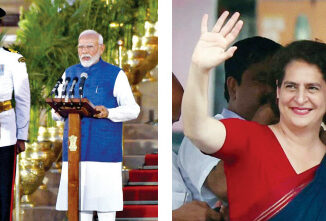
    On June 9, Narendra Modi took oath as the Prime Minister of India for the third consecutive time after his BJP-led NDA alliance registered a victory in the 2024 Lok Sabha elections.
    The ruling party’s rallies ahead of the elections were powered by the ‘Modi ki Guarantee’ campaign, which managed to help it win 240 seats, a lacklustre performance but strong enough to form a coalition government with the BJP as its most powerful constituent.
    Three days after the results were declared on June 4, Modi confirmed the support of 293 MPs to President Droupadi Murmu after which he was sworn-in as the Prime Minister for the third time on June 9.
    As for his individual performance from the Varanasi Lok Sabha seat, PM Modi had a shocking start on the result day as Congress’ Ajay Rai was seen leading in the first hour of vote counting.
    PM Modi raced past in the second half defeating Rai by a margin of 1,52,513 votes. It was the second-lowest-ever victory margin (in percentage points) for a sitting prime minister and a steep fall for Modi compared to his 2019 margin of 4.5 lakh votes.
    In his victory speech, Prime Minister Modi pledged to work with all states, regardless of the party in power, to build a developed India. He also laid out his vision for the third term saying it would be a tenure of big decisions and a key emphasis would be on uprooting corruption. He thanked TDP supremo Chandrababu Naidu and Bihar Chief Minister Nitish Kumar, his NDA allies for the electoral successes in Andhra Pradesh and Bihar.
    Rahul Gandhi’s Resurgence As LoP, Priyanka’s Debut in Parliament
    Ridiculed as ‘Shehzada’ and dismissed as ‘Pappu’, Congress leader Rahul Gandhi had the last laugh in the 2024 Lok Sabha election as he managed to gain big even though his party lost the elections.
    Gandhi contested from Kerala’s Wayanad and Uttar Pradesh’s Rae Bareli, winning the southern seat by 3.64 lakh votes against his nearest rival Annie Raja of CPI and the northern one by 3.9 lakh votes against BJP’s Dinesh Pratap Singh. Rahul retained Rae Bareli and his sister Priyanka fought and won from Wayanad by an even greater margin in the by-elections later in the year, making her Parliament debut as she took oath as Lok Sabha MP on November 28.
    Congress credited its spirited performance in the general elections to Rahul Gandhi for a campaign that focussed on people’s issues and welfare measures. The party lauded Gandhi for creating a new narrative through his Bharat Jodo Yatras, the on-foot marches he undertook from one end of the nation to another during which he was seen meeting people on the ground and getting to know about the real issues facing mainland India.
    Even the harshest of his critics would concede that Gandhi’s 2024 campaign was by far his best one as he focussed on bread-and-butter issues and the party’s welfare guarantees which struck a chord with a section of the voters.
    With Congress winning 99 seats in the elections (more than the requisite 55 or 10 per cent of the 543 seats), it meant that for the first time since 2014, it had the opportunity to pick a Leader of Opposition (LoP) in Lok Sabha. As an obvious choice, the party nominated Gandhi who was appointed the LoP on June 24, his maiden constitutional position since his entry into politics in 2004.
    As LoP Gandhi was accorded a Cabinet Minister’s rank, enhancing his position in the protocol list. The work of the Leader of the Opposition in the Lok Sabha is opposite to that of the Leader of the House.
    TDP Wins Andhra Elections,
    Naidu Returns As CM
    Andhra Pradesh saw a power transfer in 2024 as the ruling YSR Congress party lost the Assembly Elections to Telugu Desam party-led NDA. The elections were held in a single phase on May 13 with counting of votes on June 4. The polls were held simultaneously with the Lok Sabha elections.
    The incumbent Jagan Mohan Reddy’s YSRCP faced a crushing defeat as it won just 11 seats against 151 in 2019. In contrast, the TDP won 135 seats in the 2024 elections against just 23 in 2019.
    TDP Chief N Chandrababu Naidu returned as Chief Minister, taking oath on June 12. His last term as CM was from 2014 to 2019. Before the state bifurcation, he served as the CM of United Andhra Pradesh twice – 1995-99 and 1999-2004.
    The other highlights of the 2024 Andhra Elections were Naidu’s son Nara Lokesh and Janasena leader Pawan Kalyan entering the Assembly for the first time. The BJP got a much-needed boost with the NDA alliance winning 21 out of the total 25 Lok Sabha seats in the state. YSRCP got just four MP seats.
    Analysts said strong anti-incumbency coupled with a united fight by the opposition parties routed the ruling YSRCP. Though the Reddy-led government shelled out Rs 2.60 lakh crore towards doles over the last five years, there was no perceivable development in the state.
    BJP Wins Odisha, Naveen
    Patnaik’s 24-Year Rule Ends
    Odisha crossed a political milestone in the 2024 Assembly Elections as the electors voted for the BJP, ending the 24-year Biju Janata Rule (BJD) rule. Naveen Patnaik’s party could manage only 54 seats in the elections, a huge dip from 113 in the previous elections.
    BJP, on the other hand, secured a simple majority, winning 78 seats in the 147-seat Legislative Assembly. Held simultaneously with Lok Sabha elections, the elections were carried out in four phases with the first on May 13 and the last on June 1. The BJP also made significant gains, winning 20 out of 21 Lok Sabha seats in Odisha marking one of the strongest wins for the saffron party in the general elections.
    As for Naveen Patnaik, the BJD leader contested from two seats – Hinjili and Kantabanji. He won from Hinjili with 66,459 votes, defeating BJP candidate Sisir Kumar Mishra by a narrow margin of 4,636 votes.
    The election campaign by the BJP was intense, with Prime Minister Narendra Modi addressing several rallies and holding two road shows in Bhubaneswar and Puri. The BJP’s high-profile electioneering seemed to overshadow the BJD’s campaign, which was largely led by Patnaik and his aide VK Pandian.
    2024 Tripura Peace Accord
    On September 4, India’s northeast region witnessed a historic moment when the 35-year-long insurgency in Tripura came to an end following the signing of an agreement between the Centre, the Tripura government and two insurgent outfits of the state–the National Liberation Front of Tripura (NLFT) and All Tripura Tiger Force (ATTF).
    The agreement was signed at North Block in the presence of Union Home Minister Amit Shah, Tripura Chief Minister Dr Manik Saha, and top leaders of both NLFT and ATTF. As per the agreement, the Centre sanctioned a special economic development package amounting to Rs 250 crore for a period of four years to be implemented by the state government for the overall development of tribals of Tripura.
    “The Government of India and the Government of Tripura have been making concerted efforts to engage the tribal armed groups of Tripura in order to bring peace and harmony in the state, and rehabilitate the cadres so as to enable them to lead a normal life in the society,” the agreement stated.
    The agreement stated that NLFT and ATTF would not extend any support to any other militant or armed groups by way of training, supply of arms, providing protection or in other manner.
    Jammu And Kashmir UT Gets Maiden Elected Government
    The Union Territory of Jammu and Kashmir flipped a page in its political history in 2024 as it witnessed its first assembly elections after the abrogation of Article 370 and downgrading of the state into two federally controlled territories in 2019.
    The long-pending elections were finally carried out in three phases from September 18 to October 1 with counting of votes on October 8. They were held in the backdrop of the Supreme Court direction in December 2023 in which it had asked the Election Commission to “restore the democratic process” in the union territory by September 2024.
    The opposition bloc led by the National Conference in the Union Territory won the elections bagging 49 of the 90 Assembly seats. NC emerged as the single largest party winning 41 seats followed by BJP (29) and Congress (6). Mehbooba Mufti-led PDP was able to win only three seats, the worst performance by the party since it was founded by Late Mufti Sayeed 25 years ago.
    Former CM and National Conference leader Omar Abdullah was sworn in as the first Chief Minister of the J&K UT on October 16. Interestingly, a few months before the election dates were announced, the Ministry of Home Affairs increased the powers of the L-G Manoj Sinha-led administration by amending the Jammu and Kashmir Reorganisation Act, 2019.
    The amendment entrusted more powers to the L-G for making decisions on police, all-India services officers and appointment of advocates and other law officers. He was also given powers for sanctioning prosecution in certain cases and taking decisions on anti-corruption bureau-related matters.
    BJP’s Hat-Trick In Haryana
    Buoyed by its success in Odisha, BJP recorded a hat-trick win in Haryana leaving the opposition stunned while managing to overcome anti-incumbency with ease.
    The single-phase elections were held on October 5 and the votes were counted on October 8. The victory in Haryana was a significant milestone for the BJP as, despite predictions of a Congress-led alliance win, the saffron secured a majority with 48 seats in the 90-member Assembly, marking its third consecutive win in the state.
    The election saw a high voter turnout of 67.90 per cent, with the BJP winning 39.94 per cent of the popular vote. The Congress, led by Bhupinder Singh Hooda, won 37 seats with 39.09 per cent of the popular vote.
    Nayab Singh Saini, the 54-year-old OBC leader who was made CM in March to replace Manohar Lal Khattar in an unexpected appointment, took oath as the new Haryana Chief Minister for the second term on October 17.
    The BJP’s victory was attributed to its strong campaign and the popularity of its leaders. The party’s decision to contest the election without a chief ministerial face also seemed to have worked in its favour.
    The Congress, on the other hand, faced internal conflicts and was unable to capitalize on the anti-incumbency factor. The party’s alliance with the Communist Party of India (Marxist) also failed to yield the desired results.
    The Jannayak Janta Party (JJP), which had allied with the BJP in the previous election, contested the election alone but failed to win any seats. The Indian National Lok Dal (INLD) also failed to make a significant impact, winning only two seats.
    Mahayuti’s Landslide Victory In Maharashtra, Fadnavis Returns As CM
    The BJP-led Mahayuti alliance registered a landslide victory in Maharashtra as the key western state went to polls on November 20. In the 288-seat Legislative Assembly, the BJP won 132 and its allies Shiv Sena and NCP bagged 57 and 41 seats respectively. The opposition Maha Vikas Aghadi (MVA) was handed one of the worst defeats in recent history as the three main constituents of the alliance could manage wins in just 50 seats–Congress 16, Shiv Sena (UBT) 20, and NCP (SP) 10.
    The BJP was at the forefront of this spectacular performance, comprehensively managing to buck the anti-incumbency and emerge as the largest party in the state pocketing 132 of the 149 seats it contested in the politically significant western state. BJP’s success was led by its senior leader and state deputy CM Devendra Fadnavis, who eventually became the Chief Minister for the third time after some hiatus on the part of the Eknath Shinde-led Shiv Sena.
    Fadnavis’ name was finalised for the Maharashtra Chief Minister post at a key meeting on December 4. A day later, he took an oath as the Chief Minister for the third time. The swearing-in ceremony was attended by Prime Minister Narendra Modi and other top political figures of the country. The results came as a fillip for the BJP after the unprecedented hat-trick in Haryana and helped the party overcome some of its setbacks in the general elections where it bagged just 240 seats.
    Voters in the politically significant western state of Maharashtra, which sends 48 MPs to the Lok Sabha and gave the MVA a decisive 30 seats, clearly decided to go against the trend of that parliamentary victory just five months ago.

  • Tesla in talks to partner with Reliance for EV manufacturing plant: Report

    Tesla in talks to partner with Reliance for EV manufacturing plant: Report

    Electric vehicle (EV) manufacturing giant Tesla is in the initial stages of talks with Reliance Industries Limited (RIL) to form a joint venture to build a manufacturing plant in India, reported The Hindu BusinessLine quoting sources.
    One of the persons quoted in the report said the talks are in the initial stages and have been “ongoing for over a month”.
    However, the person added that the “move shouldn’t be construed as RIL’s entry into the automobile space”, adding that the oil-to-telecom conglomerate’s objective in the joint venture is to build capacities for electric vehicles in India.
    Another source quoted in the Hindu BusinessLine report said the role of RIL has not been “crystalised yet”, but it may play a “significant hand in establishing the manufacturing facility and the allied ecosystem for Tesla in India”.
    Tesla has reportedly earmarked $2 billion for its upcoming ventures in India, with plans to establish a manufacturing plant in either Gujarat or Maharashtra.
    While Maharashtra may emerge as the preferred location due to its port facilities, no final decision has been made yet.
    The report further hinted that senior officials from Tesla are expected to visit India soon to finalise the plant’s location and discuss a potential joint venture with Reliance Industries Limited (RIL). However, if the ongoing talks with RIL do not materialise, Tesla may explore other domestic partners.

  • FIA and Indian American community held a commemorative celebration to mark the historic announcement of Garba’s Inclusion in UNESCO’s Intangible Cultural Heritage List

    FIA and Indian American community held a commemorative celebration to mark the historic announcement of Garba’s Inclusion in UNESCO’s Intangible Cultural Heritage List

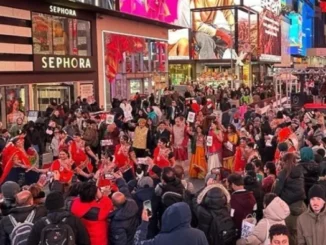
    TIMES SQUARE, NY CITY (TIP): Times Square reverberated with the beats and music of ‘Garba’ as members of the Indian-American community performed the traditional Gujarati dance at the iconic New York City destination to celebrate its inclusion in UNESCO’s cultural heritage list.
    FIA NY-NJ-CT-NE along with support from a host of community organizations and Consulate General of India NY, held a commemorative garba celebration at the ‘Crossroads of the world’, – Times Square. The celebration marked the recent inclusion of Garba as an Intangible Cultural Heritage.

    Garba, considered to be among the oldest forms of group dance and longest dance festival spanning 9 nights (Navratri) is a very popular group folk dance form in key states of India including Gujarat, Maharashtra and Rajasthan. It has gained sensational liking among the overseas Indian diaspora in countries like the UAE (Dubai), USA, UK, Australia, Canada and many others. This historic, prestigious and distinguished milestone Tag of Intangible Cultural Heritage of Humanity was announced during UNESCO’s 18th session in Kasane, Botswana on December 6th 2023. The leading organization for this initiative, the Federation of Indian Associations NY-NJ-CT-NE (FIA) extended an open invitation to the entire Indian American community to join in this momentous celebration at Times Square, NYC which was supported by Consulate General of India NY. Free transportation, complimentary refreshments and participation certificates shall be provided for all performing attendees. The event was a spectacular showcase of the rich cultural heritage of Gujarat as attendees donned traditional Garba attires. The vivid colors and intricate designs of their attire were a sight to behold, and one could feel the energy and pride emanating from them as they represented their culture on a global platform. The atmosphere was electric with excitement and anticipation, and it was clear that everyone was thoroughly enjoying themselves.

    In addition to the Federation of Indian Associations NY-NJ-CT-NE, the event was made possible through the support and collaboration of esteemed partner organizations, including the Consulate General of India, New York, GANA, BJANA, Siddhivinayak Temple USA, Times Group, Aaj Tak, The Indian Panorama, EBC Radio, The South Asian Times, AUM Dance Academy, Parikh WorldWide media, TV Asia, ITV gold, World BB TV, New India Abroad, The Indian Eye, Radio Zindagi, and Radio Dil.

  • Bhima-Koregaon: SC grants bail to two activists after 5 years in jail under UAPA

    Bhima-Koregaon: SC grants bail to two activists after 5 years in jail under UAPA

    New Delhi (TIP)- Nearly five years after their arrest under the UAPA for alleged Maoist links in the 2018 Bhima Koregaon violence case, activists Vernon Gonsalves and Arun Ferreira have been granted bail by the Supreme Court.  The “materials available against them at this stage cannot justify continued detention”, the court observed.
    The two were booked under the Unlawful Activities (Prevention) Act and jailed in August 2018.
    The top court bench of Justices Aniruddha Bose and Sudhanshu Dhulia on Friday said that the five-year-long incarceration of the activists makes them eligible for bail despite the charges being “grave”.
    The court noted that Gonsalves was earlier convicted of offences, including under the UAPA, and had cases pending against him, and imposed a series of conditions for the bail. It stated that the two activists must not leave Maharashtra without the trial court’s permission and should surrender their passports with the NIA, among other conditions.
    Over the years, the police and the central agencies arrested a hoard of activists and academicians in the Bhima Koregaon case, including Stan Swamy, Anand Teltumbde, Gautam Vavlakha, Varavara Rao and Sudha Bharadwaj. Newslaundry has reported extensively on how in most of these arrests, rights and rules were violated.
    This report delved into the weak case against writer Anand Teltumbde, while this detailed the apathy of the authorities towards activist Stan Swamy, who died in prison after being denied medical care. In this interview, human rights lawyer Sudha Bharadwaj had spoken about her journey and what shaped her ideology.
    The top court asked Gonsalves and Ferreira to not leave Maharashtra, surrender their passports, use only one mobile phone and keep it charged through the day, share location and pair their devices with the investigating officer, give their addresses to NIA, and be present in the local police station once a week. Violation of any of these conditions, or those imposed by a special NIA court, would entitle the federal agency to seek cancellation of bail, the court said.
    “There is nothing against the appellants to prima facie establish that they had indulged in the activities which would constitute overawing any public functionary by means of criminal force or the show of criminal force or attempts by the appellants to do so. Neither were they found to have caused death of any public functionary,” the order added.
    Gonsalves and Ferreira were among 16 activists, lawyers and researchers who were arrested in 2018 in connection with the violence that broke out during the bicentennial commemoration of a British-era war in Maharashtra’s Bhima Koregaon village. One person died during the violence that also sparked sweeping protests by Dalit groups who gather in the hundreds of thousands at the war memorial every year. The Pune police, and then NIA, have argued that an event in Pune on December 31, 2017 – called the Elgar Parishad, where allegedly inflammatory speeches were made – stoked the violence.

  • 25 bus passengers charred to death as vehicle catches fire on expressway in Maharashtra

    25 bus passengers charred to death as vehicle catches fire on expressway in Maharashtra

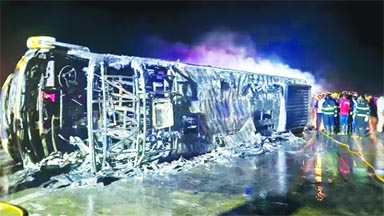
    Mumbai (TIP)- At least 25 people died after a bus carrying 33 passengers burst into flames on the Samruddhi Mahamarg expressway in Maharashtra’s Buldhana, police said. Deputy SP Baburao Mahamuni said that the injured were to Buldhana Civil Hospital, reported ANI. The incident happened around 2 am on Saturday, July 1, when a private travels bus was on its way from Nagpur to Pune and rammed into a divider near Sindkhedraja in Buldhana district, police said.
    Buldhana SP Sunil Kadasne told PTI that as per preliminary information, a bus tyre burst and the vehicle hit a pole, collided with a divider and caught fire. Of the 33 passengers in the bus, 25 were charred to death.
    The driver of the bus, who survived the incident, said that the bus overturned after a tyre burst leading to flames in the bus, according to Kadasane.
    Maharashtra chief minister Eknath Shinde has announced an ex-gratia of Rs 5 lakh for the next of kin of the deceased in the bus accident, according to his office.
    Calling the incident ‘very shocking and heart-wrenching’, Maharashtra deputy CM Devendra Fadnavis said his government is in touch with the district as well as the police administration and all kinds of help are being provided immediately.
    “The state government will bear the cost of treatment of the injured,” he said.
    Union home minister Amit Shah expressed grief over the incident and said that treatment is being provided to the injured by the administration.
    “The road accident in Maharashtra’s Buldhana district is heartbreaking. In this hour of grief, my thoughts are with the families of those who lost their lives in this horrific accident. Quick treatment is being provided to the injured by the administration. I pray to God for his speedy recovery,” Shah said in a tweet in Hindi.
    Uttar Pradesh chief minister Yogi Adityanath tweeted, “The loss of lives in the unfortunate incident of fire in a bus on the Mumbai-Nagpur Expressway is extremely sad and heart-wrenching. My condolences are with the bereaved families.”
    “I pray to God that the departed souls get a place in his holy feet and the injured get speedy recovery.”

  • FIA Chicago is celebrating 75 years of Independent India under the banner of “The Azadi Ka Amrit Mahotsav

    FIA Chicago is celebrating 75 years of Independent India under the banner of “The Azadi Ka Amrit Mahotsav

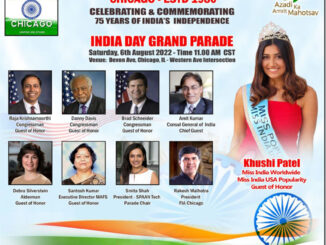
    CHICAGO, IL (TIP): : Federation of Indian Association, Chicago is celebrating 75 years of Independent India under the banner of “The Azadi Ka Amrit Mahotsav”. Independence Day is always memorable – the day to rejoice in the glory of what India has been able to achieve and to remember the contributions, battles, and sacrifices of all the people who helped achieve it. During the past 75 years, India has emerged as a mature democracy. This is very special for all of us as INDIA completes 75 years of independence. FIA celebrations include the grand India Day Parade at the Devon Ave, Chicago on Saturday, 6th August at 11 pm. The Indian National flag rising will be on 15th August at the prestigious Daley Center in Chicago Downtown, and there will be a patriotic Gala Banquet on Friday, 12th August to commemorate and recognize the people who have been serving the community selflessly. “The entire Indian diaspora living the United States is very excited and looking forward to FIA annual India day Parade and celebrating Azadi Ka Amrit Mahotsav”, said Rakesh Malhotra, President of the Federation of Indian Associations, Chicago

    Celebrating Indian Independence Day 2022

    FIA has been organizing these events for the past forty years here in Chicago, in which the spirit of the freedom movement, honor to the martyrs, and their vow to develop India can be experienced. “It is important to make the new generation aware of India’s freedom struggle and the contributions made by the freedom fighters to get India its independence. Our goal is to inspire the young generation to connect with their roots, values, and rich heritage and work hard to make India Vishwa Guru Again”, said Rakesh Malhotra, President of the Federation. Miss India Worldwide Khushi Patel has been invited to India Day Parade. Indian diaspora living from Chicago land are excited about participation in the Grand Parade. Multiple community-based organizations representing various Indian states like Bengal, Punjab, Uttar Pradesh, Madhya Pradesh, Chhattisgarh, Maharashtra, Telangana, Andhra Pradesh, and Kerala will be showcasing their decorative floats during the grand parade to commemorate 75 years of Independence. Consul General of Chicago Amit Kumar, US Congressman Danny Davis, Congressman Raja Krishnamurthy, Congressman Brad Schneider, Alderman Debra Silverstein, Alderman Shweta Baid, Prominent Community leaders including Dr Bharat Barai, Dr Darshan Sigh Dhaliwal,  Mr Santosh Kumar, Executive Director MAFS , Dr. Ram Chakroborty, founder of Chicago Kali Bari and Mrs. Smita Shah President & CEO of Spaan Tech. are likely to attend the FIA India@75-day events.  Aparna Chakravarty, Mrs India Worldwide 2ndRU will be joining the Chicago Kali Bari colorful float to reflect the spirit of community and festivity

    Connecting with the roots

    To engage the young students, a poster and painting contest on the theme of “My Idea of India” is being organized so that the younger generation can express their impression and vision of India. Likewise, a “Rangoli Making” competition for all age groups has also been organized.  Participation in these contests is free and entries can be submitted digitally. FIA Chicago proudly shares that all plaques and trophies to be given during its annual India@75 Gala are handmade in India by Tribal from the State of Chhattisgarh.

    Federation of Indian Associations, Chicago will be also releasing India@75 souvenir on this momentous occasion to commemorate the glory of India. “Souvenir will capture iconic moments that shaped India”, informed Rakesh Malhotra. Young students, women and professionals are amongst the contributors.

    About the Federation of Indian Associations, Chicago

    Federation of Indian Associations (FIA), Chicago is the largest non-profit Indian American organization. It was established in 1980 to primarily serve the community and promote and educate Indian Cultural Heritage while making meaningful contributions to America’s growth. More than 50 Illinois-based community organizations and nonprofits are members of the Federation. Besides engagement with various organizations across Chicago land, the FIA also takes a lead role in bringing the community together to celebrate various events of historical importance to both the United States and India.

    (Press release and photo /Asian Media USA)

  • Know how President of India is elected

    Know how President of India is elected

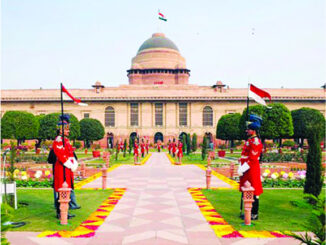
    On July 18, elected MLAs and MPs across the country will vote to elect India’s 15th President. Under Article 62(1) of the Constitution, “an election to fill a vacancy caused by the expiration of the term of office of President shall be completed before the expiration of the term”. President Ram Nath Kovind’s tenure ends on July 24. The counting of votes will take place on July 21 and the new president will take oath on July 25.

    The notification for the presidential election has been issued on June 15 and the last day of filing a nomination will be June 29. The papers will be scrutinised on June 30. The last day to withdraw the nomination papers will be July 2.

    “The Election Commission, in consultation with the Central Government, appoints the Secretary General of Lok Sabha and Rajya Sabha, by rotation, as the Returning Officer,” the EC said.

    “Accordingly, the Secretary General, Rajya Sabha will be appointed as the Returning Officer for the present election to the Office of the President,” it added.

    Here’s the process of electing a President

    According to Article 55 of the Constitution, the President of India is elected by members of the Electoral College consisting of elected Members of Parliament and that of all the state assemblies including the National Capital Territory of Delhi and the Union Territory of Puducherry. It follows the system of proportional representation utilising a single transferable vote system and secret ballots.

    Nominated members of Parliament, state assembly and members of legislative council are not eligible to vote.

    Importantly, the members who are nominated to either House of Parliament or the Legislative Assemblies of State including NCT of Delhi and UT of Puducherry are not eligible to be included in the Electoral College.

    This year, a total of 776 Members of Parliament and 4,033 MLAs will vote in the Presidential elections. The total value of votes is 10,86,431. The value of votes of MLAs is 5,43,231 and MPs are 5,43,200.

    Who is eligible?

    To be eligible for the election, the person: must be a citizen of India; have completed the age of 35 years; and is qualified for election as a member of the House of the People (Article 58).

    The person will not be eligible if he/she holds any office of profit under the Government of India or the Government of any State or under any local or other authority that is controlled by any of the state governments.

    What’s the process?

    The process starts with the nomination. The Presidential candidate should get his nomination paper subscribed by at least 50 electors as proposers and at least 50 electors as seconders. Importantly, the elector should not subscribe to more than one nomination paper either as a proposer or as a seconder. The candidate is required to deposit security, which is Rs 15,000. It is supposed to be made along with the nomination paper. More than four nomination papers can not be filed by or on behalf of a candidate or received by the Returning Officer.

    Where does the voting take place?

    Voting for the Presidential election will take place in Parliament and the premises of state assemblies, while Rajya Sabha Secretary-General will be the returning officer. MPs cast their vote in Parliament and MLAs in their respective state assemblies.

    Process of voting

    The election follows proportional voting which means that the value of each vote varies as it based on the post. The value of each vote based on the population is also predetermined for an MLA vote. This year, the total number of electors for the election will be 4,809 – 776 MPs and 4,033 MLAs.

    Who will be India’s next President?

    India’s President does not exercise executive powers, but all executive decisions are carried out in her name. She is required by the Constitution to act on the advice of the council of ministers led by the Prime Minister.

    But the President can ask the government to reconsider actions and offer advice. In matters of legislation, for example. So, it would be wrong to say that the role is only ceremonial or that the President is a mere figurehead or rubber stamp. Presidents like Pranab Mukherjee have been quite assertive, especially while dealing with mercy petitions from death row convicts. One of the most crucial roles of the President is seen when no party is able to get a parliamentary majority in a national election.

    So, the presidential election is crucial, and you should care about it. The election is indirect, but the result does indicate how much popular support both camps, the government and the opposition, have in the country.

    On your mind could be several key questions, from the poll process to front-runners to the numbers game, and to possible scenarios. But first let’s get some important dates out of our way.

    The President is elected by members of the Electoral College comprising elected members of both Houses of Parliament, and elected members of the Legislative Assemblies of all states and the National Capital Territory of Delhi and the Union Territory of Puducherry.

    This means nominated members of the Rajya Sabha and the Lok Sabha or Legislative Assemblies of states are not part of the Electoral College. Similarly, members of Legislative Councils also do not participate in the election process.

    The value of votes of MPs and MLAs varies based on the population of states they come from.

    It is mandatory for 50 MPs to propose the candidate, followed by another 50 seconding the candidature.

    Polling will be held in the Parliament House and on the premises of the State Legislative Assemblies.

    The election is held by secret ballot. A single transferable vote is used per the system of proportional representation.

    On the ballot paper, there are two columns. The names of candidates are listed in the first column, and the order of preference is listed in the second column.

    THE NUMBERS GAME

    The Electoral College has 4,809 electors, including 776 Members of Parliament (MPs) and 4,033 Members of Legislative Assemblies (MLAs).

    The total value of votes will be 10,86,431. To win, a candidate must get at least 5,43,216 votes.

    In the last election in 2017, Ram Nath Kovind of the NDA defeated joint Opposition candidate Meira Kumar. Kovind polled 7,02,000 votes compared with Kumar’s 3,67,000, out of a total of 10,69,358 votes.

    Roughly speaking, the ruling BJP-led National Democratic Alliance (NDA) has 48 per cent of the votes this time. It is 23 per cent for the Congress-led United Progressive Alliance (UPA).

    So, the NDA should not have any problem in getting its candidate elected. But the contest will become tight if all non-BJP parties unite (this explains hectic consultations on both sides). Then the opposition will have about 51 per cent of the votes.

    This is unlikely. Some reports say that “independents” such as Andhra Pradesh’s ruling YSRCP and Odisha’s ruling BJD may support the NDA. The BJP’s Tamil Nadu ally, the AIADMK, may also do so.

    The BJP has authorised its party president JP Nadda and Union minister Rajnath Singh to hold consultations with constituents of the NDA and the UPA, besides other political parties, as well as independent members. A consensus candidate is always preferable.

    PROBABLE CANDIDATES

    The general impression is that the BJP is unlikely to re-nominate Kovind. Rajendra Prasad was the only President to get two full terms. Both camps have not named their candidates yet. But that does not mean we’re short of suggestions. Former West Bengal Governor and Mahatma Gandhi’s grandson, Gopalkrishna Gandhi, has been approached by some leaders to be a joint Opposition candidate. He is the Left’s suggestion. There is talk about NCP chief Sharad Pawar exploring the possibility of pushing dissident Congress leader Ghulam Nabi Azad as the Opposition nominee. On the other hand, NDA probables may include Kerala Governor Mohammad Arif Khan, former Jharkhand Governor and tribal leader from Odisha Draupadi Murmu, Chhattisgarh Governor and tribal leader Anusuiya Uikey, Telangana Governor Tamilsai Soundararajan, Karnataka Governor and Dalit leader Thawar Chand Gehlot, former Lok Sabha Speaker Sumitra Mahajan, and Odisha’s tribal leader Jual Oram

    A disclaimer: The BJP remains capable of surprising everyone, like when it nominated APJ Abdul Kalam in 2002. The name of TMC leader Yashwant Sinha (though Bengal’s ruling party TMC has indicated none of its own members will be a candidate) is also being talked about. Earlier reports said that the Congress, the TMC, the AAP and the Shiv Sena wanted Pawar to be the opposition’s candidate, but he has declined the offer.

    JD(U) leader and Bihar minister Shravan Kumar has said party chief and Bihar CM Nitish Kumar could be a good candidate. Maharashtra minister and NCP spokesperson Nawab Malik has said Kumar’s candidature as an opposition choice can be considered if the latter snaps ties with the BJP/NDA in Bihar. On his part, Nitish Kumar has clarified that he never wanted to, and will not, contest the President’s election.

    CRACKS IN OPPOSITION

    Cracks have appeared in the opposition camp. The Congress is currently preoccupied with rallying support for its leader Rahul Gandhi, being questioned by the Enforcement Directorate in the National Herald money-laundering case.

    Actually, there is no one opposition camp. There is the Congress-led United Progressive Alliance (UPA). But that’s mostly the Congress with non-ruling allies like the RJD of Bihar. The Congress rules Rajasthan and Chhattisgarh and is a junior partner in states such as Maharashtra, Jharkhand and Tamil Nadu.

    West Bengal Chief Minister and TMC leader Mamata Banerjee has met Sharad Pawar, whose party NCP is part of Maharashtra’s ruling coalition MVA, led by the Shiv Sena and also comprising the Congress. Banerjee is trying to bring everyone on a single platform but Congress, while attending consultations driven by her, does not want to be overshadowed by a former Congresswoman. The grand old party is also holding its own meetings.

    The Left is not happy with Banerjee’s “unilaterally” organised deliberations. Delhi Chief Minister Arvind Kejriwal’s AAP (which is also ruling Punjab) has been a Congress critic and cautious of Banerjee in matters of national politics. On the other hand, Telangana Chief Minister K Chandrashekar Rao of TRS has his own ambitions.

    The Congress has asked its leader Mallikarjun Kharge to hold talks with all like-minded parties on the possibility of fielding a joint candidate. Kharge met NCP chief Sharad Pawar at the latter’s residence in Mumbai on June 9.

    Congress president Sonia Gandhi has herself reached out to Opposition leaders, including DMK chief MK Stalin, Pawar, CPM’s Sitaram Yechury. Banerjee and Telangana CM K Chandrashekar Rao, both non-UPA leaders, have also met leaders of the MVA. On June 15, Banerjee held a meeting with Opposition leaders in Delhi where no one from the AAP, the TRS and the BJD came despite invitations. Those who attended the meeting convened to prepare a joint strategy included Pawar, PDP’s Mehbooba Mufti, NC’s Omar Abdullah and SP’s Akhilesh Yadav, besides some Congress leaders including Kharge.

    Looks like a fractured opposition may again end up helping the BJP in an important election. Unless, of course, the mirage of oft-cited total opposition unity finally becomes a reality.

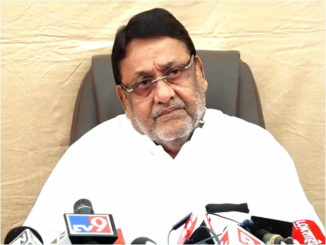
  • Supreme Court rejects Nawab Malik’s plea in money laundering case

    Supreme Court rejects Nawab Malik’s plea in money laundering case

    NEW DELHI (TIP)- Maharashtra minister Nawab Malik’s plea to release him from jail in a money laundering case was on Friday rejected by the Supreme Court. “It is too nascent a stage to interfere with the investigation. We can’t interfere with the due process at this stage. You (should) move the competent court,” the top court said in its remarks. The 62-year-old NCP leader was arrested in February in a case linked to Dawood Ibrahim, the mastermind of 1993 Mumbai blasts. Earlier the Bombay High Court had rejected the application by the minister to release him from jail. The ruling Shiv Sena-NCP-Congress alliance in Maharashtra – in an attack on the BJP – has been claiming that the NCP leader’s arrest in the investigation by the central probe agency was “politics of vendetta”.

    Earlier on Thursday, the Enforcement Directorate – that probes financial crimes – submitted a 5,000-page chargesheet in a Mumbai court. The special court for Prevention of Money Laundering Act (PMLA) cases will take cognizance of the charge-sheet after verification of the documents, news agency PTI reported, citing the probe agency’s lawyers.

    The case is based on an FIR filed recently by the National Investigation Agency (NIA) against Dawood Ibrahim and his aides under the Unlawful Activities (Prevention) Act (UAPA).

    Malik, the ED has alleged, funded a prominent member of ‘D-Gang’ (Dawood gang) for illegal occupation of a property.

    Last week, the ED had provisionally attached eight properties belonging to Maharashtra minister Nawab Malik and his family members.

  • India records 302 more Covid deaths, 13,166 new cases

    New Delhi (TIP)-India logged 13,166 new coronavirus infections, taking the total tally of Covid cases to 4,28,94,345, while the active cases declined to 1,34,235, according to the Union Health Ministry data updated on Friday, Feb 25.

    The death toll climbed to 5,13,226 with 302 fresh fatalities, the data updated at 8 am said.

    The daily Covid cases have remained less than one lakh for 19 consecutive days. The active cases comprised 0.31 per cent of the total infections, while the national recovery rate had further improved to 98.49 per cent, the ministry said.

    A reduction of 14,124 cases has been recorded in the active Covid caseload in a span of 24 hours. The daily positivity rate was recorded as 1.28 per cent while the weekly positivity rate was recorded as 1.48 per cent, according to the ministry. The number of people who have recuperated from the disease surged to 4,22,46,884 while the case fatality rate was recorded as 1.2 per cent.

    The cumulative doses administered in the country so far under the nationwide Covid vaccination drive has exceeded 176.86 crore.

    The 302 new fatalities include 212 from Kerala and 19 each from Maharashtra and Karnataka.

    A total of 5,13,226 deaths have been reported so far in the country including 1,43,675 from Maharashtra, 64,803 from Kerala, 39,885 from Karnataka, 37,997 from Tamil Nadu, 26,115 from Delhi, 23,446 from Uttar Pradesh and 21,165 from West Bengal.

    Source: PTI

  • India records 1.49 lakh new Covid cases, 1,072 more deaths

    India records 1.49 lakh new Covid cases, 1,072 more deaths

    New Delhi (TIP)-India added 1,49,394 new Covid cases, taking the total tally to 4,19,52,712, while the active cases further declined to 14,35,569, according to the Union Health Ministry data updated on Friday, Feb 4. The death toll climbed to 5,00,055 with 1,072 fresh fatalities, the data updated at 8 am stated. The active cases comprised 3.42 per cent of the total infections, while the national Covid recovery rate improved to 95.39 per cent, the ministry said. A reduction of 98,352 cases has been recorded in the active Covid caseload in a span of 24 hours. The 1,072 new fatalities include 601 from Kerala and 75 from Maharashtra.

    Of the 601 deaths in Kerala, 36 were reported in the last 24 hours, 124 were those which occurred in the last few days but were not recorded due to late receipt of documents and 441 were designated as Covid deaths after  receiving appeals based on the new guidelines of the Centre and the directions of the Supreme Court, the state government said on Thursday.

    A total of 5,00,055 deaths have been reported so far in the country including 1,42,859 from Maharashtra, 56,701 from Kerala, 39,197 from Karnataka, 37,666 from Tamil Nadu, 25,932 from Delhi, 23,277 from Uttar Pradesh and 20,723 from West Bengal.

    3rd Covid wave affected youngsters more, sore throat commonest sign: ICMR

    The third wave of Covid 19 affected younger people more with sore throat emerging the commonest symptom.

    An ICMR analysis of 1,520 (564 fully jabbed and 956 unvaccinated or half jabbed) Covid 19 patients admitted to 37 hospitals between November 15, 2021 and January 17, 2022 revealed the mean age of the hospitalised at 44 years against 55 years in the second wave.

    Nearly half – 46 pc—of the hospitalised young had comorbidities and all symptoms were less severe as compared to the second wave.

    Among fully vaccinated, 10.2 pc died and 91 pc of these had comorbidities.

    Proportion of deaths among unvaccinated was much higher at 22 pc with 83 pc reporting comorbidities.

    Oxygen requirement was lesser among jabbed (36.1 pc needed oxygen) as against the unvaccinated (45.5 pc needed Oxygen.).

    Percentage of the vaccinated requiring mechanical ventilation was 5.4 pc as against 11.2 pc un-vaccinated.

                    Source: PTI and TNS

  • Disasters that rocked India

    Disasters that rocked India

    While India was already battling with the COVID-19 pandemic this year, climate change-induced natural disasters like floods, cyclones have also been making lives miserable for people in India and sometimes even life-threatening. A flashback at the natural disasters that hit different parts of India this year.

    Tamil Nadu floods

    The Indian Meteorological Department (IMD) had predicted heavy rainfall in parts of Tamil Nadu, and it came true from November 1. The flooding was caused by extremely heavy downpours, killing at least 41 people.

    Several red alerts were issued for many areas in Tamil Nadu, including Cuddalore, Sivaganga, Ramanathapuram, Karaikal, Tiruvallur, Chennai, Kanchipuram, Chengalpattu, Viluppuram, and Tiruvannamalai for November 10-11. Over 11,000 were displaced due to the incessant rainfall.

    Maharashtra floods

    Starting on 22 July, Maharashtra saw heavy rainfall in many of its western districts and recorded the highest rainfall in the month of July in 40 years.

    Around 251 people died and over 100 were missing due to floods and landslides in Maharashtra.

    Its neighbouring state Goa also witnessed the worst floods in decades.

    Kerala floods

    Between October 12 and 20, after heavy rains caused rivers to overflow, cutting off towns and villages, 42 people died and 217 houses were destroyed. Out of the 42 people who lost their lives in the floods, five were children.

    Kottayam and Idukki were two of the worst affected districts in the state, where days of heavy rainfall had caused deadly landslides.

    Cyclone Tauktae

    It was a powerful, deadly and damaging tropical cyclone in the Arabian Sea that became the strongest tropical cyclone to make landfall in the Indian state of Gujarat since the 1998 Gujarat cyclone and one of the strongest tropical cyclones to ever affect the west coast of India.

    Started on May 14, the storm displaced over 200,000 people in Gujarat and killed 174 people with 80 people still missing.

    Tauktae brought heavy rainfall and flash floods to areas along the coast of Kerala and Lakshadweep. There were reports of heavy rain in the states of Goa, Karnataka and Maharashtra as well.

    Cyclone Yaas

    It was a relatively strong and very damaging tropical cyclone that made landfall in Odisha and brought significant impact to West Bengal in May. Yaas formed from a tropical disturbance that the Indian Meteorological Department first monitored on May 23.

    Around 20 people across India and Bangladesh died due to the cyclone and West Bengal was one of the most impacted states in India due to Yaas, with a loss of approximately $2.76 billion, according to several media reports.

    Cyclone Gulab

    The third storm in India that impacted eastern India, was formed on September 24 in Bay of Bengal. On September 26, Gulab made landfall in India’s Andhra Pradesh, but weakened over land. The storm overall brought heavy rains and strong winds throughout India and the Middle East, killing at least 39 people.

    Over 30,000 individuals were evacuated into safety as a result of the cyclone. This number further increased to 46,075 people as the storm further moved inland.

    Assam earthquake

    On April 28, a 6.4 magnitude earthquake jolted Assam. The quake resulted in two fatalities and at least 12 people were injured. The quake struck at a depth of 34 kilometres and 140 kilometres north of Guwahati.

    The earthquake occurred as a result of oblique-slip faulting at a shallow depth just at the foothills of the Himalayas. Analysis by India’s National Centre for Seismology revealed that the earthquake involved a slip along the Kopili Fault, near the Main Frontal Thrust.

    Uttarakhand floods

    At least 54 people died in various incidents triggered by heavy rains and subsequent flash floods in Uttarakhand in October this year.

    Melting glaciers

    In February, a ferocious flash flood hurtled down a remote Himalayan valley, sweeping away homes, a hydro plant and around 200 people. Only 60 bodies have been found.

    The flash floods in Uttarakhand was due to the collapse of a hanging glacier, initial observations by scientists at the Wadia Institute of Himalayan Geology suggests. A hanging glacier is a body of ice that breaks off abruptly at the edge of a precipice or steep slope.

    Experts believe the cause was a massive chunk of a glacier — 15 football fields long and five across — breaking off high in the mountains.

    In the Himalayas, about 10,000 glaciers are receding at a rate of 30 to 60 metres (100 to 200 feet) per decade as global temperatures rise. In 2013, a flash flood in the same area killed 6,000 people.

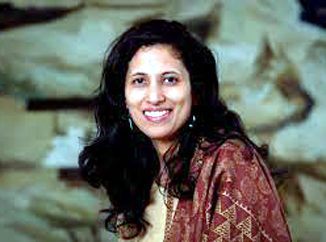
  • Indian-origin Leena Nair joins list of Indians abroad CEOs to head global giants

    Indian-origin Leena Nair joins list of Indians abroad CEOs to head global giants

    PARIS (TIP): Leena Nair, who grew up in Kolhapur in Maharashtra, will next month-end take over as the Global Chief Executive Officer of French luxury fashion house Chanel, joining the ranks of Indian-origin corporate bosses who call the shots at Global Inc. Nair, 52, was the first female and youngest-ever Chief Human Resources Officer of Unilever—a position she resigned from to join the iconic luxury group. “I am humbled and honored to be appointed the Global Chief Executive Officer of @CHANEL, an iconic and admired company,” she said on Twitter. An industry outsider, she is not a part of the Paris fashion scene and is being hailed as a “serial glass-ceiling breaker”.

    An Electronics and Telecommunications Engineer from Walchand College of Engineering in Sangli, Maharashtra, she did her MBA in Human Resources from XLRI Jamshedpur in 1992 before joining as a trainee at HUL, where she advanced up the ranks, according to her LinkedIn profile.

    Nair is due to step into her new role at January-end. In her social media posts, Nair described India-born former PepsiCo CEO Indra Nooyi as a friend and mentor.

    She joins the ranks of Indian-origin executives like Sundar Pichai, Parag Agrawal and Satya Nadella who are at the helm of top global companies. In a statement, Unilever CEO Alan Jope thanked her for her “outstanding contribution over the last three decades” at the company and praised her as a “pioneer throughout her career.” French billionaire Alain Wertheimer, a 73-year-old who owns Chanel with his brother Gerard Wertheimer and had originally taken on the CEO job on a temporary basis, will move to the role of global executive chairman.

    A British national born in India, Nair is a rare outsider at the helm of the tightly controlled family fashion house which was founded in 1910 by fashion legend Gabrielle “Coco” Chanel as a hat boutique on rue Cambon in Paris and grew to become a byword for French chic.

    Today Chanel is known for its tweed suits, quilted handbags and No. 5 perfume.

    Nair, who at Unilever oversaw 150,000 people, would be based in London in her new role.

    “Overwhelmed by the love and support my appointment as @CHANEL CEO has got. Thank you! Please trust that I am reading every comment, even if I don’t reply to everyone individually,” she tweeted. “I am so inspired by what @CHANEL stands for. It is a company that believes in the freedom of creation, in cultivating human potential and in acting to have a positive impact in the world.” Prior to her, many India-born executives had climbed the global corporate ladder. IIT graduate, Parag Agrawal was recently appointed the new Twitter CEO. Other India-born executives include Sundar Pichai, CEO of Google’s parent company, Alphabet; Satya Nadella, CEO of Microsoft; Shantanu Narayen, chairman of Adobe and Arvind Krishna, chairman of IBM. Rajeev Suri was this year named CEO of Inmarsat while Punit Renjen heads Deloitte and Vasant Narasimhan is at Novartis. Ivan Manuel Menezes (Diageo), Niraj S. Shah (Wayfair), Sanjay Mehrotra (Micron), George Kurian (NetApp), Nikesh Arora (Palo Alto Networks), Dinesh C. Paliwal (Harman International Industries), Jayshree V. Ullal (Arista Networks), Rangarajan Raghuram (VMware), Ajay Banga (MasterCard) and Anjali Sud (Vimeo) are other India-born executives at global majors.

  • India in history this Week- December 3 to December 9, 2021

    India in history this Week- December 3 to December 9, 2021

    03 DECEMBER

    1844       The first President of the country Dr. Rajendra Prasad was born.

    1751       Battle of Arnie in India (Second Carnatic War): A British East India Company-led army under Robert Clive defeats a very large Franco-Indian army under the command of Rana Sahib at Archana.

    1796       Baji Rao II was made the Peshwa of the Maratha Empire. He was the last Peshwa of the Maratha Empire.

    1889       The youngest hanged revolutionary, Khudiram Bose, was born in the independence movement.

    1915       A magnitude 6.5 earthquake in Bhutan and Arunachal Pradesh killed 170 people and destroyed many homes.

    1971       The Emergency came into force in the country after the war between India and Pakistan started.

    1979       Hockey magician Major Dhyanchand  died.

    2004       India and Pakistan agreed to restore rail connectivity between Munabav and Khokhrapar after 40 years.

    2011       Film actor Dev Anand died.

    1984       Leaking toxic gas from the Union Carbide factory in Bhopal killed at least 3000 people and caused several thousands of physical deformities.

    1959       India and Nepal signed the agreement of Gandak Irrigation and Power Project.

    1967       India’s first rocket (Rohini RH 75) was launched from Thumba.

    2008       Chief Minister of Maharashtra Vilasrao Deshmukh resigned from his post on the day after the terrorist incident of 23 November in Mumbai.

    04 DECEMBER

    2008       Renowned historian Romila Thapar was chosen for the Cluj honor.

    1888       Birth of historian Ramesh Chandra Majumdar.

    1860       Agustino Lawrenceo of Margao, Goa, received a doctorate in chemistry from the University of Paris. He became the first Indian to pursue a doctorate from a foreign university.

    1899       For the first time, the vaccine of typhoid was used to protect humans from this disease.

    1919       The twelfth Prime Minister of India, Indra Kumar Gujral was born.

    1910       Ramaswamy Venkataraman, the eighth president of India, was born.

    1971       The Indian Navy attacked the Pakistani Navy and Karachi.

    05 DECEMBER

    1955       The STD service that provides long distance telephone calls to every home came into existence on this day in 1955.

    1971       India recognized Bangladesh as a country.

    1895       The birth of Josh Malihabadi, the famous Urdu poet of India and Pakistan.

    1941       Famous Indian female painter Amrita Shergill died in Lahore. Many of his artworks were appreciated worldwide.

    1969       The birth of Anjali Bhagwat, the famous shooter who has illuminated the name of India in the world in shooting.

    1998       Russia agrees to give ‘Krivak class’ multi-purpose warship to Indian Navy.

    1999       Yukta Mukhi took the title of Miss World to her name.

    1657       Shah Jahan’s younger son Murad proclaimed himself king.

    1943       Japanese airplane bombed Kolkata.

    1950       Freedom fighter, poet, yogi and philosopher Arvind Ghosh died in Puducherry.

    1950       Sikkim became a protected state of India.

    06 DECEMBER

    1732       Warren Hastings, the first Governor General of the East India Company, was born.

    1907       The first incident of dacoity related to India’s freedom struggle took place at Chingaripota railway station.

    1992       Babri Masjid in Ayodhya was demolished by fierce Hindu kar sevaks. After this, riots broke out in many states of India.

    1907       The first incident of dacoity related to India’s freedom struggle took place at Chingaripota railway station.

    1956       Bahujan political leader and constitution builder Babasaheb Bhimrao Ambedkar died.

    1987       MiG-29 joined the Indian Air Force, renamed ‘Baz’.

    07 DECEMBER

    1949       Indian Armed Forces Flag Day is celebrated.

    1782       Hyder Ali, the ruler of Mysore died.

    1825       The first steam-powered ship ‘Enterprise reached Kolkata.

    1856       The ‘Hindu widow’ was officially married for the first time in the country.

    1995       India launched communication satellite INSAT-2C.

    2003       Raman Singh holds the post of Chief Minister of Chhattisgarh.

    2008       Indian golfer Jeev Milkha Singh won the Japan Tour title.

    2016       Famous Indian actor, comedian, political satirist, playwright, film director and advocate Cho Ramaswamy passed away.

    08 DECEMBER

    1875       The great liberal leader Tej Bahadur Sapru was born in Aligarh.

    1879       The great revolutionary Yatindra Nath Mukherjee aka Barrier Jatin was born.

    1900       Pandit Uday Shankar, born dancer and dance director of modern dance of India, was born.

    2002       Gomutra was patented by the United States after India’s traditional bio-wealth, neem, turmeric and berries.

    2005       The Red Cross and Red Crescent Society accepted a red crystal of diamond shape in the white background as a new additional symbol.

    1967       The first submarine INS Kalwari was inducted into the Indian Navy.

    1990       Uday Shankar, the famous Indian classical dance dancer, dance director and ballet producer was born.

    1947       Parmanand, the great revolutionary brother of the Indian freedom struggle, died.

    09 DECEMBER

    1946       The first meeting of the Constituent Assembly that made the country’s highest law was on this day.

    1946       UPA Chairperson Sonia Gandhi was born.

    1971       During the Liberation War, the Indian Army had pierced the air campaign Meghna Heli Bridge.

    1484       The great poet and saint Surdas was born.

    1758       The thirteen-month-long war of Madras began in India. This was the most dangerous war between Britain and France in India.

    1898       Belur Math was established in Kolkata.

    2001       United National Party leader Ranil Vikram Singhe was sworn in as the Prime Minister of Sri Lanka.

    1825       Rao Tula Ram, a prominent hero of the Sepoy Mutiny was born.

  • On Religious Institutions: Sikh institutions show the way

    On Religious Institutions: Sikh institutions show the way

    The announcement by the Jathedar Baba Kulwant Singh ji of Takhat Hazoor Sahib, Nanded, Maharashtra, one of the four holy shrines releasing all the gold collected over the last 50 years to build hospitals and medical institutions. The objective that no ç or anybody should travel to Hyderabad or Bombay for medical studies or treatment away from the heartland is most gratifying and welcoming.

    As per law and our constitution, minority religious institutions and trusts enjoy freedom from government administration with collection and income exempt from income tax. In minority educational institutions up to 50% seats can be retained for minorities while the balance is open for general admission on merits and management discretion (capitation was common once).

    By certain acts of Parliament all the religious majority institutions were nationalized and taken over by government appointed trusts, mostly the biggest and most popular ones. The entire collection is property of the state government which is used for state activities.

    Minority trusts have built huge land banks with all Income free from tax. This runs or expands activities.

    Some even repatriate funds abroad to their controlling bodies.

    One or two were canonized (sainthood) mainly for service to the poor, conversions, and huge fund transfers to parent body.

    Each place of worship has a sort of target. Postings of clerics is on merit for growing the flock and the collections.

    These trusts are also entitled to government grants, subsidies for relief work. Some like the Takhat Huzoor Sahib go the extra mile to use the collected funds for good of the Khalsa and all who need help. In addition to contribution by followers and well-wishers to establish Institutions that provide relief these are eligible for ongoing government grants under various relief programs including medical relief plans.

    The goodwill, the community feeling, and wellbeing when visiting the well maintained and clean environs reposes faith and relieves pent up stress and thus serves its purpose to humanity.

    This is something that very few majoritarian faith institutions have achieved in our own country, unlike the other faiths have done in the countries of their origin and establishment, despite being younger by several thousand years.

    Society decides and follows what they believe in. Inducement and coercion were necessities for modern sects to grow their following. Sikhism is an exception that attracts by its simplicity of teaching and practice.

    Nothing that all of us do not know already. We shy away from discussing religious matters or stating facts openly, despite being a democracy and avowedly secular due sensitivity towards one and all, even to a level of causing harm to one’s own belief and faith systems.

    Fortunately, this tradition of not merely co-existing, but accepting the other faiths sets us apart in this galaxy of nations. This spirit needs to be universalized by all faiths by a series of self-introspection and find new directions for the future.

    Hardliners and extreme ideologies will constantly derail such evolution which must be fought from within. Each one is responsible to reform their own. If helping hand is asked, then by all means do step in but not step on.


    Rishi Singh

    rishikant.s@gmail.com

  • Indian-origin US based Sehgal Foundation shipping oxygen concentrators to 7 Indian states

    Indian-origin US based Sehgal Foundation shipping oxygen concentrators to 7 Indian states

    DES MOINES (TIP): The Des Moines, Iowa, -based Sehgal Foundation said it was shipping out 200 oxygen concentrators to seven Indian states on May 6, 2021. The shipment of the medical equipment was made possible through donations from its individual supporters across the United States, the foundation said in a press release.

    “Working in close coordination with local partners and government officials, the Sehgal Foundation team on the ground in India is ensuring that the equipment is directly reaching those who need it the most in public hospitals in villages across 7 states,” the release said. It added, “In the coming week, more oxygen cylinders, ventilators, personal protective equipment, rapid diagnostic tests, and therapeutics will be sent.”

    Sehgal Foundation teams are working with district administrators and local partners in Andhra Pradesh, Bihar, Haryana, Maharashtra, Rajasthan, Telangana, and Uttar Pradesh, the release said. “To respond quickly during this catastrophic surge in Covid-19 cases in India, Sehgal Foundation has taken immediate action to reach the people in the greatest need,” the release said.

    S.M. Sehgal Foundation, a Gurgaon, India, -based sister organization of the Sehgal Foundation operates in more than 1,000 villages, across 10 states, serving more than 2.5 million people. Areas it focuses on include food and water security, and good rural governance. Since a devastating second wave of Covid-19 surged in India, dozens of US-based organizations have sent medical equipment to India. Last week, the American Association of Physicians of Indian Origin (AAPI), which represents the 80,000-strong Indian American physician community in the US, airlifted the first batch of 1,000 of oxygen concentrators.

    On May 3, pharmaceutical giant Pfizer announced it will donate more than $70 million worth of medicines to India.

    Indiaspora, a nonprofit, raised $1 million raised through its private donor network of members.

  • India to import 50,000 MT medical oxygen amid COVID surge

    New Delhi (TIP): The government on Thursday, April 15,  said it would import 50,000 metric tonnes of medical oxygen to assure supplies to states even as it added that oxygen availability in the country was adequate. As hospitals reeled under oxygen shortages, the empowered group of officers addressing the issue met today and started mapping of oxygen sources for 12 high burden states of Maharashtra, Madhya Pradesh, Gujarat, Uttar Pradesh, Delhi, Chhattisgarh, Karnataka, Kerala, Tamil Nadu, Punjab, Haryana and Rajasthan.

    Medical oxygen is a critical component in the treatment of COVID affected patients and demands have been rising unusually in the high burden states.

    “There has been increasing demand for medical oxygen, especially from the 12 states with high burden of active COVID cases. While the demand in Maharashtra is expected to be beyond available production capacity of the state, Madhya Pradesh does not have any production capacity to meet their demand for medical oxygen. There is also a trend of increasing demand in other oxygen producing states such as Gujarat, Karnataka and Rajasthan,” the government said.

    After the meeting with manufacturers today, the government said 4880 MT, 5619 MT and 6593 MT have been assured and factored for 12 high burden states to meet their projected demand as on April 20, 25 and 30.

    The assured supply will be notified through a government order, sources said. The meeting also decided to import 50,000 MT of medical oxygen to be ready for the increasing demand.

    Health Ministry has been asked to finalise the tender and explore possible sources for import identified by the missions of MEA.

    Meanwhile 162 Pressure Swing Adsorption plants (plants manufacture oxygen and help hospitals become self-sufficient in their requirement for medical oxygen while also reducing the burden on the national grid for supply of medical oxygen) sanctioned under PM-Cares are being closely reviewed for early completion of 100 percent of the plants to enhance self-generation of oxygen in hospitals especially in remote areas.

    The empowered group asked the Health Ministry to identify another 100 hospitals in far flung locations for consideration of sanction for installation of PSA plants.

    The government said it was monitoring the situation to ensure uninterrupted supply of medical oxygen. India’s daily medical oxygen production capacity is 7127 MT. Current national oxygen stocks are 50,000 MT – more than daily consumption of 3842 MT but the government is readying for what it calls unusual surge in demand.

              Source: The Tribune

  • Daily cases hit 3-month high in India

    India on Thursday, March 11,  logged 22,854 new Covid-19 cases, the highest in nearly three months as well as this year, as Maharashtra, Kerala, Punjab, Karnataka, Gujarat and Tamil Nadu continued to fuel the pandemic burden. The total cases reached 1,12,85,561, riding on a surge in 24-hour infections. It was 76 days ago on December 25 that 23,067 cases were recorded. India’s active cases have gone up from a low of 1.35 lakh on February 12 to a high of 1.89 lakh today, but the government said the disease graph was stable nationally. The high-burden states, it said, needed to prioritise vaccinations. The surges have been high in six states in particular. The daily new cases in Punjab grew around 4.5 times between February 11 and March 11, from 2,112 to 9,402. The rise is around six-fold when compared with 1,388 cases in the first week of February. With around 8,000 cases and over 100 deaths reported over the past one week, Punjab appears headed towards a spike worst than the one in September last when over 60,000 cases were reported in a month. The active cases too have shot up five times—from around 2,000 in February first week to almost 10,000 today. The state today also saw imposition of night curfew in Patiala and Ludhiana districts in view of the rising cases. The government said India had seen active cases as high as 10 lakh on September 18 last and the situation nationally was overall in control, except in six states. The eight of the country’s 10 highest active case burden districts are in Maharashtra and one each in Kerala and Karnataka. The government said Haryana, Gujarat and Madhya Pradesh were at a tipping point and were yet to enter a surge, said Union Health Secretary Rajesh Bhushan. In MP, daily cases have risen from 1,951 on February 11 to 3,915 on March 11; corresponding period rise in Haryana is 824 to 2,440 and in Gujarat from 1,800 to 3,529. On vaccinations, the government said the speed was satisfactory with 2,56,90,545 doses administered till today morning. Globally, India is second only to the US on the speed and scale of inoculation. As of March 9, the US had delivered 9.36 crore doses followed by India (2.43 crore) and the UK (2.37 crore). “The signs from Maharashtra are very worrying. Do not take the virus for granted. It can come up unexpectedly. We also need to caution Delhi as many adjoining districts like Gurugram, Ghaziabad and Gautam Budhh Nagar are seeing surges,” the government said. Punjab health officials said the state may see the worst spike by March-end with cases expected to soar to 3,000 a day. The state has recorded around 8,000 cases and over 100 deaths in a week. Meanwhile, PM Narendra Modi’s mother Hiraben, a centenarian, took her first dose of Covid-19 vaccine on Thursday.

  • SC refuses interim protection from arrest to makers of ‘Tandav’

    SC refuses interim protection from arrest to makers of ‘Tandav’

    Tandav, released on January 15, is a nine-episode political thriller. The web series landed in controversaries on allegedly hurting religious sentiments. The Supreme Court on Wednesday, January 27, has refused to provide interim protection from arrest to Tandav’s director Ali Abbas Zafar and others who are seeking quashing of issued notices and FIRs against them by Uttar Pradesh, Madhya Pradesh and other states for allegedly hurting Hindu’s religious sentiments. A total of three separate petitions of Zafar, Amazon Prime India head Aparna Purohit, producer Himanshu Mehra, the show’s writer Gaurav Solanki and actor Mohammed Zeeshan Ayyub was heard by a bench including justices Ashok Bhushan, R Subhash Reddy and M R Shah. Besides seeking quashing of the FIRs, the pleas have requested clubbing of FIRs, reported PTI. The bench of three has asked responses from states including UP, MP, Karnataka, Maharashtra, Bihar and Delhi on the pleas. “Tandav”, released on January 15, is a political thriller, featuring Bollywood stars like Saif Ali Khan, Dimple Kapadia, Mohd Zeeshan Ayyub, Sunil Grover and Gauahar Khan.

    The nine-episode web series, since its release on Amazon Prime Video, has landed itself into a political controversy on their two scenes. In one scene, actor Zeeshan Ayyub’s character plays Lord Shiva in a college play. However, he doesn’t don Lord Shiva’s traditional look and speaks about issues plaguing the society.

    Another scene shows actor Sandhya Mridul’s character who tells her boyfriend and the father of her child, a Dalit political leader played by actor Anup Soni, that a man from the lower caste always takes advantage when he is involved with a woman from the upper caste. Several leaders, including members of the ruling party BJP, have demanded the streaming platform to remove the show as it allegedly hurts religious sentiments and ridicules Hindu gods.‘Tandav’ makers had already issued an apology after complaints were registered with Police in Maharashtra and Uttar Pradesh.              (Courtesy / PTI- OPOYI)

  • Bihar has strong message for Opposition

    Bihar has strong message for Opposition

    The results of the Bihar elections have a message for all states headed for polls in the months ahead on taking on the BJP under Modi.

    By Neerja Chowdhury

    Bihar has sent a strong message to the Opposition parties. They will have to combine effectively to have any chance of taking on the Modi-led BJP in states going to the polls. The RJD’s alliance with the Left parties in Bihar— CPI(ML), CPI(M) and CPI— did well, leading to a high strike rate.

    Even though Nitish Kumar has been weakened, the BJP will find it difficult to replace the chief minister with one of its own, having burnt its fingers in Maharashtra, where Uddhav Thackeray, denied the chief ministership, joined hands with the Congress and the NCP. The BJP is expected to tread more carefully in Bihar after the outcome.

    Economic distress of an unprecedented kind, compounded by a health pandemic of the last nine months, the migrant march of lakhs of workers on foot with probably the largest number walking back to their villages in Bihar, incursions made into Indian territory by China in the last few months which could have created a nationalistic upsurge against the government, palpable anger against Chief Minister Nitish Kumar that was evident — if these could not bring about a change of government in Bihar, it only shows that the other factors were more dominant. This when, in this instance, there was a clear alternative in Tejashwi Yadav leading the charge on the Opposition side and getting a popular response.

    Clearly, Brand Modi managed to slow down the Tejashwi chariot, though it was a closely run race. And Tejashwi, though not able to form a government in Patna, has established himself as a leader of the Mahagathbandhan at the age of 31. He set the terms of the poll narrative when he flagged ‘joblessness’ as the central theme of Bihar 2020, for the first time giving an economic — and aspirational — spin to caste which has determined poll outcomes in Bihar for three decades and more.

    Given the downturn in the economy, creation of jobs is increasingly going to find resonance, particularly among the young, as also in other states going to polls in the next few months. The first phase of the election was going the Tejashwi way. The turning point came with Narendra Modi’s invocation of ‘jungle raj’ of the Lalu Yadav-Rabri Devi years. This sent those among the most backward castes and women, who were beginning to look at Tejashwi with new eyes — Yeh naya ladka hai— scurrying back to the NDA again. The upper castes are anyway more enamored of the Hindutva, nationalist theme than of any economic hardship, and stayed by the BJP’s side.

    Bihar has reinforced the invincible image of Narendra Modi. He swayed the voters in national elections. This was not always the case in state polls. The BJP did not make it in many states, be it Maharashtra, Jharkhand, Telangana, Andhra Pradesh, Karnataka, Delhi, Rajasthan, Madhya Pradesh and Chhattisgarh. In Bihar, the Prime Minister made a difference to the poll outcome. The Bihar strategy may help the BJP in states which are going to the polls in the coming months — in West Bengal, Assam, Punjab, Kerala and then UP in 2022. It combined Modi’s undimmed popularity and sharp articulation, with Hindutva and nationalism (Ayodhya, Pulwama, Jai Shree Ram) as not so covert a theme, undergirded by a subtle appeal to certain castes. The PM has for some time now emphasized the help given to the poor by his government at the Centre, through the programs he has initiated. So, if money was transferred to the people in Bihar during COVID-19 times, they saw it coming ‘from Narendra Modi’ and ‘not from Nitish Kumar’. In the handling of the pandemic, which exacerbated the problems of the migrants, the Central Government successfully managed to shift the responsibility to the chief ministers. In Bihar, the BJP went one step further. It even managed to distance itself from the Bihar CM, even though it was part of the government headed by him. By going hammer and tongs at only Nitish Kumar, and urging the people to vote for the BJP, Chirag Paswan helped shield the BJP while directing the popular ire towards the CM. The BJP’s seats went up substantially, and those of the JD(U) came down, equally substantially. The BJP as the senior partner in the government will have its obvious advantages, and will increase its clout in the decision-making process.

    Even though Nitish Kumar has been weakened, the BJP will find it difficult to replace the chief minister with one of its own. Having burnt its fingers in Maharashtra, where Uddhav Thackeray, denied the chief ministership, joined hands with the Congress and NCP, the BJP is expected to tread more carefully in Bihar. For Nitish Kumar, with his reputation for doing ‘flip flops’, can always extend outside support to Tejashwi Yadav, if the BJP tries to replace him. Unless the BJP can, at a future date, break the JD(U), the Congress and wean away MLAs also from the RJD to form its ‘own’ government. But that does not seem to be on the cards for the moment.

    Bihar has sent a strong message to the Opposition parties. They will have to combine effectively to have any chance of taking on the Modi-led BJP in states going to the polls. The RJD’s alliance with the Left parties in Bihar— CPI(ML), CPI(M) and CPI— did well, leading to a high strike rate.

    Tejashwi Yadav might have just made it, had he not allowed Mukesh Sahni’s Mallah (Most backward)-based VIP party to leave the Mahagathbandhan over the issue of seat-sharing. This might have been possible had he given less seats to the Congress and accommodated the ‘VIP’ party and enabled Left parties to fight more seats, the ticket distribution based on the ground level strength of the parties today rather than on the position they enjoyed in the past. This Congress’ tally came down from what it was in 2015. While the RJD was able to transfer its votes to the Congress, the Congress could not ensure this for the RJD candidates. As it is, the Congress’ kitty does not have much to transfer.

    The five seats won by Asaddudin Owaisi, who did well in the Muslim-dominated areas of Bihar (Seemanchal) should come as a wake-up call for the Congress. The Muslims, who feel beleaguered and apprehensive, particularly with the way they have been targeted by the BJP, after the NRC, CAA and abrogation of Article 370, have looked to the Congress as the only party which would be able to take on the BJP nationally. For them to turn to Owaisi’s party which was not in a position to form the government in Bihar, being part of the small so-called ‘Third Front’, and not to the Congress, shows their growing sense of alienation from the grand old party. This is not good news for the Congress.

    The crisis — and drift — in the Congress is not likely to go away unless the party settles the question of its leadership, which is hanging out there unaddressed.

    Given the Bihar outcome, will the Opposition parties look afresh at the new challenge being mounted by a BJP determined to increase its footprint all over India, state after state, and go for one-party dominance in the country? Or will it remain business as usual?

    (The author is a senior political commentator)

  • Indian American Doctor feels honored upon being named to Joe Biden’s Covid Advisory Board

    Indian American Doctor feels honored upon being named to Joe Biden’s Covid Advisory Board

    WASHINGTON  (TIP): Indian American doctor Atul Gawande who has been included in US President-elect Joe Biden’s newly announced transition coronavirus advisory board on Monday, November 9 said he is grateful and honored to be asked to serve and contribute to ending the Covid-19 pandemic.

    The 55-year-old Boston-based surgeon, who known for his writings and books about the medical field, expressed confidence that the virus can be brought under control, and lives and livelihoods can be saved.

    “I’m grateful and honored to be asked to serve and to contribute to ending this pandemic. We have runaway spread right now. But I am confident we can get the virus under control, save lives and livelihoods, and bring people back together again,” Dr Gawande tweeted. A surgeon at Brigham and Women’s Hospital in Boston he is also a professor at Harvard Medical School, and Professor of Health Policy and Management at Harvard T.H. Chan School of Public Health. Gawande was a senior adviser in the U.S. Department of Health and Human Services under former President Bill Clinton. Before joining medical school, Gawande had been a part of Bill Clinton’s presidential campaign. He previously served as a senior advisor in the Department of Health and Human Services in the Clinton Administration.

    In 2007, Dr Gawande led the World Health Organization’s global effort to reduce surgical deaths.

    Gawande is a staff writer for The New Yorker and has authored four books, including “Being Mortal”, which deals with the subject of end-of-life care

    In 2020, after two years as C.E.O., he was named chairman of Haven, a health-care venture focused on improving health outcomes, patient experience, and costs of care.Gawande”s father Atmaram Gawande who was born in Maharashtra and his mother Sushila Gawande who hailed from Gujarat met in New York during medical school. They got married and moved to Athens in Ohio to practice as doctors.

    Born in Brooklyn and raised in Ohio, Gawande went to Stanford where he studied biology and politics and later was , a Rhodes Scholar at Oxford, where he earned his master’s in philosophy, politics and economics in 1989..

    His first book, Complications: A Surgeon’s Notes on an Imperfect Science, was a finalist for the 2002 National Book Award The Transition Covid-19 Advisory Board is co-chaired by former FDA Commissioner Dr. David Kessler, former Surgeon General Dr Vivek Murthy and Dr Marcella Nunez-Smith, Yale associate professor of medicine and epidemiology. In a statement, the Biden-Harris Transition announced the formation of the Transition COVID-19 Advisory Board, a team of leading public health experts who will advise President-elect Biden, Vice President-elect Harris, and the Transition’s COVID-19 staff. The leading scientists and public health experts of the Board will consult with state and local officials to determine the public health and economic steps necessary to get the virus under control, to deliver immediate relief to working families, to address ongoing racial and ethnic disparities, and to reopen our schools and businesses safely and effectively.

  • Political takeaways from the Bihar campaign

    Political takeaways from the Bihar campaign


    By Seema Chishti

    Tejashwi Yadav’s campaign in Bihar is frustrating the ruling party as it is using that very powerful appeal against a 15-year-old regime by citing the absence of bread and butter issues and taking the campaign out to the State’s youth. His primary emphasis during the election campaign has been on 

    the high rate of unemployment, forming the backbone of his promise of providing 10 lakh new government jobs to the youth of Bihar. The BJP has been forced to play catch-up. After the results come in, there will be much to theorize on how caste politics has changed in north India. Enough has already been said about how this is the last of the Mandal elections (with Nitish Kumar on the backfoot, Lalu Prasad not campaigning and Ram Vilas Paswan no more); but on closer scrutiny, this is more about evolution of the social justice plank than its burial.

    Bihar’s Champaran farmlands served as the brewing fields for Gandhi’s ruminations and eventual journey to a Mahatma more than a century ago. Later, the State was quick to catch the sparks off Gujarat’s student revolt and lend the anti-Emergency movement the fury that was to become a prairie fire which consumed the invincible Indira Gandhi. Bihar is renowned for its intangible political energy, equations and trends that have gone on to shape India’s political firmament.

    Throwbacks to the past

    The final election results notwithstanding, not that the voters’ mandate is sacrosanct — consider Goa, Manipur, Karnataka, Maharashtra and Madhya Pradesh — the election campaign has provided important political takeaways. Like all elections in the last six years, including the municipal polls in the capital in 2017, Narendra Modi has campaigned with admirable energy and dedication in Bihar. The Prime Minister’s campaigning is an opportunity to peep into his vision and priorities for the people of the State and the country.

    A quick glance at his speeches shows that Mr. Modi’s refrain is Ayodhya’s Ram temple and Article 370 in Kashmir (Darbhanga on October 28 and Champaran on November 1), “Jungle Raj” spoken of often, a reference to the “double Yuvrajs” ostensibly of Tejashwi Yadav and Rahul Gandhi (Chhapra on November 1) struggling to “keep the simhasan/throne”, “BIMARU” Bihar, referring to an outdated acronym for Bihar, Madhya Pradesh, Rajasthan and Uttar Pradesh no longer used even in seminars. Almost all of the Prime Minister’s repeated references are jaded throwbacks to the past: Ayodhya’s Babri Masjid was brought down in 1992, ‘jungle raj’, referring to pejoratives for Lalu Yadav and Rabri Devi’s time as Chief Minister is 15 years ago and the last time that either Tejashwi Yadav or Rahul Gandhi’s fathers held public office was several years ago — there is certainly no ‘simhasan’ for them to defend. It is a negative agenda of a campaign anchored selectively in the past.

    No vision, invoking fear

    Nitish Kumar has been in power in the State for the past 15 years, mostly with the Bharatiya Janata Party (BJP), and there is little in the achievement columns of his report card for Mr. Modi to seek votes on. Soliciting support for another five years of a jaded government is tough, and thus the argument seems to be that “we are bad but they are worse” — not the most inspiring political pitch. More surprising is the lack of vision for either Bihar or India from the Prime Minister. The selective recall of the 1990s is odd when at 57.2%, Bihar has the highest proportion of those below 25 years of age in the country. This is like the captain’s proverbial yearning for the safety of the shore when the boat is in choppy waters mid-ocean, when, instead, it needs a vision to navigate ahead.

    The exponential rise of the BJP, now dominating the political scene with more than half of India’s States under its rule and having 302 Lok Sabha seats (as on October 1, 2020), began by leveraging the upheaval of the 1990s as the polity was challenged by newly opened fissures of caste, religion and economic disparity. Social and cultural issues are an integral part of Indian electoral politics, but to invoke the divisive issues of the past at this time points to a poverty of vision for the future, of the missing destination the ship of governance is aiming for when at sea. Instead of taking matters to a higher level of ‘aspiration’, the country’s top leadership has chosen to invoke not hope but fear.

    A lost opportunity and why

    When India has gone from one of the fastest growing three economies in the world to among the slowest, with an unprecedented decline of 23.9% in the first quarter of 2020, the country would have benefited from learning of the Prime Minister’s plan to get the economy back in shape. The novel coronavirus pandemic also offered an opportunity to speak of public health as a sharp arrow in its quiver, and take his party’s campaign to another high level. Quite the contrary happened when a free vaccine was offered as an election sop, hitting another new low for the BJP in 2020. Public health, at a time of a rapidly growing infectious disease, has always been handled centrally and has been universal and free. The smallpox vaccine, BCG or even the tuberculosis programme has been centrally driven and unconnected with electoral cycles.

    The appeal that proved invincible and lent a deathly blow to the Congress-led United Progressive Alliance in 2014 was a dream that Mr. Modi associated himself with. The ‘Gujarat model’, notwithstanding its merits, was about hope, about vikas, development (if not progress), and overall about improving lives of Indians, a formula that proved unbeatable. The promise, plastered on all available billboards was about ‘two crore jobs’ every year, ₹15 lakh in every bank account and the burnishing of an entrepreneurial spirit that would bring welfare and prosperity. Mr. Modi would make India great again and improve the conditions of its millions, who came out and voted for that dream. This appeal was developed on the campaign that Mr. Modi had carefully crafted around ‘Vibrant Gujarat,’ which had shut down his critics. It was Mr. Modi as the doer and the Vikas Purush that won accolades and eventually the seat of power in Delhi. The core Hindutva spirit that he stood for was just the backstory: Mr. Modi in 2014 worked, as he offered himself and much more.

    The youth connect

    Turning the tables on this, Tejashwi Yadav’s campaign in Bihar is frustrating the ruling party as it is using that very powerful appeal against a 15-year-old regime by citing the absence of bread and butter issues and taking the campaign out to the State’s youth. His primary emphasis during the election campaign has been on the high rate of unemployment, forming the backbone of his promise of providing 10 lakh new government jobs to the youth of Bihar. The BJP has been forced to play catch-up. After the results come in, there will be much to theorize on how caste politics has changed in north India. Enough has already been said about how this is the last of the Mandal elections (with Nitish Kumar on the backfoot, Lalu Prasad not campaigning and Ram Vilas Paswan no more); but on closer scrutiny, this is more about evolution of the social justice plank than its burial. Tejashwi Yadav in 2020 is doing a Narendra Modi in 2014, by not making it overtly about social justice alone. The Mandal campaign of the 1990s in north India was particularly anxious to underscore that it was not economics but social oppression that rankled and needed urgent redress. By threading economic upliftment seamlessly into the idea of social justice, Tejashwi Yadav has confounded his opponents. He need not even loudly talk about backward caste or utter the phrase social justice, any more than Mr. Modi had to proclaim that he is a proud bearer of Hindutva.

    In 2015 when Nitish Kumar and Lalu Prasad struck an alliance, they stumped the BJP by turning it into a ‘forward versus backward’ election. That was a case of political innovation in the face of the BJP juggernaut, at a time when the electoral machine of the BJP, with its freshness, was at its peak. But this time, what has annoyed Nitish Kumar and visibly frustrated the BJP is Tejashwi Yadav coming up from behind and smoothly introducing Social Justice 2.0 into the campaign in his own unique manner. The results of the elections will be known soon but if there is already a winner for political reimagination, it is Tejashwi Yadav against a weary Nitish Kumar and a rear-view mirror-gazing Narendra Modi.

    (The author  is a journalist based in New Delhi)

    (Source: The Hindu)