Tag: Maharashtra

  • ‘Make in India Week’ gets Rs 15 lakh cr investment commitment

    ‘Make in India Week’ gets Rs 15 lakh cr investment commitment

    MUMBAI (TIP): The week-long ‘Make in India’ fair closed on Thursday with investment commitments of over Rs 15 lakh crore ($220 billion), the government said.

    “The numbers are in. INR 15,20,000 cr investment already committed at #MakeInIndia Week,” the event’s main organiser,” the union Department Of Industrial Policy and Promotion (DIPP) said in a tweet.

    “INR 1,05,000 crore of business enquirers generated during #MakeInIndia Week,” another tweet said.

    Addressing the event’s closing ceremony, DIPP Secretary Amitabh Kant said: “Maharashtra will become the gateway of India”.

    Maharashtra chief minister Devendra Fadnavis said over half of the investment commitments were for his state. “We have signed many memoranda of understanding with several companies across sectors to the tune of Rs.8 lakh crore during the Make In India Week,” he said.

    Of the total investments committed here, 30% are from foreign investors.

    “We have already opened the economy across sectors to the world. We’re now showcasing, connecting and collaborating for manufacturing in the country,” Kant told reporters at the closing press meet.

    The Maharashtra government had signed pacts worth Rs.6 lakh crore, which included large commitments from Mahindra and Mahindra (Rs 8,000 crore), Mercedes (Rs 4,270 crore), Panchshil (Rs 5,000 crore), JSW Jaigarh Port (Rs 6,000 crore) and RCF Chemicals (Rs 6,204 crore), among others.

    On Thursday, it signed other deals worth over Rs 1,60,000 crore, which include commitments from CIDCO’s two projects – Khalapur Smart City (Rs 7,909 crore) and townships in NAINA project area worth Rs 29,952 crore.

    The state government has also received commitments from retail players like Future Group (Rs 850 crore), Trent Hypermarket (Rs 400 crore), D-Mart (Rs 250 crore), Metro Shoes (Rs 50 crore), Shoppers Stop (Rs 50 crore) and Major Brands (Rs 50 crore).

    Karnataka received Rs 9,700 crore of investment proposals on Wednesday at the Make in India Week.

    “The investments include Rs 6,000 crore by First Solar for a solar cell unit, Rs 2,284 crore by French firm Tar Kovacs Systems for an ocean-based renewable energy project and Rs 1,250 crore by Pert Telecom to make smart products and solutions for street lighting, IT security, surveillance and global positioning system (GPS),” an official statement said.

    The event, inaugurated by Prime Minister Narendra Modi on February 13, saw many corporate houses announce their plans to Make in India, notably, Mahindra and Mahindra, the Sajjan Jindal Group, Mercedez-Benz, Godrej, Posco, Vedanta, Ikea and Tatas.

    Several union ministers made their pitch for investments at the event, with Power Minister Piyush Goyal saying his sector needed $1 trillion in investment.

    While Petroleum Minister Dharmendra Pradhan outlined the existing and future policies to attract funds into downstream and upstream oil projects, Heavy Industries Minister Anant Geete unfolded a policy to nearly double the share of capital goods in exports to 40%.

    Meanwhile, US agency Moody’s Investors Service on Thursday forecast for India “stable GDP growth at around 7.5 percent in 2016 and 2017”, saying the country is relatively less exposed to external headwinds, like the Chinese slowdown, and will benefit from lower commodity prices.

    “India is relatively less exposed to external factors, including China slowdown and global capital flows. Instead, the economic outlook will be primarily determined by domestic factors,” Moody’s said in its report “Global Macro Outlook 2016-17 – Global growth faces rising risks at time of policy constraint.”

    Source: IANS

  • CBI CAN NOW PROSECUTE CHAVAN IN ADARSH CASE

    CBI CAN NOW PROSECUTE CHAVAN IN ADARSH CASE

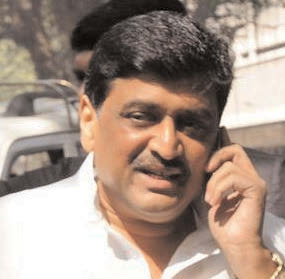
    MUMBAI (TIP): The ghost of the 2010 Adarsh Housing Society scam on February 4 came back to haunt former CM Ashok Chavan as Maharashtra Governor Ch Vidyasagar Rao granted sanction to the CBI to prosecute him, spelling trouble for the Congress MP from Nanded.

    Raj Bhavan sources said Rao gave his consent on Thursday to prosecute Chavan for offences under Section 120-B (criminal conspiracy) and 420 (cheating) of the Indian Penal Code.

    “By letter dated Octber 8, 2015, the Joint Director CBI, Mumbai had sought sanction for prosecution of Ashok Chavan under Section 197 Cr.PC on the basis of the additional or fresh material, namely, the report of the Justice Patil Commission of Enquiry and the observations of the Bombay High Court in the Criminal Revision Application No.136 of 2014,” a statement from Raj Bhavan said, adding, “The Governor sought the aid and advice of the Council of Ministers and was advised by the Council of Ministers to grant the sanction.”

    However, it cited no grounds for the sanction.

    Reacting to the development, Mr. Chavan questioned the legality of the CBI seeking sanction from the Governor for the second time.

    In 2013, the agency had moved a similar request under the same provisions and then Governor K. Sankaranarayanan had refused sanction.

    While rejecting the CBI request, Sankaranarayanan had stated: “Having considered the matter from all angles, the entire papers and documents, I do not find that even a prima facie case is made out and hence the request of the CBI for sanction to prosecute under Section 197 of the Cr.PC is liable to be rejected and, therefore, I am hereby constrained to refuse the same.”

    Alleging that the CBI’s re-application for sanction was done under BJP pressure to target Congress leaders, Mr. Chavan said: “The previous Governor had held legal consultations before refusing to sanction my prosecution. It is illegal on the part of the CBI to seek sanction once again from the new Governor. There is no such provision. I will fight this in court.”

    Chief Minister Devendra Fadnavis refuted the charge of “vendetta politics” by the BJP. He said the Governor had consulted State Advocate General Srihari Aney and he had opined that permission could be given to prosecute  Chavan in the light of new facts in the case.

  • SUPREME COURT TO BCCI: CARRY OUT ALL LODHA COMMITTEE RECOMMENDATIONS

    SUPREME COURT TO BCCI: CARRY OUT ALL LODHA COMMITTEE RECOMMENDATIONS

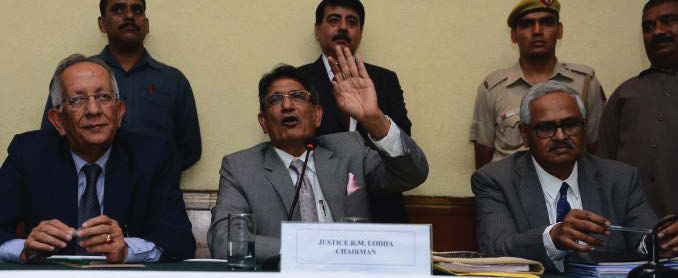
    NEW DELHI (TIP): The Supreme Court of India on Feb. 4 suggested to the Board of Control for Cricket in India that it accept all the recommendations of the Justice Lodha Committee relating to structural reforms in the governing body, says an IANS report.

    The apex court bench of Justice T.S. Thakur and Justice Fakkir Mohamed Ibrahim Kalifulla told BCCI that the Justice Lodha Committee has given a “very viable rational solutions. You take a realistic view of the matter and act according to the recommendations.”

    Impressing upon senior counsel Shekhar Naphade, appearing for BCCI, the significance of the report, the court said: “The report deserves respect as it is given by the most competent and well-meaning members of the legal fraternity.”

    “It may affect some people who are holding positions but any transition has to have its problems,” the court said as Naphade sought to project the difficulties that the apex cricketing body was encountering with the recommendations of the Lodha Committee.

    “It involves sweeping changes. We are not taking an obstructionist view. There are technical and legal problems. The legal committee (of BCCI) will take a call on the recommendations, which in turn will be considered by the Board and take a final decision,” Naphade told the court pointing out that BCCI was registered as a society in Tamil Nadu and had to go by its by-laws.

    Not missing on apparent reservations on the part of BCCI in going along with the recommendations of the Lodha Committee, the court made it clear that it would not appreciate any suitable assessment of the same (recommendations) by the cricketing body.

    “We will say that we accept the recommendations and ask the Justice Lodha Committee to push forward its (recommendations) for its implementation… help and steer them (BCCI) in the implementation of the recommendations and also monitor it,” Chief Justice Thakur said.

    Thakur also made it clear that there could not be any “ifs and buts” in going along with the recommendations for structural reforms in BCCI.

    Senior counsel Indu Malhotra, appearing for Cricket Association of Bihar, read out the summary of the recommendations by the Justice Lodha Committee and told the court that some states including Bihar and six north-eastern states Manipur, Nagaland, Arunachal Pradesh, and Mizoram have no representation in the apex cricketing body.

    On the other hand, Maharashtra and Gujarat have multiple votes, Indu Malhotra told the court.

    Naphade cited historical reasons to justify multiple representation of Maharashtra and Gujarat in BCCI.

    The apex court appointed Justice R.M. Lodha Committee have made a host of far-reaching recommendations for improvement of cricket administration in the country including limiting the term for BCCI office bearers with a cooling off period and separate governing bodies for BCCI and the Indian Premier League.

    It had also recommended bringing BCCI under the Right to Information Act, legalization of betting, uniformity in structure of state associations, and a one-state-one-member (vote) pattern for BCCI’s governing body.

    The matter would come up for further hearing on March 3.

  • PADMA AWARDS 2016

    PADMA AWARDS 2016

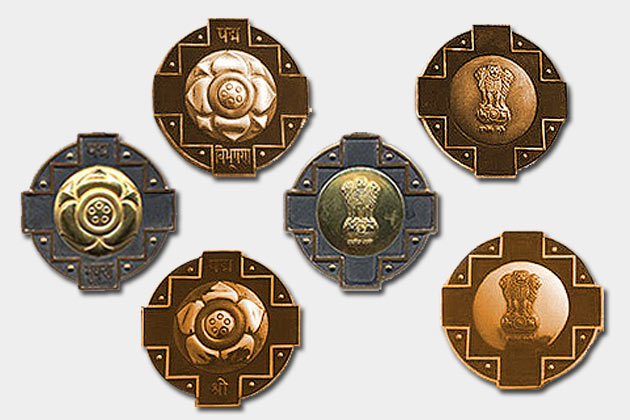
    NEW DELHI (TIP): Former Comptroller and Auditor General of India Vinod Rai, actor Rajinikanth, spiritual guru Sri Sri Ravishankar and tennis player Sania Mirza are on the list of 112 Padma awardees whose names were announced on Monday by the government.

    The awards will be given across three categories: the Padma Vibhushan, Padma Bhushan and Padma Shri. These awards are given on Republic Day, for the over six decades now, to people who the government recognises have excelled in their fields.

    Padma Vibhushan

    1. Shri Rajinikanth    Art-Cinema    Tamil Nadu
    2. Ms. Yamini Krishnamurthi Art- Classical dance Delhi
    3. Smt. Girija Devi    Art-Classical Vocal    West Bengal
    4. Shri Ramoji Rao    Literature & Education-Journalism   Andhra Pradesh
    5. Dr. Viswanathan Shanta    Medicine- Oncology    Tamil Nadu
    6. Shri Shri Ravi Shankar    Others-Spiritualism    Karnataka
    7. Shri Jagmohan    Public Affairs    Delhi
    8. Dr.Vasudev Kalkunte Aatre    Science & Engineering    Karnataka
    9. Shri Avinash Dixit (Foreigner)    Literature & Education
    10. Late Shri Dhiru Bhai Ambani (Posthumous)    Trade & Industry    Maharashtra

    Padma Bhushan

    11. Shri Anupam Kher Art-Cinema Maharashtra
    12. Shri Udit Narayan Jha Art-Playback Singing Maharashtra
    13. Shri Ram V. Sutar Art-Sculpture Uttar Pradesh
    14. Shri Heisnam Kanhailal Art-Theatre Manipur
    15. Shri Vinod Rai Civil Service Kerala
    16. Dr. Yarlagadda Lakshmi Prasad Literature & Education Andhra Pradesh
    17. Prof. N. S. Ramanuja Tatacharya Literature & Education Maharashtra
    18. Dr. Barjinder Singh Hamdard Literature & Education – Journalism Punjab
    19. Prof. D. Nageshwar Reddy Medicine-Gastroenterology Telangana
    20. Swami Tejomayananda Other-Spiritualism Maharashtra
    21. Shri Hafeez Contractor Others-Architecture Maharashtra
    22. Shri Ravindra Chandra Bhargava Public Affairs Uttar Pradesh
    23. Dr.Venkata Rama Rao Alla Science & Engineering Andhra Pradesh
    24. Ms. Saina Nehwal Sports-Badminton Telangana
    25. Ms. Sania Mirza Sports-Tennis Telangana
    26. Ms. Indu Jain Trade & Industry Delhi
    27. Late Swami Dayanand Sarawasati (Posthumous) Others- Spiritualism Uttarakhand
    28. Shri Robert Blackwill (Foreigner) Public Affairs USA
    29. Shri Pallonji Shapoorji Mistry (NRI/PIO) Trade & Industry Ireland

    Padma Shri

    30. Smt. Prathibha Prahlad Art- Classical Dance Delhi
    31. Shri Bhikhudan Gadhvi Art- Folk Music Gujarat
    32. Shri Sribhas Chandra Supakar Art- Textile Designing Uttar Pradesh
    33. Shri Ajay Devgn Art-Cinema Maharashtra
    34. Ms. Priyanka Chopra Art-Cinema Maharashtra
    35. Pt. Tulsidas Borkar Art-Classical Music Goa
    36. Dr. Soma Ghosh Art-Classical Vocal Uttar Pradesh
    37. Shri Nila Madhab Panda Art-Film Direction and Production Delhi
    38. Shri S.S. Rajamouli Art-Film Direction and Production Karnataka
    39. Shri Madhur Bhandarkar Art-Film Direction and Production Maharashtra
    40. Prof. M. Venkatesh Kumar Art-Folk Artist Karnataka
    41. Ms. Gulabi Sapera Art-Folk Dance Rajasthan
    42. Smt. Mamta Chandrakar Art-Folk Music Chhattisgarh
    43. Ms. Malini Awasthi Art-Folk Music Uttar Pradesh
    44. Shri Jai Prakash Lekhiwal Art-Miniature Painting Delhi
    45. Shri K. Laxma Goud Art-Painting Telangana
    46. Shri Bhalchandra Dattatray Mondhe Art-Photography Madhya Pradesh
    47. Shri Naresh Chander Lal Art-Theatre & Cinema Andaman & Nicobar
    48. Shri Dhirendra Nath Bezbaruah Literature & Education Assam
    49. Shri Prahlad Chandra Tasa Literature & Education Assam
    50. Dr.Ravindra Nagar Literature & Education Delhi
    51. Shri Dahyabhai Shastri Literature & Education Gujarat
    52. Dr.Santeshivara Bhyrappa Literature & Education Karnataka
    53. Shri Haldar Nag Literature & Education Odisha
    54. Shri Kameshwaram Brahma Literature & Education – Journalism Assam
    55. Prof. Pushpesh Pant Literature & Education-Journalism Delhi
    56. Shri Jawaharlal Kaul Literature & Education-Journalism Jammu & Kashmir
    57. Shri Ashok Malik Literature &Education Delhi
    58. Dr.Mannam Gopi Chand Medicine-Cardio Thoracic Surgery Telangana
    59. Prof. Ravi Kant Medicine-Surgery Uttar Pradesh
    60. Prof. Ram Harsh Singh Medicine- Ayurveda Uttar Pradesh
    61. Prof. Shiv Narain Kureel Medicine- Paediatric Surgery Uttar Pradesh
    62. Dr.Sabya Sachi Sarkar Medicine -Radiology Uttar Pradesh
    63. Dr. Alla Gopala Krishna Gokhale Medicine-Cardiac Surgery Andhra Pradesh
    64. Prof. T.K. Lahiri Medicine-Cardio Thoracic Surgery Uttar Pradesh
    65. Dr. Praveen Chandra Medicine-Cardiology Delhi
    66. Prof. (Dr) Daljeet Singh Gambhir Medicine-Cardiology Uttar Pradesh
    67. Dr.Chandrasekar Shesadri Thoguluva Medicine- Gastroenterology Tamil Nadu
    68. Dr. (Mrs.) Anil Kumari Malhotra Medicine-Homeopathy Delhi
    69. Prof. M.V. Padma Srivastava Medicine-Neurology Delhi
    70. Dr. Sudhir V. Shah Medicine-Neurology Gujarat
    71. Dr. M. M. Joshi Medicine-Ophthalmology Karnataka
    72. Prof. (Dr) John Ebnezar Medicine-Orthopaedic Surgery Karnataka
    73. Dr. Nayudamma Yarlagadda Medicine-Paediatric Surgery Andhra Pradesh
    74. Shri Simon Oraon Other -Environment Conservation Jharkhand
    75. Shri Imitiaz Qureshi Other-Culinary Delhi
    76. Shri Piyush Pandey Others-Advertising & Communication Maharashtra
    77. Shri Subhash Palekar Others-Farming Maharashtra
    78. Shri Ravinder Kumar Sinha Others-Wildlife Conservation Bihar
    79. Dr. H.R. Nagendra Others-Yoga Karnataka
    80. Shri M. C. Mehta Public Affairs Delhi
    81. Shri M. N. Krishna Mani Public Affairs Delhi
    82. Shri Ujjwal Nikam Public Affairs Maharashtra
    83. Shri Tokheho Sema Public Affairs Nagaland
    84. Dr. Satish Kumar Science & Engineering Delhi
    85. Dr.Mylswamy Annadurai Science & Engineering Karnataka
    86. Prof. Dipankar Chatterji Science & Engineering Karnataka
    87. Prof.(Dr.) Ganapati Dadasaheb Yadav Science & Engineering Maharashtra
    88. Smt. (Prof.) Veena Tandon Science & Engineering Meghalaya
    89. Shri Onkar Nath Srivastava Science and Engineering Uttar Pradesh
    90. Ms. Sunita Krishnan Social Work Andhra Pradesh
    91. Shri Ajoy Kumar Dutta Social Work Assam
    92. Shri M. Pandit Dasa Social Work Karnataka
    93. Shri P. P. Gopinathan Nair Social Work Kerala
    94. Smt. Madeleine Herman de Blic Social Work Puducherry
    95. Shri Srinivasan Damal Kandalai Social work Tamil Nadu
    96. Shri Sudhakar Olwe Social Work Maharashtra
    97. Dr. T.V. Narayana Social Work Telangana
    98. Shri Arunachalam Murugantham Social Work Tamil Nadu
    99. Ms. Deepika Kumari Sports-Archery Jharkhand
    100. Shri Sushil Doshi Sports-commentary Madhya Pradesh
    101. Shri Mahesh Sharma Trade & Industry Delhi
    102. Shri Saurabh Srivastava Trade & Industry Delhi
    103. Sh Dilip Sanghvi Trade & Industry Maharashtra
    104. Dr. Keki Hormusji Gharda Trade & Industry Maharashtra
    105. Late Shri Prakash Chand Surana (Posthumous) Art – Classical Music Rajasthan
    106. Late Shri Saeed Jaffrey (NRI/PIO/Posthumous) Art- Cinema UK
    107. Shri Michael Postel (Foreigner) Art-Archaeology France
    108. Shri Salman Amin Sal Khan (NRI/PIO) Literature & Education USA
    109. Smt. Hui Lan Zhang (Foreigner) Others-Yoga China
    110. Shri Predrag K. Nikic (Foreigner) Others-Yoga Serbia
    111. Dr.Sundar Aditya Menon (NRI/PIO) Social Work UAE
    112. Shri Ajaypal Singh Banga (NRI/PIO) Trade & Industry USA

  • Meet India’s bravehearts

    Meet India’s bravehearts

    NEW DELHI (TIP): National Bravery Award-winning boys and girls drew applause from the audience at the Republic Day parade here for saving human lives in dangerous situations.

    As 23 out of the 25 award winners were driven in a jeep at the parade.

    From a 16-year-old who fought off a tiger to a 13-year-old who lost his life while trying to save his friend from drowning, three girls and 22 boys showed incredible bravery in the face of dangerous situations.

    Bharat Award, the highest of the National Bravery Awards, has been posthumously awarded to Gaurav Kawduji Sahastrabuddhe from Maharashtra who sacrificed his life during an attempt to save four of his friends.

    Shivansh Singh, who lost his life while undertaking a valiant effort to save his friend from drowning in Sarayu river was also awarded posthumously.

    The prestigious Geeta Chopra award has been given to eight-year-old Shivampet Ruchitha of Telangana who displayed exemplary valour in saving two lives when a train hit her school bus.

    Sixteen-year-old Arjun Singh was honoured with Sanjay Chopra Award for displaying outstanding bravery in fighting off a tiger to save his mother. Ramdinthara (15) of Mizoram, who saved two persons from electrocution, was awarded Bapu Gaidhani Award, along with Rakeshbhai Shanabhai Patel (13) of Gujarat and Aromal SM (12) from Kerala.

    While Rakeshbhai saved a boy who accidentally fell into a deep well, Aromal rescued two women from drowning.

    Other recipients of the bravery awards are Kashish Dhanani (Gujarat), Maurice Yengkhom and Chongtham Kuber Meitei from Manipur, Angelica Tynsong (Meghalaya), Sai Krishna Akhil Kilambi (Telangana), Joena Chakbraborty and Sarwanand Saha (Chhattisgarh) and Dishant Mehndiratta (Haryana). Beedhovan, Nithin Philip Mathew, Abhijit KV, Anandu Dillep, Muhammad Shamnad (all from Kerala), Mohit Mahdenrda Dalvi, Nilesh Revaram Bhil, Vaibhav Ramesh Ghangare (all from Maharashtra), Abinash Mishra (Odisha) and Bhimsen from Uttar Pradesh were also given the award.

  • Veteran CPI leader AB Bardhan passes away at 92

    Veteran CPI leader AB Bardhan passes away at 92

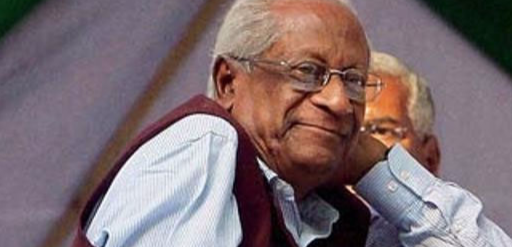
    Veteran Communist Party of India leader Ardhendu Bhushan Bardhan passed away on Saturday. He was 92 and was being treated at GB Pant Hospital.

    He was undergoing treatment after tests detected a blood clot in his brain. Earlier on Saturday, the CPI described his condition as “critical”.

    “Condition of Comrade Bardhan has worsened today. He was put off ventilator yesterday and was able to breathe normally. But today, his blood pressure (level) fell and his condition has turned very critical now,” CPI national secretary D Raja said.

    Bardhan has been a leading figure of the trade union movement and Left politics in Maharashtra. He had won as an independent candidate in Maharashtra assembly polls in 1957. He later rose to become the general secretary and then president of All India Trade Union Congress, the oldest trade union in India.

    Bardhan had moved to Delhi politics in the 1990s and became the deputy general secretary of CPI. He succeeded Indrajit Gupta as the general secretary of the party in 1996.

  • Make in India Week from February 13 to 18, 2016 in Mumbai

    Make in India Week from February 13 to 18, 2016 in Mumbai

    NEWYORK (TIP): Government of India is organizing a landmark event titled, “Make-in-India Week” from February 13 to 18, 2016 in Mumbai, says a press release issued by the Consulate General of India. The event will be inaugurated by Prime Minister Narendra Modi. The week-long event will offer foreign investors and businesses unprecedented access, insights and opportunities to showcase, connect and collaborate with young Indian entrepreneurs, industry leaders, academicians, and government officials at the central and state levels.

    Highlights of the ” Make-in-India Week” will include:


    • Make in India Center: This will be the platform for exhibiting innovative products and manufacturing processes developed in India along with a vision to leverage design, innovation and technology in the backdrop of global manufacturing.
    • CNN-Asia Business Forum: Would comprise of a series of seminars, CXO meets and round-tables and networking events on economic challenges, investment opportunities etc. The event would feature Global visionaries, and leaders from the fields of finance, industry and design.
    • Urban Planning Seminar on re-imagining Mumbai: This session would focus on new impetus for a smarter e-enabled Mumbai collaborating with the best-in-class technology partners.
    • Hackathon: A 24-hour marathon event where coders, engineers, and designers collaborate intensively for 24 hours to come up with ideas to solve urban design problems.
    • TIME India Awards: Recognizing excellence in the world of manufacturing,
    • Empowerment through Design: A day-long forum on rethinking contemporary design practices,
    • Maharashtra Night: An evening dedicated to the best of media, entertainment, popular culture, and technology from the State of Maharashtra.
    • Experience India: A street food festival.
    • Exhibitions on art, craft, technology and textiles (Born in Benaras Textile Show) across all museums and art galleries in Mumbai.

    Also planned is the release of a one-time edition of ” Make-in-India” magazine brought out by Conde’ Nast India. The magazine will showcase some of India’s most creative and dynamic innovators and entrepreneurs, across various industries. A presentation deck prepared by Department of Industrial Policy and Promotion (DIPP) on the event can be accessed here: https://www.dropbox.com/s/q6ykta6nnfrozdm/Make%20in%20In dia%20Week.pptx?dl=0

    Individual members or delegations interested in participating in this event are requested to register for the event. Details regarding registration and other information on the event can be accessed from: http://www.makeinindia.com/mumbai-week.

  • Venue allotments for World T20 raises eyebrows

    Venue allotments for World T20 raises eyebrows

    NEW DELHI (TIP): The Indian cricket board’s (BCCI) decision to award almost half of the ICC World T20 matches next year to only two venues -Dharamshala and Nagpur -has raised eyebrows. These two venues -which will together host 17 out of 35 games in the tournament -belong to state associations from where the board secretary and president belong.

    Nagpur, the home association of BCCI president Shashank Manohar, is set to host nine games while Dharamshala -home to board secretary Anurag Thakur-run Himachal Pradesh Cricket Association -will stage eight.

    Five other venues will host the other half of the tournament.Chandigarh, Mumbai, Kolkata, Bangalore and Delhi -all traditional Test venues -will host a total of 18 matches, including the final at Kolkata’s Eden Gardens.

    There are 20 international cricket stadiums in the country , of which 15 are certified Test venues now. However, the BCCI decided to shortlist and finalize only these seven venues to host the World T20 matches, to be held from March 9 to April 3. The biggest surprise is that the marquee game of the tournament -India versus Pakistan -has been awarded to Dharamshala, which has a capacity of only 23,000. Some other venues across India which were ignored boasts capacities ranging from 30,000 to 55,000.

    “It is not even in rotation that Dharamshala has been awarded the game,” a senior board functionary said, adding: “If you had a choice between 23,000 people watching India play Pakistan and 40,000 or 50,000 people watching, which option would you choose?” Clearly, outside of Maharashtra, where Pakistan are not welcome to play, there are several venues that could have been considered for this big-ticket game.

    G Gangaraju, the BCCI vice-president from South Zone and also the chairman of the board’s tour programme and fixtures committee, was not forthcoming on the reasons behind allotting 17 matches to Nagpur and Dharamshala and shortlisting only five other venues. “I’ll have to look into it and get back to you. I’m in Parliament right now,” Gangaraju said.

    Only a month ago, BCCI had added six new venues to its list of certified Test centres. Of those six, only Dharamshala has been awarded eight World T20 games while the remaining five -Pune, Rajkot, Indore, Ranchi and Visakhapatnam -have been ignored altogether.

    Some other traditional centres like Chennai -the power centre of the previous regime in the BCCI -have also been snubbed. Chennai will host only four women’s World T20 games instead of the expected big-draw men’s matches.

    (PTI)

  • Legendary Dilip Kumar honoured with Padma Vibhushan

    Legendary Dilip Kumar honoured with Padma Vibhushan

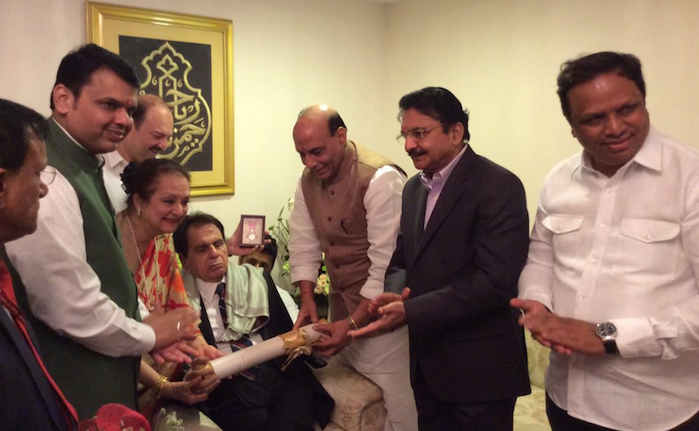
    Mumbai: Ailing legendary actor Dilip Kumar, 93, was on Sunday, December 13, presented the Padma Vibhushan — India’s second highest civilian award — by Union Home Minister Rajnath Singh at the thespian’s residence in suburban Bandra for his contribution to the Hindi cinema spanning over six decades.

    Famously known as the tragedy king, the veteran actor has immortalised films like Devdas, Mughal-e-Azam, Naya Daur, Madhumati, Ram Aur Shyam and Saudagar with his brilliant performance.

    The 93-year-old legend was presented a medal, a certificate and a shawl by Singh, in the presence of the actor’s wife Saira Bano.

    Kumar, in a black suit, could barely open his eyes and was helped by Saira when the national honour was conferred on him. He has given sterling performances in over 60 Hindi films.

    Maharashtra Governor C Vidyasagar Rao, Chief Minister Devendra Fadnavis, were among other dignitaries present at the actor’s home when he received the award.


    The announcement to honour Bollywood veterans Kumar, Amitabh Bachchan and a few others with the prestigious Padma Vibhushan award was made by the government on the eve of Republic Day on January 25, 2015.

    However, Kumar, due to ill-health, could not attend the special function held at the Rashtrapati Bhavan in April when other Padma awardees were honoured by President Pranab Mukherjee.

    Born as Muhammad Yousuf Khan in Peshawar(Pakistan), Kumar made his debut as an actor in the film “Jwar Bhata” produced by Bombay Talkies in 1944.

    He starred in films of a variety of genres such as the swashbuckling Aan (1952), the comical Azaad (1955), the historical Mughal-e-Azam (1960) and the social Ganga Jamuna (1961).

    He also did films like Ram Aur Shyam (1967), Kranti (1981), Shakti (1982), Karma (1986) and Saudagar (1991) and others. His last film was Qila (1998).

    The Government of India honoured him with the Padma Bhushan award in 1991, the Dadasaheb Phalke Award in 1994 and the Padma Vibhushan earlier this year, for his exceptional and distinguished contribution to the Indian cinema.


  • SHEENA BORA CASE – Indrani Mukerjea, Peter Mukerjea did massive money laundering: CBDT report

    SHEENA BORA CASE – Indrani Mukerjea, Peter Mukerjea did massive money laundering: CBDT report

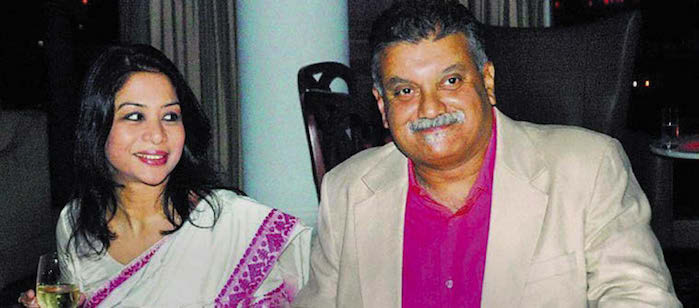
    NEW DELHI (TIP): Another turn in the Sheena Bora murder as misappropriation of funds & money laundering comes up in a report published by Central Board of Direct Taxes (CBDT).

    The report alleges Indrani Mukerjea and Peter Mukerjea of money laundering under their now defunct company INX Media.

    According to The Hindu, a report sent by the Central Board of Direct Taxes (a copy of which is with The Hindu), says the Mukerjeas laundered foreign funds into INX Media via dubious investment firms based in Port Louis, Mauritius. The infusion of huge share capital at a substantial premium was funneled into eight subsidiary companies between 2007 and 2008, according to income tax documents and files in possession of The Hindu. Of the eight firms, six received unsecured loans and two received share capital at a substantial premium. One of them received suspect foreign funding, while the remaining seven received suspect domestic funding, documents show.

    The new report is not part of various investigations into the Sheena Bora murder case, but constitutes a tax history of the group as documented by the CBDT, New Delhi, since the company was set up in 2007.

    Mukerjeas funneled crores from dubious companies

    Taxmen found that conduit companies “did not even have any income of their own and lent money borrowed from others, which raised doubts.” A background check on New Vernon showed it to be a principal investment firm ‘specializing’ in investments in India. The firm was formerly known as New Vernon Capital LLC, founded in 2004. Various financial portals have no record of its key executives or data on its board. Dunearn claims to be a subsidiary of Temasek Holdings but has no publicly available records.

    According to a statement by NSR, “New Silk Route’s fund invested in INX Media in 2007 and 2008, as a minority investor, along with a consortium of other well-known institutional investors. NSR’s limited partners (investors) are primarily global institutions, and all are overseas.”

    Assessment order

    An assessment order, accessed by The Hindu, was passed against INX Media under Section 68 of the IT Act, 1961, asking it to “identify the source, prove credit worthiness and genuineness of the transactions.” The matter then went into arbitration as the group contested the order passed by the Assessment Officer (AO). “The AO clearly treated the source of the transactions as ‘dubious’ and ‘unexplained’ since the company failed to provide any documents whatsoever on the credible sourcing of these funds,” said a reliable source. “It clearly established several dubious entities, both domestic and foreign, infused substantial funds in the form of multi-layered investment.”

    Domestically, the documents show INX News Limited, another subsidiary of the group, received premium of Rs. 81.84 crore and Rs. 29.15 crore (Rs. 111 crore) from IM Media and INX Media.

    Three other transactions from IM Media, Indrani Incon and India Growth Fund pumped capital of Rs. 112.3 crore, Rs. 44.92 crore and Rs. 11.23 crore respectively at high premium. The same year, the report says, INX received an unsecured loan from former INX Media board member Manjula Rao to the tune of Rs. 41.4 crore and Rs. 156.01 crore, which were suspicious. “Manjula Rao invested over Rs. 250 crore in INX. The sources of these funds have not been investigated,” the report reads.

    “I have nothing to do with INX, now or in the past. I am a professional, and in no way concerned with this company. These are manipulated records and files. The reports are doctored,” Ms. Rao told The Hindu.

    Three months after the CBI took over the murder probe, it has made references to the Mukerjeas siphoning off nearly Rs. 900 crore out of INX Media.

    The agency suspected that the couple illegally parked the money in an account in Singapore. Additional Solicitor-General Anil Singh has already claimed in court that the CBI is seeking details of financial transactions of the Mukerjeas from Interpol.

    Meanwhile Peter Mukerjea’s counsel Mihir Gheewala and Kushal Mor countered the financial motive and said the CBI was turning the case around in this direction (financial dealings) to twist the case. “These facts are not part of the original remand. We are yet to look into it,” Mr. Gheewala told The Hindu.

    A Timeline of events:

    November 19, 2015: CBI arrests Peter Mukherjea along with filing charge sheets against Indrani, ex-husband Sanjeev Khanna and Shyamvar Rai, the driver.

    October 7, 2015: Indrani discharged from hospital, doctors confirmed drug overdose.

    October 2, 2015: Indrani Mukherjea admitted in JJ Hospital after she allegedly overdosed on anti-epileptic pills.

    September 19, 2015: Maharashtra announces the handover of the case to CBI.

    September 9, 2015: Peter Mukherjea reveals to Khar police that Indrani often abused him.

    September 7, 2015: Body of Sheena Bora found in Raigad forest.

    September 5, 2015: The police custody extended again till September 7.

    September 3, 2015: Indrani Mukherjea confessed her role in the murder.

    September 1, 2015: Siddharth Das confessed that he is the biological father of Sheena and Mikhail Bora.

    August 31, 2015: Fresh charges filed against Indrani attempting to kill her son. Police custody of the three accused extended till September 5, 2015.

    August 30, 2015: The three arrested were taken to the crime scene in Raigad. The call records were also checked by the police.

    August 29, 2015: Maharashtra Police has ordered a probe into why the Raigad Police did not register an Accidental Death Report (ADR) after they found a burnt corpse, suspected to be of Sheena Bora, in 2012.

    August 28, 2015: Sanjeev Khanna confessed to his “complicity in the crime.” He had earlier said that, Sheena’s body was lying next to him in a car in which they were traveling together in Mumbai on April 24, 2012.

    August 27, 2015: Sheena Shyam Rai, Indrani’s driver, confessed that he murdered Sheena and disposed of her body, on the direction of his employer Indrani Mukherjea.

    August 27, 2015: Sanjeev Khanna, a Kolkata based businessman and ex-husband of Indrani Mukherjea was arrested from Kolkata.

    August 26, 2015: Indrani opened up that Sheena was her daughter from a previous marriage and not sister as maintained.

    August 21, 2015: Shyamvar Pinturam Rai is arrested following the seizure of a 7.63-bore pistol from him.

    May 23, 2012: Police find a decomposed body after villagers at Gagode in Pen tehsil, Maharashtra, complain of foul odor.

    April 24, 2012: Sheena Bora takes a leave of absence from work at Mumbai Metro. On the same day she sends a resignation letter to her employer. She is not heard from again. No missing complaint is ever lodged by any family member.

  • Pankaja Munde defends Maharashtra temple’s practice of barring women

    Pankaja Munde defends Maharashtra temple’s practice of barring women

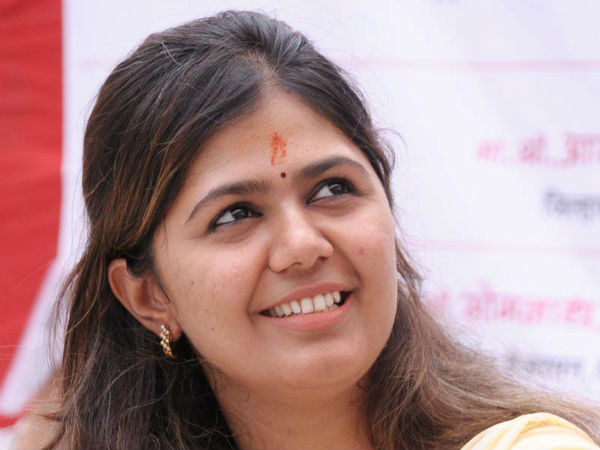
    MUMBAI (TIP): Defending the practice of not allowing women to perform ‘puja’ at Shani Shingnapur temple in Ahmednagar district, Maharashtra rural development minister Pankaja Munde said on Thursday traditional rituals cannot be “linked with insult” of women.

    Munde’s statement, which came in the wake of a woman offering ‘puja’ at the temple by breaching security, drew sharp reaction from opposition NCP.

    “These are traditions and cannot be linked with insult of women fraternity,” Munde said, defending the age-old ‘ban’ after a woman devotee’s action last week created a furore.

    “The outrage over the woman entering the Shani temple is a non-issue,” the BJP leader said.

    Chitra Wagh, women’s wing president of the state NCP, criticised Munde’s statement. “In a progressive state like Maharashtra, instead of appreciating the move to break the traditions that are against women, the BJP minister, by making such a statement, has taken state back to an era where women were not treated at par with men,” Wagh said.

    The temple, which attracts thousands of pilgrims daily, is devoted to Lord Shani and women are traditionally barred from offering prayers at the shrine, located about 250km from Mumbai.

  • ED SUMMONS HIMACHAL CM VIRBHADRA IN MONEY LAUNDERING CASE

    ED SUMMONS HIMACHAL CM VIRBHADRA IN MONEY LAUNDERING CASE

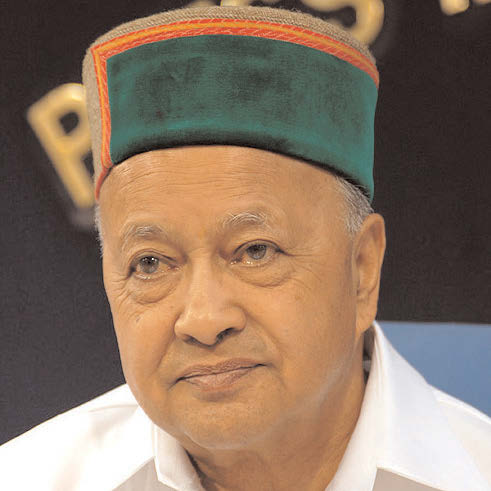
    NEW DELHI (TIP): The Enforcement Directorate has summoned Himachal Pradesh chief minister Virbhadra Singh to its Delhi headquarters in connection with the investigation into an alleged Rs 6.10 crore disproportionate assets and money laundering case against him and associates.

    The agency has summoned him in the first week of December to record his statement or submit the same through solicitors. Based on preliminary investigation, the ED has found certain questionable transactions related to property purchases in Delhi and other cities.

    The agency has filed a case under Prevention of Money Laundering Act after taking cognizance of a complaint filed by the CBI in September.

    The ED had last week conducted searches in three states —Delhi, Maharashtra and West Bengal — on some of his alleged associates.

    The CBI has alleged that Singh and his family members amassed wealth of Rs 6.10 crore between 2009 and 2011, disproportionate to their known sources of income, while he serving as Union steel minister. The CBI FIR had named Singh, his wife Pratibha, LIC agent Anand Chauhan and Chauhan’s brother C L Chauhan and charged them under Prevention of Corruption Act.

    The CBI suspects that during the 2009-11 period, Singh allegedly invested Rs 6.10 crore in life insurance policies in his and his family members’ names through LIC agent Chauhan, claiming this money to be his agricultural income.

    It alleged that Singh attempted to legitimize the same as agricultural income by filing revised income tax returns in 2012.

    “The agricultural income as claimed by him in his revised ITRs was not found to be tenable. The then Union minister had allegedly accumulated other assets disproportionate to known sources of income,” CBI had alleged.

  • Thousands Join Funeral of Colonel Mahadik Who Died Fighting Terrorists in J&K

    Thousands Join Funeral of Colonel Mahadik Who Died Fighting Terrorists in J&K

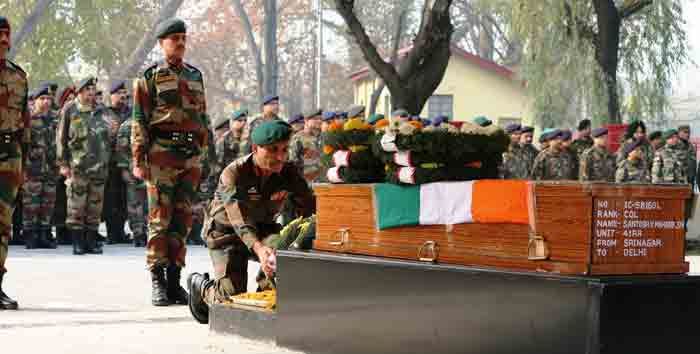
    Satara, Maharashtra: Thousands of grieving people turned up on Thursday for the funeral of Col. Santosh G. Mahadik, who was killed while fearlessly leading his men in an operation against militants in Jammu and Kashmir on Tuesday, an official said.

    Defense Minister Manohar Parrikar, Chief Minister Devendra Fadnavis and other dignitaries paid homage to Mahadik and offered sympathies to his family members, including parents, wife Sashwati, two children and brothers.

    Later, the slain hero’s body was brought in an army cortege to his native village Pogarwadi and kept for people to pay their last respects.

    Mahadik, who was decorated with a Sena Medal, was accorded a funeral with full military honors in an open ground in the village, the official said.

    Commanding officer of 41 Rashtriya Rifles, Mahadik, 38, was leading a search party and was critically injured when militants, holed up in a dense forested area of Haji Naka in Kupwara district, fired at him.

    Hailing from Satara, Mahadik belonged to a small farmer’s family and joined the Satara Military School before joining the army in 1998.

    A family friend described Mahadik as “a gentle, soft-spoken officer who never conveyed the looks of a special forces officer, besides being a forceful orator who spoke his mind.”

    The last rites were performed in the presence of his immediate and extended family members, Pogarwadi villagers and people from Satara district who raised cries of “Santosh Mahadik amar rahe.”

    An expert paratrooper and a combat underwater diver, Mahadik became the second commanding officer to be martyred in terrorist encounter this year.

    On Jan. 27, Col. Munindra N. Rai of the Gorkha Rifles was martyred at Handora village in Tral, south Kashmir, just a day after he was honored with the Yudh Seva Medal in the Republic Day awards.

    Rai was posthumously conferred the Shaurya Chakra on Independence Day.

    Source: IANS

  • India steps up surveillance on ISIS propaganda: over 150 Indians under the scanner

    India steps up surveillance on ISIS propaganda: over 150 Indians under the scanner

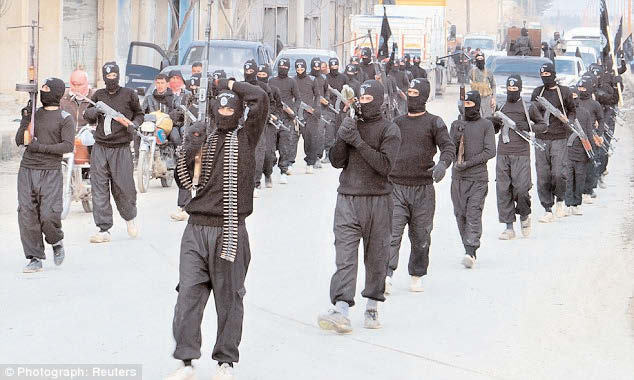
    NEW DELHI (TIP) : Nearly 150 Indians are on the radar of intelligence agencies for actively following Islamic State propaganda and engaging on social media with pro-IS elements, according to government sources.

    A majority of those under surveillance are from the southern states, sources said.

    Though agencies are not planning any action or crackdown on the youth who may be showing a more-than-keen interest in pro-IS websites or social media posts, the tracking is meant to pre-empt the possibility of their becoming indoctrinated enough to join the IS. As and when those under surveillance show signs to radicalization, an intervention may be made to alert their families and facilitate their counseling, if need be.

    Online tracking of pro-IS websites, Twitter handles and Facebook accounts is a key part of India’s counter-IS strategy. Agencies, with the help of experts from the National Technical Research Organization (NTRO), track online traffic related to IS across the country, and constantly flag any unusual trend or activity.

    Sources in the security establishment told TOI that 23 Indians, including about a dozen from the diaspora, had joined the IS and traveled to Iraq-Syria for ‘jihad’. These include four youth from Kalyan, one of whom Areeb Majeed returned to India and is now in custody here, a Kashmiri based in Australia, a Singapore-based Indian, an Oman-based man and one person each from Karnataka and Telangana and a journalist from Kerala.

    Of the six Indian recruits believed to have got killed in IS territory are three Indian Mujahideen cadre including Bada Sajid and Sultan Ajmer Shah who joined the outfit from Pakistan, two from Maharashtra and one from Telangana.As many as 30 Indians, including a woman based in Delhi, have been prevented from joining the IS. Besides, around 8-10 Kerala-origin men and an alleged woman recruiter, Afsha Jabeen, were recently deported by the UAE after they were found to be in touch with active IS members.

    A senior government officer said there was threat of an Indian IS recruit indulging in a “lone wolf” attack here upon return from Iraq-Syria. “Unlike other countries that strip their citizens who join and fight for IS of their passports, we have no such plan. We’d rather let them return and intercept them here,” said the officer.

    In an advisory sent on Monday, the home ministry had warned of the possibility of an IS-sponsored terrorist action on Indian soil. “Though the IS has not been able to establish any significant presence in India, its success in radicalizing some youth, attracting certain sections of the local population or the Indian diaspora to physically participate in its activities or the possibility of piggy-backing on terrorist groups operating in India have opened up the possibility of IS-sponsored terrorist action on Indian territory,” said the advisory issued to all the states and Union Territories.

  • Chhota Rajan sent to Tihar jail in fake passport case

    Chhota Rajan sent to Tihar jail in fake passport case

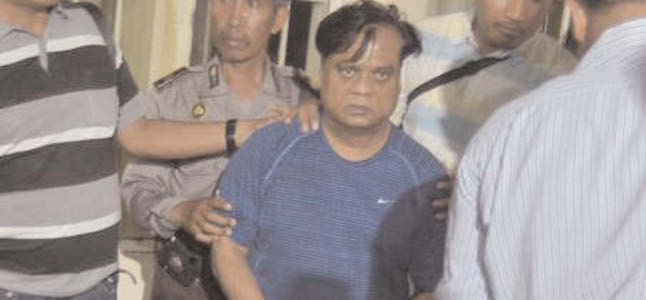
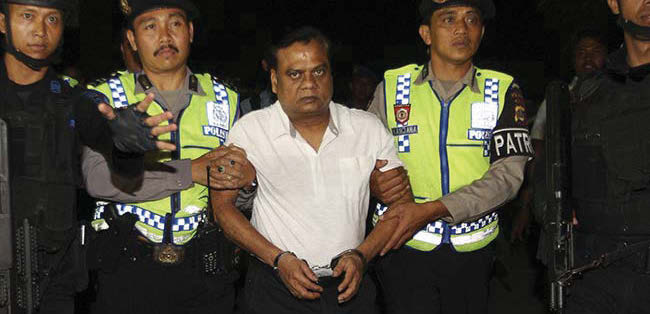
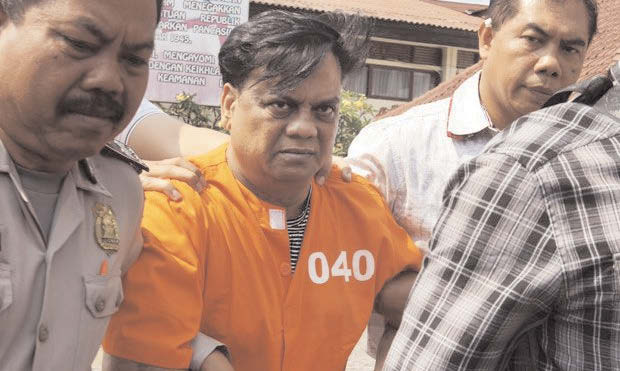
    NEW DELHI (TIP): Underworld don Chhota Rajan was on Nov 19 evening handed over to the Tihar jail authorities. Rajan will spend his first night in a high security cell inside jail number 2.

    Jail sources said that he was brought to the prison around 6 in the evening by CBI officials, who had custody of the gangster.

    The don was extradited from Indonesia earlier this month after his arrest on October 27 at the Bali airport, where he was held while travelling under a false name. Sources said the don was kept alone and would be under constant CCTV surveillance. From Friday, he will be allowed to move only in a small corridor outside his cell. Tamil Nadu state police personnel will be posted to ensure that he is not ‘attacked’.

    Sources said around 6.30pm on Wednesday, Rajan was brought to jail number 2.

    Sources said that in the coming weeks, he could be given the facility of attending court hearings through video conferencing. “He is alone in his cell because of the high-security threat to him. He will not mix with anyone. A deputy superintendent has been asked to ensure that someone is always on his watch round the clock,” said a jail officer.

    Even if Rajan is not able to get video conferencing facility, sources said that he would travel alone to the next court appearance slated for November 3.

    CBI takes over cases

    The CBI on Thursday took over 71-odd cases of Maharashtra police against Mumbai gangster Chhota Rajan, with the Department of Personnel and Training (DoPT) issuing a mandatory notification effecting the move on a request from the state government. “The CBI is in the process of taking over these cases,” said a CBI spokesperson.

    A city court on Thursday sent Rajan to the city’s high-security Tihar jail in judicial custody for two weeks in a CBI case related to alleged passport fraud.

    “Rajan was today produced before the competent court and the court sent him in 14 days’ judicial custody to the Tihar prison,” the spokesperson said. According to a CBI source, the agency will soon seek permission of the court to question Rajan in the cases, which are being re-registered.

    The HT on Wednesday had first reported that the CBI will take over Maharashtra police’s cases against Rajan this week. The DoPT notification was in response to an earlier notification of the Maharashtra government beginning the handover process. It is yet to be seen, however, if all cases against Rajan, including those that are undergoing trial like the one pertaining to murder of Mumbai’s senior crime journalist Jyotirmoy Dey in 2011, are among the cases handed over to the agency, said the source.

  • Chhota Rajan in India After 27-Yr Hunt

    Chhota Rajan in India After 27-Yr Hunt

    NEW DELHI (TIP): Long-absconding underworld don Chhota Rajan was brought to Delhi early on Nov 6 morning from Indonesia by a joint team headed by CBI officials for facing trial in various criminal cases registered against him in Delhi and Mumbai.

    The 55-year-old gangster, who had been on the run for past 27 years, kissed the ground on his arrival in Delhi.

    Rajan, whose real name is Rajendra Sadashiv Nikalje, will be kept in the national capital where he will be questioned by sleuths of various investigating agencies as he has been making claims of having further evidence to nail India’s most wanted terrorist Dawood Ibrahim and his links with Pakistan’s snooping agency ISI.

    Immediately after his arrival here in an Indian Air Force Gulfstream-III aircraft from Indonesia’s Bali, Rajan, who is considered as a ‘friendly don’ as he reportedly tipped Indian security agencies about the movement of Dawood and his aides, was whisked away to an undisclosed location under tight security.

    Official cars with flashing lights accompanied by heavy-armed escort vans were seen leaving the Palam Technical Area at around 5:30am, as anxious camerapersons and photographers made unsuccessful attempts to get a glimpse of the underworld don, who was in one of those vehicles with tinted glasses.

    Rajan had told media in Bali that he was happy to return to his motherland and had rubbished reports that his arrest was orchestrated as he was facing threat from Dawood’s men.

    Ahead of his arrival in India, Maharashtra government made a surprise announcement of handing over all the cases related to the underworld don to the CBI as the agency had expertise in handling such cases. This move comes barely a few days after the state Chief Minister Devendra Fadnavis had been making claims that Rajan will be brought only to Mumbai.

    The Maharashtra government’s sudden U-turn raised many eyebrows within the police establishment in the megalopolis as the Chief Minister himself had ordered for creation of a special cell inside Aurthur Road prison with medial arrangement of dialysis being made. Rajan is on dialysis as his both kidneys are not working.

    Rajan, after his arrest, had expressed reservation over plans to lodge him in a Mumbai jail, fearing that his arch- rival and India’s most wanted terrorist Dawood Ibrahim may target him there.

    Till the formalities of CBI to take over the Maharashtra cases are completed, Rajan will be in the custody of special cell of Delhi Police which has six cases registered against him. Interestingly, CBI had told the Bombay high court, while hearing petitions filed by the family members of murdered rationalist Narendra Dabholkar, that it was severely understaffed and required officers from the Maharashtra Police to assist it in the probe.

    Rajan was arrested on the basis of an Interpol Red Corner notice at Bali airport on October 25 after he had arrived in the island city of Indonesia from Australia.

    India was keen that the deportation takes place at the earliest and had put in a request to Indonesian authorities immediately after his arrest, sources said.

    However, his deportation was deferred by a day as the international airport in Bali was shut down due to spewing of volcanic ash from a nearby mountain.

    Immediately after his flight took off, Indian ambassador to Indonesia Gurjit Singh tweeted: “#ChotaRajan deported successfully to India. Delay due to Bali airport closure ends. Thanks Indonesia for support.”

    Rajan is wanted in over 75 crimes ranging from murder, extortion to smuggling and drug trafficking.

    Mumbai Police has nearly 70 cases registered against Rajan, including 20 of murder, four cases under the Terrorist and Disruptive Activities (Prevention) Act, one under Prevention of Terrorism Act and over 20 cases under the stringent Maharashtra Control of Organised Crime Act.

    Delhi Police has six cases registered against Rajan, who was a close aide of fugitive underworld don Dawood at one point but split before the 1993 Mumbai blasts were conspired. In 2000, there was an attempt on Rajan’s life when Dawood’s men tracked him down to a hotel in Bangkok but he managed a dramatic escape by jumping from the first floor of the hotel.

    Rajan had fled India in 1988 for Dubai. NSG and special cell along with the para military. The details were finalized in a closed-door meeting on Tuesday.

    Rajendra Sadashiv Nikalje, known as Chotta Rajan, has been on Interpol’s most-wanted list for over two decades. Rajan, who has come back to India after 27 years, is wanted in over 75 crimes ranging from murder, extortion to smuggling and drug trafficking.

  • Gangster Chhota Rajan says never surrendered, wants to return to India

    Gangster Chhota Rajan says never surrendered, wants to return to India

    BALI/MUMBAI (TIP): Underworld don Chhota Rajan, who has been arrested after being on the run for over two decades, claimed on October that he did not surrender and wants to return to India.

    There is intense speculation that the arrest of the gangster, who is wanted in over 75 heinous crimes ranging from murder, extortion to smuggling and drug trafficking, was part of a “deal” with Indian security agencies.

    “I never surrendered. I want to go back to India. Don’t want to go to Zimbabwe,” the one-time trusted aide of terrorist and crime boss Dawood Ibrahim told reporters.

    Rajan, one of India’s most wanted gangsters, was arrested in  Indonesia’s tourist destination Bali on a Red Corner Notice issued by Interpol after eluding law enforcement agencies for over two decades.

    Of these 75 cases, Rajan is facing four cases under Terrorist and Disruptive Activities (Prevention) Act (TADA), one under Prevention of Terrorism Act (POTA) and over 20 cases under the stringent Maharashtra Control of Organised Crime Act
    (MCOCA).

    Indian security agencies are likely to send a team of officials to Bali to bring back the gangster who has been in custody since Sunday.

    The sources are tight-lipped about the arrangements to bring him back because of security concerns arising out of his fierce rivalry with underworld don Dawood Ibrahim and his gang.

    They said agencies are working on more than one plan to bring back 55-year-old Rajan, once known as Dawood’s right hand man, factoring various permutations and combinations.

    Rajan was traveling with the identity of Mohan Kumar with passport number G9273860 when he was apprehended at the airport in Bali, after arriving there on a Garuda Indonesia flight GA715, by the Indonesian Police on a tip-off from Australian authorities, they said.

    The sources said Rajan was in touch with various police officials for the past six months seeking a passage to return to India as he feared for his life in Australia from Chhota Shakeel, a henchman of Dawood.

    In 2000, there was an attempt on his life when Dawood’s men tracked him down to a hotel in Bangkok but he managed a dramatic escape through the hotel’s roof.

    According to serving and former police officers, who have dealt with the Mumbai underworld, arrest of Rajan is a major success and his questioning is expected to shed light on hitherto unknown facts related to cases linked to his syndicate.

    Chhota Rajan assets worth over Rs 4,000 crore, claims Mumbai police

    Mumbai Police officials estimate Chhota Rajan’s current net worth to be in the range of Rs 4,000-5,000 crore. Fifty per cent of the investments are in India, especially in Mumbai and its satellite towns, they say. “According to our reports, Rajan owns a hotel in China, a few jewellery shops in Singapore, Thailand and a hotel in Jakarta. He has also invested in diamond trade in African countries, especially Zimbabwe,” said a senior Mumbai Police official.

    Sources claimed that Rajan tried to strike a deal with some officials from Zimbabwe to seek refuge in that country.

    But Zimbabwe did not want to be seen giving refuge to anyone who was wanted in India. “We found that he asked for Z-plus protection which was denied by them,” claimed the official.

    “The officials with whom Rajan negotiated promised to provide the best of health facilities but refused to extend security cover. Rajan suspected that he would eventually be tracked by the Dawood gang, and did not want to be attacked when he was at his weakest — while undergoing  dialysis for kidney failure,” said a source.

  • Complaint against Shiv Sena for ‘insulting’ President

    Complaint against Shiv Sena for ‘insulting’ President

    MUMBAI (TIP): The state unit of Congress has filed a complaint against Shiv Sena for “insulting” President Pranab Mukherjee through an “objectionable” poster, which claimed that he “bowed” before the late saffron party supremo Bal Thackeray. A delegation of Maharashtra Pradesh Congress Committee (MPCC), led by party legislator Bhai Jagtap lodged the complaint at the Shivaji Park Police Station.

    “The objectionable write up on the poster was close to the President’s picture. Mukherjee had visited Thackeray during the Presidential election campaign. In keeping with Indian culture and tradition, Mukherjee folded his hands on meeting Thackeray. But, a write up on the poster says the President bowed before him,” the complaint said.

    Congress has accused the Sena of using the poster showing the President, who is the constitutional head of the country, for “political mudslinging”.

  • Shiv Sena brings disrepute to the world class Mumbai

    Shiv Sena brings disrepute to the world class Mumbai

    Shiv Sena is in the news, and for all the wrong reasons. Acting as law makers and law enforcement on  certain issues, Shiv Sena during the last few days, have protested against some programs and forced their cancellation .In one case, Shiv Sainiks even blackened the face of the organizer of a program and threatened him with dire consequences.

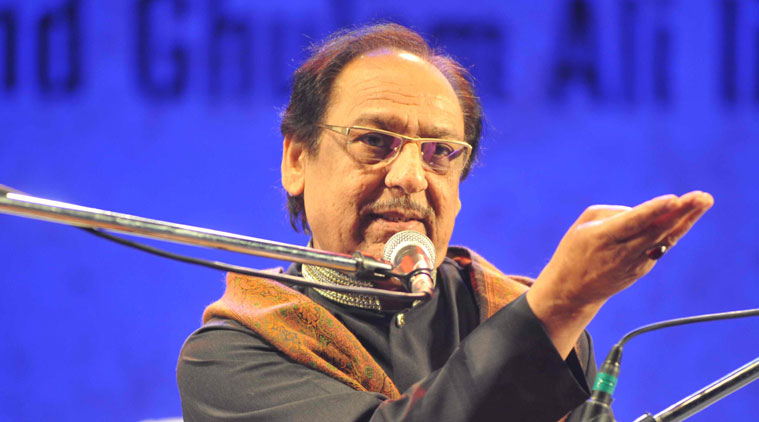
    The first in the series, during the last one month, was protest against a concert by Ghulam Ali, the famous Pakistani Ghazal singer. Now, Ghulam Ali is not just a Pakistani citizen. He is  a world citizen. He is known as Ghazal King all over the world. As a man, too, he is hugely loved simply because he is humble and affectionate.

    The second incident related to the release in Mumbai of a book written by Khurshid Mahmud Kasuri, a former Pakistan Foreign Minister and now a leader of Imran Khan’s party Tehrique Iqbal.

    The Shiv Sainiks smeared the face of the organizer of the book launch, a former BJP ideologue Sudheendra Kulkarni and said it was a form of “peaceful protest” against Pakistan.

    The latest in the series was  forcing cancellation of Indo-Pak rock band show in Ahmedabad on Sunday, October 11.

    Going by the history of the Shiv Sena, one would not be surprised with  their conduct. But then what happens to Mumbai and the people of Mumbai who feel ashamed of having such elements in the world class city?The Shiv Sena  has not done any proud to a city which the world knows and possibly dreams of as  a glorious world by itself.

    It becomes the duty of the government  to rein in the “anti-social elements”. There should be zero tolerance for those who try to be the arbiters of law, more so when the Shiv Sena is part of the government at both the State of Maharashtra and at the Center.

  • Sena likens NCP to blood sucking leech

    Sena likens NCP to blood sucking leech

    MUMBAI (TIP): In a vitriolic attack on Sharad Pawar for equating the Shiv Sena to “ants that will be stuck to jaggery of power,” the ruling alliance partner on Friday described NCP as “blood sucking leech” waiting to join hands with the BJP to be a part of Maharashtra government.

    “Before calling others ants, it would have been better if Pawar had self-introspected. The NCP is infamous for sucking the blood of Maharashtra like leeches. These are leeches whose stomach will remain empty despite sucking out all the blood of the state,” the Sena said in stinging remarks in an editorial in party mouthpiece ‘Saamana’.

    Pawar had recently said that power was like a block of jaggery and termed the BJP and Shiv Sena as ants drawn to it, sucking as much sweetness as they could.

    On Pawar’s taunt that Sena was hungry for power and would not “dare” to leave the government, the Sena said the Maratha strongman first needs to answer why the NCP stuck to power with the Congress for 10 years, despite being humiliated several times by its ally.

    “You spoke of (Congress president) as being a foreigner, but ate Italian pizza with her for 10 years. Congress leaders accused the NCP of corruption. (Former Maharashtrachief minister) Prithviraj Chavan abused the NCP time and again. But the way the NCP still stuck to power is nothing but a miracle,” the editorial said.

    The Sena claimed that Pawar is waiting for an opportunity to come to power.

    “The truth is that Pawar is only waiting for an opportunity to come to power in the government after the Sena-BJP alliance breaks,” it said.

    “After the (Maharashtra) Assembly polls (last year), this was the same NCP that tried to cling onto the ‘pro-Hindutva’ BJP like ants,” the Sena said.

  • Why  is the Cow a Political Animal?

    Why is the Cow a Political Animal?

    Vinoba  Bhave said, ” We stand on the shoulders of our ancestors so we can see much further than they saw, not be limited by their limitations.”

    Chaturvedi said the most appealing explanation he found for this transition was in the thoughts of Vinoba Bhave, MK Gandhi’s spiritual successor. A Sanskrit scholar who trusted his own reading over any rhetoric, Bhave was a complex figure, an ascetic with a fine aesthetic sense; one of modern India’s least understood leaders.

    “Several scholars have shown how the existing Hindu identity – or at least a significant part of it -draws from the colonial encounter. So, while some groups in India have eaten meat and beef since forever, the values of vegetarianism, non-violence and cow veneration have also been common”, says the author.

    In 1979, Bhave sat on a fast, demanding a ban on cow slaughter in Kerala and West Bengal, perpetrating a political crisis for the Morarji Desai government. (In fact, the satyagraha Bhave began became India’s longest-running fast, ending only recently after the Maharashtra government banned cow slaughter in the state.) Yet, in his speeches, he made it clear that if tractors kept rolling in, people should prepare to slaughter bullocks and eat them.

    Bhave’s most striking observation, Chaturvedi stressed, was his frank acknowledgement that ancient Sanskrit texts mention the eating of beef. So I pulled out my copy of Bhave’s Gita-Pravachan and found the section where he says we should not be surprised when we find out that some ancient rishis ate beef and meat was commonly eaten in India. He maintained it is a sign of evolution that such a large population accepted non-violence and turned vegetarian. Bhave said, “we stand on the shoulders of our ancestors so we can see much further than they saw, not be limited by their limitations.”

    I have looked for years, and not met any cow protection activists with the courage to accept the uncomfortable truth with such courage. They tend to emphasize only their reading of the Vedas, determined to bring back the Golden Vedic Age through cow protection. Which alienates me.

    My upbringing in a Hindu family has exposed me to the Gita and the Ramcharitmanas and the Bhagwat Puran, but never to the Vedas. When they need recourse to faith, most Hindus draw upon the devotional poetry of Tulsidas, Gyaneshwar, Meerabai, Raheem and scores of others; they do not chant verses from the Rigveda. In fact, ‘Vediya Dhor’ is an old term in folk culture to mock the carrier of Vedic knowledge as a beast of burden. The Vedic figure of Indra attracts little devotion, even as his nemesis Krishna is perhaps the most popular Hindu god.

    A summary for those not familiar with the story from the Bhagwat Puran: the boy Krishna stops his father from making sacrificial offerings to Indra. The god of rain gets angry and sends down a seven-day-seven-night deluge, causing a flood. Krishna lifts the Govardhan hill as refuge from the flood. Indra is humiliated. The story is as much about appreciating nature and ecology over and above a tyrannical god, as it is a lesson in karma-yog, which is explained in greater detail in the Gita.

    “Laws against cow slaughter will only criminalize the livestock trade, not protect the animals, said Ghotge. Only the smugglers and the law enforcement officials will benefit from the ban on cow slaughter, not the poor farmers or the livestock. Like the agriculture scientist Ramanjaneyulu, Ghotge holds that the cow protection laws are unjust; it is about powerful urban people outsourcing the burden of cow protection on the rural poor.”

    I noticed even at a young age that the term ‘Hindu’ doesn’t occur in any religious text. Several scholars have shown how the existing Hindu identity – or at least a significant part of it – draws from the colonial encounter. So, while some groups in India have eaten meat and beef since forever, the values of vegetarianism, non-violence and cow veneration have also been common – and not just in one or two caste groups, either. Despite the practice of sacrificing animals coming down sharply in the past century or so, several Hindus in India and Nepal still practice the rites of Bali, most prominently during the festival of Gadhimai and at the Kamakhya temple in Assam.

    This co-existence of meat-eating and vegetarianism is unique to India. How did this happen? In his Indian Food: A Historical Companion, after several pages describing meats eaten in India, Achaya explored the roots of vegetarianism and the beef taboo. He referred to the “sheer abundance and wide range of foodstuffs available even from Harappan times that could fashion vegetarian meals of high nutritional quality, and gustatory and aesthetic appeal. It is perhaps no exaggeration to say that nowhere else in the world except in India would it have even been possible to be a vegetarian in 1000 BC.”

    Then I stumbled into a remarkable book: The History of Vegetarianism and Cow-Veneration in India. First published in German in 1962, its English translation appeared in 2010. The author, German Indologist Ludwig Alsdorf, had spent several years studying Jainism, and is regarded the first man to apply the historical method to the vegetarianism question. While it extensively deals with material that Jha also uses, Alsdorf’s writing is free of polemics.

    Vegetarianism and cow-veneration are not directly related in history, neither was vegetarianism the basis of ahimsa (non-violence) to begin with, Alsdorf wrote. The idea of non-violence predates Jainism and Buddhism, even if it was the two movements that really made it popular in the face of Vedic sacrificial rituals. For example, it is believed that the ritual offering of coconut smeared with vermilion is a substitute for the severed head of an animal or even a human sacrificed at the altar; even Achaya refers to it. Which points to what Vinoba Bhave said about accepting our gory past.

    The Buddha was against ritual sacrifice of animals, but not against consumption of meat. His instruction to his monks was that no animal should be killed to feed them; but they were allowed to eat any food they received in alms, including meat. It is widely understood that the Buddha had consumed pork before he died. Yet the origin of vegetarianism and cow-veneration may never get elucidated by available sources, Alsdorf concluded: “For the Indologist, it is indeed not a new experience that the pursuit of pressing problems in the present leads him back to the dim and distant past.”

    The father of the ideology of Hindutva, Vinayak Damodar ‘Veer’ Savarkar, had a complex position on cow protection and cow worship. He saw cow protection as a symbol of compassion and humanism, but no holiness was above logic and nationalism for him. “When humanitarian interests are not served and in fact harmed by the cow and when humanism is shamed, self-defeating extreme cow protection should be rejected,” he wrote. “A substance is edible to the extent that it is beneficial to man. Attributing religious qualities to it gives it a godly status. Such a superstitious mindset destroys the nation’s intellect.”

    Every now and then, an admirer of Savarkar raises the topic. “Can anyone imagine that the ‘Father of Hindutva’ advocated beef-eating (in special circumstances), rejected the divinity of the Vedas, denounced the sanctity of the caste system and launched a virulent attack on the hypocrisy of the priests?” wrote Ved Pratap Vaidik, a journalist close to several Hindutva figures. “Incidentally, Savarkar was a beef-eater,” wrote Varsha Bhonsle on Savarkar’s birth anniversary, February 26, in 1998. “For he was, above all else, a rationalist – a true Hindu – and eons ahead of contemporary Hindutvawadis.”

    The cow’s holiness has long been a source of hurt and humiliation for Dalit communities.
    “There is no untouchable community which has not something to do with the dead cow. Some eat her flesh, some remove the skin, some manufacture articles out of her skin and bones,” wrote BR Ambedkar, the architect of India’s Constitution, in his 1948 book The Untouchables: Who Were They And Why They Became Untouchables.

    Dalit activists and scholars find the ban on cattle meat unethical and another example of caste hypocrisy. “Such laws are immoral,” said ‘Kuffir’ Naren Bedide, a thinker and social activist in Hyderabad, one of the editors behind Round Table India. He said this is about powerful castes imposing their sensibility on people who have consistently consumed beef, a source of cheap nutrition for poor people.

    “Caste-Hindus say this is a matter of their religious sensitivity. What about Dalit traditions and sensitivities? Are they worth nothing?” he asked.

    Why is an animal so sacred when human beings are considered so impure?

    Who needs cow protection laws?

    Not the farmers who are getting rid of cows and bullocks in favor of buffaloes and tractors. So will livestock breeders benefit from it? “Such laws will harm the poorest,” said Nitya Sambamurti Ghotge, a veterinary surgeon who heads Anthra, a group in Pune that has worked with rural livestock rearers since 1992.

    Giving the example of the Rajasthan government amending its cow protection laws to register cattle breeders, and track their animals through microchips, Ghotge called cow protection laws “environmentally daft”, because this will put a great burden on shrinking pastures and fodder resources. “The rich will anyway get what they want, but how will the poor farmers and animal rearers get so much fodder?” she asked. Historically, farmers and animal rearers have been able to get rid of animals in difficult times for their survival, she said; now, that will become difficult.

    Laws against cow slaughter will only criminalize the livestock trade, not protect the animals, said Ghotge. Only the smugglers and the law enforcement officials will benefit from the ban on cow slaughter, not the poor farmers or the livestock. Like the agriculture scientist

    Ramanjaneyulu, Ghotge holds that the cow protection laws are unjust; it is about powerful urban people outsourcing the burden of cow protection on the rural poor, she said.

    (Excerpted from the article “Why is the Cow a Political Animal?” by  Sopan Joshi. Read Full article: https://in.news.yahoo.com/why-is-the-cow-a-political-animal-110119929.html)

  • RETURN OF AWARDS – Writers stand up for right to dissent

    RETURN OF AWARDS – Writers stand up for right to dissent

    Writer Nayantara Sahgal has returned the Sahitya Akademi Award she won in 1986 for her novel “Rich Like Us” to protest against the increasing attacks on the right to dissent, which she says are “unmaking India.” Hindi poet Ashok Vajpeyi has followed suit, returning a similar honor on similar grounds. Earlier, Hindi writer Uday Prakash and six Kannada writers had returned their literary awards. Writers have voiced their protest in the past too. After Operation Bluestar, Khushwant Singh surrendered his Padma Shri award. Nayantara Sahgal had protested against the Emergency too. While returning the award on Tuesday, she said this was “in support of all Indians who uphold the right to dissent, and of all dissenters who now live in fear and uncertainty”.

    Even though most artists and writers would claim to be apolitical, art does not take place in a vacuum. All good art is political, and the return of an award makes a strong political statement. As Toni Morrison puts it, “The ones who try hard not to be political are political by saying, ‘we love the status quo.’”  The present practice of returning awards has been triggered by the killings of writers and rationalists in Maharashtra and Karnataka, including those of MM Kalburgi, Narendra Dabholkar and Govind Pansare. The latest victim of a growing culture of intolerance is Mohammad Akhlaq, who was lynched recently by an organized mob on the suspicion of eating beef. Amidst all this the studied silence of Prime Minister Modi has only added to the prevailing mood of disenchantment.

    The inaction or tacit support of the political leadership has emboldened fundamentalists and parties like the Shiv Sena, which has now created another controversy by demanding the cancellation of a proposed concert by Ghulam Ali. Every such demand diminishes the plurality of India. The courageous gesture of returning awards sends a strong message to the government. Critics have panned Nayantara Sahgal, Jawaharlal Nehru’s niece, for what they have called “selective outrage”, but what she, Ashok Vajpeyi and others have done is an act of bravery -that too at a time when it is convenient to remain silent.

  • Ghulam Ali Concerts – Mumbai, Pune Cancels | Delhi Invites Him

    Ghulam Ali Concerts – Mumbai, Pune Cancels | Delhi Invites Him

    Ghazal King Ghulam Ali & the organizers “Panache Media” have cancelled the concerts in Mumbai & Pune after Shiv Sena threatened to disrupt it, warning that no artist from that country will be allowed to perform in the city till terror emanating from across the border is stopped.

    The decision was taken despite a snub to Sena by Maharashtra Chief Minister Devendra Fadnavis who said adequate protection would be provided to Ali and that the concert, organised in memory of late ghazal singer Jagjit Singh, would be held according to schedule. Despite this assurance, Shiv Sena’s threat has won the cancellation.

    “My government is willing to give full protection to Ali’s concert in Mumbai. The show must go on. It is unfortunate to drag a world-class, renowned ghazal singer into Indo-Pakistan politics… Pakistan artists are always welcome. Our singers and actors also go to Pakistan and perform. We should respect each other’s culture and talent. Why bring politics into culture?” Fadnavis said.

    Shiv Sena spokesperson said in the media, “We can’t have cultural ties with Pakistan when they kill our soldiers.”

    Organisers of the event had announced the cancellation after a meeting with Shiv Sena president Uddhav Thackeray.

    Shiv Sena’s film indutry arm named the Chitrapat Sena, had submitted a letter to the admin department of the Shanmukhananda Hall, asking them to cancel the function and threatened that if their demand will not be followed, they will launch a protest in ‘Sena style’. On the other hand, an official from Pune’s Ganesh Kala Krida Manch stated, “We have not been contacted by any representatives of Shiv Sena. We have just received a letter from the organisers which states the concert has been cancelled.”

    The Arvind Kejriwal Government on Thursday (October 8) invited Pakistani singer Ghulam Ali to perform in the national capital, saying “music has no boundaries”.

    Delhi Culture Minister Kapil Mishra said the Pakistani Singer is welcome to come to Delhi for holding a performance. “Sad that #GhulamAli is not being allowed in Mumbai, I invite him to come to Delhi and do the concert. Music has no boundaries. #BanTheBan (sic),” he wrote on Twitter.

    “Ghulam Ali’s programme has been cancelled. Neither Ghulam Ali nor any Pakistani artiste will be performing at the October 9 event,” organiser Randhir Roy had said.

  • KAAS PLATEAU: THE VALLEY OF FLOWERS

    KAAS PLATEAU: THE VALLEY OF FLOWERS

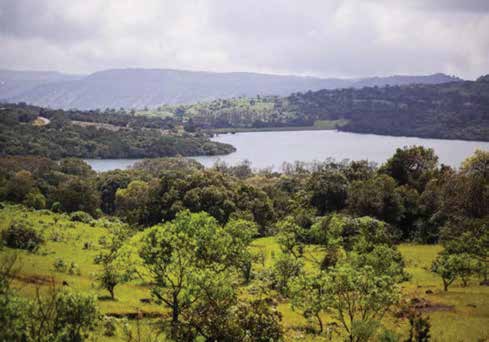
    Once the monsoon casts its spell on the Sahyadris, the entire region puts on a brilliant show for anyone who has the time to stand and stare. Teeming and bustling with life, it is home to everything from lush rainforests and waterfalls to an incredible diversity of flora and fauna. But hidden in the heart of the Western Ghats is a picturesque plateau that blooms into a riot of colour only once a year. And the time to visit is right now.

    As you are reading this, just over 280km from Mumbai, a natural phenomenon is painting an area of 1,000 hectares into a picture-perfect postcard that you can stroll into. The Kaas Pathar (‘pathar’ translates to plateau) is an ecological marvel houses over 850 varieties of plant life, of which around 600 are flowering plants.

    KAAS PLATEAUPicture this: dramatic, cloudy skies overlooking a green landscape that suddenly gets carpeted with colours to rival a rainbow— a splash of cheery yellows, tranquil whites, brilliant purples and more, as butterflies and birds flit about all around you. This is the sight that greeted us as we reached this conserved area which is listed among the UNESCO Biodiversity Heritage Sites.

    The road to heaven

    The route to Kaas was a revelation in itself as we made our way up the ghats from Satara, the nearest town. We had intended to take the local bus from Satara to Tetli that stops en route to the Kaas Plateau. However, the Satara bus stop was a confused bustle of activity which neither had any signage in English nor any helpful staff. If you speak Marathi, you should manage just fine. Otherwise, it’s a bit of a challenge trying to find your way around here.

    So, we hired an autorickshaw for `350 to climb up the 24km ghat route. As we made our way up, civilization shrunk away below, and the landscape started transforming rapidly. The air started getting cleaner and breathtaking views of the flat tabletop plateaus of the Sahyadri range opened up. We got a sneak peek of what we had in store in the form of tiny wildflower dotting the entire landscape. As auto rides go, this one was hard to beat.

    We made it to the top of the hill to reach the Kaas Plateau, which is referred to only as the ‘Valley of Flowers’ for some reason on a board erected by Maharashtra Tourism. But you should know you’ve reached Kaas just with the view. All you can see is a green landscape, with an unbridled view of the open skies and, of course, lots of flowers.

    Under nature’s spell

    The Kaas Plateau makes for the most idyllic countryside stroll that would have had the Wordsworths and Coleridges of the world waxing lyrical and spouting odes. Once we bought the entry tickets (Rs10), we walked through the trail in the picket-fenced meadows leisurely. Endless beds of happy flowers cushion the slopes, interrupted only by winding creeks that add to the beauty.

    The slower we walked, the more we noticed flowers that we would have missed at first glance. There was a surprise waiting for us everywhere we looked. Some of the tiniest blooms were no bigger than ladybugs. After walking for an hour or two, we took a break and plopped ourselves on a rock at the edge of the plateau overlooking the valley below.

    Today, environmentalists warn that due to rapid climate change and man-made imbalances in the ecosystem, the Kaas Plateau won’t stay this pristine for long. Even this year, the flowers were delayed by the sparse rains. Many of the endemic flowering species are already considered endangered.

    It makes us hold on to the memory of sitting at that spot — amid the incredible but transient beauty — that much more fiercely.

    How to get there from Mumbai

    By car: Around 4 hours | Drive down the Mumbai-Pune Expressway and take the NH4 upto Satara, where you can ask for directions to Kaas. From Satara, Kaas is a 22km drive up the hill.

    By bus: Around 7 hours | There are plenty of overnight buses plying on the Mumbai-Satara route with boarding points all across the city. Switch buses at the Satara bus stand and catch a bus to Bamnoli. Check redbus.in.

    By train: Around 8 hours | Catch the Koyna Express that departs from CST at 8.40am and arrives at Satara station by 4pm. You can catch a state transport bus to Bamnoli from Satara bus stand.

    KAAS PLATEAU2Flower spotting
    MICKEY MOUSE FLOWERS (SMITHIA HIRSUTA):
    Cheery yellow and blooming in abundance, these flowers earn their Disney name from their unique red speckles that make them look like everyone’s beloved mouse.

    SITA’S TEARS (UTRICULARIA PURPURASCENS): These pretty purple flowers are a far cry from the melancholy picture their name paints. Sita’s Tears are carnivores that feed on protozoa swimming in the wet soil.

    TUBEROUS PIPEWORTS (ERIOCAULON TUBERIFERUM): Whimsical as a dream, these tiny ball-like blooms are spread over the Kaas landscape like a blanket of white.

    Bombayensis (Senecio Grahamii): Akin to miniature sunflowers, the Sonki is a flowering plant of the Western Ghats that adds a splash of yellow to green landscapes during the monsoon.

    INDIAN SUNDEW (DROSERA INDICA): The insectivorous Flycatcher — which uses sparkling dewdrop-like sticky liquid as a decoy to trap insects — makes for a super cool spotting.If you want to know the flowers even better, read Kaas: Plateau of Flowers by Dr Sandeep Shrotri, a guide with exhaustive information on the flowers of Kaas.

    KAAS PLATEAU1Dos and Don’ts at Kaas

    • Be a sensitive and sensible traveller in this biodiversity hotspot. Always follow the trail and don’t wander off as you may trample or damage delicate flowers and plants that are not easily visible to the eye.
    • Please don’t pluck the flowers. They are not souvenirs to bring back to Mumbai.
    • Eat your wafers if you must, but do not litter.
    • Don’t be loud. And don’t blast Yo Yo Honey Singh from your phones. Others might have come here to enjoy the natural marvel in peace.
  • ERODING CIVIL RIGHTS!  Is India’s Democracy in Danger?

    ERODING CIVIL RIGHTS! Is India’s Democracy in Danger?

    Our country is facing the destruction of the very idea of India as a great, multi-religious, multi-cultural civilization. We are facing the gravest danger we have faced since independence. Our freedom is not merely under threat, it is being ‘openly attacked’, says Nayantara Sahgal, niece of India’s first Prime Minister Jawaharlal Nehru, whose latest work, “Nehru’s India: Essays on the Maker of a Nation”, has just been released.

    What is happening to the body politic of India in the short time since Shri Narendra Modi assumed power?  Are the institutions of democratic strength and stability for six decades, which were built under the stewardship of eminent statesmen like Jawaharlal Nehru and B.R. Ambedkar proving to be weak and vulnerable?

    If we listen to various pundits, there is a serious cause for concern to India’s vast democracy. Although the BJP government has come to power with only 31 per cent of the vote share, the Sangh Parivar with its misguided agenda and regressive policies has determined to transform India into its own liking. With civil society under threats and intimidation, the media’s eagerness to establish approval, and the survival mode of the opposition parties, the saffron brigade is not wasting any time.

    On the eve of Shri Modi’s second visit to the United States, there is certainly a shift in the mood within the Diaspora as regards the intent and purposes of the BJP government. A letter signed by 124 members of faculty  from leading Universities in USA questions the Prime Minister on well-publicized episodes of censorship and harassment in his critical policies; bans and restrictions on NGOs; ongoing violations of religious freedom; and a steady impingement on the independence of the judiciary.

    The letter also talked about foreign scholars who have been denied entry in to India to attend International conferences, and the ongoing interference with the governance of top Indian Universities and academic institutions. It mentioned under-qualified or incompetent key appointments made to Indian Council of Historical research, the Film and Television Institute of India and the National Book Trust. In conclusion, the statement expressed serious concern for the political future of the country if these trends are allowed to continue.

    In an interview with Times of India, Nobel Laureate  Amartya Sen said, ” Government must understand that winning a Lok Sabha election does not give you permission to undermine the autonomy of academic institutions, or for that matter, the courts or the upper house of Parliament. Academic freedom is based on the government understanding the limits of its formal power as opposed to its actual power and what they are expected to do: they are expected to listen to the voice of the professoriate and the voice of the people in the University”.

    Whether it is banning the documentary ‘India’s Daughter”; offloading Ms. Priya Pillai, a Green Peace activist from her flight to London, while she was on her way to address British Parliamentarians; banning the processing, selling or eating of the red meat in Maharashtra and in 4 other BJP-ruled states; the Rashtriya Swayamsevak Sangh (RSS) is stamping history with their regressive policies and divisive agenda.

    The BJP Government so far has banned 69 Non-Governmental Organizations from receiving foreign funding, branding them as anti-national and accusing them of working at the behest of foreign governments. It includes organizations like Ford Foundation and Caritas International that provided much-needed help to communities in rural India in an effort to end poverty promote justice and restore dignity to a neglected segment of the population.

    Ms. Teesta Setavald, a long-time critic of Mr. Modi on his handling of the 2002 Gujarat riots that killed more than 1000 people in Gujarat is currently being investigated by CBI. According to a New York Times report, the prosecutor branded her ‘a threat to India’s national security, so dangerous that she should be locked up while Modi’s Government investigates whether it was legal for her to accept funding from Ford Foundation’.

    For the first time since it took charge, the NDA government has issued show-cause notices to ABP news, NDTV and Aaj Talk alleging that these three private channels showed disrespect to the judiciary in their coverage of the hanging of Mumbai blast convict Yakub Memon, asking them to explain within 15 days why action should not be taken against them for broadcasting such content.

    These should not be regarded as isolated incidents but rather as a  part of a grand strategy to intimidate civil society, and silence the media in order to advance the saffron agenda. All these incidents point to a growing intolerance to dissent, and the very concept of freedom that may ultimately prove fatal to the democratic and pluralistic framework that was created out of the visionary leadership of the founding fathers of modern India.

    Asked to explain what prompted him to be a signatory on the faculty statement against Narendra Modi’s “Digital India Campaign”, Richard A. Falk, Professor Emeritus of Law at Princeton University said the following: “I and others on the list have questions about Narendra Modi’s record on religious tolerance, freedom of religion, and freedom of expression. Some of those who signed the letter have also been subject to a campaign of harassment from Hindu nationalist followers, which raises particular worries about academic freedom. “Digital India” as an initiative has enormous potential to affect positive social change, but it simultaneously poses dangers for abuse under the Modi administration that can make use of digitization to target members of minority communities or those who are critical of its policies. It is my impression that the Modi government has been particularly sensitive to criticism and unfriendly to critics, making our concern more credible”.

    Mr. Falk’s statement sounds prophetic, as at the time of writing this article Mr. John Dayal, a member of the National Integration Council and Secretary General of All India Catholic Union and a foremost Human Rights defender was being hounded with abusive and threatening tweets along with his personal details. The abuses are also directed at the Catholic-Christian minority and are aimed at disturbing communal harmony. The country has just witnessed the murders of three well-known rationalists -Narendra Dabholkar, Govind Pansare and M.M. Kalburgi allegedly by religious extremists. These elements appear to be serious in their nefarious undertaking.

    As the Indian entrepreneurs in the Silicon Valley are gearing up to give a grand reception to the Prime Minister, I hope they would also be cognizant of the fact that the freedom they enjoy here in the United States should empower them to enhance freedom elsewhere. As Mahatma Gandhi once said “Commerce (Business) without morality (ethics) and science without humanity could prove to be detrimental to everyone’s long term interests!”

    (The author is a former Chief Technology Officer of the United Nations)