Tag: Maharashtra

  • POLL EXPENSES FILED BY PARTIES, CANDIDATES, INCLUDING PM, DON’T MATCH

    NEW DELHI (TIP): Election expenses of several candidates did not match their party’s expenditure declaration according to an analysis by Association for Democratic Reforms (ADR). Among those whose election expenses were either more or less than the expense declaration made by the party included PM Narendra Modi, senior BJP leader L K Advani, Cabinet minister Kalraj Mishra, LJP’s Ramvilas Paswan, NCP’s Supriya Sule, Congress MPs Deepender Singh Hooda and K V Thomas among others.

    Also, around 70 parliamentarians including speaker Sumita Mahajan, ministers Uma Bharati, Maneka Gandhi and Jayant Sinha claimed to have received party funds though the party has not declared any expenses towards their campaign.

    Out of 342 MPs from national parties, 263 claimed they received poll funds to the tune of Rs 75.58 crore from their parties while the parties declared that they had given a much lower amount of Rs 54.73 crore to only 175 MPs. The analysis is based on election expenditure statements submitted to the Election Commission by the parties and individual candidates. The discrepancy in data, according to ADR, points to lack of scrutiny of election expenses by the EC.

    The discrepancy is most pronounced in BJP where the party declared that it had provided aid to 159 parliamentarians allocating a total of Rs 47.03 crore. Of these, 18 MPs claimed to have received less than the party declared as expenses towards their campaign. They included PM Narendra Modi whose affidavit claimed the party gave him Rs 32.53 lakh while the party expenditure statement declared Rs 40 lakh as the fund amount. Similarly, Advani declared Rs 33.88 lakh as opposed to the party declaration of Rs 41 lakh.

    About 35 BJP MPs declared that they received more than the party expense statement. They include minister Kalraj Mishra who claimed party aid of Rs 55 lakh though the BJP statement listed only Rs 15 lakh. Maharashtra MP Poonam Mahajan declared expenses of Rs 42.07 lakh while the party claimed it had spent Rs 32.60 lakh.

    In another case of mismatch, 70 MPs declared receiving funds while the party did not allocate any funds for them. They included Speaker Sumitra Mahajan who declared Rs 11 lakh and ministers Uma Bharati (Rs 40 lakh), Maneka Gandhi (Rs 20 lakh) and Jayant Sinha (Rs 45 lakh). Poll expense declaration by 105 MPs matched the amount the party declared.

    In the Congress, 11 MPs claimed to have received aid though only seven were listed in the party’s expense statement. Among those who claimed to have received funds are Mullapally Ramachandran (declared Rs 31.50 lakh), K V Thomas (Rs 20 lakh), Anto Antony (Rs 15.67 lakh) among others. Former Maharashtra CM Ashok Chavan declared he had received Rs 65 lakh while the party said it gave him Rs 40 lakh. A senior EC official id that the commission has taken note of the ADR findings on discrepancies between MPs’ declaration of lumpsum amount received from parties and that declared by their respective parties. “We will examine the ADR report and take an independent view on any such discrepancies, before deciding our next course of action,” the official said.

  • LENOVO EYES POLE POSITION IN INDIAN PC MARKET

    LENOVO EYES POLE POSITION IN INDIAN PC MARKET

    KOLKATA (TIP): Lenovo India Pvt. is eyeing the top position in the Indian PC market by March, its Marketing Director – India & South Asia, Bhaskar Choudhuri said.

    The company also aims to grab the number three spot in the smartphone segment, he said.

    The Chinese computer maker is currently ranked third in the Indian PC market with a share of about 18 per cent, which it wants to increase to 20 per cent. It is fifth-largest in smartphones with a share of about 7 per cent.

    “Lot of work needs to be done to get there…it is a stiff target,” he told The Hindu during an interaction. The company “needs to fundamentally rethink the categories and take bold steps to reach there.”

    Lenovo entered the Indian smartphone market a little over two years ago. “We plan to build a portfolio in 4G- enabled phones,” he said, declining to reveal more details of his strategies.

    Mr. Choudhuri said that Lenovo has already started initiatives to boost computer penetration in India, which at 10 per cent, is lowest among developing countries. The programme aims at educating the youth on PC use while providing financial support through Bajaj Fin Serv. This initiative is now being launched in West Bengal after successful pilots in Andhra Pradesh, Telangana, Gujarat, Punjab and Maharashtra. The computer sales market is flat and Lenovo is targeting the tier two markets, he said.

    “In terms of growth, India is among the most important markets for Lenovo. It is among the top-10 countries by turnover,” he said, adding that India could also become Lenovo’s export-hub. “However some clarity is needed on taxes and duties.” The company has two production facilities in India – at Puducherry (for PCs) and the other near Chennai (for smartphones).

  • A Sarsanghchalak’s very own Sarkaar

    A Sarsanghchalak’s very own Sarkaar

    15 years ago, this month, a prime minister of India had traveled to the United States for the annual United Nations General Assembly mela. During that visit, he found time to attend a Vishwa Hindu Parishad event in Staten Island where he declared himself a swayamsevak – yes, as in the Rashtriya Swayamsevak Sangh. This was music to the ears of the Nagpur Gharana. A prime minister who all along was pretending to have little to do with this Hindu outfit suddenly got into a confessional mood.

    Back in New Delhi, Atal Behari Vajpayee’s exuberance did not last long. The conflict between the demands the RSS would make on a prime minister and his constitutional oath was too palpable to permit any kind of meaningful jugalbandi. Though Vajpayee continued to mark his token attendance at the annual guru dakshina rites, he was not afraid to antagonize the Nagpur crowd. After the 2002 anti-Muslim riots in Gujarat, it was simply not possible for Vajpayee to maintain any civilized conversation with these comrades among the swayamsevaks. The gurus never forgave Vajpayee for wanting to draw outside the lines.

    And, again, 10 years ago, July 2005 to be precise, three designated gurus of the Nagpur Gharana traveled to Delhi to tell the then BJP president, LK Advani, to put in his papers. Advani had committed the solecism of saying something vaguely in praise of Muhammad Ali Jinnah. All the top leaders of the BJP held their collective peace as the “unknown, unelected, unaccountable” Nagpur-empowered busybodies roughed up Advani as if he was just a taluka-level politician. Advani was rendered hors de combat. By the end of the year, he was gone as the party president. The Nagpur bosses wanted to reaffirm the first principle: No BJP leader would be allowed any deviation. They had had enough of Vajpayee and his liberal tantrums.

    And, last week, it was this very first principle that was re-asserted when the Sarsanghchalak summoned Prime Minister Modi and his ministers. Well, if you are a swayamsevak, you do respond to summons from the superior in the hierarchy. Period. That is the code of the saffron brotherhood. Admitted, Sushma Swaraj is not an RSS bhakt. Nor is Arun Jaitley. Unless, he has managed to keep this fact away from his “moderate and decent” friends in Delhi. But neither of them had any choice.

    Why are the liberal souls losing their shirt just because the Prime Minister and his ministerial colleagues had all chosen to put in an appearance before the RSS chief and his advisers? After all, the Modi-RSS connection is not new.

    It was no secret that it was the RSS’s unequivocal endorsement of Modi that proved decisive in the BJP making him its prime ministerial mascot. Nor was the RSS’s involvement on behalf of Narendra Modi in the 2014 electoral process a secret affair. It was open and fairly well documented.

    From his Gujarat days, Modi has written the blue book on how to look after the RSS and its functionaries. Modi is smarter – which is not the same thing as being wiser – than Vajpayee. He has shrewdly sized up the small men and their small needs.

    To be fair, Modi never kept anyone in the dark about his RSS links. Yet, if the best and the brightest among the New Delhi-based intellectuals and others ‘thought leaders’ chose to be taken in by the ‘vikas’ mantra, it is their problem – not Modi’s.

    Instead of having the buyer’s regret, every moderate voice should welcome this national-level seduction of the RSS. There is no dark side to it.

    Look at what has already happened: The RSS, which has arrogated to itself the role of the sole arbiter of moral values, is now wasting its breath on explaining the excesses and aberrations of the BJP chief ministers – Shivraj Singh Chouhan in Madhya Pradesh and Vasundhara Raje in Rajasthan. It would be instructive to find out how that fly-by-night entrepreneur, Lalit Modi, is described in the morning shakha meetings in Jaipur. Just as it would be revealing to know what explanation the swayamsevaks in Bhopal offered regarding the horror of a scandal called Vyapam.

    Indeed, none seems to have noticed that the RSS has reduced itself to being a BJP spokesperson.

    Its two other chief ministers – in Haryana and Maharashtra – both proud products of the Sangh brain-washing factory system – have turned out to be such poor advertisements for good governance or for the RSS brand. Apart from exhibiting a new willingness to provoke -Manohar Lal Khattar’s absurd infatuation with Baba Ramdev and Devendra Fadnavis’ with petty preoccupations with bans – these two have hardly enhanced the reputation of the RSS.

    More interestingly, the BJP apologists have cockily explained Modi and his ministers’ attendance at the Sangh Shivir as not very dissimilar to some Congress ministers and Prime Minister Manmohan Singh’s response to the Sonia Gandhi-led National Advisory Council.

    Never mind that the NAC was a government-constituted, gazetted body; it has now been easily done away with. Never mind that Sonia Gandhi is the head of a legally recognized political party, which enters the electoral fray with its own symbol. Yet any suggestion of a moral equivalence between Sonia Gandhi and Mohan Bhagwat should not be resented.

    Perhaps, it should even be a matter of some satisfaction that the RSS has come out of its bogus pretence of being just a cultural organization. The democratic forces should welcome it and demand that it should be brought within the ambit of the Right-to-Information regime.

    Nonetheless, a matter of grave concern is the new attempt aimed at an intellectual hegemony. For instance, the culture minister in the Modi government.

    Mahesh Sharma, a black-belt saffronite, has argued that by voting for Modi and the BJP, the voters have given a mandate for “saffronisation” of education, culture and other institutions. With just 31 per cent of the votes, the Modi sarkaar would like to believe that it has been given a license to operationalize the RSS agenda?

    This is an anti-democratic argument and is laced with morally unpleasant smells. Whatever obedience the Prime Minister and his ministers may choose to render to the Sarsanghchalak, they need to be reminded that they are still governed and bound by something called the Constitution of India. India is still a constitutional democracy and its rulers, irrespective of the number of seats in the Lok Sabha, are still answerable to a robust Parliament and an independent judiciary.

  • CENTRAL GOVT ANNOUNCES 98 SMART CITIES

    CENTRAL GOVT ANNOUNCES 98 SMART CITIES

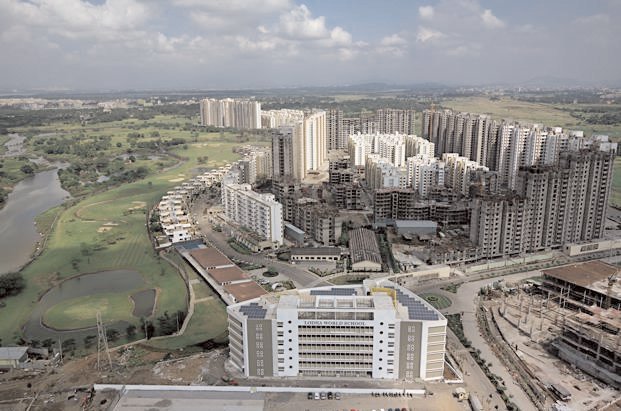
    NEW DELHI (TIP): The union government on August 27 released the list of 98 cities that will be developed under the Smart Cities mission.

    These cities together have a population of 13 crore, accounting for 35 per cent of India’s urban population. Names of two cities — one from Jammu and Kashmir and Uttar Pradesh each — are yet to be revealed. The metros with a population of over 50 lakh each on Smart Cities list include Chennai, Greater Hyderabad, Ahmedabad and Greater Mumbai. Some of the other important urban local bodies that have been included in the list are the New Delhi Municipal Council, Vishakhapatnam, Chandigarh, Surat, Kochi, Bhopal, Navi Mumbai, Thane, Bhubaneswar, Amritsar, Jaipur, Allahabad and Lucknow.

    The Smart Cities mission, launched by PM Narendra Modi in June this year, will provide central funding of Rs 48,000 crore to the selected cities for improving their infrastructure and service delivery through application of better technology and e-governance.

    Explaining the meaning of Smart Cities in an Indian context, Venkaiah Naidu, Minister for Urban Development, said that it would ensure robust IT connectivity and digitization as also core infrastructure such as water supply, electricity supply, sanitation, public transport, solid waste management and affordable housing. “We are not just aiming at making our urban landscape fanciful and flashy but the prime objective is to enhance quality of urban life,” he said.

    He added that central government will immediately release Rs 2 crore to each of the cities for preparation of their smart city plans.

    The state and urban local bodies have to provide a matching contribution of Rs 48,000 crore to each city for the five year mission. This is in addition to thousands of crores worth investments from the private sector which they will be allowed to recover through levy of user charges on say water supply or urban transport. “In a situation such as the recent financial crisis, when private firms are looking for safe investments, I assure them that Smart Cities are safe investment. The land is going to be readily available and the returns are assured,” he said.

    According to the union government, twenty four cities on the list are industrial or business centres, 18 are cultural or tourism hubs, five are port cities and three are educational and heath care hubs and capital cities account for a quarter of total Smart Cities. However, nine state capitals have been left out of mission. These include Patna, Bengaluru, Trivandrum, Kolkata, Puducherry, Gangtok, Shimla, Daman, Itnanagar. All states and union territories were to send in their nominations according to the quota allotted to them by the centre by July 31st.

    The quota was assigned based on the the number of statutory cities and towns in the state and its total population. Accordingly, UP had the highest allotment at 13 followed by Tamil Nadu at 12 and Maharashtra at 10.  The smaller states, North eastern states and union territories mostly have only one smart city slot each. The J&K government has asked for more time to decide on whether the winter capital of Jammu or the summer capital of Srinagar should be their smart city candidate. The conflict-ridden state is allowed only one nomination to the mission after demands by the state government to allow for two was turned down by the Centre.

    According to the ministry, both Jammu and Srinagar have similar scores in the grading system. The same is the case with Rae Bareli and Meerut both of which had a tie for the 13th position in Uttar Pradesh.

    What is a ‘smart city’?

    A city equipped with basic infrastructure to give a decent quality of life, a clean and sustainable environment through application of some smart solutions.

    Basic infrastructure

    Assured water and electricity supply, sanitation and solid waste management, efficient urban mobility and public transport, robust IT connectivity, e-governance and citizen participation, safety and security of citizens.

    Smart solutions

    Public information, grievance redressal, electronic service delivery, citizens’ engagement, waste to energy & fuel, waste to compost, 100%treatment of waste water, smart meters & management, monitoring water quality, renewable source of energy, efficient energy and green building, smart parking, intelligent traffic management system.

    What’s the next step?

    The next step is identification of the 100 cities and for this a city challenge competition to be conducted by Bloomberg Philanthropies is envisaged. The current plan looks to select 20 cities this year followed by 40 each in the next two years.

  • Census 2011: Hindus dip to below 80% of population; Muslim share up

    Census 2011: Hindus dip to below 80% of population; Muslim share up

    NEW DELHI (TIP): The percentage of Muslims in the country’s population increased 0.8 percentage points between 2001 and 2011 to 14.23% or 17.22 crore. In the previous decade, i.e. between 1991 and 2001, their share in the total population had increased by a bigger measure or 1.73 percentage points to 13.43%. They were, however, the only community to register a growth in terms of their share in the total population. The Census 2011 data on Population by Religious Communities, released by the Registrar General of India on Tuesday, also showed that the percentage of Hindus dipped by 0.7 percentage points (PP) in the decade 2001 to 2011, pulling it for the first time below 80%. Hindus now constitute 79.8% of the country’s total population. In the previous decade, the proportion of Hindus in the population showed a sharper fall by 1.94 percentage points.

    In January this year, The Indian Express had reported about the fall in percentage of the Hindu population. According to the 2011 Census data, India’s population in the 2001-2011 grew 17.7% to 121.09 crore, with Hindus numbering 96.63 crore. The decadal growth rate of Hindus was 16.8% during the period. The previous UPA government did not release the census data on religious composition in the last couple of years for political reasons.

    The data release coincides with Assembly elections due in three states with significant Muslim population —Bihar in October this year and Assam and West Bengal in 2016. Except Madhya Pradesh, the increase in the Muslim population in all big states remained above the national average of 24.6%. In Rajasthan, it increased by 29.81%, Bihar 27.95%, Gujarat 27.3%, Maharashtra 26.3% and in Uttar Pradesh by 25.19%. In Madhya Pradesh,the increase was marginally less than the national average at 24.29%. Among the other big states which have sizeable Muslim numbers, Assam has seen their count increase 29.59% and West Bengal 21.81%, both of which are poll-bound. Barring Manipur and Puducherry, Muslims as a percentage of the population increased in all other states. In Assam, their share increased 3.3 percentage points to 34.22%. In Manipur and Puducherry, it fell 0.41 and 0.04 percentage points respectively to 8.4% and 6.05%. According to the 2011 data, Christians formed 2.3% of the total population at 2.78 crore. The Sikh population stood at 2.08 crore making up 1.7%, Buddhists at 84 lakh accounted for 0.7%, and 45 lakh Jains accounted for 0.4% of the total population. While there has been no significant change in the proportion of Christians and Jains, that of Sikhs has declined by 0.2 percentage points and of Buddhists by 0.1 percentage points during the decade.

    The growth rate of Christians over the decade stood at 15.5%, Sikhs at 8.4%, Buddhists at 6.1%and Jains 5.4%.

  • Sheena Bora murder case: When Indrani Mukerjea broke down during questioning

    Sheena Bora murder case: When Indrani Mukerjea broke down during questioning

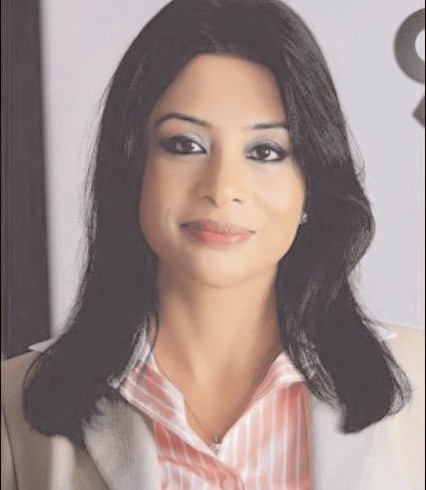
    MUMBAI (TIP): Arrested media baron Indrani Mukherjea, accused of murdering her daughter Sheena Bora, on August 27 broke down during questioning by the Mumbai Police.

    According to a report, Indrani started crying when she was told that call history records of all the accused in the case matched with that of Sheena’s mobile.

    So far, the Mumbai Police have arrested three people in connection with the Sheena Bora murder case of April 24, 2012. They are Sheena’s mother Indrani Mukherjea, Indrani’s former husband Sanjeev Khanna from Kolkata whom she married in 1993, and her driver Shyam Rai from Mumbai, with the possibility of more arrests not ruled out in the next few days. On April 24, 2012, Indrani made a call from her cell phone to Rahul. On the same day, at one point of time, locations of cell towers reveal that mobile phones of Sheena, Indrani, Sanjeev Khanna and Shyam Rai were in the same area -Bandra West.

    For the next few hours after that, the phone locations were found to be similar, confirming that the four moved from one location to another.

    Next day, all four mobile phones left Mumbai circle and entered into Maharashtra –Goa circle. The location was Raigad district in Maharashtra, which is around 125 km from Mumbai.

    The call history records corroborate by the claims made by the driver in his statement to the police.

    According to Mumbai Police Commissioner Rakesh Maria, who is personally directing the investigation, Sheena was killed on April 24, 2012 and her body was found by the Raigad police on May 23, 2012.

  • YAKUB FIRST TO BE HANGED IN MAHARASHTRA AFTER KASAB

    YAKUB FIRST TO BE HANGED IN MAHARASHTRA AFTER KASAB

    MUMBAI (TIP): The hanging of Yakub Memon on July 30 in the 1993 Mumbai serial blasts in which 257 people lost their lives and over 700 were injured, is the first execution of death sentence in Maharashtra after Pakistani terrorist Ajmal Kasab was sent to the gallows for the 26/11 terror attacks.

    On May 3, 2010, a Mumbai Special Court convicted Kasab of murder and waging a war on India and sentenced him to death three days later. The verdict was upheld by the Bombay High Court on February 21, 2011 and the Supreme Court on August 29, 2012.

    Kasab’s mercy petition was rejected by the President on November 5, 2012 and he was hanged at Pune’s Yerwada Jail on November 21, 2012.

    A few months later, Afzal Guru, who was awarded capital punishment in Parliament attack case, was hanged on February 9, 2013, at Tihar Jail in Delhi.

    The first hanging in Independent India was that of Nathuram Godse and Narayan Apte in the Mahatma Gandhi assassination case.

    Godse, a militant Hindu nationalist, along with co-conspirator Apte was sentenced to death by the Punjab High Court after a widely watched trial. They were hanged at Ambala jail on November 15, 1949.

    In the Indira Gandhi assassination case, Satwant Singh and Kehar Singh were hanged on January 6, 1989.

    According to legal historians, the death penalty was incorporated in the Indian Penal Code in pre-independent India in 1860.

    After Independence, there have been debates on retaining the capital punishment in the country’s penal system.

    Despite the campaign for abolition of capital punishment by some rights groups, in 2007 India voted against a UN General Assembly resolution seeking a worldwide moratorium on death penalty.

    This stand was reiterated again in 2012 when the UN came out with another resolution on the issue.

  • Yakub hanging timeline & The Midnight Drama

    Yakub hanging timeline & The Midnight Drama

    NEW DELHI (TIP)

    In what was an unprecedented turn of events, the Supreme Court of India opened the doors of Court Room Number 4 at 3 am on Thursday to hear a fresh mercy plea by a battery of lawyers representing a convicted terrorist in the 1993 Mumbai serial blast case, Yakub Abdul Razak Memon. Two hours later his fate was sealed.
    The story goes back to Tuesday. In the light of a disagreement between a two judge bench hearing the case to stay Yakub Memon’s execution on July 30, Supreme Court Chief Justice HL Dattu constituted a larger bench of Justice Dipak Misra, Prafulla C Pant and Amitava Roy to discuss Memon’s plea again.

    The next day, one day before his slated hanging of Yakub Memon filed a fresh mercy plea with the President of India at 11 am. The same day at 4.30 pm, a three member bench of the Supreme Court dismissed his petition and at 5.30 pm, the mercy petition filed with the President is sent to the Union Home Ministry as per the usual procedure. Yet another mercy petition filed by him before the Maharashtra Governor is also rejected.

    At 9 pm, union Home Minister Rajnath Singh personally takes the file and goes to meet President Pranab Mukherjee to discuss the mercy plea. This meeting is also attended by Home Secretary L C Goyal and Solicitor General Ranjit Kumar.

    At 11 pm, President Pranab Mukherjee rejects the mercy plea. This paved the way for Yakub Memon to hang at 7 am at the Nagpur Jail.

    The Midnight Drama

    The drama, however, didn’t end there. In a dramatic turn of events, Yakub Memon moves the Supreme Court again, his lawyers urging the President to not take a decision overnight.

    Several lawyers including Prashant Bhushan, Anand Grover, Vrinda Grover, Nitya Ramakrishnan and Yug Choudhary representing Yakub Memon reached the  residence of CJI Dattu seeking a stay on the execution. Citing a Supreme Court judgement in the Shatrughan Chouhan VS Union of India case, a fresh petition was filed with the CJI seeking at least a 14 day clear gap between the rejection of mercy petition of the convict and the hanging. The registrar of the Supreme Court also reached the CJI’s residence and in an unprecedented and remarkable move, the CJI agreed to hear the plea that very night.

    He constituted a three member bench which had earlier in the day rejected the plea. Perhaps for the first time ever a court room in the Supreme Court was opened at 3 am to hear the plea.

    At 3 am, Attorney General Mukul Rohatgi entered court room no.4 and the hearing began. Yakub Memon’s lawyers argued that the earlier mercy plea was filed by his brother, today’s plea was his own. Since the plea has been rejected today, the mandated 14 day period before the hanging must begin today. The Attorney General stressed that multiple mercy petitions were an abuse of the system.

    The bench finally dismissed the petition around 5 am and Yakub Menon was hanged les than an hour and a half later at Nagpur this closing a sad chapter in the history of the country.

    While the eleventh hour opportunity given by the Supreme Court is seen as an example of the judiciary in the country opening its doors even for a last minute plea, the decisive stand taken by the Narendra Modi government on the rejection of Yakub Memon’s mercy petition has sent out a clear message that the government would come down with a heavy hand in dealing with terrorists.

    What may have pushed the government to act swiftly is the absolute lack of repentance expressed by Yakub and his family members for the Mumbai terror attacked which snuffed out so many innocent lives and maimed hundreds of others who continue to suffer since then.

    Although the date of hanging, which  coincided with Yakub’s birthday, may not be preplanned but the timing of the hanging just a couple of days after the terror attack near Gurdaspur and a couple of weeks before the Independence Day has sent out a strong message that the Modi government meant business.

    The hanging has, however, kicked up a controversy whether his hanging was justified particularly in view of reports that he had himself turned himself over to the authorities and that there was some kind of “deal” that was agreed upon before he came to India. His lawyers claimed there was an understanding while a former RAW officer too wrote that it was a surrender with conditions that he would not be awarded the capital punishment.

    The government and several other officers who had dealt with his case have denied there was a deal. They said he was detained when he was about to board a flight back to Dubai after consulting his lawyers. They say there can be no understanding with terrorists and their supporters. The fact that he was himself not directly involved with the bombings has also been rubbished by the government on the ground that he was aware of the conspiracy and had actively helped the perpetrators of the crime.

    Another debate that is raging in the light of Yakub’s hanging is whether the death penalty should be abolished as it leaves no remedy if any new evidence surfaces. Most commentators, however, say that this was not the right time to discuss the issue.

    Incidentally the courts in India have awarde death penalty in over 1000 cases since the independence but very few have  been sent to the gallows. Among the prominent who were hanged were the assassin of Mahatma Gandhi, the killers of Indira Gandhi and two rapists and killers Billa and Ranga.

    Those pleading for mercy for Yakub had also pointed out that though the incidents relating to the assassination of Rajiv Gandhi and the Sikh massacre had taken place much earlier, no accused has been hanged for the crimes. They also pointed out that all the three hanged in the last decade – Yakub, Afzal Guru and Afzal Kasab -belonged to a particular community.

    But there is a counter argument too – only five per cent of those awarded the death sentence since the Independence belonged to that community.

  • GANG BEHIND RS 10,000 CRORE HAWALA RING BUSTED

    NEW DELHI (TIP): The Enforcement Directorate has busted a hawala network in Ahmedabad which had allegedly laundered more than Rs 10,000 crore through a private bank in Surat to Dubai and Hong Kong.

    The ED has registered a case under Prevention of Money Laundering Act and arrested five accused. The agency is on the trail of the network’s kingpin who has been evading arrest for the past eight months.

    A Mumbai-based bullion trader has been identified as the kingpin of the hawala network that had deposited Rs 10,000 crore in cash in two Surat branches of a private bank in December 2013 and January 2014.

    This was immediately transferred to a public sector bank’s overseas branch in Dubai and in a Hong Kong branch of a foreign bank. The money was later transferred to several beneficiaries from those foreign accounts.

    The network was busted by the Ahmedabad unit of the ED which is investigating the case. A source said the case was also on the radar of India’s external intelligence agency RAW. The huge cash transfer to foreign accounts is believed to be illicit money of some politicians and bureaucrats.

    The agency has traced one transaction to a Chennai company which was also accused in the 2G spectrum scam and was linked to a former telecom minister.

    A senior officer associated with the probe said the agency discovered forged customs invoices from the accused. “This time, they had forged documents which revealed dates of 2011 and payments made two years later in 2013 and 2014 which alerted us,” he said.

    The probe revealed that two accused based in Gujarat had been running dummy companies and forging documents of customs department and routing cash through the banking channels to Dubai and Hong Kong.

    The trail further led to the kingpin based in Mumbai. The ED arrested two of his nephews — one based in Surat and the other operating dummy companies in Dubai.

    The agency is probing the Mumbai kingpin’s association with some big politicians from Maharashtra and is likely to make some more arrests in the coming weeks.

  • Row over derecognising madrasas in Maharashtra

    Row over derecognising madrasas in Maharashtra

    MUMBAI (TIP): A major political row erupted in Maharashtra with the BJP-Shiv Sena alliance government deciding to derecognise madrasas which are engaged in imparting religion-based education.

    The issue is all set to compound into a major political controversy ahead of the monsoon session of the Maharashtra Legislature. The Congress, Samajwadi Party and the Hyderabad-based Majilis-e-Ittehadul Muslimeen (MIM) have opposed the decision.

    The issue has to be seen in the backdrop of the burning demand for reservations to the Muslim community which has got into legal tangles and the enactment of the Maharashtra Animal Preservation (Amendment) Act, 1995, popularly known as beef ban law.

    According to ministers in the Devendra Fadnavis government, registered madrasas not teaching primary subjects will be classified by the Maharashtra government as “non-schools” and children studying in them will be considered “out of school” students, .

    The chief minister, who is currently on an official tour of the US, has not commented on the issue.

    “We want to bring everyone into mainstream education,” said Maharashtra Minister of State for Minority Affairs and Social Justice Dilip Kamble.

    Minister for Primary Education, Higher and Technical Education and Medical Education Vinod Tawde said the issue has to be seen in perspective.

    “We want to bring subjects like science, social science and maths to  madrasas with no interference in their religious education,” said Tawde.

    “How is that anti-Muslim. We want to do this for their betterment,” he said, pointing out that under the Right to Education Act, children who are not taught under the national school curriculum are considered out of school.

    However, the move invited widespread criticism and Opposition parties came down heavily on the saffron alliance government for what they said was Hindutva and RSS agenda.

    MIM president  Asaduddin Owaisi questioned the rationale behind the decision and asked whether students being imparted vedic studies will also be considered “out of school” children.

    “There are many madrasas that are teaching maths, English and science. Many madrasa students have gone ahead and cracked the civil services exams,” he said, adding that the government is trying to “stigmatise” madrasa education.

    “The government has not accorded them recognition, so where’s the question of derecognising them? Such statements will have no impact and the good education imparted in madrasas will continue unhindered,” said Congress leader and former Minority Affairs Minister Nassem Khan, who had unveiled a plan to modernise madrasas during the Democratic Front regime.

  • Maharashtra CM Devendra Fadnavis creates vision of  his State as a top destination for investments

    Maharashtra CM Devendra Fadnavis creates vision of his State as a top destination for investments

    NEW YORK (TIP): Maharashtra Chief Minister, Devendra Phadnavis was given a rousing welcome, June 29, by the Indian American community at a Community Reception, appropriately named  ‘Maharashtra meets Manhattan’. The reception in his honor was  hosted by Friends of Maharashtra and Consulate General of India at the Taj Pierre in New York City, where  Prime Minister Modi was hosted last year.

    Maharashtra Chief Minister lauded the contribution of NRI’s. He said, “The success of Indians here gives me immense pride. But now it’s time to give back.”

    Phadnavis spoke of the demographic advantage of India where 50% population is below the age of 25. He said  India was in a position to provide human resource to the entire world and the time to fulfill the dream of becoming the topmost nation of the world had arrived.

    Pitching for ‘Make in Maharashtra’, he mentioned that his government has reduced the number of permissions from 148 to 20 to make Maharashtra investor friendly. He also spoke about different upcoming projects undertaken by him like coastal road, Mumbai-New Mumbai connecting  road, and second international airport near Navi Mumbai. He said the projects of roads and bridges the government was contemplating would decongest entire Western Mumbai. He also spoke of the project to have 30 smart cities, each with a different theme and another project, an automobile hub in Aurangabad.

    “Maharashtra is full of possibilities. There are huge opportunities”, he said. He invited the gathered Indian Americans to invest in Maharashtra and assured them of his personal attention to their needs . He said he works 24/7 and is available 365 days of the year.

    Others who spoke included Consul General Dnyaneshwar Mulay who welcomed the Chief Minister and the Industries Minister Subhash Desai who outlined the opportunities for investors in the industries sector in his State.

    Earlier, in the day, a group of U.S. industry executives from the U.S.-India Business Council (USIBC) met with him for a discussion about investment opportunities in the state.

    The Chief Minister engaged with senior business executives on important topics that have dominated the bilateral commercial relationship in recent months and addressed areas such as Maharashtra’s comparative edge as an investment destination, regulatory reform measures that have been undertaken by the government to promote ease of doing business in the state, and cultural dialogues that can enhance the bilateral relations between India and the United States.

    Emphasizing the investment opportunities that are available in Maharashtra, Chief Minister Fadnavis said, “The Government has taken a variety of measures to promote ease of doing business in the state and we want to be viewed as a top destination for both domestic as well as international investments. The state eagerly awaits the formation of joint ventures in critical projects such as the Delhi – Mumbai Industrial corridor, Smart Cities and in sectors such as manufacturing, agriculture, aviation, engineering and IT. Our Government is committed to providing a boost to both Make in India and Make in Maharashtra campaigns, provide business to both medium and small enterprises and create much-needed jobs. We invite investors from the United States to be a part of Maharashtra’s growth story.”

    Lauding the vision of Chief Minister Fadnavis, Mukesh Aghi, President of USIBC, said, “The Council’s member companies have been encouraged by the ease of doing business in Maharashtra. Many of the companies have significant investments in the state. Therefore, appropriate and timely policy measures are critical. USIBC and member companies look forward to participating in the state’s investment opportunities that will not only promote entrepreneurship, but also inclusive growth, positioning it as a model state both in India and globally. I have no hesitation in saying that the state has the potential to emerge as a high ranking state on the ease of doing business index.”

    Ashok Vasudevan, Chairman and CEO of Preferred Brands International, manufacturer and marketer of the natural foods brand, Tasty Bite, said, “Tasty Bite has been operating in Maharashtra since the early 90’s and has become one of India’s largest exporter of prepared foods. The state is remarkably resilient due to its diversified base of industry that includes energy, agriculture, food processing, entertainment, engineering, chemicals, pharmaceuticals and financial services. The infrastructure, a mature workforce, a series of business friendly administrations over the last few decades makes it an attractive FDI destination.”

    The event was also attended by companies and senior leaders from every major sector of business- Monsanto, Taj Hotels, HSBC, Caterpillar, Cargill, Johnson and Johnson, KPMG, Baker & McKenzie, Citi, New Silk Route and Pfizer.

  • Putting India Emphatically on Global Map – Part 2

    Putting India Emphatically on Global Map – Part 2

    Continued from Putting India Emphatically on Global Map – Part 1

    It defies logic that a country that is considered as our most serious adversary and whose policies in our region has done us incalculable strategic harm should have been accepted as India’s strategic partner during Manmohan Singh’s time. Such a concession that clouds realities serves China’s purpose and once given cannot be reversed. Pursuant to discussions already held during the tenure of the previous government, the Chinese announced during Xi’s visit the establishment of two industrial parks in India, one in Gujarat and the other in Maharashtra, and the “endeavour to realise” an investment of US $ 20 billion in the next five years in various industrial and infrastructure development projects in India, including in the railways sector. The Chinese Prime Minister’s statement just before Modi goes to China on May 14 that China is looking for preferential policies and investment facilitation for its businesses to make this investment suggests that the promised investment may not materialise in a hurry. While the decision during Xi’s visit to continue defence contacts is useful in order to obtain an insight into PLA’s thinking and capacities at first hand, the agreement, carried forward from Manmohan Singh’s time, to explore possibilities of civilian nuclear cooperation puzzles because this helps to legitimise China’s nuclear cooperation with Pakistan.

    Even as Modi has been making his overall interest in forging stronger ties with China clear, he has not shied away from allusions to Chinese expansionism, not only on Indian soil but also during his visit to Japan. During his own visit to US in September 2014 and President Obama’s visit to India in January 2015, the joint statements issued have language on South China Sea and Asia-Pacific which is China-directed. A stand alone US-India Joint Vision for Asia Pacific and the Indian Ocean Region issued during Obama’s Delhi visit was a departure from previous Indian reticence to show convergence with the US on China-related issues. India has now indirectly accepted a link between its Act East policy and US rebalance towards Asia. The Chinese have officially chosen to overlook these statements as they would want to wean away India from too strong a US embrace. During Sushma Swaraj’s call on Xi during her visit to China in February 2015 she seems to have pushed for an early resolution of the border issue, with out-of-the-box thinking between the two strong leaders that lead their respective countries today. Turning the Chinese formulation on its head, she called for leaving a resolved border issue for future generations.

    It is not clear what the External Affairs Minister had in mind when she advocated
    “out-of-the-box” thinking, as such an approach can recoil on us. That China has no intention to look at any out-of-the-box solution has been made clear by the unusual vehemence of its reaction to Modi’s visit to Arunachal Pradesh in February 2015 to inaugurate two development projects on the anniversary of the state’s formation in 1987. The pressure will be on us to do out-of-the-box thinking as it is we who suggested this approach. China is making clear that it considers Arunachal Pradesh not “disputed territory” but China’s sovereign territory. This intemperate Chinese reaction came despite Modi’s visit to China in May. The 18th round of talks between the Special Representatives (SRs) on the boundary question has taken place without any significant result, which is not surprising in view of China’s position on the border. The Chinese PM has recited the mantra a few days ago of settling the boundary issue “as early as possible” and has referred to “the historical responsibility that falls on both governments” to resolve the issue, which means nothing in practical terms. As against this, India has chosen to remain silent on the China-Pakistan Economic Corridor (CPEC) which will traverse territory that is legally Indian, and which even the 1963 China-Pakistan border agreement recognises as territory whose legal status has not been finally settled. The CPEC cannot be built if China were to respect its own position with regard to “disputed” territories which it applies aggressively to Arunachal Pradesh. Why we are hesitant to put China under pressure on this subject is another puzzle.

    Modi’s visit to Seychelles, Mauritius and Sri Lanka in March 2015 signified heightened attention to our critical interests in the Indian Ocean area. The bulk of our trade- 77% by value and 90% by volume- is seaborne. Modi was the first Indian Prime Minister to visit Seychelles in 34 years, which demonstrates our neglect of the Indian Ocean area at high political level and Modi’s strategic sense in making political amends. During his visit Modi focused on maritime security with agreement on a Coastal Surveillance Radar Project and the supply of another Dornier aircraft. In Mauritius, Modi signed an agreement on the development of Agalega Island and also attended the commissioning of the Barracuda, a 1300 tonne Indian-built patrol vessel ship for the country’s National Coast Guard, with more such vessels to follow. According to Sushma Swaraj, Modi’s visit to Seychelles and Mauritius was intended to integrate these two countries in our trilateral maritime cooperation with Sri Lanka and Maldives.

    In Pakistan’s case, Modi too seems unsure of the policy he should follow- whether he should wait for Pakistan to change its conduct before engaging it or engage it nevertheless in the hope that its conduct will change for the better in the future. Modi announced FS level talks with Pakistan when Nawaz Sharif visited Delhi for the swearing-in ceremony, even though Pakistan had made no moves to control the activities of Hafiz Saeed and the jihadi groups in Pakistan.

    The Pakistani argument that Nawaz Sharif was bold in visiting India for the occasion and that he has not been politically rewarded for it is a bogus one. He had a choice to attend or not attend, and it was no favour to India that he did. Indeed he did a favour to himself as Pakistan would have voluntarily isolated itself. The FS level talks were cancelled when just before they were to be held when the Pakistan High Commissioner met the Hurriyet leaders in Delhi. Pakistan’s argument that we over-reacted is again dishonest because it wanted to retrieve the ground it thought it had lost when Nawaz Sharif did not meet the Hurriyet leaders in March 2014.

    Modi ordered a robust response to Pakistani cease-fire violations across the LOC and the international border during the year, which suggested less tolerance of Pakistan’s provocative conduct. We have also been stating that talks and terrorism cannot go together. Yet, in a repetition of a wavering approach, the government sent the FS to Islamabad in March 2015 on a so-called “SAARC Yatra”. Pakistan responded by releasing the mastermind of the Mumbai attack, Lakhvi, on bail and followed it up by several provocative statements on recent demonstrations by pro-Pakistani separatists in Srinagar, without any real response from our side. Surprisingly, in an internal political document involving the BJP and the PDP in J&K, we agreed to include a reference to engaging Pakistan in a dialogue as part of a common minimum programme, undermining our diplomacy with Pakistan in the process.

    Pakistan believes that it is US intervention that spurred India to take the initiative to send the FS to Pakistan, which is why it feels it can remain intransigent. Pakistan chose to make the bilateral agenda even more contentious after the visit by the FS by raising not only the Kashmir cause, but also Indian involvement in Balochistan and FATA. On our side, we raised the issue of cross border terrorism, the Mumbai terror trial and LOC violations, with only negative statements on these issues by Pakistan. Since then the Pakistani army chief has accused India of abetting terrorism in Pakistan. The huge gulf in our respective positions will not enable us to “find common ground and narrow differences” in further rounds of dialogue, about which the Pakistani High Commissioner in Delhi is now publicly sceptical.

    Even though one is used to Pakistan’s pathological hostility towards India, the tantrums that Nawaz Sharif’s Foreign Policy Adviser, Sartaj Aziz, threw after President Obama’s successful visit to India were unconscionable. He objected to US support for India’s permanent seat in the UNSC and to its membership of the Nuclear Suppliers Group (NSG). He castigated the Indo-US nuclear deal, projecting it as directed against Pakistan and threatened to take all necessary steps to safeguard Pakistan’s security- in other words, to continue to expand its nuclear arsenal.

    Chinese President Xi’s April 2015 visit to Pakistan risks to entrench Pakistan in all its negative attitudes towards India. The huge investments China intends making through POK constitutes a major security threat to India. China is boosting a militarily dominated, terrorist infested, jihadi riven country marked by sectarian conflict and one that is fast expanding its nuclear arsenal, including the development of tactical nuclear weapons, without much reaction from the West. President Ashraf Ghani’s assumption of power in Afghanistan and his tilt towards Pakistan and China, as well as the West’s support for accommodating the Taliban in Afghanistan with Pakistan’s help will further bolster Pakistan’s negative strategic policies directed at India. Ghani’s delayed visit to India in April 2015 has not helped to clarify the scenario in Afghanistan for us, as no change of course in Ghani’s policies can be expected unless Pakistan compels him to do by overplaying its hand in his country. Modi is right in biding his time in Afghanistan and not expressing any undue anxiety about developments there while continuing our policies of assistance so that the goodwill we have earned there is nurtured.

    Prime Minister Modi, belying expectations, moved rapidly and decisively towards the US on assuming office. He blindsided political analysts by putting aside his personal feelings at having been denied a visa to visit the US for nine years for violating the US law on religious freedoms.

  • Statue of Shivaji in Arabian Sea by 2019- Maharashtra CM Phadnavis

    Statue of Shivaji in Arabian Sea by 2019- Maharashtra CM Phadnavis

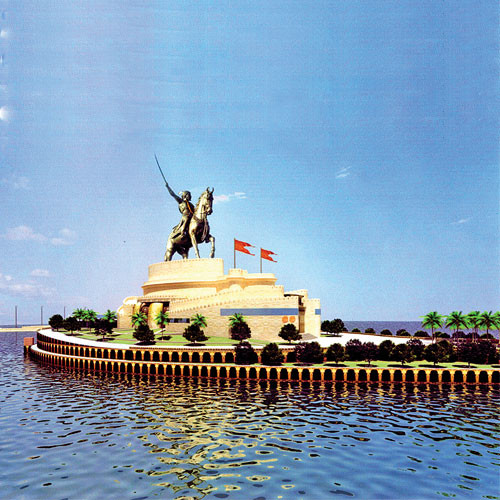
    NEW YORK (TIP): Chhatrapati Shivaji’s statue, off the coast of Mumbai in Arabian Sea will come up by 2019. Devendra Phadnavis, Maharashtra Chief Minister, disclosed it to The Indian Panorama Chief Editor Prof. Indrajit S Saluja in a meeting the latter had with him in New York on June 29.

    Phadnavis visited June 29 the Liberty Island to see the Statue of Liberty, a colossal neoclassical sculpture in New York Harbor, to commemorate liberty, fraternity and equality. Maharashtra will have, by 2019, a colossal statue of Shivaji in the Arabian Sea, off the coast of Mumbai, to commemorate the golden period of rule of the Maratha King, who had fought relentlessly against the attempts of the Mughal emperors to enslave the people of Maratha region. Shiva Ji is regarded as a great warrior in the true Indian tradition and is ranked with the greatest heroes of Indian history, like Maharana Pratap and Guru Gobind Singh. The height of the latest tribute to the Maratha king will be 200 meter, making it taller than the Statue of Liberty, which is 93 meter.

    The Congress-led Democratic Front government in Maharashtra had first made an announcement on Shivaji memorial in 2004. The decision to install the statue was taken by the Congress government in August, 2009. It was to come up on a 16-hectare bedrock in the Arabian Sea. The Navy had opposed the project citing restrictions on construction in the Coastal Regulatory Zone.

    Planned on the lines of the Statue of Liberty in New York and the Swami Vivekananda Rock Memorial in Kanyakumari, the Shivaji statue is to be located off the Marine Drive. The government had then approved the design submitted by Bensley Design Studios, Thailand and Team One Architects, Mumbai. The government had also approved   a sum of INR50 crore for the memorial in 2009-10 and budgeted INR300 crore more the next year. A museum of the Maratha king is to be a part of the project.

    The then Chief Minister of Maharashtra Prithviraj Chavan had claimed that the statue would be the world’s tallest, twice the size of the Sardar Patel statue championed by Prime Minister Narendra Modi in Gujarat. However, the project had remained dormant in view of environment ministry sitting over it.

    When the BJP led NDA government came to power at the center in 2014, the project was expeditiously cleared. The Environment ministry okayed, on December 4, 2014 Shivaji statue in Arabian Sea. Union Minister of State for Environment and Forest Prakash Javadekar said the clearance has been given and a notification for the same would be out soon. “The issue of having a statue of Shivaji Maharaj, which was pending for the last few years, has been sorted out. The chief minister of Maharashtra (Devendra Phadnavis) had discussion with me a few days back and I had assured him to expedite the process soon.

    “We have given clearance for the issue and a notification would be out by Friday night,” Javadekar had then told a news conference in New Delhi.

  • MONSOON DESTINATIONS THAT YOU SHOULDN’T MISS

    MONSOON DESTINATIONS THAT YOU SHOULDN’T MISS

    The sun is tired of spewing fire and it’s pouring in many parts of the country. If you haven’t yet, this is your chance to escape to one of these hand-picked destinations to unwind like never before, and enjoy the rains without all the irritants that monsoons come along with in the cities.

    MONSOON DESTINATIONS 1Peora

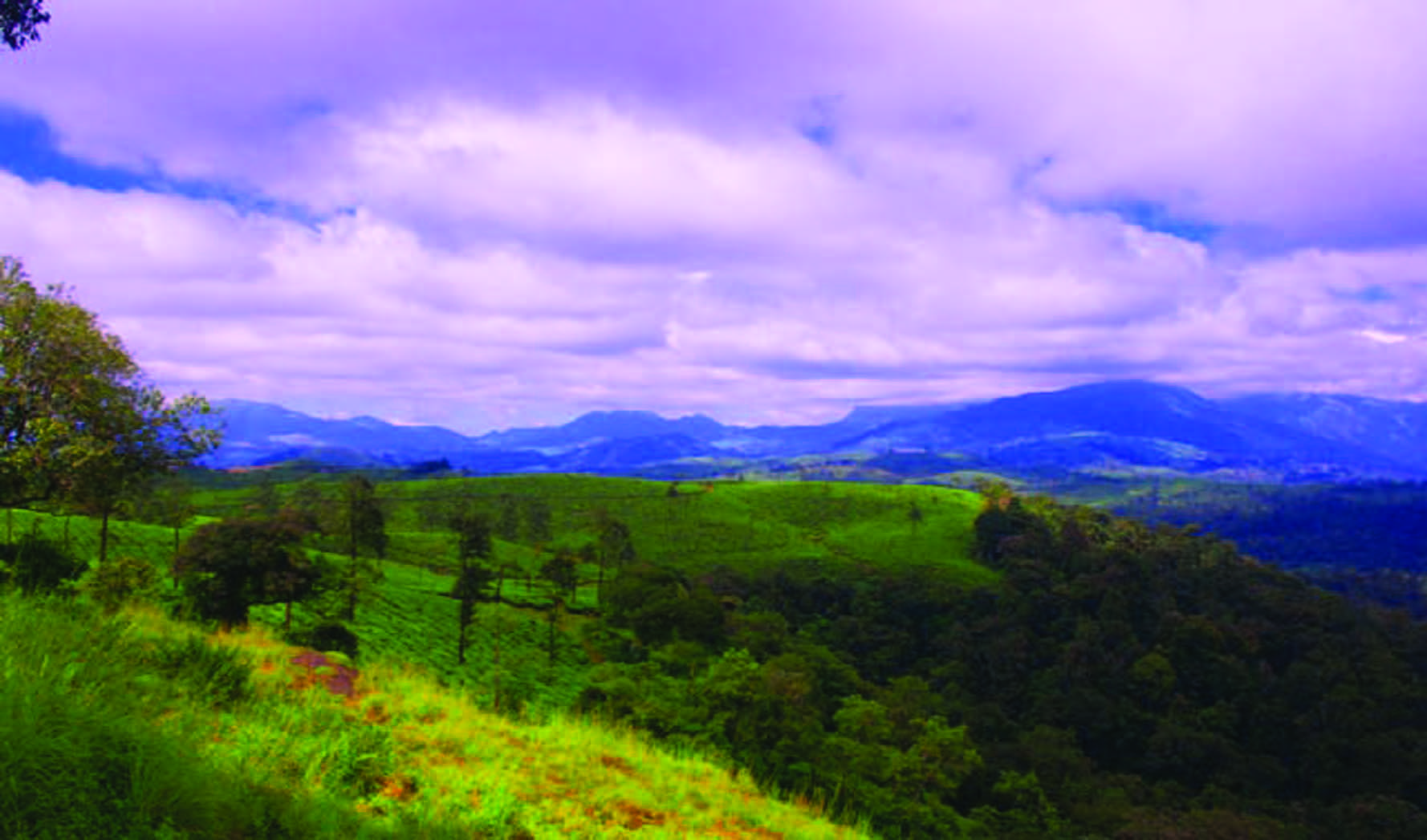
    A small tea-cultivating town on the Anamalai hills in Coimbatore, Valparai looks much like Ruskin Bond’s Dehra. The meadows, the pasture, the tea gardens and the streams make Valparai an ideal monsoon getaway.

    Don’t be surprised if you spot wild animals strolling about a tea estate. Valparai shares its boundaries with the Anamalai Wildlife Sanctuary. The place is abundant with waterfalls, within a 50km radius. The reservoirs around offer magnificent views of cloud covered hills.

    For boarding and lodging, you can choose between homestays, hotels and the more expensive tea-estate resorts.

    Access: Valparai is a three hour drive from Coimbatore, which is 105km away. Pollachi and Coimbatore railway stations are the nearest. Pollachi is located 65km from Valparai.

    Attractions: Here are some of the waterfalls and reservoirs around –Athirapally (30km), Charpa (33km), Vazhachal (35km), Peringakuthu
    (40km).

    Mawsynram

    Dubbed the wettest place on earth, this town perched on the Khasi hills in Meghalaya (in the East Khasi Hills district), offers breathtaking views of waterfalls streaming through the valleys. Walk alongside clouds, and while you are at it, sport a knup, a turle shell-like traditional Khasi umbrella made of bamboo and banana leaf.

    One of the valleys in Mawsynram is home to the best-maintained living bridges and tree roots curled up as ladders . One of nature’s most exquisite artistry, stalagmites, are tucked inside the Mawjymbuin Caves.

    The town lies 15km to the east of Cherrapunji. You can choose between resorts and hotels in Cherrapunji but we suggest you try the homestays there.

    Access: Mawsynram lies 15km to the east of Cherrapunji and is about a 2-hour-drive from Shillong.

    Attractions: Nohkalikai and Mawsmai waterfalls, Mawsmai caves, Cherrapunjee.

    Mawlynnong Village

    Mawlynnong is another of the marvels of the Khasi Hills in Meghalaya. Thatched huts line clean pathways criss-crossing through green gardens.

    This picturesque village was dubbed the cleanest village in Asia in 2003. The inhabitants have imbibed a culture of cleanliness and this can be seen from the streets, the houses and the bamboo leaf dustbins lining the streets. This village is also known for its beautiful gardens.

    Feel closer to nature. Stay in a thatched roof hut or a tree house, walk down a living root bridge. And since Mawlynnong is about a two-hour drive from Cherrapunji, a long weekend spent in Mawlynnong, Mawsynram and Cherrapunji is worth it.

    Access: Mawlynnong is about 90km from Shillong and 92km from Cherrapunji. Nearest airport is in Shillong. From Guwahati it is a slightly longer drive (about 175km)

    Attractions: Thatched huts, tree houses, gardens, living root bridges, Nohkalikai and Mawsmai waterfalls, Mawsmai caves, Cherrapunjee.

    Ganpatipule

    Can anything be better than walking on cloud-kissing hills overlooking the sea? The Konkan coast is in full glory during monsoon. While Goa and Tarkarli are the most popular destinations of Konkan, this small hamlet in the Ratnagiri district of Maharashtra, though less trodden, is quiet and serene. If you are looking for a tranquil location to unwind over a weekend, this is the place for you.

    Ganpatipule derives its name from an ancient Ganpati temple tucked away on the shores of the Arabian Sea. Walk along the pristine white sand beach. Enjoy the lipsmacking Konkani cuisine (especially the fish preparations) and down a few glasses of Kokum sherbat.

    The ideal place to stay is the Maharashtra Toursim Development Corporation’s guest house which is the only resort located on the beach. All the others are inland and you may have to walk a few minutes to reach the sea. Visit the Jaigad fort, perched on a cliff, and marvel at the brillient view.

    Access: A seven-hour-drive from Mumbai, nearest railway station Ratnagiri from where autorickshaws are available.

    Attractions: While all the places in and around Ganpatipule are picturesque, there are other tourist attractions like the Arevare seaface, Marleshwar temple and waterfall and the Jaigad fort.

    Ramakkalmedu

    In God’s own country, is a tiny hamlet very close to Munnar. Canvassed in greenery, the hill-top hamlet in Idukki district of Kerala, is also famous for the wind effect. Ramakkalmedu receives gusts of wind at 25km/hr and hence has many wind farms.

    The Kuruvan and Kuruthy statue atop the Ramakkalmedu hills honours the aborigines of the hamlet. Standing there, you can have a spectacular view of the plains of Tamil Nadu.

    Access: Distance from Munnar is about 56 kilometers. The nearest railway station is Changanacherry, which is about 93 km away. Madurai in Tamil Nadu is the nearest airport, about 140 km.

    Attractions: Kuruvan and Kuruthy statue, Thekkady, Munnar, Vagamon, Vineyards of Kambum, spice garden tour, wind farms.

  • Uddhav mocks BJP, says fake degrees now a political trend

    MUMBAI (TIP): Shiv Sena President Uddhav Thackeray took potshots at the BJP and said that it has become a trend to display fake degrees.

    “It has become a trend in politics to display fake degrees. Simply do the right thing. Why run behind false things,” Thackeray said, without naming anybody including Maharashtra Education Minister Vinod Tawde or Union HRD Minister Smriti Irani, at a book launch function in suburban Dadar.

    However, a senior Sena leader said that Uddhav Thackeray’s remarks were also aimed at Union HRD Minister Smriti Irani, whose fake degree case has reached court.Incidentally, the book launched by Uddhav Thackeray at the function today evening, was written by former Maharashtra Chief Minister and Sena leader Manohar Joshi.Thackeray also said that corruption allegations against Maharashtra Women and Child Welfare Minister Pankaja Munde were “grave” but did not comment further on the
    issue.”Allegations against Pankaja Munde are serious but the Maharashtra Chief Minister should take a decision on it,” he told reporters.

  • MERCEDES ROLLS OUT LOCALLY MADE GLA, COMMISSIONS THIRD ASSEMBLY LINE

    MERCEDES ROLLS OUT LOCALLY MADE GLA, COMMISSIONS THIRD ASSEMBLY LINE

    PUNE (TIP): German luxury carmaker Mercedes-Benz on June 11 rolled out its sixth locally assembled model, the GLA Class of SUVs, and also formally commissioned the third assembly line at its plant near here.

    The new locally-assembled GLA Class of SUVs come up to Rs 1.5 lakh to Rs 2.5 lakh cheaper than the imported models at Rs 31.31 lakh for GLA 200 CDI and the GLA 200 CDI Sport at Rs 34.25 lakh (ex-showroom Pune), as the local parts sourcing has been increased to 60 per cent.

    When asked whether the company will increase the localization further, Mercedes-Benz India managing director and chief executive Eberhard Kern answered in the negative saying more local sourcing is not feasible with current volumes.

    “Having higher than 60 per cent local sourcing of parts means you go into full-fledged production and not assembling. To begin full-fledged production, you need to have at least 70,000 to 1,00,000 units of sales for a model, which looks distant in the near future,” Kern said.

    It can be noted that its smaller rival BMW had last month announced up to 50 per cent local sourcing for some of its models from the earlier 20 per cent and has plans to take this to over 70 per cent going forward.

    GLA class is a newly introduced entry level compact SUV, over the entry level sedan CLA as initially planned.

    On advancing the local assembly of the GLA class, Kern said, “The GLA has been a sensation in the compact luxury SUV segment and has witnessed an increasing demand from across the markets. Buoyed by this rising demand, we decided to commence its local production and cater to even more customers wanting to own this stylish vehicle.”

    The GLA would be the first of the new generation cars to be rolling out of the plant here, Kern said.

    However, he was quick to add that the CLA Class will also be locally assembled as per the plans in next few months.

    Kern said the GLA class of SUVs are the first new generation cars to be locally produced with the others being the S, E, C, M, and the GL Class of cars and SUVs.

    With the new assembly line, the Pune plant set a record of becoming the only assembly line under the Mercedes-Benz umbrella across the world to have flexible assembly units on which it can roll out all the six models being assembled here.

    The company has the largest assembly line in the country amongst the luxury car makers with 20,000 units of installed capacity with a cumulative investment of Rs 1,000 crore since 1994, which also makes it the largest investment by any luxe carmaker in the country.

    The new assembly line and the locally made GLA class were launched by Maharashtra chief minister Devendra Fadnavis.

  • Suit Boot Ki Sarkar Versus Soojh Boojh Ki Sarkar

    Suit Boot Ki Sarkar Versus Soojh Boojh Ki Sarkar

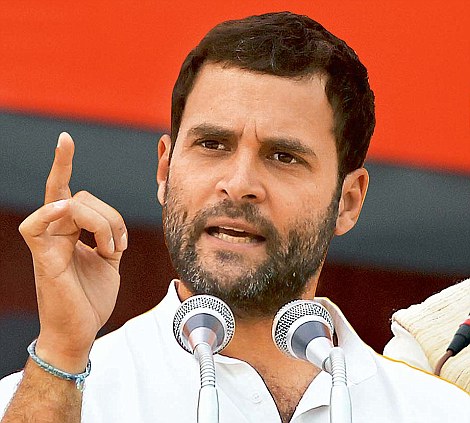
    NEW DELHI (TIP): After his return from the nearly two-month-long political sabbatical on April 16, Congress vice-president Rahul Gandhi has been unsparing in his attacks on Prime Minister Narendra Modi and his government over issues concerning farmers, landless laborers, netizens, middle-class home buyers, fishermen, ex-servicemen, Dalits and now sanitation workers.


    This appears clearly to be part of a grand strategy to reach out to different sections, that once comprised the support base of the Congress but which gradually shifted their loyalties to different parties, in a desperate bid to revive the party’s sagging fortunes after its worst ever electoral defeat in 2014 Lok Sabha elections.


    In the case of striking sanitation workers in Delhi, Gandhi attacked the ruling Aam Aadmi Party (AAP), which had eaten into the Congress vote-bank in the assembly elections early this year. The Congress is desperately seeking to regain its space in Delhi from the AAP.


    The new-found aggression by taking different communities into account has given a fresh lease of life to the Congress after a series of electoral setbacks. It appears to have regained some ground at least in Parliament where its aggressive tone on various issues, especially plight of farmers and the land acquisition bill, has put the BJP-led government on the defensive.


    While Congress president Sonia Gandhi had led the Opposition from the front in the first part of the budget session, the second half saw a combative Rahul launch stinging attacks on the Modi government.


    The Congress has already launched a countrywide agitation against the NDA government’s policies on farm, land and labor reforms, issues the party hopes will help reconnect with its eroding traditional support base. The party has maintained its opposition to the land bill was non-negotiable and it would go to any extent to ensure it is withdrawn and provisions of the original UPA law restored. It has vowed to champion the cause of tribals and forest dwellers both in Parliament and on the streets.

    Rahul, too, has plunged headlong into the battle since his return with a countrywide padyatra that he launched from Vidarbha in Maharashtra on April 30 to support the cause.


    His advocating net neutrality was seen as an attempt at an image makeover as Rahul had so far chosen to stay away from all forms of

    social media. Similarly, after the middle class completely deserted the Congress, Rahul’s assurance to fight for their cause is clearly an attempt to seek rapprochement. Sonia had on many occasions in the past stressed the need to address the aspirations of the middle class.


    The Dalit outreach has been planned in order to win back the support of the community which has shifted its allegiance to the Bahujan Samaj Party for years now. However, a major chunk of the Dalit vote bank both in Uttar Pradesh and Bihar gravitated towards the BJP in the 2014 Lok Sabha elections. A buoyed BJP is now eyeing Bihar, where assembly elections are due in September-October this year, and has stepped up its efforts to woo the Dalit and Mahadalit communities.


    Also, Rahul’s repeated “suit-boot ki sarkar” barbs at the Modi government has prompted many senior ministers to return the fire. Finance minister Arun Jaitley hit back, saying there is a “difference between a national duty and disappearance for a jaunt” and that theirs is a “soojh-boojh ki sarkar” (a wise government).

  • Salman’s hit-and-run case |Govt. lost files in fire, RTI query reveals

    Salman’s hit-and-run case |Govt. lost files in fire, RTI query reveals

    An RTI query has revealed that the Maharashtra government does not have any papers on actor Salman Khan’s 2002 hit-and-run case as the files pertaining to it were gutted in a fire at Mantralaya.

    The RTI activist had sought to know from the State Law and Judiciary department the names and the total number of counsels, solicitors, advocates and legal advisors, public prosecutors appointed by the State government for this case.

    The RTI reply informed that the files pertaining to the case were burnt on June 21, 2012, when a fire engulfed the State Secretariat and therefore, they cannot be made available.

    To a query on total expenses incurred by the State government in the case from 2002 to May 6, 2015 , when the judgment was pronounced in the case, the activist was told that “the only thing that the government knows is about the appointment of Special public Prosecutor Pradeep Gharat who was appointed at a fee of Rs. 6,000 per hearing.”

    On May 6, a Sessions Court had convicted Salman Khan for culpable homicide not amounting to murder in the 2002 hit-and-run case and sentenced him to five years imprisonment.

    The Bombay High Court had on May 8 granted the actor bail and suspended his sentence pending hearing and final disposal of his appeal against conviction.

  • Busting the government myths around land acquisition law 

    Busting the government myths around land acquisition law 

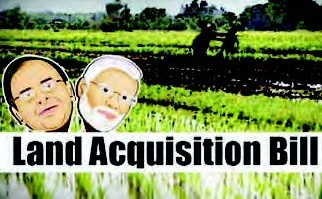
    A big question that is begging a credible answer today is- why is the National Democratic Alliance (NDA) government hell bent on road rolling amendments on to the land acquisition law without even implementing it despite  vociferous opposition from several quarters.

    Several spokespersons for the government and the political parties which support it have repeatedly said that the amendments to the Right to Fair Compensation and Transparency in Land Acquisition, Rehabilitation and Resettlement Act (LARR Act) enacted by Parliament in 2013, first promulgated as an Ordinance and then re-promulgated because they could not get the approval of Parliament last month, are necessary to arrest the slowing down of the economy and breathing life into the stalled development projects. The mainstay of this argument has been that the process of acquiring privately owned land for developmental projects laid down in the LARR Act is too cumbersome and requires simplification.

    The state of the economy reported in Parliament by the Government in the form of the Economic Survey 2014-15 (ES14-15), a day before tabling the budget in February 2015 pointed out that the stalling of a large number of projects in the public and the private sector was the primary reason for the slowdown that the Indian economy was experiencing. However detailed data on such projects was not annexed to that report. Official spokespersons repeatedly argued that the amendments to the land acquisition law were necessary to pull up the economy out of the nadir it had reached. After reading ES 14-15, I sought granular data from the Ministry of Finance under The Right to Information Act, 2005 (RTI Act) out of sheer curiosity. Finance Ministry, moved with exceptional speed and provided a list of projects within less than a month of receiving the RI application and surprisingly without demanding any additional fee (the RTI application and reply are in the 1st attachment).

    Major findings from an analysis of the data about stalled projects obtained through RTI

    1) The list supplied by Finance Ministry contains a total of 804 projects that have stalled as of February 2015 for a variety of reasons across 24 States and two Union Territories. Maharashtra with 125 stalled projects topped the list followed by Gujarat (63 projects), West Bengal (55 projects), Karnataka (52 projects) and Telangana (52) making the rest of the top 5. The States highlighted in yellow have districts placed under the 5th Schedule of the Constitution where a significant proportion of the population is of tribal origin. Obtaining their consent for implementing any developmental project if it falls in their area is indispensable.

    2) The private sector projects (78%) outnumber the public sector projects planned by the Central or State Governments, or public sector enterprises or local municipal boards and autonomous authorities (22%).

    3) Only 8% (66 nos.) of the 804 projects are said to have stalled due to land acquisition problems. If the data provided under the RTI Act is an accurate reflection of the state of affairs, the argument that the slowdown in the economy is due to land acquisition projects becomes a busted myth- not on the basis if any biased analysis- but s simple count of the reasons provided in the last column of the attached list.

    4) Of the 66 projects stalled due to land acquisition issues, only 11 (1.36% of 804 projects) directly relate to the well being of the disadvantaged or less affluent segments of society such as slum rehabilitation projects or construction of budget housing projects or a bus stand (which few affluent people use). So the proposal to amend the LARR Act to waive the requirement for taking consent of the village assembly in the areas where land is to be acquired for providing affordable housing for the poor will affect a miniscule number of projects. Therefore the justification tomtomed for the amendment becomes untenable.

    5) Ironically on the other hand, at least 145 of the stalled projects (18%) are for the affluent and the rich as they are projects involving the construction of shopping malls or elite hotels and resorts (4 and 5 star), multiplexes, elite residences and villas, golf courses and a racing track. Another 25 stalled projects are about setting up townships- nothing in the list provided by Fin Min indicates which segment of society they are intended to benefit. 10 of the 66 projects stalled due to land acquisition problems are in this elite category. However, it must also be said that the list of 804 projects also includes power generation, airport construction or expansion, road and railway expansion, pharmaceutical, textile, software and SEZ projects amongst others. Mining projects for coal and uranium amongst other metals are also part of the stalled projects list.

    6) Of the total of 804 projects the list mentions “Others” as the reason for the stalling of 19% of the projects (153 nos.) Reasons for stalling are simply not available for 15% of the projects (121 nos.) Taken together the projects for which reasons for stalling are either unspecified or simply not available amount to more than a third of the total number of projects (34%).

    7) The largest proportion of projects that have stalled (38.8%) are due to unfavourable market conditions or lack of funds or promoter interest or raw material or fuel supply problems. Several of these projects are owned or promoted by some of the biggest industrial houses in India and a handful of foreign ownership. If readers are interested they may compare this list of Indian business houses with the list of corporates that made large sized donations to the leading national and State level political parties on the Political Party Watch segment of the website of the Association for Democratic Reforms
    (ADR): http://adrindia.org/research-and-report/political-party-watch

    8) Lack of environmental clearances account for a mere 4.2% of the stalled projects whereas lack of clearance from the State Governments amount to 11.8% of the total. It looks like the regulatory regimes have contributed to only 16% of the staled projects. So the -license-inspector raj also does not appear to be a major contributor to the stalling of the 804 projects, if the dataset is accurate.

    So it is neither land nor the regulatory regime that appears to have contributed to the stalling of the developmental projects. One is reminded of the slogan that characterised the Presidential campaign of Mr. Bill Clinton in the USA during the 1990s- “It’s the economy, stupid”.

    Some hard questions to which the RTI document does not provide answers
    1) For how long have these 804 projects remained in stalled condition? The RTI reply does not throw any light on this issue. Perhaps RTI users in the States might like to seek this information by demanding this information from the State and Central Governments through RTI applications.

    2) Are there only 804 projects across the country that have stalled and none other or is this only a sample of a larger universe of stalled projects?

    3) Of the 804 stalled projects the total monetary value of just 300 projects (37%) is said to be Rs. 18.13 lakh crores (USD 287.42 billion where 1USD=INR 63.07) when they were reviewed yesterday at a meeting held by the Finance Ministry (See: http://economictimes.indiatimes.com/new s/economy/finance/finance-ministry-discusses-85-large-projects-npas-with-rbi-banks/articleshow/47083242.cms). What is the total value of all 804 projects? The RTI data does not mention monetary value against all projects.

    4) The data that the Finance Ministry provided under the RTI Act does not appear to be data that it has generated itself. The ES 14-15 clearly states that the figures are based on inputs provided by the Centre for Monitoring Indian Economy Ltd. (CMIE). CMIE is a private sector business information company. What measures were taken to cross-check the veracity of the database that they provided the Ministry before it was inserted in the Economic Survey? Or is the database itself created on the basis of information gleaned from government records? Most importantly, if more than a third of the projects have stalled for reasons unspecified or unknown how can such incomplete data be used for reporting on the state of the economy to Parliament without making the effort to verify the claims contained in the database?

    Ideally, the Government should have volunteered this information under Section 4 of the RTI Act in order to inform the citizens of India about the nature and magnitude of the problem. Finance Ministry earmarked the RTI reply – “for RTI purpose” while sending it to me. I am circulating this data and analysis so that readers may form their own conclusions by analysing the data and influence their elected representatives to debate the need for the amendments to LARR Act, in an informed manner. http://www.indiaresists.com/busting-the-government-myths-around-land-acquisition-law/

    (The author is a well-known RTI activist based in New Delhi. He is Commonwealth Human Rights Initiative Program Coordinator)

  • SHIV SENA MP GETS EC NOTICE FOR HIS REMARKS ON MUSLIMS

    NEW DELHI (TIP): The Election Commission on May 7 issued a show-cause notice to Shiv Sena MP Sanjay Raut for his April 12 remark that Muslims should be stripped of voting rights.

    The poll panel said his comment, made in an editorial published in Shiv Sena’s mouthpiece Saamna, prima facie violated the model code of conduct in force then for the by-poll in Vandre East and Tasgaon Kavathe Mahankali assembly constituencies of Maharashtra.

    Raut has been asked to file his reply to the show-cause notice by 1 pm on May 11.

    According to the commission, his remark suggesting that Muslims should be disenfranchised prima facie violated sub para (1) of Para 1 of the poll code, which restrains party leaders and candidates from making communal appeals and statements that can create mutual hatred, and sub-para 4 of Para 1, which debars “corrupt practices” and offences under the election law.

    The EC notice cited Section 125 of the Representation of the People Act, which recognises promoting enmity between classes in connecting with an election as an electoral offence, as well as Section 153A of the IPC (creating communal hatred).

    The EC action follows a complaint filed by Shakeel Qureshi of Pune on April 16, in which he demanded that the recognition of Shiv Sena as a state party be cancelled.

    According to a report sent to the EC by the Maharashtra chief electoral officer on April 20, Raut, in the April 12 editorial, had said: “The day Muslims’ voting rights are taken away, the mask of all secularists will fall off. That will reveal (Asaduddin) Owaisi’s sensitivity towards Muslims destitution and Muslims themselves should take lead in this. This decision should not be political but a national decision”.

  • Kisan Padyatra: Rahul walks for farmers in Maharashtra, but says I have nothing to offer

    Kisan Padyatra: Rahul walks for farmers in Maharashtra, but says I have nothing to offer

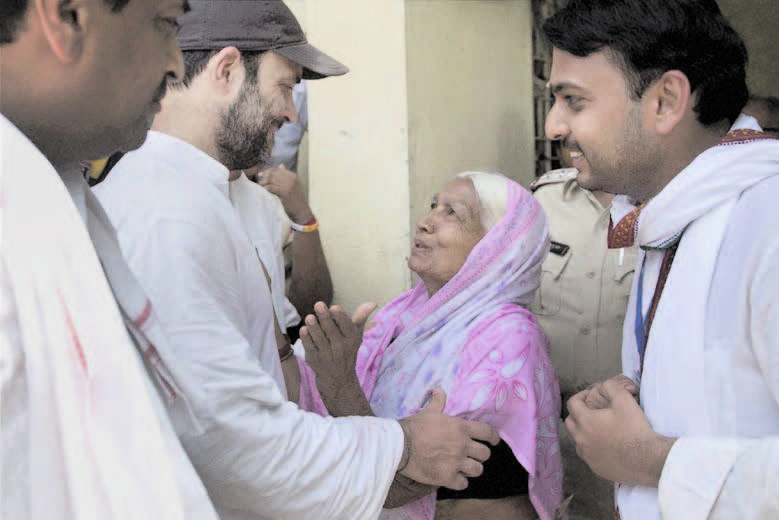
    MUMBAI (TIP): Congress vice-president Rahul Gandhi, who arrived in Nagpur on April 29, started his padyatra at around 8.15 am and visited five villages in Amravati division during his 15-km march on foot. He visited family members of the nine farmers who committed suicide from the five villages of Gunji, Shahapur Ramgaon, Rajna and Tongalabad which are at a distance of 50 to 70 kms from Amravati.

    The expectations were high. And so was the determination of the relatives of nine farmers who committed suicide in Vidarbha to present their woes before the Congress’ crowned prince. But neither did Rahul Gandhi utter a word on the lack of irrigation facilities in the region nor did issue any promises to the ailing farmers. What he could alone tell was: “How can I announce something or promise you anything?”

    It was only on Wednesday that Congress state chief Ashok Chavan told reporters in Nagpur that Rahul’s Vidarbha visit was not aimed at targetting Prime Minister Narendra Modi. But that was exactly what Rahul did, criticising Modi sarkar.

    Rahul, who arrived in Nagpur on Wednesday night, started his padyatra at around 8.15 am and visited five villages in Amravati division during his 15-km march on foot. He visited family members of the nine farmers who committed suicide from the five villages of Gunji, Shahapur Ramgaon, Rajna and Tongalabad which are at a distance of 50 to 70 kms from Amravati.

    Rahul first visited the village of Gunji where he met family members of Nilesh Walake and Ambadas Wahile who had committed suicides due to agrarian crisis. He was offered a cup of tea, made of cow milk, at Walake’s house. Rahul had walked mush faster than those accompanying him and most of them were seen wiping the sweat on face with turkish napkins.

    En-route to next village, Rahul walked with determination and at times stopped to have a chat with a few farmers. At Shahapur, he met family members of late Kishor Kamble. He then proceeded to Ramgaon where he met family members of Kacharu Goma Toopsundare and had lunch with the family. Rahul had moongdal wadyachi bhaaji with poli and ambyachi kairi for his lunch at Toopsundare’s house.

    After lunch at Ramgaon, he proceeded to Rajna and met family members of Marutrao Meware. He interacted with a few farmers including Pradeep Jagtap, Pandurang Chavare, Ramesh Rathi, Shrikant Gavande, Noorbhai Shaikh Noor and Sachitanand Kale, who all complained to him of lack of irrigation facilities in Vidarbha.

    He met family members of four farmers – Manik Thavbhar, Ashok Saatpaise, Ramdas Adakite and Shankar Adakite – from Tongalabad who had committed suicide. Even though they had the same story to tell and complained about the lack of irrigation facilities, what they could hear in return was nothing.

    Addressing a news conference, when reporters asked as to what he has offered the family members, the Congress vice-president replied, “How can I assure or promise them anything?I can help them through my party or on my personal behalf, but it has limitations.” All through the news meet, however, he targetted the government for ignoring farmers and demanded a complete loan waiver.

  • Govt likely to delay land bill

    Govt likely to delay land bill

    NEW DELHI (TIP): The government is taken aback by events following the suicide of a farmer at the Aam Admi Party (AAP) rally.

    The Opposition in Parliament squarely blamed the “anti-farmer” policy of the Narendra Modi government  for  driving farmers to take the drastic step.

    Consequently, there is perceptible worry among BJP ministers and MPs that it could cast shadow on the government’s plans to legislate a bill to replace the land acquisition ordinance, which had to be re-promulgated. The government did not place the bill in the Rajya Sabha because it does not have majority there.

    There is every possibility that the bill will not be allowed to come up in the Upper House again, said BJP floor managers.

    Given the political atmosphere following the suicide episode, the government itself could decide not to bring the bill to replace the ordinance until the fag end of the session, which ends in the second week of May.

    As yet, however, there is no indication that Modi will back down on his resolve on the matter though he may want more safety measures to end the distress of farmers.

    In fact, shortly before he addressed the Lok Sabha on Thursday, Modi met seniors ministers Rajnath Singh, Arun Jaitley, Venkaiah Naidu and Nitin Gadkari to formulate the government’s response. The PM’s line was that the issue of farmer suicides should not be allowed to be mixed up with the issue of amending the land acquisition law passed by the UPA, which is blamed for hurdles in acquiring land for key infrastructure project.

    In keeping with the PM’s statement that “we have to find a way and we can’t leave farmers helpless”, the government might re-examine relief package for agriculturists, which have been announced from time to time. An all-party meet could also be called on the subject. As a counter measure, the BJP has blamed Congress for the suicide, saying misrule by the previous Congress-led UPA is responsible to present situation. Over 3,000 farmers have committed suicide in the past three years and nearly three lakh farmers took their lives since 1995, according to the National Crime Research Bureau.

    The five worst-hit states are Maharashtra, Andhra Pradesh, Karnataka, Madhya Pradesh and Kerala. Maharashtra alone has recorded over 10,000 suicides between 2011 and 2013. Its Marathwada region has seen over 200 suicides in three months.

    “It should be our determination to find a solution to this problem. The issue has been there for long, we will take all good suggestions: For years the issue of farmers committing suicide is a matter of great concern,” Modi said on April 23.

  • ‘Suicide will soon become India’s number 1 killer’: Vikram Patel

    LONDON (TIP): India’s foremost mental health expert who spends most of his time between Goa and London has now been named as among TIME magazine’s 100 most influential people in the world.

    Professor Vikram Patel, who has done seminal research on suicides in India hopes that his presence in the list makes the Indian government wake up to the serious shortage of programmes and experts meant specially to deal with mental health problems.

    Speaking to TOI from Montreal, professor Patel who teaches at the London School of Hygiene and Tropical Medicine in UK and heads an organisation called Sangath in Goa said “the vast majority of people with mental disorders do not receive care which can greatly improve the quality of their lives. The treatment gap exceeds 90% for community based psychosocial interventions”.

    He added ” hope very much that this recognition will increase the attention that the world’s governments and donors afford to mental health, not just in India where issues like suicide, alcohol abuse, depression, autism and schizophrenia are almost entirely ignored by public health systems leading to enormous unmet needs and human rights abuses”.

    On being asked whether he thought the government of India was doing enough for mental health problems in India, Patel told TOI “Nowhere near the need, witness the complete absence of public health approach to suicide for example”.

    An earlier research by professor Patel on suicides in India had thrown up shocking findings. Four of India’s southern states — Tamil Nadu, Andhra Pradesh, Karnakata and Kerala — that together constitute 22% of the country’s population were found to have recorded 42% of suicide deaths in men and 40% of self-inflicted fatalities in women in 2010. Nadu, Andhra Pradesh, Karnakata and Kerala — that together constitute 22% of the country’s population were found to have recorded 42% of suicide deaths in men and 40% of self-inflicted fatalities in women in 2010.

    Maharashtra and West Bengal together accounted for an additional 15% of suicide deaths. Delhi recorded the lowest suicide rate in the country. In absolute numbers, the most suicide deaths in individuals, aged 15 years or older, were found to be in AP (28,000), Tamil Nadu (24,000) and Maharashtra (19,000).

    This was the first national study of deaths in India which was published in the British Medical journal The Lancet.

    Patel said suicide has become the second-leading cause of death among the young in India. Of the total deaths by suicide in individuals aged 15 years or older, about 40% suicide deaths in men and about 56% in women occurred in individuals aged 15-29 years. Suicide deaths occurred at younger ages in women (average age 25 years) than in men (average age 34 years). Educated persons were at greater risk of completing a suicide. The risk of completing a suicide was 43% higher in men, who finished secondary or higher education, in comparison to those who had not completed primary education. Among women, the risk increased to 90%.

    So what is professor Patel who is also from the Centre for Chronic Conditions and Injuries, Public Health Foundation of India, working on now? 

    He told media “I am working in five major areas – developing psychological treatments which can be delivered by community health workers, working in rural communities to increase awareness about and strengthen community responses to mental health problems, working with colleagues in cardiology and diabetes to develop integrated approaches for the care of chronic conditions, working with neuroscientists and computer engineers to develop novel diagnostic tools for brain disorders and working with government departments of health to scale up evidence based interventions for mental disorders through the district mental health programme”.

    The TIME 100 list describes Prof Patel as a “well-being warrior” and includes a tribute from Dr Barbara Van Dahlen, a psychologist and the founder of Give an Hour, a network of volunteer mental-health professionals, as well as the Campaign to Change Direction. She writes “It is hard to imagine a more difficult challenge than addressing the unmet needs of those from resource-poor countries who live with and suffer from mental-health disorders. And yet Vikram Patel has spent his career doing just that. He is a gifted psychiatrist, a dedicated researcher, a successful author of books and academic papers, and he is an effective communicator. In fact, he seems to have an unending supply of these critical skills. And as a co-founder of the NGO Sangath and the Centre for Global Mental Health at the London School of Hygiene & Tropical Medicine, he helps spread the simple yet profound idea of mental health for all. He provides hope that mental illness and trauma make us neither weak nor unworthy of love and respect”.

  • Dairy farmers want ‘Aadhar’ like ID tags for milch animals

    MUMBAI (TIP): With slaughter of bulls and bullocks being banned, a section of dairy farmers in Maharashtra have mooted the idea of giving milch animals ID tags on the lines of ‘Aadhar’ cards to track their history, breeding cycle and economics of milk production.

    State Dairy Development Minister Eknath Khadse said while the government has not received any formal proposal from dairy farmers as yet, but it will look into the demand if the proposal will help them.

    “We have not got any proposal from the dairy farmers as yet. If we get a proposal, we will study it and if we find that the farmers stand to benefit, we do not mind accepting it,” Khadse said. The dairy farmers want the government to consider it seriously as this has been done in most countries that practice advanced dairy farming methods.

    “The most important benefit of UID number tagging is that it will enable to track the overall production pattern of cows, which is very important from business and planning point of view,” Prabhat Dairy’s Managing Director Vivek Nirmal said.

    “We help farmers in Maharashtra to buy cows through financial assistance schemes from financial institutions. The cows are insured and therefore UID for each cow is very important. The data of each cow is also stored on a ‘cloud’ (data storing software). The data can be used by the lending banks too to keep track of the cows.”

    Nirmal said his unit has already started tagging over 3,000 cows in Shrirampur and Ahmednagar – one of the largest milk producing districts in India.

    “Our ‘Cow Welfare Scheme’ has a provision of sharing information with Maharashtra Livestock Development Board (MLDB) through SMS. A large number of procurement partners at the village level collection centres co-ordinate in the milk procurement process with 70,000 milk farmers and registered milk vendors,” Nirmal said.

    “Since all cows look more or less alike, identification is essential. It is easy to create 12 digit unique ID Number by which dairy units, farmers and funding institutions can track the history of cow, breeding cycles, production trend, economics of milk production,” he said.

    Farmers can fill a form in their language giving the physical details of the animals like appearance and colour and also about themselves. The UID containing these could be tagged to one of ears of a cow, Nirmal said.

    All the animals could be tagged in a manner that they can be traced using the GPS/GPRS system in the event of a disease outbreak.

  • Ban this, ban that – Intolerance growing in BJP-RSS regime

    Ban this, ban that – Intolerance growing in BJP-RSS regime

    Days after Prime Minister Modi warned the judiciary of dangers posed by five-star activists, the Union Home Ministry cut off foreign funding to Greenpeace for “campaigning against government policies” and “obstructing India’s energy plans”. Among the reasons cited for the ban is Greenpeace activists “holding talks” with the Aam Aadmi Party. Foreign money is welcome for pollution-causing industries but not for raising a voice to protect the forests, the environment or human rights. Swift green clearances for projects are seen as an achievement by the minister who is tasked with safeguarding the country’s environment and natural resources.

    Take Maharashtra. Union Minister of State for Agriculture Mohanbhai Kundaria told the Rajya Sabha recently that 135 farmers killed themselves in the first 58 days of this year in the state’s Aurangabad division.  That is not what worries the BJP government. It is devoting its time and resources to enforcing a ban on beef and promoting Marathi films. Most Indians do not approve of cow slaughter and will like the government to provide for adequate cow sheds. Cows become a financial liability once they stop yielding milk. What should farmers, barely making two ends meet, do? And those who survive on beef business? The state high court rightly asked the government how it could extend the ban to other states by stopping people from eating beef produced there. The Devendra Fadnavis government not only wants to decide what people should eat but also what films they should watch. Multiplexes have been forced to show Marathi films at prime time. When writer Shobhaa De protested against such “dadagiri”, cultural extremists ganged up to gag her.

    As if the censor board was not giving enough trouble to filmmakers, the SGPC has started demanding bans on films it disapproves of. Fanatics want to decide what people should wear, watch, read and even which religion they should follow, threatening in the process the very foundations of a secular, liberal India. Intolerance is growing in Modi raj and targets are clear. Anyone who opposes what the government is doing or the religious/cultural agenda it is patronising puts himself at risk.