Tag: Maharashtra

  • SHARAD PAWAR: NO GROUSE AGAINST SONIA, CHAVAN TO BLAME

    SHARAD PAWAR: NO GROUSE AGAINST SONIA, CHAVAN TO BLAME

    PUNE (TIP): NCP chief Sharad Pawar said on October 3 he holds no grouse against Congress president Sonia Gandhi as she was not responsible for breaking the 15-year-old Congress-NCP alliance in Maharashtra. Putting the blame on outgoing chief minister Prithviraj Chavan, he indicated that his party will pose difficulties for his election bid from the Karad South constituency.

    “I found (Sonia) undoubtedly positive about continuing the alliance. I have not even uttered the name of Rahul (Gandhi) in this regard,” he said to journalists’ questions. He was addressing a press conference ahead of NCP’s convention in Pune. NCP has withdrawn its candidate from Karad South, but party workers say they will support sitting Congress MLA Vilasrao Patil-Undalkar, who is contesting as an independent. Pawar said, “I felt my party should not contest against the (former) CM. Undalkar has requested our support. A decision will be taken at the local level.”

    The NCP chief ruled out joining hands with BJP to form government. “We have been hearing these rumours since 1999… Our target is very clear. We want a clear majority in the state,” he said. He said the new generation of politicians had no communication between them. “I had a good personal rapport with Bal Thackeray. But today, I have no communication with the current generation of Thackerays. There is a generation gap.”

    On irrigation schemes, he said some people were creating a false impression about them in the state. “The state government had to go ahead with the projects to claim its right over water. Project cost increases if there are delays,” said the NCP president.

  • BJP GIVES ULTIMATUM TO SHIV SENA OVER SEAT-SHARING

    BJP GIVES ULTIMATUM TO SHIV SENA OVER SEAT-SHARING

    NEW DELHI (TIP): Setting itself on a confrontation path with its oldest ally, BJP on September 18 gave Shiv Sena an ultimatum to agree on a seat-sharing formula for the coming assembly elections or face a break-up of the alliance. Having jacked up its demand for contesting 135 of the 288 seats, which has been rejected by Shiv Sena, senior BJP leaders have communicated to Sena chief Uddhav Thackeray to decide by this evening whether his party was willing to conform to a “mutual and respectable” seat-sharing formula.

    The BJP’s ultimatum comes against the backdrop of party president Amit Shah’s tough talk this morning in Kolhapur in Maharashtra that there will be no compromise at the cost of selfrespect. Top BJP sources said that the party was upset that Shiv Sena, an ally of 25 years, has not given any response to the proposal sent by it on the higher number of seats it wanted to contest in the coming elections. In the 2009 elections, the BJP had contested 119 and the Sena 169 seats. However, this time the alliance “Mahayuti” has been broad based with the inclusion of four more parties –RPI (Athawle), Rashtriya Samaj Paksha, Swabhimani Shetkari Paksha and Loksangram.

    The BJP sources said the party was awaiting a reply from Uddhav Thackeray and decided to make clear its position because time was running out.The party was particularly peeved that Thackeray has not responded to or was not in communication with the BJP leadership ever since the demand for 135 seats was put forth to him. In fact, without responding to BJP’s demand directly, he went public earlier this week on rejecting it. They also said that they were keen on an alliance but the party cannot wait endlessly. A decision has to be taken as a strategy has to be worked out on the basis of the seat sharing formula of the alliance, they said.

  • India, China Vow Cooperation: Sign 12 Agreements in Delhi

    India, China Vow Cooperation: Sign 12 Agreements in Delhi

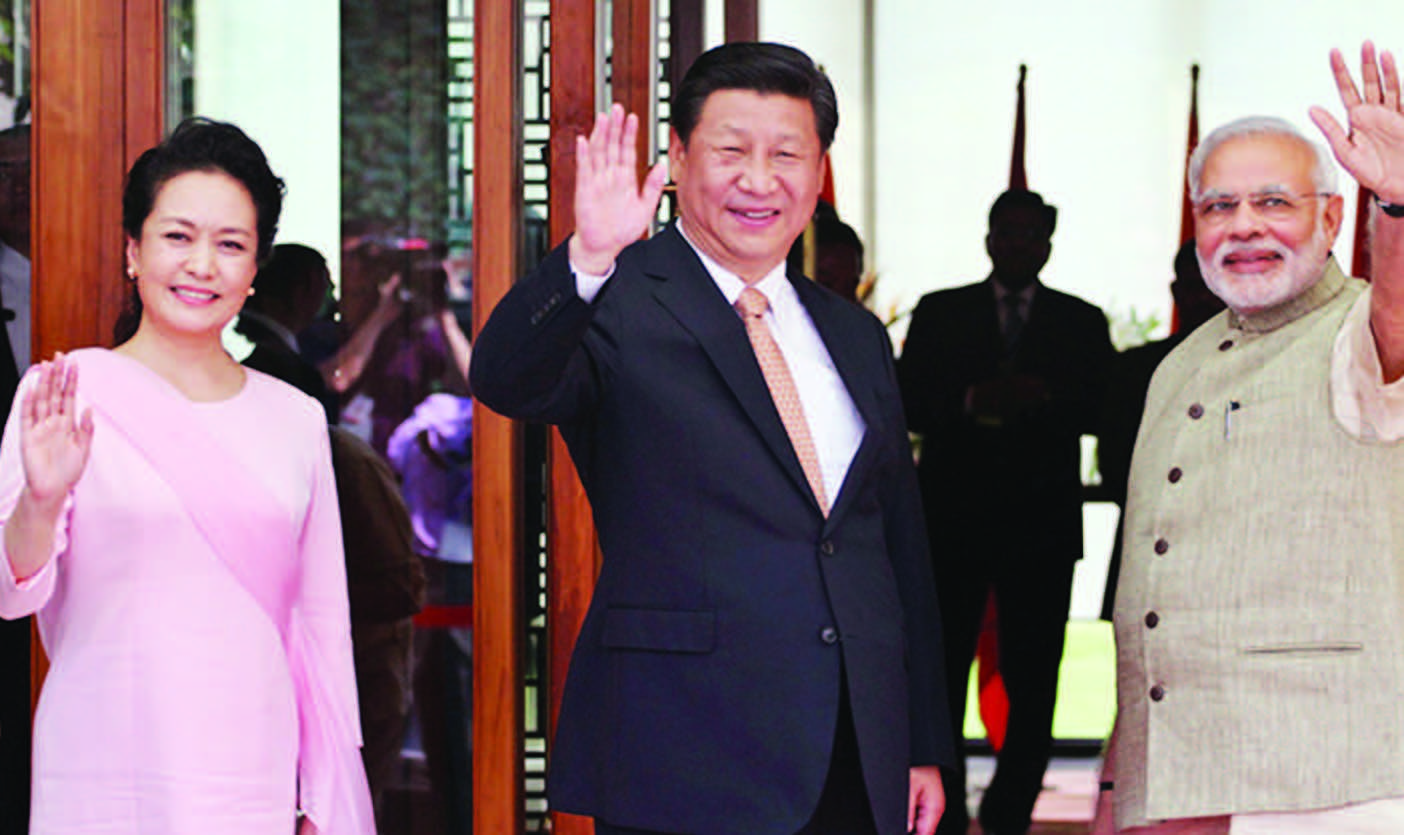
    NEW DELHI (TIP): India and China have signed 12 agreements in Delhi, one of which will see China investing $20bn in India’s infrastructure over five years. At a news conference with Chinese President Xi Jinping, India’s PM Narendra Modi said “peace on the border” was important for progress. Talks came as India accused China of fresh territorial incursions in Ladakh.

    China is one of India’s top trading partners but they vie for regional influence and dispute their border. Mr Modi and Mr Xi made separate statements at the end of their talks in Delhi on Thursday, September 18.

    Under the investment plans, China pledged to:
    ● Help bring India’s ageing railway system railway system up-to-date with high-speed links and upgraded railway stations.
    ● Set up industrial parks in Gujarat and Maharashtra.
    ● Give more market access to India to products, including pharmaceuticals and farm products. Both sides also focused on increasing cooperation in trade, space exploration and civil nuclear energy. Mr Modi called for an early settlement on the disputed common border between the two countries and said the “true potential of our relations” would be realized when there was “peace in our relations and in the borders”.

    There have been reports in the Indian media of Chinese troops trying to construct a temporary road into Indian territory across the Line of Actual Control (the de facto boundary) in the disputed Ladakh region over the past week. Mr Xi said he was committed to working with India to maintain “peace and tranquility” on the border. “China-India border issue is a problem which has troubled both sides for long… As the area is yet to be demarcated, there may be some incidents,” he said.

    The border dispute is an old one, dating back to 1914 when Britain, India’s former colonial power, signed an agreement with Tibet making the McMahon Line the de-facto border between the two countries. China has always rejected this. Both sides also claim each other’s territory – India, the Aksai Chin region of Kashmir and China refuses to recognize Ladakh and Arunachal Pradesh as part of India. There have been several incursions of Chinese troops across the border in these areas which have been highlighted by the Indian media. Diplomats from both sides, however, play down these transgressions.

    The simple fact is that there are differing perceptions on where the border lies – what India believes is Chinese troops crossing into their territory is seen by Beijing as the exact reverse: Indian troops occupying Chinese land. It is extremely unlikely that these confrontations will lead to an outright conflict or even sour ties between the two countries. But they do reflect the suspicion and distrust that exist on both sides of the border. Mr Xi began his visit in Gujarat, the homestate of Mr Modi, on Wednesday, before heading to Delhi.

    China has pledged to upgrade India’s ageing railway tracks On Wednesday, the two sides signed several agreements, including one to set up a Chinesebacked industrial park in Gujarat. Indian and Chinese companies have also signed preliminary deals worth more than $3bn (£1.8bn) in aircraft leasing and telecoms, among other sectors. Despite the continuing tensions, trade between India and China has risen to almost $70bn (£43bn) a year, although India’s trade deficit with China has climbed to more than $40bn from $1bn in 2001-2002.

  • By-poll results shock BJP

    By-poll results shock BJP

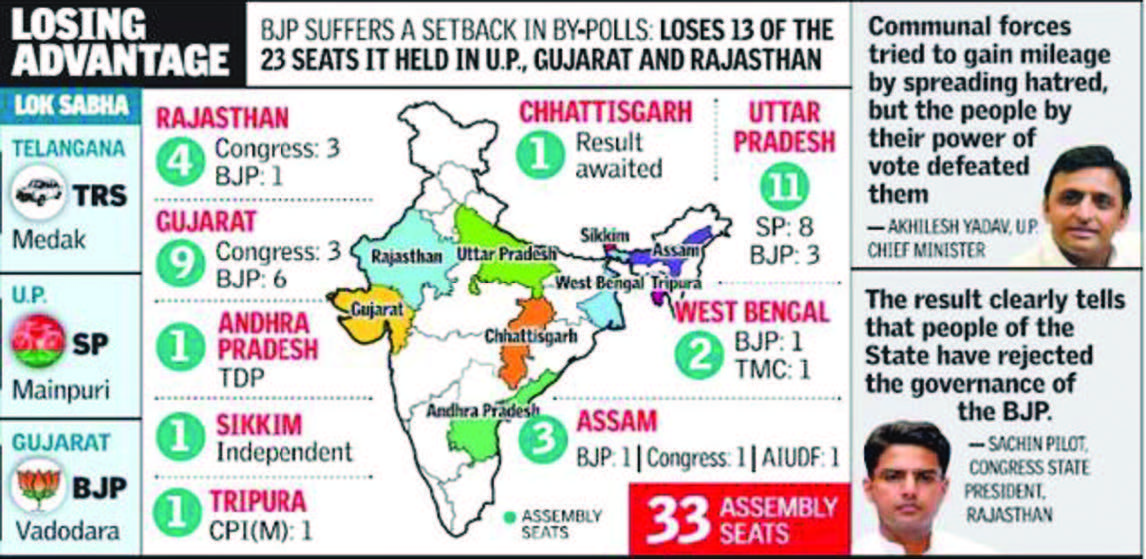
    New Delhi (TIP): The results of the Assembly byelections have come as a blow for the BJP in Uttar Pradesh, Rajasthan and Gujarat — the states it had swept in the Lok Sabha polls four months ago — losing 13 of the 24 seats held by it. Of the 32 Assembly seats across nine states for which counting of votes was held today, the BJP won 12, Congress seven and Samajwadi Party eight while TDP (Andhra), Trinamool Congress (West Bengal), AIUDF (Assam) and CPM bagged one each. One seat in Sikkim was won by an Independent.


    This is the third consecutive setback for the saffron party after its disappointing performance in Assembly byelections in Bihar, Uttarakhand, Karnataka and Madhya Pradesh in the past two months. All 11 seats in Uttar Pradesh, Gujarat (9) and Rajasthan (4) were held by the BJP and the bypolls were necessitated after the sitting MLAs were elected to the Lok Sabha. It was Uttar Pradesh — the party’s recently acquired stronghold where the BJP managed a near-total sweep in the LS elections — that delivered a humiliating blow to the saffron party as it lost seven of the 11 seats held by it, including the one held by its ally, the Apna Dal.


    The BSP’s absence in the byelections had made it a virtual straight fight between the SP and the BJP in the politically crucial state. BJP strongman Amit Shah was credited with crafting the spectacular win for his party in UP in the Lok Sabha polls. The party lost six out of 13 seats in Rajasthan and Gujarat, where it’s in power. Lost for words, BJP leaders could not even blame rival parties for playing foul in the elections. Senior BJP leader Rajiv Pratap Rudy said the results “deserve a small introspection”. “This is not a national mandate. It is a localised issue.


    Surely, it is a wake-up call for better planning in the upcoming Haryana and Maharashtra Assembly elections,” he said. Senior leader Uma Bharti dismissed questions about efficacy of the “Modi wave” saying “state leaders and workers need to introspect.” It was a significant comeback by the SP, which won eight out of 11 seats in Uttar Pradesh —and the Congress, which trounced BJP on three out of four seats in Rajasthan. “The people of the state have given a befitting reply to the communal forces and clearly expressed their desire for harmony and brotherhood,” said a beaming UP CM Akhilesh Yadav.


    Among BJP’s big losses is the Rohaniya seat, which falls within Modi’s parliamentary constituency Varanasi. The saffron party just about managed to hold to its own in Modi’s home state Gujarat, winning six out of nine seats. Rajasthan Chief Minister Vasundhara Raje was left re-faced as the Congress won three out of four seats. One of the seats — Surajgarh—was being contested by her close aide Digambar Singh who lost to Shravan Kumar of the Congress by 3270 votes.


    The BJP had swept the Lok Sabha and Assembly elections in the desert state earlier this year. High on the win, Rajasthan Congress chief Sachin Pilot advised the “BJP to take a lesson from these elections and introspect” The BJP retained Kota South, losing Surajgarh, Weir and Nasirabad to the Congress. The only silver lining for the BJP was the inroads into WB where it has won Basirhat Dakshin (South) seat.

  • AFTER BY-POLL SETBACK, BJP BLINKS ON SEAT-SHARING WITH SHIV SENA

    AFTER BY-POLL SETBACK, BJP BLINKS ON SEAT-SHARING WITH SHIV SENA

    Mumbai (TIP): Late on September 17 night, the BJP drew up a list of 119 seats that the party would like to contest in next month’s state elections in Maharashtra. It is seen as a climb down from the 135 it was insisting on a few days ago. Since then, however, it has suffered reverses in by-elections giving ally Shiv Sena an advantage in tough negotiations over seat-sharing.


    After a meeting at Union Minister Nitin Gadkari’s Mumbai residence on Wednesday night, attended by senior Maharashtra unit leaders, the BJP said it wanted its 25-year alliance with the Sena to continue. “We have sent a list of 119 seats to central leadership… 135 seats was just an estimate. We have communicated this to the Sena. Discussions will go on as far as distribution of seats is concerned,” BJP leader Sudhir Mungantiwar said. Earlier in the evening, sources said, BJP president Amit Shah had met central party leaders OP Mathur and Rajiv Pratap Rudy after the Sena, emboldened by the BJP’s losses in Tuesday’s by-elections, blandly stated that it will contest more seats than the BJP.


    Sena MP Sanjay Raut said his party wanted the alliance to continue, but on its terms. “In Maharashtra, the chief minister will be from the Shiv Sena and we will contest more seats. There will be no change in that,” he said. The BJP earlier argued that its superior performance in the national elections four months ago has earned it the right to an equal number of seats to contest. It had suggested a formula that the two partners contest 135 seats each in the 288-member state Assembly and leave 18 for their smaller allies.


    The Sena insisted that it must continue to be the senior partner in the state and contest more seats, at least 155. It said the by-election results vindicate its stand that the general elections will have no bearing on state elections. The stakes are high as the party with the most legislators will have the bigger claim to the Chief Minister’s post if the alliance wins.


    DON’T LET SUCCESS GO TO YOUR HEAD: SENA TAUNTS BJP


    The BJP’s losses in by-elections has further emboldened its partner in Maharashtra, the Shiv Sena, to blandly state that it will contest more seats than the BJP in next month’s state elections. Sena MP Sanjay Raut today said his party wants the 25-year alliance to continue, but on its terms. “In Maharashtra, the chief minister will be from the Shiv Sena and we will contest more seats. There will be no change in that,” he said. This morning’s issue of the Sena magazine “Saamna” cautioned the BJP against taking “voters for granted.”


    It praised Prime Minister Narendra Modi, saying he should not be blamed for the by-election setback. But it also said, “The by-election results are a lesson for the Maharashtra elections,” adding, “Each election comes with its tides and tides change after every election. Vidhan Sabha elections cannot be fought on the basis of the Lok Sabha wave.” The sub-text was that the BJP cannot count on the “Modi wave” to win the Maharashtra elections. Shiv Sainiks across the state have backed their chief Udhav Thackeray in his tussle with the BJP over seat sharing and say they are gearing up to win 150 of the 288 assembly seats. “There is only one wave in Maharashtra, the Shiv Sena wave,” said Sanjay Raut.

  • BJP GETS THE JOLT IT DESERVED

    BJP GETS THE JOLT IT DESERVED

    The folly of polarization boomerangs

    Normally no great importance is attached to by-elections in this country which should explain why no Prime Minister has ever canvassed during them. Interestingly, Congress president Sonia Gandhi and her son and party vice-president Rahul Gandhi have stuck to this routine even after losing power. During the most recent by-elections to 33 assembly and three parliamentary seats, the Congress’ First Family chose to be abroad.


    38


    It must have regretted this because it lost the opportunity to celebrate the jolt the Bharatiya Janata Party has suffered exactly four months after its spectacular success in the parliamentary poll under Narendra Modi’s leadership. Particularly prominent is the saffron party’s overwhelming defeat in the politically key state of Uttar Pradesh where it had won 71 of the 80 Lok Sabha seats on May 16. This time around it has surrendered eight of 11 assembly seats to the Samajwadi Party that rules the state even though the latter’s own record is conspicuously poor.

    Even more hurtful to the BJP is that the Congress that was virtually wiped out in the Lok Sabha elections has wrested from it three assembly seats each in the BJP’s bastions, Rajasthan and Mr.Modi’s Gujarat. In UP, however, the Congress has drawn a complete blank. Having slid in nine of the 10 states where by-elections were held, the BJP has a cause for comfort only in West Bengal, where it has wrested a seat from Chief Minister Mamata Banerjee’s Trinamool Congress. From the day the Modi government came to power, there have been 50 by-elections across the country.


    39


    Of these the BJP and its allies have won only 18 and lost all others. The reason for this serious setback is crystal clear and it is writ large on the political landscape.Mr. Modi may have spoken about development and good governance in the past. Those in charge of the by-elections or chief campaigners in the by-elections never used these expressions. Arrogantly confident of coming to power in this most populous state in 1917, the BJP adopted the wrong, disruptive and dangerous strategy of polarization along religious lines. “Love jihad” was one of its favorite slogans.

    As time passed, the tone of the BJP’s UP leaders – such as the president of the party’s state unit, Lakshamikant Bajpai, and the saffron-clad Yogi Adityanath, a five-time MP and the principal campaigner in the state – became more provocative and indeed poisonous. It is noteworthy that neither Prime Minister Modi, nor party president Amit Shah, nor any other senior leader did anything to restrain the Hindutva hotheads. On the contrary, their silence greatly encouraged those spewing venom.

    The situation is not without irony. At a time when Bajpai and Yogi Adityanath were shouting hoarse about “love jihad”, an oxymoron that is supposed to mean that Muslims were busy luring Hindu women to marry them and then convert to Islam, the country’s Home Minister and a former president of the BJP, Rajnath Singh, told a press conference that he didn’t know what “love jihad” was. Exactly at that time, Sakshi Maharaj, another saffron-wearing BJP leader in UP, harangued his audience and the media not only about “love jihad” but also about “education in terrorism”.

    He thundered that madrasas were teaching “terrorism” to their pupils and “motivating” youth to lure women of other religions with “offers of cash awards – Rs 11 lakh for an affair with a Sikh girl, Rs 10 lakh with a Hindu girl and Rs 7 lakh for a Jain girl”. Not to be left behind, Usha Thakur, a BJP MLA in Madhya Pradesh who is also the vice-president of the party unit in the state, made another startling disclosure: At the prolonged Hindu festival of Garba, according to her, Muslims joined in large numbers. Consequently at the end of this festival every year, four and a half lakh Hindu women were converted to Islam.

    Yogi Adityanath reaffirmed that wherever in India the proportion of Muslims in the population was 35 per cent or more “non- Muslims could not be safe”. At this stage no less a person than Union Cabinet minister Maneka Gandhi intervened to declare that “profits made from the trade in slaughtered animals was financing terrorism” and to demand that the slaughter of all animals should be “banned completely”. If this strange and highly controversial statement went relatively unnoticed the reason is that by-election results had started coming and it was immediately obvious that the electorate in UP had rejected with contempt the BJP’s strategy to polarize and divide the country along religious lines.

    An accompanying development of significance is that the Election Commission took note of some of Yogi Adityanath’s “hate speeches” and “use of religion for electoral purposes”. He has been asked to explain why requisite action should not be taken against him. An earlier FIR against the BJP’s national president Amit Shah, issued by the UP police, was set aside by a district judge. The critically important need now is for the BJP to abandon its dangerously disastrous electoral strategy of polarization that has already boomeranged.

    So Mr. Modi must give priority to this for two reasons, and make up his mind on the subject because he alone can take crucial decisions. The first reason is that assembly elections are due in Maharashtra and Haryana very soon, and the saffron party would be courting huge trouble if it repeats in these two states what it did in UP. It should fully exploit the heavy anti-incumbency the Congress has piled up against itself in both these states. The second reason is that in view of the worsening of the overall situation, our duty is to promote communal harmony, not communal hatred.

    (The author is a senior journalist and editor.)

  • ONAM- the biggest festival of Kerala

    ONAM- the biggest festival of Kerala

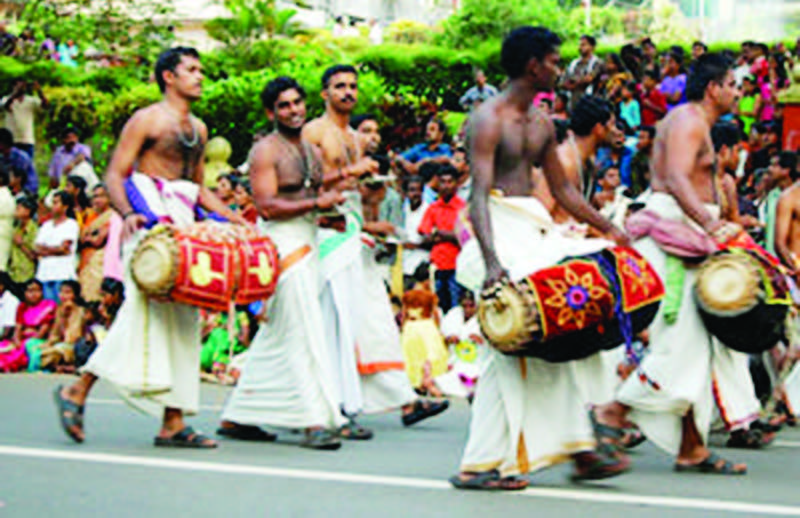
    Onam is celebrated in the beginning of the month of Chingam, the first month of Malayalam Calendar (Kollavarsham). There are actually four days of Onam. The most important day of Onam (known as Thiru Onam) is the second day. Festivities actually commence around 10 days before this day (on Atham), with the preparation of floral arrangements (pookalam) on the ground in front of homes. This year Thiru Onam is on September 7. (Atham was on August 29).

    ONAM is like a Dream!

    Kerala is known for its enchanting beauty. The swaying palms, the sky kissing hills, the sun-bleached plains, the lush paddy fields, the placid lakes, the shimmering lagoons, all make it a veritable paradise on earth. I often hear the phrase ‘God’s on country’ as Kerala is often characterized. We are all too familiar with the legend behind the festival. For the sake of the young people, let me briefly state two versions of the story. Maveli, the king Mahabali, the legendary king who was unjustly pushed down into the Nether world by Vamana, the fifth ‘avatar’ of Vishnu.


    25
    Thiruvathira is a popular folk dance performed by women at Onam


    It is said that, there was perfect equality, peace and happiness in his kingdom. No one dared to lie or cheat. However, gods grew envy at his acts of benevolence and growing popularity. After the banishment, Mahabali was given the special privilege to visit his subjects once a year. Historians give a different twist to the legend. According to them, Mahabli, who was a Buddhist, defeated by Hindu kings from Narmada (currently Maharashtra) in the North.

    Subsequently, they conquered the land and sent him into exile in Ezahm which is currently known as Sri Lanka. It was believed that permission was granted to Mahabali to come and visit his subjects during the period when they traditionally celebrated Sravanolsavam. Therefore, for Keralites, it may be a symbolic description of the Aryan invasion and the imposition of its culture on the native Dravidian populace of Kerala.


    26
    Snake boat races are popular attractions during Onam celebrations. The most famous snake boat race that’s held during Onam celebrations is the Aranmula carnival, along the Pampa River


    Regardless, Onam is a grand harvest festival which is celebrated with flowers, sumptuous feasts, and swings under mango trees. Onam represents the spirit of Kerala transcending the people of Kerala the world over to an enchanting mood of thanksgiving, idyllic pleasure and music and dance. People irrespective of religion celebrate Onam with traditional gaiety and fervor. It is stated that where there is a Keralite there will be Onam.

    Now the celebration is extended to the Diaspora, Mahabali needs to travel around the globe to visit all his subjects. Onam embodies the message of basic goodness of man who is selfless in his deeds towards fellow man. It is also about a dream; it is a dream about peace and tranquility in the world. It is dream about economic well-being and resource sharing; it is a dream about love and brotherhood, it is a dream about high ethics and morals; and it is a dream about human justice and preservation of nature.

    Great men in history dreamed before they embarked on a course to achieve them. Mahatma Gandhi had a dream. He set out to gain freedom for the 300 million Indians from the colonial rule and slavery. He mobilized and motivated the masses through non-violent protests which eventually gained the long cherished independence. Fulfilling own dream was fraught with dangers. He paid the ultimate price with his own life to preserve what he dreamed about.

    Jawaharlal Nehru had a dream which was set out in the preamble of the Indian constitution: to setup a secular republic with equal rights for everyone with freedom to think and speak and freedom to worship; to build a democratic society which fights fascism and communism; to promote equal opportunity and justice for the common man and independence in International relations. Today, that dream is being challenged by the forces of communalism which would like turn India on a path towards Hindutva.

    It is quite a surprise to see that this divisive philosophy are tacitly endorsed by some in our own community who enjoy the secular freedom in this country yet, want to deny the same freedom to others who live in India The great Martin Luther King who emulated the non-violent method which Gandhi has pioneered had a dream of his own. He had a dream to deliver his people from the slavery and second-class status – We are all too familiar with his ‘I have a dream’ speech. – ‘I have a dream that one day this nation will rise up and live out the true meaning of its creed. We hold these truths to be self-evident that all men are created equal ‘With the voting rights acts in 1964, his dreams were come to fruition.

    Yes, there are continuing challenges faced by the black community at the social level which may require further attention. America as a nation had a dream as well. When the pilgrims took the boat and landed on the Plymouth seeking religious freedom, their dream was to develop the most democratic, secular and prosperous society based on capitalism. They seemed to have accomplished that by making America a superpower, second to none, economically and militarily.

    Yet there are great challenges ahead of this nation as it is falling victim to a valueless culture which could eat away the core of the principles on which this nation was founded. Yes, there are challenges; however, we all need to dream as individuals, as a society and as a nation. For many of us the dream of prosperity is only half of the puzzle. We might have accomplished them. We may be still missing that spiritual and moral dimension which made Kerala once a land of prosperity, justice and brotherhood.


    27
    A colorful float that’s part of the Onam Pulikkali festivities


    All of us should have clear goals in life. This is a non-optional component of a spiritually healthy life. You can see from many of these examples I have elicited, there Is a close connection between dreams or in other words, goalorientation and motivation and fulfillment? The lack of those dreams is a big reason why so many of us are unmotivated in our tasks. It is said that performance is equal to motivation and ability. The component motivation requires expectancy and that is where the dream fits in. If it is motivating, it has to be making progress and accomplishing something.

    This week as we celebrate Onam, let us once again become nostalgic. Let Onam transcends our thoughts and process. Above all, it remains a dream. Attainable or not it symbolizes human yearnings; which keep the dreams alive. It motivates us to go on. Bible says, without vision, people perish; keep dreaming and let the spirit of Onam burn within us forever. Happy Onam to everyone

    (The author is a former Chief Technology Officer, United Nations)

  • FIRST PRAKASH DIVAS OF SHRI GURU GRANTH SAHIB

    FIRST PRAKASH DIVAS OF SHRI GURU GRANTH SAHIB

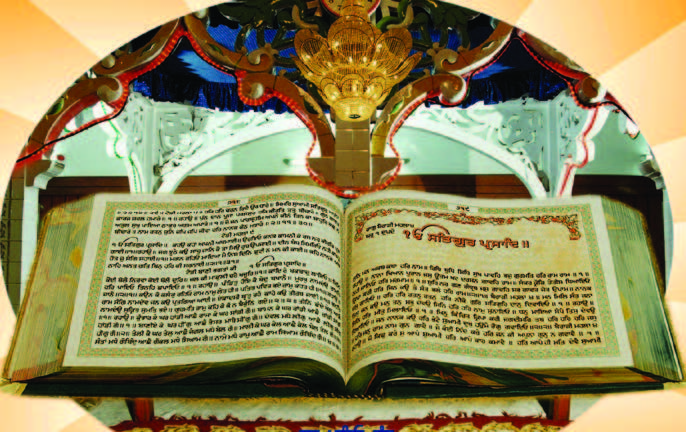
    Guru Arjan Dev Ji installed Adi Granth at Harmandir Sahib Ji 1604. Baba Buddha Ji was the First Granthi and Bhai Gurdas Ji completed Adi Granth Sahib Ji as dictated by Shri Guru Arjan Dev Ji in 1604. Later Guru Gobind Singh Ji adds Shabads of Guru Teg Bahadur Sahib Ji and then in 1708, Adi Granth became Guru Granth Sahib Ji, the Eternal Guru of Sikhs as was declared by Guru Gobind Singh Ji.

    The Guru Granth Sahib is indeed unique in its thought, literary expression and the message it continues to communicate centuries after it was written. Exalted thought needs to be transported on the vehicle of language to reach the masses. Poetic expression lifts prose to a higher plane.When verse and music meld, their beauty and sweetness makes mind transcend the humdrum of rational existence. This is divine love, passion pure expressed poetically; set to select 31 ragas…. The thought is egalitarian, expressed in a language that can be lucidly understood by the masses and the compositions are poetic, composed in the traditional Indian meters.

    As Bhai Kahan Singh’s Mahankosh tells us, the Guru Granth Sahib contains the bani (sacred compositions, literally utterances) of six Gurus, 15-non Sikh bhagats (saints) whose bani was in consonance with the teachings of the Gurus, 17 bhattas (bards) and four others. Guru Arjan Dev, the fifth Guru of the Sikhs, had the bani of the first four Gurus compiled in a manuscript for which he asked Bhai Gurdas, a major Sikh theologian, to be the scribe. It was this manuscript, the Adi Granth, which was ceremoniously installed in the sanctum sanctorum of Harmandir Sahib at Amritsar in 1604 AD.

    The manuscript also had Guru Arjan Dev’s compositons, the writings of bhagats and some others like Bhai Mardana and Sunder. The work of scribing the bani of the Guru started in the lifetime of the founder of Sikhism, Guru Nanak Dev. His compositions were carried in oral tradition as well as written down by his followers, even during his journeys.

    There are references in Puratan Janamsakhi to Hassu Lohar, Shihan Chheemba, Saido Jat, and Tan Sukh Bania, who were also among those who accompanied Guru Nanak during his journeys or udasis and penned his bani. Guru Nanak had founded Kartarpur, at present called Kartarpur Ravi and Dera Baba Nanak. It is now in Pakistan, just across the Ravi and is visible from the Indian side. It was here that the Guru settled down with his family in the twilight of his life. He was then in his seventies. As Bhai Gurdas, who was later to scribe the Adi Granth (original manuscript), says: “The morning would begin with the recitation of Japji and Asa di Vaar, after which people would continue with their worldly duties. In the evening, Sodhar and Aarti were recited.” The Janamsakhis tell us that Guru Nanak compiled Japji and Asa di Va at Kartarpur.

    He asked Bhai Lehna to assist him in editing these compositions. He was subsequently chosen, over his own sons, by Guru Nanak as his successor and named Angad, a part of oneself. As tradition puts it, Guru Nanak gave him the pothi (manuscript) that had 974 of his compositions (Pothi zuban Angad jog mili). Guru Angad added 63 of his compositions and gave the corpus to Amar Das, who was to be the next Guru. He was to add 907 compositions. Guru Amar Das made his grandson, Sahansar Ram, write the manuscript. It included the bani of Guru Nanak Dev, Guru Angad Dev and Guru Amar Das. The works of the bhagats were also included in it. A number of manuscripts were written, two of which are still available.

    They are known as the Goindwal pothis. These pothis also have Guru Amar Das’s forceful message about bhagat bani’s inclusion and importance, and of how the bhagats were influenced by Guru Nanak (Nama chimba Kabir julaha pure Gur te gat pai). Guru Amar Das decided that the next Guru would be his son-in-law, Guru Ram Das. At this, his two sons were unhappy and they kept the manuscripts with them in order to project their own importance to the followers. The pothis were thus kept by Bhai Mohan, Guru Amar Das’ elder son.

    The other major source of bani of Guru Nanak was the Harsahai pothi, which was with the family of the descendants of Prithi Chand, elder brother of Guru Arjan Dev. This manuscript was to remain with the family till it was stolen in 1970-71. When Guru Arjan Dev decided to compile the bani of his predecessors, there were thus a number of significant manuscripts that contained the Gurus’ compositions. Some had certain compositions that Guru Arjan Dev did not consider authentic. In order to consolidate the bani and prevent any spurious compositions from creeping into the original texts, he decided to have the Adi Granth compiled. The Tawarikh Guru Khalsa tells us that everyone who could contribute was asked to do so.

    The Guru issued hukamnamas to all Sikhs, asking them to bring the bani of the Gurus to Amritsar, where the editing was to be done. He called the rababis (rebeck players) who had memorised the bani, as well as ordinary Sikhs, who had preserved the bani safely. It was with this corpus that the editing began. Every available source and content was carefully scrutinised and Guru Arjan Dev kept only what was considered absolutely authentic. The task of making the manuscript was entrusted to Bhai Gurdas. The compositions of the bhagats were also scrutinised. The bhagats whose works are contained in the Guru Granth Sahib came from different regions of India and wrote in regional languages.

    The number of their compositions which were included is given along with their names: Kabir 541, Farid 116, Namdev 61, Ravidas 40, Trilochan 4, Beni 3, Dhanna 3, Bhikhan 2, Jaidev 2, Parmanand 1, Pipa 1, Ramanand 1, Sadhana 1, Sain 1, Surdas 1. The bhagats were from different religious denominations. They also belonged to different castes, including the so-called low castes, and came from different parts of the country like Uttar Pradesh, Bengal, Maharashtra, Mysore, Sindh, Rajasthan and Punjab. The bhagat bani gives a unique inter-religious, inter-regional flavour to the Adi Granth and the bhagat bani of the Guru Granth Sahib is a wonderfully catholic, cosmopolitan aspect of this scripture. While scribing the Adi Granth, Guru Arjan Dev ensured that the matter was arranged in a particular order and that everything was in proper context.

    The author of each composition was identified; the context determined the placing of the bani; the appropriate ragas were determined; and the whole text numbered, so that nothing could be interpolated. Scholars contend that the earlier manuscripts were written without any break between words to prevent anyone from inserting anything between these, and this tradition continues. A raga is usually defined as a musical arrangement that brings forth love in one’s mind. The arrangement of ragas in the Guru Granth Sahib is, according to the Hanuwant system, without the raginis.

    All the hymns are meant to be sung; and kirtan, the singing of the bani in an appropriate raga, is considered by Gurmat as an essential part of the religion and the sole form of worship among the Sikhs. Singing kirtan creates a shared community experience through repetition. After the Adi Granth was ready, the manuscript was taken in a ceremonial procession from Ramsar to Harmandir Sahib. Bhai Budha, who had come to Kartarpur and became Guru Nanak’s follower as a young lad, was now much revered. He now had a silver beard and he carried the Adi Granth on his head as a mark of respect. Guru Arjan Dev held a chowr (whisk), and the Sikhs, led by Bhai Gurdas, accompanied the solemn and grand procession to Harmandir Sahib, where the Adi Granth was installed. Guru Arjan Dev and other Sikhs sat at a lower level.

    The bani of the Adi Granth held an exalted status. Baba Budha became the first Granthi. Soon more and more Sikhs concentrated on learning Gurmukhi, since the bani was written in this script. The Sikhs also started making copies of the manuscript of the Adi Granth, some of which can still be seen. While the installation of the Adi Granth at Harmandir Sahib was of great significance to the Sikhs, it also caused jealousy to some, especially the estranged relatives of the Gurus. This led to an interesting incident that finds mention in history. In 1605, when Emperor Akbar was visiting Batala in Punjab, he was told that the Sikhs had a holy book that contained passages that were blasphemous to Islam.

    The Emperor called for the Adi Granth, which was sent by the Guru in the custody of Bhai Gurdas and Baba Budha. Bhai Gurdas, who had written every word of it, assured the Emperor that there was nothing against Islam, and that on the contrary, it contained hymns of Muslim saints. The Adi Granth was read at random in the presence of qazis and pandits. The first stanza said: “We are all children of our Father God.” When it was opened next, it said: “God pervades all His creation and the creation resides in Him. When there is nothing but God, whom should one blame.”

    The Emperor realised that there was nothing blasphemous in the document and he made an offering of gold coins to the Adi Granth. Robes of honour were presented to both custodians of the Adi Granth. This became the first significant instance of someone recognising the intrinsic truth contained in the Adi Granth and thereafter making a symbolic offering to it, something millions do every day, the world over. Guru Gobind Singh, after adding 115 compositions of his father, Guru Teg Bahadur, and Jai Jai Vantee Raga to the extant 30 ragas in the Adi Granth, proclaimed near the end of his life that henceforth there would be no person who would be the Guru of the Sikhs.

    The sole Guru would be the Word enshrined in the Guru Granth Sahib. The Word of faith, scribed for two centuries, was now complete and final.

  • Cong, BJP wrangle over booing of Opposition CMs

    Cong, BJP wrangle over booing of Opposition CMs

    After Hooda, jeers for Jharkhand CM at PM function * Prithviraj Chavan skips Modi event

    NEW DELHI (TIP):
    Maharashtra chief minister Prithviraj Chavan on August 21 boycotted both the government functions in Nagpur and refused to share the dias with Prime Minister Narendra Modi in the wake of heckling of non – BJP chief ministers by BJP workers in recent past, in such programmes. Chavan kept away from the inauguration of the Mouda Super Thermal Power Project Phase I, and later also skipped the function for laying the foundation stone of the proposed Nagpur Metro project.

    The guardian minister for the district, Nitin Raut, also refused to share the dais with Modi. The minister for social justice, Shivajirao Meghe received Modi at the airport on behalf of the state government, in keeping with protocol. The decision came after two other chief ministers, Bhupinder Singh Hooda of Haryana and Hemant Soren of Jharkhand, were booed by Bharatiya Janata Party (BJP) supporters at meetings addressed earlier by the Prime Minister.

    Chavan himself was heckled by BJP activists at a function attended by Modi in Raigad last week. Chavan accused the BJP of politicising the Prime Minister’s public events ahead of assembly polls. “I have decided not to attend the Prime Minister’s function because of the incidents that took place in recent days,” he said. A group of Congress supporters, meanwhile, staged a demonstration with black flags near the venue of a function attended by the PM.

    Hemant Soren booed
    Crowds heckled Jharkhand chief minister Hemant Soren in the presence of Prime Minister Narendra Modi on Thursday, the third instance of public humiliation of opposition leaders, fuelling talk over whether there was a BJP design to undermine the chief ministers in some election-bound states. The crowd, comprising mainly BJP supporters, booed and kept shouting “Modi, Modi” throughout Soren’s speech at a public rally in Ranchi.

    At one point, he asked the gathering to forget the political rivalry for a day, but that further irked the 70,000-odd crowd and the booing became louder. “Political powers keep changing; we need to respect the dignity of this stage,” Soren said, which irked the crowd of about 70,000 even more and led to louder chants. The reaction of the crowd appeared to have taken the chief minister by surprise, causing some errors in his speech. Soren mistakenly referred to Modi as the president at least five times.

    Modi was in Ranchi to inaugurate a substation of the Power Grid Corporation in the district. Later, the ruling Jharkhand Mukti Morcha (JMM) took a strong stand and said the party will not let the BJP hold such events in the state in future. Asking Modi to apologise to the public and leaders of Jharkhand and Haryana, the party’s national general secretary Supriyo Bhattacharya said the BJP should learn how to control its men.

    CM Soren too criticised the incident calling it a “pre-planned stunt by the BJP” and “an insult of the federal structure”, a reference to Modi’s repeated assertions that his government believed in “cooperative federalism” and taking along all states. “The PM must look into it… the federal system he talks about. I feel it is like raping the system, the tradition of the federal system.

    There is a plan to break it.” Soren had earlier asked the Prime Minister’s Office (PMO) to ensure no ‘Hooda-like incident’ occurs at the event in Ranchi. The JMM had said that in case of any such incident the party would take strong steps. The BJP has reacted to the incidents saying its government gives due respect to all CMs.

  • INDIAN FREEDOM FIGHTERS

    INDIAN FREEDOM FIGHTERS

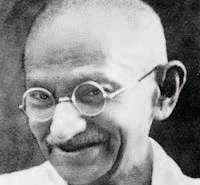
    Known and revered worldwide as Mahatma Gandhi, he advocated nonviolence (ahimsa) as the only path to victory.

    India as we know it today would not have been, but for the efforts of selfless and courageous men and women who deemed it their life’s purpose to liberate the country from colonial rule and retain its sovereignty and heritage. Some of these leaders adopted moderate approaches of dialogue, protests and civil disobedience in their struggle for independence, while others wanted self-rule and were literally willing to lay down their lives fighting for it.

    However, it cannot be denied that one and all, in their own ways, these freedom fighters were responsible for making India an independent country and helped realise the dream of Swaraj. Here are some of the great leaders to whom we owe our present status as an independent and sovereign republic.


    32
    Jawaharlal Nehru

    The first Prime Minister of independent India, he was a staunch believer in democratic ideals and helped realize the vision of India as a democracy.


    33
    Bhagat Singh

    Considered one of the most influential revolutionaries of the Indian independence movement, he, along with Shivaraj Rajguru and Sukhdev Thapar became the symbols of courage, action, and spiritedness for Indian youth.


    34
    Subhash Chandra Bose

    Founder of the Indian National Army, he enlisted the help of Japan in regaining control of several Indian territories under the rule of the British.


    35
    Dr. Rajendra Prasad

    The first President of the Republic of India, Prasad was one of the architects of the Constitution of India.


    36
    Lal Bahadur Shastri

    The second Prime Minister of independent India was instrumental in pushing forward the Green Revolution, which made India a food surplus country.


    37
    Chandrashekhar Azad

    He was one of the fierce patriots who believed in freedom at any cost and accomplished daring deeds in the course of his lifelong fight. He was also the mentor of Bhagat Singh, the famous Indian martyr.


    38
    Sardar Vallabhbhai Patel

    Known as the Iron man, he helped achieve the political integration of the princely states towards forming a unified independent India.


    39
    Bal Gangadhar Tilak

    The first leader to boldly declare that complete selfgovernance (Swaraj) was the only position acceptable to him, Tilak was instrumental in inciting the desire for freedom in the Indian consciousness as well as saving Indian culture and heritage from insidious western influences.


    40
    Gopal Krishna Gokhale

    He was one of the most learned men in India, and a leader of social and political reformists as well as a senior leader of the Indian National Congress. He was also a mentor to Mahatma Gandhi when the latter had returned from South Africa and was just beginning to actively participate in the Indian independence movement.


    41
    Dr. Bhimrao Ambedkar

    Widely known as the father of the Indian Constitution, he was also instrumental in improving the plight of the dalits, tribals, and other marginalized.


    42
    Bagha Jatin Mukherjee

    One of the great leaders of the underground resistance, Jatin, along with other revolutionaries, participated in guerrilla warfare on British nationals along with sabotaging British properties, all to disarm the British might.


    43
    Dadabhai Naoroji

    One of the earliest leaders to lay the foundation for India’s freedom struggle, Naoroji was a founder of the Indian National Congress.


    44
    Jhansi Ki Rani Lakshmibai

    One of the leading figures of the Great Indian Mutiny of 1857, she rode into battle to save Gwalior Fort, the last bastion of the uprising, and died


    45
    Mangal Pandey

    Widely known as the initiator of the first war of independence, the Sepoy Mutiny of 1857, Pandey fired at British officers to vent mass anger among the Sepoys at being made to chew off the pig fat-containing outer layer of the new gun cartridges the Sepoys were to use.


    46
    Rabindranath Tagore

    Tagore was a great writer and poet who stirred the emotions of the people and fired the spark of patriotism in them through his works. He is most famously known as the author of India’s national anthem ‘Jana Gana Mana’.


    47
    Vinayak Damodar Savarkar

    Popularly known as ‘Veer’ Savarkar, he actively denounced British policy and boycotted British goods. He underwent imprisonment in the infamous Andamans prison.


    48
    C. Rajagopalachari

    A great statesman and scholar, ‘Rajaji’ as he was known, was close to Mahatma Gandhi. He practiced Gandhi’s ideology throughout his life and worked for the Congress party for more than half a century.


    49
    Shivaram Hari Rajguru

    He was an Indian revolutionary from Maharashtra, known mainly for his involvement in the murder of a British police officer. He was a member of the Hindustan Socialist Republican Army(HSRA), who wanted India to be freed from British rule by any means necessary.


    50
    Sukhdev Thapar

    Sukhdev was a famous Indian revolutionary who played a major role in the India’s struggle for Independence. Sukhdev Thapar was a member of the Hindustan Socialist Republican Association (HSRA), and organised revolutionary cells in Punjab and other areas of North India. A devoted leader, he even went on to educate the youth at the National College in Lahore.


    51
    Ram Prasad Bismil

    Ram Prasad Bismil was an Indian revolutionary who participated in Mainpuri conspiracy of 1918, and the Kakori conspiracy of 1925, both against British Empire. As well as being a freedom fighter, he was also a patriotic poet and wrote in Hindi and Urdu using the pen names Ram, Agyat and Bismil. But, he became popular with the last name “Bismil” only.


    52
    Tatya Tope

    Ramachandra Pandurang Tope was an Indian Maratha leader in the Indian Rebellion of 1857 and one of its more renowned generals. He was a personal adherent of Nana Saheb of Bithur. He progressed with the Gwalior contingent after the British reoccupation of Kanpur and forced General Windham to retreat from Kanpur.


    53
    Lala Lajpat Rai

    Lala Lajpat Rai was an Indian Punjabi author and politician who is chiefly remembered as a leader in the Indian fight for independence from the British Raj. He was popularly known as Punjab Kesari meaning The Lion of Punjab also known as “Sher-EPunjab” in Punjabi. He was part of the Lal Bal Pal trio. He was also associated with activities of Punjab National Bank and Lakshmi Insurance Company in their early stages. He sustained serious injuries by the police when leading a non-violent protest against the Simon Commission and died less than three weeks later.


    54
    Udham Singh

    He was an Indian revolutionary, best known for assassinating Michael O’Dwyer in March 1940 in what has been described as an avenging of the Jallianwalla Bagh Massacre. He is a prominent figure of the Indian independence struggle. He is also referred to as Shaheed-i-Azam Sardar Udham Singh.

  • 2 sisters from Maharashtra’s Kolhapur may become the first women to be hanged in India

    2 sisters from Maharashtra’s Kolhapur may become the first women to be hanged in India

    KOLHAPUR (TIP): Two Kolhapur women, who were sentenced to death in 2001 for kidnapping 13 children and killing nine of them, may become the first women ever to be hanged in India. President Pranab Mukherjee late last month rejected Renuka Kiran Shinde and her sister Seema Mohan Gavit’s mercy petitions.

    The buffer period before their hanging – time taken by the state home department to inform all concerned after receiving the note from Rashtrapati Bhavan – ends on Saturday. The number of people executed in India since Independence is a matter of dispute. Government statistics claim that only 52 people have been executed since independence. However, research by the People’s Union for Civil Liberties indicates that the actual number of executions is in fact much higher, as they have located records of 1,422 executions in the decade from 1953 to 1963 alone. However, there is no record of any woman’s execution.

    Renuka and Seema, who partnered their mother Anjanabai Gavit to kidnap the kids and push them into begging and killed some of them after they stopped being productive, are currently lodged at the Yerwada jail in Pune. Anjanabai passed away during the trial, and the sisters’ father Kiran Shinde turned approver and was acquitted. The President has also rejected the mercy petition of Rajendra Wasnik, who was sentenced to death for raping and killing a three-year-old in Amravati in March 2007.

    Wasnik had lured the girl with the promise of buying her biscuits before sexually assaulting and eventually killing her. The note from Rashtrapati Bhavan on Wasnik arrived at the state home department on Tuesday and the process of informing the convict, his relatives, and the Nagpur jail where he is lodged has been initiated. Desk officer Deepak Jadiye of the home department said no objections have been received yet on the Kolapur sisters’ hanging.

    “We have informed the two convicts, their relatives, the legal remedial cells of the Supreme Court and also the district court about the rejection (of their mercy plea),” he said. While awarding the death sentence to the sisters in 2001, Judge G L Yedke in Kolhapur had described the nine kids’ murders as ‘the most heinous’, and observed that the two sisters seemed to have enjoyed killing the children. There are currently 24 convicts on death row in Maharashtra, including the three Shakti Mills rapists. All convicts facing death sentences in Maharashtra are moved to Yerwada in Pune or the Nagpur jail as these are the only two prisons in the state that have gallows.

  • PLACES TO VISIT NEAR AHMEDABAD

    PLACES TO VISIT NEAR AHMEDABAD

    From glimpses of wildlife at Gir National Park to exploring the architectural marvels of Ajanta and Ellora to the charming hill town of Mount Abu, there are a range of places to visit near Ahmedabad. Offering a respite from the daily bustle of Gujarat’s commercial hub, these rejuvenating long weekend escapes will compel you to pack your bags and hit the road.

    SURAT

    From by-lanes lined with quaint eateries offering the most delectable Gujarati snacks to upscale markets housing massive jewellery showrooms, Surat is a city that offers almost everything you can ask for. One of the most rapidly growing cities in India, Surat is the second largest city in Gujarat and also known as the Diamond City. With the majestic Surat Fort and the Mughal-era monument Mughal Sarai for history buffs, the Lake Garden on the banks of Tapi River for those who want to take it easy, and a line-up of street markets for shoppers—Surat has a range of options for all kinds of travellers.


    25

    Baroda

    Formerly the seat of the Gaekwad dynasty, a Maratha clan which ruled over it from the mid-18th century till 1947, the erstwhile princely state of Baroda (also known as Vadodara), is today best known for its heritage and historic university. Often described as the cultural capital of Gujarat, much of modern Baroda was shaped by Sayajirao III, a far-sighted ruler in the late 19th century who patronised art and music, introduced free primary education, and established institutions such as the Bank of Baroda, a railway system and the university.

    The city’s beautiful old quarter filled with heritage buildings, and the historical city of Champaner – a UNESCO World Heritage Site – located an hour’s drive out of town, provide a fascinating insight into the past and will prove irresistible for history and culture buffs.

    Daman

    A short three-hour-long drive from Mumbai, the Union Territory of Daman (no, it’s not in Gujarat, which also means you’re good for a tipple) offers all the perks of a Goa vacation sans the teeming crowds. There are two beaches—Devka and Jampore—of which the latter is infinitely better for sun and sand.

    The Mirasol Lake Garden—replete with an artificial lake, swan boats and even a toy train chugging along the periphery—is a good spot if you’re travelling with kids in tow. For the more culturally inclined, this former Portuguese colony is dotted with architectural remains (Fort of Nani Daman, the lighthouse, Our Lady of Rosary Church) that speak of its bygone glory.

    Rann of Kutch

    Currently under consideration as a biosphere reserve, this salt wetland is abundant in biodiversity, and shrimp farming is one of the chief means of a livelihood in the area. With a host of wildlife sanctuaries, and rich presence of rare animals, this is one of Gujarat’s major tourist draws. Occupying about 4,953 square kilometres spread across the districts of Surendranagar, Banasakantha, Patan, Kutch and Rajkot, the topography of the Little Rann of Kutch features large marshlands interspersed with patches of soil supporting shrubbery. While you’re there, be sure to pay a visit to the Indian Wild Ass Sanctuary, which is one of the largest wildlife reserves in the country, and keep aside a morning to go bird spotting at Banjana Creek.

    Gir National Park

    No trip to Gujarat is complete without a visit to the Gir national Park. Sprawling across a vast expanse of 1412 square kilometres of dense forest, it is the natural abode of the lion – the only place outside of Africa where you get to experience the wild cats in their natural habitat. Take in the experience in its entirety by exploring everything, from the 250 species of chirping birds darting out of the thick canopy of trees overhead, to the crocs in the marsh waters.

    Spot the leopard, nilgai, hyenas, chinkara and antelopes, including the world’s only four-horned antelopes known as chousingha. Additionally, the Gir is the homeland of a tribe called the Maldharis, that thrives on pasturing and livestock. Spend a few days to really take it all in. We suggest a visit to the Crocodile Breeding Farm, and both the morning and evening safaris – the forest tells a different story after sundown.

    Ajanta and Ellora

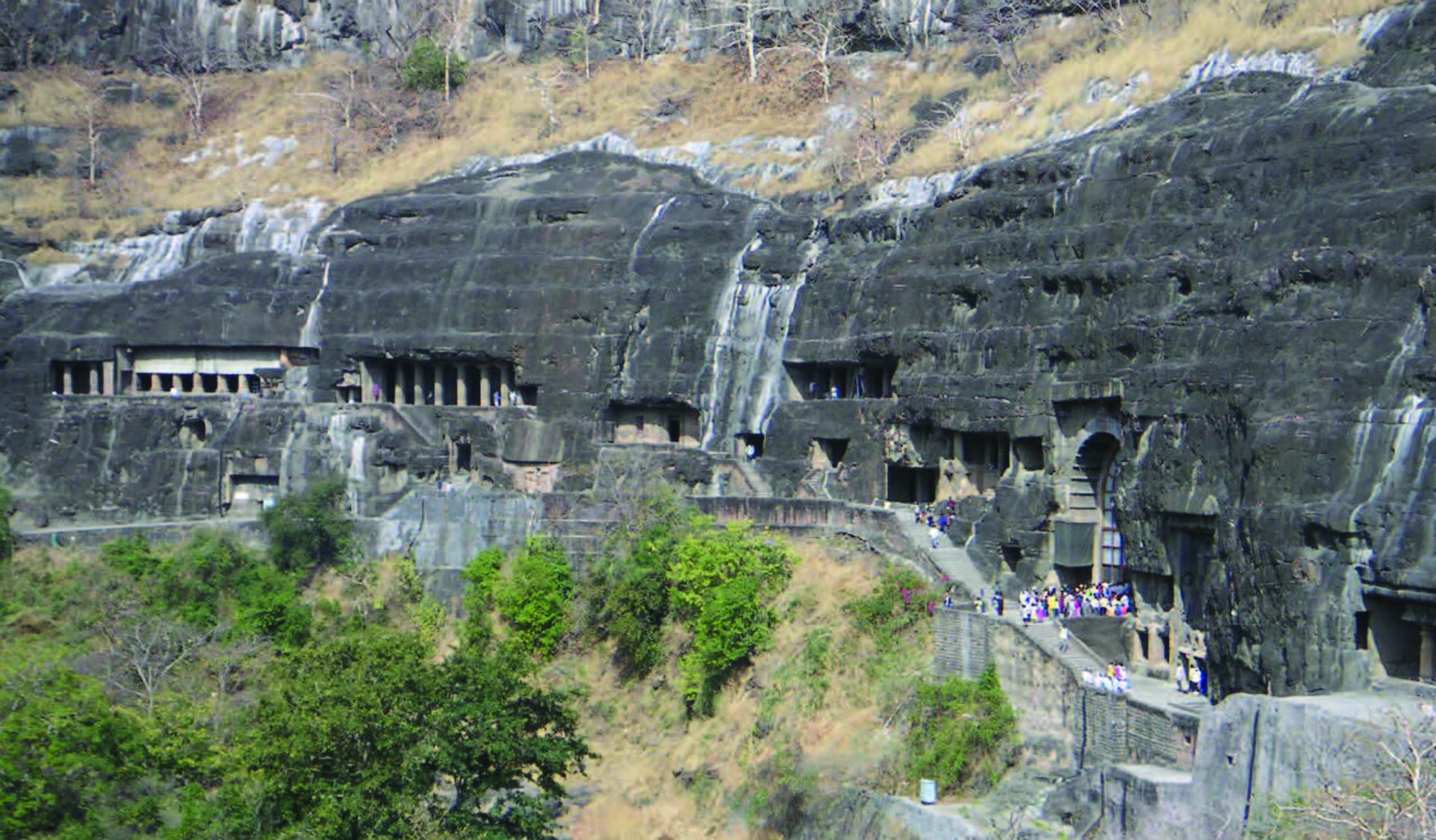
    Ajanta and Ellora are two monumental rock-cut caves that define Indian art and architectural accomplishment. Though these two monuments are separated by a distance of approximately 100 km, they are often mentioned together since their aesthetics and importance are at par and the fact that both are situated in the Aurangabad district of Maharashtra.

    While Ajanta is mostly about beautiful paintings made on cave walls on the theme of Buddhism, Ellora is all about sculpture and architecture belonging to three different religions prevailing in the country during those times—Buddhism, Hinduism and Jainism. Ajanta is a cluster of 30 caves of different sizes excavated in a horseshoe shaped stretch of rock embedded in a hill facing a narrow stream called Waghora. Each cave was connected to the stream by a flight of steps, which are now demolished with few remnants left behind. These caves are named after a nearby village called Ajanta.

    It includes masterpiece paintings of Buddhist religious art, with figures of the Buddha and depictions of the stories that tell about the previous lives of Buddha. The caves were built in two phases— starting around the 2nd century BC, with the second group of caves built around 400- 650 AD. Buddhist monks used to retreat to this serene place during the monsoon, and as they had plenty of time during such retreats, they used it for deepening their religious quest through prayer and discussion.

    Jodhpur

    The second largest city (after Jaipur) in Rajasthan, Jodhpur is an architecturelover’s feast for sore eyes. The older historic section of the city of Jodhpur is located around the grand Mehrangarh Fort which is bounded by a wall and several gates. Winding streets and unending bazaars run throughout the city that are littered with shops and thronged by visitors throughout the year.

    Also referred to as the Blue City, Jodhpur is home to the magnificent Umaid Bhawan Palace. A fivehour- drive from the hill-station of Mount Abu, Jodhpur makes for a perfect getaway once the hill station’s charms stop making an impression on you.

  • 308 communal incidents till June: Govt

    308 communal incidents till June: Govt

    NEW DELHI (TIP):
    Even as the Congress party tried to corner the BJP-led NDA government on communal riots, fresh data showed that the country witnessed 308 communal incidents this year until June, with Uttar Pradesh, Maharashtra and Karnataka topping the list. An analysis of two sets of statistics provided by the government over a period of one month also showed that there was a surge in communal incidents in the two months of May and June with 113 cases compared to the first four months of the year, which reported 195 incidents.

    The government placed the statistics in the Rajya Sabha through a written reply on Tuesday on a day when Congress forced the government to discuss the “need for more effective mechanisms to deal with communal violence”. The Congress has been alleging that there is an increase in communal riots in the country after the new government took over on May 26. Leader of Opposition Mallikarjun Kharge claimed that 600 communal incidents took place after the Modi government took over, an allegation vehemently contested by the BJP.

    Kharge’s claim could not be backed by any official data and when countered, he himself cited the figures for May and June. “Why are these incidents happening now? What is the reason? Who is behind these? These have increased in the last 2- 3 months since the new government came. This is not a good sign,” Kharge said in the Lok Sabha. As per the fresh figures, the Union Home Ministry said Uttar Pradesh recorded the highest number of communal incidents this year at 56 followed by Maharashtra at 51 and Karnataka 44.

    Telangana, which came into existence on June 2, has already registered one case of communal incident. Interestingly, almost half (27) of the communal incidents (56) in UP took place during May and June while the 20 in Maharashtra took place during the same period. In Karnataka, 11 incidents took place during these two months. Gujarat reported 26 incidents out of which 11 happened in May and June. In these two months alone, 15 people were killed and 318 injured. Last year, the communal incidents numbered 823 while in 2012 it was 668. In 2010, it was 580. Except for 2011, Uttar Pradesh topped the list.

  • Haryana may go to polls in mid-October

    Haryana may go to polls in mid-October

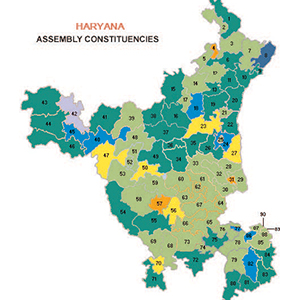
    NEW DELHI (TIP): The Election Commission is set to announce assembly polls in Haryana within the next fortnight, with polling likely to be held in mid-October in a single phase. Sources indicated that the schedule for the state poll, the first after NDA’s emphatic win in Lok Sabha elections,may be out around August 21. A separate announcement for the other three poll-bound states of Maharashtra, Jharkhand and Jammu and Kashmir will follow later, possibly in late September or early October. This round of state polls will stretch over multiple phases from November to December.

    According to sources, polling for the three states may begin in mid- November and conclude in the second half of December. J&K, in particular,may witness polling over seven to eight phases. The EC’s move to delink Haryana polls from the other state elections due between December 7 and January 19 was necessary as the term of the state assembly expires on October 27. Maharashtra, Jharkhand and J&K assemblies have time until December 7, January 3 and January 19 respectively.

    Advancing the three state polls to match the Haryana schedule was not seen as feasible as Maharashtra, in particular, is witnessing an erratic monsoon and its impact, including flooding, may continue until October. The EC is likely to schedule the Haryana polling after October 10, and have the election process completed latest by October 20, leaving a week for government formation.

    The upcoming state polls are significant as they will be the Modi government’s first test after assuming power at the Centre. For the Congress too, the polls hold special significance as the party faces a tough test in Maharashtra and Haryana due to strong antiincumbency.

    The results, which are not quite expected to redeem the Congress after its drubbing in the Lok Sabha polls, are likely to pave the way for Priyanka Vadra’s political plunge after years of reluctance. Indications are that she may join the organization under her brother and party vice-president Rahul Gandhi.

  • No room for complacency in state polls, Amit Shah tells BJP MPs

    No room for complacency in state polls, Amit Shah tells BJP MPs

    NEW DELHI (TIP):
    On the back of BJP’s stupendous victory in the Lok Sabha polls, party chief Amit Shah has asked ministers and MPs to put their best foot forward to maintain the winning streak in the assembly polls slated in four states later this year. Addressing party MPs on July 31, for the first time since he took charge, Shah made it clear that there is no room for complacency and that the immediate focus of the party is to win the state polls in Maharashtra, Jammu and Kashmir, Jharkhand and Haryana.

    Speaking at the parliamentary party meeting at the Central Hall, Shah, whose UP strategy changed BJP’s electoral fortunes, asked the MPs to adhere to “Sampark, Samvaad and Samanvay” (communication, dialogue and coordination) with the voters, so that they do not turn away from the party at the state level. He asked the MPs to utilize their MPLADS funds judiciously in consultation with local leaders to avoid any disconnect between the party and MPs. As a step in this direction, he said, each one of them should set up offices as well as coordination committees in their respective constituencies for effective utilisation of MPLADS funds.

    Shah cautioned them against disconnect with voters and take the upcoming assembly elections and bypolls seriously. Prime Minister Narendra Modi, who chaired the BJP parliamentary party meeting, earlier introduced Shah to the party MPs. “The new BJP chief stressed on having coordination between the party MPs and the public and asked all party members to work at the booth-level,” said BJP vice president Mukhtar Abbas Naqvi after the meeting.

    Shah told the MPs that this was the first time in independent India’s history that a non-Congress government got absolute majority and it will be the duty of MPs to ensure party’s victory in their respective states. MPs from those states which are not poll-bound will also be deployed for party work in the pollbound states.

  • MAHABALESHWAR

    MAHABALESHWAR

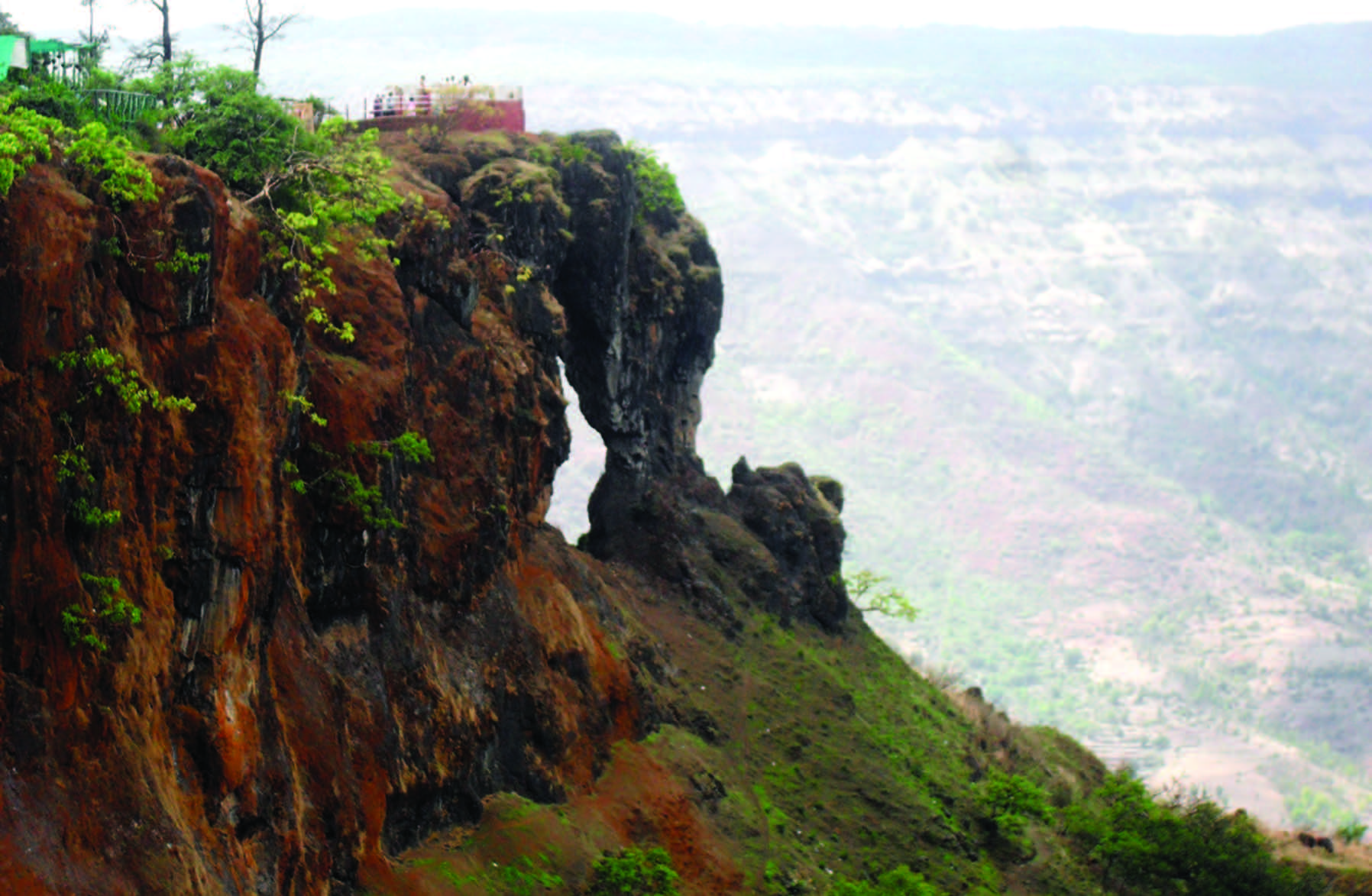
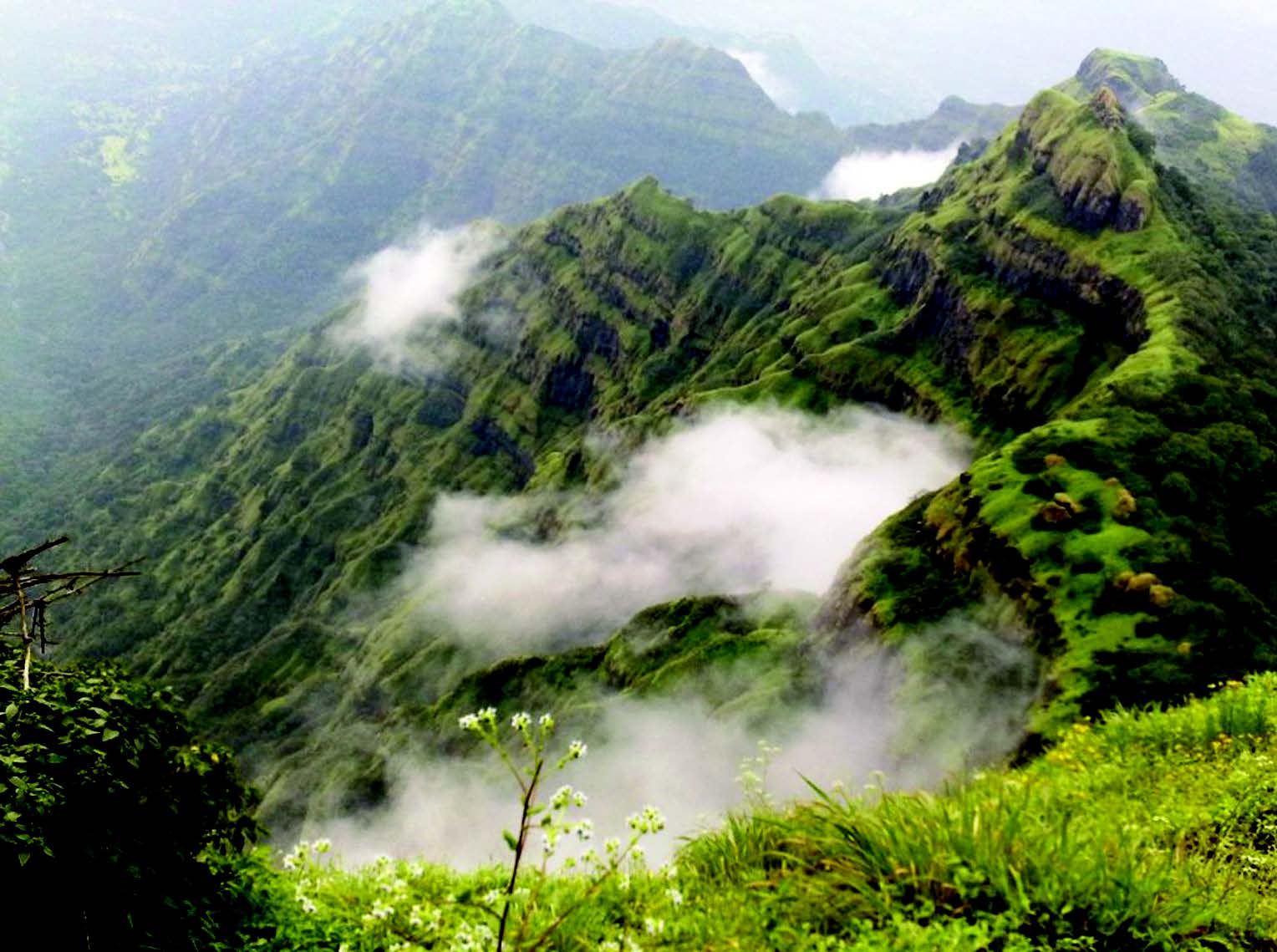
    Soaring peaks, breathtaking valleys. Lush flora. Cool, crisp mountain air. This is Mahabaleshwar, Maharashtra’s most popular hill station, and once the summer capital of the Bombay Presidency during the British Raj. Mahabaleshwar means ‘God of Great Power’ in Sanskrit.

    Indeed, the place is great and bountiful, rewarding the visitor with a mix of old-world charm, natural beauty and modernity. A tour of Mahabaleshwar town and the surrounding countryside would take at least a couple of days as there is much to see and experience. The town bazaar is called Malcolm Peth after the then British Governor of Bombay, Sir John Malcolm.

    It lies at the heart of Mahableshwar with its hotels, shops, restaurants, outlying bungalows, government offices, and jostling crowds. Mahabaleshwar has proper, motorable roads to every point worth visiting. So one could tour the place by car, jeep, or even horseback.

    There are many buildings and sites that take one back to the days of the Raj. There’s Mount Malcolm, the one-time residence of Governor Malcolm; Moraji Castle, where Mahatma Gandhi lived during 1945; and the Mahabaleshwar Club.

    As short drive from town is the beautiful Venna Lake, where one can go boating, fishing, and pony riding. Or indulge oneself at the entertainment center with its numerous food and game stalls. Near the lake, further down the road on the way to neighbouring Panchgani, are the great strawberry fields. Mahabaleshwar is known for its numerous sightseeing points, each providing a unique perspective of the majestic hill range.

    En route to Babington Point is Dhom dam, which is a good place to take a break. Or one could visit Old Mahabaleshwar and the famous Panchganga Mandir, which is said to contain the springs of five rivers: Koyna, Venna, Savitri, Gayatri and the sacred Krishna River. There’s also the Mahabaleshwar Mandir, revered for its Swayambhu Lingam Mahableshwar is a great holiday destination throughout the year, except for the monsoon months. During the late-June to mid-September period, torrential rains virtually shutdown this hill station, so travel is not advised at this time.

    Sights

    Mount Malcolm

    Built in 1829, this was one of the famous buildings of its time.

    Holy Cross Church

    The stained glass windows of this old Roman Catholic Church still retain their beauty.

    Mahabaleshwar Club

    Built in 1881, the Mahabaleshwar Club offers a peaceful retreat for those wanting to get away from it all. The Club offers many recreational facilities, including a badminton court and a mini golf course. Facilities are available to everyone at a very low fee. For those who prefer the quiet outdoors, there is a jogging track encircling the premises, edged with beautiful rose bushes. The Club also offers a clear view of Venna Lake below. Every year, Christmas is celebrated here with much fervour and pomp by the club members.


    8

    Pratapgad Fort

    About 24 km. away from Mahabaleshwar lies Pratapgad, the pride of the Maratha Empire. Built in 1656, it is a maze of ponds, chambers and long dark walkways, some of which lead to trap doors that open to a 100 meter fall! It was here that Afzal Khan, the mighty general of Bijapur, met his untimely death at the hands of Shivaji.

    Since Pratapgad lies slightly off the road to Mahabaleshwar, a visit to this historic monument is recommended in all travel itineraries Mahabaleshwar has many points offering great views of flat-topped ghats, dense forests and lush green valleys. Lodwick Point, towering almost 1,240 meters above sea level, is one of the most visited Points and holds a monument in memory of General Lodwick Arthur’s Seat is well liked too for its great view of the Jor Valley.

    About a kilometer away lies Tiger’s Spring, and if you venture further down you’ll come to a ledge named The window – a point that’s famous for its mesmerizing view. There are many locations offering pleasant views of the plains below: Wilson Point, Carnac Point, Helen’s Point, Elphinstone Point, Babington Point, Bombay Point, Falkland Point, and Kate Point are all well known There are pleasant waterfalls also worth visiting, such as Chinaman’s Falls, Dhobi Falls and Lingmala Falls, the latter being the most impressive, cascading amost 600 ft from a cliff ! Another tourist attraction is the Sangam, or the confluence of the five rivers that flow over the Deccan Plateau. There are many old temples too, which become the focus of attention during the festive season,

    Location

    Mahabaleshwar is situated 1,372 meters above sea level in the Western Ghats, in Satara District of Maharashtra State, in India.

    Also Visit …

    Panchgani

    About 19 km, from Mahableshwar lies the hill station of Panchgani. It is surrounded on all sides by hills (“Panch” = 5, “Gani” = hills) and is very popular with tourist owing to its close proximity to Mahabaleshwar. Panchgani is known for its resident boarding schools and its strawberry and raspberry farms. Visitors to Mahabaleshwar almost always come to Panchgani to make the most of their holiday in the hills..

    Getting There Air The nearest airport is Pune, 120 km. Nearest railhead is Wathar, but Pune is considered to be more convenient. Mumbai-Mahabaleshwar via Mahad, 247 km. State Transport buses ply regularly between Pune-Mahabaleshwar and Mumbai-Mahabaleshwar

  • Time for Hard Decisions

    Time for Hard Decisions

    For the Congress, things came to a head this week: on a single day, two senior Ministers in Assam and Maharashtra, States where it is in power, resigned; three of its MLAs in West Bengal defected to the Trinamool Congress, and an ex-MP in Jammu & Kashmir quit the party 24 hours after the Congress and the National Conference decided to contest elections separately even though they still rule J&K jointly. Simultaneously, speculation grew about the possibility of similar exits in Haryana.

    This came at the end of a month that witnessed demands from within the party for the removal of the Chief Ministers of Assam, Maharashtra and Haryana. The attempts to replace them failed eventually, but the delay in settling the issue further undermined the authority of the incumbents and tried the patience of the rebels. The message that the Congress high command will not act under pressure came too late; the fact that the Chief Ministers and the dissidents both had backers in Delhi helped even less, presenting the picture of a divided leadership.

    The fact that State Assembly elections are due later this year in Maharashtra, Haryana, Jammu and Kashmir and Jharkhand, has increased the anxiety – and impatience – of party members in these States: they fear a repeat of the results of the recent general elections that saw the Congress touching an unprecedented low in terms of seats won. Taken together, these events are symptomatic of the deep crisis the Congress is going through. The party’s rank and file are not just looking for a major organizational overhaul and a big idea; it is actually thirsting for inspirational leadership and direction that can restore the fortunes of the Congress.

    But party vice-president Rahul Gandhi, who was expected to take over the organization’s reins after the Lok Sabha polls, continues to be reluctant to lead from the front, as is apparent from Karnataka veteran Mallikarjun Kharge’s appointment as the parliamentary party leader in the Lok Sabha. And party president Sonia Gandhi is clearly unable to persuade Mr. Gandhi to either accept the leader’s role fully or learn from his failed experiments at democratizing the party.

    Instead, thus far, a committee under senior leader A.K. Antony has been set up to make a diagnosis of, and suggest a cure for, the party’s ills. But while the committee’s sittings provided party members with a forum to vent their feelings, the report that will eventually emerge is not expected to change anything much: for, like similar post-debacle reports by Mr. Antony in the past, this one, too, is intended for Sonia Gandhi’s eyes only. The Congress is clearly not yet ready to look beyond the Gandhis, and it is therefore time now for Mr. Gandhi to take on the challenge or make way for someone else.

  • After Retaining Congress’ Trust, Prithviraj Chavan Eyes Maharashtra Poll Win

    After Retaining Congress’ Trust, Prithviraj Chavan Eyes Maharashtra Poll Win

    Mumbai (TIP): A day after Congress leadership reposed faith in him to lead the party in upcoming Assembly polls, Maharashtra Chief Minister Prithviraj Chavan on July 11 said his endeavour would be to win maximum seats in the state. “I met the party leadership in the last two days and requested them to put to rest uncertainty over the leadership issue in the interest of the party’s (poll) prospects. We also discussed poll preparedness and strategy,” he told reporters here. Yesterday, the party high command declared that Chavan will continue in his post and lead Congress in the elections, ending the suspense over the issue of change of leadership in the state since the party’s debacle in the Lok Sabha polls.

    Asked about alliance partner Nationalist Congress Party’s (NCP) demand of equal seat- sharing in the 288-member Assembly, Chavan said such issues are not discussed in front of the media.”We will talk about it in the co-ordination committee meeting. This will be our sixth election together (both Assembly and Lok Sabha). My efforts would be to ensure win in maximum seats,” the Congress leader said. On whether Sharad Pawar has been asked by Congress to lead the alliance’s poll campaign, Chavan said, “I have no idea. My leaders have not told me so. I can’t elaborate further.”

  • MAHABALESHWAR

    MAHABALESHWAR

    The sweating Mumbaikar has a choice of hill stations, but Mahabaleshwar, eight hours away, tops the list for its cheap lodging, bustling marketplace and strawberry fields. Yet, not many know that this evergreen ‘honeymoon’ spot (what with its secluded points and the enduring thrall of pedal boats) is also home to the discerning shopper. Mahabaleshwar is home to a thriving market for forest honey, turmeric and trousseau saris. Read on to also find out why the residents of that hill station routinely have a great big laugh at us Mumbaikars.

    TROUSSEAU IT UP

    Mahabaleshwar has been a secret trousseau shopping destination for a few years. Enterprising boutique owners in Vile Parle and other suburbs, buy saris from here, embellish and sell them at inflated rates.

    The hill station’s 90-year-old shop Pallod, set up by the Pallod family from Rajasthan, is at the centre of this industry. It started off as cloth store, and 20-25 years ago, the second generation of the family started commissioning work (mostly saris) from weavers in Ramnagar (near Benaras), Coimbatore, Arni, Lucknow and Uppada. With no Octroi and low rent, these saris cost a fraction of what they would in a dazzling store on Juhu-Tara road.

    Darshan Laddha, a young member of the family, travels 10 days each month to visit the weavers, asking for experimentation like tanchoi weave with Kanjeevaram silk, and returns in time to greet the hordes of customers. Then there is that lone Rajasthani shop without a signboard that sells chiffon Leheriya saris for Rs 300! You heard right.

    COMB FOR HONEY

    Villagers and tribals of the forests of the Sahyadri gather honey by smoking the bees out of a hive and squeezing the honey out of the comb. The result is a few dead bees, terminated eggs and a homeless swarm.

    Enterprises such as Sanjeevan Honey practise a more ethical form of extraction. They promote building the hive in a wooden box, with a sly opening for the bees. The combs are built on trays that slide out. These trays are fitted to an extraction machine (see below) which is hand churned and uses centrifugal force to extract the honey without destroying the combs.

    The trays go back into the box, and the bees repair cells that may have broken to resume the honeymaking process. V R Agarkar, who left Dapoli for the hills of Mahabaleshwar 50 years ago, is happy to give you a tour and explain the honey-making process. The 72- year-old loves explaining how bees like to keep their comb clean. “If I drop a piece of paper, they’ll shred it and I’ll find it outside the box the next day,” he adds. You’ll usually find him at the stall adjoining Kedar Residency.

    WAI TURMERIC? BECAUSE IT’S GOOD

    Wai is to the south of Mahabaleshwar. It’s the place to buy unadulterated turmeric. In drought-prone Maharashtra, turmeric is a highmaintenance crop. With the Krishna river flowing nearby, about 2,000 to 2,500 hectares of farmland grow the antiseptic root.


    7

    It is harvested in December, laid out to dry, then polished and ground. By next week, the farmers will start sowing the crop, again. Two to four kilos of wet root yield a kilo of turmeric powder. Most of the crop would be sold to merchants, who would then supply it to the market places of Satara. “In the past few years, the price offered for our crop has fallen, so we have been grinding the turmeric on our own and selling it on the highway,” says Mangal Zamdale, a farmer.

    Tables set up under flowering Gulmohars that line the Satara highway sell fresh turmeric powder, pickles, and papads. A spicy way to offset the sweetness of the strawberries you’ve eaten, perhaps?

    GOTCHA, MUMBAIKAR

    It is a truth universally accepted that Mahabaleshwar makes leather chappals that populate the shelves of large shoe store chains in Mumbai. However, that is also an assumption that Mahabaleshwar is in no hurry to correct.

    The fact is that very few workshops in the hill station still produce chappals the Mahabaleshwar way (not to be confused with a Kolhapuri), which is to soak the leather in sea salt to bleach and dehydrate it. The theory is that the leather then absorbs our sweat easily. However, most of what we take back as souvenirs is actually brought in from Dharavi and smallscale industries of Tilak Nagar, Bandra and Santacruz. Yes, Mahabaleshwar is laughing at us.

    AS Karande of New India Boothouse in Mahabaleshwar, however, still makes the chappals. You can see him at work in his shop. Hemant, Prabhat and Hind shoe marts have workshops, too. To Hemant’s workshop come experienced craftsmen like Nana Kadam, who travels over 35 kilometres one way, every day. He is one of the old hands who knows how to punch in the design that makes a tadgola chappal.

    GETTING THERE

    Mahabaleshwar is 247 km from Mumbai. You can drive down the Satara highway, and hit Wai and Panchgani en route. Buses, private and state-owned also ply regularly. There is a train to Satara, an hour from Mahabaleshwar.

  • Congress in revamp mode, mulls leadership change in three states

    Congress in revamp mode, mulls leadership change in three states

    NEW DELHI (TIP): A month after the Congress got decimated in the Lok Sabha polls, the party seems to be in revamp mode. Top sources have confirmedthat the party’s immediate priority is to quell the rebellion in its ranks, especially in the states it rules.

    The Congress is reportedly looking at a possible change of chief ministers in Maharashtra, Assam and Haryana. Sources say the revamp will not confine itself to just containing rebellion but also bringing in new faces in the form of party chiefs in the states. Assam chief minister Tarun Gogoi has been facing dissidence for over two years now, but the Lok Sabha debacle has made his continuation untenable. The party managed just three out of 14 seats in a state where it has been in power since 2001.

    In Haryana, Chief Minister Bhupinder Singh Hooda faces severe opposition from party colleagues and former union minister Kumari Selja. The party could manage just one seat in the general elections. Hooda’s counterpart in Maharashtra, Prithviraj Chavan, also faces an uncertain future.

    On Thursday, Sharad Pawar, whose Nationalist Congress Party (NCP) is an ally in the state, met the Congress’ AK Antony and Ahmed Patel and both sides reportedly confirmed that their state legislators are seeking a change in leadership. The Congress-NCP combine was decimated in the Lok Sabha elections. “Right now, we are seriously considering leadership change in these three states but all I can say is that the odds of a new incumbent taking over in these three states are 50-50,” said a top Congress source. Assembly elections in Haryana and Maharashtra are about three months away.

    The Congress leadership seems hesitant in effecting a change; many argue that changing chief ministers in these states will have little or no impact on the outcome of the elections. However, in case of Assam, many believe that the party can make a good comeback with a fresh face as elections there are due in 2016.

  • Sena declares Uddhav as CM candidate

    Sena declares Uddhav as CM candidate

    MUMBAI (TIP): The Shiv Sena on JUne 19 anointed Uddhav Thackeray as the saffron combine’s CM pick. The Sena president later told journalists he had to honour Shiv Sainiks’ collective wish. “The CM issue can be decided by discussions (with the BJP).

    We are not in a hurry,” Thackeray said, indicating, for the first time, that he didn’t intend to toe the hard line on the issue. Senior BJP leader Vinod Tawde said the CM issue will be decided by leaders of the Mahayuti, or grand (Sena- BJP) alliance. Earlier, Aditya Thackeray, Uddhav’s son and Yuva Sena president, cleared the decks for an impromptu endorsement of his father’s CM candidature from Shiv Sainiks. Addressing a party congregation at a Bandra auditorium, Aditya sought a voice vote on the issue.

    To his question as to who would be the CM of Maharashtra after the October assembly election, the party representatives replied, “Uddhav Thackeray”, in unison. “This is the Sena way of seeking ratification from party workers on a crucial policy issue,” a senior party leader said on the sidelines of the conclave. “Uddhavji was elected as the Sena’s executive president in 2002 in a similar manner.”

    Sanjay Raut, MP and executive editor of party mouthpiece Saamna, said there should be no glitches in Uddhav becoming CM after the assembly elections. “Just as the Sena has wholeheartedly accepted Narendra Modi as PM, the BJP should accept Uddhav Thackeray as Maharashtra’s CM,” said Raut.

  • BABA BANDA SINGH BAHADUR THE FIRST SIKH GENERAL

    BABA BANDA SINGH BAHADUR THE FIRST SIKH GENERAL

    He was born in October 1670 in a Rajput family doing farming in village Rajouri, district Punch, State of Kashmir. He was named Lachman Dev. As a child he was very fond of horse riding, martial art, hunting and was expert in use of bow and arrow and other weapons used in wars at that time. At the age of 15 years while hunting a she-deer and tearing the belly of the deer, he saw twin unborn off springs writhing in pain and dying in front of his eyes. He was so much moved of this happening that he left hunting and became an ascetic.

    His father was a kind religious person and used to give free food and shelter to the visiting saints, sadhus and holy persons. Lachman Dev’s attention turned towards them. He became follower of Sadhu Ram Daas of Ram Thamman near Lahore (now in Pakistan). After some time he followed Janaki Daas. His name was changed to Madho Daas. While moving from place to place, he reached Punchvati near Nasik in Maharashtra and became follower Sadhu Aughhar Nath. Madho Daas served Aughhar Nath with full devotion for 5 years. Aughhar Nath pleased with his services, bestowed him with all his virtues, occult powers and even his own created holy book. Aughhar Nath expired in 1691.

    Thus at the age of 21 years, Madho Daas, the Rajput youth attained miraculous powers and reached Nander to set up his own Ashram. Thus living at Nander since the last 16 years, in the year 1708, a the age of 38 years, Madho Daas with lot of miraculous powers and fame was a master of a big Ashram and was very proud of his wisdom, meditation, occult powers and fame. He started insulting, putting down all saints, sadhus, intellectuals, faquirs etc. who so ever came to his Dera.

    Banda’s march towards Punjab

    In Oct. 1708, at Nander, Guru Gobind Singh sent Banda Singh to Punjab and advised him to:

    1. Put a stop to the cruelty of Punjab rulers.

    2. Punish the guilty and cruel misrulers.

    3. To fight for human rights,uplift and strengthen the poor, the low and slave like people who could not even imagine freedom.

    The Guru blessed him with:
    1. Guru’s order to Sikh Sangats.
    2. Five arrows.
    3. A double Edged sword (Khanda).
    4. A big leather mounted drum (Nagaara).
    He sent with him five Sikhs for counseling:
    1. Bhai Daya Singh
    2. Bhai Binod Singh
    3. Bhai Kahan Singh
    4. Bhai Bijay Singh
    5. Bhai Ran Singh

    The main aim for the Sikhs was Sarhind and its Nawab Wazir Khan. This war took place in May 1710 at the field of “Chhappar Chiri” 15 miles away from Sarhind. Wazir Hkan lost his life. The Mugal army ran away from the field. The Sikhs entered the city of Sarhind. Most of the high officials and administrators were killed. Their buildings were destroyed and looted. Even in war, Banda Bahadur had instructed not to harm any Mosque, Madrassa and Makbras (Graves). Irrespective of their religion, the old, women and children were protected from any harm. Sheikh Ahmed Sirhindi was the main conspirator for the death of Guru Arjan dev ji.

    Even his grave was not destroyed. All attempts were made to avoid to give any religious colour to these wars. As and when an area was conquered Banda Singh appointed one of his trusted lieutenants to govern these places and who in turn appointed other local people for administration. Keeping continuous the wave of attacks on other areas, in 1710 itself he took over other Northeren Areas in between rivers of Jamuna and Ganga such as Saharan Pur, Shamli, Muzzafar Nagar etc. Banda Singh established his capital at Mukhlis Garh, a place situated in the base of hills and away from the main highway and central areas from security point of view.

    He repaired the fort of Mukhlis Garh and renamed it as Loh Garh. He even started a mint to make coins and stamps in the name of Guru Nanak and Guru Gobind Singh and established Khalsa Kingdom. Seeing such a rise of Banda Singh, The Mugal Emperor at Delhi, Bahadur Shah became nervous and furious. He could least think of such a situation. To take back his lost areas, he started chasing Banda Singh with all his forces. Viewing the situation, Banda Singh and his forces returned to the fort of Loh Garh in Dec 1710.

    The Mugal forces surrounded the fort and cut off all supplies. In one of pitch dark nights, Banda Singh and his men forced their way through the Mughal army and moved towards upper hill areas. Punishing various kings of hills who were part of the Mughal forces against Guru Gobind Singh, he moved towards Jammu. Bahadar Shah reached Lahore in Aug.1711. His attempts to kill or capture Banda Singh were on. In Feb 1712 Bahadur Shah died out of illness. For one year there was fight for the Throne of Delhi among his sons. To take gain of the situation Banda Singh collected his forces and again conquered Batala , Kalanaour, Sarhind, Muzaffar Nagar and other areas in 1712 and ruled till 1715.

    In Delhi, Farukh Seyer son of Azimu-Shaan became king of Hindustan in Feb 1713. It was for the first time that Banda Singh broke the believe of Mugals that they could not be conquered by any one. He established a democratic rule. The poor and down trodden got a sense if living with dignity. Those who tilled the land became its owners. He had power of devils but heart of saints. He protected the poor and low, did not harm those who surrendered. Clear example is the army of Afgan fighters who did not want to fight Banda Singh and accepted his leadership.

    In June 1716, Banda Singh and his 26 companions were moved in the streets of old Delhi in the form of a procession and then taken to the Makbra (Grave) of Khawaza Kutub-ud-deen Bakhitiyar Kaki near Kutub Minar. 26 sikhs were beheaded in the presence of Banda Singh, hoping that he may still ask for mercy. Now it was the turn of Banda Singh. He was asked to accept Islam or face death. He accepted death.

    Execution of Banda Singh Bahadar

    Banda Singh’s four-year-old son was seated on his lap. A dagger was given to Banda Singh and ordered to cut his own son. He refused. The executioner pierced the chest of his son, took out the violently vibrating heart and tried to push into the mouth of Banda Singh. Though shackled, Banda Singh refused furiously. After this his flesh was notched out with pliers, hot sharp rods were inserted into his flesh.

    His eyes were notched out, hands and feet were chopped off. Thus when he became unconscious, his head was chopped off. This black day of the rulers was on 9th June 1716. Whosoever, a Muslim, Hindu or Christian, saw this felt that the souls of those, who sacrificed their lives had miraculous powers that did not allow them to accept defeat.

    It was a strange incidence in the life of Banda Singh that when at the age of 15 years he saw dying two infants of a deer, which altogether changed his life and now at the age of 46, the beating heart of his own son was being pushed into his own mouth. The English historian Conningham wrote that it was inhumane, unsocial and forest ruled activity of the victorious Mugals for having treated the sikhs in such ill manners. Such dreadful were the scenes, perhaps no body except those who saw could believe.

    Farakh-Seyer, who tortured and killed Banda Singh and his men in June 1716, met with the same fate just after three years at the hands of his own men. There was a revolt against him. He hid himself in the dark rooms of Red Fort. He was chased, and his eyes similarly notched off. And then killed. Banda Singh Bahadur ruled only for 6 to 7 years, when sikhs were like salt in flour. This broke the yoke of 700 years rule of the invading forces from the Arab countries.

  • Maharashtra Cabinet Approves New Law to Ban Dance Bars

    Maharashtra Cabinet Approves New Law to Ban Dance Bars

    MUMBAI (TIP): A year after the Supreme Court cancelled a ban on dance bars in Mumbai, the Maharashtra government wants to re-introduce a ban on dance bars in the state’s capital. The Maharashtra cabinet has reportedly approved a new law to impose the ban in the country’s financial capital and other parts of the state.

    In July last year, the Supreme Court allowed hundreds of premises which employ women to dance and entertain customers to reopen. Sources say the proposal cleared by the cabinet asks for a ban on dance bars in three and five-star hotels. In 2005, the Mumbai Police had banned dance performances in Maharashtra in bars but cleared them for “elite establishments” and hotels that were of three-star standard or higher.

  • Shiv Sena warms up to BJP post-Munde

    Shiv Sena warms up to BJP post-Munde

    MUMBAI (TIP): The Shiv Sena may give up its recalcitrant stance vis-a-vis the state BJP, and work in cooperation with its poll ally to build a broad consensus within the six-party mahayuti, observers said on June 5 . Saamna, the Sena morninger, paid tributes to BJP leader Gopinath Munde, but said the party’s state unit will have to finalize his successor. “You can’t go looking for an heir. He has to emerge from the people.

    Munde’s heir too will come from a public crusade,” it said. A fresh round of popular struggle against the ruling Congress-NCP combine, it said, would help rejuvenate the mahayuti (saffron alliance) following Munde’s death. In an editorial, it described him as the state’s tallest leader and the Maharashtra BJP’s rallying point. Recalling Munde’s social engineering experiment, the newspaper pointed out that he guaranteed a splendid Lok Sabha tally for the mahayuti by sewing up a rainbow combination of castes and communities, including the Marathas, dhangars and other backward classes.

    “Maharashtra and the state BJP are in a state of shock because of Munde’s untimely and tragic death. A strong force which took on the ruling Congress-NCP combine has fallen. The combine could not topple him. Time pulled down the strong pillar. But, even those from the combine are mourning Munde’s death,” the Sena daily said.

  • Sumitra Mahajan is elected 16th Lok Sabha Speaker

    Sumitra Mahajan is elected 16th Lok Sabha Speaker

    NEW DELHI (TIP): The soft spoken “Tai” (elder sister) Sumitra Mahajan, an eight-time BJP MP, has been elected the 16th Lok Sabha Speaker. She is a battle hardened leader who has risen from the ranks to the top post. Interestingly, the official name of 71-year-old Mahajan, the eldest and senior-most among women Members of Parliament, in the 16th Lok Sabha MPs’ list is also mentioned as “Sumitra Mahajan (Tai)”.

    Mahajan will be the second woman after Meira Kumar to be elected to the august office of Lok Sabha Speaker. Starting her political life at the age of 39, Mahajan became the deputy mayor and then an MP from Indore in Madhya Pradesh. She was a Minister of State in the Atal Behari Vajpayee cabinet from 1999 to 2004, holding different portfolios of Human Resources, Communications and IT and Petroleum and Natural Gas.

    A lawyer-turned-politician, Mahajan is known for her trademark simplicity, honesty and clean image besides her impeccable winning record at the hustings. An active parliamentarian, she has not only headed important committees, but has also been a keen debater and avid questioner inside the House, often seen putting ministers on the mat with her calm but firm interventions. The mild-mannered Mahajan has over the years emerged as a force to reckon with in Indore where she never lost since she first became an MP in 1989 and a generation of opposition leaders have been waiting to trounce her.

    She, however, had lost the Indore Assembly election thrice before becoming an MP. Mahajan won her Lok Sabha seat for the eighth consecutive time in this election by an impressive margin of 4.67 lakh votes. Born on April 12, 1943 in Chiplun of Ratnagiri district in Maharashtra, Mahajan became a municipal corporator in 1982. Within the BJP, Mahajan has grown from being President of the BJP Mahila Morcha in Madhya Pradesh in 1990 to being the national general secretary in 1998.