Tag: Maharashtra

  • SC TURNS COALGATE SPOTLIGHT ON STATES

    SC TURNS COALGATE SPOTLIGHT ON STATES

    NEW DELHI (TIP): A year after turning the searchlight on alleged irregular allotment of coal blocks, the Supreme Court on September 26 sought to know the role played by the seven coal producing states in the entire process, starting from allocation by the Centre to commencement of mining operations by private parties. A bench of Justices R M Lodha, Madan B Lokur and Kurian Joseph formulated four questions and sought responses to them from Jharkhand, Odisha, Chhattisgarh, Madhya Pradesh, Maharashtra, Andhra Pradesh and Maharashtra by October 29.

    With majority of these states ruled by parties who are not on the same political plane as the Congress-led UPA, they would not lose an opportunity to score brownie points against the Centre given the proximity of assembly polls and general elections. The issuance of notices to the states to understand their role in the coal block allocation process had become imperative after attorney general G E Vahanvati argued that the Centre had discharged its statutory role of a regulator by merely identifying the coal blocks while the rest of the formalities – signing of mining lease and all environment and forest clearances — squarely rested in the domain of states.

    Vahanvati had also said that coal block allocation letters, “at the highest”, could be treated as letters of intent conferring zero right on allottees as far as mining was concerned. “It is not a bankable document,” he had said. Apart from answering the issues raised in the two petitions – one by advocate M L Sharma and the other by NGO ‘Common Cause — the court asked the seven states to respond to four more questions: * How did the states understand the allocation of coal blocks by the central government? * What was the role of state governments in the allocation of coal blocks? * What was the role of state governments in the subsequent steps having regard to the provisions of Mines and Mineral (Development and Regulation) Act, 1957? * The details of agreements entered into by state public sector undertakings (PSUs), which were allotted coal blocks, with private parties in coal blocks located in their states.

    The last question about the status of joint ventures came to be included after intervenor Sudiep Srivastava through advocate Sanjay Parikh alleged that these joint ventures were illegally entered into by the PSUs, giving away coal mining rights to private parties. Moreover, many of the private allottees had no financial and technical capabilities to undertake the task. The court also sought the states’ view on competitive bidding. Vahanvati said, “States were crucially involved in coal mining operations.When the decision relating to competitive bidding was floated, most of them opposed it. They are the owners and that was their view.”

    He said the coal block allocation letter was mere initiation of the process, which was evident from the fact that many private companies, which were allotted coal blocks, were yet to sign mining leases given the reluctance of state governments to feed coal to projects situated outside their states. “As many as 27 mining leases in a particular state have not been executed and held up because it is saying why should it give coal to private parties whose projects are located outside the state,” the AG said. Though the AG did not take the name of the state, it was obvious that the state in question was Odisha.

    The AG said, “The state is saying why not use the coal for its own PSUs.We have taken up the matter with the chief minister and are persuading him that coal is a national asset. It is a very sensitive issue.” But the bench saw the flip side of such reluctance on the part of the states and asked, “If this is the ground reality after 11 years of allocation of coal blocks, they why did the Centre go on allocating fresh coal blocks without sorting out the issues with the states.”

  • Besharam team lands at the Indian Consulate in New York

    Besharam team lands at the Indian Consulate in New York

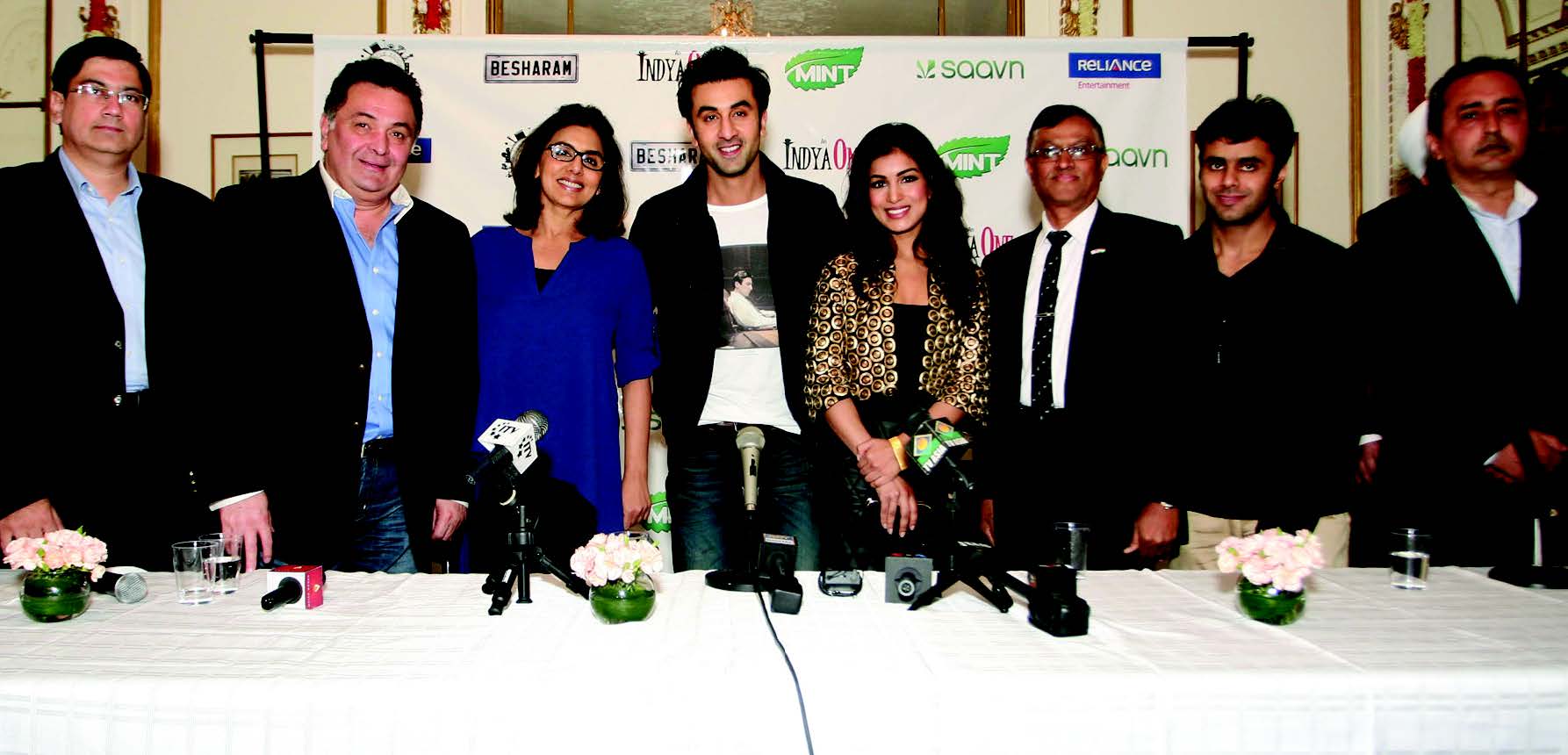
    NEW YORK (TIP): “Cinema that does not entertain is boring. I find parallel cinema boring,” said veteran actor Rishi Kapoor at the promotional campaign of his upcoming film Besharam. He said it in response to a question on the contributions of parallel cinema to 100 years of Indian cinema. He added, “I have been fighting this for over 40 years, ever since I joined the industry. Why pay entertainment tax on something you are not entertained with? It takes a great deal of energy to do fight or romantic scenes. So I request people to not discount our efforts and instead stop giving credit to parallel cinema.” Kapoor senior was joined by his wife and costar Neetu Singh, Ranbir Singh and Indian Australian debutant actor Pallavi Shardha at the grand ballroom, at Indian consulate on Monday. The actors were in New York to promote their latest film ‘Besharam’ scheduled to release October 2.

    The Kapoor Khandan (family) along with the new Indian Australian actress gave a special appearance at the Maharashtra Tourism Diwali at Times Square event where both Pallavi and Ranbir performed at the Light Up Times Square gig. For Ranbir, alumni of the School of Visual Arts in New York and the Lee Strasberg Theatre and Film Institute, celebrating Diwali on Times Square with his family and fans on Times Square was surreal. “All my life I’ve come to New York and walked the streets of Times Square completely anonymously,” he said, “and now 30,000 people are screaming my name! It was a surreal moment.” His 10 minute appearance made the crowd that had waited for him since morning, go ballistic. His female fans continued to follow him even at the press conference held at the Consulate for the film’s promotions. Besharam is a slapstick, in-your-face funny dialogues and proper, shameless fun. It is everything you’d expect from the director who gave us Dabang: slapstick, in-your-face funny dialogues and proper, shameless fun. The film is about Babli (Ranbir Kapoor) a street smart car mechanic is living in a Delhi orphanage.

    He is charming and lives life to the fullest. He also steals cars to support his orphanage.He has no sense of right or wrong till he unwittingly hurts the love of his life, Tara (Pallavi Sharda) and is chased by cop couple Chulbul Chautala (Rishi Kapoor) and Bulbul Chautala (Neetu Kapoor). Babli realizes that there is no right way of doing the wrong thing. Babli sets out to fix all the wrongs in his life and he continues to be shameless about it. Sanjeev Lamba, CEO of Besharam’s distributor Reliance Entertainment, providing insight into the current state of Bollywood in relation to Hollywood and the international movie marketplace noted that among the major marketing strengths of Besharam was the fact that three members of the Kapoor family were the main stars, and appearing together onscreen for the first time. This according to Lamba was the reason for Besharam to have one of the largest global releases ever for a Hindi film which included an unprecedented 200 theaters across North America. “It’s only fitting because Ranbir is a rising superstar, his parents have made an immeasurable contribution to the industry, and it’s the first time they’ve acted with him,” said Lamba. “Besharam is an attitude. It’s where you listen to your heart and follow it. The tagline of this film means Babli isn’t afraid of getting insulted and he’s not looking for respect,” said Ranbir confessing that he is not a Besharam. “In real life I am actually pretty shy, but I guess in front of the camera I focus.

    It is very important for an actor to be Besharam in front of the camera. Unless you express yourself fully you can’t connect with the audience,” said Ranbir who attended the School of Visual Arts in New York for three years, and the Lee Strasberg Theatre and Film Institute here for another year. Asked for an anecdote about working with his father, Ranbir revealed that “in real life,” he never looked into his father’s eyes, but that during the filming of Besharam, he “discovered” Rishi’s eye color. Asked about the tag ‘Super star’ and its use in the present day context, Kapoor scion said, “The tag super star is over used today, It is used for anybody who delivers a Friday hit. To choose good scripts and work with good directors is the first step. But more importantly, I need a larger body of work to get there… For me and a new generation of actors, being a good actor is the new superstar.” He said the concept of super star is dying because “unlike yesteryears actors, today’s stars are everywhere, the mystery as an actor- that kept fans asking for more-is missing partly due to social media.” The consulate event began with a welcome address by Consul General of India Dnyaneshwar Mulay who introduced the film team and highlighted the contributions the Kapoors made during 100 years of Indian cinema.

    He even praised the first family of Bollywood for contributing 84 years to the largest film industry in terms of production of films every year. Bollywood’s Kapoor family goes back four generations. Prithviraj Kapoor was an actor (roles including the emperor Akbar in the 1960s historical epic Mughal E Azam) and theater company founder. His sons Raj, Shammi and Shashi Kapoor likewise became famous actors and directors. Karishma, Kareena and Ranbir are now carrying the legacy. Asked at the press conference whether he felt jealous of his son who had made his remarkable mark in a much shorter span of time than he had, Rishi Kapoor said he couldn’t be more proud of the “male heir to the legacy” of the Kapoor family. He said he felt fortunate that he had worked on three films with his late father, Raj Kapoor, including the 1973 blockbuster Bobby, Rishi’s first film as male lead. Neetu Singh too made a couple of remarks, including the one that she was proud of Ranbir. Another was that she and Rishi ensured giving the best values of life to their children. In fact, it was for the consideration of raising the children in a befitting manner that she had decided to keep herself away from working in the films. And Ranbir flattered her with the observation that he found his mother to be the best artist to work with. It was a pleasure to see a doting family.

  • History making Indian Diwali at Times Square mesmerizes visitors

    History making Indian Diwali at Times Square mesmerizes visitors

    NEW YORK (TIP): Diwali maybe a month away but for Indian Americans at Times Square, festivities started as early as September 22 when the entire cast of Besharam made a special appearance at the ‘Maharashtra Tourism Diwali at Times Square’. But Diwali at Times Square was much more than just the special performances from the Besharam team. Roughly about 30,000 people attended the Diwali event on Sunday at the busiest area for pedestrians in the world where 3,00,000 people visit every day. In a bid to tap major international source markets and increase tourist arrivals, the Maharashtra Tourism Development Corporation (MTDC) participated in the early Diwali celebrations. Speaking on the occasion Minister for Tourism, Government of Maharashtra, Chhagan Bhujbal said, “Due to this event, the image of Maharashtra is going to be boosted in all international markets, not just in the USA. We want foreign tourists to come to Maharashtra, explore its rich cultural heritage and UNESCO world heritage sites like Ajanta, Ellora and Elephanta caves.


    img010

    They should also visit Tadoba Tiger Sanctuary, near Nagpur, where any tourist would spot tigers. It is my pleasure to invite all international tourists to indulge in the luxurious Deccan Odyssey train which covers the beautiful Maharashtra.” Mr. Satish Soni, Director – Tourism, Government of Maharashtra said, ‘It’s an extravagant event for Maharashtra tourism in a foreign land. We are glad at its grand success as thousands of people visited and enjoyed the event at the magnificent Times Square. We appeal to the people of the world to come to Maharashtra for an unforgettable experience. “There were many enquiries for the Deccan Odyssey train followed by the wildlife reserves, mostly from foreigners and local Americans,” said one of the organizers at the tourism booth. The festivities showcased Indian music, cuisine and fashion. Times Square between 45th to 47th streets was bustling with tourists and visitors dressed in traditional attire as they lined up to get the saffron Kolhapuri turbans, pointed mustache masks, Gandhi caps and chudis (bangles). The cultural festival included dance, diya, rangoli painting, Indian arts and crafts, fashion show, photo booths with ethnic outfits, celebrity autograph/photo booth and much more. The event saw some famous dancers performing Lavani, and other well-known Marathi dances styles, Bhangra, fusion etc.


    img11

    Dhol – Tasha and Tutari enthralled the crowds eagerly waiting to catch a glimpse of their favorite Bollywood stars. Groups like Sangharsh and Sankalp promoted Govinda festival by forming human pyramids. Late in the evening at the Light Up Times Square concert had the music maestro Shankar Mahadevan also created a sensation through his voice and musical troupe. “Where in my dreams did I think that I will sing Ganpati bhajan at Times Square,” said Mahadevan. The concert also saw Canada based group Culture Shock perform live on a mix of songs. Although Indian Americans dominated the crowd many tourists as well as local Americans enjoyed the festivities. “This is my first ever encounter with India. I have heard a lot about the country that it is colorful and vibrant but experienced it for the first time. I loved the energy and the sense of community and also the samosas. My next holiday destination is India for sure,” said Suzan Lew. The festival encountered mixed reactions from the Indian Americans. “Diwali is a festival of lights and what better place to celebrate than Times Square. It is like a mela out here, I have never seen such a crowd in the US. Only Indians can party like this, I am proud to be an Indian,” said Pragya Mahajan who wore a saffron turban. “Celebrating Diwali at Times Square is celebrating the cultural capital of the world (India) at the cultural capital of the United States,” said Sunny Doshi, a new Jersey resident.

    While there were positive responses to the event, many Indian Americans were disappointed with the ‘westernized’ Diwali celebrations and poor management. “Speakers at the very end did not work. We tried to go forward but feared stampede and because there were no screens to look at we headed back,” said Reetu Kumar who had come with her 68 year old grandmother. The night culminated into the star studded performances from Bollywood actors Ranbir Kapoor, and debutant Pallavi Shardha who made a special appearance along with Rishi and Neetu Kapoor to promote their upcoming film Besharam. The crowd gathered at Times Square went ballistic on catching a glimpse of one of Bollywood’s most eligible bachelors. Dressed in a black ‘sherwani’, the young Kapoor danced and interacted with his fans as his father recalled visiting the city years ago and expressing gratitude for the adulation shown to him and his family. Congratulating Maharashtra Tourism for its achievement, Rishi Kapoor said, “I am proud to be a part of Maharashtra.” Complimenting ASB Communications and Event Guru, Shankar Mahadevan said, “Congratulations for pulling this off. To do this at Times Square was close to impossible. God bless”. “I came to the USA over 36 years ago and I still remember being awed by Times Square when I first saw it. I told myself even at that time that I will showcase the diversity and richness of India at this location. I am so thankful to all those who came here today. I am equally thankful to Maharashtra Tourism Development Corporation, Air India, MoneyGram, DishWorld, Wells Fargo, Bank of Baroda and all other sponsors without whose support this event would not have been possible”, said Neeta Bhasin, President, ASB Communications, the conceptualizer of the event.

  • HILL STATIONS OF MAHARASHTRA

    HILL STATIONS OF MAHARASHTRA

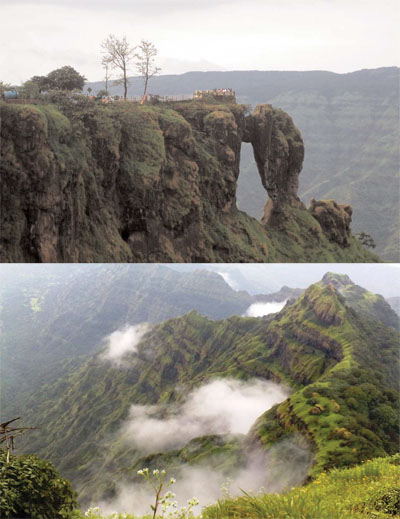
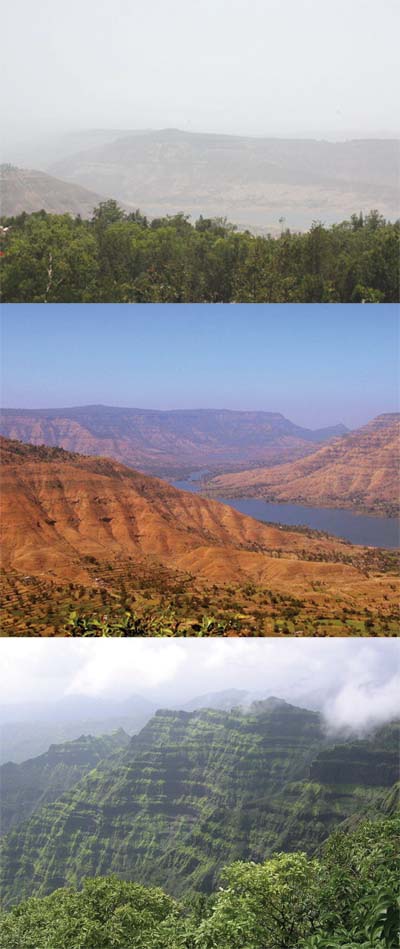
    As the state of Maharashtra is the Home of Sahydri Mountains, the state has many appealing hill stations. The Britishers founded most of these hill stations during their colonial era to beat the scorching heat. But the beauty and the charming glory are still alive in these hill stations. The Western Ghats, which form a part of the Sahydri range, has also lots of beautiful hill stations. Hill stations of Maharashtra not only attract the foreign tourists but also Indian domestic tourists, which are exhausted with the fast urban life. Popular hill stations of Maharashtra are Matheran, Lonavala, Khandala, Mahabaleshwar, Panchagani, Bhandardara, Malshej Ghat, Amboli, Chikhaldara Panhala, Panchgani, Sawantwadi, Toranmal, and Jawahar. It is said that each hill station of Maharashtra has unique characteristic and its closeness to a city makes it very popular.


    img44

    Amboli
    Amboli is located in Sindhudurg district of Maharashtra. This hill station is at an altitude of 690m above the sea level. Having dense forests and steep mountains, Amboli is the last hill resort before the coastal plains begin in the southern ranges of the Sahyadri Hills. The hilltop Amboli gives a fine bird’seye view of the Konkan coast. Colonel Westrop, who was a British political agent, developed Amboli as a hill station after the opening of the Ghat Road from the coastal town of Vengurla, now in southern Maharashtra, to Belgaum. Receiving nearly 750 centimeters (269 inches) of rainfall per year, this hill station is the wettest place in Maharashtra. Amboli is one of the few hill stations of Maharashtra from where one can see the sea. This hill station is totally swathed with cloud during rainy season. Hiranyakeshi Temple, Nagarta falls, Hiranya Keshi, Mahadev Gad and Narayangad are the important places to visit in this hill station. Nearest airport is Belgaum, (64 km), while nearest railway station is Sawantwadi at 28 km on the Konkan Railway. One can stay at government resorts.

    Bhandardara
    Bhandardara is located at a distance of 70 km from Nashik. It is a small and peaceful area. This hill station is popular for fun loving and picnic lovers. Radha Falls, a deep valley, a clean and large Arthur Lake, a historical Ratangadh Fort, an ancient temple – Amritheshwar Temple, a peaceful Agasti Rishi Ashram,Wilson Dam also known as Bhandardara Dam, and Viewpoints are the important destinations at Bhandarda. It also has a trekking destination – Mount Kalusubai. The largest earthen dam in the country and one of the oldest dams in Asia,Wilson Dam or Bhandardara Dam is at Bhandardara. The height of the dam is nearly 150 m. The overflowing water makes the Umbrella Falls, which is a picturesque sight during the monsoon season. There is also a lake with serene beauty called Arthur Lake. One can also visit the site from where the lake originates at Pravara River. Streamlets from this lake flow down to 45m heights at Randha Falls. Not only a heart catching scenic spot, these falls also serves as a hydropower generation. Agasti Rishi Ashram is on the bank of the Pravara River, which attracts huge crowds. One can also visit Amriteshwar Temple at Bhandardara. Bhandardara is most suited to visit after the monsoon season as its beauty emerges only after the rains. Nearest Airport is Nashik at (93 km), nearest railway station is Igatpuri at (45 km).

    Chikaldhara
    Chikhaldara is in Amaravatio district of Vidarbha region of Maharashtra. It is believed that its name is derived from Keechaka. This hill station is the only hill station, which offers the tourists lots of wildlife, viewpoints, lakes and waterfalls in the Vidharba region. Chikhaldara is situated at an altitude of 1,118 m. This place is the only coffee-growing area in Maharashtra. Chikhaldara is full of deep valleys, and these valleys are full of velvet mist and majestic trees. Abundance of natural scenery, exciting wildlife, breathtaking waterfalls and placid lake make the hill station a perfect site for summer retreat. Popular as the Melghat Tiger Project and Dhakana-Kolkaz National Park, this station has wildlife like panthers, sloth bears, sambar, wild boar, and wild dogs. Tourists can also enjoy the panoramic view of this hill resort from Hurricane Point, Prospect Point, and Devi Point. Gawilgad and Narnala fort, Pandit Nehru Botanical Gardens, Tribal Museum and Semadoh Lake are other destinations of this hill station. Chikaldhara’s cool breezy climate makes it an excellent place to repose in summer. Nearest airport is Akola (150 km), while nearest railway station is Badnera (110 km). Nearest bus depot is in Amravathi (100 km). Accommodation is available at Chikhaldara.

    Jawahar
    Jawhar hill station is in Thane district of Maharashtra. Gifted with exotic valleys, thick rich forests and pleasant climate, Jawhar offers dofferent type of enjoyment comparing to other hill stations of Maharashtra. Jawhar is popular for its lively Warli paintings. This hill station is one of the few tribal kingdoms in Maharashtra. Tourists can visit Jai Vilas, the Palace of the tribal lords that offers a unique opportunity to expose and enlighten with the tribal way of life. Bhupatgad relics are also worth a visit. Dadar Kopra Falls, Hanuman Temple and Sunset Points are the other attractions of Jawhar. Jawhar is also known as the Mahabaleshwar of Thane District. Shirpamal, where Shivaji Maharaj camped on his way to Surat is near Jawhar. Nearest airport is at Nashik (80 km), while nearest railway station is at Igatpuri (61 km).

    Lonavala And Khandala
    Locating at an altitude of 625m, Lonavala and Khandala are famous for its beautiful hills, deep green valleys, huge lakes, historic forts and waterfalls etc. These two hill stations are at the Sahyadris Mountains of Maharashtra. Lonavala and Khandala have magnificent waterfalls that give a heart catching view during monsoon. Tourists can plan their trip together with Karla, Bhaja, and Bedsa caves, which are very near from Lonavala. This hill station is also known as the ‘Jewel of Sahydri’, because of its nature’s gifted of beautiful valleys, hills, milky waterfalls, lush greenery, and pleasant cool winds. Khandala is smaller than Lonavala and relatively calmer. It is known to be the pride of the Sahyadri Mountains. Beautiful waterfall amidst green environment is really splendid to see. The place refreshes the exhausted tourists. Tugauli, Lonavala, Bhushi and Valvan Lake are the important lakes of this hill station. Nearest airport is situated at Pune (64 km). Lonavala and Khandala are 104 km from Mumbai and 64 km from Pune on the Mumbai-Pune highway.

  • CBI clears Sushilkumar Shinde in Adarsh society case

    CBI clears Sushilkumar Shinde in Adarsh society case

    MUMBAI (TIP): The CBI, probing the Adarsh society case,said that there was nothing on record to show that Union home minister Sushilkumar Shinde had a role in the alleged scam by allotting flats to ineligible members. The Colaba tower has come up next to defence establishments. The CBI on September 19 made a plea in the high court to dismiss an application filed by Pravin Wategaonkar, who had filed a PIL seeking a probe by Enforcement Directorate for alleged benami transactions over flat allotments, in the tower 31-storey sea-facing residential tower in Colaba, had seeking to include Shinde’s name in the criminal case. But CBI said, “There is nothing on record to suggest that Shinde insisted on 51 more members by substituting ineligible members before the land was given to the society resulting in addition of benami members.” CBI officer K Babu filed an affidavit and said the probe into benami transaction is on. Wategaonkar had sought details and a probe into allotment of a flat to a family member of a retired army major N W Khankhoje.

    He had suggested that Shinde may have suggested Khankhoje’s name. The CBI said Major Khankhoje who had retired in 1977 had learnt of Adarsh and applied in 2004 for a membership after ”gathering information from Army sources” . He had asked his son Kiran who also retired from the Indian Navy as a captain in 1996 to join Air India as a pilot to arrange for the flat payment. Kiran’s wife Devyani is a vice president in a large private sector group company. The CBI said ”while it may be true that the membership was pursued by K L Gidwani a politician and another Adarsh member, it can’t be confirmed at this stage since both Gidwani and Major Khankhoje have since expired.” But the CBI said that “investigation does not reveal any family relationship between Khankhoje and Shinde”. Wategaonkar also filed a fresh affidavit pointing to internal file notings of 2004 bearing Shinde’s signature as then CM of Maharashtra. The CBI and state sought two weeks time to study and reply to the fresh affidavit and the HC adjourned the matter by a week to next Thursday. Wategaonkar filed a fresh affidavit pointing to internal file notings of 2004 bearing Shinde’s signature as then CM. The CBI and state sought two weeks time to reply to the fresh affidavit. The HC adjourned the matter to next Thursday.

  • About Ambassador Dnyaneshwar Mulay

    About Ambassador Dnyaneshwar Mulay

    Born on November 5, 1958 in Kolhapur District of Maharashtra State (Western India), Ambassador Dnyaneshwar Manohar Mulay took his primary education at the village Primary School. Subsequently, he completed Bachelor’s Degree in English Literature from Shahaji Chhatrapati College at Kolhapur, followed by Master’s Degree in Personnel Management from Mumbai University. He joined Indian Foreign Service in 1983 and, besides serving at the Ministry of External Affairs in New Delhi, has also done postings in Indian Missions in Tokyo, Moscow, and Port Louis. He served as Minister in Damascus and was High Commissioner of India to Male (Maldives) from April 2009-March 2013. In New Delhi, he acquired diverse experience during his assignments at Ministry of Commerce and Industry and Ministry of Finance. He also served as Advisor in the Cabinet Secretariat. Ambassador Mulay took charge as Consul General of India in New York on April 23, 2013. Ambassador Mulay has been an award winning writer in Marathi and Hindi. He has contributed several books some of which have been translated into Kannada, Arabic, Urdu and Dhivehi. He has keen interest in Education, Environment (particularly water security) and socio-economic issues. Ambassador Mulay is married and has three children (a daughter and two sons).

  • Legendary Bollywood stars to perform at the Iconic ‘Diwali at Times Square’

    Legendary Bollywood stars to perform at the Iconic ‘Diwali at Times Square’

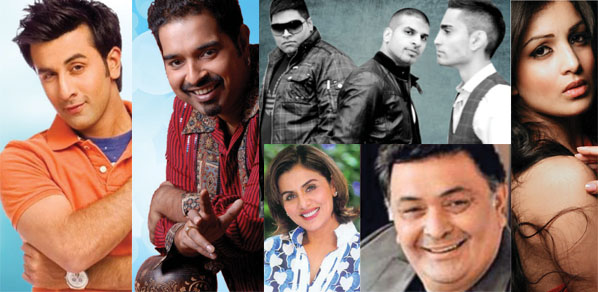
    NEW YORK, NY (TIP): The iconic and history-making ‘Diwali at Times Square’ on Sunday, September 22, 2013 will witness participation of some of the biggest stars of Bollywood, the organizers, Event Guru and ASB communications, announced here on September 12. The event is sponsored by Maharashtra Tourism, Air India, MoneyGram, Royal Albert Palace, Wells Fargo and Bank of Baroda. So do mark September 22nd2013 in your calendar because that is the day when you will get to experience and savor the cultural potpourri that is India in Manhattan when Times Square celebrates Diwali. First time ever this historic event is being celebrated at the largest and the most popular cross road of the world – Times Square.

    The first-of-its-kind international initiative to promote Indian culture, heritage and diversity will span Broadway from West 45th to West 47th street. The event will take place from 11am to 6pm, followed by the ‘Light Up Times Square’ concert which will showcase live performances from some of the biggest names in Bollywood. All present will get a peek at the cultural kaleidoscope that is India by savoring Indian music, dance, food and films. The Title Sponsor of the show Maharashtra Tourism will be showcasing the much talked about and looked forward to Deccan Odyssey train through a re-creation of the same. All present will also be given an opportunity to take home a little bit of the Indian culture through an interactive exercise by the presenting sponsor Air India, wherein, they could learn how to drape the saree. Apart from this they will also get an opportunity to learn how to wear a turban or even learn how to play the dhol (Indian drum). A spokesperson for the organizers, giving details of entertainment segment said, “To kick start entertainment we shall have the melodious and ethereal voice of Shankar Mahadevan resonate in Times Square and enthrall all those present with his most popular songs medley.

    As if that wasn’t enough we shall have Ranbir Kapoor, the heart throb of India, the maverick superstar whose lineage boasts of the likes of Prithviraj Raj Kapoor, Raj Kapoor and Rishi Kapoor. “Ranbir Kapoor will perform and interact with the audiences present about his new film Besharam. And over and above all this pulsating entertainment we will get to see the most popular Bollywood couple Neetu and Rishi Kapoor accompany him on stage too. Pallavi Sharada, the debutante heroine of the film, will also perform on a song from Besharam. If this isn’t enough to give you an adrenaline rush then you will be jolted into a musical culture shock by the famous group from Canada Culture Shock. So do come one and all and share in this fantastic free for all experience of Dilwali at Times Square on 22ndSepetmber 2013. For further inquiry do visit www.diwalitimessquare.com and facebook.com/DiwaliTimesSquare

  • BOB Chairman & MD visiting New York

    BOB Chairman & MD visiting New York

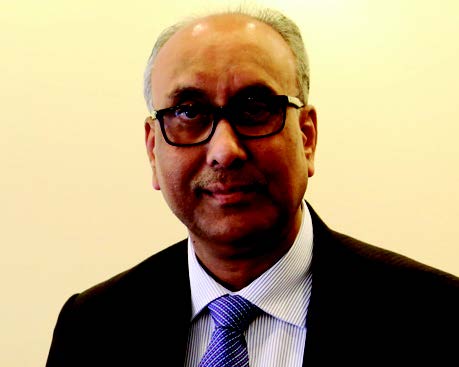
    NEW YORK, NY (TIP): Bank of Baroda Chairman and Managing Director, Mr. S.S. Mundra will be visiting New York from September 16th to 18th. It is the first visit of Mr. Mundra to New York after he took over as Chairman and Managing Director of one of the largest public sector banks of India. Bank of Baroda Chief Executive for Americas, Mr. Dhimant Pradyumna Trivedi informed TheIndian Panorama that during his visit to New York Mr. Mundra would be meeting customers and the Indian American community besides launching internet banking. Mr. Trivedi said that a reception to Mr. Mundra is being hosted by the Indian Consulate on Monday, September 16th where he will be meeting the Consul General Dnyaneshwar Mulay and a cross section of Indian American community.

    He will also address the gathering and, while talk about banking in general, he is likely to speak about the synergy that can be developed through Bank of Baroda. Read below a brief biography of Mr. Mundra. Mr. S. S. Mundra was born on 18th July, 1954. After completing his Masters in Commerce, he joined Bank of Baroda as a Probationary Officer on 21st March, 1977. In his first stint in Bank of Baroda, he rose to the level of General Manager in 2007. During his illustrious career in Bank of Baroda, he held several challenging assignments which included stint as Head of Bank’s Maharashtra & Goa Zone and Global Treasury Operations for over -5- years. During his overseas assignments, he served with Bank of Baroda (Uganda) Ltd. and was also Territorial Head of Bank’s European Operations, headquartered at London during the period 2008 – 2010.

    Mr. Mundra was elevated as Executive Director in Union Bank of India in September, 2010. During his tenure at Union Bank of India, he handled many important portfolios including Treasury, International, Large Corporate and Alternate Channels. On his elevation as Chairman and Managing Director on 21st January, 2013, he joined Bank of Baroda a premier Public Sector Bank (PSB) in India having a branch network of over 4000 branches including Bank’s overseas operations spread over 24 countries with a global business of over INR 8 trillion (USD 131 bn). Bank of Baroda is second largest Public Sector Bank of India only after State Bank of India in terms of Balance Sheet size.

    It has 100 branches/ offices outside India. He is on the Board of many national and international organizations which include EXIM Bank, National Institute of Bank Management (NIBM), Bank of Baroda (Uganda) Ltd., India International Bank Malaysia Bhd, Bank of Baroda (New Zealand) Ltd., BOBCARDS Ltd., India First Life Insurance, Baroda Pioneer Mutual Fund etc. He has remained Director on the Board of The Clearing Corporation of India Ltd. (CCIL), Central Depository Services (India) Ltd. (CDSL), MITCONConsulting and Engineering Services Ltd., BOB Asset Management Company, India Infrastructure Finance Corporation (UK) Ltd. (IIFCL), Star Union Dai-Ichi Life Insurance Company Ltd., National Payments Corporation of India Ltd (NPCI) and Bank of Baroda (Kenya) Ltd. He has also served on many Committees of RBI, IBA, NIBM, CII etc. He has also attended many training programs, seminar/ conferences both in India and abroad, in the area of Banking and Finance. He has widely traveled abroad.

    The countries he visited include UK, Belgium, France, USA, Japan, China, Hong Kong, Singapore, various African countries etc. With the blend of wide overseas and domestic banking exposure at top management level, he has immensely contributed to the improvement of policy framework of the banking industry. As recognition of his contributions in the field of banking, finance, industry and commerce, he has won many Awards and accolades, latest being his inclusion in the list of India’s top 100 CEOs in CD-ET (Corporate Dossier – Economic Times) Survey after a stringent process of selection while Bank of Baroda is also ranked as 20th Best Indian Brand by Brand Equity – Economic Times

  • Diwali, “the Timeless Festival of Lights” comes to Times Square

    Diwali, “the Timeless Festival of Lights” comes to Times Square

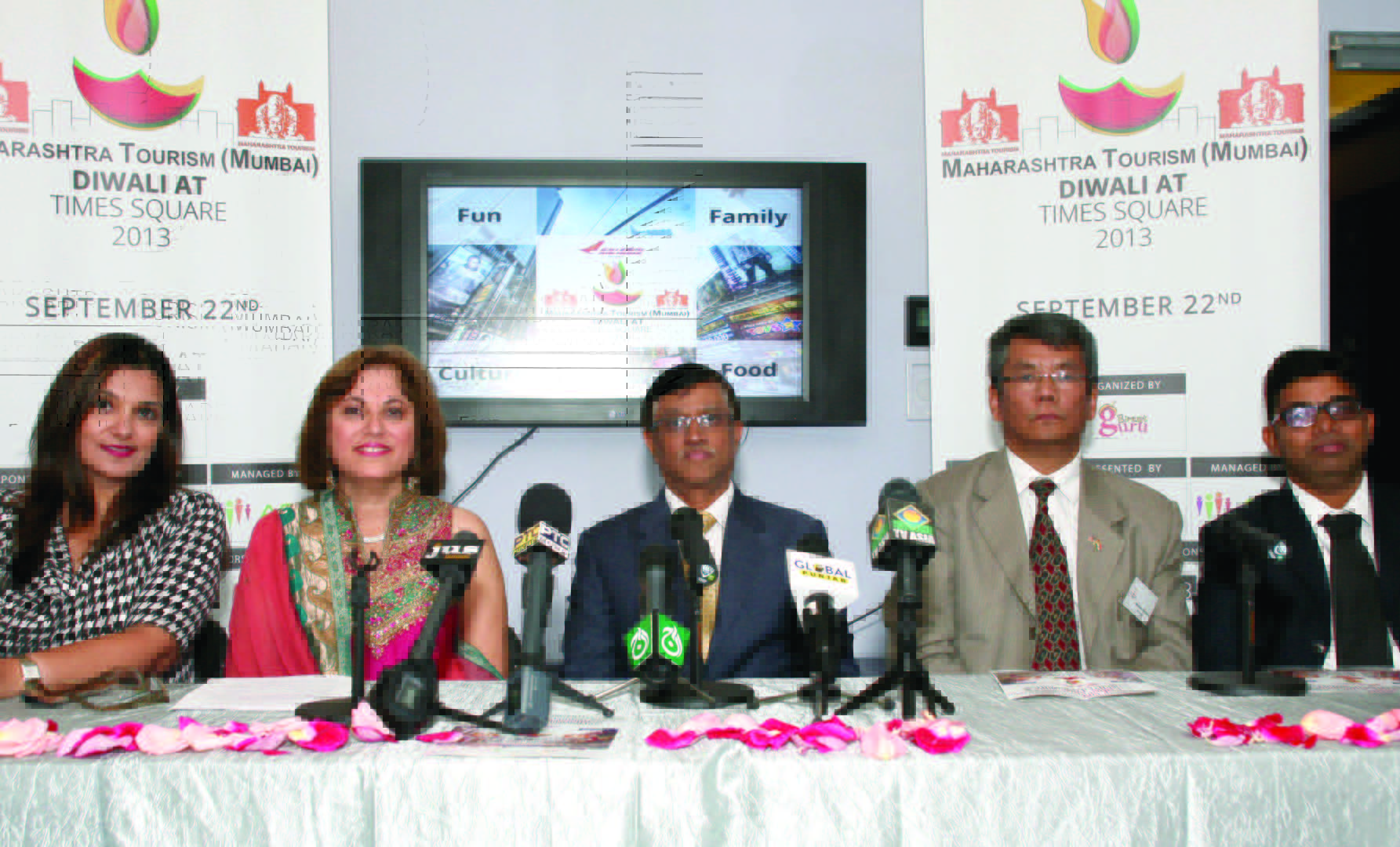
    NEW YORK, NY: Come September 22nd and “Celebrity appearances, musical performances, Asian Indian Cuisine, ethnic Indian dances, fashion show and a “Light Up Times Square” concert will be the highlights of the first ever Diwali at Times Square, New York”, said Ms Neeta Bhasin, President of ASB Communications who have conceptualized and are managing the mega event. She was speaking at a press conference organized by Event Guru and ASB Communications at the up end The Atelier- Sky Lounge August 29th.

    The Consul General of India in New York, Ambassador Dnyaneshwar Mulay and the principal sponsors of the Times Square Diwali, Air India Regional Manager for Americas, Mr. Riwo Norbhu, MoneyGram Senior Marketing Manager Ms Zainab Ali, and Mr. Dinesh Kamble, Senior Manager at Maharashtra Tourism joined Neeta Bhasin at the press conference which was attended by a large number of media persons from both the print and electronic media, and a select gathering of the Indian American community’s best faces. Welcoming them all and introducing the sponsors, Neeta said that she was greatly impressed by the Maharashtra Tourism department which took just seven days to agree to become the title partners.We have, therefore, christened the Times Square Diwali as “Maharashtra Tourism (Mumbai) Diwali at Times Square”. “Air India”, she said, “are our valuable presenting partners”.

    She introduced Zainab Ali of MoneyGram as “our constant partners in all ventures” and thanked all sponsors present and those who were not around, including Bank of Baroda, Wells Fargo and “many others”. The CE of Bank of Baroda, Mr. Dhimant P. Trivedi could not make it to the press conference but was mentioned by Neeta as one who has always been supportive of every community event. Speaking on why she chose to have Diwali at the Times Square, Neeta said that she was keen to showcase India’s rich heritage and culture to the mainstream in America. “And what other place better that the Center of the World-the Times Square!” she said. Times Square, she said, attracts on an average 350,000 pedestrians each day. Neeta said she felt the need and urge to organize an event that would make the mainstream take notice of the Indian American community which has given to America the second largest group of professionals. “Unfortunately, despite our strengths and contribution, we, the Indian Americans, have not received the kind of recognition from the mainstream as Indians in U.K. or Australia.

    Diwali at Times Square is an attempt at the legitimate recognition of the Indian American community.” Outlining details of the Diwali celebrations on September 22nd when “every Indian American will own Times Square for the day”, Neeta said the event will take place from 11 A.M. to 6 P.M., followed by the “Light Up Times Square” Concert which will showcase live performances from some of the biggest names in Bollywood. “The concert will also feature a breath-taking laser light show”, she disclosed. Inviting the Indian Americans to the history-making event, being the first ever Diwali at the Times Square, Neeta exhorted them to “come in traditional outfit and be the proud owners of Times Square for the day.” A message from Maharashtra Minister for Tourism, Mr. Bhujbal was screened at the press conference. The Minister welcomed all and said, “I thank everyone for being present here for the curtain raiser of Maharashtra Tourism (Mumbai) Diwali at Times Square.” He found many similarities between New York and Mumbai. He said if New York was America’s financial capital, Mumbai was India’s financial capital. Both cities are cradles of diverse cultures, he said. Speaking about the state of Maharashtra, Mr.

    Bhujbal described it as a large state with varied topography and enormous scenic beauty. He added that the state was rich in heritage and was a repository of age old culture. In fact, there were four world heritage sites in Maharashtra that included Ajanta, Ellora and Elephanta. One of the most favored tourist destinations, the state, he said is “one of the most developed states of India”. He extended invitation to the gathering to come and holiday in Maharashtra. He said he was happy to have a global platform in the shape of Times Square in New York to showcase the state of Maharashtra, its variety and richness of heritage and culture. Ambassador Mulay, a scholar, writer and poet, besides being an ace career diplomat, spoke of the 5000 years old civilization of India and how over the centuries India absorbed different cultures and grew richer and more diverse. He also spoke of the geographical diversity of India; The Himalayas in the North, the plains, and the seas to the East, the West and the South. Speaking about Diwali, Mr. Mulay said, “Diwali is the king of all festivals. Despite religious connotations, Diwali is a secular festival, the most representative festival of India”. He gave a great description of the event when he said it would be appropriate to say “the Timeless festival comes to Times Square”. Mr. Mulay had a word of appreciation, bordering admiration, for America and New York. ” The beauty of the US is that it is always able to institutionalize.

    New York is a place of meeting, meeting and greeting- a rendezvous. Diwali, too, is a festival of meeting and greeting”, Mr. Mulay said. Appreciating the organizers’ vision, Mr. Mulay said, “It is not only a good idea but a great idea” and added that the event will be “a great celebration of growth of India and growth of Indian American diaspora”. “1.2 billion hearts will throb to see Diwali being celebrated at the Times Square”, he said and called upon all Indian Americans to “participate in full vigor”. On the occasion, he also recalled how Ranju Batra, who was also present, has been making strenuous and constant effort to have a Diwali commemorative stamp issued by the US Postal department and hoped “we will see the Diwali stamp this Diwali”. Air India Regional Manager for Americas Mr. Riwo Norbhu who seemed to believe in the dictum “Brevity is the soul of wit” said, “At Air India we all are very proud to celebrate Diwali at Times Square”. MoneyGram Senior Marketing Manager Zainab Ali who was in a hurry to catch a flight to LA, made a brief remark. She said, “MoneyGram has been part of many community celebrations.When my friend Neeta broached the subject I felt it was a great idea. I have never seen a person who worked as hard as Neeta to see that the idea takes a shape. Her effort will see 1.2 billion Indians in India celebrating Diwali at Times Square. MoneyGram will be happy to support her now and always”. All eyes are now turned to September 22nd.

  • Dabholkar murder: Cops still in the dark

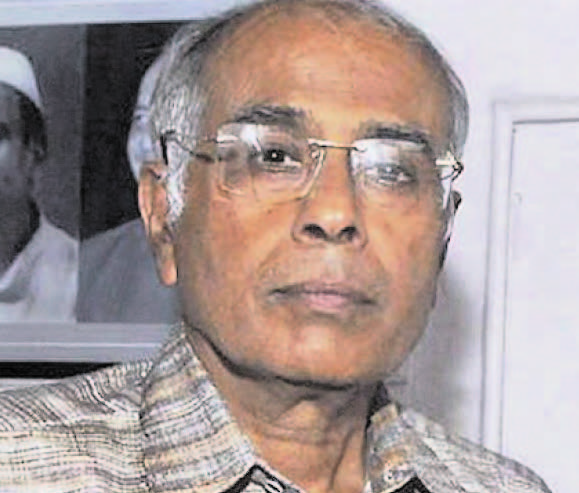
    Dabholkar murder: Cops still in the dark

    PUNE, INDIA (TIP): Four days after rationalist Dr Narendra Dabholkar was shot dead during a morning walk, police are yet to achieve a breakthrough with hopes of getting some leads from a CCTV footage being dashed due to blurred images. The crime branch of the Pune police has now started questioning leaders of 13 gangs involved in serious crimes, in connection with the murder of anti-superstition crusader Dr Narendra Dabholkar. Police officials said the gang leaders and members, some of whom are lodged in jails across the state, are being quizzed to ascertain if the mastermind behind Dabholkar’s killing had rendered the services of shooters belonging to any of these gangs.

    There are many gangs operating in the city, but the 13 gang leaders were shortlisted as they have been involved in serious crimes such as kidnapping, extortion and murder, the officials said. These gangs have also been known to use firearms while committing crimes like robbery, dacoity and murder in the past, forcing the police to invoke stringent provisions of Maharashtra Control of Organised Crime Act against the leaders and members. The police are also keeping an eye on petty criminals who operate individually or jointly and are in constant touch with the gangs to provide assistance in some form or the other. Officials said that questioning the criminals may help them uncover useful information, leading them to Dabholkar’s assailants.

    The police have collected CCTV footage capturing blunt images of the two assailants fleeing the crime scene on a bike. The officials have also started collecting footage of all the major roads to study routes used by the assailants and establish a timeline of when they reached the city and fled after the crime. Officials have questioned as many as 40 people who cross the Maharshi Vitthal Ramji Shinde Bridge during their morning walk. Most of the walkers, however, have said that they were at home on the day of the incident because of raksha bandhan. A police team has recorded statements of the victim’s family members and friends in Satara, but the officials said that they have not held any rightwing group or individual responsible for the murder. They said the family members have not given any specific information about the threats received by Dabholkar.

    Meanwhile, the police have obtained over 1,000 two-wheeler numbers from the regional transport offices across the state that are similar to the motorcycle used by Dabholkar’s assailants. The person who saw the ssailants fleeing was able to note down only part of the number, but this information has not helped the police trace the vehicle as yet. A day after anti-superstition activist Narendra Dabholkar was shot dead, the Maharashtra government on Wednesday, August 21 decided to promulgate an ordinance to enact a long-pending bill to eradicate black magic, blind faith and superstitious beliefs. The law will be the first such in the country.

  • AGRICULTURE AND RURAL DEVELOPMENT IN INDIA SINCE 1947

    AGRICULTURE AND RURAL DEVELOPMENT IN INDIA SINCE 1947

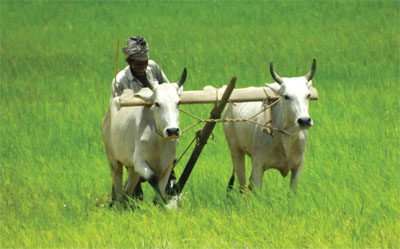
    Agriculture is the dominant sector of Indian economy, which determines the growth and sustainability. About 65 per cent of the population still relies on agriculture for employment and livelihood. India is the first in the world in the production of milk, pulses, jute and jute-like fibres; second in rice, wheat, sugarcane, groundnut, vegetables, fruits and cotton production; and is a leading producer of spices and plantation crops as well as livestock, fisheries and poultry.

    In the past few years, Indian agriculture has done remarkably well in terms of output growth. The 11th Five Year Plan (2007-12) witnessed an average annual growth of 3.6 per cent in the gross domestic product (GDP) from agriculture and allied sector. The growth target for agriculture in the 12th Five Year Plan is estimated to be 4 per cent. Indian agriculture is benefitting huge from rising external demand and the sector’s wider participation in the global economy.

    In order to boost investments in the sector, the Government of India has allowed 100 per cent foreign direct investment (FDI) under automatic route in storage and warehousing including cold storages. The government has also allowed 100 per cent FDI under the automatic route for the development of seeds. Department of Agriculture and Cooperation under the Ministry of Agriculture is the nodal organisation responsible for development of the agriculture sector in India.

    The organisation is responsible for formulation and implementation of national policies and programmes aimed at achieving rapid agricultural growth through optimum utilisation of land, water, soil and plant resources of the country. arket Dynamics Backed by policy impetus by the Government of India, the country ranks 10th in global agricultural and food exports, as per Economic Survey 2012-13. Agriculture accounts for about 10 per cent of the total export earnings and provides raw material to a large number of industries.

    “Exports of agricultural products are expected to cross US$ 22 billion mark by 2014 and account for 5 per cent of the world’s agriculture exports,” according to the Agricultural and Processed Food Products Export Development Authority (APEDA). Total exports of Indian agri and processed food products from April 2012 to February 2013 stood at Rs 11,254,275.51 lakh (US$ 20.74 billion) as compared to Rs 7,186,784.33 lakh (US$ 13.24 billion) during the same period last year, according to the data provided by APEDA.

    As of March 1, 2013, India has wheat stocks of around 27.1 million tonnes (MT), as against a requirement of mere 7 MT, while total food grains stocks in the central pool (including rice) is estimated to be almost 63 MT, as against a requirement of 21.2 MT. Wheat exports from India are expected to grow by 23 per cent to 8 MT in the financial year 2013-14, on the back of strong global prices and surplus domestic supply. Exports of rice are also expected to cross 10 MT from 7.3 MT during previous year due to robust demand from West Asia, Africa and South-East Asian countries.

    Major Developments and Investments The total planned expenditure for the Ministry of Agriculture has increased considerably to Rs 27,049 crore (US$ 4.98 billion) in the Union Budget 2013-14. The outlay is 22 per cent over the revised estimates of the year 2012-13. Further, the amount of Rs 1,000 crore (US$ 184.32 million) has been allocated to continue support to the new green revolution in Eastern States like Assam, Bihar, Chhattisgarh and West Bengal to increase the rice production.

    An outlay of Rs 500 crore (US$ 92.17 million) is also proposed for starting a programme of crop diversification that would promote technological innovation and encourage farmers to choose crop alternatives in the original green revolution States. Under the Rashtriya Krishi Vikas Yojana, an outlay of Rs 9954 crore (US$ 1.83 billion) and Rs 2250 crore (US$ 414.64 million) have been proposed for mobilizing higher investment in agriculture and the National Food Security Mission respectively.

    A memorandum of understanding (MoU) has been signed between Indian Council of Agricultural Research (ICAR) and Ramakrishna Mission Vivekananda University (RKMVU) for establishment of 632nd Krishi Vigyan Kendra (KVK) in South 24 Parganas district,West Bengal. The ICAR and the World Bank have been implementing a joint National Agricultural Innovation Project (NAIP) in the country to accelerate the collaborative development and application of agricultural innovations.

    Till date, an amount of Rs 727.93 crore (US$ 134.13 million) has been released by the World Bank for the project. The Chennai based Indian Overseas Bank (IOB) keeping its thrust on agricultural lending under priority sector area has proposed to open 15 special agricultural credit branches in Karnataka and Maharashtra. The bank intends to lend about Rs 500 crore (US$ 92.17 million) through these branches.

    Government Initiatives Some of the major initiatives taken by the Government of India are: The Union cabinet has approved the proposal of the department of agricultural research and education under the Ministry of Agriculture for the establishment of the National Institute of Biotic Stress Management (NIBSM) at Raipur, Chhattisgarh during the 12th Five Year Plan at an estimated cost of Rs 121.10 crore (US$ 22.31 million).

    The institute will address the impact of biotic stress and harness potentials of emerging tools of biotechnology in agriculture To provide relief to small and marginal farmers especially in drought prone and ecologically-stressed regions, the allocation for the Integrated Watershed Programme has been increased to Rs 5387 crore (US$ 992.79 million) from Rs 3050 crore (US$ 562.12 million) The National Livestock Mission will be launched in 2013-14 to attract investment and to enhance productivity of livestock, taking into account local agro-climatic conditions.

    Rs 307 crore (US$ 56.58 million) have been provided for the Mission In addition, Government has substantially improved the availability of farm credit and increased minimum Support Price to improve investment in the farm sector. The annual agriculture credit target for the financial year 2013-14 has been fixed at Rs 7,00,000 crore (US$ 128.98 billion) against the target of Rs 5,75,000 crore (US$ 105.95 billion) in 2012-13 The Government of India plans to set up a Regional Rural Bank (RRB) Credit Refinance Fund with a capital of US$ 2.1 billion to disburse short term crop loans to small and marginal farmers Road Ahead The Indian agriculture sector is now moving towards another green revolution.

    The transformations in the sector are being induced by factors like newfound interest of the organised sector, new and improved technologies, mechanised farming, rapid growth of contract farming, easy credit facilities, etc. The Ministry of Agriculture is promoting a new strategy for farm mechanization through its various schemes and programmes.

    A dedicated Sub-Mission on Agricultural Mechanization has been proposed for the 12th Plan which includes custom-hiring facilities for agricultural machinery as one of its major components. In the 12th Five Year Plan, the Government intends to increase the share of expenditure on agricultural research and development (R&D). The Government will focus on strengthening the Agricultural Technology Management Agencies (ATMA) concept through improved integration with Krishi Vikas Kendras (KVKs).

  • Govt Imposes $650 Per Tonne Mep On Onion

    Govt Imposes $650 Per Tonne Mep On Onion

    NEW DELHI (TIP): Government on August 14 imposed a minimum export price (MEP) of $650 per tonne on onion to curb shipments and control rising prices. In May last year, the government had scrapped fixing MEP, which is a benchmark price below which onion cannot be exported. The decision regarding $650 per tonne MEP was taken in an inter-ministerial meeting. “MEP on onion was fixed at $650 per tonne at free on board,” a commerce ministry official said. Onion prices have soared to Rs 80 per kg in the major cities of the country.

    Wholesale price of onion have increased in the Lasalgaon market in Nasik by Rs 1 per kg to Rs 46 and by Rs 5 to Rs 50-55 per kg in Delhi’s Azadpur mandi. India has exported 6.39 lakh tonnes during April-July period of this fiscal compared with 6.94 lakh tonnes in the year-ago period. Production stood at 16.6 million tonnes in 2012-13. Maharashtra, Karnataka and Gujarat are the main producing regions of onions.

  • Cases Of Drunk Driving Accidents Decline

    Cases Of Drunk Driving Accidents Decline

    The continuous decline in accidents caused due to intake of alcohol/drugs in the past three years has come as a breather for the government. While in 2010 such violation caused 31,000 accidents, the number of such mishaps reduced to 23,979 last year. Even the fatalities have fallen from 9,976 in 2010 to 7,835 in 2012. Uttar Pradesh reported maximum fall in fatalities in this category from 4,635 in 2011 to 2,400 last year.

    Other states that have reported decline include Andhra Pradesh (by 50% in past three years), Maharashtra, Odisha and Rajasthan. However, there was increase in such deaths in states including Bihar, Jharkhand and Tamil Nadu for the past three years. To put a check on dink driving, some state governments have decided not to give fresh licences for liquor shops along National Highways. Some of the cities including Delhi, Mumbai, Hyderabad and Jalandhar have intensified crack down on such offenders.

  • AN OPEN LETTER TO THE PRIME MINISTER OF INDIA

    AN OPEN LETTER TO THE PRIME MINISTER OF INDIA

    Sir, This is to express our condemnation of your plan to meet with Pakistan’s Prime Minister Nawaz Sharif during upcoming UN Assembly meeting in New York. We are wondering what has changed since the26/11 attack to call for this measure? The infiltration attempts have been doubled this year, and Pakistan Army’s daring overtures have only seen an upsurge. With terror activities on the rise, your meeting with PM Sharif will only embolden Pakistani Army and ISI’s resolve to ‘bleed India with a thousand cuts’.

    The Indian diaspora was outraged by the unfortunate and uncalled for dilution of the army statement by Defense Minister A K Antony, giving clean chit to Pakistan in the brutal and provocative killing of five Indian soldiers on August 6th, 2013. This grave mistake was later corrected; however, some concrete action remains yet to be seen. Our heart goes out to the families of the brave soldiers for their loss. The loss of these five soldiers, namely, Naik Prem Nath Singh (21 Bihar Regiment), Lance Naik Shambhu Saran Rey (21 Bihar Regiment), Sipahi Vinay Kumar Rey (21 Bihar Regiment), Sipahi Raghu Nandan Prasad (21 Bihar Regiment) and Naik Pundalik Mane (Maharashtra Regiment), is a loss for a proud nation, and its every citizen.

    Instead of taking tough action against the perpetrators of this action, i.e. Pakistani Army and terrorists, government seems to be giving a clean chit to them. Immediately after the incidence Indian Army’s official briefing directly held Pakistani Army responsible for the dastardly act (press release # PRO/Jammu/425/Aug/2013). After this, Defense Minister Antony gave a statement in Parliament (press release # PRO/Jammu/426/Aug/2013) which took out the name of Pakistan Army. In another significant change he changed the location of the incident from “close to the Line of Control” to “our side of Line of Control”.

    Then in a clarification Mr. Antony said that he was not aware of the ground situation, and awaits an update from the Indian Army officers visiting the ground. If Mr. Antony was not aware of the ground situation, what was the need to give a statement in the parliament? Wasn’t this an irresponsible and demoralizing action for our soldiers and for our country, that knowingly we are avoiding calling the enemy by name? A similar incident took place on January 8th when two soldiers from 13 Rajputana Rifles, namely Lance Naik Hemraj and Lance Naik Sudhakar Singh, were killed and beheaded. Their heads were taken as trophies, and the perpetrators were openly rewarded inside Pakistan.

    Just one week after the incident, External Affairs Minister Salman Khurshid invited the Prime Minister for Chicken Biryani at his place. How can these treacherous and demoralizing acts be justified to the bereaved families of martyred soldiers? Particular when these acts are done by sitting ministers of the central government, who have no concrete measures to offer – except for cheap talk. It was proven beyond doubt that Ajmal Amir Kasab, one of the 26/11 attackers was a Pakistani national.

    It has been widely reported that India’s most wanted terrorist Dawood Ibrahim is living in Pakistan under military protection. Osama Bin Laden was found living near the army cantonment. The dubious dealings of Pakistan’s Army and ISI are known to everyone, and the proxy war they are waging against India is beyond doubt. Yet Government of India seems very wishy washy about these acts and moving forward with business as usual as if nothing has happened.

    We, as students, professionals and responsible citizens of India, unequivocally condemn these acts of terrorism, and their weak and demoralizing responses by the Government of India. By failing to curb these terror activities, by failing to give a fitting response, and by continuing normal relations with Pakistan you are not only hurting the moral of the nation, but also encouraging our enemies to continue these activities.

    We hope that you will take strongest possible measures to ensure safety of our borders, our soldiers, and our regional and geopolitical interests. We truly hope that members of your cabinet will be more sensitive in their actions, and careful in their professional conduct so as not to demoralize the citizens and soldiers of our country. Lastly, we emphatically call for a cancellation of your meeting with Pakistan’s Prime Minister. We firmly believe that unless there is peace on our borders and a significant reduction in terror activities – for an extended duration, relationships with Pakistan should be put on hold at all levels. Terror and talks cannot go together

  • NCP Supports Demand For Vidarbha , Suggests States Reorganization Commission Be Set Up

    NCP Supports Demand For Vidarbha , Suggests States Reorganization Commission Be Set Up

    NEW DELHI (TIP): A day after the historical decision to carve out Telangana as a separate state from Andhra Pradesh, National Congress Party (NCP) leader Praful Patel said his party supported the formation of Vidarbha so long as the people want it. e also suggested that a states reorganization commission is set up to address the rising demands for new states in the country. “As far as Vidarbha is concerned, it has been a long-pending demand for statehood. There have been, in the 1950’s and 1960’s, big agitations for Vidarbha.

    I am sure people were waiting to see what will happen to Telangana. Now that this decision has been taken, as NCP, I can say we are fully in support of the demand so long as the people of Vidarbha are keen to have it—that has been our stand not only now but even earlier and we stand by it,” Patel said. “I represent Vidarbha. My stance and my party’s stance has been very clear—If the people want, we will support,” Patel added. Commenting on the increasing number of demands for new states, Patel said that they should be considered. “I think such kind of demands will come and have been coming in the past from many regions in the country.

    So, it would not be a bad idea to have a second states reorganization commission set up to look at all these issues,” Patel suggested here. Noting that in the past smaller states have led to development in those regions, Patel said “There is no issue of states being big or small. The question is whether they are justified and viable and I think the states reorganization commission will look into it.” Patel’s remarks come after Congress Member of Parliament Vilas Muttemwar revived the demand to carve out Vidarbha from Maharashtra.

    “The demand of statehood for Vidarbha is stronger and older than Telangana,’ said Muttemwar, who is also a member of the Congress Working Committee (CWC) that finalised the decision to carve out Telangana from Andhra Pradesh. Vidarbha is the eastern region of Maharashtra and is made up of the Nagpur Division and the Amravati Division. Its former name is Berar. It occupies 31.6 percent of total area and holds 21.3 percent of total population of Maharashtra. It borders the state of Madhya Pradesh to the north, Chhattisgarh to the east, Andhra Pradesh to the south and Marathwada and Khandesh regions of Maharashtra to the west.

  • India To Promote Heritage Lighthouses As Tourist Destinations

    India To Promote Heritage Lighthouses As Tourist Destinations

    NEW DELHI (TIP): India is to promote heritage lighthouses as tourist destinations. Out of fifteen heritage lighthouses having historical importance, in the first phase, Konhoji Angere lighthouse in Maharashtra will be taken up for development.

    The Ministry of Tourism plans to support construction of a boat jetty and passenger terminal at Konhoji Angere lighthouse. The Konhoji Angere island is situated about a miles away from the Gateway of India, Bombay. Once the jetty is built, domestic as well as international tourists will get a new day-trip destination in India’s commercial capital and its most cosmopolitan city.

  • MAHABALESHWAR – Small Station With A Big Secret

    MAHABALESHWAR – Small Station With A Big Secret

    The sweating Mumbaikar has a choice of hill stations, but Mahabaleshwar, eight hours away, tops the list for its cheap lodging, bustling marketplace and strawberry fields. Yet, not many know that this evergreen ‘honeymoon’ spot (what with its secluded points and the enduring thrall of pedal boats) is also home to the discerning shopper. Mahabaleshwar is home to a thriving market for forest honey, turmeric and trousseau saris. Read on to also find out why the residents of that hill station routinely have a great big laugh at us Mumbaikars.

    TROUSSEAU IT UP
    Mahabaleshwar has been a secret trousseau shopping destination for a few years. Enterprising boutique owners in Vile Parle and other suburbs, buy saris from here, embellish and sell them at inflated rates. The hill station’s 90-year-old shop Pallod, set up by the Pallod family from Rajasthan, is at the centre of this industry. It started off as cloth store, and 20-25 years ago, the second generation of the family started commissioning work (mostly saris) from weavers in Ramnagar (near Benaras), Coimbatore, Arni, Lucknow and Uppada.

    With no Octroi and low rent, these saris cost a fraction of what they would in a dazzling store on Juhu-Tara road. Darshan Laddha, a young member of the family, travels 10 days each month to visit the weavers, asking for experimentation like tanchoi weave with Kanjeevaram silk, and returns in time to greet the hordes of customers. Then there is that lone Rajasthani shop without a signboard that sells chiffon Leheriya saris for Rs 300! You heard right.

    COMB FOR HONEY
    Villagers and tribals of the forests of the Sahyadri gather honey by smoking the bees out of a hive and squeezing the honey out of the comb. The result is a few dead bees, terminated eggs and a homeless swarm. Enterprises such as Sanjeevan Honey practise a more ethical form of extraction. They promote building the hive in a wooden box, with a sly opening for the bees.

    The combs are built on trays that slide out. These trays are fitted to an extraction machine (see below) which is hand churned and uses centrifugal force to extract the honey without destroying the combs. The trays go back into the box, and the bees repair cells that may have broken to resume the honey-making process. V R Agarkar, who left Dapoli for the hills of Mahabaleshwar 50 years ago, is happy to give you a tour and explain the honey-making process. The 72-year-old loves explaining how bees like to keep their comb clean. “If I drop a piece of paper, they’ll shred it and I’ll find it outside the box the next day,” he adds. You’ll usually find him at the stall adjoining Kedar Residency.

    WAI TURMERIC? BECAUSE IT’S GOOD
    Wai is to the south of Mahabaleshwar. It’s the place to buy unadulterated turmeric. In drought-prone Maharashtra, turmeric is a highmaintenance crop. With the Krishna river flowing nearby, about 2,000 to 2,500 hectares of farmland grow the antiseptic root. It is harvested in December, laid out to dry, then polished and ground. By next week, the farmers will start sowing the crop, again.

    Two to four kilos of wet root yield a kilo of turmeric powder. Most of the crop would be sold to merchants, who would then supply it to the market places of Satara. “In the past few years, the price offered for our crop has fallen, so we have been grinding the turmeric on our own and selling it on the highway,” says Mangal Zamdale, a farmer. Tables set up under flowering Gulmohars that line the Satara highway sell fresh turmeric powder, pickles, and papads. A spicy way to offset the sweetness of the strawberries you’ve eaten, perhaps?

    GOTCHA, MUMBAIKAR
    It is a truth universally accepted that Mahabaleshwar makes leather chappals that populate the shelves of large shoe store chains in Mumbai. However, that is also an assumption that Mahabaleshwar is in no hurry to correct. The fact is that very few workshops in the hill station still produce chappals the Mahabaleshwar way (not to be confused with a Kolhapuri), which is to soak the leather in sea salt to bleach and dehydrate it.

    The theory is that the leather then absorbs our sweat easily. However, most of what we take back as souvenirs is actually brought in from Dharavi and small-scale industries of Tilak Nagar, Bandra and Santacruz. Yes, Mahabaleshwar is laughing at us. AS Karande of New India Boothouse in Mahabaleshwar, however, still makes the chappals. You can see him at work in his shop. Hemant, Prabhat and Hind shoe marts have workshops, too. To Hemant’s workshop come experienced craftsmen like Nana Kadam, who travels over 35 kilometres one way, every day. He is one of the old hands who knows how to punch in the design that makes a tadgola chappal.

    GETTING THERE
    Mahabaleshwar is 247 km from Mumbai. You can drive down the Satara highway, and hit Wai and Panchgani en route. Buses, private and state-owned also ply regularly. There is a train to Satara, an hour from Mahabaleshwar.

  • Munde’s Rs.8-crore poll expenses claim could land him in trouble with EC

    Munde’s Rs.8-crore poll expenses claim could land him in trouble with EC

    Mumbai (TIP):L The Election Commission is likely to seek an explanation from senior BJP leader Gopinath Munde sooner than later over is reported claim that he had spent Rs.8 crore as poll expenses during the 2009 general elections as against the official sanctioned limit of Rs.25 lakh.

    According to a report in the New Indian Express, the Election Commission will in all likelihood question Munde on the issue, especially after he claimed that he had only Rs.6.22 crore in assets.

    The paper quotes RTI activist Anil Galgali, as saying that Munde has lied about the money he spent in the elections and also about his total assets. Maharashtra Home Minister R R Patil has asked the EC to take cognizance to the claims made by Munde.

  • Right Step Towards Title Guarantee

    Right Step Towards Title Guarantee

    Real estate prices crucial for economy
    “As land prices are generally a significant component of house prices, reforms in this sector help in safety and stability of the financial system. After all, housing accounted for nearly 8 per cent of total banking credit or about 4 per cent of the GDP as of March 2012. And real estate prices are crucial for the economy as illustrated by the experience of the US”, say the authors.

    Recently two important bills relating to real estate were cleared by the Union Cabinet. While the Real Estate Regulatory Bill, 2012, garnered much attention, the amendments to the Registration Act, 1908, (RA) have been barely mentioned. In fact, RA has important implications for the monetary policy, through improved price discovery for asset prices, and through higher collection of stamp duty and capital gains.

    The objective of this amendment is to have better, more transparent, and highly digitized land market records which, according to earlier estimates by McKinsey (2001), could lead to an increase in India’s GDP by about 1.3 per cent. First, the present status, under which all transactions in immovable property in India have to be registered with the Department of Stamps and Registrations, and the registration deed is the only document indicating ownership rights.

    The Registrar, on the sale of property, collects requisite stamp duty, but does not assess or certify whether the sellers were genuinely the owners. The current registration system is, therefore, not a registration of title, but a registration of deed, primarily for the purpose of revenue collection. In the present arrangements, even the state cannot be held liable for incorrect registration records. The onus of due diligence to ascertain title rests on the buyer.

    Therefore, title is inferred from lack of contention rather than through a positive, documented identification of ownership. The current system of recordkeeping on immovable property is outof- date and unreliable, resulting in an opaque system prone to easy manipulation and festering corruption. In some cases, sale happens through the execution of power of attorney (POA) documents. Frauds abound, and a single property could be sold to multiple buyers in the absence of proper records.

    To avoid high stamp duty, often as high as 5 to 9 per cent of property value, mortgages/leases are not always registered; sometimes documents are registered to reflect lower transaction values. Also, when property changes hands multiple times before final purchase, counter-parties enter into unregistered sale agreements rather than registering sale deeds, to save on stamp duty. As is well-known, land records are incomplete, and land surveys are outdated: in some states last land surveys were undertaken in the pre-Independence period.

    The National Land Record Modernization program, 2008, has been rolled out to digitize all paperbased land records, but without any attempt to verify or update them. Land being a state subject, existing paper-based records follow a different pattern of maintenance and are in different languages which need to be standardized across the country. All these issues in registration make it impossible to ascertain the ownership of a property.

    The lack of ownership data is acute in the urban areas and, therefore, urban planning and governance are directly impacted. A number of infrastructure projects are delayed because of disputes in land titling. Inadequate management of land records results in protracted litigation putting pressure on the judiciary, and over 70 per cent of the land-related litigation relates to ownership titles, according to some estimates. In the private sector, many industrial projects are held up due to litigation over titles and inability to ascertain the correct market value of land.

    This implies both a loss of jobs and tax revenues. The government is mulling over the Land Titling Bill, 2011 (LTB), where titles to property will be guaranteed conclusively by the state, based on the Torren’s system. In the LTB land title guarantee would rest on the land register reflecting the complete rights and interest in a parcel of land, with an assured compensation by the government if errors are made by the Registrar of Titles.

    A robust registration process is, therefore, a prerequisite for a complete, up-to-date ownership records which can then be used to guarantee title. To enable this, record-keeping on immovable properties needs to be technologyenabled, updated real-time, with online search retrieval facilities, and digitally stored with backups. The recent amendments to the Registration Act (RA), 1908, propose to do just that.

    The current amendment to the RA allows for electronic registration of land sale deeds, making record-maintenance easier and increasing the transparency of land markets in the long term. The amendment has also expanded the categories of instruments for which registration is mandatory. States are also expected to frame rules for electronic presentation and registration of deeds. However, in some states, like Maharashtra, reforms on similar lines had been initiated earlier.

    These changes to the RA are expected to provide a single-window view to all types of encumbrances pertaining to land records, be it sale, lease or mortgages. This takes us a step forward towards the objectives of the Act, where “all manner of agreements relating to land or property need to be registered if they are to be considered as evidence in a court of law”. But there are challenges to implementing the amendment and achieving the desired results.

    Maintaining comprehensive land information is key and integrating land survey records with registration data using cadastral level mapping with unique property ID numbers would need to be considered. Reducing stamp duty at the same time as guaranteeing title will go a long way in encouraging the registration of land transactions. To stem the misuse of power of attorney (PoA) in transactions related to immovable property, a time limit on the currency of PoA agreements may have to be explored.

    Further, there may be a need to amend laws related to transfer of property and implementation of contract. As land prices are generally a significant component of house prices, reforms in this sector help in safety and stability of the financial system. After all, housing accounted for nearly 8 per cent of total banking credit or about 4 per cent of the GDP as of March 2012. And real estate prices are crucial for the economy as illustrated by the experience of the US.

  • A Nano Scientist Turned Social Reformer Speaks To The Indian Youth In America

    A Nano Scientist Turned Social Reformer Speaks To The Indian Youth In America

    NEW YORK (TIP): Overseas Volunteer for Better India (OVBI) organized a first-of-its-kind Google Hangout with upcoming youth icon, farmer’s champion and anticorruption activist Balasaheb Darade. This event was organized to update NRI community about relief work done by Balasaheb for Maharashtra drought relief and how can overseas Indians be a part of this movement.

    In the past few months, he has brought relief to over 100000 farmers and developed 20 model villages in Buldhana district. NRI community came in great support for he cause and more than 550 people attended the one hour interactive session with Balasaheb. OVBI (www.ovfabi.org) is a platform formed by like minded NRIs who came together to make a direct impact on the social issues in India.

    Balasaheb,an entrepreneur and nano technologist in the United States had returned to India to serve Vidarbha region of Maharashtra and has been working for last three years on various farmers issues. His integrity, effort and contributions won him a landslide victory in the local municipal elections over incumbent political candidates with no bribes and no underhand dealings.

    In the hangout, Balasaheb revealed his insight and inspiration in his extraordinary journey of transformation through service, resolve and integrity. He described his beginnings with the Shankara Rural Transformation Project that nurtures leadership among youth to uplift the standard of living of rural India. He then touched upon his journey with the India Against Corruption (IAC) movement.

    He concluded with a summary of the multiple projects he is running now, including the Jal Jagruti Abhiyan, a project that has brought relief to hundreds of thousands of farmers across drought-hit Maharasthra. He shared his motivation, “Be the change that you want to see in society”.

    Darade showcased his plan of action, covering far reaching topics from solutions for the farmer suicide phenomena that is plaguing India, to business and policy solutions for bringing about rural prosperity, to organic chemical free farming and more in his hour long session. The attendees comprised OVBI supporters, ex-IAC members, Darade’s ex-colleagues and concerned Indians.

    Inspired by Balasaheb’s vision, Indian overseas community has pledged financial support and will organize multiple fund-raising events all across the United States in August to support his initiatives. “We started the Overseas Volunteer For A Better India movement with a vision that the solution to the dramatic problems that afflict Indian Society lies in the heart and resolve of everyday people.

    I am enthused and inspired to see how many of us overseas Indians turned out to attend this event and am inspired by the support they all showed.We intend to keep this momentum going in the days to come with similar events,” shared Satej Chaudhary, one of the directors of the OVBI program.A recording of the video is now available at OVBI’s website.(www.ovfabi.org)

  • MAHABALESHWAR

    MAHABALESHWAR

    SMALL STATION WITH A BIG SECRET
    Forget strawberries. Mahabaleshwar hides a market for brides-to-be among others. The sweating Mumbaikar has a choice of hill stations, but Mahabaleshwar, eight hours away, tops the list for its cheap lodging, bustling marketplace and strawberry fields. Yet, not many know that this evergreen ‘honeymoon’ spot (what with its secluded points and the enduring thrall of pedal boats) is also home to the discerning shopper.Mahabaleshwar is home to a thriving market for forest honey, turmeric and trousseau saris.

    TROUSSEAU IT UP
    Mahabaleshwar has been a secret trousseau shopping destination for a few years. Enterprising boutique owners in Vile Parle and other suburbs, buy saris from here, embellish and sell them at inflated rates. The hill station’s 90-year-old shop Pallod, set up by the Pallod family from Rajasthan, is at the centre of this industry.

    It started off as cloth store, and 20-25 years ago, the second generation of the family started commissioning work (mostly saris) from weavers in Ramnagar (near Benaras), Coimbatore, Arni, Lucknow and Uppada. With no Octroi and low rent, these saris cost a fraction of what they would in a dazzling store on Juhu-Tara road. Darshan Laddha, a young member of the family, travels 10 days each month to visit the weavers, asking for experimentation like tanchoi weave with Kanjeevaram silk, and returns in time to greet the hordes of customers. Then there is that lone Rajasthani shop without a signboard that sells chiffon Leheriya saris for Rs 300! You heard right.

    COMB FOR HONEY
    Villagers and tribals of the forests of the Sahyadri gather honey by smoking the bees out of a hive and squeezing the honey out of the comb. The result is a few dead bees, terminated eggs and a homeless swarm. Enterprises such as Sanjeevan Honey practise a more ethical form of extraction. They promote building the hive in a wooden box, with a sly opening for the bees. The combs are built on trays that slide out. These trays are fitted to an extraction machine (see below) which is hand churned and uses centrifugal force to extract the honey without destroying the combs. The trays go back into the box, and the bees repair cells that may have broken to resume the honey-making process. V R Agarkar, who left Dapoli for the hills of Mahabaleshwar 50 years ago, is happy to give you a tour and explain the honeymaking process. The 72-year-old loves explaining how bees like to keep their comb clean. “If I drop a piece of paper, they’ll shred it and I’ll find it outside the box the next day,” he adds. You’ll usually find him at the stall adjoining Kedar Residency.

    WAI TURMERIC? BECAUSE IT’S GOOD
    Wai is to the south of Mahabaleshwar. It’s the place to buy unadulterated turmeric. In drought-prone Maharashtra, turmeric is a highmaintenance crop. With the Krishna river flowing nearby, about 2,000 to 2,500 hectares of farmland grow the antiseptic root. It is harvested in December, laid out to dry, then polished and ground. By next week, the farmers will start sowing the crop, again. Two to four kilos of wet root yield a kilo of turmeric powder. Most of the crop would be sold to merchants, who would then supply it to the market places of Satara. “In the past few years, the price offered for our crop has fallen, so we have been grinding the turmeric on our own and selling it on the highway,” says Mangal Zamdale, a farmer. Tables set up under flowering Gulmohars that line the Satara highway sell fresh turmeric powder, pickles, and papads. A spicy way to offset the sweetness of the strawberries you’ve eaten, perhaps?

    GOTCHA, MUMBAIKAR
    It is a truth universally accepted that Mahabaleshwar makes leather chappals that populate the shelves of large shoe store chains in Mumbai. However, that is also an assumption that Mahabaleshwar is in no hurry to correct. The fact is that very few workshops in the hill station still produce chappals the Mahabaleshwar way (not to be confused with a Kolhapuri), which is to soak the leather in sea salt to bleach and dehydrate it. The theory is that the leather then absorbs our sweat easily. However, most of what we take back as souvenirs is actually brought in from Dharavi and small-scale industries of Tilak Nagar, Bandra and Santacruz. Yes, Mahabaleshwar is laughing at us. AS Karande of New India Boothouse in Mahabaleshwar, however, still makes the chappals. You can see him at work in his shop. Hemant, Prabhat and Hind shoe marts have workshops, too. To Hemant’s workshop come experienced craftsmen like Nana Kadam, who travels over 35 kilometres one way, every day. He is one of the old hands who knows how to punch in the design that makes a tadgola chappal.

    GETTING THERE
    Mahabaleshwar is 247 km from Mumbai. You can drive down the Satara highway, and hit Wai and Panchgani en route. Buses, private and state-owned also ply regularly. There is a train to Satara, an hour from Mahabaleshwar.

    STAY
    The hill station has enough options for budget stay.

  • Panchgani: The Hill Station

    Panchgani: The Hill Station

    Panchgani, literally mean the place of five hills, is a renowned hill station in Maharashtra. This majestic hill resort is located at 1,334 mt altitude. Panchgani is a vibrant scenic destination and its beauty multiplies with the backdrop of hilly terrains at one side and coastal plains at the other side. This place had been used by the British officials as their summer resort. The Panchgani hill station is known for its unpolluted air and it is believed that the oxygen content in atmosphere is more here compared to other regions. Due to this many people select this for convalescing from diseases.

    The ambience is very cool and calm and the exquisite environment is a perfect background for rejuvenation. Panchgani is spotted with many attractive colonial period cottages with all luxurious facilities for the tourists to spend their vacation in perfect seclusion and enjoyment. This place is bestowed with buildings of British architecture, Parsi houses and the boarding schools.

    The town, a natural relaxation spot, adds its comforts with the soothing effect of cool breeze rustling through the thick woody regions. Panchgani has many western plant species including poinsettia and silver oaks, which are originally planted by British people. Fresh air, unspoiled natural beauty, breathtaking panoramic views and lush greeneries make this place one of the most sought hill station in Maharashtra. This place is renowned for international quality education and there are at least three dozen schools offering high standard facilities for the children. The Mahabaleshwar Hill Station and Venna Lake are some attractions nearby.

    Rajpuri Caves The Rajpuri Caves in Panchgani is a religiously important tourist spot. These ancient caves are surrounded by many water kunds (ponds). Devotees believe that taking bath in these holy kunds will provide relief from all kinds of diseases and evils. Legends claim that the holy Ganges also flows into these kunds. Lord Karthikeya temple is the main attraction in these caves. The temple itself is constructed out of the sand taken from the caves. The journeys to the Rajpuri caves from Panchgani through serene, greenish villages will rejuvenate the mind of the traveler. Parsi Point Parsi Point is a renowned picnic spot lies on the Mahabaleshwar road in Panchgani. It offers panoramic views of picturesque Dhom Dam backwaters and the lush green Krishna valley.

    Sydney point is another breathtaking beautiful spot near Parsi Point. The grandeur view of Wai village from these points are mind blogging and eye catching. This is a spot in Panchgani which is blessed with all worthy natural beauties. One can spend many hours in this calm and cool ambience enjoying the fragrant breeze emerging out from the hilly ranges. Sherbaug Sherbaug, a picturesque and naturally well designed landscape, is an eye feasting valley in quaint hill resort Panchagani. Serbaug thrives with a wonderful children’s park and a beautiful rose garden. This unspoiled and unpolluted land is the home to many kinds of bird fauna, various kinds of rabbits, turkeys and swans. Serbaug visitors can see the majestic scenes of young children participating in various artistic and sculptural activities here.

    Clay pot making and sculpturing are the important promotional activities undertaken here for the benefits of children. Lord Karthikeya temple Lord Karthikeya temple is located at Rajpuri Caves in Panchgani. The temple is dedicated to Lord Karthikeya (Lord Muruga, Son of Lord Shiva). Rajpuri caves got the religious importance due to this famous temple. Thaipooyam festival during January-February month is celebrated here with lots of enthusiasm. Thousands of devotees visit this temple during this period. The temple premise is a calm and cool place and is a best suit for people looking for serene environment for relaxation and meditation. The spiritual atmosphere adds impetus to relaxing moments.

  • German Bakery blast convict Baig to hang

    German Bakery blast convict Baig to hang

    MUMBAI (TIP): The Pune Sessions Court on April 17 sentenced to death Mirza Himayat Baig, 30, in connection with the 2010 bomb blast at Pune’s German Bakery that claimed 17 lives. Three days ago, Pune sessions court Special Judge NP Dhote had held Baig guilty in the case in which he was the lone accused arrested. A resident of Beed district, Baig was nabbed from Udgir town in neighbouring Latur district by the Maharashtra anti-terrorism squad (ATS) on September 7, 2010, nearly seven months after the attack. Investigators said they found 1,200 kg explosives in his possession. The chargesheet against Baig said the blast was planned by six persons at a meeting in Colombo two years before the event.

    On the day of conviction (April 15), Special Public Prosecutor Raja Thakre said Baig was charged under Sections 302, 307 (murder and attempt to murder), 435, 474 (mischief by fire and explosive and forgery) and 120-B (criminal conspiracy) of the IPC, besides other charges under the Unlawful Activities Prevention Act and the Explosives Act. The court upheld the prosecution contention that the blast was “a carefully planned and executed attack” calculated to terrorise the general public, causing extensive damage to life and property.

    The prosecution said the primary objective of the terror attack was to undermine and reduce faith of the common people in the elected government and destabilise the system of law. The special judge upheld the prosecution argument that the terror attack caused deaths of foreign nationals, earning the country a bad name. Five foreigners were among the 17 victims of the February 13, 2010, blast.

  • Dev Ratnam-Integrity, Charity, Modesty Propel This Visionary

    Dev Ratnam-Integrity, Charity, Modesty Propel This Visionary

    I am passionate about doing well not only in career but also in my community. I won’t say it’s a passion but I am very keen on being an honorable member in our community. I believe in being a good representative of India. Whatever obligations I have with the government, banks, other financial institutions of US and other countries, I want to deal with them with honor. I never want to escape from that. I never want to fail India, or my state. Life will always force you to deal with breaks, be it good breaks or bad breaks. How you deal with it is your legacy.

    Dev Ratnam began his career as a scientist. But he never wanted to be master at just one trick. He wanted to explore all the opportunities around him before settling into one. He tells us, “In true spirit, I am an entrepreneur, so I try many businesses. Though my education and experience is as a scientist from Penn state in 1977, I still wanted to venture beyond my degrees.” Dev graduated from Indian Institute of Science, Bangalore in Engineering and completed Masters in Engineering from Queens University, Canada and got a Ph.D. in Solid State Science from Penn State University in 1971. Yet, his dream was to always go back to India and set up his own business there. He tried his true best to fulfill that dream. Dev explains, “I was planning to buy a factory from Australia. The agent from Melbourne belonged to a big family.


    img12

    He used to be the Governor of Maharashtra and his son was my partner. We wanted to buy that factory and bring it to Chennai and set it up in India. But somehow the politics played its part after I reached Melbourne. I realized that I would be a minority party. And I had to walk away from my dream of setting up business in India. Of course, I tried to buy a factory from here and take the technology and equipment to India, but that never materialized. But in that search for a factory, I found a company in Long Island called Poly Mag Ink.

    A couple of partners and me bought it, but unforeseen factors didn’t allow it to be a big company. It still exists and it does have big clients like GM, Kodak, etc. Perhaps the location in Long Island was a disadvantage.” While many would give up and try to move on to something else, Dev Ratnam never stopped believing in himself. He defines himself as an eternal optimist and does not think giving up is an option. “I just never wanted to give up. In my years of experience, I have come through all the time. Yes, I did not perhaps see bright successes all over.

    But I have seen spurts of success and it was good with me.” Never to give up, even Dev Ratnam had to let go his dream of establishing business in India. But the blame for that lies on the political system of India. “I don’t want to sound negative, but in 40 years I have never succeeded with one project in India. But in China, South Korea or United States, it is entirely different. That does not make India bad.

    But I cannot recall one fruitful project, be in charity or investment in India.” His passion is what perhaps distinguishes him the most. He is a firm believer in the thought that a successful man is only successful enough if he can give back to his community. Dev explains, “I am passionate about doing not only well in career but also in my community.

    I won’t say it’s a passion but I am very keen on being an honorable member in our community. I believe in being a good representative of India. Whatever obligations I have with the government, banks, other financial institutions of US and other countries, I want to deal with them with honor. I never want to escape from that. I never want to fail India, or my state. Life will always force you to deal with breaks, be it good breaks or bad breaks. How you deal with it, is your legacy.” Dev Ratnam’s dreams and ambitions are just as extraordinary. His dream of helping others has paved the way for success in many people’s lives. He is on the Board of Interfaith Nutrition Network since 1995; had been a voice on the board on behalf of Indian community.

    He charts out a few of his projects. “I just want to do good things in life at this point. I have seen a couple of charitable programs that I want to take up. There is one in particular called Shri Chakra, which is an organization that concentrates on providing electricity through bicycle pedaling. It is on hold for now, due to some real-estate issues, but it’s a temporary hold. I want to provide electricity to rural parts of countries such as India, Afghanistan, Nepal, etc.

    That is my dream for sure. I am working with many major organizations. I am also working on some projects in my village in India too. My daughter is running for the marathon in Rwanda to commemorate the victims of the Rwandan massacre. I am helping her in this project through Rotary Hicksville. So I have a couple of such projects that I am extremely involved in.” Dev Ratnam was born in West Godavari in a small village in Andhra Pradesh and was the eldest son in his family. His father was the biggest influence on his life.


    img13

    Dev explains, “My father’s upbringing had a great impact on me. When he was 14, he had bought a car for marriage. He was a socialist. He too was involved in many ventures. He moved to Chennai with us and I completed my education there. I got a scholarship and went to Canada. From there, I moved here to the US and finished my PhD at Penn State. My father also had a tremendous passion to help people. He never had a formal education.

    Yet he went to Chennai and learnt English and began helping people in many ways. When he came to the US, he hand-drew the map of the US with all the 50 states and began learning about each state. Even before he came here, he knew about Edgar Allan Poe, an American writer and poet most Indians living here now don’t know about.

    But his thinking is what inspired me. Besides being a Socialist, he was able to understand the land of opportunity that United States really is.” Dev Ratnam’s biggest passion after social causes is perhaps traveling. His wife and he share a common interest in visiting and paying homage to the ancient civilizations of the world. “I am a citizen of the world. My wife and I love to travel. We have explored civilizations in Turkey, Greece, Cambodia and other places. We love to go to those places.

    Recently we went to Greece for a vacation. It was astounding to see the civilization there. We stood there and marveled at how the human culture evolved. We paid homage to all these cultures.” Dev admits that his ventures have not been a continual forerunner in their field. He only wishes that he had done his due diligence before beginning the investments. “Do I regret anything I have done? Well, maybe I was not too thorough. My son is 25 and he works for a venture cap holding. And when I see his company work, the immaculate attention to detail, I believe I did not do my due diligence. I guess that is my only regret. But on the other hand, almost all the real estate companies and other companies did just as bad since 2006. So I don’t know if it was just my choices.” He has a lot of praise for our community and believes that there is just as much misconduct in our community as in any other.

    But he commends our community’s foresight and achievements too. “They all belong to different strata. The ones who came in 70s came through education. They got good jobs and earned very well. So they are well adjusted in US. The ones who came in 80s came as immigrants, who basically were brought into the country by mainly extended relatives. They began setting up businesses. Now the people who belong to this group are becoming the core Indian community. They are aggressive, motivated and passionate about their ventures and see them succeeding. I believe they are easily the more successful than any other group of Indian community. So I would say this for our community, that we have an impeccable foresight. We know what can make us prosperous.” Dev Ratnam has an outstanding family too. His wife Prof.

    Runi Mukerji Ratnam is a dynamic leader in academics at SUNY in the entire New York State and a leader in several professional and social organizations. His daughter Romola Ratnam is an NYU graduate and is well known in the sports marketing field in Manhattan. She has also initiated several charity programs much like her father. His son Basudev graduated from Brown University and is an excellent tennis player. Dev Ratnam had ambitions to make his son a national level tennis player but unfortunately Basudev suffered a few injuries that dissuaded him from playing on national levels.

    At present, Basudev is working with a private equity company in Manhattan. Before I take leave, I ask him if he still has plans to move to India and realize his long lost dream. And to that he replies. “No it’s too late now. This is our home now.” From all the readers of The Indian Panorama we wish Mr. Dev Ratnam success in all his professional and social ventures.

  • Hunger stalks villagers in drought-hit Maharashtra

    Hunger stalks villagers in drought-hit Maharashtra

    NEW DELHI (TIP): Millions of people in Maharashtra are at serious risk of hunger after two years of low rainfall, coupled with poor management of water resources, have left dams empty, farmland parched and cattle emaciated, aid agencies warned yesterday. Maharashtra – one of the country’s biggest producers of sugar, pulses, cotton and soybeans – is reeling from the worst drought in more than four decades after receiving less than 50 percent of the average rainfall during the last two monsoon seasons.

    As a result, millions of people from mainly farming communities across 15 districts are facing severe shortages of drinking water, and are unable to grow crops and provide fodder for their livestock, aid workers say. “Drinking water is a serious problem as the normal supply systems such as wells and piped water from the dams (reservoirs) have completely collapsed. People are resorting to tankered drinking water, but it is not enough,” said KV Thomas, chief zonal officer for Church’s Auxiliary for Social Action (CASA), a Church-backed relief organisation. “I think hunger is likely to become a critical issue in the coming weeks as farmers have no income and their backup resources are now depleting. People will have no way to feed their families soon.

    Over the last 40 years we have seen many droughts, but nothing like this.” Almost one-fifth of Maharashtra, India’s third largest state, has been declared drought-hit, and some 12,000 villages across districts such as Solapur, Ahmednagar, Satara, Beed, Nashik, Latur and Nanded need help. CATTLE CAMPS, TANKER TRUCKS Last month the government approved spending of 12 billion rupees on relief. It has brought in around 2,500 tanker trucks to supply drinking water and set up ‘cattle camps’ where farmers can bring their livestock for fodder.

    But aid workers say the state response has been inadequate, erratic and ineffective, with many villages unable to reach the services being provided. ‘It’s a very sad situation on the ground. People have no work and are just sitting idle or walking around with water-collecting utensils in these villages which are bone-dry,’ says Rekha Shetty, director of disaster management for Catholic Relief Services.

    Charities say the problem is partly climatic, but also due partly to poor management of water resources, so that dams once used to irrigate farmland are increasingly being diverted to service the state’s rapid industrialisation. As a result, more water from the dams is going to sugar factories and newly built luxury residential areas complete with golf courses, while farmers are losing out on water for crop irrigation and relying more on erratic monsoons, they say.

    Aid groups say increasing numbers of people are also now migrating to urban centres in Maharashtra in search of work. ‘This is one of the worst droughts and has triggered distress-migration to urban centres,’ said an alert issued by the Act Alliance, a coalition of 130 civil society organisations.