Tag: Maharashtra

  • President Confers Padma Awards

    President Confers Padma Awards

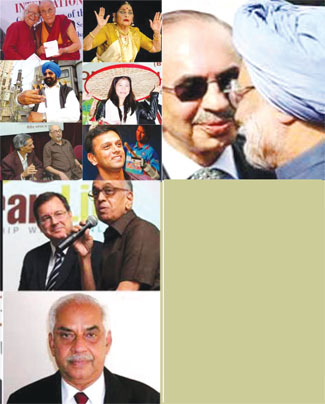
    NEW DELHI (TIP): President PranabMukherjee on April 5 conferred Padma Awards, the country’s highest civilian awards, to 108 personalities. The awards comprise 4 PadmaVibhushan, 24 PadmaBhushan and 80 PadmaShri Awards on Friday. 24 of the awardees are women and the list also includes 11 people in the category of foreigners, NRIs, PIOs and posthumous awardees. Noted physicist Yash Pal and space scientist Roddam Narasimha were chosen the second highest civilian honour Padma Vibhushan. Batting great Rahul Dravid and Olympic bronze medallist MC Mary Kom and late Bollywood actor Rajesh Khanna were named for the prestigious Padma Bhushan award, the third highest civilian award of the country. Renowned sculptor Raghunath Mohapatra and painter S Haider Raza were chosen for Padma Vibhushan.

    The list of 108 Padma awardees for this year also includes actress Sridevi, actors Nana Patekar and Malayalam star Madhu of Chemmeen fame and Olympians Yogeshwar Dutt and Vijay Kumar. Nobody was named for Bharat Ratna for this year too. The last awardee was late Bhimsen Joshi in 2008. Satirist Jaspal Bhatti, who died in a road accident last year, film maker D Rama Naidu, noted South Indian playback singer S Janaki, Bharatnatyam dancer Saroja Vaidyanathan, missile scientist Dr A Sivathanu Pillai of BrahMos programme, Industrialist Adi Godrej and R Tyagarajan, former bureaucrat M K Bhan were among the 24 Padma Bhushan awardees. In all four personalities were awarded Padma Vibhushan, 24 for Padma Bhushan and 80 Padma Shri. Of the awardees 24 are women, 11 belong to the category of foreigners, NRI, PIOs and posthumous.

    Padma Awards, the country’s highest civilian awards, are conferred in three categories, namely Padma Vibhushan, Padma Bhushan and Padma Shri.

    PADMA VIBHUSHAN
    Raghunath Mohapatra, Art, Orissa
    S Haider Raza, Art, Delhi
    Prof Yash Pal, Science and Engineering, Uttar Pradesh
    Prof Roddam Narasimha, Science and Engineering,Karnataka

    PADMA BHUSHAN
    Dr Ramanaidu Daggubati, Art, Andhra Pradesh
    Sreeramamurthy Janaki, Art, Tamil Nadu
    Dr (Smt) Kanak Rele, Art, Maharashtra
    Sharmila Tagore, Art, Delhi
    Dr (Smt) Saroja Vaidyanathan, Art, Delhi
    Abdul Rashid Khan, Art, West Bengal
    Late Rajesh Khanna, Art, Maharashtra
    Late Jaspal Singh Bhatti, Art, Punjab
    Shivajirao Girdhar Patil, Public Affairs, Maharashtra
    Dr Apathukatha Sivathanu Pillai, Science, Engineering,Delhi
    Dr Vijay Kumar Saraswat, Science and Engineering,Delhi
    Dr Ashoke Sen Science and Engineering,Uttar Pradesh
    B N Suresh, Science and Engineering, Karnataka
    Prof Satya N Atluri, Science and Engineering, USA
    Prof Jogesh Chandra Pati, Science and Engineering,USA
    Ramamurthy Thyagarajan, Trade and Industry,Tamil Nadu
    Adi Burjor Godrej, Trade and Industry, Maharashtra
    Dr Nandkishore Shamrao Laud, Medicine,Maharashtra
    Mangesh Padgaonkar, Literature and Education,Maharashtra
    Prof Gayatri Chakravorty Spivak, Literature & Education USA
    Hemendra Singh Panwar, Civil Service,Madhya Pradesh
    Maharaj Kishan Bhan, Civil Service, Delhi
    Rahul Dravid, Sports, Karnataka
    H Mangte Chungneijang Mary Kom, Sports, Manipur

    PADMA SHRI
    Gajam Anjaiah, Art, Andhra Pradesh
    Swami G C D Bharti alias Bharati Bandhu, Art,Chhattisgarh
    B Jayashree, Art, Karnataka
    Sridevi Kapoor, Art, Maharashtra
    Kailash Chandra Meher, Art, Orissa
    Brahmdeo Ram Pandit, Art, Maharashtra
    Vishwanath D Patekar alias Nana Patekar, Art,Maharashtra
    R Nageswara Rao alias Surabhi Babji, Art, Andhra Pradesh
    Lakshmi Narayana Sathiraju, Art, Tamil Nadu
    Jaymala Shiledar, Art, Maharashtra
    Suresh Dattatray Talwalkar, Art, Maharashtra
    P Madhavan Nair alias Madhu, Art, Kerala
    Apurba Kishore Bir, Art, Maharashtra
    Ghanakanta Bora Borbayan, Art, Assam
    Hilda Mit Lepcha, Art, Sikkim
    Sudha Malhotra, Art, Maharashtra
    Ghulam Mohammad Saznawaz, Art,Jammu and Kashmir
    Ramesh Gopaldas Sippy, Art, Maharashtra
    Mahrukh Tarapor, Art, Maharashtra
    Balwant Thakur, Art, Jammu and Kashmir
    Puran Das Baul, Art, West Bengal
    Rajendra Tikku, Art, Jammu and Kashmir
    Pablo Bartholomew, Art, Delhi
    Shri S Shakir Ali, Art, Rajasthan
    S K M Maeilanandhan, Social Work, Tamil Nadu
    Nileema Mishra, Social Work, Maharashtra
    Reema Nanavati, Social Work, Gujarat
    Jharna Dhara Chowdhury, Social Work, Bangladesh
    Late Dr Ram Krishan, Social Work, Uttar Pradesh
    Late Manju Bharat Ram, Social Work, Delhi
    Prof Mustansir Barma, Science and Engineering,Maharashtra
    Avinash Chander, Science and Engineering, Delhi
    Sanjay Govind Dhande, Science and Engineering,Uttar Pradesh
    Prof (Dr) Sankar Kumar Pal, Science, Engineering,West Bengal
    Deepak B Phatak, Science and Engineering,Maharashtra
    Dr Mudundi Ramakrishna Raju, Science and Engg,Andhra Pradesh
    Prof Ajay K Sood, Science and Engineering, Karnataka
    Prof Krishnaswamy Vijayraghavan, Science & Engg,Karnataka
    Dr Manindra Agrawal, Science and Engineering,Uttar Pradesh
    Dr Jayaraman Gowrishankar, Science & Engineering,Andhra Pradesh
    Prof Sharad Pandurang Kale, Science & Engineering,Maharashtra
    Vandana Luthra, Trade and Industry, Delhi
    Rajshree Pathy, Trade and Industry, Tamil Nadu
    Hemendra Prasad Barooah, Trade and Industry,Assam.
    Milind Kamble, Trade and Industry, Maharashtra
    Kalpana Saroj, Trade and Industry, Maharashtra
    Dr Sudarshan K Aggarwal, Medicine, Delhi
    Dr C Venkata S Ram alias Chitta, Venkata Sundara Ram, Medicine, Andhra Pradesh
    Dr Rajendra Achyut Badwe, Medicine, Maharashtra
    Dr Taraprasad Das, Medicine, Orissa
    Prof (Dr) T V Devarajan, Medicine, Tamil Nadu
    Prof (Dr) Saroj Chooramani Gopal, Medicine,Uttar Pradesh
    Dr Pramod Kumar Julka, Medicine, Delhi
    Dr Gulshan Rai Khatri, Medicine, Delhi
    Dr Ganesh Kumar Mani, Medicine, Delhi
    Dr Amit Prabhakar Maydeo, Medicine, Maharashtra
    Dr Sundaram Natarajan, Medicine, Maharashtra
    Prof Krishna Chandra Chunekar, Medicine,Uttar Pradesh
    Dr Vishwa Kumar Gupta, Medicine, Delhi
    Prof (Capt) Dr M Sharaf-eAlam, Literature & Education, Bihar
    Dr Radhika Herzberger, Literature & Education,Andhra Pradesh
    J Malsawma, Literature and Education, Mizoram
    Devendra Patel, Literature & Education, Gujarat
    Dr Rama Kant Shukla, Literature & Education, Delhi
    Prof Akhtarul Wasey, Literature & Education, Delhi
    Prof Anvita Abbi, Literature & Education, Delhi
    Nida Fazli, Literature & Education, Madhya Pradesh
    Surender Kumar Sharma, Literature & Education,Delhi
    Dr Jagdish Prasad Singh, Literature & Education,Bihar
    Late Shaukat Riaz Kapoor Alias Salik Lakhnawi,
    Literature & Education, West Bengal.
    Prof Noboru Karashima, Literature & Education, Japan
    Christopher Pinney, Literature & Education, UK
    Premlata Agrawal, Sports, Jharkhand
    Yogeshwar Dutt, Sports, Haryana
    Hosanagara Nagarajegowda Girisha, Sports,Karnataka
    Subedar Major Vijay Kumar, Sports, Himachal Pradesh
    Ngangom Dingko Singh, Sports, Maharashtra
    Naib Subedar Bajrang Lal Takhar, Sports, Rajasthan
    Ritu Kumar, Fashion Designing, Delhi
    Dr Ravindra Singh Bisht, Archaeology, Uttar Pradesh.

  • Thane Building Collapse

    Thane Building Collapse

    Death toll climbs to 62
    THANE (TIP): The death toll in the sevenstorey building collapse has mounted to 62 even as rescuers continued to scour the site for more bodies and survivors, the disaster control room said on April 5. According to regional disaster management control (RDMC) sources, 62 people including 30 women were killed in the tragedy while around 36 injured have been admitted to hospitals in Thane, Kalwa and Mumbra.

    The seriously injured have been shifted to JJ and Sion Hospitals in Mumbai. A 65-year-old woman, identified as Kutibi Shaikh, was rescued after being trapped for almost 30 hours, they said. She was admitted to the CSM hospital here last night in a state of shock but is stable, doctors attending on her said. At the collapse site, another survivor Shabnam told reporters that she had received a distress call on her mobile phone from a young teacher around 3pm yesterday saying that she was trapped along with sixseven students, but lost contact thereafter. The fate of the teacher and students is still not known as relief operations.

    Heartbreaking tales like a male survivor losing 13 of his family members have unfolded, as rescuers looked for survivors and bodies in the debris of bricks, mortar and twisted steel. Earlier, the national disaster response force, pressed into service to assist the local police and civic administration, had rescued 59 people.

    A case has been registered against builders Salil and Khalil Jamadar under Sec 304 (culpable homicide not amounting to murder) of IPC but no arrests have been made so far in the case, police control room said. Maharashtra chief minister Prithviraj Chavan had yesterday told the Maharashtra assembly that the local deputy municipal commissioner and senior police inspector were suspended. An additional chief secretary level probe has been ordered, he said. The illegal structure, which was underconstruction, collapsed in Shil Phata area at around 6.30PM on Thursday. Shil Phata is located between Mumbra and Dombivli in Thane district.

  • Village Of 60 Millionaires

    Village Of 60 Millionaires

    AHMEDNAGAR (TIP): India is a leadership driven society—it suffices to look at Popatrao Pawar, the village head of Hiware Bazar in the Ahmednagar district of Maharashtra. In the span of twenty years, he transformed his drought-struck poverty-ridden village into one of the best models India has seen. Before he took over the reins, the village suffered many problems: there was hardly any agriculture in the village from a lack of water, causing villagers to migrate elsewhere as daily wage labourers; the school was nonfunctional; domestic violence and village fights punctuated lives as alcoholism was rampant; and the surrounding eco-system was seriously degraded. So how does one actually make a village rise against such problems? The first thing Pawar did was get rid of the 22 illicit liquor dens, ban consumption of liquor all together, and ban tobacco and gutka. Then he inspired the villagers to pitch in to build dams and dig ponds to trap the little rain that came in. This new water management system helped immensely as the wells soon filled, allowing farming to begin anew with fields becoming lush and green. Not wanting to take change for granted, Pawar got water audits done so that there was a close check on water availability. Water was never wasted, as selfless villagers built 52 earthen bunds, two percolation tanks, 32 stone bunds and nine check dams— All through the use of the same government funds available to any other village. Before 1995, there were 90 open wells with water at 80-125 feet, whereas today, there are 294 open wells with water at 15-40 feet. To put this into context, other villages in the Ahmednagar district have to drill nearly 200 feet to reach water. Farming flourished as Pawar got farmers to invest in milch cattle, making milk the new gold of the village. While milk production was only 150 litres per day in 1995, today, it has crossed the 4,000 litre threshold! All this helped reverse migration see over 60 families return with the desire of becoming farmers once again to live life with dignity. Now there are decent-looking houses all over and villagers look content, glowing with happiness. The monthly per capital income has crossed Rs. 30,000, and in a village of 235 families and 1,250 individuals, there are 60 millionaires! Today there are only three families who live below the poverty line, but the village is now working to help them improve their income with hopes that in another year, no villager be poor. All this is more amazing when taking into account that in 1995, there were 168 BPL families in the village. But Pawar has not only tackled the economic needs of the village. With regards to the waning ecosystem, he facilitated the planting of over ten lakh trees to fuel languishing biodiversity; even Babool trees that were earlier cut for fuel are now cared for, as villagers began harvesting its gum that sells for Rs. 2,000 a kilo.

    One would think that these accomplishments already make Pawar one of the great leaders of India, but on top of everything, Hiware Bazar is spotlessly clean—all without sweepers; villagers take pride in keeping their home clean, and defecation or urination in public is unheard of. Best of all, now that cleanliness has overtaken the village there is a crucial benefit for the villagers: widespread disease has become a thing of the past.

    In addition, to get children to learn the benefits of good governance, Pawar began a children’s parliament giving them specific roles to work under. The “Education Minister” for example, goes from house to house inquiring if the school is functioning well.

    Even the teachers themselves learn from their students and respect this monitoring to incorporate the childrens’ advice into their work! But how did Pawar address caste and communal conflicts that often divide society into sparring aggressive groups? It was very simple: he relentlessly stressed that change could not be brought about without communal amity, and his efforts were so beautifully embodied when the village Hindu community built a mosque for the only Muslim family in the village for them to not have to pray in the open.

    And how has Hiware Bazar brought a new respect to women in the face of strong gender inequality in India? First of all, Pawar has got the gram panchayat to take care of the education and marriage expenses of the second daughter of any family, but also, out of the seven-member panchayat, three are now women.

    In addition, Pawar has stepped down from the village headman’s position (remaining as deputy sarpanch) to allow a woman to replace him. Finally, to bring in holistic change, Pawar is now motivating villagers to adopt family planning. A lot of stress is being put on health and hygiene as it is crucial for the future of the village.

    In fact, Hiware Bazar is also the first village in India to persuade couples take an HIV test before marriage. Interestingly, none of Pawar’s suggestions or schemes are opposed as the village has full confidence in him as he goes about trying to better their lives. Hiware Bazar has shown that stimulating change is easy. All it requires is good leadership and the political will to empower others in rising to a better future.

  • Plea For Restoration Of Ferozepur-Amritsar Rail Line

    Plea For Restoration Of Ferozepur-Amritsar Rail Line

    Prior to 1947, Ferozepore in Punjab was a thriving transportation town with great rail and road connectivity with the provincial capital of Lahore and the industrial and commercial capital of Amritsar. Both links were via Kasur, a Tehsil headquarter town in Lahore district. Lahore in 1947 fell into the share of Pakistan and so did Kasur and, as a result, Ferozepore lost both important railway links. A much longer and indirect road linkage was subsequently established between Amritsar and Ferozepore via Harike Pattan confluence of the Beas and the Sutlej.

    But the railway link to date did not see the light of the day. After the 1947 partition of Punjab, the entire border region of East Punjab, which used to be a flourishing area became neglected. The boundary line of prosperity moved Eastwards towards Jalandhar, Ludhiana and Chandigarh. The entire border belt of Punjab from Pathankot, Gurdaspur, Batala, Tarntaran, Patti, Ferozepore, Guru Har Sahai, Jalalabad up to Fazilka became educationally and economically very backward. Amritsar, because of its pre-1947 economic momentum and due to the existence of the Golden Temple remained the only oasis of education, progress and prosperity. Several economists and men of wisdom have been suggesting the reconstruction of the railway link between Amritsar and Ferozepore.

    Former railway minister Laloo Prasad Yadav was requested by the Prime Minister Dr. Manmohan Singh in 2004 to build the missing railway link between Amritsar and Ferozepore. Even the local industry of Amritsar pitched for it. But an obsessed with Bihar only, Mr. Laloo Yadav half-heartedly ordered a survey,which was completed. Later on Mamata Bannerjee, in her lopsided over enthusiasm to dislodge the Left Front, directed all her energies towards the development of new railway lines in West Bengal.

    The not too long ago appointed railway minister Pawan Bansal is a son of the soil, a Punjabi. There was a lot of moral and political pressure on him to start the construction of this long ignored missing link. Finally in the All India Railway Budget of 2013, an announcement was made by the railway minister to include this missing link between Patti in former Amritsar district and the divisional headquarter town of Ferozepore on February 26, 2013. This strategic rail link will shorten the distance between Amritsar and the port of Mumbai by two hundred and forty kilometers.

    With the completion of this rail link, the entire backward border belt starting from Baramula in Jammu and Kashmir via Srinagar, Anantnag, Udhampur and Jammu and then the border belt in Punjab from Pathankot via Gurdaspur, Batala, Amritsar, Tarntaran, Patti, Ferozepore, Guru Har Sahai, Jalalabad, Fazilka and Abohar will be linked to Mumbai via Sri Ganganagar. Since there will be overall less traffic on this Jammu & Kashmir, Punjab, Rajasthan, Gujarat and Maharashtra corridor, the perishable fruits and vegetables shall be delivered in Mumbai and Gujarat within two to three days. Passenger travel time will be reduced by five to six hours.

    The most congested National Capital Region (NCR) shall be effectively avoided. This railway line will also give boost to tourism in Vaishno Devi (Katra), Amritsar, Bikaner, Jodhpur, Jaisalmer and Barmer. Mumbai shall be able to fast-track export its goods by rail to Northern Pakistan via Amritsar and Amritsar will be able to export to the world via Mumbai.

  • Bharat Bandh: Nation-Wide Two-Day Trade Union Strike Hits Banking, Transport Services

    Bharat Bandh: Nation-Wide Two-Day Trade Union Strike Hits Banking, Transport Services

    NEW DELHI (TIP): Bharat Bandh:Nation-wide strike hit banking andtransport sector day two of nationwidestrike. While banking services were onFebruary 21 paralysed with ATMs runningout of cash in metro cities and publictransport disrupted during the Centraltrade unions sponsored strike whichevoked a mixed response in most statesbarring Kerala where normal life was hit.Life remained normal in West Bengalthough banking services were crippled withnationalised and private banks closed andATMs remaining non-functional.Transport services were normal andshops, markets and businessestablishments opened in the state.

    In the national capital, commuters facedhardships for the second consecutive day asmajority of auto-rickshaws and taxis stayedoff the road in support of the strike.Various industrial units and banks eitherremained closed or witnessed thinattendance while markets and commercialareas were open.In Maharashtra, majority of ATMs driedup in the financial capital Mumbai.”A majority of ATMs have dried up while(bank) branches are shut. Additionally,there has not been any cheque clearing aspersonnel from RBI too joined the strike. Itwill take at least 2-3 working days to clearthe backlog for banks”, said All India BankEmployees Association Vice PresidentVishwas Utagi.Suburban railway, the city’s life line,functioned normally and road trafficremained unaffected.

    In Kerala, normal life was paralysed dueto the strike with workers from mostsectors ranging from transport to bankingkeeping away from work.Reports from across the state said busesand taxis were off the roads and marketsremained shut. Train and air services werenot affected.Attendance in government offices wasthin and educational institutions remainedclosed as pro-Left service and teachersunions joined the strike. Universities havecancelled examinations scheduled for thelast two days.

    The unions have put forward a charter of10 demands such as urgent steps to controlprice rise, strict enforcement of labourlaws in all places of work, social securitynet for workers in the unorganised sector,end to disinvestment in PSUs and raisingminimum wage to Rs 10,000 a month.However, the strike had no major impactin most parts of Karnataka.Though banking services were hit, manybuses, taxis and autos plied and shopsremained opened. However, schools andcolleges were closed.Employees of banks and public sectororganisations in Andhra Pradeshcontinued their protests on the second dayof the strike.In Tamil Nadu, banking and postalservices remained affected while shopsremained open and transport services pliednormally.Members of the protesting trade unionsstaged demonstrations in various parts ofChennai.

    Though there were reports that somelabour unions representing employees ofMaruti Udyog at its plants in Manesar andGurgaon had joined the strike along withUnions of HeroMotoCorp, workers of thecompany attended duty in the state.According to Union representatives ofHyundai Motor India Employees and FordMotor India, which has manufacturingfacilities at Sriperumbudur andMaraimalai Nagar, they have decided toconduct a mass rally today in view of thestrike.Transaction of cheques worth of Rs 3000crore in Chennai were affected while mostof the ATMs of several banks have driedout due to lack of cash.In the north, public transport andbanking services continued to be affectedin Punjab, Haryana and Chandigarh due tothe strike.

    Reports pouring in from various placessuggest that majority of state owned busesplying on inter-state routes and inter-cityroutes in Punjab, Haryana and Chandigarhdid not ply.With bank employees observing strike,banking transactions were hit, causinginconvenience to customers.Industrial production in Punjab andHaryana was unaffected.A report from Hisar has said activists ofdifferent trade unions staged dharnas infront of their respective offices.Normal life was partially affected inseveral parts of Odisha due to the strike.People faced difficulties in commuting asbuses, taxis auto-rickshaws remained offthe roads, leaving a large number ofpassengers stranded at different places.

    Bank services in Mumbai hit
    Mumbai: Majority of ATMs have driedup in the financial capital of Mumbai andbanking operations across the city were hiton the second day of the general strikecalled by central trade unions for variousdemands.”A majority of ATMs have dried up whilethe (bank) branches are shut. Additionally,there has not been any cheque clearing aspersonnel from RBI too joined the strike. Itwill take at least 2-3 working days to clearthe backlog for banks”, said All India BankEmployees Association Vice PresidentVishwas Utagi.The strike witnessed near cent per centparticipation by employees from bankingand insurance sector in the financial hub,leaving their operations completelyparalysed.our demands, including the one for notallowing private sector participants intothe fray for which we are holding thebandh”, Utagi said.Suburban railway, the city’s life line,functioned normally and road trafficremained unaffected, though there werefewer passengers using public transport.Flight operations at the Mumbai airportwere also normal despite a section ofairport unions declaring their support tothe strike, an airport spokesperson said.

    AP: Bank, govt employees hold protests
    Hyderabad: Employees of banks andpublic sector organisations in AndhraPradesh today continued their protestson the second day of the two-day strikecalled by Central trade unions in supportof their various demands.The personnel of variousorganisations, who stayed away fromwork yesterday, began their protests inHyderabad and other places in AndhraPradesh.The employees of various PSU banksand workers in the unorganised sectortook out protest rallies in Hyderabad andother parts of the state.Services in banking and other PSUorganisations were badly affected on thefirst day of the 48-hour general strikeyesterday.AITUC state unit president and MLC P JChandrasekhar Rao had claimed that thestrike was being held in an unprecedentedmanner with staff of the state-run minerSingareni Collieries, Andhra Pradesh StateRoad Transport Corporation (APSRTC)joining the stir.He claimed that 75 per cent of RTC buses,the principal mode of public transport inAP, remained off the roads yesterday.

    Life unaffected in KarnatakaBangalore:
    The two-day nationwidestrike called by 11 Central trade unionshadno major impact in most parts ofKarnataka today.Though banking services were hit, manybuses, taxis and autos plied and shops andhotels remained opened here.However, schools and colleges wereclosed.No violence was reported from any partof the state, police said.Services at many hospitals in the citywere not hit, as also in IT companies.Several PSUs including HAL, BHEL andBEL, besides a host of other industrialunits in Bangalore were functioningnormally.There was improvement in attendance ingovernment offices, police said.There has been no impact on normal lifedue to the strike in Belgaum district,sources said.Visvesvaraya Technological Universitypostponed Mtech, MCA and MBAexaminations scheduled for today.

    Partial impact in Odisha
    Normal life was partially affected inseveral parts of Odisha today on the lastday of the two-day nation-wide strike calledby central trade unions.People faced difficulties in commuting asbuses, taxis auto-rickshaws remained offthe roads, leaving a large number ofpassengers, including women and children,stranded at different places.In the state capital here, some threewheelerswere seen plying in many areassince this morning, giving respite to thecommuters who had a tough time travellingon February 21.Shops, markets, business establishmentsand petrol pumps remained closed, whileeating joints and kiosks were found opentoday. Small traders and retailers alsoresumed their business operations, officialsources said.Banks remained closed with employeespicketing and demonstrating at differentplaces, while most educational institutions,including schools, were open.

  • Ajanta Caves A Legacy From The Golden Age

    Ajanta Caves A Legacy From The Golden Age

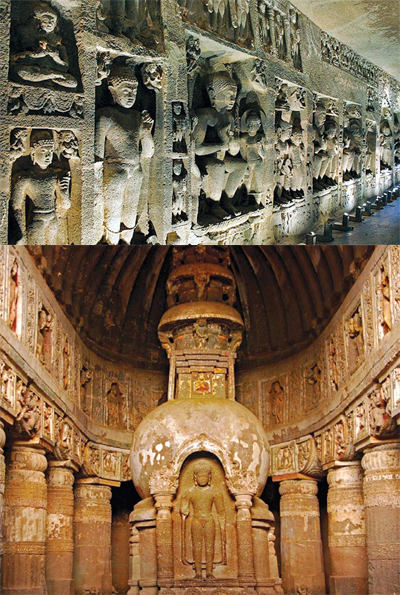
    Ajanta and Ellora are the pride of Maharashtra. The rock-cut caves of both these sites are world famous and illustrate the degree of skill and artistry that Indian craftsmen had achieved several hundred years ago. Ajanta dates from 100 B.C. while Ellora is younger by some 600 years. The village of Ajanta is in the Sahyadri hills, about 99 kms. From Aurangabad; a few miles away in a mammoth horseshoe-formed rock, are 30 caves overlooking a gorge, `each forming a room in the hill and some with inner rooms.

    Al these have been carved out of solid rock with little more than a hammer and chisel and the faith and inspiration of Buddhism. Here, for the Buddhist monks, the artisans excavated Chaityas (chapels) for prayer and Viharas (monasteries) where they lived and taught. Many of the caves have the most exquisite detailed carvings on the walls, pillars and entrances as well as magnificent wall paintings.

    These caves were discovered early in the 19th century quite by chance by a party of British Officers on manoeuvres. Today the paintings and sculptures on Buddha’s life, belonging to the more mellow and ritualistic Mahayana Buddhism period, are world famous. Copies of them were shown in the Crystal Palace exhibition in London in 1866. These were destroyed in a fire there.

    Further copies were published soon afterwards and four volumes of reproductions were brought out in 1933 by Ghulam Yazdani, the Director of Archaeology of the then Hyderabad State. Ajanta has formed an epicentre of interest for those who appreciate and are eager to know more about Indian history and art. It is a protected monument under the Archaeological Survey of India and has been listed in the World Heritage list of monuments.

    The 30 caves of Ajanta were created over a span of some 600 years. In their range of time and treatments they provide a panorama of life in ancient India and are a source of all kinds of information… hair styles, ornaments, textiles, musical instruments, details of architecture, customs etc.

    It was from this collection of classical Indian art that a particular style was formed that traveled with Buddhism to many parts of the world. Similar paintings can be seen in Sigiriya in Sri Lanka, Bamiyan in Afghanistan, temples and shrines in Tibet, Nepal, China and Japan. Royal patronage made Ajanta possible. Professional artists carried out much of the work and each contributed his own individual skill and devotion to this monumental work.

    Visitors often ask how the artist who painted the detailed frescoes and chiseled out the intricate carvings, managed to work in the dark interiors of the caves. It has been noticed that the caves are illuminated by natural light for part of the day and it is presumed that metal mirrors or sheets of white cloth were used to reflect sunlight into the inner recesses.

    Here, briefly, are some of the highlights of the caves. In the Cave 26, the sculpture is elaborate and beautiful though the painted frescoes are incomplete. The arched chapel window set in an elegantly simple façade, is repeated in an elaborate frontage in Cave 19 with its complete Chaitya and a slender votive stupa enclosing a standing Buddha at the far end. Of particular note is a sculpture of a seated Nagaraja with his consort and female attendant.

    Cave 16 is an elegant Vihara with an inscription that mentions the king and his minister who had the cave built. Here a towering Buddha sits preaching. He is flanked by attendants with fly whisks.

    There are undamaged portions of the wall paintings that are clear and vibrant in Caves 1, 2, 16 and 17. Cave I has the well known Bodhisattva Padmapani which is a wonderful portrayal of tender compassion. A gentle figure holding a lotus delicately in one hand. In the same cave is the golden figure of Avalokiteswara, elaborately adorned. The women, nymphs, princess and attendants are elegant and beautifully attired.

    Here also is a lively panel of dancing girls and musicians. In Cave 2 there is a detailed panel of Queen Maya’s dream, of the white elephant which was interpreted by royal astrologers to mean the birth of an illustrious son. The row upon row of Buddhas, can be seen in this cave. In Cave 17, there is a flying apsara in a fashionable embroidered turban and splendid jewellery.

    It is worth walking away from the caves in order to look back on to the horseshoe gorge. The ingenuous water cistern system can be seen which must have provided water for the monks and their visitors. Ajanta was on the ancient trade route leading to the coast so there must have been considerable activity and many visitors. Nobody really knows what life was like in those times and visitors can interpret the past as they wish, which is perhaps yet another secret charm of Ajanta.

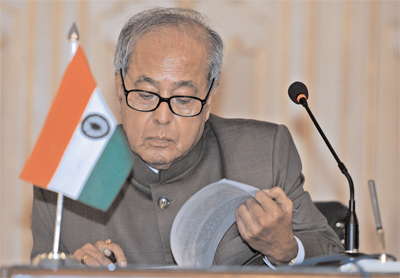
  • President Pranab Mukherjee May Turn Down 5 More Mercy Pleas

    President Pranab Mukherjee May Turn Down 5 More Mercy Pleas

    NEW DELHI (TIP): The Union homeministry is learnt to have recommendedrejection of mercy petitions in five morecases as it seeks to speedily dispose of allthe cases of death row convicts pendingwith it.Seeking to have a swift closure on thecases of those who have filed mercy pleasagainst capital punishment awarded tothem, the ministry has sent all the pendingfiles to President Pranab Mukherjee for afinal call.Sources said that seven cases involvingthe fate of nine people have been sent to thePresident, with the ministryrecommending rejection of the mercy pleasin five cases. It has and left the tworemaining ones open for commutation ofdeath sentence to life imprisonment withthe rider that the life term means jail forthe entire life of the convict and not just 20years or 14 years in prison.

    The President had sent the files to Unionhome minister Sushilkumar Shinde onOctober 30 for his review and opinion.Shinde sent the files back within 100 daysin a major shift from the pattern wheredecisions on mercy petitions wereindefinitely delayed with files shuttlingbetween the home ministry and theRashtrapati Bhavan.Though the case-wise recommendationsfor convicts were not known as both thehome ministry and Rashtrapati Bhavancontinue to remain tightlipped on mercypetition files, the seven cases relate tomultiple murders, including one in which arape convict out on bail killed five membersof the victim’s family.

    While two files were sent to RashtrapatiBhavan on February 9 (the day ParliamentHouse attack case convict Afzal Guru washanged), the remaining five files weredispatched last month.The mercy files, which have beenpending for years while moving to and frobetween Rashtrapati Bhavan and the homeministry, saw unprecedented movement oflate, resulting in two quick hangings(Ajmal Kasab and Afzal Guru) within lessthan three months. Mukherjee had rejectedthe mercy plea of Kasab on November 5,and Guru on February 3.The files, which are now with PresidentMukherjee, include the longest pendingcase of Gurmeet Singh of Uttar Pradesh,who was convicted for killing 13 membersof a family on August 17, 1986.

    The otherscases are of Suresh and Ramji, also fromUP, who were convicted for killing fivemembers of their brother’s family andDharampal from Haryana, who hadmurdered five members of the family of agirl he had raped in 1993. He had murderedthe family while on bail in the rape case.The other cases are of Sonia, daughter ofa former Haryana MLA, and her husbandSanjeev, who drugged and killed eight ofher family in Hisar in 2001, including herparents. Sunder Singh from Uttarakhand isconvicted for rape and murder on June 30,1989, Jafar Ali from Uttar Pradesh who wasconvicted for killing wife and five daughterin 2002 and Praveen Kumar of Karnataka,convicted for killing four members of afamily on February 23, 1994.

    Mukherjee has so far disposed of mercypetitions of eight death row convicts in fivecases.The President has also rejected themercy petitions of Saibanna NingappaNatikar (Karnataka: convicted for killingwife and daughter) and mercy petitions ofslain forest brigand Veerappan’s associatesGnanaprakash, Simon, ‘Meesai’ Madaianand Pilavendran, who were sentenced todeath for killing 22 police personnel in 1993.However, the mercy petition of Atbir(Delhi), who was convicted for murder ofhis step-mother, step-sister and step-brotherover property, was commuted to lifeimprisonment by the President.

    Strained mercy:
    1,455 persons awarded death penaltyin India from 2001 to 2011Sentences for 4,321 persons werecommuted from death penalty to lifeimprisonment during the same period.Highest number of death penalty wasimposed in Uttar Pradesh (370)followed by Bihar (132), Maharashtra(125), Karnataka and Tamil Nadu (95each), Madhya Pradesh (87),Jharkhand (81), West Bengal (79),Delhi (71), Gujarat (57), Rajasthan (38),Kerala (34), Odisha (33), Haryana (31),Assam (21), Jammu & Kashmir (20),Punjab (19), Chhattisgarh (18),Uttarakhand (16), Andhra Pradesh (8),Meghalaya (6), Chandigarh and Daman& Diu (4 each), Manipur and HimachalPradesh (3 each), Tripura andPondicherry (2 each) and Goa (1)No death penalty imposed inArunachal Pradesh, Mizoram,Nagaland and Sikkim and UnionTerritories of Andaman & NicobarIslands, Dadra & Nagar Haveli andLakshadweepSentences of 4,321 persons werecommuted from death penalty to lifeimprisonment in the country during2001-11.

  • Sahara Wants Pune Warriors India To Be Based Out Of Kanpur

    Sahara Wants Pune Warriors India To Be Based Out Of Kanpur

    CHENNAI (TIP): Sahara has expressed its desire to the Indian cricket board (BCCI) to move its Indian Premier League (IPL) franchise, Pune Warriors India, out of the western city due to ongoing tensions between franchise bosses and the Maharashtra Cricket Association. It is understood that members of the PWI management, who were in Chennai during the IPL auctions on Feb 3, have asked the BCCI mandarins that they want their franchise to be based out of Kanpur.

    According to Sahara sources, it is 80% certain that they “won’t play their matches in Pune”. There are, however, some logistical problems regarding Kanpur. Even though a section of the Sahara management is confident that the Green Park Stadium in Kanpur can become their new venue, the fact that it doesn’t have an airport might make things a little difficult. “The nearest airport is in Lucknow and it’s two hours away from Kanpur.

    So, it will be difficult even for the TV crew,” a source said. Therefore, a few other names like Nagpur, Rajkot, Ahmedabad and DY Patil are also being discussed. It is learnt that the name of the franchise might not be changed right away. “It’s not easy to build a brand.

    So they might go slow on the renaming of the franchise,” the source added. There has been a long-standing problem between Sahara and the MCA with the former moving Bombay HC against MCA for “wrongful termination of agreements” with regards to the Subrata Roy Sahara Stadium in Pune.

    Pune sign J&K’s Rasool
    Pune have signed J&K off-spinner Parvez Rasool for the forthcoming IPL season. Rasool took 7-45 for Board President’s XI against Australia and has been snapped up by the franchise in an effort to boost its spin attack. “He is a bowling allrounder and we feel he can play an important role for us,” a Pune source said. Rasool will be the first player from J&K to play in the IPL.

  • Panchgani The Switzerland Of India

    Panchgani The Switzerland Of India

    Panchgani, literally mean the place of five hills, is a renowned hill station in Maharashtra. This majestic hill resort is located at 1,334 mt altitude. Panchgani is a vibrant scenic destination and its beauty multiplies with the backdrop of hilly terrains at one side and coastal plains at the other side. This place had been used by the British officials as their summer resort. The Panchgani hill station is known for its unpolluted air and it is believed that the oxygen content in atmosphere is more here compared to other regions. Due to this many people select this for convalescing from diseases. The ambience is very cool and calm and the exquisite environment is a perfect background for rejuvenation.

    Panchgani is spotted with many attractive colonial period cottages with all luxurious facilities for the tourists to spend their vacation in perfect seclusion and enjoyment. This place is bestowed with buildings of British architecture, Parsi houses and the boarding schools. The town, a natural relaxation spot, adds its comforts with the soothing effect of cool breeze rustling through the thick woody regions. Panchgani has many western plant species including poinsettia and silver oaks, which are originally planted by British people. Fresh air, unspoiled natural beauty, breathtaking panoramic views and lush greeneries make this place one of the most sought hill station in Maharashtra. This place is renowned for international quality education and there are at least three dozen schools offering high standard facilities for the children. The Mahabaleshwar Hill Station and Venna Lake are some attractions nearby.

    ATTRACTIONS
    Devil’s Kitchen

    The Devil’s Kitchen is situated to the south of Table Land with a bit of mythological interest attached to it. It is believed that the Pandavas stayed here for a while and used this place to cook their food. There are some legends regarding this, though most of them appear to be mere tall tales. Some people claim that Pandavgad Caves (near Wai) are also built by them and bear their name.

    Rajapuri Caves
    Rajapuri Caves is situated at a distance of 7 km from Panchgani. The cave is a virtual delight for adventure lovers and is famous for the beautiful Lord Karthikeya Temple. The temple itself is constructed out of the sand taken from the caves. The journeys to the Rajapuri caves from Panchgani through serene, greenish villages will rejuvenate the mind of the visitors. The several water kunds in the premises resemble the Tiveni Sangam Temple at Prayag. It is said that the water kunds have curative powers.

    Table Land
    Privilege of being Asia s second longest mountain Plateau, the Table Land has a mythological story attached to it. It is believed that the Pandavas halted here and used it as a cooking place for themselves.

    Lord Karthikeya Temple
    The Lord Karthikeya temple is located at Rajapuri Caves in Panchgani. The temple is dedicated to Lord Karthikeya (Lord Muruga, Son of Lord Shiva). The temple premise is a calm and cool place and is best suited for people looking for serene environment for relaxation and meditation. The spiritual atmosphere adds impetus to relaxing moments. Rajapuri caves got the religious importance due to this famous temple. Thaipooyam festival during January- February month is celebrated here with lots of enthusiasm. Thousands of devotees visit this temple during this period.

    Bhilar Water Falls
    The Bhilar Waterfalls are named after the village where it is located. It descends from a height of 4500 feet with mist. During the monsoons, you can enjoy the full force of the water gushing down.

    Dhom Dam
    Dhom Dam near Panchgani is an amazing tourist spot for water sport lovers. The elegant Krishna River along with its green environs augments the pleasure of adventure water sports. A beautiful boating spot where one can enjoy with Scooter and Speed boats. Sporting in Krishna river stream with the beautiful natural surrounding is a wonderful experience in itself.

    Sherbaug
    Sherbaug is a panoramic destination in Panchgani with well laid out gardens, mini zoo that showcases small animals for children s amusement. Children s Park and a landscaped Rose Garden add elegance to the place. One can also visit the Parsi Point and Table Land that are close by.

    View Points At Panchgani
    Panchgani has quite a few renowned view spots that offer panoramic views of the picturesque lush green mountains and valley.

    How To Reach
    By Air- Pune is the nearest airport which is 100 km away from Panchgani. Pune is connected to Mumbai, Goa and Bangalore by air. Tourist taxis cost about Rs. 2000 from Pune to Panchgani. Railway route- The nearest railway station is Wathar, 45 km from Panchgani on the Miraj-Kolhapur section of South Central Railway. However, convenient railhead is Pune from where you hire tourist taxis and buses to reach Panchgani. Bus route- Panchgani is well connected by state road transport public bus services. Regular bus services are available from Pune to Panchgani. Super fast and Deluxe A/C buses are also available on this route. Road route- Panchgani is very well connected with Pune and Mumbai. NH4 and NH17 are popular routes to reach the place.

  • States Showcase Their Strengths To Woo Investments By Overseas Indians

    States Showcase Their Strengths To Woo Investments By Overseas Indians

    KOCHI (TIP): Ten states of India showcased the multifarious investment opportunities for the Indian Diaspora with a view to identifying areas for forging partnerships with overseas Indians at the concluding day of the 11th Bharatiya Pravasi Divas here on Wednesday, January 9th. Kerala, the host state for the three-day event, presented to the delegates its developmental agenda and looked for investment, support and the talent of overseas Indians in helping the State to realize its vision. The multi-point program envisioned for Kerala was spelt out by Mr. Sam Pitroda, Adviser to the Prime Minister on Public Information, Infrastructure and Innovation.

    The program envisages connectivity through coastal waterways for movement of goods, building knowledge cities in Kochi and Thiruvananthapuram, integration of all ayurveda activities in the state, egovernance, waste management through green technologies, skill development, promotion of traditional industries and creating high-speed rail corridor. Among those who invited overseas Indians to invest in Kerala included Mr. Oommen Chandy, Chief Minister of Kerala; Mr. Vayalar Ravi, Union Minister for Overseas Indian Affairs; Mr. K V Thomas, Minister of State for Consumer Affairs, Food & Public Distribution and Mr. K C Joseph, Minister for Non-Resident Keralites Affairs Department & Culture, Government of Kerala.

    The north Indian state of Punjab prides itself in having a strong agriculture base, high consumer index, best infrastructure index, best industrial and agri work culture, high per capita income, highest agriculture output, best human resource and an enterprising populace. According to S. S. Channy, Principal Secretary, Department of Technical Education & Industrial Training & Cultural Affairs and NRI Affairs, the mission was to make Punjab a top-notch state in terms of being surplus in power, best air connectivity, finest road network, futuristic town planning, upgraded transport facilities, maximum emphasis on education, health for all, engaging youth through sports, make Punjab an industry & IT destination, social development, employment generation, heritage preservation and governance reforms.

    On the industrial front, the state’s fiveyear mission is to create a textiles hub at Ferozepur, Barnala, Mansa, Bathinda; food hub (Amritsar, Ferozepur); IT hub (Mohali, Amritsar); petro park (Bathinda); automobiles hub (Patiala); sugar hub (Amritsar, Gurdaspur); hosiery, garments, knitting, weaving (Ludhiana); hand tools (Jalandhar); sports goods (Jalandhar) and leather goods (Jalandhar). Mr. Rajendra Pareek, Industries Minister, Government of Rajasthan, spelt out the reasons to invest in the state. These include a conducive business environment, strategic location and market accessibility, large land bank, strong backbone of industrial power, availability of skilled manpower at low cost, booming automotive sector, consistently growing IT/ITes industry, home to leaders in ceramic and glass, ever-expanding horizons in tourism, seamless possibilities in non-conventional power generation, rich mineral and oil wealth, active institutional support, a destination favored by corporate and a great place to live.

    “The business friendly initiatives of the Government of Rajasthan, such as Rajasthan Investment promotion Scheme 2010 and Rajasthan Enterprises Single window Enabling and Clearance Act 2011, have attracted leading companies from various sectors. JCB, Honda, Lafarge, Saint Gobain, Infosys, Deutsche Bank, Hero Motorcorp and Petro are some of the prominent companies that have chosen Rajasthan for their operations,” he says. The State of Gujarat holds many records in India for economic development: It boasts of 16% of the country’s industrial output, 22% of India’s exports, 35% of the country’s pharma products, 51% of chemical products and 62% of India’s petrochemical production.

    According to Mr. Arvind Agarawal, Principal Secretary, NRI, Government of Gujarat, the percentage of working days lost in Gujarat due to industrial strife is 0.42%, the lowest in India. And even during the worst years of recession, Gujarat registered double-digit industrial growth over the last seven years. Further, Gujarat is the only Indian state with an integrated state-wide gas grid. It has an extensive transmission network of almost 2200 km. Odisha enjoys its own prominence in the form of agriculture, industries, infrastructure developments, corporate hubs, top-tier educational institutes, good career opportunities, ports for exports and imports, investment avenues and natural beauty.

    Mr. Surya Narayan Patro, Minister for Revenue and Disaster Management, Government of Odisha mentioned that the Odisha Government was trying to create a favorable environment for attracting investment by streamlining the process for regulatory clearances through Single Window System approach, for which Clearance Authorities and Level Nodal Agencies at state and districts level were functional. The agencies provide facilitation and infrastructural support services to investors under the aegis of ‘Team Odisha’. The state is rich in minerals, agriculture and other natural resources. Odisha has 33% of iron ore, 55% of Bauxite, 95% of Chrome, in addition to large reserves of Coal, Dolomite, Graphite and Manganese in the country.

    Odisha has a large number of large, medium and small-scale enterprises in Steel, Aluminium, Chrome, Power, Textile, Handicrafts and IT/ITES. To accelerate the industrial progress in Bihar, the Government has adopted a number of measures. As many as, 939 proposals have been approved and Rs. 300807.45 crore is to be invested, of which investments worth Rs. 502120 crore has already been made. It is also estimated that 229641 job opportunities would be created. The areas of opportunities for investment were food processing, service sector, textile sector, sugar sector, information technology, leather, biotechnology, drug and pharmaceuticals. has strategic locational advantage in Eastern India and is close to Kolkata, Haldia and Paradeep Ports.

    Ranchi, the capital, is well connected by air, rail and road. Industrial towns have excellent Rail and Road connectivity with major market places of the country. Golden Quadrilateral Super Highway passes through Jharkhand. Jharkhand is an ideal location for EOUs interested in emerging markets of South East Asia, because of the freight advantage. According to Mr. D Gupta, Development Commissioner, Government of Jharkhand, the state offers significant opportunities in tourism, building power generation capacity, establishment of quality engineering and Medical Institutes (IITs/Polytechnics/Medical Colleges etc) and setting up of cold chains.

    Mr. Ponnala, Lakshmaiah, Minister for IT & Communication, Government of Andhra Pradesh, said, “I am happy to say that the state of Andhra Pradesh continues to be a favorite destination for industrial investment from all over the world. Industrial investment in the state is consistently growing and the investments received during 2010-11 stands at Rs 29,995 crore recording a growth of 67% over 2009- 10. The state is home to 4416 large industries and 180000 MSMEs, giving employment to nearly 25 lakh people. Today, Andhra Pradesh stands at the forefront of key manufacturing sectors, including cement, paper, pharmaceuticals, chemicals, textiles, steel, light and heavy engineering products, leather and food processing sectors.”

    Andhra Pradesh has emerged as the most ideal destination for ICT sector in India. It has the largest concentration of Fortune 500 companies based in AP. It is home for Indian and foreign IT majors such as TCS, Infosys, Wipro, HCL, Mahindra Satyam, Cognizant, Patni, Tech Mahindra, Sonata, Infotech, and Fortune 500 companies like Microsoft, Google, IBM, Oracle, DELL, Motorola, Deloitte, Convergys, UBS, Bank of America, HSBC, Honeywell, Siemens, JP Morgan, United Health Group, Facebook and so on. The Maharashtra Government’s policy and reforms driven initiatives are demonstrated by its policies on Biotech, IT & ITES, SEZ, Grapes Processing Industry, Tourism and Greenfield Port.

    Some key initiatives of the Government include stateof- the-art infrastructure, development of thrust industries, human resource development, labor laws reforms, cluster development – SME sector, provide information and facilitation, single window clearance portal, capital incentives for SSI and regional development. According to Mr. Vijay Suryawanshi, Joint CEO, Maharashtra Industrial Development Corporation, some of the key policy initiatives of the state government are 5% subsidy on capital equipment for technology upgradation limited to Rs 25 lakh, 50% subsidy on the expenses incurred for quality certification limited to Rs 1 lakh, 25% subsidy on cleaner production measures limited to Rs 5 lakh and 50% subsidy on the expense incurred for patent registration limited to Rs 5 lakh.

    Madhya Pradesh has witnessed rapid industrialization. The major clusters in the state where industrial activity has been observed are regions in and around Gwalior, Jabalpur, Bhopal and Indore. The state has been proactive in adopting a seamless approach across sectors to promote sustainable growth resulting in fructification of investments over Rs. 7 lakh crore in the state. As many as 562 projects worth INR 3,57,558 crore in manufacturing, mining, power, services and infrastructure sector are being set up of which 206 projects costing Rs. 1,55,149 crore are in advance stages of completion and projects worth Rs. 39,000 crore are in various stages of execution.

    According to Arun Kumar Bhatt, Managing Director, Madhya Pradesh State Industrial Development Corporation Ltd., the Government of Madhya Pradesh decided to create a ‘Land Bank’, parcels of government land at various places suitable for industrial use. Such land parcels have been identified and are in the process of being transferred to Industries Department. Regional AKVNs have been entrusted with the responsibility of creating basic enabling infrastructure in such industrial estates or regions. The State Government has created a land bank of about 20,000 hectares across the state, which is being offered to various investors. Further consolidation of government land holdings with various departments that are suitable for industrial use is being carried out to identify more land and provide industries an impetus to set up base in the state.

  • India Tourism Woos Indian Diaspora; Incentives And A Conducive Environment Vital To Attract Investments

    India Tourism Woos Indian Diaspora; Incentives And A Conducive Environment Vital To Attract Investments

    KOCHI (TIP): Incentive investors and give them a conducive environment and smoothen the approval processes and witness the surge of investment in the tourism sector, both from overseas and domestic investors. This was the message that tourism professionals conveyed to the Government at a pre-PBD Seminar on Tourism on the occasion of the 11th Pravasi Bharatiya Divas. Mr. A P Anilkumar, Minister of Tourism, Government of Kerala, said that there are immense investment opportunities in the tourism sector and the Indian Diaspora can venture into building of resorts and hotels, destination development, adventure activities, MICE facilities and human resource development. He mentioned that measures must be taken to strengthen the tourism sector in India and assured that he would play an instrumental role in developing the sector.

    Mr. Amitabh Kant, CEO and MD, Delhi Mumbai Industrial Corridor Development Corporation, and former Tourism Secretary, Government of Kerala, said building brand India and putting India on the world tourism map would require focused attention on what he described as the 6Cs – civil aviation development, civic governance, capacity building, constant communication strategy, convergence with other sectors and community participation. Mr. Kant said that India needed to replicate the success of Indian-Americans who have collectively put up 21,000 hotels across America. “The Patels need to set up hotels in this country just as they have done so successfully in their host countries.” The multiplier effect of such investment in hotels in terms of creating jobs and other tourism-related infrastructure would be huge, he pointed out.

    Mr. Alkesh Patel, President, Asian American Hotel Owners Association (AAHOA), USA, underlined the need to tap the expertise of the members of AAHOA in setting up franchisee hotels in India. While commending India’s overseas tourism campaigns, Mr. Patel pointed out that such campaigns are not backed up by commensurate infrastructure, and India is thus unable to provide an experience to tourists that could be converted into a return visit. Mr. K Sudhakaran, Member of Parliament, stated that India is becoming a preferred destination for healthcare tourism as it has top-notch medical facilities with only one-fifth cost compared to the West. But there are some challenges such as poor management, lack of sound marketing strategies, communication gap, bad roads, gap between availability of manpower and supply which are hindering the growth of medical tourism.

    Mr. E M Najeeb, President, Confederation of Tourism Industry, Kerala and CMD, ATE Group, said, “Tourism promotion should be focused on the 30 million strong Indian Diaspora. A mere 5% materialization would change the dimension of Indian tourism. They are high spenders and respect the culture and environment of our country. So they are quality tourists.” He added, “The national carrier Air India should change the policy to focus and take care of the Indian travelers. That would make to the airline profitable. Special packages and programs should be tailor-made for the Indians abroad, particularly the second and third generation PIOs.”

    Mr. Najeeb suggested that tourism promotional campaigns should be aimed at them and called for appointing Indians as tourism brand ambassadors of Indian Tourism. According to a theme paper brought out on the occasion, the emerging new dimensions of tourism include Golf Tourism, Education Tourism, Domestic Tourism, Luxury Trains,Wedding, Eco- Tourism and Tea Tourism. The average growth of global tourism industry is expected to be four per cent during the next 10 years, but the increase is not dispersed equally. Emerging markets, primarily India, contributes a lion’s share of the expansion with an increase of eight per cent. Smaller cities are expected to lead air-traffic growth in the country; the Government is planning to build nearly 200 low-cost airports in the next 20 years in Tier II and III cities.

    This additional aviation infrastructure is likely to be developed through public-private partnership (PPP) model, paving the way for new business opportunities for infrastructure developers. The first phase of growth in the aviation sector was led by low-cost airlines, and the next phase would be driven by lowcost airports. The market size of the Indian medical tourism sector is likely to be more than double and reach USD 2.4 billion by 2015 from USD 1 billion at present. The inflow of medical tourists in India is also expected to cross 32 lakh by 2015 from the current number of 8.5 lakh. Medical travel, health and wellness tourism in India are projected as some of the most important avenues to improve tourism economy.

    The healthtravel industry is increasingly grounded in tourism. Currently, Indian healthcare market is growing at a rate of more than 30 per cent every year. India’s share in the global medical tourism industry is expected to climb to around 2.4 per cent by the end of 2012. India’s competitive edge in Healthcare Tourism is globally recognized with only one-fifth cost as compared to the West, far less or no waiting lines, super specialty hospitals and renowned medical practitioners. The top-notch healthcare facilities like cardiology, joint replacement, orthopedic surgery, transplants and urology are some of the key factors which make India a preferred destination in terms of medical tourism. The states like Andhra Pradesh, Karnataka, Kerala, Tamil Nadu, Maharashtra and Delhi are fast emerging as India’s best medical centers with several hospitals and specialty clinics.

    India is also offering other medical services such as yoga, meditation and ayurveda, which are increasingly becoming popular as alternate, nonsurgical treatments for various ailments. Large numbers of medical tourists visit India from the Middle East, USA, and Europe and also from neighboring countries like Bangladesh, Pakistan and Afghanistan to avail high quality and low cost medical facilities. India’s topmost cities will see an addition of around 50,000 new rooms in the next 5-6 years.

    About 14,800 new hotel rooms are expected to add by the end of 2012, of which 2,000 rooms have already entered the market. The demand has been strong from both foreign as well as domestic tourists.With a total supply of 17,500 rooms in the next five years, the national capital region is expected to see the highest hotel room supply. Mumbai with 10,200 rooms and Bangalore with 9,400 rooms will significantly add to the existing inventory. The addition of new inventory will largely be in the potential growth areas around airports, commercial growth corridors, industrial corridors and special economic zones.

  • Prime Minister Directs Fast-Tracking Transport Projects

    Prime Minister Directs Fast-Tracking Transport Projects

    Fearing that slow development of transport infrastructure could become the biggest “game stopper” for India’s
    economic growth, PM Manmohan Singh has asked for speeding up completion of major railway, road and port projects

    NEW DELHI (TIP): Prime Minister Manmohan Singh has asked for fasttracking major railway, road and port projects whose slow development could become the biggest “game stopper” for India’s economic growth. The prime minister held a series of meetings recently and reviewed the performance of the transport sector, after which decisions were taken to go full throttle with the Mumbai elevated rail corridor, the dedicated freight corridor, and two new ports in Andhra Pradesh and West Bengal. The poor and rickety state of infrastructure in India has been a drag on the country’s economic growth. According to the government’s own assessment, India needs infrastructure spending of close to $1.5 trillion to grow at 10 percent every year. Economists refer to the slow pace of reforms in the urban transportation sector in India, as compared to sectors like telecom and services.

    Also, delayed approvals, cost-overruns and poor planning and execution have plagued projects for years. According to one estimate, up to 70 percent of projects in India seek extensions. An official release said that as per the prime minister’s direction, the State Support Agreement for the Mumbai elevated rail corridor should be signed with the Maharashtra government in the next 15 days and bids for the project will be invited before the Rail Budget in 2013. On setting up a Rail Tariff Authority, a cabinet note will be brought latest by Jan 15, 2013. Also, the bids for the Madhepura/Marhowra PPP Loco Factories will be called by Dec 31 and the project will be awarded before the presentation of the Railway Budget. The inter-ministerial group (IMG) set up under CCEA’s (Cabinet Committee on Economic Affairs) approval will consider and approve any necessary changes to documents.

    Timelines for the Marhowra Project will be announced by Dec 15. During the meeting it was felt that the dedicated freight corridor is moving ahead much better than other large projects because of the dedicated project structure. The ministry will submit a revised estimate with details on source of funding for it by Dec 15, 2012. The ministry will also provide milestones with timelines for Sonnagar-Dankuni Project and adhere to them. On road transport and highways, the release said the ministry will try its best to award road projects as per the original targets for 2012-13 fiscal and will certainly cross 8,000 km of awards this year by March 2013. Road projects of at least 3,000-km length will be awarded under OMT (own, manage and transfer) by March 2013.

    The secretary, road transport and highways, will send a note to chairman, Prime Minister’s Economic Advisory Council (PMEAC) on the issue of the Reserve Bank of India’s treatment of loans to the roads sector as unsecured loans. As regards berths and additional capacity at ports, the shipping ministry will try to achieve the FY 12-13 target of awarding port projects with a capacity of 245 MMTPA by March 2013. Issues relating to security clearances and land transfer, if any, will be taken up with the cabinet secretary and ministries concerned and resolved. A Cabinet note on two projects for new Major Ports in Andhra Pradesh and West Bengal will be brought within a week. The projects will be awarded by March 2013, the release added.

  • Pawar re-inducted as Maharashtra Deputy CM

    Pawar re-inducted as Maharashtra Deputy CM

    Pawar had quit the cabinet in September after his name figured in allegations of irregularities
    worth Rs 20,000 crore in irrigation projects

    MUMBAI (TIP): Nationalist Congress Party (NCP) leader Ajit Pawar was re-inducted as Maharashtra deputy chief minister, just 10 weeks after he quit over alleged links to a corruption scandal. Pawar was sworn in at the Raj Bhavan on Friday morning. Pawar, nephew of NCP chief and union Agriculture Minister Sharad Pawar, had quit the cabinet on September 25 after his name figured in allegations of irregularities worth Rs 20,000 crore in irrigation projects during the time he was water resources minister from 1999- 2009. However, he got a clean chit after the state government’s much awaited white paper on the irrigation department on November 30.

    Voicing their protest against Pawar being made deputy chief minister again, the opposition Shiv Sena-Bharatiya Janata Party said he should face a special investigation team (SIT) probe and rejoin only if he was cleared by that. According to Eknath Khadse, leader of opposition in the assembly, Chief Minister Prithviraj Chavan, from the Congress, was under pressure from the NCP and that was the reason he was re-inducted. ‘If Pawar has guts, he should be ready for an SIT probe. If proved innocent, he can rejoin the cabinet with respect,’ Khadse said. Terming the exercise ‘an eyewash’ and a ‘high voltage drama’, Shiv Sena spokesperson Sanjay Raut said the government was fooling the people and it was still not clear if Pawar was innocent.

    Threatening to disrupt proceedings of the winter session next month in Nagpur, Raut also said the party would move a noconfidence motion in the state assembly. Pawar’s abrupt resignation had created a political storm in the state and was quickly followed by all the remaining 19 NCP ministers in the state cabinet also offering to quit, plunging the ruling Democratic Front government in a crisis. However, they were pacified by party chief Sharad Pawar. Ajit Pawar has spent the past 10 weeks intensively touring the state amid bitter acrimony between the two coalition partners, Congress and NCP.

  • Balasaheb Keshav Thackeray The Tiger Of Maharastra

    Balasaheb Keshav Thackeray The Tiger Of Maharastra

    In over 40 years since he plunged into social life, there was never an occasion for which Hindu Hriday Samrat (the King of Hindu Hearts) Bal Thackeray lacked an opinion. Whether it was on national politics, arts, sports or any other issue, he always had something witty or vitriolic to say and excelled in bringing the country’s financial capital to a standstill whenever needed. Born Bal Keshav Thackeray, to writer and political leader Keshav Sitaram Thackeray, on 23 January 1926 he perhaps had an early exposure to the regional politics of the time as his father was an integral part of the Samayukta Maharashtra movement to form the state of Maharashtra with Mumbai as its capital. He never matriculated from high school but knew how to wield the language more effectively than most, initially using them to greatest effect in his cartoons. Working as a cartoonist with the Free Press Journal in the 1950s, Thackeray signed his cartoons as ‘Mava’ and continued with the publication until he left to join another newspaper News Day. The paper didn’t survive very long and left without a job he started the weekly Marmikin 1960, along with his younger brother Shrikant, also a cartoonist. Often vitriolic, Marmik espoused the cause of the Maharashtrian people and in 1966, as his influence rose in the state by leaps, Thackeray founded the Shiv Sena, which claimed to be a revival of the army of Maratha king Shivaji. His first rally was held on Dussehra on 30 October 1966 in Shivaji Park in central Mumbai, close to his family home. He may have been slightly built, but his words were strong and incisive, making his first rally a grand success, which set the foundation for the growth of the Shiv Sena, symbolised by the fierce roaring tiger that he had drawn himself. The Shiv Sena did not claim to have an interest in politics, Thackeray said and in his rallies he said he wanted his Maharashtrian audience to realise how they were being deprived of their rights and what they could do about it.

    He raised social issues that affected the common middle class Maharashtrian man like the unemployment of the youth, discrimination in employment and erosion of pride that the community had at one time in history. He based his first campaign on the unemployment of the Maharashtrian youth, blaming south Indians for filling up posts that they could have been open to educated local youth.

    It was the politics of entitlement that the Sena preached and it found an eager audience in the form of unemployed educated Marathi youth and men stuck in jobs that seemed to lead nowhere.

    South Indian restuarants faced the brunt of the campaign with Shiv Sena activists targeting them. Gyan Prakash in his book Mumbai Fables describing the Shiv Sena pramukh (head) explains why Thackeray appealed to a disgruntled Maharashtrian community in the city that they had come to with dreams of glamour and had to settle for much less: Only forty years old when he founded the Shiv Sena, Thackeray presented himself as a fearless youthful leader of a new type, one able to bend feckless bureaucrats, the older generation, the elites, and evil enemies to the force of his will. Unlike most political leaders he did not advocate asceticism and sacrifice. He expressed feelings that most disaffected young men may have felt but dared not articulate.

    Openly advocating material acquisition and pleasure, he absolved “them from their feelings of guilt for failing to support their families or for their attractions to the hedonistic pursuits of life.” The Shiv Sena took to politics soon enough with a pitched battle against the Communist Party, which had until its arrival, dominated unions in the city and held sway over the functioning of Mumbai’s biggest industry, the textile mills. Initially the Shiv Sena was content to back a Congress candidate against a Communist one, but soon after the party stepped into active politics taking on the communist parties. Thackeray shrugged off claims of being an alternate front for the Congress and instead continued to build the party through shakhas (branches) in each area of Mumbai, a political strategy adopted from the RSS. In a nation where politicians claimed to follow the philosophies of Mahatma publicly, the Sena never shied away from violence and always endorsed action over thought and words. In 1969 when Thackeray was arrested for allegedly organising protests against the then deputy Prime Minister Morarji Desai, the city was thrown into chaos by rioting activists who were silenced only by a statement from their leader. However, it also meant that Thackeray would never again do anything that would result in him getting arrested or being thrown into jail. It was perhaps an unwritten rule in Maharashtra’s politics that he was not to be arrested in order to maintain the peace with the Shiv Sena. He was arrested on one other occasion but was quickly granted bail before the situation went out of hand in Mumbai. In keeping with his right wing philosophy, Thackeray also took on the Muslim community in Mumbai within years of forming the Shiv Sena.

    In the 1960s and early 1970s, Bhiwandi, a suburb near the edge of the city that housed powerlooms, was his first target for its high Muslim population mainly powerloom workers who had come from states like Uttar Pradesh. The Sena in the 1970s was largely muted barring a few agitations and despite its anti-government stance, the Shiv Sena and Thackeray remained silent throughout the period of the Emergency.

    It was in the 1980s through electoral victories in municipal elections the Sena grew in strength and the tiger was ready to pounce when the opportunity arose in the 1990s in the form of the Babri Masjid riots and subsequent 1993 serial blasts. Following the Babri Masjid riots and riots erupting in parts of the country, Thackeray wrote scathing editorials in his newspaper ‘Saamna’, making veiled calls for action against the Muslim community and in the bloodbath that followed in the city, many blamed him for instigating violence. The Srikrishna report which probed the riots recommended action against Thackeray, but coming while the BJP-Shiv Sena government was in power, nothing of any consequence was done. Subsequent governments also never followed up on it.

    The Shiv Sena which had allied with the BJP in the 1980s, swept into power in 1995 aided by a pro-Hindutva sentiment and Thackeray, despite never contesting elections, held the remote control to the Manohar Joshi-led state government. The easiest way to circumvent the government became Thackeray’s endorsement.

    An Enron power plant, that subsequently had to be shut down, and a Michael Jackson concert in the city were perhaps classic examples of the Shiv Sena leader contorting his own stand in order to finally favour those who sought it. Thackeray always loved to jump into matters pertaining to culture

    From films to art, Thackeray introduced a culture of intolerance towards anything that he deemed against ‘Indian culture’ or offended his sensibilities. The hounding of artist MF Hussain into an exile from which he never returned, a campaign against Valentines Day, a ‘chaddi’ march to the erstwhile friend Dilip Kumar’s house to object to him accepting an award from Pakistan and bringing down the shutters of theatres screening films like ‘Fire’ were among the Sena’s notable achievements in this regard. Despite being the editor of two newspapers, he also didn’t care much for criticism from fellow journalists and scribes writing critical pieces on him faced violent attacks by Shiv Sainiks.

    In some cases even carrying the statements of opposing leaders was enough to invite the party’s ire. However, the period when his party was at its peak was also perhaps the time of great personal tumult for the leader. He lost his wife Meena in 1995 and his son Bindhumadhav in a road accident in 1996. Bindumadhav was perhaps the heir apparent until his demise. His second son Jaidev broke away from the Shiv Sena and remained estranged from his family, despite staying a few buildings away from the family residence.

    His youngest son Uddhav chose to stay away from politics and was rarely seen, but there was a bright beacon in the form of his nephew Raj, who ran the Shiv Udyog Sena. Political stewards managed the state and its politics but none were ever bigger than Thackeray in stature or power. Finally when Uddhav decided he was ready for politics he was heralded in as the future head of the Shiv Sena. However, this resulted in the nephew, who had waited in the wings for years to take centre stage, to take flight and he formed his own political party, that embraced a similar ideology and manner of functioning to the Shiv Sena.

    Thackeray, who was an ardent critic of the Nehru-Gandhi dynasty and used their example to criticise dynastic politics, perhaps might have noted the irony of the situation when his grandson Aditya was also roped in to run the party’s youth wing. Raj wasn’t the only one to leave the Sena disgruntled. Regional leaders rose, battled for control of the party and finally would leave when they failed to get the power they desired. Thackeray and the Sena preferred to let them go rather with their vote bases than let them rise above the family.

    In the early 2000s, deteriorating health forced Thackeray onto the sidelines as his son Uddhav took over the operations of the party and was rarely seen in public barring public rallies. Always fond of his cigars and alcohol, Thackeray even had to give them up as his health deteriorated.

    Despite his worsening health and campaigning across the state in an attempt to revive the party, the Sena failed to achieve the heights it achieved in the 1990s. In his last few years, a frail Thackeray only appeared for the Shiv Sena’s annual rally in Shivaji Park, to hurl a few barbs at his enemies and to appeal for more support for his son. He restricted himself to editorials and interviews in his own paper ‘Saamna’ until his last days, sometimes raising a titter or mild outrage with his comments. But for the man whose words brought the city that never slept to a grinding halt while he sat on his throne in Bandra, it was indeed a tame ending.

  • Bal Thackeray dead – Maharashtra : Political Parties in mourning

    Bal Thackeray dead – Maharashtra : Political Parties in mourning

    Mumbai: ‘Owner of Mumbai’, Balasaheb Thackeray, has breathed his last on Saturday 3:30 PM here at his residence ‘Matoshree’ in suburban Bandra. Various political personalities made a beeline to ‘Matoshree’ to pay their last tribute to the late Shiv Sena chief Bal Thackeray, who had been critical for the last two weeks.

    Senior party leaders and Bal Thackeray’s nephew Raj Thackeray, along with family members and other political leaders, rushed to ‘Matoshree’ following the veteran leader’s death. “Maharashtra has lost a veteran, experienced leader….He was a politician, cartoonist, editor, organiser as well as art-lover and orator,” Chief Minister PrithvirajChavan said.Prime Minister Manmohan Singh has cancelled the dinner for BJP leaders to be held today while condoling the death of Bal Thackeray.

    On behalf of the entire Congress party PM said, “Thackeray had a key role to play in politics.”

    Gujarat Chief Minister Narendra Modi said Thackeray was a strong patriot and a good cartoonist who carved an identity of his own in Maharashtra. “He had great affection towards me and was a guide for me,” Modi said, offering his condolences.

    Leader of the Opposition in the LokSabhaSushmaSwaraj has termed the divine soul as a ‘lion’ and also paid him homage by saying “terribly pained to hear lion is dead.”

    Union Home Minister SushilkumarShinde said that Thackeray, as cartoonist, arrived on the scene like a storm after the collapse of communists in Mumbai, and took forward the legacy of his reformist father, ‘Prabodhankar’ Thackeray.

    Shinde said he knew Thackeray for over four decades, and always felt he will survive the current bout of illness.

    “He considered King Shivaji his idol. He worked for the people all his life. We took inspiration from him while governing in Maharashtra,” said BJP chief NitinGadkari, who served as a PWD minister in the saffron alliance government in the state between 1995-1999.

  • Kasab Hanged – Still unclaimed by Pakistan

    Kasab Hanged – Still unclaimed by Pakistan

    The culmination of what was code-named Operation X on Wednesday saw the whole of India heave a sigh of relief. Mohammed Ajmal Amir Kasab , 25, the only terrorist caught alive during the 26/11 attacks on Mumbai four years ago, was hanged at Pune ’s Yerwada Jail at 7:30 am on Wednesday. A few hours after, his body, unclaimed by the Pakistani government or his family, was buried in the jail compound itself.

    Operation X started on November 5, when President Pranab Mukherjee rejected Kasab’s mercy plea. The file was sent to the Maharashtra government three days later, after which a special team of 17 officials was created. So top secret was Operation X that even the 200-strong ITBP, which had been guarding him since March 2009, was not informed about his transfer to Pune from Mumbai’s Arthur Road jail in the intervening night of November 18 and 19. Even the senior-most officials were informed only on a need-to-know basis.

    Yerwada jail officials told news agencies Kasab’s final words were he would not commit such a mistake again. He also requested the jail officials that his mother be informed.
    Soon after Kasab’s hanging, Home Minister SushilkumarShinde said India had informed the Pakistani government yesterday but Islamabad had refused to acknowledge the letter, both couriered and faxed through its high commission in Delhi.

    When terrorists sailed into Mumbai in November 2008, over three days of terror in the city, 166 people were killed. Since his arrest the same year, Kasab had been kept in a high-security bulletproof cell in the Arthur Road jail.
    Relatives of victims and survivors of the Mumbai attacks said justice had finally been done. K Unnikrishnan, the father of Sandeep Unnikrishnan, an NSG commando killed in the Taj Hotel strike, said: “The way the execution has been done is a model way. Before anybody could react to the rejection of the mercy petition, everything was over. That is the thing I cherish.” SmitaSalaskar, the wife of Vijay Salaskar, an encounter specialist who fell victim to the bullets of terrorists during the carnage, said: “Though the execution was delayed, Kasab was finally hanged. With this hanging, homage has been paid to my husband.”

    External Source

  • BJP Sends Gadkari on ‘Exile’

    BJP Sends Gadkari on ‘Exile’

    NEW DELHI: BJP chief Nitin Gadkari has invariably, well almost, addressed a rally in the Capital whenever the party has planned a nationwide campaign during his tenure. However, he will be in Itanagar in Arunachal Pradesh when the party takes to the streets against the government on November 21 over corruption and FDI in retail, a departure which is seen as significant in view of the troubles facing him.

    During the campaign for Himachal Pradesh polls too, Gadkari had chosen to campaign in a remote corner of the state in what was seen as a move to project a business-as-usual impression. However, that was before S Gurumurthy, a Hindutva proponent who is a chartered accountant by training, gave him an “all clear” on the charges against Purti’s funding. As per the duty roster released by the BJP, almost all bigwigs have been assigned the party’s known strongholds. Thus, two of Gadkari’s predecessors — Rajnath Singh and Murli Manohar Joshi — will participate in rallies in New Delhi while Arun Jaitley will lead the protests in Mumbai.

    Ananth Kumar has been assigned Lucknow while Gopinath Munde and Venkaiah Naidu have decided to focus on their home turfs of Maharashtra and Hyderabad. Many in the party feel Gadkari would have led the charge in the capital had it not been for the allegations about Purti’s funding. Party vice-president Mukhtar Abbas Naqvi advised against reading significance into the allocation of protest sites.

    On Gadkari’s choice of Itanagar, he said, “Polls are due in Meghalaya, Nagaland and Tripura and since Itanagar is close to these states, Gadkari is going there.” However, party leaders feel that the Purti episode has undercut Gadkari’s stature to be the bearer of the party’s anti-corruption standard.

  • Chilling reality: Madhya Pradesh tops in child rape, foeticide

    Chilling reality: Madhya Pradesh tops in child rape, foeticide

    BHOPAL (TIP): It is sure to come as an eye opener for the state government that claims to have left no stone unturned for the welfare of minor girls.

    Madhya Pradesh has recorded the highest number of child rape and foeticide cases in the country. Overall, the state is only second after Uttar Pradesh in crimes against minors.

    The startling revelation has been made in ‘Children in India 2012 – A statistical appraisal’, a recently-released report of ministry of statistics and programme implementation of the government of India. It states that 7,112 cases of child rape cases were reported in the country during 2011, as compared to 5,484 in 2010. The state reported the highest number of rape cases of minor girls (1,262) followed by UP (1,088) and Maharashtra (818). Similarly, 132 cases of foeticide were reported in 2011, of which the highest number was registered in MP, followed by Chattisgarh and Punjab. In 2011, the crime against children reported a 24% increase from the previous year with 33,098 cases of crime against minors reported in the country during 2011 compared to 26,694 cases a year earlier.

    Uttar Pradesh accounted for 16.6% of total crimes against children in 2011, followed by Madhya Pradesh (13.2%), Delhi (12.8%), Maharashtra (10.2%), Bihar (6.7%) and Andhra Pradesh (6.7%).

  • Crime against children up by 24% in 2010-11

    Crime against children up by 24% in 2010-11

    NEW DELHI (TIP): India is fast earning the label of a country unsafe for children, with an alarming 24% increase in crimes against children in 2011 compared to the previous year. Nearly 33,100 cases were reported in 2011 against 26,694 cases in 2010.

    Uttar Pradesh accounted for 16.6% of total crimes against children in 2011, followed by Madhya Pradesh (13.2%), Delhi (12.8%), Maharashtra (10.2%), Bihar (6.7%) and Andhra Pradesh (6.7%).

    Maharashtra accounted for 74% of the total 27 cases of “buying of girls for prostitution” while West Bengal accounted for 77% of the total 113 cases of “selling of girls for prostitution”.

    Last year also saw a 43% increase in cases abduction, while cases of rape increased by 30%. UP and Delhi together accounted for 47.6% abduction of children while MP, UP and Maharashtra together made up 44.5% of child rape cases in 2011.

    These are the findings of the latest ‘Children in India 2012’ report brought out by the ministry of statistics and programme implementation. The last time such a report on the state of India’s children came out was in 2008.

    Feticide cases increased by 19% a year

    Feticide cases increased by 19% over 2010 to 132 cases in 2011, most of which were registered from Madhya Pradesh, followed by Chhattisgarh and Punjab, says a ministerial report. The three states together reported 56% of the foeticide cases last year.

    The report said, “The analysis of crime and children as presented here, puts forward a few upsetting revelations about the child victims as well as child offenders, which points out to the vulnerable conditions of children that need to be addressed urgently especially poverty.”

    India’s chief statistician T C A Anant said in the report, “Even today, after six decades of independence, the condition of children remains a cause of concern in the country. As the statistics speaks out loudly, we have miles to go to ensure a bright future for the children in all spheres of their life.” According to the report, procurement of minor girls saw a 27% spike—862 cases in 2011 compared to 679 cases in 2010. West Bengal reported the highest chunk of these cases (298) —a share of 34.6% followed by Bihar (183), Assam (142) and Andhra (106).

    The average chargesheeting rate for all crimes against children was 82.5% in 2011, which was the same in 2010 as well.

    The highest chargesheet rate was observed in cases under ‘buying of girls for prostitution’ (100%) followed by ‘rape’ (97.3%) in comparison to the prevailing national level chargesheeting rate of 78.8% for the IPC crimes. The lowest charge sheet rate was found in cases of feticide.

    The conviction rate at national level for the crimes committed against children stood at 34.6%. The conviction rate for ‘infanticide (other than murder)’ was highest at 46.9% followed by cases under ‘murder’ (45.5%).

    When taking all the crimes against children into account, the crime rate (ratio of number of crimes to population) saw a marginal increased from 2.3 in 2009 to 2.7 in 2011. Delhi, however, topped the crime rate (25.4) followed by Andaman and Nicobar Islands (20.3), Chandigarh (7) and Chhattisgarh (7), Madhya Pradesh (6) and Goa (5.1).

    The 2012 data showed that juvenile IPC crimes in 2011 increased by 10.5% over 2010 as 22,740 IPC crimes by juveniles were registered during 2010 which increased to 25,125 cases in 2011. Out of the total 888 juvenile murder cases reported in the country in 2011, Maharashtra and Madhya Pradesh reported 16.3% and 12.6% cases.

    The highest incidence of the juvenile rape cases was reported from Madhya Pradesh (23.6%) followed by UP (12.7%) and Maharashtra (10.9%). Among such disturbing trends, the report also had some good news. In 2011, buying of girls for prostitution showed a decline of 65%, and selling of girls for prostitution reported a decline of 13% compared to 2010. Cases of infanticide too showed a decline of 37 points during this period.

  • Maharashtra irrigation scam: Nitin Gadkari in soup over letter to ministry

    Maharashtra irrigation scam: Nitin Gadkari in soup over letter to ministry

    NEW DELHI: BJP president Nitin Gadkari found himself at the centre of yet another controversy on Thursday over a letter he wrote to Union water resources ministry seeking release of funds for an irrigation project in Maharashtra, in which an associate of his is said to be a contractor.

    The Gosikhurd project is embroiled in an alleged scam involving NCP leader Ajit Pawar who quit recently in the wake of charges of corruption on which the BJP had mounted a big campaign.

    Gadkari wrote to Union water resources minister PK Bansal on July 30 this year asking him to clear the dues of the contractors involved in the project though no names were mentioned. “Due to non-payment of the dues, the contractors stop their works. This may delay the programme and would also result in time overrun and delays in creation of irrigation potential. Presently liability of Rs 400 crore is pending,” the letter said
    The BJP chief’s detractors claimed it was aimed at benefiting his associate Ajay Sancheti.

    The BJP and Gadkari himself today defended his action, saying he had asked the Centre to release funds for the Gosikhurd project to help the farmers and not for the benefit of any contractor close to him.

    “I wrote a letter to Bansal and will write ten more … It was done in the interest of the farmers of Maharashtra, to prevent farmer suicides in Vidarbha,” Gandkari told reporters in Mumbai.

    BJP spokesperson Prakash Javedekar, who, incidentally, is reported to have written a letter similar to the one sent by Gadkari, said that “it is clear that no contractor’s name is mentioned in the letter.

    “The issue is that a central government project is pending and it should be completed,” Javadekar said in Delhi.

  • Priya Dutt praises donors; cites  anti-cancer effort of the Foundation

    Priya Dutt praises donors; cites anti-cancer effort of the Foundation

    NEW YORK (TIP): The Nargis Dutt Foundation organized its 31st annual fundraising event at the Marriott Hotel and Convention Center in Uniondale, Long Island Sunday, September 30.

    Member of Parliament Priya Dutt, daughter of the late Dutts-Nargis and Sunil, was the keynote speaker along with Ambassador Prabhu Dayal, Consul General of India in New York.

    The occasion saw a number of Indian Americans being honored for their excellence, services and contribution to community. They included Haridas Kotahwala (Lifetime Achievement), Kamlesh C. Mehta (Lifetime Achievement), Dr. Parag H. Mehta (Excellence in Medical Care), Sudhir Vaishnav (Excellence in Media), Gurdev D.P. Singh (Business Entrepreneurship), Dr. Tanveer Mir (Excellence in Medical Care), Ravi Chopra (Business Entrepreneurship), and Gurdip Singh Narula (Dedicated Service to the Foundation).

    Mrs. Priya Dutt spoke about the vision and work of the Nargis Dutt Memorial Foundation which was founded by her late father Sunil Dutt and Inder Bindra. She said during the last more than thirty years, the Foundation has taken up 57 projects at a cost of more than $5 million. She spoke feelingly about the vast population of India that suffers from cancer. She said the journey was long and the effort had to be kept on.

    And Consul General Prabhu Dayal underscored the importance of taking people along in the noble work that the Foundation was doing when he said, ” If you want to go fast, you go alone. If you want to go far, you go together.” He praised the work of the Foundation and the Indian American community for their generous support to the cause espoused by the Foundation.

    Inder Bindra, founder and past president of NDMF explained the method that goes in to funding a project. He spoke of four basic conditions: 1. The Foundation gives financial assistance to only charitable hospitals in India. 2. No cash is given; only equipment is provided. 3. The assistance should be used for treating the poor and the needy. 4. All equipment sent to a charitable organization has to be installed in the hospital for the care of the cancer patients.

    He added that the Foundation also sponsors doctors and volunteers for training in US to render better service in India.

    A cricket bat with signatures of Indian Cricket team that has been with Inder Bindra was auctioned for $20,000. There were three to bid – Harry Bola, Peter Bheddah and Gurdev DD.P. Singh. However, finally, the bat went to Gurdev D.P. Singh.

    A dazzling Fashion Show was presented by Ginny Jaggi that added color to the event.

    Before the event began Priya Dutt addressed a press conference, with Board members by her side. The Press Conference was conducted by The Indian Panorama Editor Prof. Indrajit S. Saluja

    “I am overwhelmed with the response from the Indian-American community to the charitable work we at the foundation are doing,” Mrs. Dutt said in her opening remarks. “Though there are several non-profit bodies working for the relief of pain caused by cancer, ours has a special place in society as 100% of all donations go towards our projects and other work we are doing with various organizations.”

    Recalling the charitable acts the foundation has undertaken over the years, Ms Dutt said one of the most important things was that it funded the entire expenditure of a teen-age girl who lost her right hand. “Now that woman is leading a near-normal life with an artificial hand,” the MP noted.

    According to her, the foundation is No. 1 in India in doing cancer-related service to the needy-both in rural areas and urban centers. She lauded particularly the services of Tata Memorial Hospital, Mumbai; Indore Cancer Foundation, Madhya Pradesh; Karnataka Cancer Institute, Hubli; and Indo-American Cancer Institute, Hyderabad. The foundation’s work in Punjab was also praised.

    She said the foundation ensures the supply of equipment and medicines to several of the centers and hospitals. “Spreading awareness is important. What causes it and how to prevent it. For instance leukemia/blood cancer can be cured and one has to stay away from carcinogens,” Ms Dutt pointed out.

    In her special message to the souvenir released on the occasion, Ms Dutt said, “It is my ambition to be decent. This shall be my doctrine. One that I will try and pass on to all who I deal with.”

    She added, “I am writing this message to congratulate you [all officeholders of the foundation] on completing three decades of fruitful service to improve cancer hospitals for the benefit of poor people in India.”

    Members of the foundation were praised by none other than Prime Minister Manmohan Singh himself. In his brief message on the great occasion, the prime minister said, “The commitment to the cause of cancer and the missionary zeal with which the Nargis Dutt Memorial Foundation has been helping those affected by this disease is indeed commendable.”
    The foundation has financed cancer-focused hospitals and organizations across the country in states such as Punjab, Maharashtra, Andhra Pradesh and Karnataka.

    The nonprofit, charitable body whose donations are tax-deductible is based in New Hyde Park on Long Island, New York state. It is formally known as Nargis Dutt Memorial Cancer Foundation Inc.

    The foundation was set up in 1981 in memory of Nargis, a noted film star in India. Though she entered the movie industry in mid-1940s, it was only in late 1940s she became widely known. She was probably best known for her film “Mother India”, which was nominated for an Oscar in 1957.

    She was a caring woman and her dream was to see that the underprivileged in India should have access to quality medical care. Despite the fact that she receive world-class treatment in New York, Nargis passed away in 1981-the year in which the foundation was established in her memory. She was 51 at that time. Her husband Sunil Dutt and her children, particular Priya Dutt, have since then embarked upon on the mission of helping cancer-stricken patients in India. Sunil breathed his last in 2005 serving the nation in the position of Minister for Sports and Youth Affairs.
    DJ Kucha and Mala Bakshi did well to manage the ceremonies.

  • Auto parts industry attracts heavy online traffic: Study

    Auto parts industry attracts heavy online traffic: Study

    Is among the top three sectors on B2B site in terms of the number of buyers it attracted
    from developed and developing countries

    NEW DELHI (TIP): A report by IndiaMART.com, one of India’s largest online B2B marketplaces, has found that the SME-dominated automotive sector is among the top three sectors on the site in terms of the number of buyers it attracted from other countries, both developed and developing. The report, The Automotive Components Sector, reveals that the US emerged as one of the leading countries in terms of the number of its buyers visiting IndiaMART.com’s automotive category for their sourcing requirements — 12.8 per cent of its total buyers did so.

    Over one million SMEs from sectors such as auto components, apparel and fashion accessories, engineering and industrial, home decor, and others are registered with IndiaMART.com, which acts as a B2B matchmaking platform for these suppliers and helps them generate leads from over five million buyers from across the globe.

    Asian countries are also key buyers for auto products from India. The portal’s automotive category had visits from buyers based in Pakistan (8.2 per cent), China (7.6 per cent), Malaysia (7.3 per cent) and Bangladesh (7.2 per cent). Buyers from India alone accounted for 28.3 per cent of online visitors for auto parts.

    The sector also attracted 6.8 per cent of the total buyers from the UK, followed by 6.5 per cent of Canadian buyers, 6.4 per cent of buyers from Germany, and 6.3 per cent of Australian buyers. Other countries from where buyers showed interest in online sourcing of auto components were the UAE, Saudi Arabia, Egypt and Iran.

    The importance of the automotive sector was also indicated by the number of suppliers from this sector as a proportion of the total number of suppliers from each key country.

    At the top was Canada, 13.8 per cent of whose registered vendors were from the auto parts sector, followed by Denmark (12.3 per cent), China (12.1 per cent), Australia (7.4 per cent), France and Germany. The report reveals that the most popular product searches were for air pollution control devices, fuel injection parts, digital tachometers, security gadgets, gear parts, and car cables. Information on “buy leads” – buyers’ sourcing inquiries that are aggregated by IndiaMART.com and purchased by interested suppliers, who then contact potential buyers to generate business – reveals that the most number come from Maharashtra, which contributes 25.6 per cent of the total buy leads generated in India.

  • Maharashtra irrigation scam: Whistleblower names Gadkari

    Maharashtra irrigation scam: Whistleblower names Gadkari

    MUMBAI (TIP): In a new twist to the political crisis in Maharashtra that has risen from an irrigation scam, one of the whistleblowers has named Bharatiya Janata Party (BJP) president Nitin Gadkari for trying to suppress it.

    Anjali Damania is instrumental in blowing the lid off the Rs.72, 000 crore scam. Damania said that when she met Gadkari in August at his home in Worli, Mumbai, he told her to not push too hard to expose the scam.

    Damania said that the BJP’s attitude was very discouraging, as was that of Gadkari, who even allegedly stated to having business ties with Nationalist Congress Party (NCP) chief Sharad Pawar.

    Without naming Gadkari, Damania said ‘the opposition party chief’ told her “we help Pawar and he helps us, can’t do anything in this scam.”

    She claimed to have met Gadkari thrice, once in Delhi in June 2011 and twice in Mumbai, in August 2011 and August 14 this year.

    “Since the NCP and the Congress are together, we went to the opposition party, but they strictly told me that they could not do anything about it.”

    Their party president himself told me that he could not do anything regarding this; he shares businesses with Sharad Pawar. They help each other in their matters. So, he could not do anything about it. We were shocked after getting such kind of a reply,” she said.

    The BJP is in the opposition in Maharashtra. NCP leader Ajit Pawar, who has submitted his resignation from the post of Maharashtra Deputy Chief Minister, has been accused by his political opponents of being involved in the irrigation scam when he was the state’s water resources minister

  • COALGATE GOVT PANEL RECOMMENDS DEALLOCATION OF 4 MINES

    COALGATE GOVT PANEL RECOMMENDS DEALLOCATION OF 4 MINES

    New Delhi (TIP): The inter ministerial group (IMG) on coal blocks allocation has recommended de-allocation of four mines allotted to private firms and encashment of bank guarantee of three others on the ground of non-development of mines within a prescribed time.

    “The IMG, which reviewed eight cases on Sept 12 has recommended deallocation of four coal blocks including two alloted to private firm Field Mining and Ispat,” a coal ministry official, who did not wish to be named, said. Field Mining and Ispat was slapped a show cause along with 58 others for delay in development of Chinora and Warora Southern Part coal blocks in Maharashtra.

    This is the first recommendation by the IMG ever since controversy broke out over the allocation of coal blocks after the recent CAG report that criticised the government for allotting them in a non-transparent manner. The IMG had scrutinised eight cases on Wednesday in a marathon six-hour meeting out of a total 29 reviewed by it last week in the context of why production had not started within the prescribed timeline. It had heard representatives of 29 coal block allottees on September 6, 7 and 8 out of of 58 allocations under focus.

    Meanwhile, coal minister Sriprakash Jaiswal told reporters that he was hopeful that the IMG would submit its first report by September 17, two days after the September 15 deadline set earlier. “I am hopeful that IMG will submit its report by September 17,” Jaiswal said.

  • CBI names Congress MP, kin

    CBI names Congress MP, kin

    NEW DELHI (TIP): The probe into the mega-billion ‘Coalgate’ scam moved into a higher gear with the Central Bureau of Investigation registering five FIRs into irregularities against five companies and several individuals, including a leading political family of Maharashtra.

    Those named in the first set of FIRs include Congress member of Rajya Sabha Vijay Jawaharlal Darda, his brother and education minister of Maharashtra Rajendra J Darda and his son Devendra. They have been accused of criminal conspiracy, suppression and misrepresentation of facts and violation of Prevention of Corruption Act.

    Apart from the Dardas, promoters of Nagpur-based Abhijeet group — Arvind Kumar Jayaswal, Manoj Jayaswal and Ramesh Jayaswal — have also been named in the FIRs. The group, which has clocked spectacular growth in recent years, was one of the biggest beneficiaries of controversial allocations of coal blocks.

    The FIRs named three companies belonging to the Dardas — AMR Iron and Steel (Nagpur), JLD Yavatmal Energy (Nagpur) and JAS Infrastructure Capital (Kolkata). The promoters of Navabharat Power, which has since become a subsidiary of Essar group, and Vini Iron and Steel Udyog, now controlled by an alleged aide of former Jharkhand CM Madhu Koda, figure in the remaining two FIRs.

    The agency is likely to file at least six more FIRs shortly, and enlist the cooperation of the Enforcement Directorate as part of a widening probe into the alleged swindle which surpasses the 2G scam in scale, and has jammed Parliament for over two weeks, placing corruption prominently on the national frontburner.

    CBI has also listed “unknown” government officials in the FIRs registered for cheating, criminal conspiracy and under many sections of Prevention of Corruption Act as preliminary investigations showed that some officials involved in the allocation process may have colluded with private players. The CBI teams carried out raids in Delhi NCR, Mumbai, Patna, Kolkata, Nagpur, Dhanbad, Ranchi, Hyderabad, Bhilai, Yavatmal and Raipur among others. They recovered several documents related to the cases and questioned officials including directors of the accused companies.

    The FIR against Navabharat Power accuses its original promoters, P Trivikrama Prasad and Y Harish Chandra Prasad, of fabricating facts to secure Rampia and Dipside Rampia coal blocks. The Prasad siblings later sold the company to Essar Power. The fifth FIR features Vini Iron and Steel Udyog Limited, with the CBI accusing Sanjeev Kumar Tulsyan, Prashant Tulsyan and five other directors as well as the company’s chartered accountant of making the false claim that they were part of a consortium. According to the FIR, the directors misrepresented facts in order to appear financially viable. Significantly, one of the directors, Vaibhav Tulsyan, said that they had sold the company to Vijay Joshi, a close aide of former Jharkhand CM Madhu Koda, five months before the block was allocated. The FIRs come when the confrontation between Congress and BJP looks set to intensify. Not surprisingly, CBI’s action evoked contrary responses from the two antagonists. Congress responded by suggesting that the law was taking its own course and that the government would ensure that the guilty don’t go unpunished.