Tag: Make in India

  • India’s journey of triumphs, trials and transformation

    India’s journey of triumphs, trials and transformation

    When the clock struck midnight on August 15, 1947, a newly free India stepped into the unknown-scarred by Partition, burdened by poverty, yet fuelled by an unyielding spirit. As Pandit Nehru spoke of the nation’s “tryst with destiny,” few could have imagined that within eight decades, this struggling colony would emerge as a global powerhouse-economically dynamic, technologically advanced, and democratically resilient.
    But progress has not been even. India’s post-independence journey has been a tale of two realities: extraordinary achievements on one hand, and stubborn challenges on the other.
    Achievements: Building a Modern Nation
    Democracy: India’s Greatest Triumph
    Universal Adult Franchise from Birth: Unlike many new nations that restricted voting to the educated or wealthy, India trusted its citizens fully. Every adult, regardless of caste, gender, or literacy, had a vote.
    Stable Democratic Institutions: Over seventeen general elections and hundreds of state polls, India has witnessed peaceful transfers of power-even after deeply divisive campaigns.
    Robust Judiciary and Free Press: The Supreme Court’s power of judicial review and an independent media have kept governments in check. Historic judgments-from Kesavananda Bharati (1973) protecting constitutional supremacy to Navtej Johar (2018) decriminalizing homosexuality-reflect India’s evolving social contract.
    Innovation in Electoral Processes: Electronic Voting Machines, Voter ID programs, and massive voter awareness drives have made India’s electoral process both efficient and inclusive.
    Agricultural Transformation:
    From Famine to Surplus
    Green Revolution (1960s-70s): Led by M. S. Swaminathan and supported by Prime Minister Lal Bahadur Shastri’s call to “Jai Jawan, Jai Kisan,” India introduced high-yield crop varieties, irrigation expansion, and fertilizer use.
    Result: India went from importing food under PL-480 aid programs to self-sufficiency in grain production by the 1970s, and today is a leading global exporter of rice and wheat.
    White Revolution: Operation Flood, spearheaded by Verghese Kurien, transformed India into the largest producer of milk, empowering rural farmers.
    Economic Growth and Global Integration
    Planned Economy to Liberalization: Post-independence India followed Nehruvian socialism, building public-sector heavy industries, dams, and premier institutions (IITs, AIIMS).
    – 1991 Economic Reforms: Facing a severe foreign exchange crisis, PM P. V. Narasimha Rao and Finance Minister Manmohan Singh dismantled the License Raj, liberalized trade, and attracted foreign investment.
    – Results: GDP growth accelerated, millions entered the middle class, and India emerged as a hub for IT, outsourcing, and software exports. By 2023, India became the fifth-largest economy globally.
    – Digital India Revolution: In the 2010s, Aadhaar biometric ID, UPI payment systems, and massive telecom penetration brought financial inclusion to millions, changing everyday life.
    Science, Technology and Strategic Power
    Space Achievements:
    – Aryabhata (1975)-first satellite launch.
    – Mangalyaan (2014)-world’s lowest-cost Mars mission.
    – Chandrayaan-3 (2023)-soft landing on Moon’s south pole.
    – Nuclear and Defense Programs: India developed indigenous nuclear capability (Smiling Buddha test in 1974, Pokhran-II in 1998) and built advanced missiles under the Integrated Guided Missile Development Program.
    – Healthcare and Pharma: India became known as the “pharmacy of the world”, supplying affordable medicines and vaccines globally, particularly during the COVID-19 pandemic.
    Social Justice and Inclusion
    – Abolition of Untouchability (Article 17): Legal equality laid the foundation for social reforms.
    – Affirmative Action: Reservations in education and employment uplifted Scheduled Castes, Tribes, and OBCs.
    – Education Expansion: Literacy rose from 12% in 1947 to over 77% today, driven by schemes like Sarva Shiksha Abhiyan and Mid-Day Meals.
    – Women in Leadership: From Indira Gandhi to President Droupadi Murmu, women have assumed the highest offices, while legal reforms improved inheritance, workplace equality, and political participation.
    Challenges: The
    Unfinished Agenda
    – Poverty, Inequality, and Unemployment
    – Progress but Uneven: Extreme poverty dropped sharply-from 45% in 1983 to under 10% today-yet income inequality has widened, with wealth concentrated among a few.
    – Jobless Growth: While GDP has surged, employment generation has lagged, creating frustration among India’s vast youth population.
    Population Pressure and
    Infrastructure Deficit
    – Demographic Dividend at Risk: India’s young workforce (median age \~28) could fuel economic growth-but only with adequate jobs, skills, and infrastructure.
    – Urban Overcrowding: Cities like Delhi and Mumbai face congestion, housing shortages, and pollution, reflecting planning gaps.
    Governance and Corruption
    – Institutional Weaknesses: Despite RTI laws and digital transparency, high-profile scams (Bofors, 2G spectrum, coal allocations) have eroded public trust.
    – Bureaucratic Inefficiency: Delays, red tape, and inconsistent policies continue to discourage investment and reforms.
    Social Harmony Under Strain
    – Caste, Religious, and Regional Tensions: Violence, discrimination, and political polarization challenge the vision of “unity in diversity.”
    – Need for Inclusive Nationalism: Social cohesion must rise above divisive rhetoric to ensure long-term stability.
    Environmental and Climate Crisis
    – Pollution and Resource Stress: India is home to some of the most polluted cities, and rivers like the Ganga remain under stress despite cleanup efforts.
    – Climate Vulnerability: Erratic monsoons, droughts, and heatwaves threaten agriculture and health. Sustainable energy and urban planning are critical for the future.
    The Road Ahead: Vision for 2047
    As India approaches its centenary of independence in 2047, the nation has set an ambitious goal: to become a developed country. Achieving this vision requires a multi-pronged strategy:
    Inclusive Economic Growth
    – Invest heavily in education, vocational training, and entrepreneurship to turn the youth bulge into a demographic dividend.
    – Strengthen manufacturing through initiatives like Make in India and build global supply chain integration.
    Good Governance and
    Institutional Strengthening
    – Deepen transparency using e-governance, AI-powered services, and judicial reforms.
    – Ensure federal balance, empowering states to innovate while maintaining national cohesion.
    Sustainable Development
    – Aggressively expand renewable energy (solar, wind) to meet climate goals.
    – Implement urban reforms to create smart, liveable cities with better public transport and waste management.
    Social Harmony and Equality
    – Expand affirmative action into quality education and skill-building programs, not just quotas.
    – Promote dialogue, cultural exchange, and inclusive nationalism to reduce caste and communal divides.
    Global Leadership
    – Use India’s position in G20, BRICS, and the Quad to shape global economic, security, and climate policies.
    – Leverage India’s soft power-Bollywood, yoga, diaspora, IT leadership-for cultural diplomacy.
    A Nation Still in Motion
    India’s journey since 1947 is a testament to resilience. From a country battling famine to a spacefaring power and global economic leader, its achievements are undeniable. Yet, poverty, inequality, and social divisions remind us that independence is not a destination but an ongoing project.
    As the world’s largest democracy marches toward its centenary, India must marry growth with justice, modernity with tradition, and power with compassion. The promise of 1947 still shines bright-waiting to be fully realized by 2047.

  • What a $5 trillion economy would look like

    What a $5 trillion economy would look like


    By Pulapre Balakrishnan

    At the meeting of the Governing Council of the NITI Aayog , middle of June, , Prime Minister Narendra Modi announced the target of a $5 trillion economy for India by 2024. It is necessary to think big when seeking to make a difference, for transformation does not come from modest plans. Hopefully, the Prime Minister will also use the drive to growth to place India’s official statistics on a firmer footing, so that we can be sure that economic policymaking is based on reality. However, getting the numbers right will not ideally end the task. What this task is may be illustrated by a question that was asked some years ago when a high-speed expressway connecting the polar extremities of one of our States had been proposed. A wit had asked what we would hope to find once we have reached our destination.

    A similar question can be asked of plans for growing the economy. What would we like to see in the proposed $5 trillion economy? Moreover, unlike in the case of an expressway, which can always be built by simply borrowing money and ideas from the global market, a quantum leap in the size of the economy is not so easily achieved. It will require design, funding and governance.

    Without investment

    The importance of funding, and to an equal extent design, may be seen in the failure of the quite sensible aspiration, ‘Make in India’. Though technically applicable to every sector, it was clearly focused on manufacturing. Articulated very early on in Mr. Modi’s first term (2014-19), and accorded a certain prestige in the pronouncements that followed, it played out as a damn squib. One of the reasons for this was the absence of commensurate investment outlay. To raise the share of manufacturing in the economy from its present 16% to 25%, an ambition declared by both the United Progressive Alliance and National Democratic Alliance governments, requires a scaling up of investment. This did not come about.

    Whether this was due to the corporate sector, Mr. Modi’s chosen vehicle, not having the wherewithal or due to it not being convinced of the plan is beside the point. Investment there must be and if the private sector is, for whatever reason, not coming forward to invest, then the government must. This is no more than accounting, but Mr. Modi’s government seems to be unfavorable to this diagnosis, perhaps on ideological grounds. Remember ‘minimum government’?

    A small digression should clarify matters. The first attempt to make in India was in the 1940s. Finance Minister Shanmukham Chetty’s first budget speech had identified increasing “internal production” as the economic priority. And this was achieved quite soon. Along with the quickening of the economy as a whole, the share of manufacturing had risen, the mocking epithet ‘Hindu rate of growth’ notwithstanding. This had not emerged as part of the moral victory of an oppressed people. The reason was that it had resulted from a surge in investment, led by the government. That resources could have been mobilized on such a scale in so short a time in an economy devastated by colonial rule is testimony to the availability of the three ingredients — design, resources and governance — necessary when contemplating a move to the next level, which is what aiming at a $5 trillion economy amounts to.

    The wish list

    While lauding the efforts of leaders of early independent India, however, we would do well to remember their follies. Principal among them was the failure to articulate, possibly even adequately imagine, the contents of the economy that was being raced towards. If this is repeated now, a moment of triumphalism different in character but nevertheless there, it would amount to not having learned the lessons of history. Something missing from “internal production” and ‘Make in India’ is the difference these intentions would make to the lives of Indians. At least in the 1940s, the priority was to get the economy moving in the first place. This is no longer the issue. Today the economy must be evaluated in terms of how much it contributes to the ease of our living. So what would be some of the characteristics of a valuable economy?

    First, Indians should feel empowered by the economy. We know that currently they do not feel so. India is placed very low in the United Nations’ World Happiness Report. Happiness, best understood as a sense of well-being, is directly related to empowerment, or being able to undertake the functioning’s we value. This is, in the first instance, related to being educated and experiencing good health. We are in India facing an education sector that is broken down and the majority are battling with almost non-existent public health infrastructure. The private sector has some worthy initiatives in these areas but they await an effective public presence on a gigantic scale. So, the first attribute of the valuable economy would be access to quality health and education for all.

    The second attribute of a valuable economy would be equality of opportunity. For over three decades now income inequality has been rising in India. According to some measures, India is today more unequal than China, itself a society widely perceived as highly unequal. Now some part of inequality of opportunity is related to unequal distribution of income but a part of it is not. Gender inequality manifested as women having less opportunity in life is not going to go away with a re-distribution of income along class lines or across social groupings. India is a serious outlier in this regard, and becoming richer as a society may do little to change the status quo. Shockingly, a sex ratio, already unfavorable to women, has shown a secular worsening since 1947. Inequality in India can only be ended by equalizing capabilities across individuals. Concerted public action via education is the means to this outcome. Income transfers, pushed relentlessly by policy entrepreneurs, evade the issue altogether.

    Conserving nature

    Finally, an economy, whatever its size, cannot be meaningfully evaluated independently of the extent of presence in it of natural capital. Till now, by referring to the imperative for growth, to eradicate poverty, any effort to conserve nature has not just been ignored but treated with derision, by both right and left. This is no longer a credible political stance. Two-thirds of the world’s most polluted cities are in India, when we accept less than a fifth of its population. Air pollution shortens lives and lowers productivity, reducing the capacity to earn a living when alive. The poor are the most affected as they cannot afford to live in gated communities that somehow manage to commandeer scarce natural resources. Some part of environmental depletion in India is due to the pursuit of unbridled growth.

    This implies that any improvement in the life of the majority would require a re-alignment of the growth process so that it is less damaging. This would very likely require that we have slower growth but the process can be configured to channel more of it towards poorer groups. We may end up in a situation of less tangible goods in the aggregate than otherwise but one in which more people are happier than in the past. Such an economy is more valuable.

    (The author  is Professor of Ashoka University, Sonipat and Senior Fellow of the Indian Institute of Management, Kozhikode)

  • Chandrababu Naidu honored with Transformative Chief Minister Award at Silicon Valley Summit

    Chandrababu Naidu honored with Transformative Chief Minister Award at Silicon Valley Summit

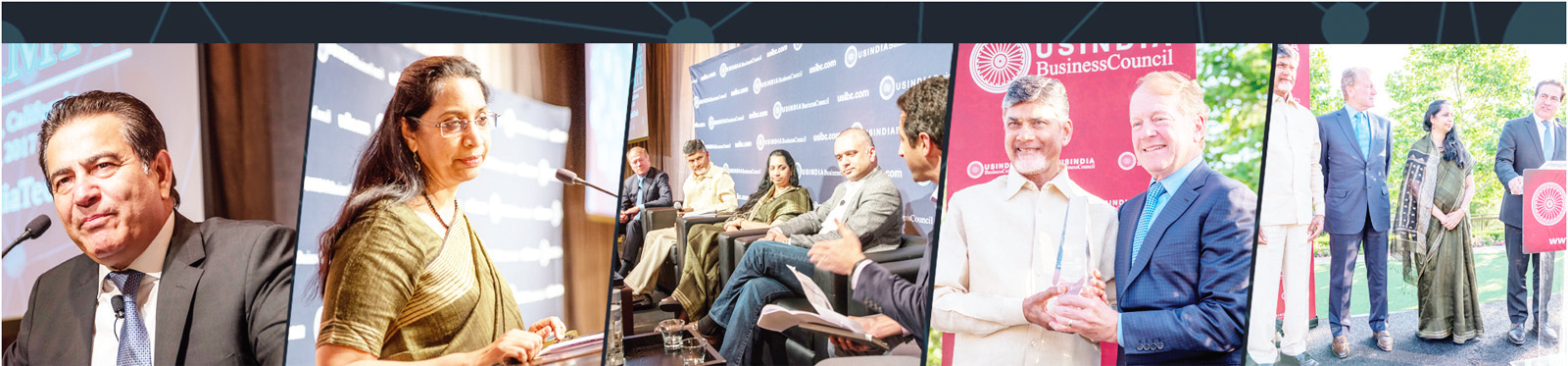
    WASHINGTON (TIP): Chief Minister of Andhra Pradesh Chandrababu Naidu was awarded the Transformative Chief Minister Award by The U.S.-India Business Council (USIBC) during their annual summit, an honor that has been instituted by the Council to acknowledge excellence in public service and recognize the honoree’s achievement in championing U.S.-India ties in the areas of trade, politics and culture. Recognized alongside Chief Minister Naidu, Secretary, Ministry of Electronics and IT, Aruna Sundararajan was honored with the USIBC Transformative Leadership Award for distinguished public service and her commitment to advancing U.S.-India cooperation and Digital India.

    USIBC hosted its annual summit in Silicon Valley in first week of May, calling for collaboration. The theme of this year’s summit was U.S.-India Technology Partnership. Industry and government leaders from the U.S. and India discussed the power of digital transformation to accelerate economic growth, create jobs, and encourage the start-up and entrepreneurial environment.

    USIBC brought together key stakeholders, including Government of India officials, industry leaders in fintech, digital payment service providers, IT, sharing economy, Ecommerce, and venture capitalists to renew key linkages and advance the convergent interests of the two countries.

    Senior policy makers and heads of global organizations held discussions on dynamic aspects of the U.S.-India commercial relationship that included panel discussions on: (1) Enabling Entrepreneurship and Corporate Responsibility; (2) Make in India; (3) Digital Payments, Internet of Things and Smart Planning; (4) Future of U.S.- India Technology Partnership featuring the Chief Minister of Andhra Pradesh Chandrababu Naidu and IT Secretary Aruna Sundararajan, alongside tech innovators Dheeraj Pandey, CEO of Nutanix, and USIBC Chairman and Cisco Executive Chairman, John Chambers. The panel was moderated by CNBC’s senior technology reporter, Ari Levy.

    Approximately 200 senior level business leaders and investors attended the summit. Attending companies at the summit included Amazon, PayPal, Deloitte, Facebook, iCreate, Nuveen, Mastercard, Mobility Infrastructure Group, Varian Medical, and Visa.

  • India, UK working on latest jet engine

    India, UK working on latest jet engine

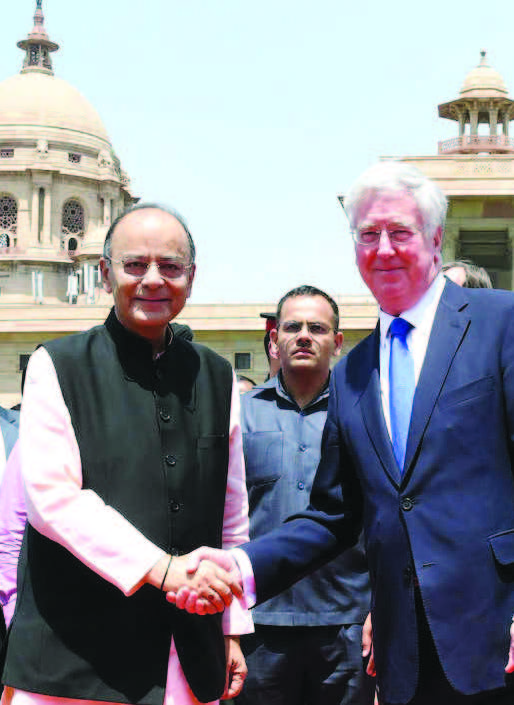
    NEW DELHI (TIP): India and the UK are jointly making one of the most powerful engines for fighter jets of the future and the first such engine will be unveiled within a year.

    The gas turbine engine, the very latest in technology, is being developed in collaboration between UK’s Rolls Royce and India’s Defence Research and Development Organisation (DRDO) and Gas Turbine and Research Establishment (GTRE), said Stephen Phipson, Head of Defence and Security Organisation, Department of International Trade, UK.

    He was interacting with mediapersons along with UK Secretary of State for Defence Sir Michael Fallon here after the India-UK Strategic Defence Dialogue. The UK delegation held talks with the Indian side led by Defence Minister Arun Jaitley.

    “This is a very high-thrust engine. It has the highest thrust possible in a jet engine,” said Phipson, who accompanied Sir Fallon at the press briefing. He, however, refused to divulge the details.

    Rolls Royce develops engines for leading global plane manufacturers, including military aircraft produced by countries such as the US.

    Sir Fallon said the UK and India were looking forward to having a defence and security partnership for a sea-borne aircraft carrier besides extending defence equipment cooperation to enable companies to collaborate on air defence missiles and gas turbine engines.

    “We are working on inter-operatability. We can include doctrines and training,” said Lt Gen Mark Poffley, the Deputy Chief of Defence Staff, UK’s Ministry of Defence.

    The two countries are looking to hold bilateral exercises in all three domains -Army, Air Force and Navy.

  • Toyota, Suzuki chief meets Modi, discuss ‘Make in India’

    Toyota, Suzuki chief meets Modi, discuss ‘Make in India’

    NEW DELHI (TIP): Toyota president Akio Toyoda and Suzuki chairman Osamu Suzuki on Thursday called on Prime Minister Narendra Modi to discuss future technological development and plans for Make in India.

    The Toyota-Suzuki business partnership and future technological developments came up for discussion, a PMO release said.

    “The partnership is expected to bring together Toyota’s global leadership in technology and manufacturing, with Suzuki’s strength in manufacture of small cars, especially in India. It is expected to enable India to use new technological developments,” it said.

    Further, high volumes will enable local manufacture of components required for these technologies.

    “Hence, the partnership will promote Make in India, and contribute to employment generation. It also opens up scope for export of new technology cars from India,” the PMO statement said.

  • Houston India conference: Make in India – The Inside Story

    Houston India conference: Make in India – The Inside Story

    HOUSTON, TX (TIP) Houston India conference is hosting first of the series conference on March 24 – 25 in Houston. The Houston India conference is designed to bring various constituencies that have an interest in India together and discuss with them the latest developments and the best practices of doing business in India. The theme of 2017 Conference is “Make in India – The Inside Story“.

    Make in India is a major national initiative of the Government of India, designed to foster innovation, enhance skills development, protect intellectual property, build best in class manufacturing infrastructure, facilitate investment and collaboration.

    Texas has a large interest in India. India is one of the major business partners for companies in this area. There is a large Indian presence in the educational, medical and research institutes that Houston is renowned for. The GDP of Texas at US$ 1.7 trillion would make it the 10th largest economy in the world, if it were an independent nation. Texas is home to 54 (or 11%) of Fortune 500 companies. The central focus of the Houston India Conference is to share today’s India story with the audience in Texas who are interested in investing in India, by the people who are playing an important role in shaping up the modern India.

    The conference has a series of panel discussions on the state of the Indian economy and politics, and to explore India’s growing soft power on the global stage. The panelists are some of the most respected voices, including foreign policy experts, business pioneers, and thought leaders sharing their insights on the unique Indian way of thinking.

    The topics of panel discussions are:

    Panel 1: Understanding Modern India: Democracy Delivering Growth

    Panel 2: Why is India the Fastest Growing Economy in the World and is it Sustainable?

    Panel 3: India USA Partnership

    Panel 4: Soft Power of India

    Prominent speakers include: India’s Ambassador to USA Navtej Sarna, Assistant Secretary of State for South and Central Asian Affairs Nisha Biswal, Foreign Policy Expert Dhruva Jaishankar, and JournalistAshok Malikamong others.

    The conference is organized by the Consulate General of India in Houston, India House, University of Houston, US India Skills and Education Council, Asia Society Texas Center, Indo American Chamber of Commerce of Greater Houston and World Affairs Council of Dallas/Fort Worth.

  • APPLE MOVES CLOSER TO IPHONE ASSEMBLY IN INDIA, MAY MANUFACTURE IN BENGALURU

    APPLE MOVES CLOSER TO IPHONE ASSEMBLY IN INDIA, MAY MANUFACTURE IN BENGALURU

    The government of Karnataka said on Thursday it welcomed a proposal from Apple Inc to begin initial manufacturing operations in the state, in a sign the tech company is slowly moving forward with plans to assemble iPhones in the country.

    “Apple’s intentions to manufacture in Bengaluru will foster cutting edge technology eco system and supply chain development in the state, which are critical for India to compete globally,” the Karnataka government said in a statement.

    A source familiar with the matter told Reuters, however, that no deal, or memorandum of understanding had so far been finalised with the Karnataka government.

    Apple has been asking for sops from the Indian government to start making iPhones in the country and as well as its own retail chain.

    However, Union finance minister Arun Jaitley in his budget speech announced a record figure of Rs 745 crore under modified special incentive package scheme (MSIPS) to boost electronic manufacturing. In a caveat, the government also has proposed a 2% special additional duty on import of PCBs. PCBs or in simple words printed circuit boards makes up for 20-30% of a smartphone’s cost and is generally imported as India still doesn’t have fabrication units to manufacture them domestically.

    The person, who asked not to be named, said if Apple did go ahead with plans to begin assembling the iPhone, it was likely to do so initially at a plant being set up by its Taiwanese manufacturing partner Wistron Corp at Peenya on the outskirts of the tech hub of Bengaluru, Karnataka.

    Cupertino, California-based Apple, is keen to assemble its phones in India, one of the world’s fastest growing smartphone markets.

    Apple representatives met with central and state government officials in India last week, as it is lobbying hard for a raft of tax and sourcing concessions, before it begins to assemble iPhones in the country.

    Following the meetings, Apple said it appreciated the open and constructive dialogue it held with Indian officials, around the expansion of its local operations in the country.

  • An Opportunity to buy Indian Residency with Investment of INR 10 Crore

    An Opportunity to buy Indian Residency with Investment of INR 10 Crore

    NEW DELHI (TIP): Foreign investors bringing in at least Rs. 10 crore capital will be eligible for residency status, easier visa regime and employment for family members among other benefits under a new policy approved by the Union Cabinet on Wednesday, August 31, to attract more overseas funds.

    “A certain threshold if you invest in India, then there will be availability of visa, the availability of the right to purchase assets, the availability of employment for family members, there is a detailed policy that has been approved by the Cabinet today”, Finance Minister Arun Jaitley said after the Cabinet meeting, chaired by Prime Minister Narendra Modi, in New Delhi, August 31.

    The scheme however will not be applicable to Pakistani citizens, Union Minister Venkaiah Naidu tweeted.
    The scheme is expected to encourage foreign investment in India and facilitate the Make in India program. Under the scheme, suitable provisions will be incorporated in the Visa Manual to provide for the grant of permanent residency status to foreign investors.

    An official statement said permanent residency status will be granted for a period of 10 years with multiple entries. This can be reviewed for another 10 years if the holder has not come to adverse notice.

    The scheme will be applicable only to foreign investors fulfilling the prescribed eligibility conditions, his or her spouse and dependents.

    “In order to avail this scheme, the foreign investor will have to invest a minimum of Rs. 10 crore to be brought within 18 months or Rs. 25 crore to be brought within 36 months.

    Further, the foreign investment should result in generating employment to at least 20 resident Indians every financial year,” the statement said.

    The permanent residency status will be granted for a period of 10 years initially with multiple entry facility, which can be renewed for another 10 years.

    The status will serve as a multiple entry visa without any stay stipulation and holders will be exempted from the registration requirements.
    This status holder will be allowed to purchase one residential property for dwelling purpose. The spouse/ dependents will be allowed to take up employment in private sector (in relaxation to salary stipulations for Employment Visa) and undertake studies in India.

  • India Should Harness Research: NJ Author

    India Should Harness Research: NJ Author

    NEW YORK: The number of Indians and persons of Indian origin who have enriched many nations, and humanity as a whole, through applied research and innovation in a multitude of fields has increased dramatically, says V. Ramaswami, the New Jersey based Indian American author of the to be released book “Innovation by India for India: the need & the challenge.”

    This should be re-assuring for India particularly because a significant fraction of these have had their initial graduate education and training in India. There can be no doubt that the capacity of the Indian mind and the will of the Indian can match any other. India’s indigenous scientific advances in the nuclear, space, and super-computer technologies are remarkable and attest further to the scientific and engineering talent in the country, he says.

    India’s scientific and technical establishments have many feats to boast about, including the recent successful launch of an orbiter to Mars at a per kilometer cost “less than that of a one kilometer auto-rickshaw ride in Ahmedabad.” Despite all of its above accomplishments, India is yet to harness commercially its research and innovation capabilities. Despite being a significant contributor to the information sector, not a single Indian enterprise has come close to any of the new age technology giants.

    What are those impediments that hold back the Indian in India in the sphere of applied research and its commercialization? Why it is that new product generation is low even at the low end where little technology is needed? Can those issues be redressed and if so how? These concerns form the main focus of this book. Some key factors are identified and examined in detail in the Indian context to find some possible actions for improvement in the book.

    The book deals with the creation of an ecology for commercializable innovations by Indians in India and owned by India. The timing for the book is perfect. There is so much interest in the Modi government to generate many start-ups but unfortunately, it has not worked out well from the response to the call for applications for funding, the author says.

    The most poignant example is the fact that our soldiers in Kargil were struggling with hand cranked telephones while Pakistanis had Motorola satellite phones for which Indian engineers wrote the software. Whoever got rich by working for others?  “Make in India” is much needed but if we stop there, we will become a nation of coolies and laborers for others and not realize our “tryst with destiny” much talked about, he says.

    He was motivated to write the book by former Indian President Dr. APJ Abdul Kalam whom he had met in Anna University in Chennai where he had gone to deliver the Ramanujan lecture series.”In a 45 minute one on one session, I did give him a lot of my views and he felt I should put them down in writing.  He said he is betting entirely on India’s young.”  The book comes recommended by Dr. Anurag Kumar, Director of the Indian Institute of Science and Padmabhushan Dr. Rajaraman of IISc’s supercomputer center.”

    Cover of the yet to be released book
    Cover of the yet to be released book

    The author, Dr. Vaidyanathan Ramaswami, a former Chief Scientist at Bell Communications Research, has an innovative track record of research in applied probability and telecommunications with work impacting many real world systems and international standards.  He is the author of over seventy five research papers and a noted monograph, and holds many patents related to communications.  His career has also covered academia as a faculty member and is embellished further by his involvement with several start ups in the areas of strategy and research.  He has a deep interest in India and has written many articles and blogs on Carnatic music, Hindu philosophy, and Indian economy and politics.

    The book is to be released in Chennai on July 22 at the Alumni Association meeting of the Madras Institute of Technology which is the alma mater of Dr. Abdul Kalam.
  • GOPIO 2016 Biennial Convention deliberates wide range of issues

    GOPIO 2016 Biennial Convention deliberates wide range of issues

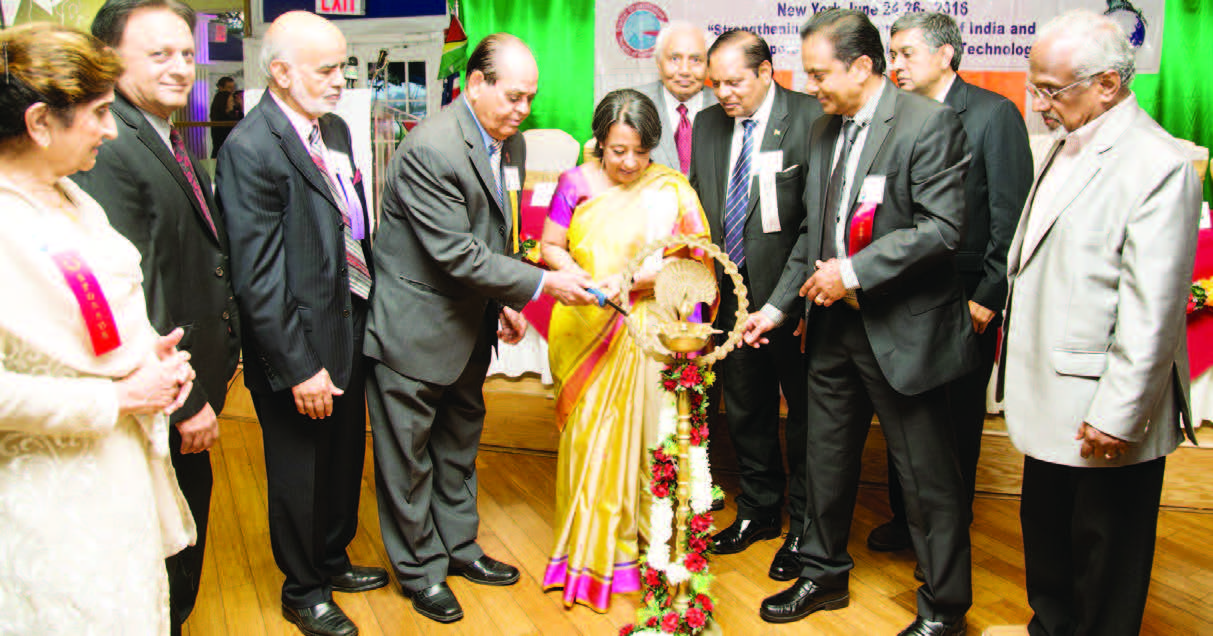
    NEW YORK CITY (TIP): With the theme “Strengthening Connections between India and Indian Diaspora through Business,” GOPIO International, Global Organization of People of Indian Origin (www.gopio.net), is held its 27th Anniversary Celebrations and GOPIO Biennial Convention 2016 in New York, USA at the Marriott LaGuardia Hotel with evening banquet held at World’s Fair Marina on June 24-25, 2016. Over 200 delegates from 20 countries participated. GOPIO’s New York Area Coordinator Lal Motwani served as the Convener along with Dr. Asha Samant, Kenny Desai, Shelly Nichani, Nohar Singh and Jayant Baxi as Co- Conveners.

    On Saturday June 25, a full day GOPIO conference was held at the New York LaGuardia Marriott Hotel from 9 a.m. to 5:30 p.m. There were 9 sessions to deliberate on the Global Indian Diaspora; evaluate GOPIO’s progress in 27 years; network, exchange ideas, and connect with PIO/NRI delegates from around the world. The conference, organized by Dr. Thomas Abraham, Chairman, Conference Committee and Founder President, GOPIO International, consisted of an inaugural plenary session with keynote speaker Raj Jaswa, former President of TiE Silicon Valley and director and trustee of TiE International, Serial technology entrepreneur, and an Adjunct

    The convention was inaugurated at the World’s Fair Marina on June 24th evening by welcome remarks by Convention Convener Lal Motwani and by GOPIO President Niraj Baxi and at a welcome dinner. The chief Guest was Guyana Prime Minister and First Vice President Moses V. Nagamootoo, a freedom fighter for Guyana. PM Nagamootto invited the Indian Diaspora community to consider Guyana as a destination for investment and business and spoke on many incentives Guyana could offer. India’s Consul General in New York Ambassador Riva Ganguly Das representing Govt. of India, delivered the inaugural address in which she noted the role played by GOPIO in launching and building a worldwide movement as a united force for the Indian Diaspora. The evening program ended with classical and semi-classical dances performed by students of Pandit Satya Narayana Charka.

    Professor at several Universities in India. This was followed by two track conference sessions, (1) Business and Technology ventures and opportunities and (2) Social, Political, Gender and Health challenges.

    Make in India – Diaspora role
    Major Issues of Indian Diaspora
    Indian Diaspora Promoting Medical and Pharmaceutical Industries
    Diaspora Indian Women Forum -Empowering Diaspora Indian Women
    Diaspora in Hospitality and Convenience Foods
    Diaspora Writers Form
    Promoting Diaspora Entrepreneurship, Technology and Business
    Health and Wellness of the Indian Diaspora

    The conference ended with a concluding presentations session from the Session Chairs, namely, Prakash Shah, Dr. Rajeev Mehta, Nitin Shah, Dr. Neerja Arun Gupta, Viresh Sharma, Sudha Parekh, Dr. Asha Samant, Jagdish Lodhia and Ram Gadhavi. Several resolutions were presented by a committee headed by Dr. Rajeev Mehta. Resolutions for the conference session were added to these, and will be sent to Govt. of Indian and other government agencies.

    The 27th Anniversary celebrations concluded with a Grand Finale Banquet and Recognition of Businesses and Entrepreneurs with Social Responsibility at the World’s Fair Marina. The honorees were Lord Diljit Rana of Belfast (Northern Ireland, UK), Raj Jaswa of Silicon Valley and TV Asia Chairman H.R. Shah. Dr. Sudhir Parikh, Chairman of Parikh Worldwide Media and Prof. Indrajit Singh Saluja were honored with Media Awards for their contribution and support of the community.

    The Chief Guest was Sir Isaac Vivian Alexander Richards, KNH, OBE, known as Viv Richards, a former West Indian cricketer, regarded as one of the greatest batsmen of all time. He was joined in the evening by Antigua & Barbuda Minister Trade, Industry, Commerce, Sports and National Festivals Mr. E.P. Chet Greene. The banquet ended with a Bollywood performances put together by Dharmatma Saran of India Festival Committee and Anita Bhat of Miss India-CT.

    With gratitude, GOPIO acknowledged support of Platinum sponsors Embassy National Bank, State Bank of India, Labidco Port Services Ltd; Gold sponsors Dr. Asha Samant and Kenny Desai; and Silver sponsors Bank of Baroda, Adani North America, S.S. White Technologies Inc. and Dr. Praveen Chopra.

    A Number of resolutions were adopted.

  • GOPIO 2016 Biennial Convention and Conference: June 24 & 25

    GOPIO 2016 Biennial Convention and Conference: June 24 & 25

    NEW YORK CITY (TIP): GOPIO International, the Global Organization of People of Indian Origin (www.gopio.net), is holding its 27th Anniversary Celebrations and GOPIO Biennial Convention 2016 in New York, USA at the World’s Fair Marina and Marriott LaGuardia Hotel on June 24-25, 2016. The theme of the conference is “Strengthening Connections between India and the Global Indian Diaspora through Business and Technology,” and will provide an opportunity to connect and network with people of Indian origin worldwide.

    Delegates from over 25 countries are expected to attend the convention which starts on Friday, June 24 with an inauguration and welcome reception from 7.00 p.m. to 10 p.m. at 1 World’s Fair Marina, Flushing, New York. The Chief Guest is Ambassador Arun Singh, Indian Ambassador to the US from Washington, DC. Other Honored Guests are Guyana Prime Minister and First Vice President Moses V. Nagamootoo, Congressman Gregory Meeks and Queens Borough President Melinda Katz. On behalf of GOPIO, Lal Motwani, Convener, and Co-Conveners Dr. Asha Samant, Kenny Desai, Shelly Nichani, Nohar singh and Jayant Baxi extend their invitation to join in for this biennial international GOPIO Convention 2016.

    On Saturday June 25 a full day GOPIO conference will be held at the New York LaGuardia Marriott Hotel (102-05 Ditmars Blvd., East Elmhurst, New York) from 9 a.m. to 5:30 p.m. There will be 9 sessions to deliberate on the Global Indian Diaspora; evaluate GOPIO’s progress in 27 years; network, exchange ideas, and connect with PIO/NRI delegates from around the world.

    The conference, organized by Dr. Thomas Abraham, Chairman, Conference Committee and Founder President, GOPIO International, will consist of an inaugural main tent session followed by four Diaspora related topics in each of two tracks: (1) Business and Technology ventures and opportunities and (2) Social, Political, Gender and Health challenges. The keynote speaker will be Raj Jaswa, former President of TiE Silicon Valley and director and trustee of TiE International, technologySerial entrepreneur, and an Adjunct Professor at several Universities.

    GOPIO International President Niraj Baxi invites all PIOs (People of Indian Origin) and NRIs (Non Resident Indians) to avail of this opportunity to attend, saying, “The conference will evaluate, assess, debate, discuss and deliberate on the current critical issues of interest and concern that confront over 25 million people of Indian origin, living in countries outside of India.”  Conference sessions listed below are open to all with pre-registration.

    ● Make in India – Diaspora role
    ● Major Issues of Indian Diaspora
    ● Indian Diaspora Promoting Medical and Pharmaceutical Industries
    ● Diaspora Indian Women Forum -Empowering Diaspora Indian Women
    ● Diaspora in Hospitality and Convenience Foods
    ● Diaspora Writers Form
    ● Promoting Diaspora Entrepreneurship, Technology and Business
    ● Health and Wellness of the Indian Diaspora

    The conference will end with a concluding presentations session from the Session Chairs, namely, Prakash Shah, Dr. Rajeev Mehta, Nitin Shah, Dr. Neerja Arun Gupta, Viresh Sharma, Sudha Parekh, Dr. Asha Samant, Jagdish Lodhia, Ram Gadhavi. A Presentation of Resolutions will be made by Dr. Rajeev Mehta, Chairman Resolution Committee and GOPIO International Coordinator for North America, Piscataway, NJ, USA.

    The 27th Anniversary celebrations will conclude with a Grand Finale Banquet and Recognition of Businesses and Entrepreneurs with Social Responsibility from 7 p.m. to 11 p.m. at the World’s Fair Marina. The Chief Guest will be Ambassador Riva Ganguly Das, Consul General of India, New York. With gratitude, GOPIO acknowledges support of Platinum Sponsors Embassy National Bank, State Bank of India, Labidco Port Services Ltd; Gold sponsors Dr. Asha Samant and Kenny Desai; and Silver Sponsors Bank of Baroda, Adani North America, S.S. White Technologies Inc. and Dr. Praveen Chopra.

    For Convention registration and sponsorship opportunities, contact: Convention Convener Lal Motwani at lmotwani@verizon.net or call the following numbers: 516-581-3332, 516-616-0233 or 203-329-8010.

    About GOPIO International: GOPIO is a non-partisan, not-for-profit, secular organization. GOPIO’s volunteers are committed to enhancing cooperation and communication between NRIs/PIOs, building bonds, friendships, alliances, and the camaraderie of citizens and colleagues alike. GOPIO volunteers believe that when they help network the global Indian community, they facilitate making tomorrow a better world for the Indian Diaspora. GOPIO publishes a very informative monthly newsletter. Interested persons can receive free of charge at www.gopio.net or by request email to: gopio-intl@sbcglobal.net or by calling +1-818-708-3885 (USA).

  • Do joint exercises with friendly foreign countries: Parrikar

    Do joint exercises with friendly foreign countries: Parrikar

    NEW DELHI (TIP): Defence minister Manohar Parrikar on June 23 directed the armed forces to carry out joint exercises with friendly foreign countries specially, in South East Asia, in tune with India’s ‘Act East Policy’.

    He also asked them to optimise resources and enhance cost effectiveness even as he exhorted them to exploit joint capabilities for predominant role in the volatile region around the country.

    Parrikar reviewed key security issues facing the nation and important strategic, operational, administrative and logistics aspects pertaining to tri-services were also deliberated upon.

    “To keep in tune with the India’s Act East Policy, Parrikar urged the Armed Forces for conduct of joint exercises involving more than one Service with our friendly foreign countries specially, in South East Asia,” a defence ministry statement said.

    He stressed on the need for jointness of the three services to optimise resources and enhance cost effectiveness, so that maximum funds can be made available for modernisation of the armed forces, it said.

    Parrikar while addressing the two-day Annual Unified Commanders’ Conference here, said by virtue of India’s dominant geographical location, the country is poised for a predominant role in the volatile region around us.

    The minister said, hence, there is a requirement to exploit this advantage by developing joint capabilities.

    In order to achieve self-reliance, he emphasised on ‘Make in India’ initiative and indigenisation of defence production.

    He commended the armed forces for their devotion to duty and the stellar role played by them in safeguarding the country’s unity and integrity. The minister also paid homage to all valiant soldiers, sailors and air warriors for their supreme sacrifice in honour of the nation.

  • PM HITS BACK AT RAHUL USING QUOTES BY NEHRU, INDIRA AND RAJIV

    PM HITS BACK AT RAHUL USING QUOTES BY NEHRU, INDIRA AND RAJIV

    NEW DELHI (TIP): Prime Minister Narendra Modi on March 4 reached out to the opposition, saying he needs their support for “improvement” in his government, even as he attacked the Congress over disruptions in Parliament while skipping the raging issues like JNU and Dalit student’s suicide. Speaking in the Lok Sabha, Modi used wit and barbs as he responded to the attack by Congress over various initiatives of his government, including ‘Make in India’ and MNREGA.

    Slamming the Congress for disrupting Parliament and stalling bills, he said the main opposition party was doing so because of “inferiority complex” of its top leaders. He also invoked the statements made by Jawaharlal Nehru, Indira Gandhi, Rajiv Gandhi and first President Rajendra Prasad by reading out their statements against stalling of legislative business.

    He deplored the ‘tu tu, mai mai’ (blame game) attitude by political parties for “scoring points”, saying the officialdom rejoices over this and nation suffers. “This government also needs improvement which cannot happen without your help. I am new, you are experienced. I need the benefit of your experience.

    Governments will come and go.

    Let us work shoulder to shoulder,” Modi said while replying to a debate on Motion of Thanks to the President’s address which was approved later.

    He said a democratic country like India cannot be left at the mercy of the bureaucracy as he sought to underline the importance of the legislature, saying even a single MP of any party should be treated like “Prime Minister”. In his 75-minute speech, Modi, however, did not respond to the specific issues raised by Rahul Gandhi and other opposition leaders, like his visit to Pakistan, blackmoney, JNU and Dalit student Rohith Vemula’s suicide.

    Without naming Rahul Gandhi, the Prime Minister appeared to be responding to his Wednesday’s remark that he should listen to others. “It is easy to preach others … There are some people to whom all kinds of questions are asked. But there are some others, to whom nobody dares to ask questions,” he said. “I have been questioned, I have faced criticism and accusations over last 14 years. I have learnt to live with it,” said Modi, apparently referring to the attacks on him in the aftermath of Gujarat riots of 2002. While hitting out at Rahul for criticising his government, he sarcastically recalled how the Congress vice-president had torn at a press conference an Ordinance approved by the Cabinet headed by Manmohan Singh and including veterans like AK Antony, Sharad Pawar and Farooq Abdullah.

    He also took on Rahul for mocking at the government’s ambitious ‘Make in India’ programme, questioning whether such a scheme should be made fun of. “You are mocking at ‘Make in India’? If it is not successful, you should suggest what should be done to make it successful,” he said.

    Referring to disruptions in Parliament due to which several bills, including the crucial GST legislation is stuck, Modi said “House is not allowed to function due to inferiority complex (of the opposition leadership).”

    While elaborating, he appeared to suggest that top Congress leadership was not allowing “young” and “bright” leaders to emerge fearing that they may overshadow Rahul.

    “In the opposition there are bright and talented youngsters who don’t get a chance to speak…They do a lot of study … The concern is that if they speak, they will be praised. Then what will happen to us,” Modi said. While talking of disruptions in Parliament, the Prime Minister again appeared to take a swipe at Congress, saying the opposition’s attitude was to “demonstrate its strength” even though its “strength may be less”.

    Congress has only 45 members in the 545-member Lok Sabha.

    Invoking Rajiv Gandhi over disruptions, Modi read out a statement made by the former Prime Minister in which he had expressed “pain” over stalling of Parliament and said that while it hurts the government, it equally hurts the members of the opposition who want to raise issues of their concern.

    He said because of the will of Speaker Sumitra Mahajan, some bills were passed in Lok Sabha but those could not move ahead, suggesting that they got stuck in Rajya Sabha. Identifying some of these legislations, he said the Whistleblowers Protection Amendment bill is meant for enlightening the citizens and “I see no reason why it is stopped.”

    Source: PTI

  • FORD, GM TO OPERATE INDIA FACTORIES ROUND THE CLOCK

    FORD, GM TO OPERATE INDIA FACTORIES ROUND THE CLOCK

    MUMBAI (TIP): Three global automobile powerhouses either have started operating their India factories round the clock or are in the process of doing so to meet increasing export demand, in a resounding endorsement of the Prime Minister’s call to make in India.

    For the past six months, Ford Motor’s manufacturing facility in Tamil Nadu is running three shifts a day, which is uncommon in the American carmaker’s global operations.

    Europe’s largest carmaker, Volkswagen, is set to start a third shift starting next week, while the US No. 1, General Motors, is expected to add another shift from the beginning of next year.

    Interestingly, these companies aren’t doing so well in the Indian market, and the incremental output is to cater to markets in Latin America, Europe and Africa.

    ET spoke to several vendors who supply parts to these carmakers and they said while the domestic market is expected to grow by a single digit, the likes of Ford India, General Motors India and Volkswagen India are targeting 20-60% jump in 2016 production, clearly indicating their export plans. While these carmakers have a market share of less than 3-4%in India, experts say high export volume is helping them make local operations viable.

    Automakers have committed to invest billions of dollars in India, enticed by the local market opportunity in the long term as well as its frugal manufacturing capabilities and abundant skilled manpower, which offer a cost-effective environment to make small cars and sell them at competitive prices internationally.

    In fact, even before Narendra Modi made the call to make in India a year and half ago, making in India for the world had already become part of global carmakers’ strategy and boardroom discussions. Hyundai Motor and Maruti Suzuki have long been shipping India-made cars to foreign markets, even as they ruled the domestic market as well. Companies such as Nissan and Renault, too, target foreign markets with compact vehicles produced in India.

    But now, with the government’s new push to promote manufacturing in India, companies are further expanding production and exporting more, even though the domestic market remains stuck in the slow lane.

    “We are committed to position India as a global centre of excellence for manufacturing small cars and low-displacement engines,” said a spokesperson for Ford India, which is churning out the EcoSport compact SUV for the global markets from its plant near Chennai.

    “Our unflinching commitment to India is reflected in the aggressive implementation of our growth plans, including more than $2 billion we have invested here so far,” he said.

    Volkswagen and GM are witnessing strong demand for their India-made cars in Mexico – for the Vento and Beat, respectively. The Vento is already the segment leader in the Latin American country, where it sells double the number compared with India.

    Volkswagen India Managing Director Andreas Lauermann said going past the capacity of the two-shift system due to higher demand is an important milestone for the company.

    “Volkswagen Pune plant will start off with the third shift soon and will ramp up the production over the year. This step is necessary due to the rising demand from exports as well as domestic market, especially through the new Ameo. Exports have helped VW to create a natural hedging against the weak Indian rupee and fluctuating domestic demand,” Lauermann said.

    Source: ET

  • USIBC endorses Indian Budget as Attractive

    USIBC endorses Indian Budget as Attractive

    WASHINGTON (TIP): American companies, either those with a foothold or who are planning to set foot in India, are bullish on the latest budget presented by the Modi government, business advocacy group U.S.-India Business Council has said.

    “We talked to some of our members on the feedback, and they have been bullish about the budget itself. I feel that its investment in infrastructure, in trying to provide ease of doing business and providing certain tax certainties is good for U.S. investors,” Mukesh Aghi, USIBC president, told PTI in an interview Feb. 29.

    Aghi said the annual budget presented by Union Finance Minister Arun Jaitley maintains the fiscal deficit at 3.5 percent from 3.9 percent and gives international investors an assurance that India can provide discipline among emerging markets.

    Referring to the fact that foreign direct investment in India is up by 40 percent, Aghi, who was recently in India for the Make in India summit in Mumbai, said the move sent a positive signal to the global market.

    “The sentiment (on India among U.S. companies) is on the positive side,” Aghi said in response to a question, hoping that this would bring much greater American investment to India.

    U.S. companies have made $15 billion worth of FDI in India in the last 18 months and are expected to invest another $27 billion this fiscal year, he said, adding that with the latest budget, this figure is expected to go up.

    The infrastructure sector and food retail industry provide a lot of opportunities for investment, he said. Allowing 100 percent FDI in the marketing of food produced in India will likely bring in new investors who will provide the needed manufacturing and retail jobs, he said.

    “This will help farmers increase sales, spur investment in cold chain and storage infrastructure to make sure food is better preserved, and bring new and diverse food products to a larger percentage of the Indian population than ever before,” Aghi said.

    The USIBC president also lauded the Union Finance Minister for creating an investment-friendly climate even as he said U.S. firms are expecting to roll out of the Goods and Services Tax, which can be a “game changer” for the country’s economy.

    “Tax reforms presented in this budget are unprecedented and lay the road map to creating an attractive environment for foreign investors. U.S. companies are still eager for the implementation of GST that has the potential to be a game changer for the economy. This is also an inclusive budget -one that creates opportunities for increasing domestic demand,” Aghi said.

    “The message is that U.S. companies are very bullish on India,” Aghi said, adding that the large section of U.S. FDI in India is going into the IT sector and manufacturing environment.

    Responding to a question, he said USIBC members feel India could move a bit faster on the corporate tax reduction. The American corporate sector, he noted, is looking forward to the intellectual property policy coming out. “I would say a big chunk of the issues were addressed (in the budget),” he said.

    “Yes, we have made progress. But the issue is we should benchmark every state with let’s say Singapore or Hong Kong. We should not measure states within India with each other. We need to raise the bar,” he said.

  • ‘Make in India Week’ gets Rs 15 lakh cr investment commitment

    ‘Make in India Week’ gets Rs 15 lakh cr investment commitment

    MUMBAI (TIP): The week-long ‘Make in India’ fair closed on Thursday with investment commitments of over Rs 15 lakh crore ($220 billion), the government said.

    “The numbers are in. INR 15,20,000 cr investment already committed at #MakeInIndia Week,” the event’s main organiser,” the union Department Of Industrial Policy and Promotion (DIPP) said in a tweet.

    “INR 1,05,000 crore of business enquirers generated during #MakeInIndia Week,” another tweet said.

    Addressing the event’s closing ceremony, DIPP Secretary Amitabh Kant said: “Maharashtra will become the gateway of India”.

    Maharashtra chief minister Devendra Fadnavis said over half of the investment commitments were for his state. “We have signed many memoranda of understanding with several companies across sectors to the tune of Rs.8 lakh crore during the Make In India Week,” he said.

    Of the total investments committed here, 30% are from foreign investors.

    “We have already opened the economy across sectors to the world. We’re now showcasing, connecting and collaborating for manufacturing in the country,” Kant told reporters at the closing press meet.

    The Maharashtra government had signed pacts worth Rs.6 lakh crore, which included large commitments from Mahindra and Mahindra (Rs 8,000 crore), Mercedes (Rs 4,270 crore), Panchshil (Rs 5,000 crore), JSW Jaigarh Port (Rs 6,000 crore) and RCF Chemicals (Rs 6,204 crore), among others.

    On Thursday, it signed other deals worth over Rs 1,60,000 crore, which include commitments from CIDCO’s two projects – Khalapur Smart City (Rs 7,909 crore) and townships in NAINA project area worth Rs 29,952 crore.

    The state government has also received commitments from retail players like Future Group (Rs 850 crore), Trent Hypermarket (Rs 400 crore), D-Mart (Rs 250 crore), Metro Shoes (Rs 50 crore), Shoppers Stop (Rs 50 crore) and Major Brands (Rs 50 crore).

    Karnataka received Rs 9,700 crore of investment proposals on Wednesday at the Make in India Week.

    “The investments include Rs 6,000 crore by First Solar for a solar cell unit, Rs 2,284 crore by French firm Tar Kovacs Systems for an ocean-based renewable energy project and Rs 1,250 crore by Pert Telecom to make smart products and solutions for street lighting, IT security, surveillance and global positioning system (GPS),” an official statement said.

    The event, inaugurated by Prime Minister Narendra Modi on February 13, saw many corporate houses announce their plans to Make in India, notably, Mahindra and Mahindra, the Sajjan Jindal Group, Mercedez-Benz, Godrej, Posco, Vedanta, Ikea and Tatas.

    Several union ministers made their pitch for investments at the event, with Power Minister Piyush Goyal saying his sector needed $1 trillion in investment.

    While Petroleum Minister Dharmendra Pradhan outlined the existing and future policies to attract funds into downstream and upstream oil projects, Heavy Industries Minister Anant Geete unfolded a policy to nearly double the share of capital goods in exports to 40%.

    Meanwhile, US agency Moody’s Investors Service on Thursday forecast for India “stable GDP growth at around 7.5 percent in 2016 and 2017”, saying the country is relatively less exposed to external headwinds, like the Chinese slowdown, and will benefit from lower commodity prices.

    “India is relatively less exposed to external factors, including China slowdown and global capital flows. Instead, the economic outlook will be primarily determined by domestic factors,” Moody’s said in its report “Global Macro Outlook 2016-17 – Global growth faces rising risks at time of policy constraint.”

    Source: IANS

  • Protecting India’s Trade Interests

    Protecting India’s Trade Interests

    The Trans-Pacific Partnership agreement (TPP) has been signed in Auckland on February 4 by Australia, Brunei, Canada, Chile, Japan, Malaysia, Mexico, New Zealand, Peru, Singapore, the U.S. and Vietnam. Even as it is touted as the world’s biggest trade deal to date, with signatory countries accounting for more than 50 per cent of global GDP, the TPP still has a long-drawn ratification process ahead of it. Signing of the agreement provides an opportune moment for India, which is not part of the TPP, to take stock and formulate its response to the trade challenges it now faces on both international and domestic fronts.

    Discussing new issues

    The TPP contains detailed obligations on so-called new issues such as labor, investment, environment, e-commerce, competition and government procurement. These issues are not covered under the World Trade Organization’s (WTO) multilateral umbrella. However, as the recent Nairobi Ministerial Declaration stated, “some” members want to explore and discuss new issues and architecture at the WTO. There is an increased likelihood of the U.S. pushing the TPP as the negotiating template for new issues at the WTO, since it better reflects the interests of its own domestic lobbies. As new issues are not likely to be in India’s overall interest, the country must firmly resist such attempts. But this may only be accomplished with a high degree of preparedness and smart coalition-building with like-minded allies.

    India also needs to closely watch the regulatory regimes in TPP countries, ensuring that these countries do not violate their WTO commitments in the process of implementing the TPP. The WTO does allow a member to deviate from its obligations with respect to a free trade area; however, such a deviation is not unqualified. If a TPP country restricts the market access for non-TPP members such as India on account of higher labor standards, a potential violation of WTO provisions may arise, which India should not shy away from pursuing using the WTO’s dispute settlement mechanism.

    India should actively seek disciplines on private standards at the WTO to restrict their proliferation. The TPP attempts to regulate and, according to some experts, legitimizes this regime. A number of studies have predicted that the TPP will lead to proliferation of private standards. However, the fact is that such standards have existed as a parallel regulatory regime in international trade for some time now. For instance, in 2006, the Sialkot sports goods manufacturing cluster in Pakistan came close to closure when Nike decided to stop sourcing footballs made in the area, on account of violation of its labor standards that prohibited child labor. Despite significantly impacting international trade, these standards have escaped regulation under the WTO. This is because they do not originate from the ‘state’ but from private bodies. Disciplining such private standards at the WTO is much needed and is something that should be urgently pursued.

    Impelled by the looming onset of the TPP, India should conclude, on a priority basis, its ongoing free trade negotiations. These include the India-EU Bilateral Trade and Investment Agreement and the mega Regional Comprehensive Economic Partnership with the Association of Southeast Asian Nations, China and others. Benefits from these agreements will help mitigate some of the export losses that India may face in leather goods, textile, and plastics on account of trade diversion due to TPP. Aiming to diversify export destinations to hitherto untapped markets like Latin America and Africa would also help.

    India also needs to identify its trade interest areas and propose alternative negotiating templates. One such area is biopiracy, protection of traditional knowledge, and the link between the WTO’s Trade-Related Aspects of Intellectual Property Rights agreement and the Convention on Biological Diversity. There have been several instances of biopiracy in the past, of Indian traditional knowledge, such as the patenting of the wound-healing properties of haldi (turmeric). Being among the 12 mega biodiversity-rich countries, India needs to bring this issue to the negotiating table in its own free trade agreements.

    On the domestic front, India should accelerate the process of making its products more cost-competitive. There is no denying that India’s infrastructural deficiency, including port congestion and poor road connectivity, is one of the main hurdles in attaining this cost competitiveness. Addressing these will have the dual effect of not only making India’s exports cost-competitive, but will also make them more attractive for international lead firms to integrate India in global value chains.

    The government should launch a comprehensive initiative to enable Indian exporters to not only comply with standards prevalent in the importing market, but also demonstrate the compliance through appropriate conformity-assessment procedures.

    India should resist any attempt to converge its domestic public standards with the dominant private standards in TPP countries. If India’s public standards are harmonized with foreign standards, they will be equally applicable to domestic and export sales on account of the ‘national treatment’ principle of the WTO which prohibits less favorable treatment to imported products. The harmonized standards may result in most producers not only being excluded from export markets, but also being edged out of the domestic market, undermining the Make in India initiative in the process.

    By not being part of the TPP, India will certainly incur losses on account of trade diversion. Yet, joining the TPP is not an option for the country. This would entail very heavy costs. Medicine prices, for instance, would see steep increases. That is precisely why mitigating such projected losses from the TPP should be a government imperative. This can only be achieved by a cohesive trade policy approach on the international as well as domestic front, aimed at protecting and promoting India’s trade interests.

    (The author is an assistant professor at the Centre for WTO Studies, Indian Institute of Foreign Trade, New Delhi.)

  • USIBC names two new vice chairs to push India trade

    USIBC names two new vice chairs to push India trade

    WASHINGTON (TIP): The US-India Business Council (USIBC) has named Punit Renjen, CEO of Deloitte Touche Tohmatsu Limited (Deloitte Global),and Edward Monser, President of Emerson, as USIBC Vice Chairs to further build on US-India relationship.

    The leading business advocacy organization comprised of 350 top-tier US and Indian companies advancing US-India commercial ties recently appointed former Cisco CEO John Chamber as USIBC Chairman.

    Chambers, immediate past USIBC Chairman and CEO of MasterCard Ajay Banga, and Edward Monser, will embark on the USIBC Chairman’s Executive Mission to India in mid-February, and also participate in the inaugural Make in India week.

    “I believe that there are tremendous opportunities this year to build on the US-India relationship,” said Monser. “With India’s push for advancement across industries, and initiatives like Make in India gaining momentum, I see several channels for collaboration, exchange of ideas, and exchange of technology between the two countries.”

    “I am optimistic about the continued trajectory of US-India relations and the positive impact this will have, not only for our two countries, but indeed for the world,” said Punit Renjen.

    “In growing the exchange of talent between our two countries and further opening channels for increased trade and investment, we will be able to deepen innovation, create high-quality jobs and fuel our industries’ global competitiveness for the 21st century.”

    Congratulating the “two great business leaders,” USIBC President Mukesh Aghi said: “Together, with our combined experience, we can tackle some of the most difficult challenges on both sides.

    “We have already seen the expansion of FDI into the media and entertainment, single brand retail, and defense sectors. Indian states are also actively reaching out to investors here in the US, showcasing the power of competitive federalism.

    High on the priority list this year includes the passage of the Goods and Services Tax and land acquisition reform in India, as well as growing the manufacturing sector in order to consolidate India’s presence as a key player in the global economy.”

    Chambers said the two new appointees “have done great work in promoting trade between our two countries” and “Our job for this year is to build on this momentum and shape and further the Council’s priorities.”

    “We still have challenges ahead and there are areas we must discuss, however, I am positive we can do so in a way that befits our community and our leaders’ ambitions.”

    IANS

  • PRAVASI BHARATIYA DIWAS celebrated at Embassy of India

    PRAVASI BHARATIYA DIWAS celebrated at Embassy of India

    WASHINGTON (TIP): Prominent Indian Americans attended the Pravasi Bharatiya Diwas – 2016 celebrations hosted by the Embassy of India in Washington, DC, on January 8.

    The event was well attended with enthusiastic participation by the Indian-American community members representing various sectors including the government, business, professionals, artists, journalists, students, etc.

    Swadesh Chatterjee (left) and Dr. Satyam Priyadarshy speaking at the Pravasi Bharatiya Diwas at the Embassy of India in Washington, DC. - Photo courtesy of Embassy of India
    Swadesh Chatterjee (left) and Dr. Satyam Priyadarshy speaking at the Pravasi Bharatiya Diwas at the Embassy of India in Washington, DC. – Photo courtesy of Embassy of India

    Opening the event with his special remarks, Ambassador Arun K. Singh highlighted the importance of Pravasi Bharatiya Divas. Ambassador underscored the transformational role played by the Indian American Community and its future potentials in the development of India-US Relations.

    The highlight of the evening was talks by prominent Indian American community leader Swadesh Chatterjee and technology leader Dr. Satyam Priyadarshy.

    Padma Bhushan Swadesh Chatterjee from North Carolina gave a Talk on “Building Bridges: How Indian Americans Brought the US & India closer together”. Shri Chatterjee has recently published a book highlighting the contribution of Indian Americans in various fields including in the field of energy cooperation.

    This was followed by a Talk by Dr. Satyam Priyadarshy, President of TiE (The Indus Entrepreneurs, which has 61 chapters across 17 countries). Dr. Priyadarshy spoke on “India’s Flagship Projects and Indian Americans: Promising Possibilities”. In his talk he underscored the ways in which Indian American community can contribute to the flagship projects of the Government, including Smart City Mission, Skill India, Digital India, Make In India and Swatch Bharat. He also underscored how these projects are organically connected to each other.

    The event concluded with an interactive session with audience through Q&A.

  • 2015: A Year of Work-in-Progress for Defense

    2015: A Year of Work-in-Progress for Defense

    One does not know what the Ministry of Defense (MoD) set out to achieve in the calendar year 2015 or the current financial year that will draw to a close in another three months (in March, 2016). But if one were to hazard a guess, the objective would have been to take steps, if not to completely resolve, at least address the issues that kept the MoD in the news throughout the year. A quick survey of where we stand on those issues at the end of the year would be instructive.

    To cut to the chase, the issues confronting the defense establishment at the beginning of the year broadly related to defense policy, human resource management and operational preparedness, though not necessarily in that order.

    The policy-related issues are not new. Questions about India’s national security objectives and defense strategy, in all their manifestations, have persisted for long. To be fair, these larger issues were not in the forefront at the beginning of the year but a related issue was. It concerned the appointment of a Chief of Defense Staff (CDS) or Permanent Chief of the Chiefs of Staff Committee (PC COSC). The year has gone by without one being appointed. If anything, the excitement seems to have somewhat ebbed over the past few months.

    It will take some doing to create this institution with clearly defined responsibilities and an appropriate support structure. Assuming that the present system of three-tiered defense planning will continue and, among other things, the CDS/PC COSC will be responsible for defense planning, it is time the issue is taken up on priority as the 13th Defense Five-year Plan is to commence from April 1, 2017.

    In contrast, it has been a year of palpable vibrancy in defense diplomacy, with India simultaneously engaging the United States, Russia, Japan, France, the United Kingdom, Germany and others at one level and countries in the neighborhood at another. But the tangible outcome of this outreach is awaited. The contract for the medium multi-role aircraft, which was the highlight of the prime minister’s visit to France earlier this year, is yet to be finalized. There has been little progress on the ‘pathfinder projects’ or other technologies offered by the United States. The US-2 amphibious aircraft project with Japan continues to hang fire, and so does the FGFA project with Russia. There will be many other projects of this kind. It is necessary to wrap up some of these programs to establish credibility and lay the foundations for a more meaningful engagement.

    The most significant development has been the recent outreach to Pakistan after the cancellation of the NSA-level talk in August 2015. It would be naive to expect immediate results but this is the only way forward for both the countries. There is absolutely no alternative to talks. Sustaining this engagement in the coming year without raising expectations of a breakthrough in respect of any of the several contentious issues will be a great achievement.

    As for issues concerning human resources management, the one-rank-one-pension (OROP) log-jam and the reaction of the armed forces to the recommendations of the seventh central pay commission eclipsed all other issues, reinforcing perceptions of deteriorating civil-military relations. The vitriol underlying the discourse on these issues does not bode well for a country that has one of the largest armed forces in the world. In today’s world, perception management is as important as resolving the core issues underlying those perceptions.

    Going by the coverage it got in the media in 2015, the MoD invested a tremendous amount of effort in addressing the issues concerning operational preparedness with a clear emphasis on promoting self-reliance in defense production through greater participation of the Indian private sector, coupled with the decision to go ahead with some off-the-shelf procurements, especially from the United States through the Foreign Military Sales (FMS) route.

    The finance minister gave a glimpse of the government’s thinking on this approach when he said the following in his budget speech of 28 February 2015:

    “86. Defense of every square inch of our mother land comes before anything else. So far, we have been over dependent on imports, with its attendant unwelcome spin-offs. Our Government has already permitted FDI in defense so that the Indian-controlled entities also become manufacturers of defense equipments, not only for us, but for export. We are thus pursuing the Make in India policy to achieve greater self-sufficiency in the area of defense equipment, including aircraft. Members of this august House would have noted that we have been both transparent and quick in making defense equipment related purchase decisions, thus keeping our defense forces ready for any eventuality.”1

    The gamble did not pay off, however, prompting the government to put FDI up to 49 per cent on the automatic route, while FDI beyond that limit would now require the approval of the Foreign Investment Promotion Board (FIPB) rather than the Cabinet Committee on Security (CCS). This might help but promoting self-reliance in defense would require simultaneous movement on three other fronts.

    One, the key to involving the Indian industry in defense manufacturing is to offer it with a business case. Two, it needs to be ensured that the procurement proposals do not get entangled in procedural complexities and bureaucratic indolence. And three, an industry-friendly eco-system is required to galvanize the industry.

    The year saw many efforts being made at easing the procedural rigors, as in the case of creating a level-playing field for the private sector vis-a-vis the public sector and easing the offset norms. But these efforts were disjointed. The big bang reforms in the procurement procedure based on the recommendations of the committee of experts set up by the MoD did not fructify. Measures such as setting up of a Defense Technology Fund announced in the budget speech of 2014 were not on the radar in 2015.

    The new Defense Procurement Procedure, with a revamped policy on offsets and ‘Make’ projects, continues to be eagerly awaited after having missed a few deadlines. In particular, the policy on ‘Make in India’ in defense remained the subject of much speculation in 2015. How is the new initiative different from what the MoD has been doing all these years? Where do the foreign vendors figure in this new matrix and what role they are expected to play?

    The Defense Acquisition Council would have accorded Acceptance of Necessity (AoN) for procurement proposals for more than INR 100,000 crore during the year. Their fate is not known, but considering that AoN lapses if the Request for Proposal (RFP) is not issued within a year of the date on which it is accorded, the advantage of having cleared so many proposals would be lost if it is not ensured that the RFPs get issued within time.

    The Defense Procurement Board (DPB) could play an important role in not only monitoring the situation but also proactively steering every procurement proposal at the post-AoN stage till the signing of the contract, as well as monitoring the progress of the ongoing contracts.

    Lastly, there is the question of budgetary support. The gap between the requirement projected by MoD and the allocation made in the union budget halved this year but was still more than INR 40,000 crore. The share of pay and allowances in the revenue segment of the defense budget has been increasing and presently stands at 66 per cent. This could increase further next year on account of implementation of the recommendations of the seventh pay commission, adversely affecting availability of funds for procurement of ordnance stores, spares and ammunition, among other things. On the other hand, the capital budget ironically generally remains underutilized. The trend this year so far does not show a significant improvement.

    The pension budget (INR 54,500 crore for the current year) will also go up for the same reason, as also on account of OROP. Though it is not a part of the defense budget, it could impact the government’s ability to increase the defense budget in any substantial manner next year.

    The current year has been a year of work-in-progress on several fronts. There is no reason to doubt that the coming year will witness the beginning of a transformative phase in the management of defense with all these efforts reaching fruition

    (Source :IDSA )

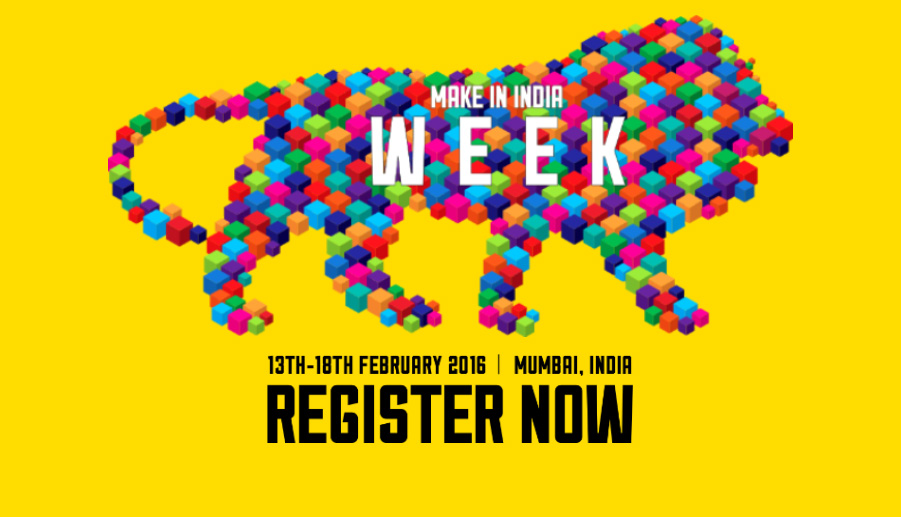
  • Make in India Week from February 13 to 18, 2016 in Mumbai

    Make in India Week from February 13 to 18, 2016 in Mumbai

    NEWYORK (TIP): Government of India is organizing a landmark event titled, “Make-in-India Week” from February 13 to 18, 2016 in Mumbai, says a press release issued by the Consulate General of India. The event will be inaugurated by Prime Minister Narendra Modi. The week-long event will offer foreign investors and businesses unprecedented access, insights and opportunities to showcase, connect and collaborate with young Indian entrepreneurs, industry leaders, academicians, and government officials at the central and state levels.

    Highlights of the ” Make-in-India Week” will include:


    • Make in India Center: This will be the platform for exhibiting innovative products and manufacturing processes developed in India along with a vision to leverage design, innovation and technology in the backdrop of global manufacturing.
    • CNN-Asia Business Forum: Would comprise of a series of seminars, CXO meets and round-tables and networking events on economic challenges, investment opportunities etc. The event would feature Global visionaries, and leaders from the fields of finance, industry and design.
    • Urban Planning Seminar on re-imagining Mumbai: This session would focus on new impetus for a smarter e-enabled Mumbai collaborating with the best-in-class technology partners.
    • Hackathon: A 24-hour marathon event where coders, engineers, and designers collaborate intensively for 24 hours to come up with ideas to solve urban design problems.
    • TIME India Awards: Recognizing excellence in the world of manufacturing,
    • Empowerment through Design: A day-long forum on rethinking contemporary design practices,
    • Maharashtra Night: An evening dedicated to the best of media, entertainment, popular culture, and technology from the State of Maharashtra.
    • Experience India: A street food festival.
    • Exhibitions on art, craft, technology and textiles (Born in Benaras Textile Show) across all museums and art galleries in Mumbai.

    Also planned is the release of a one-time edition of ” Make-in-India” magazine brought out by Conde’ Nast India. The magazine will showcase some of India’s most creative and dynamic innovators and entrepreneurs, across various industries. A presentation deck prepared by Department of Industrial Policy and Promotion (DIPP) on the event can be accessed here: https://www.dropbox.com/s/q6ykta6nnfrozdm/Make%20in%20In dia%20Week.pptx?dl=0

    Individual members or delegations interested in participating in this event are requested to register for the event. Details regarding registration and other information on the event can be accessed from: http://www.makeinindia.com/mumbai-week.

  • Invitation to Invest in Karnataka

    Invitation to Invest in Karnataka

    NEWYORK (TIP): A high level delegation led by Sri R.V. Deshpande, Minister for Large & Medium Industries and Tourism, Government of Karnataka, was warmly welcomed by Consul General Ambassador Dnyaneshwar. M. Mulay at the India House in New York, December 4.

    In the Interaction with members of USIBC, TiE and AKKA, Mr. Deshpande strongly pitched for inward investments into Karnataka highlighting several steps that are being taken by Government of India to ease business, physical and digital infrastructure and taxation. He specifically spoke of the steps initiated by Government of Karnataka to decongest Bengaluru and disperse industry to tier 2 and tier 3 cities.

    Invest in KarnatakaAddressing a gathering of industry captains, Minister Deshpande said that it is a great honor to release a report on India, on foreign soil.

    Mr. Deshpande released EY’s India Attractiveness Survey 2015 report which observes that international corporations with a presence in India are far more optimistic about the country’s prospects than those who are not yet established in the country.

    A whopping 32% of the respondents said that India is the most attractive place for investments in the next 3 years. India has already emerged as the No. 1 FDI destination globally with capital inflows of US$ 30.8 Billion in 2014. 62% of those interested to expand or enter India over the next year, say that they plan manufacturing activities in the country. The Government’s flagship programs Make in India and Digital India have had a positive impact on investor sentiment. Make in India has gained considerable momentum and industry is a lot more optimistic about its success now than about a year ago.

  • Finding a Niche in the Emerging World Order

    Finding a Niche in the Emerging World Order

    Prime Minister Narendra Modi’s apparently impromptu visit to Lahore on Christmas day is readily explained by the need to contain the Taliban and ensure regional stability and connectivity in the ‘Heart of Asia’ after the US-led International Security Assistance Force withdraws next year. The visit follows growing realization in capitals across the region that mutual security interests must supersede Cold War alliances or ideological mindsets to avoid the fate of nations like Iraq and Syria. The Taliban and/or its mutants cannot be permitted to spread in the Afghan neighborhood, which includes Central Asia, Iran, Pakistan and India, an effort that calls for convergence between Kabul, Islamabad and New Delhi. One can discern the benign presence of Moscow and Beijing as both have huge stakes in a revitalized Asian economic boom independent of Western hegemony.

    Besides China’s Silk Road project, several multi-nation projects centre on Afghanistan, viz, the Turkmen railways, transmission lines, highways, oil pipelines and gas pipelines including the Turkmenistan-Afghanistan-Pakistan-India pipeline. India wants to join the Afghanistan-Pakistan trade and transit agreement so that Afghan products can directly enter India and its products reach Afghan and Central Asian markets.

    These mega-development prospects doubtless prompted Mr. Modi to engage with Pakistani Prime Minister Nawaz Sharif on the sidelines of the Paris climate conference in late November. Thereafter the National Security Advisors met in Bangkok and smoothened the way for External Affairs Minister Sushma Swaraj’s visit to Islamabad for the Heart of Asia-Istanbul Process conference on Afghanistan. India has huge stakes in the integration of Central Asia, East Asia and West Asia.Though not opposed, India does not expect a lasting peace to emerge from talks between the Afghan Government and Afghan Taliban groups. A better option is state-level engagement which Kabul too prefers. Hence, it is inconceivable that as he went through his Kabul engagements – inaugurating the India-built $90 million Parliament House, gifting three Mi-25 attack helicopters and 500 new scholarships for children of martyrs of Afghan security forces -Mr. Modi would not have discussed the Lahore stopover with President Ashraf Ghani and CEO Abdullah Abdullah. It seems equally likely he mentioned it to Russian President Vladimir Putin before departing from Moscow. It may be relevant to note that since Russia began bombing IS positions in Syria, Pakistan does not favor regime change in Damascus.

    Pakistan Tehreek-e-Insaaf party leader Imran Khan’s presence in India (possibly to deliver the Sharif family wedding invitation) and the mature welcome to Mr. Modi’s stopover by Pakistan political parties (as opposed to the Congress’s petty squabbling) suggests that the Pakistani polity may have achieved some degree of cohesion in tackling terrorism. The Peshawar school attack last year is a grim warning of the danger from non-state actors.

    Mr. Modi’s first state visit to Russia, as part of the 16th Annual Bilateral Summit, has revitalized India’s most tried and trusted friendship and sent a signal to the international community that President Putin cannot be downsized by Western machinations. Mr. Modi secured Mr. Putin’s backing for India’s permanent membership of the UN Security Council and reiterated the commitment of both nations to a multipolar world order. Both nations already cooperate in forums like Brics and the Shanghai Cooperation Organisation (where Russia helped in India’s full membership), the G20 and the East Asia Summit.

    Syria, Afghanistan and the common threat posed by terrorism figured in the talks, but the summit’s main takeaway was Russia’s big bang return to India’s defense and nuclear energy sectors. Mr. Modi’s Make in India project in the defense sector got a major boost with the deal to jointly manufacture 200 Kamov-226T light military helicopters.

    The real triumph is the acquisition of five S- 400 Triumf surface-to-air missile systems (and 6,000 missiles). Literally the ‘crown jewels’ of Russia’s defense capability, the S-400 can destroy aircraft that use stealth technology, other fighter aircraft, cruise missiles and tactical missiles from up to 400 kilometers away, as effectively demonstrated earlier this month when Russia deployed the system to protect its Hmeimim airbase in Syria after Turkey downed a Russian jet.

    This will give India the ability to engage multiple targets at long range and restore the strategic balance with China and Pakistan. With Prime Minister Modi reportedly budgeting $150 billion to upgrade India’s military, with the Navy planning to order three Russian frigate warships and a possible joint development of a fifth generation fighter aircraft, New Delhi could be Moscow’s salvation as the latter faces a second year of recession amid Western sanctions.

    With the Paris climate conference failing to yield a comprehensive deal, the burden of combating global warming with clean energy expectedly fell upon individual nations. Mr. Modi having previously identified nuclear energy as pollution-free, the two nations are moving ahead with plans to build at least 12 nuclear power plants in India with the highest safety standards in the world, over the next 20 years. Two plants are slated to come up in Andhra Pradesh under the Make in India program. A vibrant partnership, however, calls for deeper economic integration. The Indian Prime Minister hopes to take advantage of the US-led Western sanctions against Russia to meet the latter’s demand for dairy products, seafood, and other goods and to attract Russian cash-rich billionaires to invest in India’s infrastructure fund, since they are no longer welcome in the old European financial havens due to Mr. Putin’s resistance to Western geo-political agendas to dismember West Asian and African countries on the lines of the old Yugoslavia.

    Access to Russian capital for his Make in India campaign would empower Mr. Modi’s drive to build a strong indigenous manufacturing base to generate employment and export revenues. Given the sharp downturn in Russo-Turkey relations, Mr. Modi hopes that Russian tourists will flock to India (not just in Goa) and tasked the tiny Indian community in Russia to motivate Russian families to discover India.

    Another gain is Russia’s commitment to ship 10 million ton of oil annually to energy-starved India in the next 10 years. Both countries plan to intensity collaboration in developing space exploration, rocket manufacture and engine manufacture, nano-technology, metallurgy, optics and software sectors. In substance, the visit announced that the Asian quest to forge a rational world order has moved to a new level. Mr. Modi’s short and informal visits to Afghanistan and Pakistan may be read as an invitation to take a seat of honor at the evolving new world concert.

    (The author is a social development consultant and a columnist with The Pioneer, a leading newspaper of Delhi).

  • India and Japan Sign Deals on Military, Train Sales, Nukes

    India and Japan Sign Deals on Military, Train Sales, Nukes

    NEW DELHI (TIP): India has agreed to buy a high-speed bullet train from Japan, in an attempt to transform its creaking rail system. Japan will build India’s first bullet train and provide a $12bn package of financing and a low-cost, long-term loan for the effort, the countries announced on Saturday, December 12.

    Prime Minister Shinzo Abe was welcomed in New Delhi by his Indian counterpart Narendra Modi who said Japan has played a “decisive role in India’s economic transformation”.

    Prime Minister Narendra Modi said the train would link Mumbai and Ahmedabad, cutting travel time on the route from eight hours to two.

    Last week Mr. Modi’s cabinet cleared the $14.7bn (£9.6bn) cost of building the bullet train system.

    The agreements with Japan came during a three-day visit to India by the Japanese Prime Minister, Shinzo Abe.

    The leaders of Asia’s second and third largest economies also announced other areas of co-operation, including, working on defense technology, and agreeing a memorandum of understanding on the peaceful use of nuclear energy.

    Abe referred to India’s stand that it would continue a moratorium on nuclear tests and advance its use of nuclear energy for peaceful purposes.

    India, which has 21 nuclear power plants, has ambitious plans to quadruple its current 5,000 megawatts of nuclear power to 20,000 megawatts by 2020 to fuel the energy demands of its booming economy.

    The two countries also signed a deal that would help India’s efforts to upgrade its military equipment. Japan’s possible sale of US-2 amphibious aircraft to India would be Tokyo’s first major military hardware transfer since lifting a postwar ban on the export of defense equipment in 2014.

    The latter agreement is expected to allow Japan to export nuclear plant technologies to India.

    Both countries are in territorial disputes with China, and their new accords may be seen by some as a reaction against China’s growing influence in the region.

    Japan has in the past shunned civil nuclear cooperation with India, which has not ratified the international Non-Proliferation Treaty, but appears to have softened its stance.

    The announcements came after Abe lavished praise on Modi’s 18-month-old premiership following a meeting with business leaders in the capital.

    “Prime Minister Modi’s economic policies are like Shinkansen – high speed, safe and reliable while carrying many people along,” he said.

    Both Modi and Abe are right-wing nationalists and economic reformers who have forged an unusually close relationship since the Indian leader came to power last year, partly to counter China’s growing influence.

    The leaders of Japan and India, Asia’s second and third-largest economies, promised to use their alliance to push areas of mutual interest, including reform of the UN Security Council, on which both are seeking permanent seats.

    Modi, who hopes to attract foreign investment under his key Make in India campaign, lauded the recent decision by Japanese-owned carmaker Maruti Suzuki to begin the first exports of Indian-made cars to Japan.

    India’s economic growth accelerated to 7.4 percent in the second quarter of the financial year, figures released in November showed, outperforming China.

  • JAPAN TO BUILD INDIA’S FIRST BULLET TRAIN

    JAPAN TO BUILD INDIA’S FIRST BULLET TRAIN

    NEW DELHI (TIP): The bullet train accident in China four years ago along with low-cost finance and a promise to have a substantial ‘Make in India’ component and transfer of technology clinched the deal for Japan to build the first high-speed train that will run between Mumbai and Ahmedabad —with the possibility of extending it to Delhi in future.

    The Rs 98,000 crore project was cleared by the cabinet on Wednesday evening and is set to be announced during Japanese premier Shinzo Abe’s visit later this week.

    Sources said that a committee headed by NITI Aayog vice-chairman Arvind Panagariya has said that the Shinkansen System had the best safety record with no fatalities in addition to the fact that delays on a trip did not exceed a minute.

    Design flaws and weak management are said to have caused a crash in the south-eastern city of Wenzhou in which 40 died and close to 200 were injured. China was keen on funding and building the country’s first bullet train as it sought to enhance its railway footprint across the globe.

    But there is still chance for others. Although Japan is keen to fund other similar projects, the government has kept the window open to partner with other countries, sources said.

    In the coming years, up to 70-80% of the components could be manufactured in India. The Japanese government has offered technical support and was willing to drive the local manufacturing and technology transfer initiative within a specified period, said sources. In addition, it has offered funding at 0.1%, compared to the 0.3% cap decided by India recently, with the tenure of the loan at 50 years, along with a 10-15 year moratorium. Of the total project cost, around Rs 17,000-18,000 crore would be the cost of land.