Tag: Mamata Banerjee

  • BJP takes Hindutva route in TN, Bengal

    BJP takes Hindutva route in TN, Bengal

    Saffron party gears up to overpower strong regional forces in 2026 Assembly elections

    “Undaunted by the not-so-encouraging statistics, Prime Minister Narendra Modi framed the Bengal battle with an image and a metaphor that he believed its voters could relate to. On the day the BJP celebrated the Bihar mandate at its Delhi headquarters, Modi declared, “The Ganga flows from Bihar to Bengal”, as though the mighty river would also deposit a bounty of votes in the BJP’s catchment areas. It was not an oratorical flourish because on cue, Modi’s chief strategist and Union Home Minister Amit Shah formed a team to act on the Bengal blueprint, some elements of which are already visible. On top of the BJP’s playbook is the Hindutva card that has not yet brought in the expected gains in West Bengal and much less in Tamil Nadu, a state abounding in paradoxes that ultimately do not favor Hindu majoritarian politics.”

    By Radhika Ramaseshan

    Having wrapped up Bihar with an impressive win, the BJP’s dream run of electoral wins faces formidable challenges in two states which will vote in April-May 2026: West Bengal and Tamil Nadu. Politics in these states pivots around strong regional forces that have persistently walled out the mainline parties or forced the BJP and the Congress to transact electoral arrangements on their terms.

    These parties — the Dravida Munnetra Kazhagam (DMK) in Tamil Nadu and the Trinamool Congress (TMC) in West Bengal — are again expected to dominate the show.

    While the Congress seems at peace riding on its ally DMK’s back in Tamil Nadu, it finds virtually no purchase in Bengal, not after the disastrous showing in Bihar. Both in the 2024 Lok Sabha polls and the 2021 Assembly elections, the Congress had an alliance with the Left Front (LF) that yielded nothing for both partners, but two LF constituents — the All India Forward Bloc and the Revolutionary Socialist Party — recently raised objections to striking yet another deal with the Congress. The TMC, too, is unlikely to have any truck with the Congress.

    On the other hand, true to its character, the BJP, notwithstanding its endeavor to cement a broad coalition in Tamil Nadu, is determined to put up a fight in both states, particularly Bengal. Buoyed by its success in the 2019 parliamentary elections, the BJP was convinced that it was a matter of time before it ‘conquered’ the eastern state. However, in the 2021 Assembly elections, it came nowhere close to its target of winning 200 of the 294 seats. It won only 77 (the tally fell to around 65 due to defections and by poll losses), but the BJP had the satisfaction of getting 38 per cent of the votes and emerging as the principal Opposition party.

    Undaunted by the not-so-encouraging statistics, Prime Minister Narendra Modi framed the Bengal battle with an image and a metaphor that he believed its voters could relate to. On the day the BJP celebrated the Bihar mandate at its Delhi headquarters, Modi declared, “The Ganga flows from Bihar to Bengal”, as though the mighty river would also deposit a bounty of votes in the BJP’s catchment areas. It was not an oratorical flourish because on cue, Modi’s chief strategist and Union Home Minister Amit Shah formed a team to act on the Bengal blueprint, some elements of which are already visible.

    On top of the BJP’s playbook is the Hindutva card that has not yet brought in the expected gains in West Bengal and much less in Tamil Nadu, a state abounding in paradoxes that ultimately do not favor Hindu majoritarian politics.

    The underlying political irony was reflected in the recent controversy ignited by the lighting of a lamp in the Subramanya Swamy temple at Thiruparankundram Hill in Madurai district. The temple is supposed to be one of the six abodes of Murugan, the second son of Shiva-Parvati and the most revered deity in Tamil Nadu. The Sultan Sikandar Avulia Dargah is located meters away, but barring occasional skirmishes, the lamp-lighting — an old and important ritual performed during the Karthigai Deepam festival to symbolize the triumph of light over darkness — passed off peacefully because of a court order to light the lamp away from an ancient pillar called Deepathoon, which is just 15 meters from the dargah and became a bone of contention.

    This time, a petition filed in the Madurai bench of the Madras High Court sought permission to perform the ritual at the pillar. The BJP and its allies celebrated when the court allowed the petitioner to light the lamp at the spot, but the district administration promptly issued prohibitory orders which were enforced by the police. Armed with a legal sanction, the BJP and its supporters protested vociferously against the cops.

    Mohan Bhagwat, the RSS chief, weighed in on the matter, saying that the “awakening of Hindus was sufficient to achieve the desired outcome” — it sounded like a veiled call for a confrontation if such a situation arose. Congress MP Karti Chidambaram said the BJP’s understanding of Tamil Nadu’s cultural and religious fabric was “fundamentally misplaced”. “The people of Tamil Nadu are most god-fearing, ritualistic, orthodox and temple-going, but faith does not mix with politics,” he added.

    While the ruling DMK has stuck to its position, the ‘dispute’ can gain traction if the BJP and the RSS — which are bereft of strong local networks except in small parts — can sustain the momentum aimed at polarizing a polity largely fed on the ideology of Dravida Kazhagam leader Periyar EV Ramasamy. A key feature of Periyar’s Self-Respect Movement was portraying Muslims as Dalits who converted to Islam to escape the caste oppression inherent in Hinduism. Most Tamil-speaking voters have no problem with Periyar’s postulate.

    In West Bengal, after three successive terms in office, the TMC appears vulnerable over issues such as the alleged corruption by Chief Minister Mamata Banerjee’s trusted lieutenants and the anger that spilled over on the streets after the brutal rape-murder of a young doctor in a Kolkata hospital. Then there are the quotidian experiences of people who have to deal with the ruling party’s musclemen and power-brokers, taking them back to the era of Left Front toughies who made survival possible only on their terms.

    But the BJP has tied itself in knots over the issue of illegal migrants — data suggests that there are more Hindu than Muslim migrants in West Bengal. The Special Intensive Revision (SIR) of electoral rolls by the Election Commission has caused anxiety within the BJP’s own vote bank, along with the affront to the Bangla language, infamously described by the Delhi Police as “Bangladeshi language”.

    Banerjee tried hard to depict herself as a “friend of the Hindus” with measures like the payment of monthly salaries to Hindu priests and organizing the Durga carnival. The experience of other states demonstrates that the Opposition still finds it hard to beat the BJP over Hindutva; so, Banerjee will have to target the BJP’s other shortcomings.

    The politics of Tamil Nadu and West Bengal is centered around a strong regional distinctiveness, unlike the Hindi belt where voters identify themselves seamlessly with the Hindutva narrative because religious identity is overarching. Can the BJP subsume markers of language and culture into the Hindutva theme?
    (Radhika Ramaseshan is a senior journalist)

  • BSF allowing infiltration to destabilize Bengal: Mamata

    Firing a salvo at Union Home Minister Amit Shah, West Bengal Chief Minister Mamata Banerjee on Thursday, January 2, accused the BSF of allowing infiltration from Bangladesh to destabilise the state, calling it the Centre’s “nefarious blueprint”.
    The CM said during an administrative meeting that the Border Security Force (BSF), which guards West Bengal’s border with Bangladesh, was allowing infiltration into the state. Banerjee’s remarks follow Union Home Minister Amit Shah’s charge made earlier saying “infiltration from Bangladesh” was disrupting peace in Bengal.
    Mamata Banerjee said, “The BSF is allowing infiltration from different areas into Bengal. The TMC is not guarding the borders. The border is not in our hands, so if someone accuses the TMC of permitting infiltration, it must be pointed out that it was the BSF’s responsibility”.
    Banerjee said she would write a strong letter to the Centre regarding the BSF allowing infiltration from Bangladesh. Stating that it is important to maintain peace in West Bengal and also have good relations with Bangladesh, Mamata Banerjee said, “We have no enmity, but goons are being allowed here. They commit crimes and return across the border. BSF is enabling this, and the Centre has a role in it.”
    Slamming Banerjee for the remarks, BJP leader Sukanta Majumdar said she “has reached the ultimate level of delusion”. The Union Minister and BJP West Bengal chief said in a post on X (formerly Twitter), “Despite not providing land to set up outposts for border surveillance, she used to blame the Border Security Force for illegal infiltration. But now, crossing all limits of accusations, she has started blaming her own administration’s officials! According to her, the incompetent DMs and SPs under her administration are allowing foreign criminals to infiltrate the border to murder the elected representatives of her party.”
    Arvind Kejriwal also questioned the BJP on the issue. Kejriwal asked, “Is the Centre deliberately allowing infiltration from the Bangladesh border or is the BJP government failing to protect the border?”

  • Surprises galore in Assembly elections and by polls

    Surprises galore in Assembly elections and by polls

    BJP-led Mahayuti to retain power in Maharashtra; Hemant Soren-led alliance all set to retain power in Jharkhand

    • I.S. Saluja

    November 23, 2024 updated at 5 AM (ET)

    NEW YORK (TIP): Even though the election results are many hours away yet,  the trends  do give an indication of the  possible outcome. The  Assembly elections, in particular, in Maharashtra and Jharkhand, attracted keen contests. In both the States , political parties fought the elections  as the battle for survival.

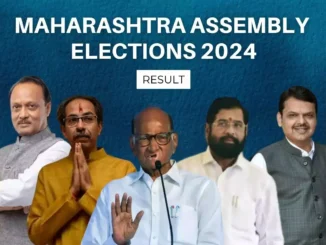
    At the time of writing this report (5 AM ET) , the reports coming in are placing the BJP-led Mahayuti in a comfortable position to retain power in Maharashtra. Hemant Soren-led alliance is all set to retain power in Jharkhand. Interestingly, in both the states the incumbency factor did not work. The news reports coming in suggest that the BJP-led Mahayuti alliance is on course to retain power in Maharashtra, and winning nine seats so far and was leading in 217 of the 288 Assembly seats, as per the latest figures of the counting process in the November 20 elections.

    After the certainty of the poll outcome, the focus has now shifted to BJP leader Devendra Fadnavis, the architect of his party’s stunning victory. Political circles are abuzz with reports that the state’s second Brahmin to become the CM will don the post for the third time.

    As per the latest figures from the Election Commission, the BJP has so far won nine seats and is leading in 125, the Shiv Sena has won three and is ahead in 53 seats, while the NCP has won two and is leading in 37 seats.

    In the MVA, the Nationalist Congress Party (Sharadchandra Pawar) candidates were leading in 11 seats, Congress in 20 and Shiv Sena (Uddhav Balasaheb Thackeray) in 19 seats.

    The opposition Maha Vikas Aghadi has suffered a crushing defeat, with its candidates leading in just 50 seats, a far cry from the boasts – till this morning – by many of its senior leaders that the combine will trounce the Mahayuti.

    JHARKHAND ASSEMBLY ELECTIONS

    Jharkhand Chief Minister Hemant Soren during a public meeting. (File photo : PTI)

    In Jharkhand, Hemant Soren’s JMM-led alliance was all set to retain Jharkhand as it was leading in at least 50 seats in the 81-member state Assembly on Saturday, as per the Election Commission data.

    The performance of the BJP-led NDA, which was seen as confident about its prospects in the state after an aggressive campaign, was poorer than its expectations. It was leading in only 29 seats.

    The BJP’s poll plank was driving out “infiltrators” from the Santhal Parganas region, but it seemed to have fallen flat in front of the ‘Adivasi’ card played by the JMM, which also sought  people’s sympathy over the arrest of Chief Minister Hemant Soren.

    BENGAL BYPOLLS

    Bengal Chief Minister and TMC chief Mamata Banerjee

    In  Bengal Bypolls, Chief Minister Mamata Banerjee’s TMC has taken a massive lead, and the party  eyes a clean sweep.

    Ruling Trinamool Congress (TMC) candidates have taken an unassailable lead in the bypolls held in the six Assembly constituencies in West Bengal, with counting underway since 8 am on Saturday.

    These results are drawing significant attention, especially in light of the ongoing protests related to the RG Kar Medical College incident, which has sparked public outcry in the state.

    The bypolls were held in Naihati, Haroa, Medinipur, Taldangra, Sitai (SC), and Madarihat (ST), following the resignation of sitting MLAs who had secured victories in the 2024 Lok Sabha elections, thus vacating their assembly seats.

    These elections are seen as an important political test for the state’s ruling party.

    DEVELOPING STORY

  • Mamata offers to step down after docs refuse to hold talks

    Mamata offers to step down after docs refuse to hold talks

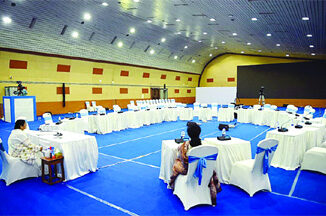
    Kolkata (TIP)- West Bengal Chief Minister Mamata Banerjee on Thursday, September 12, said she was “ready to resign” for the “sake of people” and expressed regret over the junior doctors’ refusal to come for talks to resolve the impasse over the R G Kar rape-murder case. Banerjee, who waited for nearly two hours for the agitating doctors to come for the meeting, said she also wanted the victim to get justice and apologised to the people of West Bengal for the continued deadlock.
    “We have tolerated a lot of canards and insults for the last 33 days,” she said at a press conference but assured the protesters that despite violating the Supreme Court directive by not resuming duties, she would not take action against them. In a dramatic turn of events, agitating junior doctors, who reached the gates of the state secretariat Nabanna, refused to hold talks with the state government unless their demand for live streaming of the meeting was met.
    The talks were to be held at 5 pm in the presence of Banerjee as demanded by the protesters, who after reaching the secretariat around 5.25 pm, stayed put at the venue gate.
    Banerjee said the meeting with the junior doctors cannot be live-streamed as demanded by them because the issue is sub-judice and before the Supreme Court. She said her government had made arrangements to record it and hand over the recording to them with the permission of the apex court if needed.
    “For the sake of the people, I am ready to resign. I also want the victim to get justice, but this is not the way. We have tolerated a lot of canards and insults for the last 33 days. I thought the junior doctors would engage in talks for the sake of the patients and on humanitarian grounds,” she said.
    “We have been waiting for over two hours, hoping that reason would guide the junior doctors… I apologise to the people who expected that the issue would be resolved today,” she said and claimed that “external instructions” were influencing some junior doctors not to engage in discussions.
    Referring to negative comments against her government on social media, she said, “Many tried to malign our government even on social media. People came out for justice but they don’t know that there is a political colour diverting it… They want the chair. I am ready to resign from my post for the sake of the people. I don’t want the chair.”

  • Mamata Banerjee vows to pass a Bill in the West Bengal Assembly  for capital punishment for rapists

    Mamata Banerjee vows to pass a Bill in the West Bengal Assembly  for capital punishment for rapists

    “We will send this bill to the Governor. If he doesn’t pass, we will sit outside Raj Bhavan,” the Bengal Chief Minister said.

    KOLKATA (TIP): West Bengal Chief Minister Mamata Banerjee on Wednesday,  August 28, 2024,  said that a session of State Assembly will be called next week and a bill would be passed to ensure capital punishment for those convicted of rape. The Trinamool Congress chairperson’s comments came amidst outgoing outrage and protests over rape and murder of a doctor at R.G. Kar Medical College and Hospital on August 9.

    Ms. Banerjee added that the bill would be sent to Governor C.V. Ananda Bose. “Next week, we will call an Assembly session by requesting the Speaker and pass a bill to ensure capital punishment for rapists. We will send this bill to the Governor. If he doesn’t pass, we will sit outside Raj Bhavan. This bill must be passed and he cannot evade accountability this time,” Ms. Banerjee said. She was addressing an event on the foundation day of the student wing of Trinamool Congress.

    The Chief Minister praised the efforts of the State police in confronting protesters who marched to the State Secretariat on Tuesday, August 27, 2024.

    “I salute the police for their role yesterday. They had given their blood but did not yield a dead body to the BJP conspiracy,” she said.

    Amidst demands by Opposition parties demanding her resignation over the gruesome rape and murder, the Chief Minister targeted the Prime Minister and said those seeking her resignation should ask for Prime Minister’s resignation. “They don’t want the resignation of Prime Minister Narendra Modi over incidents in Uttar Pradesh, Madhya Pradesh and Assam. In Assam, the accused was killed in encounter,“ she added.

    Referring to rape and murder of the doctor Ms. Banerjee said that her government wanted to give capital punishment within seven days to the accused with the case being tried in fast-track court. “Sixteen days have passed since CBI took over doctor’s rape-murder probe, where is justice,” she said

    The Chief Minister urged agitating resident doctors to join work and said that her government does not want to lodge police complaint against them which will adversely affect their career.

    Facing relentless attack over her government’s handling of the gruesome crime, the Trinamool chairperson called for change of her party’s slogan, “Badla noi Badal chai ( Want Change not Revenge)“. Ms. Banerjee said that she had earlier given slogan but now the workers can decide for themselves as to what they will do. “ At least you can hiss and those who are spreading canards against us,” she said. Reacting to Chief Minister’s remarks, State BJP president Sukanta Majumdar said that the remarks point out that the Chief Minister was in fear.

    Trinamool Congress general secretary Abhishek Banerjee also emphasized for stricter laws for rape and referred to alleged incidents of atrocities on women at Uttar Pradesh, Rajasthan Madhya Pradesh and said, “Those who are seeking the resignation of Mamata Banerjee, should ask for Yogi Adityanath’s resignation,” he said. Mr. Banerjee said that Trinamool Congress will take to the streets if the Centre does not enact a new law to ensure a time-bound trial and sentencing of the accused found guilty of rape charges.

    “If the central government does not enact this law, I will move a private member’s bill for the new law,” he said.

    (With inputs from The Hindu)


  • TRYSTS AND TURNS: Political patronage emboldens offenders

    TRYSTS AND TURNS: Political patronage emboldens offenders

    Laws on sexual misconduct should be uniformly and firmly enforced across the country

    These instances of an anti-women attitude of parties in power in order to bolster their political fortunes is what contributes to the general disrespect for womanhood and, further, disrespect for the law itself. Unless public pressure is built on all parties to desist from showing mercy to sexual offenders, the menace will continue to haunt the national conscience.

    By Julio Ribeiro

    Mamata Banerjee, West Bengal Chief Minister and the feisty boss of the Trinamool Congress (TMC), is squarely on the back foot today. Is this the beginning of the end for this born fighter? If so, the BJP will have succeeded where Bengal-based parties have failed. The BJP is cashing in on Mamata’s many mistakes in dealing with the rape-murder of a trainee doctor at RG Kar Medical College and Hospital in Kolkata to turn even some of her own party workers and supporters against her.

    The doctor was shamelessly brutalized at her workplace. It almost seems that young men are on the prowl looking for opportunities to rape and kill their chosen victims. There is a loud call for more stringent laws. The question to ask is: Is the Indian state truly concerned about these girls of ours or is it led by men who believe, like Mulayam Singh Yadav, the late Samajwadi Party leader, that “boys will be boys”?

    Why are boys not boys in every state of the Indian Union or in other countries of the world? The answer to this question should guide those in power to take remedial measures. Much depends on the political will to combat the menace of sexual perverts running amok. The solution does not involve formulating new laws but ensuring that existing laws on sexual misconduct are uniformly and firmly enforced.

    With regard to the Kolkata case, the insidious practice of appointing ‘civic volunteers’ in government-run hospitals should be immediately discontinued. These workers are chosen from among the ruling party’s supporters without proper verification of their antecedents, habits and proclivities. Lumpen elements who constitute the stormtroopers of every political party are allowed to slip in. The ‘carte blanche’ given to them to roam around in hospitals, ‘helping’ patients secure beds and medical attention, has led to this sad occurrence.

    Regularly recruited social workers who train students for true social work should replace these ‘civic volunteers’, whose main job is to extract ‘speed money’ from patients in distress. All indications point to the sharing of the proceeds of corruption with those who have helped them secure unofficial employment.

    This menace is not exclusive to Bengal or to one political party. In Gujarat, I learnt that besides teachers recruited from amongst the ideologically aligned people, the ranks of the Home Guards were chosen from the same partisan source. The Home Guards are often sent to assist the police in law and order or traffic regulation. If such recruitment of untrained men and women is not discontinued, incidents like the one that has hit Kolkata in its solar plexus will multiply.

    Another very urgent remedy to reduce cases of sexual misconduct is to send out a clear message to potential offenders that they can expect no mercy from parties in power. They will be caught by the police and sentenced by the courts. At present, there is a very wrong message being circulated that if you support or help the party in power, your time in jail will be curtailed by the easily obtained parole and even jail sentences can be prematurely terminated.

    Gurmeet Ram Rahim, a self-styled godman with a large following in Haryana, was convicted of two rapes and a murder. He was released on parole for long periods coinciding with the Lok Sabha and Assembly elections. That may have helped the ruling party get a few more votes, but it encouraged sexual offenders to go ahead with satisfying their lust.

    Similarly, the dozen or so men convicted in Gujarat for rape and murder during the 2002 riots were released prematurely, thereby sending out a clear message that a partisan government would not stop aiding and abetting such offenders as long as they are the party’s supporters. The Calcutta High Court fortunately intervened when the TMC was more than kind to the medical college principal, who appeared to have shut his eyes to the unlawful activities of the ‘civic volunteers’. The principal should have been given a punishment posting but instead was sent to a bigger and better hospital before the court stepped in. That error of judgment was widely interpreted as an indication of the TMC’s support for what was radically evil in the hospital management.

    These instances of an anti-women attitude of parties in power in order to bolster their political fortunes is what contributes to the general disrespect for womanhood and, further, disrespect for the law itself. Unless public pressure is built on all parties to desist from showing mercy to sexual offenders, the menace will continue to haunt the national conscience.

    Mulayam’s adage that “boys will be boys” is presently the reigning philosophy in our land. It is fortunate that educated women have revolted against this philosophy. It took the BJP leadership quite a long time to sideline Brij Bhushan Sharan Singh, a party MP who doubled as the president of the Wrestling Federation of India. He was a serial offender who ran several educational institutions in and around his home town. He commanded votes in more than three Lok Sabha constituencies. And that mattered more to the BJP than all the slogans that placed women on a pedestal and that were glibly repeated day in, day out by the party’s eminent leaders.

    If action had been taken earlier against Brij Bhushan, Vinesh Phogat would not have missed the trials for the Olympic wrestling slot in her preferred weight category. And we would not have had to approach the Court of Arbitration for Sport, begging for rules to be changed!
    (The author is a former governor and a highly decorated retired IPS (Indian Police Service) officer)

  • ‘INDIA my brainchild, very much part of it’, says Mamata Banerjee after ‘outside support’ remark

    ‘INDIA my brainchild, very much part of it’, says Mamata Banerjee after ‘outside support’ remark

    Tamluk (TIP)- A day after announcing that he would extend outside support to the opposition front INDIA after it comes to power, West Bengal Chief Minister Mamata Banerjee on Thursday, May 16, said she is very much part of the anti-BJP alliance at the national level and would continue to be in it.
    While addressing an election rally at Tamluk, Banerjee said that the TMC is not in alliance with the CPI(M) and the Congress in West Bengal.
    “At all India level, some people have misunderstood my statement yesterday. I am very much part of the INDIA alliance. The INDIA alliance was my brainchild. We are together at the national level and will continue to be together,” she said.
    Banerjee alleged that the West Bengal units of both CPI(M) and Congress, who are part of the INDIA alliance, have joined hands and helped the BJP in the state.
    “Do not count on the CPI(M) and the Congress in Bengal. They are not with us, they are with the BJP here. I am talking about that (INDIA bloc) in Delhi,” she said.
    Banerjee on Wednesday said her party will extend support to the opposition INDIA bloc from outside to form the government at the Centre.
    Expressing scepticism about the BJP’s ambitious target of achieving 400 seats in the Lok Sabha elections, she said people will reject them.
    “The entire country has understood that the BJP is a party full of thieves. We (TMC) will support the INDIA bloc from outside to form a government at the Centre. We will extend our support so that in Bengal, our mothers and sisters never face a problem… and those who work in the 100 days’ job scheme, also do not face problems,” Banerjee had said.

  • West Bengal CM Mamata Banerjee suffers ‘major injury’, admitted to hospital

    West Bengal CM Mamata Banerjee suffers ‘major injury’, admitted to hospital

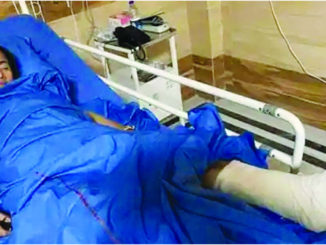
    KOLKATA (TIP); West Bengal Chief Minister Mamata Banerjee on Thursday, March 14 evening suffered a major injury on her forehead and was admitted to a hospital, the TMC said. The 69-year-old leader had a fall at her Kalighat home in south Kolkata after she returned after attending a programme, her family said.

    “Our chairperson @MamataOfficial sustained a major injury. Please keep her in your prayers,” the party posted on X along with pictures of Banerjee bleeding from her forehead.

    TMC national general secretary and Mamata’s nephew Abhishek Banerjee got her admitted to the hospital, according to party sources.

    “She fell somewhere inside the home and was immediately shifted to the hospital. She was bleeding from the forehead and stitches were required,” her brother Kartik Banerjee told a Bengali news channel.

    According to sources, she was admitted to the Woodburn Ward of the state-run SSKM Hospital in Kolkata.

    A team of senior doctors are attending to her, hospital sources said.

    According to senior TMC leader Sukhendu Sekhar Ray, Vice-President Jagdeep Dhankhar enquired about the Chief Minister’s health condition and expressed “deep anguish and wished her speedy recovery.”

    Dhankhar is also a former West Bengal Governor. State BJP president Sukanta Majumdar wished her a speedy recovery. “Our prayers are with her for a quick return to good health,” he posted on X. State Congress president Adhir Ranjan Chowdhury also wished her a quick recovery.

  • Sense of consensus eludes INDIA

    Sense of consensus eludes INDIA

    At core of predicament is Congress’s inability to mold itself into a leader of a heterogeneous bloc

    “What do the circumstances portend for the Opposition’s coalition? The constituents of INDIA met in New Delhi on December 19, apparently to clear the air of disunity that had begun to cloud the coalition after its earlier sessions and following the differences over seat-sharing between the Congress and the Samajwadi Party, Janata Dal (United) and the Rashtriya Lok Dal before the recent state elections. A sense of cooperation and consensus among the parties —which included a Shiv Sena faction headed by Uddhav Thackeray, the Mandalised bloc from Uttar Pradesh and Bihar, the DMK and its allies and the Aam Aadmi Party — continued to be elusive. It still isn’t clear if the participants were out to score an own-goal by flagging issues that were earlier deemed as ‘irrelevant’ or quite happy to articulate their contradictions.”

    By Radhika Ramaseshan

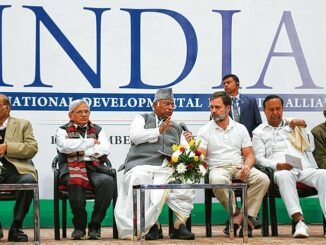
    To see the glass as half full or half empty depends on how buoyant or cynical an observer is. Since its inception in June, the Indian National Developmental Inclusive Alliance (INDIA), comprising 28 parties, has envisaged roping in as many Opposition forces as it can mobilize in a joint front to fight the BJP in the 2024 General Election. The formation of the bloc, in which the Congress is as important an investor as the regional parties, was an admission on the part of the Gandhis that their political legacy was no longer remarkable enough to take on the BJP single-handedly. The series of meetings INDIA held iterated the Congress’s position as an equal and not a first among equals. It still isn’t clear if the participants were out to score an own-goal by flagging issues that were earlier deemed as ‘irrelevant’ or quite happy to articulate their contradictions.

    Ideally, recent events ought to have underscored the need for such a front even more deeply, especially for the Congress, because the favorable atmospherics that prevailed during INDIA’s first congregation at Patna had dissipated. Seven months before that, there was a sense of hope. Rahul Gandhi had completed his marathon Bharat Jodo Yatra, which went some way in reimagining popular perception of the leader who had been seen as a reluctant and naive politician. The Congress scored an impressive win over the BJP in Karnataka and decimated the Janata Dal (Secular), which went on to seek refuge in the NDA’s fold.

    With 2023 nearing its end, the scenario has turned depressing for the Opposition. The BJP swept the elections in three states in the Hindi heartland in a direct faceoff with the Congress. The Congress now exists in slivers in this region. In the ongoing winter session of Parliament, the BJP has reasserted its near-hegemonic position amid projections of a comeback in 2024. It has pulverized the Opposition, which had sought a statement from the government regarding the security breach in Parliament but was rebuffed. Not only did the government reject the suggestion of being accountable to elected MPs, it also passed Bills with far-reaching implications for data security and amendments in the criminal laws without debate and discussion. After the mass suspension of MPs, the Opposition’s presence in the Lok Sabha and Rajya Sabha has shrunk alarmingly. The picture which both Houses presented marked the culmination of a long-cherished RSS project to install an overbearing Centre with the states orbiting around it like satellites.

    What do the circumstances portend for the Opposition’s coalition? The constituents of INDIA met in New Delhi on December 19, apparently to clear the air of disunity that had begun to cloud the coalition after its earlier sessions and following the differences over seat-sharing between the Congress and the Samajwadi Party, Janata Dal (United) and the Rashtriya Lok Dal before the recent state elections. A sense of cooperation and consensus among the parties —which included a Shiv Sena faction headed by Uddhav Thackeray, the Mandalised bloc from Uttar Pradesh and Bihar, the DMK and its allies and the Aam Aadmi Party — continued to be elusive. It still isn’t clear if the participants were out to score an own-goal by flagging issues that were earlier deemed as ‘irrelevant’ or quite happy to articulate their contradictions.

    Mamata Banerjee of the Trinamool Congress and AAP’s Arvind Kejriwal proposed Congress president Mallikarjun Kharge’s name as INDIA’s prime-ministerial candidate. It seemed as if they had only discussed the matter among themselves, believing they could persuade their associates that the time was ripe to raise the pitch for India’s first Dalit PM and counterbalance the BJP’s strategy of consolidating the Other Backward Classes (OBCs). Although JD(U) leader and Bihar CM Nitish Kumar consistently maintained that he did not aspire for the PM’s post, his latent ambitions surfaced through statements by his colleagues in the past. A structured discussion on the PM candidate never took off, especially after Kharge scotched the idea, although some reports quoted him talking about his long years in public service and his conduct as a ‘fighter’ to mean that he was not averse to handling the Mamata-Kejriwal googly. Uddhav stressed that the question of electing a PM arose only if the coalition brought in enough MPs and what INDIA needed immediately was a convener to hold the grouping together.

    Certain red lines, accentuating the existence of a regional cleave and intra-state pinpricks, were drawn. When TR Baalu, a senior DMK representative, sought a translation of Nitish’s speech, he was snubbed by the Bihar CM, who demanded that Baalu should learn Hindi, a ‘national’ language. By juxtaposing the north-south divide that was displayed in Tuesday’s meeting with the BJP’s persistent attempts to shed the tag of being a Hindi-belt party, visible in Prime Minister Narendra Modi’s overtures to Tamil Nadu and Kerala, it becomes clear who — the NDA or INDIA — has the big picture in front and what correctives need to be made.

    While there was a general agreement that the seat-sharing process should be completed by the year-end, where do things stand now? Samajwadi leader Ram Gopal Yadav made it clear that his party would quit INDIA if there was a proposal to accommodate the Bahujan Samaj Party. As Mamata pitched for a year-end deadline, there was no indication from her of wanting to forge a broader alliance involving the TMC, the Left Front and the Congress. Given the mutual antagonism on the ground, it seems unlikely the idea would take off. In Maharashtra, it appears that while Uddhav’s Sena and Sharad Pawar’s Nationalist Congress Party have their terrain mapped out, the Congress is in a quandary over its strong areas, if indeed there are any.

    At the core of the predicament faced by INDIA is the Congress’ inability to mold itself into the leader of an admittedly heterogeneous formation, struggling for a helmsman and a narrative. While everybody conceded the need for a shared agenda and holding collective meetings that didn’t seem unwieldy, the question is: Who will hold the baton for INDIA?
    (The author is a senior journalist)

  • Mahua Moitra Expelled From Parliament Over Cash-For-Query Row

    Mahua Moitra Expelled From Parliament Over Cash-For-Query Row

    • Mamata Banerjee accused the BJP of having “planned” the expulsion of Ms Moitra

    NEW DELHI (TIP): Trinamool Congress leader Mahua Moitra has been expelled from the Lok Sabha following an Ethics Committee report into the ‘cash for query’ charges against her. Ms Moitra, 49, was accused of taking bribes, including ₹ 2 crore in cash and “luxury gift items”, from businessman Darshan Hiranandani, in exchange for asking questions critical of the Narendra Modi government in Parliament.
    Ms Moitra was also accused of surrendering log-in credentials to a confidential account on the parliamentary website so Mr Hiranandani could post questions directly. A fiery critic of the Modi government, Ms Moitra had denied the bribery charges but admitted to sharing the log-in details. After a tempestuous discussion and voice vote, Mr Birla said, “This House accepts the conclusions of the Committee – that MP Mahua Moitra’s conduct was immoral and indecent. So, it is not appropriate for her to continue as an MP…”

    Hours earlier the Ethics Committee presented its report – a nearly 500-page tome – in the House, triggering a furious row between the ruling BJP and the opposition, including Ms Moitra’s party.

    In the brief discussion that followed, apoplectic opposition MPs from the Congress and Trinamool demanded more time to study the material, and fought for Ms Moitra to be allowed to speak.

    However, Lok Sabha Speaker Om Birla refused permission, citing the 2005 expulsion of 10 MPs, including six from the BJP, who were caught in a similar controversy. Then Speaker, Somnath Chatterjee, said the MPs had lost the right to speak in the House after the report was tabled.

    The report against Ms Moitra noted “allegations of accepting illegal gratification (are) clearly established and are undeniable”, and that “taking gifts from (a) businessman to whom she handed over log-in (details) amounts to a quid pro quo… unbecoming of an MP and is unethical conduct”.

    On the point Ms Moitra accepted cash as part of the bribes, the report called for the government to “criminally investigate and unearth the ‘money trail’”, for which it said it “does not have expertise”.

    The Ethics Committee’s final recommendation was that “…Smt Mahua Moitra, MP, may be expelled from the membership of the Seventeenth Lok Sabha”. It also called for “a legal institutional inquiry by the Government… in view of unethical, heinous, and criminal conduct of Smt Mahua Moitra…”

    This morning, as she walked into Parliament, a typically fierce Ms Moitra paused only to tell reporters, “Maa Durga aa gayi hai, ab dekhenge…Jab naash manuj par chhata hai, pehle vivek mar jaata hai (Maa Durga has come! Now we will see.. when destruction comes, conscience dies first).”

    Trinamool boss and Bengal Chief Minister Mamata Banerjee accused the BJP of having “planned” the expulsion of Ms Moitra – who is one of the ruling party’s fiercest and most vocal critics. “… but this will help her before the election,” Ms Banerjee said. The 2024 Lok Sabha election is just months away.

  • Adani issue puts Opposition unity to test

    Adani issue puts Opposition unity to test

    The Opposition cannot function as a cohesive entity sporadically, especially a year before the next Lok Sabha polls, if it is to take on the BJP/NDA. Bringing the parties together into a front seems impossible now because it entails swaps and trade-offs, which the Congress is not willing to transact with the regional forces.

    “Apart from assailing Modi for his alleged nepotism, the Opposition picked on the money invested by the Life Insurance Corporation of India and the State Bank of India — two traditional sources of financial security for the middle class — in the Adani group as examples of ‘cronyism’ at the cost of jeopardizing the interests of the vulnerable salaried sections. The stress on the middle classes was significant, considering that they formed a strong support base of the BJP. Indeed, the Union Budget was billed as a bonanza for the middle-income groups. It has to be seen if the Congress and the Opposition sustain the momentum they generated in Parliament in the interregnum before the next leg of the Budget session.”

    By  Radhika Ramaseshan

    Bofors was the last major financial shell game with profound implications for the country’s security to shake up and eventually unseat a powerful ruling party, the Congress, and its leader Rajiv Gandhi. The over three years between the signing of the Rs 1,437-crore deal on March 24, 1986, with AB Bofors, a Swedish arms manufacturer, for the supply of 400 155-mm Howitzer guns for the Army and the Congress’s downfall in November 1989 were bestrewn with dramatic developments which foreshadowed the denouement.

    On April 16, 1987, a Swedish radio channel alleged that kickbacks were paid to sweeten the deal. That was enough of a spur to an Opposition — that had been squeezed into one corner of the Lok Sabha after the Congress earned a record mandate in the 1984 elections — to go for the jugular with whatever resources it had. The Opposition persistently clamored for a joint parliamentary committee (JPC) to investigate the charges.

    Then Prime Minister Rajiv Gandhi was unyielding to begin with and on April 20, 1987, he informed Parliament that no bribes were paid and no middlemen were involved. On August 6, 1987, the government relented and set up a JPC under former Union minister B Shankaranand. In February 1988, Indian investigators landed in Sweden to probe the issue. On July 18, 1989, the JPC submitted its findings. Soon thereafter, the CAG drilled the final nail in the Bofors coffin, questioning the process of selection and purchase of the gun. The last straw for Rajiv Gandhi came when Opposition MPs, including those from the BJP and the Left, resigned en masse, prompting Socialist leader Madhu Dandavate to indulge in hyperbole. “Now we need Comrade Vajpayee and Pandit Namboodiripad to work together to oust Rajiv,” Dandavate remarked.

    It is useful to chronicle the Bofors saga from a political perspective because the events proved that even a thundering popular mandate could wound a party irreparably and claim its leader. Maybe 1989 was a black swan event, like that of Indira Gandhi’s ouster in 1977.

    The Congress and Rahul Gandhi tried hard to implicate the Narendra Modi government in the purchase of 36 Rafale multi-role fighter aircraft from French manufacturer Dassault Aviation before the 2019 elections, but the charge of receiving huge bribes came unstuck. The Congress stood isolated in its campaign against Modi because there were no takers in the Opposition.

    There are harbingers that the Gautam Adani-Hindenburg issue — which principally concerns the alleged and overt patronage extended by the Modi government to Ahmedabad-based industrialist Adani whose spectacular rise and entry into the global club of who’s who provoked the West’s attention, interest and investigation — could regroup the Opposition in Parliament.

    Two factors have apparently catalyzed the situation. One, even regional parties that were considered ‘pro-Centre’ and ‘pro-Modi’, notably the Bharat Rashtra Samithi (BRS), find themselves pitted on their turfs against a rejuvenated BJP. In Telangana, for example, the BRS has Modi as its principal adversary and not a regional BJP leader or the Congress even in the Assembly election this year. Likewise, Mamata Banerjee, no friend of the BJP, is pitted against Modi in West Bengal. As much as Rahul and the Congress, provincial leaders, too, have looked for an opportune moment to corner Modi and they believe that the Adani case has given them the context to launch a campaign against the PM.

    Two, Rahul Gandhi, in a vastly amended — and some say refurbished — version of his old self after his Bharat Jodo Yatra, played his cards in Parliament tactfully. He ensured that Congress president and Rajya Sabha Opposition leader M Mallikarjun Kharge mobilized the Opposition parties before and during the now-adjourned Parliament session and stayed in the background so that nobody could call him an ‘entitled legatee’. However, he articulated the Congress’s views on Adani-BJP in his speech in the Lok Sabha and asked searing questions on the businessman’s alleged close relations with Modi that went unanswered. It appeared as though the Opposition, including the BRS and the Aam Aadmi Party, otherwise antagonistic towards the Congress, was happy to pass the baton of the attack on the BJP and Modi to Rahul. There were no suggestions that Rahul was feckless and inattentive towards Parliament. Of course, the question of allowing the Congress and him to helm an Opposition front closer to 2024 is another matter and one riddled with complications.

    Apart from assailing Modi for his alleged nepotism, the Opposition picked on the money invested by the Life Insurance Corporation of India and the State Bank of India — two traditional sources of financial security for the middle class — in the Adani group as examples of ‘cronyism’ at the cost of jeopardizing the interests of the vulnerable salaried sections. The stress on the middle classes was significant, considering that they formed a strong support base of the BJP. Indeed, the Union Budget was billed as a bonanza for the middle-income groups. It has to be seen if the Congress and the Opposition sustain the momentum they generated in Parliament in the interregnum before the next leg of the Budget session.

    The Opposition cannot function as a cohesive entity sporadically, especially a year before the next Lok Sabha polls, if it is to take on the BJP/NDA. The endeavor of bringing the parties together into a front seems impossible right now because it entails swaps and trade-offs, which the Congress is not willing to transact with the regional forces.

    The outcome of the elections that follow this year will demonstrate if the political messaging from the Adani controversy has percolated down to people the country over or if Modi and the BJP have retained popular goodwill and support.

    (The author is a senior journalist)


  • Yatra lends purpose to Rahul’s political journey

    Yatra lends purpose to Rahul’s political journey

     In Indian electoral politics, alliances are formed on the basis of strengths rather than weaknesses of the participants. The aura of success surrounding Rahul’s Bharat Jodo Yatra is set to provide him with moral authority to play a pivotal role. In addition, in Sonia Gandhi, Rahul has a reserve bench of sorts; the former party chief can act as a line of communication with many non-NDA allies, including the Left, to keep the mahagathbandhan going. 

    This year, the Congress faces a litmus test in Karnataka, Madhya Pradesh, Rajasthan and Chhattisgarh. If it can win these states, the grand old party would emerge as a serious challenger for the 2024 General Election.

    By Rashid Kidwai

    There are many quotes that have been attributed to Mahatma Gandhi. In the Congress party office at 24, Akbar Road, one of them reads, “Kabhi kabhi hum apne virodhiyon ke karan aage badhte hain.” (At times, we move ahead due to our opponents). Then there is another one saying, “Pehle woh aap par dhyan nahin denge, phir who aap par hasenge, phir aapse ladengen, aur tab aap jeet jayenge.”(First they would not pay any attention to you, then they would mock you and then they would fight with you. You would win once these stages are completed).

    In the context of Rahul Gandhi’s ongoing abstract, yet arduous, Bharat Jodo Yatra, these quotes ring a bell, bringing some relevance and hope for the Congress leader.

    There is a broader and growing consensus of sorts among Rahul’s detractors and well-wishers that finally, the Gandhi scion is showing signs of purpose, perseverance and hope in his political journey that began in 2004.

    Politically, the yatra may or may not be a game-changer, but it has succeeded in establishing Rahul as a credible politician who can walk the talk, intermingle with the masses and get support from a range of politicians and celebrities — from MK Stalin, Aaditya Thackeray, Supriya Sule and Farooq Abdullah to Raghuram Rajan, AS Dulat, Swara Bhaskar and Kamal Haasan.

    More importantly, the BJP’s stringent criticism, Union Health Minister Mansukh Mandaviya’s ‘appeal’ to suspend the yatra over Covid concerns, and the outrage over Rahul’s comments on China allegedly entering Indian territory have helped him become a singular dissenting voice.

    When the yatra began from Kanyakumari, Rahul’s popularity ratings were at an all-time low. The Congress organization was in a shambles and the leadership issue was far from settled. While the yatra was on the Kerala-Karnataka border, Rajasthan Chief Minister Ashok Gehlot, at that time tipped to be the next AICC president, stunned friends and foes alike by showing defiance, a throwback to the bygone era of Devaraj Urs, Arjun Singh and other party chief ministers.

    But throughout the Congress organizational election process, Rahul stayed away and focused on the yatra. The Assembly polls of Himachal Pradesh and Gujarat offered a mixed bag as the Congress went on to win HP. It was a surprise for those predicting the Congress’ death. The ‘corpse’ is, in fact, very much alive and kicking.

    This year, the Congress faces a litmus test in Karnataka, Madhya Pradesh, Rajasthan and Chhattisgarh. If it can win these states, the grand old party would emerge as a serious challenger for the 2024 General Election.

    We need to remember that the fortunes of the Congress and other non-BJP parties are closely linked to the 2024 Lok Sabha polls where the non-BJP, non-NDA Opposition and the Congress-UPA partners will have to target the ‘half of half’, i.e. half of the 272 Lok Sabha seats on their own — a challenging but not unmanageable number in the 2024 battle.

    There are four crucial states of West Bengal, Bihar, Maharashtra and Karnataka where the BJP-NDA had done exceedingly well in 2019 but the subsequent political developments have unfolded a new scenario. In West Bengal, for example, the BJP had won 18 Lok Sabha seats out of 42, while in Bihar, the alliance with the JD(U) had resulted in its netting 39 out of 40 parliamentary seats. In Karnataka, the BJP had won 25 out of 28 seats, while in Maharashtra, the alliance with the undivided Shiv Sena  had resulted in the NDA allies winning 42 out of 48 seats. Imagine a situation if the BJP’s strength from these four states gets reduced to half. A simple majority of 272 would become a distant dream and prospects of a khichdi government a reality.

    The Congress, in order to be a contender, has to win 100 or more Lok Sabha seats from states such as Kerala, Chhattisgarh, Maharashtra, Rajasthan, Madhya Pradesh, Assam, Karnataka, Uttarakhand, Himachal Pradesh and a few others where the grand old party has been in direct contest with the BJP or traditionally has a strong presence.

    Next year’s parliamentary polls are set to be contested in contrasting styles. If Team Modi is set to make full use of the Prime Minister’s personal ratings, big-ticket projects, Covid-19 handling in the context of the massive vaccination programme, achievements on the diplomatic front and reliance on emotive issues like the Ram Temple, the Congress and its potential allies are prepared to take the battle to the states where regional players are expected to hold sway.

    So, if the parties led by Mamata Banerjee, Nitish Kumar, Uddhav Thackeray, Sharad Pawar, MK Stalin, Naveen Patnaik, HD Kumaraswamy, Chandrababu Naidu and Akhilesh Yadav together manage to hold on to a chunk of the parliamentary seats, the Congress has the task of doing well in most of the Hindi-belt states and the Northeast.

    In Indian electoral politics, alliances are formed on the basis of strengths rather than weaknesses of the participants. The aura of success surrounding Rahul’s Bharat Jodo Yatra is set to provide him with moral authority to play a pivotal role. In addition, in Sonia Gandhi, Rahul has a reserve bench of sorts; the former party chief can act as a line of communication with many non-NDA allies, including the Left, to keep the mahagathbandhan going.

    (Rashid Kidwai is a Senior Journalist and Author)

  • All eyes are on West Bengal by-polls

    All eyes are on West Bengal by-polls

    Mamata Banerjee is contesting from Bhabanipur, one of the three constituencies which go to poll

    KOLKATA (TIP): Polling for the three assembly constituencies of West Bengal began at 7 am on Thursday, September 30.  West Bengal Chief Minister Mamata Banerjee is contesting from the Bhabanipur seat. Besides Bhabanipur, the by-polls are being held in Jangipur and Samserganj seats in Murshidabad district. A total of 6,97,164 voters are eligible to exercise their franchise in the three constituencies.

    Votes will be counted on October 3.

    Banerjee, who lost from the Nandigram constituency in the Assembly election earlier this year, has to win this by-poll to retain the chief minister’s post. Polls had to be countermanded in Jangipur and Samserganj in April following the death of two candidates. As part of its elaborate security arrangements, the Election Commission has deployed 72 companies of central forces in the three constituencies, of which 35 are stationed in Bhabanipur alone, the officials said. Prohibitory orders under Section 144 of the CrPC have been imposed within 200 meters of the polling centers. Long queues were seen since early morning outside several booths across the constituencies. Voting will continue till 6 pm. The polling centers have been stocked up with masks and sanitizers as part of the Covid guidelines, the officials said. Banerjee, who is also the Trinamool Congress supremo, is pitted against BJP’s Priyanka Tibrewal and CPI(M)’s Srijib Biswas in Bhabanipur.

    (Source: PTI)

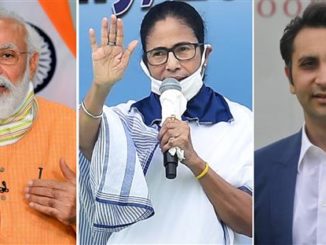
  • PM Modi, Mamata Banerjee, Adar Poonawalla on Time’s ‘100 most influential’

    PM Modi, Mamata Banerjee, Adar Poonawalla on Time’s ‘100 most influential’

    PM Modi, Mamata Banerjee, Adar Poonawalla on Time’s ‘100 most influential’

    NEW YORK (TIP): Prime Minister Narendra Modi, West Bengal Chief Minister Mamata Banerjee and Serum Institute of India CEO Adar Poonawalla have been named among the world’s 100 most influential people of 2021 by Time magazine. The magazine on Wednesday, April 15, unveiled its annual list of ‘The 100 Most Influential People of 2021’, a global list that includes US President Joe Biden, Vice-President Kamala Harris, Chinese President Xi Jinping, Duke and Duchess of Sussex Prince Harry and Meghan, former US president Donald Trump and co-founder of the Taliban Mullah Abdul Ghani Baradar. Time’s profile of Modi says India has had three pivotal leaders — Jawaharlal Nehru, Indira Gandhi and Modi. “Narendra Modi is the third, dominating the country’s politics like no one since them.” The profile by CNN journalist Fareed Zakaria accuses the 69-year-old leader of “eroding the rights” of India’s Muslim minority and intimidating journalists. It describes Mamata Banerjee as the face of fierceness in Indian politics. “The street-fighter spirit and self-made life in a patriarchal culture sets her apart,” the profile says. Poonawalla’s Time profile says that from the beginning of the Covid-19 pandemic, the 40-year-old head of the world’s largest vaccine maker “sought to meet the moment.” About Taliban co-founder Baradar, it says: “Baradar represents a more moderate current within the Taliban.”


  • Pegasus controversy

    Bihar CM Nitish Kumar breaks ranks to demand probe

    With the Supreme Court set to hear the pleas seeking a court-monitored probe into the Pegasus snooping row on Thursday, a new dimension has been added to the controversy. Bihar Chief Minister Nitish Kumar, an ally of the BJP-led NDA government at the Centre, has lent his weight to the demand for a probe. The Bihar CM asked the Opposition to put pressure by placing the relevant facts and figures before the government if it was not prepared for an inquiry. Nitish’s demand came on the eve of a meeting of leaders from several Opposition parties convened by Congress leader Rahul Gandhi to present a united front on the Pegasus issue even as the controversy continued to rock both Houses of Parliament, prompting PM Modi to slam the Opposition for its conduct.

    Ever since the revelation about the phone-tapping incident was made, there have been demands for an inquiry. The demand was earlier raised by TMC chief and West Bengal Chief Minister Mamata Banerjee who called for an all-party meeting on the issue. West Bengal even constituted a commission to probe the controversy. The Centre, on its part, has continued to deny that it has got anything to do with the snooping row, calling it instead an attack on Indian democracy. With the country figuring on the list of global democracy watchdogs that are concerned over the growing trend towards ‘authoritarianism’ and the plight of minorities, the government may well be on the defensive, but the attempts at stone-walling the Opposition have not helped matters either. In fact, the meetings of the parliamentary panel on information technology have seen BJP members boycott the proceedings and spar with the chairman who is from the Congress.

    Allegations of surveillance remain a matter of concern as it is as much about security as about privacy. With France and Israel initiating an inquiry into the Pegasus row, India should also look into ways to prevent such incidents. Democracy is about reconciling governmental concerns with individual rights. Misuse of technology can prove to be detrimental in furthering its cause.

    (The Tribune)


  • Centre unable to supply enough vaccines: Nobel laureate Abhijit Banerjee

    Centre unable to supply enough vaccines: Nobel laureate Abhijit Banerjee

    West Bengal has effectively used the vaccines supplied by the Centre, economist says

    KOLKATA (TIP): West Bengal Chief Minister Mamata Banerjee on Thursday, August 5,  met Nobel laureate Abhijit Vinayak Banerjee and discussed India’s management of the COVID-19 pandemic with him.

    Mr. Banerjee, who is a member of West Bengal’s COVID-19 management committee, said that his sense is that the biggest problem is that the Centre is not capable of generating the supply of vaccines needed for the whole country. “We have not reached the promised level of supply,” the economist said. He also said that West Bengal had effectively used the vaccines supplied by the Centre.

    Ms. Banerjee also raised the issue of shortage of vaccines and accused the Centre of discriminating against West Bengal. “Gujarat is smaller in size but got double the vaccines. I don’t have a problem [with this]. But I have a problem when we are not getting vaccines. People are suffering,” she said.

    She has also written a letter to Prime Minister Narendra Modi with the appeal that West Bengal should receive adequate doses of vaccines, according to its requirement.

    The letter said: “I am sorry to say the Central government is providing large numbers of vaccine doses to States like Uttar Pradesh, Gujarat and Karnataka, which are BJP-ruled. I have no problem if they or any other state for that matter receives higher number of vaccine doses, but I cannot remain a mute spectator to see Bengal deprived.”

    The Chief Minister in the communication said that West Bengal needs 14 crore doses of COVID-19 vaccines to cover all the people in relevant categories. “However, we have received 2.68 crore doses till day from Government of India,” Ms. Banerjee said. The Chief Minister also announced that the State government may open schools after Durga Puja, depending on the COVID-19 situation prevailing then. Ms. Banerjee said that schools could be opened on alternate days after the Pujas.

    (Source: PTI)

  • ‘Poore desh me khela hoga, it will be Modi vs country in 2024’ – Mamata says in Delhi

    ‘Poore desh me khela hoga, it will be Modi vs country in 2024’ – Mamata says in Delhi

    New Delhi (TIP): It will be Modi vs the rest of India in 2024 and the opposition will create history, West Bengal Chief Minister Mamata Banerjee said Wednesday, July 28,  setting the tone for opposition unity in the Lok Sabha elections.

    “Poore desh me khela hoga. When general elections happen, it will be Modi vs country. This is our hope for 2024,” Banerjee said in a free-wheeling interaction with reporters in Delhi on the third day of her visit.

    The West Bengal CM, however, remained non-committal about her role at the national level and said she has a “sweet home” in Bengal and would like to stay there.

    “I don’t want to be a leader but a cadre. Let me be that. But I want to bell the cat; I want to help all. I am not a VIP but an LIP (Less Important Person),” Banerjee said when asked about her national role.

    She said the situation on the ground is different now. “Every regional party is very strong today. If all of them are together, they will be stronger than BJP,” she said.

    The West Bengal CM, on a strong footing after her party’s resounding victory in the assembly elections in May, reiterated that talks with various opposition leaders are going on but no final decision has been taken as yet on the opposition’s strategy for 2024.

    “The Parliament session is on, so political parties and their leaders are busy. Once the session is over, we will sit together and decide. In a democracy, talks have to go on,” she said.

    Asked who will become the leader of the opposition alliance, Banerjee said she is not a “political astrologer”.

    “It depends on the situation. All of us can work together. Anybody can become a leader,” she said. “I don’t want to impose my opinion. After the Parliament session, opposition parties must meet.”

    Following her interaction with the media, Banerjee met Congress president Sonia Gandhi and later Delhi CM Arvind Kejriwal.

    After meeting Gandhi, Banerjee said the former had invited her for tea and they discussed a host of issues including the need for the opposition to come together. “Rahulji was also present. We discussed the political situation in the country, Pegasus as well as Covid,” she said.

    On the role the Congress will play in the coalition, Banerjee said Sonia also champions opposition unity. “Congress trusts the regional parties and regional parties trust Congress,” she said.

    Banerjee said that she is hopeful that a positive result will come out in the future from all these discussions.  She later met Delhi Chief Minister Arvind Kejriwal.       Source: The Print

  • Election verdict a pushback for BJP policies

    Election verdict a pushback for BJP policies

    By Zoya Hasan

    “What the pandemic has done, unlike the disaster of demonetization, is bring to the fore the BJP’s incapacity for governance. It has shown the sheer incompetence of the majoritarian model of governance, which is just not suited for running a modern state. The administrative ineptitude is impossible to ignore even for those intoxicated by the right-wing’s electoral successes.”

    The BJP’s defeat in West Bengal, Kerala and Tamil Nadu shows the limits of Hindutva. It shows regional parties can overpower Hindutva at the state level and hence the BJP cannot assume a natural monopoly over state politics.

    The results of the just-concluded Assembly elections give us an indication of ground-level political changes in the key states of Assam, West Bengal, Kerala and Tamil Nadu. While it’s important to understand the results in terms of state-specific factors, the overall political outcome indicates a successful assertion of local/regional politics against the majoritarian-authoritarian politics of the BJP. The centrality of the local is visible from the Lokniti-CSDS survey which underlines the primacy of local factors and state leaders with a mass base in determining the choices of voters. The reasons for this vary from state to state but the limits of Hindutva’s expansionist politics and its agenda of polarization are apparent. This has decisively dashed the BJP’s avaricious plans of conquering new territories.

    These setbacks suggest that the polarizing rhetoric of Hindu nationalism doesn’t thrive everywhere in India, especially in regions with a distinct culture, a history of social movements, strong secular tradition, and where vernacular languages hold primacy instead of Hindi. It showed how stunningly out of touch the BJP is from the political reality in these states where it was holding Uttar Pradesh (UP) Chief Minister Yogi Adityanath’s road shows, chanting slogans of Jai Shri Ram, talking love jihad and trying to excite Hindus with anti-Muslim dog whistles. None of this seems to have worked. The BJP lost decisively in Kerala (not winning a single seat), its alliance lost in Tamil Nadu (BJP won only four seats), and it lost spectacularly in Bengal (winning 77 seats, way short of 200 it boasted). The central point of the election outcome is that the majority of Hindus voted against the BJP to keep it out of power in three important states.

    But this rebuff did not occur in the core areas of BJP’s support base in northern and north western India and these will be tested in the polls in 2022. The RSS has changed the political discourse in these states, especially in UP. But it would be a mistake to presume that issues of unemployment, jobs, farmers’ distress, regressive farm laws and the massive Covid mismanagement will not matter in India’s most significant state. In addition to Covid, the continuation of the farmers’ revolt, which began in November 2020, is likely to shift the balance of forces in many of these northern states, from Haryana to UP to Gujarat.

    The gross mismanagement of the public health crisis in UP makes it one of the worst hit states with high caseload and fatalities. UP has an archaic and creaky medical infrastructure which is collapsing as Covid rages unchecked through the state with people running from pillar to post in search of hospital beds, including in the big cities of Lucknow, Kanpur, Allahabad and Banaras. The situation in villages and small towns is much worse. The virus has now reached rural parts where people are struggling to breathe.

    However, the state government is claiming that it has the situation under control. This shows how completely unmindful it is of human suffering. Amid the surge of the virus, the Chief Minister has issued orders to set up help desks for the protection of cows in each district of the state and has directed that Covid-19 protocols are maintained at all cow shelters, including stocks of equipment like oximeters and thermal scanners “for cows and other animals as well”. The order comes while UP suffers from a crippling shortage of medical supplies and oxygen. Instead of tackling oxygen shortage, the government has slapped an FIR on a Lucknow city hospital, accusing it of spreading false rumors of shortage.

    While people in the state are desperate for oxygen, its Chief Minister denies there’s even a problem. The denialist rhetoric and the government’s indifference to the crisis will impact the BJP’s popularity in UP. A report in Mint pointed out that even hardcore BJP supporters and party workers are sharply criticizing the government’s maladministration in WhatsApp groups in UP. The growing anger against the BJP leadership’s handling of the Covid crisis has found resonance in the panchayat polls. Opposition parties have won close to 50 per cent of all seats contested and swept districts which are BJP strongholds. The BJP is losing ground in Ayodhya, Varanasi, Mathura and Gorakhpur which is an important development given how much political attention has been showered on these cities by the government.

    But let’s not forget that Modi and the BJP have the ability to turn things around. They did it after demonetization, sweeping UP in the 2017 Assembly elections even though everyone had predicted an adverse fallout for the party. However, the post-Covid situation is different. What the pandemic has done, unlike the disaster of demonetization, is bring to the fore the BJP’s incapacity for governance. It has shown the sheer incompetence of the majoritarian model of governance based on a politics of hate and obscurantism which is just not suited for running a modern state. It’s not simply a failure of the Indian State but a failure of the BJP model of the State. The administrative ineptitude and the government’s insensitivity are impossible to ignore even for those intoxicated by the right-wing’s electoral successes.

    The huge governance failure in UP, in contrast to Kerala, for example, reminds us during the worst crisis, that a governance model can make the difference between life and death, and the absolute criticality of a politics based on empathy, concern, planning and human development in comparison with one based on building religious places of worship and vanity projects such as the Central Vista in the Capital in midst of the calamitous second wave.

    The BJP’s defeat in West Bengal, Kerala and Tamil Nadu shows the limits of Hindutva. It shows regional parties can overpower Hindutva at the state level and hence the BJP cannot assume a natural monopoly over state politics. However, regional politics cannot counter the hold of Hindutva in UP which has been the BJP’s pathway to power in 2014 and 2019. The Hindutva project has built an enduring communal majority in the Hindi heartland. Its overwhelming size and support in this region give the BJP an overwhelming advantage over its rivals. Therefore, majoritarianism and the claim of the majority to dominate have to be challenged in these states. The most effective way of doing this, apart from building big-hearted alliances, is to claim greater equality of rights of every section of the people and region, and not simply the inclusion of minorities through the revival of pluralism.

    (The author is Professor Emerita, Jawaharlal Nehru University)

  • FIR filed against Kangana Ranaut for allegedly spreading hate propaganda in West Bengal

    FIR filed against Kangana Ranaut for allegedly spreading hate propaganda in West Bengal

    New Delhi (TIP): After being suspended on Twitter for violating their policies, a new FIR has been filed against Bollywood actor Kangana Ranaut for allegedly spreading hate propaganda and inciting communal violence in West Bengal. The complaint has been filed by an activist and spokesperson Riju Dutta who also alleged Kangana to have maligned the image of West Bengal’s Chief Minister Mamata Banarjee. In the letter, he has urged to take the necessary action against the ‘Queen’ actor. The complaint read, “Ms Ranaut has posted several posts from her verified official Instagram handle bearing url: httpa:// instagram.com/kanganaranaut?igshid=2yruw6zd7j in the ‘Story’ section. She has also distorted and maligned the image of the Hon’ble Chief Minister of West Bengal – Smt. Mamata Banerjee. Hence, she is to be charged against hate propaganda to incite violence in West Bengal.”

    The action comes after Kangana, reacting to the post-poll violence in Bengal, took a direct dig at the Chief Minister of Bengal, Mamata Banerjee. After her tweets, Kangana’s Twitter account was suspended, and then she started posting on Instagram.

    According to a Twitter spokesperson, Kangana’s account was constantly provoking anger and violence, which was diminishing the value of global public conversation on the platform.

    Meanwhile, on the work front, Kangana’s much-awaited project ‘Thalaivi’ which was slated to get a theatrical release on April 23, this year got postponed due to the rise in the number of COVID-19 cases in India. Apart from this she also has ‘Tejas’, ‘Dhaakad’, and ‘Manikarnika Returns: The Legend Of Didda’ in the pipeline.

    Kangana has also signed up to play the role of former Prime Minister Indira Gandhi in an upcoming political drama.                 Source:  ANI

  • Journey of Bengal’s daughter to nation’s Didi

    Journey of Bengal’s daughter to nation’s Didi

    All India Trinamool Congress (AITC) supremo Mamata Banerjee, also known as Didi (elder sister in the Bengali language), sworn in as the Chief Minister of West Bengal for the third term on 5 May 2021 after she pulled off a landslide victory in the West Bengal Assembly Elections 2021. Ahead of the oath-taking ceremony, she resigned as the Chief Minister of West Bengal at Raj Bhavan in the presence of Governor Jagdeep Dhankhar (as per the practice) and took the oath of the office and secrecy again. She lost the Nandigram Assembly Constituency to Suvendu Adhikari (BJP) in 2021.

    After her separation from the Indian National Congress, she founded the All India Trinamool Congress (AITC or TMC) in 1998. She spearheaded the AITC alliance to a landslide victory in the  2011 West Bengal Assembly Elections, defeating the 34-year-old Communist Party of India (Marxist). She was a member of the West Bengal Legislative Assembly from the Bhabanipur Assembly Constituency from 2011-2021.

    Apart from serving as the Chief Minister of West Bengal, she has held key positions in the Union Cabinet such as first female Minister of Railways, first female Minister of Coal, and Minister of Human Resource Development, Youth Affairs and Sports, Women and Child Development. She has served as the Minister of Railways on two occasions. Mamata Banerjee rose to prominence after opposing the erstwhile land acquisition policies for industrialisation of the Communist government in West Bengal for Special Economic Zones at the cost of agriculturalists and farmers at Singur.

    Throughout her political career, she has maintained a publicly austere lifestyle. She can be seen dressed in a traditional Bengali saree. Though many don’t know, she is a self-taught painter and a poet. Her 300 paintings were sold for Rs. 9 crores.

    Early life, and education

    Mamata Banerjee was born in Calcutta (present-day Kolkata), West Bengal to a Bengali Hindu family to Promileswar Banerjee and Gayetri Devi. She lost her father at the age of 17 due to a lack of medical treatment.

    She attended Deshbandhu Sishu Sikhshalay and completed her senior secondary studies in 1970. She earned her Bachelor’s degree in History from Jogamaya Devi College and received her Master’s degree in Islamic history from the University of Calcutta. She further earned a degree in Education from Shri Shikshayatan College and a law degree from Jogesh Chandra Chaudhuri Law College, Kolkata. She received an honorary doctorate from the  Kalinga Institute of Industrial Technology, Bhubaneswar and an honorary Doctorate of Literature (D.Litt.) from Calcutta University.

    At the age of 15, she became involved in politics and established Chhatra Parishad Union, the student wing of the Congress (I) Party, defeating the All India Democratic Students Organisation affiliated with the Socialist Unity Centre of India (Communist).

    Political career

    She started her political career with the Indian National Congress in the 1970s. She earned huge attention from the media after dancing on the car of socialist activist and politician Jayaprakash Narayan as a protest against him. From 1976-1980, she served as the General Secretary of the Mahila Congress, West Bengal. In the 1984 General Election, she became one of the youngest parliamentarians of India, defeating veteran Communist Party politician Somnath Chatterjee, to win the Jadavpur Parliamentary Constituency in West Bengal.

    In 1984, she became the General Secretary of the Indian Youth Congress. In the 1989 General Elections, she lost her seat to  Malini Bhattacharya of the Communist Party of India (Marxist). In the 1991 General Elections, she was re-elected from Calcutta South constituency and retained this seat in 1996, 1998, 1999, 2004, and 2009 General Elections.

    During P. V. Narasimha Rao administration from 1991-1996, she held key positions in the Union Cabinet. She was appointed the Union Minister of State for Human Resources Development, Youth Affairs and Sports, and Women and Child Development.

    After indicating her resignation and protesting at a rally against the Government’s indifference towards her proposal to improve sports in the country at the Brigade Parade Ground in Kolkata, West Bengal, she was discharged of her portfolios in the year 1993.

    In 1997, Mamata Banerjee parted ways with the Indian National Congress over the difference in political views with the then West Bengal Pradesh Congress Committee President Somendra Nath Mitra. In 1998, she along with Mukul Roy founded AITC which quickly became the opposition party to the Communist Government in West Bengal.

    On 11 December 1998, she held a Samajwadi Party MP, Daroga Prasad Saroj, by the collar and dragged him out of the well of the Lok Sabha, preventing him from protesting against the Women Reservation Bill.

    In 1999, she joined BJP led NDA Government and served as the Minister of Railways. She presented her first Railway Budget in 2000 where she introduced 19 new trains for the FY 2000-2001 and fulfilled many of her promises to her home state West Bengal.

    In early 2001, after Tehelka Magazine’s exposure of Operation West End, she walked out of the NDA and allied with the Indian National Congress for the 2001 West Bengal elections and also to register her protest against senior ministers of the government over the corruption charges levelled by Tehelka.

    In September 2003, she again allied with the NDA Government and served as a Cabinet Minister without any portfolio. On 9 January 2004, took charge as the Minister of Coal and Mines and held the portfolio till 22 May 2004.

    In the 2004 General Elections, her party aligned with the BJP but lost the elections. She suffered major setbacks when the sitting mayor Subrata Mukherjee defected from her party. Her party was defeated in the 2006 West Bengal Assembly Elections. On 4 August 2006, she hurled her resignation papers at the Dy. Speaker Charanjit Singh Atwal in Lok Sabha. Banerjee was provoked by Speaker Somnath Chatterjee who rejected her adjournment motion on illegal infiltration by Bangladeshis in West Bengal on the grounds of improper format.

    On 20 October 2005, she rose to prominence after opposing the erstwhile land acquisition policies for industrialisation of the  Buddhadeb Bhattacharjee government in West Bengal for Special Economic Zones at the cost of agriculturalists and farmers at Singur.

    In November 2006, she was forcibly stopped on her way to Singur for a rally against the proposed Tata Motors car project. She reached the West Bengal assembly, protested, addressed a press conference, and announced a 12-hour shut down by her party. The MLAs of AITC vandalized the West Bengal Legislative Assembly building and a major strike was called on 14 December 2006, but no gain was registered.

    In 2007, armed police personnel stormed the rural area of Purba Medinipur district to quash protest against the then Government of West Bengal. The Government had plans to expropriate 10,000 acres (40 km2) of land for a Special Economic Zone (SEZ) to be developed by the Indonesian-based Salim Group. As per the reports, at least 14 villagers were shot dead while over 70 were wounded, leading to a large number of people protesting on the streets.

    Soon after this incident, Mamata Banerjee wrote letters to the then Prime Minister Manmohan Singh and Union Minister Shivraj Patil to stop the violence in Nandigram which she termed as ‘State-sponsored violence’ promoted by CPI(M).

    Before the 2009 General Elections, her party forged an alliance with the Congress-led  United Progressive Alliance (UPA). After the elections,  Banerjee became the Union Minister of Railways.

    Upon becoming the Union Minister of Railways for the second time, she introduced a number of non-stop Duronto Express trains connecting large cities as well as a number of other passenger trains, including women-only trains.

    As a Chief Minister

    She spearheaded the AITC alliance to a landslide victory in the 2011 West Bengal Assembly Elections, defeating the 34-year-old Communist Party of India (Marxist). She assumed the position of Chief Minister of West Bengal and has been serving the position for the third term in a row.

    She is the first and to date the only female Chief Minister of West Bengal. Soon after assuming the office, she returned the 400 acres of land to Singur farmers, set up Gorkhaland Territorial Administration and brought in many reforms in the education and health sectors.

    In a bid to improve the law and order situation in the state, she created police commissionerates at Howrah, Barrackpore, Durgapur-Asansol and Bidhannagar. The total area of Kolkata Municipal Corporation was brought under the control of the Kolkata Police.

    On 16 February 2012, she received an appreciation letter from  Bill Gates of the  Bill & Melinda Gates Foundation for achieving a full year without any reported cases of polio, stating it as a milestone not only for India but for the world as well.

    In the 2016 West Bengal Assembly Elections, her party won 211 of 293 seats. She took oath as the CM of West Bengal for the second time.

  • FIR against Mamata Banerjee in Cooch Behar for ‘instigating’ people to gherao central forces

    FIR against Mamata Banerjee in Cooch Behar for ‘instigating’ people to gherao central forces

    Kolkata (TIP): An FIR has been lodged against West Bengal Chief Minister Mamata Banerjee at a police station here, alleging that she instigated voters to gherao central forces and that, in turn, led to the incident of firing in Sitalkuchi and the subsequent death of four persons.

    Siddique Ali Mia, the zilla president of BJP’s minority cell in Cooch Behar, cited the TMC supremo’s comments during a rally in Banerswar area as he filed a complaint on Wednesday claiming that her address provoked people to attack CISF personnel during the fourth phase of state elections.

    He attached a video clip of Banerjee’s speech in his complaint at Mathabhanga police station.

    Villagers, after being provoked by such provocative statements of Mamata Banerjee, tried to snatch fire arms of the deployed paramilitary forces, Mia said.

    “The said villagers including women launched attack upon the paramilitary forces with the intention of causing bodily injury, knowing it to be likely to cause death of the deployed paramilitary forces,” he wrote in the FIR, a copy of which is with the PTI. The BJP leader, when contacted, said he would launch a massive protest demanding the chief minister’s arrest, if the police “sit idle” on the FIR in the next few days. “She is solely responsible for the death of those four people. She is answerable to all the voters of our district,” Mia stated.

    At least four persons died outside a polling booth in Sitalkuchi assembly constituency on April 10 when CISF personnel opened fire in “self defence” allegedly after coming under attack from locals.

    The Election Commission had suspended the voting exercise at the booth following the incident.

    In its statement, the EC said, “The joint report of the two special observers has been received … wherein they interalia stated that recourse to open fire by the CISF personnel became absolutely necessary in order to save the lives of the voters lined up at the polling booth, those of other polling personnel and their own lives as the mob had attempted snatching their weapons.”

    The poll panel had also banned political leaders from entering the district for three days. Mamata Banerjee met the family members of those killed in the firing on Wednesday.

    Meanwhile, the Election Commission of India on Thursday said it has no plans as of now to club the remaining phases of the West Bengal Assembly election and hold polling for them together.

    The comment comes at a time when India is reeling under a raging second wave of Covid-19. On Thursday, the country for the first time reported more than 2 lakh Covid-19 cases in a day.

    There is no plan to club remaining phases of West Bengal elections. A meeting has been called by the Chief Electoral Officer of West Bengal to ask political parties to adhere to EC’s Covid-19 guidelines and ensure strict compliance, an EC official said. This time, election to the West Bengal Assembly is being held in eight phases. Polling for four phases have ended and for the fifth phase it will be held on Saturday. Polling for the sixth, seventh and the eighth phase will be held on April 22, April 26 and April 29, respectively. Votes for all the phases will be counted on May 2.

  • Political row escalates after  Mamata suffers bone injuries in Nandigram ‘attack’

    Political row escalates after  Mamata suffers bone injuries in Nandigram ‘attack’

    Kolkata (TIP): West Bengal Chief Minister Mamata Banerjee, who was allegedly pushed by unknown miscreants while campaigning for West Bengal assembly elections in Nandigram, has suffered severe bone injuries in her left ankle and foot, right shoulder, forearm and neck, a senior doctor of the state-run SSKM hospital said in a medical bulletin issued late on Wednesday, March 10,  night. A day later, a political row escalated on  as the Trinamool Congress (TMC) and the Bharatiya Janata Party (BJP) traded charges, and large-scale protests rocked the poll-bound state.

    Doctors in Kolkata said Banerjee, 66, suffered severe “bony injuries” in her left ankle and foot, besides injuries in right shoulder, forearm and neck. Her supporters blocked roads, burnt tyres and performed prayers in temples and mosques across the state. In several districts, clashes were reported between BJP and TMC workers.

    Banerjee went to the high-profile seat of Nandigram on Wednesday to file her nomination but, in the evening, alleged that some people deliberately attacked and injured her. A preliminary investigation by the police and a section of the eyewitnesses hinted that the injuries may be the result of an accident, and not a deliberate conspiracy.

    The issue quickly snowballed into a political slugfest with the state’s ruling party blaming the BJP for the injuries and the latter accusing Banerjee of orchestrating the incident for sympathy.

    Images of Banerjee being carried by her security personnel and later, lying on a hospital bed with her leg in a plaster, dominated the airwaves and popular discussion, roughly three weeks before elections kick off for the 294-member assembly. “I appeal to my party cadres, supporters, activists and common people to maintain peace and calm. It is true that I was badly hurt last night and felt severe pain in the chest and head… I hope to be back on the field in the next few days,” Banerjee said in a video message filmed from her hospital bed in a government-run facility in Kolkata. Banerjee, who is seeking a third consecutive term as chief minister, said she would not cancel any scheduled meetings and use a wheelchair if needed. She didn’t repeat her allegation that four-five men had deliberately attacked her.

    The TMC said it will hold silent protest across the state and wear black bands to condemn the incident. “The only woman chief minister in the country was injured and attacked. The Prime Minister and the Union home minister, however, didn’t show the courtesy to call up. We condemn this,” said Saugata Roy, TMC parliamentarian.

    Other TMC leaders invoked previous attacks on Banerjee – the politician popularly known as didi was hit on the head during a rally in 1990 and images of her bloodied body made her a national figure – and it will be a major campaign issue.

    The BJP condemned the TMC’s stance and sought a Central Bureau of Investigation (CBI) probe. The party, which is looking to dislodge the TMC and come to power for the first time in the state, demanded that pictures of the incident be made public.

  • Bangladesh PM Sheikh Hasina rejects Mamata’s plan, wants only Teesta

    Bangladesh PM Sheikh Hasina rejects Mamata’s plan, wants only Teesta

    NEW DELHI (TIP): Bangladesh PM Sheikh Hasina signed off her hugely successful India visit on Monday with a restructured strategic relationship with India, but rejected Mamata Banerjee’s proposal for sharing rivers other than the Teesta.

    Addressing a civic reception held for her by think tank India Foundation, Hasina spoke about the importance of water sharing between India and Bangladesh.

    “On Teesta issue, PM Modi once again reiterated his government’s strong resolve to conclude the water sharing treaty at the soonest. Once it happens, the face of Indo-Bangladesh relations would undergo another transformation.”

    Then, switching to Hindi, she said, “Lekin mujhe nahin pata didimoni kya karega (but I don’t know what Didi i.e. Mamata will do).”

    For the first time, giving a sense of the conversation between her and the West Bengal chief minister, Hasina revealed Mamata had put forward some alternative proposals. But she held PM Modi to his words that Teesta would be the one being negotiated.

    Mamata, she said, had offered to give her electricity. “Paani manga, bijli mila,” Hasina laughed. But PM Modi, she noted, said he would ensure a successful Teesta deal.

    But the ice has been broken, both between Mamata and the Centre and between Mamata and Bangladesh.

    The CM’s presence at the talks and the banquets, even her shift from an intransigent “no” to thinking of alternative water sharing pacts, offering electricity to Bangladesh, all signal a significant move forward, giving the Modi government something to work on with her.

    For India, the Hasina visit proved very productive.

    But more importantly, India has walked the extra mile to court the Bangladesh military, a very powerful institution, with stronger institutional ties to Pakistan than India.

    This will help to change the institutional hostility that the Bangladesh army continues to harbour against India, specially when, India reckons, they begin to look at India as a dependable defence supplier.

    On the economic front, India changed tack this time — a huge $5 billion shopping voucher could have meandered along in traditional Indian style, achieving little.

    But India is learning to play the Chinese game — in the past few months, Indian officials have combed Bangladesh government corridors to pick up visible and viable projects which this line of credit would build.

    Although India has far less cash to throw around (China promised Dhaka$24 billion in 2016), in the past six years India has given $8 billion to Bangladesh— $3 billion already utilised, all of it on much easier terms than China.

    With the “shommanona” ceremony, India and Bangladesh renewed an alliance forged during its liberation —the enemy remaining the same.

    But Hasina never wavered from her demand of a Teesta deal, and with relations ramped up, India will remain under pressure to deliver.

    Indian officials have said that Bangladesh officials have refused to negotiate sharing any of the other rivers — India and Bangladesh share 54 rivers — until Teesta is done.

    Sources said Mamata had offered to negotiate water sharing agreements for Torsa, Sankosh and Raidak rivers, all of which cross over into Bangladesh.

    Hasina said that the Indian Parliament’s unanimous approval of the land boundary agreement was reminiscent of India’s whole-hearted support during Bangladesh’s liberation war. Implicit was the message that India should come together to get the Teesta deal done. (PTI)