Tag: Maninder Sidhu

  • Overseas Friends of India Canada urges Canadian government to expedite CEPA

    Overseas Friends of India Canada urges Canadian government to expedite CEPA

    By Prabhjot Singh

    TORONTO (TIP): As mutual exchange of visits between trade missions of India and Canada has been set in motion with an official delegation of British Columbia arriving in India on Manday, January 12, the Overseas Friends of India Canada – Ottawa (OFIC) has written a letter to strongly urge the Government of Canada to advance negotiations toward the conclusion of a Comprehensive Economic Partnership Agreement (CEPA) between the two long-time trade partner nations.

    Talks and negotiations on a Free Trade Agreement have been pending for more than a decade. Hopes of the two countries signing the CEPA got a boost with the recent exchange of ministerial and trade delegations between India and Canada.

    “We welcome and commend Global Affairs Canada’s recent positive re-engagement with India at this strategically important moment,” say Shiv Bhasker, President and Hemant Shah, President and Trade Director of Overseas Friends of India Canada – Ottawa (OFIC), respectively.

    A trade delegation of the Canadian Hindu Chamber of Commerce has completed its 11-day visit to India by visiting Assam, Uttar Pradesh, Haryana, Delhi and Chandigarh.

    The Canadian Prime Minister, Mark Carney, is also expected to lead a strong delegation to India early next month. In an endeavor to strengthen trade links with Asia, Mark Carney is also leaving for China this week. After China, he will visit Qatar before returning to the continent next month on his first official visit to India.

    The mood is upbeat as Indian industry, trade and business houses await the arrival of the first official trade delegation from Canada. Led by the Premier of British Columbia, David Eby, and Jobs Minister and Olympian Ravi Kahlon, this is the first official trade commission from any Canadian province to visit Chandigarh, New Delhi, Mumbai and Bengaluru to showcase its leadership and capabilities in sustainable forestry, clean energy and responsible mining. The Premier-led mission builds on the province’s Look West industrial and economic plan.

    The mission will arrive on Monday and stay in India till January 17. Both Premier David Eby and Ravi Kahlon will meet with government and business leaders in major centers of commerce and technology, as it will promote British Columbia’s businesses, critical minerals and sustainable wood products, supporting work to build a more independent economy and creating more good jobs for people in British Columbia.

    “With unjustified tariffs from the U.S. impacting B.C. workers and businesses, it’s more important than ever to deepen strategic relationships with international partners to attract new investment and support good-paying jobs in British Columbia,” Premier Eby said. India is a key market for B.C. with enormous trade opportunities. This trade mission is about deepening our relationships, supporting good jobs in B.C. and strengthening our position as the economic engine of the new Canadian economy.”

    As India moves toward becoming the world’s third-largest economy, the Premier will highlight opportunities for sustainable forestry, clean energy and responsible mining through new partnerships that are available only in B.C.

    India is the world’s third-highest energy consumer and has a growing demand for clean technology and clean energy. British Columbia has both to offer.

    The mission is part of Look West: Jobs and Prosperity for BC and Canada and aligns with the Look West goal of doubling exports to non-U.S. markets over 10 years.

    “British Columbia has the highest share of exports to India of any province,” Kahlon said. “Building on our Look West plan, the trade mission to India will showcase B.C.’s strengths in clean energy, sustainable forestry, responsible mining and clean technology. By attracting investment and reducing our reliance on U.S. markets through diversified trade partnerships, we will create good jobs and prosperity for all British Columbians.”

    “Diversifying trade and investment, securing supply chains, retaining customers and opening new markets have always been important, but are now more urgent due to the chaotic and unjustified tariffs from the U.S.,” Premier Eby said. “As we move forward, our government will continue to leverage B.C.’s strengths to create more opportunities for our businesses to export and attract investment, which means jobs, opportunity and prosperity for British Columbians.”

    In 2024, B.C.-origin exports of goods to India amounted to $1.3 billion. In early 2023, the B.C. government launched the Trade Diversification Strategy to strengthen and expand the province’s trading base. The province benefits from a network of more than 50 trade and investment representatives across 14 key markets in North America, Europe and Asia. This network includes trade and investment representatives in India in Chandigarh, New Delhi, Mumbai and Bengaluru (Bangalore). With 18 operating mines and two smelters, B.C. produces or has the potential to produce at least 19 of the critical minerals on Canada’s list and the U.S. 2025 draft critical minerals list, including copper, germanium, nickel and rare-earth elements.

    Within Canada, British Columbia is the second-largest producer of natural gas. If viewed independently, B.C. is the world’s 12th-largest natural gas producer, with substantial reserves that could allow the industry to expand further. Forestry Innovation Investment, B.C.’s market development agency for forest products, has been promoting B.C. wood species in India through the Canadian Wood brand.

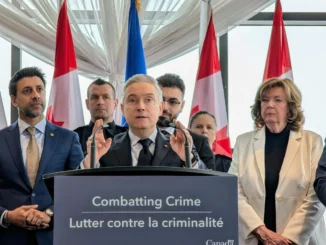
    Meanwhile, Overseas Friends of India and Canada said in a letter to the Canadian Minister for International Trade, Maninder Sidhu, that Canada and India share a deep and enduring economic relationship founded on trust, mutual respect, and long-term cooperation. Canada has consistently supported India’s development—beginning with CIDA-led initiatives in the late 1970s that promoted Canadian mining, drilling, and engineering expertise, and extending to landmark collaborations such as the Canadian feasibility study for the New Mumbai Sea Port (Nhava Sheva). Canada remained an active and reliable partner even during India’s pre-liberalization period, as demonstrated by the 1985–86 Canadian trade mission and the widely recognized “Canada Week” trade fair in New Delhi.

    Shiv Bhasker and Hemant Shah said in their letter to Maninder Sidhu that the Canadian strengths continue to add value across priority sectors, including mining,

    agricultural storage, grains and pulses, aerospace, helicopters, and aviation maintenance. These sectors align closely with India’s development priorities and present significant opportunities for Canadian firms.

    Education remains a cornerstone of the bilateral relationship, dating back to Prime Minister Shri Lal Bahadur Shastri’s visit to Ottawa in the late 1960s and the establishment of the Shastri Indo-Canadian Institute. Since 2006, flight schools in Western Canada, including Winnipeg, have trained Indian commercial pilots who now serve India’s rapidly expanding aviation sector—an example of people-to-people ties translating into tangible economic benefit, Bhasker and Shah said in their letter.

    “CEPA is more than a trade agreement; it is a strategic instrument to expand market access, strengthen supply-chain resilience, and secure Canada’s long-term economic presence in one of the world’s fastest-growing major economies. The Indo-Canadian business community has played a critical role in sustaining bilateral trade for decades and will continue to serve as a vital bridge and driving force in this renewed partnership.

    “OFIC therefore strongly recommends moving forward decisively with CEPA negotiations. We fully support the conclusion of a Comprehensive Economic Partnership Agreement between Canada and India and firmly believe it will deliver lasting economic and strategic benefits for both nations.

    “OFIC stands ready and willing to assist the Government of Canada, Global Affairs Canada, and your office in any manner necessary to help make CEPA a reality, “ they said while concluding the letter.

    (Prabhjot Singh is a Toronto-based profusely awarded senior journalist who specializes in Sports and Political reporting)

  • India, Canada to continue long-term supply chain partnerships

    India, Canada to continue long-term supply chain partnerships

    OTTAWA / NEW DELHI (TIP): After the exchange of visits of foreign ministers, the Indian and Canadian trade ministers reaffirmed the strength and continuity of the India–Canada economic partnership and reiterated their commitment to deepening bilateral cooperation through sustained dialogue, mutual respect, and forward-looking initiatives. A joint statement was issued at the conclusion of the joint bilateral between Canadian Trade Minister Maninder Sidhu and his Indian counterpart, Piyush Goel. The statement acknowledged robust growth in bilateral trade in goods and services that has reached US$23.66 billion in 2024, with merchandise trade valued at nearly US$8.98 billion, a substantial 10% increase over the previous year.

    Maninder Sidhu has become the first Canadian Trade Minister under the Mark Carney government, who, at the invitation of India’s Minister for Commerce and Industry Shri Piyush Goyal, undertook an official visit to India from November 11 to 14.

    Incidentally, he is the second Canadian minister of Indian descent, after Anita Anand, to visit India in recent months.

    The ministers reaffirmed the strength and resilience of the India–Canada economic partnership and emphasized the importance of continued engagement with the private sector to unlock new opportunities for trade and investment. They welcomed the steady expansion of two-way investment flows, including notable Canadian institutional investment in India and the growing presence of Indian firms in Canada, which together support tens of thousands of jobs in both economies. The ministers committed to maintaining an open, transparent, and predictable investment environment and to exploring avenues for deeper collaboration across priority and emerging sectors.

    Pursuant to the direction provided by the prime ministers of the two countries during their bilateral meeting on the sidelines of the G7 meeting in Kananaskis, Canada, as well as the Foreign Ministers Joint Statement, “Renewing momentum towards a stronger partnership,” of October 13, which identified trade as the cornerstone of bilateral economic growth and resilience, the two trade ministers held the 7th edition of the Ministerial Dialogue on Trade and Investment (MDTI).

    The ministers also noted strong complementarities between India and Canada across strategic sectors, driving sustainable growth and innovation and offering new opportunities for trade. Recognizing that these areas would require separate domain-level engagement between relevant stakeholders on both sides, the ministers agreed to encourage long-term supply chain partnerships in critical minerals and clean energy collaboration essential for the energy transition and new-age industrial expansion.

    They also agreed to identify and expand investment and trading opportunities in aerospace and dual-use capabilities partnerships, leveraging Canada’s established presence in India and the growth of India’s aviation sector.

    Recognizing the importance of supply chain resilience, the ministers exchanged views on global developments and reflected on lessons from recent disruptions. They underscored the relevance of strengthening resilience in critical sectors, including agriculture, and highlighted the need for diversified and reliable supply chains as essential for supporting long‑term economic stability.

    The ministers expressed satisfaction with the progress made in strengthening bilateral economic engagement and reaffirmed their shared commitment to elevating the economic partnership to reflect global developments and evolving supply chain and trade dynamics. They emphasized the importance of maintaining momentum in bilateral dialogue and supporting people-to-people ties, which provide a strong foundation for the partnership.

    The ministers agreed to sustained ministerial engagements with the trade and investment community in both Canada and India early next year. They agreed to remain in close communication as they consider next steps and concluded by acknowledging the constructive and forward-looking discussions held in New Delhi.

  • Mission politics started from Mission in BC

    Mission politics started from Mission in BC

    By Prabhjot Singh

    It was not easy. The early migrants from South Asia were not welcome to Canada. They not only suffered numerous hardships but were also denied the right for a decent living. They had no voting rights. In fact, the concept of the Nagar Kirtan processions, or the Sikh Parades, proved to be an effective tool for the overseas Sikh community to introduce itself as a peaceful and hard-working group that had no qualms of making countries of their present abode as their homes. The first ever-Sikh Parade or Nagar Kirtan procession was organized on January 19, 1908, along Second Avenue in Vancouver.

    It has been this commitment that has helped them to script an unprecedented success story the world over. Though the Punjabis – initially described as Hindus – started reaching Canada in early 1900, they were denied voting rights in British Columbia from 1907 onwards. They had to wait for 40 long years to win back the right to vote. In 1947, the requirement to be a voter was changed to Canadian citizenship in addition to being a British subject. It was in 1950 that the first Sikh – Naranjan Singh Grewall – was elected to the City Council of Mission in British Columbia.

    He became the first “Hindu” (the colloquial term for South Asians at the time) elected to any political position in Canada. Later, he became the first South Asian migrant to become Mayor of the Mission City Council in 1954. Grewall’s run for a seat in the BC Legislature as a member of the CCF surprised no one. He was first and foremost a man of the people. He lost the assembly election in a close battle.

    The Indo-Canadian community was waiting for the break Naranjan Singh Grewall had provided. Once the process of its assimilation in mainstream politics started, the Punjabi migrant community set its goals high. And before the turn of the century, it had three of its nominees – Gurbax Malhi, Herb Dhaliwal, and Jag Bhaduria – sitting in the House of Commons in Ottawa.

    And long before their journey to Ottawa started, the beginning, though unsuccessful, was made in late 60s and early 70s. In 1970, a new party was born. It was headed by an Indo-Canadian. Called Communist Party of Canada (Marxist-Leninist), it was founded by Hardial Singh Bains, a trained Bacteriologist. Born in Mahilpur in Hoshiarpur, Hardial moved to Vancouver when he was 19. Much before Jagmeet Singh became the President of the NDP, Hardial Singh Bains had earned the distinction of leading a national political party in Canada.

    After studying in Canada, England, and Ireland, Hardial Singh Bains returned to Canada and spearheaded the workers movement. Since Elections Canada does not allow the use of the word “communist” in the name of any party, Hardial Singh Bains got his party registered as Marxist-Leninist Party of Canada in 1974. Before his death in 1997, the Marxist-Leninist Party contested the 1974, 1979, 1980, 1993 and 1997 federal elections. Though the party has never succeeded in sending any of its members to the House of Commons, it fielded its largest number of candidates,177, in 1980. Many of these candidates were migrants, including those from India. Amarjit Dhillon, who was the party candidate from Vancouver South, both in 1979 and 1980, polled only 91 and 63 votes. Overall, though the party never aggregated 0.20 per cent of total votes polled, still it never gave up its fight and contested the last federal elections in 2021 by fielding 36 candidates.

    It was in 1974 when Hari Singh, a teacher, contested on Liberal ticket from Okanagan-Kootenay. Though it was a Liberal stronghold, but Hari Singh lost. After his defeat, he accused the majority community of Liberals of voting against him. Subsequently, the Liberals retained the seat.

    Ten years later in 1984, another teacher, Harkirpal Singh Sora, contested from Vancouver South. He too was unsuccessful. Deepak Obhrai was the longest serving MP from Calgary East. Long before he emerged on the scene, in 1988 this riding had tried to elect Anil Giga, a Liberal, to the House of Commons. He, however, was defeated by Alex Kindy by 18,227 votes. The Bramalea-Gore-Malton Riding has always remained a stronghold of the Punjabi migrants. The first attempt by the community to get into the House of Commons was in 1988, when the Liberals put up Gurjit Grewal, who lost by 2,185 votes to Harry Chadwik of the CP.

    Palbinder Shergill, a young amritdhari Sikh and a practicing lawyer, was one of the first Punjabi women to contest federal elections. She was unsuccessful  along with another Punjabi Indo-Canadian candidate from the Surrey Central Riding. The other  candidate was Charan Gill who had earlier made an attempt to get into the House of Commons in 1988 but was defeated by Benno Friesen of the PC. He represented the NDP.

    Sikh Turban has become an integral part of Canadian Parliament

    Two turbaned Sikh politicians – one from yesteryear, and another from now – Gurbax Singh Malhi and Jagmeet SinghJagmeet Singh

    October 25, 1993 would go down in the annals of history of the Canadian House of Commons as a golden letter day. It was on this day that Canada earned the distinction of electing the first turbaned Sikh MP to any Parliament outside India. The honor went to Gurbax Singh Malhi as he was declared successful from Bramalea-Gore-Malton riding. Though two more MPs of Indian origin – Harbance (Herb) Singh Dhaliwal and Jagdish Bhaduria – also made their debut in the Canadian House of Commons simultaneously, the spotlight was on Gurbax Singh Malhi. Since then, no Canadian Parliament has been complete without a turbaned Sikh represented on it.

    Starting with three MPs in 1993, now the Indo-Canadian community has grown six times in its strength in the House of Commons. It represents all three major parties – the ruling Liberals, the main Opposition party the Conservatives, and the third major party NDP headed by an Indo-Canadian Jagmeet Singh. Incidentally, Jagmeet Singh is the lone Indo-Canadian NDP in the current House of Commons.

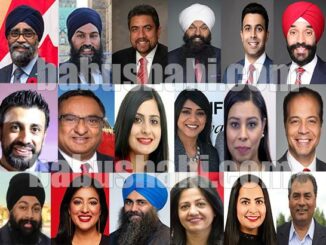
    Of 42 MPs of Indian origin elected to House of Commons since 1993, Navdeep Singh Bains, Tim Uppal, Jagmeet Singh, Randeep Sarai, Harjit Singh Sajjan, Darshan Singh Kang, Raj Grewal, Jasraj Singh Hallan and Iqwinder Singh Gaheer, are among those who earned special limelight because of their colorful turbans.

    Incidentally, Gurbax Singh Malhi has till date remained the longest serving Sikh MP representing the Liberals. He was elected five times starting in 1993 till he lost the 2011 elections. Otherwise, Deepak Obhrai, who was born in Tanzania, earned the distinction of longest serving Canadian MP of Indian origin. He retained his House of Commons seat for seven consecutive terms mostly as a nominee of Conservatives.

    While Gurbax Singh Malhi, Jag Bhaduria and Herb Dhaliwal were the first representatives of Liberals in Canadian Parliament, the honor for giving representation to Indo-Canadians in the House of Commons on behalf of Conservatives went to Deepak Obhrai and Gurmant Grewal. Subsequently, Jasbir Singh Sandhu and Jinny Jogindera Sims were the first Indo Canadians to represent NDP in the Canadian Parliament.

    Women of Indo-Canadian descent did not take along to reach Ottawa’s Parliament Hill. Ruby Dhalla (Liberal from Ontario) and Nina Grewal (Conservative from British Columbia) became the torch bearers. They were followed by Jinny Jogindera Sims (NDP).

    Sonia Sidhu, Ruby Sahota, Kamal Khera, Bardish Chagger and Anju Dhillon created ripples when they all made their entry into the 42nd Parliament and are all continuing in the current 44th Parliament. In the 43rd Parliament they were joined by Anita Anand, the first Indo-Canadian woman politician to hold the important portfolio of Defense. Also, a new entrant was Jag Sahota, the ninth woman of Indian origin to enter Canadian Parliament.

    These Canadian MPs of Indian origins have several other firsts to their credit. For example, Gurmant Singh Grewal and Nina Grewal were the first couple to sit in the same House. Herb Dhaliwal was the first from the group to be inducted in the Canadian Cabinet as a Minister for Oceans. Many of them have remained Parliamentary Secretaries attached with important ministries.

    In the previous Liberal Government, Harjit Singh Sajjan, became the toast of not only the Indo-Canadian community but also of the rapidly growing Indian Diaspora after he was named the Defense Minister of Canada.

    Bardish Chagger hawked media headlines on becoming the first woman leader of the House of Commons. And late last year, Anita Anand stole the limelight as the first Indo-Canadian woman to hold the portfolio of Defense Minister. Incidentally, the last two Liberal Governments had an Indo-Canadian as Defense Minister.

    There have been Indo-Canadians who created history both in provincial and federal politics. The shining example has been of Ujjal Dosanjh who after his phenomenal rise as the first Indo-Canadian Premier of British Columbia  later held the portfolio of the Canadian Health Minister. A couple of MPs, including Jinny Jogendra Sims and Parm Gill, later made their debut in provincial politics and held positions as Cabinet Ministers in British Columbia and Ontario, respectively. Amarjit Sohi, who held an important cabinet portfolio in the previous Justin Trudeau government is now a Mayor of Edmonton in Alberta since last year.

    MPs of Indian origin

    Gurbax Singh Malhi

    Harbance (Herb) Singh Dhaliwal

    Jag Bhaduria

    Deepak Obhrai

    Gurmant Grewal

    Rahim Jaffer

    Nina Grewal

    Ruby Dhalla

    Ujjal Dosanjh

    Navdeep Bains

    Sukh Dhaliwal

    Tim Uppal

    Jinny Jogindera Sims

    Devinder Shory

    Jasbir Sandhu

    Bal Gosal

    Parm Gill

    Joe Daniel

    Amarjit Sohi

    Jagmeet Singh

    Gagan Sikand

    Sonia Sidhu

    Jati Sidhu

    Bob Saroya

    Randeep Singh Sarai

    Ramesh Sangha

    Harjit Singh Sajjan

    Raj Saini

    Ruby Sahota

    Kamal Khera

    Darshan Singh Kang

    Raj Grewal

    Anju Dhillon

    Bardish Chagger

    Chandra Arya

    Maninder Sidhu

    Jag Sahota

    Jasraj Sigh Hallan

    Anita Anand

    Iqwinder Singh Gaheer

    George Chahal

    Parm Bains

    -To be concluded

    (Prabhjot Singh is a veteran journalist with over three decades of experience covering a wide spectrum of subjects and stories. He has covered  Punjab and Sikh affairs for more than three decades besides covering seven Olympics and several major sporting events and hosting TV shows. For more in-depth analysis please visit probingeye.com  or follow him on Twitter.com/probingeye. He can be reached at prabhjot416@gmail.com)