Tag: Manmohan Singh

  • Red tape blocking NRI partnership in Punjab’s growth: Indo-Canadian leader Dhaliwal

    Red tape blocking NRI partnership in Punjab’s growth: Indo-Canadian leader Dhaliwal

    CHANDIGARH /  VANCOUVER (TIP): Red tape and a callous bureaucratic attitude derailed ambitious development projects initiated by NRIs in collaboration with the Punjab Government, said Harbance Singh (Herb) Dhaliwal, the first Indo-Canadian Cabinet Minister, in a conversation with The Tribune in Chandigarh.

    Dhaliwal was referring to the efforts of the Indo-Canadian Friendship Society of British Columbia, which launched development projects in 20 villages across the districts of Hoshiarpur, Shaheed Bhagat Singh Nagar, Kapurthala, Jalandhar, Ludhiana, and Amritsar. Started in 1999, the projects focused on wastewater treatment, underground sewerage, street lighting, tree plantation, gender empowerment, clean drinking water, paved streets, hygiene, and computer education.

    “The initiative was led by Dr Gurdev Singh Gill, the first Indo-Canadian physician in 1958, known for his public service and grassroots activism. He stayed in Punjab to personally anchor the programme,” Dhaliwal said. “We began with Kharaudi village in Hoshiarpur district, which was later visited by former President Dr APJ Abdul Kalam,” he added.

    The programme received early support, and former Chief Minister Capt. Amarinder Singh even announced that 700 villages would be developed as model villages during a function in Bahrampur, Ludhiana.

    “Initially, the state government responded positively, but over time, things changed. Bureaucratic hurdles and delays in project clearances made it difficult to move forward. Officers offered only lip service. Eventually, we withdrew. After Dr Gill passed away in 2023, our connection with the government was lost,” Dhaliwal shared.

    He added, “The project had the enthusiastic support of Chief Ministers Parkash Singh Badal and Capt. Amarinder Singh. I also discussed it with former Prime Ministers Manmohan Singh, I.K. Gujral, and Atal Bihari Vajpayee. NRIs from the USA joined efforts in at least one village.”

    He remarked that despite good intentions from political leadership, the state machinery failed to offer sustained cooperation, and we were left stranded midway.

    Political Career

    A member of Jean Chrétien’s government, Dhaliwal served as Canada’s Minister of Revenue in 1997, Minister of Fisheries and Oceans in 1999, and Minister of Natural Resources in the same year.

    Personal Journey

    Dhaliwal’s grandfather had migrated to Russia in 1904, then to the USA, and eventually settled in Vancouver. Born on December 12, 1952, in Chaheru village (Kapurthala), Dhaliwal moved to Canada at the age of five.

    “My parents worked as laborers and encouraged me to focus on education. I supported myself with jobs in sawmills and other small tasks,” he recalled. He earned a B. Com from the University of British Columbia in 1972 and started a maintenance business from his basement. He later expanded into transportation and real estate. A self-made millionaire, Dhaliwal donated $1 million to his alma mater for medical cannabis research. Dhaliwal’s wife, Amrit Kaur, passed away. He is father to two daughters and a son and has five grandchildren.

    Canada Still Needs Indian Youth 

    On the recent deportation of thousands of Indian students from Canada, Dhaliwal called it a temporary phase. “Canada is facing an aging population crisis. We need young people,” he said. “The current situation is due to poor planning—lack of housing and jobs. But in the long run, Canada will need more youngsters to lead the country forward. Better planning is the need of the hour.”

  • The man who made the middle class affluent

    The man who made the middle class affluent

    The average income of the middle class more than tripled in the 10 years that Manmohan Singh was PM. This was the golden period for the professional & managerial class in India.

    “The Rao-Manmohan market reforms completely changed the ideological terrain. Now, the middle class became a facilitator of corporate profits. Its job was to maximize profits by increasing productivity in businesses. And, for that, it got a share of the returns to capital — much higher salaries than its previous ‘babu’ avatar could have got them. The post-liberalization middle class, therefore, imbibed the values of capitalism — pro-market and consumerist.”

    By Aunindyo Chakravarty

    Soon after Manmohan Singh became Finance Minister, the term multinational corporation, or MNC, entered our daily lexicon. I heard it first when a distant relative left a public sector job to join an MNC for a salary of Rs 30,000 per month. This was unheard of back then in middle-class families like ours.

    But this was just the beginning. Soon, every young person around me was looking for a private sector job. MNCs had radically altered the white-collar job market by offering fabulous pay packages. Domestic companies had to follow suit. The middle class could now aspire to a lifestyle that it wouldn’t even have dared to dream of earlier.

    Manmohan Singh, along with the then Prime Minster PV Narasimha Rao, made it possible. They unleashed policies that gave rise to a new affluent middle class.

    First, let me explain what I mean by the term middle class. It is nowhere in the middle when it comes to India’s population. In fact, it sits right at the top — between the 96th and 99th percentile in terms of income. Its ‘middle-ness’ comes from where it stands in the economic system — as an intermediary between owners of capital and blue-collar workers.

    Before liberalization gave the private sector control over the ‘commanding heights’ of the economy and set market forces to decide how resources would be allocated, it was largely controlled by the state and run by a bureaucratic-managerial-intellectual class. That was the old middle class, even smaller than it is now.

    The old pre-liberalization middle class was ideologically oriented towards state intervention — what we have come to know as ‘Nehruvian socialism’. This was because its job was to implement policy decisions that were taken by the government and other arms of the state. Salaries were low, but jobs were secure. The middle class in its own self-image was constructed as a group of ‘nation builders’.

    The Rao-Manmohan market reforms completely changed the ideological terrain. Now, the middle class became a facilitator of corporate profits. Its job was to maximize profits by increasing productivity in businesses. And, for that, it got a share of the returns to capital — much higher salaries than its previous ‘babu’ avatar could have got them. The post-liberalization middle class, therefore, imbibed the values of capitalism — pro-market and consumerist.

    By the time Manmohan Singh’s first tryst with government ended in 1996, white-collar salaries in the private sector compared favorably with corporate jobs in the developed West, especially when purchasing power parity was taken into account. Sons and daughters of government servants began earning more in a month than their parents did in an entire year.

    They bought cars, microwave ovens, washing machines and spring mattresses, retiled their bathrooms and took vacations to Phuket. They bought computers, invested in the stock markets and bought health insurance plans. Their kids now enrolled in schools with better infrastructure. When they fell sick, they went to new hospitals with private rooms that could put PSU-run hotels to shame.

    And, the rise of the corporate executive in the 1990s and its changed spending habits had a multiplier effect on the entire middle class. Bankers, stock brokers, tax advisers, doctors, architects, interior decorators, chefs, fashion designers, all flourished in the new economic environment.

    When Manmohan Singh became Prime Minister in 2004, the average income of those in the 96th-99th percentile had risen from roughly Rs 3,500 per month in 1991 to Rs Rs 16,000 per month.

    Even in real, inflation-adjusted terms, it had nearly doubled in 13 years. To understand what that means, compare it to the 13 years before liberalization, when the average real incomes of the ‘middle class’ had increased by just 17 per cent.

    This immense rise in middle class affluence was still nothing compared to what was to come in the UPA years. The average income of those in the 96th-to-99th percentile more than tripled in the 10 years that Manmohan Singh was PM. This was the golden period for

    the professional-managerial class in India and its standard of living rose manifold. Middle-class families bought premium cars and flatscreen TV sets, ate at five-star hotels, holidayed in Europe and gated themselves into the toniest parts of India’s metros.

    Manmohan Singh was only partly responsible for this. The first thrust of white-collar prosperity came from the credit-driven financial boom of the 2000s, which would ultimately end in the global financial crisis of 2008. Where the Manmohan-led UPA made a difference was in providing a massive fiscal stimulus to keep India out of a recession.

    Much of it came in the form of the Sixth Pay Commission, which was implemented in August 2008, with retrospective effect from July 2006. Government servants got a lumpsum of arrears at one go, which they spent on buying cars, renovating their homes and sustaining the overall consumption in the economy when the corporate sector had taken a beating.

    But corporate profits didn’t recover. The CMIE’s database shows that in the last five years of the Manmohan kaal, corporate earnings grew just six per cent annually, while inflation was 10 per cent. On the other hand, the corporate wage bill rose at 19 per cent per year.

    The result was that from the second half of the 2010s, the corporate sector began cutting white-collar jobs and asking people to take pay cuts, to expand its profit margins. The net result is a rise in corporate profits, while ‘middle-class’ incomes have stagnated. Between 2018-19 and 2022-23, corporate profits increased at a real, inflation-adjusted rate of 53 per cent while the real income of the professional-managerial class has increased at just three per cent per year.

    This is the inevitable result of the very market-friendly policies that created the affluent Indian middle class. It dramatically increased income and wealth inequality and, ultimately, created a shortage of demand for goods and services. That, in turn, caused corporate profits to fall, which made companies cut back on their wage bills, including what they paid their white-collar managerial staff. What would Dr Singh have done today to deal with the decimation of the middle class he helped create? We will no longer know.

  • ‘A true friend’: World leaders pay homage to Manmohan Singh

    ‘A true friend’: World leaders pay homage to Manmohan Singh

    • “Manmohan Singh was an outstanding statesman”: Putin
    • “His economic reforms spurred India’s rapid growth, and his legacy will always be remembered” : Blinken

    NEW DELHI / NEW YORK (TIP): World leaders came forward to pay glowing tributes to former Prime Minister Dr Manmohan Singh with French President calling him “a true friend”, while Russian President Vladimir Putin hailing him as “an outstanding statesman” who made a major personal contribution to strengthening friendly ties between the two countries.

    US Secretary of State Antony Blinken described Singh as one of the “greatest champions” of the US-India strategic partnership. Highlighting his pivotal role in advancing the US-India Civil Nuclear Cooperation Agreement, Blinken said, “Dr Singh’s work laid the foundation for much of what our countries have accomplished together in the past two decades. His economic reforms spurred India’s rapid growth, and his legacy will always be remembered.”

    “At home, Dr Singh will be remembered for his economic reforms that spurred India’s rapid economic growth. We mourn Dr Singh’s passing and will always remember his dedication to bringing the United States and India closer together.” It was during Singh’s term in 2008 that India secured the civil nuclear deal with the US, which enabled the country to fuel its domestic nuclear power plants and gain access to critical technologies, cementing its status as a responsible nuclear weapon state.

    The two-time Prime Minister left a strong imprint on India’s external ties, which was recalled by several heads of state in their condolence messages. In a post on X, French President Emmanuel Macron expressed his condolences and said: “India has lost a great man, and France a true friend, in the person of Manmohan Singh. He had devoted his life to his country. Our thoughts are with his family and the people of India.”

    From Pakistan, where Singh was born in undivided India, Deputy PM Ishaq Dar expressed his condolences: “Saddened by the passing of Dr. Manmohan Singh, former Prime Minister of India. Born in a village in Pakistan’s Chakwal district, Dr. Singh was a distinguished economist and political leader. He will be remembered for his wisdom and gentle demeanor.”

    Beyond his remarkable achievements in the field of economics, Dr. Singh demonstrated a commitment to promoting regional peace, Dar said, adding that Singh’s approach to regional issues reflected his belief that mutual understanding, dialogue and cooperation were essential for collective progress.

    Malaysian Prime Minister Anwar Ibrahim wrote a moving tribute to Manmohan Singh Friday, recalling how the latter even offered scholarships for his children while he was in prison. On X, he described the former prime minister, who died Thursday, as “the midwife of India’s emergence as one of the world’s economic giants”.

    During Anwar’s jail term between 1999 and 2004, Singh was Leader of the Opposition in Rajya Sabha. “Dr Manmohan Singh, slightly awkward as a politician but undeniably upright, steadfast and resolute as a statesman, leaves behind a legacy that will inspire generations to come,” he posted, signing it off with “my mitra, my bhai, Manmohan”.

    Singh also oversaw India’s ties with Bangladesh improve, as Sheikh Hasina came to power in Dhaka in 2008. In a Facebook post on Friday, the Bangladesh Foreign Ministry said Chief Advisor Muhammad Yunus has conveyed his profound grief and deep condolences to PM Narendra Modi and Congress President Mallikarjun Kharge.

    In his messages, Yunus described Manmohan Singh “as a person of great humility, a visionary leader, a statesman, who was known for his unwavering commitment to ensuring the welfare of the people of India”. He said that Singh’s leadership not only shaped the future of India but also contributed to strengthening the bond of friendship and mutually beneficial cooperation between Bangladesh and India.

    Chinese Ambassador Xu Feihong posted on X: “Deeply saddened by the passing of former Indian Prime Minister Dr Manmohan Singh, an outstanding leader who is widely revered by the Indian people. Heartfelt condolences to his family and loved ones.”

    As per Kremlin, Russian President Putin sent condolences to President Droupadi Murmu and PM Modi, in which he wrote: “Manmohan Singh was an outstanding statesman. As Prime Minister and when serving in other high-ranking positions, he accomplished a lot in promoting India’s economic development and asserting its interests on the world stage. He also made a major personal contribution to strengthening friendly ties between our two countries by elevating them to the level of a special privileged strategic partnership.”

    The European Union also conveyed its condolences, through Ambassador of the EU to India, Hervé Delphin. “On the passing of Manmohan Singh, the EU extends its deepest condolences to his family & the people of India. A genuine friend of the EU, his legacy will endure as a key architect of economic « miracle » & rise on the global stage and as a man of dialogue & compassion,” he said in a post on X.

    Singh’s former colleagues, who worked with him during his two terms, also recalled his contributions. Former Afghan President Hamid Karzai, in a post on X, expressed deep sorrow over Manmohan Singh’s passing, describing him as “one of India’s most illustrious sons.” Karzai hailed Singh as an “unwavering ally and friend to the people of Afghanistan” and extended his heartfelt condolences. Former Canadian Prime Minister Stephen Harper expressed deep sorrow, calling Singh an individual of “exceptional intelligence, integrity, and wisdom”.

    Former Maldivian President Mohamed Nasheed described Singh as a benevolent and dependable figure. “I always found him a delight to work with, and like a benevolent father figure. He was a good friend of the Maldives,” Nasheed said in his tribute.

  • Modi first PM to ‘lower dignity’ of public discourse, says Manmohan Singh

    Modi first PM to ‘lower dignity’ of public discourse, says Manmohan Singh

    NEW DELHI (TIP): In a scathing attack on Prime Minister Narendra Modi, former prime minister Manmohan Singh on Thursday, May 30, accused him of lowering the dignity of public discourse and the gravity of the office of the PM by giving “hateful speeches” during the poll campaign.

    In an appeal to voters of Punjab ahead of the seventh-phase of Lok Sabha polls on June 1, Singh asserted that only the Congress can ensure growth-oriented progressive future where democracy and Constitution will be safeguarded. The senior Congress leader also hit out at the BJP government for imposing an “ill-conceived” Agniveer scheme on the armed forces.

    “The BJP thinks that the value of patriotism, bravery and service is only four years. This shows their fake nationalism,” he said in a letter to voters of Punjab.

    Mounting an attack on Modi, Singh said, “I have been keenly following the political discourse during this election campaign. Modi ji has indulged in the most vicious form of hate speeches, which are purely divisive in nature. Modi ji is the first prime minister to lower the dignity of public discourse, and thereby the gravity of the office of the prime minister.

    “No prime minister in the past has uttered such hateful, unparliamentary and coarse terms, meant to target either a specific section of the society or the opposition. He has also attributed some false statements to me. I have never in my life singled out one community from the other. That is the sole copyright of the BJP,” the former prime minister said. Modi had accused Singh of saying that Muslims have the first right on the country’s resources.

    Singh said people of India are seeing through all of this. “This narrative of dehumanisation has now reached its peak. It is now our duty to save our beloved nation from these forces of discord,” Singh said in the letter.
    (Source: PTI)

  • Modi’s claim of 400 plus seats entails 100% EVM-VVPAT

    Modi’s claim of 400 plus seats entails 100% EVM-VVPAT

    “Free and fair elections are fundamental to a thriving democracy. One of the foremost indications of that effect is citizenship participation in the democratic process. It is every citizen’s right and duty to vote in the electoral process. Through that participation, they help to build a better democratic system that could effectively serve the public. However, intimidation, corruption, and threats to citizens during or before an election are against the principles of democracy, and the same also holds true for manipulating the voter lists or the voting mechanisms. There ought to be transparency in the public square where those in power are genuinely accountable to the people, and the voters should be fully appraised of what decisions are made, by whom, and why.”

    By George Abraham

    Prime Minister Modi claims that their NDA coalition will win 400 plus seats in the upcoming Parliamentary elections that will take place in India starting April 19 of this year. Is it a panacea or a realistic assessment considering nationwide political dynamics? What is the purpose of making such exaggerated claims if they are not based on accurate data? Their history is replete with fraudulent claims and unscrupulous behavior. Why then should the public believe it now? Anyway, this whole public relations campaign may also be aimed at enthusing the cadres.

    Responding to their claim, Mr. Sam Pitroda, who is also known as the father of the Telecommunication revolution in India, retorted, “BJP can win more than 400 seats in the 2024 elections if issues associated with EVMs are not fixed “. In further expressing his concerns, Mr. Pitroda cited a report by “The Citizens’ Commission on Elections,” chaired by former Supreme Court judge Madan B Lokur and said that the main recommendations of the report were to modify the current design of the VVPAT System to make it truly “voter-verified.”

    It appears that the BJP leaders are engaged in a psychological warfare where people are being conditioned to believe that Modi’s victory is inevitable. It has dual purposes: one is to demoralize the opposition and dispirit their grassroots, and the other is to set up the stage for any illicit operations that would benefit the party before a desensitized electorate. Their strategy is apparently working.

    The public generally assumes that Modi’s third term is inevitable, and to them, it is just a numbers game as far as how big a majority his party could achieve. Is the Indian electorate so naïve as to believe a narrative created by the BJP without supporting facts? However, the BJP is confident that a public that believes in the ‘Gujarat Model’ can be swayed time after time and will fall prey to their deception once again.

    An entirely different picture might emerge if one looks at the electoral map. Their carefully crafted plans may have little impact in South India. With Karnataka going back to the Congress fold, BJP’s expectations of a repeat performance are quite unlikely. The victory in Telangana by the Congress and the BJP’s lack of an alliance with TRS may also spell trouble for the BJP there. In short, the BJP’s plan of building on the 2019 election results is indeed further complicated by the setbacks in these two southern states. With 130 seats distributed among the five states and the union territory in the south, the BJP’s chances of making any substantial gains in South India will remain as elusive as ever before.

    If we look at the poll results in the Northern States, the BJP almost swept them out, creating the current brute majority in the Loka Sabha. They have won all the seats in states like Gujarat, Rajasthan, Haryana, Himachal Pradesh, Uttarakhand, Delhi, and Tripura. In addition, Madhya Pradesh, Bihar, Maharashtra, U.P., Odisha, and Chhattisgarh combined for a whopping 92% of all seats gained by the NDA coalition. It was an incredible win that even the Political pundits have had a hard time explaining since that came at the heel of a disastrous mismanagement of the COVID-19 pandemic that killed more people in India than anywhere else.

    For any sane mind, that history will be hard to replicate. At present, the Modi regime is in the throes of a mushrooming corruption scandal involving Electoral bonds. If the current allegations of pay-to-play are proven, this BJP government may be one of the most corrupt administrations in the history of an Independent India. This is the party that came to power, putting the Manmohan Singh government on the defensive as regards a number of alleged scams. Yet, they have far exceeded in excelling in corrupt ways while covering up their misdeeds from the public’s view. Thanks to the Supreme Court, the public is learning much more about the crimes and the exploitation the country has been subjected to.

    For the BJP leaders, it is imperative that they stay in power not only to perpetuate their ideology and remake India in its medieval ways but also to be in the unenviable position of power where they will never be held accountable for their misdeeds and misgovernance. It is common knowledge that the economy for the man on the main street is not working that well. Rampant inflation, increasing unemployment among the youth, and persistent poverty at the lower end of the strata have all clouded the high GDP numbers India boasts about. The economy is working for the elites and the super-rich, who already own 40% of India’s wealth. It is crony capitalism at its best, joined at the hip by the governing establishment.

    There is a limit to one who can exploit religious sentiment to win votes. The euphoria over the Ram Janmabhoomi Kshetra may be just about dissipated. Patriot games using CAA and NRC may also have found their boundaries. Therefore, despite all the bravado about winning 400 or more seats, the BJP team must be worried, and their internal polls must have indicated the same. Therefore, they dwell on propagating this narrative about the upcoming massive victory, intending to inject inertia into the minds of the opposition while adding fuel to energize their cadre.

    Considering these circumstances, one should be overly concerned about whether the country will have free and fair elections. It doesn’t matter whether the electorate is dissatisfied or opposition parties run a well-rounded campaign if the will of the people is not truly reflected in the outcome. Some countries in the world would conduct pre-determined elections, whereas India stood as a champion of democracy, transferring power when people finally spoke through the ballot boxes. The question being raised by Sam Pitroda and others touches on this susceptible issue.

    Free and fair elections are fundamental to a thriving democracy. One of the foremost indications of that effect is citizenship participation in the democratic process. It is every citizen’s right and duty to vote in the electoral process. Through that participation, they help to build a better democratic system that could effectively serve the public. However, intimidation, corruption, and threats to citizens during or before an election are against the principles of democracy, and the same also holds true for manipulating the voter lists or the voting mechanisms. There ought to be transparency in the public square where those in power are genuinely accountable to the people, and the voters should be fully appraised of what decisions are made, by whom, and why.

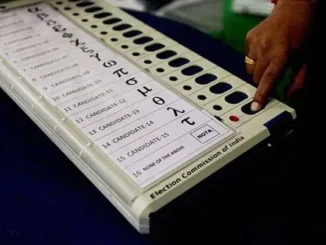
    Therefore, the Supreme Court’s query to the Election Commission on adding VVPAT to every EVM is sensible. Voter Verified Paper Audit Trail is a machine that prints a paper slip of a candidate’s name, serial number, and party’s symbol after a voter has cast their vote. It displays a paper slip for seven seconds for the voters to check if their vote is cast for the chosen candidate. The paper slip then drops down to a locked compartment, and it can be used to audit voting data in the EVMs. Whether the handpicked election commissioners by Modi Sarkar would comply with the public sentiment on this issue will be critical in saving democracy for India and its future generations.

    (The author is a former Chief Technology Officer at the United Nations. He is Vice Chair of Indian Overseas Congress. He can be reached at gta777@gmail.com)

  • Prime Minister Modi’s  historic state visit to US will strengthen ties between the two democracies

    Prime Minister Modi’s  historic state visit to US will strengthen ties between the two democracies

    Modi in his  address to the joint meeting of the US Congress will speak about his vison for India’s future and  the global challenges US and India face

    I.S. Saluja

    NEW YORK (TIP): A warm welcome awaits  Prime Minister Narendra Modi on his historic state visit to the United States from June 21 to 24 at the invitation of President Joe Biden. It would be Modi’s sixth visit to the US since he became Prime Minister in 2014, but his first official state visit, a rare honor extended to only two Indian leaders before him — President S Radhakrishnan in June 1963 and Prime Minister Manmohan Singh in November 2009.

    Modi will also be making history when he addresses a joint meeting of the US Congress on June 23 — one of the highest honors Washington affords to foreign dignitaries — for the second time in seven years. It will make him only the third world leader, outside of Israel, to do so. House Speaker Kevin McCarthy, Senate Majority Leader Chuck Schumer, Senate Republican Leader Mitch McConnell, and House Democratic Leader Hakeem Jeffries have invited Modi “to share your vision for India’s future and speak to the global challenges our countries both faces.

    Modi will fly into Washington on June 21 after attending the International Yoga Day celebrations on the north lawns of the UN complex in New York. The official visit will begin with the Bidens hosting a state dinner for Modi on June 22.

    According to the White House Historical Association, this would be the 11th state dinner that a US President is hosting for an Indian leader, but in the last 75 years, only Radhakrishnan and Manmohan Singh have been accorded the honor of an official state visit.

    Over the next two days, the two leaders would spend several hours together, beginning with a welcome ceremony on the South Lawns of the White House on the morning of June 22 attended by several thousand Indian Americans.

    This is expected to be one of the biggest White House welcome ceremonies, with the exception of the 2008 papal visit when, according to record, more than 13,500 people attended.

    More than 1,500 Indian Americans are reported to be planning to come to Washington from the New York and New Jersey areas. Over 500 Indian Americans each are coming from states like California, Illinois, Texas, Georgia and Florida.

    After the welcome ceremony, which would be addressed by the two leaders, Biden and Modi are then expected to walk towards the Oval Office for a one-on-one talk followed by a delegation-level meeting in the Cabinet meeting room.

    Vice President Kamala Harris would host the Prime Minister for lunch on June 23 at the Foggy Bottom headquarters of the State Department, which is being co-hosted by the Secretary of State Antony Blinken and the Second Gentleman. The two leaders are likely to deliver remarks during the luncheon. In between, several Cabinet ministers in the Biden administration and key leaders are likely to call on the Prime Minister for meetings. Interaction with the diaspora and the business community is one of the hallmarks of the Prime Ministers’ overseas trips, which is expected to consume most of the day’s proceedings on June 23. Modi will also address CEOs of top US companies at John F Kennedy Centre in Washington.

    Leading community organization Indiaspora and the US-India Strategic Partnership Forum (USISPF) are jointly hosting a speech by Modi on “We The People: Celebrating the US-India Partnership” at Ronald Reagan Center in Washington on June 23.

    A reception at the Hall of Nations Terrace (Kennedy Center) will follow the Prime Minister’s address.

    More than 600 community members are planning to gather at Freedom Plaza in front of the Willard Intercontinental in Washington located near the White House where the PM will be staying during his visit.

    (With inputs from agencies)

  • Pakistan in dire straits

    Pakistan in dire straits

    Faces political uncertainty, economic bankruptcy and Taliban violence

    “Pakistan is presently fully engrossed in avoiding bankruptcy and focusing on talks with the IMF. Islamabad has been forced to accept some very tough conditions before international financial institutions like the World Bank, Asian Development Bank, and the oil-rich Arab countries step in again to bail it out. Pakistan will hopefully realize that a rapidly progressing India has the potential to further strengthen relations with both the US and Russia. It has lost the proposed Russian economic assistance on oil supplies by inexplicably supplying military hardware to Ukraine. Rawalpindi will also have to remember that terrorism and meaningful talks with India cannot go hand in hand.”

    By G Parthasarathy

    Pakistan finds itself today in an unenviable position as its economic situation worsens and its foreign exchange reserves fall below $2 billion. Desperate, it has sought assistance from the IMF, international banks and donors to escape total bankruptcy. In the meantime, verbal warfare continues between Imran Khan and the Shehbaz Sharif government. Pro-US General Bajwa has arranged for one of his proteges, Lt Gen Syed Asim Munir, to succeed him. The army will continue to court the US. Even as the country was engrossed in a bid to avoid bankruptcy, the Islamabad High Court ordered an investigation into corruption charges against the former President, Gen Pervez Musharraf, for allotting military lands arbitrarily. Musharraf, who had been ailing, died amidst the political turmoil, at a hospital in the UAE. His burial in Karachi, with full military honors, was not attended by a single prominent political leader.

    In the meantime, Imran Khan, who shows little interest on addressing the country’s serious economic crisis, has asked President Alvi to order an inquiry against his bête noire, Gen Qamar Javed Bajwa. He accused Bajwa of conspiring to oust him from office. Pakistan’s politicians have, however, never showed the inclination or ability to get together in dealing with radical Islamic groups, including the Taliban. Pakistan is paying the price for the support it rendered to radical Islamic groups in Afghanistan, and even within its own borders. Moreover, even after it was known that Pakistan was working hand in glove with the Taliban, the US looked the other way, and ultimately left Afghanistan ignominiously. Imran Khan is popularly known in Pakistan as ‘Taliban Khan’.

    The Afghan Taliban has for long worked in concert with its Pakistani counterpart, Tehreek-e-Taliban-e-Pakistan, which now aspires to seize control of north-western Pakistan. In keeping with its long-term policy of helping the people of Afghanistan, India has moved to provide its people with wheat and medicines. Pakistan, on the other hand, is waging a war on its territory against the Tehreek-e-Taliban, which enjoys the support of its Pashtun brethren in Pakistan’s Khyber Pakhtunkhwa province. Many in the US and Russia will be amused to observe the Pakistan army engrossed in fighting its erstwhile Taliban proteges that the ISI had used for over two decades in their battles against Russian and US forces in Afghanistan. The ISI even used Taliban assistance during the hijacking of IC 814 to Kabul.

    The sustained economic and educational assistance that India provided to Afghanistan before the Taliban takeover is widely appreciated across all sections of its people. However, now India has to route essential supplies to Afghanistan by air or through the Iranian port of Chabahar. India’s Afghan friends are, however, said to be disappointed that even elderly Afghans requiring visas for life-saving medical treatment in India are denied visas. This should be addressed positively. In the meantime, differences are clearly growing between Taliban’s supreme leader Haibatullah Akhundzada and ISI’s favorite Taliban leader, Sirajuddin Haqqani. There are indications that disputes between Pakistan and the Taliban could flare up across the Durand Line.

    The recent demise of Musharraf has revived interest in what transpired in his days as President. He collaborated closely with the Taliban during the hijacking of IC 814. But his attitude towards India changed with the passage of time, especially after his visit to India in 2005. What followed was serious ‘back channel’ negotiations between Special Envoys of the two countries on the issue of J&K. The Indian delegation was led by the late Satinder Lambah, who was earlier India’s High Commissioner to Pakistan. India rejected any process that did not guarantee an end to terrorism, with both sides respecting the sanctity of existing borders. The then PM, Manmohan Singh, had asserted: ‘Borders cannot be redrawn.’

    While there have been statements by eminent Pakistanis like former foreign minister Khurshid Kasuri, supporting the broad agreement that the two sides reached on J&K, there have been no comments on the contents of that dialogue by India. There have, however, been reports that the understanding reached was premised on an end to support for terrorism by Pakistan. The visit of PM Modi to Lahore in December 2015 to attend a family wedding hosted by PM Nawaz Sharif raised optimism about progress on bilateral issues and an end to terrorism. These hopes were shattered by the Pathankot airbase terror attack a week later; subsequently, terrorists from the ISI-backed Jaish-e-Mohammed (JeM) attacked a convoy of CRPF personnel in 2019, killing 40 Indian security personnel. While the perpetrator of the suicide attack was also killed, India-Pakistan standoff followed. On February 26, 2020, India retaliated with an air strike on a training camp of the JeM in Balakot, across the LOC.

    There is little prospect of any meaningful dialogue with Pakistan anytime soon. Whether Pakistan will abide by what was agreed to in the back-channel talks remains to be seen. Moreover, Pakistan is presently fully engrossed in avoiding bankruptcy and focusing on talks with the IMF. Islamabad has been forced to accept some very tough conditions before international financial institutions like the World Bank, Asian Development Bank, and the oil-rich Arab countries step in again to bail it out. Pakistan will hopefully realize that a rapidly progressing India has the potential to further strengthen relations with both the US and Russia. It has lost the proposed Russian economic assistance on oil supplies by inexplicably supplying military hardware to Ukraine. Rawalpindi will also have to remember that terrorism and meaningful talks with India cannot go hand in hand.

    (The author is Chancellor, Jammu Central University & former High Commissioner to Pakistan)