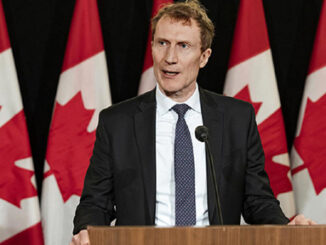
Tag: Marc Miller

  • Canadian Minister for Identity and Culture Greets Tamil Community on their Heritage Month

    Canadian Minister for Identity and Culture Greets Tamil Community on their Heritage Month

    By Prabhjot Singh

    OTTAWA (TIP): On January 1, 2026, Marc Miller, Minister of Canadian Identity and Culture, issued a formal statement to mark the beginning of Tamil Heritage Month. Canada’s rich diversity is reflected in the number of communities that dot its territory making it a true multiethnic and multicultural society. These communities add to the rich cultural heritage of Canada as they celebrate their festivals and hold their cultural events from time to time.

    Starting with the New Year, it is Tamil community that celebrates its Heritage month. To mark the celebrations, Marc Miller, Minister of Canadian Identity and Culture and Minister responsible for Official Languages, congratulated the community and its leaders.

    In a statement, he said “As Tamil Heritage Month begins today, I join all Canadians in wishing a wonderful month to Tamil communities across the country.

    “Home to one of the largest Tamil diasporas outside Asia, Canada has been a welcoming destination since 1983 for communities fleeing violence and instability. Through their resilience, determination, and commitment, Canadians of Tamil origin have helped build vibrant communities and strengthen our country’s cultural mosaic.

    “The contributions of the Tamil diaspora are felt in all areas: the arts, education, entrepreneurship, science, and beyond. Carried by one of the oldest languages still spoken today, Tamil heritage is a living legacy, rich in knowledge, traditions, and creativity, which continues to enrich our national heritage and shape our collective future.

    “As we celebrate this richness, we recognize that racism and discrimination remain a reality for too many racialized people in Canada. Our government is committed to building a society where everyone can live, express themselves, and celebrate their culture in safety. That is why the Government of Canada launched Changing Systems, Transforming Lives: Canada’s Anti-Racism Strategy 2024–2028 in 2024 and developed the first-ever Canada’s Action Plan on Combatting Hate to fight racism, celebrate our diversity, and give communities the resources they need to prevent and stand against hate and intolerance.

    “Throughout January, I invite all Canadians to discover the diversity and vitality of Tamil communities and their cultures across the country. I also wish a happy Thai Pongal (Lohri for Punjabis) celebrated in mid-January, to all people of Tamil origin here in Canada and around the world,” he added.

    Tamil community is well represented in local, provincial and federal politics. The Canadian Minister for Public Safety, Gary Anandasangaree, is of the Tamil descent.

    (Prabhjot Singh is a Toronto based senior journalist. He writes on sports, politics and culture. He can be reached at prabhjot416@gmail.com)

  • Rules on family reunions put on hold

    Rules on family reunions put on hold

    By Prabhjot Singh

    OTTAWA (TIP): The New Year did not augur well for those hoping to reunite with their wards in Canada in the next couple of years. After slashing down the immigration quotas and discontinuing LMAI points in the Express Entry scheme, the Government of Canada has delivered yet another blow to parents and grandparents of immigrants. It has now decided to suspend the application process for sponsoring parent and grandparent permanent residency.

    The latest directive published in the Canada Gazette reiterates that the government remains committed to family reunification but will not accept any new applications under the scheme. Instead, it will focus on processing applications received last year.

    The suspension of the application process, says the directive, corroborates Immigration Minister Marc Miller’s opinion that this will “best support” the government’s goals around immigration and family reunification.

    It is not only the family reunification, other immigration streams, too, have seen new sponsorships paused to help clear the existing backlog.

    Recent changes have met with mixed responses from politicians, social scientists, economists and immigration specialists. Mayors of some of the smaller towns in Ontario and British Columbia have been voicing their concerns over the changes and want the Federal Government to reconsider them. They have argued that while they have been encountering negative population growth, they have no takers for the jobs they have to offer. In addition, new immigrants contribute immensely to the local economies. They insist that the federal government should abide by its original immigration levels.

    The recent changes, however, see an overall decrease in immigration over the next three years. Since the government has been under immense pressure from the Opposition parties and various other organizations, it has been constantly reviewing its plans and targets. Under the family reunification scheme, especially in cases relating to parents and grandparents, the goal was to admit more than 24,000 people through this stream this year.

    The new directive says a maximum of 15,000 applications made in 2024 through the family reunification program will be processed thus leaving a huge gap. Under the parent and grandparent program, 35,700 randomly selected people were invited to submit applications in 2024, to accept 20,500 applications. According to the 2024 annual report to Parliament on immigration, tabled by Miller, there were more than 40,000 parent and grandparent permanent residency sponsorships in the inventory as of the end of 2023. The report puts the average processing time for a sponsorship application at 24 months.