Tag: Marco Rubio

  • Greenland’s defence is ‘common concern’ for Nato, Danish PM says as European troops fly in

    Greenland’s defence is ‘common concern’ for Nato, Danish PM says as European troops fly in

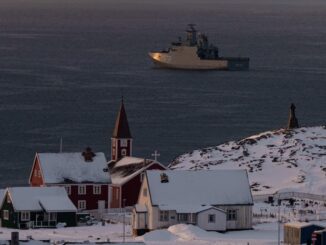
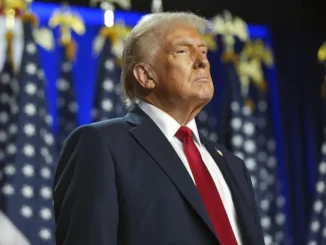
    NEW YORK (TIP): The Danish prime minister, Mette Frederiksen, has said Greenland’s defence is a “common concern” for the whole of Nato, as troops started arriving from across Europe as a result of Donald Trump’s threats to take the Arctic island by force.

    AP reported that troops from France, Germany, the UK, Norway and Sweden, among others, were on their way to Greenland, a largely autonomous territory of the kingdom of Denmark, on Thursday, January 15. Denmark also announced it would be increasing its military presence.

    People walk along a snow-covered street in Nuuk city, Greenland
    ‘Are they going to bring their violence here?’: Fear – but little preparation – as threat of invasion looms over Greenland

    As well as providing a show of political support, the European troops were said to be on a short scoping mission, according to one country involved.

    The aim was to establish what a more sustained ground deployment in Greenland could look like, partly to reassure the US that European Nato members were serious about Arctic security.

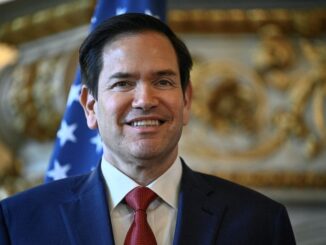
    It comes after a difficult meeting in Washington on Wednesday between the foreign ministers of Greenland and Denmark, Vivian Motzfeldt and Lars Løkke Rasmussen, and the US vice-president, JD Vance, and secretary of state, Marco Rubio. The visit was intended to smooth relations between Denmark and Greenland and the US, but it did not appear to have had the desired effect. Afterwards, Trump reiterated his previous comments that the US “needs” Greenland for national security, adding that Denmark could not be relied on to protect the island and that “something will work out”.

    In a statement released on Thursday, Frederiksen said it had not been an easy meeting and that a working group was being set up to discuss how Arctic security could be improved.

    “However, that does not change the fact that there is a fundamental disagreement because the American ambition to take over Greenland is intact,” she said. “This is obviously serious and therefore we continue our efforts to prevent that scenario from becoming a reality.”

    There was, she said, agreement within Nato that “a strengthened presence in the Arctic is crucial for European and North American security”.

    She said Denmark had “invested significantly in new Arctic capabilities”, while a number of allies were taking part in joint exercises in and around Greenland. “The defence and protection of Greenland is a common concern for the entire Nato alliance,” she said.

    Greenland’s prime minister, Jens-Frederik Nielsen, said the first meeting marked an important step, but that dialogue with the US was dependent on “respect for our constitutional position, for international law, and for our right to our own country”.

    Nielsen also reiterated several points including that Greenland was “not for sale”, would not be owned by, governed by or be part of the US, and was a “democratic society with self-government”, part of the kingdom of Denmark and, in turn, a member of Nato.

    The French president, Emmanuel Macron, announced on Wednesday, January 14, that the first members of the French military were already en route and that others would follow. About 15 French soldiers from the mountain infantry unit were already in Nuuk, Greenland’s capital, for a military exercise, French authorities said.

    Germany said on Thursday, January 15, that it would deploy a reconnaissance team of 13 personnel. The Netherlands and the UK have also said they will take part in the joint exercises led by Denmark under the name Operation Arctic Endurance.

    It is a significant moment in terms of symbolism, but the total number of troops will be in the dozens and the duration of the deployment is unknown.

    Discussions are also being held within Nato about creating an air-policing mission for the Arctic, along the lines of the existing Eastern Sentry operation, on the alliance’s eastern flank.

    Though the talks go back to last year, when Trump first mooted acquiring Greenland as president, they have gained impetus in the past few days, a senior diplomat from a European Nato member said.
    “We have to keep Trump happy on Greenland,” they said.

    The Danish defence minister, Troels Lund Poulsen, said on Thursday, January 15, that he planned to establish a more permanent military presence on Greenland “with a larger Danish contribution”. Military personnel from various Nato countries would be in Greenland on a rotation system, he said.

    After the high-stakes meeting in Washington, Rasmussen said there continued to be a fundamental disagreement over the island, and that it remained “clear that the president has this wish of conquering over Greenland”.

    Trump said: “We really need it … If we don’t go in, Russia is going to go in and China is going to go in. And there’s not a thing Denmark can do about it, but we can do everything about it.”

    Danish and Greenlandic politicians gathered in Copenhagen on Thursday, January 15, to celebrate Greenlandic New Year’s Eve. Members of the Danish parliament and a Greenlandic committee will meet a delegation of members of the US Congress at the Danish parliament on Friday to talk about cooperation.

    A series of protests is planned across Denmark and in Nuuk on Saturday.

    A CNN poll found that three-quarters of Americans opposed the US trying to take control of Greenland, of whom 52% strongly oppose such a move.

    Meanwhile, AP has quoted Trump as saying that less than having Greenland is US hands ‘unacceptable’.
    In a post on his social media site, Trump reiterated his argument that the US “needs Greenland for the purpose of National Security.” He added that “NATO should be leading the way for us to get it” and that otherwise Russia or China would — “AND THAT IS NOT GOING TO HAPPEN!” “NATO becomes far more formidable and effective with Greenland in the hands of the UNITED STATES,” Trump wrote. “Anything less than that is unacceptable.”
    (Agencies)

  • Why is Trump interested in Greenland? Look at the thawing Arctic ice.

    Why is Trump interested in Greenland? Look at the thawing Arctic ice.

    By Gaby Hinsliff

    Forecasts suggest that global heating could create a shortcut from Asia to North America, and new routes for trading, shipping – and attack.

    Another week, another freak weather phenomenon you’ve probably never heard of. If it’s not the “weather bomb” of extreme wind and snow that Britain is hunkering down for as I write, it’s reports in the Guardian of reindeer in the Arctic struggling with the opposite problem: unnaturally warm weather leading to more rain that freezes to create a type of snow that they can’t easily dig through with their hooves to reach food. In a habitat as harsh as the Arctic, where survival relies on fine adaptation, even small shifts in weather patterns have endlessly rippling consequences – and not just for reindeer.

    For decades now, politicians have been warning of the coming climate wars – conflicts triggered by drought, flood, fire and storms forcing people on to the move, or pushing them into competition with neighbors for dwindling natural resources. For anyone who vaguely imagined this happening far from temperate Europe’s doorstep, in drought-stricken deserts or on Pacific islands sinking slowly into the sea, this week’s seemingly unhinged White House talk about taking ownership of Greenland is a blunt wake-up call. As Britain’s first sea lord, General Sir Gwyn Jenkins, has been telling anyone prepared to listen, the unfreezing of the north due to the climate crisis has triggered a ferocious contest in the defrosting Arctic for some time over resources, territory and strategically critical access to the Atlantic. To understand how that threatens northern Europe, look down at the top of a globe rather than at a map.

    By the early 2040s, forecasts suggest global heating could have rendered the frozen waters around the north pole – the ocean separating Russia from Canada and Greenland – almost ice-free in summer. That potentially opens a new shortcut from Asia to North America, not around the planet’s middle but over the top, creating new routes for trading, shipping, fishing – and, more ominously, for attack.

    A new theatre of conflict is consequently emerging from under the melting ice, and China, Russia and the US are increasingly locked in a battle for dominance over it. Meanwhile as rising temperatures turn the high north into an autocrat’s chessboard, territories unlucky enough to be in the way – from Greenland to Canada to the Norwegian archipelago of Svalbard, long coveted by Russia – risk becoming pawns.

    Almost as dangerous for these countries as the threats exposed by a thawing pole are, in a way, the opportunities. Why on earth does the US think it needs to annex friendly Greenland in order to defend this critical Arctic frontier? After all, they’ve had troops stationed on this autonomous Danish territory since the second world war, and Denmark has obligingly made clear they’re more than welcome to bring more. The one benefit that does come uniquely with ownership, interestingly, is rights to the underground riches that could be unlocked as this frozen country heats up.

    Greenland is a rare, untapped source not just of oil and gas but of the rare earth minerals used to make everything from electric car batteries to datacenter processors – which are to US hopes of winning a technological race with China as rubber from Malaya or cotton from India were to the old colonial economies. Though it’s often a mistake to read too much logical method into the apparent presidential madness, there is no shortage of ideologues and tech bros in Trump’s orbit capable of putting all this together and selling it to him. And while mining the Arctic might not be economically viable for many years yet, Trump’s grumbles this week about Greenland being “full of Chinese and Russian ships everywhere” suggests someone has convinced him that he can’t let rivals beat him to a valuable potential development opportunity, a concept any former real estate mogul can grasp. After all, in Ukraine, Trump sought rights to mine rare earths in exchange for security guarantees, and in Gaza he mused about building hotels on its bombed-out ruins: why not seek to make a quick buck from environmental catastrophe?

    And while to Britons all this looks like a new age of empire, for the Maga faithful perhaps there’s an echo of a much more American story, that of settlers making their fortune by joining the wagon trail west, pushing the nation’s frontiers endlessly outwards, staking their claim to Indigenous people’s lands and holding grimly on to them through a brutal mix of trade and violence. The aim isn’t to invade Greenland, US secretary of state Marco Rubio explains, but to buy it, or at least rent exclusive military access. It’s a mark of how fast the relationship between the US and its former allies has collapsed – in just over a year – that this is meant to be reassuring: hey friends, we just want to exploit you, not kill you!

    Given the president’s legendarily short attention span, it’s difficult to know what fate awaits Greenland. Maybe he’ll simply get bored and move on, especially once the midterms are over and there is less need for drama abroad to distract from failures at home. Or maybe the White House will borrow instead from the Putin playbook, exploiting Greenlanders’ yearning for independence from Denmark to foment the kind of domestic unrest that is so easily whipped up in the age of social media – before pitching the US as a benign savior riding into town to keep them safe and make them rich.

    But either way, we had better get used to the idea this is the beginning, not the end, of the conflicts that may come as global heating redraws our maps, unpicks old alliances, and creates new deadly rivalries for land, water and natural resources.

    Of course, it will be worse for those already living on the edge of sustainability, in deserts too parched for anything to grow or in coastal towns already struggling with rising sea levels, or in places too poor to protect themselves from increasingly violent storms, than it will for lucky old temperate Europe. And of course, these risks could always be better managed by collaborative governments treating events like the unfreezing of the north as a collective challenge for humans to face together, rather than a deadly race for national advantage.

    But in the week Trump announced he would be pulling the US out of a raft of international climate initiatives, that clearly isn’t the world we live in. So if nothing else, let poor beleaguered Greenland be a reminder that the climate crisis will have geopolitical consequences we have barely yet begun to understand, and that whatever we can still do to cap the rising temperature or mitigate its effects still matters. Even, or maybe especially, if we can’t yet undo the damage that has already been so willfully done.

    (Gaby Hinsliff is a Guardian columnist)


  • The US Has Yet to Notify the UN About Washington’s Withdrawal From Entities

    The US Has Yet to Notify the UN About Washington’s Withdrawal From Entities

    WASHINGTON, D.C. (TIP): The United Nations says that beyond the social media announcement from the United States government on Jan. 7 about its withdrawal from 66 international and UN entities, the information has not been officially communicated to the world body. Washington has also not followed the legal process required for a country to dissociate from binding international treaties it has signed and ratified, such as the UN Framework Convention on Climate Change.

    “I checked with our legal counsel earlier today, we had not received any official letter,” Stéphane Dujarric, the spokesperson for UN Secretary-General António Guterres, told journalists on Jan. 8. “We have not received any further official communication beyond what was posted on the White House website.”

    Washington announced in the evening of Jan. 7 on social media that it is withdrawing from a broad slate of international organizations and UN bodies, substantiating the threat by President Trump to separate with UN bodies that do not serve his country’s interests or that the US considers a waste of Americans’ taxpayer money.

    The decision by the US to cut ties to 66 international organizations, treaties and UN entities was apparently a result of a review conducted under Executive Order 14199, one of the wide-ranging executive orders signed by Trump in February 2025. The review could be a prelude to the US Congress releasing more funding to the UN general operating budget now that the review is done.

    UN reacts

    On Jan. 8, when the UN released its first official response to the news, Guterres expressed “regrets” over the US announcement but added that “all United Nations entities will go on with the implementation of their mandates as given by Member States.”

    “The United Nations has a responsibility to deliver for those who depend on us,” the statement, conveyed from Dujarric by email to the media, continued. “We will continue to carry out our mandates with determination.”

    Of the 66 organizations, 31 are linked to the UN. They include the Department of Economic and Social Affairs, an organ led by a Chinese national; various regional economic and social commissions; the Office of the Special Representative of the Secretary General for Children in Armed Conflict and the Office of the Special Representative of the Secretary-General on Sexual Violence in Conflict; the UN Framework Convention on Climate Change; and peace-building agencies as well as others that promote international law, sustainable environmental practices and gender rights, such as UN Women. The UN Population Fund, also listed, was severed by the US in early 2025. (A list of the UN bodies and their roles is explained at the end of this story.)

    Since the Trump administration has taken the reins in 2025, the US has turned its back on matters at the UN related to gender equality, climate change, diversity/equity/inclusion as well as the Sustainable Development Goals.

    Vanessa Frazier, who leads the office on children and armed conflict, which aims to protect children’s rights amid war, said in a post on X that “ it is quite unfortunate that the US now seems to be of the opinion that children being collateral of war is OK”

    According to the US, “withdrawal” from UN entities is defined as ceasing participation and/or funding to the extent permitted by law.

    “Poorly run”

    US Secretary of State Marco Rubio said in a statement on Jan. 7, as the White House released the list of 66 entities it was cutting off, the organizations were “redundant, mismanaged, unnecessary, wasteful, or poorly run,” and in some cases “captured by the interests of actors advancing agendas contrary to US national interests.” He added that continued participation in such bodies was incompatible with American sovereignty and prosperity.

    The move marks a major escalation in Washington’s shift from multilateral engagement, prompting concern and bewilderment across diplomatic, legal and academic communities. Trump pulled out of some high-profile UN agencies during his first term and again in the beginning of his second term, such as the Human Rights Council and the World Health Organization, but the Jan. 7 actions are more far reaching in scale. And the moves will worsen the dire financial crisis the organization is struggling to manage.

    The US released $2 billion at the end of 2025 to fund UN-coordinated humanitarian aid for a select list of countries as the US is still withholding at least two years of mandated dues to the organization’s regular budget, totaling approximately $1.3 billion.

    It is unclear whether the withdrawals from UN bodies will impact the US paying its assessed contribution — if it does so — but Dujarric said Washington is obligated to pay regardless of unilateral withdrawal from a UN agency or program.

    Many of those the US said it would withdraw from are funded by UN assessed contributions paid by member states. Dujarric said some of the agencies rely on funding from “the regular budget, with the vast majority of their work then being funded voluntarily.”

    “Member states who signed on, joined this club have to pay the dues,” he said. “We can, we can, the Charter is not à la carte, as we said, and . . . we know we’re not going to renegotiate the Charter. The UN is an organization of 193 member states, two observer states [the Holy See and Palestine]. It is in the interest of all these member states and the two observers to defend the principles that they themselves have created.”

    According to Article 19 of the UN Charter, a member state risks losing its vote in the 193-member General Assembly if its arrears equal or exceed the amount due for the previous two years, but it is unclear what happens in the Security Council when a permanent member runs afoul of Article 19. A European diplomat told PassBlue, however, that even small US contributions to certain entities over the last few years could mean it is meeting some level of its legal financial obligations.

    Picking and choosing

    Ronny Patz, an independent analyst on the UN, said that while US engagement with the UN peace-building architecture has historically been limited, the departure of a permanent member of the Security Council from peace-building work represents a symbolic, practical setback for collective conflict-prevention efforts.

    Patz warned that the move risks normalizing what he described as “à la carte multilateralism,” whereby states choose which international organizations to support. “Once selective disengagement is tolerated,” Patz said in a post on LinkedIn, “all member states could refuse to fund or participate in the parts they dislike, weakening the UN’s role as a multipurpose organization built on cross-domain compromise.”

    Theodoros Rousopoulos, president of the Parliamentary Assembly of the Council of Europe, expressed concern over the withdrawal from the Council’s Venice Commission, an advisory body on constitutional matters, as the rule of law is pressured globally.

    In the US, Democratic members of the House Foreign Affairs Committee criticized the Trump decision, saying that participation in international organizations allows Washington to shape global norms, strengthen alliances and counter adversaries. “America first = America alone,” the committee posted on its X page.

    Ben Saul, the UN specialist on human rights and counterterrorism, said that the withdrawal from the International Law Commission “weakens efforts to forge cooperative global solutions to common human challenges.”

    He added: “The US will weaken global counterterrorism efforts by withdrawing from the Global Counterterrorism Forum and the International Institute for Justice and the Rule of Law.”

    Dujarric summed up Guterres’s attitude despite the latest US setbacks, saying on Jan. 8: “I spent quite a time with him this morning, and he is determined as ever to continue his work and continuing to defend the Charter and continuing to defend this international institution.”

    What the UN organizations do

    Department of Economic and Social Affairs (DESA): Acts as the UN’s policy engine on global development, producing data and analysis on population trends, inequality, sustainable development goals and public administration. Governments rely on its statistics and guidance to shape domestic policy.

    Economic Commission for Africa (ECA): Supports African governments with research and policy advice on economic growth, industrialization, trade integration and climate resilience, often shaping regional development strategies.

    Economic Commission for Latin America and the Caribbean (ECLAC): Known for its economic research, ECLAC analyzes inequality, growth and fiscal policy in Latin America and the Caribbean and advises governments on development planning.

    Economic and Social Commission for Asia and the Pacific (ESCAP): Works on inclusive growth, infrastructure, disaster risk reduction and digital connectivity across the Asia-Pacific, the world’s most populous region.

    Economic and Social Commission for Western Asia (ESCWA): Focuses on development challenges in the Arab world, including economic reform, social protection, water scarcity and post-conflict recovery.

    International Law Commission: A body of legal experts tasked with developing and clarifying international law, including treaties governing diplomacy, state responsibility and the laws of war.

    International Residual Mechanism for Criminal Tribunals: Handles remaining legal responsibilities from the Rwanda and former Yugoslavia war crimes tribunals, including appeals, witness protection and sentence enforcement.

    International Trade Centre (ITC): Helps small businesses and exporters in developing countries access global markets, providing technical assistance on trade rules, quality standards and supply chains.

    Office of the Special Adviser on Africa: Advises the UN Secretary-General on political, security and development trends in Africa and helps coordinate international support for the continent.

    Office of the Special Representative for Children in Armed Conflict: Documents and advocates against the recruitment, abuse and killing of children in war zones, pressing governments and armed groups to comply with international law.

    Office of the Special Representative on Sexual Violence in Conflict: Works to prevent sexual violence used as a weapon of war, supporting survivors and pushing for accountability in conflict and post-conflict settings.

    Office of the Special Representative on Violence Against Children: Addresses violence against children beyond conflict zones, including abuse, exploitation and harmful practices, often working with national governments on child-protection laws.

    Peacebuilding Commission: Brings together donors, governments and regional actors to support countries emerging from conflict, aiming to prevent relapse into violence.

    Peacebuilding Fund: Provides rapid, flexible funding for peacebuilding efforts in fragile states, often filling gaps where traditional aid is too slow.

    Permanent Forum on People of African Descent: An advisory body focused on addressing racism, discrimination and development challenges faced by people of African descent worldwide.

    UN Alliance of Civilizations: Promotes dialogue across cultures and religions, aiming to counter extremism and reduce polarization through education, media and youth programs.

    UN Programme on Reducing Emissions from Deforestation and Forest Degradation (REDD+): Helps developing countries protect forests by linking conservation to climate finance and sustainable land use.

    UN Conference on Trade and Development (UNCTAD): Provides research and policy advice on trade, debt, investment and technology, often advocating for fairer global economic rules for developing nations.

    UN Democracy Fund: Finances grassroots projects that support democratic participation, civil society and human rights, particularly in fragile democracies.

    UN Energy: Coordinates the UN’s work on access to affordable, reliable and clean energy, aligning agencies around global energy goals.

    UN Entity for Gender Equality and the Empowerment of Women (UN Women): Leads UN efforts on women’s rights, gender equality and violence prevention, advising governments and supporting programs on the ground.

    UN Framework Convention on Climate Change (UNFCCC): The treaty body that oversees global climate negotiations, including the Paris Agreement, and tracks countries’ emissions commitments.

    UN Human Settlements Programme (UN-Habitat): Focuses on sustainable urban development, housing policy and slum upgrading as cities grow rapidly worldwide.

    UN Institute for Training and Research (UNITAR): Trains diplomats, civil servants and emergency responders, particularly from developing countries, on governance, diplomacy and crisis management.

    UN Oceans: Coordinates UN action on ocean conservation, fisheries management and marine pollution across multiple agencies.

    UN Population Fund (UNFPA): Works on reproductive health, maternal care and population data, often operating in fragile or humanitarian settings.

    UN Register of Conventional Arms: Encourages transparency in international arms transfers to build confidence and reduce the risk of conflict escalation.

    UN System Chief Executives Board for Coordination: Brings together the heads of UN agencies to align strategy, budgets and policy priorities across the system.

    UN System Staff College: Provides professional training for UN staff and partners, focusing on leadership, coordination and complex crises.

    UN Water: Coordinates global efforts on freshwater access, sanitation and water management across UN agencies.

    UN University: A network of research institutes producing academic work on peace, sustainability, technology and development, often advising governments and the UN itself.
    (Source: Pass Blue)

  • Delhi car blast: US hails ‘measured’ probe, offers help

    Delhi car blast: US hails ‘measured’ probe, offers help

    US Secretary of State Marco Rubio says that Indian authorities are ‘doing a very good job’ in handling the probe with ‘professionalism and restraint’

    WASHINGTON, D.C. (TIP): The US has offered to assist India in its investigation into the November 10 Delhi car blast, but acknowledged that Indian authorities are “doing a very good job” in handling the probe with “professionalism and restraint”. US Secretary of State Marco Rubio, responding to a question on the Delhi explosion and its potential to heighten tensions between India and Pakistan, praised New Delhi’s response and investigative efforts.

    “We’re aware of the potential that this situation holds. But I think the Indians need to be commended — they have been very measured, cautious and very professional in how they’re carrying out this investigation,” Rubio said during a media interaction in Washington.

    Calling the explosion “clearly a terrorist attack”, Rubio said it involved a car loaded with highly explosive material that caused significant loss of life. “The investigation continues, and I think they’re doing a very good job. When they have facts, they’ll release them,” he said.

    Rubio also confirmed that the US had offered to assist Indian agencies in the probe, but emphasized that India’s capabilities in such investigations were “well established”. “We’ve offered to help, but I think they’re very capable in these investigations. They don’t need our help. They’re doing a good job and have been very measured and professional in their approach, as they usually are,” he added.

    India continues to receive support from global leaders at the time of this tragedy with the latest condolences coming from Singapore and South Korea. “Singapore strongly condemns the terror incident involving a car explosion near New Delhi’s Red Fort. Heartfelt condolences to the families of victims. Singapore stands in solidarity with India in this difficult time,” Foreign Minister Vivian Balakrishnan posted on X. The Indian Cabinet had a day back recorded its appreciation for the statements of solidarity and support from many governments around the world.

  • US will drop Ukraine-Russia peace efforts if no progress is made within days, suggests Rubio

    US will drop Ukraine-Russia peace efforts if no progress is made within days, suggests Rubio

    NEW YORK  (TIP): US Secretary of State Marco Rubio said on Friday, April 18,  that the US may be ready to “move on” from efforts for a Russia-Ukraine peace deal if there is no progress in the coming days.

    Speaking in Paris after a marathon day of landmark talks among US, Ukrainian and European officials, Rubio said the discussions had been constructive and produced an outline for steps towards peace.

    French officials said a new meeting in the same format is expected in London in the coming days. Rubio said he could join that meeting, and it’s expected early in the week. “We are now reaching a point where we need to decide whether this is even possible or not,” Rubio told reporters upon departure. After weeks of efforts by the Trump administration to broker a ceasefire between Russia and Ukraine have failed to bring an end to the fighting, Rubio said the US administration wants to decide “in a matter of days whether or not this is doable in the next few weeks”.

  • All Trump’s Men

    All Trump’s Men

    Here is a list of individuals selected by US President-elect Donald Trump for key Cabinet positions and top roles in the White House

    NEW YORK (TIP): With Republicans in control of the Senate, US President-elect Donald Trump’s Cabinet nominations are expected to sail through the confirmation process, despite some potentially controversial picks. Trump aims to announce all Cabinet-level selections by Thanksgiving, setting the stage for his administration’s policy agenda.

    In a series of recent announcements, Donald Trump has outlined his vision for critical federal agencies, tapping a mix of loyalists, experienced professionals, and high-profile conservatives for top roles. Here’s a comprehensive breakdown of the key appointees and their backgrounds.

    White House leadership 

    White House Chief of Staff: Susie Wiles, a seasoned political operative and one of Trump’s most trusted allies, will serve as the first female White House chief of staff.

    White House Counsel:  William McGinley, a fierce advocate of Trump’s “America First” agenda, returns to the administration to guide legal strategies.

    Press Secretary: Karoline Leavitt, a dynamic 27-year-old communicator and former Trump campaign spokesperson, will take charge of daily press briefings.

    National Security and Defense

    Secretary of State:    Senator Marco Rubio, a prominent China hawk and experienced foreign policy expert, is tasked with steering US diplomacy in a complex global environment.

    Secretary of Defense: Pete Hegseth, an army combat veteran and outspoken advocate for military reform, promises to prioritise readiness and America’s global strength.

    National Security Adviser: Representative Michael Waltz, a Green Beret and China expert, will oversee national security strategy.

    Former Representative Tulsi Gabbard, known for her controversial foreign policy views, will head the US intelligence community.

    CIA Director: John Ratcliffe, a loyal Trump ally with experience in intelligence oversight, returns to serve in another top intelligence role.

    Economic leadership 

    Secretary of the Treasury: Scott Bessent, a Yale-educated hedge fund CEO and advocate for tariffs, will lead the Treasury. If confirmed, he would be the first openly gay Senate-confirmed Cabinet member in a Republican administration.

    Commerce Secretary: Billionaire Howard Lutnick, CEO of Cantor Fitzgerald, will oversee trade and economic policy.

    Office of Management and Budget Director: Russ Vought, a returning Trump official, is expected to champion conservative fiscal policies.

    Healthcare and public safety

    Secretary of Health and Human Services: Robert F Kennedy Jr, a vocal critic of the pharmaceutical industry, is tasked with reforming healthcare policy.

    FDA Commissioner: Dr Marty Makary, a surgeon and healthcare advocate, will serve under Kennedy to address public health challenges.

    Surgeon General: Dr. Janette Nesheiwat, a double board-certified physician and public health advocate, will focus on preventive medicine.

    CDC Director: Former Representative Dave Weldon, a physician with decades of medical and legislative experience, will lead the Centres for Disease Control and Prevention.

    Housing and infrastructure 

    HUD Secretary: Scott Turner, a former NFL player and advocate for urban revitalisation, is set to lead housing policy reforms.

    Transportation Secretary: Sean Duffy, a former congressman, will spearhead infrastructure development and modernisation efforts.

    Domestic policy and administration 

    Attorney General: Pam Bondi, a staunch Trump defender and former Florida attorney general, replaces Matt Gaetz, who withdrew amid controversy.

    Deputy Attorney General: Todd Blanche, who previously represented Trump in legal matters, will serve as Bondi’s deputy.

    EPA Administrator: Lee Zeldin, a former congressman, will lead environmental policy with a focus on deregulation and business-friendly initiatives.

    Department of Government Efficiency: Elon Musk and Vivek Ramaswamy will oversee efforts to streamline government operations, a move Trump calls “a revolution in cutting bureaucracy.”

    Foreign relations

    UN Ambassador: Representative Elise Stefanik, a strong Trump ally, is nominated for the role to champion the administration’s “America First” agenda on the global stage.

    Ambassador to Nato: Matthew Whitaker, a former acting attorney general, will take on strengthening alliances within the North Atlantic Treaty Organisation.

    Ambassador to Israel: Mike Huckabee, a former governor and staunch supporter of Israel, will lead US diplomatic efforts in the Middle East.

    Other key appointments

    Secretary of Energy: Chris Wright, an oil and gas industry advocate, will lead energy policy with an emphasis on US energy independence.

    Secretary of Education: Linda McMahon, a former wrestling executive and education reform advocate, is set to decentralise federal control over education.

    Secretary of Homeland Security: South Dakota Governor Kristi Noem will prioritise border security and immigration enforcement.

    Veterans Affairs Secretary: Doug Collins, a former congressman, will oversee reforms to improve care for military veterans.

    The road ahead for America

    Trump’s Cabinet selections signal a return to his signature “America First” policies with a focus on deregulation, border security, healthcare reform, and infrastructure development. As the Senate prepares to review these nominees, Trump’s administration is poised to enact sweeping changes that could redefine US policy for years to come.