Tag: Massachusetts Institute of Technology #MIT

  • Indian American, Ramesh Raskar, MIT Scientist Bags $500,000 Lemelson-MIT Prize

    Indian American, Ramesh Raskar, MIT Scientist Bags $500,000 Lemelson-MIT Prize

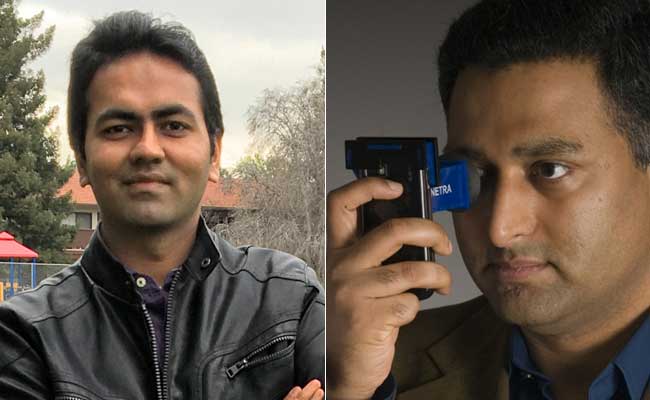
    Indian American Nasik-born Ramesh Raskar, 46, has bagged the prestigious Lemelson-MIT Prize worth $500,000 for his groundbreaking inventions to create solutions to improve lives globally.

    Risker is founder of the Camera Culture research group at the MIT Media Lab and an Associate Professor of Media Arts and Sciences.

    “(Mr) Raskar is the winner of the 2016 $500,000 Lemelson-MIT Prize for his groundbreaking inventions, commitment to youth mentorship, and dedication to improving our world with practical yet innovative solutions,” a media release said on Tuesday, September 13.

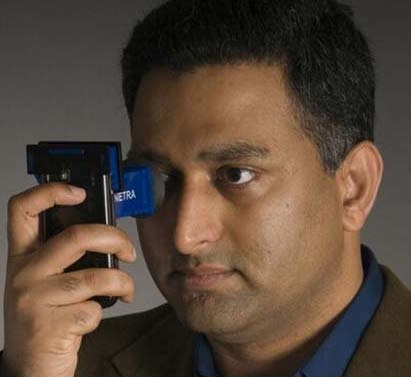
    With more than 75 patents to his name, and having written more than 120 reviewed publications, Mr Raskar is the co-inventor of radical imaging solutions including Femto-photography, an ultra-fast imaging system that can see around corners; low-cost eye-care solutions for the developing world; and a camera that allows users to read pages of a book without opening the cover.

    Seeking to catalyse change on a massive scale by launching platforms that empower inventors to create solutions to improve lives globally, he combines the best of the academic and entrepreneurial worlds to achieve milestones in improving the lives and health of people in industrial and developing societies, the announcement said.

    The annual Lemelson-MIT Prize honors outstanding mid-career inventors improving the world through technological invention and demonstrating a commitment to mentorship in science, technology, engineering, and mathematics (STEM).

    “(Mr) Raskar is a multi-faceted leader as an inventor, educator, change maker and exemplar connector. In addition to creating his own remarkable inventions, he is working to connect communities and inventors all over the world to create positive change,: said Stephanie Couch, executive director of the Lemelson-MIT Program.

    Mr Raskar told MIT News that he plans to use a portion of the prize money to launch a new effort using peer-to-peer invention platforms that offer new approaches for helping young people in multiple countries to co-invent in a collaborative way.

    “Everyone has the power to solve problems and through peer-to-peer co-invention and purposeful collaboration, we can solve problems that will impact billions of lives,” he said.

    Mr Raskar said he was always fascinated with the idea of using super-human abilities to visually interact with the world via cameras that can see the unseen and displays that can alter the sense of reality.

    He founded the Camera Culture Group at the MIT Media Lab in 2008, where he focused on creating imaging devices for analysing light transport in computational imaging.

  • Indian American MIT Scientists Win Lemelson-MIT Prize

    Indian American MIT Scientists Win Lemelson-MIT Prize

    Two Indo-American scientists from Massachusetts Institute of Technology (#MIT) have been conferred with prestigious awards for their path-breaking inventions.

    Nasik-born Ramesh Raskar, an imaging scientist and inventor at MIT, has been awarded the $500,000 Lemelson-MIT Prize 2016, it was announced at Cambridge, in Massachusetts, on Tuesday.

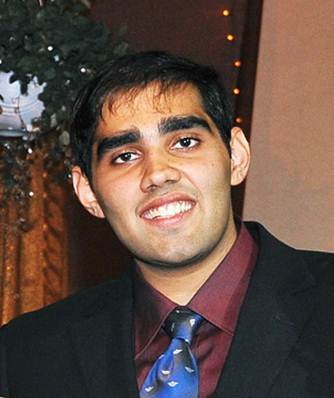
    Dinesh Bharadia, researcher at MIT, won the Paul Baran Young Scholar Award of the US-based Marconi Society.

    Raskar, 46, is the co-inventor of radical imaging solutions including femto-photography — an ultra-fast imaging system that can see around corners — low-cost eye-care solutions for the developing world, and a camera that allows users to read pages of a book without opening the cover.

    “We are thrilled to honour Ramesh Raskar, whose breakthrough research is impacting how we see the world,” said Dorothy Lemelson, chair of the Lemelson Foundation, in a statement.

    The technology, currently in development for commercialisation, uses ultrafast imaging to capture light at 1 trillion frames per second, allowing the camera to create slow motion videos of light in motion.

    “Ramesh’s femto-photography work not only has the potential to transform industries ranging from internal medicine to transportation safety, it is also helping to inspire a new generation of inventors to tackle the biggest problems of our time,” Lemelson added.

    “Everyone has the power to solve problems and through peer-to-peer co-invention and purposeful collaboration, we can solve problems that will impact billions of lives,” observed Raskar, who is also Associate Professor at MIT.

    He plans to use a portion of the Lemelson-MIT Prize money to launch a new effort using peer-to-peer invention platforms that offer new approaches for helping young people in multiple countries to co-invent in a collaborative way, the statement read.

    Bharadia, 28, a doctorate from Stanford University and an alumnus of the Indian Institute of Technology (IIT) at Kanpur, Uttar Pradesh, has been awarded for his contribution to radio waves.

    “Bharadia has been chosen for the 2016 Paul Baran Young Scholar Award for his contribution to send and receive radio (wireless) signals, including mobile telephony and data on the same channel (wave),” the Marconi Society said in a statement.

    “Bharadia’s research disproved a long-held assumption that it is not possible for a radio to receive and transmit on the same frequency band because of the resulting interference,” the statement said.

    The Marconi young scholar award includes $4,000 (Rs. 2,67,870) prize and expenses to attend its annual awards event.

    He will receive the award at a ceremony in Mountain View, California, on November 2.

    Bharadia’s technology can be used in India to build relays which can listen to signals from a cellular tower, transmit them instantly and extend the range across the country.

  • Indian-Origin MIT Researcher Develops Phone-Based Eye-Tracking System

    Indian-Origin MIT Researcher Develops Phone-Based Eye-Tracking System

    BOSTON (TIP): Researchers led by an Indian-origin scientist have developed a software that can turn any smartphone into an eye-tracking device, a discovery that can help in psychological experiments and marketing research.

    In addition to making existing applications of eye-tracking technology more accessible, the system could enable new computer interfaces or help detect signs of incipient neurological disease or mental illness.

    Since few people have the external devices, there’s no big incentive to develop applications for them.

    “Since there are no applications, there’s no incentive for people to buy the devices. We thought we should break this circle and try to make an eye tracker that works on a single mobile device, using just your front-facing camera,” explained Aditya Khosla, graduate student in electrical engineering and computer science at Massachusetts Institute of Technology (MIT).

    Khosla and his colleagues from MIT and University of Georgia built their eye tracker using machine learning, a technique in which computers learn to perform tasks by looking for patterns in large sets of training examples.

    Currently, Khosla says, their training set includes examples of gaze patterns from 1,500 mobile-device users.

    Previously, the largest data sets used to train experimental eye-tracking systems had topped out at about 50 users.

    To assemble data sets, “most other groups tend to call people into the lab,” Khosla says.

    “It’s really hard to scale that up. Calling 50 people in itself is already a fairly tedious process. But we realized we could do this through crowdsourcing,” he added.

    In the paper, the researchers report an initial round of experiments, using training data drawn from 800 mobile-device users.

    On that basis, they were able to get the system’s margin of error down to 1.5 centimeters, a twofold improvement over previous experimental systems.

    The researchers recruited application users through Amazon’s Mechanical Turk crowdsourcing site and paid them a small fee for each successfully executed tap. The data set contains, on average, 1,600 images for each user.

    The team from MIT’s Computer Science and Artificial Intelligence Laboratory and the University of Georgia described their new system in a paper set to presented at the “Computer Vision and Pattern Recognition” conference in Las Vegas on June 28.