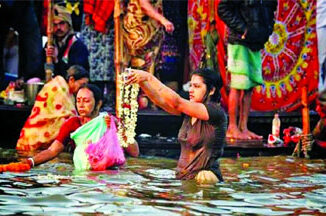
Mauni Amavasya, also known as the “Silent New Moon,” is a profound and spiritually significant day in the Hindu calendar. Falling on the no-moon day (Amavasya) in the month of Magha (January-February), it holds immense religious, cultural, and spiritual importance. In 2025, Mauni Amavasya will be observed on January 29. This day, deeply rooted in Vedic traditions, is marked by rituals, vows of silence, and the sacred act of bathing in holy rivers.
Historical and Mythological Significance
Mauni Amavasya derives its name from the word “Mauna,” meaning silence. According to ancient scriptures, the day is linked to the creation of the universe. It is believed that on this day, Lord Brahma commenced the act of creation, and the sacred rivers were infused with divine energy. The alignment of the celestial bodies during this period is considered to enhance spiritual vibrations, making it an auspicious time for purification and penance.
In the Mahabharata, it is mentioned that taking a holy dip during Mauni Amavasya in the Magha month absolves one of sins, leading to liberation (Moksha). Furthermore, the day is associated with Sage Manu, the progenitor of humanity, who is said to have meditated in silence to seek divine knowledge. Hence, the observance of silence on this day symbolizes self-restraint and introspection.
Astrological Importance
Astrologically, Amavasya is a day when the Sun and Moon align in the same zodiac sign, creating a powerful gravitational pull. This alignment is believed to influence human emotions and energies. On Mauni Amavasya, this celestial event is particularly potent, offering a rare opportunity to align one’s spiritual energies with cosmic forces. It is said that the blessings received on this day are amplified manifold, especially when combined with acts of charity, meditation, and self-discipline.
Key Rituals and Practices
1. Holy Bathing (Snan)
One of the most significant rituals of Mauni Amavasya is taking a holy dip in sacred rivers, especially the Ganges, Yamuna, and the confluence (Triveni Sangam) of Ganga, Yamuna, and the mythical Saraswati in Prayagraj (Allahabad). The act of bathing is believed to purify the body, mind, and soul, washing away past sins and karmic debts.
In 2025, the Kumbh Mela will not be held, but the annual Magh Mela in Prayagraj will witness millions of devotees gathering for the Mauni Amavasya Snan. The atmosphere at these pilgrim sites becomes charged with devotion as chants of mantras and hymns reverberate in the air.
2. Observance of Silence (Mauna Vrat)
The vow of silence is central to Mauni Amavasya. Devotees abstain from speaking throughout the day to cultivate inner peace and enhance spiritual focus. This practice is a form of penance that fosters mindfulness and self-awareness. Observing silence is also seen as a way to conserve energy and redirect it towards spiritual growth.
3. Meditation and Yoga
Mauni Amavasya is an ideal time for meditation and yoga. Devotees engage in deep meditation to connect with their inner self and seek divine guidance. Practicing yoga, especially pranayama (breathing exercises), helps to harmonize the mind, body, and soul, complementing the spiritual benefits of the day.
4. Charity and Annadanam
Acts of charity hold special significance on Mauni Amavasya. Donating food, clothes, and money to the needy is believed to bring immense blessings. Feeding the poor, known as Annadanam, is considered the highest form of charity on this day. Many devotees also distribute blankets and other essentials to the underprivileged, especially during the winter season.
5. Worship and Offerings
Devotees perform special prayers and offer fruits, flowers, and incense to their deities. Worshipping Lord Vishnu and Lord Shiva is particularly auspicious on this day. Lighting a diya (oil lamp) and placing it near a Tulsi plant or in front of a sacred river is a common practice.
Spiritual and Psychological Benefits
The rituals and practices of Mauni Amavasya are designed to promote spiritual growth and psychological well-being. The act of silence helps individuals detach from worldly distractions and focus on self-reflection. Holy bathing and meditation cleanse not only the body but also the mind, fostering a sense of purity and inner peace. Additionally, acts of charity instill a sense of compassion and gratitude, reinforcing the interconnectedness of all beings.
Mauni Amavasya at the Triveni Sangam
The Triveni Sangam in Prayagraj holds unparalleled significance on Mauni Amavasya. This sacred confluence of the Ganga, Yamuna, and Saraswati rivers is considered the holiest site for performing rituals on this day. Thousands of saints, sadhus, and pilgrims gather at the Sangam to take a dip and perform prayers. The spiritual energy at this site is palpable, attracting devotees from across the globe.
Modern Relevance of Mauni Amavasya
In today’s fast-paced world, the principles of Mauni Amavasya hold timeless relevance. The practice of silence can serve as a powerful tool for stress management and mental clarity. By disconnecting from external noise and distractions, individuals can cultivate mindfulness and emotional resilience. Moreover, the emphasis on charity and selflessness resonates with the modern values of social responsibility and community welfare.
How to Observe Mauni Amavasya
For those unable to visit sacred rivers or participate in large gatherings, Mauni Amavasya can still be observed at home or in local temples. Here’s a simple guide:
– Begin the Day with Purity: Take a bath early in the morning, preferably using water infused with Tulsi leaves or Ganga Jal (holy water).
– Observe Silence: Dedicate a portion of the day to silence. Use this time for introspection, reading scriptures, or meditating.
– Perform Puja: Offer prayers to Lord Vishnu, Lord Shiva, and other deities. Light a diya and chant mantras like the Gayatri Mantra or Om Namah Shivaya.
– Meditate: Spend time in meditation to connect with your inner self and seek spiritual guidance.
– Engage in Charity: Donate to the needy or support a charitable cause. Feeding animals, especially cows and birds, is also considered auspicious.
Global Observance of Mauni Amavasya
With the Indian diaspora spread across the globe, Mauni Amavasya has become a global observance. Temples and cultural organizations in countries like the United States, Canada, the United Kingdom, and Australia organize special events and rituals to mark the occasion. Virtual platforms also host live streams of prayers and discourses, enabling devotees to participate from anywhere in the world.
Tag: Mauni Amavasya
-

Mauni Amavasya
-

Mauni Amavasya
Mauni Amavasya, also known as Mauna Amavasya, is a significant Hindu observance celebrated on the no moon day (Amavasya) of the Magha month in the Hindu lunar calendar. This day holds great spiritual importance and is observed with various rituals, prayers, and acts of self-discipline.
The date of Mauni Amavasya varies each year as per the Hindu calendar. In 2024, Mauni Amavasya falls on Feb 9-10. The day is particularly auspicious, as it aligns with the cosmic positions that enhance the spiritual energy on Earth.
The term “Mauni” is derived from the word “Mauna,” which means silence or observing silence. Therefore, Mauni Amavasya is often associated with the practice of Mauna Vrata, or the vow of silence. Devotees, especially those inclined towards spiritual pursuits, consider observing silence on this day as a means of internal purification and focus on self-realization.
Mauni Amavasya Rituals:
On the day of Mauni Amavasya, worshippers rise early to take a sacred bath in the Ganges at daybreak. If a person is unable to travel to any pilgrimage site on this day, they must add a small amount of Ganga “jal” to their bathwater. It is a common misconception that one must keep quiet while having a bath. On this day, worshippers of Lord Brahma also recite the “Gayatri mantra” and worship him. The bathing procedure is completed, and after that, the devotees sit down to meditate. Concentration and inner serenity can be attained via the practice of meditation.
Any improper behavior must be avoided on the day of Mauni Amavasya. On the day of Mauni Amavasya, some devotees maintain complete “mauna,” or stillness. To reach a state of oneness with themselves, they refrain from speaking during the day and solely engage in meditation. This ritual is called “Mauna Vrat.” If someone is unable to observe mauna vrat for the entire day, they must remain silent until all of the puja rites have been performed. Thousands of Hindu devotees and “kalpavasis” meditate the remainder of the day on Mauni Amavasya after taking a sacred plunge in Prayag’s sangam.
The Hindu holiday known as Mauni Amavasya is also suitable for purging pitru dosh. To obtain the forgiveness and blessings of their “pitrs,” or ancestors, people offer “tarpan” to them. People feed the dog, crow, cow, and kusht rogi on this day. Another significant daytime ritual is giving to charity. In the Hindu calendar, the month of “Magha” is significant. People provide food, clothing, and other necessities to the poor and in need on this day. Offering sesame (til) oil to Shani Dev is another tradition.
Significance
The Hindu faith views practicing stillness, or “mauna,” as an essential component of spiritual discipline. The word “mauni” is derived from the Hindi word “muni,” which refers to a “sanyasi” (saint) who observes quietly. Thus, the term “mauna” accurately denotes achieving oneness with oneself. In the past, prominent Hindu guru Adi Shankaracharya said that one of the three primary characteristics of a saint is “mauna.” Ramana Maharshi, a Hindu guru, promoted the use of silence as a spiritual practice in modern times. According to him, silence is more potent than thought or conversation and it helps people connect with themselves.
Mauni Amavasya must be practiced in order to soothe an anxious mind. Hindu devotees attach great importance to the ritual of bathing in the sacred waters. According to Hindu traditions, it is thought that the Ganges River’s holy water transforms into nectar on the auspicious day of Mauni Amavasya. As a result, on this day, worshippers from all over the world bathe in the sacred Ganga River. Not only that, but the entire month of “Magha,” from Paush Purnima to Magha Purnima, is excellent for the bathing ritual. However, the day of Mauni Amavasya is the most significant.
The Story behind the Mauni Amavasya
The most popular story about Mauni Amavasya is the one with Brahmin Devaswami. Once lived a Brahmin named Devaswami, with his wife Dhanvati, his sons and a virtuous daughter in Kanchipuri. All his sons were married and he was left with an unmarried daughter eligible for marriage. He began to search for an eligible groom for his daughter and sent his eldest son with his daughter’s kundali to the city to search for a suitable groom. His son showed his sister’s horoscope to an expert astrologer who told him that the girl would become a widow after marriage.
When Devaswami heard about his daughter’s fate he got worried and asked the astrologer for a remedy. The astrologer suggested requesting a washerwoman Soma in Sinhaladweep to conduct a special “pooja” and that if the lady agreed to perform the “pooja” at his house, then his daughter’s horoscope dosha shall be removed. Devswami headed to Soma’s house but he had to cross the ocean to reach there. When he got tired, hungry and thirsty, he thought of having some rest under a banyan tree.
On the same tree lived a vulture’s family. The vulture asked Devaswami about his problem and he told them his whole story. Then the vulture assured him that he would help him reach Soma’s house and guided him throughout the journey. Devaswami brought Soma to his house and asked her to perform the pooja (worship) with all the rituals.
After the pooja, his daughter Gunvati got married to a suitable groom. Even after all this, her husband died. Then Soma, being a kind-hearted woman donated her good deeds to Gunavati. Her husband got his life back and Soma returned to Sinhaladweep. As she had donated all her virtuous deeds to Gunavati, her husband, her son and her son-in-law died. Soma went through a deeply saddened phase and began to worship Lord Vishnu sitting under a peepal tree at the bank of the river and circumambulated the Peepal tree 108 times. Pleased with her true worship, Lord Vishnu gave back life to her husband, her son and her son-in-law. And ever since the fast of Mauni Amavasya is practised.