Tag: Mauritius

  • Prime Minister Modi’s foreign visits from 2021-24 cost the nation USD 34,114,449 (Rs 295 cr)’;  USD 7,746,345 (Rs 67 cr ) on trips to 5 countries in 2025: Govt data

    Prime Minister Modi’s foreign visits from 2021-24 cost the nation USD 34,114,449 (Rs 295 cr)’; USD 7,746,345 (Rs 67 cr ) on trips to 5 countries in 2025: Govt data

    NEW DELHI (TIP): Over Rs 67 crore (USD 7,746,345) was incurred on Prime Minister Narendra Modi’s visit to five countries, including the US and France, in 2025, while the total expenditure figures related to his foreign trips from 2021 till 2024 stood at nearly Rs 295 crore (USD 34,114,449) , according to data shared by the government, says a PTI report.

    As per the country-wise and year-wise data, the corresponding figures for Modi’s visits to Mauritius, Cyprus, Canada and Croatia, and Ghana, Trinidad & Tobago, Argentina, Brazil and Namibia this year were not available.

    For these visits, the column for ‘total expenditure’ in the data shared by Minister of State for External Affairs Kirti Vardhan Singh on Thursday, in his written response to a query by TMC MP Derek O’Brien in Rajya Sabha, said, “Bills under settlement. Total expenditure is not yet available.” Of these visits, the costliest one was to France, which incurred over Rs 25 crore (USD 2,890,009) , while the one Modi undertook to the US in June 2023 incurred over Rs 22 crore (USD 2,542,900) .

    On March 20, the ministry had shared data in in Rajya Sabha, according to which nearly Rs 258 crore ( USD 29,821,291) was incurred on 38 foreign visits of Modi between May 2022 and December 2024.

    In 2025, Modi had travelled to France and the US from February 10-13. In Paris, he held bilateral talks with President Emmanuel Macron and attended an AI Summit, while in the US he met and held talks with President Donald Trump, among other engagements.

    According to the data shared, the country-wise figures for these five countries Modi visited in 2025 are–Rs 25,59,82,902 (France); Rs 16,54,84,302 (US); Rs 4,92,81,208 (Thailand); Rs 4,46,21,690 (Sri Lanka) and Rs 15,54,03,792.47 (Saudi Arabia).

    The cumulative figures for the preceding four years are–about Rs 109 crore (2024) spanning 16 countries, including Russia, Ukraine, the US and Brazil; nearly 93 crore (2023); Rs 55.82 crore (2022) and about Rs 36 crore (2021).

    In 2021, Modi visited Bangladesh (Rs 1,00,71,288–total expenditure); the US (Rs 19,63,27,806); Italy (Rs 6,90,49,376); and the UK (Rs 8,57,41,408). His trips in 2022 included visits to Germany (Rs 9,44,41,562); Denmark (Rs 5,47,46,921); France (Rs 1,95,03,918); Nepal (Rs 80,01,483) and Japan (Rs 8,68,99,372), it said. For Modi’s 2023 visit to Egypt, the expenditure on advertising and broadcasting was Rs 11.90 lakh, according to the data.

  • The rise and contributions of the Indian diaspora

    The rise and contributions of the Indian diaspora

    The Indian diaspora is one of the largest and most diverse global communities, with an estimated 32 million people of Indian origin living across the world. From the shores of the Caribbean islands to the bustling cities of North America, Europe, the Middle East, Southeast Asia, and beyond, Indians have built thriving communities that are often key to the economic, social, and cultural fabric of their host nations. Over the past few centuries, the Indian diaspora has experienced remarkable growth, playing an influential role in shaping the world’s geopolitical landscape, global markets, and cultural exchanges. This article aims to explore the rise of the Indian diaspora, their historical journey, the factors contributing to their migration, and their diverse and substantial contributions to their host countries and to India itself.
    Historical Background of Indian Emigration
    Early Waves of Migration
    Indian migration has a rich history that spans centuries. The earliest recorded instances of Indian emigration occurred during the ancient and medieval periods, with Indians settling in Southeast Asia, Africa, and the Arabian Peninsula. Traders, scholars, and missionaries often traveled across the Indian Ocean, leaving behind traces of Indian culture and religion.
    During the British colonial period (18th–20th centuries), however, emigration from India significantly increased. The indentured labor system, implemented by the British after the abolition of the transatlantic slave trade, became the primary mechanism for the large-scale migration of Indians. Millions of Indians were transported to various colonies such as Mauritius, Fiji, the Caribbean islands, and South Africa to work on sugar plantations, railways, and in other industries. This wave of migration laid the foundation for the development of vibrant Indian communities in these regions, some of which still maintain strong cultural ties to their Indian roots.
    Post-Independence Migration
    After India’s independence in 1947, migration patterns began to shift. Many Indians sought better economic opportunities abroad, especially in Western countries such as the United States, the United Kingdom, Canada, and Australia. The 1960s and 1970s saw the rise of skilled Indian professionals, including doctors, engineers, and IT specialists, migrating to meet labor shortages in these nations. By the 1980s and 1990s, the expansion of India’s global footprint, coupled with economic liberalization, further accelerated the migration of professionals seeking better opportunities in growing economies.
    Factors Driving Indian Migration
    Economic Opportunities
    The most significant factor driving Indian migration has been the search for better economic prospects. As India’s population grew and its economic landscape evolved, many Indians faced limited opportunities for career advancement, education, and financial stability at home. Countries with burgeoning economies and labor shortages, such as the Gulf states, the United States, Canada, and the United Kingdom, offered higher wages, better living standards, and improved career prospects.
    In the post-1991 liberalized economy, India’s economic growth allowed many to take advantage of international opportunities. The rise of the Indian information technology (IT) sector also played a crucial role in facilitating the migration of highly skilled professionals to countries like the United States and Canada.
    Educational Pursuits
    The pursuit of education has also been a driving force for migration. Indian students have flocked to institutions abroad for higher education, particularly in fields like engineering, medicine, management, and the sciences. The United States, United Kingdom, Australia, and Canada remain top destinations for Indian students, who not only benefit from quality education but also gain exposure to international networks, knowledge, and skills.
    Political and Social Factors
    In some cases, migration was driven by political instability, persecution, or limited opportunities in India. For example, during the period of political turmoil in India during the 1970s and 1980s, large numbers of people sought refuge or better prospects abroad. In countries like Uganda, Fiji, and Kenya, political events (such as Idi Amin’s expulsion of Indians from Uganda) forced many to leave.
    Additionally, factors such as religious intolerance, caste-based discrimination, and economic inequalities led to waves of migration from certain regions within India to more developed countries, where better social mobility and opportunities were available.
    Indian Diaspora’s Contribution to Global Economies
    Economic Impact and Remittances
    One of the most important contributions of the Indian diaspora has been in the form of remittances. According to the World Bank, India has been the largest recipient of remittances globally, receiving over $87 billion in 2020 alone. Remittances sent by Indian expatriates to their families back home have been a vital source of income for millions, contributing significantly to poverty alleviation, education, healthcare, and overall economic growth.
    The economic footprint of the Indian diaspora extends beyond remittances. Indian entrepreneurs and professionals have made substantial investments in their host countries, contributing to the growth of industries ranging from technology to real estate, hospitality, and retail. The Indian diaspora has played a key role in the global technology boom, especially in sectors like software development, finance, and telecommunications.
    Business and Entrepreneurship
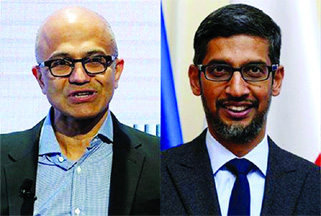
    Indians have been instrumental in the development of several industries worldwide. In countries like the United States, the United Kingdom, Canada, and Australia, Indian entrepreneurs have built successful businesses that employ thousands of people. In Silicon Valley, Indian-origin entrepreneurs have become some of the most prominent figures in the tech industry, with individuals like Sundar Pichai (CEO of Google), Satya Nadella (CEO of Microsoft), and Vinod Khosla (co-founder of Sun Microsystems) leading major global tech firms.
    In the United States, Indian immigrants have made their mark in the healthcare sector, particularly in the fields of medicine and biotechnology. Indian-origin doctors, researchers, and health professionals are highly respected for their expertise and have contributed to the development of cutting-edge medical technologies.
    Indian businesses have also flourished in the Gulf states, where large communities of Indians work in construction, retail, and hospitality. Moreover, successful Indian businesspeople, such as Lakshmi Mittal, who heads ArcelorMittal, the world’s largest steel producer, and Mukesh Ambani, the chairman of Reliance Industries, have become global symbols of entrepreneurship.
    Contributions to Culture and Society
    Cultural Diplomacy and Soft Power
    The Indian diaspora has been a powerful vehicle for the spread of Indian culture across the globe. Whether through Bollywood films, traditional dance forms like Bharatanatyam and Kathak, or global cuisine, the Indian diaspora has brought India’s rich cultural heritage to the forefront of global consciousness. Cultural festivals, such as Diwali and Holi, are celebrated by communities of Indian origin in many countries, fostering a greater understanding of Indian traditions and values.
    In countries like the United States, the United Kingdom, Canada, and Australia, the Indian diaspora has been at the center of intercultural dialogues, promoting diversity, tolerance, and understanding. The popularity of yoga and meditation in the West is also largely attributed to the Indian diaspora’s efforts in sharing these practices with the world.
    Philanthropy and Social Causes
    Indian diaspora communities have also made significant contributions to charitable causes and social development, both in their host countries and in India. Many members of the Indian diaspora have been involved in philanthropy, supporting causes such as education, healthcare, and disaster relief.
    The Indian diaspora has also been active in promoting educational initiatives, providing scholarships to students in need, and supporting schools and universities in India. The contributions of Indian-origin individuals to international organizations such as the United Nations and the World Health Organization further highlight the global impact of the Indian diaspora.
    Political Influence and Advocacy
    Engagement in Host Country Politics
    The Indian diaspora’s political engagement has grown significantly over the years. In countries like the United States, the United Kingdom, Canada, and Australia, Indian-origin individuals have been elected to high political offices, contributing to the political landscape of their respective nations. Notable figures include Kamala Harris, the Vice President of the United States, and Priti Patel, the Home Secretary of the United Kingdom, both of whom have Indian heritage.
    Indian-origin politicians have advocated for the interests of the diaspora, building bridges between their home country, India, and their adopted nations. In the United States, for example, Indian-Americans have emerged as a significant voting bloc, influencing political campaigns, policy decisions, and international relations.
    Strengthening India’s Global Presence
    The Indian diaspora has also played a crucial role in strengthening India’s global influence. By acting as a bridge between their host countries and India, the diaspora has contributed to enhancing India’s diplomatic, economic, and cultural ties with the world. Indian-origin politicians, business leaders, and community organizers have often acted as ambassadors for India, lobbying for greater trade and investment, fostering bilateral partnerships, and promoting India’s interests on the global stage.
    The Future of the Indian Diaspora
    As the world becomes increasingly interconnected, the role of the Indian diaspora is expected to grow even further. In the coming decades, the Indian diaspora will continue to be a critical factor in fostering India’s global standing. The rise of India as an economic powerhouse, along with its expanding influence in global politics, will provide new avenues for the diaspora to contribute to their home country’s growth.
    Moreover, as the Indian diaspora becomes more integrated into the societies in which they live, their contributions will likely become more visible and impactful. The focus will likely shift from simple remittances and labor to more complex forms of collaboration, such as joint ventures, innovation partnerships, and global research initiatives.

  • Pravasi Bharatiya Samman Award since 2003

    Pravasi Bharatiya Samman Award since 2003

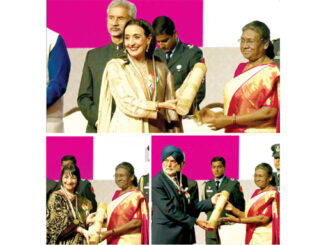
    Pravasi Bharatiya Samman Award (PBSA) is the highest honor bestowed on Indians residing abroad. The President of India bestows this honor as part of the Pravasi Bharatiya Divas (PBD) Conventions, which were held in 2003 as declared by India’s President.

    The Pravasi Bharatiya Samman Award (PBSA) is the highest honor conferred by the Government of India upon individuals of Indian origin or Indian diaspora for their exceptional contributions in various fields. Instituted in 2003, the award recognizes achievements in the following domains:
    – Philanthropy and Charitable Work
    – Community Service
    – Science, Technology, and Education
    – Commerce and Industry
    – Healthcare
    – Arts and Culture
    – Public Service
    – Bringing Honor to India and their Countries of Residence
    The award is presented during the Pravasi Bharatiya Divas (PBD) convention, held biennially since 2015 (previously annual). Awardees are selected by a committee constituted by the Government of India.Key Details:First Edition: 2003, marking the first PBD conference in New Delhi.Recipients Since Inception: Over 200 awardees from various countries.Award Components: A medallion, a citation, and a certificate.Some Notable Recipients:2003: Sir Anerood Jugnauth (Mauritius) – Former Prime Minister of Mauritius.2019: Dr. Rajendra Joshi (Switzerland) – Contributions in science and education.2021: Dr. Mohan Kaul (United Kingdom) – Leadership in business and public service.
    Here is a year-by-year summary of the Pravasi Bharatiya Samman Award (PBSA) recipients and notable achievements since its inception in 2003. This list highlights just a few notable awardees.

    2003 (First Edition)
    – Sir Anerood Jugnauth (Mauritius): For public service and strengthening India-Mauritius ties.
    – Basdeo Panday (Trinidad and Tobago): Former Prime Minister of Trinidad and Tobago.
    – Lakshmi Mittal (UK): For contributions to global steel production.
    – Dr. Krishna Guha (USA): Contributions to science and education.
    2004
    – Gopalkrishna Gandhi (South Africa): Contributions to Indian diaspora welfare.
    – Dr. Lenny Saith** (Trinidad and Tobago): Contributions to public service.
    2005
    – Shyamala B. Cowsik (Canada): Contributions to community service and diplomacy.
    – Sabeer Bhatia (USA): Co-founder of Hotmail, contributions to technology.
    2006
    – Dr. Ranjan Mathai** (USA): Contributions to healthcare.
    – Sir Shridath Ramphal** (Caribbean): Public service and law.
    2007
    – Dr. Hafiz Shamsuddin** (Malaysia): Contributions to healthcare.
    – Dr. Abraham Verghese** (USA): Renowned author and physician.
    2008
    – Sam Pitroda (USA): Technology innovation and contributions to India’s telecommunications.
    – Lord Bhikhu Parekh** (UK): Contributions to academia and philosophy.
    2009
    – Lord Karan Bilimoria (UK): Founder of Cobra Beer, contributions to business and industry.
    – Dr. Kalpana Chawla (Posthumous, USA): Astronaut and inspiration for the Indian diaspora.
    2010
    – Dr. Navin Nanda (USA): Eminent cardiologist, contributions to healthcare.
    – Tan Sri Ravindran Menon (Malaysia): Infrastructure development and philanthropy.
    2011
    – Dr. Rajendra K. Pachauri (USA): Contributions to climate science and sustainable development.
    – Anil Agarwal (UK): Founder of Vedanta Resources, contributions to business.
    2012
    – Dr. Krishna Udayasankar** (Singapore): Acclaimed author and professor.
    – Dr. Subrahmanyam Jaishankar** (China): Public service and diplomacy.
    2013
    – Bharat Ratna Dr. A. P. J. Abdul Kalam (India): For global contributions to science and innovation.
    2014
    – Satya Nadella (USA): Contributions to technology and leadership at Microsoft.
    – Dr. Mahesh Mehta (USA): Community service and philanthropy.
    2015
    – Dr. Kamlesh Lulla (USA): NASA scientist and contributions to space research.
    – Ashok Kumar Mago (USA): Contributions to India-USA relations.
    2017
    – Dr. Raghunath Mashelkar (India): Global contributions to science and patents.
    – Dr. Bhaskar Dasgupta (UK): Community service and healthcare.
    2019
    – Dr. Rajendra Joshi (Switzerland): Education and healthcare.
    – Dr. Prathap C. Reddy (India): Founder of Apollo Hospitals, contributions to healthcare.
    2021 (Virtual Due to COVID-19)
    – Dr. Mohan Kaul (UK): Business and public service.
    – Joginder Singh Saluja (Mexico): Community service and cultural promotion.
    2023
    – Prof. Jagadish Chennupati (Australia) – Contributions to Science and Technology/Education.
    – Dr. Alexander Maliakel John (Brunei Darussalam) – For his work in Medicine.
    – Dr. Vaikuntam Iyer Lakshmanan (Canada) – Recognized for Community Welfare.H.E.
    – Dr. Mohamed Irfaan Ali (Guyana) – For Politics and Community Welfare.
    – Mr. Piyush Gupta (Singapore) – Contributions to Business.
    – Dr. Archana Sharma (Switzerland) – For achievements in Science and Technology.
    – Mr. Chandrakant Babubhai Patel (United Kingdom) – Recognized for contributions in Media.
    – Mr. Rajesh Subramaniam (USA) – Contributions to Business.

  • History and origin of Pravasi Bharatiya Divas

    History and origin of Pravasi Bharatiya Divas

    The 18th PBD Convention will be held from 8 – 10 January 2025 in Bhubaneswar, Odisha. The theme of the 18th PBD Convention is ‘Diaspora’s Contribution to a Viksit Bharat’

    The Pravasi Bharatiya Divas (PBD), or Non-Resident Indian (NRI) Day, is celebrated annually on January 9th to honor the contributions of the Indian diaspora to the progress of India and to recognize their role in strengthening India’s ties with the global community. This day highlights the connection between the nation and its overseas citizens, celebrating the spirit of Indian identity, culture, and development worldwide.
    The origins of Pravasi Bharatiya Divas are deeply rooted in the larger context of India’s relationship with its global diaspora. The history behind this celebration is tied to India’s historical emigration patterns, the struggles faced by early Indian migrants, and the efforts to bring attention to their contributions to both their host countries and India. This article explores the history, significance, and origins of Pravasi Bharatiya Divas, looking at how this day evolved, its relevance today, and the broader context of the Indian diaspora.
    January 9 commemorates the return of Mahatma Gandhi from South Africa to India in 1915. To mark this day, the tradition of celebrating the Pravasi Bharatiya Divas (PBD) started in 2003. 1st PBD Convention was organised on 9 January 2003 to mark the contribution of the overseas Indian community to the development of India.
    Since 2015, under a revised format, the PBD Convention has been organised once every 2 years.
    The 17th Pravasi Bharatiya Divas Conventions have been organised till date. 17th PBD was held from 8 – 10 January 2023 in Indore, Madhya Pradesh. The theme of the 17th PBD Convention was “Diaspora: Reliable Partners for India’s Progress in Amrit Kaal”.
    The 18th PBD Convention will be held from 8 – 10 January 2025 in Bhubaneswar, Odisha. The theme of the 18th PBD Convention is “Diaspora’s Contribution to a Viksit Bharat”.
    Historical Background of Indian Emigration
    Indian migration has a long history, dating back centuries. The earliest known waves of Indian emigration can be traced to the traders, scholars, and laborers who moved across the Indian Ocean to places like Southeast Asia, the Arabian Peninsula, Africa, and beyond. However, the large-scale movement of Indians to other parts of the world began during British colonial rule.
    Indentured Labor System and Colonial Migration
    The most significant migration wave in the 19th and early 20th centuries was due to the British colonial administration’s establishment of the indentured labor system. This system saw millions of Indians sent abroad to work on plantations in places like the Caribbean, Fiji, Mauritius, and South Africa. As indentured laborers, these individuals faced harsh conditions but contributed significantly to the economic development of their respective host countries.
    In the early 20th century, a new wave of emigration occurred when skilled workers, professionals, and traders began to migrate to countries such as the United States, Canada, and the United Kingdom. This migration, especially after India gained independence in 1947, continued and saw an increase in the number of educated professionals from India seeking better opportunities abroad. Over time, the Indian diaspora grew into a global community that contributed to their host countries’ economies, cultural diversity, and political spheres.
    The Role of the Indian Diaspora
    Post-Independence
    After India’s independence, the Indian government sought to establish strong ties with its citizens abroad. The global Indian diaspora, despite being physically distant, played a key role in shaping India’s political and economic landscape. They helped raise awareness about India’s development and played an instrumental role in remittances, which became one of the primary sources of foreign exchange for the country.
    The Indian diaspora, spread across continents, helped build strong links between India and the world. They continued to make significant contributions to the development of their host countries, excelling in various fields like business, education, politics, and technology. Notable figures in the global Indian community include Dhirubhai Ambani, Sundar Pichai, Indra Nooyi, and many others who have not only succeeded in their respective fields but have also helped foster a better understanding of Indian culture and values globally.
    The Birth of Pravasi Bharatiya Divas
    The idea of celebrating the Indian diaspora on a national level was first proposed during the 2003 Pravasi Bharatiya Divas Convention. The idea to create a day to celebrate the Indian diaspora came from the efforts of the Indian government to recognize the contributions of NRIs and Persons of Indian Origin (PIOs).
    The First PBD in 2003
    The first Pravasi Bharatiya Divas was held in January 2003 in New Delhi, under the leadership of then-Prime Minister Atal Bihari Vajpayee. It was organized by the Ministry of Overseas Indian Affairs (MOIA), which was created in 2004 to specifically cater to the concerns of the Indian diaspora. The first convention aimed to provide a platform for members of the diaspora to interact with the Indian government, business leaders, and intellectuals. It was a way to acknowledge their contributions to India’s development and global standing.
    The year 2003 also marked the centenary of the return of Mahatma Gandhi to India from South Africa, where he had first developed his ideas of non-violence and social justice. In 1915, Gandhi had returned to India after being part of the Indian diaspora for over two decades. His return signaled the start of a larger movement against British colonial rule and for Indian independence. As a result, January 9th was chosen as the official date to commemorate this event, making the day even more significant. Thus, Pravasi Bharatiya Divas, which was initially conceptualized as a way to recognize the Indian diaspora, was also designed to mark the legacy of Indian leaders like Gandhi and their connection to the global Indian community.
    The Significance of January 9th
    The choice of January 9th as the date for Pravasi Bharatiya Divas is deeply symbolic. This date is significant because it commemorates the return of Mahatma Gandhi to India from South Africa. Gandhi’s experiences in South Africa had a profound influence on his methods of resistance and his eventual leadership of the Indian freedom struggle.
    Gandhi’s return to India from the diaspora marked the beginning of his pivotal role in the fight for independence. His return was seen as a powerful moment in Indian history, as it symbolized the strong link between India and its diaspora. By choosing this date, Pravasi Bharatiya Divas also honors the historical connection between the Indian diaspora and the Indian independence movement.
    Objectives and Purpose of Pravasi Bharatiya Divas
    The primary objective of Pravasi Bharatiya Divas is to acknowledge the contributions of NRIs and PIOs to India’s progress in various fields. The day provides a platform for the government of India to engage with the Indian diaspora, allowing them to discuss issues that affect their lives abroad and explore ways to contribute to India’s growth.
    Key Objectives of PBD
    – Recognition of the Contributions of NRIs and PIOs: Pravasi Bharatiya Divas serves as an occasion to acknowledge the positive impact that members of the Indian diaspora have had on their host countries and on India’s economy, culture, and political landscape.
    – Strengthening Ties Between India and the Diaspora: It provides a venue for dialogue between the Indian government and the diaspora, discussing critical issues such as remittances, legal and social protections for emigrants, and the promotion of Indian culture abroad.
    – Facilitating Collaboration: The event fosters collaboration between the Indian government, businesses, and overseas Indians, encouraging investment in India, promoting tourism, and strengthening the global reach of Indian companies.
    – Cultural Exchange and Promotion: PBD encourages cultural exchange, making the world more aware of India’s rich heritage and traditions.
    Subsequent Developments and the Global Outreach
    After its inception, the Pravasi Bharatiya Divas became an annual event, attracting thousands of NRIs and PIOs from across the globe. The government organized a series of seminars, discussions, and networking sessions during PBD to facilitate knowledge exchange and foster collaborations.
    In subsequent years, the event became increasingly inclusive, encompassing a wider range of issues important to the global Indian community, including topics related to education, healthcare, and the professional development of diaspora communities. PBD also saw the introduction of the Pravasi Bharatiya Samman Awards, which were presented to individuals and organizations that made significant contributions to India’s development or to the Indian diaspora.
    These awards became a key feature of PBD, as they not only celebrated individual and collective achievements but also showcased the diverse and vibrant contributions of the Indian diaspora across various domains, including science, business, and social activism.
    Challenges
    While Pravasi Bharatiya Divas has been a platform for celebration and recognition, there have been criticisms regarding its effectiveness in addressing the concerns of the diaspora. Some members of the Indian community have raised issues about the lack of concrete action taken by the Indian government in relation to the challenges faced by NRIs, such as immigration issues, legal matters, and the protection of their rights in host countries. Furthermore, there have been concerns about the focus on celebratory events rather than practical steps toward improving the living conditions of the diaspora.
    The Future of Pravasi Bharatiya Divas
    As India continues to develop as a global power, the role of the diaspora becomes increasingly important. The Indian government has made substantial efforts to reach out to NRIs and PIOs, particularly in areas such as trade, investment, and diplomacy. With the Indian diaspora becoming more prominent in global politics and business, Pravasi Bharatiya Divas is likely to continue evolving into a more significant event that not only honors their contributions but also acts as a catalyst for further cooperation between India and the world.
    The future of Pravasi Bharatiya Divas will likely see the development of new initiatives and programs that focus on strengthening the bonds between India and its diaspora. It may also serve as an opportunity to address the concerns of the global Indian community and promote a more inclusive, sustainable, and prosperous relationship.
    Pravasi Bharatiya Divas is a unique celebration that honors the global Indian community, recognizing their contributions to both India and the countries they have made their homes. From its origins in 2003, the day has evolved into a significant event that fosters dialogue, promotes cultural exchange, and celebrates the diverse achievements of Indians abroad. Through its various initiatives, PBD continues to serve as a bridge between India and its diaspora, helping to shape a stronger, more connected global Indian community.

  • Diwali in US gains official holiday status in Pennsylvania, Texas, New York

    Diwali in US gains official holiday status in Pennsylvania, Texas, New York

    NEW YORK (TIP): As the glow of Diwali approaches, this festival of lights is gaining unprecedented recognition in the United States, showcasing the nation’s commitment to celebrating cultural diversity. With states like Pennsylvania leading the initiative, Diwali is being officially acknowledged, reflecting its growing significance in American society.

    In a historic move, Pennsylvania has become the first state in the US to officially declare Diwali as a public holiday. This decision underscores the state’s commitment to inclusivity and cultural appreciation. The recognition of Diwali not only honors the festival’s significance but also celebrates the diverse communities that partake in its festivities.

    Following Pennsylvania’s lead, Texas has also announced Diwali as an official public holiday. The state’s lively celebrations reflect the importance of the festival, inviting residents to engage in activities that promote hope and goodwill. Texas’s acknowledgment of Diwali exemplifies the growing appreciation for diverse cultural practices across the nation.

    New Jersey has joined the ranks of states celebrating Diwali, showcasing a commitment to fostering cultural diversity. The recognition of this festival of lights in New Jersey highlights the state’s dedication to creating an inclusive environment for its residents and embracing the rich tapestry of cultures that contribute to its identity.

    In New York, known for its cultural diversity, Diwali has been embraced as an official holiday. This recognition allows communities from various backgrounds to come together in joyous celebrations, fostering cultural exchange and unity. New York’s vibrant Diwali events reflect the importance of the festival in bringing people together to share in the spirit of togetherness.

    The celebration of Diwali extends beyond the United States, with numerous countries recognizing it as a public holiday.

    Nations such as Fiji, Malaysia, Mauritius, Nepal, Sri Lanka, Singapore, South Africa, and Trinidad and Tobago honor the festival’s significance and the universal values it represents, showcasing its global appeal and message of light triumphing over darkness.

  • ED files PMLA case against Chidambaram’s son Karti

    ED files PMLA case against Chidambaram’s son Karti

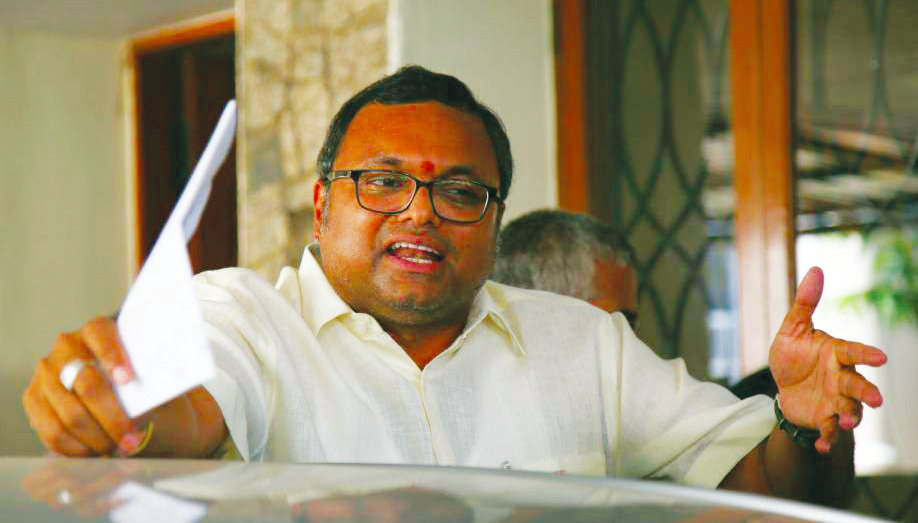
    NEW DELHI (TIP): The Enforcement Directorate (ED) has registered a money laundering case against Karti Chidambaram, son of former finance minister P Chidambaram, and others, taking cognisance of a recent CBI FIR against them.

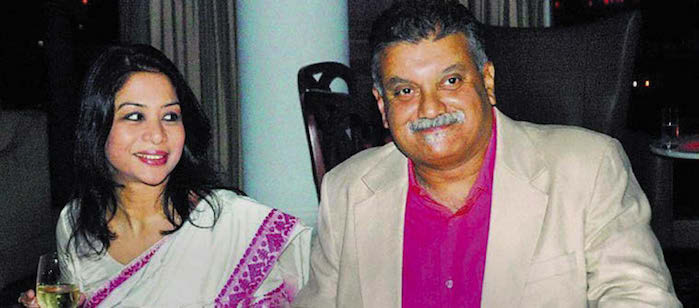
    Officials said the central probe agency registered an Enforcement Case Information Report (ECIR), ED’s equivalent of a police FIR, against the accused named in the CBI complaint including Karti, INX media and its directors, Peter and Indrani Mukerjea, and others.

    The ECIR has been registered under the provisions of the Prevention of Money Laundering Act (PMLA), they said. They said the ED will probe the alleged “proceeds of crime” generated in this case and may also attach assets of the various accused.

    It is the ED which had provided information about the alleged illegal payments made by INX media, based on which the CBI had filed its FIR. The CBI, on Tuesday, had carried out searches at the homes and offices of Karti across four cities for allegedly receiving money from the media firm owned by the Mukerjeas to scuttle a tax probe.

    The Chidambarams had denied all the charges made against them. The CBI had filed an FIR against Karti and the Mukerjeas on charges of criminal conspiracy, cheating, receiving illegal gratification, influencing public servants and criminal misconduct.

    It is alleged that Karti received money from INX Media for using his influence to manipulate a tax probe against it in a case of violation of Foreign Investment Promotion Board (FIPB) conditions to receive investment from Mauritius.

    The CBI had also recovered vouchers of Rs 10 lakh which were allegedly paid for the services.These vouchers were issued in favour of Advantage Strategic Consulting (P) Limited, a firm “indirectly” owned by Karti, the CBI had alleged. The senior Chidambaram, after the CBI searches on May 16, had issued a strong statement in response to the raids saying that the government was using the CBI and other agencies to target his son.

    FIPB approval was granted in “hundreds of cases”, the senior Congress leader had said. The CBI FIR was made out against Karti, his company Chess Management Services, the Mukerjeas (currently in jail on charges of murder their daughter Sheena Bora), INX Media, Advantage Strategic Consulting Services and its director Padma Vishwanathan.

  • Mauritius hopes to remain major FDI source to India

    Mauritius hopes to remain major FDI source to India

    Mauritius today expressed hope to remain one of the biggest investment routes to India post revision of the bilateral tax treaty, as the two nations move ahead with talks on trade liberalisation pacts.

    After meeting Finance Minister Arun Jaitley, Mauritian Minister of Finance and Economic Development Pravind Kumar Jugnauth said the negotiations on Preferential Trade Agreement (PTA) and Comprehensive Economic Cooperation Partnership Agreement (CECPA)are moving ahead.

    “In fact, there is now a delegation from Indian side visiting Mauritius. There has been a preliminary draft agreement which will need to be further looked up and discussed.

    “We are looking forward that through that agreement we can extend opportunities for both Mauritius and India. We have to increase trade and investment,” he said.

    When asked if FDI inflows to India from Mauritius will reduce following revision of the bilateral Double Taxation Avoidance Convention (DTAC), Jugnauth expressed hope that the island nation will continue to “play the role of the biggest investment route to India” because it benefits both the nations.

    “We need to monitor the situation and we will review and discuss as and when there is necessity,” the visiting minister added.

    He said the two countries have successfully agreed for changes and the protocol on DTAC has already been signed.
    “We are looking now how to consolidate the relationship between India and Mauritius,” he said.

    After long-drawn negotiations, the amendment to the 1983 DTAC was signed by India and Mauritius in May. With the changes, India can impose capital gains tax on investments routed through Mauritius.

    For two years starting April 1, 2017, capital gains tax would be levied at 50 per cent of the prevailing domestic rate and after that, full rate would be applicable.

    Mauritius accounted for 33 per cent of the total FDI inflows to India during April 2000 to March 2016.

    Jugnauth also expressed hope that India would support Mauritius in number of major projects it was implementing.

  • CBI, ED GET DETAILS OF MALLYA’S ASSETS ABROAD

    CBI, ED GET DETAILS OF MALLYA’S ASSETS ABROAD

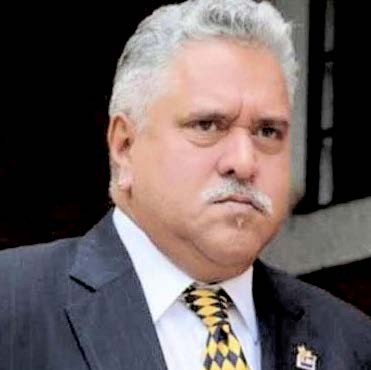
    NEW DELHI: In what could take the probe against Vijay Mallya forward, the CBI and the Enforcement Directorate (ED) have received “crucial details” about properties and investments of the former liquor baron from several countries. Mallya had fled to London on March 2 and has refused to cooperate with investigators.

    Sources in the two agencies said the UK, France, the US, Mauritius, Cayman Islands, Hong Kong, South Africa, Switzerland and some other countries were asked — through a judicial request and through the Financial Intelligence Unit (FIU) — to provide details about Mallya’s shareholding in companies abroad, his movable and immovable properties and his travel details. It is suspected that of the Rs 6,027 crore taken by Mallya as loan from banks, some part was diverted to these countries.

    Sources in the CBI and the ED told TOI that they had received “crucial details about Mallya’s investments/properties” from these nations. The development comes at a time when the ED and the CBI have enlarged the probe against Mallya and his companies to unearth the “larger conspiracy” to cheat the consortium of 17 banks, led by State Bank of India, from which he took loans of around Rs 6,027 crore between 2005 and 2010.

    The ED is also preparing to attach properties/shares worth around Rs 5,000 crore belonging to Mallya, sources said. It has already attached properties worth Rs 1,411 crore till now.

    The CBI has claimed that Mallya deliberately didn’t repay the banks in conspiracy with group companies and their promoters. Meanwhile, there has been no response from Interpol on issuing a red corner notice against Mallya several months after a request was made. He fled to London on March 2 without informing the authorities and has refused to reply to notices sent to him.

  • SHEENA BORA CASE – Indrani Mukerjea, Peter Mukerjea did massive money laundering: CBDT report

    SHEENA BORA CASE – Indrani Mukerjea, Peter Mukerjea did massive money laundering: CBDT report

    NEW DELHI (TIP): Another turn in the Sheena Bora murder as misappropriation of funds & money laundering comes up in a report published by Central Board of Direct Taxes (CBDT).

    The report alleges Indrani Mukerjea and Peter Mukerjea of money laundering under their now defunct company INX Media.

    According to The Hindu, a report sent by the Central Board of Direct Taxes (a copy of which is with The Hindu), says the Mukerjeas laundered foreign funds into INX Media via dubious investment firms based in Port Louis, Mauritius. The infusion of huge share capital at a substantial premium was funneled into eight subsidiary companies between 2007 and 2008, according to income tax documents and files in possession of The Hindu. Of the eight firms, six received unsecured loans and two received share capital at a substantial premium. One of them received suspect foreign funding, while the remaining seven received suspect domestic funding, documents show.

    The new report is not part of various investigations into the Sheena Bora murder case, but constitutes a tax history of the group as documented by the CBDT, New Delhi, since the company was set up in 2007.

    Mukerjeas funneled crores from dubious companies

    Taxmen found that conduit companies “did not even have any income of their own and lent money borrowed from others, which raised doubts.” A background check on New Vernon showed it to be a principal investment firm ‘specializing’ in investments in India. The firm was formerly known as New Vernon Capital LLC, founded in 2004. Various financial portals have no record of its key executives or data on its board. Dunearn claims to be a subsidiary of Temasek Holdings but has no publicly available records.

    According to a statement by NSR, “New Silk Route’s fund invested in INX Media in 2007 and 2008, as a minority investor, along with a consortium of other well-known institutional investors. NSR’s limited partners (investors) are primarily global institutions, and all are overseas.”

    Assessment order

    An assessment order, accessed by The Hindu, was passed against INX Media under Section 68 of the IT Act, 1961, asking it to “identify the source, prove credit worthiness and genuineness of the transactions.” The matter then went into arbitration as the group contested the order passed by the Assessment Officer (AO). “The AO clearly treated the source of the transactions as ‘dubious’ and ‘unexplained’ since the company failed to provide any documents whatsoever on the credible sourcing of these funds,” said a reliable source. “It clearly established several dubious entities, both domestic and foreign, infused substantial funds in the form of multi-layered investment.”

    Domestically, the documents show INX News Limited, another subsidiary of the group, received premium of Rs. 81.84 crore and Rs. 29.15 crore (Rs. 111 crore) from IM Media and INX Media.

    Three other transactions from IM Media, Indrani Incon and India Growth Fund pumped capital of Rs. 112.3 crore, Rs. 44.92 crore and Rs. 11.23 crore respectively at high premium. The same year, the report says, INX received an unsecured loan from former INX Media board member Manjula Rao to the tune of Rs. 41.4 crore and Rs. 156.01 crore, which were suspicious. “Manjula Rao invested over Rs. 250 crore in INX. The sources of these funds have not been investigated,” the report reads.

    “I have nothing to do with INX, now or in the past. I am a professional, and in no way concerned with this company. These are manipulated records and files. The reports are doctored,” Ms. Rao told The Hindu.

    Three months after the CBI took over the murder probe, it has made references to the Mukerjeas siphoning off nearly Rs. 900 crore out of INX Media.

    The agency suspected that the couple illegally parked the money in an account in Singapore. Additional Solicitor-General Anil Singh has already claimed in court that the CBI is seeking details of financial transactions of the Mukerjeas from Interpol.

    Meanwhile Peter Mukerjea’s counsel Mihir Gheewala and Kushal Mor countered the financial motive and said the CBI was turning the case around in this direction (financial dealings) to twist the case. “These facts are not part of the original remand. We are yet to look into it,” Mr. Gheewala told The Hindu.

    A Timeline of events:

    November 19, 2015: CBI arrests Peter Mukherjea along with filing charge sheets against Indrani, ex-husband Sanjeev Khanna and Shyamvar Rai, the driver.

    October 7, 2015: Indrani discharged from hospital, doctors confirmed drug overdose.

    October 2, 2015: Indrani Mukherjea admitted in JJ Hospital after she allegedly overdosed on anti-epileptic pills.

    September 19, 2015: Maharashtra announces the handover of the case to CBI.

    September 9, 2015: Peter Mukherjea reveals to Khar police that Indrani often abused him.

    September 7, 2015: Body of Sheena Bora found in Raigad forest.

    September 5, 2015: The police custody extended again till September 7.

    September 3, 2015: Indrani Mukherjea confessed her role in the murder.

    September 1, 2015: Siddharth Das confessed that he is the biological father of Sheena and Mikhail Bora.

    August 31, 2015: Fresh charges filed against Indrani attempting to kill her son. Police custody of the three accused extended till September 5, 2015.

    August 30, 2015: The three arrested were taken to the crime scene in Raigad. The call records were also checked by the police.

    August 29, 2015: Maharashtra Police has ordered a probe into why the Raigad Police did not register an Accidental Death Report (ADR) after they found a burnt corpse, suspected to be of Sheena Bora, in 2012.

    August 28, 2015: Sanjeev Khanna confessed to his “complicity in the crime.” He had earlier said that, Sheena’s body was lying next to him in a car in which they were traveling together in Mumbai on April 24, 2012.

    August 27, 2015: Sheena Shyam Rai, Indrani’s driver, confessed that he murdered Sheena and disposed of her body, on the direction of his employer Indrani Mukherjea.

    August 27, 2015: Sanjeev Khanna, a Kolkata based businessman and ex-husband of Indrani Mukherjea was arrested from Kolkata.

    August 26, 2015: Indrani opened up that Sheena was her daughter from a previous marriage and not sister as maintained.

    August 21, 2015: Shyamvar Pinturam Rai is arrested following the seizure of a 7.63-bore pistol from him.

    May 23, 2012: Police find a decomposed body after villagers at Gagode in Pen tehsil, Maharashtra, complain of foul odor.

    April 24, 2012: Sheena Bora takes a leave of absence from work at Mumbai Metro. On the same day she sends a resignation letter to her employer. She is not heard from again. No missing complaint is ever lodged by any family member.

  • ECUADOR GROUNDS MADE-IN-INDIA DHRUV CHOPPER, TERMINATES CONTRACT

    NEW DELHI (TIP): Ecuador has unilaterally terminated a contract with Hindustan Aeronautics Limited (HAL) after four of the seven Dhruv advanced light helicopters bought from the state-run Indian firm were involved in crashes.

    Defense minister Fernando Cordero announced the action during a news conference on Wednesday. He said two of the crashes were caused by mechanical failures. The three remaining Dhruv helicopters have been grounded.

    The development is a major setback for HAL, which has sought to market the Dhruv as a low-cost alternative to military and utility helicopters from Western nations. Work on the Dhruv began in 1984 and it first flew in 2002 after a troubled development programme.

    Four of the seven Dhruv helicopters delivered to Ecuador between 2009 and 2012 have crashed. One was assigned to transport President Rafael Correa, though he was not in the aircraft at the time.

    Ecuador earlier complained that HAL had failed to ship some parts for the helicopters, which were bought for a total of $45.2 million.

    HAL, which completed deliveries of the helicopters in 2012, has contested Ecuadorian claims that it failed to ship spares on schedule. A HAL spokesperson told leading defence publication Jane’s that maintaining the aircraft was “exclusively” the responsibility of the Ecuadorian Air Force as the 24-month warranty period for HAL to provide after-sales service support for the seven helicopters had long expired.

    Besides Ecuador, the Dhruv is also operated by the security forces of Nepal, Mauritius and the Maldives. The Dhruv has also been offered to Malaysia and Indonesia.

    More than 200 Dhruv helicopters are in service with the Indian military. They have been used extensively in relief operations after natural disasters such as the flash floods in Uttarakhand in 2013.

  • CBI sends papers to Interpol for Red Corner Notice against Lalit Modi

    New Delhi (TIP): The CBI has sent documents related to former IPL boss Lalit Modi, being probed for alleged money laundering in conduct of the T- 20 cricket tournament, to Interpol for issuance of a Red Corner Notice against him.

    “All necessary documents in the case being probed by Enforcement Directorate (ED) has been sent to the Interpol for issuance of the notice,” official sources said.

    The move came after a Mumbai Court recently issued a non-bailable warrant against the former IPL Commissioner.

    The ED has sought Interpol’s help as domestic legal options available to it for serving its summons to Modi issued under Prevention of Money Laundering Act (PMLA) failed. After his lawyer in Mumbai refused to accept the summons, contending he was not authorised for it, the ED had e-mailed it to the former IPL honcho, who has made London his home, but elicited no response from him.

    CBI is the nodal agency for Interpol-related affairs in India.

    The Red Corner Notice is issued “to seek the location and arrest of wanted persons with a view to extradition or similar lawful action” in a criminal case probe.

    Once the red corner notice has been issued, the Interpol seeks to arrest the person concerned in any part of the world and notifies that country to take his or her custody for further action at their end.Sources said the ED is also mulling to seek Modi’s extradition by sending a request to the Ministry of External Affairs through the Home Ministry. The ED is probing Modi, the Indian Premier League (IPL) and its executives for alleged violation of anti-money laundering laws after registering a criminal FIR in 2012. The FIR was filed after the Central agency took cognizance of a cheating complaint filed by former BCCI chief N Srinivasan against Modi and half a dozen others with the Chennai police.

    The ED subsequently invoked PMLA along with sections 420 (cheating) and 120-B (criminal conspiracy) of the IPC to probe if BCCI-IPL and the exchequer had been cheated in the award of telecast rights for the T20 tournament in 2009. The case relates to a 2008 deal between World Sports Group (WSG) and Multi Screen Media (MSM) for television rights of Indian Premier League (IPL) worth Rs 425 crore.

    In 2008, the BCCI had awarded media rights for ten years to WSG for USD 918 million. WSG entered into a deal with MSM to make Sony the official broadcaster. The contract was replaced a year later with a nine-year deal where MSM paid US $1.63 billion. The ED started a probe in 2009 under Foreign Exchange Management Act (FEMA) to investigate whether payment of Rs 425 crore facilitation fee by MSM Singapore to WSG Mauritius was made illegally.

    It is also probing 16 foreign exchange violation cases vis-a-vis IPL, Modi and others. The most important of the cases is the one related to media rights deal in which the agency slapped show-cause notices against Modi and 13 others in February this yearThe ED, in its notice, has accused Modi of sending “fraud” emails and being a suspect beneficiary of Rs 125 crore illegal funds in connection with the Rs 425 crore deal for grant of media rights of the T- 20 tournament.

  • 10 foreign portfolio investors (FPIs) in India hold US$ 28 billion investments

    10 foreign portfolio investors (FPIs) in India hold US$ 28 billion investments

    TIP (Secondary Research): Europacific Growth Fund, the largest foreign portfolio investor (FPI) in India was born seven years before liberalisation ushered foreign investment into Indian equity markets. Today, it holds $131 billion in assets under management; 6.4 per cent of that is invested in Indian equities.

    Prime Database recently carried out an exercise to identify the 10 largest FPIs in India — through an examination of 1,447 listed Indian companies’ disclosure of the names of their foreign investors to stock exchange — and it turned out these FPIs together held Rs 1.79 lakh crore in Indian equities.

    FPIs hold a major chunk of the non-promoter stake in Indian companies but can be notoriously difficult to pin down. Unlike domestic mutual funds, there is no freely available ranking in terms of the size for foreign funds investing in India. Listed entities disclose the names of shareholders owning more than one per cent in them.

    The biggest FPI in terms of disclosed shareholding (above one per cent) is the Europacific Growth Fund. Among others on the list of the 10 biggest are sovereign and pension funds from Singapore and Norway, some familiar names like Franklin Templeton Investment Funds, and Morgan Stanley Asia (Singapore), besides Dodge & Cox International Stock Fund, First State Asia-Pacific Leaders Fund, Aberdeen Global Indian Equity, the Oppenheimer Developing Markets Fund and Copthall Mauritius Investment. These FPIs together hold shares equivalent to half the equity assets of the entire Indian mutual fund sector.

    While the actual number might be significantly higher, Prime’s analysis estimates Europacific’s holding in Indian equities at Rs 42,530 crore. An analysis of the fund’s own documents shows this could be around Rs 54,000 crore.

    So, the top 10 FPIs’ actual holding could be significantly higher than the Rs 1.79 lakh crore disclosed to bourses. This also means the ranking should be considered indicative, since FPIs holding company shares through participatory notes (P-notes) and the cases where holdings are less than one per cent are not required to disclose their names to stock exchanges.

    Europacific Growth Fund belongs to the US-based Capital Research and Management Company. For Europacific, India is the biggest emerging market destination and fourth-largest overall — after Japan, the UK and France — according to its disclosures at the end of June. As much as 87.5 per cent of its investments are outside the US.

    The fund managers’ commentary in Europacific’s annual report released in March this year might explain why they allocated more money to India than China.

    It noted India and China shared similar growth trends, including the rise of the middle-class. However, India’s demographics were better than China’s. The median age in India was 27, noted the report, while United Nations data showed the median age in China was around a decade higher.

    Jonathan Knowles, the Singapore-based fund manager of the Europacific Growth Fund, believes the rising middle class in India would drive consumption, leading to a rise in credit penetration, explaining the fund’s preference for financial stocks, especially private-sector banking names. “These banks have been taking share from public banks in India year after year,” said Knowles.

    Financial stocks are also high on the list of India’s second-largest FPI, the $38-billion Oppenheimer Developing Markets Fund. Led by Justin Leverenz, who has been overseeing the asset management since 2007, the fund invests 14.8 per cent of its total assets in India, second only to China, which received 19.4 per cent of its total investments as of June 2015.

    HDFC Bank, ICICI Bank, and HDFC are among the popular investment names in these funds.
    Pranav Haldea, Managing Director at Prime Database pointed out that the trend towards financials can be seen amongst all foreign investors.

    “Amongst sectors, the maximum exposure as on 30th June, 2015 was in Banks (Rs. 3.44 lakh crore) followed by IT Software (Rs.2.59 lakh crore). The sector which has seen the maximum increase in FII holdings in the last one year was also the Banking sector (from Rs.2.83 lakh crore to Rs.3.44 lakh crore),” he said as part of an emailed statement.

    The third largest fund is the Government of Singapore which invests about Rs 24,192 crore as of June 2015.
    FPIs were net buyers by Rs.1.11 lakh crore in FY15. They have been net buyers by Rs.7927 crore so far this year, shows data from depositories. FPIs held a total of Rs.20.51 lakh crore in Indian equities at the end of June. FPIs with exposure of over one% in Indian equities constitute nearly one-fourth of all FPIs with investments worth Rs 4.69 lakh crore.

  • Putting India Emphatically on Global Map – Part 2

    Putting India Emphatically on Global Map – Part 2

    Continued from Putting India Emphatically on Global Map – Part 1

    It defies logic that a country that is considered as our most serious adversary and whose policies in our region has done us incalculable strategic harm should have been accepted as India’s strategic partner during Manmohan Singh’s time. Such a concession that clouds realities serves China’s purpose and once given cannot be reversed. Pursuant to discussions already held during the tenure of the previous government, the Chinese announced during Xi’s visit the establishment of two industrial parks in India, one in Gujarat and the other in Maharashtra, and the “endeavour to realise” an investment of US $ 20 billion in the next five years in various industrial and infrastructure development projects in India, including in the railways sector. The Chinese Prime Minister’s statement just before Modi goes to China on May 14 that China is looking for preferential policies and investment facilitation for its businesses to make this investment suggests that the promised investment may not materialise in a hurry. While the decision during Xi’s visit to continue defence contacts is useful in order to obtain an insight into PLA’s thinking and capacities at first hand, the agreement, carried forward from Manmohan Singh’s time, to explore possibilities of civilian nuclear cooperation puzzles because this helps to legitimise China’s nuclear cooperation with Pakistan.

    Even as Modi has been making his overall interest in forging stronger ties with China clear, he has not shied away from allusions to Chinese expansionism, not only on Indian soil but also during his visit to Japan. During his own visit to US in September 2014 and President Obama’s visit to India in January 2015, the joint statements issued have language on South China Sea and Asia-Pacific which is China-directed. A stand alone US-India Joint Vision for Asia Pacific and the Indian Ocean Region issued during Obama’s Delhi visit was a departure from previous Indian reticence to show convergence with the US on China-related issues. India has now indirectly accepted a link between its Act East policy and US rebalance towards Asia. The Chinese have officially chosen to overlook these statements as they would want to wean away India from too strong a US embrace. During Sushma Swaraj’s call on Xi during her visit to China in February 2015 she seems to have pushed for an early resolution of the border issue, with out-of-the-box thinking between the two strong leaders that lead their respective countries today. Turning the Chinese formulation on its head, she called for leaving a resolved border issue for future generations.

    It is not clear what the External Affairs Minister had in mind when she advocated
    “out-of-the-box” thinking, as such an approach can recoil on us. That China has no intention to look at any out-of-the-box solution has been made clear by the unusual vehemence of its reaction to Modi’s visit to Arunachal Pradesh in February 2015 to inaugurate two development projects on the anniversary of the state’s formation in 1987. The pressure will be on us to do out-of-the-box thinking as it is we who suggested this approach. China is making clear that it considers Arunachal Pradesh not “disputed territory” but China’s sovereign territory. This intemperate Chinese reaction came despite Modi’s visit to China in May. The 18th round of talks between the Special Representatives (SRs) on the boundary question has taken place without any significant result, which is not surprising in view of China’s position on the border. The Chinese PM has recited the mantra a few days ago of settling the boundary issue “as early as possible” and has referred to “the historical responsibility that falls on both governments” to resolve the issue, which means nothing in practical terms. As against this, India has chosen to remain silent on the China-Pakistan Economic Corridor (CPEC) which will traverse territory that is legally Indian, and which even the 1963 China-Pakistan border agreement recognises as territory whose legal status has not been finally settled. The CPEC cannot be built if China were to respect its own position with regard to “disputed” territories which it applies aggressively to Arunachal Pradesh. Why we are hesitant to put China under pressure on this subject is another puzzle.

    Modi’s visit to Seychelles, Mauritius and Sri Lanka in March 2015 signified heightened attention to our critical interests in the Indian Ocean area. The bulk of our trade- 77% by value and 90% by volume- is seaborne. Modi was the first Indian Prime Minister to visit Seychelles in 34 years, which demonstrates our neglect of the Indian Ocean area at high political level and Modi’s strategic sense in making political amends. During his visit Modi focused on maritime security with agreement on a Coastal Surveillance Radar Project and the supply of another Dornier aircraft. In Mauritius, Modi signed an agreement on the development of Agalega Island and also attended the commissioning of the Barracuda, a 1300 tonne Indian-built patrol vessel ship for the country’s National Coast Guard, with more such vessels to follow. According to Sushma Swaraj, Modi’s visit to Seychelles and Mauritius was intended to integrate these two countries in our trilateral maritime cooperation with Sri Lanka and Maldives.

    In Pakistan’s case, Modi too seems unsure of the policy he should follow- whether he should wait for Pakistan to change its conduct before engaging it or engage it nevertheless in the hope that its conduct will change for the better in the future. Modi announced FS level talks with Pakistan when Nawaz Sharif visited Delhi for the swearing-in ceremony, even though Pakistan had made no moves to control the activities of Hafiz Saeed and the jihadi groups in Pakistan.

    The Pakistani argument that Nawaz Sharif was bold in visiting India for the occasion and that he has not been politically rewarded for it is a bogus one. He had a choice to attend or not attend, and it was no favour to India that he did. Indeed he did a favour to himself as Pakistan would have voluntarily isolated itself. The FS level talks were cancelled when just before they were to be held when the Pakistan High Commissioner met the Hurriyet leaders in Delhi. Pakistan’s argument that we over-reacted is again dishonest because it wanted to retrieve the ground it thought it had lost when Nawaz Sharif did not meet the Hurriyet leaders in March 2014.

    Modi ordered a robust response to Pakistani cease-fire violations across the LOC and the international border during the year, which suggested less tolerance of Pakistan’s provocative conduct. We have also been stating that talks and terrorism cannot go together. Yet, in a repetition of a wavering approach, the government sent the FS to Islamabad in March 2015 on a so-called “SAARC Yatra”. Pakistan responded by releasing the mastermind of the Mumbai attack, Lakhvi, on bail and followed it up by several provocative statements on recent demonstrations by pro-Pakistani separatists in Srinagar, without any real response from our side. Surprisingly, in an internal political document involving the BJP and the PDP in J&K, we agreed to include a reference to engaging Pakistan in a dialogue as part of a common minimum programme, undermining our diplomacy with Pakistan in the process.

    Pakistan believes that it is US intervention that spurred India to take the initiative to send the FS to Pakistan, which is why it feels it can remain intransigent. Pakistan chose to make the bilateral agenda even more contentious after the visit by the FS by raising not only the Kashmir cause, but also Indian involvement in Balochistan and FATA. On our side, we raised the issue of cross border terrorism, the Mumbai terror trial and LOC violations, with only negative statements on these issues by Pakistan. Since then the Pakistani army chief has accused India of abetting terrorism in Pakistan. The huge gulf in our respective positions will not enable us to “find common ground and narrow differences” in further rounds of dialogue, about which the Pakistani High Commissioner in Delhi is now publicly sceptical.

    Even though one is used to Pakistan’s pathological hostility towards India, the tantrums that Nawaz Sharif’s Foreign Policy Adviser, Sartaj Aziz, threw after President Obama’s successful visit to India were unconscionable. He objected to US support for India’s permanent seat in the UNSC and to its membership of the Nuclear Suppliers Group (NSG). He castigated the Indo-US nuclear deal, projecting it as directed against Pakistan and threatened to take all necessary steps to safeguard Pakistan’s security- in other words, to continue to expand its nuclear arsenal.

    Chinese President Xi’s April 2015 visit to Pakistan risks to entrench Pakistan in all its negative attitudes towards India. The huge investments China intends making through POK constitutes a major security threat to India. China is boosting a militarily dominated, terrorist infested, jihadi riven country marked by sectarian conflict and one that is fast expanding its nuclear arsenal, including the development of tactical nuclear weapons, without much reaction from the West. President Ashraf Ghani’s assumption of power in Afghanistan and his tilt towards Pakistan and China, as well as the West’s support for accommodating the Taliban in Afghanistan with Pakistan’s help will further bolster Pakistan’s negative strategic policies directed at India. Ghani’s delayed visit to India in April 2015 has not helped to clarify the scenario in Afghanistan for us, as no change of course in Ghani’s policies can be expected unless Pakistan compels him to do by overplaying its hand in his country. Modi is right in biding his time in Afghanistan and not expressing any undue anxiety about developments there while continuing our policies of assistance so that the goodwill we have earned there is nurtured.

    Prime Minister Modi, belying expectations, moved rapidly and decisively towards the US on assuming office. He blindsided political analysts by putting aside his personal feelings at having been denied a visa to visit the US for nine years for violating the US law on religious freedoms.

  • A way with the world

    A way with the world

    The Prime Minister, Narendra Modi, scored most in foreign policy in his first year in power. No one anticipated Modi’s natural flair for diplomacy, to which he has brought imagination and self-assurance. Modi has been more emphatic than his predecessors in giving improvement of relations with neighbors greater priority. He invited all the SAARC leaders to his swearing-in, to signal that the decisive election victory of a supposedly nationalist party did not denote a more muscular policy towards neighbors. On the contrary, India would take the lead in working for shared regional peace and prosperity.

    Bhutan, the only neighbor that has not politically resisted building ties of mutual benefit, was the first country he visited in June, 2014. He handled his August 2014 visit to Nepal with sensitivity and finesse, and followed it up with exceptional leadership in providing immediate earthquake relief to Nepal in May, 2015. In obtaining Parliament’s approval of the land boundary agreement with Bangladesh in May, 2015, Modi showed his determined leadership again.

    He did falter with Pakistan, seemingly unsure about whether he should wait for it to change its conduct before engaging it, or engage it nevertheless in the hope that its conduct will change for the better in future. He announced foreign-secretary-level talks during Nawaz Sharif’s visit to Delhi, but cancelled them precipitately. He ordered a robust response to Pakistan’s cease-fire violations, yet sent the foreign secretary to Islamabad in March, 2015, on an unproductive SAARC Yatra. Relations with Pakistan remain in flux. In Afghanistan, President Ashraf Ghani’s tilt towards Pakistan and China has challenged the viability of India’s Afghanistan policy. Ghani’s delayed visit to India in April 2015 did not materially alter the scenario for us, but India has kept its cool.

    Modi’s foreign policy premise, that countries give priority today to economics over politics, has been tested in his China policy, which received a course correction. After courting China economically, Modi had to establish a new balance between politics and economics. President Xi’s visit to India in September, 2014, was marred by the serious border incident in Ladakh. Modi showed a sterner side of his diplomacy by expressing serious concern over repeated border incidents and calling for resuming the stalled process of clarifying the Line of Actual Control. During his China visit in May, Modi was even more forthright by asking China to reconsider its policies, take a strategic and long-term view of our relations and address “the issues that lead to hesitation and doubts, even distrust, in our relationship”. He showed firmness in excluding from the joint statement any reference to China’s One Road One Belt initiative or to security in the Asia-Pacific region. The last minute decision to grant e-visas was puzzling, especially as the stapled visa issue remains unresolved. The economic results of his visit were less than expected, with no concrete progress on reducing the huge trade deficit and providing Indian products more market access in China. The 26 “agreements” signed in Shanghai were mostly non-binding MoUs involving the private sector and included the financing of private Indian companies by Chinese banks to facilitate orders for Chinese equipment.

    Modi’s visit to Seychelles, Mauritius and Sri Lanka in March, 2015, signified heightened attention to our critical interests in the Indian Ocean area. Modi was the first Indian prime minister to visit Seychelles in 33 years. His visit to countries in China’s periphery in May, 2015, was important for bilateral and geopolitical reasons. During his visit to South Korea the bilateral relationship was upgraded to a “special strategic partnership’, but Korea nevertheless did not support India’s permanent membership of the United Nations Security Council. Modi’s visit to Mongolia was the first by an Indian prime minister to a country whose position is geopolitically strategic from our point of view.

    Belying expectations, Modi moved decisively towards the United States of America on assuming office. He set an ambitious all-round agenda of boosting the relationship during his September, 2014, visit to Washington. In an imaginative move, he invited Obama to be the chief guest at our Republic Day on January 26, 2015. To boost the strategic partnership with the US, he forged a “breakthrough understanding” on the nuclear liability issue and for tracking arrangements for US-supplied nuclear material. Progress on the defense front was less than expected with four low-technology “pathfinder” projects agreed under the defense technology and trade initiative. The important US-India joint strategic vision for the Asia-Pacific and Indian Ocean region, issued as a stand-alone document, high-lighted the growing strategic convergences between the two countries, with China in view. A special feature of Modi’s September, 2014, US visit was his dramatic outreach to the Indian community, which has since then become a pattern in his visits abroad, whether in Australia, Canada or Beijing. No other prime minister has wooed the Indian communities abroad as Modi has done.

    President Putin’s visit to India in December, 2014, was used to underline politically that Russia remains India’s key strategic partner. Modi was effusive in stating that with Russia we have a “friendship of unmatched mutual confidence, trust and goodwill” and a “Strategic Partnership that is incomparable in content”. He was careful to convey the important message that even as India’s options for defense cooperation had widened today, “Russia will remain our most important defense partner”. Civilian nuclear cooperation with Russia got a boost with the agreement that Russia will build “at least” ten more reactors in India beyond the existing two at Kudankulam. All this was necessary to balance the strengthened strategic understanding with the US and its allies.

    Modi bolstered further our vital relations with Japan, which remains a partner of choice for India. Shinzo Abe announced $35 billion of public and private investment in India during Modi’s visit to Japan in September 2014, besides an agreement to upgrade defense relations.

    Modi’s visit to France and Germany in April, 2015, recognized Europe’s all-round importance to India and was timely. He rightly boosted the strategic partnership with France by ensuring concrete progress in the key areas of defense and nuclear cooperation by announcing the outright purchase of 36 Rafale jets and the MoU between AREVA and L&T for manufacturing high-technology reactor equipment in India. Modi’s bilateral visit to Canada in April, 2015, was the first by an Indian prime minister in 45 years. Bilateral relations were elevated to a strategic partnership and an important agreement signed for long-term supply of uranium to India.

    Relations with the Islamic world received less than required attention during the year, although the Qatar Emir visited India in March, 2015, and the political investment we made earlier in Saudi Arabia aided in obtaining its cooperation to extract our people from Yemen. Gadkari went to Iran in May, 2015, to sign the important agreement on Chabahar. Modi did well to avoid any entanglement in the Saudi-Iran and Shia-Sunni rivalry in West Asia. He met the prime minister of Israel, Benjamin Netanyahu, on the sidelines of the UN general assembly meeting in September, last year, to mark the strength of India-Israel ties. So, Modi’s handling of India’s foreign policy in his first year is impressive. He has put India on the map of the world with his self-confidence and his faith in the nation’s future.

  • The Black Money Bill is like a ‘Medu Vada’

    The Black Money Bill is like a ‘Medu Vada’

    The government has used the extended session of parliament to pass a new bill in the Lok Sabha as part of its efforts to persuade the nation that it is serious about tackling the problem of “black money”.

    Assuming it is soon enacted – which it will be, since it has been deemed to be a “money bill” and so the Rajya Sabha can do nothing about it but discuss it and return it to the Lower House – we will soon have a law on the books to punish Indians who have undeclared accounts or other assets abroad. Any undeclared amount above Rs.5 lakhs will incur a 120% penalty and result in a stiff jail term for the offender. But before the righteous pop the champagne corks to celebrate the prospect of the cells of Tihar Jail overflowing with well-heeled elites, a few sobering demurrals are in order.

    None of us disagrees, obviously, that black money is a serious problem. The Congress Party has made it very clear that we would support any serious effort by the Government to bring back black money to this country. But this Bill has four fatal flaws. Though my party did support the bill, we did not do so blindly. It has some real limitations we would have liked to have seen improved.

    [quote_box_center]Also Read: Rs 6,400 crore deposited in 339 accounts by Indians in Swiss bank, SIT tells SC[/quote_box_center]

    The first is that this Bill rests on the premise that foreign assets and foreign accounts are the principal problem in black money. They are not. Of course, no one has any real idea of the scale of the problem. The Ministry of Finance says that there is no official estimate of black money abroad, and they are right. A number of figures were advanced during the Lok Sabha debate, with the highest, from a more objective source than Baba Ramdev – the US-based agency Global Financial Integrity – placing the sum of illicit transfers out of India at about Rs. 28 lakh crore. But that figure still doesn’t amount to the 15 lakhs per Indian that the BJP promised to put into every citizen’s account; it actually works out to under Rs. 25,000 per Indian in black money outside the country. So, first of all, the scale of the problem is much smaller than the public has been led to assume.

    The fact is that domestic black money is a much bigger figure (some say it may be almost as much as the entire official economy) and is a much larger problem. Yet, domestic tax evasion remains a civilian offence whereas this Bill criminalizes foreign assets. Let’s face it: this Bill is a pure political diversion by the BJP to distract the people from the Government’s failure to actually tackle black money generation within India.

    In fact, even black money generated abroad is brought back to India as FDI through so-called round-tripping, especially via investment havens like Mauritius (from which$4.9 billion dollars came into India during the last financial year). In other words, there’s much more black money here than abroad, including black money that was once abroad.

    So, if this Bill is indeed as ambitious as the Minister says, the ambition seems to consist of scratching the tip of the iceberg. The second fatal flaw is that there is no mechanism to actually retrieve information on the defaulters, which requires agreements with foreign governments. There are governments with which we have concluded agreements within the UPA era. Are there any new governments that have come on board to give us information?

    How many governments are willing to cooperate with us in this effort?

    We know that foreign countries are just not waiting to hand over information to us about Indians holding black money in their countries. The fact is that their domestic laws and International Treaty obligations will prevail. For example, the Swiss Government will not reveal information on Swiss Bank deposits, and cannot reveal them under their own laws, until we provide the names of individuals we are investigating, the names of the banks where they have their money, and evidence of criminality in the acquisition of this money. The Swiss government has said that they will not support any “fishing expedition” by the Indian government looking for Indian names in their banks. The government of India has announced harsh punitive measures in today’s Bill, but how will punitive measures alone promote compliance when the Government has no way of knowing who has assets  abroad, or of getting information that will inculpate people?

    ***This is why I joked in Parliament that the Finance Minister, who once used to enjoy good South Indian food, has given us a medu vada Bill – a Bill with a big hole in the middle of it*** [emphasis added]. That big hole is the lack of means of obtaining information about those whom the government actually wants to prosecute. You can announce threats of jail and hefty fines, but you cannot fine or jail “persons unknown”.

    The third flaw is, paradoxically enough, that this Bill gives unbridled powers to the tax authorities, assessing officers, Enforcement Directorate, CBDT and others, while overlooking the great failures of tax administration in our country. The Bill essentially recreates the Inspector Raj of the pre-liberalization days. It does so by giving the taxman judicial powers, powers to scrutinize files for 16 years, levy penalties, make people criminally liable, and more.

    This is all the more ironic since this is a government that has disempowered most of its Ministers and bypassed most bureaucrats except the ones who are in the PMO. The only people who are gaining power now in this government are the taxmen. If these powers are exercised and abused, the Government will drive people away from India: there is already a surge of inquiries about becoming NRIs. There are no safeguards for protecting the innocent. Those who provide inadequate information in good faith will still be punished. The bigger worry is that this kind of tax tyranny will drive away businesses as well. It does not square with the government’s vaunted determination to improve India’s ease of doing business. Worse, the Bill completely overlooks the very poor quality of tax administration in this country. There are real questions about the integrity of our tax process. There are also capacity issues, including a large number of vacancies in the Enforcement Directorate.

    One concrete example of the system’s limitations is that the Government missed its deadline of 31st March, 2015 for prosecuting black money holders abroad under the existing Income Tax Act, 1961. Out of 427 actionable cases in the HSBC list, the Special Investigation Team has prosecuted only 200 of them. If the Government does not have the capacity even to go after the names which it already has, what is it going to do with the ones it doesn’t know about under this new Bill?

    The fourth and final flaw is a fundamental one — this Bill is not part of an overall strategy. An overall strategy should focus on controlling the generation of black money, which will need a comprehensive approach that includes serious tax reforms and rationalization; reforming real estate practices (and there are a whole series of things which need to be done there); improving the quality of education so that black money does not come into the education system; tackling black money in politics, which we never talk about in Parliament, though every MP knows that politics is awash in black money; and taking action against hawala networks. No such larger comprehensive strategy has been articulated by the Government. Instead, it has offered a Bill that, like modern dating, offers short-term gratification without long-term commitment. This Bill is an attempt to look tough and to seem to be taking decisive action, but it is not anchored or integrated into such a sensible strategy.

    We need a comprehensive approach to black money. This isn’t it.

  • ED SET TO ATTACH PROPERTIES WORTH RS 3 CRORE OF EX-IAF CHIEF’S COUSINS

    NEW DELHI (TIP): The Enforcement Directorate, in its money laundering probe in the Rs 3,600 crore AgustaWestland scam, has identified properties of about Rs 3 crore belonging to cousins of former Indian Air Force chief SP Tyagi. These assets, bought with the proceeds of crime, according to top sources, will be attached in the next few weeks.

    This comes as a major setback for S P Tyagi, who had allegedly changed the specifications of VVIP choppers to favour AgustaWestland. It was alleged that bribe money was received by his cousins – Sanjeev alias Julie, Rajeev alias Docsa and Sandeep Tyagi, from European middlemen.

    The attachment of properties is significant when ED is also planning to call S P Tyagi for questioning in the case. A senior official said, “We will examine him very soon”.

    CBI’s FIR in the case, which also became the basis for a money laundering probe by ED, had alleged that close to 36 million euros had come to Indian companies and Tyagi cousins at different intervals in the garb of ‘consultancy’ and ‘engineering’ contracts.

    It was alleged that during the tenure of Air Chief Marshal S P Tyagi and “with his approval” the IAF “conceded to reduce the service ceiling for VVIP helicopters from 6,000 meters to 4,500 metres, a height it had earlier opposed vehemently on the grounds of it being a security constraint and other related reasons.” The reduction of service ceiling – maximum height at which a helicopter can perform normally – allowed UK-based AgustaWestland to enter the fray. Otherwise, its helicopters were not even qualified for submission of bids.

    Further, it alleged that middleman Haschke through his Tunisia-based company Gordian Services Sarl entered into several consultancy contracts with AgustaWestland from 2004-05 onwards, and “almost on back-to-back basis he also made consultancy contracts with the Tyagi brothers (Tyagi’s cousins),”. Under the cover of these contracts, Haschke allegedly sent first 1.26 lakh euros and then another two lakh euros to Tyagi brothers. “Besides these two remittances, Tyagi brothers also received some unquantified sum of money from the middlemen (Haschke and Gerosa). The inflow of remittances to Tyagi brothers and softening of IAF’s stand on service ceiling of the helicopter closely match in terms of time,” officials claimed.

    “Tyagi brothers claimed that they got this money as part of consultancy fee for a subsidiary of AgustaWestland and for another payment they claimed it was for engineering contract but their replies were not satisfactory during questioning and they couldn’t justify it,” said an official. According to FIR, “Haschke and Gerosa managed to send 5.6 million euro through Mohali-based IDS Infotech and Chandigarh-based Aeromatric Info Solutions to India and kept remaining amount out of about 24.30 million euro received from AgustaWestland with them in the account of IDS Tunisia”. “A portion of this amount was sent to India through Mauritius and hawala route in order to pay kickbacks in India for swinging the VVIP helicopter deal in favour of AgustaWestland,” the CBI FIR had alleged.

  • India’s Land Acquisition Act: Bonanza for Rulers & their Financiers

    India’s Land Acquisition Act: Bonanza for Rulers & their Financiers

    India has a long history of its ruler’s fascination with farm land. Whether it was ancient Kings or Moghuls or British invaders turned rulers as well as the current rulers after independence; every one has been robbing the farmers of their land in broad daylight by claiming that they are doing it for the sake of development.

    Let us have a close look at the largest democracy of the world. India is a country of 1.35 billion, where 665 million practice open defecation against 37 million doing so in China. India has the world’s largest army of 85 million child labor out of 830 million poor living in extreme poverty. India’s elite, world famous billionaires, part of the 56 million rich Indians, live side by side with almost a billion poor and treat them as sub humans who are viewed as burden for the country.

    A former diplomat, politician, author and thinker Pavan Varma wrote in his book “Being Indian” that in the Indian elite “there is a remarkable tolerance for inequality, filth and human suffering”. He adds that “concern for the deprived and the suffering is not a prominent feature of the Indian personality. The rich in India have always lived a life, quite oblivious to the ocean of poverty around them”. Less than 10-15 minutes from every slum in any major city of India there are very expensive heavily guarded residential areas with mini palaces costing from a few million dollars to $1 billion Mukesh Ambani’s Palace. One city: two universes.

    India’s Land Acquisition Act was enacted in 1894 by British rulers. It gave unlimited power to the government to acquire any land. The Act allowed governments all over India to acquire land from the public. After independence India adopted the same Land Acquisition Act and no one bothered to make any changes in it because it was an easy way for the politicians and corporations to make money. The only person who lost money and livelihood was the individual and his family whose land was acquired. In 1985, an amendment made it easier for politicians and corporate to take over land at throw away prices. “Whenever it appears to the [appropriate Government] the land in any locality [is needed or] is likely to be needed for any public purpose [or for a company], a notification to that effect shall be published in the Official Gazette [and in two daily newspapers circulating in that locality of which at least one shall be in the regional language], and the Collector shall cause public notice of the substance of such notification to be given at convenient places in the said locality.” Practically for 66 years, from 1947 to 2013, every political party and at the center as well as all the states chose not to do anything and has been using this law as a source to generate black money to fight elections. It was only in 2013, the Congress led United Progressive Alliance (UPA) brought in “The Right to Fair Compensation and Transparency in Land Acquisition, Rehabilitation and Resettlement Act 2013. Although this also has some major flaws but it was the first time that some one thought of protecting the farmers, tribals and landless poor. However, UPA could not implement this law as it lost power and in 2014 a new government under Modi was installed at the center by the corporate world.

    Corporations and politicians all these years, in daylight robbery, after taking over farm land at throw away prices, have been getting the “land use” changed overnight and land becomes 1,000 to 10,000 times more its original price. Then the scam of acquiring Panchayat land or Shamlat land that is owned by the entire village marked for animal grazing especially for marginal farmers and landless owners of a few animals has been going on for over a century. This is done by the prospective buyer with bribes to revenue officials, from Patwari, Gram Panchayat members, Nayab Tehsildar, Tehsildar, District Collector, to ministers and judges, in case if a petition against an allotment is made for stay and, of course, the Chief Minister of the State who gets his/her share before any one else and only then a green signal is issued to go ahead with the project. Now after acquiring the farm land, to get its “land use” changed the buyer once again pays bribes to Chief Minister of the State, the District Collector, the Minister concerned, never forgetting the judicial officials in case a petitioner approaches the court for stay. The buyer also pays the usual development charges as per the rules.

    Farm Land has always been the biggest black money source for every ruling party in every state. If a serious investigation is done one can find how the real estate companies came into existence and some of the famous 5 star hotels, resorts, malls, luxury farm houses and residential complexes were built on farm land as well as Shamlat or Panchayat Land. The worst part is the farmers and their family members who used to own this land are now working as help- gardener, watchman, cleaner, cook and drivers on these properties.
    The forest land on which millions of people specially tribal and landless villagers depend for their survival by collecting minor wild oil seeds, herbs, fruits and flower, is much easier to acquire. Bribe all the concerned politicians, bureaucrats, Judges and environmentalists and get the land for a paltry sum per year on a per yard lease for 99 years. There is absolutely no need to buy and spend money on stamp papers etc.! And, in the long rum, have it to yourself, almost for free.
    Every central and state government in India believed that it owned the country’s resources. That is the reason we had numerous scams under Congress, Janata Party and BJP governments and their allies. But this time BJP that has come to rule the country at the Center as a single party with a massive majority for any party, after 30 years, has gone a step forward. It is openly sending a message that they own the resources. BJP must understand that “Country’s resources belong to the people and the land owned by farmers must remain with the farmers.” Let them decide what is to be done with the resources in the best interest of the country. Let the issue be decided by the majority of India’s citizens, not by the 1% that own the politicians and are trying to take over the country.
    Governments in India have always advanced the argument that the land is required for public use. That, it is required to build infrastructure- roads, bridges, power plants etc. That the land is required for the vital defense projects. For each of these projects that go in to private sector, the players get their profits. Even in case of government projects, governments get to recover the cost through various taxes. Where is the need to provide land at subsidized rates to any of them? The Indian industrial houses -Reliance, Adani, Tata, Jindal, Ruia etc have unprecedented political access and power. All these corporations, unlike East India Company, do not have their private army but soon will be making all kinds of warheads, missiles, helicopters, airplanes, ammunition and other sophisticated military gadgets because BJP’s Finance Minister Arun Jaitley has increased the FDI limit to 49% from 26% for defense industry. Just a few days before the budget the institution of Lobbyist ( Middleman) has been legalized in India for deals with the government, including defense deals. Now there won’t be any shortage of Radias openly operating in the corridors of power to influence law makers for favors for their corporate clients. Do these multi-billionaires really need to be given land at a subsidized rate?
    Even after Congress party’s catastrophic defeat in 2014 due to rampant corruption and massive scams the country’s crony capitalists are unlikely to suffer as a result. The nexus between business and politics, today under BJP rule, is as tight as it has ever been. BJP spent Rs 32,000 crore to bring Narendra Modi to power with massive corporate donations. BJP is estimated to have spent at least Rs 6,200 crore on print and broadcast advertising alone. Of these donations, around 90% comes from unlisted corporate sources who will be rewarded when the times comes. May be, under Land Acquisition Act it is pay back time for BJP to its financial supporters with cheap land besides the Rs. 62,398.6 crore for 2014-2015, the revenue government is expected to forego because of exemptions and deductions given to corporates.

    Modi’s Finance Minister Arun Jailey is bringing down the Corporate Tax from 30 per cent to 25 per cent in the next four years. In USA where the corporate Tax is 35% according to CAG ; US Corporation’s effective rate of tax was 12.1% in 2011 that is 40 years low. If the effective rate in USA is 12.1% in India it has to be under 10% or in some cases 0 because Indian Corporations are more innovative; they get subsidized loans, land, electricity, break on all kinds of taxes including custom, excise, dividend tax and can book their profits in foreign countries by over invoicing or under invoicing and route it back through government approved Mauritius route. Besides with the plethora of credits and deductions in tax code they buy super luxury cars, luxury homes & farm houses, air planes, yachts and expensive holidays abroad in their corporation’s name for their personal, family, executive and for the use of politicians and top bureaucrats. Interestingly, the bigger the corporate the more deductions and exemptions they take.!
    PM Modi has been going to every country in the world and telling investors: ‘Come to India; make in India; we will give you cheap land and labor’. PM Modi is certainly not lying. After robbing the farmers of their land, the farmers and their family members will have no choice but to become cheap laborers for his financial supporters- the MNC’s and the local industrial houses.
    (The New Jersey based author is a regular contributor to The Indian Panorama. He can be reached at davemakkar@yahoo.com)

  • RESCUE PLAN FOR SAHARA THROWN IN DOUBT AS SPANISH BANK DENIES LOAN

    RESCUE PLAN FOR SAHARA THROWN IN DOUBT AS SPANISH BANK DENIES LOAN

    MADRID/MUMBAI (TIP): A rescue plan for Sahara was thrown into disarray on Wednesday, when Spanish bank BBVA  SA denied offering a credit line to the bank, scuppering the conglomerate’s claims it would use it to help secure bail for its jailed boss.

    Sahara, once one of India’s most high-profile firms, told the Supreme Court this week that it had secured a 900 million euro ($985 million) line of credit from BBVA, one of several financial deals it said it had struck.

    The court allowed Sahara three more months to raise bail.

    Sahara’s extravagant founder and boss Subrata Roy has been held in jail for more than a year, after Sahara failed to comply with a court order to refund billions of dollars to investors in a bond programme that was ruled illegal.

    Sahara has made several failed attempts to raise the bail money.

    The court has set Roy’s bail at $1.6 billion, a product of the cost of the bond programme, estimated by regulators to be as much as $7 billion. Sahara has said it has paid most of the dues to the bondholders, but the Securities and Exchange Board of India disputes that.

    A senior executive at BBVA separately said on condition of anonymity that the bank was never in talks with Sahara for a loan and that the mention of its name in the court proceedings was a “surprise”.

    Sahara had on Monday submitted a letter in the court written on BBVA notepaper and signed by bank executive Jose Ramon Vizmanos, taking responsibility for the credit it was giving Sahara.

    “I have never worked with any Indian company … The only thing I know about Sahara is the desert in Africa,” Vizmanos said by phone.

    Loan default

    Sahara had told the court it planned to use the loan from BBVA to replace a loan from Bank of China tied to its three overseas hotels, which include New York’s Plaza hotel and Grosvenor House in London.

    Sahara has a debt of $852 million from the Chinese bank, the company lawyer told the court. Earlier this month, Grosvenor House was put up for sale, after Bank of China’s loan, partly backed by the hotel, was declared in default.

    Sahara, a conglomerate whose assets range from Formula One to property and TV, has been trying to raise bail using its properties including Aamby Valley township outside Mumbai, which has luxury villas and a golf course.

    The company’s talks with US-based Mirach Capital Group to raise $2 billion collapsed last month after Reuters reported that a bank letter underpinning the proposed deal was forged.

    The Supreme Court has said it could ask a receiver to auction Sahara’s assets if it failed to raise bail.

    Roy, the company’s founder, styles himself “managing worker” and guardian of the world’s largest family. Several employees said operations across the group had been hit over the past year without him.

    He built the group from a standing start with just 2,000 rupees and a Lambretta scooter in the late 1970s, but later could draw the country’s prime minister, state chief ministers, actors and cricketers to his extravagant parties.

    Roy is not only the face of the conglomerate, but also single-handedly controls an operation spread across dozens of tiny subsidiaries in India, Mauritius and Britain, several employees said.

  • Neighbors, now not distant

    Neighbors, now not distant

    Prime Minister Narendra Modi has done well by focusing on Seychelles, Mauritius and Sri Lanka for diplomatic engagement, something that was long awaited. It has been 28 years since an Indian PM made a stand-alone visit to Sri Lanka, and 34 since Seychelles received the head of Indian Government. There is no doubt that India has long-standing historical and cultural relations with these nations, but in the world of real-politic, it seemed that China managed to get a toe-hold in the region that India regards as its sphere of influence.

    The UPA did start the process of building bridges, but Modi’s focus on neighboring countries has certainly taken the engagement to a new level. Diplomacy, however, is more than visits, and thus the slew of agreements signed during the Prime Minister’s visits will help to further strengthen ties. An aggressive Indian role, including providing military and economic assistance, is needed to counter Beijing’s deep pockets and a long-standing desire to further strengthen its bases in the Indian Ocean. The 21st-century maritime Silk Road project is another iteration of the “string of pearls” strategy that China has long pursued, with varying degree of success. It found a temporary toe-hold in Sri Lanka, where a Chinese submarine docked in a Chinese-owned terminal in Colombo, and it has a major interest in Pakistan’s Gwadar port, both of which caused concern among Indian strategic analysts.

    Modi has received a rousing welcome in Seychelles, where he held talks with President James Alexis Michel and in Mauritius, where he was chief guest at Mauritius’s 42nd National Day celebrations and interacted with Prime Minister Sir Anerood Jugnauth. His visit to Sri Lanka, where he will hold talks with the top leadership in Colombo and also visit Jafana, is also expected to improve ties with a strategic neighbor. The diplomatic initiative has started well. India’s strengthening its involvement with neighbors who are not separated, but bound by an ocean, should yield rich dividends in the future.

  • PM’S SEYCHELLES, MAURITIUS, LANKA TOUR BEGINS FROM MARCH 10

    PM’S SEYCHELLES, MAURITIUS, LANKA TOUR BEGINS FROM MARCH 10

    NEW DELHI (TIP): Prime Minister Narendra Modi will leave on March 10 on a three-nation visit — Seychelles, Mauritius and Sri Lanka — the External Affairs Ministry announced today with no mention, however, of the Maldives, which was being considered earlier.

    On his first trip abroad in 2015, the prime minister will be visiting the three countries from March 10 to 14, the ministry said.

    On March 11, in Seychelles, Modi will hold bilateral discussions with President James Alexis Michel to strengthen bilateral maritime ties and enhance development cooperation.

    Modi will be in Mauritius on March 11 and 12 where he will have extensive meetings with his Mauritian counterpart, Sir Anerood Jugnauth, to further enhance the special and unique relations.

    The Indian Prime Minister will also be the Chief Guest at Mauritius’s National Day celebrations.

    The Sri Lanka leg of the trip will be spread over March 13 and 14. During his visit, Modi will hold meetings with Lankan President Maithripala Sirisena and other senior leaders across the political spectrum in the island nation.

    Modi’s visit will provide opportunities for building on the close contacts at the highest political level and enhance mutual cooperation and understanding on major issues of common interest, the ministry said.

    “The visit of the Prime Minister to our friendly maritime neighbours is reflective of India’s desire to further strengthen our ties in the Indian Ocean region,” the MEA added.

  • Citing trade, Beijing seeks bigger role

    Citing trade, Beijing seeks bigger role

    KATHMANDU (TIP): The shadow of China seeking a greater role in the South Asian Association for Regional Cooperation (SAARC) and its presence in the eight-member grouping could not be missed here as the 18th Summit got underway. Over the past few days, reports emerged about Beijing pushing the envelope on the issue and today leaders from Bangladesh, Maldives, Pakistan and Sri Lanka advocating a greater role for observers in the regional grouping. SAARC has Australia, China, European Union, Japan, South Korea, Mauritius, Mynamar and the USA as observers and since 2007 have been invited to attend the summit meeting.

    Today as the summit opened, Pakistan Prime Minister Nawaz Sharif emphasised the importance of SAARC observers and the benefit the grouping can draw from its interactions with them. “We should build on convergences and minimise divergences and most of all seek to augment complimentaries for the greater good of the people of the region”, he said. Similar sentiments were expressed by leaders of Bangladesh, Maldives and Sri Lanka. While none of them mentioned China, on his part Deputy Foreign Minister of China Liu Zhenmin, who participated, underscored the role Beijing was playing in the region and prepared for a larger role.

    He mentioned that while China’s trade in the countries of the region stood at $150 billion, the country has $ 30 billion investments in the pipeline, clearly underscoring the economic muscle of Beijing. While New Delhi has not made any move to counter it, India maintained that the priority among member-countries of SAARC should be to ensure cooperation among the eight countries instead of seeking to expand the grouping in a horizontal direction.

  • WORLD CELEBRATES DIWALI with prayers, bright lights and fireworks

    WORLD CELEBRATES DIWALI with prayers, bright lights and fireworks

    WASHINGTON (TIP): The five-day Indian festival – Diwali – symbolic of victory of good over evil was celebrated , from October 22 , the world over with great enthusiasm Amid chanting of Vedic mantras and lighting of the traditional ‘diya’ by US Secretary of State John Kerry, Diwali was celebrated for the first time at the State Department. “As the days grow shorter, the Diwali reminds us that spring always returns – that knowledge triumphs over ignorance, hope outlasts despair, and light replaces darkness.

    Diwali is a time for the revitalization of mind and spirit,” said Kerry who was joined by India’s Ambassador S Jaishankar. “It affords a chance to reflect on how we can bring light to others. It is an opportunity for us all, regardless of our own traditions, to renew a shared commitment to human dignity, compassion, and service – and it is a commitment, I think, at the heart of all great faiths,” he said. Some 300 guests, including a large number of eminent Indian-Americans and envoys from other South Asian countries, were present to celebrate Diwali for the first time at the State Department’s historic Benjamin Franklin room, which was lit with many small diyas and candles.

    The top Indian-American US officials, including Assistant Secretary of State for South and Central Asia Nisha Desai Biswal and USAID Administrator Raj Shah, were also present. “We worked hard to prove that we were, in fact, natural partners, which I believe we are. We are two optimistic nations who believe that history doesn’t shape us, but that we have the power to shape history. And that spirit of hope and optimism is really at the center of the Diwali celebration,” Kerry said and greeted people with Saal Mubarak. The guests were served the traditional Indian dishes – including sweet dishes like Jalebi, Gulab Jamun, different varieties of burfi, kaju katli and kheer. Some of the dishes were in fact were made inside the State Department kitchen, while other dishes were procured from a popular Indian restaurant in Washington DC.

    It was also one of the rarest occasions that no alcohol was served. It was all soft drinks, juices and not to miss the traditional mango ‘lassi’. In Birmingham, UK, Bhangra music filled the air as hundreds of people flocked to Diwali celebrations in Birmingham. Food stalls and dancing also entertained families as they turned out in their droves for Soho’s Festival of Lights.

    It was the first time the event had been staged after being organized by the newly-formed Soho Road BID. The BID is home to 560 predominantly independent businesses stretching from Holyhead Road to Soho Hill – with an estimated local population of 250,000. BID manager Craig Bucky said: “We were so excited to be able to run our first community event. “It’s been a lot of hard work and determination but it was a great celebration that the community can be proud of.” BID chairman Dipak Patel said that more events were in the pipeline in a bid to improve the area.

    “The long-term strategy is to make Soho Road an exciting place to work and live,” he said. Diwali was celebrated with enthusiasm and vigor in Sri Lanka, the land where the epic happened. Distribution of misri and lighting a lamp was a traditional fix. Locals offer prayers along the beach. In Thailand, Diyas or lamps made of banana leaves with candles and incense were placed in the river to float. People greeted each other and distributed sweets. Diwali was celebrated with full aplomb in Malaysia. Even the locals indulged in the festivities wholeheartedly. Diwali is an official holiday in Malaysia. People invite each other to their homes and celebrate it with their friends and family.

    The Hindu community of Malaysia constitutes about 8% of its total population. The community celebrates it under the name of Hari Diwali. Nepal is a multi ethnic land with diversity in culture. Nepal celebrated Diwali with bright lights, gift exchanges, fireworks, and elaborate feasts to welcome Lakshmi, the goddess of light and wealth. Diwali in Nepal is known as Tihar. In Australia, Diwali was celebrated publicly amongst the people of Indian origin and the local Australians in Melbourne.

    The cultural kaleidoscope of India was depicted as Indians in Melbourne showcased Indian art, culture, style, traditions and food via various activities, seminars, festivals, fairs and events. Diwali was also celebrated in Guyana, Fiji, Mauritius, Myanmar, Singapore, Trinidad & Tobago, Indonesia, Japan, Thailand and Africa, among the Hindus across the world.

  • GOPIO’s 25th Anniversary Jubilee Convention a historic success

    GOPIO’s 25th Anniversary Jubilee Convention a historic success

    PORT OF SPAIN (TIP): The Global Organization of People of Indian Origin (GOPIO International) concluded its 25th Anniversary (Jubilee) Convention 2014 in Port of Spain in Trinidad & Tobago, with a memorable and highly successful celebration from 27th May through 30th May, 2014 coinciding with the 169th anniversary of Indian Arrival Day commemoration in Trinidad & Tobago.

    The convention was a historic event in the Indian Diaspora attended by delegates from several countries where GOPIO is prominent and where persons of Indian origin reside in substantial numbers and even small numbers. Countries include: Australia, New Zealand, Fiji, Malaysia, Mauritius, Sri Lanka, India, South Africa, Netherlands and other countries of the European Union (EU), UK, Canada, USA, and the Caribbean region: Guyana, Trinidad & Tobago, Suriname, Belize, St. Vincent, Guadeloupe, Martinique, Grenada and St Lucia.

    Among the many events of the convention, some of the notable highlights include: Welcome reception at the Diplomatic Centre residence of Hon. Kamla Persad-Bissessar, Prime Minister of Trinidad & Tobago, GOPIO’s elections for new officers, all-day academic conference, special guests at cultural performances held at National Cultural of Indian Culture (NCIC), and unveiling of arrival monument marking the first arrivals of indentured Indian laborers in Trinidad.

    A significant highlight of GOPIO’s 25th Anniversary Jubilee Convention was the special welcome reception of GOPIO delegates at the Diplomatic Centre residence of the Hon Prime Minister Kamla Persad Bissessar on 28th May. The reception was hosted by Ministry of National Diversity and Social Integration with Minister Dr Roger Samuel making the initial remarks, followed by GOPIO International president Ashook Ramsaran and presentation of gifts.


    9
    GOPIO Jubilee Recognition Recipients with GOPIO officials, Indian High Commissioner G. Gupta,Trinidad & Tobago’s Minister Dr. Vasant Bharath MP and Minister Ramona Ramdial MP.

    Hon Prime Minister Kamla Persad Bissessar formally welcomed GOPIO’s delegates, recounted GOPIO’s special reception/dinner during the visit to the Kolkata Memorial on 12th January, 2012 and thanked GOPIO for holding its 25th Anniversary Jubilee Convention in Trinidad & Tobago. In attendance were several ministers and members of parliament of the Government of Trinidad & Tobago as well as the Indian High Commissioner HE Gauri Gupta. The evening included a special celebratory treat of Caribbean and Indian music with delegates joining in dancing. On 28th May, a Business-to-Business seminar featuring prominent scholars and business leaders was held at the Radisson Hotel.


    10
    Some of the Legacy Generation Residents of Trinidad & Tobago with GOPIO officials, Indian High Commissioner HE Gauri Gupta, With Trinidad & Tobago’s Min. Dr. Suruj Rambachan, Min. Ramona Ramdial, Counselors Abdool & Seepersad, Couva Regional Chairman Henry Awong. Unveiling of Indian Arrival Monument at Waterloo-by-the-Sea

    It was sponsored by Trinidad & Tobago’s Ministry of Trade & Investment. Sessions include: Investment & Trade Opportunities in Trinidad & Tobago; Investment & Trade Opportunities in St Vincent & Grenadines; Investment & Trade Opportunities in Guyana; Success Stories of Doing Business in the Caribbean; Free Enterprise, Market Economy and Business Successes; The Growth of Education and Medical Services for Bi-Lateral Trade; Media as Marketing Tool in Emerging Economies The Academic Conference segment of the convention was a full 1-day event held on 29th May at the Radisson Hotel.

    There were several sessions designed round the convention theme of “Indian Diaspora Today & Tomorrow” The chief guest at the Inaugural Session was Indian High Commissioner HE Gauri Gupta and the keynote speaker Dr Mahin Gosine, Professor of Sociology and Anthropology at SUNY, New York, USA. Prof Kumar Mahabir, Assistant Professor at University of Trinidad and Tobago, concluded the session. Other sessions with prominent and suitably qualified speakers from several countries were: Global & Regional Diaspora Investments & Economic Opportunities; The Indian Diaspora: Issues, Challenges & Opportunities; Diaspora’s Youth, Children, Gender & Inter-Generational Issues; Multi- Cultural Diversity & Inter-Ethnic Cooperation in the Indian Diaspora; Education, Science & Technology as Significant Assets in the Indian Diaspora; Health, Wellness, Lifestyle & Nutritional Factors in the Indian Diaspora; GOPIO’s 25th Anniversary Resolutions; Wrap-up & Conclusion. Elections were held by GOPIO International Council for several positions in GOPIO at the international level.

    The following officials were elected by unanimous vote: President – Ashook Ramsaran; Executive Vice President – Sunny Kulathakal; Senior Vice President – Dr. Piyush Agrawal; International Coordinator North America – Dr. Renuka Misra; and International Coordinator Caribbean, Dr. Arnold Thomas. Chairman Inder Singh was elected for another term. The Jubilee Recognition Gala was another highlight of GOPIO’s 25th Anniversary (Jubilee) Convention 201, held on 29th May, 2014 in the Grand Ballroom at the Radisson Hotel in Port of Spain. In attendance was Indian High Commissioner HE Gauri Gupta, Trinidad & Tobago’s Minister of Trade & Investment, Dr. Vasant Bharath; and Min. Ramona Ramdial, Minister in the Ministry of Environment & Water Resources. The event was emceed by prominent radio and television host Zelisa Boodoosingh.

    GOPIO’s Jubilee Recognition for outstanding achievements in selected categories were awarded to several persons “who contributed to the betterment of people of the Indian Diaspora. The Jubilee Recognition recipients achieved significant and prominent levels of stature and recognition in their respective fields of endeavor and have served interests of people in their respective countries of domicile and others as well, in addition to generating pride and respect among the Indian Diaspora and others in country of birth or domicile”. Posthumous: Henri Sidambaron (Guadeloupe); Dr. Najma Sultana (USA); Baleshwar Agrawal (India); Lall Paladee (Trinidad & Tobago). Friend of GOPIO: HE Dr. Ralph Gonsalves, Prime Minister of St. Vincent & Grenadines.

    Professional, Civic, Culture, Entrepreneurship, Media, Philanthropy: National Indian Cultural Centre (Trinidad & Tobago); John Barath (Trinidad & Tobago); Brenda Gopeesingh (Trinidad & Tobago); Dr. Hans Hanoomansingh (Trinidad & Tobago); Sattaur Gafoor (Guyana); Dr Yesu Persaud (Guyana); Chief Justice Carl Singh (Guyana); Dr. C. Baidjnath Misier (Netherlands); Dr. Lakshmi Persaud (United Kingdom); Ishwar Ramlutchman (South Africa); Nicole Vaitylingon (Guadeloupe); Dr. Vivian Rambihar (Canada); Dr. Parmatma Saran (USA); Dr. Sudhir Parikh (USA); TV Asia H R Shah (USA); India Abroad (USA); Kedar N. Gupta (India); Israel Khan (Trinidad & Tobago); Ashok Motwani (India). In addition to recognition of those who contributed to GOPIO’s formation in 1989 as well as all previous life members, GOPIO recognized the newest life members since 6th January, 2014 in attendance: Yamonee Barbaro (USA); Balkrishna Naipaul (Canada); Deo Gosine (Trinidad & Tobago); Sasenarine Sankar (Guyana); Claude Sheikboudhou (Guadeloupe); Elie Shitalou (Guadeloupe); Shaji SM Alex (India); Shaji Baby John (India). The National Council of Indian Culture (NCIC) hosted GOPIO delegates at its major events held at its Diwali Nagar in Chaguanas.

    NCIC president Dr. Deokinanan Sharma and Mr Surujdeo Mangaroo graciously welcomed GOPIO delegates as special guests. Special events were: 27th May: Concert — famous Bhojpuri singer, Kalpana Patowary from Assam, India; 29th May – Indian Arrival Day commemoration with a special treat of music, songs, dances, recitals and authentic Caribbean and Indian foods. GOPIO 25th Anniversary Jubilee souvenir brochure is 112-page bound, elaborate keep sake publication distributed at no cost to all convention delegates and visitors, as well as mailed subsequently to worldwide officials, businesses, organizations.

    The brochure messages of congratulations and well wishes, articles, program details, convention and international team, facts about GOPIO, its formation and history, as well as an extensive photo gallery. The convention team organized around the GOPIO chapter in Trinidad & Tobago, working diligently with dedicated and focused efforts to plan, coordinate and hold a magnificent GOPIO milestone convention in a country distant from the other regular venues which GOPIO has used over the years for its major events. Convention Convener: Ena Maraj, president of GOPIO International chapter of Trinidad & Tobago; General Convener: Dr. Arnold Thomas, GOPIO International Coordinator Caribbean; several chapter members serving in various capacities. The convention was endorsed and supported by a wide cross section of public and private sectors as well as civic and cultural organizations, academicians and academic institutions, media and others.

    In addition, prominent persons of Indian origin and several Pravasi Samman Awardees also participated in the convention. HE Shri Gauri Gupta, Indian High Commissioner to Trinidad and Tobago, provided unwavering support and participated as chief guest in several major events of the convention. The National Council of Indian Culture (NCIC) provided meeting facilities during the planning stages. Special support by various ministries of the Government of Trinidad & Tobago, as well as National Council of Indian Culture (NCIC). Grand patrons: Deo Gosine (Labidco Port Services Ltd, Trinidad & Tobago); Dr. Chandrikaersad Baijnath Misier (Surichange NV, Netherlands). Indian Arrival Monument at Waterloo-by-the- Sea The Indian Arrival Monument at Waterloo-bythe- Sea was unveiled on 30th May 2014, the 169th anniversary of Indian Arrival Day in Trinidad & Tobago, another significant and historic marker of the journey of Indian migration to other lands for better livelihood.

    The monument is another commemorative milestone marker in honored tribute and well deserved recognition of the first arrivals of indentured Indian laborers in Trinidad & Tobago. This unveiling was attended by Trinidad & Tobago’s Ministers Dr. Suruj Rambachan MP, supporter Mininister Ramona Ramdial, Counselors Abdool and Seepersad, Couva Regional Chairman Henry Awong, among many others officials. GOPIO International President Ashook Ramsaran and Indian High Commissioner HE Gauri Gupta unveiled the monument in the presence of hundreds of people including several “legacy generation” persons, a few over 100 years old.

    This was followed by an authentic Indian lunch served Caribbean style. The inscription, patterned after the Kolkata Memorial in India and Indian Arrival Monument at Highbury in Guyana, read as follows: In honour of Indian indentured labourers whose arrival in Trinidad and Tobago began on 30th May 1845. In recognition of their pioneering spirit, sacrifices, endurance and determination to seek better livelihoods for themselves and their descendants.

    In gratitude for their invaluable contribution to the social, spiritual, cultural, economic and political development of Trinidad and Tobago”. Remarked GOPIO International Chairman Inder Singh, “this is the best GOPIO convention since its formation in 1989”. GOPIO International President Ashook Ramsaran added that, “this silver jubilee convention is unparalleled in historical significance, with the special welcome, warmth and hospitality of the people of Trinidad & Tobago”. For more information, please contact GOPIO International at +1-718-969-8206, Email: ramsaran@aol.com. (Based on a press release).

  • BJP leaders greet SAARC Presidents and Prime Ministers

    BJP leaders greet SAARC Presidents and Prime Ministers

    NEW DELHI (TIP): OFBJP Global Convener Vijay Jolly stated, May 28, that the visiting SAARC Presidents & Prime Ministers at the Indian Prime Minister Narendra Modi’s oath taking ceremony, were separately welcomed & greeted with courtesy calls by senior Bharatiya Janata Party leaders in New Delhi.

    BJP General Secretary (Organization) Ram Lal, BJP MP Vijay Goel, BJP Spokeswomen Meenakshi Lekhi (MP) & Nirmala Seetharaman (now Union State Minister), senior RSS Pracharak Indresh Kumar, OFBJP Co- Conveners Dr. Rajni Sarin & Amit Thakar accompanied by Vijay Jolly called on the visiting SAARC leaders in New Delhi recently.

    SAARC leaders President of Maldives Abdulla Yameen Abdul Gayoom, Prime Minister of Bhutan Tshering Tobgay, Prime Minister of Nepal Sushil Koirala, Speaker of Bangladesh Parliament Shirin Sharmin Chowdhury, Prime Minister of Pakistan Nawaz Sharif, Prime Minister of Mauritius Dr. Navin Ramgoolam, President of Sri Lanka Mahindra Rajapaksa & President of Afghanistan Hamid Karzai attended the oath taking ceremony of BJP & Prime Minister Mr. Narendra Modi govt.

    The BJP leaders conveyed to the visiting SAARC leaders the strong resolve of the party to strengthen ties with India’s neighboring friendly nations. The historic decision to invite all the SAARC leaders by Prime Minister Modi will promote friendship, understanding, businesscommerce & enhance regional ties in the region, stated OFBJP Convener.

    OFBJP leaders from 35 nations of the world attended the oath taking ceremony. Nearly 95 overseas delegates attended a specially convened meeting at the BJP headquarters to honor them. They were presented with “Ganesh statues” & “safron lotus scarfs”. BJP leaders Ram Lal and Vijay Jolly addressed & greeted them for their special efforts to visit India and witness the historic event of BJP govt. formation in New Delhi.

  • HOLI AROUND THE WORLD

    HOLI AROUND THE WORLD

    Holi knows no bars, Holi knows no boundaries too. Across the world wherever Indians or people of Indian origin are present Holi is celebrated with gusto and bonhomie. People play with colours, light a bonfire called Holika and celebrate the victory of good over evil. Well, the essence of any festival is to take a break from the daily humdrum of life and make it interesting.

    The other major intention of celebrating festival is to bring people together and generate a feeling of brotherhood and spread harmony all around. Nobody realizes the importance of celebrating festivals than the Indians settled abroad away from their country and cultural roots. At times they are more eager to celebrate festivals than their Indian counterparts. For celebrating festivals is what binds the people of Indian origin together and also to their roots. Just as in India, people settled abroad meet their friends and exchange sweets and greetings. Of course, the revelry is no less when it comes to colours.

    Bangladesh
    Bengal region has a multifaceted culture due to the influence of Buddhist, Hindus and Muslim cultures. Though the country is Muslim dominated, Hindus too celebrate their festivals with gaiety. Of course, the pomp and show of Holi as witnessed in India is missing, nevertheless, celebrations do take place. Hindu community gather in temples and exchange greetings with each other and play with colours. Indian culture has influenced Bangladesh a lot as the country is nestled in the crook of the Bay of Bengal and is surrounded by India. It shares a border in the south-east with Myanmar and fronts onto the Bay of Bengal. The country is flat and dominated by the braided strands of the Ganges- Brahmaputra-Jamuna delta. Bangladesh’s Muslims and Hindus live in relative harmony.

    Guyana
    Located in the north-east coast of South America, Guyana celebrates Holi with great fan fair. Holi or Phagwa, as the Guyanese better know, is celebrated by the singing of special songs called Chowtaals and by the spraying of coloured powder (abrack) and water (abeer). Children take special delight in the festival and submerge any passerby with their colourful water jets called pichkaris. The season of Holi, starts a month before with the planting of the Holika, a castor oil plant.

    This plant is burnt one month later as Holika, commemorating Prahlad’s legendary devotion to Lord Shiva and also the triumph of good over evil. Holi happens to be a national holiday in Guyana as Hindus constitute about 33 per cent of the country’s population. Guyanese living overseas make special arrangement to be with the family at the time of Holi.


    11

    Mauritius
    Holi in MauritiusJust as the many other major Hindu festivals, the large Indian majority, (about 63 per cent) celebrate Holi with a lot of enthusiasm in the island of Mauritius. It is an official holiday in the country and therefore people get all the time to make merry and drench themselves in the spirit of Holi and of course, colour water. Hindus, here duly perform the tradition of Holika Dahan or lighting of bonfire on the eve of Holi and celebrate the victory of good over evil.

    Next day people revel and play with colours and drench everybody with water jets called pichkaris. While in the evening they greet each other with tilak and exchange sweets. Holi is also marked as a Spring Festival when the nature wears its best clothes and fields and flowers are in full bloom.

    Nepal
    Holi is celebrated with great pomp and show in Nepal. Celebrations lasts for a week in which the entire country gets drenched in the coloured water. Celebrations are of marked importance at Terai and also where Indian community mainly Marwaris have settled. Families and friends get together and celebrate the occasion with a lot of merry making. All over the streets people can be watched having fun, throwing colours and waterballoons, locally called ‘lolas’ on each other. Though play of colours takes place on the last day, a ceremonial pole called, ‘chir’ is installed on the first day.

    Chir is a bamboo pole fringed with strips of clothes representing good luck charms. As the pole is put up in the street at Basantapur, the festivities and worship commences for the week. At the end of the festivities chir is taken to a bonfire. There is a popular legend behind the installation of chir. The story is again about the mischievous nature of Krishna who just loved to pray pranks with the milkmaids or gopis. Playful as he was, it is said that once he seduced all the local girls with his dashing good looks. He then danced with them all and when they fully engrossed in him, then he thought they were ripe for a tease.

    He doused them in coloured water and stole all their clothes while they were bathing in the water of river Yamuna. Naughty Krishna then hung their clothes on a tree to bug them. Chir symbolizes that very tree. The other legends popular in India as that of Prahlad and his devilish father, Hiranyakashyap. Hiranyakashyap asked his sister, Holika to enter a blazing fire with Prahlad in her lap. However, Prahlad was saved for his extreme devotion by Lord Vishnu while Holika paid a price for her sinister desires.

    Every year just as in India people in Nepal light a bonfire- called Holika to mark the victory of good over evil. Also known is the legend of Pootana who tried to kill infant Krishna by feeding her poisonous milk on the direction of devil hearted uncle of Krishna called Kansa.

    Pakistan
    Hindus residing in Pakistan also celebrate holi, though, of course, in not as grand a fashion as seen in India. People celebrate the victory of good over evil forces by lighting bonfires called Holika. The tradition comes from the legend of Prahlad and Hiranyakashyap. In fact, people follow the same traditions and rituals as in India due to their roots in India. People clean their houses and prepare special delicacies like gujiyas, papri and dahi badas.

    They meet up with friends and play with the colours, dance and generally have good time. Hindus usually gather in temples and celebrate the Holi there. Much gaiety can be seen in temples located in cities which have a comparatively greater Hindu population. Such as in Lahore and Sindh region.

    United Kingdom
    Hindus settled in UK do not miss out the excitement of Holi celebrations and enjoy to the hilt. Zeal for the festival is particularly marked in this country as Indians constitute the second largest ethnic minority. Celebrating festivals help them to feel close to their families and cultural roots. The celebration of Holi is noticeable at places that witness a large congregation of Indians. The British city of Leicester is particularly known for its love for celebrating Indian festivals.

    Excitement reaches its peak when the occasion is that of celebrating a joyous festival like Holi. Children love to use their spray cans and colour each other. Holi parades are also carried and in the evening people visit their friends and relatives to exchange greetings and sweets. They hug each other and also apply the tilak as the meet Holi in a traditional manner.

    USA
    With a large population of Indians settled in the United States of America, Holi is celebrated with gaiety and lot of fanfare in this country. Different societies formed by the Indians and religious organisations help people to celebrate this joyous festival and feel close to their cultural roots. Music programmes and Holi Meets are also organised by them to mark the occasion. These meets help the new generation to identify with their cultural root.

    Children learn to understand the significance of celebrating festivals and know legends asociated with them. Great enthusiasm for the festival can be specially witnessed in cities where large number of Indians have settled. Holi celebrations are particularly marked in the city of New York.