Tag: Mexico

  • Ippies Awards Recognize Achievements of Non-Mainstream Media

    Ippies Awards Recognize Achievements of Non-Mainstream Media

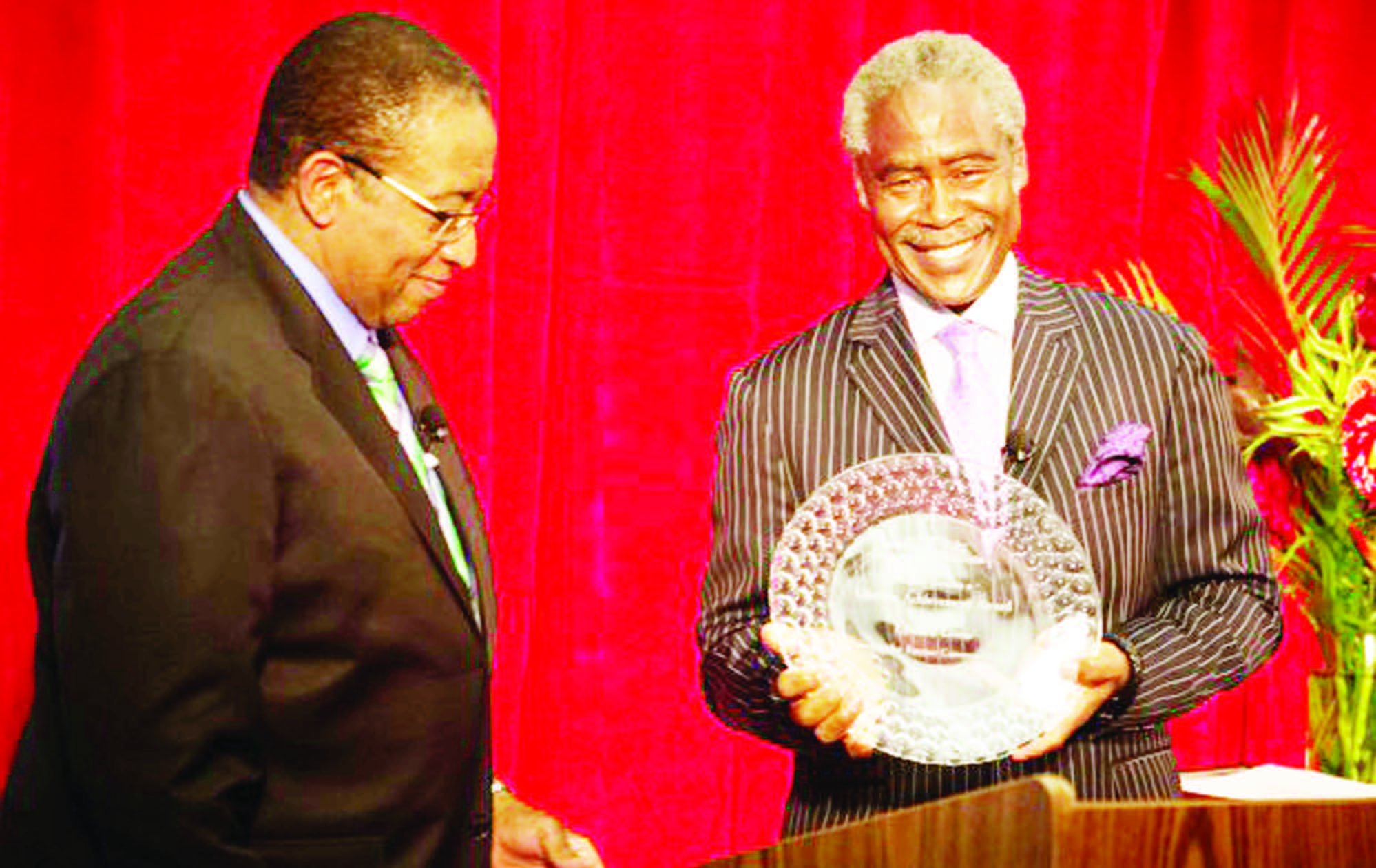
    NEW YORK CITY (TIP): Nearly 150 people gathered June 5 at the CUNY Graduate School of Journalism for the 12th annual Ippies Awards celebrating the thriving community and ethnic media in the New York City area. Honorees from among the more than 300 non-mainstream media outlets in NYC took home Ippies plaques and a total of $8,250 in prize money for their journalistic excellence. Also recognized, with a Lifetime Achievement Award, was Edward Lewis, who co-founded Essence Communications Inc., one of the country’s largest African- American multimedia organizations. The company was acquired by Time Inc. in 2005. Jose Antonio Vargas, a Pulitzer-prize winning journalist, filmmaker and the founder of Define America, a campaign that seeks to elevate the conversation around immigration delivered the keynote address.

    “The Ippies is one of my favorite events each year. The work that is celebrated here serves as a powerful reminder of the vibrancy of this media sector,” said Sarah Bartlett, Dean of the CUNY Graduate School of Journalism. Established by the Independent Press Association of New York, the Ippies are now given annually by the Center for Community and Ethnic Media (CCEM) at the CUNY Graduate School of Journalism. They are the only journalism awards to honor reporting in English and other languages by New York City’s ethnic and community press. CCEM Executive Director Garry Pierre- Pierre noted that the Center plans an annual “State of the Ethnic Media” survey and will continue to offer training sessions in digital media, as well as sponsor roundtables and other events with NYC politicians and newsmakers. The Center also publishes Voices of NY, an online site that curates stories from the community and ethnic media and publishes original reporting about communities, ethnic groups, immigration, labor and other issues.

    The cocktail and dinner reception at the CUNY J-School was abuzz with local journalists who write and broadcast in English, Spanish, Chinese, Arabic, Bengali, Korean, Russian and other languages. The crowd also got to sample a number of ethnic food, from Spanish tapas to Afghan kebabs. This year, over 150 submissions were received from more than 49 outlets for work published or broadcast in 2013. An independent panel of judges reviewed entries in 10 categories and awarded 1st, 2nd and 3rd place prizes.

    No prize was given this year for “Best Editorial/Commentary.” Among the Ippies winners were the Long Island Press in the “Best Story about Immigrants” category for “Muslim Americans: Behind the Veil of a Religion under Attack;” DNAinfo.com in the “Best Investigative” category for “Millions Raised by AIDS Walk Spent on Rent, Not HIV Services,” and City Limits in the “Best Social Issues Story” competition for “Pushing Cops to Consider Kids When Arresting Parent.” These three winners earned the top prize of $1,500 each; the rest of the first-place honorees received $750 each. The citations were given away by Jehangir Khattak, Communications Director, CCEM.

    Here is the complete list of Ippies winners:
    Best Immigrant Story

    WINNER: Long Island Press: “Muslim Americans: Behind the Veil of a Religion Under Attack” by Rashid Mian
    2ND PLACE: “An American Dream” by Ela Dutt
    3RD PLACE: “English is Absent” by Sonja Sharp

    Best Investigative Story

    WINNER: DNAinfo.com New York: “Millions Raised by AIDS Walk Spent on Rent, Not HIV Services” by Matthew Katz
    2ND PLACE: Sing Tao Daily: “The Dark Corner in An Elite High School’ by Rong Xiaoqing
    3RD PLACE: The South Asian Times: “H4 Visa: Languishing in a golden cage” by Jinal Shah

    Best Social Issues Story

    WINNER: City Limits: “Pushing Cops to Consider Kids When Arresting Parent” by Rachel Blustain
    2ND PLACE: Open City: “What Separates Welfare from Work” by E. Tammy Kim
    3RD PLACE: DNAinfo New York: “Islan Nettles Coverage” by Jeff Mays

    Best Audio Project

    WINNER: Feet in 2 Worlds: “Remembering Srini, a Leader in a Hidden Part of New York” by Ramaa Reddy Raghavan
    2ND PLACE: Feet in 2 Worlds: “What’s in an Accent? Both Opportunity and Barriers for Immigrant Actresses” by Sara Loscos, John Rudolph, Jocelyn Gonzales

    Best Multimedia Project

    WINNER: Feet in 2 Worlds: “‘What I Carried” – A New Collection of Immigration Stories From Fi2W and Cowbird
    2ND PLACE: El Diario La Prensa: “We Are Dreamers”
    3RD PLACE: Long Island Press: “One Year Later: Long Islanders Still Suffering from Sandy” by Rashed Mian, Christopher Twarowski Rashed Mian, Christopher Twarowski

    Best Online Design

    WINNER: Tablet Magazine: Alana Newhouse, Editor-in-Chief
    2ND PLACE: Island Voice: Shereese Mullings
    3RD PLACE: Long Island Press: Michael Conforti

    Best Photo

    WINNER: World Journal / Chenghui Hsu / Protest against ABC
    2ND PLACE: Diario de Mexico / Gery Vereau / Leticia Ponce, who suffers from terminal cancer, fulfilled her wish of getting married.
    3RD PLACE: DNAinfo New York / Ben Fractenberg / See How Bikes are Made in New York’s Oldest Cycle Factory

    Best Print Design

    WINNER: Allewaa Alarabi (Sept. 13, 2013) / Atef El Beialy
    2ND PLACE: Desi Talk (June 14, 2013) / Parikh Worldwide Media LLC
    3RD PLACE: Nueva Luz / En Foco, Inc. / Volume 18:1

    Best Video

    WINNER: SinoVision / Melody Cao, Yiyi Wang, Mumi Zhao, Zhaochen Dai, Tian Tian, Yuefeng Zhou, Fan Bu / Behind the Protests
    2ND PLACE: SinoVision / Zhaochen Dai, Han Cui, Juan Guo, Tian Tian, Yuefeng Zhou, Fan Bu / Carnage in Brooklyn’s Chinatown
    3RD PLACE: SinoVision / Lingjing Bian, Dizhi Ge, Tian Tian, Yuefeng Zhou / Investigating Postpartum Centers in Flushing

  • INDIA PIPS JAPAN TO BE THIRD LARGEST ECONOMY IN PPP

    INDIA PIPS JAPAN TO BE THIRD LARGEST ECONOMY IN PPP

    NEW DELHI (TIP):
    The global economic balance seems to be tilting towards the developing countries. India has overtaken Japan to emerge as the third largest economy in purchasing power parity (PPP) terms, after the US and China, latest data released by the World Bank showed. Separately, an analysis showed members of the OECD, a rich-country club, accounted for 50% of the global economy estimated at $90 trillion in 2011, compared to 60% of the $70 trillion economy in 2005. While developing countries made up the remaining half, large emerging market economies such as India, China, Brazil, Indonesia, Russia and South Africa now make up around 30% of the world GDP.

    The previous version of the World Bank’s International Comparison Program (ICP) report had said that India was ranked 10th in 2005 in terms of PPP. PPP is used to compare economies and incomes of people by adjusting for differences in prices in various countries. “The economies of Japan and the UK became smaller relative to the US, while Germany increased slightly and France and Italy remained the same,” the World Bank report said. It said that six of the world’s 12 largest economies were in the middle-income category.

    The dozen largest economies accounted for twothird of the world economy and 59% of the population, the report added. The six largest middle-income economies – China, India, Russia, Brazil, Indonesia and Mexico – accounted for 32.3% of world GDP, while the six largest high-income economies – US, Japan, Germany, France, UK and Italy – accounted for 32.9%, showing the distance that the emerging economies had travelled through rapid growth in recent years. At 27%, China has the largest share of the world’s expenditure for investment, with the US at half the level with 13% share. India, Japan and Indonesia followed with 7%, 4%, and 3%, respectively.

  • Cops Find 100 People in Texas Home in Apparent Smuggling Bust

    Cops Find 100 People in Texas Home in Apparent Smuggling Bust

    HOUSTON (TIP): Police in Houston find more than 100 people crammed into a 1,500-square-foot, single-family house while searching for a woman who was reported missing.

    Most are from Guatemala, Mexico, Honduras and El Salvador Houston police searching for a woman who had been reported missing by her family discovered a house overflowing with more than 100 people Wednesday, March 19 in what appeared to be part of a human smuggling operation.

    Police discovered the home just outside Houston while searching for a 24-year-old woman who had been reported missing, along with her two young children, the Associated Press reports. When they searched the home, they found 94 men-all in their undergarments and without shoes-and 15 women (including the missing woman and her children) in a 1,500-square-foot house.

    The people were lying in filth in several small rooms with access to only one bathroom, the AP reports. Police spokesman John Cannon said most of the people had been in the home for a few days, and one woman said she had been there more than two weeks. “It was just filth, very squalid-like conditions inside,” Cannon said. “Trash bags with clothing piled as high as you can see. … Some were just sitting on top of one another because there was just no room.”

    Houston police handed over investigation of the matter to the U.S. Immigration and Customs Enforcement, which said the people in the home were primarily from Guatemala, Mexico, Honduras and El Salvador. A pregnant woman and a man were taken to the hospital for treatment, and all others will be fed and questioned. A spokesman for ICE told the AP it was too early in the investigation to say whether the house was part of a human trafficking operation, but it appeared that way. The ICE spokesman also said it has been years since police discovered a house in the Houston area with that many people inside; in 2012, police found a house containing 86 people.

  • California major target for cyber-criminals: Kamala Harris

    California major target for cyber-criminals: Kamala Harris

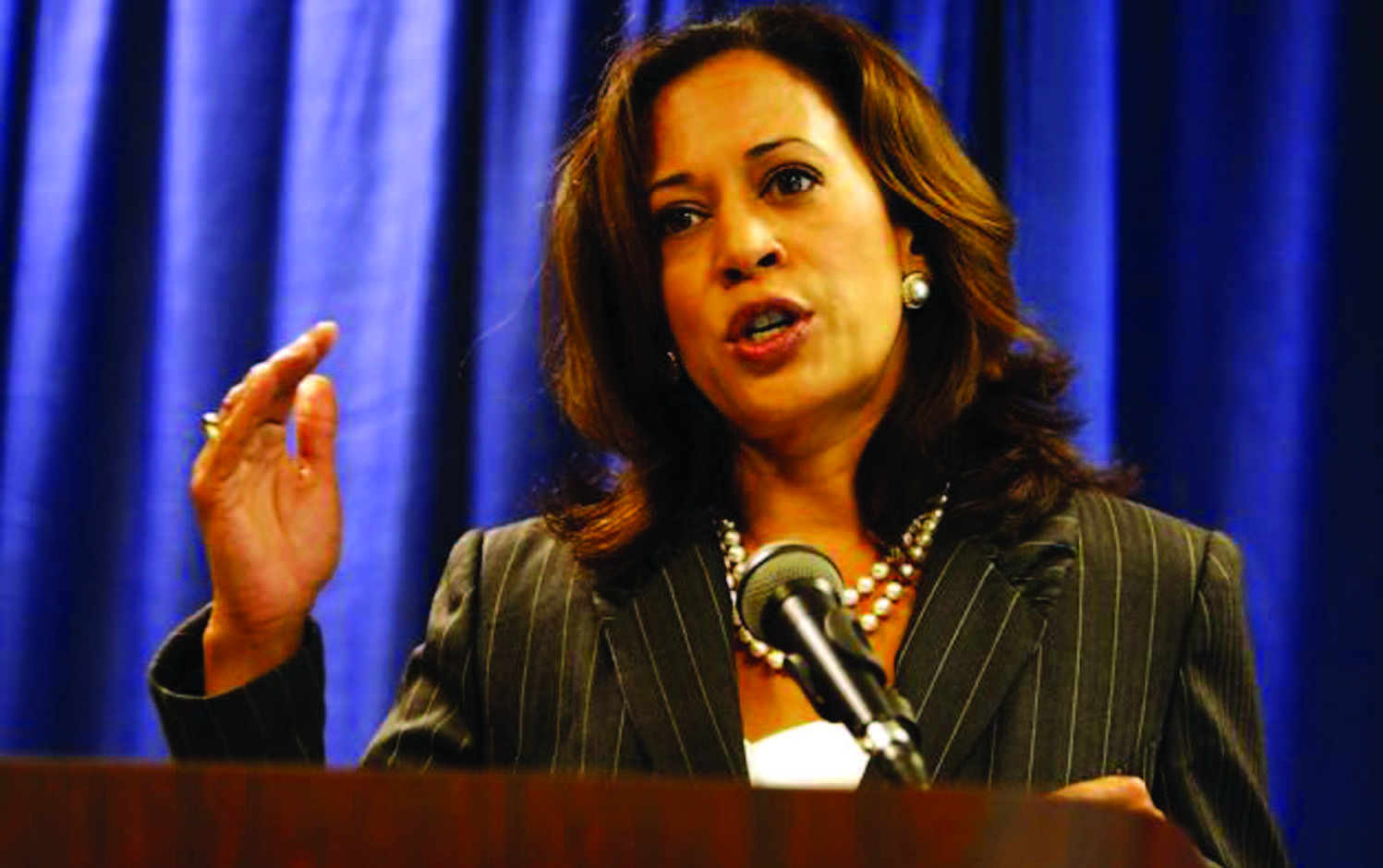
    SACRAMENTO (TIP): California has become a major U.S. target of cyber crimes committed by outlaw groups with ties to Eastern Europe, China and Africa, according to a report by state Attorney General Kamala Harris released on Thursday, March 20.

    As part of a broader report on international organized crime groups, Harris said about 17 percent of attempts to hack into major computer networks in the United States in 2012 were aimed at California, which is the most populous U.S. state.

    “Transnational criminal organizations are relying increasingly on cybercrime as a source of funds – which means they are frequently targeting, and illicitly using, the digital tools and content developed in our state,” Harris said in a statement attached to the 97-page report.

    In addition to computer crimes, Harris’s report detailed activities of international organized crime groups including human trafficking and drug smuggling, along with classic scams. Many groups are organized along ethnic lines, with ringleaders often outside the United States and foot soldiers and victims in immigrant communities in the country, it said. “The growth of transnational criminal organizations seriously threatens California’s safety and economic well-being,” said Harris, who plans to lead a series of meetings in Mexico next week to discuss the problem.

    Criminal groups with ties to the former Soviet Union and Central Europe run gangs throughout California, including the Armenian Power gang, which has links to cyber-crime, financial fraud, identity theft gambling, narcotics and human trafficking, the report said. More than two-thirds of methamphetamine imported into the United States comes through California from Mexico, trafficked by international gangs, Harris said. In addition, the state’s technology and entertainment-driven economy has made it particularly vulnerable to computer virus attacks and stolen intellectual property, the report said.

    The amount of online activity used for copyright infringement across the world has grown about 160 percent from 2010 to 2012 and threatens to affect California more than other U.S. states, the report said. “There is little doubt that over the years digital piracy has robbed creative industries based in California of hundreds of millions of dollars in revenue and jobs,” it said. Online fraud schemes in which goods or services are purchased online but never delivered have affected Californians more than people in other states, the report said. “As transnational criminal organizations evolve in the search for profits, California will continue to be an attractive target,” Harris said.

  • 13 tons of pot sends 19 people, including lawyer, to prison

    13 tons of pot sends 19 people, including lawyer, to prison

    McALLEN, TX (TIP): Nineteen men and women, including a South Texas lawyer and his father, have been sentenced for participating in a drug trafficking ring involving 13½ tons of marijuana.

    Lawyer Jose Luis Palacios Jr. of Mission drew a 12-year prison sentence, while U.S. District Judge Randy Crane sentenced Jose Luis Palacios Sr. of Edinburg to a 5-year prison term.

    All 19 were sentenced for their parts in smuggling marijuana from Mexico into the United States near the Rio Grande Valley border town of La Casita, 30 miles west of McAllen. Court documents show they smuggled about 13½ tons of marijuana into the country last spring.

  • Two Indian-origin men get prestigious award in US

    Two Indian-origin men get prestigious award in US

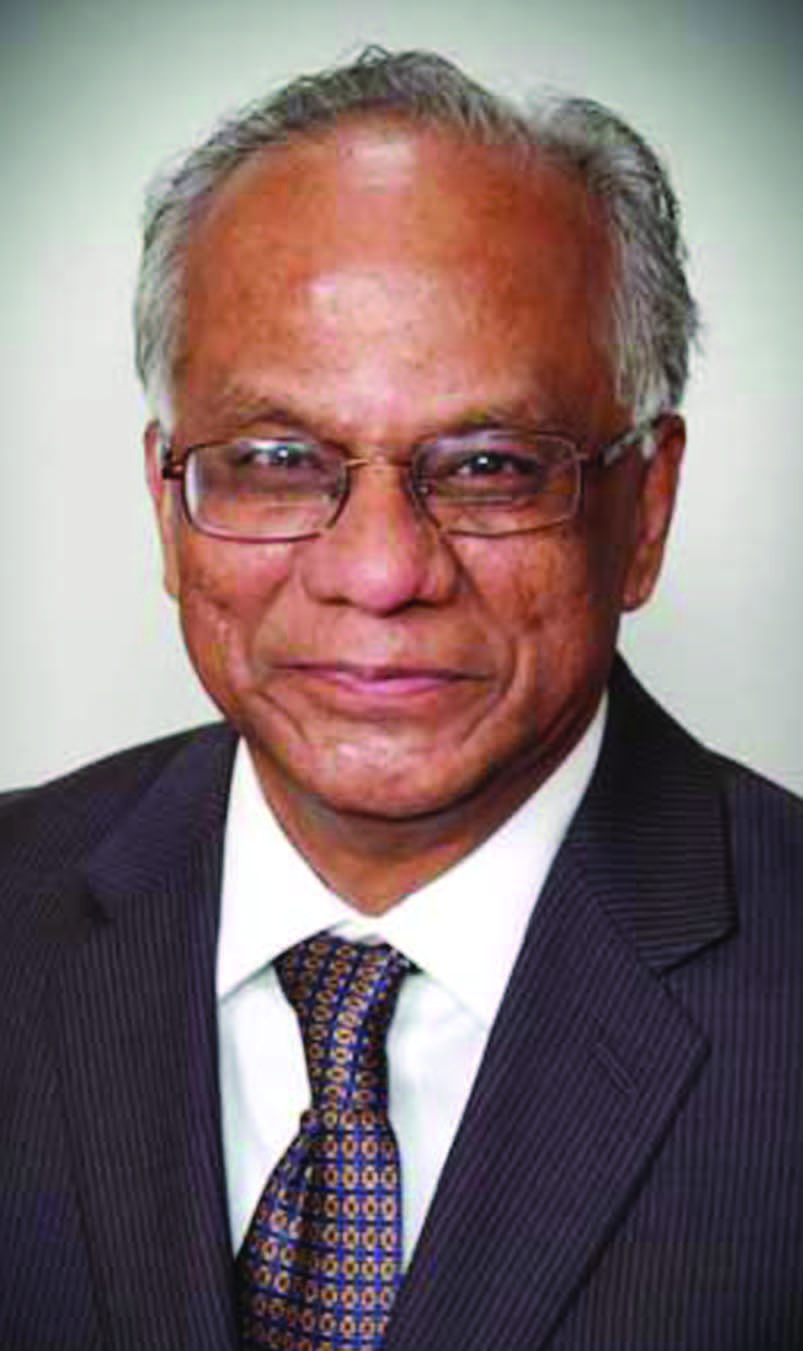
    NEW YORK (TIP): Two Indian-origin men are among this year’s prestigious Heinz Awards recipients in the US. Abraham Verghese, a professor at Stanford University Medical School, and Sanjeev Arora, a computer scientist, of Albuquerque in the US state of New Mexico will be honoured in Pittsburgh April 3, the foundation announced on its website on Tuesday.

    The five recipients will receive a cash award of $250,000 each as well as a medallion inscribed with an image of late US senator John Heinz. Abraham Verghese, who was born to parents from Kerala in Ethiopia, was given the award in recognition of his best-selling authorship. In his first book, ‘My Own Country’, he wrote extensively about AIDS in rural areas of Tennesse. Verghese did his MBBS degree from Madras University in 1979.

    Sanjeev Arora, born at Kota in Rajasthan and now a San Franciscobased entrepreneur, was recognized for revolutionizing community healthcare using video conferencing technology. The awards recognize outstanding individuals for their contributions in the fields of arts, humanities, environment, human Condition, public policy,technology, economy and employment. The awards are conferred annually by the Heinz Family Foundation and were instituted in 1993.

  • Challenges in India-US ties

    Challenges in India-US ties

    Inconsistencies mark Obama Administration’s approach

    “… the US is becoming increasingly strident in its economic relations with India on issues ranging from sanctions on sections of our pharmaceutical industry and our civil aviation facilities, while demanding changes in our policies on solar panels and equipment and placing restrictions on the movement of IT personnel. It is, however, not India alone that is the recipient of such measures from the US!”, says the author

    Traveling across the US as the winter Olympics in Sochi commenced, one was saddened to witness how India’s international credibility had been shaken when television audiences across the world saw three forlorn Indian athletes marching without the national flag. India faced this disgrace, thanks to the avariciousness and nepotism of an internationally disgraced Indian Olympic Association.

    Sadly, this was accompanied by charges of corruption, nepotism, match fixing and worse involving the President of the BCCI. Many Indian friends in the US asked in anguish: “Is there no section of national life left in India which is free from corruption and venality?” The mood in Washington, where one had an occasion to meet a cross section of senior officials, business executives, analysts and scholars, was quite different.

    In marked contrast to the earlier years, I found widespread criticism of the conduct of foreign and security policies by President Obama. The Administration had not just botched up its healthcare program, but was seen as indecisive and weak in dealing with challenges in West Asia, Afghanistan and the provocations of a jingoistic and militaristic China. President Obama, in turn, is acutely conscious of the mood in the country which wants an end to foreign military entanglements. More significantly, as the US moves towards becoming a net exporter of energy, thanks to the expanding production of shale gas and oil, the country’s geopolitics are set for profound change.

    Using its leadership in areas of productivity and innovation, the US now appears set to the stage for increasing domination of the world economic order. From across its eastern shores, the US is negotiating comprehensive trade and investment partnerships with its European allies. Across its western shores in the Pacific, the Americans are negotiating transpacific partnerships with Australia, Brunei, Chile, Canada, Japan, Malaysia, Mexico, New Zealand, Peru, Singapore, South Korea and Vietnam as negotiating partners. While China has informally indicated an interest in joining this partnership, the US will use its influence to ensure that China is not admitted till American political and economic pre-conditions are met.

    There is naturally interest in Washington in the forthcoming general election in India. The assessment appears to be that the ruling Congress is headed for a drubbing in the polls. Not many tears will be shed in Washington or elsewhere about this inevitability as the only questions which well-wishers of India ask are how India landed itself in its present morass of corruption and whether a new dispensation, which may be fractious, will be able to restore India to a high growth path. Speaking informally, a senior official recalled that President Obama had described the US-India partnership as “one of the defining partnerships of the world”.

    The official noted that “every meaningful partnership between powerful nations encounters setbacks”, adding that such setbacks should be minor compared to the benefits of the relationship and the magnitude of what the two could accomplish together. The Khobragade episode was a defining event in India-US relations. The Americans found Indians across the political spectrum united in the view that insults to India’s national dignity would not be acceptable.

    It is important that in future negotiations by the Task Force set up to address such issues, India should make it clear that it will not tolerate events like Mrs. Sonia Gandhi being threatened with prosecution while undergoing medical treatment in New York, or the supercilious attitude adopted towards Mr. Narendra Modi, who is a constitutionally elected Chief Minister. We should not accept a situation where Americans believe that they can behave high-handedly towards our elected politicians because of their domestic lobbies. The US should also be left in no doubt that on such issues, including consular and diplomatic privileges, India will firmly adhere to a policy of strict reciprocity.

    The Obama Administration has messed up its relations with President Karzai in Afghanistan, dealing with him in a manner that showed scant regard for his position as the elected Head of State of Afghanistan. Worse still, by its actions, the US has clearly given the impression that despite its protestations it was clandestinely dealing, behind Mr. Karzai’s back, with the Taliban. While the US-Afghanistan Strategic Partnership speaks of joint determination in eliminating the “al- Qaida and its affiliates,” the US now speaks only of eliminating al-Qaida and not is affiliates like the Taliban, the Islamic Movement of Afghanistan, Lashkar-e-Taiba and Jaish-e- Mohammed.

    There are naturally concerns in Afghanistan that the US, which needs Pakistan’s assistance for withdrawing its military equipment from Afghanistan, will seek to appease the Pakistanis by giving them a lessthan- healthy role in determining the future dispensation in Afghanistan and the role of the Taliban in such a dispensation. While there is an evident congruence of interests in working with the US, Japan and others in the face of growing Chinese military assertiveness, New Delhi and Tokyo cannot ignore the reality that there have been many flipflops and inconsistencies in the approach of the Obama Administration to China.

    Moreover, the US is becoming increasingly strident in its economic relations with India on issues ranging from sanctions on sections of our pharmaceutical industry and our civil aviation facilities, while demanding changes in our policies on solar panels and equipment and placing restrictions on the movement of IT personnel. It is, however, not India alone that is the recipient of such measures from the US! Despite these challenges, India cannot ignore the reality that the US is the pre-eminent power in the world.

    Moreover, it will remain so in the coming years, primarily because its innovative and technological strengths are going to be reinforced by its energy surpluses, together with the energy potential of its neighbors like Canada, Mexico and Argentina. It will, moreover, remain the foremost power in the manufacture of high-tech equipment, particularly in defense and aerospace. It is for India to fashion industrial policies to leverage its strengths and potential to secure high levels of investment and partnership in crucial high-tech industries.

    I was advised in Washington that contracts currently secured with US companies enable us to import 5.8 million metric tons per annum of shale gas from the US annually. According to oil industry sources, these contracts alone provide us more gas than we could obtain from the controversial Iran-Pakistan-India pipeline. But, for all this to fructify, the new dispensation in New Delhi will have to replace economic populism and accompanying fiscal irresponsibility with a quest for accelerated growth.

  • Arizona governor Jan Brewer vetoes religious freedom bill

    Arizona governor Jan Brewer vetoes religious freedom bill

    PHOENIX (TIP): Governor Jan Brewer on Wednesday vetoed a Republican bill that set off a national debate over gay rights, religion and discrimination and subjected Arizona to blistering criticism from major corporations and political leaders from both parties. Loud cheers erupted outside the Capitol building immediately after Brewer made her announcement. “My agenda is to sign into law legislation that advances Arizona,” Brewer said at a news conference. “I call them like I see them despite the tears or the boos from the crowd. After weighing all the arguments, I have vetoed Senate Bill 1062 moments ago.”

    The governor said she gave the legislation careful deliberation in talking to her lawyers, citizens and lawmakers on both sides of the debate. But Brewer said the bill “could divide Arizona in ways we could not even imagine and no one would ever want”. The bill was broadly worded and could result in unintended negative consequences, she added. The bill backed by Republicans in the legislature was designed to give added protection from lawsuits to people who assert their religious beliefs in refusing service to gays. But opponents called it an open attack on gays that invited discrimination.

    The bill thrust Arizona into the national spotlight last week after both chambers of the state legislature approved it. As the days passed, more and more groups, politicians and average citizens weighed in against Senate Bill 1062. Many took to social media to criticize the bill, calling it an attack on gay and lesbian rights. Prominent Phoenix business groups said it would be another black eye for the state that saw a national backlash over its 2010 immigration-crackdown law, SB1070, and warned that businesses looking to expand into the state may not do so if bill became law.

    Companies such as Apple Inc. and American Airlines and politicians including GOP Senator John McCain and former Republican presidential nominee were among those who urged Brewer to veto the legislation. Brewer was under intense pressure to veto the bill, including from three Republicans who had voted for the bill last week. They said in a letter to Brewer that while the intent of their vote “was to create a shield for all citizens’ religious liberties, the bill has been mischaracterized by its opponents as a sword for religious intolerance”. SB 1062 allows people to claim their religious beliefs as a defence against claims of discrimination.

    Backers cite a New Mexico Supreme Court decision that allowed a gay couple to sue a photographer who refused to document their wedding, even though the law that allowed that suit doesn’t exist in Arizona. Republican Senator Steve Yarbrough called his proposal a First Amendment issue during a Senate debate. “This bill is not about allowing discrimination,” Yarbrough said. “This bill is about preventing discrimination against people who are clearly living out their faith.”

    Democrats said it was a veiled attempt to legally discriminate against gay people and could allow people to break nearly any law and cite religious freedom as a defence. “The heart of this bill would allow for discrimination versus gays and lesbians,” said Senator Steve Gallardo, D-Phoenix. “You can’t argue the fact that bill will invite discrimination. That’s the point of this bill. It is.” The bill is similar to a proposal last year brought by Yarbrough but vetoed by Brewer, a Republican. That legislation also would have allowed people or religious groups to sue if they believed they might be subject to a government regulation that infringed on their religious rights.

    Yarbrough stripped that provision from the bill in the hopes Brewer will embrace the new version. Civil liberties and secular groups countered that Yarbrough and the Center for Arizona Policy, a powerful social conservative group that backs anti-abortion and conservative Christian legislation in the state and is opposed to gay marriage, had sought to minimize concerns that last year’s bill had far-reaching and hidden implications. Yarbrough called those worries “unrealistic and unsupported hypotheticals” and said criminal laws will continue to be prosecuted by the courts.

    The Center for Arizona Policy argues the law is needed to protect against increasingly activist federal courts and simply clarifies existing state law. “We see a growing hostility toward religion,” said Josh Kredit, legal counsel for the group. Similar religious-protection legislation has been introduced in Ohio, Mississippi, Idaho, South Dakota, Tennessee and Oklahoma, but Arizona’s plan is the only one that has been passed by a state legislature. The efforts are stalled in Idaho, Ohio and Kansas.

    The push in Arizona comes as an increasing number of conservative states grapple with ways to counter the growing legality of gay marriage. Arizona’s voters approved a ban on gay marriage as a state constitutional amendment in 2008. It is one of 29 states with such constitutional prohibitions, according to the National Conference of State Legislatures. Federal judges have recently struck down those bans in Utah, Oklahoma and Virginia, but those decisions are under appeal.

  • VENEZUELA PROTESTS ESCALATE AS STUDENTS, SECURITY FORCES CLASH

    VENEZUELA PROTESTS ESCALATE AS STUDENTS, SECURITY FORCES CLASH

    CARACAS (TIP): Venezuelan security forces and demonstrators faced off in streets blocked by burning barricades in several provincial cities on February 20 as protests escalated against President Nicolas Maduro’s socialist government. At least five people have died since the unrest turned violent last week, with scores of injuries and arrests. The demonstrators, mostly students, blame the government for violent crime, high inflation, product shortages and alleged repression of opponents. They want Maduro to resign. In middle-class areas of Caracas overnight, security forces fired teargas and bullets, chasing youths who threw Molotov cocktails and blocked streets with burning trash.

    It was one of the worst bouts of violence the capital has seen in nearly three weeks of unrest across Venezuela, and trouble also flared in other urban centres. Many Caracas residents banged pots at windows in a traditional form of protest, and knots of demonstrators were out again early on Thursday. “I declare myself in civil disobedience,” read one banner held up by demonstrators spread across a Caracas road. The government said a funeral parade for deceased folk singer Simon Diaz, a beloved figure who died on Wednesday aged 85, was held up due to “violent groups” blocking roads. There was unrest too in the western Andean states of Tachira and Merida that have been especially volatile since hardline opposition leaders called supporters onto the streets in early February demanding Maduro’s departure.

    In the city of San Cristobal, which some residents are describing as a “war zone”, many businesses remained shut as students and police faced off in the streets again on February 20. Maduro said “special measures” would be taken to restore order in Tachira. “We won’t let them turn it into a Benghazi,” he said, referring to the violence-wracked Libyan city. Tensions have escalated since opposition leader Leopoldo Lopez, a 42-year-old Harvard-educated economist, turned himself in to troops this week. He is being held in Caracas’ Ramo Verde jail on charges of fomenting the violence.

    “Change depends on every one of us. Don’t give up!” Lopez’s wife Lilian Tintori said via Twitter on Thursday. Local TV channels are providing almost no live coverage of the unrest, so Venezuelans are turning to social media to swap information and images, though falsified photos are circulating. Both sides rolled out competing evidence of the latest violence on Thursday, with ruling Socialist Party governors showing photos and video of charred streets and torched vehicles, while the opposition posted footage of brutal behavior which they said was by national guard troops. Caracas was calmer by lunchtime on Thursday, though there was less traffic than normal and some businesses were closed, in a further drag on the already ailing economy.

    Coup allegations
    Maduro, narrowly elected last year to succeed socialist leader Hugo Chavez after his death from cancer, says Lopez and others are in league with the US government and want a coup. The latest direct victim of the unrest, college student and local beauty queen Genesis Carmona, 22, was shot in the head during a demonstration in the central city of Valencia. Maduro says “fascist groups” are trying to create a crisis to topple his administration. “There is an international campaign to justify a foreign intervention in Venezuela,” he said in a combative, nationally televised address late on Wednesday.

    Speaking in Mexico, US President Barack Obama criticized Maduro’s government for arresting protesters and urged it to focus on addressing the “legitimate grievances” of its people. Street protests were the backdrop to a short-lived coup against Chavez in 2002 before military loyalists and supporters helped bring him back. There is no evidence the military, which was the decisive factor in 2002, may turn on Maduro now. Detractors call Lopez a dangerous hothead. He has frequently squabbled with fellow opposition leaders and was involved in the 2002 coup, even helping arrest a minister.

    Though the majority of demonstrators have been peaceful, an increasingly prominent radical fringe has been attacking police, blocking roads and vandalizing buildings. Though the Caracas protests began and are still strongest in middle-class neighbourhoods, sporadic demonstrations have also spread to poorer areas of the city, residents say. Rights groups say the police response has been excessive, and some detainees say they were tortured. Venezuela’s main opposition leader, Henrique Capriles, who was narrowly beaten by Maduro in last year’s presidential election, disagrees with Lopez’s street tactics but backs protesters’ grievances and has condemned the government response. “How many more deaths do they want?” he told reporters on Thursday, urging opposition activists to avoid violence.

  • Texas ranks No. 2 for human trafficking crime

    Texas ranks No. 2 for human trafficking crime

    DALLAS (TIP): The National Human Trafficking Resource Center has released its 2013 data and it may or may not come as a surprise to you that Texas ranks No. 2 in number of calls placed to the hotline.

    Texas maintained its No. 2 position, behind California, even as overall calls skyrocketed last year. It’s safe to say that a large number of those calls came from the North Texas region, as the Dallas-Fort Worth traditionally has been a relative hotbed for human trafficking.

    Experts have said that has to do with the convergence of highways in the region as well as the area’s proximity to the U.S.-Mexico border. While it’s difficult to capture the specific data because of the hidden nature of the crime, Mosaic Family Services in Dallas, for example, typically serves 100 victims a year. And in 2012, the national hotline received about 250 calls from the city of Dallas alone.

  • US court upholds approval of BP oil spill settlement

    US court upholds approval of BP oil spill settlement

    NEW ORLEANS (TIP): Over BP’s objections, a federal appeals court on January 10 upheld a judge’s approval of the company’s multibillion-dollar settlement with lawyers for businesses and residents who claim the massive 2010 oil spill in the Gulf of Mexico cost them money. BP has argued that US district judge Carl Barbier and court-appointed claims administrator Patrick Juneau have misinterpreted settlement terms in ways that would force the London-based oil giant to pay for billions of dollars in inflated or bogus claims by businesses.

    During a hearing in November before a three-judge panel of the 5th US circuit court of Appeals, a BP lawyer argued that Barbier’s December 2012 approval of the deal shouldn’t stand unless the company ultimately prevails in its ongoing dispute over business payments. But the divided panel on Friday ruled that Barbier did not err by failing to determine more than a year ago whether the class of eligible claimants included individuals who haven’t actually suffered any injury related to the spill. Affirming Barbier’s initial ruling in 2012, the court said in its 48-page majority opinion that it can’t agree with arguments raised by BP and others who separately objected to the settlement.

    “No case cited by BP or the Objectors suggests that a district court must also safeguard the interests of the defendant, which in most settlements can protect its own interests at the negotiating table,” the ruling says. The majority rejected BP’s request for the panel to “find an intraclass conflict of interest because the claimants allegedly include persons and entities that have suffered no injury.” “In support of this allegation, BP presents us with a series of economists’ declarations that had not been provided to the district court when the class was certified,” the ruling says. One of the three appellate judges, Emilio M. Garza, disagreed with the majority in a 14-page dissent. Garza said the “attempted global settlement fails in a narrow, but significant, regard” and should be vacated so it can be fixed.

    Plaintiffs’ lawyers have argued that BP simply undervalued the settlement and underestimated how many claimants would be eligible for payments. “Today’s ruling is an enormous victory for the Gulf, and an important step forward in ensuring that every eligible claimant is fully compensated according to the objective, transparent formulas spelled out in the settlement agreement that BP co-authored and agreed to,” said plaintiffs’ attorneys Steve Herman and Jim Roy, who negotiated the settlement and urged the 5th Circuit to uphold it. BP didn’t immediately comment on Friday’s decision. In October, a different 5th Circuit panel threw out Barbier’s rulings on the dispute over business payments and ordered him to change the calculation of some damages. Last month, Barbier rejected BP’s argument that the settlement shouldn’t compensate businesses if they can’t directly trace their losses to the spill. BP has asked the other panel to overturn that ruling. The settlement doesn’t have a cap, but BP initially estimated that it would pay roughly $7.8 billion to resolve the claims. Later, as it started to challenge the business payouts, the company said it no longer could give a reliable estimate for how much the deal will cost.

  • Promoting Goa Tourism in NYC

    Promoting Goa Tourism in NYC

    Goa’s Tourism officials make a stop in NYC to promote the beach community’s charm, hospitality and relaxing lifestyle to Americans

    NEW YORK (TIP): After showcasing the amenities and characteristics of India’s most visited vacation destination all over Europe, Goa’s Department of Tourism made its first stop in North America , in New York City. The goal of the Goa Tourism Road show 2013 was to expose Americans to the magic of this quaint, beach community.Whether tourists want to explore ancient churches or build sand castles on Goa’s 20+ beaches, there is never a lack of indoor or outdoor activities to relax the mind and stimulate the soul.


    19
    Visiting Deputy Chief Minister of Goa Francis D’souza, Tourism Minister Dilip Parulekar and Nikhil Desai, Managing Director, Goa Tourism Development Corporation addressed a press conference. Seen in the picture are media representatives. Also seen is The Indian Panorama reporter Kajol Bishnoi ( Front row, third from right)

    Goa’s top officials Francis D’souza, Deputy Chief Minister of Goa, Dilip Parulekar, Tourism Minister of Goa, Nikhil Desai, Managing Director, Goa Tourism Development Corporation and Mrs. Sujata Thakur, Regional Director for India Tourism, shared stories about their beloved state. Speaking on the occasion, Mrs. Sujata Thakur said, “Goa is a unique destination, with the magnificence of all elements- Mountains, sea, beaches, and rivers. It has a majestic old world charm, a rich cuisine and, above all, a relaxing atmosphere where tourists can unwind themselves.

    The culturally rich people of Goa are friendly and hospitable and always ready to welcome tourists and help them in every way. While in Goa, one finds all day to day worries disappear. The gala event started with a press conference where Goa officials interacted with US Media. When asked what Goa government was doing to deal with the menace of drug use in Goa which had become a second Mexico or Columbia, Nikhil said the government had steps to control the situation so that tourists could enjoy their stay in Goa to the fullest.


    20
    Nrityalina Centre for Performing Arts presents a Goan folk dance

    The visiting delegation emphasized that Goa Tourism was keen on tapping the huge base of international tourists by promoting the state during the non-peak months from April to October. The department is currently focusing on North American cities with multiple road shows planned in New York, Los-Angeles and Houston. The cultural dance presentation after the press conference was an impressive part of the road show. Goan cuisine served on the occasion evoked appreciative comments.

  • Same-sex marriage now legal in Utah & New Mexico

    Same-sex marriage now legal in Utah & New Mexico

    S. Saluja SALT LAKE CITY, UTAH (TIP): A federal judge, on December 20, struck down the state’s ban on same-sex marriage, saying the law “conflicts with the United States Constitution’s guarantees of equal protection and due process under the law.” In striking down the state law, which voters had approved in 2004, U.S. District Court Judge Robert J. Shelby wrote in a 53-page ruling that the state’s “current laws deny its gay and lesbian citizens their fundamental right to marry and, in so doing, demean the dignity of these same-sex couples for no rational reason.

    “Accordingly, the court finds that these laws are unconstitutional,” he said. A day earlier, on December 19, the New Mexico Supreme Court legalized same-sex marriage in the State, declaring in a ruling that it is unconstitutional to deny a marriage license to gay and lesbian couples. There are 18 States now that allow same sex marriage. 7 States have allowed pursuant to Court decision. These are California (June 28, 2013), Connecticut (Nov. 12, 2008), Iowa (Apr. 24, 2009), Massachusetts (May 17, 2004), New Jersey (Oct. 21, 2013), New Mexico (Dec. 19, 2013), Utah (Dec. 20, 2013). 8 States have allowed same sex marriage through State legislation.

    The states are Delaware (July 1, 2013), Hawaii (Dec. 2, 2013), Illinois (law will take effect June 1, 2014), Minnesota (Aug. 1, 2013), New Hampshire (Jan. 1, 2010), New York (July 24, 2011), Rhode Island (Aug. 1, 2013), Vermont (Sep. 1, 2009). 3 States have allowed same sex marriage by Popular Vote. These states are Maine (Dec. 29, 2012), Maryland (Jan. 1, 2013),Washington (Dec. 9, 2012). Massachusetts is the first State to allow same sex marriage while Utah is the latest to join. However, Illinois legislation to allow same sex marriage will take effect on June 1, 2014.

  • Let us Know Texas – The State

    Let us Know Texas – The State

    Texas, the second most populous (after California) and the second -largest state (after Alaska) in the United States of America, has had a checkered history which all residents need to know. A state of immigrants, the state has made tremendous progress in the last few decades, and is growing. The Indian Panorama readers will get to know the state of Texas from a series of articles that will appear each week. – EDITOR

    Texas is the second most populous (after California) and the secondlargest of the 50 states (after Alaska) in the United States of America, and the largest state in the 48 contiguous United States. Geographically located in the South Central part of the country, Texas shares an international border with the Mexican states of Chihunahua, Coahuila, Nuevo León, and Tamaulipas to the south and borders the U.S. states of New Mexico to the west, Oklahoma to the north, Arkansas to the northeast, and Louisiana to the east. Texas has an area of 268,820 square miles (696,200 km2) and a growing population of 26.1 million residents. Houston is the largest city in Texas and the fourth-largest in the United States, while San Antonio is the second largest in the state and seventh largest in the United States. Dallas- Fort Worth and Greater Houston are the fourth and fifth largest United States metropolitan areas, respectively. Other major cities include El Paso and Austin-the state capital.

    Texas is nicknamed the Lone Star State to signify Texas as a former independent republic and as a reminder of the state’s struggle for independence from Mexico. The “Lone Star” can be found on the Texas state flag and on the Texas state seal today. The origin of the state name, Texas, is from the word, “Tejas”, which means ‘friends’ in the Caddo language. Due to its size and geologic features such as the Balcones Fault, Texas contains diverse landscapes that resemble both the American South and Southwest. Although Texas is popularly associated with the Southwestern deserts, less than 10 percent of the land area is desert. Most of the population centers are located in areas of former prairies, grasslands, forests, and the coastline. Traveling from east to west, one can observe terrain that ranges from coastal swamps and piney woods, to rolling plains and rugged hills, and finally the desert and mountains of the Big Bend. The term “six flags over Texas”, as can be seen in the Grand Prairie-based large national and international amusement park operator Six Flags, came from the several nations that had ruled over the territory. Spain was the first European country to claim the area of Texas. France held a shortlived colony in Texas.

    Mexico controlled the territory until 1836 when Texas won its independence, becoming an independent Republic. In 1845 it joined the United States as the 28th state. The state’s annexation set off a chain of events that caused the Mexican-American War in 1846. A slave state, Texas declared its secession from the United States in early 1861, joining the Confederate States of America during the American Civil War. After the war and its restoration to the Union, Texas entered a long period of economic stagnation. One Texas industry that thrived after the Civil War was cattle. Due to its long history as a center of the industry, Texas is associated with the image of the cowboy. The state’s economic fortunes changed in the early 20th century, when oil discoveries initiated an economic boom in the state. With strong investments in universities, Texas developed a diversified economy and high tech industry in the mid-20th century. As of 2010 it shares the top of the list of the most Fortune 500 companies with California at 57. With a growing base of industry, the state leads in many industries, including agriculture, petrochemicals, energy, computers and electronics, aerospace, and biomedical sciences. Texas has led the nation in export revenue since 2002 and has the second-highest gross state product.

    History
    Texas lies between two major cultural spheres of Pre-Columbian North America: the Southwestern and the Plains areas. Archaeologists have found that three major indigenous cultures lived in this territory, and reached their developmental peak before the first European contact. These were: ● the Pueblo from the upper Rio Grande region, centered west of Texas; ● the Mississippian culture, also known as Mound Builder, which extended along the Mississippi River Valley east of Texas; and ● the civilizations of Mesoamerica, centered south of Texas. Influence of Teotihuacan in northern Mexico peaked around AD 500 and declined over the 8th to 10th centuries. No culture was dominant in the presentday Texas region, and many peoples inhabited the area. Native American tribes that lived inside the boundaries of presentday Texas include the Alabama, Apache, Atakapan, Bidai, Caddo, Coahuiltecan, Comanche, Choctaw, Coushatta,Hasinai, Jumano, Karankawa, Kickapoo, Kiowa, Tonkawa, and Wichita.

    The name Texas derives from táysha?, a word in the Caddoan language of the Hasinai, which means “friends” or “allies”. Whether a Native American tribe was friendly or warlike was critical to the fates of European explorers and settlers in that land. Friendly tribes taught newcomers how to grow indigenous crops, prepare foods, and hunt wild game. Warlike tribes made life difficult and dangerous for Europeans through their attacks and resistance to the newcomers.[ The first historical document related to Texas was a map of the Gulf Coast, created in 1519 by Spanish explorer Alonso Álvarez de Pineda. Nine years later, shipwrecked Spanish explorer Álvar Núñez Cabeza de Vaca and his cohort became the first Europeans in what is now Texas. Cabeza de Vaca reported that in 1528, when the Spanish landed in the area, “half the natives died from a disease of the bowels and blamed us.” Francisco Vasquez de Coronado describes his 1541 encounter with “Two kinds of people travel around these plains with the cows; one is called Querechos and the others Teyas; they are very well built, and painted, and are enemies of each other. They have no other settlement or location than comes from traveling around with the cows.

    They kill all of these they wish, and tan the hides, with which they clothe themselves and make their tents, and they eat the flesh, sometimes even raw, and they also even drink the blood when thirsty. The tents they make are like field tents, and they set them up over some poles they have made for this purpose, which come together and are tied at the top, and when they go from one place to another they carry them on some dogs they have, of which they have many, and they load them with the tents and poles and other things, for the country is so level, as I said, that they can make use of these, because they carry the poles dragging along on the ground. The sun is what they worship most.” European powers ignored the area until accidentally settling there in 1685. Miscalculations by René Robert Cavelier de La Salle resulted in his establishing the colony of Fort Saint Louis at Matagorda Bay rather than along the Mississippi River. The colony lasted only four years before succumbing to harsh conditions and hostile natives. In 1690 Spanish authorities, concerned that France posed competitive threat, constructed several missions in East Texas. After Native American resistance, the Spanish missionaries returned to Mexico. When France began settling Louisiana, mostly in the southern part of the state, in 1716 Spanish authorities responded by founding a new series of missions in East Texas.

    Two years later, they created San Antonio as the first Spanish civilian settlement in the area. Hostile native tribes and distance from nearby Spanish colonies discouraged settlers from moving to the area. It was one of New Spain’s least populated provinces. In 1749, the Spanish peace treaty with the Lipan Apache angered many tribes, including the Comanche, Tonkawa, and Hasinai. The Comanche signed a treaty with Spain in 1785 and later helped to defeat the Lipan Apache and Karankawa tribes. With more numerous missions being established, priests led a peaceful conversion of most tribes. By the end of the 18th century only a few nomadic tribes had not converted to Christianity. When the United States purchased Louisiana from France in 1803, American authorities insisted that the agreement also included Texas. The boundary between New Spain and the United States was finally set at the Sabine River in 1819, at what is now the border between Texas and Louisiana. Eager for new land, many United States settlers refused to recognize the agreement. Several filibusters raised armies to invade the area west of the Sabine River.

    In 1821, the Mexican War of Independence included the Texas territory, which became part of Mexico. Due to its low population, Mexico made the area part of the state of Coahuila y Tejas. Hoping that more settlers would reduce the near-constant Comanche raids, Mexican Texas liberalized its immigration policies to permit immigrants from outside Mexico and Spain. Under the Mexican immigration system, large swathes of land were allotted to empresarios, who recruited settlers from the United States, Europe, and the Mexican interior. The first grant, to Moses Austin, was passed to his son Stephen F. Austin after his death. Austin’s settlers, the Old Three Hundred, made places along the Brazos River in 1822. Twenty-three other empresarios brought settlers to the state, the majority of whom were from the United States. The population of Texas grew rapidly. In 1825, Texas had a population of approximately 3,500, with most

  • Mexico finds stolen radioactive material amid dirty bomb fear

    Mexico finds stolen radioactive material amid dirty bomb fear

    VIENNA/MEXICO CITY (TIP): Mexican police have found dangerous radioactive medical material stolen by thieves that the United Nations said could provide an ingredient for a “dirty bomb,” the country’s national nuclear safety commission CNSNS said on Wednesday. The truck was found on Wednesday close to where it was stolen outside Mexico City. The thieves removed the radioactive material from a protective case, exposing them to dangerous levels of radiation then dumped it less than a mile away.

    The truck was stolen on Monday while it was taking cobalt-60 from a hospital in the northern city of Tijuana to a radioactive waste-storage center, Mexican officials and the UN agency said earlier. “Both the container and the radioactive source have been located,” said Mardonio Jimenez Rojas, an official at the commission, told Reuters. “The radioactive source was removed from its container and was found a kilometer away.” “The thieves were exposed to radiation,” he added, saying those exposed to the material could die. Experts were working on how to secure the radioactive material in a protective container, he said.

    The vehicle was seized when the driver stopped at a gas station in the town of Temascalapa, 35 km (22 miles) northeast of Mexico City. Truck hijacking is common in Mexico and the theft occurred in the State of Mexico, which is not a drug cartel stronghold. “Our suspicion is that they had no idea what they had stolen. This is a area where robberies are common,” Fernando Hidalgo, spokesman for the Hidalgo state prosecutor, said earlier. Mexico’s national nuclear safety commission published photographs of the cargo as it was being prepared for shipment, showing a reinforced case containing the medical device, which holds the radioactive material and which looks like part of a car axle.

    The box is marked with the hospital’s name and “radioactive materials.” Apart from peaceful medical and industrial applications, experts say, cobalt-60 can also be used in a dirty bomb in which conventional explosives disperse radiation from a radioactive source. The International Atomic Energy Agency, which has stepped up calls on member states to tighten security to prevent nuclear and radioactive materials from falling into the wrong hands, made no mention of any such risk in its statement on Wednesday. The IAEA also did not give details on how much radioactive material was in the vehicle when it was seized.

    Inside a teletherapy device, cobalt-60 is used to treat cancer. “At the time the truck was stolen, the (radioactive) source was properly shielded. However, the source could be extremely dangerous to a person if removed from the shielding, or if it was damaged,” the IAEA said in a statement. Cobalt-60, the most common radioactive isotope of the metal, has many applications in industry and in radiotherapy in hospitals. It is also used for industrial radiography to detect structural flaws in metal parts, according to the U.S. Environmental Protection Agency. The EPA said exposure to gamma radiation from cobalt-60 results in an increased risk of cancer.

    Dirty bomb could cause ‘mass panic’ In 2000, three people died in Thailand after a cobalt-60 teletherapy unit was sold as scrap metal and ended up on a junkyard. About 1,870 people living nearby were exposed to “some elevated level of radiation,” according to an IAEA publication. About the same time in Mexico, homes built with metal rods that had been contaminated by stolen cobalt were destroyed, a spokesman for the attorney general’s office said. “Cobalt-60 has figured in several serious accidents, some of them fatal,” said nuclear expert Mark Hibbs of the Carnegie Endowment for International Peace thinktank.

    “If dispersed, cobalt-60 or other radioactive source material could cause radiation poisoning locally.” More than 100 incidents of thefts and other unauthorised activities involving nuclear and radioactive material are reported to the IAEA annually, the U.N. agency said this year. It is rare, however, that it makes any such incident public. Because radioactive material is regarded as less hard to find and the device easier to make, experts say a dirty bomb is a more likely threat than a nuclear bomb in a terrorist attack.

    Experts say a dirty bomb carries more potential to terrorise than cause a large loss of life. At a nuclear security summit in 2012, IAEA Director General Yukiya Amano specifically singled out cobalt-60 among radioactive sources that could be used for such bombs. “A dirty bomb detonated in a major city could cause mass panic, as well as serious economic and environmental consequences,” Amano said, according to a copy of his speech.

  • Nadal to return to Buenos Aires event after nine years

    Nadal to return to Buenos Aires event after nine years

    BUENOS AIRES (TIP): World number one Rafael Nadal will play in the Buenos Aires ATP tournament in February for the first time since 2005, the Spaniard said on December 3. The tournament to be held at the Buenos Aires Lawn Tennis Club from February 10 to 16 is part of the Latin American swing of claycourt events which also includes tournaments in Chile, Brazil and Mexico. “After a time when I was unable to go, this year I’m going to return to the Buenos Aires tournament and I’m excited to play the Copa Claro again,” Nadal said in a video shown at a news conference. Nadal lost to Argentine Gaston Gaudio, the 2004 French Open champion, in the quarterfinal of the 2005 Buenos Aires tournament at the start of a glittering career that has included 13 Grand Slam titles, eight at Roland Garros.

    “We’re very happy to have Rafa, to have a world number one playing for the points in Argentina,” said tournament director Martin Jaite, who is also his country’s Davis Cup captain. Nadal made his comeback from a long injury layoff at the Vina del Mar tournament in Chile last February, launching a comeback that took him back to the top of the rankings last month. He was in Argentina last month for exhibition matches against world number two Novak Djokovic and retired Argentine former number three David Nalbandian’s farewell to tennis. Buenos Aires champion David Ferrer will not be defending his title.

  • New York Life Makes Significant Gains

    New York Life Makes Significant Gains

    Life Insurance Sales in Third Quarter up by 10%; Sales of Annuities and Mutual Funds also very Strong; Second Consecutive Year of 8% Rise in Dividend Payout; 2014 Payout Climbs $109 Million

    NEW YORK (TIP): New York Life, America’s largest mutual life insurer, announced November 21 very strong third quarter gains in sales of life insurance, annuities and mutual funds, as well as a solid increase in agent new hires in the first nine months of 2013. New York Life agents recorded a 10 percent increase in sales of recurring premium whole life insurance and an 11 percent increase in total annuity sales compared with the first nine months of 2012.

    The company also announced that for the second consecutive year its dividend payout to participating policyholders will climb by eight percent, an increase of $109 million over the prior year, for a total payout of $1.43 billion in 2014. Even in the face of unprecedented low interest rates, the company had strong operating performance and was able to enhance both its surplus and dividends through the strong performance of its investment subsidiary, New York Life Investments, and from the recent divestiture of several international operations.

    The company also has had better than expected persistency as policyholders maintain their policies in force despite the challenging economy, which speaks to the consumer appeal of New York Life’s strong ratings for financial strength. Next year is the 160th consecutive year New York Life has paid a cash dividend, a validation of mutual strength and a reflection of the company’s singular focus on creating value for its customers. New York Life has paid a dividend every year since 1854.

    The company’s insurance sales continued to build on the strong pace set in previous quarters this year, with individual recurring premium life insurance sales through agents up 12 percent through the third quarter compared with the same period in 2012. The solid sales growth of recurring life insurance products came from the company’s suite of permanent products – whole life, universal life and variable universal life.* The company is also seeing exceptional growth in various cultural markets, with 46 percent of the company’s new life insurance policies produced by agents serving the African- American, Chinese, Hispanic, Korean, South Asian, and Vietnamese markets in the United States.

    “Our sales growth proves that people continue to believe in life insurance. When our agents meet face-to-face with people, they are finding more receptivity to how life insurance can help customers with important financial needs. This is why our sales continue to rise each year, despite a tough economy – and why our country needs career agents more than ever,” said Mark Pfaff, executive vice president in charge of Agency. “Even further, Americans increasingly understand the value that a permanent product like whole life provides.

    The company’s mutual structure and ability to offer dividends on this participating product is important to insurance consumers and that is why 2014 marks the 160th anniversary of offering consecutive cash dividends, a remarkable achievement, especially at a time when so many financial institutions are having difficulty.” New York Life’s sales of guaranteed income annuity products**, which include single premium immediate annuities and the company’s deferred income annuity, Guaranteed Future Income Annuity, increased 17 percent through the third quarter compared with the same period in 2012. Total annuity sales through all channels have increased 36 percent compared with the nine months of 2012.

    In addition, sales through New York Life Direct increased by five percent over the same period last year. New York Life Direct includes the AARP Operation, which is the exclusive provider of life insurance and lifetime income annuities to AARP’s 37 million members. New York Life has been offering life insurance to AARP members since 1994 and lifetime income annuities to AARP members since 2006. Sales of New York Life’s MainStay family of mutual funds increased by 78 percent to a record $22.47 billion through the third quarter, compared with the same period a year ago. Consistent investment performance across the fund family is helping to drive these exceptionally strong mutual fund sales, particularly in funds seeking capital appreciation, which remain in high demand from customers.

    New York Life’s operations in Mexico, Seguros Monterrey New York Life, had a strong first nine months with 10 percent sales growth compared with the same period last year. New York Life has hired 2,246 new agents through the third quarter. New York Life is on pace to make this year the seventh consecutive year the company has hired more than 3,200 agents. Over that period the company’s agent force has grown 16 percent. New York Life Insurance Company, a Fortune 100 company founded in 1845, is the largest mutual life insurance company in the United States*** and one of the largest life insurers in the world.

    New York Life has the highest possible financial strength ratings currently awarded to any life insurer from all four of the major credit rating agencies: A.M. Best (A++), Fitch (AAA), Moody’s Investors Service (Aaa), Standard & Poor’s (AA+).**** Headquartered in New York City, New York Life’s family of companies offers life insurance, retirement income, investments and long-term care insurance. New York Life Investments***** provides institutional asset management and retirement plan services. Other New York Life affiliates provide an array of securities products and services, as well as retail mutual funds.

    Please visit New York Life’s website at www.newyorklife.com for more information. *Universal life products are issued by New York Life Insurance and Annuity Corporation, a wholly-owned subsidiary of New York Life Insurance Company. Variable products are offered through properly licensed Registered Representatives of NYLIFE Securities LLC (member FINRA/SIPC), a Licensed Insurance Agency and a wholly-owned subsidiary of New York Life Insurance Company. Whole life products are issued by New York Life Insurance Company; dividends are not guaranteed.

    **Annuities are issued by New York Life Insurance and Annuity Corporation, a wholly-owned subsidiary of New York Life Insurance Company. ***Based on revenue as reported by “Fortune 500 ranked within Industries, Insurance: Life, Health (Mutual),” Fortune magazine, May 20, 2013. See http://money.cnn.com/magazines/fortun e/fortune500/2013/faq/?iid=F500_sp_met hod for methodology. ****Individual independent rating agency commentary as of 8/1/13. *****New York Life Investments is a service mark used by New York Life Investment Management Holdings LLC and its subsidiary, New York Life Investment Management LLC.

    The MainStay Funds® are managed by New York Life Investment Management LLC and distributed through NYLIFE Distributors LLC, 169 Lackawanna Avenue, Parsippany, NJ 07054, a whollyowned subsidiary of New York Life Insurance Company. NYLIFE Distributors LLC is a Member FINRA/SIPC.

  • Supreme Court refuses to block Texas abortion law

    Supreme Court refuses to block Texas abortion law

    DALLAS (TIP): A sharply divided Supreme Court on Tuesday, November 19 allowed Texas to continue enforcing abortion restrictions that opponents say have led more than a third of the state’s clinics to stop providing abortions. The justices voted 5-4 to leave in effect a provision requiring doctors who perform abortions in clinics to have admitting privileges at a nearby hospital.

    The court’s conservative majority refused the plea of Planned Parenthood and several Texas abortion clinics to overturn a preliminary federal appeals court ruling that allowed the provision to take effect. The four liberal justices dissented. The case remains on appeal to the 5th U.S. Circuit Court of Appeals in New Orleans. That court is expected to hear arguments in January, and the law will remain in effect at least until then. Justice Stephen Breyer, writing for the liberal justices, said he expects the issue to return to the Supreme Court once the appeals court issues its final ruling.

    The Texas Legislature approved the requirement for admitting privileges in July. In late October, days before the provision was to take effect, a trial judge blocked it, saying it probably is unconstitutional because it puts a “substantial obstacle” in front of a woman wanting an abortion. But a three-judge appellate panel moved quickly to overrule the judge. The appeals court said the law was in line with Supreme Court rulings that have allowed for abortion restrictions so long as they do not impose an “undue burden” on a woman’s ability to obtain an abortion. Writing for the appeals court, Judge Priscilla Owen noted that the Texas law would not end the procedure, only force women to drive a greater distance to obtain one.

    Justice Antonin Scalia, writing in support of the high court order Tuesday, said the clinics could not overcome a heavy legal burden against overruling the appeals court. The justices may not do so “unless that court clearly and demonstrably erred,” Scalia said in an opinion that was joined by Justices Samuel Alito and Clarence Thomas. Chief Justice John Roberts and Justice Anthony Kennedy did not write separately or join any opinion Tuesday, but because it takes five votes to overturn the appellate ruling, it is clear that they voted with their conservative colleagues. Planned Parenthood and several Texas abortion clinics said in their lawsuit to stop the measure that it would force more than a third of clinics in the state to stop providing abortions.

    After the appeals court allowed the law to take effect, the groups said that their prediction had come to pass. In their plea to the Supreme Court, they said that “in just the few short days since the injunction was lifted, over one-third of the facilities providing abortions in Texas have been forced to stop providing that care and others have been forced to drastically reduce the number of patients to whom they are able to provide care. Already, appointments are being canceled and women seeking abortions are being turned away.” Breyer said the better course would have been to block the admitting privileges requirement at least until the court issued its final ruling because some women will be unable to obtain abortions.

    If courts ultimately find the law is invalid, “the harms to the individual women whose rights it restricts while it remains in effect will be permanent,” he said. Tennessee and Utah are the other states enforcing their laws on admitting privileges. Similar laws are under temporary court injunctions in Alabama, Kansas, Mississippi, North Dakota and Wisconsin. In Texas, 12 abortion providers say they have attempted to obtain hospital privileges for their doctors, but so far none of the hospitals have responded to the requests. That means those clinics can no longer offer abortions, leaving at most 20 facilities open in a state of 26 million people. All of those facilities are in metropolitan areas, with none in the Rio Grande Valley along the border with Mexico. Currently, only six out of 32 abortions clinics in Texas qualify as ambulatory surgical centers, and some have doctors who do not meet the admitting privileges requirement. Texas women undergo an average of 80,000 abortions a year.

  • Immigration reform tops Obama menu

    Immigration reform tops Obama menu

    WASHINGTON (TIP): US President Obama on October 24 asked the Republican-majority House of Representatives to pass by the year end a stalled immigration bill over which India has expressed concern. “Let’s see if we can get it done this year. Let’s not wait. It doesn’t get easier to just put it off. Let’s do it now. Let’s not delay. Now it’s up to Republicans in the House to decide whether reform becomes a reality or not,” Obama said in a White House speech.If enacted into law the bill will pave the way for citizenship of 11 million undocumented people and accelerate immigration of science and technology professionals from India and China. Prime Minister Manmohan Singh has expressed India’s concern over the comprehensive immigration bill, already passed by the Senate. Certain provisions of the bill, in particular those related to H-1B and L1 visas, will adversely impact top Indian IT companies doing business in the US. Obama said the current immigration system is broken. “It’s not smart; it’s not fair; it doesn’t make sense. We have kicked this particular can down the road for too long,” he said.

    “It’s not smart to invite some of the brightest minds from around the world to study here and then not let them start businesses here. We’ve sent them back to their home countries to start businesses and create jobs and invent new products someplace else,” he said. The Senate passed the bill in June. The plan, crafted and approved with Senate Republican support, would strengthen the border with Mexico and reorganise the visa system to give priority to high-demand fields, including engineers and farm workers.Meanwhile, the US-India Business Council (USIBC) is keeping a close eye on the bill on the House version of the bill to protect the interest of the Indian companies. PTIand US businesses with ties with India. “USIBC plans on being absolutely vigilant in the coming weeks and months with its Coalition for Jobs and Growth, with Patton Boggs leading the lobby effort, to ensure that when the Immigration Reform Bill reawakens and begins to gain traction that we are in front of it and doing our best to educate lawmakers to make certain the discriminatory provisions are excised from any final Bill,” USIBC president Ron Somers said. “We will continue to sensitise the Senate as to these harmful provisions, while working with the House to ensure a clean bill, so that when legislation goes to conference we will have champions in both chambers to ensure a clean outcome,” Somers said.

  • Volkswagen India begins exporting Vento to Mexico

    Volkswagen India begins exporting Vento to Mexico

    PUNE (TIP): Volkswagen India (VWI) has commenced exporting the Volkswagen Vento to Mexico which, in the future, will become the single largest export market for VWI with every second car produced for exports at the Pune plant being sold there. Volkswagen India commenced export of cars manufactured at Pune in 2011 with exports to South Africa. It entered the Left-Hand Drive (LHD) market in 2012 with exports to West Asian countries. The next big step in the growth strategy of Volkswagen India is the expansion of exports of the Left-Hand Drive Vento to the Mexican market. The production of LHD Vento cars for the Mexican market has commenced with the first lot of cars having already reached there. The model will be officially introduced in the Mexico market in the beginning of November. The Vento will be offered in three drivetrain options in the Mexican market. “The Vento was specifically designed and built for Indian customers. However, its success in a competitive market like India has opened the doors for its export to various other markets,” said Mahesh Kodumudi, President & Managing Director, VWI. “With the increase in export of fully-built cars, Volkswagen India can tackle the volatility in the domestic automotive market and in the currency,” Kodumudi said, adding that the primary focus area for the company would continue to be the domestic Indian market. VWI’s Pune plant currently produces the VW Polo and Vento, and the Skoda Fabia and Skoda Rapid. The exports from here include the RHD Polo and both RHD and LHD Vento.

  • Sam Kannappan elected to NCEES

    Sam Kannappan elected to NCEES

    HOUSTON (TIP): The 92nd Annual Meeting of National Council of Examiners for Engineering and Surveying (NCEES) held in San Antonio, Texas recently has elected Sam Kannappan, a noted Indian-American community activist of Houston, Texas as its zonal Secretary/ treasurer, a press release said. Sockalingam Sam Kannappan, Chairman of Enforcement Committee, of Texas P.E. Board was elected Secretary and Treasurer of Southern Zone (SZ). South Zone has 18 boards under its control. NCEES is the American National Professional Engineers (PE) Board coordinating 50 national P.E. Boards, Puerto Rico and Virgin Islands. Engineering organizations from Canada, Mexico, Japan and other countries work with NCEES. Members of each state PE Board are appointed by their respective state governors. The requirements to receive a license to practice engineering such as education, examination and experience are decided by the Board.

    NCEES conducts examination for fundamental (FE) and Professional Examination (PE) through four zones. Kannapan was also recently made a board member of Texas Onsite Wastewater Treatment Research Council by Texas Governor Rick Perry. Kannappan is a registered Professional Engineer in Texas with 25 years of experience in design, analysis, and software development for the petrochemical, refinery, and pipeline industries. He graduated with Masters Degree in Mechanical Engineering from the University of Texas at Austin. He is a leading consultant in pipe design especially in designing piping under very high temperatures and pressures. He specializes in Finite Element Analysis and Fracture Mechanics methods to determine remaining life of a pressure component. He is author of text book “Introduction to Pipe Stress Analysis”. Kannappan, a native of Nattarasankottai in Sivaganga district of Tamil Nadu is the founder of Sri Meenakshi temple in Houston, Texas.

  • Sanjay Gupta backs medical marijuana, apologizes for previous views

    Sanjay Gupta backs medical marijuana, apologizes for previous views

    NEW YORK (TIP): One of America’s most prominent doctors says he has shifted his stance in support of medical marijuana. Dr. Sanjay Gupta, chief medical correspondent at CNN and a CBS News contributing medical correspondent, wrote a post on CNN.com called,

    “Why I changed my mind on weed,” in which he describes his change of heart that occurred while filming a documentary, aptly titled, “Weed.” “Long before I began this project, I had steadily reviewed the scientific literature on medical marijuana from the United States and thought it was fairly unimpressive,” wrote Gupta. “Well, I am here to apologize.” Gupta says he was too dismissive of the “loud chorus” of legitimate patients whose symptoms improved with help from medical marijuana. He now says,

    “I mistakenly believed the Drug Enforcement Agency listed marijuana as a schedule 1 substance [a category of dangerous drugs] because of sound scientific proof.” “They didn’t have the science to support that claim, and I now know that when it comes to marijuana neither of those things are true,” wrote Gupta, citing patient cases including a 3-year-old whose seizures were dramatically reduced from 300 a week to three a month with medical marijuana’s help.

    He adds that marijuana does not have a high potential for addiction compared to cocaine, or even cigarettes. Gupta is a faculty member in the department of neurosurgery at Emory University School of Medicine in Atlanta and in 2009, reports suggested he was offered the post of Surgeon General by President Barack Obama. In the doctor’s new post, he did reference concerns about the drug. As a father, he worried about marijuana’s effects on the developing brain.

    Recent research suggests marijuana may affect a teen’s IQ or raise risk for psychiatric disorders like schizophrenia. He says he wouldn’t permit his own kids to try it until they are adults. Gupta also lamented on the challenges facing more research into medical marijuana for treating pain, including a stricter approval process that has to go through health agencies like the National Cancer Institute and the National Institute on Drug Abuse (NIDA).

    He pointed out tolerance is a real problem in existing medications: People are likely to overdose from a prescription drug every 19 minutes, but he couldn’t come across one case of a marijuana overdose. “We have been terribly and systematically misled for nearly 70 years in the United States, and I apologize for my own role in that,” said Gupta. Medical marijuana is currently legalized in 20 states and the District of Columbia: Alaska, Arizona, California, Colorado, Connecticut, Delaware, Hawaii, Illinois, Maine, Massachusetts, Michigan, Montana, Nevada, New Hampshire, New Jersey, New Mexico, Oregon, Rhode Island, Vermont and Washington State. Illinois became the most recent state to approve a law Aug. 1, according to the Marijuana Policy Project.

    Maryland also has a hospital-based medical marijuana program. Quantity limits and approved conditions vary by state, but can include chronic pain, epilepsy, HIV/AIDS and cancer. A recent survey in the New England Journal of Medicine also indicated support for medical marijuana. When told about a hypothetical case of a 68-year-old woman with breast cancer that had spread to her lungs, chest and spine, 76 percent of doctors surveyed said they would favor the use of marijuana for medicinal purposes. But support is not universal.

    The prestigious Mayo Clinic has come out and said it does not support the use of medical marijuana for young people with chronic pain, citing a link to psychological disease and that people under 25 are more prone to become addicted. New York City mayor Michael Bloomberg made headlines in June when he called medical marijuana one of the “great hoaxes of all time.” Recreational marijuana use is currently legalized in Colorado and Washington State, following the November 2012 elections.

  • Six-fold increase in Green cards for Indians

    Six-fold increase in Green cards for Indians

    NEW YORK (TIP): Indians chasing the American dream have reason to cheer. In 2012, as many as 35,472 Indians with H- 1B visas got green cards, up from 6,000 in 2011 – accounting for more than 50% of all green cards issued to H-1B holders for all countries in the year.

    The data from the US Citizenship and Immigration Services (USCIS) comes in the wake of a new Bill that focuses on attracting knowledge workers to the US by providing them citizenship. The common impression is that the US is increasingly trying to keep foreigners out with new immigration walls. But that’s only a partial truth; it pertains to less skilled overseas workers. In reality, the US is also trying to attract the best brains from around the world and among the biggest beneficiaries are talented Indians.

    A green card allows a person to live and work anywhere in America, and is a path to citizenship. An H-1B visaholder is beholden to the employer who hired him or her, and can be deported unless the holder can find another H-1B sponsor. Most Indians who got green cards in 2012 came from the EB-2 category, which includes professionals with advanced degrees in STEM (science, technology, engineering and math).

    Clearly, the US wants to retain its competitive edge and accelerate R&D. “They need people with specialized skills who can substantially contribute to the knowledge economy. The large base of Indians with advanced degrees and domain expertise is highly sought after and given preferential treatment,” said Rakesh Prabhu, partner, immigration practice, ALMT Legal. The number of green cards a country gets in a year cannot exceed 7% of the total available. The limit primarily restricts those born in India, China, Mexico and the Philippines, given the large numbers of applicants from these countries.

    However, most of the rest of the world does not come anywhere close to this quota. The unused numbers in a year from other countries are often given to countries that have long queues. In 2012, India appears to have benefited. “The US visa office seeks to use the available visa numbers by the time the fiscal year ends, at the end of September. They don’t like to waste numbers. So there could be a new surge (Indians becoming eligible for green cards) in August 2013 and in subsequent months,” said Cyrus D Mehta, managing attorney and founder of the New York-based law firm Cyrus D Mehta & Associates.

    Now, there’s a serious effort to remove country quotas, which has a broad agreement among Republicans and Democrats. The Comprehensive Immigration Bill, which is before the Senate, seeks to remove the country caps to attract the best minds to the US. The political consensus right now is that knowledge workers with permanent residency are valuable to the economy. “If Congress removes country quotas, it should help Indian citizens. However, it will affect the rest of the world adversely,” said Denyse Sabagh, partner in the Philadelphia-headquartered law firm Duane Morris.

  • Halliburton Agrees To Plead Guilty In Spill, Said US

    Halliburton Agrees To Plead Guilty In Spill, Said US

    NEW ORLEANS: Halliburton Energy Services has agreed to plead guilty to destroying evidence in connection with the 2010 Gulf oil spill, the Department of Justice said on July 25. Federal officials said in a news release that a criminal information charging Halliburton with one count of destruction of evidence was filed in federal court in Louisiana.

    Halliburton has agreed to pay the maximum fine, be on probation for three years and continue to cooperate with the government’s criminal investigation, according to the news release, which did not list the amount of the fine. The Houston-based company has also made a $55 million voluntary contribution to the National Fish and Wildlife Foundation. It was not a condition of the court agreement, the news release says.

    The company said in a statement Thursday night that it had agreed to plead guilty “to one misdemeanor violation associated with the deletion of records created after the Macondo well incident, to pay the statutory maximum fine of $200,000 and to accept a term of three years probation.” The Justice Department has agreed it will not pursue further criminal prosecution of the company or its subsidiaries for any conduct arising from the 2010 spill, Halliburton’s statement said, adding that federal officials have also “acknowledged the company’s significant and valuable cooperation during the course of its investigation.”

    The plea agreement is subject to court approval, the company said. Halliburton was BP’s cement contractor on the drilling rig that exploded in the Gulf of Mexico in 2010. The blowout triggered an explosion that killed 11 workers and spilled millions of gallons of oil into the Gulf. According to the news release, Halliburton conducted its own review of the well’s design and construction after the blowout, and established a working group to review “whether the number of centralizers used on the final production casing could have contributed to the blowout.”

  • Senate Passes Comprehensive Immigration Reform

    Senate Passes Comprehensive Immigration Reform

    Obama applauds Congressman Garamendi Urges Swift Action in House John Liu, Saujani welcome passage of the Bill

    WASHINGTON, DC (TIP): The U.S. Senate passed a sweeping immigration bill Thursday, June 27 that would allow the nation’s 11 million unauthorized immigrants to become U.S. citizens, overhaul the country’s immigration system and spend billions to secure the southwest border with Mexico. After years of failed attempts, 14 Republicans joined all Democrats in the Senate to pass the bill on a 68-32 vote. The bill, drafted by a bipartisan group of senators known as the Gang of Eight, would represent the biggest change in immigration laws since 1986. In a statement Thursday, June 27 President Obama applauded the Senate for passing the bill. “The bipartisan bill that passed today was a compromise,” Obama said. “By definition, nobody got everything they wanted. Not Democrats. Not Republicans. Not me. But the Senate bill is consistent with the key principles for commonsense reform that I – and many others – have repeatedly laid out.” Obama also urged the House to pass the bill. “Now is the time when opponents will try their hardest to pull this bipartisan effort apart so they can stop commonsense reform from becoming a reality. We cannot let that happen,” he said.

    Congressman John Garamendi (D-Fairfield, CA) called on the House of Representatives leadership to immediately take whatever action is needed to allow the House to vote on comprehensive immigration reform this year. “The bipartisan comprehensive immigration reform bill that passed the Senate today is far from perfect, but it is a tough compromise that brings us a lot closer to a rational immigration policy in America. I call on House leadership to take the necessary steps to allow an up-or-down vote on comprehensive immigration reform this year,” said Congressman Garamendi. Garamendi added, “We have a broken and unrealistic immigration system in America today, and that’s why a comprehensive approach is needed. We need to bring our country’s 11 million undocumented workers out of the shadows and create a pathway to earned citizenship. We need to recognize the unique needs of farmers and agricultural workers. We need to keep families together. We need to encourage the immigrant entrepreneurs who create jobs for all Americans. We need to be a welcoming place for the world’s best and brightest minds. We need to aggressively enforce laws that protect wages and workplace safety. We need to deport the small group of undocumented immigrants who are violent criminals. We need to improve security along our borders, both land and sea. We need to recognize that an influx of young immigrants into the Social Security System will help extend its solvency. Above all else, we need to recognize that the status quo is unacceptable. I look forward to forging the bipartisan coalition necessary to make comprehensive immigration reform a reality in America.” Congressman Garamendi is a 4th generation Basque, Irish, and Italian American whose family came to California during the gold rush and established a successful ranching business. He believes America is at its strongest when it is a welcoming place for hardworking immigrants and when it lives up to its commitment to diversity and inclusion. Four in ten Fortune 500 companies were founded by first generation immigrants or their children. 44% of Silicon Valley startups founded in the last seven years had at least one key founder who was an immigrant. The Office of the Chief Actuary of the Social Security Administration estimated that an earlier version of the Senate bill would create 3.22 million new jobs by 2024 and boost U.S. GDP by an additional 1.63%. They also “anticipate that the net effect of this bill” on the Social Security System “on the long range … will be positive.” The nonpartisan Congressional Budget Office (CBO) estimates that the Senate’s comprehensive immigration reform bill would reduce the deficit by $157 over the first decade and by $700 over the next decade.

    John Liu, Comptroller of City of New York and a Mayoral hopeful has welcomed the passage of the S744, The Border Security, Economic Opportunity, and Immigration Modernization Act of 2013 in Senate characterizing it as an important step toward giving an estimated 500,000 undocumented immigrants living in New York City the opportunity to participate fully in American society and to pursue citizenship if they so choose.

    In a statement released to the media June 27, Liu said, ” “This represents an important step toward giving an estimated 500,000 undocumented immigrants living in New York City the opportunity to participate fully in American society and to pursue citizenship if they so choose. The Senate immigration reform legislation is not perfect, but it would be a vast improvement over the current state of immigration law, which keeps so many hard-working New Yorkers at a disadvantage in the labor market and in the educational system.

    “It is now up to the House of Representatives to match the Senate’s display of bipartisan leadership and pass a bill that will provide a pathway for undocumented immigrants to attain legal residence and eventual citizenship.” Immigrant rights advocate and Democratic Candidate for NYC Public Advocate Reshma Saujani said, “As the daughter of immigrants fortunate enough to be granted refuge in the United States under dire circumstances, I am thrilled that the US Senate has taken this long overdue first step in providing real reform for millions of people hoping for their opportunity to take part in the American Dream.

    We are a nation of immigrants, yet politicians in City Hall, Albany and Washington have repeatedly shoved the interests of the immigrant community to the periphery. Even with this bill, Washington had to cater to some of the most extreme and virulent anti-immigrant forces, making it a legislative compromise. I am committed to results and have proven this by not waiting for politicians to debate a problem. Instead, I created a program to send undocumented students to college with the DREAM Fellowship program.

    With immigrants and their children comprising two out of three New Yorkers, our City needs to be a progressive leader on this vital national issue, and as Public Advocate I will never stop working to deliver real results for immigrants and their families. “The President and the Senate have shown the leadership our country needs; the House must now do their part to restore the American Dream by passing this groundbreaking legislation, welcoming millions of families and all they can offer to our nation.”

    However, Senate passage of a comprehensive immigration overhaul sparked no excitement in the GOPcontrolled House, where Republican leaders continue to oppose the Senate bill in favor of a piecemeal approach to addressing the nation’s immigration system. “The House is not going to take up and vote on whatever the Senate passes. We’re going to do our own bill through regular order, and it’ll be legislation that reflects the will of our majority and the will of the American people,” said House Speaker John Boehner, R-Ohio. “And for any legislation, including a (final bill), to pass the House, it’s going to have to be a bill that has the support of the majority of our members.”

    House Republicans will hold a special closed-door meeting July 10 to discuss the way forward on immigration, but leading lawmakers have made clear that there is broad opposition to the Senate’s comprehensive approach and little GOP interest in a bill that includes a pathway to citizenship for the 11 million undocumented immigrants until the U.S.-Mexican border is secured.