Sri Ram is a figure revered by people of all faiths; he is our cultural icon, and we are all influenced by the Maryada Purushottam, as he is often called. As a Muslim, I view him as an integral part of our legacy and hold him in high regard among humanity’s great personalities. I grew up listening to Kathas (stories) in my hometown of Yelahanka, near Bangalore, and while in Dallas, I had the opportunity to hear Morari Bapuji at the Ekta Mandir. He highlighted all the virtues of Sri Ram.
Some narrow-minded individuals try to confine Sri Ram as if he were their personal property. However, no one truly owns Ram; instead, he belongs to all of us. Each of us can learn from the values he embodied and strive to follow them.
Sri Ram, also known as Rama, is one of the most revered figures in Hinduism. He is celebrated as the embodiment of moral virtue, righteousness (dharma), duty, compassion, courage, and ideal leadership. Often referred to as Maryada Purushottama, meaning “the supreme man,” he upholds the highest standards of conduct and honor. His life and adventures are central to the ancient Hindu epic, the Ramayana, which is attributed to the sage Valmiki. This epic is one of the two major epics of Hinduism, the other being the Mahabharata. The story symbolizes the triumph of good over evil, emphasizes the importance of fulfilling one’s duty even in times of adversity, and highlights the power of devotion and loyalty.
Music maestro A.R. Rahman recently discussed his work on the album for Nitesh Tiwari’s upcoming film, “Ramayana,” emphasizing that his faith did not hinder his connection to the project. He also shared insights about collaborating with Hans Zimmer on the film starring Ranbir Kapoor and Yash. We need to embrace a Muslim artist like Rahman as musical director for the epic “Ramayana,” as it highlights the universality of Sri Ram’s character. Rather than diminishing Ram, we should celebrate his significance.
In an interview with BBC Asian’s YouTube channel, Rahman was asked whether his religious beliefs influenced his composition process. Responding to this, he said, “I studied in a Brahmin school, and every year we had Ramayana and Mahabharata, so I know the story. The story is about how virtuous a person is, higher ideals, and all that stuff. People may argue, but I value all those good things — any good things that you can learn from. The prophet has said that knowledge is something invaluable, no matter where you get it from — a king, a beggar, a good act, or a bad one. You can’t shy away from things.”
He further reflected on the larger message of unity and growth, adding, “I think we need to elevate from small-mindedness and selfishness. Because when we elevate, and we become radiant, we become a radiant of that, and that’s very important. I am proud of the whole project because it’s from India to the whole world, with such love. Hans Zimmer is Jewish, I am Muslim, and the Ramayana is Hindu.”
(Dr. Ghouse is the President and founder of the Center for Pluralism and director of the World Muslim Congress. He is an Interfaith Wedding Officiant for InterfaithMarriages.org and a Muslim Wedding Officiant. He is a Muslim, a Pluralist, an activist, a speaker, an author, and a social scientist. More on Google.)
I urge you not to poison or prejudice your children against any individual. When they grow up and find themselves working alongside those you have taught them to view negatively, they may struggle to connect, leading to unnecessary challenges and unhappiness. Additionally, if they aspire to hold public office, those prejudices could hinder their success.
I wish everyone could experience true freedom—freedom from bias against any fellow Indian or human being. Let us promote unity among Indians and dare to speak out against divisive rhetoric. Take the time to learn about others. If we can respect and embrace the differences among us, conflicts will diminish, and solutions will surface.
I officiate interfaith marriages between individuals of different faiths, races, and ethnicities, with no conversions involved.
A Letter to my fellow Indians;
We are Indians and nothing but Indians. An Indian is an Indian is an Indian, period.
As a nation, we comprise Adivasis, Atheists, Bahais, Bos, Buddhists, Christians, Dalits, Hindus, Jains, Jews, Muslims, Sikhs, Tribals, Zoroastrians, and countless other identities. We are of various skin tones—brown, black, white, yellow, and green with envy—but our hearts remain Hindustani.
Every race, nationality, ethnicity, language, culture, and religion is a part of our Motherland. We perceive the divine in one, none, and many forms; as male, female, genderless, and non-existent; as being and non-being; nameless and with innumerable names. We accept them all as we are all created by the same process.
We take pride in our heritage—a multifaith, multicultural, multiregional, and multilingual society that embraces and respects the diverse ways people choose to live. For over 5,000 years, India has stood as a beacon of pluralism, welcoming Islam, Christianity, Judaism, Baha’i faith, and Zoroastrianism alongside indigenous religions such as Hinduism, Tribal traditions, Dalit practices, Jainism, Buddhism, and Sikhism.
Let us consciously strive to think and act as one person within a nation, one community, and one global family. There is peace in being conflict-free. I hope each of us can shed any biases we hold against one another. There is joy in being free from ill will. From this day forward, let’s commit to being free from anything that obstructs our unity.
Our collective philosophies promote the idea of one world. Hinduism teaches that “Vasudhaiva Kutumbakam,” or that the whole world is one family. Sikhism emphasizes the oneness of humanity—everyone is created from the same source. The Quran and the Torah convey similar messages, and Jesus embraced all people, regardless of their backgrounds. Jainism introduces Anekantwad (the theory of multiple viewpoints), while Buddhism encourages us to focus on living a happier life. These principles are found in all our religions.
While some individuals stray from their heritage, engaging in thievery, violence, rioting, and other evils that threaten societal fabric, the majority of people from every group navigate their lives peacefully, striving to coexist without disturbing others. We should focus on supporting the 99% of the population committed to pluralism and work to bring the remaining individuals into the fold of humanity.
On this day and every day moving forward, I urge you to embrace the identity of “I am an Indian,” instead of identifying as Malayalee, Gujarati, Bengali, Punjabi, or as a Hindu, Muslim, Sikh, or any other designation. Do not expect others to adopt this mindset immediately; allow them time. If you remain consistent for at least a year, you will inspire others to follow suit.
India has historically led the freedom movement. Since 1947, countries around the world have liberated themselves from colonialism. Indian democracy exemplifies the peaceful transfer of power by the people.
We are inherently secular and economically capitalistic, believing in a “live-and-let-live” ethos—the essence of capitalism. We respect everyone’s rights to choose how to eat, dress, and feel, all in pursuit of happiness. Every one of us is unique, as evidenced by our thumbprints, eyeprints, tastes, beliefs, and DNA.
Over the years, we have shown remarkable maturity in handling extreme situations. As we encounter diverse opinions, our hearts expand, our embraces grow wider, and we become better equipped to cushion our differences. Let’s remember that there are always multiple sides to every story, and discovering the truth is our shared responsibility. I am proud of my heritage and proud to be an Indian-American.
Believing that every Indian desires justice and fair treatment for all 1.6 billion citizens—regardless of wealth, connections, religion, or any other distinctions—we must engage in social and community life to create an exemplary India that can serve as a model nation in the world.
We need to coexist with minimal friction. Justice is in everyone’s interest, including yours and mine, as it fosters sustainable peace and prosperity. We must find solutions for individuals who resort to extremes, regardless of their faith—be it Buddhist, Christian, Hindu, Jain, Muslim, Sikh, Zoroastrian, or otherwise. We hope they will recognize the divine space each of us occupies and understand the benefits of co-existence.
Patriotism should be defined as taking action to uplift the hopes of our fellow citizens. Initiatives such as providing education for all, creating jobs for as many people as possible each year, ensuring housing for every individual, and promoting a better lifestyle for every Indian are crucial.
Every public office holder, from the lowest rank to the President of India, must take this pledge and adhere to it. Any violation should disqualify them from holding public office, and there should be public oversight in place.
I pledge to honor and treat every Indian with the utmost dignity.
I pledge that every individual will be treated equally.
Are You Poisoning Your Child’s Mind? Do you have the right to corrupt your child’s innocence with your own biases, fears, and prejudices? Every parent influences their child’s worldview, but are you shaping them to be open-minded, compassionate individuals—or burdening them with unnecessary hatred?
Parents often unknowingly poison their children by instilling fears and biases against certain races, religions, or social groups. This subconscious conditioning affects their future relationships, career growth, and mental well-being. As responsible adults, we must break this cycle and raise socially fit, inclusive children.
This article dives deep into real-life experiences of prejudice, how it gets passed down, and what we can do to ensure our kids grow up free from unnecessary biases.
The Consequences of Parental Prejudice
A Doctor’s Regret: “I Wish My Parents Hadn’t Poisoned Me”
A young doctor once stayed at my condo while attending residency meetings. At the end of his stay, he admitted, “I wish my parents had not poisoned me against Blacks, Muslims, Christians, and Jews. Everything I had heard from them turned out to be false.”
Growing up with ingrained biases, he struggled to interact with colleagues from diverse backgrounds. His work suffered, and his relationships lacked trust. Only after living and working with people from different backgrounds did he realize the damage his upbringing had done.
His story is not unique—many children inherit their parents’ biases and unknowingly limit their own potential.
How Bias Affects Work and Social Life
When children grow up believing in stereotypes and false narratives, they develop subconscious biases that impact their professional and personal lives.
Workplace Discrimination: Employees with biases often struggle to collaborate with colleagues from different backgrounds, limiting innovation and teamwork.
Personal Relationships: A biased individual may find it difficult to form meaningful friendships or romantic relationships with those outside their immediate community.
Mental and Emotional Struggles: Holding onto negativity, suspicion, or superiority complexes creates stress and anxiety.
Connections: They find it out of place with many places and find it difficult to connect with others.
If you’re poisoned against others, you might unknowingly pass this onto your children—affecting their career opportunities, friendships, and future happiness.
Real-Life Stories of Bias and Discrimination
The Indian and Pakistani Divide in America
As an Indian-American, I have interacted with many Indians and Pakistanis in the U.S. While most coexist peacefully, some carry deep-seated resentment. The worst part? They pass this hatred to their children.
A Pakistani child once harassed my son in a mall simply because of his Indian heritage. My son retaliated by calling him a “Paki.” It took multiple discussions to help him unlearn that mindset and recognize that nationality should never determine a person’s worth.
Religious Prejudice in India
When I was ten, my father took me on a tour of Mysore City with the town council members from Yelahanka. During the trip, we visited the Ranganath Temple in Srirangapatna, where the temple priest expressed his hatred towards Muslims by denigrating Tipu Sultan, the King of Mysore from about 225 years ago. He falsely claimed that Tipu had destroyed the temple.
My father intervened to correct him, explaining that Tipu had donated significant sums of money to the temple, and some of the brass items from that era are still in use today. He also reminded the priest that Tipu had protected Shankara Charya’s mutt in Sringeri from raids by the Hindu Maratha kings. Realizing he was addressing municipal councilors, the priest apologized for his earlier comments. I hope he did not continue with that hateful talk afterward.
There is a great deal of bias expressed by people around the world, particularly against minorities. Regardless of whether they are religious, racial, or social, no group of people is spared. A white South African man once stayed at my place and shared with me the challenges that white individuals face as a minority in South Africa.
In the book, I will provide many examples of raising interfaith children to help them have a great life without biases and live a happier life, please do not poison your children.
Religious Prejudice in Israel
On a trip to Jerusalem, an Israeli tour guide on the bus falsely stated that Islam’s first pillar was Jihad, defining it as “killing Jews and Americans.” As a Muslim, I immediately corrected her and explained that Islam has only five pillars, none of which involve violence.
Her misinformation was a clear example of how biased narratives spread through generations, shaping entire societies. Thanks to the fellow passengers in the bus, they asked the guide to give the microphone to me to explain and correct the mistake.
Racial Profiling in America
In Colorado, a white mother touring a university reported two Native American teenagers to campus security simply because she felt “uncomfortable” around them. They were detained but later released when officers found they had done nothing wrong.
Was this truly her fault, or had her parents poisoned her against minorities from a young age?
Social Poisoning: Are We Raising the Next Generation of Bigots?
Many children grow up believing in misconceptions such as:
Jews have horns (a myth still believed by some).
Muslims don’t talk or behave like “normal” people.
Black people are dangerous.
LGBTQ individuals are unnatural.
Where do these ideas originate? Parents, teachers, religious leaders, and even media outlets play a role in spreading them.
If we continue poisoning our kids, they will carry unnecessary fears and prejudices throughout life, affecting their ability to succeed in a diverse society.
Freedom from Bias: A Path to Peace and Success
A Monk’s Lesson: Drop the Baggage
A famous Buddhist story tells of two monks who needed to cross a river. A pregnant woman asked for help, and the senior monk carried her across.
Later, the junior monk criticized him, saying, “You broke the rule by touching a woman.” The senior monk replied, “I put her down at the riverbank. Why are you still carrying her in your mind?”
Like that junior monk, many people carry inherited biases for a lifetime. It’s time to let them go.
How Can You Free Yourself from Bias?
Challenge What You’ve Been Taught: Ask yourself if your beliefs are truly yours or if they were imposed on you.
Engage with Different Communities: Visit different places of worship, interact with people of diverse backgrounds, and expand your worldview.
Teach Your Children Inclusion: If you expose them to multiple perspectives, they will be free from inherited prejudice.
If we want a better world, we must start with ourselves.
Why This Matters for America (and the World)
Can a Biased Child Serve a Nation Fairly?
Imagine an Indian-American is appointed as a U.S. Ambassador to Pakistan. If their parents raised them to hate Pakistanis, would they serve American interests fairly?
Bias affects governance, diplomacy, and leadership. Perhaps we should introduce a law requiring government employees to have a clear, inclusive mindset before taking office.
America’s Strength Lies in Diversity
The United States thrives because of its freedoms:
Freedom of religion
Freedom of speech
Freedom of press
Freedom to assemble and protest
If we allow racial, religious, and cultural divisions to fester, we threaten the very fabric of our nation.
Final Thoughts: Raising a Generation of Leaders, Not Haters
Your child could one day be the President of the United States. Will they look at every American as a fellow citizen—or as an enemy based on race, religion, or nationality?
If we want peace, we must raise children who respect the otherness of others and embrace diversity.
Let’s make a commitment: We will not poison our kids with bias. We will raise them to be open-minded, compassionate, and socially responsible individuals.
Because a truly free society starts with the minds of its children.
(Dr. Mike Ghouse is Thinker | Author | Speaker | News Contributor | Interfaith Wedding Officiant. H has authored a book “The American Muslim Agenda” which is available on Amazon. He can be reached at mikeghouse@gmail.com)
I was in Dallas publishing The Indian Panorama from there when I met Dr. Ghouse. It was some 13 years ago, and since then, I have been watching his consistent work on diversity and pluralism, including his articles published in The Indian Panorama-ever truthful News magazine.
During our research on individuals who have significantly impacted the lives of others, we were captivated by Dr. Mike Mohamed Ghouse. It inspired us to interview him to explore how he embodies diversity in every aspect of his life. We felt compelled to refer to him as “Mr. Pluralist of America” because of his remarkable ability to connect with people from various faiths, races, ethnicities, cultures, sexual orientations, conservatives, progressives, and different political affiliations. Pluralism runs through his veins, and he wholeheartedly embraces Lincoln’s wisdom of “malice toward none,” which he states, has “brought him immense happiness.”
Letting go of biases toward others can help you discover the joy of connecting with every person with ease. This sense of freedom adds meaning and happiness to life. Accepting and respecting how people dress, eat, and practice their beliefs can lead to an enriching experience. Embracing diversity is a sure path to a peaceful life. With this excellent perspective, we decided to share Dr. Ghouse’s experiences.
Dr. Ghouse’s Early Life in a Diverse Environment
The most influential persons in Mike’s life- his mother and father.
Dr. Ghouse grew up in a diverse environment and credits his parents for this upbringing. His father served as the mayor of Yelahanka in the 1950s, one of the oldest towns in the region (over 600 years old). Yelahanka was ruled by Kempe Gowda, the chieftain who laid the foundation of Bangalore in 1537 AD. It is said that Kempe Gowda lived in the home where Dr. Ghouse grew up.
As a child, he accompanied his father to different homes and enjoyed a variety of foods from Hindu, Christian, Jain, and Sikh families. His mother engaged weekly in conversations with the only Zoroastrian woman in the town. At the same time, his father and maternal grandfather often discussed Shia-Sunni theology, allowing Dr. Ghouse to absorb a wealth of knowledge from these diverse interactions in a civic and pluralistic framework.
He continued this tradition with his children, taking them to various places of worship, from Atheist to Zoroastrians and everyone in between in Dallas, including an LGBTQ church, Wicca, Pagan, and Native American gatherings. He said he did not want his children to espouse bigotry towards another American.
The Flour Mill: A Hub for Community Interactions
His father’s flour mill attracted individuals from various backgrounds, including Adivasis (tribals), Gypsies (Banjara/Khandari), Hindus, Dalits, Sikhs (from Yelahanka Airforce Base), Jains, Christians, and Muslims. They all came to the mill to have their wheat, millet, and rice ground into flour and get extra polish to rice.
As a teenager working alongside his father in the mill, he learned to respect the diversity of his community by listening to and engaging with the diverse individuals who spent over two hours each visit. Fortunately, the mill was the only one for miles around.
Interfaith Dialogues and Spiritual Exploration
During his teenage years, Dr. Ghouse participated in interfaith dialogues with his English professor, Dr. A. Ramachandra, and Fakhru Bhai, a Muslim weaver. Both deeply understood Hinduism and Islam, providing him with a solid foundation in interfaith learning during the late 1960s.
In college, he attended the Mosque on Fridays and joined singing bhajans (Hindu devotional songs) at the temple on Bazaar Road Saturday nights. Wednesdays were dedicated to learning Buddha’s teachings at the Mahabodhi Center, and he attended church monthly. Although he did not fully subscribe to the traditional depictions of God in various religions, he cherished visiting all places of worship and thoroughly enjoyed the essence of their teachings as suited him, always reflecting on the beliefs people held.
Dr. Ghouse remained irreligious for nearly 30 years before re-embracing Islam in the late ’90s. He credits this return to the wisdom he found in the Bhagavad Gita and the writings of Karen Armstrong.
Career and Global Exposure
After completing college, he worked at the Food Craft Institute in Bangalore, where he had the opportunity to interact with students from various communities and countries. Every year he enjoyed nearly 60 unique dishes prepared by international students as part of their culinary training. This experience was akin to practicing pluralism through cuisine—accepting and respecting diverse foods—which enriched his experience of cultural diversity.
In the late 1970s, Dr. Ghouse worked in Saudi Arabia as the deputy controller for Fluor Arabia’s largest project, valued at $5.3 billion. He managed five remote sites for a gas gathering project that was converted to liquefied natural gas, collaborating with colleagues from 44 different nationalities across South Asia, Southeast Asia, Africa, Australia, Europe, and the United States.
Contributions to Real Estate and Community Building
His experience at the Food Craft Institute and Fluor Arabia enhanced his ability to understand and pronounce various names and accents, facilitating easier communication. Additionally, he developed a deep appreciation for diverse cultures, foods, clothing, and music, interacting with the given diversity, and collecting music tapes from around the world that he enjoyed listening to.
Over the years, Dr. Ghouse gained valuable experience in real estate, including homebuilding, working with major Dallas Builders like Drees Custom Homes, Gemcraft Homes, Grand Homes, and Bluffview Builders. Additionally, leasing, and property management, all while working with people from different backgrounds.
Throughout this time, he had the opportunity to build and live in six new homes in diverse neighborhoods in Dallas, before ultimately choosing to live in an all-Black community in Southeast Washington, D.C.
Founding the Center for Pluralism
At the Center for Pluralism, he has organized and led four annual events – Unity Day USA, Thanksgiving, Holocaust & Genocides, Festival of Faiths – and numerous seminars, including on Capitol Hill. Over 40 workshops were held to understand the essence of 12 different religions, along with producing 780 hours of engaging radio programming focused on religion.
The Dallas Morning News has published around 250 of his pieces on interfaith topics, while the Huffington Post has published over 100 of his articles. His work has been featured in more than 300 newspapers worldwide, including several major publications. Dr. Ghouse aspires to encapsulate these remarkable experiences in a book. Over the past 26 years, more than 50,000 attendees at these events have left with an open heart and mind toward fellow humans.
Promoting Interfaith Harmony Through Weddings
Dr. Mike-Ghouse-Officiates a Hindu-Muslim Interfaith Wedding in Mexico City.
One of the most fulfilling aspects of his life has been officiating nearly 500 interfaith weddings, uniting individuals from different faiths, races, and ethnicities. It is an immensely rewarding experience to marry people from Japan, Korea, and Vietnam in the east, to Egypt, Algeria, Sudan, Somalia, and Nigeria in the middle, as well as from the UK, France, and Sweden in Europe, and of course, from Latin America and the Middle East, representing 60 ethnicities and counting.
Nearly 40,000 people have walked out of the ceremonies respecting other faiths. Additionally, he has worked with over 500 families to ensure seamless and joyful wedding celebrations. These experiences have allowed him to travel to over 50 cities across America and Canada, and he has officiated countless destination weddings in Mexico, with plans to officiate worldwide Muslim Virtual Nikah, Nikah+, and interfaith marriages.
Vision for a Pluralistic Future
He is committed to shaping America’s future. Ten years from now, it will be common to see people of different faiths, races, cultures, and ethnicities interacting, working, studying, mingling, playing, and even marrying each other. These new interactions may lead to conflicts, potentially pitting one group of Americans against another, with biases creeping into people’s hearts taking away their happiness.
As responsible citizens, we must prepare ourselves to prevent such conflicts, ensuring that every American can live securely with their faith, culture, gender, race, sexual orientation, political beliefs, or ethnicity.
Dr. Mike Ghouse debating at the famous show with Sean Hannity -110 shows in all with success.Dr. Mike Ghouse speaking at Mega immigration rally in Dallas attended by 8000 people.Mike Ghouse at Cheyenne Nation with George.Mike Ghouse chose to live in a Black Neighborhood.
Dr. Ghouse’s Personal Life and Legacy
Mike is approaching his 73rd birthday. Despite being on dialysis, he leads a full and active life every day of the week. Mike is grateful to God for all that he has, and he welcomes a kidney donor. His greatest joy comes from his loving and caring wife, Fatima, whom he considers a true blessing.
Together, they cherish their lives. Mylord Fatima Reyes Tosta is also a partner in interfaith marriages and officiates extensively for Latin American weddings.
To sum up, Dr. Mike Ghouse is a Social Scientist, Interfaith Wedding Officiant, Public Speaker, author, activist, and a TV Commentator. He is deeply committed to Pluralism in Religion, Politics, Societies, Human rights, and religious freedom. He is the founder and president of the Center for Pluralism and the Director at the World Muslim Congress, a think tank.
His book, American Muslim Agenda, is available on Amazon, and “Standing up for Others” and “Madame President” are coming soon.
FAQs About Dr. Mike Mohamed Ghouse
Who is Dr. Mike Mohamed Ghouse?
Dr. Mike Mohamed Ghouse is an advocate of pluralism and interfaith harmony, often referred to as “Mr. Diversity of America” due to his unwavering commitment to inclusivity.
What is the Center for Pluralism?
The Center for Pluralism, founded by Dr. Ghouse, promotes respect for all faiths and cultures through events, workshops, and outreach programs.
How many interfaith weddings has Dr. Ghouse officiated?
Dr. Ghouse has officiated nearly 500 interfaith weddings, uniting couples from over 60 ethnicities and various faiths.
What is Dr. Ghouse’s book about?
His book, American Muslim Agenda: Building a Cohesive America, discusses fostering harmony among individuals of all backgrounds.
How has Dr. Ghouse contributed to media?
Dr. Ghouse has authored articles for publications like The Dallas Morning News and Huffington Post and has been featured in over 300 newspapers worldwide. He has further appeared on 110 Hannity shows at Fox News and other national TV and Radio syndicated programs.
What are Dr. Ghouse’s future aspirations?
He plans to author several books on pluralism, interfaith harmony, and raising interfaith children, as well as produce a movie promoting free speech and honoring what is sacred to people. His dream is to open an educational institution to teach practical pluralism in religion, culture and the workplace.
2021 is exiting and 2022 is about to enter. So, adieu to one, and welcome to the other. We all have had a mixed kind of experiences in 2021 and we may have our hopes and apprehensions about 2022. The Indian Panorama decided to reach out to readers to have their comment on what impacted them the most in 2021, and what concerns them the most in 2022. We are glad that the response has been quite enthusiastic; we received comments from as many as 15 readers of The Indian Panorama. So, here we go with their comment. Please note we have not edited any, and, as such, the editorial board may please not be held responsible for the mistakes, if any.
We thank the readers for their time and love, and wish them a Happy New Year – EDITORIAL BOARD
Dr. VK Raju, Founder & President Eye Foundation of America, Morgantown, WV
My reflections on 2021
COVID-19 has affected our lives, our economy and nearly every nook and corner of the globe. More than 5 million covid deaths are reported globally and increasing. The US record for daily Coronavirus cases has been broken as two highly contagious variants- Delta and Omicron- have spread across the country.
In 1918, the flu epidemic death rates varied among different groups. It is sad to say that 100 years later, this history repeated itself. Any specific therapies of the day had little impact on the disease. A hundred years later it is still true of covid 19.
While few living people can recall the great flu epidemic of 1918, we can continue to learn its lessons, for example: 1. Common sense value of hand washing, 2. Wearing masks; 3. Vaccinations. Speaking about vaccinations, what percentage of the population recollects smallpox and polio? Smallpox was eradicated because of vaccinations. Polio is eradicated from the planet except for isolated cases in only two countries because of vaccinations. In the case of polio, the Rotary International played a key role. It brought together the political will, professional will, and people’s will. Compare that with the covid situation in US.
Benjamin Franklin said once,” in 1736, I lost my son, a fine boy of 4 years old to smallpox. I long regretted bitterly and still regret that I have not given it to him by inoculation. This mentioned for the sake of parents, who omit that operation on the supposition that they should never forgive themselves if a child dies: my example showing that the regret might be the same either way. Therefore, the safer should be chosen.” Today, living in such an advanced world, many of us get the basic facts wrong. In spite of the many advances in public health, one might say that it is too easily forgotten here and seen as having not enough impact in the rest of the world. There are > 700,000 physicians in USA and only less than 1% practice public health. Yearly flu infections cost the USA more than $87 billion annually, and it can be prevented by developing a universal vaccine at a fraction of the cost. We know the old adage “prevention is better than cure”. Yet prevention is celebrated in principle and resisted in practice.
——————————–
Amita Singh, Owner, Daminis, Indian fashion retail store, Edison, NJ.
Dreams can be realized at any age, with hard work and a vision
One always dreaded the ‘C’ word, never quite comprehending the multiples it brings. As I was growing up and entering my adolescence, I was taught to respect ‘Mother Nature ‘and ‘Father Time’. Today my two cents worth would be to also trust science and a human’s resilience and spirit. Covid has taught us that there are multiple aspects of life that are out of our control. As a single woman, in my apartment during the worst of the pandemic, with my business closed, all I could realize was that it could always be worse. I have also within me, recognized my own personality to accept and overcome what I cannot change. It could be termed as maturity. Personally, it has risen me to another level. This is ‘POWER’.
Today I celebrate me, the family that truly connects with me and not just because we share a family tree. I have also grown to respect friends that have an honest, not always agreeable, discussion with me and participate in my life. I have grown to cherish time that others make for me and not the gifts they bring nor the accolades. As we enter 2022, recognizing life can’t get any worse yet it can, I want to remember lessons learnt, not to be easily forgotten. I want to celebrate the strength within me to make small changes that leave those around me in a better place. Be it in words, action, holding hands or just offering my shoulder.
Life is not difficult; we make it so by the choices we make!
So I think and believe!!!
Wishing every ‘Indian Panorama’ reader a very happy New Year! May 2022,bring you gifts that sustain you as a human being and are not fleeting. History is a cruel reminder. Let’s rise & shine!
May you create precious memories that are passed onto the next generation!
——————————–
Ashook Ramsaran, President Indian Diaspora Council International, New York
Impactful Issue of Year 2021 and Primary Concern for 2022 – by Ashook Ramsaran
Most impactful issue of 2021: The continuing spread, unknown trajectory and devastating effects of Covid-19 and its variants, inequity of Covid-19 vaccines globally and the tremendous impact on the lives and livelihoods of millions of people worldwide. The unexpected toll globally in 2021 has been hugely impactful: The unprecedented numbers of those who died, got infected, were physically and mentally affected, displaced, lost their jobs and loved ones, and experienced inordinate disruption in their way of life. Disproportionately affected were front line medical, emergency food industry workers, the poor, and working parents. Covid-19 induced poverty increased by over 100 million people worldwide. Business, travel, education and purchasing of food and goods changed dramatically in ways never before imagined. While technology allowed some sectors to continue at reduced levels, the untold consequences will have long lasting impact into the future.
Issue of primary concern in 2022: The continuing devastating effects of global climate change with continued resistance to taking necessary steps to reverse the trend and save our planet. While promises are made and broken, there is absence of a coherent strategy and global leadership on the dire impact of changing climatic conditions due to mankind’s adverse influence on the environment. Developed and developing countries, as well as business self- interest, have largely failed to acknowledge science and physical changes taking place: unprecedented levels of pollution, global temperature rise, floods and droughts, forest fires, hurricanes, tornadoes and storms, increasing respiratory problems among all ages, availability of healthy foods, water and air. Climate changes will affect everyone’s lives and livelihood in unprecedented ways.
———————————
Dr. Thomas Abraham, Chairman, GOPIO International, Stamford, CT
The 2021 continued to be a year in turmoil with a global pandemic continuing to hit the USA, Europe, India and many other countries very badly. When the pandemic hit India severely in April/May/June 2021 and causing lack of Oxygen supplies, the Indian Diaspora community organizations including GOPIO came forwarded to ship massive number of oxygen concentrators to India. The good part in the USA in 2021 was the change over to a new administration which had put together many concrete steps to help American people from the disaster caused by the pandemic. The administration also helped to bring back a robust economy with a very low unemployment. The Corona Virus affected everyone including our Diaspora community. We lost many friends in India due to the pandemic. For Indian Americans, it was an extraordinary year with Indian/African origin Kamala Harris sworn in as Vice President of the USA. By the middle of the year, we could start organizing programs with physical presence, however, the new Omicron variant spreading fast in the USA and all over the world, has alerted us to be cautious. As we enter the New Year, let us hope that our world comes back with normal life in 2022. I wish everyone a healthy, peaceful and prosperous New Year.
—————————-
George Abraham, Vice Chairman, IOCUSA
Another tumultuous year is passing by as we are on the threshold of a New Year. We were told to wear masks, wash our hands, take vaccines twice, take a booster shot, keep a safe distance, and we complied with them all. However, Omicron couldn’t care less, and once again as this virus (manufactured or not) made its way all-around, creating havoc and spreading panic. I am nostalgic for those days when I was indeed a free man enjoying life as a normal human being.
It is also sad to see that politicians are using this crisis to advance their own interests rooted in the ideology of their choice. These elected representatives who are supposed to serve us are acting as our Lords and Kings. They have succeeded in depriving people like me of going into a Dunkin’ Donut’s shop and enjoying a coffee and apple fritter in-house in the last several weeks. I wonder whether they are genuinely concerned about my health or usurping their authority and exercising power over all of us. The primary responsibility of the government is to protect the lives and property of its citizens. If they are genuinely concerned about our security, they will not defund the police and facilitate a rise in crime that threatens every law-abiding citizen. However, today the authorities are busy yanking a whopper jr. from a kid’s hand at a Burger King joint rather than arresting and detaining marauding youths who are engaged in ‘smash and grab’ burglaries all around! It is amazing how our world has just turned upside down!
Our only hope for 2022 is that common sense will prevail across the board! May I wish everyone a peaceful and healthier New Year!
—————————-
Mabel Pais, Writer on Social Issues, The Arts and Entertainment, Health & Wellness, and Spirituality, New York.
In 2021, the COVID-19 virus that began to make its appearance in the latter half of 2019, pervaded us and took the lives of 10s of 1000s of humans, first in the western countries, then most countries, one by one.
My wish for all of us to stay healthy in 2022 and live productive lives is to develop a healthy immune system that will NOT get impacted by any deadly virus. I think this can happen if we live as a co-existent, interdependent human society where we look out for one another.
The demise this week of Nobel Prize laureate Archbishop Desmond Tutu, the South African Anglican bishop, theologian, and peace activist brings home the message: “I am, who I am….because…. we are, who we are.” “I am… because…. you are.” – Ubuntu thoughts. Our survival and our thriving are inextricably connected.
Treading in the footsteps of another Nobel Prize laureate Nelson Mandela, Archbishop Desmond Tutu and other peace seekers, it is fitting to accept this co-existence and inter-dependence of us humans as absolutely vital to our survival and prosperity, if we wish to continue to thrive on Mother Earth. Mother Earth is our home. We cannot abuse our Mother who nurtures us and allows us to live and flourish day by day. Would we abuse our human mother? I doubt it. Let’s treat Mother Earth with the respect and caring she has bestowed on us for millennia. Let’s stop abuse of nature: the flora and fauna with which we have been gifted from birth.
————————————-
Urmilesh Arya MD FACP, President, National Association of Indians in America, New York
Impact of Covid on USA
One of the issues that impacted US as well as the entire world is the Covid 19 crisis. In US more than 52.5 million suffered from this infection out of that more than 833,000 people died. As of Dec 16, 2021, 1 in 6 US resident have been confirmed infected and 1 in 409, people died. Many hospitals did not have enough staff to meet the demand and many countries had shortage of PPE, Respirators and oxygen supply. The pandemic made an increase in Violence, robberies and lootings, a constant threat.
Addictions, mental health challenges like anxiety, depression, loneliness, and social isolation affected more to young generation between18 to 34 years of age. Preventive care delayed because of Covid infection
The pandemic has created a need of support in the areas of Housing / Homelessness, Health care, Nutrition / Food support, Mental Health, Domestic Violence, care for seniors etc.
The major invention to control pandemic was invention of vaccine. According to CDC 241.6 million people (73%) has received at least one dose, out of that 62 % are fully vaccinated. Recently there is a 41 % increase in new covid cases. People who are getting hospitalized are those who are not vaccinated.
Pandemic has changed the life of people, how we work, learn and interact as social distancing guidelines have led amore virtual existence both personally and professionally. The good news is people were using this time to get healthier in many areas, better eating habits, improved sleep pattern, modifying on exercise program and healthy dietary changes. Quarantine made them value their relationships. Children have benefited from being able to spend more time with family. Also, people reevaluated how they spend their time and the life goals.
There is a new variant of concern in 2022, covid Omicronthat spreads fast but less severe than beta and delta variant, symptoms are same as that of Flue.
Vaccines clearly raise antibody and strengthen the body defense against infection. People feel a great concern about effect of Covid in 2022. Bill gates said, the biggest concern is “people’s distrust in Government.” Chief executive officers of Companies like Health care, Restaurants, manufacturing etc., think hope for return of economy to normal is misguiding. Stock market may crash, Recession may happen. President Joe Biden said “we are experiencing the strongest economic recovery in the world. Even after inflation, our economy is bigger, and our families have more money than they did before pandemic.” We got to think positive and hope for a better future. Wish you all a Happy New year and there is a healthy, happy and pandemic ending 2022.
————————————-
Gobind Bathija Entrepreneur and Community Leader, New York
As 2021 comes to a close, it is sometimes difficult to remove yourself from the immediate challenges that face us and reflect on what has evolved as a result of those challenges. India’s commitment to the development and implementation of COVID-19 vaccinations and treatment programs is a testament to their dedication to the safety and welfare of its citizens regardless of Sector. With respect to the fight against the Covid Pandemic, India is unified. All necessary steps are being taken to ensure India is prepared well to face the continued challenges and threats posed by the continued pandemic of the corona virus. India has even addressed the Indian men’s love of spitting with officials introducing penalties for such actions combatting the airborne dangers in the spread of the virus. While united in the fight against Covid and with a growing economy, India continues to face challenges with Sector unification. The Public Corruption Index (PCI) still measures close to historical highs. In 2001, the PCI measured at 31 and currently measures at an historical high of 42.
Prime Minister Narendra Modi has proven credibility in making the grandest of decisions to combat global and internal threats, including corruption and the pandemic. PM Modi took immediate action at the early stages of the pandemic by shutting down the economy on the grandest possible scale. He put the country first ahead of the political effects. PM Modi can never be accused of not doing enough. PM Modi should continue to lead with visions of improving quality of lives, strengthening of human freedoms and aspirations, and deepening democracy. While leaders around the world are pre-occupied with immediate challenges, PM Modi presents the initiatives for the next 25 years marking the Centenary of Indian Independence including making India stronger, more prosperous, more inclusive and equal and more democratic. This will result in less corruption, and a safer, cleaner, stronger economic world power of India.
————————————-
Harpreet Singh Toor, Co -Founder & President, South Asians for Global Empowerment
The Year 2021 was a very challenging year as we were still in Covid-19, which we still are, and we also have a new President for US. There was such a contrast in personalities with outgoing president, but the challenges were still the same. The withdrawal from Afghanistan for US, the Farmers Protest and resolution for India and Russia knocking on the door of Ukraine. The 2022 is beginning with two major challenges for world. One is Covid-19 still raging and geopolitical challenges from Russia, China and Taliban. I hope and wish we have more Statesmen in the world. Still, wishing a Best and Healthy New Year to all of you. Best wishes for Indrajit Saluja for his tireless work and efforts to put the issues in a proper perspective.
—————————————
Sunil Mehra, MD, FACP, FCCP, Professor of Clinical Medicine Former Chief of Pulmonary Medicine, and Director of MICU
We had a rough 2020-2021 for the entire world. Covid impacted the lives of everybody. It struck humanity with vengeance as Pandemic of the century. We lost a few million people in the world with USA losing more than half a million. It causes an economic downfall for many professions including medical field. 2022 is starting with surge in Covid omicron numbers making lots of people sicker esp. kids and unvaccinated individuals. My best wishes to readers of Indian Panorama and entire world for a better healthier life. May God be on our side and give us hope and strength
Health, health and health was one fear or issue for a lot of people in 2021 and it will continue in 2022 also. The atmosphere around covid is unpredictable. Various theories are being spread by many different people. It’s hard to really know what is true. I think it’s better to listen to doctors and scientist but then there are peoplewho do not agree. For me personally taking care of myself and be responsible towards my wellbeing and not getting sick. has been a concern. So far, I am fine, and I will continue taking care of myself and my health in 2022. My suggestion is to be responsible towards your wellbeing and learn to be more grateful to the universe and the people in your life. Explore within you happiness, contentment and inner peace.
Once one practices this exploration then it can be easier to face challenges in life.
Then there are realities of living such as work, family, finances etc which bring another challenge for individuals depending on their circumstances. I think the US had four cross-cutting issues- COVID-19, economic recovery, racial equity, and climate change. But the most important issue has been covid in 2021 and it will continue in 2022. Having said this, I still say welcome 2022 with hope and self-care responsibility.
so Happy New Year! It sounds good to say it and to hear it!
—————————————
Mike Ghouse- motivational speaker, thinker, author, and interfaith wedding officiant, Washington, D.C.
2021 went away swiftly, even before we realized it, so will be 2022
We have a choice to reluctantly accept what comes our way or choose to shape the future we want. We can carry a rotten face and sulk about things that went awry or have a plan for 2022.
A good plan is not difficult to write; let me simplify it for you. All you have to do is cut a few pieces of pocket-size paper or get 3×5 cards. On the top of each piece of paper, write this out.
Personal health
Family health
Family finances
Income and what to spend on
Job situation
Education
Vacation
Volunteering
Whom to donate
Other items
As your mind races through different topics, take each piece and write down the bullets, don’t worry about priority or sequence at this time. Just jot down the points as they come to you. Once you have enough points on each piece of paper and start thinking about each item, could you write it down or absorb it?
Now, you have the complete data to do whatever you want to do with it. Experience has shown that it gives you peace of mind when you come to this point; the scattered brain comes together.
What is my plan?
—————————————
Gobind Munjal – A dedicated and committed Community Worker, New York
Let me first congratulate Prof Saluja for having completed 15 years of publication of The Indian Panorama. I wish Prof Saluja and the staff of The Indian Panorama all the success and best wishes in their endeavor to serve the Indian Community by bringing truthful reporting and making it an informative and educative publication. It gives me immense pleasure to know that The Indian Panorama is bringing out a special edition on the occasion of the New Year.
I am sure the new year edition will record events of 2021 much like 2020, a source of misery to people all over the world. In addition to a lot of deaths, the Coronavirus in the form of new variants continue to adversely impact the businesses and the economy causing a shortage of work force, supply constraints and high inflation. One thing is good that very effective Vaccines were made within a record period of time, which have proved to be a good defense against this deadly virus and people are learning to live with it. As we bid goodbye to 2021, we hope that the new year will bring hope and prosperity and put an end to this pandemic. The things will come back to normal, and world will be a much better place to live in. I wish Prof. Indrajit Saluja and The Indian Panorama continued success and wish everybody a Happy New Year!
—————————————
Rajendar Dichpally, General Secretary, IOCUSA, New York
As the year 2021 comes to an End, we look back at the past year with a sense of despondency and also sorrow on the destruction that the second wave of Covid-19 – 2021 caused to human lives, especially for American Indian’s. I still have nightmares listening to horror stories of the collapse of the healthcare system in India caused by the second wave of Virus that hit the country like a tsunami. I have personally lost so many loved ones in my own family and friends. There was nothing we could do to control the situation and looked on helplessly as the virus took away so many lives in India and USA with quick succession.
I was fortunate to work with some good organizations like Gandhian Society to do whatever little we could to help the situation in India. This Virus has taught us that life is so fragile and unreliable and only thing we can do is live a life to the full and try and be a good human being.
As we enter 2022, we are again on the verge of another wave of the virus that has mutated in the form of Omicron, and we are looking at more troubling times. I pray to God to grant the world relief of this virus and let the world breathe easy again, let the children begin to enjoy their childhood again, let businesses flourish and let there be happiness, Good Health and happiness again in this world. Let us again unite to fight this battle together and emerge victorious against the virus. God Save this world and bless all the people who love on this earth. Amen.
—————————————
Indu Jaiswal RDN CDN, Chair Indian American Forum, New York.
As we approach the end of 2021 and are looking forward to New Year 2022, we are still going to face tremendous challenges. We hope that year 2022 will be better than 2021. We are still facing the Pandemic of the COVID -19. all over the world however Vaccine and Booster shots are providing better hope in times to come. We also hope that people affected with mental Health challenges will think positive and become more tolerant. Pandemic has affected the Mental Health of people, Despite the arrival of Omicron Variant of COVID – 19 all over, we still feel positive that with constant Vaccinations this variant will be controlled. We Look forward for positive progress against COVID 19. Another factor is to hope for better environment, address Global warming so we do not have to face extreme weather. As people will start returning to work and to normal lifestyle, things will improve. Also as, Global economy will improve, and people will have better expectations. We all must be positive in our thoughts, and we continue to Salute out Frontline workers who continue to work tirelessly in providing us Quality health care and save our lives. We also want to Salute members of All armed forces and police officers for protecting our everyday lives. On behalf of Indian America Forum Members of Board of Trustees and Executive members we wish all of you Happy and Healthy New Year 2022
—————————————
Dr. Zafar Iqbal, Maryland
May this New Year bring along love, prosperity, health, and peace in everyone’s life to make this year a beautiful one for all. We wish the New Year unfolds new goals, new happiness, and new achievements and brings smiles and joy for all of us. Na.e saal me.n pichhlii nafrat bhulaa de.n, Chalo apnii duniyaa ko jannat banaa de.n.(Parveen Shakir).
After receiving a doctorate from the All-India Institute of Medical Sciences, New Delhi, in 1972, I served as a faculty member at the Northwestern University Medical School in Chicago. In 1994, joined the Veterans Health Administration, US Government as Scientific Review Advisor until retirement in 2020. I have served with several Indian literary and cultural organizations.
Comments of readers are invited on the views expressed here.
Eid means festivity and celebration. It is a joyful moment for Muslims to observe 30 days of fasting of every aspect of human life. They abstain from thinking, saying, doing bad things that hurt fellow humans, and abstaining from any intake of food or liquids from sun-up to sun-down. It is time to celebrate a successful month of training in becoming an excellent disciplined human being.
It is purifying oneself bodily by getting rid of the toxins and spiritually by shedding the arrogance and feeling as equals with fellow humans. Spirituality is not wearing certain clothes but feeling that we are merely a speck in the universe; we simply one in 8 billion people. It is a great feeling to have. Humility builds bridges among fellow humans, and arrogance destroys.
Festivals are expressions of joy. Religious societies have designed the festivities to bring people together. Holi, Diwali, Ramadan, Bakrid, Christmas, Easter, Paryushana, Rosh Hashana, and Jayanthies. Then we have the civil society festivities, designed for the same purpose as the New Year, July 4th, Thanksgiving, and so many other days. In India, we celebrated all festivals together, and I hope that tradition begins here in the diaspora communities.
When we live as neighbors or live in the same town, we might as well learn about each other. The best way to build secure, cohesive societies is for its members to understand each other’s sorrows and joys, and festivities and commemorations. It is this good feeling that Muslims celebrate or reward themselves on Eid.
This year, the Indian Muslims have much more to feel good about being a good caring human being. My Hindu friend today pointed out that the Sikhs and Muslims trained to serve fellow humans. He said it is in-built in them; they don’t need the Gurdwara or the Mosque to organize things for them.
A few of them gather on their own and serve fellow humans. Since covid started taking tolls on human life, Muslims in India have taken the responsibility to perform the last rites of dead bodies of Hindus and others, as the families of the deceased persons did not want to touch or be near them. There are thousands of such cases, including a few BJP leaders who died; a few examples are here in this link. https://gooddeeds.info/category/funerals/ and https://Youtube.com/GoodDeedsbyMuslims.
Eid Begins with Chand Raat.
The moon cycle is 28, 29, or 30 days. After observing 28 days of fasting, Muslims will start looking for the appearance of the moon. Once it is spotted – Chand Raat and festivities begin, shops open up, and people go on a buying frenzy. It is like shopping for Diwali or Christmas at the last minute. It is a joyous moment.
Also, most of the perishable items for cooking had to be purchased a day earlier, determined by moon sighting. It is a tradition as refrigeration was not available in South Asia until 50 years ago. Nasa predicts the moon sighting accurately, but tradition is tradition (the song in the movie Fiddler on the roof).
I am sharing the practice in South Asia: India, Pakistan, Bangladesh, Maldives, Nepal, and Sri Lanka with some variations.
Mehendi
Women and girls gather up from the neighborhood and do the Mehendi/Henna on their hands and feet. The men and boys will have few spots on their hands. It is not a religious thing but a part of the culture.
Eid Day
One of the first things Muslims do is meet their obligation towards needy fellow humans and pay their dues.
New Clothes
Wearing new clothes is always a celebration, particularly for children. It is one reason people donate to families in advance so the have-nots can also feel the festival. Eid multiplies when everyone around you is happy, and it behooves us to ensure that it happens.
Fitra
Before the Eid gathering (usually) around 9 AM, every Muslim who possesses food and funds over their needs donates to charity to help the needy. It is called Fitra or Fitrana. It is about $5 in the United States, and you can multiply that by 3 million going into the pot for the deserving. There is no ceiling to give, but one must give. That is how we help the needy. But most people pay it out much earlier.
Zakat
It is an obligation one has towards fellow humans to donate a specific portion of his/her wealth to the needy. The customary practice is 2.5% on capital assets and a higher amount on precious metals and livestock. The funds usually go to Bait-ul Maal, an organization set up to receive such funds, and you can give directly to any family or charity. Baitul Maal distributes the funds to life-sustaining, educational and humanitarian aid to the underserved populations. Prophet Muhammad (PBUH) said, “Let the left hand not know what the right hand gives.” Its profound wisdom is that don’t boast or brag about your giving, and let the receiver of the charity not be humiliated or lose his freedom in your presence to speak up if he/she differs from you. Such is the emphasis placed on giving and liberty.
Breakfast
Each family has a different practice. Rotis and Kuftas were a tradition in my home; it was usually a lighter breakfast compared to the lunch.
Eid gathering
Practices vary, first in my town and Bangalore and then the patterns in the United States.
Around 9 AM, Muslims of the town gather at the Mosque and then March to the Eid-Gah, which is about a mile reciting “God is great and thank him.” Eid-Gah is a place built to pray in large numbers, and it is usually at the edge of a Khabrastan (cemetery). In Dallas, Louisville, and other Cities, they rent the convention center to accommodate the large gathering.
Eid Prayers
Time to gather up for the prayers. The Imam or the guest speaker gives a short sermon reminding Muslims of their duties to fellow humans and congratulating them for being good Muslims – aka Good citizens. Namaz follows the speech ending with the words Eid Mubarak.
Hugging
It is time to put our difference and hug each other. It is three hugs, and my interpretation for each hug is the non-verbal “forgive me,” “I forgive you,” and “Let’s start with a clean slate.” After the hugs, you feel purged from ill-will towards the other, and it is also a time to make up with the people you carried the burden of ill-will. By now, you have purified yourselves from ill-will, malice, jealousy, and other things that are negative thoughts about fellow humans. Eid is celebration and happiness.
Khabrastan/Cemetery
One of Muslims’ most beautiful inclusive prayers is to ask the creator to forgive all the dead and the alive humans and shower them with His peace and blessings. The Eid-Gah in my home town is attached to the Khabrastan. We visited each grave of the family and friends and collectively prayed for all people. In the US, we can recite the same prayer from wherever we are. It is also time to seek forgiveness from those you were rude to and said the wrong thing.
Real happiness comes from repentance and forgiveness. It releases one from the built-in known and unknown tensions.
Edi
When you reach home, the family earner gifts the other members with cash. When I was a kid, my father gave me 4 Annas (like 1/4th of a Rupee), my cousin Munawar and I dashed to the store behind our home and bought an Orange Soda each, and that was our joy!
Eid Lunch
You visit families and friends and, in each place, taste a little bit of food. Every home is an open house for much of the afternoon. You can taste such a wide variety of foods! Eid Mubarak! Ramadan Mubarak, Happy Eid, Eid Blessings are the different phrases to wish your friends.
Time to thank the men and women in the uniform.
When you see a policeman, fireman, and those who serve in the army, navy, air force, marines, and others, please express your gratitude to them to ensure our safety and protect our freedoms. They put their life at risk for us. I had a beautiful experience in Louisville. I thanked the police officer at the convention center as I entered the facility and showed him my thank you note. He was excited and asked me to forward the email, and after the Eid prayer, he told me that he had shared it with the entire police department in Louisville with an appreciation for Muslims.
(The author is a public speaker, author, commentator and an interfaith wedding officiant. He is the founder and president of the Center for Pluralism and offers pluralistic solutions on issues of the day to the media and the policymakers. More about him at www.TheGhouseDiary.com)
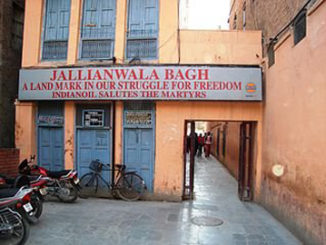
102 years ago, on April 13, the Vaisakhi Day, General Dyer of the British Government opened fire on peaceful protestors in Jallianwala Bagh in Amritsar, India. Killing 379 Indians, according to official sources.
Rabindranath Tagore renounced his knighthood as “a symbolic act of protest”.
The Jallianwala Bagh in 1919, months after the massacre.Jallianwala Bagh well into which people jumped to save themselves from bulletsBritish Genocide and Terrorism against unarmed civilians, including women and children.Bullet marked wall at Jallianwala Bagh.
The Jallianwala Bagh massacre, also known as the Amritsar massacre, was a seminal event in the British rule of India. On 13 April 1919, a crowd of non-violent protesters, along with Vaisakhi pilgrims, had gathered in the Jallianwala Bagh garden in Amritsar, P unjab to protest the arrest of two leaders despite a curfew which had been recently declared.
An hour after the meeting began as scheduled at 16:30, Dyer arrived with a group of sixty-five Gurkha and twenty-five Baluchi soldiers into the Bagh. Fifty of them were armed with .303 Lee-Enfield bolt-action rifles. Dyer had also brought two armored cars armed with machine guns; however, the vehicles were left outside, as they were unable to enter the Bagh through the narrow entrance. The Jallianwala Bagh was surrounded on all sides by houses and buildings and had few narrow entrances. Most of them were kept permanently locked. The main entrance was relatively wide but was guarded heavily by the troops backed by the armored vehicles. The people had no-where to go and were boxed in like caged animals.
Dyer (without warning the crowd to disperse) blocked the main exits. He explained later that this act “was not to disperse the meeting but to punish the Indians for disobedience.” Dyer ordered his troops to begin shooting toward the densest sections of the crowd to inflict maximum damage. Firing continued for approximately ten minutes. Cease-fire was ordered only when ammunition supplies were almost exhausted, after approximately 1,650 rounds were spent.
Many people died in stampedes at the narrow gates or by jumping into the solitary well on the compound to escape the shooting. A plaque, placed at the site after independence states that 120 bodies were removed from the well. The wounded could not be moved from where they had fallen, as a curfew was declared, and many more died during the night.
The number of deaths caused by the shooting is disputed. While the official figure given by the British inquiry into the massacre is 379 deaths, the method used by the inquiry has been subject to criticism. In July 1919, three months after the massacre, officials were tasked with finding who had been killed by inviting inhabitants of the city to volunteer information about those who had died. This information was incomplete due to fear that those who participated would be identified as having been present at the meeting, and some of the dead may not have had close relations in the area. When interviewed by the members of the committee, a senior civil servant in the Punjab admitted that the actual figure could be higher. Since the official figures were probably flawed regarding the size of the crowd (15,000–20,000), the number of rounds shot and the period of shooting, the Indian National Congress instituted a separate inquiry of its own, with conclusions that differed considerably from the Government’s inquiry. The casualty number quoted by the Congress was more than 1,500, with approximately 1,000 being killed. The Government tried to suppress information of the massacre, but news spread in India and widespread outrage ensued. Yet, the details of the massacre did not become known in Britain until December 1919.
The day after the massacre Kitchin, the Commissioner of Lahore as well as General Dyer, both used threatening language. The following is the English translation of Dyer’s Urdu statement directed at the local residents of Amritsar on the afternoon of 14 April 1919, a day after the Amritsar massacre:
“You people know well that I am a Sepoy and soldier. Do you want war or peace? If you wish for a war, the Government is prepared for it, and if you want peace, then obey my orders and open all your shops; else I will shoot. For me the battlefield of France or Amritsar is the same. I am a military man and I will go straight. Neither shall I move to the right nor to the left. Speak up, if you want war? In case there is to be peace, my order is to open all shops at once. You people talk against the Government and persons educated in Germany and Bengal talk sedition. I shall report all these. Obey my orders. I do not wish to have anything else.
I have served in the military for over 30 years. I understand the Indian Sepoy and Sikh people very well. You will have to obey my orders and observe peace. Otherwise, the shops will be opened by force and Rifles. You will have to report to me of the Badmash. I will shoot them. Obey my orders and open shops. Speak up if you want war? You have committed a bad act in killing the English. The revenge will be taken upon you and upon your children.”
Brigadier Dyer designated the spot where Marcella Sherwood was assaulted sacred and daytime pickets were placed at either end of the street. Anyone wishing to proceed in the street between 6am and 8pm was made to crawl the 200 yards (180 m) on all fours, lying flat on their bellies. The order was not required at night due to a curfew. The order effectively closed the street. The houses did not have any back doors and the inhabitants could not go out without climbing down from their roofs. This order was in effect from 19 April until 25 April 1919. No doctor or supplier was allowed in, resulting in the sick, that were shot, being unattended and left to die in Jallianwala Bagh massacre.
After General Dyer reported to his superiors that he had been “confronted by a revolutionary army”, Lieutenant-Governor Michael O’Dwyer wrote in a telegram sent to Dyer: “Your action is correct and the Lieutenant Governor approves.” O’Dwyer requested that martial law should be imposed upon Amritsar and other areas, and this was granted by Viceroy Lord Chelmsford.
Both Secretary of State for War Winston Churchill and former Prime Minister H. H. Asquith however, openly condemned the attack. Churchill referring to it as “monstrous”, while Asquith called it “one of the worst outrages in the whole of our history”.
Winston Churchill, in the House of Commons debate of 8 July 1920, said, “The crowd was unarmed, except with bludgeons. It was not attacking anybody or anything… When fire had been opened upon it to disperse it, it tried to run away. Pinned up in a narrow place considerably smaller than Trafalgar Square, with hardly any exits, and packed together so that one bullet would drive through three or four bodies, the people ran madly this way and the other.
When the fire was directed upon the center, they ran to the sides. The fire was then directed to the sides. Many threw themselves down on the ground, the fire was then directed down on the ground. This was continued to 8 to 10 minutes, and it stopped only when the ammunition had reached the point of exhaustion.” After Churchill’s speech in the House of Commons debate, MPs voted 247 to 37 against Dyer and in support of the Government.
Rabindranath Tagore received the news of the massacre by 22 May 1919. He tried to arrange a protest meeting in Calcutta and finally decided to renounce his knighthood as “a symbolic act of protest”. In the repudiation letter, dated 30 May 1919 and addressed to the Viceroy, Lord Chelmsford, he wrote “I … wish to stand, shorn, of all special distinctions, by the side of those of my countrymen who, for their so-called insignificance, are liable to suffer degradation not fit for human beings” Gupta describes the letter written by Tagore as “historic”. He writes that Tagore “renounced his knighthood in protest against the inhuman cruelty of the British Government to the people of Punjab”, and he quotes Tagore’s letter to the Viceroy “The enormity of the measures taken by the Government in the Punjab for quelling some local disturbances has, with a rude shock, revealed to our minds the helplessness of our position as British subjects in India …
The very least that I can do for my country is to take all consequences upon myself in giving voice to the protest of the millions of my countrymen, surprised into a dumb anguish of terror. The time has come when badges of honor make our shame glaring in the incongruous context of humiliation…”
Dyer was met by Lieutenant-General Sir Havelock Hudson, who told him that he was relieved of his command. He was told later by the Commander-in-Chief in India, General Sir Charles Monro, to resign his post and that he would not be reemployed.
The British Lieutenant-Governor of Punjab, Michael O’Dwyerdied the kind of death he had brought upon many on April 13, 1921.
On 13 March 1940, at Caxton Hall in London, Udham Singh, an Indian independence activist from Sunam who had witnessed the events in Amritsar and was himself wounded, shot and killed Michael O’Dwyer, the British Lieutenant-Governor of Punjab at the time of the massacre, who had approved Dyer’s action and was believed to be the main planner. Dyer himself had died earlier in 1927. We pay our tribute to those who lost their lives in Jallianwala massacre, and salute Udham Singh who avenged their death. A nation is known by its heroes and martyrs
(With inputs from DiscoverSikhism.com and Center For Pluralism)
Request your support for India’s democracy – One call does it.
Briefly, India has been our reliable ally in containing Chinese influence worldwide, and we base that on the stability and strength of Indian democratic institutions. However, these institutions are crumbling, and we seek your help in sustaining our ally, India.
One of the significant sources of potential political instability is Farmer’s protests against the laws passed by the Government of India. These laws help big corporations control the agriculture sector of the economy, stripping the small farmers from their livelihood. Nearly 60% of the Indian population works in the Agriculture sector, contributing 18% to the national GDP; now, all of this is peril. Over 200,000 farmers from across India have been protesting for the last six months, living through the cold and brittle winters of New Delhi.
Nearly 350 Farmers have lost their lives during these ongoing peaceful protests.
Farmers are arrested on bogus charges. The Government machinery is making their lives difficult.
The farmers are determined to protest and have the harmful Farm Laws repealed.
They have the support of a large chunk of Indian abroad who understand how harmful the Farm Laws enacted by the Modi government are for the farmers and the farm sector.
Further to that, the right-wing groups have given three choices to 230 million Christians and Muslims- convert to Hinduism, disappear, or live as second-class citizens.
The Journalists, politicians, and social activists have been detained, interrogated charged with treason for voicing their support for the farmers. The age-old wisdom goes like this, “one call does it.” We hope you can call Prime Minister Modi and ask him to restore the freedoms to the people and repeal the laws that will hurt India’s small farmers and food security.
The political stability of India is critical to our influence in Asia.
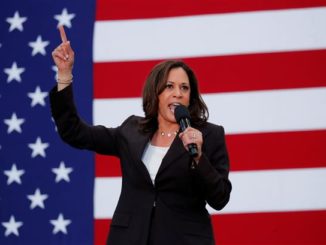
In 2017, Kamala D. Harris was sworn in as a United States Senator for California, the second African-American woman and first South Asian-American senator in history. She serves on the Homeland Security and Governmental Affairs Committee, the Select Committee on Intelligence, the Committee on the Judiciary, and the Committee on the Budget.
The Democratic presumptive presidential nominee Joe Biden has selected as his running mate for VP, Senator Kamala D. Harris who is of Indian origin (her mother is a Tamilian). Fathered by a black Jamaican, Kamala is black.
The Indian Panorama decided to have the view of readers on her selection as a candidate for the second highest office of the most powerful nation in the world.
It is a mixed bag of approval and disapproval.
Here is what the readers said.
New Jersey based senior journalist Ashok Ojha
“A proud moment awaits all Indian-Americans who might see Democratic candidates, Joe Biden and Kamala Harris, as the winners in the November election. Should they win we will see Kamala Harris, a woman of color and of Indian origin, as the Vice President of USA. If it happens it would be the first time in the history of USA.
The majority of Indian-Americans are of progressive bend that aligns with the personality of Kamala. For this reason alone, majority of Indian Americans may vote for Democrats in the forthcoming presidential election.
Senator Kamala currently serves on the Homeland Security and Governmental Affairs Committee, the Select Committee on Intelligence, the Committee on the Judiciary, and the Committee on the Budget. She possesses all the experiences needed to function as the Vice-President of USA. She has the experience working as a top law enforcement officer since 2003 as California’s Attorney General.
I wish to see Kamala elected as she possesses the kind of character it requires to stand up to the powerful. She resolved to spend her life advocating for those who could not defend themselves.
As the VP of the most powerful nation of the world I expect her to be fair and objective while dealing with India. It would be up to the Indian leader to take advantage of the Vice-Presidential office where someone of Indian origin would be sitting.”
Community activist , Long Island based Real Estate broker Anu Jain
“Kamala Harris is the best choice in the era of Black Lives Matter. As the daughter of immigrants who came to this country as students and became civil rights activists, she is a woman of diversity at a time when we need diverse voices in leadership. Because of her background she understands the tapestry of America. Her experiences and past will inspire Americans.
By selecting Harris, Biden has most definitely made history. As the first Black and first Indian American woman on a national ticket, she is going to be transformational and will energize the base. And, if they win, she will help change the view of women in politics forever. But this election is about one, and only one, person — Donald Trump. Harris’ selection has definitely put Trump’s campaign in a hard spot.”
Morgantown, WV based eminent ophthalmologist Dr. VK Raju
“Yes, we are proud and elated that Kamala Harris is selected to the vice-presidential ticket of the democratic party.
It’s an honor for every one of us. It is a historical and an outstanding achievement and The American dream is quite alive!
In spite of her extraordinary busy schedule, she has written two non-fiction books and one children’s book.
She is tough and tender which is a rare and exceptional quality.
On the other hand, we will be even prouder if we clean up Mata River Ganga. (like they did river Thames.) Today, river Thames is the cleanest river that flows through a major city. This was a major accomplishment considering that fifty years ago, the river was so polluted that it was declared biologically dead. May I add, we will be profoundly proud when we change the life of a young girl in India. Band aid changes will not do; real implementation of the promises of the leaders in public is needed. Then, sky is the limit for India!”
Washington DC based Community activist and promoter of pluralism Mike Ghouse
“Congratulations to Kamala Harris, Joe Biden, and the Democratic Party for selecting the right candidate. Biden made his first right decision by selecting Kamala Harris as his running mate. She will be one of the best VP’s America ever had.
Kamala will change the role of Vice-presidency and be more active in domestic politics, and most certainly, she will not be a docile poodle like Pence. Kamala will stand her ground; we needed a VP who can say no to the president; she will be the one.
Is there an Indian who has not read about Kamala Harris? I have lapped up everything that came across about Kamala. She makes us proud of being an Indian American, she and our Indian American Congressmen give us hope and are the role models for the next generation.
Sen. Harris is progressive and inclusive. She will not buy into the prejudices that hold the nation back. Her intellectualism is a breath of fresh air; indeed, it is worth watching her grill Judge Bret Kavanaugh and attorney general nominee William Barr.
She is the perfect candidate for Vice-president and I will be voting for her and possibly campaign, as I did for Obama. By the way, I am an independent voter.
I have run into her several times in the Hart Senate Building, and her office is the first office as you enter the building. I have given her my book American Muslim Agenda, a book about building a cohesive America.
One of the questions that haunt me is to find out if Kamala Harris had faced exclusion from the Indian American community while growing up, as her father was black. Indian Americans are still struggling with racism, casteism, and prejudices.
Kamala Harris will undoubtedly work for stronger ties with India, provided Modi Bhai gets his act together. She will not tolerate Modi’s hatred for fellow Indians who are Christians and Muslims.
The blind Modi Worshippers will work hard for Trump as their racism aligns with Trumps’. The Good news is they are a few of them, and it will not make a dent.
Kamala owes an apology to the Sikh community for how she opposed the Turbans in the police force while she was the Attorney General of California.
I am not voting for Kamala, because she is of Indian Origin, I have been a fan of hers since I watched her grill Kavanaugh and Barr. She will be a great vice-President.”
New Jersey based businessman and a community activist Dave Makkar
“Kamala Harris has created history by being the 3rd woman , 1st Black & 1st Indian American to be running for Vice President of America. Being an American, I am proud of my country that after electing its first Black President in 2008 we are definitely moving beyond race, religion & gender.
Then as an Indian American, I have mixed feelings for Kamala’s candidacy. She always claims that she & her sister were raised by her mother, who was from India, as Black. That’s the most admirable thing about her for identifying herself with both cultures. The most disturbing well-known fact about her that she used her sexuality to ride to the top in politics. An unfair means to grab power. I don’t care about her sexual preferences but it is unethical & unfair just like the use of money or muscle power to grab power. Lot of male politicians had affairs and mistresses but they never used it to ride to the top. Fair competition is the foundations of democracy. If women rise to the top by sleeping with people in power the democratic system will no longer be supported by people of talent and principles. Such people are flash only with no substance and lack ideological compass. Use of money power, muscle power or sexuality in politics is worst for a country & its citizen. Live example is the plight of Indians currently ruled by politicians with flash only, no substance and total lack of ideological compass. They gained power by using muscle power, money power and religion.
Kamala being an opportunist lacks political ideology, always combine her flash with her killer political instinct. She adopted Bernie Sander’s policies to claim she believes in progressive left policies and then abandoned him to claim she is a moderate when she ran for President!. Even before the first vote was cast for primaries; she abandoned her bid for President after major flip flops in debates. Her flip flops, low poll numbers & even rock bottom Black votes during primaries will be a drag on Biden. Biden who is famous for his gaffes for over 4 decades in Washington; lately his gaffes have become a serious matter of concern about his health. If elected he will be of Regan’s age when he left office. That is a matter of grave concerns; Kamala with hardly any political ideology and stamina for political fights that she can take over as President if the need arises. So the voters should keep all these things in their mind when they will vote to Elect the President of the most cherished and powerful democracy in the world; United States of America!”
Long Island, New York based political analyst and commentator Vibhuti Jha
“Congratulations to Senator Kamala Harris for her nomination to Mr. Biden’s ticket for the position of the Vice President. It’s proverbially known as a position that is a heartbeat away from Presidency! No VP candidate has drawn bigger attention as she has done and there are good reasons to analyze in that regard. She will give a much-needed flamboyance to the Biden campaign and as a former Attorney General of California she brings with her an enormous ability to argue a position as anyone can do. She is the best of all available option except perhaps for Ms. Warren, perhaps.
That said , we Indians need not go mushy or sentimental or emotional about her “Indian” heritage ! She is not an ABCD since she carefully crafted her future as a black woman and her entire political career is woven around the identity of her black color. Her mother is a Tamil Brahmin and that’s where her things Indian ends. What we must bear in mind relates to her position on matters relating to India and that is not a positive given her past statements against laws passed in Indian parliament with overwhelming mandate.
In any case , the position of Vice President is vital in this election given Mr. Biden is almost 78 and thus the VP has to be battle ready from day one. I am of the opinion , that since Mr. Biden is a one term President, he might choose to step down ( for a variety of reasons) mid-way to pave way for the first ever ascent to the Presidency by a woman in America! Highly probable !
Mr. Biden will lose or win based entirely on his performance! His policy pronouncements have been remarkably anti-India and thus , Indians would do well to vote Trump whose policies have been truly pro India. For the first ever time , US and India have taken joint action to hit China for its Wuhan virus and border attacks by banning Chinese app makers. The battle has just begun. Democrats , Biden and his son have had murky financial equations with China !
Beware Indians of the Democrats in this 2020 elections. Do nothing that hurts our country of origin !”
Dr. A. D. Amar , President, Indian-Americans for Trump
“The Kamala Harris selection by Biden to be his running mate has a lot of significance for the Indian-Americans, some positive, some negative. It will excite many Indian-Americans. This is the closest India has come to the Oval Office. With Biden being 77-year old and she 55, there is a very good chance that she could be the president during Biden’s first term, if there is a Biden win.
However, there is a lot of negative in the Indian-Americans for her. Until she was contesting for the President, during the Democratic primary season, she had not associated herself with the Indian-American population. That is why, at a debate podium, questions were raised to her about her being of Indian heritage and hiding it. That opened this issue for her. Several reporters, since, asked her openly about her not espousing her Indian descent. It was only then that she accepted her Indian blood.
I am sure this question will come to haunt her during the presidential campaign. Both Indian-Americans and the Trump-supporting reporters will not let it die. No matter what, this lack of her association with her Indian heritage will have some negative effect on the Indian-American votes for Biden.
This election cycle, the Indian-Americans for Trump has been expecting a big turnout of the Indian-Americans for Trump, some of which will be dampened. Nevertheless, Harris’ selection by Biden will send negative vibes among the black voters. While many of them may not vote for Trump, the lack of enthusiasm for the Biden-Harris ticket will keep them home on the election day.
Nevertheless, Trump will still win hands down. The Indian Americans for Trump will make sure of it.”
Queens, New York based community and political activist Malini Shah
“Kamala Harris is the right choice and would make a great Vice President .She brings with her stability, steadiness and diversity .Very experience and fights for rights of all communities.”
Long Island, New York based veteran community leader Indu Jaiswal
“ I am extremely delighted that Kamala Harris has been nominated by the Democratic Party for Vice President Position. She is of Indian Origin. Hence , she makes all proud. She is a good choice. Wishing her all the best.”
Ramadan is pronounced Ramzan in the Subcontinent, Iran, Turkey, and the Central Asian Republics wherever the Persian linguistic influence exists, elsewhere in the world, it is Ramadan. In the Arabic language, “Z” is “D” in most words. This article has three sections: The Spirit, Politics, and Rituals of Ramadan.
The spirit of Ramadan
One’s birth to the last rites of life, every moment in between, is laden with rituals, even though some of us may deny it. Indeed, whether we go to the gym, eat, sleep, wear clothes, drive, or talk on the phone, we follow rituals.
Rituals signify the milestones of our daily life. Every significant moment of the day is a ritual. It is an unwritten way of measuring our progression, a memory
pattern to bring discipline to our actions. Training is necessary to do things on time, manage personal relationships, drive to a destination, or keep within budget. The result of disciplined behavior is worthwhile for most people. When joyous, whether we are theists or not, we have to express that sentiment. Otherwise, a sense of incompleteness lingers in our hearts.
Every faith is composed of a set of unique rituals to bring discipline and peace to human life. Fasting is one of the five essential rituals that Muslims around the world observe.
Ramadan is the ninth month of the Islamic lunar calendar and observing with a ritual precision; it is annual training or a refresher. It requires one to abstain from food, drink, intimacy, ill-will, ill-talk, harmful actions, and other temptations from dawn to dusk, every day for a full month.
One has to rise above his or her baser desires. Islam gifts this month to
its followers to teach discipline to bring moderation to their daily lives.
Although Ramadan is popularly known in the west for its culinary delicacies and fancy iftars (ceremonial breaking of fast at sundown), the spirit and intent of Ramadan lie in a human transformation in a month-long inner spiritual journey of finding oneself in tune with spirituality.
God does not need the hunger or thirst of someone who hurts others, violates their dignity or usurps their rights said Prophet Muhammad (PBUH). The fasting of the stomach must be matched by the dieting of the limbs. The eyes, ears, tongue, hands, and feet all have their fasts to undergo. The tongue’s temptations, for example — lies, backbiting, slander, vulgarity and senseless argumentation — must be challenged and curbed to maintain the integrity of the fast.
The consciousness of behavior and vigilance over action are the most profound dimensions of fasting: the fasting of the heart focuses on the attachment to the divine. That is when Ramadan becomes a source of peace and solace, just as Christmas goes beyond the rituals to bring forth kindness, charity, and caring.
True fasting is self-purification; from this comes an abundant inner life that brings about values such as justice, generosity, patience, kindness, forgiveness, mercy and empathy — values that are indispensable for the success of the community.
Ramadan will come and go with such stealth that we cannot but be reminded of our mortality. What is it that we value, and why? Habits, customs, even obsessive behavior like smoking can be curtailed with relative ease in the face of a higher calling.
Politics of Ramadan
Politics plays a crucial role in our Temples, Synagogues and Churches, Mosques are no different. For the moon sighting, a few scientifically-inclined-Muslims have adopted NASA’s calculations believed to be precise. However, four different traditions are operating concurrently; i) Strictly Calendar, ii) NASA and iii Sighting with bare eyes, and iv) sighting by others in the community.
Muslims around the world will begin fasting from Thursday, April 23, 2020, and for a whole month after that, however, for some of them, it will start (only) if the moon is sighted.
The traditions of Ramadan
It’s a celebration time when Muslims around the world anxiously wait for the first moon of the ninth Lunar month to appear in the sky. The families gather in their backyards, or get on the nearest hillock or climb on top of their homes, and wait for the pencil-thin moon to appear on the horizon, and when it does, Ramadan begins.
Right after the moon is sighted, the announcement goes that Ramadan has started.
The first evening, mosques hold “Taraweeh” prayers – in for the next 29 to 30 days, they recite a chapter each day for the full month. Due to Corona, this year, every mosque around the world has canceled the congregational prayers and asked to pray at home.
As the Christians do the count down from the first day of Christmas or Hindus express devotion for each one of the nine days through Navaratri or the Jews follow eight days of Chanukah, Jains observe eight days of Paryushan. Others follow a similar path, and the Muslims count the next 29 to 30 days with a sense of duty.
Every day, with small variations in practices, families rise early around 4:00 AM and gather up in the kitchen to participate in preparing and cooking. Then the family sits around, says a short blessing, and eats the meal. Everyone has to finish off the food and water intake five minutes before sunrise or the morning call for prayers known as Azan or Adan.
Then everyone used to go to the mosque to pray, but this year, everyone will pray at their homes.
Throughout the day, a conscious effort is made to abstain from food, water, or temptations that are detrimental to self-discipline. Those who do not observe fasting, honor the ones who do, by not eating or drinking in their presence.
One of the most appealing aspects of Ramadan is the domino effect other Muslims have on you to guard yourselves against greed, anger, ill-will, malice, hate, jealousy, and other ills of the society. One feels pious during the month. Of course, there would always a small percentage in a group who do not receive that wisdom.
When the time to break the fast approaches towards the sundown, anxiety builds up, it is almost like the countdown of seconds when the space shuttle takes off—Muslims attempt to be in the congregation or team up with some. A prayer call (Azan) signifies the time to break the fast.
Prophet Muhammad had initiated a healthy way of breaking the fast; it was graduating the empty stomach with snacks like dates, fruits, and veggies to prepare the digestive system for a full meal after the prayer break. The dates are the most popular item around the world, they are chewy, meaty, and tasty after a long day of fasting, and dates are also a preferred item as it was for the Prophet. It has the right nutrients to give one a smooth transition from fasting all day to eating a full meal.
The breaking of fast, also known as “Iftar,” has become a community event. It is an excellent opportunity for friends of Muslims belonging to other faiths to host the Iftars. It is a way to bond, connect, and build cohesive societies. Unfortunately, this year, no one is holding the iftar parties.
President Clinton started the tradition of holding an Iftar party carried forward by President Bush and then-President Obama, and they invited a few Muslim leaders from around the United States. Trump held the iftars for the Muslim Ambassadors. It is a major social event for the politicians, just as it is with Christmas, Rosh Hashanah, Diwali, and other festivities.
At the end of the 29th or 30th day, depending on the moon sighting, NASA, or other traditions, the fasting would come to an end with the celebration. It is Chandni Raat or the moonlit festivities. Usually, the evening is spent on last-minute shopping.
The next day is Eid or festivity. It is a significant event, and Muslims gather in large spaces and perform their thanksgiving prayer. The traditional greetings are “Eid Mubarak, Ramadan Mubarak, or Happy Ramadan.”
On this day, one formally forgives and gets forgiven and starts the year with goodwill. Every one hugs three times; I am your friend; you are my friend, and together we are friends, and together we forgive each other. It is the equivalent of Michami Dukadam in Jainism.
Traditionally everyone in the family wears new clothing, a symbol of starting over with a clean slate. The oldest one in the family passes on gifts and cash gifts (called Eidi) to younger members of the family to spend as they wish and to teach responsibility with freedom.
It is also a time to share one’s wealth with the needy; it is like the tithe and is called Zakat. Every family takes out 2.5% of the value of their assets and passes on to the needy. It is an investment in human capital, to help uplift everyone on a level playing field to maintain a sustainable good in society.
On the culinary side, it is a feast! A variety of dishes are prepared, over the years I have discovered that the most common item around the globe is a dessert made out of vermicelli’s, i.e., thin hair noodles cooked in Milk with nuts, dates, honey, and other goodies, it is both in liquid and solid formats. Of course, the Biryani is the main meal. It is a feast!
For fasting to be truly universal, its benefits must extend beyond the fraternal ties of Muslims and must continue to forging a common humanity with others. Fasting is meant to impart a sense of what it means to be truly human, and its universality is reflected by its observance in Bahai, Buddhist, Christian, Hindu, Jain, Jewish, Sikh, Zoroastrian and other faiths.
(The author is the founder and president of the Center for Pluralism. He is a speaker, thinker, author, consultant, pluralist, activist, newsmaker, and an interfaith wedding officiant. He is committed to building cohesive societies and offers pluralistic solutions to the media and the policymakers. www.TheGhousediary.com )
Signup to our Newsletter!
Don’t miss out on all the happenings around the world