Tag: Mike Johnson

  • Mike Johnson Reveals GOP Health Care Plan as ACA Subsidies Set to Expire

    Mike Johnson Reveals GOP Health Care Plan as ACA Subsidies Set to Expire

    WASHINGTON, D.C. (TIP): After the Senate failed this week to advance competing health care plans, attention has shifted to the House, where Republicans are making a last-minute push as the clock runs out to prevent higher insurance costs for millions of Americans, says a Newsweek report.

    Speaker Mike Johnson unveiled a sweeping Republican proposal late Friday, December 12,  moving ahead without extending enhanced tax subsidies that help people afford insurance through the Affordable Care Act, also known as Obamacare. Those subsidies, expanded during the COVID-19 pandemic, are set to expire at the end of the year.

    Why It Matters

    President Donald Trump has said he believes Republicans can deliver a better alternative to Obamacare, a promise he has made repeatedly over the years. But he has offered few specifics beyond proposing direct payments to help Americans buy insurance.

    What To Know

    Johnson, a Louisiana Republican, spent much of Friday behind closed doors with GOP lawmakers, as he had earlier in the week, working to assemble the package as the House enters the final days of its 2025 legislative session. The Speaker said in a statement announcing the Lower Health Care Premiums for All Americans Act that the House plans to vote on the package next week.

    Democrats staged the longest federal government shutdown in U.S. history this fall in a failed attempt to force Republicans to negotiate over health care. Despite promises of votes, the Senate this week failed to advance both a Republican-backed health plan and a Democratic bill that would have extended the enhanced ACA tax credits for three years.

    With just days remaining before lawmakers leave Washington, Congress appears poised to adjourn without a consensus solution.

    House Republicans released a package of more than 100 pages that centers on long-standing GOP priorities aimed at reshaping the health insurance market. The plan seeks to expand access to employer-sponsored coverage and increase oversight of pharmacy benefit managers, or PBMs, while leaving the enhanced ACA subsidies to expire.

    A central element of the proposal would expand access to so-called association health plans, allowing small businesses and self-employed individuals to band together to purchase insurance. Supporters argue that pooling coverage gives employers greater bargaining power to negotiate lower premiums.

    Critics, however, warn that association plans often provide fewer benefits and weaker consumer protections than plans sold through the ACA marketplaces.

    The proposal also would require PBMs to provide more detailed data, a move Republicans say could help rein in prescription drug costs. PBMs act as intermediaries between drugmakers, insurers and pharmacies, and critics across party lines have accused them of inflating prices and squeezing independent pharmacists.

    The GOP package also references cost-sharing reductions for some lower-income ACA enrollees, but those changes would not take effect until January 2027.

    Notably absent from the plan is any extension of the enhanced ACA tax credits that millions of Americans rely on to lower their monthly premiums. Those subsidies, enacted during the pandemic, expire Dec. 31. Without congressional action, many families could see their out-of-pocket premiums more than double, and in some cases increase by far more.

    Trump has consistently promoted the idea of sending money directly to individuals rather than extending ACA tax credits. It remains unclear how large such payments would be. A Senate Republican plan that failed this week would have created new health savings accounts funded with $1,000 annually for most adults, or $1,500 for people ages 50 to 64.

    No such health savings accounts appear in the House plan. Johnson’s approach has put politically vulnerable House Republicans in swing districts under mounting pressure as the subsidy deadline nears.

    Frustrated with delays, a group of centrist Republicans has joined Democrats to push alternative proposals to temporarily extend the ACA tax credits to avoid immediate premium hikes.

    Those lawmakers are backing several bills and have begun signing discharge petitions, a rarely successful procedural tactic that can force a vote on legislation if a majority of House members sign on.

    This year, however, discharge petitions have gained unusual traction. Lawmakers recently used one to force a vote on releasing Jeffrey Epstein-related files held by the Justice Department. One petition, sponsored by Rep. Brian Fitzpatrick, R-Pa., had attracted 24 signatures as of Friday, evenly split between Republicans and Democrats. It would compel a vote on a bill extending the subsidies for two years while adding anti-fraud provisions and PBM restrictions.

    Another petition, introduced by Rep. Josh Gottheimer, D-N.J., has drawn 39 bipartisan signatures and would force a vote on a one-year subsidy extension with new income caps.

    Both efforts could succeed if House Democratic leader Hakeem Jeffries urges his caucus to sign on. So far, he has declined to commit. Jeffries is also backing a separate Democratic petition with 214 signatures that would extend the subsidies for three years without changes. No Republicans have joined that effort, and Senate Republicans have made clear such a proposal has no chance of passing their chamber.

    What People Are Saying

    Johnson said in a statement, in part, “Nearly 15 years ago, the Democrats’ Unaffordable Care Act broke the American health care system. Since its inception, premium costs have skyrocketed, networks have shrunk, and the system has become bloated, inefficient, and riddled with waste, fraud, and abuse. While Democrats demand that taxpayers write bigger checks to insurance companies to hide the cost of their failed law, House Republicans are tackling the real drivers of health care costs to provide affordable care, increase access and choice, and restore integrity to our nation’s health care system for all Americans.”

    Trump said late Friday at a White House event, “I want to see the billions of dollars go to people, not to the insurance companies. And I want to see the people go out and buy themselves great healthcare.”

    Jeffries said Friday, “We’re actively reviewing those two discharge petitions and we’ll have more to say about it early next week.”

    What Happens Next

    As Congress nears adjournment, the fate of millions of Americans’ health care costs remains uncertain.

    (Source: Newsweek)

  • 6 things you probably didn’t know were in Trump’s mega-bill

    6 things you probably didn’t know were in Trump’s mega-bill

    Eliminating tax on silencers. Taxing remittances. A garden of heroes. Congress could have done better.

    “The bill’s toplines are understandably seizing much attention. It will remake the social safety net, potentially taking away food assistance from 5 million of the neediest Americans and kicking at least 17 million people off of their health insurance — resulting in premature deaths for at least 100,000 of them, according to estimates. It will increase the national debt by more than $3 trillion over the next 10 years, raising the cost of borrowing for the government — and U.S. households, which will pay thousands more each year in interest on their mortgages.”

    By Natasha Sarin

    President Donald Trump’s tax and spending bill moved through Congress so quickly that members who voted for the legislation have registered surprise about what it contains. Because the Senate-approved bill that the House passed on Thursday is 887 pages long, it’s easy to see why it’s hard to track all that is in there.

    The bill’s toplines are understandably seizing much attention.

    It will remake the social safety net, potentially taking away food assistance from 5 million of the neediest Americans and kicking at least 17 million people off of their health insurance — resulting in premature deaths for at least 100,000 of them, according to estimates. It will increase the national debt by more than $3 trillion over the next 10 years, raising the cost of borrowing for the government — and U.S. households, which will pay thousands more each year in interest on their mortgages.

    But buried in those 887 pages are changes that you likely haven’t heard as much about. Here are some that stuck out to me:

    1. Some guns and silencers will be cheaper: The bill eliminates the tax on gun silencers and certain types of rifles and shotguns, weakening the National Firearms Act that was passed a century ago. That means silencers, which have been deployed in recent mass shootings, will be less expensive. In a country that ranks No. 1 by a significant margin for gun violence, it is hard to see why making silencers more accessible is good policy.
    1. States whose food stamp programs are less accurate will be rewarded: Republicans plan to cut $186 billion over the next decade in federal funding for food stamps. The professed logic was to shift funding to states that administer these programs to ensure they have “skin in the game” and will do so carefully. Sen. Lisa Murkowski (R-Alaska) ultimately agreed to vote for the bill but only if her state was exempted from the skin. So, lawmakers delayed federal cuts for states such as Alaska that had previously registered high rates of erroneous payments. It is incomprehensible why the states with the most error-ridden food stamp programs should see the lowest funding cuts.
    1. Student borrowers who have been defrauded are more vulnerable: The bill delays regulations aimed at helping students who borrowed to fund an education they ultimately did not receive because their school misled them or closed while they were enrolled. (The regulations had been on hold because of ongoing litigation.) The basic idea behind these provisions was that some students take out high-cost loans because schools advertise certain benefits of their programs, such as likely job prospects. These regulations would protect borrowers who didn’t get the education they were promised from bearing the cost of those loans. Delaying these regulations is a mistake. We should not continue to saddle students who are unable to benefit from the education that they were advertised with debt that will loom over them.
    1. (Some) remittances will be taxed: Often immigrants in the United States send money home to their families. In 2022, more than $20 billion was sent from the U.S. to India alone. These funds are most important to poorer countries such as Lebanon and Nicaragua, where they total about 30 percent of gross domestic product. The Senate-passed bill aims to discourage remittances by taxing them. But it exempts certain types of payments: for example, those made through banks (which lobbied aggressively against the proposal) and those made with digital assets. The purported rationale for the remittance tax is to encourage self-deportation by making it more costly to ship money abroad. It is problematic in the complexity it introduces to the tax code because the applicability of the tax is dependent on how money is sent abroad. The bill gives certain financial intermediaries, such as banks, advantages over others.
    1. The tax code got less fair: Tax experts believe in “horizontal equity” in the code — or the idea that taxpayers with similar resources should face similar tax burdens. This bill delivers horizontal inequity. It includes new tax breaks for tipped and overtime workers, seniors and people who borrow to buy cars that result in similarly situated people of different ages or in different industries facing dramatically different tax rates. This is bad policy because people will spend energy on tax avoidance to earn income in the most tax-advantaged way.
    1. We’re building that garden of heroes: As one of Trump’s final acts before leaving office in his first term, he affirmed his commitment to building a statue garden of American heroes — ranging from George Washington to Julia Child to Kobe Bryant — by July 2026. Upon returning to office, he picked those plans up, calling for the construction of the garden “as expeditiously as possible.” The Senate bill moves the garden closer to reality by allocating $40 million for its construction.

    There’s a lot more in these 887 pages. We are planning on going to Mars, ending unemployment benefits for millionaires and starting new — and highly complex — Trump-branded savings accounts for children born in the next few years.

    What are perhaps even more revelatory than the legislative text are the testimonies we’ve seen from the lawmakers who drafted it. Sen. Jim Justice (R-West Virginia) voted for it but said “I wish to goodness” the Medicaid cuts that will hit low-income families had been excised. Sen. Josh Hawley (R-Missouri), also a yes, said he would plan to spend the coming years trying to pass legislation to reverse those cuts. Murkowski, who was the deciding vote in the Senate, voted for it even though she thinks it is “not good enough.”

    It is hard to disagree. The House-passed bill spends more than $3 trillion to make the tax code more complex and vulnerable Americans less healthy. Instead of curbing fraud, the legislation encourages it. In every regard, it is a mistake: It grows deficits but shrinks the economy, makes gun silencers more available but healthy food less so. What is so baffling is that Congress had months to land on a better bill before the expiration of the Trump tax provisions that has pushed this debate to the fore. Lawmakers should have taken the time they needed to craft legislation they could have read, debated and, ultimately, taken pride in — not a bill they voted for begrudgingly while trying to disown.

     (Natasha Sarin, a Washington Post contributing columnist, is a professor of law at Yale Law School with a secondary appointment at the Yale School of Management in the Finance Department. Previously, she served as deputy assistant secretary for economic policy and later as a counselor to Treasury Secretary Janet Yellen. Follow on XNatashaRSarin)

  • US Congress will pass sanctions against countries who don’t cooperate on deportation: House Speaker

    US Congress will pass sanctions against countries who don’t cooperate on deportation: House Speaker

    WASHINGTON, D.C. (TIP): The US Congress is ready to pass sanctions on countries which refuse to cooperate with the Trump administration’s order on deportation of undocumented immigrants, House of Representatives Speaker Mike Johnson has warned. Soon after taking over, the Trump administration started massive mass deportation. Raids are being reported from across the country. Colombia and all nations should be on notice – Congress is fully prepared to pass sanctions and other measures against those that do not fully cooperate or follow through on requirements to accept their citizens who are illegally in the United States, Johnson said.

    “President Trump is putting America first, just like he said he would. And Congress will implement policies that reinforce his agenda, he said.

    Johnson came out in support of Trump’s decision to impose tariffs on Colombia after its President Gustavo Petro turned away two US military aircraft full of detained Colombian migrants.

    The White House later on Sunday night that Colombia has agreed to the unrestricted acceptance of immigrants who entered the US illegally from Colombia and that President Donald Trump will not levy a 25 per cent tariff on the country unless Colombia fails to honour this agreement.

    In a joint statement, two influential Democratic Senators Dick Durbin, Ranking Member of the Senate Judiciary Committee, and Tammy Duckworth said these mass deportations have the potential to sweep up Dreamers who came to the United States as children, veterans who have served our nation and essential workers who care for American family members, build homes and ensure that they have food on the tables.

    Instead, we should focus on deporting those who pose a danger to our country. And we should give the rest a chance to earn legal status. They would have to register with the government, pay their dues, and submit to background checks, the two Senators said.

    Over the last few days, Chicago has seen a series of raids. The Trump Administration has approved the use of military aircraft to enforce his immigration policy.

    Congressman John Garamendi described it as deeply alarming.

    Last week, External Affairs Minister S Jaishankar said that India would be cooperating with the US in taking back undocumented Indians.

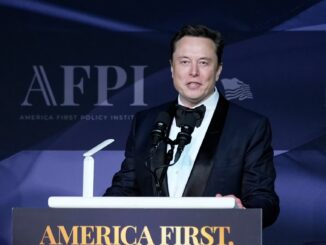
  • Elon Musk is the ultimate chaos agent

    Elon Musk is the ultimate chaos agent

    With one post on X, Musk has the power to shut down the government of the most powerful nation in world history

    Much about the second rise of Trump, like that of the first, undermines or overthrows everything we thought we knew about power and politics. Trump seems to maintain his support in spite of, if not because of, his willingness to blow everything up, to flout norms of decorum and law and to engage in fabulous hyperbole that bears little grounding in reality.

    By Siva Vaidhyanathan

    Elon Musk holds no public office. He has never stood for election, passed scrutiny for appointment to public office, nor commanded a political force of any measure. He is, however, the latest star and favorite of Donald Trump, the US president-elect. So when Musk issues one of his off-the-cuff missives via his decrepit social network, X, Trump loyalists (almost all the Republicans) take him seriously.

    Yet now, suddenly, Musk has the power to shut down the government of the most powerful nation in the history of the world and depose his party’s legislative leader, the speaker of the House, Mike Johnson, a Republican lawmaker from Louisiana.

    Very early Wednesday morning, fueled by hubris and whatever else, Musk called for the US House of Representatives to reject the negotiated continuing resolution that it must pass this week to keep the federal government funded.

    “This bill should not pass,” the richest human being in the world wrote at 4.15am ET. Musk followed up for hours, using every derogatory word he could muster to describe a bill he almost certainly had not read nor understood. “Any member of the House or Senate who votes for this outrageous spending bill deserves to be voted out in 2 years!” Musk wrote Wednesday afternoon.

    Johnson spent months garnering enough votes among his divided caucus (plus Democrats, with whom he must negotiate to get such a bill passed) to send the resolution to the Democrats who control the Senate until next month and then to the president, Joe Biden. Johnson knows the failure to pass this resolution would cause great harm to 4 million federal employees and those who depend on their services right before the holidays. Farmers would go without subsidy payments. Small businesses would not get their loan payments. Kids in head start programs would have no place to go during the workday, forcing parents to take time off from work and possibly lose jobs. Active-duty military personnel would work with no December or January paychecks until Congress passes such a resolution.

    Because of this impasse, congressional Republicans might force Johnson to resign as speaker and yet another chaotic scramble for that job would ensue. Johnson is the third Republican leader since Trump first took office in 2017. Every time one resigns the factions of the Republican party generate grinding conflict. The last one, after Kevin McCarthy was ousted in 2023 after negotiating a similar agreement with Democrats, yielded a standoff and the ultimate ascension of Johnson, considered a rightwing extremist and Trump loyalist. But talking to Democrats at all now makes one unacceptable to the Trump crowd. So there is a good chance that not only will the government not function for weeks or months, it won’t even have the opportunity to come back until the Republicans can once again choose a speaker. That is not going to be easy.

    According to news reports, many Republican members of Congress took Musk’s rant seriously, and feared crossing Trump’s new buddy who allegedly will head some yet-to-be-created federal office that is supposed to ferret out waste from the federal government.

    In such an unstable political environment, with no real party discipline within Congress, figures like Musk have unprecedented influence. Being called out by someone with that much volume would be debilitating to one’s political career.

    Much about the second rise of Trump, like that of the first, undermines or overthrows everything we thought we knew about power and politics. Trump seems to maintain his support in spite of, if not because of, his willingness to blow everything up, to flout norms of decorum and law and to engage in fabulous hyperbole that bears little grounding in reality.

    Musk, who built his early reputation as a charismatic leader of upstart companies like PayPal and Tesla (neither of which he actually founded), inflated his ego faster than he inflated his wealth, merged with Trump to share these features. Years of pushing the limits of automobile and financial regulation, often breaking those limits but rarely held accountable for those abrogations, have left Musk feeling invincible yet victimized. He’s a whiner more than a winner.

    Musk is also an immigrant (who worked illegally in the United States for a time) who has turned on immigrants and a former free-speech advocate who has turned off the ability of his critics and independent journalists to find voice on his platform.

    The lesson of Musk’s effort to shut down the US government and depose the Republican House speaker is that he has no interest in building, maintaining or managing anything responsibly. We know that already from how he runs X, the company he has all-but-destroyed since being forced by a court to buy it. The only things that have kept his two significant companies afloat have been teams of well compensated lawyers and engineers who have kept federal subsidies, loans and contracts (none of which are endangered by the looming shutdown) flowing to both companies.

    Musk, like Trump, does not believe rules should apply to rich men. As long as the rest of us keep rewarding them for that, they will not be deterred and neither will the next crop of rich men. And now, with Musk mimicking Trump, we have two chaos agents tearing the basic functions of government apart while betraying and mocking the rule of law.

    This is the first test of the United States to keep functioning under this new, radical, unleashed Trump. So far, this nation is failing and falling.

    (Siva Vaidhyanathan is a professor of media studies at the University of Virginia and the author of Antisocial Media: How Facebook Disconnects Us and Undermines Democracy (Oxford University Press, 2018).)

    (Source: The Guardian)

  • SUOZZI URGES BIPARTISAN APPROACH TO ADDRESS IMMIGRATION CRISIS

    SUOZZI URGES BIPARTISAN APPROACH TO ADDRESS IMMIGRATION CRISIS

    GLEN COVE, NY (TIP): Former Congressman Tom Suozzi , on January 2, called on President Biden, as well as House Speaker Mike Johnson and House Leader Hakeem Jeffries, to find common ground on border safety and immigration reform and urged the passage of bipartisan legislation to solve the migration crisis at the southern border and reform the immigration process.

    In separate letters to the President and Speaker Johnson and Minority Leader Jefferies, sent this morning, Suozzi urged that they “prioritize immigration issues” and offered up proposals for a “comprehensive, moderate solution that finally secures our border and recognizes the hardships and suffering that have resulted from the federal government’s decades-long failure to address this very real problem.”

    At a Zoom press conference held this morning, Suozzi stated, “The residents of New York’s 3rd Congressional District and the American people are angered by the inaction of their federal government on comprehensive immigration reform and border security.”

    Suozzi continued that “one party, one chamber bills will not bring safe borders and immigration reform.” He stressed that “together, we must find common ground and pass a bipartisan, bicameral bill that will secure our borders and finally address the hardships and suffering caused by decades of inaction.”

    Suozzi also discussed his prior proposal, crafted with former Republican Congressman Peter King in 2019, to bring “common sense solutions to secure our borders,” including better radar technology, improved ports of entry, enhanced physical barriers, more immigration judges, and more border patrol agents.

    During the press conference, Suozzi pointed out that a key component of his 10-Point Plan, released on December 19, 2023, included common-sense measures to address the immigration crisis. Suozzi proposes that Congress provide more border security funding to hire additional border patrol agents, immigration judges, and asylum officers, as well as securing and implementing more smart technology. He also is in favor of enhanced physical barriers and an “Ellis Island” plan to help secure the border and bring order to the current crisis.”

    “We should build a new, comprehensive complex at the border to expedite the processing of migrants. We should hire more immigration judges who would rule on asylum cases without delay,” Suozzi stated in his remarks. “Those migrants who have credible claims for asylum would be more effectively processed. And a clear protocol would be put in place to quickly deny entry to those who do not qualify. A workable plan to deport those applicants denied entry would be implemented.”

    Joining Suozzi at his press conference, the Minority Leader in the Nassau County Legislature, Delia DeRiggi-Whitton expressed her disappointment in Suozzi’s opponent, Mazi Pilip, who has served for the last two years in the legislature with DeRiggi-Whitton.

    “I had hoped that she would be someone who could make a difference in the legislature, someone who would speak up. But I have been so disappointed with her. She has followed the party line on every vote. She is not, in any way, proactive,” DeRiggi-Whitton said.

    The Minority Leader added that “at our recent budget meetings, Pilip never even asked a single question.” “I’ve tried reaching out to her, tried to engage her in conversation, and she’s never tried to even speak with me,” revealed DeRiggi-Whitton. “That’s not the kind of Congressperson this district needs,” she added.

    Pilip’s unwillingness to discuss important issues or policy, as well as her refusal to debate, has been noted in news accounts of her candidacy. Newsday recently reported that, in the county legislature, “a review of two years’ worth of transcripts shows Pilip speaks much less frequently than her colleagues. At many meetings, the only words she said into her microphone were “here” during roll call attendance and “aye” during vote tallies.”

    When asked specifically which of Pilip’s votes troubled her, DeRiggi-Whitton replied,

    “Democrats recently proposed a budget amendment to bolster the Nassau County Police Department by hiring 100 new police officers, and Mazi Pilip voted ‘NO,’ along with every other Republican.” “She had the chance to stand up for the people of Nassau, and instead, she stood down for her party. She had a chance to show her independence, a chance to vote for 100 new cops, and she refused,” DeRiggi-Whitton added later.

    DeRiggi-Whitton concluded her remarks by saying, “We have lost a year of representation in Congress with George Santos. We can’t afford to lose any more time. We can’t wait for Mazi Pilip to ‘catch up.’ She later added, “We need someone in Congress like Tom Suozzi, who knows exactly how things work in Congress, or should I say, don’t work. Tom Suozzi can fix it.”

  • George Santos faces new motion to expel him from Congress

    George Santos faces new motion to expel him from Congress

    WASHINGTON, D.C. (TIP): Rep. George Santos will face a third vote to oust him from Congress the week after Thanksgiving as a growing number of lawmakers say they will back a new expulsion motion filed Friday, November 17, a day after the release of a scathing House Ethics Committee report, Newsday reported.

    Santos (R-Nassau/Queens), in an interview with Newsday Friday, November 17, defended some of the expenses cited in the report — such as payments for Botox treatments — accusing his former campaign treasurer of telling him the purchases were considered campaign expenses. His assertions came hours after House Ethics Committee Chairman Mike Guest (R-Miss.) on Friday filed a motion to expel Santos that is expected to start the process to require a vote within two legislative days when the House reconvenes on Nov. 28.

    Santos survived one expulsion vote on May 16, initiated by Rep. Robert Garcia (D-Calif.) and another on Nov. 1 on a measure sponsored by Rep. Anthony D’Esposito (R-Island Park), but he may not dodge the third try after the release Thursday of a detailed and damning Ethics Committee report.

    A growing number of lawmakers who voted previously against expelling him say Santos no longer should be a member of the House after release of the 55-page report that laid out the case that Santos exploited his position for personal gain. Only five House members have been expelled — three for disloyalty in the Civil War era and two after being convicted of criminal activity. It takes two-thirds of those voting to approve a motion to expel, a high hurdle considering that Santos would be the first to be expelled while indicted but before conclusion of a trial.

    House Speaker Mike Johnson (R-La.), who had raised concerns about ousting Santos because of the slim Republican House majority and Santos’ due process rights, issued a statement Thursday night that did not discourage his Republican conference from ousting Santos.

    “As members from both parties, members of the Ethics Committee and Representative Santos return to Congress after the Thanksgiving break, Speaker Johnson encourages all involved to consider the best interests of the institution as this matter is addressed further,” Johnson spokesman Raj Shah said.

    At least three of the House Ethics Committee members — Guest (R-Miss.), Rep. Andrew Garbarino (R-Bayport) and Rep. Susan Wild (D-Pa.), the ranking member — said they would vote to expel Santos.

    “I think the fact that the Republican Ethics Committee chairman not only supports expulsion, but is leading the resolution to do it, is a good indicator that for some of my more senior colleagues following suit,” said Rep. Nick LaLota (R-Amityville). Also, Rep. Jamie Raskin (D-Md.) and Rep. Jeff Jackson (D-N.C.), who were among the 31 Democrats who voted against expelling Santos earlier this month, said Thursday they would now vote to force him out of the House. Rep. Ken Buck (R-Colo.) said Thursday on MSNBC he would vote to expel Santos after having voted against expulsion earlier this month. Possibly easing concern over losing a Republican vote by expelling Santos is the special election on Tuesday to fill the House’s only current vacant seat in a majority Republican district in Utah, which could maintain the Republicans’ current eight-vote majority. After the report came out, Santos said he would not run for reelection.

    Santos, who faces trial in U.S. District Court in Central Islip in September on a 23-count federal criminal indictment, complained in a social media post Thursday about allegations in the Ethics Committee report about issues such as misuse of campaign funds. Santos has denied all the federal charges. “What the ‘ethics committee’ did today was not part of due process, what they did was poison a the (sic) jury pool on my ongoing investigation with the DOJ. This was a dirty biased act and one that tramples all over my rights,” Santos wrote.

    Santos told Newsday on Friday that several of the charges were campaign related, but never reported to the Federal Elections Commission by his former campaign treasurer, Nancy Marks of Shirley.

    Asked about the $1,500 in charges for Botox cited in the ethics panel’s report, Santos said he was advised by Marks the cosmetic procedure was considered a campaign expense because it was “to keep fresh because of a campaign.” “I’ve always gotten my Botox on myself, I’ve always paid it out of my pocket, but then during the campaign, she told us it was covered,” Santos said.

    Marks’ attorney, Ray Perini, did not immediately return a phone call seeking comment on Friday.

    Asked about a $12 expense for the OnlyFans adult website, Santos said the charge was made on his business credit card, not his campaign credit card. He denied making the charge and said he was looking into who was behind it.

    “It wasn’t put there because it was significant, it was put there to smear me,” Santos said.

    He said he would respond in further detail to the report at a Nov. 30 news conference on the U.S. Capitol steps — which could coincide with the vote to expel him.