Tag: Milkha Singh

  • Will Tokyo gold be a catalyst for sports Perestroika in India?

    By Prabhjot Singh

    Is the 7-medal tally – the highest ever – in the Tokyo 2020 Olympic games reason enough for one of the emerging economic powers to tell the world that it has its second individual gold medal winner in its 93-year history of Olympic participation?

    Are we happy or satisfied withwhat we have achieved in sports since Independence 75 years ago? Fortunately, celebrations that followed Tokyo games have come on the eve of the 75th anniversary of our Independence.

     The British basically introduced hockey, cricket and golf. They all had their origin in Army Cantonments. While the British generally encouraged the local people’s participation in hockey and cricket, golf was restricted only to the officers’ category. Since then, it has remained an elite and status sport.

    India is in celebration mode. An Olympic medal in athletics – the first in 93 years – and return to the podium of the men’s hockey team after 41 years may be prime provocations for the sports lovers of this one of largest populated liberal democracies to go overboard to rejoice over accomplishments in playing arenas. Never has the country had medals of all three colors in its tally from one Olympic game.

    Never has the country had medals of all three colors in its tally from one Olympic game.

    But is the 7-medal tally – the highest ever – in the Tokyo 2020 Olympic games reason enough for one of the emerging economic powers to tell the world that it has its second individual gold medal winner in its 93-year history of Olympic participation?

    Incidentally, the US has taken its gold medal tally in Olympics past the 1060 mark while India has touched the double digit. Of 10 gold medals, eight have come from hockey alone. Fifteen of the 35 Olympic medals won by India have come from hockey alone.

    Are we happy or satisfied with what we have achieved in sports since Independence 75 years ago? Fortunately, celebrations that followed Tokyo games have come on the eve of the 75th anniversary of our Independence.

    Neeraj Chopra won for India a Gold medal in Javelin Throw in the just concluded Tokyo Olympics.

    Olympics are a vital parameter to judge a nation’s progress in sports. There are still 70-odd nations who are still without an Olympic medal. But those are the nations torn by strife, poverty, corruption, and natural calamities.

    India started well. A year after Independence, it won its first gold medal in hockey in London and four years later, wrestler KD Jadhav got first individual medal, a bronze, in Helsinki. In 1960, we were close to winning our first medal in athletics as Flying Sikh Milkha Singh not only created a new Olympic record but missed a possible bronze by a whisker. In Tokyo, hurdler Gurbachan Singh Randhawa was also well within the reach of an Olympic medal at Tokyo.

    The pace was, however, lost. After 1964, we lost our guaranteed gold in hockey apart from silver in Rome, 1960) and then came 1972, we got our second successive bronze in hockey before getting blanked out of the medals tally. The golden return to the medals tally was restricted to the boycotted 1980 Moscow Olympic games where we got hockey gold back.

    Subsequently, we got in the habit of returning home empty handed – 1984, 1988, and 1992 – before a bronze in tennis (Leander Paes) put us back in the medals tally. K. Malleshwari maintained the tradition with a bronze in weightlifting in Sydney (2000) before Major Rajyavardhan Singh Rathore shot for the country’s first individual Silver in Athens in 2004.

    It appears we are now back in the year 2008. The Olympic games had returned to Asia and India got its first ever individual gold medal in shooting. Abhinav Bindra shot well to finish at top in 10 m Air Pistol event to make up for his loss of concentration in the final of the same event four years earlier in Athens. India had multiple medals for the first time since 1952. Boxer Vijayender Singh and wrestler Sushil Kumar (bronze) were the other winners.

    London was perhaps the previous best where India got six – two silver and four bronze medals. Shooter Vijay Kumar and wrestler Sushil Kumar with silver medals gave Indians every reason to cheer about as they were joined by Saina Nahewal (badminton), Mary Kom (boxing), Yogeshwar Dutt (wrestling) and Gagan Narang (shooting).

    There was a huge drop in Rio where Indian ended up with a silver in badminton (PV Sindhu) and a bronze in wrestling (Sakshi Malik).

    On careful analysis of India’s progress in Olympic games, it appears uneven, lopsided, and least indicative of a representative India. Why is it so? Why is India still among those who ran? Why does India not have many world champions reflecting its huge human resource base?

    Let us analyze Indian sports.

    What is India’s national sport?

    In 2009 as a journalist working in The Tribune, I conducted an investigation that had startling revelations. A black and white picture of a basketball hoop

    Description automatically generated with low confidence If you believe cricket is the most popular sport in India and hockey has been our national sport, you are wrong and misinformed. India’s number one sport is golf.

    Golf takes the highest share of public funds as three hockey or equal number of cricket stadiums can be made from the money needed to raise a new 18-hole 72-par international standard golf course. Already the number of international golf courses is three times more than the equivalent hockey or cricket centers that can hold international events in the country.

    The number of golf courses has multiplied four to five times during the last 20 to 25 years with a few private players chipping with their expertise in south India. International standard facilities in no other sport have ever doubled during the same period.

    There are more facilities for golf than for any of the Olympic sports in the country. Athletics, football, badminton, boxing, wrestling, shooting, tennis come nowhere near hockey or cricket, what to talk of golf. For the ardent golflovers, 2016 was a big year as the sport was included in the 2016 Olympic games.

    Aditi Ashok, who finished an impressive fourth in Tokyo, had competed in the inaugural event in Rio as an 18-year-old budding golfer. At 23, she is already a veteran of two Olympic games. Also in Tokyo was another special golfer Diksha Dagar.

    Though a game of the rich and affluent, especially those belonging to higher echelons of civil services, defense forces and captains of business and industry, golf remains far from a common man sport. Interestingly, the percentage of those seeking a career in golf does not run beyond a few thousands in a country of 1.4 billion people.

    Even the laurels won by golfers in international competitions, including world championships, continental championship, professional circuits, Commonwealth Games and Asian Games, are too little to be comparable to those of common man sports like hockey, football, track and field, boxing, wrestling, weightlifting, badminton and even elite sports like tennis and squash.

    The British basically introduced hockey, cricket and golf. They all had their origin in Army Cantonments. While the British generally encouraged the local people’s participation in hockey and cricket, golf was restricted only to the officers’ category. Since then, it has remained an elite and status sport.

    Hockey, cricket and football were patronized by lower middle and middle class and as such had phenomenal rise in following. But the facilities did not match their growing popularity. Even after Independence, the government did little to bridge the gap between the popularity of these sports with the demand for levelled playfields.

    This is one reason that one finds cricket matches going on in streets, all available even uneven open spaces, growth of golf courses has been satiating the demand from golfers. An average golf course with a club house and a bar has 800 to 1,000 members to make the number of golf enthusiasts reach about 5,00,000 to a million. This is perhaps the highest per capita availability of golf courses compared to the per capita availability of equivalent infrastructure in hockey, football, cricket or track and field.

    Football, volleyball and basketball, in spite of being the cheapest ball sports, are far low on the per capita playing facilities list. Even if the facilities have been created, they are either out of reach of a common man or are not maintained properly for want of funds and government patronage.

    Significantly, new towns and cities have ambitious plans for developing golf courses, both in private and public sector, but none of the new colonies coming up throughout the country have any provision for basic level playfields. Though India dreams of “sports for all,” the neglect of common sports indicates otherwise.

    It is money that works. Since returns from golf courses can be expected together with adequate hefty membership fee, the private sector has joined in. But this is not the case with similar infrastructure or stadia of hockey, football, track and field.

    Hoshiarpur may have produced several international football stars (Manipur is world known football nursery) including Jarnail Singh (he was from a nearby village Panam), but it does not have a football stadium of international specifications. It has an 18-hole golf course at the Police Recruitment Training Centre at Jahan Khelan.

    Phillaur’s Punjab Police Academy also has a golf course. In Jalandhar, while the police have 18 greens in its golf course, the only recognized golf course in this sports city is that of the Army.

    Chandigarh and its periphery are now dotted with golf courses at Panchkula, Chandi Mandir and the Sector 6 golf courses. Besides, it has in its immediate Punjab periphery a private golf course. There is a golf Range in Mohali.

    Panchkula also has its own golf course in addition to the one Army has at Chand Mandir cantonment.

    Going by numbers and popularity, no sport can come anywhere near cricket. This sport with its latest hit, instant 20-20 version, may have made it the Number One entertainer in the country. Yet it comes nowhere near golf in infrastructure.

    There are only 30-odd international level cricket centers of which at least 20 can hold Test matches in the country. A rough estimate reveals that 20-30 per cent of the population must have enjoyed playing this sport. It has pushed behind hockey, once acknowledged as India’s national sport. It is only hockey that has given eight Olympic gold medals since 1928. And the number of hockey stadia with synthetic surfaces or astro-turf, after installation of 12 new artificial playfields by the next year-end, will swell to 29.

    The number of international centers for cricket and hockey may be just around 30 each. Though Tokyo marked the return of hockey to podium in Olympics as earlier in 2018 India won the World Cup for juniors.

    In 2008, India failed to qualify for Olympic Hockey competition in Beijing for the first time in 80 years and in 2006, it failed to make the medal round in the Asian Games.

    Though there are 18-hole golf courses in the country, not even 0.01 per cent people of the country play golf. There are as many as 80 golf courses of 18-hole 72-par specifications and an equal number of nine-hole courses.

    The defense forces that have lost out in most of the sports in which they used to dominate at national level have at least 15 full-fledged 18-hole 72-par golf courses. The police, the Border Security Force, the Oil and Natural Gas Commission and other public sector undertakings, too, have their own golf courses.

    Golf architects maintain that given the present market parameters, a new 18-hole golf course will cost at least three to four times an international standard cricket or hockey stadium. Of recent hockey stadia built worldwide, the cost hovers between $1.8 million and $2.5 million. The maintenance cost of a golf course is five to 10 times that of a hockey or cricket stadium.

    India has had a fairly great record in Cricket. India, under Kapil Dev’s captaincy, won World cup in 1983

    One of the biggest cricket stadiums of the world was inaugurated some years ago when the US President Donald Trump visited Ahmedabad in Gujarat.

    While the number of privately owned golf courses is not very large, the remaining are all on public or government land. Beneficiaries, mostly senior civil servants and defense officers, basically come from the service class.

    Industrialists, businessmen and technocrats make up for only 15 to 20 per cent of the total membership of these clubs. Intriguingly, sports in the country are controlled at the district, state and national level by those who are themselves golf addicts.

    The progress of golf looks impressive. But what about sports common people play?

    For the purpose of analysis and to facilitate understanding of Indian scenario, sports can safely be segregated into three groups – team games and sports, sports of the elite and sports for the common man.

    As mentioned earlier, the British were intelligent in choosing sports and their target groups of acceptance. Hockey, for example, was chosen for lower middle class. They chose villages around their cantonments in Calcutta (Kolkata), Madras (Chennai), Jhansi, Bhopal, Jalandhar, Meerut and a few other places. The game had instant acceptance and within a few years the results were startling. Players of Indian origin started dominating all hockey teams.

    It was this phase that threw up on Indian horizon hockey greats like Major Dhyan Chand, his brother Roop Singh, Adivasi leader Jaipal Singh, Thakur Singh, and Col Gurdev Singh, besides several others. They were so skillful and talented that they easily walked into Indian teams that left the shores of the country to participate in Olympic games for the first time in 1928 and subsequently in 1932 and 1936. British were so envy of them that they withdrew their teams from the Olympic games saying that they were not to face their own colony on playfields during 1928, 1932 and 1936 Olympic games. What the British did was provide even playfields, cheap and affordable hockey sticks and balls. While many played the sport barefoot, others had normal canvas shoes that were given to army jawans for their normal exercise and fatigue.

    After Independence, things changed rapidly. Hockey base started shrinking and India’s supremacy was seriously challenged, first by Pakistan, and then Europe followed by Australia and New Zealand. In 1960, India lost its hockey supremacy to Pakistan and could win gold only twice afterwards – 1964 Tokyo and 1980 Moscow. Now in Tokyo India won a Bronze, it last one in Munich in 1972.

    Same has been the story of women’s hockey. One family of a college peon producing five internationals, including captain of the country’s first Olympic team in 1980, Rupa Saini, is unprecedented. Besides Rupa, Prema, Krishna, Swarna all played for India. That was the time we had great hockey players like Geeta Sarin, Rekha, Margaret Toscano, Harpreet Shergill, Baljit Bhatti, Lata Chinana, Kiran Malhotra, Kiran Mehta, Chanchal Randhawa, Balwinder Kaur Bhatia, Varsha Soni, Nazleen Madraswala and tallest of them all Ajinder Gurcharan Singh.

    Schools and colleges used to pride in their strong teams, not only in men and women’s hockey, but also in volleyball, basketball, football, handball, besides good players in badminton, table tennis, track and field, boxing, weightlifting, wrestling and swimming.

    In Football, India not only remained Asian champion but also played in Olympics soccer, both in 1956 and again in 1960. But where is India in soccer now. Some great footballers like Jarnail Singh, Chuni Goswami, S. Banerjee, Inder Singh, Gurdev Singh Gill, Peter Thyagarajan, Parminder Singh, Sukhwinder Singh, Lehmber Singh, Ravi Kumar, Manjit Singh, Narinder Gurung, Bal Gurung, Harjinder Singh, are some names that dominated Indian landscape in 70s and 80s.

    Though some of the famous football clubs like East Bengal, Mohun Bagan, Mohammedan Sporting still dot the Kolkata dateline, yet they have been losing fast their star appeal in the rest of the country. Punjab’s famous football teams – Leaders Club (of Mr DD Sehgal), JCT Mills, Phagwara, and even teams like Border Security Force, Punjab Police and Punjab State Electricity Board have either faded into history or are just a skeleton of their healthy past.

    The story is no different in volleyball and basketball.

    Great names like Khushi Ram, Hanuman Singh, Manmohan Singh, TS Sandhu, Sajjan Cheema, Parminder Singh Cheema and several others were the national heroes in Basketball in which India used to hold a respectable place in Asian Basketball Federation’s annual events.

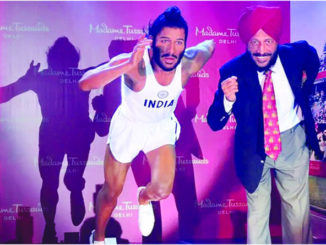
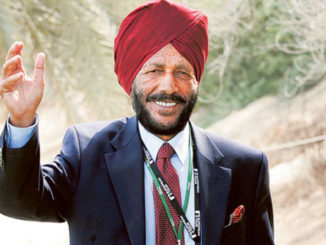
    Milkha Singh who died recently is a sporting legend. He was the one to introduce India to “track and field.”

    India was once a superpower in Asian athletics with some outstanding track and field stars, including Flying Sikh Milkha Singh, Makhan Singh, Ajaib Singh, Leo Pinto, Sriram Singh, Shivnath Singh, Hari Chand, Charles Borromeo, Mohinder Singh, Mohinder Gill, Labh Singh, Parduman Singh, Parveen Kumar, Jugraj Singh, Bahadur Singh, Baba Gurdip Singh, Geeta Zutshi, Manjit Walia, Kamaljit Sandhu, PT Usha, Shiny Abraham, Valsamma,

    Badminton had some of stalwarts like Dinesh Khanna, Satish Bhatia, Devinder Ahuja, Partho Ganguly, PG Chengappa, Ami Ghia, Kanwal Thakur Singh, Madhumita Ghosh, Amita Kulkarni before Parkash Padukone, Syed Modi, and P. Gopichand emerged on the horizon.

    In Badminton, Parkash Padukone became the first Indian player to win an all-England title in 1981

    Parkash Padukone became the first Indian player to win an all-England title in 1981. Later on, Syed Modi also won this prestigious grand slam event.

    Manjit Dua, Manmeet Singh, Vilas Menon, G. Jagan Nath, Indu Puri, Veenu Bhushan were once upon Indian Table Tennis stars.

    Admittedly, they did not win many medals in big or prestigious sporting events like Asian Games, Commonwealth Games or Olympic Games but they were mostly self-made sports stars. They worked hard and very limited facilities did not deter them from working hard and maintaining a consistent performance.

    Of course, those were the days, when the country had some good sports schools, sports colleges and institutes specializing in Physical Education.

    Unfortunately, they got phased out and were got replaced by sports wings, sports hostels and centers of excellence. That was the time, when the participation dropped rapidly. Schools and colleges with wings and hostels had all low level of professionalism as the institutions lured good players with certain concessions, perks. Other intuitions with no wings and hostels lost interest in raising their teams as they found themselves adequately unequal to compete against “professional outfits of hostels and wings”.

    The 1996 Atlanta Olympic games was a turning point.

    Though India had excellent track record in tennis with players like Ramanathan Krishnan, Jaideep Mukherjee, Premjit Lall, S. Mishra and Jasjit Singh, followed by Amritraj brothers – Ashok and Vijay – and Ramesh Krishnan donning colors with excellent track record in not only great grand slams but also in Davis Cup.

    Tradition set in motion by them was followed by equally talented Leander Paes and Mahesh Bhupathi as they had many grand slam titles under their belt. They defeated the world’s best doubles teams and put India at top. And Leander capped it with a bronze medal in men’s singles in 1996 Atlanta Olympic games, the year the games were thrown open to professionals. Leander lost in the semis to the ultimate winner Andre Agassi of the US.

    In Tennis, Leander Pais and Sania Mirza are better known names

    Sania Mirza was the first Indian woman tennis player to win grand slams and get the highest ranking in women’s doubles. She missed a bronze. Medal in Rio (in partnership with Rohan Bopanna) and made a first round exit in Tokyo in partnership with Ankita Raina.

    A strong message went down the line.

    Parents keen on getting their wards to sports got inspired by the Leander’s feat. After a gap of 44 years, Leander became only the second Indian to win an individual medal in Olympics. It was the beginning and since then individual medalists have started dotting Indian sports scene.

    This change took first turn for gold in 2008 (Beijing, 10 m Air Rifle shooting Abhinav Bindra) and again now (Tokyo 2020, Javelin throw for men, Neeraj Chopra).

    When Abhinav won first individual gold in shooting in 2008, it was the country’s second medal in shooting. Four years earlier, Major Rajyavardhan Singh Rathore had won a silver in Athens.

    Shooting was not new to Indians competing in Olympic games. For a long time, India had been sending shooters, mostly from Royal families, to try luck and get the country a place among medalists.

    Raja Karni Singh, a trap shooter, participatedin five consecutive Olympics, starting with Rome (1960) and Moscow (1980) as his last.

    To date only four Indian shooters – Rajyavardhan Singh Rathore, Abhinav Bindra, Vijay Kumar and Gagan Narang – have been successful in winning Olympic medals.

    One possible reason for India’s down slide in sports had been the diminishing role of sportsmen from defense forces (Services). Milkha Singh hawked headlines in late 50s and early 60s, he was part of Indian Army.

    If Rajyavardhan Singh Rathore won the country’s first ever individual medal (Silver) in shooting, he was from Indian Army. Vijay Kumar was also from the Army when he took the Olympic silver in London.

    Now when Neeraj Chopra has become the new national hero with an Olympic gold, he comes from Indian Army. Two other sportsmen from the Army who competed in Tokyo 2020 had every reason to feel satisfied with their performances.

    Boxer Satish Kumar became the first Indian boxer to clear the first round in the super heavyweight category while Deepak Punia lost the battle for bronze in 86 kg freestyle wrestling.

    Looking back, if Indian boxers did well in Olympic games, they mostly came from Services. The last medal hopeful Gurcharan Singh lost a controversial bout to get denied a possible medal.  Kaur Singh and Jaspal Singh had been other boxers from Services to do well.

    It is pertinent to point out that Services need to play the role it had been playing in promoting and developing sports. There used to be a time when the best hockey goalkeepers used to come from Services. Boxers, wrestlers, athletes and hockey players coming from the defense forces always occupied a respectable position in Indian contingents competing in prestigious international events. This has to be restored for the larger interest of Indian sports.

    Golf is alright but other sports must not be ignored. Let Services once again take upon itself the onerous responsibility of giving sports its due.

    Overseas Indians in sports

    Indian Men’s Hockey Team won a Bronze in the just concluded Tokyo Olympics

    *Wrestler Amar Dhesi, water polo player Gurpreet Sohi and hockey players Sukhpal Panesar, Brandon Pereira, and Kegan Pereira were chosen to don Canadian colors in Tokyo.

    *Gurpreet, incidentally became the first ever woman athlete of Indian origin to represent Canada in Olympic games.

    *Table Tennis duo of Kanak Jha and Nikhil Kumar have been chosen to play for the USA in the Tokyo Olympic games.

    Though none of these Indians could make a podium finish in Tokyo 2020 still they did enough to prove their credentials.

    Samir Banerjee won the boys singles title in the 2021 Wimbledon

    The year 1984 was a tumultuous year for the Punjabi community in general, and the Sikhs in particular.  It may not be easy for anyone to put behind the dastardly and tragic events in the union capital that rocked not only Punjab but also the entire Sikh community elsewhere. As this minute minority was drowning in gloom, two overseas Punjabis – Alexi Singh Grewal and Kulbir Singh Bhaura – provided the silver lining by telling the world how enterprising they were. Not only they entered the history annals as first overseas Indians to win Olympic medals, but they also set a new trend in motion that has been kept afloat by enterprising Indian diaspora ever since.

    Their heroic deeds scripted a new chapter of “Brand India”. Before the year 2016 ended, yet another overseas Indian – Rajeev Ram – kept the “Brand India” flame alive by winning an Olympic medal, a Silver, in the Rio Olympic games.

    Contribution by the overseas Indian community cannot be undermined for its diminutive size as it has won the cockles of many a heart in the contemporary sports world.

    In December 2016 when a field hockey team from Canada went to play in the Junior World Cup Hockey Tournament in Lucknow, 11 of its 16 members were of Indian origin.

    These players –Brandon Pereira, Harbir Sidhu, Parmeet Gill, Rohan Chopra, Rajan Kahlon, Kabir Aujla, Balraj Panesar (captain), Ganga Singh, Gavin Bains, Arshjit Sidhu and Iqwwinder Gill – need to be complimented as they self-financed their participation in the prestigious Lucknow tournament.

    And the Australian team, too, had one player of Indian origin, Kiran Arunasalam. It is after a long time that any player of Indian origin played for Australia in hockey.

    Overall, the overseas Indian community has done exceedingly well in the world of sports, including Olympic games, Commonwealth games and cricket.

    You name any sport in which the overseas Indian community has not won laurels for the countries of its present abode. There are 17 countries, including Canada, the US, Australia, Malaysia, England, Kenya, Uganda, and Hong Kong, that have been represented by overseas Indians in Olympic games. It is no mean achievement.

    Kulbir Bhaura, who represented Great Britain in field hockey, has been the only overseas Indian to have two Olympic medals to his credit, a bronze in Los Angeles and a gold in Seoul.

    Then there is Shiv Jagday. A former Indian Universities color holder: he had the distinction of working as National Coach of Field Hockey Canada. He also coached the US national team besides being on the panel of the select FIH coaches. His son Ronnie Jagday played for Canada in the Sydney Olympic games.

    One must not forget the contribution of Malkiat Singh Saund who was one of the best forwards of the 1972 Munich Olympic games. Malkiat represented Uganda. Now he is settled in England.

    Sutinder had the distinction of leading England in one match in the Mumbai World Cup Hockey Tournament in 1981-82. He played for England and Great Britain for several years.

    If Australia is a world power in field hockey, it is all because of efforts of Pearce brothers who immigrated to Australia from India and represented their new country of abode in the Olympic games.

    Hardial Singh Kular, besides playing for Kenya, also rose to be the Vice-President of the International Hockey Federation (FIH). He was one of many Indian expatriates who represented Kenya in 60s and 70s of the last centenary. He stands tall in sports administration.

    Avtar Singh Sohal is the only player to have played in four Olympic games and captained his national team – Kenya – in two. A great deep defender, He has been a pillar behind the Kampala’s Sikh Union Club that has recently acquired a floodlit synthetic surface for hockey.

    Alexi Grewal, the first overseas Indian, to win an individual Olympic gold medal. In the 1984 Olympic games, he won the road race event in cycling in style. His father, Jasjit Singh, a Sikh, had migrated to the US.  Interestingly, Alexi Grewal’s individual gold, though for the US, came 24 years before Abhinav Bindra won India’s first ever-individual gold medal in Olympic games.

    The latest from the overseas Indian community to get on to the Olympic medalist list was tennis player Rajeev Ram who won a silver medal in mixed doubles in the 2016 Olympic games in Rio.

    While the overseas Indians have done the country and the overseas Indian community proud, the Indian government is yet to reciprocate. Though it started organizing Pravasi Bharatiya Divas (PBD) where outstanding members of the overseas Indian community were felicitated, sportsmen and women did not get their due. The PBH celebrations have been largely discontinued. Covid 19 pandemic may be a contributing factor for the cancellation of the event for the last two years.

    Besides Alexi Singh Grewal, Kulbir Singh Bhaura and Rajeev Ram, there are many other sportsmen and women, who have done the overseas community and India proud.

    Rajeev Ram has to his credit a silver medal. In partnership with Venus Williams,

    Rajeev Ram finished runners-up in the mixed doubles event in Tennis. Thirty-two- year-old Rajeev is first generation American. His parents moved to the States in 1981 and Rajeev was born in 1984.

    Rajeev won his first major Tennis title in Chennai in 2009. Rated as one of the top doubles players in tennis, silver in Olympics has been his highest achievement. In the semi-finals, Rajeev and Venus Williams defeated Sania Mirza and Rohan Bopanna. After Rajeev Ram, another athlete of Indian origin doing well for a country other than India is shuttler Rajiv Ousef. Born in an Indians dominated Hounslow area in England, Rajiv qualified for quarterfinals of men’s singles in Rio. On his way to the last eight, Rajiv had beaten Tommy Sugiarto of Indonesia, Sasaki Sho of Japan and Koukel Petr of Czech. At 30, this was perhaps best performance in a major sporting event. He had won a silver medal in the 2010 Commonwealth games in New Delhi.

    Cricket is a game that every person of Indian origin follows. Monty Panesar scripted a new chapter when he became the first turban-wearing player to represent a country other than India in Test cricket. Monty played for England. Ravi Bopara followed him.

    (The author is a senior journalist. He can be reached at prabhjot416@gmail.com)

  • Milkha Singh – The man who beat life’s odds with class and precision

    Milkha Singh – The man who beat life’s odds with class and precision

    Legends never die! This is why Milkha Singh will always be alive in the memories of those who look up to him, he will be alive in all those priceless medals he won for the country and he will stay alive in all those budding athletes whom the ‘Flying Sikh’ inspired.

    The track, to him, was like an open book in which Milkha Singh found the “meaning and purpose of life”. And what a life he made for himself.

    Born on 20 November 1929 into a Sikh family in Govindpura, which is now a part of Pakistan, Milkha Singh was introduced to the sport only after he had fled to India post the partition and joined the Indian Army. It was in the army where he sharpened his running skills. After he finished sixth in a cross-country race that had around 400 more soldiers running, he was handpicked for further training. That laid the foundation for what would be an impressive career.

    Before his 91-year-old body lost to COVID-19 on June 18 after fighting it for a month, Milkha won the kind of battles that not many would have survived, forget about living long enough to tell the world about them.

    Early life

    From beginnings that saw him orphaned and displaced during the Partition of India, Milkha has become a sporting icon in his country.Escaping the troubles in Punjab, where killings of Hindus and Sikhs were continuing, by moving to Delhi in 1947, Milkha lived for a short time with the family of his married sister and was briefly imprisoned at Tihar jail for travelling on a train without a ticket. His sister, Ishvar, sold some jewelry to obtain his release. He spent some time at a refugee camp in Purana Qila and at a resettlement colony in Shahdara, both in Delhi.

    Milkha became disenchanted with his life and considered becoming a dacoit but was instead persuaded by one of his brothers, Malkhan, to attempt recruitment to the Indian Army. He successfully gained entrance on his fourth attempt, in 1951, and while stationed at the Electrical Mechanical Engineering Centre in Secunderabad he was introduced to athletics.

    He had run the 10 km distance to and from school as a child and was selected by the army for special training in athletics after finishing sixth in a compulsory cross-country run for new recruits. Singh has acknowledged how the army introduced him to sport, saying that “I came from a remote village, I didn’t know what running was, or the Olympics”. Milkha conquered the world of athletics with his grit, determination and resolve to rise from every setback like a phoenix. Thanks to his performances across the globe, Milkha dominated the field of sprinting for more than 10 years, scripting numerous records and winning multiple laurels for the country.

    It is safe to say that the legend introduced India to ‘track and field’ and to date, there has been no one who matches Milkha’s achievements in the country in this field. With his demise on June 18, it undoubtedly is the end of an era that saw none come even close to his achievements, let alone match them.

    A glimpse into the stupendous athletics career of legendary Milkha Singh can be had from this mind boggling fact: his 400 metres Indian national record stood for 38 years and the 400m Asian record for 26 years. In 1960 in Rome, he came closest to winning an individual Olympic Games medal as an Indian, in 400m, eventually finishing fourth in a photo finish.

    Milkha was one of the favourites to win the 400m gold in Rome. It was probably natural, too, as going into the Olympics, he is said to have won 77 out of 80 races, including the 1958 Commonwealth Games gold in 440 yards.

    But one shortcoming probably cost Milkha an Olympic medal. He had a habit of looking at his opponents over his shoulder while running races, and when he did the same in Rome it was decisive, though he had led the race until 200m. Later he admitted that he had paid a heavy price for his habit. He lost the race of his life in the Rome Olympics, finishing the 400m final in 45.6 seconds, 0.1 second short of the bronze medal mark.

    He remained tormented by that miss, one of the only two incidents in his life, which he described as unforgettable — the other being the killing of his parents in Pakistan.

    Interestingly, Milkha broke the existing world record of 45.9 sec in Rome, and so the three who finished ahead of him. He finished fourth with a time of 45.6 seconds, as per a hand-held device, while an unofficial electronic timer at the games clocked him at 45.73 sec. This has been a point of contention, though.

    The emergence of the ‘Flying Sikh’

    Young Milkha first hogged the limelight when he outperformed 394 soldiers in a race and was selected for further grooming and training. That eventually laid the base for him to become a legendary sprinter.

    Milkha represented India at the 1956 Olympics in Melbourne, the 1960 Olympics in Rome, and the 1964 Olympics in Tokyo. He was the first Indian athlete to claim a gold medal in the individual athletics category at the Commonwealth Games before the sprinter’s record was broken in 2010.

    Milkha, who is regarded as one of the world’s greatest athletes, defeated Pakistan sprinter Abdul Khaliq in a 200-Metres race to win a gold medal in Tokyo Asian Games. Khaliq was the fastest man in Asia in 1958 and after Milkha defeated him, the Indian sprinter was given the title of “The Flying Sikh”.

    Prior to that race, Milkha had won the gold in 400 metres while Khaliq had clinched the gold medal in 100 metres and with the Indian sprinter winning the 200 Metres race, he took the honour of then “Asia’s best Athlete”.

    Overcoming the hurdles

    One of independent India’s biggest sporting icons was a tormented man but refused to let that come in the way of accomplishments that were unheard of in his era.

    He saw his parents being butchered during partition, indulged in petty crimes to survive in the refugee camps of Delhi, went to jail for those, and failed three attempts at joining the Army.

    Who could have thought a man like that would get the sobriquet of ‘The Flying Sikh’? But Milkha earned it and earned it with a master class on how to be bigger and better than one’s circumstances.

    He “revered” the track like “the sanctum sanctorum in a temple where the deity resided.”

    To him running was both his God and beloved as he created his own little fairytale out of what could have easily been a tale of horrors.

    His love for athletics began after he enrolled himself with the Corps of Electronics and Mechanical Engineers (EME) of the Indian Army in Delhi.

    His talent blossomed while being with the Army. Fortunately for him, his officers encouraged him, and that would have played a role in him winning the 200m and 400m races at a Services Athletics Meet in 1955.

    Milkha practiced on his own while with the Army and clinched gold medals in both 200m and 400m at the 1956 National Games in Patiala, and two years later at the Cuttack Nationals, setting national records in both races.

    His sporting achievements won him kudos from the Army, and the Indian government awarded him the Padma Shri in 1959. The same year, he was awarded the prestigious Helms Award.

    Milkha took premature retirement from the Army and took up the post of Deputy Director of Sports with the Punjab government.

    In 1991, he introduced a compulsory games period in schools and also set up sports wings in schools in the districts to tap talent at the grassroot level.

    He got married to Nirmal Kaur, captain of the Indian volleyball team, in 1963. They met for the first time in 1956 in Sri Lanka when they were there for their respective national duties.

    The couple was blessed with three daughters and a son, golfer Jeev Milkha Singh.It was quite stunning that an athlete of Milkha’s stature was offered the Arjuna award, instituted in 1961, only in 2001. He famously turned it down, saying the honour was not of the “stature of the services he rendered to the nation”.

    In fact, Milkha was a sum total of way more than his several races and medals. He was also much more than that near-miss in Rome.

    He was India’s love affair with the track, the one that this country can never get over.

    Bhaag Milkha Bhaag

    In 2013, Bhaag Milkha Bhaag, a film on the legendary sprinter was made to showcase his incredible struggle from being an orphan to becoming one of the greatest athletes of all time.

    Bollywood actor Farhan Akhtar essayed the role of ‘The Flying Sikh’ in the biographical drama. It was through this movie that the sprinter attracted more fans and the young audience got to know about the legend of the man.

    Tributes pour in

    Tributes poured in on social media for the sporting icon.

    Young Indian sprinter Hima Das recalled Milkha Singh’s congratulatory message when she won the 400m gold at the 2018 world under-20 championships.

    “After winning world championship U-20 title and medal in Asian Games, I still remember a call from Milkha Singh sir that ‘Hima just keep on working hard, you have ample time and you can win a gold medal for our country at a global level,’ I will try to fulfil your dream sir,” Hima Das tweeted.

    Bollywood actor Farhan Akhtar, who played the role of Milkha Singh in his biopic Bhaag Milkha Bhaag, penned a heartfelt note for the running great.

    “A part of me is still refusing to accept that you are no more. Maybe it’s the stubborn side I inherited from you.. the side that when it sets its mind on something, just never gives up,” the actor said.

    Farhan Akhtar called him a ‘constant inspiration and a reminder of humility in success’.

    “And the truth is that you will always be alive,” Farhan Akhtar added. “Because you were more than a large-hearted, loving, warm, down to earth man.

    Sprinter Dutee Chand touched upon how relatable Milkha Singh was and hailed his achievements during a time when sports rarely headlined in the country.

    “His life was also full of struggles,” Dutee Chand told the News18 website. “His biopic Bhaag Milkha Bhaag I have seen it five-six times. I can see some similarities between his struggles and mine. Didn’t have proper diet, no track to run. Whatever hurdles I faced, he has faced them too. Can only imagine the hardships he had to go through and overcome to become what he did eventually. His life has been an inspiration to me.”

    Milkha Singh achievements include being the first Indian to win a Commonwealth Games gold medal. He also came within a photo finish of clinching a medal at the 1960 Olympics in Rome, missing out on a bronze medal by just 0.1 seconds.

    “His performance in (Rome) Olympics is the stuff of legends,” Dutee pointed out. “We keep on complaining about unavailability of coaches, tracks and what not but at a time when it was hard to find proper running shoes and one used to practice barefoot, Milkha made it to the Olympics. That’s the biggest thing.”

    Indian football team captain Sunil Chhetri also paid respect. “We may not have seen you compete, but every time we ran fast as kids, we ran ‘like Milkha Singh’. And for me, that will always be the legend you leave behind. You didn’t just run, you inspired. Rest in peace, sir,” the footballer wrote on Twitter.

    Indian boxing queen MC Mary Kom, Abhinav Bindra, the only Indian to win an individual Olympic gold, and 2012 London Games bronze medallist Saina Nehwal also paid homage to the running great.

  • After Nirmal, now Flying Sikh Milkha Singh takes the final holiday

    After Nirmal, now Flying Sikh Milkha Singh takes the final holiday

    By Prabhjot Singh

    In 1958 when the then Prime Minister Pt Jawahar Lal Nehru asked Milkha Singh what he wanted for becoming the first Indian to win an individual gold medal in athletics in the Cardiff Commonwealth Games, the ace sprinter requested a “national holiday” in the country. And 63 years later, on Friday night, he himself embarked upon a long holiday leaving not only the entire nation but the whole sporting world sobbing and grieving.

    He was christened “Flying Sikh” by the Martial Law Administrator of Pakistan, General Ayub Khan, after he set the stands of a Lahore stadium ablaze by defeating the local hero, Akhlaq, who was better known as “Ghorra” (horse), in a great sprint contest.

    A victim of the 1947 partition, Milkha Singh, was successful in joining Indian Army at a recruitment rally in Srinagar. Running was his passion, and he would work hard to be the best. And true to himself, his training and his ambition, he remained the best to make sure that there could be no two “Milkhas”.

    After winning a gold at Cardiff, Milkha went on to win a double in the 1958 Asian Games before his memorable record-smashing run at the 1960 Rome Olympic Games where he missed a medal by a whisker. And that remained his greatest regret. Ahead of all his competitors, Milkha, close to the finish line, made a mistake of looking back. And that cost him heavily. Instead of a podium finish, he was placed fourth.

     When the then Punjab Chief Minister Partap Singh Kairon asked him to come out of Indian Army and join the State Government in its Sports Department, he reluctantly accepted the offer. Initially, he would travel between Delhi and Chandigarh every day before making the City Beautiful his permanent home.

    In between he had met Nirmal Saini, an outstanding volleyball player, who was working as a Physical Education teacher in a Punjab college. Ultimately, they married.

    Milkha Singh, who by then had become world famous as “Flying Sikh” took control of school sports in the Education Department of the State while Hockey Olympian Balbir Singh was in the State sports department.

    It may be a mere coincidence that the three greats of Punjab Sports – Balbir Singh Sr, Flying Sikh Milkha Singh and Nirmal Milkha Singh – had worked together.

    As luck would have it, Milkha Singh could not attend the cremation of his life partner as at that time he was fighting for his own life at the PGI. The end came five days after his wife had breathed her last at a private hospital in Mohali.

    Known for their robust health and fitness, both great stalwarts were lost to Corona, sad indeed. While Milkha Singh was 91, Nirmal was 85.

    Milkha Singh as Additional Director, Youth Services and Sports in the Education Department, used to take hundreds of schoolboys and girls to Srinagar every year for the summer (off season) coaching camps. That was the reason that Punjab remained at top in school sports.

    A born runner, Milkha Singh was always a sportsman. After retiring from athletics, he took to golf and was an accomplished golfer. His son, Jeev, too, is a star golfer.

    Besides Jeev, Milkha and Nirmal leave behind three daughters – Aleeza (she was with Air India), Dr Mona and Sonia – and their families.

    (Prabhjot Singh is a senior journalist)

  • End of an Era: Legendary Indian sprinter Milkha Singh aka Flying Sikh dies after month-long battle with COVID-19

    End of an Era: Legendary Indian sprinter Milkha Singh aka Flying Sikh dies after month-long battle with COVID-19

    Tributes pour in. PM Modi describes him as a “colossal sportsperson”

     I.S. Saluja

    CHANDIGARH/ NEW YORK (TIP): The Flying Sikh Milkha Singh died on Friday, June 18, after a month-long battle with COVID-19. The Padma Shri awardee was 91 and is survived by his golfer son Jeev Milkha Singh and three daughters.  “He breathed his last at 11.30 p.m.,” a family spokesperson told PTI.

    Milkha Singh’s condition deteriorated as he developed complications, including fever and dipping oxygen saturation levels, after a bout with COVID-19, in the Intensive Care Unit of the PGIMER hospital.

    He had contracted COVID-19 last month and tested negative for the virus on Wednesday when he was shifted to general ICU in another block of the hospital. Milkha had been “stable” before Thursday evening.

    Milkha’s 85-year-old wife Nirmal, who had also been infected by the virus, passed away at a private hospital in Mohali on Sunday, June 13.

    Milkha was admitted to PGIMER on June 3 after his oxygen levels dipped at home following treatment at the Fortis hospital in Mohali for a week.

    The legendary athlete is a four-time Asian Games gold medalist and the 1958 Commonwealth Games champion but his greatest performance remains the fourth-place finish in the 400m final of the 1960 Rome Olympics.

    He also represented India in the 1956 and 1964 Olympics and was bestowed the Padma Shri in 1959.

    The entire country paid glowing tribute to Indian sprint legend Milkha Singh, with the Prime Minister Narendra Modi describing him as a “colossal sportsperson who captured the nation’s imagination”.

    Prime Minister Narendra Modi, condoling his death described him as a “colossal sportsman”.

    “In the passing away of Shri Milkha Singh Ji, we have lost a colossal sportsperson, who captured the nation’s imagination and had a special place in the hearts of countless Indians,” Mr. Modi said in a tweet.

    “His inspiring personality endeared himself to millions. Anguished by his passing away.” Olympic bound star javelin throwers Neeraj Copra tweeted “We lost a Gem. He will always remain as an inspiration for every Indian. May his soul Rest in peace.”

    Condoling the death, Home Minster Amit Shah said the country lost one of the brightest stars of Indian sports. “India mourns the sad demise of legendary sprinter Shri Milkha Singh Ji, The Flying Sikh. He has left an indelible mark on world athletics. Nation will always remember him as one of the brightest stars of Indian sports. My deepest condolences to his family and countless followers.”

    Sports Minister Kiren Rijiju said in Milkha’s demise, the country has lost a star. “India has lost its star. Milkha Singh Ji has left us but he will continue to inspire every Indian to shine for India. My deepest condolences to the family. I pray for his soul to rest in peace,” the Minister tweeted.

    Sports Authority of India (SAI) expressed “immense sadness at the demise of one of India’s greatest ever sportspersons ‘The Flying Sikh’ Milkha Singh.

    “A gold medalist at the CWG & Asian Games, he held the 400m National record for 38 years. Condolences to his family & the millions whom he inspired,” the SAI said in a tweet.

    Athletics Federation of India said in a tweet: “Very sad news for all #Indians, legend Shri Milkha Singh Ji passed away.” “A huge loss for the sport of athletics today. Rest well #MilkhaSingh ji,” Olympica Anju Bobby George tweeted.

    “Really shocked by the demise of the legend Milkha sir. You will forever have a very special place in my heart. The Flying Sikh will live forever. RIP” Indian sprinter Mohamad Anas Yahiya.

    Former India off-spinner Harbhajan Singh also expressed also expressed his condolences on the micro-blogging site.

    “Very sad, heartbreaking to hear flying sikh Sardar Milkha singh ji is no more… waheguru RIPMilkhaSinghji.” Indian tennis star Sania Mirza said: “Had the honour of meeting you and you blessed me so many times .. the kindest and warmest Palms up together RIP Milkha Singh sir .. the world will miss a legend like you ..MilkhaSingh.”

    “Really shocked and sad to learn about the passing away of the legend Milkha Singh ji. Om Shanti,” Javelin thrower Devendra Jhajharia said.

    Decorated doubles badminton player Jwala Gutta also joined in expressing his sadness.

    “What an inspiration you were to the millions like us…. There will be none like you sir Rest in peace legend MilkhaSingh Flag of India Woman bowing deeply,” she posted.

    The official handle of the Indian football team also mourned Milkha’s death.

    “We join the nation in mourning the loss of the iconic ‘Flying Sikh’ Milkha Singh. His incredible achievements will continue to inspire future generations. May his soul rest in peace RIP.”

    Assam Chief Minister Himanata Biswa Sarma said: “Saddened at the demise of ‘Flying Sikh’ Captain Milkha Singh. His laurels had not only made India swell with pride but also inspired generations of sports enthusiasts. My condolences to his family. Om Shanti!”

    The news of Milkha Singh’s death shocked the Indian American community in the US.

    Paul Sihota from California called the offices of The Indian Panorama to convey his condolences as did many Punjabi sports lovers who held him in great esteem. Milkha Singh has always been a role model and an inspiration to budding sportspersons in the Diaspora.

    To me, who had known him for years and sought his guidance in organizing two Punjab State level sports events, his going away is a painful personal loss.  The void created by his passing away will not be filled. I pray for peace to his departed soul even as I mourn the loss a few days earlier of his beloved wife Nirmal Milkha Singh. I pray for strength enough to the bereaved son Jeev Milkha Singh and the three daughters to bear the irreparable loss.

    (With inputs from PTI)

  • PM Modi speaks to Milkha Singh, wishes him speedy recovery

    New Delhi (TIP): Prime Minister Narendra Modi on Friday spoke to former Indian sprinter Milkha Singh and inquired about his health, reported ANI.

    Modi wished the legendary athlete a speedy recovery and hoped he will be back soon to bless and inspire the athletes who are participating in the Tokyo Olympics.

    Singh who is Covid-19 positive was admitted to the ICU in Covid Hospital of the PGIMER here on Thursday due to dipping levels of oxygen.

    He has been kept under observation and is stable now. He was discharged from a private hospital earlier this week. Milkha Singh was on Sunday discharged from a private hospital where he was getting treatment for Covid-19 infection even as he continues to be on oxygen support. The 91-year-old was discharged in stable condition on the request of his family.