Tag: MK Stalin

  • Yatra lends purpose to Rahul’s political journey

    Yatra lends purpose to Rahul’s political journey

     In Indian electoral politics, alliances are formed on the basis of strengths rather than weaknesses of the participants. The aura of success surrounding Rahul’s Bharat Jodo Yatra is set to provide him with moral authority to play a pivotal role. In addition, in Sonia Gandhi, Rahul has a reserve bench of sorts; the former party chief can act as a line of communication with many non-NDA allies, including the Left, to keep the mahagathbandhan going. 

    This year, the Congress faces a litmus test in Karnataka, Madhya Pradesh, Rajasthan and Chhattisgarh. If it can win these states, the grand old party would emerge as a serious challenger for the 2024 General Election.

    By Rashid Kidwai

    There are many quotes that have been attributed to Mahatma Gandhi. In the Congress party office at 24, Akbar Road, one of them reads, “Kabhi kabhi hum apne virodhiyon ke karan aage badhte hain.” (At times, we move ahead due to our opponents). Then there is another one saying, “Pehle woh aap par dhyan nahin denge, phir who aap par hasenge, phir aapse ladengen, aur tab aap jeet jayenge.”(First they would not pay any attention to you, then they would mock you and then they would fight with you. You would win once these stages are completed).

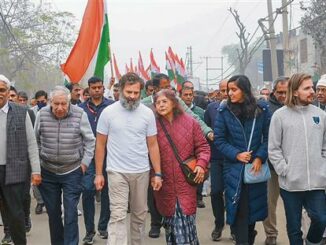
    In the context of Rahul Gandhi’s ongoing abstract, yet arduous, Bharat Jodo Yatra, these quotes ring a bell, bringing some relevance and hope for the Congress leader.

    There is a broader and growing consensus of sorts among Rahul’s detractors and well-wishers that finally, the Gandhi scion is showing signs of purpose, perseverance and hope in his political journey that began in 2004.

    Politically, the yatra may or may not be a game-changer, but it has succeeded in establishing Rahul as a credible politician who can walk the talk, intermingle with the masses and get support from a range of politicians and celebrities — from MK Stalin, Aaditya Thackeray, Supriya Sule and Farooq Abdullah to Raghuram Rajan, AS Dulat, Swara Bhaskar and Kamal Haasan.

    More importantly, the BJP’s stringent criticism, Union Health Minister Mansukh Mandaviya’s ‘appeal’ to suspend the yatra over Covid concerns, and the outrage over Rahul’s comments on China allegedly entering Indian territory have helped him become a singular dissenting voice.

    When the yatra began from Kanyakumari, Rahul’s popularity ratings were at an all-time low. The Congress organization was in a shambles and the leadership issue was far from settled. While the yatra was on the Kerala-Karnataka border, Rajasthan Chief Minister Ashok Gehlot, at that time tipped to be the next AICC president, stunned friends and foes alike by showing defiance, a throwback to the bygone era of Devaraj Urs, Arjun Singh and other party chief ministers.

    But throughout the Congress organizational election process, Rahul stayed away and focused on the yatra. The Assembly polls of Himachal Pradesh and Gujarat offered a mixed bag as the Congress went on to win HP. It was a surprise for those predicting the Congress’ death. The ‘corpse’ is, in fact, very much alive and kicking.

    This year, the Congress faces a litmus test in Karnataka, Madhya Pradesh, Rajasthan and Chhattisgarh. If it can win these states, the grand old party would emerge as a serious challenger for the 2024 General Election.

    We need to remember that the fortunes of the Congress and other non-BJP parties are closely linked to the 2024 Lok Sabha polls where the non-BJP, non-NDA Opposition and the Congress-UPA partners will have to target the ‘half of half’, i.e. half of the 272 Lok Sabha seats on their own — a challenging but not unmanageable number in the 2024 battle.

    There are four crucial states of West Bengal, Bihar, Maharashtra and Karnataka where the BJP-NDA had done exceedingly well in 2019 but the subsequent political developments have unfolded a new scenario. In West Bengal, for example, the BJP had won 18 Lok Sabha seats out of 42, while in Bihar, the alliance with the JD(U) had resulted in its netting 39 out of 40 parliamentary seats. In Karnataka, the BJP had won 25 out of 28 seats, while in Maharashtra, the alliance with the undivided Shiv Sena  had resulted in the NDA allies winning 42 out of 48 seats. Imagine a situation if the BJP’s strength from these four states gets reduced to half. A simple majority of 272 would become a distant dream and prospects of a khichdi government a reality.

    The Congress, in order to be a contender, has to win 100 or more Lok Sabha seats from states such as Kerala, Chhattisgarh, Maharashtra, Rajasthan, Madhya Pradesh, Assam, Karnataka, Uttarakhand, Himachal Pradesh and a few others where the grand old party has been in direct contest with the BJP or traditionally has a strong presence.

    Next year’s parliamentary polls are set to be contested in contrasting styles. If Team Modi is set to make full use of the Prime Minister’s personal ratings, big-ticket projects, Covid-19 handling in the context of the massive vaccination programme, achievements on the diplomatic front and reliance on emotive issues like the Ram Temple, the Congress and its potential allies are prepared to take the battle to the states where regional players are expected to hold sway.

    So, if the parties led by Mamata Banerjee, Nitish Kumar, Uddhav Thackeray, Sharad Pawar, MK Stalin, Naveen Patnaik, HD Kumaraswamy, Chandrababu Naidu and Akhilesh Yadav together manage to hold on to a chunk of the parliamentary seats, the Congress has the task of doing well in most of the Hindi-belt states and the Northeast.

    In Indian electoral politics, alliances are formed on the basis of strengths rather than weaknesses of the participants. The aura of success surrounding Rahul’s Bharat Jodo Yatra is set to provide him with moral authority to play a pivotal role. In addition, in Sonia Gandhi, Rahul has a reserve bench of sorts; the former party chief can act as a line of communication with many non-NDA allies, including the Left, to keep the mahagathbandhan going.

    (Rashid Kidwai is a Senior Journalist and Author)

  • Stalin takes oath as Tamil Nadu CM

    Stalin takes oath as Tamil Nadu CM

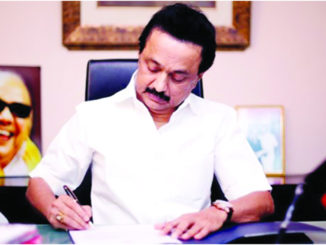
    Dravida Munnetra Kazhagam (DMK) leader MK Stalin took oath as the Chief Minister of Tamil Nadu on Friday, May 7, morning.

    Governor Banwarilal Purohit administered the oath of office and secrecy to 68-year old Stalin, for whom this would be the first stint as CM, in a simple ceremony at the Raj Bhavan.

    Along with the DMK chief, 34 ministers of his party also took oath to be appointed in the state cabinet.

    The names include 19 former ministers and 15 new faces. It has two women. Stalin’s son Udhayanidhi does not figure in the list of ministers.

    AIADMK top leader O Panneerselvam, leaders from alliance parties including Congress’s P Chidambaram, MDMK chief Vaiko and top state officials took part in the ceremony.

    DMK had fought the elections with its allies and got an absolute majority on its own by bagging 133 seats in the 234-member assembly.

    Stalin will hold several portfolios including Home, General Administration, Special Initiatives, Special Programme Implementation and Welfare of Differently -Abled Persons.

    While he has been branded as the ‘son who rose’, Dravida Munnetra Kazhagam (DMK) president MK Stalin cannot be called so anymore after ensuring his party’s victory in the 2021 Tamil Nadu Assembly election. Ever since his father, M Karunanidhi, passed away in 2018, Stalin has managed to consolidate the DMK.

    The party’s sweep in the 2019 Lok Sabha election was seen as his personal achievement. But the victory, which will make Stalin walk inside St. Fort George as Tamil Nadu’s chief minister, is the reward for his perseverance of over 50 years.

    As Stalin himself had recalled in a recent interview to India Today TV, he started his political career as a teenager at a barbershop.

    “We youngsters started an outfit called DMK Elaingar Mandram (DMK youth wing),” he had said. Stalin later campaigned for his uncle Murasoli Maran in the 1967 elections.

    During the Emergency, he was arrested under the Maintenance of Internal Security Act (MISA) for taking part in protests. MK Stalin came to the forefront when he was beaten up in police custody. C Chittibabu, a DMK leader, who was his cellmate died protecting him.

    Since then, Stalin eventually grew in the party and became secretary of its youth wing in 1982. In his own words, as Stalin told India Today, “They kept calling me heir. But, I came up in the party on my own, in a step by step process.”

    Stalin was first given a ticket to contest from the Thousand Lights constituency in Chennai but lost the election. However, he won from the same constituency in 1989.

    In 1996, MK Stalin became the Mayor of Chennai. This post, he has said several times, gave him “great experience”. His slogan of converting Chennai into ‘Singara Chennai’ (beautiful Chennai) became popular.

    Stalin went on to become Tamil Nadu’s Deputy Chief Minister in his father’s cabinet in 2009. The same year, when this journalist in an interview asked M Karunanidhi about Stalin’s next elevation, he said, “DMK is a democratic party. Every decision will be taken with consent of the general council.”

    Karunanidhi did not project MK Stalin as the chief ministerial candidate in 2016 even though he himself was unwell.

    A senior DMK leader said, “Kalaingar didn’t handover the position so easily to Stalin. He was made to wait for a really long time and his has been a long battle.”

    In 2014, MK Stalin was criticised by political analysts for not leading the DMK to victory in the Lok Sabha elections.

    “They said his strategy failed. But he didn’t wear out and continued to tour the state,” said the senior DMK leader on condition of anonymity.

    While dynasty politics has been an allegation levelled against MK Stalin by his opponents and critics, he also faced trouble from his brother MK Alagiri.

    Over the years, Stalin worked towards creating a niche for himself in the party. At one point, Karunanidhi was forced to handover powers of Tamil Nadu’s southern districts to MK Alagiri.

    Nevertheless, ‘Thalapathy’, as MK Stalin is called by his supporters, toured across Tamil Nadu to garner support.

    In his first interview to India Today TV (then Headlines Today) in 2013, said, “State autonomy is very important for DMK. We believe in self-rule in the state.”

    He had lashed out at then Chief Minister J. Jayalalithaa for not keeping up the promises made to the people. Stalin had spoken about his vision for Tamil Nadu and to strengthen the DMK.

    This was the time things went sour between Alagiri and his father Karunanidhi. After many struggles, Madurai which was seen as MK Alagiri’s bastion came under the wings of MK Stalin.

    The 2016 assembly election saw a close fight. Stalin was the one who had spearheaded DMK’s campaign and alliance strategies.

    After losing a closely fought battle, Stalin had to wait to live his dream of becoming the chief minister.

    But the massive victory in this election has finally paved way for the 68-year-old Stalin to occupy the chief minister’s chair.

    However, challenges are far from over for the chief minister elect. He is taking over the mantle in the midst of a raging pandemic and is inheriting the state’s financial burden from the previous government.

    Some AIADMK leaders have openly said in debates that it might not be easy for Stalin’s government to get help from the central government.

    For now, ‘Team Stalin’ is getting ready to decide the cabinet and handle the pandemic on priority, sources say.

    Governor Banwarilal Purohit appointed DMK president M K Stalin as Chief Minister of Tamil Nadu after he submitted a letter on his election as legislature party leader, the Raj Bhavan said on Wednesday. Stalin called on Purohit at the Raj Bhavan and “submitted a letter intimating of his election as the leader of the Dravida Munnetra Kazhagam Legislature party.”

    Governor Purohit appointed him as the Chief Minister of Tamil Nadu and invited him to form the ministry and to have the swearing-in ceremony on 7 May at 9 am at Raj Bhavan, an official release said.

    On Tuesday, Stalin was unanimously elected as legislature party leader of the Dravida Munnetra Kazhagam (DMK). “Party president @mkstalin was elected leader of the DMK legislature party,” the DMK said on its official twitter handle.

    The meet to elect him was held at headquarters ‘Anna Arivalayam’ and it witnessed participation of 133 newly elected MLAs, including eight from alliance parties like the Vaiko-led MDMK who fought the polls on DMK’s ‘Rising Sun’ symbol. A DMK release said Stalin was unanimously elected as the legislature party leader after his name was proposed by party general secretary Duraimurugan and seconded by principal secretary KN Nehru.

    The DMK has won 133 of the total 234 Assembly seats that went to polls on April 6. Some more seats were won by allies, including the Congress that bagged 18 constituencies.

    Garnering two-thirds of the 234 seats, the 68-year old Stalin, through his sustained campaign yet again ushered in a victory similar to that of the 2019 Parliamentary election win. The victory did not, however, land in Stalin’s lap and he worked towards it by reaching out to people systematically by targeting the Centre and state governments on many issues.

    Source: Live Mint, India Today and News 18