Tag: Mother Teresa

  • International Women’s Day

    International Women’s Day

    Consider a world where men and women are treated equally. A world without bias, stereotypes, or discrimination. A diverse, equal, and inclusive world. A world in which diversity is valued and appreciated. We can achieve women’s equality by working together.

    International Women’s day is observed on March 8 every year on a global scale. It is all about celebrating the social, political, economic and cultural achievements of women around the world. It calls to arms all the women of the world to come together to fight against gender disparity and establish themselves as the invaluable members of society that they are. People all over the world are called to witness the incredible achievements of women and participate in activities and rallies that are targeted towards greater equality.

    History : In the modern world, it is easy to forget just how far we have come in the fight for equality and recognition, not just as women but as equal and productive members of society and the human race. Whether it was during times of economic depression or the world wars, women stepped to fill roles that they were previously denied. Agitated at being denied a seat at the proverbial table, Theresa Malkiel suggested to the ‘Socialist Party of America’ that they organise the first ever ‘National Women’s Day’ in 1909. A group of 15,000 women marched through the streets of New York, demanding shorter working hours, better pay and voting rights. Following this in 1910, an international conference for working women was held in Copenhagen. It was during this conference that Clara Zetkin, Kate Duncker, Paula Thiede and others proposed an annual commemoration of ‘Women’s Day’, in order to promote equal rights.

    In the following year, on March 19, 1911, the first ever ‘International Women’s Day’ was organised by over a million people from countries like Austria, Denmark, Germany, and Switzerland. Much later, in 1975, the United Nations finally acknowledged ‘International Women’s Day’ on a global scale and its celebration.

    Significance : International Women’s Day has become more than just a commemorative event over the years. It highlights the stories and extraordinary achievements of women that have on many occasions been erased. Each year, in celebration of this day, we look back to our mentors through history and work towards furthering the goal that they had set. Conferences, rallies, debates and discussions are organised and women from around the world participate in order to share their stories and make their voices heard.

    What is the theme this year for International Women’s Day?

    The theme for the International Women’s Day 2022 was announced by UN Women in December: “Gender equality today for a sustainable tomorrow.” A key mission this year is to advance gender equality in the time of the climate crisis through women’s leadership. The hashtag #BreakTheBias is a focal point for this year’s campaign to raise awareness and rally for gender equality.

    International Women’s Day 2022: Colors

    The colors of International Women’s Day are purple, green, and white. Purple is the color of justice and dignity. Green is the color of hope. White is a contentious concept that denotes purity.

    Status of Women in India

    Going back to our origins, we can see how vital women are to society, not only biologically, but also culturally. Women have been mentioned in our Vedas and ancient books since ancient times, and they have been assigned important positions. Because of the contributions of women, the texts of Ramayana and Mahabharat have been tremendously influenced and due to women, they may have become the most sacred of all. Previously, women were referred to as housekeepers. It was thought and passed down to others that women are meant to marry, take care of the house and their in-laws, and sacrifice all of their aspirations in order to realise the dreams of their husbands and children. Furthermore, women were kept out of school because families believed that only boys deserved to be educated and follow their aspirations. Women were married off at a young age, and occasionally without their consent. They have also been subjected to a slew of dehumanising practises, societal neglect, and rituals designed to limit them, and they are frequently considered commodities rather than human beings.

    However, things have changed over the years. Women today are eager to take up professions and work. Thus, they enjoy equal respect and dignity in the family. Women in free India also enjoy equal pay for equal work in comparison to men. Also, there are provisions for maternity leave for them. Furthermore, females are provided equality of opportunity under Article 16 of the Constitution of India.

    The girls in urban areas are almost at par in education with the boys. But there is a less educated female population in rural areas. This has also affected the social and economic development of rural India. The poor (hygienic facilities) facilities at school and lack of female staff have affected education. Kerala and Mizoram have a universal literacy rate.

    Following the development of the freedom movement across the nation, the ladies of the society began to emerge and burst through their shells. A larger proportion of women began to be given the opportunity to study and seek education. Currently, India does not have a shortage of women in the medical, technical, teaching, legal, or any other profession. India has seen an increase in the number of empowered women holding higher positions in various offices and organisations.

    Women are involved in a variety of occupations and compete alongside males in a variety of disciplines such as technology, law, administration, teaching, and so on. Apart from traditional occupations, we have women who thrive in sports, such as P.T. Usha, Sania Mirza, P.V Sindhu, Mithali Raj, Mary Kom, Saina Nehwal, Dipa Karmakar, and others, who have represented and inspired many aspiring sportswomen in India. We also have women who have had a significant impact on the art and entertainment industries since their inception, as well as cultural icons in many schools of art. Indira Gandhi, Vijay Lakshmi Pandit, Annie Besant, Mahadevi Verma, Nita Ambani, Sachet Kripalani, Amrita Pritam, Sushma Swaraj, Padmaja Naidu, Kalpana Chawla, Mother Teresa, Subhadra Kumari Chauhan, and others are some of the great Indian women leaders, social reformers, social workers, administrators, and literary personalities who have significantly changed the women’s status.

    There has been a steady transformation in the status of women in comparison to earlier periods. Women of today take part completely in areas such as politics, status, military sectors, economic, service, and technology sectors. Moreover, they have contributed wholly to sports too. Thus, they have occupied a dignified position in family and society.

    However, ending crimes against women is still a challenge. Even after significant advancements in women’s rights in India, they are still exploited, harassed, and abused in a variety of ways such as rape, sex discrimination, and so on. We can prevent ills by ensuring women’s autonomy, also increasing participation and decision making power in the family and public life.

  • The hint of a ‘one nation one NGO’ regime

    The hint of a ‘one nation one NGO’ regime

    The current purge against civil society organizations seems to be indiscriminate and alarming

    By M.S. Sriram

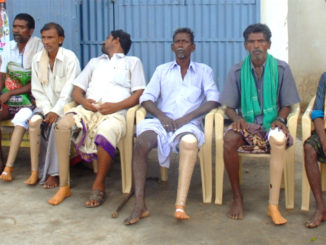
    “Why foreign funding? As we know, “causes” have no boundaries and funding for such socially desirable belief systems could come from beyond borders. Some causes carried out by organizations such as Doctors Without Borders, or Reporters Without Borders are by definition international in nature. Similar is the case with the Jaipur foot provided by the Bhagwan Mahaveer Viklang Sahayata Samiti. The humanitarian work by the Missionaries of Charity is beyond the capability of a state. Such causes do not have a rational basis to be explained in terms of a financial model; how do you put a price tag to press freedom? The niche funding will happen from agencies that may be beyond the borders. They need to be encouraged.

    On December 31, 2021, the Ministry of Home Affairs issued another public notice extending the validity of registration certificates that were expiring from September 29, 2020, to March 31, 2022, till the latter date, provided that the request for renewal had not been rejected. What should have been a routine activity of the Ministry has turned out to be a fairly detailed exercise of scrutiny, resulting in a paralysis in granting permissions. The levels of due diligence and the information sought on the one hand and the annual declarations to be given by the board members of civil society organizations on the other have increased significantly. The mandatory opening of bank accounts for foreign contributions has been centralized in one branch of the State Bank of India. The linking of Permanent Account Number (PAN), Aadhaar number and mapping it with the bank account/s of the individual board members are happening with gusto. All this has resulted in a chill settling over the people who are and have been associated with civil society organizations serving a social or cultural cause. The registrations under Foreign Contribution (Regulation) Act (FCRA) have been long necessitated in order to undertake due diligence of the causes for which the organization is working for and also to have a handle on the traceability of funds.

    Data on cancellations
    Recently, the Missionaries of Charity established by Nobel Laureate Mother Teresa, was in the news for the cancellation of its permission under the FCRA. A perusal of the statistics available on the website of the Ministry of Home Affairs (https://bit.ly/32Kij6E) reveals an interesting pattern. Of the 20,675 permissions under the FCRA that were cancelled from 2011 onwards, only 89 have been cancelled on request; the rest have been cancelled on violation. Of these 20,675 cancellations, 80% of the cancellations are after 2014, with a massive purge of around 10,003 permissions in the year 2015. The dashboard (https://bit.ly/3sXfOsu) shows a little under 17,000 active organizations — which have either got permission or will know their fate by March 2022, while around 33,000 organizations have either lost their permission or it has expired. These cancellation numbers do not include the rejection of around 600 applications that have been in the news in the recent past, as the website shows only three cancellations in the year 2021 and none in 2020.

    There has been a pattern to the organized attack on civil society organizations and this looks like the final shot. In the past, the amendments in the FCRA that restricted the ability to sub-grant, killed many of the niche organizations working in very remote areas which had no direct access to international funding but were doing it through larger non-governmental organizations. The other amendment restricting the proportion of expenses on administration almost choked organizations that worked for the rights of the disposed. The increasing level of surveillance type of data sought has resulted in many organizations losing people on their governance structure and resulting in problems in funding. The level of the purge is alarming on two fronts. If this purge is because of violations that seem to threaten sovereignty because of evidence of money laundering, subversive activities and violation of the laws, then it is worrying that these organizations survived for all these years. This says a bit about the system of scrutiny that we have had in the past.

    Alternately, if these are organizations that have been purged on xenophobic considerations — because they are activists usually questioning the Government and speaking for the marginalized — organizations working on issues such as human rights, and organizations serving the people whom the state is unable to reach, then it is even more alarming. That is because it is suppressing the concept of antyodaya — reaching the last person with rights, services and entitlements.

    Organizations that are needed
    Why we need civil society organizations is a moot question. We need them because they usually work on what can be called an unreasonable agenda. This unreasonableness falls in three large verticals. The first is that they ask for greater efficiency, delivery and accountability from the state. Whether is it about rehabilitation and compensation in the case of land acquisition or setting up a great accountability framework as was done through the movement led by the Mazdoor Kisan Shakti Sangathan for the Right to Information. The second vertical is in correcting the extractive nature of markets. The groups asking for environmental accountability are looking at inter-generational justice on a matter that is not very precisely measurable but is palpable. The third is basically picking up causes that are so niche that it is beyond the capability of the state to come up with such initiatives such as a school of drama set up by NINASAM (Nilakanteshwara Natyaseva Samgha) in a village called Heggodu, Karnataka, or an idea of distributing clothing for work as done by Goonj. These initiatives cannot be put into specific business plans, spreadsheets or government schemes. They, therefore, need a grant-based, cause-based revenue stream model.

    Issue of funding
    Why foreign funding? As we know, “causes” have no boundaries and funding for such socially desirable belief systems could come from beyond borders. Some causes carried out by organizations such as Doctors Without Borders, or Reporters Without Borders are by definition international in nature. Similar is the case with the Jaipur foot provided by the Bhagwan Mahaveer Viklang Sahayata Samiti. The humanitarian work by the Missionaries of Charity is beyond the capability of a state. Such causes do not have a rational basis to be explained in terms of a financial model; how do you put a price tag to press freedom? The niche funding will happen from agencies that may be beyond the borders. They need to be encouraged.

    In general, past regimes have been tolerant of all developmental and cultural causes; somewhat wary and tolerant of rights-based causes; and largely suspicious of civil society organizations working for human rights and environmental causes. Both human rights and environmental causes put these civil society organizations directly in confrontation with the job of policing/internal security and “development” or economic growth. That is a fight that the civil society organizations were used to.

    Deeper study needed
    However, the current purge seems to be indiscriminate. The depth and the variety of the work of a civil society organization cannot be captured in the annual returns filed on the FCRA portal, where there is no scope for explaining something beyond the binary. There needs to be a study on how many civil society organizations lost their permissions on “expiry” only because the pre-populated dropdowns given by the FCRA portal were unable to capture the work of the organizations.

    The duality of welcoming foreign investments (which takes away capital gains and dividends) while actively discouraging foreign aid to charities is staring us in the face. The definition of what is foreign in the case of electoral bonds and donations to political parties is dodgy at best. This duality is the signature of the current dispensation. Its appetite to collect data is matched only by its reluctance to share data. If the hope, therefore, for civil society organizations is corporate social responsibility funding and funding from Indian philanthropists, watch this space. As cartoonist P. Mahamud indicated in a cartoon, we are moving towards a ‘One Nation One NGO’ regime.

    (Author is Faculty member, Centre for Public Policy, Indian Institute of Management Bangalore. He is on the boards of non-governmental organizations, or NGOs that have applied for FCRA permission. None of those NGOs is mentioned in the article.)