Tag: MSP

  • Farmers protest against 3 agri laws continues. What do they want?

    Farmers protest against 3 agri laws continues. What do they want?

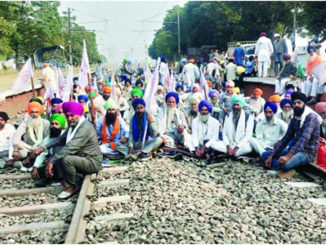
    Indian farmers, particularly from agrarian states of Punjab, Haryana, Uttar Pradesh and Rajasthan, are protesting since November 26, 2020, against three farm laws passed by Parliament of India in September 2020. According to Haryana Police, there are around 40,000 committed protestors sitting at Singhu and Tikri at the Delhi border.

    Farmer unions and their representatives have demanded that the laws be repealed and have stated that they will not accept a compromise. Farmer leaders have welcomed the Supreme Court of India stay order on the implementation of the farm laws but rejected the committee appointed by the Supreme Court. They have also rejected a government proposal, dated 21 January 2021, of suspending the laws for 18 months.

    Eleven rounds of talks have taken place between the central government and farmers represented by the farm unions between 14 October 2020 and 22 January 2021; all were inconclusive. On 3 February, farmer leaders warned of escalating the protest to overthrowing the government if the farm laws were not repealed. The stay order on the implementation of the farm laws remains in effect, and the Supreme Court appointed committee continues with its tasks related to the farm laws. Six state governments (Kerala, Punjab, Chhattisgarh, Rajasthan, Delhi and West Bengal) have passed resolutions against the farms acts, and three states (Punjab, Chhattisgarh and Rajasthan) have tabled counter legislation in their respective state assemblies. None of the counter legislation passed the respective state governors.

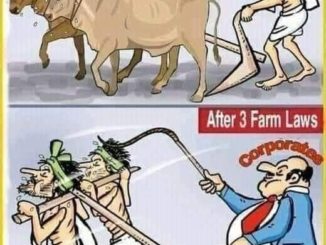
    The acts, often called the Farm Bills, have been described as “anti-farmer laws” by many farmer unions, and politicians from the opposition also say it would leave farmers at the “mercy of corporates”. The farmers have also demanded the creation of a Minimum Support Price (MSP) bill, to ensure that corporates cannot control the prices. The government, however, maintains that the laws will make it effortless for farmers to sell their produce directly to big buyers, and stated that the protests are based on misinformation.

    Soon after the acts were introduced, unions began holding local protests, mostly in Punjab. After two months of protests, farmer unions-mainly from Punjab and Haryana-began a movement named Dilhi Chalo (transl.?Let’s go to Delhi), in which tens of thousands of farming union members marched towards the nation’s capital. The Indian government ordered the police and law enforcement of various states to attack the protesters using water cannons, batons, and tear gas to prevent the farmer unions from entering into Haryana first and then Delhi.

    On 26 November 2020, a nationwide general strike of 250 million people, as per trade unions claim, took place in support of the farmer unions. On 30 November, an estimated crowd of 200,000 and 300,000 farmers was converging at various border points on the way to Delhi. On 21 March specific mention was made of Bengaluru, “….you (farmers) have to turn Bengaluru into Delhi. You will have to lay siege to the city from all directions”. Transport unions representing over 14 million truck drivers have come out in support of the farmer unions. On 26 January, tens of thousands of the farmers held a farmer’s parade with a large convoy of tractors and drove into Delhi. The protesters deviated from the pre-sanctioned routes permitted by the Delhi Police. The tractor rally turned into a violent protest at certain points as the protesting farmers drove through the barricades and clashed with the police.Later, protesters reached Red Fort and installed farmer union flags and religious flags on the mast on the rampart of the monument.

    While a section of farmer unions have been protesting, the Indian Government claims some unions have come out in support of the farm laws. By mid December, the Supreme Court of India had received a batch of petitions asking for removal blockades created by the protesters around Delhi. The court also asked the government to put the laws on hold, which they refused. On 4 January 2021 the court registered the first plea filed in favor of the protesting farmers. Farmers have said they will not listen to the courts if told to back off. Their leaders have also said that staying the farm laws is not a solution. The government offered some amendments in laws. On 30 December, the Indian Government agreed to two of the farmers’ demands; excluding farmers from laws curbing stubble burning and dropping amendments to the new Electricity Ordinance.

    Three agriculture laws

    In 2017, the central government released the Model Farming Acts. However, after a certain period of time, it was found that a number of the reforms suggested in the acts had not been implemented by the states. A committee consisting of seven Chief Ministers was set up in July 2019 to discuss the implementation. Accordingly, the central Government of India promulgated three ordinances (or temporary laws) in the first week of June 2020, which dealt with agricultural produce, their sale, hoarding, agricultural marketing and contract farming reforms among other things. These ordinances were introduced as bills and passed by the Lok Sabha on 15 and 18 September 2020. Later, on 20 and 22 September, the three bills were passed by the Rajya Sabha, where the government is in a minority, via a voice vote – ignoring the requests of the opposition for a full vote. The President of India gave his assent by signing the bills on 28 September, thus converting them into acts. The legality of the acts has been questioned since both agriculture and markets come under State list.

    These acts areas are:

    Farmers’ Produce Trade and Commerce (Promotion and Facilitation) Act: expands the scope of trade areas of farmers produce from select areas to “any place of production, collection, and aggregation.” Allows electronic trading and e-commerce of scheduled farmers’ produce. Prohibits state governments from levying any market fee, cess or levy on farmers, traders, and electronic trading platforms for a trade of farmers’ produce conducted in an ‘outside trade area’.

    Farmers (Empowerment and Protection) Agreement on Price Assurance and Farm Services Act: creates a framework for contract farming through an agreement between a farmer and a buyer before the production or rearing of any farm produces. It provides for a three-level dispute settlement mechanism: the conciliation board, Sub-Divisional Magistrate, and Appellate Authority.’

    Essential Commodities (Amendment) Act: allows for the center to regulate certain food items in the course of extraordinary situations like war or famine. Requires that imposition of any stock limit on agricultural produce be based on price rise.

    Bharat bandh

    Despite being ignored by the government, the Samyukta Kisan Morcha (SKM), the broad front which spearheads the protest and represents more than 500 farm organisations, has chartered a complete course of action for the months ahead. On March 26, the SKM called for a 12-hour Bharat bandh. The bandh was by and large peaceful, even though in some States, the police arrested and detained farmer activists. In Ahmedabad, the Gujarat police detained Bharatiya Kisan Union leader Yudhvir Singh while he was addressing a press conference about the bandh. According to the SKM, preventive detentions and arrests of farmer leaders were made in Bharatiya Janata Party (BJP)-ruled Karnataka, Gujarat and Uttar Pradesh. According to the farmers’ unions, the bandh was very effective in several districts of Bihar, Uttar Pradesh, Orissa, Maharashtra, Telangana, Haryana and Punjab. In Andhra Pradesh, the ruling Yuvajana Sramika Rythu Congress Party supported the call.

    The SKM has now announced a slew of programmes for April and May, including protests at Food Corporation of India godowns and a march to Parliament from all the border points. On March 31, the protests at the border points completed 125 days.

    The sit-ins at the five border points of Delhi began on November 26, 2020, and were allowed undisturbed amid the multiple layers of barricading by the police. The protests were kept alive in myriad forms, ranging from celebrations on March 8 (International Working Women’s Day) to paying tributes to martyrs on March 23, commemorated as Shaheed Diwas. They have gone on for so long for a variety of reasons, particularly the resentment at the police action on January 26 and the ill-conceived actions of the Modi government. A good number of farmers still continue to be in jail.

    On March 19, the Manohar Lal Khattar-led BJP government in Haryana enacted the Haryana Recovery of Damages to Property During Disturbance to Public Order Bill 2021. The law, similar to the one enacted by the U.P government, provides for a Claims Tribunal and purports to recover damages caused during riots, agitations and protests. It states that “any person leading, organising, planning, exhorting, instigating, participating or committing such incidents that lead to damages” will be made to pay compensation. The opposition in the Haryana Assembly argued that there were already laws in the Indian Penal Code to recover damages to property and for rioting.

    The farmers’ unions took all this in their stride and were by now adept at converting every setback into an advantage. One such opportunity, soon after the January 26 events, came through a nondescript player of the movement, Rakesh Tikait of the BKU, at the Ghazipur protest site on the Delhi-Uttar Pradesh border. On January 28, when a heavily armed police contingent, capitalising on the deflated morale of the protesters, tried to arrest farmer leaders and vacate the Ghazipur site, Rakesh Tikait went live on national television in a teary-eyed emotional speech that turned the entire nationalistic narrative on its head, revealing the farmers to be victims of a conspiracy hatched by the government. It resulted in a massive mobilisation of the peasantry from western U.P, Punjab and Haryana and infused a new energy that took the Central government completely by surprise.

    Kisan mahapanchayats

    Overnight, Rakesh Tikait became a hero and was in huge demand for all public meetings. The movement regained its lost sheen. The khaps and Jat caste councils got into action, convening huge mahapanchayats in villages in Haryana and U.P. Meetings were scheduled all over the country, including in southern States. Adopting a broader nomenclature, “khap panchayats” later gave way to the more accepted “kisan mahapanchayats”.

    Rakesh Tikait, BKU Haryana leader Gurnam Singh Chaduni and others went to West Bengal and held a meeting in Nandigram, exhorting people not to vote for the BJP. While their appeals may have had limited reach, the message went out loud and clear that the BJP was anti-farmer. It was therefore no surprise that in all the election campaigns of the BJP in the five State Assembly elections, there has hardly been any mention of the farm laws. The nationalistic hysteria that emanated post the tractor rally of January 26 gradually lost steam despite attempts by the BJP and its band of faithfuls in the media to keep the issue alive. On March 27, under the aegis of the All India Kisan Sabha, a 20,000-strong convention of farmers and fisherfolk was held at a coastal village in Kanyakumari, Tamil Nadu, which condemned the Adani group’s proposal to set up a port, citing environmental grounds.

    Since January 22, the day of the eleventh and last round of formal talks between the Central government representatives and the SKM, there has been little initiative by the government to break the logjam. On the contrary, the government went on an offensive, declaring its intent to hold meetings and outreach programmes explaining the benefit of the laws, that were received with much hostility in the States where they were convened. In Uttar Pradesh, Haryana and Punjab, representatives of the BJP faced angry protests when they attempted to hold meetings to publicise the farm laws. Angry farmers disallowed the entry of BJP leaders, including elected Members of Parliament in U.P such as Union Minister for Agriculture Sanjeev Balyan.

    The international attention on the protests has also not been liked by the government. The protest “toolkit” tweeted by celebrity environmental activist Greta Thunberg and the subsequent arrest of climate activists in India put the spotlight on the government as being extremely intolerant of criticism. The last straw on its back was when the United Kingdom Parliament decided to debate the protests along with press freedom in India. A dozen MPs cutting across parties had raised the issue of the “use of force” against the protesters. The High Commission of India in London called it a “one-sided discussion” which had many “false assertions”.

    In for the long haul

    The current challenge for the farmers is to keep the momentum and morale high. Rajvir Yadav, a BKU office bearer from U.P., told Frontline at Ghazipur that they were prepared for this. He explained: “We knew this was going to be a long haul, that this government would try to break us, tire us out, defame us. This government is of a different mindset altogether. So we were prepared. We fail to understand why they are so stubborn. Can any BJP leader say that they won elections without the support of the BKU? The government is under corporate pressure. They agreed to put the laws on hold for some months. Why would they say that if they felt there was something wrong with the laws? There is some power that is running the government with a remote. They cannot mortgage our lives. We are not against the government but against the policies. We supported this party before, helped them form government on three occasions. And today they are doing this to us.”

    Govt adamant

    Farmers’ unions claim that over 200 protesters have died since the protests started in November 2020. However, an end is still not in sight. Although the Indian Supreme Court has put the reforms on hold in view of the protests until an amicable solution is found, farmers’ representatives and government officials have had almost a dozen unsuccessful negotiation meetings. The government is adamant on not repealing the laws and the farmers want nothing more than for the laws to be completely repealed. However, as the human rights violations of those protesting continue, the pertinent question is: how many more deaths, baton charges, and deterioration in the living standards of those protesting will it take for the Modi government to view these protestors as concerned citizens rather than a crowd motivated by political gain? It seems this will not happen anytime soon, as on 8 February 2021, Prime Minister Modi shared his view of those protesting, stating that a new branch of protesters had come into existence, who, like “parasites[,] feast on every agitation”.

    Allegations of conspiracy

    The Union Minister for Food, Railway and Consumer Affairs, Piyush Goyal has described the protesting farmers as “Leftist and Maoist” and being “hijacked” by unknown conspirators. Former Rajya Sabha MP and vice-president of BJP in Himachal Pradesh, Kripal Parmar stated, “The protest is driven by vested interest of few anti-national elements.” Union Minister and BJP politician Raosaheb Danve has alleged an international conspiracy, claiming that China and Pakistan are behind the ongoing protests by farmers.[250] BJP MLA Surendra Singh said, “….this is a sponsored agitation by anti-national forces and has foreign funding.” BJP Uttarakhand chief Dushyant Kumar Gautam stated that the protests had been ‘hijacked’ by “terrorists” and “anti-national” forces. Several BJP leaders have blamed what they have called the ‘Tukde Tukde Gang’ – a pejorative term used by the BJP and its supporters, against anyone who disagrees with its politics, which implies that the person supports secession – as instigating the protests, and linked them to previous protests about India’s citizenship laws. Delhi BJP MP Manoj Tiwari has accused such unnamed conspirators of instigating the protests, as has Union Minister Ravi Shankar Prasad. In response to the BJP’s claims, Sukhbir Singh Badal, former Deputy Chief Minister of Punjab, claimed that the BJP was the real ‘Tukde Tukde Gang’ and trying to divide Punjab. BJP General Secretary Manoj Tiwari has also described the protesting farmers as “urban naxals”. Rajasthan BJP leader Madan Dilawar has accused protesting farmers of “conspiring” to spread avian influenza in India after reports of some cases of avian flu were made in January. Dilawar claimed that protesting farmers were spreading avian influenza by “eating chicken biryani and cashew nuts/almonds” although he did not clarify how these foods and avian influenza are connected.

    Opposition to the claims of conspiracy has been voiced from within the BJP and outside it. BJP leader Surjit Singh Jyani, who was part of a committee that negotiated with several farmers unions, vocally opposed the claims, stating, “This type of language should be avoided. We know many farmers groups are Left-leaning but branding them tukde tukde gang and anti-national will not end the deadlock.”Maharashtra Chief Minister and Shiv Sena leader, Uddhav Thackeray has voiced opposition to the labeling of protesters as “anti-national”, pointing to some confusion among BJP leaders about the source of the allegations of conspiracy.He stated, “BJP leaders should decide who farmers are – are they Leftist, Pakistani, or they have come from China.”[258] The conspiracy claims have also been opposed by Rajasthan Chief Minister and Congress politician, Ashok Gehlot, who urged the government to come to an “amicable solution” with protesting farmers “…instead of blaming gangs, anti-national elements for these protests.”

    International support

    Australia

    Victoria Member of Parliament Rob Mitchell and Russell Wortley were among the Labor leaders who spoke in support of the farmers’ protests, with Mitchell addressing the Victorian parliament on the subject after several protests were held in Australia by citizens.

    Canada

    Justin Trudeau, Prime Minister of Canada expressed concerns about the supposed mishandling of protests by the Indian government. He was the very first politician on international grounds to speak for the farmers. Trudeau stated that “Canada will always be there to defend the right of peaceful protestors” and expressed support for “the process of dialogue.”In response, the Indian Ministry of External Affairs summoned the Canadian High Commissioner to India, Nadir Patel, and issued a démarche, stating that Trudeau’s comments were “an unacceptable interference in our internal affairs”. Trudeau reiterated his statement despite the Indian Government’s warning that his comments threatened diplomatic relations between the two countries. On Saturday, 5 December, hundreds of supporters protested in downtown Toronto and Vancouver, gathering in front of the Indian consulate in both cities to show their support. Organized by members of the Sikh community, the demonstrators stood in solidarity with the farmers and their right to peacefully protest.

    Italy

    Indian Ambassador to Italy Neena Malhotra visited a gurdwara in Rome in December as part of an outreach effort by the Indian government to Sikhs amid the farm protests. Malhotra received backlash on social media when the Embassy claimed she had been well received during the visit. However, Malhotra was heckled by members of the gurdwara management committee while she spoke in favor of the new farm laws.

    New Zealand

    In early December 2020, 1,500 Indian New Zealanders protested in Auckland’s Aotea Square against the new agricultural laws.

    UK

    Several Labour MPs in the United Kingdom expressed support for the protests and raised concerns about the government response to protesters, including Tanmanjeet Singh Dhesi, Preet Kaur Gill, Claudia Webbe and John McDonnell. A few British MPs and cricketer Monty Panesar also tweeted in support of farmers. In December 2020, a group of 36 British MPs from the Labour, Conservative, Liberal Democrats and Scottish National Party asked the British Foreign Secretary, Dominic Raab, to raise their concerns with the Indian government. The British prime minister Boris Johnson, after being confronted with the issue, confused it with the India-Pakistan conflict, drawing criticism domestically and in India.

    United States

    Several Indian-American protests were held in support of the farmers, with rallies being held outside Indian consulates in San Francisco, Chicago, Indianapolis, New York City, Houston, Michigan, Atlanta, and Washington, D.C. A rally of over a thousand Indian Americans was also held in Detroit,[282] and a car rally was held in Fort Wayne. Several American Congressmen from both the Republican and Democratic parties voiced support for these protests, including Josh Harder, TJ Cox, Doug LaMalfa, and Andy Levin.In December 2020, seven Congresspersons wrote to the Secretary of State, asking him raise the issue of the farmers’ protests with India. The Congressional Research Service published a report on the farmer protests on 1 March. Bob Menendez and Chuck Schumer wrote a letter to the Biden government in relation to the protests, urging it to discuss the farmer issue with the Indian government.On 7 February, Sikh farmers in California’s Central Valley funded a 30-second ad which ran during Super Bowl LV in support of the protesters in India.[290] In February 2021, Trevor Noah ran a eight minute segment on the farm protests.

    UN

    António Guterres, secretary-general, called on the Indian government to allow the protests, affirming the right to voice opposition to the government, stating “…People have a right to demonstrate peacefully and authorities need to let them do so.”

    International Monetary Fund

    Gerry Rice, Director of Communications IMF, said that the agriculture reforms have the potential to represent a significant step forward for agricultural reforms in India. He contended that the bills will eventually reduce middlemen and improve efficiency. He also remarked that a “social safety net” should be there to protect “those who might be adversely impacted during the transition to this new system”.

    Human Rights Watch

    Human Rights Watch issued a statement on 2 February calling on the Indian government to drop “baseless criminal charges” against journalists covering the protests.

    Protest Toolkit

    On 3 February, Greta Thunberg uploaded a document on Twitter which allegedly guided protestors about protests and on how to mobilize people against India and target Indian interests/embassies abroad. It contained actions taken up to 26 January 2021, future actions to undertake, hashtags which trended and would trend, celebrities who would be sympathetic to these protests and solidarity videos etc. She soon deleted the tweet saying that the document was “outdated”, and uploaded another toolkit to support protests, sparking a further row.

    The Times of India reported that an initial probe by the Modi government, into the source of the toolkit that Thunberg posted, suggested that it was put together by a Canadian pro-Khalistan organization based in Vancouver, and that the toolkit had a plan to carry forward the “malign Indian campaign”, even if the government repealed the laws. According to one official, “This showed how sinister the entire campaign was”.

    39 cases registered against farmers between Sept-Dec

    Delhi Police have registered 39 cases between September to December last year against the farmers agitating over the three farm laws at various of the national capital, the Ministry of Home Affairs said.Farmers broke barricades to enter Delhi and indulged in vandalism across several parts of the national capital during their Kisan tractor rally against the Centre’s three new farm laws on January 26.

    Farmer unions’ demands

    The farmer unions believe that the laws will open the sale and marketing of agricultural products outside the notified Agricultural Produce Market Committee (APMC) mandis for farmers. Further, the laws will allow inter-state trade and encourage hike electronic trading of agricultural produce. The new laws prevent the state governments from collecting a market fee, cess, or levy for trade outside the APMC markets; this has led the farmers to believe the laws will “gradually lead to the deterioration and ultimately end the mandi system” thus “leaving farmers at the mercy of corporates”. Further, the farmers believe that the laws will end their existing relationship with agricultural small-scale businessmen (commission agents who act as middlemen by providing financial loans, ensuring timely procurement, and promising adequate prices for their crop).[80] Additionally, protesting farmers believe dismantling the APMC mandis will encourage abolishing the purchase of their crops at the Minimum Support Price (MSP). They are therefore demanding the minimum support prices to be guaranteed by the government in writing.

    As of 8 April 2021, the farmers’ demands include:

    –           Convene a special Parliament session to repeal the farm laws.

    –           Make MSP and state procurement of crops a legal right.

    –           Assurances that conventional procurement system will remain.

    –           Implement Swaminathan Panel Report and peg MSP at least 50% more than weighted average cost of production.

    –           Cut diesel prices for agricultural use by 50%.

    –           Repeal of Commission on Air Quality Management in NCR and the adjoining Ordinance 2020 and removal of punishment and fine for stubble burning.

    –           Release of farmers arrested for burning paddy stubble in Punjab.

    –           Abolishing the Electricity Ordinance 2020.

    –           Centre should not interfere in state subjects, decentralization in practice.

    –           Withdrawal of all cases against and release of farmer leaders.

  • FARMERS MOVEMENT A STRUGGLE TO SAVE INDIA

    FARMERS MOVEMENT A STRUGGLE TO SAVE INDIA

    The Farm Bills are designed to benefit the rich corporations. Farming in India is a Rs 4 Lac Crore Industry that employs 42% of the population. If Modi’s draconian & ill-conceived farm laws are not repealed there will be mass poverty, hunger & unemployment in India.

    Except Modi and his supporters, no sane person around the world has ignored that the millions of Farmers are protesting practically all over India since Nov. 2020 against Modi’s anti-farmer laws to favor the rich. This protest is joined by millions of farmers across caste, creed, religion and region to fight for their rights and their livelihood. Rather, it has become a mass movement to restore democratic republic character of the nation that is being eroded under Modi’s watch.

    Indian farmers have been exploited for centuries and, even after independence in 1947, the successive regimes never provided them support and facilities that are available to farmers in other democracies of the world. It is a shame that even after 73 years of independence there is hardly any investment made on irrigation and flood control facilities to save farming lands and the farmers. Instead of improvingtheir lot, in 2015, Modi   made it easier for politicians and corporate to take over Farmer’s land at throw away prices in his Farmland Acquisition Act. Now he has come up with another scam by calling it ‘Reforms in Agriculture”.

    Modi has pushed through what he calls, long pending reforms in agriculture, in the form of three Farm Acts without any due consideration of the ground realities and comments from the stakeholders – the “Indian Farmers”.

    (1) The Farmers’ Produce Trade And Commerce (Promotion And Facilitation) Act, 2020

    (2) The Farmers (Empowerment And Protection) Agreement On Price Assurance And Farm Services Act, 2020

    (3) The Essential Commodities (Amendment) Act, 2020

    Farmers are not against private Agriculture Produce Marketing Committee (APMC) aka Mandis. They are mainly fighting for Minimum Support Price (MSP) for their crops and Modi administration does not want to make it mandatory for the private buyer to pay the MSP.

    The farmers want that it should be made a criminal offense for the buyer if they pay less than the MSP. The other thing they want is access to Courts in case of dispute in “Contract Farming”. In Modi laws the final decision is with the bureaucrats that can be influenced easily by big Corporates especially when they are running the government by proxy by influencing the Ruling Class of India.

    Modi is forgetting that the backbone of economic activities in India is closely linked to development of agriculture and allied sectors for its significant links with food and nutritional security. How can he forget that there are more than 42% Indians directly involved in agriculture?

    How can Modi ignore the plight of farmersin Bihar- a State which abolished APMC and madeMSP a talking tool only in 2006 by CM Nitish Kumar supported by his party-theBJP?

    Modi has access to a 2019 report authored by a team led by Professor Sanjib Pohit of the National Council of Applied Economics Research (NCAER), which studied in detail, the impact of Bihar’s farm policies on ground. It clearly states that not only did prices of farm produce crash, but unregulated middlemen and traders forced farmers to pay for their crops to be offloaded and sold.

    Economist Abdul Qadir said, “Before the scrapping of the APMC Act, farmers would sell their produce to the market committees where minimum price was guaranteed. But after the repeal of this system, they indulged in distress sale lest their produce would go to waste because they had no storage facility.” He further added that farming has turned out to be a non-viable profession in Bihar over time. “Farmers from Bihar have now been working as laborers in Punjab and Haryana.”

    Another Economist DM Diwakar,the former director of Patna-based AN Sinha Institute of Social Studiessaid: “The Modi government says the new farm bills won’t adversely impact the farming community. Given the logic, the financial condition of 94 per cent of farmers in Bihar — who didn’t go to mandis or were not covered under minimum support price (MSP) — should have improved in the past 14 years. But their condition has deteriorated.”Paddy was sold for Rs 900-1,000 a quintal in Bihar, almost half the Rs 1,868 fixed by the Centre as MSP. He further alleged, “nearly half the farmers can’t even recover their investments.”

    “In 1968-69, wheat was sold at Rs 76 a quintal while the salary of a schoolteacher was Rs 70-80. That meant a teacher would not be able to buy a quintal of wheat from his one-month salary. In the past five decades, a teacher’s salary has climbed to average Rs 70,000, but wheat price is only around Rs 2,000 a quintal.”

    Since 2014 PM Modi has been going to every country in the world and telling investors: ‘Come to India, we will give you cheap land and labor’. PM Modi is telling the truth to them after robbing the farmers of their land, the farmers and their family members have no choice but to become cheap laborers for his financial supporters aka MNC’s and local industrial houses.

    Modi’s farm laws will make majority of the Indian farmers bonded labor of rich corporations. The Indian farmer is refusing to be marginalized any more. Their protest has become a historic & largest ever protest in the world that is being supported by non-farmers in India as well as across the world. It has gained wide international support from Farmer Unions, Labor Unions, Human Rights organizations, Celebrities & Politicians.

    According to Modi & his supporters; there is nothing wrong if only 4-5 Companies, or just Ambani& Adani control the India’s Food Supply Chain.India with 80% poor & 42% population engaged in agriculture, cannot be compared with USA. There are more than 150 million farmers in India that directly own land and use it for farming. The fact is every country supports its farmers. In2019, USA gave $22 billion in subsidies to 1.3% population (2.6 million) employed in agriculture & India gave a paltry $11 billion to42% population (590million), employed in agriculture. On top of that majority of the subsidy went to Corporations for seeds & fertilizers.

    Modi & his supporters must stop preaching what is good for USA; when Farming laws are concerned; it is good for India also. If Modi wants to do that then first, he should come up with similar farming subsidies like USA along with Social Safety Net for farmers like Social Security, Medicare, Financial Aid for students, Unemployment, Food Stamps, Rent and Utilities Assistance for the poor families. Modi & his supporters should know that 40 years ago when Farming was opened for Corporates the Social Safety Net was already in place and marginal farmers could find a job in manufacturing. Where are the jobs in India?

    Manufacturing generated 17.4 percent of India’s GDP and employed 26.2% of the population whereas Service sector employs 32.3% with a share of 31% in GDP. Agriculture is the Indian economy’s backbone with 19.9% share in GDP and the largest employer. In 2019 India’s Global Share in manufacturing was 3% vs China’s 28.4% being the biggest manufacturing hub in the world. Has Modi done anything to improve Agriculture or Manufacturing or Service Sector? The answer is big “No”. In the last 7 years Modi has done nothing but killed the Indian economy, jobs and the worst is he has been killing the communal harmony of India for a “Hindu Rashtra” that is nothing but a bonehead idea to disintegrate India.

    A new Pew Research Center analysis in Feb. 2021 finds that the middle class in India is estimated to have shrunk by 32 million in 2020.  Meanwhile, the number of people who are poor in India (with incomes of $2 or less a day) is estimated to have increased by 75 million. Now India has 850 million poor, the largest in the world. 3,700 PhD’s, 28,000 Postgraduates& 50,000 Graduates applied for 62 Peons post in UP, India in Feb. 2021. This is the extent of job crisis in India today that was never seen before since 1950’s.

    The demonetization & GST with multiple slabs was done to benefit rich Corporates so that they can control the retail & wholesale food industry. In the same way, theFarm Bills are designed to benefit them. Farming is a Rs 4 Lac Crore Industry that employs 42% of the population. If Modi’s draconian & ill-conceived farm laws are not repealed there will be mass poverty, hunger & unemployment in India.

    The American experience of Big Agriculture should be a lesson for India. Did monopoly power reduce food prices in USA? In the past 40 years, average food prices in America have shot up by more than 200%, while the earnings of the bottom 90% have increased by less than 25%. Joe Maxwell, who leads a campaign group called Family Farm Action, said about entrenched rural poverty, child hunger, and food-insecure homes. Not what you’d expect to hear about the most powerful nation. Today, rural America feels abandoned, its dignity stripped away. As we drove home, one thing had become clear to us: far from being a panacea, the opening up of US agriculture, the elimination of MSP-like parity schemes, and the rise of contract farming has been a lose-lose proposition for everybody other than Big Agriculture.

    “This is an eye opener for the majority of India’s middle class who are being fed the narrative that “Big Agriculture” is the panacea for Indian farmers’ difficult situation, and especially for small farmers. BJP’s late Arun Jaitley had argued against Congress initiative bringing in corporate investment to farming by quoting American farmers’ plight! Why are we still so adamant to bring in these new farm lawsthat will only bring mass poverty, hunger & unemployment in India?

    Modi must answer.

    (Compiled & edited by Dave Makkar, from various sources on the internet. The author can be reached at  davemakkar@yahoo.com)


  • Farmers’ protest will go on for 8 more months: Tikait

    Farmers’ protest will go on for 8 more months: Tikait

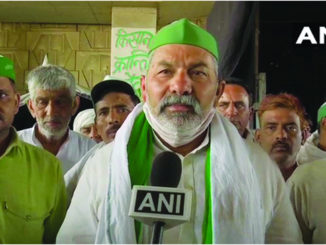
    New Delhi (TIP): Bharatiya Kisan Union (BKU) spokesperson Rakesh Tikait said on Thursday the agitation against the Centre’s three new farm laws will have to go on for eight more months as it is a question of their rights and lands. The movement will pick up speed after May 10, as till then farmers will remain engaged in harvesting wheat crops, Tikait said. “Farmers can harvest their wheat crops till May 10 post which the agitation will pick up speed,” Tikait was quoted as saying by news agency ANI.

    Farmers have been camping at several border points in Delhi for more than four months, seeking a repeal of the laws– Farmers’ Produce Trade and Commerce (Promotion and Facilitation) Act, 2020; the Farmers Empowerment and Protection) Agreement on Price Assurance and Farm Services Act 2020 and the Essential Commodities (Amendment) Act, 2020 — which were cleared by Parliament in September last year.

    Despite several rounds of negotiation and repeated requests by the government, the farmers have remained determined that they would not stop protesting until the laws are completely rolled back and are also firm on their demand for a legal guarantee for the Minimum Support Price (MSP).

    All India Kisan Sabha (AIKS) general secretary Hannan Mollah told ANI on Wednesday that lakhs of protesters would march to Parliament in May. “Modi Government and Parliament are not listening to the farmers then it is our right to go in front of Parliament and raise our demand and we will decide sometime between the middle in the month of May,” he said. Pointing out that the march would be peaceful, he added that they (farmers) will go to Parliament to express their pain and grief before the citizens.

    Several strikes and marches have been staged by farmers across India since last year and the majority of them were peaceful. However, the farmers’ tractor rally on Republic Day (January 26) in Delhi took a violent turn as protesters deviated from the designated route and entered the national Capital after breaking barricades and were also involved in incidents of vandalism. A few protesters reached the iconic Red Fort and hoisted religious flags on it. The Delhi Police has made multiple arrests in the case.

    In January, the Supreme Court suspended the implementation of the farm laws and appointed a committee on January 12 to examine these laws and further recommend changes. The committee on Wednesday submitted its report and the apex court will hear the matter on April 5. Speaking to Hindustan Times, one of the expert members in the committee Anil Ghanwat said that it is entirely up to the apex court to act on the recommendations given.

  • ‘Send them home happy’: Congress to Centre on farmers’ protest

    ‘Send them home happy’: Congress to Centre on farmers’ protest

    New Delhi (TIP):  Opposition Congress on Wednesday, March 24,  urged the government to agree to the demands of farmers who are protesting against the agri laws and “send them home happy”, warning that “making fun” of them would prove very costly to it. Initiating the debate on the Finance Bill in Rajya Sabha, Congress member Deepinder Singh Hooda questioned the government over its promise of doubling the income of farmers by 2022, alleging that instead of increasing the minimum support price of crops, it was trying to snatch the MSP. Hooda also demanded that the government express condolences over the “death of over 300 farmers during their agitation” and announce an economic package for their families along with job opportunities. He also accused the government of following wrong economic policies leading to a decline in economic growth. He said it was the farmers who saved the country and kept the economy alive during the coronavirus pandemic. Hooda said that in 2015-16, the income of farmers was estimated at Rs 8,000 per month, and by 2022 it should be around Rs 16,000 per month, but it seems to be going down as input costs especially on diesel have risen substantially. “I urge the government to hear out farmers and show some compassion and sensitivity towards them and send them home happy after agreeing to their demands. The government should announce an economic package for families of those who died during the protests and provide them with employment opportunities. Send the farmers back home happy. “I urge you with folded hands not to make fun of farmers, as this would prove very costly to you. Please allow farmers to happily return home,” he said.Hooda said farmers are sitting in protest for over four months now and 300 farmers have died. “Farmers expected that you would fulfil the promise of doubling their incomes, but what has happened is that you have reduced the agriculture budget by 8.5 percent,” he said. “You promised to double farmers’ income. Instead of doubling MSP rates, you are trying to snatch it away from farmers. You have attacked the MSP itself and farmers are now fighting to save it,” he also said.

  • Insider advises Modi to bring in law on MSP

    Insider advises Modi to bring in law on MSP

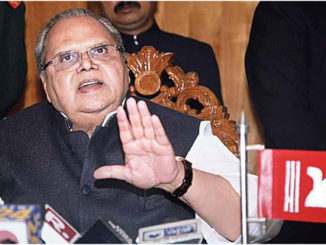
    Satyapal Malik, the Meghalaya governor handpicked by the Narendra Modi dispensation, has pitched for a law on the minimum support price and warned the Centre of consequences if the government tries to suppress the farmers’ protest and send them back empty-handed. Malik’s voice holds significance as he belongs to the ruling stable and hails from western Uttar Pradesh, the epicentre of the farm protests along with Punjab and Haryana.

    “When I saw what was happening in the matter of farmers, I couldn’t stop myself. I spoke and I told both the Prime Minister and home minister that ‘One, don’t send them back empty-handed because the sardars remember it for 300 years. Second, don’t use force against them’,” Malik told a felicitation at a school in Baghpat, western Uttar Pradesh, on Sunday. Malik had studied in the village school.

    Malik, who joined the BJP in 2004 after stints in the socialist camp and the Congress, was picked as governor of the erstwhile state of Jammu and Kashmir in August 2018, a move indicative of his proximity to Modi and Shah.

    It was during his stint as governor that the Centre decided to revoke the special status of Jammu and Kashmir. Later, he was transferred to Goa and then to Meghalaya.

    Malik, who had spoken in favor of the protesting farmers earlier too, said he was “ready to go to any extent” for the farmers since he belonged to a farmer family and knew well the problems they faced.

    Malik warned the Centre against committing the mistake of ignoring the farmers and echoed their demand for a law on the minimum support price, underscoring that “Kisan bahut bure haal me hai desh me”.

    “Make a law on the MSP and the farmers will be ready for other amendments the government wants,” he said, urging the Centre not to allow the protest to drag on.

  • Farmers withdraw dharna on rail tracks near Amritsar after 169 days

    Farmers withdraw dharna on rail tracks near Amritsar after 169 days

    Amritsar (TIP): A group of farmers squatting on railway tracks near here to protest the Centre’s new farm laws withdrew their agitation on Thursday, March 11,  after 169 days, as suspension of trains caused losses to them and traders. Savinder Singh, a leader of the Kissan Mazdoor Sangarsh Committee which had been spearheading the stir, said they decided to withdraw the rail blockade at Devidaspura on the Amritsar-Delhi route after a meeting of all protesting farmer unions. Devidaspur near Jandiala station is about 25 km from Amritsar railway station. “Farmers were blocking only passenger trains, but the Centre decided to stop goods trains as well which caused huge losses to farmers, traders and industrialists. In the light of current circumstances, farmers have unanimously resolved to end the stir here,” he said. Officials said that with the farmers ending their stir here, normal movement of trains will resume within a couple of days. Meanwhile, the ‘Delhi Chalo’ farmers’ protest at border points of New Delhi has entered the 107th day. Thousands of farmers, especially from Punjab and Haryana, are staging a sit-in protest along Delhi borders. The protest started on November 26, 2020. The farmers are demanding a complete rollback of the new farm reform laws and a guarantee on the Minimum Support Price (MSP) system being retained. Multiple rounds of talks between the Centre and the farmers’ union leaders have ended in a stalemate. Protesting farmers fear that the new laws will dismantle the MSP system and corporatise farming.

  • Farmers deserve assured minimum price

    By Kiran Kumar Vissa and Yogendra Yadav

    “If the govt were to bear the entire cost of price deficit suffered by farmers for 13 crops (out of the 23 for which MSP is declared) in 2017-18, the bill would be Rs47,764 crore. If you add 10 minor crops, the bill would have been about Rs50,000 crore. This is less than the MGNREGA budget that year. The actual budget would be smaller since market intervention and legal provisions would raise the market price and reduce the amount to be paid by the govt.”

    Well, it depends on what you think this country is and what is the worth of annadata. This is a question of political will. This is the question crores of farmers are asking today.

    In a bind: The current crisis calls for a prudent approach.

    Can the farmers be offered a guaranteed remunerative price for their produce? The government, some economists and the media would have you believe that this is impossible, both logistically and financially. They are wrong. They either do not understand what the farmers demand, or have not calculated the costs; or they mislead, deliberately. If there was one moment to bust this myth, it is now, when lakhs of farmers are preparing to march to the Capital on Republic Day. Fortunately, we don’t have to start from scratch. The Central government declares minimum support price (MSP) for 23 crops every year. So, in principle, the government does recognize that the farmers need and deserve a minimum price for their produce. It has a mechanism, however faulty and disputed, for computing and announcing this price. And it acknowledges, though not in legal terms, its responsibility to “support” the farmers in terms of their price.

    The problem is that it does not do much to actually offer this support. In reality, less than one-fifth of the farmers get this support, as the government steps in only for two or three crops and that too in a few regions. For most farmers, this MSP remains a maximum securable price, almost a dream price. In the current season, the MSP of maize is Rs 1,850 per quintal, but farmers had to sell it in the past three months between Rs 1,100 and Rs 1,350. Bajra fetched an average price of Rs 1,340 this January in Rajasthan, its largest producer, against the official MSP of Rs 2,150. Growers of pulses like urad, moong and tur face a similar situation. The farmers want and demand that the government must ensure that they get what the government itself admits to be minimum. They demand a law that would place an obligation on the government to make necessary interventions to ensure MSP.

    Is this possible? Let us first get rid of the faulty notion of what such a support might mean. Guaranteed MSP doesn’t mean that the government should purchase every quintal of every crop. That would be impossible, unaffordable and unnecessary. Government procurement at MSP can and should be expanded beyond current levels, but it is only one of several mechanisms that can be used to support the farmers. Procurement for the public distribution system should be expanded to include millets, pulses and oilseeds. That would also help meet the nutrition needs of crores of families. Providing 1 kg of pulses to each of the 750 million PDS beneficiaries would generate a demand for about 13 million tons of pulse crops, giving a boost to pulse production that currently stands at about 25 million tons.

    The second mechanism could be a robust and timely market intervention whenever the market prices fall below MSP. This would mean expanding the operations of existing agencies like Markfed and Nafed with better funding, storage and marketing capacities. They need to purchase only a part of the crop, say 10-20%, and this would shore up the prices for the farmers in the rest of the market too. Such a scheme does exist, but its funds need a quantum jump. If this fails, the government can use a third mechanism by way of deficit payment. The government can compensate the farmers for the difference between the MSP and the price they actually secured. This was tried in Madhya Pradesh, as the Bhavantar scheme, but the experiment failed due to poor designing. It should be designed afresh and sufficient funds allocated for this purpose. The fourth and the last resort mechanism is to make it illegal to trade below MSP. This is not a silver bullet solution and can boomerang if not supported by the first three. Used sparingly, penal provisions for the violators would act as a deterrent to ensure that the market officials implement the provisions. A prudent mix of these four methods can indeed ensure that no farmer receives a price lower than the official MSP. Finally, is this affordable? Government spokespersons have pooh-poohed this demand by claiming that it would cost Rs 17 lakh crore, more than half the Union Budget. This is a mischievous figure. This is what it would cost the government if the entire produce of all crops is purchased by the government at MSP and then destroyed or dumped in the Indian Ocean. This calculation assigns zero value to the purchased crop. To get a realistic estimate, we have calculated the difference between the MSP and the average actual market price of the crop, using the official data for 2017-18. This is what it would cost the government if it procures the crops at higher than the market price or makes deficit payment to the farmers. The average market price is derived from the average (modal) daily prices in markets across the country reported by AgMarknet during the entire season, weighting the modal prices with the quantum of sales for each day. For instance, the MSP of maize that year was Rs 1,425 but the weighted average market price was only Rs 1,159. Using the estimated marketed surplus production that year of 25.29 million tons, the total price deficit suffered by the maize farmers is calculated to be Rs 6,727 crore. In 10 out of the 13 crops (paddy, maize, wheat, bajra, tur, urad, moong, chana, masur, soybean, groundnut, mustard and cotton), the average market price is significantly lower than the MSP. So, if the government were to bear the entire cost of the price deficit suffered by the farmers for 13 crops (out of the 23 for which MSP is declared) in 2017-18, the bill would have been Rs 47,764 crore. If you add the remaining 10 minor crops, the bill would have been about Rs 50,000 crore. This is less than the MGNREGA budget that year. The actual government expenditure would be smaller since market intervention and legal provisions would raise the market price and reduce the amount to be paid by the government. A higher cost is presented if the government raises the MSP itself at 50% above the Comprehensive Cost (C2), as recommended by the MS Swaminathan Commission. In that case, the maximum cost to government would have gone up to Rs 2,28,000 crore. That is about 1.3% of the GDP, about 8% of the Union Budget. This is stiff, but not impossible. The cost could be shared between the Central and the state governments.

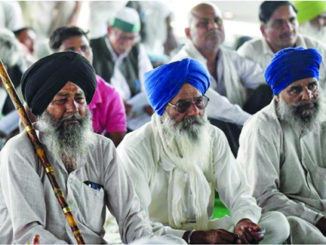
    A section of protesting farmers.

    Can the country afford this? Well, it depends on what you think this country is and what is the worth of annadata. This is a question of political will. This is the question crores of farmers are asking today.

    (Kiran Kumar Vissa is an Agriculture activist, andYogendra Yadav is president, Swaraj India)