Tag: MTA

  • MTA Announces Winter Weekend Discounts for LIRR and Metro-North Monthly Ticketholders

    MTA Announces Winter Weekend Discounts for LIRR and Metro-North Monthly Ticketholders

    • Monthly Ticket Holders’ Family and Friends Ride For $1
    • Discounts on Saturdays and Sundays
    • Discounts Start Saturday, Jan. 4

    NEW YORK CITY (TIP) : The Metropolitan Transportation Authority (MTA) today announced the Long Island Rail Road (LIRR) and Metro-North Railroad “Winter Weekend” discount program. This program expands on the popular “Summer Saturday” discount program that enables monthly ticketholders to travel anywhere the railroads go and bring friends of family for just $1 each.

    Beginning on Saturday, Jan. 4, both railroads will honor all monthly tickets for travel to and from all stations within the LIRR or Metro-North territories regardless of which stations are printed on the ticket. Monthly ticket holders traveling on Saturdays and Sundays will be able to bring up to two additional travelers for only $1 per person each way. Promotional $1 tickets can be purchased via the Train Time app under Family Fares or on board without incurring an extra charge.

    The program begins as the Authority implements the Congestion Relief Zone on Sunday, Jan. 5, and is one of the many ways the MTA is encouraging customers to take public transit. On Tuesday, Dec. 17, Governor Hochul announced the MTA will enhance service on 24 bus routes across New York City. This follows systemwide service increases on 11 subway lines that took effect between July 2023 and July 2024.

    “Taking the train is the fastest and most convenient way to get to the city this winter and with record-levels of on-time performance and more service than ever before, you can count on the LIRR to get you where you need to go, said Long Island Rail Road President Rob Free. “Skip winter traffic and enjoy the trip at great prices.”

    “Monthly Metro-North riders know that the railroad is the most reliable, fastest and safest way to travel,” said Metro-North President Catherine Rinaldi. “Whether it’s a winter excursion upstate or a trip into the iconic Grand Central, we’ve made your experience even more affordable with steep discounts for family and friends.”

    In 2024, the LIRR achieved a higher year-to-date on-time performance of 95.7%, compared to the same time period in 2019, and recorded the best November in the railroad’s history with an on-time performance of 96.2%, all while running 40% more service. Metro-North continues to deliver on-time performance levels of 98% and is breaking weekend ridership records, surpassing pre-COVID ridership on multiple occasions this fall.

    There will be no cross-honoring of these discounted tickets between the railroads, meaning LIRR customers cannot use their monthly tickets to travel on Metro-North, and vice versa. The program is expected to run through the end of March.

  • New York City Subway Ride to Cost More

    New York City Subway Ride to Cost More

    NEW YORK CITY (TIP): The M.T.A. board voted to raise the base fare to $2.90 from $2.75, after pausing increases to try to lure back riders lost during the pandemic.

    Ever since the coronavirus pandemic decimated subway ridership in New York City, the Metropolitan Transportation Authority has resisted raising the price of a ride out of fear that even more people would abandon mass transit, says a New York Times report.

    But after years of financial uncertainty, the authority intends to balance its budget. On Wednesday, July 19, the M.T.A.’s board voted to raise the base fare for subway and bus trips for the first time in eight years, to $2.90 from $2.75, by Aug. 20. The decision will almost certainly reverberate across the United States, where transit systems of every size have experienced steep and lingering losses as many white-collar commuters continue to work from home at least part of the time.

    A May survey by the American Public Transportation Association found that larger cities have been hit especially hard — 71 percent of transit agencies with operating budgets greater than $200 million were predicting shortfalls in their operating budgets. Transit agencies in Washington, D.C., and the San Francisco Bay Area have also moved to raise fares this year. In New York, weekday ridership has rebounded significantly but still hovers at about 70 percent of pre-pandemic levels.

    Lower-income workers who rely on the system to reach their jobs would bear the greatest burden of a fare increase, advocates said, especially as the cost of essentials such as housing, food and health care continues to rise.

    Transportation in New York City
    Hudson Tunnel Project: The federal government is on track to give $6.88 billion, the most ever awarded to a mass-transit project, for the construction of a second rail tunnel under the Hudson River to New York City.
    Penn Station: A private development firm presented an alternative plan for the remaking of the station, saying it would be significantly cheaper than a rival proposal backed by the M.T.A.
    Congestion Pricing: A program that would charge people a toll to enter the busy commercial districts of Manhattan south of 60th Street cleared its final federal hurdle. Here’s a look at how the program could work.
    Fare Evasion: A report unveiled by the M.T.A. proposed a range of new solutions, including replacing turnstiles with gates that are harder to jump over, to deter people from sneaking into subways without paying.
    Janno Lieber, the M.T.A. chairman, defended the increase, describing it as a return to biennial fare increases meant to keep up with inflation. “We need this to be responsible,” Mr. Lieber said before Wednesday’s vote. “It’s not without its downsides, because anytime you’re asking people to pay a little more, you know that has consequences. But for everybody who depends on this transit system — like I always say, mass transit is like air and water for New Yorkers — we need it.”

    The $2.75 base fare has been in place since 2015. The most recent fare increase came in 2019, when the price of unlimited weekly and monthly MetroCards rose.

    The board also voted to raise monthly passes on the Long Island Railroad and Metro-North Railroad by as much as 4.5 percent. Tolls on bridges and tunnels will rise by 6 percent for drivers paying through the E-ZPass system and by 10 percent for those who pay by mail.

    According to the United Way of New York City, about half of working-age New Yorkers are struggling to cover basic needs this year, up from 36 percent of households in 2021.

    Elizabeth Angeles, who helps oversee advocacy efforts for the organization, said that when people struggle to make ends meet, they tend to skip meals in order to pay for what are typically fixed costs, like transportation.

    “Or, they’re relying on our emergency food pantries, which are already strapped,” Ms. Angeles said. “It’s going to exacerbate a system that is already on its knees.”

    But the M.T.A. and even some of its regular critics said that a fare increase was a crucial step to ensure the survival of the transit system, which continues to rely heavily on rider payments.

    The authority this year is also building a first-in-the-nation congestion pricing program that will allow it to collect billions of dollars from drivers to pay for infrastructure enhancements, including new elevators in subway stations and updates to the signals that keep trains moving. But by law, the money can only be used to pay for capital projects, not for operating costs.

    Earlier this year, the authority had faced a budget gap of nearly $3 billion by 2025. A bailout from Gov. Kathy Hochul and lawmakers in Albany helped to significantly shore up the transit system’s finances by providing new and recurring funding for the authority, but not enough to avert a fare increase.

    “The fare increases are going to ensure there is sufficient funding to keep transit going,” said Lisa Daglian, the executive director of the transit authority’s Permanent Citizens Advisory Committee, a watchdog group. “The budget would be balanced not only because of the incredible generosity of the governor and efficiencies by the M.T.A., but because riders are investing.”

    The state’s funding package includes a $65 million payment earmarked to prevent an even larger fare increase.

    In hopes of offsetting the increase, many had urged Mayor Eric Adams to expand eligibility requirements for the Fair Fares program, which subsidizes public transit fares for New Yorkers whose income falls below the federal poverty line — about $30,000 a year for a family of four.

    City Council leaders pushed during budget negotiations last month to double the program’s income threshold. The council struck a deal with Mr. Adams to boost funding for the program by $20 million, but the proposal to make it more widely accessible was scaled back.

    The M.T.A. has struggled financially since at least the 1970s, when a municipal fiscal crisis worsened problems caused by the system’s crumbling infrastructure. Lawmakers moved in the 1980s to allow the authority to issue bonds, but its debt has exploded since then, and expenses have outpaced income.

  • Companies wary as Twitter checkmark policy fuels imposter accounts

    Companies wary as Twitter checkmark policy fuels imposter accounts

    Twitter’s attempt to implement a paid account verification service has attracted imposters spreading misinformation, which experts said could lead major brands to further pull back from the social media platform owned by billionaire Elon Musk. On April 20, Twitter moved to boost profits by removing the once-coveted blue check marks from accounts and charging $8 a month to users who wish to buy a Twitter Blue subscription to retain their verified status.
    Musk’s latest initiative was met with a wave of imposter accounts sharing harmful misinformation. Some organizations have already stopped using Twitter, including the New York City Metropolitan Transportation Authority (MTA) with 1.3 million followers. Both AT&T Inc and Volkswagen AG told Reuters they had paused Twitter ads and had not yet resumed as of April.
    Twitter has been hit by a massive decline in advertising since the acquisition but Musk told the BBC last month most of the advertisers are returning to the platform.
    Data from outside research firms and statements from several advertisers show Twitter’s ad business may not be bouncing back that quickly.
    “Twitter Blue is a mess. This is more chaos and confusion for brands who were already wary of impersonation. They don’t want to remain on a platform where they feel vulnerable,” said Jasmine Enberg, principal analyst at Insider Intelligence. Since Musk bought Twitter in October and began making rapid changes, brands have been debating whether they should keep advertising on the platform. Enberg said Twitter’s removal of legacy checkmarks could prompt some companies to stop tweeting and maintaining their profile. “There’s little incentive for brands to keep an organic presence when they think their brand is at risk, and especially on a platform where it’s not going to drive any meaningful impact,” she said. Rachel Moran-Prestridge, a postdoctoral scholar at the University of Washington’s Center for an Informed Public, said Twitter’s checkmarks for years gave users confidence an account was legitimate.
    “Without this verification, users have to do much more heavy lifting to try to ascertain whether the account is who they say they are,” she told Reuters in an email.
    In a move that furthered confusion, Twitter on April 22 appeared to give some high-profile users a verification mark.
    Within the next 48 hours, all but 110 of the most-followed Twitter accounts suddenly had verification through Twitter Blue, indicating Twitter likely gifted the check marks, independent researcher Travis Brown told Reuters. Source: Reuters

  • Advocates descend on Capitol to demand full funding for the MTA; rally with legislators

    Advocates descend on Capitol to demand full funding for the MTA; rally with legislators

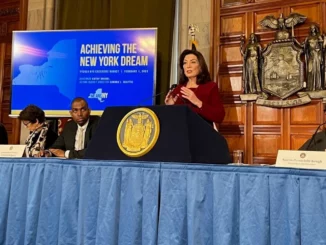
    ALBANY, NY (TIP): On Tuesday, February 14, a broad alliance of elected representatives, community organizations, advocates, and MTA riders rallied at the Capitol in support of including funding for the “Fix the MTA” package in the state budget. Advocates, straphangers and elected representatives alike are calling on the one-house budgets to include funding to not only resolve the MTA’s fiscal crisis, but ensure improved service, without imposing fare hikes on working-class New Yorkers already stretched thin by the skyrocketing cost of living.
    The “Formula Three” spending bill within the “Fix the MTA” package would fully fund the MTA and reject a fare hike to $3, fund greater frequency for 6-minute service, and make buses free. The package also includes programmatic measures: to increase the agency’s accountability through better reporting; establish prudent and accurate budget measures; and boost efficiency.
    Governor Hochul’s executive budget does not provide the funding necessary to avoid a fare hike to $3, and provides no funding for the service that MTA riders deserve.
    Over 50 advocates and MTA riders joined Assembly Member Zohran K. Mamdani, NYS Senate Deputy Leader Gianaris, Senator Jessica Ramos, Senator Andrew Gounardes, Senator John Liu, Senator Jabari Brisport, Senator Natalia Fernandez, Senator Kristen Gonzalez, Assembly Member Alicia Hyndman, Assembly Member Juan Ardila, Assembly Member Jessica González-Rojas, Assembly Member Amanda Septimo, Assembly Member Robert Carroll, Assembly Member Tony Simone, Assembly Member Michaelle Solages, Assembly Member Jeffrey Dinowitz, Assembly Member Phara Souffrant Forrest, Assembly Member Chantel Jackson, Assembly Member Marcela Mitaynes, Assembly Member Emily Gallagher, Assembly Member Sarahana Shrestha, Betsy Plum, Executive Director, Riders Alliance, Alfred Lynch Jr., a member of Riders Alliance and Lisa Daglian, Executive Director, Permanent Citizens Advisory to the MTA.
    “This is the budget where we move beyond the bare minimum when it comes to the MTA. Dozens of my colleagues and I see this year as the one where we freeze the fare, fund frequency, and make buses free. Whether we speak to them on subway platforms or at bus stops, our constituents are clear that now is the time to break the Albany cycle of disinvestment and disinterest, and instead take critical steps towards creating a transit system that is affordable, reliable, and universally accessible,” said Assembly Member Zohran Mamdani.
    “The MTA is on an express track towards fiscal calamity and it is imperative we intervene to save and improve the nation’s most important transit system,” said Senate Deputy Leader Michael Gianaris. “Freezing fares, improving service and providing free bus service would be game-changers that would set the tone for the rest of the country and put the MTA on solid footing for a better future.”
    “Ridership on the 7 train, which runs the length of my district, remained relatively steady throughout the pandemic because of the essential workers who kept commuting and kept our city running. We should recognize their contributions with reliable service, not fare hikes. New Yorkers are already feeling the squeeze of rising prices. We can either muster the political will to fix the MTA, or we can take half measures at the expense of working families who rely on our public transit infrastructure,” said State Senator Jessica Ramos.
    “Fixing the MTA is not just about repairing tracks and trains, it’s about restoring faith in the backbone of our city’s infrastructure and the millions of New Yorkers who rely on it every day. Access to reliable and affordable public transportation is not a luxury, it’s a necessity – and providing free bus service from suburban communities to the city is a crucial step towards ensuring equitable opportunities and a thriving local economy for all,” said Assembly Member Michaelle Solages.
    “I’m proud to stand in support of the #FixtheMTA bill package. I am speaking up alongside other legislators, advocacy groups, and working people who rely on the MTA to demand real investments in our public services. Now, more than ever, we must revitalize our public transportation to build a future of sustainability and equality. In NY, the rich have abandoned our public transportation, but that doesn’t mean the burden of fare increases should rest on working-class communities like mine. We must increase the availability and affordability of the MTA and make our public services truly public,” said Assembly Member Marcela Mitaynes.
    “Governor Hochul owes millions of New York bus and subway riders a targeted investment in six minutes or better service all day, every day,” said Riders Alliance Executive Director Betsy Plum. “More frequent public transit service will attract more riders, improve safety, enhance equity and is essential to both mitigating and adapting to climate change. In a state with a multibillion dollar surplus and money available to support industries from horse racing to Hollywood filmmaking, there’s no question that New York can afford the public transit service we need and deserve. With transit virtually defining our competitive edge, more frequent service is a policy change we can’t afford not to make.”
    “Transit is the backbone of our region—an essential service—and it deserves to be funded as such,” said Lisa Daglian, Executive Director of the Permanent Citizens Advisory Committee to the MTA (PCAC). “An investment in better transit is an investment in a stronger city, state, and region. Riders need our state legislators and Governor to pass key aspects of the Fix the MTA package—including funding the MTA, increasing and improving MTA transparency, and give a greater voice to rider representatives on the MTA Board—which together will help build the transit system riders deserve. We can’t afford to face exorbitant fare hikes or service cuts—the millions of riders who depend on transit every day need our state leaders to fix the MTA. We thank Assemblymember Mamdani and the Assembly and Senate co-sponsors for proposing legislation that would transform our transit system and the lives of riders.”
    “New York currently has a surplus of over 8 billion dollars. There’s no reason why we can’t adequately fund the MTA and meet the Chair’s $350 million ask to stave off another fare hike. I’m proud to have recently introduced a new bill as part of the “Fix the MTA” legislative package that would also help support the MTA’s overall fiscal health. The bill would allow certain tax revenue to go directly to the MTA without legislative appropriation. If enacted, the MTA would have more immediate access to much-needed funds, improve its credit, and prevent potential budget cuts in the future. I urge my colleagues to pass this bill this session and work together to help improve public transit without passing the buck to struggling New Yorkers,” said Assembly Member Jessica González-Rojas.
    Assemblyman Jeffrey Dinowitz said: “Mass transit is the lifeblood of New York, and our state budget should reflect the significant impact that it has on the wellbeing of all New Yorkers. The economic success of Bronxites and all working class New Yorkers is reliant on access to efficient, safe, and affordable buses and subways. Furthermore, beyond mere investments in mass transit, we must ensure that our transit authorities are spending this money with the best interest of riders in mind. Adding rider representation to the MTA Board would ensure that this valuable perspective is included in key decisions, and I’m proud to support the Fix the MTA package to enact systemic reform as well as paradigm-shifting investments in mass transit service for New Yorkers.”
    “Transit is an irreplaceable public good that provides us access to our homes, our jobs, and the city around us. For the millions of working class New Yorkers who rely on our public transit, proposed fare hikes and long wait times are unacceptable,” said State Senator Julia Salazar. “I join my colleagues in urging the Governor to align the State’s investments with the needs of New Yorkers–and pass an executive budget that includes funding for the entire Fix the MTA package.”
    State Senator John Liu said, “Hiking fares to cover for lagging ridership without addressing critical flaws like excessive wait times is counterintuitive for a mass transit system that is supposed to be accessible to all New Yorkers. This legislative package looks to make a fiscally sound, accountable and efficient system that will fully fund the MTA, create reliability, and make buses free for all, as has already been achieved in major metropolitan areas like Washington D.C. Many thanks to Assembly Member Zohran Mamdani and our colleagues from both houses who recognize the urgency and necessity of this effort to improve transit and increase ridership.”
    State Senator Kristen Gonzalez said, “New Yorkers shouldn’t settle for a transit system with unaffordable fares and unreliable service. This package would take a transformative approach to America’s largest transit system, treating the MTA like the public good that it is. Rejecting a fare hike, phasing in free buses, and implementing 6-minute service throughout the day would tangibly improve the lives of working-class New Yorkers. If the Governor is serious about her commitment to the MTA, she will make the investments necessary to guarantee reliable, affordable service for all New Yorkers.”
    “The MTA’s impending fiscal cliff presents us with a fundamental choice. We could balance their budget on the backs of working class New Yorkers who rely on the buses and subways, while doing little to improve service and reliability. Or we could seize the moment to make transformative investments and create a system that’s beloved by every New Yorker, with dependable 6-minute service, frozen fares on the subway and free rides on the bus. It’s up to us in this year’s state budget,” said Assembly Member Emily Gallagher.

    Learn more about the legislation and the campaign at fixthemta.org

    ABOUT “FIX THE MTA”: The campaign, supported by Riders Alliance, the Permanent Citizens Advisory Committee to the MTA, Transportation Alternatives, the Democratic Socialists of America, New York City Chapter, New York Communities for Change, and the Invest in Our New York coalition advocates for the “Fix the MTA” package of bills introduced in the NY State Legislature this session. The package makes the MTA safer, more reliable, and affordable by rejecting a fare hike; increasing service; and making buses free. The package includes programmatic measures: to increase accountability through better reporting; establish prudent and accurate budget measures; and boost efficiency. Read more at fixthemta.org.

  • NY governor proposes $227 billion budget

    NY governor proposes $227 billion budget

    ALBANY, NY (TIP): New York Gov. Kathy Hochul presented a $227 billion state budget plan on Wednesday that includes more money for schools and public transit and raises taxes on cigarettes. She also put the spotlight on public safety, including another set of revisions to the state’s controversial bail reform laws.

    The governor’s plan includes a 10% increase in school aid, finally fulfilling a nearly 20-year-old court order that said more money needs to be invested in the state’s poorest schools. Health care spending would be increased by about 8%, with $1 billion used for more psychiatric beds and residential mental health treatment facilities.

    The governor is able to add the money because of larger-than-expected tax collections and funds remaining from federal pandemic relief programs that have led to an over $8 billion budget surplus.

    “We’ve set the table for what should be one of the most prosperous times in our state’s history,” Hochul said. “But if New Yorkers don’t feel safe, they can’t afford to buy a home, they can’t pay their rent, the cost of everything keeps rising, then nothing we’ve done will make a difference.”

    To that end, Hochul is proposing that 800,000 new housing units be built in the state over the next decade, financed mostly by private developers, but with 100,000 units of affordable housing paid for by the state.

    No new broad-based taxes are proposed, but she wants to extend a temporary corporate tax surcharge. She’d add a payroll tax surcharge for businesses in the regions served by the downstate Metropolitan Transit Authority to help stem pandemic-related losses for the transit agency. Hochul also wants to raise taxes on a pack of cigarettes by $1 to $5.35.

    The governor also detailed a public safety plan that includes $337 million to fight a surge in gun-related violence and provides $80 million to district attorneys to hire more prosecutors and to better follow recent statutes that require them to turn over evidence to defendants in a timely way.

    She also wants to revise the state’s controversial bail reform laws to allow judges more discretion to set bail when people are charged with serious crimes. Hochul portrays the changes as an attempt to clear up confusion caused by previous changes to the 2019 laws that she said conflict with each other. A standard imposed during changes made last year requires judges to choose the “least restrictive means” to ensure that someone accused of a crime returns for court dates.

    “We looked at this very thoughtfully, and realize what judges are telling us that they don’t have the clarity that they need to have, when someone’s before them, and meets the standards of being bail-eligible,” Hochul said.

    MTA

    Hochul wants to create a new revenue stream for the MTA that would keep massive service cuts and layoffs from going into effect.

    “We have to face the harsh reality of MTA’s fiscal cliff,” Hochul said.

    To offset this budget gap, Hochul is proposing a hike on the MTA payroll tax for New York City companies and would direct revenue from new casinos in the city towards funding the MTA.

    However, even if this is approved, the MTA will still be moving forward with its 5.5% fare hikes this year.

    There are legal snags in Hochul’s plan, under current state law, casino revenue is flagged for educational purposes, but MTA Chair Janno Lieber says businesses should be responsible for funding MTA service.

    “We need them to pay a little slice of the cost of maintaining five days a week service when people are only coming in 2-4 days,” Lieber said. “That’s the rationale.”

    NY Schools

    Hochul wants to eliminate the regional cap on charter schools, which would allow more charter schools to open in the city. Per pupil funding for charter schools would increase by 4.5%.

    “What we’re trying to do is something that is just common sense,” Hochul explained.

    However, this already is kicking off a fierce fight with the state’s powerful Teacher’s Union.

    In a statement, NYSUT President Andy Pallottaq said, “This will have a devastating impact on our public schools, especially for our state’s most underserved students. History shows that the corporate charter school industry is interested in making profits, not in the well-being of all students, educators, and families.” Hochul is also proposing a $3.1 billion or a 10% increase to annual School Aid, the largest School Aid increase in history, for a total of $34.5 billion. This includes fully funding the Foundation Aid formula for the first time in its 17-year history.

    NY Migrant Crisis

    Hochul is proposing to direct $1 billion in state aid to fund resettlement costs for migrants. This includes reimbursing the city for a share of shelter and relief centers, health care costs and National Guard members who have been assisting with this crisis.

    Hochul also wants to set up a future funding formula so that costs are split evenly between the city, state, and federal government.

    However, the federal government still has not committed to providing resources to aid in the migrant crisis.

    Hochul said she spoke with the President on Wednesday.

    “He did say that there be money coming from the federal government to help the city,” Hochul said. He did not give a number, but we believe that they should be picking up a significant share.”

    NY Corporate Taxes:

    Despite promising no new taxes, Hochul does want to extend a higher tax rate for wealthy corporations.

    Former Governor Andrew Cuomo increased the tax rate for corporations taking in at least $5 million a year in revenue from 6.5% to 7.25% in 2021.

    That three-year tax hike was meant to be temporary and is set to expire at the end of this year.

    But Hochul is proposing extending that for at least another 3 years.

    Some lawmakers would like to see this tax hike made permanent.

    NY Mental Illness Help

    Hochul wants to direct $890 million in capital to build 2,150 new residential beds for people with mental illness who need varying levels of support.

    Hochul also wants to set aside $18 million in capital funding to open 150 State-operated inpatient psychiatric beds.

    Bail Reform:

    Hochul wants to spend $40 million in additional funding to hire hundreds of new prosecutors around the state and direct $20 million for pretrial services.

    Hochul also wants to remove the “least restrictive means” standard from the state’s bail laws so that judges can have more discretion when setting bail.

    This has been met with strong pushback in the past by Democratic state lawmakers but some recently have expressed that they are willing to work with Hochul on certain changes. Democrats who lead the state Legislature have been resistant to making more changes to bail reform.

  • Chairman Crowley Urges MTA to Prioritize Expansion of Metro-North Railroad Service into the Bronx

    Chairman Crowley Urges MTA to Prioritize Expansion of Metro-North Railroad Service into the Bronx

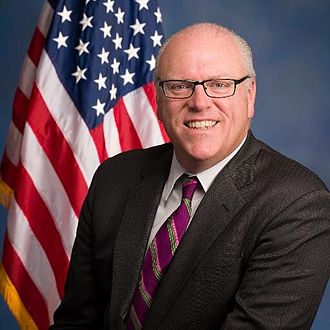
    JACKSON HEIGHTS, NY(TIP): House Democratic Caucus Chairman Joe Crowley (D-Queens, the Bronx) is urging the MTA to prioritize expansion of the Metro-North Railroad into the East Bronx as part of the authority’s upcoming five-year plan.

    In a letter sent to MTA Chairman and CEO Joe Lhota, Chairman Crowley said bringing new transportation options to underserved communities in the East Bronx would significantly improve the lives of commuters and residents as they travel for work and leisure.

    As part of his Better Deal plan for Queens and the Bronx, Chairman Crowley has proposed a slate of policies designed to improve transportation options across his district. A major plank of Chairman Crowley’s Better Deal plan is working with the MTA and state lawmakers to establish an explicit timeline for Metro-North’s expansion into the easternmost section of the Bronx. As part of this effort, Chairman Crowley’s letter to MTA Chairman Lhota reiterates that residents in the East Bronx have been forced to settle for insufficient transit options for far too long.

    “Despite the many benefits of bringing Metro-North to the East Bronx, the project has languished for more than a decade,” wrote Chairman Crowley. “It is time to take concrete steps toward making this new service a reality. It’s continued inclusion in the MTA’s Capital Program is critical, as is an accelerated timeline for construction and completion. The residents of the Bronx have waited far too long.”

    For more than a decade, Chairman Crowley has been fighting to bring Metro-North to the East Bronx, which would vastly improve transportation options in the area and boost the local economy. The benefits of expanded service would be immense. Currently, residents can only access a single, overcrowded subway line with exceedingly long travel times. Demand for alternative transit options is on the rise in the Bronx, demonstrated by the fact that the borough saw an increase of nearly 800,000 subway riders between 2015 and 2016.

  • Weprin Announces State Budget Investments for All New Yorkers

    Weprin Announces State Budget Investments for All New Yorkers

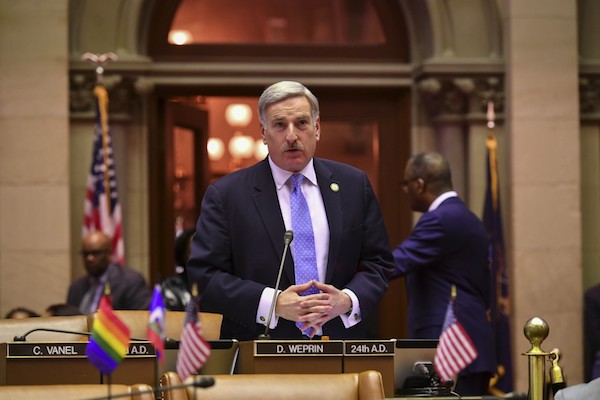
    ALBANY, NEW YORK(TIP):  Assemblyman David I. Weprin announced, April 5, that the New York State has passed an on-time $168.3 billion 2018-19 state budget that includes a nearly $1 billion increase in education funding, significant investments in infrastructure and transportation, protection for New York’s homeowners from federal tax changes and support for seniors’ health and well-being.

    The 2018-19 state budget fully funds the Metropolitan Transportation Authority’s (MTA) Subway Action Plan – for a total of $836 million – to make emergency repairs and enhance subway performance. The plan also expands select bus services throughout the city, so residents can get around more easily and reach their destinations on time. And, to establish a long-term funding stream for New York City public transportation, the budget enacts a $2.75 surcharge on for-hire vehicles, $2.50 for yellow cabs and $0.75 for pooled trips below 96th Street in Manhattan; averting an executive proposal which would have placed a $11.52 toll charge for all vehicles below 60th street in Manhattan and over $25 for trucks; resulting in particularly burdensome costs for small businesses and a potential pass along of increased costs to consumers.

    The budget also seeks to limit the impact of the federal tax plan on New York’s homeowners, which increases taxes on many middle-class families by restricting state and local tax deductibility by creating state-operated charitable contributions funds designed to help improve health care and educational outcomes for all New Yorkers. Taxpayers who donate to the funds will be able to claim these contributions as deductions on their state and federal tax deductions, as well as claim a state tax credit equal to 85 percent of the donation amount.

    Other highlights of the final 2018-19 state budget include: –

    • $8.16 million to support long-term care for seniors and $7.81 million to preserve spousal refusal to couples do not lose their life savings in the event a spouse becomes ill and needs nursing home care.
    • Restorations of $13.99 million to prevent hospital and nursing home reductions and $12 million in managed care reductions.
    • $26.6 billion in education funding, including a $618 million increase in Foundation Aid and key allocations to college opportunity programs, including to the Higher Education Opportunity Program (HEOP), the Education Opportunity Program (EOP), the Science and Technology Entry Program (STEP), the Collegiate Science and Technology Entry Program (C-STEP), as well as for the Search for Education, Elevation and Knowledge (SEEK), Liberty Partnerships and College Discovery programs.
    • $12.1 million to SUNY and $6.3 million to CUNY, as well as community colleges to increase community college base aid. The plan includes funding for CUNY Child Care Centers, CUNY Accelerated Study in Associate Program (ASAP), Educational Opportunity Centers (EOCs), and $92 million in state operating support for SUNY hospitals.
    • $35.1 million in critical Bundy Aid for independent colleges, based on degree productivity.
    • $15 million for STEM instruction in nonpublic schools, including parochial schools and yeshivas, for a 200-percent increase over 2016.
    • $30 million in operating and capital support for New York State Office of Alcoholism and Substance Abuse Services (OASAS) for treatment and recovery programs, residential service opportunities, and public awareness and education activities.
    • $100 million for a first-in-the-nation opioid stewardship program with a fund to be used for the ongoing and growing costs of prevention, treatment, and recovery services for individuals with a substance abuse disorder.
    • $1 million in additional funding for libraries, providing a total of $96.6 million; including $75,000 for the Queens Library’s Langston Hughes Cultural Center.
    • $350,000 in assistance for nonprofits dedicated to resettling individuals and families from Puerto Rico and the U.S. Virgin Islands.
    • A measure creating a commission to ensure that the people of New York State are accurately counted in the 2020 U.S. Census.
    • Legislation to ensure that employers across the state have comprehensive policies to combat sexual harassment in the workplace, bars confidentiality clauses in any settlement except when specifically requested by the victim and banning mandatory arbitration agreements for claims of sexual harassment.
    • Legislation prohibiting domestic abusers from possessing both handguns and long guns and prohibits individuals with an outstanding warrant for a felony or other serious offense from receiving or renewing a firearm license.

    As Chair of the Assembly Committee on Correction, Weprin also announced that the budget also provides $50 million for the first installment of funding for a six-year plan enacted in 2017 to increase the state’s investment in public defense legal services in addition to $5 million for the Liberty Defense Project to provide vital legal services to immigrants, $4.5 million in additional funding for civil and immigrant legal services, $750,000 for Prisoners’ Legal Services and, $500,000 for additional alternatives to incarceration programs.

    “Although we faced a particularly challenging budget year, the final state budget includes significant investments in education, transportation, healthcare and indigent defense funding” said Assemblyman David I. Weprin. “Along with dealing with the effects of the Washington tax plan, the final budget also averted an executive proposal which would have placed a $11.52 toll charge for all vehicles below 60th street in Manhattan and over $25 for trucks; resulting in particularly burdensome costs for small businesses and a potential pass along of increased costs to consumers.”


  • OFFICIALS TO MTA: RESTORE ORIGINAL “FREEDOM TICKET” PLAN

    OFFICIALS TO MTA: RESTORE ORIGINAL “FREEDOM TICKET” PLAN

    Elected Say Eliminating Proposed Discounted LIRR Fare Between Southeast Queens and Penn Station Renders Freedom Ticket Pilot “Inferior” and “Set Up For Failure”

    QUEENS, NY (TIP):  In advance of the upcoming Board Meeting of the Metropolitan Transportation Authority (MTA), Borough President Melinda Katz, U.S. Representatives Gregory Meeks, Senators Leroy Comrie and James Sanders, Assemblymember Alicia Hyndman and Clyde Vanel and Councilmembers Adrienne Adams and Daneek Miller in a joint letter to MTA Chairman Joe Lhota expressed their opposition to the MTA’s proposed revision to the “Freedom Ticket” plan, which would force Freedom Ticket riders seeking to get to and from midtown Manhattan to first transfer at Atlantic Terminal in Brooklyn.

    The proposed revision would eliminate the discounted LIRR one-way $6.50 Freedom Ticket fare originally proposed in 2015 between six southeast Queens stations (Rosedale, Laurelton, Locust Manor, St. Albans, Hollis and Queens Village) and Penn Station in Manhattan or Atlantic Terminal in Brooklyn. Currently, the $10.25 one-way peak weekday fare is cost prohibitive for many between the Queens stations and Penn Station or Atlantic Terminal.

    “As you know, we have been avid supporters of the ‘Freedom Ticket’ plan put forward by the New York City Transit Riders Council (NYCTRC) in 2015,” the elected officials wrote in a joint letter this week to Chairman Joe Lhota. “The inferior Freedom Ticket pilot program now under consideration, however, would force users… a transfer that would substantially increase their commuting times…  Given this significant limitation, without the option of Penn Station, I expect few southeast Queens residents would use Freedom Tickets if the pilot program is implemented in its current state. The pilot is therefore being set up for failure, an outcome that is unacceptable, as it will not properly serve SEQ residents, allow for sufficient outreach in the community, nor gauge their use of a long term program.”

  • OUR RICHMOND HILL SUBWAY ELEVATOR IS HERE

    OUR RICHMOND HILL SUBWAY ELEVATOR IS HERE

                                                       By Albert Baldeo

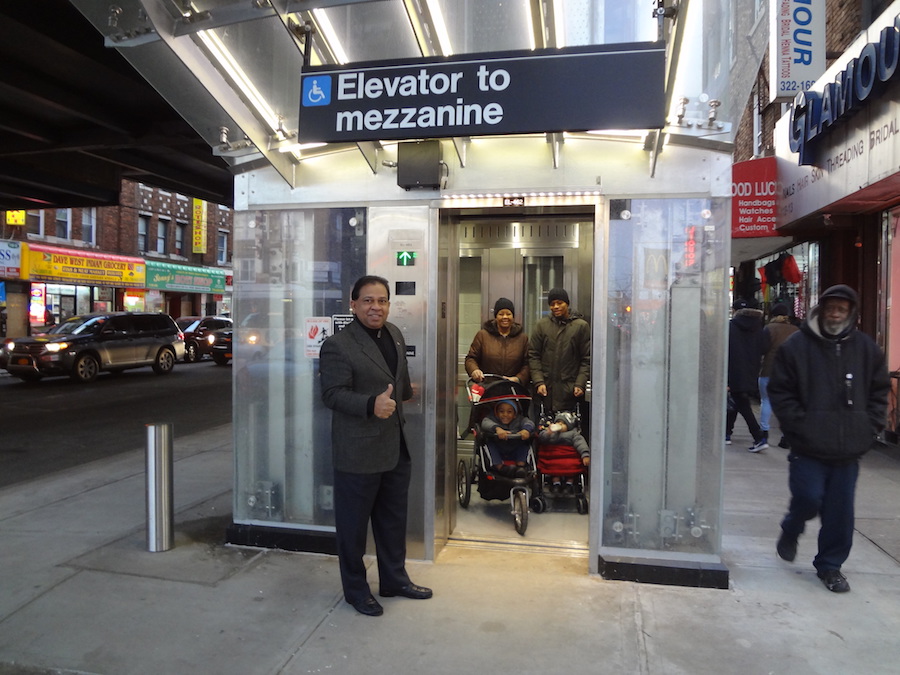
    Our fight to secure and complete the only subway elevator in the Richmond Hill/ Ozone Park community has been won, and it is now working! Thanks to all, including the Daily News, the West Indian, Caribbean Life, Queens Chronicle, Times Ledger, Kaieteur News, NY Guyana Chronicle, The Indian Panorama, Stabroek News, Guyana Times, and other media for publishing our petitions and public appeals to deliver and complete this important asset in our community-an absolute necessity for seniors, the physically challenged, babies, kids and pregnant mothers.

    This $29 million project, commenced since 2014, was scheduled to be finished since the end of 2016, but excuses have abounded each time we enquired about the completion date. Anyway, better late than never! The MTA must be reminded that prompt and proper maintenance is a necessary component of public transportation and services.

    We also wish to remind the Mayor to deliver on his promises to increase the amount of senior centers, deliver better schools, hospitals, city services and personnel, transparency in how benefits are awarded in our neighborhood, and to stop the over criminalization of New Yorkers-like stop making criminals of poor people who cannot afford the fare to travel to work on the trains-while transforming this city into a beacon that is in solidarity with the poor and working-class. He must also audit and scrutinize the many failing city agencies that routinely waste and abuse our tax dollars, while preserving New York as a “sanctuary city.”

    (Albert Baldeo is a civil rights activist and community advocate, and his political battles placed previously ignored minority communities like Richmond Hill and Ozone Park firmly on the political and economic map. As the President of the Baldeo Foundation and Queens Justice Center, he has continued to fight for equal rights, dignity and inclusion in the decision-making process. He can be contacted at the Baldeo Foundation: AlBaldeo@aol.com or (718) 529-2300).