DALLAS, TX (TIP): The launch of the Free IT Bootcamp 2025 at the Round Rock Public Library marked a significant milestone for the city’s ongoing efforts toward digital inclusion and workforce development. The inaugural event witnessed strong participation from the community, including youth, students, early-career professionals, and working adults seeking to build or transition into careers in information technology.
A major highlight of the event was the presence of the Honorable Mayor of Round Rock, Texas, Mr. Craig Morgan, who formally inaugurated the program and publicly honored and recognized the organizer, Mohammed Kashif, for his outstanding hard work, dedication, and commitment to serving the Round Rock community.
While addressing the gathering, Mayor Morgan applauded Kashif’s vision and initiative, emphasizing that the free and open-to-the-public IT Bootcamp 2025 will play a vital role in equipping individuals with essential computer and IT skills needed to secure employment. He further noted that the program would help participants enhance their existing technical capabilities through structured mentoring, ranging from basic computer skills to advanced IT concepts.
The Free IT Bootcamp 2025 has been thoughtfully designed to bridge the gap between academic learning and real-world industry requirements. Many students and early-career professionals, despite possessing strong theoretical knowledge, often face difficulties in job interviews due to limited practical exposure. At the same time, individuals from non-IT and blue-collar backgrounds who aspire to enter the technology sector frequently encounter financial constraints and a lack of access to proper guidance.
To address these challenges, Mohammed Kashif conceptualized the Free IT Bootcamp as a community-driven initiative focused on practical, industry-relevant training at no cost. The program covers a comprehensive range of IT fundamentals, including programming, databases, cybersecurity, cloud technologies, career readiness, and mentoring sessions aimed at building confidence and employability.
The Mayor’s public recognition of Kashif was met with warm appreciation from attendees, many of whom have registered to participate in the upcoming bootcamp sessions. Community members described the initiative as timely and impactful, highlighting its role in democratizing access to technology education and creating meaningful pathways to employment.
With strong community support and the endorsement of city leadership, the Free IT Bootcamp 2025 is set to become a transformative platform for Round Rock—empowering individuals with digital skills, professional guidance, and new opportunities in an increasingly technology-driven economy.
(Murtaza Ali Khan is Critic | Curator | Journalist | Historian. An award-winning journalist, he has been covering art, culture, music, and entertainment for a decade and a half. He can be reached at murtaza.jmi@gmail.com / Phone: +91 9717554334)
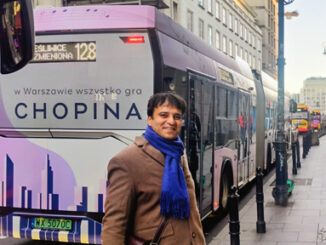
As a cultural journalist and critic, I have often believed that true diplomacy happens not only in embassies or conference halls but also in museums, art galleries, and over dinner tables where ideas flow freely. My recent visit to Warsaw, Poland from October 20 to 22, 2025, as part of a study program organized by the Polish Ministry of Foreign Affairs and supported by the Polish Institute New Delhi reaffirmed this belief.
I arrived in Warsaw on a bright autumn afternoon, greeted warmly at Chopin Airport by our coordinator and interpreter, whose effortless professionalism set the tone for the days ahead. After checking into my hotel, I headed to my first meeting—with the Director of the Department of Foreign Cooperation at the Ministry of Culture and National Heritage. The Director of Polish Institute New Delhi also joined us on the occasion, adding a powerful Indo-Polish focus to the conversation.
The discussion largely touched on the growing cultural ties between India and Poland, emphasizing the need to facilitate not only governmental partnerships but also exchanges among artists, filmmakers, and cultural scholars. The ministry representative spoke passionately about her ministry’s commitment to strengthening Poland’s cultural presence in South Asia and exploring new avenues for cooperation in cinema, heritage conservation, and the performing arts.
Later that afternoon, I visited the POLIN Museum of the History of Polish Jews, one of Warsaw’s most profound spaces of remembrance. Walking through its immersive exhibits, I was deeply moved by how Poland confronts its layered history with both honesty and empathy. For a country that has endured so much, the POLIN Museum stands as a symbol of reconciliation through education and art.
At the Gallery of Modern Art.
The evening concluded with dinner at Pod Gigantami, a historic restaurant known for its Old Warsaw charm, where over plates of exquisite Polish cuisine, conversations with fellow participants and Polish hosts revolved around cross-cultural storytelling and the shared power of cinema to build empathy.
The second day began with a meeting at the Ministry of Foreign Affairs, where I interacted with the Deputy Director of the Department of Cultural Diplomacy. The Deputy Director outlined Poland’s vision for cultural outreach, focusing on collaborations with media professionals and cultural commentators from Asia. I was particularly intrigued by her emphasis on soft power and the role of cultural narratives in shaping contemporary diplomacy—a theme that resonates deeply with my own work as a critic.
From there, I proceeded to the Museum of Modern Art, where the Museum Director Joanna Mytkowska shared insights into Poland’s evolving contemporary art scene. The museum’s emphasis on social engagement and public dialogue reminded me of similar movements in India’s independent art spaces.
Zacheta National Gallery.
Later, at the Zachęta National Gallery of Art, I got to interact with Museum Director Agnieszka Pindera. At the gallery, I witnessed how modern Polish artists reinterpret national identity in the face of globalization. The discussions with curators and art historians underscored how both India and Poland grapple with questions of memory, modernity, and identity through creative expression.
In the evening, I visited the National Institute of Architecture and Urban Planning (NIAiU), where I learnt about he institute’s initiatives in documenting and preserving architectural heritage. Our conversation drifted toward sustainable design, urban regeneration, and the shared challenges of preserving history while embracing modernization.
Dinner that night capped an intellectually stimulating day with laughter, warmth, and cultural camaraderie thanks to the luminary presence of various stalwarts specialising in Indology.
My final day in Warsaw began with a visit to the National Museum, an architectural gem housing centuries of Polish artistic achievement. From Renaissance masters to avant-garde innovators, the collection offered a sweeping panorama of Poland’s aesthetic evolution. I was particularly struck by the museum’s commitment to accessibility and its efforts to engage younger audiences—a model worth emulating in India’s museum culture.
Visiting the Polish Institute of International Affairs (PISM), proved to be a masterclass in Public Diplomacy as he provided some key insights into his research methodology.
Before departing for Kraków, I reflected on the immense value of such cross-cultural study visits. Beyond formal meetings and museum tours, what stood out was the Polish hospitality, intellectual openness, and genuine curiosity about India’s creative landscape. As someone who has spent years chronicling the intersections of cinema, culture, and identity, I found this journey deeply enriching. It reminded me that cultural diplomacy thrives when built upon shared values, artistic respect, and the courage to engage with history.
Warsaw, buzzing with Chopin’s music, resilient spirit and vibrant cultural energy, left an indelible impression on me. I now head to Krakow for the 2025 Conrad Festival with renewed inspiration and a conviction that art and dialogue still remain our most powerful bridges.
The author
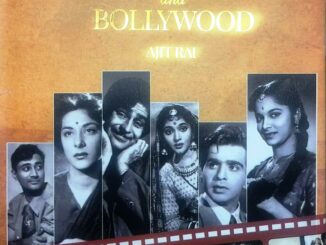
Murtaza Ali Khan is an award-winning journalist who has been covering art, culture, music, and entertainment for a decade and a half. Khan regularly appears on radio and TV as a media historian and cultural commentator. Khan has also curated various cultural initiatives for various Embassies and Cultural Centers. He has also served on the jury of prestigious National Film Awards for 2023 and 2024. He has translated the bestselling book ‘Hindujas and Bollywood,’ launched in London by Bollywood Superstar Akshay Kumar, about the global journey of over 1200 Hindi films from 1950s to 1980s, into English. His education spans science & technology, mass communication, and management.
Murtaza Ali Khan
Critic | Curator | Journalist | Historian
Google | Wikipedia
Twitter | Facebook | Muck Rack | LinkedIn
Selected Articles
The Sunday Guardian | Firstpost
The Hindu | The Daily Guardian
The New Indian Express | The Patriot
The Quint | Newslaundry | Huff Post India/ The Indian Panorama
When Raell Padamsee speaks about theatre, there is a spark in her voice that carries both pride and responsibility. As the daughter of legendary theatre director Alyque Padamsee and actress Pearl Padamsee, Raell grew up immersed in the magic of the stage. Today, she is not only preserving that legacy but also reshaping it for a new generation—balancing reverence for tradition with the courage to innovate.
Her latest endeavour, taking Broken Images—directed by Alyque himself and starring the incomparable Shabana Azmi—to the US, starting with New York this October, feels particularly personal. “Broken Images is very close to my heart because it reflects both the artistry and vision of my father, Alyque Padamsee,” she says. “He directed it with such brilliance—merging theatre and technology in a way that was ahead of its time. Bringing it to the US, and especially to New York, feels like completing a circle—taking Indian theatre of international quality to the world stage, just as Alyque always believed it should be.”
For Raell, staging this production is far more than another theatre tour. It is an act of homage. “This performance is not just about staging a play; it’s about sharing his legacy with global audiences and proving, once again, that Indian theatre can be world-class, bold, and relevant. It’s an honour to both Girish Karnad and Dad,” she reflects.
Courage as Legacy
Ask Raell what she considers her father’s greatest gift, and the answer is immediate: courage. “My father’s legacy is one of courage—courage to experiment, to challenge norms, and to tell stories that matter. He taught me that theatre must be larger than entertainment; it should provoke thought, stir emotion, and reflect the society we live in,” she says.
This philosophy lies at the heart of her work with the CREATE Foundation, which she founded in 2002. Through productions like Rediscover the Epic, Mahatma, and The Sound of Music, she has brought together children from mainstream schools and marginalized NGOs—including differently abled children—on one stage. “Integration has been at the heart of all our work… giving them equal space to shine on stage,” she explains.
That mission continues with her upcoming play Alice in Paradise, which reimagines the classic tale while uniting children across diverse backgrounds. “Our whole life ethos, thanks to both Alyque and my mother Pearl, was using theatre not just to entertain, but to give back,” she adds.
Theatre as Social Catalyst
Raell’s projects frequently extend beyond art, entering the realm of activism. In 2024, she collaborated with theatre veteran Lushin Dubey for the Rise Up for Equality!! festival, showcasing women-centric plays while working with the Mumbai Police’s Nirbhaya Squad to promote the women’s helpline “103.” “This was more than theatre—it was a mission to make Maharashtra the safest state in the world. By amplifying the helpline, we aimed to create awareness, galvanise action, and push for institutional change,” she recalls.
In this way, Raell carries forward not just her father’s artistic courage but also her mother’s compassion. “For me, this is how I continue the legacy of both Alyque and Pearl Padamsee—by ensuring theatre remains a catalyst for transformation, empowerment, and lasting social change.”
The Shabana Azmi Connection
Broken Images also represents a creative convergence between Alyque and one of his most admired collaborators, Shabana Azmi. “Shabana and my father shared a bond rooted in artistry, mutual respect, and a relentless pursuit of truth on stage. He always admired her ability to embody complexity with honesty and depth. Casting her in Broken Images was his way of ensuring the role had both intellectual weight and emotional authenticity,” Raell says.
She fondly recalls a memory from their Singapore staging of the play: “The response was so overwhelming that the auditorium filled to capacity, and Dad and I actually had to sit outside because there were no seats left for us. For me, that moment captured exactly what he envisioned: theatre that moved people so deeply that it transcended borders, languages, and even our own access to it!”
Poster – Broken Images
Looking Ahead
Raell is determined that Alyque’s contributions to theatre and advertising should not be relegated to nostalgia. Along with new productions—Unfaithfully Yours starring Mona Singh and Rohit Roy, Untitled and Aruna’s Story with Lushin Dubey—she is working on a Virtual Alyque Padamsee Museum. The immersive platform will allow audiences to rediscover his iconic plays, ad campaigns, and creative philosophy.
She has also overseen the release of Alyque’s final book, Let Me Hijack Your Mind, co-authored with Vandana Saxena Poria and published by Penguin India. “True to his style, the book is bold and provocative—it challenges deep-rooted societal beliefs and invites readers to rethink love, marriage, money, gender, leadership, and faith. It is truly Dad’s legacy for the future—it teaches people to question their innermost thoughts and follow only those that lead to a flourishing life,” she says.
The Guiding Voice
To Raell, her father’s influence is not confined to memory; it remains a daily compass. “Alyque Padamsee was a visionary. He redefined what theatre could be in India—grand in scale, uncompromising in quality, and deeply human in storytelling. He was exacting, yes, but his precision was born out of love for the craft. For him, theatre was sacred—it demanded rigor, passion, and honesty. To me, he was not just a father, but a mentor whose voice still guides me every time I step into rehearsal,” she reflects.
She adds, with humility, “If I can achieve even a fraction of the impact he made on stage, I will feel I have done justice to his legacy.”
The tickets are available on Sulekha.Com
(Murtaza Ali Khan is an award-winning cultural writer and critic with more than a decade and a half experience. He can be reached at murtaza.jmi@gmail.com).
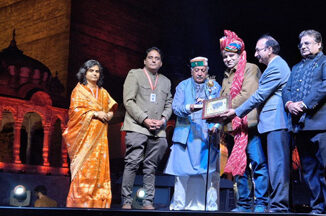
JAIPUR (TIP): Noted Indian film critic and journalist Murtaza Ali Khan has been bestowed with the RIFF 2025 – Award for Excellence for Contribution in Cinema/TV/Media by His Highness Maharaja Shri Gaj Singh II of Jodhpur and the Rajasthan International Film Festival (RIFF). The prestigious honor recognizes Khan’s exceptional contributions to cinema and media, celebrating his extensive work across print, digital, radio, and television platforms.
Expressing his gratitude, Murtaza Ali Khan stated, “Rajasthan International Film Festival enjoys a great legacy of blending the regional with the international. The Festival Directors Somendra Harsh and Anshu Harsh have been instrumental in putting Rajasthan on the world cinema map. I am personally grateful to His Highness Maharaja Gaj Singh ji and the festival for bestowing me with such an honor.”
With a career spanning over 15 years, Khan has been at the forefront of film criticism and media, writing for leading national and international publications. He has also served on the jury of the National Film Awards as well as various prestigious film festivals in India and abroad. His expertise extends beyond journalism, as he actively curates film festivals and retrospectives for Embassies and Cultural Institutions. His contributions to international cinema include curating and presenting retrospectives of cinematic legends such as Federico Fellini, Luis Buñuel, Pier Paolo Pasolini, Carlos Saura, and João Moreira Salles. Additionally, he has organized numerous thematic film festivals, including Japanese Samurai Classics, Spanish Icons, Ibero-American Cinema, City of Berlin, Italian Fare Cinema, Austrian Short Films, and Kinoteka Polish Film Festival.
Khan’s impact in media is equally profound. He has conducted interviews with leading national and international figures from cinema, entertainment, art, and culture. A regular presence on television, he appears as a film expert and media critic on prominent news channels. Additionally, he has translated the bestselling book on Indian cinema, ‘Hindujas and Bollywood,’ into English. With a diverse academic background encompassing science and technology, management, and digital media and arts, Murtaza Ali Khan continues to shape film discourse and cultural appreciation both in India and globally.
The 2025 Rajasthan International Film Festival proudly presented a special screening of Chitraanjali, a film that highlights the extraordinary journey of Polish artist Stefan Norblin in India, on the final day of the festival. This unique presentation forms a vital part of the festival’s ongoing commitment to celebrating the confluence of diverse cultural narratives and artistic legacies.
Malgorzata Wejsis-Gołębiak, Director of the Polish Institute, shared her enthusiasm for the event, stating: “We are honored to participate in this prestigious festival and to present Chitraanjali, a film that sheds light on the remarkable journey of Polish artist Stefan Norblin in India. His work, deeply embedded in the artistic heritage of Jodhpur, Morvi, and Ramgarh, is a testament to the enduring cultural ties between Poland and India. This screening is not just a tribute to Norblin’s legacy but also a celebration of the shared artistic and historical connections between our two nations.”
Following the screening, a dynamic discussion took place featuring Malgorzata Wejsis-Gołębiak alongside Khan. The dialogue was further enriched by the participation of Sunil Laghate, Centre Director of the Mehrangarh Art Conservation Centre (MACC), and Rajat Jangid, conservator-restorer at Mehrangarh Art Conservation Centre, who contributed valuable insights on art conservation and cultural heritage.
This special event at the festival not only celebrated the artistic endeavors of Stefan Norblin but also underscored the importance of preserving and promoting the cultural bonds that unite India and Poland. The festival continues to serve as a platform for fostering international dialogue, cross-cultural exchange, and creative collaboration in the world of cinema and the arts.
Speaking about Poland’s participation, Somendra Harsh, Festival Director, Rajasthan International Film Festival said, “We are thrilled to have Poland as a participating country at the 2025 Rajasthan International Film Festival and to host Ms. Malgorzata Wejsis-Gołębiak, Director of the Polish Institute. Polish cinema has a rich legacy, with visionary filmmakers like Andrzej Wajda, Krzysztof Kieślowski, and Agnieszka Holland leaving an indelible mark on world cinema. We look forward to continuing this collaboration, fostering deeper cultural exchange through the power of storytelling.”
At the closing ceremony, the Polish filmmaker Rafael Stemplewski was bestowed with the RIFF 2025 Award for ‘Excellence for Contribution to International Cinema’ by His Highness Maharaja Shri Gaj Singh II of Jodhpur. Malgorzata Wejsis-Gołębiak, Director, Polish Institute, was also recognized for her lifelong commitment towards boosting the cultural ties between India and Poland.
The 2025 Jaipur Literature Festival (JLF), taking place from January 30 to February 3 at Hotel Clarks Amer, Jaipur, is set to be a dynamic celebration of literature, art, and ideas. Among the highlights are engaging sessions like The Economics of Art: Policy, Innovation, and Inclusion, featuring renowned figures such as H.E. Noura bin Mohammed Al Kaabi and Scott McDonald, and The Ajanta Caves: Ancient Buddhist Painting, with art historian Benoy K. Behl and William Dalrymple. Pulitzer Prize winner Benjamin Moser will explore Dutch art and culture, while new works such as Devi and Her Avataras and The Third Eye of Indian Art will be unveiled.
The Ojas Art Award will recognize Gond artist Ram Singh Urveti and miniature artists Vinita Sharma and Ajay Sharma, alongside the unveiling of an impressive 8×12-foot commissioned painting. Art installations by Veer Munshi, delving into Kashmir’s cultural legacy, and striking photography by Vicky Roy, celebrating human resilience, will enhance the festival’s immersive atmosphere. Additionally, the Maharaja Sawai Man Singh II Trust’s artworks will reinterpret Rajasthan’s rich heritage.
Cultural festivals are a vibrant mix of creativity, connections, and organized chaos—a world Sanjoy K. Roy, Managing Director of Teamwork Arts and the driving force behind JLF, knows intimately. In an engaging conversation, Roy reflects on the transformative role of festivals, his personal journey, and the unforgettable memory of accompanying Indian superstar Shah Rukh Khan to Edinburgh.
When asked about the festivals that shaped his vision, Roy is quick to acknowledge the profound influence of the Edinburgh Festival. “The first time we went to Edinburgh, it was in 1999 or 2000. It was overwhelming. We watched everything—plays, music, circus, films, literature—from nine in the morning to one at night,” he recalls with palpable enthusiasm.
What struck him most was the city’s complete transformation during the festival. “The entire city became the festival. People poured through the gates, and there was something for everyone,” he says.
But the magic of Edinburgh was more than just the shows. It was the connections. “We used to host this annual dinner for 159 people—festival directors, artists, venue managers. It was homemade Indian food, and everyone wanted to be there. It became an unmissable event,” Roy explains. This approach of blending food, heritage, and culture to foster relationships became a hallmark of his work, leading to lasting collaborations across the globe.
The Edinburgh Festival wasn’t just an inspiration; it became a platform for Indian culture. Roy fondly recalls one of the most ambitious undertakings: bringing Shah Rukh Khan to the Edinburgh Film Festival.
“When we proposed the idea, the festival organizers were skeptical. For them, Shah Rukh was just another actor, someone not in the league of Sean Connery or Brad Pitt,” Roy says. But Roy was confident in SRK’s global appeal.
True to Roy’s prediction, the event was a sellout. “Tickets were selling for £100 in black the next day! The festival organizers panicked and scrambled to move the screening to bigger venues—first a 500-seater, then an even larger theater outside the city. But it wasn’t just about the venues; even the police and airport staff underestimated the frenzy Shah Rukh would create,” he recounts with a chuckle.
The chaos reached its peak when fans flooded Edinburgh airport. “The airport staff thought they’d seen it all—royalty, the Queen, Hollywood stars. But they had no idea what Shah Rukh Khan meant to people,” says Roy. The turning point came when an Indian-origin police officer intervened to explain the phenomenon.
Roy vividly describes the pandemonium outside the venue. “People were running, screaming, and pushing to get a glimpse of him. At the dinner, we had to isolate Shah Rukh in a corner, surrounded by tables, security, and police. He simply sat there, gracious but overwhelmed.”
What stood out to Roy was not just the madness, but the joy and connection Shah Rukh brought to people. “For many in that very white, Eurocentric space, it was their first exposure to the sheer power of Indian cinema and its stars. Shah Rukh wasn’t just a person; he was a cultural phenomenon,” he emphasizes.
Roy’s experiences at Edinburgh laid the groundwork for the Jaipur Literature Festival, now a global phenomenon in its own right. “The spirit of inclusivity, the idea of creating a festival where there’s something for everyone, came from Edinburgh. But we made it our own by infusing it with Indian sensibilities,” he says.
JLF has become a melting pot of ideas, bringing together writers, thinkers, and audiences from around the world. Its success has inspired Teamwork Arts to create festivals in London, Boulder, and Adelaide, among other cities. “Each festival is a unique cultural dialogue. It’s not just about exporting Indian culture but also about learning from others,” Roy says.
Amid this context, Roy sheds light on the evolution of the Jaipur Literature Festival (JLF) case study, saying, “The study has been around for 12 or 14 years—quite a long time. It started when Tarun Khanna from Harvard Business School, along with his colleagues and a lawyer from Harvard Law School, approached us to explore how JLF and, by extension, Teamwork Arts became one of the most successful arts brands.” The newly revised version, he explains, “continues to tell the same story but now looks much more specifically at the business of the arts and the complexities of running a festival of this scale in the Indian context.” It also dives deeper into pressing modern issues such as cultural diplomacy, innovation, and sustainability, reflecting how JLF has evolved alongside the global landscape of the arts.
Undeniably, at the heart of Roy’s vision is his belief in the power of connections. Whether it’s hosting a dinner for festival directors or bringing Shah Rukh Khan to Edinburgh, Roy’s approach is deeply personal. “Festivals are not just about events; they’re about relationships. Food, music, culture—all of these are tools to bring people together,” he says.
As he looks back on his journey, Roy remains driven by the same passion that took him to Edinburgh more than two decades ago. “Cultural festivals have the power to transform not just individuals but entire communities. They create spaces where ideas flourish and where people come together to celebrate the best of humanity,” he says.
For Roy, the journey is far from over. With Teamwork Arts expanding its footprint and JLF continuing to grow, he’s always looking for the next big challenge. “The world is changing, and festivals must evolve too. But the core remains the same—bringing people together through the arts,” he concludes.
In an era where cultural dialogue is more important than ever, Sanjoy K Roy’s work serves as a reminder of the power of festivals to inspire, connect, and transform. And if his journey from Edinburgh to Jaipur is any indication, the best is yet to come.
(The author is an Indian critic and journalist who has been covering cinema, art and culture for the last decade and a half. He can be reached out at murtaza.jmi@gmail.com).
The Indian Motion Picture Producers’ Association (IMPPA), the oldest and one of the most prestigious film bodies in India, is set to make waves at the 55th International Film Festival of India (IFFI), Goa. In a historic initiative led by IMPPA President Shri Abhay Sinha and his dedicated team, the association has secured a luxurious three-storey yacht as its exclusive pavilion for the event.
This state-of-the-art floating venue, parked opposite the Marriott in Goa, offers a 200-seat LED-screen-equipped banquet space, a dedicated press conference area, trailer launch facilities, and even a party hall with a dance floor and swimming pool. The yacht will serve as a vibrant hub for celeb-studded events, press interactions, muhurats, masterclasses, and networking opportunities for the film fraternity.
The IMPPA pavilion at the 55th IFFI will offer masterclasses by top industry experts, including the FIAPF head, on legal rights, IPR, copyright, and screenwriting. It will also serve as a platform for trailer launches, muhurats, and networking opportunities, fostering global collaborations and showcasing Indian cinema to international audiences.
Speaking on this initiative, Yusuf Shaikh, Senior IMPPA representative and International Film Festival Committee head, remarked, “IFFI Goa Yacht Pavilion is a game-changer for our producers and filmmakers. It provides them a glamorous yet professional platform to present their work, engage with audiences, and connect with key players from around the world. We aim to empower our members by offering them innovative opportunities to grow and thrive in the global film industry.”
IMPPA extends its gratitude to the NFDC, ESG, and IFFI for their invaluable support in making this ambitious vision a reality.Yusuf Shaikh is a veteran producer and distributor with over years of experience in the Indian film industry, having worked on more than 100 films. He began his career with blockbuster hits like Mohra, Main Khiladi Tu Anari, and Suhaag before joining Percept Pictures as its head, where he distributed numerous National Award-winning films, including Page 3, Traffic Signal, Dor, Phir Milenge, and Kanchivaram.
IFFI Goa Yacht Pavilion poster.
As an adviser to studios like Drishyam Films, Yusuf has marketed and distributed acclaimed films such as Newton (India’s 2017 Oscars entry), Kadvi Hawa, Halka, and Hotel Salvation (Mukti Bhawan). He also collaborated on projects by Ram Gopal Varma and Bharat Shah Films. As a writer, he penned the story for Nagesh Kukunoor’s Dhanak, which won the National Award for Best Children’s Film.
Yusuf is an active member of key industry bodies, including the Indian Motion Pictures Producers Association (IMPPA) and the Film Federation of India (FFI), the apex organization of Indian film producers.
(Murtaza Ali Khan is an award-winning film critic who has served on the jury of the 69th and the 70th National Awards. He has been covering cinema, arts, and culture for the last decade and a half. He can be reached at murtaza.jmi@gmail.com)
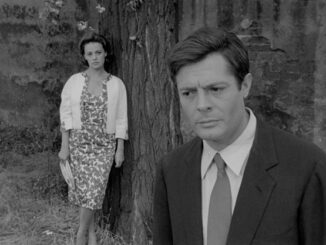
The Italian Embassy Culture Centre is thrilled to announce the centenary celebrations of Marcello Mastroianni, one of Italian cinema’s most beloved icons, with a series of events in New Delhi. Launching the celebrations is a special screening of the restored 4K copy of La Notte at the India Habitat Centre, a film that remains one of the most iconic in Mastroianni’s storied career and a defining work of Italian cinema.
This special screening of La Notte, directed by Michelangelo Antonioni, also commemorates the “Week of Italian Language,” a symbolic gesture that underscores Mastroianni’s contribution not only to cinema but also to Italian cultural heritage. In honor of this milestone, Iaia Forte, a celebrated Italian actress known internationally for The Great Beauty, will perform a recitation of the famous letter that Jeanne Moreau’s character reads to Mastroianni in the film—a scene lauded for its deep emotional resonance and literary brilliance.
Andrea Anastasio, Director of the Italian Embassy Cultural Centre, emphasized the significance of choosing La Notte for the opening event. “La Notte, filmed during the economic boom of Italy in the early 1960s, explores the complexities of modern life and the existential crises it brings, focusing on the dissolution of relationships against a backdrop of societal change,” he explained. “Antonioni and Mastroianni, as a pairing, brought unparalleled depth to these themes. This film addresses timeless issues—life, death, change—and remains a profound reflection of both personal and societal struggles.”
The retrospective honoring Mastroianni will unfold in two phases, beginning in January next year and continuing through March 2025. The Italian Embassy Cultural Centre will host an intimate screening of non-restored classics, offering cinephiles a rare chance to experience Mastroianni’s works as originally intended. In March, the Habitat International Film Festival will showcase restored masterpieces from the Italian National Film Archive, Cineteca di Bologna, offering a grand tribute to Mastroianni’s legacy. This carefully curated retrospective will feature at least 20 films, including eight restored titles, spanning the actor’s dynamic career in Italian cinema.
Marcello Mastroianni in a still from La Notte.
Mastroianni, hailed as the “King of Italian cinema,” had a remarkable career that spanned over five decades and 147 films from 1939 to 1996. Known worldwide for his ability to move effortlessly between comedy, drama, and period films, Mastroianni collaborated with the greatest directors of his time, including Luchino Visconti, Ettore Scola, and his most renowned collaborators, Federico Fellini and Michelangelo Antonioni. He achieved international fame with Fellini’s La Dolce Vita (1960) and 8½ (1963), which established him as a global cinematic icon. In La Notte, as in these masterpieces, Mastroianni captured the complexities of modern existence, cementing his status as a versatile and profound actor.
Mastroianni’s talent earned him multiple prestigious honors, including two BAFTA Awards, two Golden Globes, and dual Best Actor accolades at the Cannes and Venice Film Festivals. As the first actor to receive an Academy Award nomination for a non-English-language role, with three nominations in total (Divorce Italian Style, A Special Day, and Dark Eyes), he carved an indelible mark on the global stage. Mastroianni also forged a celebrated on-screen partnership with Sophia Loren, with whom he starred in eight films across four decades. Their enduring cinematic chemistry remains one of Italian cinema’s most cherished legacies.
Andrea Anastasio added, “Mastroianni’s unique ability to embody both comedy and drama, to traverse the eras from historical pieces to modern reflections, reflects the multi-faceted nature of Italian culture. His legacy is an enduring testament to Italy’s cinematic brilliance.”
Although he achieved widespread fame, Mastroianni largely resisted Hollywood’s allure, staying firmly rooted in Italian cinema. His choice to remain an Italian thespian throughout his career contributed significantly to his status as a cultural ambassador for Italy. Recognized not only for his artistry but also for his service to Italian culture, he was awarded several civil honors, including the Order of Merit of the Italian Republic, Italy’s highest-ranking knighthood.
Mastroianni’s centenary celebrations, beginning with La Notte serve as a reminder of his profound influence on world cinema. Revered for his ability to bring both charisma and subtlety to his roles, he represents a bridge between the Italian neorealist tradition and the international art cinema movement, making his legacy invaluable not just to Italy but to the global film community.
(Murtaza Ali Khan is an award-winning film critic who has served on the jury of the 69th and the 70th National Awards. He has been covering cinema, arts, and culture for the last decade and a half. He can be reached at murtaza.jmi@gmail.com)
TEANECK, NJ (TIP): Emmy-nominated filmmaker Tirlok Malik’s heartfelt film On Golden Years made a memorable impact at the Teaneck International Film Festival’s 19th annual celebration. Held on November 10, 2024, the screening drew a warm response from the audience, ending with resounding applause and a powerful message of love and resilience.
The film resonated deeply with viewers, who praised both its storytelling and its reflection of the immigrant experience. Sanjay Modi called it a “truly good story and well portrayed on the big screen,” adding he planned to see it again with his wife. Harry Shah remarked that it carried a “great message of love” and noted how it reflects “a reality which we immigrants have been living.” Pam and Lall Kawatra also expressed their appreciation, saying, “We loved the film; congratulations to Tirlok Malik!”
David Nachman, Esq., Managing Attorney at Nachman, Phulwani, Zimovcak (NPZ) Law Group, P.C. shared: “Thank you for giving us the opportunity to sponsor such an excellent film with such an important message at a critical time. The NPZ Law Group is pleased to support TIFF’s missions and messages. Congratulations to Tirlok Malik for providing attendees with exposure to a truly timeless film.”
Jeremy Lentz, Executive Director of the Teaneck International Film Festival, added, “It was an honor to present On Golden Years at the 19th Teaneck International Film Festival. The message of this film reminds us to love each day you are given and live each day you’ve got — leading with love and compassion. I hope this film will uplift and inspire others to be kind to each other and take care of one another.”
The screening concluded with a lively Q&A, where Malik expressed his gratitude, made everyone laugh in his trademark style, and left everyone with a final, uplifting message to love oneself and live every moment of life to the fullest. This sentiment, capturing the spirit of the film, left a lasting impression on attendees and reinforced the power of cinema to bring people together and inspire a love for life.
(Murtaza Ali Khan is an award-winning film critic who has served on the jury of the 69th and the 70th National Awards. He has been covering cinema, arts, and culture for the last decade and a half. He can be reached at murtaza.jmi@gmail.com)
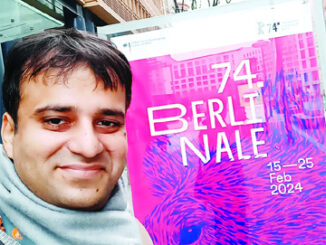
New Delhi (TIP)- Murtaza Ali Khan, noted Indian film critic and curator, was invited by the Federal Republic of Germany to attend the prestigious 74th Berlin International Film Festival. As a distinguished guest of the Federal Republic of Germany, Khan’s participation underscored the strong cultural ties between India and Germany. The festival was held in Berlin from 15 – 25 February, 2024.
Hosted by the Foreign Office of the Federal Republic of Germany through its Visitors Programme, Khan’s attendance at the Berlinale presented a unique opportunity for him to engage with various luminaries from the global cinema industry. During his visit, Khan got a firsthand taste of the vibrant culture of Germany. His itinerary included visits to prominent institutions such as Deutsche Kinemathek – Museum für Film und Fernsehen, Film University Babelsberg Konrad Wolf, Federal Foreign Office, and Goethe-Institute, Berlin. Additionally, Khan participated in events organized by Berlinale Talents and engaged in discussions on film financing and location promotion.
The Berlin International Film Festival, established in 1951, is renowned for its rich history and serves as a vital platform for intercultural exchange and critical exploration of societal issues. Khan’s presence at the festival as a critic, cultural writer, and curator further enhances the dialogue between India and Germany, reinforcing the festival’s commitment to fostering global understanding through cinema.
This year the Berlin International Film Festival witnessed a very strong Indian presence with films such Raam Reddy’s ‘The Fable,’ Siddartha Jatla’s ‘In the Belly of a Tiger,’ PS Vinothraj’s ‘The Adamant Girl,’ Gavati Wad’s ‘O Seeker,’ Nishi Dugar’s short film ‘Sour Candy,’ and Subarna Dash’s animated short film The Girl Who Lived in the Loo, among others. ‘The Fable,’ starring Manoj Bajpayee alongside Deepak Dobriyal, Priyanka Bose, and Tillotama Shome, made its debut at the 2024 Berlinale in the festival’s competitive Encounters section, garnering praise from critics and audiences worldwide.
In a tribute to a three-decade-long illustrious, the Tagore Centre at the Indian Embassy in Berlin paid homage to Manoj Bajpayee. The event, hosted by Trisha Sakhlecha, Director of the Tagore Centre, coincided with the premiere of ‘The Fable’ at the 74th Berlinale. The celebration, commemorating both Manoj Bajpayee’s 30-year career and the foundation of the Tagore Centre, drew a diverse crowd of fans from India and Germany. Parvathaneni Harish, the Ambassador of India to Germany, also graced the occasion alongside various distinguished dignitaries, including the German Diplomat Karsten Warnecke, the former Ambassador and Executive Director of the Asia-Europe Foundation (ASEF), who currently heads the Cultural & Societal Relations with Asia, the Pacific, Latin America and the Caribbean at the Federal Foreign Office.
Murtaza Ali Khan’s participation in the Berlin International Film Festival holds special significance for Indo-German cultural exchange as Khan is set to curate a rare retrospective for the Indian audiences based on the legendary German filmmaker Fritz Lang known for films such as Metropolis, M, The Testament of Dr. Mabuse, etc. Back in 2022, Khan had curated and presented a very unique film festival dedicated to the city of Berlin at the India Habitat Centre for the Embassy of Germany.
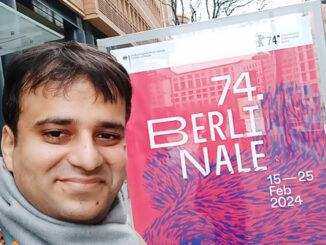
NEW DELHI (TIP): Murtaza Ali Khan, noted Indian film critic and curator, was invited by the Federal Republic of Germany to attend the prestigious 74th Berlin International Film Festival. As a distinguished guest of the Federal Republic of Germany, Khan’s participation underscored the strong cultural ties between India and Germany. The festival was held in Berlin from 15 – 25 February, 2024.
Hosted by the Foreign Office of the Federal Republic of Germany through its Visitors Programme, Khan’s attendance at the Berlinale presented a unique opportunity for him to engage with various luminaries from the global cinema industry. During his visit, Khan got a firsthand taste of the vibrant culture of Germany. His itinerary included visits to prominent institutions such as Deutsche Kinemathek – Museum für Film und Fernsehen, Film University Babelsberg Konrad Wolf, Federal Foreign Office, and Goethe-Institute, Berlin. Additionally, Khan participated in events organized by Berlinale Talents and engaged in discussions on film financing and location promotion.
The Berlin International Film Festival, established in 1951, is renowned for its rich history and serves as a vital platform for intercultural exchange and critical exploration of societal issues. Khan’s presence at the festival as a critic, cultural writer, and curator further enhances the dialogue between India and Germany, reinforcing the festival’s commitment to fostering global understanding through cinema.
This year the Berlin International Film Festival witnessed a very strong Indian presence with films such Raam Reddy’s ‘The Fable,’ Siddartha Jatla’s ‘In the Belly of a Tiger,’ PS Vinothraj’s ‘The Adamant Girl,’ Gavati Wad’s ‘O Seeker,’ Nishi Dugar’s short film ‘Sour Candy,’ and Subarna Dash’s animated short film The Girl Who Lived in the Loo, among others. ‘The Fable,’ starring Manoj Bajpayee alongside Deepak Dobriyal, Priyanka Bose, and Tillotama Shome, made its debut at the 2024 Berlinale in the festival’s competitive Encounters section, garnering praise from critics and audiences worldwide.
In a tribute to a three-decade-long illustrious, the Tagore Centre at the Indian Embassy in Berlin paid homage to Manoj Bajpayee. The event, hosted by Trisha Sakhlecha, Director of the Tagore Centre, coincided with the premiere of ‘The Fable’ at the 74th Berlinale. The celebration, commemorating both Manoj Bajpayee’s 30-year career and the foundation of the Tagore Centre, drew a diverse crowd of fans from India and Germany. Parvathaneni Harish, the Ambassador of India to Germany, also graced the occasion alongside various distinguished dignitaries, including the German Diplomat Karsten Warnecke, the former Ambassador and Executive Director of the Asia-Europe Foundation (ASEF), who currently heads the Cultural & Societal Relations with Asia, the Pacific, Latin America and the Caribbean at the Federal Foreign Office.
Murtaza Ali Khan’s participation in the Berlin International Film Festival holds special significance for Indo-German cultural exchange as Khan is set to curate a rare retrospective for the Indian audiences based on the legendary German filmmaker Fritz Lang known for films such as Metropolis, M, The Testament of Dr. Mabuse, etc. Back in 2022, Khan had curated and presented a very unique film festival dedicated to the city of Berlin at the India Habitat Centre for the Embassy of Germany.
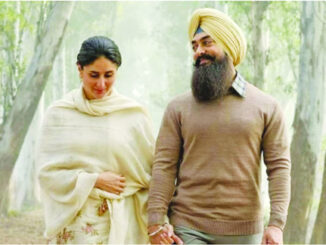
The long-awaited Aamir Khan and Kareena Kapoor starrer ‘Laal Singh Chaddha,’ which has finally hit the theatres this week, is an adaptation of the 1986 novel titled ‘Forrest Gump’ by the American author Winston Groom. The novel was famously adapted by Eric Roth for the 1994 Hollywood film of the same name, directed by Robert Zemeckis, which bagged 6 Academy Awards. Directed by Advait Chandan, Laal Singh Chaddha also stars Naga Chaitanya (in his Hindi film debut), Manav Vij, Arun Bali, Mona Singh, and Aaryaa Sharma.
Given the narrative’s sprawling nature, making a film like ‘Laal Singh Chaddha’ is like making 15-20 films. That’s how herculean the task would have been for Aamir, Advait, and team. Remaking a film like Forrest Gump is no kid’s play. I don’t think anyone but Aamir Khan could have delivered a film of this scope and scale. It’s heartening to see the kind of respect that the film pays to historical accuracy as well as getting the different aspects of Sikhism right.
Every 10 minutes during the first half, the movie keeps switching its genre, undergoing brilliant tonal shifts with the assurance of a master conductor at work. Credit must also go to Atul Kulkarni for beautifully adapting ‘Forrest Gump’ to an Indian setting and for seamlessly weaving the important historical events of the last 40 years into it. When it does the Kargil War, it seems to do it better than ‘Shershaah.’ When it does sports, it seems to match ‘Bhaag Milkha Bhaag.’ When it does comedy, it seems to do it better than most. And as a drama it really excels in terms of cinematic storytelling for the most part.
‘Laal Singh Chaddha’ comes across as a breath of fresh air at a time when the Hindi film industry needs the most. Aamir Khan is innocence personified as Laal Singh Chaddha and his chemistry with Kareena Kapoor is the major highlight of the film along with his bromance with Naga Chaitanya and Manav Vij. There are some beautiful segments of magic realism that are beautifully crafted. Like a boy who walks using crutches suddenly starts running like P T Usha when subjected to bullying. The color grading is so good that the movie looks stunning visually and honestly I haven’t seen a more beautiful looking period film made in India.
Aamir Khan transforms into ‘Laal Singh Chaddha’ in no time and brings the character to life like only be can. Chaddha’s simplicity, to go with his honesty and a sense of contagious optimism that he carries with him at all times, lights up the screen. Whether he is narrating some story, or trying to save lives on a battlefield, or making an effort to sell undergarments, Aamir’s Chaddha always makes us root for him.
Mona Singh is wonderful as Chadda’s loving mother. It’s easily the performance that will take away all the accolades. I was in school when ‘Jassi Jaisi Koi Nahi’ used to air on TV and having seen Mona Singh all these years I have always known that she is a fine actor but seeing what she achieves in ‘Laal Singh Chaddha’ made me realize that she is actually one of the finest actors working in the country right now.
But the biggest surprise of the movie is Kareena Kapoor. Who would have thought that a wafer thin character that Robin Wright played in ‘Forrest Gump’ would become the centrepiece of the Hindi adaptation almost three decades later. This is Kareena Kapoor’s finest performance since ‘Jab We Met.’ It is a layered performance and we can see the character’s dichotomy throughout the film’s running time.
It can be said with absolutely certainty that technology has been put into use to de-age Kareena (and Aamir) for this. But the end result is so good and it makes me particularly happy that we have aced the use of this cutting age technology better than what Hollywood did with say ‘The Irishman’.
I also would like to praise both Naga Chaitanya and Manav Vij for their wonderful cameos. Both their characters’ bromance with Laal Singh Chadda for me is one of the film’s major highlights. It’s a masterstroke to make Manav Vij’s character a soldier from the enemy ranks as opposed to ‘Forrest Gump’ where Gary Sinise’s Lieutenant character was Gump’s compatriot. I would be remiss to not mention Pritam, Arijit Singh, and Amitabh Bhattacharya who have done wonderful work with the film’s music, songs, and lyrics. Overall, I must say that Laal Singh Chadda has reinstated my faith in Hindi cinema. It’s not a perfect film. It suffers from pacing issues in the second half. It’s probably not even Aamir’s best work. But it is cinematic storytelling at its purest. Here’s a sprawling period piece oozing with nostalgia and abundance of love for everything Indian. The naysayers can denounce him but so long as we have stalwarts like Aamir Khan working in the Hindi film industry, Bollywood is here to stay.
Murtaza Ali Khan is an award-winning critic and journalist who has been covering art, culture, and entertainment for over 10 years. He regularly appears on television as a cultural expert and has conducted hundreds of exclusive / tête-à-tête national and international celebrity interviews for leading Indian publications. He regularly conducts workshops on screenwriting, film appreciation, media studies, and film theory. He is the screenplay and dialogue writer of the short film ‘To New India with Love’ about Government of India’s flagship initiative Startup India by Tirlok Malik who is an Emmy-nominated Indian-American filmmaker based out of New York. He has translated the book ‘Hindujas and Bollywood,’ about the global journey of over 1200 Hindi films from 1950s to 1980s, into English. He can be reached at murtaza.jmi@gmail.com
The launch of the book in London by Akshay Kumar ( 6th from the left)Noted film critic Murtaza Ali Khan who translated Ajit Rai’s book into English
NEW YORK (TIP): Prof. Indrajit Saluja, Chief Editor / Publisher, The Indian Panorama and Emmy-nominated filmmaker Tirlok Malik congratulated noted Indian critic Ajit Rai for his groundbreaking book ‘Hindujas and Bollywood,’ about the evolution of Bollywood and the role that the Hinduja brothers played in making it a global brand, which was recently launched in London by the Bollywood superstar Akshay Kumar.Prof. Indrajit Saluja and Tirlok Malik also congratulated renowned Indian film critic Murtaza Ali Khan who has translated Ajit Rai’s book into English. Akshay, who was last seen in ‘Samrat Prithviraj’ has several films in the pipeline including ‘Raksha Bandhan,’ which is slated to hit the screens on August 11, was the chief guest at the book launch event organized at the Institute of Directors in Pal Mall, London.
‘Hindujas and Bollywood’ recounts the untold story of the ubiquitous popularity of Hindi classics like ‘Awaara,’ ‘Sholay,’ ‘Guide,’ ‘Sangam,’ etc. Today, Bollywood is widely recognized as a global brand and it’s almost synonymous with India in the global arena. But not many people know that around seven decades ago, the Hinduja brothers started this global journey of Hindi films long before the moniker ‘Bollywood’ got attached to the Hindi film industry. That they helped produce countless films long before NFDC came into being and long before banks started lending money to the film producers. Sharing his thoughts about Ajit Rai’s pathbreaking book, Murtaza Ali Khan said, “I am eternally grateful to Ajit Rai for trusting me with the responsibility to translate such as important and scholarly work of cinema history into the English language. In my decade and a half long career as a film journalist, I have seldom read something as riveting, compelling, and eye-opening written about Indian cinema. And, it is nothing less than a masterclass in film history. I hope the readers of this book will be able to gain some valuable insights about how Bollywood first started emerging as a global brand, a journey that began in Iran almost seven decades back.”
‘Hindujas and Bollywood’ is now available on Amazon for online booking.
NEW YORK (TIP) The Indian Panorama and Indian American Forum are hosting a panel discussion on Emmy-nominated Indian -American filmmaker Tirlok Malik’s new short film ‘To New India with Love,’ which examines the subject of youth aspirations, virtually on October 17th, 2021 at 11 AM, New York EST virtually on Zoom. This short film is a non-commercial venture, produced with a public-service spirit, appealing broadly to Indians worldwide. It is presented by Padma Shri Dr Sudhir Parikh. The screenplay and dialogues are written by Murtaza Ali Khan and Rakesh Zharotia is the film’s editor and assistant director.
The panel discussion will be moderated by Prof. Indrajit S. Saluja, Chief Editor, The Indian Panorama and Dr. Renee Mehrra. The panelists include Dr. Sudhir Parikh, Tirlok Malik, Dr. Azad Anand, Bobby K. Kalotee, Dr. Bhupi Patel, Dr. Urmilesh Arya, Shashi Malik, Animesh Goenka. Tirlok Malik is best known for making films about Indian immigrants in the US, starting with his pioneering work, ‘Lonely in America,’ which was shown in 74 countries and as well as on HBO and participated in 37 film festivals, winning several awards. He subsequently made films such as ‘Love Lust and Marriage,’ ‘Khushiyaan,’ and ‘On Golden Years’. He has also acted in films like ‘Dr. Babasaheb Ambedkar’, ‘Lajja’, ‘Vettaiyaadu Vilaiyaadu’, ‘Ta Ra Rum Pum’, ‘Sivaji: The Boss’, and ‘Mehbooba’, among others.
Cinema legend Dilip Kumar has passed away at the age of 98, following prolonged illness. He is survived by his wife, actor Saira Banu.
Immediately after the news broke out on Wednesday , July 7, morning, heartfelt tributes from all across the globe started pouring in, as Maharashtra Chief Minister Uddhav Thackeray announced a state funeral for the Bollywood legend.
Born Mohammed Yusuf Khan in 1922 in Peshawar, now in Pakistan, he became known to the world by the screen name of Dilip Kumar once he joined the Hindi film industry in the 1940s.The original king of tragedy who’s revered the world over for his iconic screen performances in films such as Devdas (1955), Naya Daur (1957), Mughal-e-Azam (1960), Ganga Jamuna (1961), Ram Aur Shayam (1967), Sagina Mahato (1970), Kranti (1981), Shakti (1982), Karma (1986), and Saudagar (1991) was laid to rest at the Juhu Qabrastan in Santacruz Mumbai. Dilip Sahab was draped in the tricolor, given a gun salute after which band of police personnel paid him their tribute. The funeral was completed with COVID restrictions in place as only family and close friends were allowed to attend it. Bollywood megastar Amitabh Bachchan was among the few B-town celebs who attended the funeral.
There was a time when young people hailing from good families couldn’t dream of taking up acting as a profession. For, the profession was looked down upon. But, Dilip Sahab not only brought dignity to the profession but also inspired numerous young men and women to follow his footsteps and become legendary figures in their own right. He was a method actor long before the movie stars in the West even knew what it actually meant to be a method actor. In fact, he was so deeply involved into his roles that he had to consult a psychologist who advised him to avoid doing serious roles to keep his sanity intact. That’s precisely why he had to turn down Pyaasa (1957).
But, he was able to soon turn the tide by successfully playing rather light hearted characters which allowed him to further diversify himself as a performer. He famously turned down David Lean’s offer to play Sherif Ali in Lawrence of Arabia (1962) in order to focus on his work in Hindi cinema. A truly consummate actor, Dilip Kumar took on Amitabh Bachchan at the height of his fame in ‘Shakti’ and yet again came out supreme, winning the Filmfare Award for Best Actor in 1983. He subsequently went on to play pivotal roles in films like Mashaal (1984), Karma (1986), and Saudagar (1991). The 1998 film Qila was his last film.
As a performer, Dilip Sahab was always ahead of his time and never backed down from new challenges. In the 1954 film titled ‘Amar’, he played the central character of a lawyer named Amarnath who is known for his sense of justice. Now, as per his father’s wish Amarnath agrees to marry Anju (essayed by Madhubala) who is a Western educated girl and quite open minded. But on one rainy night he gets enticed by a milkwoman’s beauty and is unable to stop himself from raping her. Try and imagine Dilip Kumar, a heartthrob of the nation, in a newly independent India of the early 1950s, raping a girl on the silver screen. Of course, the act of rape isn’t shown but merely implied symbolically via the shattering of the window pane.
Now, any other actor in his place would have refused to do the scene. It was really too much for the ’50s but Dilip Kumar seldom backed down from challenges. He went ahead with it once he was convinced that the story demanded it. Moreover, there would be repercussions for Amarnath which would ensure that the scene isn’t misinterpreted by the audiences. Clearly, even as early as the ’40s and ’50s, Dilip Sahab was a trailblazer who was constantly pushing the boundaries of acting and setting up new standards with each new performance. By the ’70s, he attained the stature of an acting institution that has continued to inspire generations of artists. His death truly marks the end of an era. For, there will never be another Dilip Kumar. To quote Amitabh Bachchan: “An epic era has drawn curtains… Never to happen again.”
(Murtaza Ali Khan is an Indian Film & TV Critic / Journalist who has been covering the world of entertainment for over 10 years. He tweets at @MurtazaCritic and can be mailed at: murtaza@apotpourriofvestiges.com. His video essays / commentaries can be watched on his YouTube Channel at: https://www.youtube.com/c/murtaza19alikhan).
Dilip Kumar only Indian actor to receive highest Pak honor
Dilip Kumar’s ancestral home, where he was born and spent his early days, recently made it to the news, for the Pakistani Government wished to buy it and turn it into a museum, along with Raj Kapoor’s ancestral property. The house, located in the Qissa Khawani Bazaar of Peshawar, Khyber Pakhtunkhwa, is more than 100 years old, and has been declared a national heritage of Pakistan. Raj Kapoor was not only Dilip Kumar’s contemporary. Their association goes back to living in neigbouring “havelis”, being schoolmates and studying in the same college (Khalsa College). And, evidently, it was Raj Kapoor who first told Dilip that he could be a star.
When Dilip’s father, Lala Ghulam Sarwar Khan, came to know of his career switch from fruit trader to film actor, Raj, as a true friend, came to his rescue and made his father, Prithviraj Kapoor, reason with him.
The only Indian actor to receive Pakistan’s highest civilian award, Nishan-e-Imtiaz in 1998, Dilip Kumar was later pressurised to return the honour during the 1999 Kargil war by then coalition government of Shiv Sena in Maharashtra.
He had thought that the protests outside his house would die down soon, but when they didn’t, he met then Prime Minister Atal Bihari Vajpayee, who intervened.
“There’s no doubt about Dilip’s patriotism and commitment to the nation. He has proved that time and again during his film career. He has received the award at an individual level. It’s his will to keep it or return it. No one can pressurise him,” Vajpayee had said.
It was revealed later that in a letter that Dilip Kumar wrote to arrange a meeting with Vajpayee, he mentioned that if returning the award was in the best interests of the nation, he would gladly do so.
Former Foreign Minister of Pakistan, Khurshid Mahmud Kasuri described Dilip as the “one who could bring India and Pakistan together” in his book titled “Neither a Hawk nor a Dove”.
Dilip’s picture greeting Abdul Ghaffar Khan, the independence activist, advocate of Hindu-Muslim unity, who was against partition, on his visit to India at Meenambakkam Airport, Chennai, bears witness of him being the figure of peace throughout his life. Source: TNS
Signup to our Newsletter!
Don’t miss out on all the happenings around the world