Tag: NAACP

  • Nassau Lawmakers, Advocates and Former Law Enforcement Demand C.E. Blakeman Abandon Controversial Citizen Militia Plan

    Nassau Lawmakers, Advocates and Former Law Enforcement Demand C.E. Blakeman Abandon Controversial Citizen Militia Plan

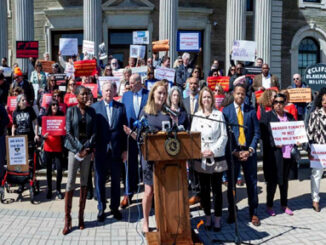
    MINEOLA, N.Y. (TIP): More than 100 concerned residents – including a diverse coalition of community advocates and retired law enforcement personnel – assembled at the Theodore Roosevelt Executive & Legislative Building in Mineola on Monday, April 8 with a single demand of Nassau County Executive Bruce A. Blakeman – abandon your plans for a makeshift militia of private citizens with gun permits.

    The Blakeman administration solicited applications for the “provisional sheriff” program in a March 17 Newsday legal notice. Those armed citizens, who would not be part of any type of professional law enforcement agency, could be mobilized to guard public spaces during vaguely defined “states of emergency” Few concrete details have been shared by the administration as to how these individuals would be vetted or trained before being deputized.

    “The idea of any County Executive having a private, armed group of people to deploy at their sole discretion is risky, unnecessary, and has created tremendous anxiety in people across Nassau County,” said Nassau County Legislature Minority Leader Delia DeRiggi-Whitton (D – Glen Cove). “During the last several weeks, my office has been flooded with calls, and the consensus is clear – we don’t want it, and we don’t need it because we have one of the best police forces in the nation. The Minority Caucus will not relent in its efforts to reverse this profoundly misguided idea.”The proposal has roiled Nassau County and the region since news of its existence first emerged in media reports. A change.org petition demanding that County Executive Blakeman abandon the plan has garnered more than 1,400 signatures in less than a week.

    During Monday’s rally, New York Civil Liberties Union (NYCLU) Nassau County Chapter Director Susan Gottehrer, Rockville Centre resident Laura Burns from Moms Demand Action for Gun Sense in America, National Organization for Women (NOW) Nassau Chapter President Patty Pastor, leaders of the Hempstead NAACP and Elmont resident and retired New York City Corrections Officer Angel Joyner, joined Minority Leader DeRiggi-Whitton and the full Democratic caucus in denouncing the plan.

    “Deputizing armed citizens – with no training, no experience, and no knowledge of how to handle what he or any County Executive deems a state of emergency – will most assuredly foster and promote lawlessness during an emergency and may in fact endanger the lives of our law enforcement as well as other residents,” said Nassau County Legislature Deputy Minority Leader Arnold W. Drucker (D – Plainview). “This is yet another disturbing example of our County Executive veering so far out of his lane and devoting his attention to issues that don’t exist or aren’t likely to ever exist. The authorization of an armed militia in these scenarios is downright dangerous.”

    “Nassau County residents and visitors benefit from our highly trained and capable law enforcement and Office of Emergency Management personnel. We need highly trained individuals – trained in de-escalation; trained in mental health; trained to use technology we equip them with like body cameras; and trained to work with the mental health professionals we imbed in their response to mentally aided calls,” said Nassau County Legislature Alternate Deputy Minority Leader Siela A. Bynoe (D – Westbury). “As a body, we have invested wisely and collaboratively with our police unions and prior administrations to build greater trust between police and our communities. One bad act by one bad actor of this militia could erode all the trust that we have worked to get. No militia – no way. Not on our watch.”

    Nassau County Legislator Seth I. Koslow (D – Merrick) echoed the sentiments of the crowd as he stressed that “only police officers who are trained should be doing police work,” adding that Nassau’s thousands of officers often receive training exceeding State requirements.

    “Are these deputies going to be trained? How much training are they going to get? Will they be re-trained? We don’t know any of this because Bruce Blakeman is making it up as he goes along,” Legislator Koslow said. “What about chain of command issues? What about the state and federal resources we have in times of emergency? All of this begs the question – does County Executive Bruce Blakeman not trust our law enforcement to protect us in times of emergency? Well, I do. I’m here today – we’re here today to tell Bruce Blakeman to stop this charade, stop terrifying citizens of Nassau County, and do away with this militia.”

    Nassau County Legislator Carrié Solages (D – Valley Stream) recounted his experiences as a father to relay concerns that other parents have expressed to him about the County’s proposal.

    “As the father of a young Black man who sometimes wants to wear a hood – God forbid a young man wearing a hood is out and about, minding his business during this so-called ‘state of emergency,’ which is not defined under the law, and God forbid an overzealous George Zimmerman-type of person chooses to think that young man is a danger,” Legislator Solages said. “Our County Executive is trying to take us back in time. This is dangerous, and we cannot allow this to stand.”

    Nassau County Legislator Debra Mulé (D – Freeport) recalled her experiences as a Freeport resident during Superstorm Sandy to demonstrate how the provisional sheriff initiative is unnecessary and potentially hazardous.

    “The County Executive mentioned – well, we might need additional people to protect us during an emergency such as Sandy. I lived through it. In my area of Freeport, we had no power, no gas for five days, and things could have gone terribly wrong,” Legislator Mulé said. “But you know what happened? The National Guard was brought in – people who are trained to deal with situations such as this. They made sure that life and property were secured. We do not need this extremely misguided idea.”

    “There’s one more very practical and real reason that everyone in this County should be opposed to this proposal – it’s your pocketbook,” Nassau County Legislator Scott M. Davis (D – Rockville Centre) said. “According to the administrative code of Nassau County, implementing this policy would create tremendous liability, and that liability would fall on the shoulders of all the residents of Nassau County. You’re talking about putting people in a highly stressful situation where you can only imagine, in a densely populated area, the likelihood of something going wrong. This is not a burden that we need to bear, nor should we bear.”

  • Indian American AAG Vanita Gupta to step down from DOJ

    Indian American AAG Vanita Gupta to step down from DOJ

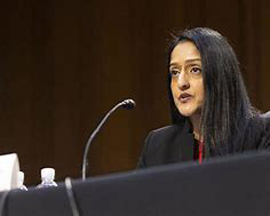
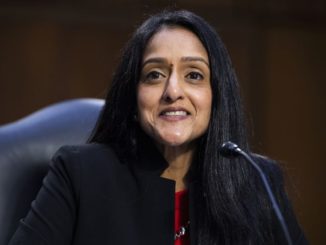
    WASHINGTON, D.C. (TIP): Associated Attorney General Vanita Gupta will leave the Department of Justice at the beginning of February, Attorney General Merrick B. Garland announced on Thursday, December 21.
    “I am deeply grateful to Vanita for her extraordinary service as Associate Attorney General. Vanita’s commitment to the pursuit of justice, and her relentless focus on bringing people together to find common ground, has made her an incredibly effective leader in dealing with some of the most complex challenges facing the American people,” Garland said in a press release. “She has distinguished herself as the kind of leader who is also a partner to the career and non-career employees who work for her, to the stakeholders the Department works with, and to the public we all work for.”
    Gupta, 49, has been serving in the number three position at the Justice Department since April 2021.
    The seasoned civil rights lawyer is responsible for managing civil litigation under the guidance of Garland. Her portfolio encompasses various areas within the Justice Department, including civil rights, antitrust, environmental divisions, and the administration of over $5 billion in federal grants for public safety and criminal justice.
    In 2022, in the aftermath of the Supreme Court’s decision to strike down federal protections for abortion access, Garland entrusted Gupta with the leadership of a Justice Department reproductive rights task force. Under her leadership, federal authorities took legal action against Idaho for a restrictive abortion law and intensified prosecutions of antiabortion activists accused of impeding access to reproductive clinics.
    “As a trusted advisor and key member of the Department’s leadership team charged with overseeing all of our civil litigating components and grantmaking entities, Vanita has played an essential role in our work to fulfill DOJ’s mission to uphold the rule of law, keep our country safe, and protect civil rights,” a report said on Thursday. “Among her many accomplishments during her tenure, Vanita stood up and has led the Department’s Reproductive Rights Taskforce to defend the reproductive freedoms that are protected by federal law.” The attorney general said Gupta has “played an integral role” in the department’s “efforts to combat violent crime and gun violence and to support the victims of crime” and has facilitated its “efforts to advance a criminal justice system that keeps people safe and reflects our values.”
    A report said that the Indian American “has prioritized work that centers its impact on people.” He added, “We at the Justice Department will dearly miss our colleague and friend, but I am confident that her enormous contributions to the Department will continue to be felt long after her departure.”
    An alumnus of Yale University and New York University School of Law, Gupta has had a stellar career as a civil rights attorney and Justice Department official. Commencing her journey with two prominent civil and human rights organizations, the National Association for the Advancement of Colored People (NAACP) Legal Defense & Educational Fund and the American Civil Liberties Union (ACLU), she tackled significant cases. Notably, one of her initial victories involved arguing against the wrongful drug convictions of 38 African American individuals in Tulia, Texas, by all-white juries.
    During her tenure at the ACLU, Gupta spearheaded the Smart Justice Campaign, dedicated to ending mass incarceration.

  • Vanita Gupta scripts history as first Indian-American US associate attorney general

    Vanita Gupta scripts history as first Indian-American US associate attorney general

    WASHINGTON (TIP): Prominent Indian-American civil rights lawyer Vanita Gupta has been confirmed by the US Senate as associate attorney general, making her the first person of color to occupy the third highest position at the Department of Justice. Republican Senator Lisa Murkowski broke away from her party colleagues to support Gupta (46), giving the Democrats 51 votes to see her through the historic confirmation on Wednesday, April 21. The Senate voted 51-49 to confirm Gupta. Vice President Kamala Harris was present in the Senate to cast her vote in case of a tie. The two parties have 50 members each in the 100-seat United States Senate. “Congratulations to Vanita Gupta on making history as the first woman of color to serve as associate attorney general. Now, I urge the Senate to confirm Kristen Clarke. Both are eminently qualified, highly respected lawyers who are dedicated to advancing racial equity and justice,” President Joe Biden said.  Gupta is also the first civil rights lawyer to serve at one of the top three positions at the Department of Justice.

    Senate Majority Leader, Senator Chuck Schumer, who played a key role in her confirmation, said Gupta is the first-ever woman of color and civil rights attorney to serve in the role. “She will bring a long overdue perspective to our federal law enforcement agency,” he said. The daughter of Indian immigrants who was born and raised in the Philadelphia area, Gupta has had an illustrious career of fighting for civil rights. She received her Bachelor of Arts degree from Yale University and Juris Doctor from New York University.  At the age of 28, she started her career at the NAACP Legal Defense Fund where she successfully overturned the wrongful drug convictions of 38 Black Americans in Tulia, Texas. While at the American Civil Liberties Union (ACLU), she fought to end mass incarceration and secured a landmark settlement against the Immigration and Customs Enforcement (ICE) on behalf of immigrant children that led to the end of family detention at the facility. From 2014 to 2017, Gupta served as the assistant attorney general for civil rights under President Barack Obama, where she advanced criminal justice reform, prosecuted hate crimes, protected voting rights and fought against discrimination.

    Indian-American groups congratulated Gupta on her historic confirmation.

    (With inputs from PTI)


  • NY’s Communities of Color Have Less Access to Retirement Savings, Banks, Pay More for Caregiving, Housing

    NY’s Communities of Color Have Less Access to Retirement Savings, Banks, Pay More for Caregiving, Housing

    AARP, Partners Launch Policy Solutions Agenda

    AARP, Asian American and Hispanic Federations, NAACP, Urban League join in unprecedented effort to disrupt racial and ethnic disparities in health, economic security and livable communities among NY’s 50+

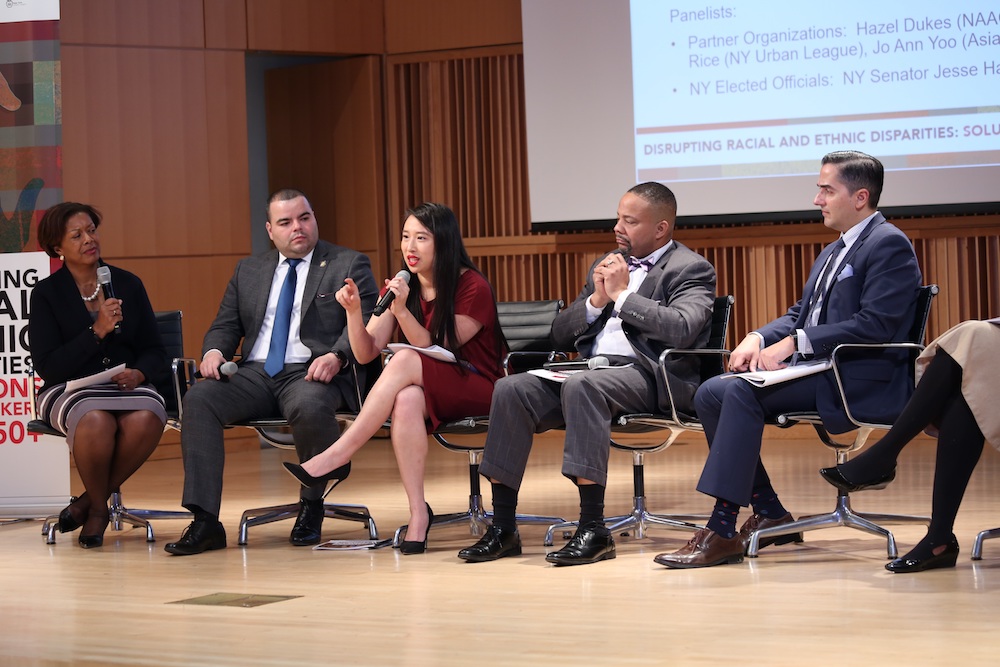
    NEW YORK, NY (TIP): AARP and top advocacy organizations for New York’s communities of color, on January 24, joined to launch an unprecedented policy solutions agenda aimed at disrupting vast racial and ethnic disparities among New Yorkers 50 and older as detailed in a new brief on health, economic security and livable communities.

    “Disrupting Racial and Ethnic Disparities:  Solutions for New Yorkers Age 50-Plus” (aarp.org/NYDisruptDisparities), compiled by AARP in partnership with the Asian American Federation, the Hispanic Federation, the NAACP, and the New York Urban League, takes a first-ever look at gaps specifically affecting New Yorkers of color 50 and older. It is the launch for a three- to five-year effort in which AARP and its partners will welcome information and potential solutions from the public.

    The brief includes the following findings – but also recommends achievable short- and long-term solutions:

    • New York State suffers the highest level of income inequality in the nation, with the top 1% of New Yorkers earning an astounding 45 times more than the bottom 99%.
    • Most private sector employees from New York’s communities of color work for companies that don’t offer a retirement savings plan option – including two thirds of Hispanic/Latinos (H/L)
    • There is just one bank branch for every 10,000 residents in New York City neighborhoods of color compared to 3.24 branches for every 10,000 residents in other neighborhoods.
    • In New York City and Long Island, student loan delinquencies are clustered in zip codes with significant middle-income African American/Black (AA/B) and H/L populations, suggesting that middle income people of color are likely to carry unaffordable student loan burdens.
    • Where payday lending is legal, lower-income people of color make up a disproportionately large segment of borrowers – and older adults are an especially fast-growing segment of payday loan borrowers in the U.S. Seniors in California, where payday lending is permitted, are now the largest age group of payday loan borrowers.
    • Family caregivers work an average of 18 hours a week providing care, even while 60 percent have full- or part-time jobs. And while average family caregivers spent nearly 20% of their income on out of pocket caregiving costs in 2016 nationally, caregivers from communities of color spent more – 44% of income for H/L caregivers.
    • Older residents of communities of color moved to nursing homes at higher rates nationally between 1999 and 2008 – H/L by 54.9%, Asian American/Pacific Islanders (AAPI) by 54.1%, AA/B by 10.8% – compared to a decrease among White Americans (10.2%).
    • Neighborhoods with the highest foreclosure risk are almost exclusively communities of color, including many middle- and upper-income AA/B neighborhoods with large 50-plus populations.
    • H/L households on average have just 3.4%, AA/B households 6.2%, and AAPI households 21% the wealth of the median white household.
    • Homeowners from New York’s communities of color are disproportionately “cost-burdened,” spending at least 30% of their income on housing (including 60% of H/L homeowners). In fact, residents of communities of color are twice as likely as White New Yorkers to pay over half their income for housing – and it’s even worse for women and immigrants.

    These harsh realities have resulted in alarming financial gaps and grave disparities. But coming together for the first time in a concerted effort, the organizations are urging New York State to:

    • Create a retirement savings option that businesses which don’t already have one can offer their employees – as Governor Andrew Cuomo proposed in his recent executive budget and Senator Diane Savino and Assemblyman Robert Rodriguez have proposed in Legislature.
    • Encourage electronic consultations and other telehealth applications through smart phones – as the Governor also proposed in his budget as part of initiatives to advance the use of telehealth to keep people in their home longer and out of institutional care.
    • Enact a family caregiver tax credit to help offset the out-of-pocket costs of those who care for loved ones.
    • Increase cost-effective funding for services that help New Yorkers age in their own homes – and relieve family caregivers of some of their burdens – to keep pace with the growing demands of an aging population.

    The brief focuses on disparities among communities of color statewide with particular emphasis on New York City, Long Island, and Buffalo. It is intended to spark a compendium of findings and solutions to help address these disparities within the next three to five years.

    A GROWING RACIAL AND ETHNIC POPULATION IMPACTED

    The 60 and over population of New York state’s communities of color grew by a staggering 43% between 2000 and 2010 – over 20 times that of the entire population (2.1%) and over five times the 8% increase among the state’s 60+ White population, according to the U.S. Census Bureau. This disproportionately rapid growth is projected to continue in the decades ahead and significantly worsen the wide gaps that already exist.

    “There are widespread racial and ethnic disparities across the United States, but for the large and rapidly growing 50+ population of color in New York, challenges around economic security and access to affordable housing, transportation and healthcare will continue to mount,” said Beth Finkel, AARP New York State Director. “Several studies have shed light on these disparities, but few, if any, have led to necessary policy changes or focused on New York’s 50+ populations. While no single policy solution can address all disparity causes and concerns, the time to join forces to disrupt ethnic and racial disparities is now.”

    “This report provides data to illustrate the magnitude of these disparities, as well as to propose policy recommendations that serve as a roadmap for a way forward”, said Hazel Dukes, President of The National Association for the Advancement of Colored People New York State Conference. “As the heroes of the Civil Rights Movement showed us, progress comes – sometimes quickly and dramatically, but more often through tough, unglamorous, incremental policy work. The time to get to work is long past, and we stand proudly with AARP to support New York’s 50-plus people of color.”

    “For more than a quarter-century, the Hispanic Federation has worked to empower and advance the Hispanic community,” said Jose Calderon, President of the Hispanic Federation. “We advocate for Hispanic children, women and men of all ages with programs and services for both young and old. In New York State, where the Hispanic community makes up almost 20% of the population, it is crucial that we meet the needs of 50-plus Hispanics and their families.”

    “Without strong policy interventions to address inequitable access to both public and private services, inequality has a nasty habit of reproducing itself from generation to generation,” said Jo-Ann Yoo, Executive Director of the Asian American Federation. “This report is notable in that, beyond stating the problems, it aims to provide concrete solutions. We are honored to be part of this coalition as our mission is to raise the influence and well-being of the pan-Asian American community through research, policy and advocacy.”

    “New York is one of the most urbanized states in the nation, with the majority of African Americans living in larger cities,” said Arva Rice, President and CEO of the New York Urban League, Inc. “Since 1910, we have been dedicated to ensuring the economic empowerment of historically underserved urban communities.  With the growing diversity of New York’s population, particularly among people age 50-plus, ensuring the well-being and equality of people of color in this age segment is more urgent than ever.”

    AARP’s Finkel added: “We are asking policymakers, advocates and the public at large to share their knowledge and experiences of existing disparities so we can press public officials to adopt policy changes that address these inequalities. By closing the serious gaps that exist, people in African American/Black, Asian American/Pacific Islander and Hispanic/Latino communities can enjoy the same stability and equal footing as everyone else by having more choices in how and where they live as they age.”

     Those interested in following or joining the conversation can visit aarp.org/NYDisruptDisparities which will serve as a platform to host the latest research findings, policy updates and information related to this effort, and a place to contribute ideas and insights (by emailing NYAARP@aarp.org).

    About AARP

    AARP is the nation’s largest nonprofit, nonpartisan organization dedicated to empowering Americans 50 and older to choose how they live as they age. With nearly 38 million members and offices in every state, the District of Columbia, Puerto Rico, and the U.S. Virgin Islands, AARP works to strengthen communities and advocate for what matters most to families with a focus on health security, financial stability and personal fulfillment. AARP also works for individuals in the marketplace by sparking new solutions and allowing carefully chosen, high-quality products and services to carry the AARP name. As a trusted source for news and information, AARP produces the world’s largest circulation publications, AARP The Magazine and AARP Bulletin. To learn more, visit www.aarp.org/espanol or follow @AARPenEspanol, @AARP and @AARPadvocates on social media.

     About the Asian American Federation

    The Asian American Federation works to raise the influence and well-being of the pan-Asian American community through research, policy advocacy, public awareness, and organizational development. Established in 1989, AAF supports over 40 Asian American community service agencies, which work to meet the critical needs of the fastest-growing population in New York City. For more information, please visit www.aafederation.org.

    About the Hispanic Federation

    The mission of the Hispanic Federation is to empower and advance the Hispanic community. The Hispanic Federation provides grants and services to a broad network of Latino non-profit agencies serving the most vulnerable members of the Hispanic community and advocates nationally with respect to the vital issues of education, health, immigration, economic empowerment, civic engagement and the environment. For more information, please visit www.hispanicfederation.org.

    About the NAACP New York State

    The NAACP New York State Conference has been a vital programmatic component of the National Association for the Advancement of Colored People for 80 of the 108-year history of the oldest, most effective and most respected civil rights organization in the Nation. The New York State Conference has played a pivotal role in moving the agenda for freedom and equality forward under the leadership of dynamic State Conference Presidents, each of whom addressed critical issues during their tenure.

     About the New York Urban League

    The National Urban League is a historic civil rights organization dedicated to economic empowerment in order to elevate the standard of living in historically underserved urban communities. Founded in 1910 and headquartered in New York City, the National Urban League spearheads the efforts of its local affiliates through the development of programs, public policy research and advocacy. Today, the National Urban League has 88 affiliates serving 300 communities, in 36 states and the District of Columbia, providing direct services that impact and improve the lives of more than 2 million people nationwide.