Tag: Narayan Lakshman

  • The Trump indictment, a polarized America

    The Trump indictment, a polarized America

    The United States confronts surging levels of hatred between social and political groups and apparent support for Trumpism as a movement

    Between the surging levels of hatred between social and political groups, and apparent support for Trumpism as a movement, it is likely that even if the cases against Mr. Trump work their way through the courts and lead to convictions, the U.S. is still far from truly reckoning with the promise of its founding fathers to achieve the dream of E pluribus unum, or ‘Out of many, one’.

    By Narayan Lakshman

    The Manhattan District attorney’s unprecedented action of indicting former United States President Donald Trump through a grand jury, on 34 felony charges relating to falsifying business records with the intention to commit another crime, has set the tenor for the coming campaign cycle which will culminate in the 2024 U.S. presidential election. On the one hand there is little doubt that the 45th President flirted with the boundaries of legality through his presidency (2016-20), whether it was his attempts at election interference in Fulton County, Georgia, his role in inciting the January 6, 2021, insurrection, or his possession of classified information after leaving the White House. Indeed, criminal investigations are underway for each of these potential cases for prosecution.

    Plethora of cases
    First, in Georgia, Fulton County District Attorney/prosecutor Fani Willis is examining the actions of Mr. Trump and his associates in the aftermath of the 2020 presidential election, particularly their attempts to exert pressure upon state officials to undo Mr. Trump’s loss of the state in the election — including the now-infamous call to Georgia State Secretary Brad Raffensperger on January 2, 2021, during which Mr. Trump demanded that the Secretary “find 11,780 votes”. The inquiry has also delved into plans to send fake electors to the Electoral College who would claim that Mr. Trump won, and the Trump team’s calls to Georgia Governor Brian Kemp and others to press them on contesting the election results. While the investigation’s work was completed in January, its report remains under wraps for the moment.

    Second, as far as the House of Representatives panel investigating the role of Mr. Trump in the January 2021 insurrection is concerned, the committee in question shut down earlier this year after an 18-month inquiry, culminating in an 814-page report to the Justice Department that recommended prosecuting Mr. Trump. While the committee’s referral has no legal weight to compel an indictment by the Justice Department, the enormous trove of evidentiary documents, statements of facts, and testimonies is likely to be of considerable value to the Department as it embarks on an investigation of its own.

    Third, Attorney General of the of the United States Merrick Garland last year appointed Special Counsel Jack Smith to lead multiple probes into Mr. Trump’s handling of classified documents post the end of his term in office. While Mr. Trump’s attorney’s certified in June 2022 that a “diligent search” for classified documents conducted at Mr. Trump’s Mar-a-Lago resort in Florida yielded all classified documents on the site and they were then handed over to federal authorities, a short while later a Federal Bureau of Investigation raid discovered more than 100 further undisclosed documents.

    Along with probes into the actions of the Trump Organization’s business dealings, each of these lines of inquiry has led to a sprawling mega-investigation of Mr. Trump and his associates. This implies that the first indictment against him, in the hush-money case, is only the beginning.

    Agenda of hate
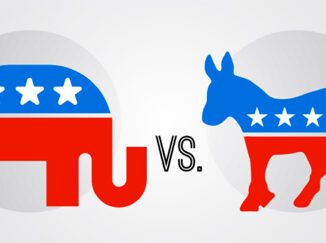
    Stepping back from the cases against Mr. Trump, it is pertinent to ask what the impact of these investigations might be on his base of supporters across the U.S., particularly in light of him characterizing the inquiries as a “witch hunt” and “political persecution”. On the one hand it is no surprise that the American electorate remains as bitterly polarized as ever. A Pew Research Center poll last year found that the proportion of Republicans and Democrats who viewed not just the opposing party but also its members as close-minded, dishonest, immoral, unintelligent and lazy has increased significantly from 2016 to 2022. For example, it was striking that in 2016, 47% of Republicans and 35% of Democrats said that those in the other party were a lot or somewhat more immoral than other Americans; yet by August 2022, 72% of Republicans regarded Democrats as more immoral, and 63% of Democrats said the same of Republicans.

    This means that through the administrations of Mr. Trump and current U.S. President Joe Biden, Americans are now talking past each other and the sense of the two sides having entirely different worldviews with almost no common ground whatsoever has deepened — for example with regard to reproductive rights in the wake of the U.S. Supreme Court removing the constitutional right to abortion.

    However, in its ‘purest’ form, Trumpism, as a political movement, has less to do with conservative social values that appeal to the core of the Republican Party faithful than it does with transactional nativism. Indeed, some have even characterized Mr. Trump as a socially moderate, not extremist, conservative. The forces that catapulted the Trump administration to power and the policy chaos that his White House unleashed were, however, a function of populism that revolved around economic policies that purportedly protected the disenfranchised, white, blue-collar worker in middle America. Mr. Trump’s political rhetoric and executive actions also prioritized institutional disengagement on global treaties — whether in regard to his administration driving the U.S.’s exit from the Paris climate accord and UN Human Rights Council, or its broadside attacks on the World Trade Organization and the North Atlantic Treaty Organization.

    These forces are still alive and well. At the domestic level, through the ongoing impact of the COVID-19 pandemic, there has been visceral opposition to vaccine mandates and restrictions on movements and gatherings. The anti-science conspiracy theorists have regularly used disinformation to attack public health professionals — including former Chief Medical Adviser to the U.S. President, Dr. Anthony Fauci — in a bid to spread hate and blunt the impact of policies designed to curb the spread of the virus.

    Mr. Trump was at the heart of this propagandistic messaging in many instances, including, early on in the pandemic, when he variously questioned the efficacy of masks, and talked up unproven and unscientific treatments. He also crippled the potential of the federal government to slow the proliferation of the coronavirus in 2020, when his administration failed to quickly roll out an effective COVID-19 testing plan, to put together a comprehensive national strategy for distributing protective equipment to medical professionals, and to rapidly ramp up contact tracing. On the global front, America’s retreat from its own unipolar status has proceeded apace. Having exited a variety of international treaties, the focus of Trumpist rhetoric has now shifted back to domestic economic concerns. On the one hand, the efforts of the Biden administration to enact a $1.9 trillion stimulus package and bring down the jobless rate to 3.6% in February this year from a peak of 14.7% in April 2020 — with the economy adding over 10 million jobs during that time — has failed to garner political traction for Democrats owing to a toxic combination of soaring inflation and supply chain disruptions. The latter phenomena have stemmed from both the pandemic-related slowing of business activity and from Russia’s invasion of Ukraine.

    In parallel, persistent attacks on minorities, especially immigrant workers, for “stealing” American jobs have been a convenient diversion to shift the debate back to the sensitive issues of race and migration. Should Mr. Trump, or even another Republican, enter the Oval Office, Indian high-skilled migrant labor could be impacted under this paradigm too, for example through tightening conditions for the grant of H-1B visas.

    Between the surging levels of hatred between social and political groups, and apparent support for Trumpism as a movement, it is likely that even if the cases against Mr. Trump work their way through the courts and lead to convictions, the U.S. is still far from truly reckoning with the promise of its founding fathers to achieve the dream of E pluribus unum, or ‘Out of many, one’.
    (The author is the US Foreign Correspondent of The Hindu .He can be reached at narayan@thehindu.co.in)

  • Hard times for the state of the union

    Hard times for the state of the union

    Foreign policy challenges and domestic hurdles confront U.S. President Biden in his quest for a policy legacy

    By Narayan Lakshman

    “At the end of the day the old adage of “It’s the economy, stupid”, continues to resonate deeply across the country as the tagline for the American Dream. The realization of this — the Biden administration appears to concede — will require the adoption of strong self-interest as a guiding value for policymaking even when it comes at the cost of a gradual erosion of the global rules-based order and the globalization consensus, and the repudiation of older, constitutional values such as equal protection of the laws.”

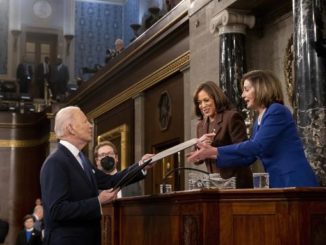
    When U.S. President Joe Biden stepped up to the podium to deliver his first State of the Union address before both houses of Congress this week, it was a historic moment for several reasons. Not only have none of his successors since 1945 delivered this address during an ongoing ground war of a similar magnitude to Russia’s invasion of Ukraine, but the optics of his speech captured another rare event. The two top Congressional officials who stood behind Mr. Biden as he spoke, the Speaker of the House of Representatives and the Vice President, were both women for only the second time in the country’s history.

    The hurdles, Ukraine too

    Notwithstanding the epochal times marking this event, the reality is that Mr. Biden faces grim challenges on the foreign policy front and a steep upward climb to overcome domestic hurdles before he can claim credit for any policy legacy that purports to improve the lot of his fellow citizens. On the foreign policy side, Russian President Vladimir Putin’s move to call the West’s bluff and kick off a military assault of Ukraine has posed complex strategic questions to the Biden administration, which are difficult to explain away to a U.S. domestic audience. Why did Mr. Biden leave Kyiv hanging in the balance without North Atlantic Treaty Organization (NATO) membership and with a virtual target on its back vis-à-vis Moscow’s guns, when many among Ukraine’s neighbors are treaty allies of NATO? Why, despite so many explicit signs that Russia would invade Ukraine if NATO carried on expanding its footprint eastwards across Europe, did Mr. Biden’s administration not do more to either make it harder for Moscow to act in this regard or at least buy more time by persuading Mr. Putin to engage diplomatically?

    Shadow of midterm elections

    Now that the sweeping economic sanctions that Washington has slapped on Russian political elites and institutions associated with Kremlin have roiled the Russian economy and brought the rouble down to historic lows, how will the Biden administration contain the spill-over effects of economic collapse and prevent them from causing a broader global recession? With the conflict intensifying and the human toll rising fast as Russian troops march on Kyiv, the U.S.’s capabilities as a superpower nation will be scrutinized closely on the world stage in the days and weeks ahead. They will almost certainly be attacked by Republicans back home as the midterm election cycle gains momentum — former U.S. President Donald Trump has already set the tenor for the debate by describing Mr. Putin’s Ukraine invasion as “genius” and “savvy”.

    At home, much depends on the outcome of the midterm elections, especially regarding the prospects for a Democratic White House to carry out any meaningful policy reform in the two years that the Biden administration will have from the time the midterms are complete. Democrats and Republicans are evenly split in the Senate with 50 seats each, while Democrats are clinging on to a narrow 221-212 margin in the House of Representatives, both of which advantages could be lost to Democrats if the 2022 midterm election results do not favor them.

    Critical issues

    The keystone issues that Mr. Biden needs to convince voters on, if he is to stave off a deleterious shift in the balance of power on Capitol Hill this November, include jobs and economic recovery in the post-COVID-19 climate of uncertainty, preventing the pandemic from wreaking further havoc in future waves, if any, inflation, and social security and education reforms to ease the financial burden on middle class budgets. Almost without exception, Mr. Biden will need the support of Congress to get the heavy lifting done in these policy areas, particularly where budgetary apportionments require lawmakers’ sign off. Certainly, it will matter in the foreign policy space. A recent example demonstrating the importance of Congress here is the fact that negotiations over a $6.4 billion security and humanitarian aid package for Ukraine hit a stalemate in the Senate over the source of these funds — military spending allocation already agreed, or emergency provisions above and beyond that level. Similarly, on the domestic front, Mr. Biden’s omnibus mega-bill in late 2021, seeking $1.85 trillion for social security and climate change, came to naught in the face of cohesive opposition from Senate Republicans and some rebel Democrats who voted across the line.

    The Trump impact

    At the heart of the Democratic conundrum is the fact that the Mr. Trump’s term in office unleashed forces that have tectonically shifted the ground under Washington politics. Whatever the charges of criminality or wrongdoing by the 45th President of the U.S., whether in terms of tax evasion or his role in spurring on the January 6, 2021 assault on the buildings of Capitol Hill, Mr. Trump’s nativist call to white America to reassert its purported supremacy has firmly embedded itself in the broader discourse and heralded a new era where political correctness is eschewed, and facts sometimes matter less than opinion.

    Indeed, it is evident that Mr. Biden is seeking to walk a tightrope between traditional mainstream Democratic values and the new paradigm when he spoke at the State of the Union of “the rebirth of pride” and “the revitalization of American manufacturing”, which, if it materializes, could help his administration “Lower your cost, not your wages”, and ensure the U.S. builds “more cars and semiconductors in America. More infrastructure and innovation in America. More goods moving faster and cheaper in America. More jobs where you can earn a good living in America. Instead of relying on foreign supply chains, let’s make it in America”.

    At the end of the day the old adage of “It’s the economy, stupid”, continues to resonate deeply across the country as the tagline for the American Dream. The realization of this — the Biden administration appears to concede — will require the adoption of strong self-interest as a guiding value for policymaking even when it comes at the cost of a gradual erosion of the global rules-based order and the globalization consensus, and the repudiation of older, constitutional values such as equal protection of the laws.

    (The author is an editor with The Hindu)