Tag: Nasscom

  • What’s Brewing in Indian Startups-Fresh Insights into a Booming Ecosystem!

    What’s Brewing in Indian Startups-Fresh Insights into a Booming Ecosystem!

    How often do we stop to ask what’s really happening with Indian startups today? For many of us, whether living in India or part of the diaspora abroad, these ventures are more than business, they are stories of innovation, risk, and cultural pride. With global eyes on India’s tech explosion, the pulse of Indian entrepreneurship races faster than ever. This blog explores Indian startups news through a fresh lens, weaving in vibrant threads of the food and culture of Indian diaspora to offer an engaging and relatable narrative for our community.

    The Current Landscape of Indian Startups

    India’s startup ecosystem has been nothing short of a revolution. According to a 2025 report by NASSCOM, India hosts over 110,000 startups, employing millions and attracting record funding worth over $50 billion. These numbers symbolize more than scale, they reflect a vibrant imagination tackling everything from fintech to health tech, edtech to sustainable innovations. For us, reading Indian startups news isn’t just about companies; it’s about tapping into the pulse of modern India, dynamic, youthful, and determined.

    Amid this, we find startups led by women entrepreneurs, second-generation NRIs, and fresh graduates, highlighting a diverse range of voices and visions. Their innovations offer pathways not only for financial success but also for social impact, raising the bar for what business can be.

    From Idea to Impact: Inspiring Startup Journeys

    Every startup has a story, and many narratives resonate particularly with our diaspora readers. Take Byju’s, a beacon in edtech, which began in a small classroom and now educates tens of millions globally. Or Zomato, which originated as a food guide and became a global restaurant discovery platform.

    Closer to home, startups founded by Indian diaspora members are making waves internationally. These stories are more than business wins; they are tales of perseverance, cultural bridges, and the spirit of “Make in India” evolving into “Innovate for All.” When we hear such success stories, it’s easy to feel inspired and part of a collective pride.

    How Startups Reflect the Food and Culture of Indian Diaspora

    What’s fascinating about many Indian startups is their rootedness in the food and culture of Indian diaspora. From subscription-based spice boxes that bring authentic masalas to American kitchens, to apps showcasing regional recipes and culinary traditions, these startups preserve and reinvent heritage in accessible new formats.

    Fashion, wellness, and entertainment startups also amplify cultural expression by melding tradition with contemporary needs. This fusion echoes our diaspora’s own balancing act, honoring roots while adapting to new worlds. In essence, startups are not only economic engines but cultural ambassadors.

    The Role of Technology and Investment Trends

    Technology is the driving force behind India’s startup rise, but investment hangs tightly on its wings. Venture capital in India has grown tenfold over the past decade, with leading investors like Sequoia and Tiger Global fueling innovation. The ecosystem encourages bold ideas, rapid scaling, and international outreach.

    Government initiatives like Startup India continue to provide support, simplifying processes and granting incentives. Meanwhile, increasing digital adoption, 150 million new internet users expected in 2025 alone (IAMAI report), creates fertile ground for tech-driven ventures.

    These trends shape what we see reported in Indian startups news, showing a promising horizon for entrepreneurs and investors alike.

    Where Indian Startups Are Heading: Predictions and Potentials

    Looking forward, emerging sectors like green energy, health tech, and AI promise to fuel the next wave of startups. Global collaborations will likely deepen, leveraging diaspora networks to expand innovation hubs.

    Experts speculate a rise in impact investing, with startups addressing climate change and social equality gaining prominence. The startup economy is morphing into a smarter, more inclusive ecosystem that is as much about values as valuation.

    For all of us watching and participating from afar or near, this evolving landscape offers ample reasons to stay optimistic and engaged.

    Indian Panorama-Your Insider to Innovation Stories

    At Indian Panorama, we see ourselves as your front-row seat to the startup stage, bringing you stories that go beyond numbers to capture the spirit and grit powering Indian entrepreneurship globally. We blend business insights with cultural narratives so that every reading connects on both professional and emotional levels.

    Whether you’re a budding entrepreneur, a student hungry for inspiration, or simply a proud member of the Indian diaspora, we weave these stories to keep you informed, motivated, and connected. Our shared journey is colorful, challenging, and deeply rewarding, just like the startups we celebrate.

    Let’s innovate, inspire, and grow together, with Indian Panorama lighting the way.

    People Also Ask

    Q1: What sectors are booming in the Indian startup ecosystem?
    Edtech, fintech, health tech, and sustainability are leading sectors.

    Q2: How do Indian diaspora startups contribute globally?
    By bringing cultural insights and technological innovation to international markets.

    Q3: What government support exists for Indian startups?
    Programs like Startup India offer funding, mentorship, and regulatory ease.

    Q4: How does the food culture influence Indian startups?
    Many startups innovate around spices, cuisine delivery, and culinary education.

    Q5: Where can I stay updated on Indian startups news?
    Indian Panorama offers reliable, timely news and inspiring success stories.

  • Making diaspora invest in India a challenge

    Making diaspora invest in India a challenge

    “The unresolved issue with the NRIs is that the Indian government just does not know what it can do with them. The government wants their money, no doubt, and they are indeed sending money home, which accounts for 3 per cent of India’s GDP, according to the World Bank. The BJP’s foreign policy notion that the NRIs are its soldiers abroad to spread national glory is at best a delusion. And it could become a dangerous one if Indians abroad are seen as ‘fifth columnists’. Most NRIs have no interest in Indian politics nor are they motivated to push India’s case across the world. A time has to come when Indians need not migrate to other countries for better opportunities.”

    The NRIs remittances are higher than the foreign direct investment (FDI) that India is able to attract. The NRI remittances to India were $89.4 billion in 2021 and $100 billion in 2022.

    By Parsa Venkateshwar Rao Jr.

    The Bharatiya Janata Party (BJP), in its pursuit of overzealous nationalism, has looked upon the Indian diaspora across the world as an extension of India, politically as well as culturally. During the tenure of the then Prime Minister Atal Bihari Vajpayee, an attempt was made to woo overseas Indians, with the PM making it a point to interact with the Indians abroad rather than with other citizens of the host country. It was in 2002 that the first Pravasi Bharatiya Divas event was held in New Delhi.

    Prime Minister Narendra Modi intensified the outreach to the NRIs by addressing rallies in Madison Square Garden (New York) and then in Sydney after his party’s historic win in the 2014 Lok Sabha elections. But despite the enthusiasm to cultivate the NRI constituency in the past two decades, there is uncertainty and confusion over how to tap the potential of the NRIs to strengthen India at the global level or even at home.

    The 17th Pravasi Bharatiya Divas event, held in Indore from January 8 to 10, reflected the confusion. The Indian government does not seem to be keen that the Indians living abroad should come back and help in the development of the country with the knowledge and expertise they have acquired abroad. It only wants that the NRIs invest in India. But it is in many ways a non sequitur.

    Indians settled abroad, whether in the Gulf countries, the UK, the US, Canada, Australia or Singapore, have been sending money home to their families. But they have not thought that it is profitable to do business in India or invest in India. Even today, the NRIs remittances are higher than the foreign direct investment (FDI) that India is able to attract. The NRI remittances to India were $89.4 billion in 2021 and $100 billion in 2022, higher than what the Chinese and Filipino emigrants send to their home countries.

    So, at successive conventions of the Pravasi Bharatiya Divas, the country’s leaders of the day give rhetorical messages to the few thousand delegates who attend the event. And this year seems to have been no different. PM Modi, Finance Minister Nirmala Sitharaman and Education and Entrepreneurship Minister Dharmendra Pradhan delivered homilies and the unintended ironies were there for all to see. PM Modi, in his inaugural speech on January 8, said, “In Pravasi Bhartiyas, we see myriad images of Vasudhaiva Kutumbakam and Ek Bharat Shreshtha Bharat,” and “Pravasi Bhartiyas echo the voice of a powerful and capable India.”

    Pradhan said, “We all agree that once upon a time India was a ‘Vishwaguru’, not in terms of military power but in terms of intellect.” And then he turned to the government’s programme of creating a skilled network in the country. He told the NRIs that India has a skilled workforce of 500 million. Sitharaman, echoing PM Modi’s statement of how cheap India’s Mars mission was, said, “The cost of the Chandrayaan, which goes to the moon, is far less than that of a Hollywood film.” And citing a NASSCOM (National Association of Software and Service Companies) report, she said Indian IT companies hired 2 lakh Americans at an average salary of $1,06,360 in 2021.

    These statements can only confuse NRIs. The government wants to woo them by telling them how good India has become since they left the country and what an attractive investment destination it is now. Surely, the NRIs would want to test the government’s claims on the ground and it will be reflected in the investment decisions they will make in the future.

    But there is also the fact that though Indians in the US are sending home more money than those in the Gulf countries, as was the case earlier, the Indian-Americans are less likely to return home and even start businesses in India. The Indians in Gulf countries will come back at some point of time because as yet there is no possibility of becoming citizens in those countries. In contrast, more Indians are getting the coveted Green Card in the US and they are more likely to become citizens there. Secondly, there are more billionaires in India than among the NRIs. Steel magnate Laxmi Narayan Mittal and metal magnate Anil Agarwal are among the exceptions. The NRIs in the US are prosperous but they are not super-rich yet. They do not have surplus capital to pump into India like Meta’s Mark Zuckerberg or Amazon’s Jeff Bezos.

    It is, however, true that more and more Indians in western countries are becoming part of the political mainstream of their adopted countries, and they are reaching positions of influence and power. Whether it is Indian-origin leaders such as US Vice-President Kamala Harris, British Prime Minister Rishi Sunak, President of Guyana Mohamed Irfaan Ali or President of Suriname Chandrikapersad Santokhi (the last two were special guests at the Pravasi Bharatiya Divas event in Indore), they owe nothing to India, and there is nothing that India can do to support or strengthen them. India is not the imperial power that the Modi government would imagine itself to be.

    The unresolved issue with the NRIs is that the Indian government just does not know what it can do with them. The government wants their money, no doubt, and they are indeed sending money home, which accounts for 3 per cent of India’s GDP, according to the World Bank. The BJP’s foreign policy notion that the NRIs are its soldiers abroad to spread national glory is at best a delusion. And it could become a dangerous one if Indians abroad are seen as ‘fifth columnists’. Most NRIs have no interest in Indian politics nor are they motivated to push India’s case across the world. A time has to come when Indians need not migrate to other countries for better opportunities.

    (The author is a senior journalist)

  • 3 million jobs in Indian IT firms on the chopping block by next year, says report

    3 million jobs in Indian IT firms on the chopping block by next year, says report

    NEW YORK (TIP): With automation taking place at a much faster pace across industries especially in the tech space, domestic software firms that employ over 16 million are set to slash headcounts by a massive 3 million by 2022, which will help them save a whopping USD 100 billion mostly in salaries annually, says a report.

    The domestic IT sector employs around 16 million; of them around 9 million are employed in low-skilled services and BPO roles, according to NASSCOM.  Of these 9 million low-skilled services and BPO roles, 30 per cent or around 3 million will be lost by 2022, principally driven by the impact of robot process.

    automation or RPA.  Roughly 0.7 million roles are expected to be replaced by RPA alone and the rest due to other technological upgrades and upskilling by the domestic IT players, while it the RPA will have the worst impact in the US with a loss of almost 1 million jobs, according to a Bank of America report on Wednesday, June 16.

    Based on average fully loaded employee costs of USD 25,000 per annum for India-based resources and USD 50,000 for US resources, this will release around USD 100 billion in annual salaries and associated expenses for corporates, the report says.

    TCS, Infosys, Wipro, HCL, Tech Mahindra and Cognizant and others appear to be planning for a 3 million reduction in low-skilled roles by 2022 because of RPA up-skilling. This is a USD 100 billion in reduced salary and other costs, but on the flipside, it offers a likely a USD 10 billion boon for IT companies that successfully implement RPA, and another a USD5 billion opportunity from a vibrant new software niche by 2022. Given that robots can function for 24 hrs a day, this represents a significant saving of up to 10:1 versus the human labor,” says the report.

    Robot process automation (RPA) is application of software, not physical robots, to perform routine, high-volume tasks, allowing employees to focus on more differentiated work. It differs from ordinary software applications as it mimics how the employee has worked instead of building a workflow into technology from ground up and thus minimizing time to market and greatly reducing cost over the more traditional software-led approaches.

    Offshoring helped domestic IT sector to grow from around 1 per cent of GDP in 1998 to 7 per cent today, a highly strategic sector for its economy and has also significantly outgrown their Western peers (mainly Accenture, Capgemini and Atos) with an annual revenue growth of 18 per cent between 2005 and 2019. Another key reason for the RPA-driven job loses is that many countries that had offshored their work in the past are likely to bring the jobs back to their own home markets.

    (Source: PTI)

  • No  communication on H-1B visa cap received from US, says India

    No communication on H-1B visa cap received from US, says India

    NEW YORK / NEW DELHI (TIP): According to a media report, the US is considering restrictions on H-1B visa that allow foreign professionals to work in that country.

    However, India has not received any communication from the US on its reported decision to consider caps on H-1B work visa for nations that mandate storing of data locally, the Indian  Foreign Ministry said on Thursday, June 20.

    India had last year mandated payment firms to store customer data exclusively in the country without creating mirror sites overseas. Some US firms are opposed to this as it would require them to make an additional investment.

    Irked by such requirements, the US is considering restrictions on H-1B visa that allow foreign professionals to work in that country, according to a media report.

    At a media briefing on the upcoming visit of US Secretary of State Michael Pompeo from June 25 to 27, Ministry of External Affairs spokesperson Raveesh Kumar said no communication has been received on the issue from the US.

    “We have not heard anything officially from the US government. We continue to reiterate and engage with the US government on this matter,” he said.

    The Reserve Bank of India (RBI) in April last year asked payment firms to ensure their data are stored exclusively on local servers, setting a tight six-month deadline for compliance. That deadline was said to have been missed by some foreign firms, including credit card giants Visa and Mastercard.

    Sources in the commerce ministry said no communication on the visa cap has been received from the US.

    IT industry body Nasscom cautioned that any move by the US to limit visas for tech workers will weaken American companies that depend on these work permits to fill skills gaps and put jobs at risk.

    Nasscom also highlighted that Indian nationals accounting for a large chunk of approved H-1B visas is a “testimony” to their skill-set, and pointed out that a “vast majority” of these visas were being sponsored by global and US multinational companies.

    The statement came after a report said US was mulling 10-15 per cent cap on H-1B visa for nations that compel foreign companies to store data locally. Such a move gains significance amid a row between the US and India over trade and tariffs.

    Nasscom, which represents Indian IT majors like TCS, Infosys, and Wipro as well as smaller tech firms, noted that there is no official confirmation yet on the development from the US government on the matter and that it is awaiting clarity from official channels.

    “If US policy makes it more difficult to hire advanced tech workers, it will only weaken the US companies that depend on them to help fill their skills gaps, put jobs at risk, creating pressure to send technology services abroad,” Nasscom said in a statement.

    Such a move, if implemented, would have a major impact on the over USD 150 billion Indian IT sector that gets a lion’s share of its revenues from the North American market. Indian IT firms use H-1B visas to send staff to client locations in the US.

    However, increasing visa scrutiny over the past few years has compelled Indian IT services companies to ramp up local hiring in the US.

    Nasscom said in April this year, the number of unfilled jobs stood at 7.5 million in the US. Of these, 67 per cent – or 2 in every 3 jobs – required specific technical skills.

    “It is this very unmet technical requirement that skilled immigrants, including workers on H-1B visas, have helped meet in the US… The US’ global leadership in technology has been made possible, in part, by its ability to attract the most talented workers from around the world,” the statement said.

    Acknowledging that Indian nationals accounted for a majority of all approved H-1B visas in FY2017, Nasscom said this is a “testimony” to their skill-set.

    “Only a small share of these Indian nationals is employed by Indian companies. The vast majority of them are sponsored by global and US multinationals,” it added.

    The industry body also warned that if such a move were to be implemented, it could lead to a greater crunch for businesses to access the skilled workers they need.

    “…this is true for all businesses operating in the US, including both Indian as well as American and global firms,” it said.

    The RBI in April 2018 put out a circular requiring that all “data relating to payment systems” are “stored in a system only in India” within six months.

    International giants usually store data on global servers and the requirement to store data locally would require them to make an additional investment. But policymakers in India believe storing data locally would help monitor and conduct investigations if the need arises.

    American IT and e-commerce firms have also raised concerns about certain provisions of the draft e-commerce policy.

    The draft policy has called for creating a legal and technological framework for imposing restrictions on cross-border data flow from specified sources such as data generated by users in India by various sources, including e-retail platforms and social media tools.

    India had earlier time and again raised the issue of tightening of norms for H-1B and L1 visas.

    (Source:  PTI)

  • Congressional Committee Votes to Increase Minimum Salary of H1B Visa Holders

    Congressional Committee Votes to Increase Minimum Salary of H1B Visa Holders

    NASSCOM Strongly Disagrees with US Lawmakers

    WASHINGTON (TIP): A key Congressional committee has voted to pass a legislation that proposes to increase the minimum salary of H-1B visa holders from $60,0000 to $90,000 and imposes a number of restrictions on the work visa, popular among IT professionals from India.

    The Protect and Grow American Jobs Act (HR 170) – introduced by Courts, Intellectual Property and the Internet Subcommittee Chairman Darrell Issa – was passed by the House Judiciary Committee during a markup hearing today morning.

    The bill now heads to the full House for necessary action.

    A similar version of the bill needs to be passed by the Senate before it can be sent to the White House for the US President Donald Trump to be signed into law.

    Given the sharp differences that the Democratic and Republican lawmakers and the White House has on various aspects of immigration reform including H-1B, the Congressional passage of the bill and its becoming a law as of now appears to be a tall order.

    The bill prohibits H-1B dependent employers from replacing American workers with H-1B employees, there are no longer any exceptions.

    It also lengthens the no-layoff policy for H-1B dependent employers and their client companies for as long an H-1B employee works at the company, which means they cannot lay off equivalent US workers.

    For H-1B dependent employers to be exempted from the requirement that US workers be recruited first, the Protect and Grow American Jobs Act dramatically increases the salary requirements for H-1B workers.

    “They must pay the lower of $135,000–which is indexed for inflation–or the average wage for the occupation in the area of employment, but with a floor of $90,000,” said a media release issued by the House Judiciary Committee.

    NASSCOM president R Chandrashekhar in a statement said that HR 170, as adopted by House Judiciary Committee, would harm US businesses and impose an extraordinary amount of bureaucratic red tape on a program that contributes greatly to US prosperity.

    “It also could disrupt the marketplace, threaten thousands of US jobs, and stifle US innovation by unfairly and arbitrarily targeting a handful of companies who used just 16 per cent of the new H-1B visas in FY 2016 while imposing no new requirements on the vast majority of companies that use the visas to do the same exact same things,” Chandrashekhar said.

    Defending the passage of the bill, Congressman Issa said lawmakers have a responsibility to ensure that H-1B is not abused by those misusing it to outsource jobs and undercut American workers.

    “Unfortunately, the loopholes left open in H-1B have allowed a small handful of companies to game the system and crowd out employers who need the limited slots available to bring in the best and brightest individuals from around the world,” he said.

    “The Protect and Grow American Jobs Act is a common-sense update that will go a long way to protecting American workers while helping companies have better access to the talent they need to grow their businesses and create new jobs here in America,” Issa said.

    Congressman Bon Goodlatte, Chairman of the House Judiciary Committee, said the immigration programs must put American workers and nation’s interests first, and “unfortunately” that is not the case currently with the H-1B visa program.

    “The Protect and Grow American Jobs Act makes much-needed reforms to the H-1B program to curtail abuse of the system and protect American workers,” he said.

    NASSCOM strongly disagrees with the US lawmakers.

    “Unfortunately, this legislation is being driven by myths, not reality. US government data show very significant shortages of high skill talent around the country. The data show that the high skill visa programs are not a major cause of US unemployment, and IT specialists working on temporary visas are not cheap labor,” said Chandrashekhar.

    According to the US Bureau of Labor Statistics, across the US economy, approximately 20 million people per year lose their jobs due to reasons not linked to hiring H-1B employees.

    Compared to that, the annual number of H-1Bs granted to the top 10 India-centric IT service companies in 2016 was only a tiny fraction of the US workforce, he said.

    According to a study by the Pew Research Center, based on fiscal 2016 data from US Citizenship and Immigration Services (USCIS) data, for eight of the top 10 India-centric IT companies, the average salary for workers on H-1B visas was higher than the median salary for US citizens in computer and mathematical jobs, Chandrashekhar argued.

    “Employers who use the H-1B program are highly regulated and scrutinized already, and NASSCOM member companies abide by all applicable laws and regulations.

    “According to the US government, the rate of compliance problems is very low, and the overwhelming majority of problems occur at American companies with fewer than 50 employees,” he said.

    Chandrashekhar said NASSCOM continues to support efforts to root out any fraud or abuse in the H-1B system.

    “Quite simply, our members do not deserve to be treated differently from their American or European counterparts,” he said.

    (Source: PTI)

  • Ambani terms Donald Trump “a blessing in disguise for India”

    Ambani terms Donald Trump “a blessing in disguise for India”

    Donald Trump’s executive order on #TravelBAN may have left the US and the world shocked, but India’s richest businessman believes the new US president may be good for the world’s fastest-growing major economy.

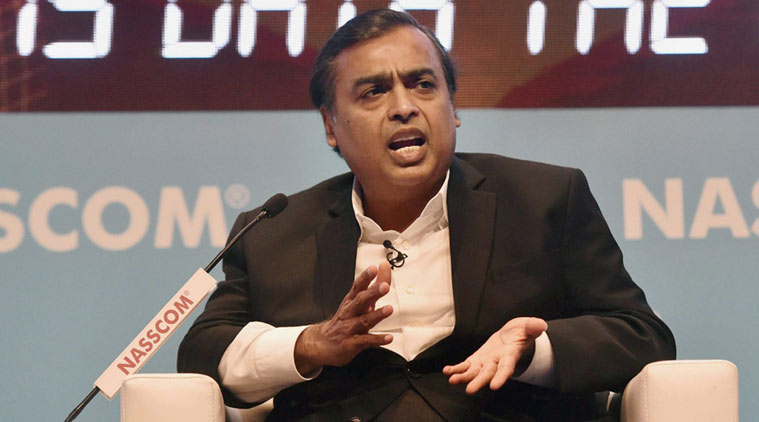
    “Actually, Trump might be a blessing in disguise. It (Trump’s appointment) will help Indian talent and Indian IT industry to focus on solving problems in India,” Reliance Industries chairman Mukesh Ambani said today (Feb. 16) and called for strengthening domestic capabilities..

    “The domestic market is huge and this provides an opportunity to improve people’s quality of life and to make sure industries are more productive,” added Ambani at an event organized by Indian IT industry lobby Nasscom.

    “We have a very big advantage in this new world of digitisation. It’s very very important to be open, to have partnerships and not be closed. That is really a strength we should build on, and continue to be open and never think whatever the world changes. The world might want to build walls around. I think it is very important for us not to be influenced by those developments, to make sure that we are always open, always connected,” he said.

    India’s $150-billion IT outsourcing sector has a massive exposure to the US and could be the most vulnerable to Trump’s protectionist stance. Outsourcing firms based in the country, which get over 65% of their revenue from the US, depend heavily on US work visas. Over the last couple of months, at least two bills to tighten norms for issuing the H-1B, the long-term work visa, have been proposed in the American congress.

    Around 9.5% of India’s GDP comes from the outsourcing industry, which employs nearly 3.7 million people. The proposed bills have battered the stocks of large companies like Infosys and Tata Consultancy Services.

  • H1B Visas no longer a showstopper: Nasscom

    H1B Visas no longer a showstopper: Nasscom

    IT industry body Nasscom has dispelled fears about the possible damaging prospects of the new US immigration Bill which proposes to restrict issuance of H1B visas to Indian companies.

    “Such visas will not be any showstopper in this era of technology,” Chairman of Nasscom CP Gurnani told reporters in Kolkata.

    He said in this age of technology, companies would use the tool to get products and services delivered. “The companies and the US Senate can be at odds with each other. The US corporations realise that 70% of their work were being outsourced from outside,” he said on the sidelines of Nasscom Product Conclave.

    On top of that, visa costs were going up, Gurnani said. He said Nasscom would make an appeal to the US administration, adding that business would prevail as usual. “It is in their interest to buy technology,” he said. According to Nasscom, 65 of India’s IT revenues originate from the US. Nasscom jointly with McKinsey has forecast that IT revenues by 2025 would touch USD 250 billion.

  • ATA Convention celebrations draw record breaking crowds

    ATA Convention celebrations draw record breaking crowds

    CHICAGO, IL (TIP): The ATA Convention hosted by American Telugu Association [ATA] was marked by breathtaking spectacle drawing record-breaking attendance inundating the sprawling convention center with vibrant Telugu fervor at the silver jubilee festivities held on a grand mega scale showcasing the rich Telugu cultural heritage and its burgeoning Telugu constituency in America at the 3-day ATA Convention held on July 1-3, 2016 at the Rosemont Convention Center in Rosemont, IL.

    The Rosemont city wore a colorful Telugu look as unprecedented number of attendees preliminarily estimated at 10,000 thronged the convention center to experience ostentatious showcasing of rich Telugu culture through music, dance, pageantry surpassed only by dazzling fashion shows, contemporary cinematic music and colorful epic dance presentations eclipsed by celebrities, large contingent of political leaders, Telugu icons and eminent personalities overwhelmed only by the presence of Tollywood movie stars.

    Convener Chandrasekhar Reddy Palvai praised the unwavering dedication and hard work of the entire ATA chairs & co-chairs that truly brought such phenomenal results. Convention Director K.K. Reddy characterized it as a magnificent journey of 25 years culminated in such an extraordinary convention and added this as a symbol of triumph of the towering Telugu spirit. ATA President Sudhakar Perkari lauded the remarkable ATA team work that brought about this splendid outcome. ATA Founder/President Hanumanth Reddy expressed the gleeful joy at the presence of such huge masses of Telugu people under one roof and added is a shining testament to innate culture of Telugu people; while Convention Co-Convener Krishna Mushyam saluted the rallying spirit of Telugu fellowship in such magnitude.

    Honored for their services and contribution
    Honored for their services and contribution
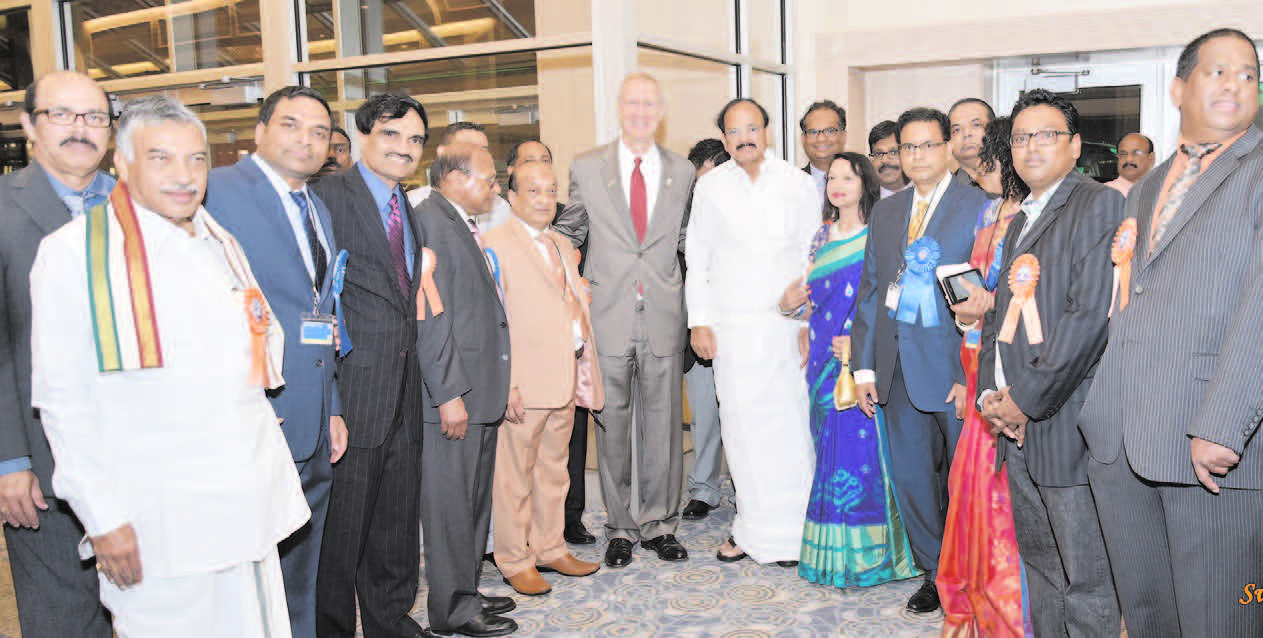
    The convention was set in motion with a grand gala banquet on Friday July 1st with Illinois Governor Bruce Rauner and Union Minister Venkaiah Naidu inaugurating the 3-day celebrations paying rich accolades to the Telugu culture in their remarks as ecstatic gala attendees rendered prolonged applause. Governor Bruce Rauner issued a proclamation declaring July 2nd and 3rd 2016 as American Telugu Association Day in the state of Illinois. Governor Rauner commended the Telugu community for keeping up the great cultural heritage and added if he gets an opportunity he would love to visit India. Venkaiah Naidu, Union Minister for Parliamentary Affairs in his address inspired the families to stay rooted in Telugu culture while appreciating the other languages and cultures. Venkaiah Naidu stressed on the ripe climate in India ideal for global investments. Dinkar Karumuri exhaustively introduced Governor Rauner and described him as an outstanding champion of the Indian American community and added his presence at ATA gala is a shining testimony of his steadfast goodwill to the Telugu community.

    With the invocation dance, the gala banquet in its splendor showcased the outstanding success stories of Telugu people in the United States who were applauded for their valuable contribution to the societies both in India and America. Some of the prominent attendees include Ambassador Dr. Ausaf Sayeed, Consul General of India, Democratic Nominee for U.S.Congress Raja Krishnamoorthi, and Prominent MP Kavitha Kalvakuntla, Deputy Telangana Chief Minister Kadiam Srihari, Cook County Commissioner Tim Schneider, GMR Chairman Grandhi Mallikarjuna Rao ATA Benefactors Dr. Prem Reddy and Dr. Paila Malla Reddy joined by a large contingent of MPs and MLAs from A.P and Telangana state represented by all political parties including TRS, YSRCP, TDP and Congress. Other Prominent Leaders from USA include Maryland Delegate Aruna Miller, Ambassador Vinai Thummalapally, Ex-Nasscom chair BV Mohan Reddy.

    On Saturday July 2nd, the ATA Convention set the stage on fire with a huge 100-group dance troupe presenting an epic inaugural dance presentation ‘Jyothi Prajwalana’ that evoked applause and standing ovation. Key note address by Union Minister Venkaiah Naidu was stirring as he inspired Telugus in America to instill and nurture Telugu language to the succeeding generations. Venkaiah Naidu said that the most successful people in North America are Indians and added half of them are Telugu’s. Lieutenant Governor Evelyn Sanguinetti presented Illinois Governor’s proclamation to ATA leaders. Rasamayi Balakrshinan Troupe provided an upbeat ‘Dhoom Dham’ Telangana traditional dance and musical presentation. Youth forum was inaugurated by ATA founder Hanumanth Reddy, convener Chandrasekhar Reddy Palvai and Director K.K. Reddy. Re-enactment of ‘Bahubali’ movie with its huge cast held the audience in rapt attention. TV hosted event ‘SYEATA’ had youth performing colorful cultural and western presentations. Kuchipudi dance by Padmaja Reddy displayed wide swath of emotions. Kavitha Kalvakuntla, Telangana Member of Parliament applauded the sense of unity of Telugu people showcased at the convention. Iftekhar Shareef, Reception Chair introduced Kavitha Kalvakuntla, Telangana MP and the Telangana MPs and MLAs giving an eloquent summation of their role in continuously steering the newly-formed 29th Indian state towards the trajectory of success. Earlier, Swami Chidatmananda spoke. Kamala Chimata, Convention Coordinator who presented the overview said the convention is replete with exhaustive schedule of close-fitting events meaningfully designed for the families.

    On Sunday July 3rd, the convention drew wall-to-wall crowds to witness the spectacular fashion show, contemporary dance presentations and grand musical show presented by Mani Sharma and group that send the crowds ecstatic at every song belted out. In the afternoon, heated debates with political leaders participated by TRS, YSRCP, TDP & Congress party reached a fierce pitch battle between the party leaders held by Chalma Reddy and moderated by renowned TV host Venkata Krishna and managed by Vikram Kattamreddy. Some of the politicians participated in the Political Forum include Telangana Dy CM Kadiam Srihari, L. Ramana, Pedireddy Ramachandra Reddy, Jithender Reddy, Madhu Yashki, Keshav Rao, Roja, Ambati Rambabu, Srikanth Reddy, Malla Reddy and others.

    The evening segment began with youth-centric dance and musical presentations. ATA felicitated their past presidents, its board and trustees. Chandrasekhar Reddy lauded the undying commitment of over 60 committees; while K.K.Reddy expressed jubilation having such a fine contingent of committed teams.

    Some of the Tollywood movie actors who attended the convention included Actors Kajol Agarwal, Jagapathi Babu, Nani Babu Ghanta, Rashi Khana, Bhanu Sree, Lavanya Tripathi, Rashmi Gautam, Jyothi, Ramya Sree Neeliya,Rachna Mourya.

    Some of the prominent political elected leaders who attended included Ganta Srinivas Rao, Nayani Narasimha Reddy, Dr. Venugopala Chary, Ambati Rambabu, Roja and Jatinder Reddy.

    The Youth committee organized Lake Michigan dinner cruise for youth 16 and above and 200 Youth participated. The business forum included workshops by CEO’s and Entrepreneurs who presented workshops about doing business in India and the US. The Women’s Forum workshops were designed to empower and motivate women. Health and wellness seminars focused on preventive health screening and medical advice from leading medical experts, Matrimonial services were provided to parents of prospective brides and grooms. Seminars for Senior Citizens were organized to educate seniors about Government benefits, health Insurance options and navigation and dealing with the loss of a partner as they grow older in America. Yoga and meditation sessions were conducted throughout the day and many attendees took advantage learning and practicing these relaxation techniques. Vendor’s booths carried mouth-watering Telugu delicacies, jewelry, fashion apparels and accessories and real estate companies promoted their housing projects in India. Convention attendees were treated a great shopping experience and were able to support participating vendors. Painstaking efforts were made to serve authentic native Telugu cuisine for record number of guests.

    The leaders of the American Telugu Association and the Convention team received glowing accolades for their remarkable dedication in securing runaway success of the silver jubilee convention.

    The convention drew to a grand conclusion with high decibel musical concert rendered by well-known Tollywood music director Mani Sharma along with a team of singers and musicians belting out exciting tunes until the wee hours past midnight which served as a grand finale to a memorable Telugu convention.

    (Photographs and Press release courtesy Asian Media USA)

  • India continues to get more H-1B visas despite fee hike: Verma

    India continues to get more H-1B visas despite fee hike: Verma

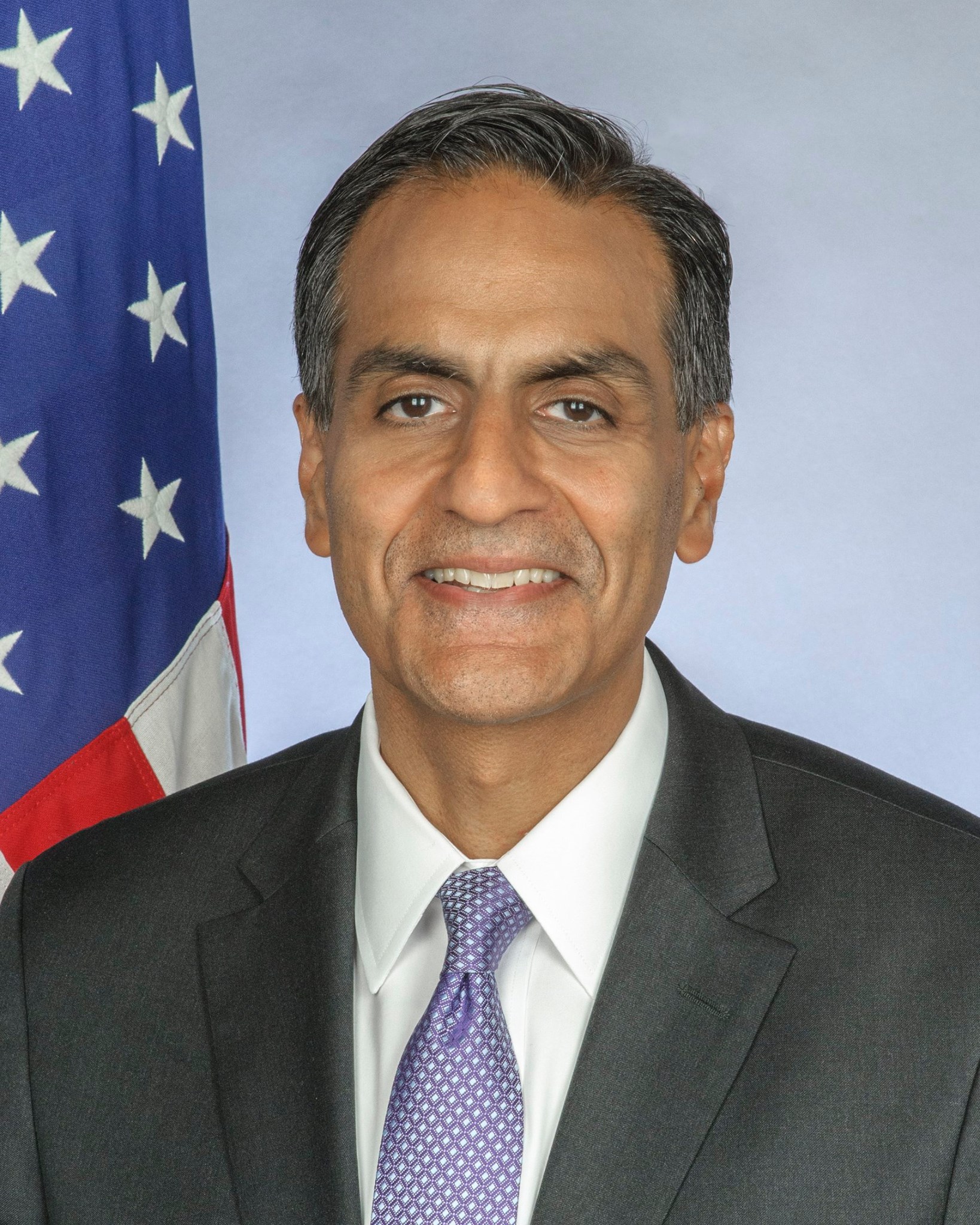
    NEW YORK (TIP): India continues to get the “lion’s share” of the H-1B visas from the US government despite the fee hike, US Ambassador to India Richard Verma.

    “India continues to receive the lion’s share of H-1B and L1 and even after the fee increase, they continue to get 70 per cent of those H-1B visas,” Verma said on the sidelines of ‘The Future is Now: From COP21 to Reality’ conference in New Delhi.

    “We understand the concern about the fee hike. I think there is an ongoing conversation. We also know this is an important part of travel and commercial enterprise in the US. And again, there is an increase in the number of visas issued, in fact, there is a slight increase,” he added.

    The US, under the 9/11 Health and Compensation Act, has imposed a special fee of USD 4,000 on certain categories of H-1B visas and USD 4,500 on L1 visas.

    Almost all Indian IT companies would be paying between USD 8,000 and USD 10,000 per H-1B visa as per the hike. According to Nasscom, this is expected to have an impact of about USD 400 million annually on India’s technology sector.

    Earlier in his speech, Verma said the ongoing deforestation and poor land management is responsible for nearly a quarter of the world’s greenhouse gas emissions as each day, greenhouse gases emitted by human activities trap the same amount of heat energy as would be released by 400,000 atomic bombs.

    “Climate change is not just an environmental challenge; it is a national security issue. Changes in climate could potentially damage critical infrastructure, create shortages of food and water, and lead to mass migrations and disease outbreaks.

    “Receding ice sheets in the Arctic and the opening of new sea passages raise concerns about maritime security and freedom of navigation,” he said. According to Verma, Prime Minister Narendra Modi’s 175 GW target for renewable energy deployments is among the most ambitious in the world and the US has done a great deal to support this effort.

    Through the US-India Partnership to Advance Clean Energy, or PACE, nearly USD 2.5 billion have been mobilized for clean energy projects in India and another USD 1.4 billion in climate finance for solar projects was announced during the Prime Minister’s visit to the US.

    “India’s success is critical to global success and I firmly believe, clean energy will be one of the biggest growth opportunities in the years ahead. Between now and 2035, investment in the global energy sector is expected to reach nearly USD 17 trillion. That’s more than the entire GDP of China and India combined,” Verma said.

    The US is actively supporting India’s solar targets through the Government of India-led International Solar Alliance and bilateral initiatives, such as rooftop solar cooperation and solar resource mapping, he said.

  • H-1B, L-1 Visa Fee hiked by upto $4500

    H-1B, L-1 Visa Fee hiked by upto $4500

    WASHINGTON (TIP): The US Congress has imposed a special fee of up to $4,500 on the H-1B and L-1 visas popular among Indian IT companies to fund a 9/11 healthcare act and biometric tracking system.

    Such a move has been made part of the James Zadroga 9/11 Health and Compensation Act which funds health screenings and treatments for 9/11 first responders.

    The bill, named after Detective James Zadroga who died of a respiratory illness in 2006, expired on October 1. Lawmakers are seeking to permanently extend the bill and want to generate necessary funds by imposing a $2,000 additional fee on H-1B visas.

    The bill has been written in such a way that it would impact only Indian companies.

    Congressional leaders, while agreeing on the $1.1 trillion spending bill, yesterday decided to impose a special fee of $4,000 on certain categories of H-1B visas and $4,500 on L-1 visas. The US House of Representatives is slated to vote on the $1.1 trillion spending bill deal later today.

    According to the agreed bill, the new $4,000 fee would apply to companies having at least 50 employees with 50 per cent of their employees on H-1B or L-1 visa. Such companies would have to pay a new fee of $4,000 for H-1B visas and $4,500 for L-1 visas.

    While the specific provisions of the spending bill has no mention of Indian IT companies, the language of the bill has been written in such a way that it would have a big impact on Indian IT companies.

    Though the lawmakers behind the bill described it as a temporary provision, the new H-1B and L-1 visa fee increase is for a period of 10 years as against a previous provision of five years. The previous such provision from 2010 to 2015 of $2,000 for H-1B visas lapsed on September 30.

    In a study released in September this year, NASSCOM, a trade association of Indian IT industry, said Indian IT companies have paid between $70 to $80 million annually for the US Treasury approximately. Given that, the new punitive measure is expected to raise between $1.4 billion and $1.6 billion every year for the next one decade.

    Expecting that this provision would generate more than $1 billion per annum, the bill says that after $1 billion is deposited for 9/11 first responders and the Biometrics Ext account, the rest of the money would be deposited in the general fund of the Treasury.

    Notably, Prime Minister Narendra Modi had raised the issue with US President Barack Obama when the latter telephoned him to thank for his leadership role on achieving the historic agreement on climate change in Paris on December 12.


    It is learnt that the White House did raise its concerns with the Congressional leaders on the impact of such a move to dramatically increase H-1B and L-1 visas fees on India-US relationship. However, the Republican-majority Congress decided to ignore the concerns of the White House and doubled the H-1B and L-1 fees for Indian IT companies.

  • Limited H-1B visas may force companies to skip placement season at IITs

    Limited H-1B visas may force companies to skip placement season at IITs

    Facebook may not be coming to the Indian Institutes of Technology (IITs) this year, both for internship and final placement, according to sources from IIT placement cells, reports ET.

    At least five IITs confirmed that the online social networking service, headquartered in Menlo Park, California, was not visiting them this year. Facebook had made about a dozen offers at three of these institutes last year with salaries going upwards of a crore and even touching Rs 2 crore for positions of software engineers in California.

    “Visa is an issue for US based technology companies that hire from India,” said former placement manager at IIT Bombay, Mohak Mehta. The current quota for H1B visas is 65,000 which is exhausted in a matter of days of the annual allocation becoming available at the beginning of April each year. US demand for talent in science, technology, engineering and mathematics (STEM) is estimated to go up to a million by the year 2020.

    “Considering that a million of STEM workers would be needed by the US in some years, they are likely to fall short by almost 50 per cent. India has a good supply of talent in this space, which also includes the young IITians,” said Shivendra Singh, VP, NASSCOM.

    Facebook declined to comment. But sources close to the company said it had visa problems last year too. It was forced to position its IIT hires at the UK for almost a year before getting visas in place for the US.

    “Facebook did not come this year for undergraduate interns at our IIT,” confirmed Atal Ashutosh Agarwal, Vice President, Technology Students’ Gymkhana at IIT Kharagpur. It is the same story at other IITs.


  • Indian tech firms support more than 411,000 jobs in US: Nasscom & IBEF FACT of the Day

    Indian tech firms support more than 411,000 jobs in US: Nasscom & IBEF FACT of the Day

    Contrary to what media reports in United States; Indian information technology companies invested more than $2 billion, paid $22.5 billion in taxes between 2011 and 2013, and supports 411,000 direct and indirect jobs in the US, the apex software industry body Nasscom said on Monday ahead of Prime Minister Narendra Modi’s visit to that country later this month, reported livemint.

    In a report released on the sidelines of US-India Strategic and Commercial Dialogue in Washington, Nasscom said that direct and indirect jobs supported by India’s IT sector in the US grew at an annual rate of 10% from 2011 to 2014—or about six times higher than the average jobs growth rate of 1.7% during the same period.

    “Indian IT organizations benefit from access to the U.S. market, just as American IT organizations benefit from their investments and operations in India,” said Nirmala Sitharaman, minister of state for commerce and industry, who is visiting Washington, DC for US-India Strategic and Commercial Dialogue.

    “This momentum is surely going to increase manifold with new partnership opportunities emerging in the areas of Digital India and Smart Cities for American technology firms.”

    US states that led the numbers in direct jobs created by Indian IT companies include California, Texas, Illinois, New Jersey, New York, Georgia, Ohio, Washington, Michigan, and Pennsylvania. Texas, Michigan, Illinois, California and Georgia.

  • BENGALURU STANDS TALL WITH $2.6-BILLION VENTURE CAPITAL

    BENGALURU STANDS TALL WITH $2.6-BILLION VENTURE CAPITAL

    BENGALURU (TIP): India’s IT hub, Bengaluru, came in fifth in a list of cities globally that received the most venture capital in 2014, an indication of the growing vibrancy of its startup ecosystem.

    San Francisco led the list with $13 billion of VC investments, followed by Beijing ($6.4 billion), New York ($5.7 billion), Palo Alto ($3.2 billion) and Bengaluru ($2.6 billion). The list has been put together by Crunchbase, a global startup ecosystem database.

    Among countries, India received the third highest VC funding ($4.6 billion) after the US ($58.9 billion) and China ($8.9 billion).

    Ravi Gururaj, chairman of the Nasscom Product Council, says India enjoyed record VC investments in the second half of 2014, and the wave shows no sign of slowing down. “This was kicked off by the historic election results which boosted investor confidence tremendously. Additionally, private equity investors worldwide, particularly those that missed out on the meteoric rise in Chinese startup valuations, flocked to high performing Indian consumer startups determined not to miss out on a fast ride on the India Startup Express.”

    Sanjeev Aggarwal, co-founder of Helion Venture Partners, says Bengaluru’s lead position is because of its ability to attract tech talent. “The cycle kicked in with Infosys and Wipro, followed by global companies coming in large numbers. Engineers employed with companies like Google and Yahoo wanted to experiment with new ideas, and that has spawned a startup culture. Mobile apps and cloud have reduced entry barriers to build companies,” he told TOI.

    CrunchBase does not give a breakup of the investments in each city. In Bengaluru’s case, a significant portion of the $2.6 billion would likely be on account of Flipkart’s two rounds of funding that happened last year. The e-commerce company received an estimated $1.7 billion.

    Parag Dhol, MD of Inventus Advisors India, believes Bengaluru’s startup ecosystem is beginning to have a multiplier effect. “You have an ecosystem where companies have gone public, there are good product startups, and new-age entrepreneurs are turning into angels. In that sense, success begets success. Venture capitalists are looking at India with a fresh set of eyes,” he adds.

    Aggarwal notes that capital is going particularly to the leaders who are building companies in large under-served markets, and to companies like Flipkart, Snapdeal and Ola. “Investors are paying a leadership premium,” he says.

    Japanese internet giant Softbank invested $627 million in Snapdeal and $210 million in Ola Cabs last year.

  • Infosys beats forecasts despite fall in Q1 profit

    Infosys beats forecasts despite fall in Q1 profit

    BANGALORE (TIP): Infosys’ revenue rose moderately in the quarter ended June, but at the cost of profit, which took a hit partially on account of salary increases. Net profit declined by 1%, to $482 million, over the preceding March quarter. Revenue grew 2%, to $2.1 billion, over the previous quarter. Compared to the year ago period, revenue was up 7.1%, tracking the full-year revenue guidance of 7-9%. The numbers were better than the estimates of brokerage houses, resulting in the company’s share price rising by 1% on a day when the broader market fell steeply. It also helped raise the share prices of other leading IT companies, including TCS, Wipro and HCL Technologies. Infosys said it was maintaining the full-year revenue guidance of 7-9% that it had issued in April.

    The guidance is lower than the 11.5% it did last year and the 13-15% that IT industry body Nasscom expects the industry to grow by this fiscal. Infosys CEO S D Shibulal, who retires at the end of this month, said the demand and pricing environments were stable. Some negative trends continue. The employee attrition rate rose to the highest ever level of 19.5% in the quarter. It was already an all-time high of 18.7% in the March quarter. “Employee attrition rates are worrisome and we are implementing various initiatives to retain good talent,” said the company’s COO Pravin Rao. Shibulal said the company “listened hard to employees” and found that they were more interested in a predictable salary and career growth than in the level of the annual increment.

    “So even as we have given increments, we have reduced the variable pay and moved to quarterly promotions to support employees’ career growth. We promoted 7,500 employees last quarter,” he said. The company expects these measures to contain the attrition level. The operating margin, which had dropped precipitously in 2011-12 and 2012-13 but which had been rising steadily last year, has once again fallen back.

    It is 25.1% in the June quarter, compared to 25.5% in the March quarter. The fall is partially on account of the salary increment effective April. But the operating margin would have been worse but for a 1.1 percentage point increase on account of a change in the way the company estimates the useful life of assets – which increased the life of the assets and consequently impacted depreciation levels.

  • Govt To Fund Start-Ups In Electronics Space

    Govt To Fund Start-Ups In Electronics Space

    NEW DELHI (TIP): The Government will soon unveil guidelines for financially supporting start-ups in the field of electronics. It may chip in with 15-25 per cent of the total investment for such projects through fund managers including banks or any large IT company. “This will be the first time in the country when we will have a system by which the Government can effectively stimulate the private sector in R&D work, because we have one of the lowest intensities of R&D relative to the GDP (less than 1 per cent),” a senior official at the Department of Electronics and Information Technology (DeitY) told Business Line.

    Mission mode
    Once the guidelines are finalised, the Government will also fix its return on investment (at around 5 per cent). A high-level committee under the chairmanship of R. Chidambaram, Principal Scientific Adviser to the Government, is working on preparing the guidelines. This will be part of the National Electronics Mission under the National Policy on Electronics 2012, and the investments will be routed through the Government’s ‘Electronic Development Fund’ scheme, which aims to invest $2 billion (around Rs 12,000 crore) by 2020, the official said.

    “We expect additional mobilisation of around Rs 30,000 crore — to be raised from the industry by 2020. The industry is nascent right now, so we expect it to start slowly and invest around Rs 50 crore or Rs 100 crore to start with,” he said. There are many small companies in India which are on the verge of shutting down . The proposed initiative will help such companies survive , he said.

    The official said the Government is also open to working with Nasscom to support the start-ups. He said even though institutions such as the Centre for Development of Advanced Computing , and the IITs are doing their bit it may not be sufficient. “We need to plant thousands of trees; out of which only a few may survive, but one or two that do survive will give sufficient returns; and that is what venture capitalists do,” he said.

    Under the NPE, the Government is hoping the electronics sector will achieve a turnover of around $400 billion by 2020. This involves investment of around $100 billion. It will also help employ around 28 million people by 2020. The policy includes achieving a turnover of $55 billion for the chip design and embedded software industry, and $80 billion of exports in the sector. Over 200 electronic manufacturing clusters are also proposed to be set up.

  • IT INDUSTRY WILL GROW 13-14%: SOM MITTAL

    IT INDUSTRY WILL GROW 13-14%: SOM MITTAL

    CHENNAI (TIP): Software industry body Nasscom expects the country’s information technology (IT) services sector to grow 13-14 per cent in the current financial year and to touch $225 billion (Rs 13.22 lakh crore) by 2020. Speaking to reporters after addressing Nasscom’s EmergeOut Conclave here, the industry body’s president, Som Mittal, said the sector had been growing at a compound annual growth rate of 12-13 per cent till two years earlier, and reaching the $225 billion target was not impossible.

    The first main driver will be new geographies. At present, the US, the UK and other European markets contribute to around 90 per cent of the total business, while other markets, including India, China and Latin America, contribute the rest. “Only three per cent of the business we do in China and Japan, which shows there is plenty of opportunities in those markets,” said Mittal. Many small companies have now started focussing only on these markets. “Our estimate is that around 20 per cent of the business would come from new geographies by 2020,” said Mittal. The second driver will be new verticals.

    At present, banking, financial services and insurance, hi-tech and telecom and manufacturing contribute around 80 per cent of the business, while utilities, transport, health care and media and entertainment open up new opportunities. “Not that the existing verticals will have a setback. The growth will not be at the cost of others, it will be an an expansion,” said Mittal. The third driver will be new customers, especially small and medium business companies, said Mittal.

  • Reverse Outsourcing: Indian remedies to a fever-pitch outsourcing debate

    Reverse Outsourcing: Indian remedies to a fever-pitch outsourcing debate

    Presidential elections in the US follow a scripted narrative. As the candidates battle for the highest office, everything is fair game. In a weak economy, that means it is open season on that familiar bogey: outsourcing of jobs. US firms, driven less by altruism than by a desperation to cut costs, send jobs overseas: a well-known story. A deep recession that cost many Americans their jobs fuelled a backlash against outsourcing’s beneficiaries. And as the American economy has been making only a languid recovery, outsourcing has returned to being a political hot potato.
    In his speech accepting the Democratic Party’s presidential nomination, President Barack Obama threw in an allusion to outsourcing. His campaign has accused Republican rival Mitt Romney of investing in firms that moved jobs overseas when he was at the helm of private equity firm Bain Capital. Romney, whose campaign is run on the promise of creating American jobs, has distanced himself from that record and to show his critics where he stands on outsourcing, said earlier this year: “We will not let China continue to steal jobs from the United States of America.” India, of course, gets pride of place in that narrative.

    The truth is less simple. Actually, Indian-origin firms have over the years steadily established a foothold in the US, employing Americans, building the local economies and giving back to the communities in which they have put down roots. This trend is putting a dent in the tired argument that India, the most identifiable beneficiary of outsourcing, only “takes away” American jobs. While their US counterparts tend to be PR-savvy, the Indian companies have been reluctant to announce and promote their accomplishments. Largely due to a cultural difference, says Ameet Nivsarkar, vice-president of NASSCOM, the IT lobbying body

    A NASSCOM report in March found that Indian IT created over 2,80,000 jobs in the US in the past five years, of which about 2,18,000 are held by Americans or Green Card holders. “The US is the largest trading partner in the technology sector for the Indian industry and will continue to be so in the future. Over a period of time, more and more companies are getting closer to their customers. This kind of work can be outsourced, but it can’t be offshored,” says Nivsarkar.

    It isn’t just in the tech sector that desi firms have carved a niche for themselves. They are spread over a broad range of sectors, including education, energy, manufacturing, financial services, healthcare and hospitality. “Hundreds of Indian-origin companies currently operate in the US; these have put down roots, invested millions of dollars, and are today an integral part of the economic and social fabric,” reads a Confederation of Indian Industries report.

    “Rather than send American jobs to India, an Indian company is sending, safeguarding and even creating jobs overseas in the US.” Mani Iyer, President Mahindra US says.

    A list of firms that have established a presence in the US reads like a veritable who’s who of Indian industry. Mahindra USA was incorporated in 1994 in Houston, Texas. It has four assembly and distribution facilities: Houston; Red Bluff, California; Chattanooga, Tennessee; and Bloomsburg, Pennsylvania. Mani Iyer, Mahindra USA president, has a unique take on outsourcing: Mahindra & Mahindra Ltd outsources jobs to the US in the form of Mahindra USA and its partner-supplier relationships. “Rather than sending American jobs overseas to India, an Indian firm is sending, safeguarding and creating jobs overseas in the US,” he says.

    In 1999, Madhu Vuppuluri opened up shop for Essar in North America. Today, Essar Americas has close to 10,000 employees; 99 per cent are Americans. Essar Americas operates three main businesses in North America-iron ore in Minnesota, coal in West Virginia and Kentucky, and BPOs. It has acquired three call centers in the past decade, two of which are based in Texas and are run under the banner Aegis. Its employee base in this sector has grown from around 2,200 at the time of acquisition to 5,000 American employees and around 55,000 employees globally. “We have stabilized the operation, increased the employee base, increased the reach of this company and made it into a truly global BPO company, which has nearshore, onshore and offshore capabilities,” says Vuppuluri, who is president and CEO of Essar Americas.

    Some Indian-origin firms have actually gone out of their way to hire Americans. Akhil Jindal, head of finance and corporate strategy at Welspun, says the company, steel pipe and home textile producers in the US, resisted employing Indians at its facilities. “We actually brought 200 unskilled Americans who had no experience making a pipe to India for training,” says Jindal. “Indian companies probably have thought (in terms) of cost-saving, but at Welspun we have employed more than 600 people in Arkansas, one of the poorest states in America. When the US was going through a very difficult phase, we created more jobs and more opportunities, and that is also good for the company. It is not a social service,” he adds.

    And Welspun has also made greenfield investments, setting up operations from scratch. Similarly, Essar Americas is constructing a $1.7 billion iron ore palletizing project, one of the largest greenfield projects ever undertaken by an Indian corporation outside India, at the iron ore venture in northern Minnesota that it acquired in 2007. This undertaking is the first of its kind in the area in the past 35 years. “We are essentially engaged in manufacturing a revival, in some ways, in that part of the world,” says Vuppuluri.

    “We did not establish a call centre in India and move to the US. We acquired a US call centre and grew it. We were the first ones.” Madhu Vuppuluri, CEO Essar Americas

    Indian firms that have set up BPOs in the US may seem to go against the common wisdom that drives outsourcing. Essar followed a completely different model, Vuppuluri says. “We did not establish a call centre in India and move to the US. We acquired a call centre in the US, we grew that in the US and also grew outside the US. We were the first,” he says. “The driving factor is that instead of setting up shop in India and looking for customers here, we thought we would first try and understand the business as it is run within the US and then try and grow outside the US in a logical way in which to bring value to the customer. We proved we can manage operations onshore and still keep the competitiveness of the onshore operations intact, not by huge but by healthy margins,” Vuppuluri adds.

    The US is an obvious destination for Indian companies looking to grow a global presence. New Jersey-based Maneesh Agarwal, senior VP (finance) at Birlasoft, a global IT services provider, says the US is at an advantage since it has the “largest share of the biggest companies in the world and whatever global expansion they are doing, there are a lot of residual benefits that come to the US, as far as innovation and profits go”.

    Besides employing Americans, Indian-origin companies are making significant contributions to the wider communities in which they are based. In Nashwauk, Minnesota, Essar Americas (the biggest employer in north Minnesota) uses cutting-edge technology, reducing environmental emissions. And Mahindra USA has sponsored a scholarship program that recognizes and celebrates the important role women play in securing the future of the agricultural industry. This year, it has pledged to donate a portion of revenue from its tractor sales to Operation Finally Home, a non-profit body that provides custom-made, mortgage-free homes to wounded and disabled war veterans as also war widows. It has also contributed money and resources to disaster recovery programs, including after Hurricane Katrina. Welspun, meanwhile, has made healthcare for the needy its primary focus in Little Rock, Arkansas.

    For most India-based companies, their US experience has been rewarding, but not without challenges. “Doing business in America is not a bed of roses,” Vuppuluri points out. Yet, their Indian roots haven’t hindered, but appear rather to have helped, firms seeking innovative solutions to the constraints posed by a cautious, post-recession US banking system. “We got a financial tie-up of our entire financing before the crisis and suddenly realized that all the banks that had sanctioned us money for the project were not that forthcoming because of their own challenges,” Jindal says. His firm was forced to raise funds from the Indian banking sector. Essar Americas’s Minnesota iron ore project too is financed through a club of Indian banks.

    Yet such challenges have done little to deter their quests to grow their operations in the US. Jindal summed up the experience thus: “All in all, it’s been a good experience in a difficult time.” It’s an assessment many would agree with.