Sydney (TIP): Researchers have found that the catastrophic Australian wildfires in 2019-2020 contributed to ocean cooling thousands of miles away, ultimately nudging the Tropical Pacific into a rare multi-year La Nina event that dissipated only recently. The research, led by National Center for Atmospheric Research (NCAR), US, is published in the journal Science Advances. Because the emergence of La Nina can often be predicted months in advance, it’s an important phenomenon for seasonal climate forecasts.
“Many people quickly forgot about the Australian fires, especially as the COVID pandemic exploded, but the Earth system has a long memory, and the impacts of the fires lingered for years,” said NCAR scientist John Fasullo, lead author of the study. While not uncommon, a La Nina occurrence for three consecutive winters is rare.
The recent run of La Ninas, beginning in the winter of 2020-21 and continuing through last winter, is only the third string of three in the historical record, which dates back to 1950.
The recent La Nina streak is also unusual because it is the only one that did not follow a strong El Nino – warming instead of cooling in the Tropical Pacific with similar but opposite climate impacts.
Previous studies have established that events in the Earth system, including aerosol emissions from large volcanic eruptions in the Southern Hemisphere which cool the climate, can shift the odds toward a La Nina emerging.
Given the massive scale of the Australian fires – which burned an estimated 46 million acres – Fasullo and his co-authors wondered what climate impacts the resulting emissions might have had. To investigate the question, the researchers used an advanced NCAR-based computer model called the Community Earth System Model, version 2, to run two batches of simulations on the Cheyenne system at the NCAR-Wyoming Supercomputing Center (US).
All the simulations started in August of 2019 before the blazes in Australia became historically large, but only one set incorporated the emissions from the wildfires as observed by satellite.
The team found that the emissions from the wildfires, which quickly encircled the Southern Hemisphere, kicked off a chain of climate interactions. Unlike a volcanic eruption, the bulk of wildfire emissions did not make it high enough in the atmosphere to cool the climate by directly reflecting sunlight. (PTI)
Tag: National Center for Atmospheric Research
-
Australian wildfires likely contributed to the unusual La Nina event
-

A heat wave forecast for the U.S. has scientists alarmed
The coming heat is projected to affect huge stretches of the U.S., from eastern New Mexico and Colorado across the Central Plains and into the Northeast.
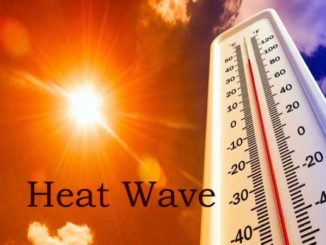
NEW YORK (TIP): A sustained blast of heat is expected to bake much of the United States with hotter-than-usual temperatures this holiday weekend, and forecasts suggest that the heat and the humidity could linger for several weeks.
The extreme weather — the first major heat wave of the season — comes as many states are scrambling to contain the rampant spread of the coronavirus and resources are already strained. And while the pandemic presents some unique challenges this summer, experts say these extreme events will continue to pose public health risks because climate change is making heat waves around the world more frequent and more intense.
The coming heat is projected to affect huge parts of the U.S., from eastern New Mexico and Colorado across the central Plains and into the Northeast.
“The first half of July looks to have well-above-normal temperatures, at pretty high probabilities, beginning around the Fourth of July or slightly before,” said Jon Gottschalck, chief of the Operational Prediction Branch at the National Weather Service’s Climate Prediction Center.
Some places are already sweltering under record conditions. Miami recently had its hottest week on record and posted its 11th consecutive day with a heat index over 103 degrees, Brian McNoldy, a senior research associate at the University of Miami’s Rosenstiel School of Marine and Atmospheric Science, tweeted Thursday.
Gottschalck said it’s likely that several regions may be under heat advisories and excessive heat watches, and he said warm conditions may persist into the evenings, with little relief from the humidity.
The heat is being driven by the northward shift of the jet stream, which creates a “ridging effect” — a pocket of high pressure that allows for warm, dry conditions at the surface, Gottschalck said. The impending blast of heat could also create a “ring of fire” weather pattern, in which storms ride along the periphery of the heat dome and trigger severe thunderstorms across the northern Plains, he said.
Current forecasts show that this dome of heat could stick around well into the month.
“Our models indicate that this is going to be somewhat persistent through the first two weeks of July, and potentially longer,” Gottschalck said.
He said the Climate Prediction Center has been working closely with the Federal Emergency Management Agency and local agencies on how to manage heat waves and other extreme weather events during the pandemic.
Some cities, for instance, may not be able to provide relief for vulnerable people because of social distancing guidelines.
“We’re dealing with such a unique situation, where even if some areas can open up cooling centers and things like that, they’re likely to have limited capacity,” said Julie Caron, a climate scientist at the National Center for Atmospheric Research in Boulder, Colorado. “So now, you could have a vulnerable population that has to make a choice to either stay home and risk the heat or go to a cooling center and risk exposure to the virus.”
But even without the pandemic, she said, these events are troubling in the context of global warming.
“There’s a long-term warming trend, but we’re also seeing an increasing rate of change that’s notable since 2015,” Caron said. “What that means is we’re getting hotter and more frequent heat waves on top of each other.”
The changes are magnified in the summer, particularly because July is typically when most parts of the contiguous U.S. have their hottest days of the year.
“You’re exacerbating heat extremes in an already hot season,” Caron said. “That’s why it’s not just about heat waves, necessarily. It’s that we’re seeing hotter-than-normal seasons.”
(Source: NBC)