Tag: NATO

  • Greenland’s defence is ‘common concern’ for Nato, Danish PM says as European troops fly in

    Greenland’s defence is ‘common concern’ for Nato, Danish PM says as European troops fly in

    NEW YORK (TIP): The Danish prime minister, Mette Frederiksen, has said Greenland’s defence is a “common concern” for the whole of Nato, as troops started arriving from across Europe as a result of Donald Trump’s threats to take the Arctic island by force.

    AP reported that troops from France, Germany, the UK, Norway and Sweden, among others, were on their way to Greenland, a largely autonomous territory of the kingdom of Denmark, on Thursday, January 15. Denmark also announced it would be increasing its military presence.

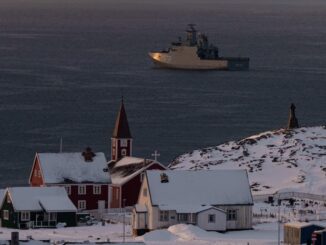
    People walk along a snow-covered street in Nuuk city, Greenland
    ‘Are they going to bring their violence here?’: Fear – but little preparation – as threat of invasion looms over Greenland

    As well as providing a show of political support, the European troops were said to be on a short scoping mission, according to one country involved.

    The aim was to establish what a more sustained ground deployment in Greenland could look like, partly to reassure the US that European Nato members were serious about Arctic security.

    It comes after a difficult meeting in Washington on Wednesday between the foreign ministers of Greenland and Denmark, Vivian Motzfeldt and Lars Løkke Rasmussen, and the US vice-president, JD Vance, and secretary of state, Marco Rubio. The visit was intended to smooth relations between Denmark and Greenland and the US, but it did not appear to have had the desired effect. Afterwards, Trump reiterated his previous comments that the US “needs” Greenland for national security, adding that Denmark could not be relied on to protect the island and that “something will work out”.

    In a statement released on Thursday, Frederiksen said it had not been an easy meeting and that a working group was being set up to discuss how Arctic security could be improved.

    “However, that does not change the fact that there is a fundamental disagreement because the American ambition to take over Greenland is intact,” she said. “This is obviously serious and therefore we continue our efforts to prevent that scenario from becoming a reality.”

    There was, she said, agreement within Nato that “a strengthened presence in the Arctic is crucial for European and North American security”.

    She said Denmark had “invested significantly in new Arctic capabilities”, while a number of allies were taking part in joint exercises in and around Greenland. “The defence and protection of Greenland is a common concern for the entire Nato alliance,” she said.

    Greenland’s prime minister, Jens-Frederik Nielsen, said the first meeting marked an important step, but that dialogue with the US was dependent on “respect for our constitutional position, for international law, and for our right to our own country”.

    Nielsen also reiterated several points including that Greenland was “not for sale”, would not be owned by, governed by or be part of the US, and was a “democratic society with self-government”, part of the kingdom of Denmark and, in turn, a member of Nato.

    The French president, Emmanuel Macron, announced on Wednesday, January 14, that the first members of the French military were already en route and that others would follow. About 15 French soldiers from the mountain infantry unit were already in Nuuk, Greenland’s capital, for a military exercise, French authorities said.

    Germany said on Thursday, January 15, that it would deploy a reconnaissance team of 13 personnel. The Netherlands and the UK have also said they will take part in the joint exercises led by Denmark under the name Operation Arctic Endurance.

    It is a significant moment in terms of symbolism, but the total number of troops will be in the dozens and the duration of the deployment is unknown.

    Discussions are also being held within Nato about creating an air-policing mission for the Arctic, along the lines of the existing Eastern Sentry operation, on the alliance’s eastern flank.

    Though the talks go back to last year, when Trump first mooted acquiring Greenland as president, they have gained impetus in the past few days, a senior diplomat from a European Nato member said.
    “We have to keep Trump happy on Greenland,” they said.

    The Danish defence minister, Troels Lund Poulsen, said on Thursday, January 15, that he planned to establish a more permanent military presence on Greenland “with a larger Danish contribution”. Military personnel from various Nato countries would be in Greenland on a rotation system, he said.

    After the high-stakes meeting in Washington, Rasmussen said there continued to be a fundamental disagreement over the island, and that it remained “clear that the president has this wish of conquering over Greenland”.

    Trump said: “We really need it … If we don’t go in, Russia is going to go in and China is going to go in. And there’s not a thing Denmark can do about it, but we can do everything about it.”

    Danish and Greenlandic politicians gathered in Copenhagen on Thursday, January 15, to celebrate Greenlandic New Year’s Eve. Members of the Danish parliament and a Greenlandic committee will meet a delegation of members of the US Congress at the Danish parliament on Friday to talk about cooperation.

    A series of protests is planned across Denmark and in Nuuk on Saturday.

    A CNN poll found that three-quarters of Americans opposed the US trying to take control of Greenland, of whom 52% strongly oppose such a move.

    Meanwhile, AP has quoted Trump as saying that less than having Greenland is US hands ‘unacceptable’.
    In a post on his social media site, Trump reiterated his argument that the US “needs Greenland for the purpose of National Security.” He added that “NATO should be leading the way for us to get it” and that otherwise Russia or China would — “AND THAT IS NOT GOING TO HAPPEN!” “NATO becomes far more formidable and effective with Greenland in the hands of the UNITED STATES,” Trump wrote. “Anything less than that is unacceptable.”
    (Agencies)

  • The MAGA turn: Global fallout and India’s dilemma

    The MAGA turn: Global fallout and India’s dilemma

    India cannot blame Western xenophobia while succumbing to it at home

    “Normally, domestic and foreign policies of countries are inter-related. The Trump administration demonstrates that by aligning its foreign policy with its MAGA supremacism. The BJP managed to largely insulate domestic politics from foreign policy, except in South Asia. While adopting nationalist-majoritarian politics at home, with boundaries between religion and politics removed, its foreign policy continued the old secular line, at least superficially. The US State Department’s reports on human rights practices in India berated the constriction of religious, individual and press freedoms. The 2024 report listed the Citizenship Amendment Act and anti-conversion laws as raising concerns. It, however, ignored the BJP’s non-liberal political trajectory weakening democracy. India-US relations were considered more crucial to the global American strategy.”

    By KC Singh

    US President Donald Trump completes one year in office on January 20. The Economist magazine says he has “turned domestic and international politics on its head”. During the campaign, he looked past Project 2025, produced by the conservative Heritage Foundation. However, in office his barrage of executive orders began implementing Project 2025. This included mass, forceful deportation of suspected aliens without hearing, domestic military involvement (now halted by the Supreme Court), dismantling of the bureaucracy, outsourced to Elon Musk, whose Department of Government Efficiency failed drastically.

    The external policy changes began with the April “Liberation Day” arbitrary tariffs on imports. Then emerged a closer alignment with Israel, a pro-Russia tilt in handling the Ukraine war, an escalated trade standoff with China and a transitory compromise. European NATO allies played along, preferring non-confrontation while examining self-reliance, to manage the US pullback from defense commitments. The National Security Strategy (NSS) of December 4-5 confirmed major US policy mutations.

    The new foreign policy priorities list the “Western Hemisphere” on the top. It refers to the Americas — North and South — resurrecting the 19th century’s Monroe Doctrine, which barred European rivals from interfering in Latin-American affairs. Next comes Asia, with focus on the Indo-Pacific. Unlike the past NSS documents, China is not named as a threat, though it colors the Asian strategy. On December 8, the US allowed the sale to China of Nvidia’s advanced H200 chips.

    India figures as a subtext, expected to help ensure Indo-Pacific security. Then follows Europe. Under the subtitle “Promoting European Greatness”, the NSS document argues that the European challenge exceeds economic stagnation and low military spending. The “real and more stark” prospect is of “civilizational erasure” due to migration policies. Europe’s loss of self-confidence is attributed to the regulatory check on the “growing influence of patriotic parties”. This refers to the far-right’s ascendancy in major European nations. This theory is MAGA-inspired, with the US administration desiring a “new Western order”, dominated by governments led by white Christian nationalist-populists.

    In the UK, the Nigel Farage-led Reform UK is polling 30 per cent support; while in France, Marine Le Pen’s National Rally is at 33.4 per cent and Germany’s AfD is scaling 26 per cent. Europeans saw this support-signaling as regrettable interference in their internal affairs. German Foreign Minister Johann Wadephul retorted that they did not “need to get advice from any other country or party”. German intelligence sees AfD as an extremist group.

    In this disrupted post-1945 global order, where does India fit? Normally, domestic and foreign policies of countries are inter-related. The Trump administration demonstrates that by aligning its foreign policy with its MAGA supremacism. The BJP managed to largely insulate domestic politics from foreign policy, except in South Asia. While adopting nationalist-majoritarian politics at home, with boundaries between religion and politics removed, its foreign policy continued the old secular line, at least superficially. The US State Department’s reports on human rights practices in India berated the constriction of religious, individual and press freedoms. The 2024 report listed the Citizenship Amendment Act and anti-conversion laws as raising concerns. It, however, ignored the BJP’s non-liberal political trajectory weakening democracy. India-US relations were considered more crucial to the global American strategy.

    The BJP would welcome the NSS document now, recommending non-interference in the internal affairs of other nations. The US bureaucracy handling those issues stands disbanded. But domestically, the rising xenophobia in the US is impacting the Indian diaspora, especially their religious practices. The New York Times wrote about the troubles of Sikh truck drivers in the US after two August accidents. Sikhs in the trucking business, many on asylum-related visas, number 1,50,000, probably a quarter of the Sikh diaspora. Federal authorities have asked states like California to review their driving license policy. Canada and Australia have capped student visas, raised fees, heightened scrutiny of forms, etc. The transition to work visas may also be tightened. In New Zealand, a Sikh religious procession was last month disrupted by a far-right Christian group.

    The rising xenophobia in Christian Anglophone and western nations raises concerns. The BJP surely realizes that Hindu groups in India targeting Christians, particularly this year, can provoke retaliation against the Hindu diaspora. Occasional lynchings of Muslims did not impact India’s relations with the Islamic world because the Modi government had successfully engaged the principal Gulf-ruling families. Pakistan only had Turkey and an isolated Iran to join the condemnation. A divided Organisation of Islamic Conference (OIC) lacked the thrust to target India. But Pakistan stands diplomatically revived after wooing Trump and engaging Saudi Arabia and the UAE. It is now better positioned for India-baiting.

    Plus, Bangladesh may elect next month a right-wing government, probably under Islamist Jamaat-e-Islami’s influence. Pakistan and its ISI would celebrate that. Simultaneously, Assam and West Bengal face elections. Communal polarization helps the BJP electorally, especially by brandishing Bangladeshi illegal migration. Can India blame the western xenophobia while succumbing to it internally?

    Punjab may suffer if deportations from the US mount. Narrowing opportunities abroad will block the Punjabi youth’s escape route. Thus, Punjab must develop economic opportunities. Green Revolution 2.0 is overdue. The agricultural and dairy sectors need production and supply chain modernization. If over two lakh Sikhs could salvage the Italian dairy industry and parmesan cheese production, why not the same in Punjab? Similarly pioneering work exists in turning rice stubble into biofuel and organic fertilizer. The chemical fertilizer lobby suppresses such new approaches.

    Punjab needs pro-innovation leadership. Delhi requires non-partisan statesmanship.

     (K.C. Singh is a retired diplomat)


  • The Trump NSS, Europe’s existential crisis

    The Trump NSS, Europe’s existential crisis

    With the Trump Administration’s National Security Strategy making it clear that American support to Europe is now faint, it remains to be seen how Europe responds

    By Priyanjali Malik

    Hope is not a strategy. For most of this year, European leaders have hoped that the Trump Administration has not actually meant its President’s oscillating support for the North Atlantic Treaty Organization (NATO), its Vice-President’s berating his European hosts in Munich over their liberal values and immigration policies, President Donald Trump’s tirade against migration at the United Nations, and of course his mercurial support for Ukraine. The hope was that, all things considered, America would ultimately stand with Europe.

    The Trump Administration’s National Security Strategy — a 33 page document that spends much time congratulating the President for saving America from apparently terminal decline as it charts an unapologetically MAGA-esque America-first mercantilist position — appears not to notice Africa, Australia and New Zealand. It sweeps by Asia as it focuses strongly on perceived trade imbalances with China and lands squarely on a defense of the ‘Western Hemisphere’ according to American interests while lamenting the decline of Europe. Europe is a problem, not an ally.

    The stand on Europe

    In ‘Promoting European Greatness’, the NSS warns of Europe’s ‘civilizational erasure’, precipitated by the European Union (EU)’s policies on migration and freedom of speech, ‘the suppression of political opposition’, and the ‘loss of national identities and self-confidence’. In case there was any doubt about which migrants were unwelcome, the NSS declares that if Europe continues on its present trajectory, ‘within a few decades … certain NATO members will become majority non-European.’ The U.S. will help Europe regain its ‘former greatness’ by choosing ‘patriotic European parties’ to promote what this administration views as ‘genuine democracy’ and ‘unapologetic celebrations of European nations’ individual character and history’. To most Europeans, at best this reads as a meddling in the internal politics of sovereign nations, and at worst as regime change.

    Europe, the NSS states, needs to stand on its own feet, assume ‘primary responsibility for its own defense’ and re-establish ‘strategic stability with Russia’. NATO ‘cannot be a perpetually expanding alliance’, a warning of course to Ukraine, but also an interesting glossing over of Sweden and Finland’s accession to the alliance after Russia invaded Ukraine in 2022. In this document, the threat is not Russia and its invasion of a sovereign nation, but Europe’s cultural decay. The tramp of the jackboots of 1930s Europe echoes with every mention of civilizational decline.

    Of course, an administration’s national security strategy is not policy, but a guide to its thinking. They can and have been over-ridden by events, most notably George H.W. Bush’s 1990 NSS, which was overtaken by the fall of the Berlin Wall, German reunification and the first Gulf War. Observers could chart the evolution of the administration’s thinking in the two subsequent iterations of 1991 and 1993.

    As a high-level document, the NSS often provides the lens through which to interpret an administration’s foreign policy goals and is assumed to set the tone for the administration’s national defense strategy, its Quadrennial Defense Review and national military strategy. Mr. Trump’s famously mercurial nature might caution against viewing it as declared policy. However, given that this is a Congress-mandated document, it is more than just a rhetorical exercise: while it should not be taken literally, it should be taken seriously.

    What Europe’s response could be

    As the dust settles, Europe now faces three options in responding: it can ignore the NSS and hope that it will go away; its leaders can dial up their flattery of Mr. Trump in the hope that he will change his mind on Europe; or Europe can face up to the prospect that Mr. Trump’s America is not a reliable ally and that they will need to fend for themselves.

    Europe tried a mixture of the first two strategies after J.D. Vance’s outburst at the Munich Security Conference. After some tepid talk of needing to pull together to see off Russian President Vladimir Putin’s ‘imperialist’ ambitions in trying to ‘rewrite history’ or the need for Europe to wean itself off U.S. dependence, Europe doubled down on doing whatever it would take to keep America in NATO and Europe. Britain flattered Mr. Trump with an invitation for an unprecedented second state visit. Germany’s Friedrich Merz forgot about his observations of February this year as Chancellor-in-waiting that his ‘absolute priority will be to strengthen Europe … so that … we can really achieve independence from the USA’.

    Germany has since abandoned half-explored plans of developing European capabilities and ordered more American military kit, which is dependent on American intelligence to work. NATO’s Hague Summit of June this year will be remembered as much for European states agreeing to raise their military spending to 5% of GDP as for Secretary-General Mark Rutte’s calling Mr. Trump ‘Daddy.’

    The third option will not be easy. Europe has never defended itself as an entity and there is no concept of integrated European defense. Even limited projects of joint development of military kit tend not to get very far, as the stalled Franco-German project on sixth generation fighter jets demonstrates. If the U.S. pulls American troops out of Europe — as this administration has periodically hinted it might do — then Europe will have a serious manpower problem that experiments in ‘voluntary’ conscription will not even begin to address. Then there is the question of nuclear deterrence and Britain’s uneasy post-Brexit relationship with the EU and Europe. 

    The state of the world order

    How Europe responds will have implications beyond the continent. Mr. Trump’s NSS, with its attack on transnational institutions (that he insists ‘undermine political liberty and sovereignty’), its dismantling of the post-war trading order in favor of a mercantilist America-first policy; and the signaling of a U.S. retreat into its own ‘Hemisphere’ (however that might be defined, and with the implication that China and Russia are free to carve up the rest of the world as long as they do not impinge on America’s trading footprint) have profound implications for the rest of the world. The post-war world order that America helped shape and uphold is imperfect and crumbling. The power imbalances at the United Nations and the Bretton Woods Institutions that help anchor expectations of peace, security, development and trade reflect an outdated world order. But, however imperfect this rules-based system might be, it is still a bulwark against a descent into a Hobbesian free-for-all, where might makes right.

    The debate about this National Security Strategy is, therefore, not about a document that might shed light on an administration’s thinking. It is about whether Europe chooses to defend a rules-based liberal order or defers to a President whose transactional and racist view of the world will have consequences that stretch far beyond his borders.

    (Priyanjali Malik writes on nuclear politics and security)

  • India must win over neighbors or will lose out

    India must win over neighbors or will lose out

    China has won over these countries by providing timely financial, infrastructural and other material support as required by them

    “We should be proactive first in our neighborhood and with our friends around us. We seem to have hardly any friends in our vicinity. This is not an overnight development but the result of painstaking policy initiatives taken by China in the absence of any meaningful effort by us. Whereas we have sought to live in self-denial, China has played deft hardball and won over these countries by providing timely financial, infrastructural and other material support as required by them. Now they have the capacity to disturb our borders and border states, whether it’s the northeast or northwest. An active diplomatic mission with strategic goals could have avoided this scenario.”

    BY GURBACHAN JAGAT

    To subdue an enemy without fighting is the acme of skill — Sun Tzu, the famous Chinese General, said this around 500 BC; it holds good today as well. The Chinese have been good students of their old military strategist, as can be seen in their ‘String of Pearls’ geopolitical strategy vis-a-vis the Indian sub-continent and the Indian Ocean through which a large percentage of global shipments pass. They have built ports in Gwadar (Pakistan), Hambantota (Sri Lanka), Kyaukpyu (Myanmar) and Djibouti. When tied with their Belt and Road initiative, their domination of the region and ability to project Chinese trade and military strength is apparent. Their economy grew at 9 per cent from 1978 to 2005, propelling them from being one of the poorest countries to the second-largest economy in the world.

    At the same time, a long-term geopolitical strategy was also put into motion. These ports and other infrastructure have been decades in the making. Today, while observing the political map of the sub-continent, one can’t avoid seeing the increasingly isolated environment that we find ourselves in. The entire northwestern border with Pakistan is hostile; to the northeast, China dominates the canvas, with a hostile Bangladesh, a neutral Nepal, rogue Myanmar and a fragile Bhutan. To the south, Sri Lanka finds itself increasingly under Chinese influence. The Tamil-Sinhalese conflict over the years, followed by a misguided IPKF operation, eroded a lot of trust. Nothing much has been done in the following decades to repair this relationship. Maldives, an old ally, barely tolerates us today. We have no meaningful trade agreement with Southeast Asia, so where do we stand?

    The world is caught up in a whirlpool of extreme violence and there are so many more flashpoints which can only lead us to further violence. Three years ago, when war erupted in Ukraine, our Prime Minister gave a call to shed violence — “this is not an era of war” found resonance around the globe. However, since then, the world seems irrevocably drawn towards the vortex of a cataclysmic denouement. Before coming to the catastrophe taking place in the Middle East and Ukraine, let us first see how we are placed in today’s scenario.

    It is true that we have almost never sought war, but when it has come calling at our door, we have always stepped up and defended ourselves. However, the important thing is to deflect war from our borders before it starts to take a toll. For this, deft diplomacy is called for, backed with a very strong defense force. We should be proactive first in our neighborhood and with our friends around us. We seem to have hardly any friends in our vicinity. This is not an overnight development but the result of painstaking policy initiatives taken by China in the absence of any meaningful effort by us. Whereas we have sought to live in self-denial, China has played deft hardball and won over these countries by providing timely financial, infrastructural and other material support as required by them. Now they have the capacity to disturb our borders and border states, whether it’s the northeast or northwest. An active diplomatic mission with strategic goals could have avoided this scenario.

    In Kashmir, where our land was stained by Pakistani agencies in their quest for bloodlust, we stood firm, and our political leadership and armed forces were resolute and decisive in their response. The result of proactive measures was that after four days, the enemy sued for peace, and we generously accepted their plea, although there was a strong lobby in favor of more stringent action. US President Trump did claim credit for the ceasefire, but our PM has categorically told him that India has never and will never accept third-party mediation.

    The US, its President and military leadership have praised Pakistan for its so-called help in containing terrorism. Its military spokesperson conveyed this in very laudatory terms before the US Senate Armed Forces Committee. And Trump hosted the Pakistani Army Chief at the White House on Wednesday.

    In the recent cross-border skirmish, the Chinese, of course, were with the Pakistanis, the Russians not as effusive in their support to us as before and the American tone and tenor were disparaging. Compare this with the Treaty of Peace, Friendship and Cooperation signed between India and the Soviet Union in 1971. The US deployed the 7th Fleet, while the UK sent a carrier group against us. However, the Soviets countered the pincer move with a deployment of nuclear submarines and destroyer groups. The US and the UK retreated, and the rest is history. One might attribute this to Cold War dynamics, but the fact is that when we needed an ally, we had one.

    For long, Indian soft power has helped the country punch way above its weight. India was one of the key organizers of the Bandung Conference (1955) on Asian-African cooperation; India and other NAM countries took the initiative to foster close relationships with Africa, with Nehru naming it a ‘sister’ continent. Since then, subsequent governments kept the effort going in developing closer ties — did something go amiss recently that no one rallied to our cause? Nepal and especially the Nepalese army have had an umbilical relationship with us, with many of their generals having been trained at the NDA. The Indian Gurkha regiment regularly recruited Nepalese citizens — why did this stop? From being the chief supporters and architects of the independence of Bangladesh, why do we find ourselves on the opposite side today?

    Some Western countries did try to play fair; however, the disquieting thing was the silence of our neighbors.

    The conflict in the Middle East threatens to engulf the entire region, with the belligerents bent upon a Machiavellian desire to obliterate the other. Increasingly, technology in the form of drones and missiles gives it an apocalyptic dimension. We see eerie images of the night sky lighting up with the fire trails of missiles and hear haunting sounds of air raid sirens. In Europe, war rages on between Russia supported by its allies and Ukraine backed by NATO. Are there deeper dimensions to these regional wars — of course.

    The US hegemony, both economic and military, is being challenged by a combined Russia and China. The old order of NATO, which held strong in the 20th century, is weakened by an increasingly nationalistic America. There is a need for us to be proactive in the formulation and execution of our foreign policy. We must win over our neighborhood (we cannot choose our neighbors) through shared diplomatic and economic goals.

    On the international scene, maintaining silence or being seemingly neutral are not always good options. Sometimes, it is wise to show your hand while keeping an ace up your sleeve. Whenever the question of a ceasefire has come up in the UN regarding the Ukraine war, we have abstained. Similarly, in respect of Gaza, we have abstained. The result is neither the West is happy with us nor Russia. It is time to make amends and develop strong friendships as well as strong deterrence.

    (Gurbachan Jagat is former Governor, Manipur and ex-DGP, J&K.)

  • NATO and Ukraine to hold emergency talks after Russian hypersonic missile strike

    NATO and Ukraine to hold emergency talks after Russian hypersonic missile strike

    Kyiv (TIP): NATO and Ukraine will convene emergency talks on Tuesday after Russia escalated the nearly 33-month war by attacking the Ukrainian city of Dnipro with a new hypersonic missile. The missile, named Oreshnik, represents an experimental weapon that Russia claims is beyond the reach of current air defense systems.
    The strike, which targeted a military facility in Dnipro, marked a significant escalation in the conflict. Ukrainian officials reported that the missile, traveling at Mach 11, carried six non-nuclear warheads that dispersed into multiple submunitions upon impact. While no fatalities were reported, the attack forced Ukraine’s parliament to cancel a session and heightened security across Kyiv.
    Russian President Vladimir Putin described the strike as retaliation for Ukraine’s use of Western-provided longer-range missiles capable of hitting Russian territory. In a televised address, Putin warned that the Oreshnik missile is “so powerful that its conventional use could rival the effects of a nuclear strike.”
    The missile was launched from the Kapustin Yar test range in Russia’s Astrakhan region, according to Ukraine’s intelligence agency. The Pentagon confirmed the missile’s experimental nature, linking it to the RS-26 Rubezh intercontinental ballistic missile program.
    Dnipro, Ukraine’s fourth-largest city and a critical hub for military logistics and humanitarian aid, was the focal point of the attack. The missile struck the Pivdenmash plant, a former Soviet facility that once produced intercontinental ballistic missiles.
    NATO and Western leaders have condemned the attack, with Czech Foreign Minister Jan Lipavský calling it an “escalatory step” aimed at intimidating Ukraine and Europe. Lipavský expressed support for increasing air defense aid to Ukraine, emphasizing the need to counter such “heinous attacks.”
    Hungarian Prime Minister Viktor Orbán, however, echoed Kremlin rhetoric, suggesting that the use of advanced US weapons in Ukraine implies direct American involvement. Orbán also warned against dismissing Russia’s nuclear rhetoric as a bluff.
    Polish Prime Minister Donald Tusk said the war is entering a “decisive phase,” with dramatic developments highlighting the urgency of NATO’s unified response.
    Broader impacts of the attack
    Russia’s move has drawn sharp criticism for its use of advanced hypersonic technology in active conflict. The Oreshnik missile, which Putin claims is unmatched globally, is still undergoing testing. Russian officials confirmed plans to produce and deploy the missile depending on security threats.
    Elsewhere in Ukraine, Russian drone strikes killed two people and injured 13 in Sumy, according to local officials. The drones, reportedly packed with shrapnel, targeted residential areas, underscoring the ongoing civilian toll of the conflict.
    (With inputs from AP)

  • Kamala Harris accepts historic presidential nomination, pledging to be the President for all Americans

    Kamala Harris accepts historic presidential nomination, pledging to be the President for all Americans

    Says election offers “fleeting opportunity” to move past “bitterness, cynicism”

    Indrajit Saluja

    CHICAGO, August 23,  (TIP): Vice President Kamala Harris officially accepted the Democratic presidential nomination Thursday, August 23, promising to be “the president for all Americans”. “I will be a president who unites us around our highest aspirations”, she pledged.

    Framing the upcoming election as an opportunity for the nation to “chart a new way forward” , she encouraged voters to write the “next great chapter in the most extraordinary story ever told.”

    “As a prosecutor, when I had a case, I charged it not in the name of the victim, but in the name of the people. For a simple reason, in our system of justice, a harm against any one of us is a harm against all of us. And I would often explain this to console survivors of crime, to remind them, no one should be made to fight alone. We are all in this together, and every day in the courtroom, I stood proudly before a judge, and I said five words, “Kamala Harris, for the people”. And to be clear, my entire career, I’ve only had one client, the people, and so on behalf of the People, on behalf of every American, regardless of party, race, gender or the language your grandmother speaks, on behalf of my mother and everyone who has ever set out on their own unlikely journey, on behalf of Americans like the people I grew up with, people who work hard, chase their dreams and look out for one another, on behalf of everyone whose story could only be written in the greatest nation on Earth, I accept your nomination, President of the United States of America.”

    Harris makes history as the first Black woman to lead a major party’s presidential ticket, and her remarks closed out the final day of the Democratic National Convention in Chicago.

    Promising to be the President for all Americans, Harris said “ and with this election, our nation has a precious, fleeting opportunity to move past the bitterness, cynicism and divisive battles of the past, a chance to chart a new way forward, not as members of any one party or faction, but as Americans, and let me say, I know there are people of various political views watching tonight, and I want you to know I promise to be a president for all Americans, you can always trust me to put country above party and self, to hold sacred America’s fundamental principles, from the rule of law to free and fair elections to the peaceful transfer of power.

    Democratic Convention in Chicago, August 22, 2024.

    Harris kicked off her speech by offering her thanks to President Biden, calling his character “inspiring,” and she predicted history would look favorably upon his record in office.

    “Let us show each other and the world who we are and what we stand for: freedom, opportunity, compassion, dignity, fairness and endless possibilities,” she said. “We are the heirs to the greatest democracy in the history of the world and on behalf of our children and our grandchildren and all of those who sacrificed so dearly for our freedom and liberty, we must be worthy of this moment.”

    “We are charting, and we are charting a new way forward, forward to a future with a strong and growing middle class, because we know a strong middle class has always been critical to America’s success, and building that middle class will be a defining goal of my presidency”, Harris said.

    “As President, I will bring together labor and workers and small business owners and entrepreneurs and American companies to create jobs, to grow our economy and to lower the cost of everyday needs like health care and housing and groceries. We will provide access to capital for small business owners and entrepreneurs and founders, and we will end America’s housing shortage and protect Social Security”.

    “As a young courtroom prosecutor in Oakland, California, I stood up for women and children against predators who abused them. As Attorney General of California, I took on the big banks, delivered $20 million for middle class families who faced foreclosure and helped pass a homeowner bill of rights, one of the first of its kind in the nation.”

    “I stood up for veterans and students being scammed by big for-profit colleges who are workers who are being cheated out of their wages, the wages they were due for seniors facing elder abuse. I fought against the cartels who traffic in guns and drugs and human beings who threaten the supply security of our border and the safety of our communities. And I will tell you, these fights were not easy, and neither were the elections that put me in those offices. We were underestimated at practically every term, but we never gave up, because the future is always worth fighting for, and that’s the fight we are in right now, a fight for America’s future. Fellow Americans, this election is not only the most important of our lives, it is one of the most important in the life of our nation, in many ways”.

    Lambasting her opponent Donald Trump, Harris said, “ Donald Trump is an unserious man. But the consequences of putting Donald Trump back in the White House are extremely serious. Consider not only the chaos and calamity when he was in office, but also the gravity of what has happened since he lost the last election. Donald Trump tried to throw away your votes. When he failed, he sent an armed mob to the United States Capitol, where they assaulted law enforcement officers when politicians in his own party begged him to call off the mob and send help. He did the opposite. He fanned the flames and now for an entirely different set of crimes, he was found guilty of fraud by a jury of everyday Americans, and separately found Bible through committing sexual abuse and consider what he intends to do if we give him power again, consider his explicit intent to set free violent extremists who assaulted those law enforcement officers at the Capitol, his explicit intent to jail journalists, political opponents and anyone he sees as the enemy, his explicit intent to deploy our active duty military against our own citizens. Consider the power he will have, especially after the United States Supreme Court just ruled that he would be immune from criminal prosecution. Just imagine Donald Trump with no guard rails and how he would use the immense powers of the presidency of the United States, not to improve your life, not to strengthen our national security, but to serve the only client he has ever had- himself. And we know what a second Trump term would look like. It’s all laid out in Project 2025, written by his closest advisors, and its sum total is to pull our country back to the past, but America, we are not going back. We are not going back. We are not going back. We are not going back to when Donald Trump tried to cut Social Security and Medicare. We are not going back to when he tried to get rid of the Affordable Care Act, when insurance companies could deny people with preexisting conditions. We are not going to let him eliminate the Department of Education that funds our public schools, and we are not going to let him end programs like Head Start that provide preschool and childcare for our children. America, we are not going back.”

    “Now compare that to Donald Trump. I think everyone here knows he doesn’t actually fight for the middle class, no, he doesn’t actually fight for the middle class. Instead, he fights for himself and his billionaire friends, and he will give them another round of tax breaks that will add up to $5 trillion to the national debt. And all the while, he intends to enact what in effect is a national sales tax, call it a Trump tax, that would raise prices on middle class families by almost $4,000 a year. Well, instead of a Trump tax hike, we will pass a middle-class tax cut that will benefit more than 100 million Americans friends, I believe America cannot truly be prosperous unless Americans are fully able to make their own decisions about their own lives, especially on matters of hearth and home.”

    Harris criticized Trump’s nationwide abortion ban, taking away the rights of women to have control over their bodies. She said it needed to be reversed. “And when Congress passes a bill to restore reproductive freedom, as President of the United States, I will proudly sign it into law.”

    “In this election, many other fundamental freedoms are at stake, the freedom to live safe from gun violence in our schools, communities and places of worship, the freedom to love who you love openly and with pride, the freedom to breathe clean air and drink clean water and live free from The pollution that fuels the climate crisis and the freedom that unlocks all the others, the freedom to vote. With this election, we finally have the opportunity to pass the John Lewis Voting Rights Act and the freedom to vote.”

    “And let me be clear, after decades in law enforcement, I know the importance of safety and security, especially at our border last year, Joe and I brought together Democrats and conservative Republicans to write the strongest border bill in decades. The Border Patrol endorsed it, but Donald Trump believes a border deal would hurt his campaign, so he ordered his allies in Congress to kill the deal….. And here is my pledge to you as President, I will bring back the bipartisan border security bill that he killed, and I will sign it into law. I know we can live up to our proud heritage as a nation of immigrants and reform our broken immigration system. We can create an earned pathway to citizenship and secure our border and America.

    We must also be steadfast in advancing our security and values abroad. As Vice President, I have confronted threats to our security, negotiated with foreign leaders, strengthened our alliances, and engaged with our brave troops overseas. As Commander in Chief, I will ensure America always has the strongest, most lethal fighting force in the world, and I will fulfill our sacred obligation to care for our troops and their families, and I will always honor and never disparage their service and their sacrifice, I will make sure that We lead the world into the future on space and artificial intelligence, that America, not China, wins the competition for the 21st century, and that we strengthen, not abdicate our global leadership. Trump, on the other hand, threatened to abandon NATO. He encouraged Putin to invade. Our allies said Russia could do whatever the hell they want. Five days before Russia attacked Ukraine, I met with President Zelensky to warn him about Russia’s plan to invade, I helped mobilize a global response over 50 countries to defend against Putin’s aggression. And as President, I will stand strong with Ukraine and our NATO allies”.

    “With respect to the war in Gaza, President Biden and I are working around the clock, because now is the time to get a hostage deal and a cease fire deal done.

    And let me be clear. And let me be clear, I will always stand up for Israel’s right to defend itself, and I will always ensure Israel has the ability to defend itself, because the people of Israel must never again face the loss that a terrorist organization called Hamas caused on October 7. At the same time, what has happened in Gaza over the past 10 months is devastating. So many innocent lives lost, desperate, hungry people fleeing for safety. Over and over again, the scale of suffering is heartbreaking. President Biden and I are working to end this war so that Israel is secure, the hostages are released, the suffering in Gaza ends, and the Palestinian people can realize their right to dignity, security, freedom and self-discrimination, And know this, I will never hesitate to take whatever action is necessary to defend our forces and our interests against Iran and Iran backed terrorists. I will not cozy up to tyrants and dictators like Kim Jong Un who are rooting for Trump. Because, you know, they know, he is easy to manipulate with flattery and favors. They know Trump won’t hold autocrats accountable because he wants to be an autocrat himself.
    And as President, I will never waver in defense of America’s security and ideals, because in the enduring struggle between democracy and tyranny, I know where I stand and I know where the United States belongs”.

    “We are the heirs to the greatest democracy in the history of the world, and on behalf of our children and our grandchildren and all those who sacrificed so dearly for our freedom and liberty, we must be worthy of this moment. It is now our turn to do what generations before us have done, guided by optimism and faith, to fight for this country we love, to fight for the ideals we cherish and to uphold the awesome responsibility that comes with the greatest privilege on Earth, the privilege and pride of being an American.”

    “So, let’s get out there. Let’s fight for it. Let’s get out there. Let’s vote for it, and together, let us write the next great chapter in the most extraordinary story ever told”, concluding her speech, she said.


  • Senator Marco Rubio introduces U.S.-India Defense Cooperation Act

    Senator Marco Rubio introduces U.S.-India Defense Cooperation Act

    WASHINGTON, D.C. (TIP): U.S. Senator Marco Rubio on July 25 introduced a bill in the U.S. Senate which proposes to treat India on par with its allies like Japan, Israel, Korea and NATO allies regarding technology transfers and supporting India in its response to growing threats to its territorial integrity. It also proposes to bar Pakistan from receiving security assistance if it is found to have sponsored terrorism against India.

    “Communist China continues to aggressively expand its domain in the Indo-Pacific region, all while it seeks to impede the sovereignty and autonomy of our regional partners. It’s crucial for the U.S. to continue its support in countering these malicious tactics. India, along with other nations in the region, is not alone,” Mr. Rubio said after he introduced the U.S.-India Defense Cooperation Act in the Senate.

    The bill notes that the U.S.-India partnership is vital to countering China’s influence. It is essential to enhance our strategic diplomatic, economic, and military relationship with New Delhi, the bill asserts.

    Among other things, the bill would set a Statement of Policy that the U.S. will support India in its response to growing threats to its territorial integrity, provide necessary security assistance to India to deter adversaries and cooperate with India for defense, civil space, technology, medicine and economic investments.

    Given the short timeline of a bitterly divided Congress in an election year, the bill is unlikely to make much headway but it might be reintroduced in the next Congress, given that there is bipartisan support on the India-U.S. relationship. When passed into law, it would provide a limited exemption for India from CAATSA sanctions for purchases of Russian equipment that are currently used by the Indian military and expedite the process to sell defense articles, services, design and construction services, and major defense equipment to India.

    It proposes to treat India as if it were of the same status as the U.S. allies such as Japan, Israel, Korea, and NATO allies regarding technology transfers; authorize the Secretary of State to enter into a memorandum of understanding with India to increase military cooperation; expedite excess defense articles to India for two years and grant India the same status as other allies; and expand International Military Education and Training Cooperation with New Delhi.

    It requires a report to Congress on Pakistan’s use of offensive force, including through terrorism and proxy groups, against India; and bar Pakistan from receiving security assistance if it is found to have sponsored terrorism against India.

    This is the first time that such an India-centric bill has been introduced in the U.S. Congress — it proposes to put India at the same level as that of its treaty allies, exempt it from CAATSA sanctions, and impose sanctions on Pakistan for promoting terrorism in India.
    (Source: PTI)

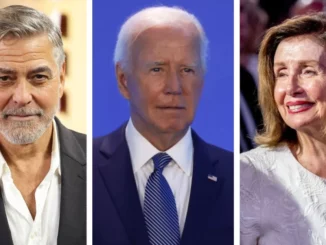
  • Pelosi raises doubts about Biden’s presidential race, Clooney asks him to end campaign

    Pelosi raises doubts about Biden’s presidential race, Clooney asks him to end campaign

    WASHINGTON, D.C. (TIP): US President Joe Biden must decide quickly whether to stay in the 2024 White House race, former House Speaker Nancy Pelosi, a long-time Biden ally, said on Wednesday, July 10, while declining to say definitively that she wanted him to run, says a Reuters report.

    In an opinion piece published on Wednesday in the New York Times, Hollywood star George Clooney, a Democrat who co-hosted a fundraiser for Biden last month, withdrew his support.

    Pelosi’s remarks, which ignored Biden’s repeated insistence that he remains in the race, suggested he could face a fresh wave of doubts from fellow Democrats.

    For nearly two weeks the 81-year-old Biden has sought to stem defections by Democratic lawmakers, donors and other allies worried he might lose the Nov 5 vote to Republican Donald Trump, 78, after Biden’s halting June 27 debate performance.

    Pelosi said on MSNBC she was encouraging her colleagues on Capitol Hill with concerns about Biden to refrain from airing them while he hosts NATO leaders in Washington this week.

    “I’ve said to everyone: let’s just hold off. Whatever you’re thinking, either tell somebody privately, but you don’t have to put that out on the table until we see how we go this week,” she said, describing Biden’s strong remarks at the NATO summit on Tuesday as “spectacular”. “We’re all encouraging him to make that decision because time is running short.”

    In his opinion piece, Clooney wrote: “It’s devastating to say it… He wasn’t even the Joe Biden of 2020. He was the same man we all witnessed at the debate,” Clooney wrote. “We are not going to win in November with this president. On top of that, we won’t win the House, and we’re going to lose the Senate.”

  • China tells NATO not to create chaos in Asia and rejects label of ‘enabler’ of Russia’s Ukraine war

    China tells NATO not to create chaos in Asia and rejects label of ‘enabler’ of Russia’s Ukraine war

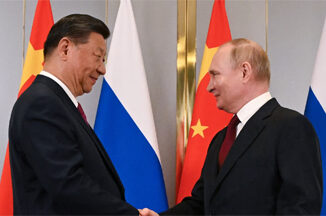
    BEIJING (TIP): China accused NATO on July 11 of seeking security at the expense of others and told the alliance not to bring the same “chaos” to Asia, a reflection of its determination to oppose strengthening ties between NATO members and Asian nations such as Japan, South Korea and the Philippines.
    The statement by a Foreign Ministry spokesperson came a day after NATO labelled China a “decisive enabler” of Russia’s war against Ukraine.
    “NATO hyping up China’s responsibility on the Ukraine issue is unreasonable and has sinister motives,” spokesperson Lin Jian said at a daily briefing. He maintained that China has a fair and objective stance on the Ukraine issue.
    China has broken with the United States and its European allies over the war in Ukraine, refusing to condemn Russia’s invasion or even to refer to it as an act of aggression in deference to Moscow. Its trade with Russia has grown since the invasion, at least partially offsetting the impact of Western sanctions.
    NATO, in a statement issued at a summit in Washington, said China has become an enabler of the war through its “no-limits partnership” with Russia and its large-scale support for Russia’s defense industrial base.
    Lin said China’s trade with Russia is legitimate and reasonable and based on World Trade Organization rules.
    He said NATO’s “so-called security” comes at the cost of the security of other countries. China has backed Russia’s contention that NATO expansion posed a threat to Russia, whose attack on Ukraine has only strengthened the alliance, leading to Sweden and Finland becoming formal members.
    China has expressed concern about NATO’s budding relationships with countries in the Indo-Pacific region. Australia, New Zealand, Japan and South Korea sent their leaders or deputies to the NATO summit this week.
    “China urges NATO to…stop interfering in China’s internal politics and smearing China’s image and not create chaos in the Asia-Pacific after creating turmoil in Europe,” Lin said.
    Chinese troops are in Belarus this week for joint drills near the border with Poland, a NATO member. The exercises are the first with Belarus, an ally of Russia, with which it shares a single-party system under President Alexander Lukashenko, whose regime cracked down brutally on 2020 mass protests against his rule,
    Lin described the joint training as a normal military operation that is not directed at any particular country.
    China is a key player in the Shanghai Cooperation Organization, which includes a strong military element involving Russia and several Central Asian nations, India and, most recently, Belarus.
    That is seen as creating a bulwark against Western influence in the region, but also tensions over rising Chinese influence in what Russia considers its political backyard made up of former parts of the Soviet Union, which included Belarus.
    Earlier this month, Putin and Chinese President Xi Jinping attended a meeting of leaders or top officials from the 10 SCO countries in Kazakhstan, at which Putin reiterated his demand that Ukraine withdraw its troops from parts of the country occupied by Russia. Ukraine has firmly rejected that, along with a Chinese peace proposal that makes no mention of the return of Ukrainian territory to the government in Kyiv.
    China and Russia have closely aligned their foreign policies to oppose the West, even as Russia grows increasingly reliant on China as a purchaser of its oil and gas, that make up the bulk of its foreign trade. (AP)

  • Reforming UN for a rules-based order

    Reforming UN for a rules-based order

    Primary reason for the ongoing crises in Ukraine and Gaza is an ineffective Security Council

    The need to urgently reform the rules-based order has to be pursued through informal multiple-stakeholder consultations in the lead-up to the UN’s Summit of the Future, due in September. Using dialogue and diplomacy to convene a General Conference of the UN in 2025, the objective should be to give the ‘primary responsibility’ for peace, security and development to the equitable and representative UNGA.

    “The UNSC’s decisions since 1946 have been consistently taken in the light of geopolitical priorities of its P5 members and not any commitment to world peace. This was the pattern during the ideological confrontation of the Cold War (1946-1991). After the Cold War, the three NATO members of the P5 (France, the UK and US) acted to make the NATO supplant the UNSC, symbolized by their action in Libya in 2011. The UNSC subsequently proved helpless in preventing NATO’s weaponization of globalized economic linkages through unilateral sanctions, which have primarily affected developing countries. The outcome has been the intensification of armed conflicts, impacting not only the integrity of the UNSC but also more than two billion people mainly in the Global South, according to the UN.”

    By Asoke Mukerji

    The breakdown of the ‘rules-based order’ is evident from the spread of violent conflicts that are fracturing international relations. At the heart of this order is the United Nations Security Council (UNSC), which is mandated by the UN Charter with the ‘primary responsibility’ of maintaining international peace and security. The Charter stipulates that UNSC decisions are binding on all UN member-states. The widening gap between decision-making by the UNSC and the challenges to peace, security and development on the ground is directly responsible for the ongoing crises. The priority for the international community is to eliminate this gap through a review and reform of the rules-based order. This can only be done through the UN General Assembly (UNGA), in which all states, big and small, are represented on an equal basis.

    Now, 20 million Afghan women live under ‘gender apartheid’. The UNSC was unable to ensure compliance with its decision of 2015, guaranteeing Ukraine’s territorial integrity.

    The UNSC’s decision-making parameters were negotiated between August 1944 and February 1945 among the Council’s five ‘permanent’ members or the P5 (today’s Russia, China, France, the UK and the US). A key feature was the requirement for the ‘concurrence’ (popularly known as the veto) of the P5 to UNSC decisions. Both the composition of the P5 and their veto power were ‘parachuted’ into the UN Charter as non-negotiable pre-conditions in the invitation extended to countries for participating in the San Francisco conference (April-June 1945) to adopt the Charter. During the conference, some countries objected to the non-democratic veto provision. Addressing the first session of the UNGA on January 18, 1946, India said it had agreed to the consensus on the Charter on the basis of a compromise. The compromise, contained in Article 109 of the Charter, was to convene a UN General Conference to review the Charter’s provisions 10 years after it was adopted. So far, such a General Conference has not taken place.

    The UNSC’s decisions since 1946 have been consistently taken in the light of geopolitical priorities of its P5 members and not any commitment to world peace. This was the pattern during the ideological confrontation of the Cold War (1946-1991). After the Cold War, the three NATO members of the P5 (France, the UK and US) acted to make the NATO supplant the UNSC, symbolized by their action in Libya in 2011. The UNSC subsequently proved helpless in preventing NATO’s weaponization of globalized economic linkages through unilateral sanctions, which have primarily affected developing countries. The outcome has been the intensification of armed conflicts, impacting not only the integrity of the UNSC but also more than two billion people mainly in the Global South, according to the UN.

    The recent track record of the UNSC in failing to uphold a rules-based order illustrates the urgent need for reforming its mandated role. On August 15, 2021, the UNSC was unable to enforce compliance with its own unanimous decision of March 10, 2020, linking US/NATO troop withdrawal with a politically inclusive government in Afghanistan. Today, 20 million Afghan women live under ‘gender apartheid’. On February 22, 2022, the UNSC was unable to ensure compliance with its decision of February 17, 2015, guaranteeing Ukraine’s territorial integrity and sovereignty in return for the devolution of political power to its restive eastern regions under the Minsk Agreements. The resulting violent conflict between Russia and Ukraine (which is supported externally by NATO) has ruined millions of lives physically and socio-economically. On October 7, 2023, the UNSC was unable to make member-states comply with its numerous resolutions, including No. 2334 of December 23, 2016, on the Israel-Palestine issue. The conflict has led to the death of thousands of women and children.

    In an ideal rules-based order, the UNGA should be responsible under the Charter for maintaining international peace and security. Since 2015, all UN member-states, including the P5, have accepted the interlinkage between peace, security and development. However, the Charter was deliberately drafted to make UNGA decisions recommendatory and non-binding on UN member-states. It prevents the UNGA from considering issues that are on the agenda of the UNSC. Even a UNGA decision to amend the Charter (and reform the UNSC) is hostage to a P5 veto under Article 108 of the Charter. The cart is put before the horse.

    The UNGA has tried to overcome these handicaps by prioritizing its work mandating negotiations of treaties to create a rules-based order. Such treaties include the Convention on Genocide (1948); the Convention on outlawing Racial Discrimination (1965); the International Covenant on Civil and Political Rights (1966); the Convention on Elimination of All Forms of Discrimination against Women (1979); the Convention on the Law of the Sea (1982); and the Convention on the Rights of the Child (1989). Participating states are expected to uphold their treaty obligations to achieve the principles and objectives of the Charter.

    A similar approach marks UNGA decisions recommending norms for member-states to use in adopting national legislation. The first such document, adopted unanimously by the UNGA on December 10, 1948, was the Universal Declaration of Human Rights. On September 25, 2015, the UNGA adopted Agenda 2030 on Sustainable Development with its 17 SDGs (Sustainable Development Goals), the first universally applicable normative global policy framework interlinking peace, security, development and environmental protection.

    The assertion by world leaders at the UN SDG Summit on September 18-19, 2023, that numerous crises had put the implementation of the SDGs into peril deserves to be taken seriously. The primary reason for these crises is an ineffective UNSC, whose unanimously mandated reform has been assiduously blocked in informal UNGA negotiations by the P5 since 2008.

    The need to urgently reform the rules-based order has to be pursued through informal multiple-stakeholder consultations in the lead-up to the UN’s Summit of the Future, due in September. Using dialogue and diplomacy to convene a General Conference of the UN in 2025, the objective should be to give the ‘primary responsibility’ for peace, security and development to the equitable and representative UNGA.
    (The author is a former Permanent Representative of India to the United Nations)

  • Indian American national security expert Krystle Kaul running for US Congress

    Indian American national security expert Krystle Kaul running for US Congress

    WASHINGTON, D.C. (TIP): Krystle Kaul, an Indian American foreign policy and national security expert with roots in Kashmir, has announced that she will run for the US House of Representatives from a Congressional district in Virginia with a focus on core issues like public safety, education and healthcare.
    Kaul, if elected in 2024, would be only the second Indian American woman to be elected to the House of Representatives after Congresswoman Pramila Jayapal.
    Pramila Jayapal’s sister Susheela Jayapal has also thrown her hat in the race to the Congress from the third Congressional District of Oregon.
    Both Kaul and Susheela Jayapal, from the Democratic Party, will have to win the party’s primary next year to bag the party’s nomination for the November 2024 general elections.
    Fluent in eight languages, including Hindi, Punjabi, Dari, Urdu and Arabic, Kaul, the first Kashmiri-origin person to ever run for Congress, said her decision to run for the 10th Congressional District of Virginia came after Democratic Congresswoman Jennifer Wexton who has represented the constituency since 2019 announced her decision not to seek re-election. Kaul has spent her professional life in the national security establishment from the Pentagon to think tanks and the defense industry.
    She said education, healthcare and public Safety are the “three core issues” she would focus on in her campaign.
    The 10th Congressional District of Virginia encompasses parts of Virginia that have one of the highest concentrations of Indian Americans and South Asians in the state, like Loudoun County, Fairfax County and Prince Williams County. Elaborating on her promises to the electorate, she said: “The first foremost being is education…The second one is improving our healthcare system here. “We have a lot of small business owners and just making healthcare more affordable and more accessible. So, from prescription drugs to seeing specialists, that is something that is a concern. And the third is public safety, making sure we have safe neighborhoods, safe schools, safe communities,” Kaul, who is in her late thirties, told PTI in a recent interview.
    Kaul said when it comes to national security, she would take a very strong stance on counter-terrorism.
    As a child, at her home in Long Island, where she grew up, she very often heard stories about the conflict in Kashmir from her father.
    “..that was when my father was sharing accounts of the tension in Kashmir. I was very interested in learning more about Kashmir. I made it a point to focus my studies on understanding the conflict there…,” she said.
    “I had a desire to eventually run for Congress. But obviously, it’s a path. It’s a journey to get there. So, I first devoted my studies, my first three degrees, to understanding diplomacy, negotiation, political science, and all the theory that you need to understand,” she said.
    “So, I have fallen in the footsteps of (Congresswoman) Abigail Spanberger (a former CIA officer). There are about nine democrats who have entered Congress with prior service in the Department of Defense… several of whom I know personally as well,” she said.
    Kaul, who has travelled to more than 70 countries, was born and raised in Long Island, New York.
    Her father, who is from Safapora in Kashmir, came to the US at the age of 26. Her mother, a Punjabi from Delhi, migrated at the age of seven.
    “My father has worked in the insurance business and my mother has done work in real estate,” she said.
    After Long Island in New York, Kaul spent a few years in Wayne, New Jersey where she attended Vidyapith as a kid and she studied Sanskrit Vedic heritage, Hindi, mythology, the religion.
    She shifted to Washington DC when she was 17 for a college education.
    She graduated with a B A from American University, MAs from Brown University and Johns Hopkins University (SAIS) and has a PhD in Political Science in progress at Brown University.
    A national leader in the defense and intelligence community, she served as a Director (GS-15) of the Defense Threat Reduction Agency at the Department of Defense, the Director of Strategic Communications of the US Air Force and NATO for General Dynamics Information Technology, and as an Intelligence Political-Military Expert at US Central Command. “The majority of my career has been with the Department of Defense. I worked for a number of large defense contractors and consulting firms, including Deloitte, General Dynamics, Lidos, and Booz Allen Hamilton,” she said. The announcement that she is running for Congress has created a buzz in the Indian American community. “Very positive. I have a great deal of support from several organizations that back Indian American candidates, that back South Asian American candidates across the country,” she said, describing it as an outpouring of support.

  • Turkish voters weigh final decision on next president as Erdogan bids to retain power

    Turkish voters weigh final decision on next president as Erdogan bids to retain power

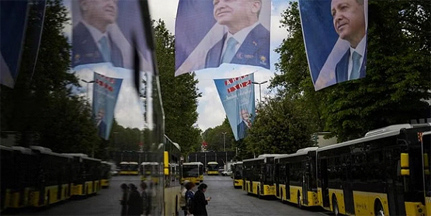
    ANKARA (TIP): Two opposing visions for Turkey’s future are on the ballot when voters return to the polls on May 22 for a runoff presidential election that will decide between an increasingly authoritarian incumbent and a challenger who has pledged to restore democracy.
    President Recep Tayyip Erdogan, a populist and polarising leader who has ruled Turkey for 20 years, is well positioned to win after falling just short of victory in the first round of balloting on May 14.
    He was the top finisher even as the country reeled from sky-high inflation and the effects of a devastating earthquake in February.
    Kemal Kilicdaroglu, the leader of Turkey’s pro-secular main opposition party and a six-party alliance, has campaigned on a promise to undo Erdogan’s authoritarian tilt.
    The 74-year-old former bureaucrat has described the runoff as a referendum on the direction of the strategically located NATO country, which is at the crossroads of Europe and Asia and has a key say over the alliance’s expansion. “This is an existential struggle. Turkey will either be dragged into darkness or light,” Kilicdaroglu said.
    “This is more than an election. It has turned into a referendum.”
    In a bid to sway nationalist voters ahead of Sunday’s runoff, the normally soft-mannered Kilicdaroglu (pronounced KEH-lich-DAHR-OH-loo) shifted gears and hardened his stance, vowing to send back millions of refugees if he is elected and rejecting any possibility of peace negotiations with Kurdish militants.
    The social democrat had previously said he planned to repatriate Syrians within two years, after establishing economic and safety conditions conducive to their return.
    He has also repeatedly called on 8 million people who stayed away from the polls in the first round to cast votes in the make-or-break runoff.
    Erdogan scored 49.5 per cent of the vote in the first round. Kilicdaroglu received 44.9 per cent. At 69, Erdogan is already Turkey’s longest-serving leader, having ruled over the country as prime minister since 2003 and as president since 2014. He could remain in power until 2028 if reelected.Under Erdogan, Turkey has proven to be an indispensable and sometimes troublesome NATO ally.
    It vetoed Sweden’s bid to join the alliance and purchased Russian missile defence systems, which prompted the United States to oust Turkey from a US-led fighter jet project.
    Yet together with the UN, Turkey also brokered a vital deal that allowed Ukraine to ship grain through the Black Sea to parts of the world struggling with hunger.
    This week, Erdogan received the endorsement of the nationalist third-place candidate, Sinan Ogan, who garnered 5.2 per cent of the vote.
    The move was seen as a boost for Erdogan even though Ogan’s supporters are not a monolithic bloc and not all of his votes are expected to go to Erdogan.
    Erdogan’s nationalist-Islamist alliance also retained its hold on parliament in legislative elections two weeks ago, further increasing his chances for reelection as many voters are likely to want to avoid a split government.
    On Wednesday, the leader of a hard-line anti-migrant party that had backed Ogan threw its weight behind Kilicdaroglu after the two signed a protocol pledging to send back millions of migrants and refugees within the year. Kilicdaroglu’s chances of turning the vote around in his favour appear to be slim but could hinge on the opposition’s ability to mobilise voters who did not cast ballots in the first round.
    “It’s not possible to say that the odds are favouring him, but nevertheless, technically, he stands a chance,” said Professor Serhat Guvenc of Istanbul’s Kadir Has University.
    If the opposition can reach the voters who previously stayed home, “it may be a different story.” In Istanbul, 45-year-old Serra Ural accused Erdogan of mishandling the economy and said she would vote for Kilicdaroglu.
    She also expressed concerns over the rights of women after Erdogan extended his alliance to include Huda-Par, a hard-line Kurdish Islamist political party with alleged links to a group that was responsible for a series of gruesome killings in the 1990s.
    The party wants to abolish mixed-gender education, advocates for the criminalisation of adultery and says women should prioritize their homes over work.
    “We don’t know what will happen to women tomorrow or the next day, what condition they’ll be in,” she said. (AP)

  • Conflict reflects wider global rivalries

    Conflict reflects wider global rivalries

    It is evident that both Russia and the US have done little to end the conflict in Ukraine. India has offered to join efforts to resolve the crisis amidst western concerns over an emerging Russia-China understanding on the road ahead. The US has rejected Chinese offers of mediation.

    “It is evident that both Russia and the US have done little to end the conflict in Ukraine. India has offered to join efforts to resolve the conflict amidst western concerns over an emerging Russia-China understanding on the road ahead. The US has rejected Chinese offers of mediation. Moreover, Russia will not agree to any solution which involves it losing control of its vital and historical access to the sea in Crimea. There should also be restoration of peace and harmony between Russians and Ukrainians living in southern Ukraine. It would be helpful if access to the port city of Odessa remains open for use internationally.”

    By G Parthasarathy

    Following years of inept and confused leadership by the then President Mikhail Gorbachev, the Soviet Union fell apart, resulting in its former constituent republics attaining full independence on December 26, 1991. An interesting aspect of this collapse was that large numbers of Russians continued living in virtually all erstwhile Soviet republics. Thousands of Russians still remain in their old homes, and the Russian language remains widely spoken in virtually every former Soviet republic.

    Erstwhile Soviet republics have, however, enhanced cooperation with other neighbors. Interestingly, the predominantly Muslim ones – Kazakhstan, Kyrgyzstan, Tajikistan and Uzbekistan – are members of the Shanghai Cooperation Organisation, while Azerbaijan is a dialogue partner. Historical ties with Russia, even today, play an important role across Central Asia. Russia’s western neighbors generally see greater benefit of cooperation with prosperous countries of western Europe, ranging from France and Germany to Norway, Sweden and Finland.

    Russia has no reason to object to the Soviet Union’s former European Republics (on its northern and western borders) seeking closer ties with their European neighbors, including France and Germany. Its genuine concerns arise when these neighbors enter into military alliances with the US and NATO. The principal aim of the US role in NATO is perceived as being aimed at ‘surrounding and containing’ Russia.

    The recent escalation of tensions in Europe has arisen from the sudden regard and affection of US President Joe Biden for the leadership of the young and relatively inexperienced Ukrainian President Volodymyr Zelenskyy. What has, thereby, emerged in recent years has been Ukraine’s growing security ties with the US. This has resulted in Ukraine being provided sophisticated weapons intended to give Kyiv the capabilities to challenge Russian land and maritime security interests, and pursue its own territorial ambitions on its southern shores.

    The main territorial dispute between Russia and Ukraine over the Crimean Peninsula continues. Crimea has been ruled by the Russian Black Sea Fleet since 1783. It has, thus, historically been under Russian, and not Ukrainian sovereignty, for well over two centuries now. Moreover, while Russia has sought unfettered access to the port of Odessa, it has not succeeded in this effort. But, it would be sensible if Black Sea ports are used by both countries, which do ultimately share an interest in maritime trade.

    This is particularly important for crucial wheat supplies from Ukraine and Russia to West Asia and Africa. Odessa has also been, for long, the most well-located port for India’s trade with both Ukraine and Russia. Any peace solution would naturally have to bear in mind the reality that under no circumstances will Russia agree to compromise its crucial national interests in Crimea. Moscow also has a natural interest in strengthening its historical access to the Black Sea port of Odessa.

    Tensions between Ukraine and Russia flared up when Zelenskyy was elected President of Ukraine in 2019. Zelenskyy believed that he could assert his independence from Russia through close ties with the Biden administration. During his visit to Washington in 2021, he signed a joint declaration with President Biden; it was laced with strong anti-Russian rhetoric. The joint declaration said: “Unwavering commitment to Ukraine’s sovereignty, independence and territorial integrity within its internationally recognized borders, including Crimea, and extending to its territorial waters in the face of Russian aggression.” This was an assurance of support to Ukraine for actions which would undermine Russia’s access to the sea in Crimea. This was accompanied by rapid transfer of sophisticated US military hardware to Ukraine.

    Russian President Vladimir Putin ordered his troops into southern Ukraine in February 2022 with the evident objective of seizing the cities of Luhansk and Donetsk by declaring them independent states. He, thereby, established Russia’s control over areas where the Russians are well positioned.

    There are an estimated 7.7 million Russians in Ukraine, which has a total population of 43.3 million. The Russian population resides predominantly in six southern areas of Ukraine which control Russia’s access to the sea in Crimea. The Russian Black Sea Fleet has historically been Russia’s gateway to the Black Sea, the Sea of Azov and the Mediterranean Sea.

    The poorly planned Russian military response that followed the Biden-Zelenskyy declaration, combined with massive US and NATO arms assistance to Ukraine, has threatened the historical and only Russian access to its southern seas. Russia had expected that it would rapidly take over large tracts of Ukraine, especially in Russian-dominated parts of southern Ukraine — from Crimea to Odessa. Fierce Ukrainian resistance, bolstered by arms support from the US and its NATO allies, blocked Russia’s moves westwards. More importantly, Russian positions in southern Ukraine remain under constant attack.

    Over 14 million Ukrainians have been displaced so far, with seven million now in neighboring countries. Casualties on both sides are estimated at around 3,00,000 killed or wounded. Worse still, there is substantial reason to believe the allegations, reinforced by writings of veteran American investigative journalist Seymour Hersh, that in September 2022, the Biden administration destroyed two undersea oil pipelines carrying Russian gas. This was a gross violation of the international law that requires a thorough investigation.

    It is evident that both Russia and the US have done little to end the conflict in Ukraine. India has offered to join efforts to resolve the conflict amidst western concerns over an emerging Russia-China understanding on the road ahead. The US has rejected Chinese offers of mediation. Moreover, Russia will not agree to any solution which involves it losing control of its vital and historical access to the sea in Crimea. There should also be restoration of peace and harmony between Russians and Ukrainians living in southern Ukraine. It would be helpful if access to the port city of Odessa remains open for use internationally.

    (The author is Chancellor, Jammu Central University & India’s former High Commissioner to Pakistan)

  • Biden’s Kyiv visit

    Hardening of battle lines ominous for the world

    The strategic visit by US President Joe Biden to Kyiv, days before the first anniversary of the Russian war on Ukraine, has only hardened the battle lines and made it obvious that America is in no mood to facilitate an early resolution of Europe’s biggest conflict since World War II. Even as Biden and Ukrainian President Volodymyr Zelenskyy walked together to a cathedral, the US State Department announced an additional $460-million aid to Ukraine, including artillery ammunition, anti-armor systems and air defense radars worth $450 million and the rest for energy infrastructure. Ukraine is set to receive large supplies of western weaponry over the next few months in an attempt to sharpen its counteroffensive, leaving no room for doubt that this war is not going to end anytime soon.

    Biden is busy doing chest-thumping and saber-rattling on European soil; in his opinion, Russian President Vladimir Putin was ‘dead wrong’ in presuming that ‘Ukraine was weak and the West was divided.’ A defiant Putin has reaffirmed that sanctions-hit Moscow is ready for the long haul, even as he has accused the US-led West of stoking a global war to destroy Russia. Biden’s overzealousness has also given China, a key Russian ally, ample fodder to take potshots at the US. Beijing has urged ‘certain countries’ to immediately stop fueling the fire. Not to be left behind, Zelenskyy has warned that a world war would break out if China supports Russia militarily against Ukraine.

    Given the geopolitical complications, the volatile situation is inevitably going to worsen. It is clearly evident to the international community that the US is no peacemaker and can never be one. Indeed, it was America’s overreach for NATO’s eastern expansion that provoked Russia and led to the invasion of Ukraine a year ago. Countries such as India, the current G20 president, need to play a proactive role in bringing both sides to the negotiating table and calling out the nations that are hell bent on prolonging this mutually destructive war and jeopardizing world peace.

    (Tribune, India)

  • Russia’s spring offensive is the key

    Russia’s spring offensive is the key

    About 50,000 of Russia’s newly mobilized troops are already at the front and another 2,50,000 are under training. The occupation of the Luhansk and Donetsk regions will continue, but a major Russian breakthrough is less likely.

    “The steady flow of arms and equipment through its western borders into Ukraine has greatly aided its war effort. However, President Volodymyr Zelenskyy’s desperate calls for fighter jets (about 200-odd F-16s) remain unheeded so far. The UK and Germany are providing a meagre squadron worth each of Challenger and Leopard 2 tanks and the US, while citing the extensive training and maintenance required, is expected to send about 30 M1 Abrams tanks. However, a missing element for offensive operations is air power which is unlikely to materialize anytime soon. The visit of the US President to Kyiv was highly symbolic and came with the promise of providing ammunition and air defense radars as well as further sanctions on Russia, but it fell short of Zelenskyy’s wish list of weapon systems and aircraft. The Munich security conference was in much the same vein, with the UK baulking at directly supplying fighter jets.”

    By Lt Gen Pradeep Bali (retd)

    President Vladimir Putin launched Russia’s invasion of Ukraine in the early hours of February 24, 2022, describing it as a ‘special military operation’ with the aim to ‘demilitarize and de-Nazify Ukraine’ and stop the ‘genocide’ of ethnic Russians in eastern Donbas. Moscow-backed separatists had tried to break away from Kyiv’s control by setting up the Donetsk and Luhansk People’s Republic and were opposed by groups like the Azov Regiment, rooted in far-right ideology. Putin also linked the invasion to checking NATO’s eastward expansion for gaining a ‘military foothold’ in Ukraine.

    A refreshingly honest comment about this war came from the Pontiff in Rome. Pope Francis remarked that Moscow’s invasion of Ukraine was ‘perhaps somehow provoked’ as he recalled a conversation with a head of state who had mentioned to him that NATO was “barking at the gates of Russia”. The Pope also warned against what he said was a fairy-tale perception of the conflict as a battle of good versus evil.

    There have been no serious attempts to curtail this conflict by the West by acknowledging Russian security concerns in its immediate neighborhood. However, within NATO itself there are discordant voices colored by dependence of some member countries on Russian energy exports. While direct talks between the Russian and Ukrainian Presidents have been suggested by India, among others, a few nations, including Turkey, had made offers of mediation. Apart from death and destruction, this war has led to an acute food shortage in many countries as Ukraine and Russia are major exporters of foodgrains and the conflict has disrupted supply chains. Russia is also an exporter of energy to Europe and has cut oil and gas supplies in response to sanctions, fueling inflation and increased cost of living.

    The US, UK, European Union, Japan and Australia, among others, have all backed Kyiv with military aid worth billions of dollars. Many NATO allies have been at the forefront of efforts to arm Kyiv with weaponry for repelling Russia’s forces.

    Russia’s main supporter is its neighbor and close ally, Belarus, whose territory was also used as a launch pad for the invasion and it is now providing considerable ammunition stocks for Russian forces. Many other countries, including China, India and Turkey, have avoided openly supporting either side.

    At the commencement of the invasion, Russia deployed about 2,00,000 soldiers into Ukraine from the north, east and south. After the Russian advance faltered, its troops regrouped in Ukraine’s east and Putin recast the Kremlin’s goal as ‘the liberation of Donbas’. By September, Moscow had annexed four partly occupied territories – Donetsk, Luhansk, Kherson and Zaporizhia. Meanwhile, the Ukrainian forces, aided by western arms supplies, were busy staging counterattacks. By mid-November, they had recaptured the southern city of Kherson. Since then, both sides have been locked in bloody battles for the control of territory in the Donbas.

    This year, the key determinant will be the fate of Russia’s spring offensive. About 50,000 of its newly mobilized troops are already at the front and another 2,50,000 are under training. The occupation of the Luhansk and Donetsk regions will continue, but a major Russian breakthrough is less likely. A continuation of current tactics, slow grinding of Ukrainian forces on limited fronts and a steady advance while targeting Ukrainian energy infrastructure and heavy artillery and missile barrages in the rear, will mark this war of attrition.

    Crossing over to the east side of the Dnipro River to pressure Russia’s vulnerable road and rail links into Crimea might be too demanding. But the possibility of Kyiv launching a surprise new offensive can never be ruled out.

    For the Ukrainians, the strategically valuable direction is south, to Melitopol or Berdyansk, aiming to cut the Russian mainland corridor to Crimea. That would be a major Ukrainian victory, and that is exactly why the Russians are fortifying Melitopol.

    A short and unstable ceasefire is the only other prospect. Putin has made it clear that he will not stop and Ukraine has asserted that it is fighting to recapture what has been lost, including the Crimea. This is an intense contest in political, economic, diplomatic and military domains. It is hard to escape the sense that as 2022 came to a close, an ‘iron curtain’ had once again been drawn across Europe, but this time from the West, aiming to contain Russia. Despite Russia’s sizeable budget deficit and other impacts of western sanctions, Moscow will probably have enough reserves and money to keep its war against Ukraine going. This does not mean the sanctions imposed by the West are not effective but only that it would be “naive to think that sanctions alone could end the war,” in the words of Harvard economist Kenneth Rogoff.

    The steady flow of arms and equipment through its western borders into Ukraine has greatly aided its war effort. However, President Volodymyr Zelenskyy’s desperate calls for fighter jets (about 200-odd F-16s) remain unheeded so far. The UK and Germany are providing a meagre squadron worth each of Challenger and Leopard 2 tanks and the US, while citing the extensive training and maintenance required, is expected to send about 30 M1 Abrams tanks. However, a missing element for offensive operations is air power which is unlikely to materialize anytime soon.

    The visit of the US President to Kyiv was highly symbolic and came with the promise of providing ammunition and air defense radars as well as further sanctions on Russia, but it fell short of Zelenskyy’s wish list of weapon systems and aircraft. The Munich security conference was in much the same vein, with the UK baulking at directly supplying fighter jets. As far as India is concerned, Prime Minister Modi’s advice to Putin, “Today’s era is not an era of war”, should be a pointer for Indian diplomacy to take the lead in resolving this conflict. New Delhi needs to reach out to the major players as a mediator. Its long-standing strategic ties with Russia, an ostensibly neutral stance with no ulterior motives unlike China, combined with its capabilities and capacities as the G20 president, make it ideally suited for this role. Ukraine Foreign Minister Dmytro Kuleba had stated as much in what was nothing short of a direct invitation. The Ukraine war offers our diplomacy an ideal opportunity to play the roles of a peacemaker and a dealmaker.

    (The author is a Strategic Analyst)


  • Erdogan says Turkey positive on Finland’s NATO bid, not Sweden’s

    Erdogan says Turkey positive on Finland’s NATO bid, not Sweden’s

    Ankara (TIP): Turkey looks positively on Finland’s application for NATO membership, but does not support Sweden’s bid, Turkish President Tayyip Erdogan said on February 1.
    “Our position on Finland is positive, but it is not positive on Sweden,” Erdogan said of their NATO applications in a speech to his AK Party deputies in parliament.
    Sweden and Finland applied last year to join the trans-Atlantic defence pact after Russia invaded Ukraine, but faced unexpected objections from Turkey and have since sought to win its support.
    Ankara wants Helsinki and Stockholm in particular to take a tougher line against the Kurdistan Workers’ Party (PKK), which is considered a terror group by Turkey and the European Union, and another group it blames for a 2016 coup attempt.
    The three nations reached an agreement on a way forward in Madrid last June, but Ankara suspended talks last month as tensions rose following protests in Stockholm in which a far-right Danish politician burned a copy of the Muslim holy book, the Koran.
    “Sweden should not bother to try at this point. We will not say ‘yes’ to their NATO application as long as they allow burning of the Koran,” Erdogan said.
    Sweden’s Foreign Minister said there could be no compromise over freedom of speech, but that Sweden would continue to implement the Madrid agreement.
    “It is very clear what is necessary for Sweden to become a member of NATO and that is that we meet the requirements which are present in the trilateral agreement,” he told national news agency TT.
    “Religion is not part of the agreement.”
    At the weekend, Erdogan signalled that Ankara could agree to Finland joining NATO ahead of Sweden. But Finland’s Foreign Minister Pekka Haavisto said on Monday his country was sticking to its plan to apply jointly with Sweden.
    Of NATO’s 30 members, only Turkey and Hungary are yet to ratify the Nordic countries’ memberships.
    Asked whether Turkey had plans for separate processes for Finland and Sweden, Turkish Foreign Minister Mevlut Cavusoglu said it was NATO and the two Nordic countries who would decide on any separate ratifications.
    “If NATO and the two countries decide for separate membership processes, Turkey will of course reconsider Finland’s membership separately and more favourably,” Cavusoglu said at a news conference with his Estonian counterpart in Tallinn.
    Finland on Wednesday repeated its position that it will move in step with its Nordic neighbour.
    “Finland continues to advance the membership process together with Sweden,” the joint presidential and government committee on Finnish security and foreign policy said in a statement.
    “The fastest possible realisation of both countries memberships is in the best interest of Finland, Sweden and the whole NATO,” it added. Reuters

  • Europe’s wars inseparable from profiteering

    Europe’s wars inseparable from profiteering

    As the demand for guns surges, profit too skyrockets with the sale of every weapon or machine. Thus, the enterprise of military hardware production and sale becomes too tempting and lucrative to be eschewed, as after a long gap a ‘real’ war has come to European soil, where big-buck investments and astronomical profits are being made. Shortage of food facilitates profiteering too.

    “The prolonged Russia-Ukraine war lays bare the stark reality that even an immoral war is good for the moral and ethical health of the West because through wreckage, blood, sweat and tears of widows, destitute and orphans emerge countless opportunities for wealth creation and open plunder by merchants and middlemen. Shortage of food facilitates profiteering too, the way it happened in the 1943 Great Bengal famine, killing 3 million people amid the World War II inflicted by Europe on the world.”

    By Abhijit Bhattacharyya

    On  the eve of the Russian invasion of Ukraine in February last year, UK Defense Secretary Ben Wallace had exclaimed, “The Scots Guards kicked the backside of Tsar Nicholas I in the 1853 Crimea War and we can always do it again,” comparing the 21st-century Russia-Ukraine conflict with the 19th-century war. The Tsar had been pitted against the combined might of England, France and the Ottoman Empire. The Russian defeat of yore and the lack of an international ally were sarcastically invoked to draw a parallel and warn Moscow to watch out for history repeating itself.

    What the British Defense Secretary said was neither unsurprising nor unique. War has always had a macabre fascination for Europe. The gory combats and their inglorious consequences have been used to portray the grandeur of the warring West. Most of Europe’s eminent and enlightened scholars, intellectuals and philosophers have been fascinated with, and have spoken eloquently on, the importance of power, war and violence.

    Machiavelli pointedly stated, “All armed prophets have conquered and unarmed ones failed.” To him, war, power and hypocrisy are connected. For Thomas Hobbes, conflict emerges from the impulse of self-preservation, thereby making life a “war of all against all” and resulting in it being “solitary, poor, nasty, brutish and short”. The views of Jean-Jacques Rousseau on the power of the state influenced global politics. His ‘Discourse on Inequality’, according to Voltaire, was “against the human race”. Georg Wilhelm Friedrich Hegel unabashedly admired Napoleonic wars and thought that it was a good thing to have wars from time to time. In all these expressions of the European mindset, one thing is clear. There is an element of axiomatic intellectual honesty about justifying, propounding or defending political dishonesty which appears preferable to the hypocrisy of depicting political polemics as an honest and noble enterprise. In this context, the prolonged Russia-Ukraine war lays bare the stark reality that even an immoral war is good for the moral and ethical health of the West because through wreckage, blood, sweat and tears of widows, destitute and orphans emerge countless opportunities for wealth creation and open plunder by merchants and middlemen. Shortage of food facilitates profiteering too, the way it happened in the 1943 Great Bengal famine, killing 3 million people amid the World War II inflicted by Europe on the world.

    As the demand for guns surges, profit too skyrockets with the sale of every weapon or machine. Thus, the enterprise of military hardware production and sale becomes too tempting and lucrative to be eschewed, as after a long gap a ‘real’ war has come to European soil, where big-buck investments and astronomical profits are being made.

    Further, if the war is between powerful belligerents, soaring profit is guaranteed because both possess the wherewithal to sustain a protracted conflict. In contrast, smaller wars in Third World countries reduce profitability as they are less destructive. Thus, the end of the 20-year-old Afghan war in August 2021 inflicted huge losses on arms and ammunition manufacturers. Undoubtedly, Russia is in the wrong. And the criticism thereof is justified. Nevertheless, Russian wrongs also raise a question. Why is Moscow pursuing this seemingly irreversible, hostile path? Although one-third of the answer was given by the British Defense Secretary with his comment on the 1853 Crimea War, it nevertheless leaves two-thirds unanswered, which lies in what happened in the 1810s and the 1940s.

    Russia saved the entire West from being annihilated by two European scourges of mankind (Napoleon and Hitler) in successive centuries. Indeed, it crushed the bloodthirsty Napoleon’s ‘Grand Armee’ in the battles of Borodino (September 1812) and Leipzig (October 1813) much before the Duke of Wellington’s victory over a weakened French army at Waterloo in June 1815. From the Napoleonic wars to the two World Wars and from the Balkanization of the 1990s to the present Ukraine war — all constitute intra-Europe conflicts, like ceaseless continental civil wars. And yet, the non-European world was inexorably dragged into these internecine disputes, thereby giving Europe pole position in world affairs.

    So, what’s next for the Russia-Ukraine war? Is a solution possible? Or will it again drag the entire Europe and the rest of the world into another Armageddon? Just hear the Europeans themselves on the “war within”, because “Europe is united” and yet “Europe is not united”. Europe is distressed because war fatigue and economic downturn have already gripped virtually every nook and corner of it. Hence, Deutsch Bank warns of the peril in borrowing from US banks and former German Chancellor Angela Merkel admits that the Cold War never ended. French President Emmanuel Macron is being berated for repeatedly calling for considering Russia’s legitimate security guarantee owing to NATO expansion in Russia’s neighborhood.


    The French certainly know best, owing to the post-World War I Versailles Treaty’s monumental folly of humiliating the defeated Germany, thereby sowing the seeds of World War II. Criticism of the US came from top EU diplomat Josep Borrell: “Americans, our friend, take decisions which have economic impact on us.” The EU has also accused Washington of profiting/profiteering from the Ukraine war. A more serious matter, however, is the growing intra-Europe conflict between Serbia and Kosovo. Serbia (former Yugoslavia) was attacked by the NATO and broken into seven pieces in the 1990s. Hence, Serbia, like Russia, is smarting and eyeing revenge.

    Indeed, there’s a real possibility of two simultaneous Balkan wars as the region is the ‘tinderbox’ of Europe where issues related to ethnic minorities have repeatedly triggered conflicts. Altogether, the possibility of the Russia-Ukraine conflict raising the stakes higher will only smoothen matters further for the profiteering brigade to make mega bucks from the sale of military merchandise.

    ( Abhijit Bhattacharya is an author and columnist)

  • Global intel collection seeing a sea change

    Global intel collection seeing a sea change

    In future, open-source information will have to be tackled by global security services. The explosion of social media contents as ‘Add-ons’ to strategic and tactical intelligence creates a serious challenge to the analytical capabilities as our agencies do not have time or capacity to monitor billions of terabytes of open information.

    “Significantly, Gen Jim Hockenhull, Commander of the British Strategic Command, had described the current battle as the ‘first digital war’ at a December 2022 Royal United Services Institute seminar. He said much of this digital capability was coming not from the traditional military sources but from “commercially available sources”. This creates “enormous opportunity, but also creates a real burden in terms of being able to deal with intelligence”. He said, “As many as 127 new devices are being connected to the Internet every second across the globe and there is a real challenge over the veracity of the available information.” He added a note of caution that this information was being used not just by sources inside the military but is being projected “for all to see and for all to interpret”.”

    By Vappala Balachandran

    A sea change is taking place in the intelligence collection and dissemination processes in western democracies. It has thrown the classical “intelligence cycle” to the wind. It is not clear whether this will augur well for the reliability of collected information. Although these changes were noticed earlier too, their constant use during Ukrainian resistance after the Russian invasion on February 24, 2022, has made them ‘trendy’.

    The traditional institutionalized collection of intelligence is being partly replaced by what is called ‘crowd-sourced open-source intelligence’ which had sprung up even before the Ukraine war started. Think tanks are acting as spokespersons instead of official channels. On February 25, 2022, the Royal United Services Institute (RUSI) released a paper, ‘Ukraine Through Russia’s Eyes’, based on documents accessed with the help of the Ukrainian intelligence. It said a February 2022 pre-invasion survey by the ninth Directorate of Russian intelligence Federal Security Service had found favorable conditions for a government change in Ukraine. Around 67 per cent of the Ukrainian public was ‘distrustful’ of President Volodymyr Zelenskyy.

    Although the majority trusted the army, that confidence did not extend to other institutions such as the police or even Parliament. In fact, 40 per cent of the respondents said they would not even join their army to defend Ukraine. Another point which swayed the decision towards invasion was a religious assessment that at least half of the Ukrainian population owing allegiance to the church would follow Moscow Patriarchy’s wishes.

    Simultaneously, not every component of the western intelligence alliance had shared the majority’s cautious optimism that Ukraine would be able to resist the massive Russian thrust. On June 4, 2022, the American Public Broadcast Service (PBS) said there was a feeling in the US Senate and House Intelligence Committee that the White House did not extend all-out support to Zelenskyy before the invasion began due to reticence by US intelligence services, perhaps based on their bad experience with the then Afghan President Ashraf Ghani, who fled in August 2021.

    The PBS quoted Lt Gen Scott D Berrier, Director of Defense Intelligence Agency, who admitted to having told a hearing in March 2022 that it “was a bad assessment” on his part to have earlier concluded that “Ukrainians were not ready as I thought they should be”. However, he admitted that this did not represent the entire intelligence community’s feelings. On the other hand, he said the Ukrainians had fought “bravely and honorably”.

    An assessment by a team of scholars at Brunel University, London, on May 19, 2022, had said a new model of cooperative government-public intelligence infrastructure was set up where the highlight was ‘crowd-sourced open-source intelligence’. Under this model, strategic intelligence collection has “transmuted into a distributed, globalized and even ‘democratized’ enterprise as open-source information has exploded in terms of scale and capabilities”.

    According to them, Russian reverses happened because they were unaware of the massive public-private capability of the NATO-backed coalition in intelligence, surveillance and reconnaissance, whereas Moscow, with a controlled media, was following the Cold War bureaucratic model of the intelligence process. In particular, they found that the Russian communication and intelligence infrastructure was failing. Consequently, they often used “in-field makeshift solutions such as mobile phones or unencrypted high-frequency radio which the Ukrainian military and even radio enthusiasts could have easily intercepted”.

    This assessment came true on January 1 when Ukraine conducted massive missile strikes on Makiivka in the Russian-occupied Donetsk region. This was described as one of the deadliest attacks on Russian forces, caused by careless use of mobile phones by Russian soldiers revealing their location, leading to a claim by Kyiv that 400 Russian soldiers had died and 300 injured. The Russian Defense Ministry has admitted to 63 deaths. A senior pro-Russian official of the region conveyed through ‘Telegram’ that a vocational school where the soldiers were housed was hit by the American high-mobility artillery rocket system (Himars).

    Significantly, Gen Jim Hockenhull, Commander of the British Strategic Command, had described the current battle as the ‘first digital war’ at a December 2022 Royal United Services Institute seminar. He said much of this digital capability was coming not from the traditional military sources but from “commercially available sources”. This creates “enormous opportunity, but also creates a real burden in terms of being able to deal with intelligence”. He said, “As many as 127 new devices are being connected to the Internet every second across the globe and there is a real challenge over the veracity of the available information.” He added a note of caution that this information was being used not just by sources inside the military but is being projected “for all to see and for all to interpret”.

    American academic Amy Zegart has said in Foreign Affairs that the Ukraine war has proved that “intelligence isn’t for government spy agencies anymore”. She said a volunteer group at Stanford University led by retired US Army veteran Allison Pusccioni, an open-source imagery analyst, has been providing evidence of Russian human rights violations to the United Nations. Zegart mentions that Bellingcat, an amateur investigators’ group, had identified the Russian hit team that tried to assassinate Sergei Skripal, a Russian renegade intelligence officer, in the UK. She recommends a permanent agency for the US to deal with only open-source information.

    In my opinion, this huge problem will have to be tackled in future by global security services. In my recent book on the history of intelligence, I had mentioned that even in 2007, all 16 US intelligence agencies were collecting one billion pieces of data everyday — much beyond their capacity to interpret. The explosion of social media contents as “Add-ons” to strategic and tactical intelligence creates a serious challenge to the analytical capabilities as our agencies do not have time or capacity to monitor billions of terabytes of open information which might have bearing on security. Such an agency could also openly liaise with media outlets and technology enterprises and also work as a technology innovator.

    (The author is Ex-Special Secretary, Cabinet Secretariat, Government of India)


  • Beyond weapons: On Ukraine President Zelensky’s visit to Washington

    • The United States should push Ukraine to find a solution to the conflict with Russia

    Ukraine President Volodymyr Zelensky’s visit to Washington, his first overseas travel since Russia’s invasion on February 24, and the Biden administration’s decision to send a new $1.8 billion military aid package, including Patriot missile defense systems and precision-guided missiles, are a testament to the deep relationship Ukraine and the U.S. share in the time of war. Ukraine has already received American financial and military funding from approved assistance worth around $54 billion. The U.S. supply of long-range missiles (HIMARS) has played a major role in Ukraine’s recent battlefield advances in Kharkiv and Kherson, after its heavy losses in Donbas. The Patriot missile system is expected to strengthen Ukraine’s air defenses at a time when Russia is bombarding the energy grid and water supplies. In Washington, President Joe Biden discussed a 10-point peace formula with Mr. Zelensky (the details are unknown) and also promised continued support “for as long as it takes”. Both leaders tried to send out a message of unity amid concerns of cracks in the western alliance as the war is continuing indefinitely with its massive economic costs.

    The U.S. has gradually stepped up its supply of weapons to Ukraine, but is still wary of sending offensive weapons out of fears of escalating the conflict. Ukraine has relentlessly campaigned for more advanced weapons, including U.S. aircraft, tanks and long-range tactical missiles. While Mr. Biden said his administration would continue to back Ukraine, he also warned of the risks of sending offensive weapons to Ukraine, which could “break up NATO, the EU and the rest of world”. Currently, Ukraine has a battlefield advantage, recapturing swathes of territories in the northeast and south. But Russia has air superiority. The Patriot missiles could offer some protection to Ukraine but could also prompt Russia to carry out heavier attacks. This leaves Mr. Biden in a dilemma. He is ready to bolster Ukraine’s defense but does not want to provoke a wider war between Russia and NATO. His Ukraine policy should not be an open-ended weapons supply package. The U.S. could help its ally but it should also push for a sustainable solution to the conflict. It should use its continued support to Ukraine to mount pressure on Russia — as its weapons play a critical role in Kyiv’s counterattacks — and persuade Ukraine to resume direct negotiations. At this point, no military solution seems likely. Unless there is a credible push for talks, the war is likely to continue for the foreseeable future.

    (The Hindu)

  • Biden says he would talk to Russia’s leader but only in consultation with NATO

    Biden says he would talk to Russia’s leader but only in consultation with NATO

    WASHINGTON D.C. (TIP): President Biden said he would talk with President Vladimir Putin if the Russian leader expressed a desire to end his invasion of Ukraine, but Mr. Biden said he would  do so only  in consultation with NATO allies. “I’m prepared if he’s willing to talk to find out what he’s willing to do,” Mr. Biden said during a news conference at the White House following a three-hour meeting with President Emmanuel Macron of France. “But I’ll only do it in consultation with my NATO allies. I’m not going to do it on my own.”

  • Russia-Ukraine war unlikely to end soon

    Russia-Ukraine war unlikely to end soon

    The rise in Russia’s industrial output in recent months has foxed western analysts. As long as the conflict continues, Russia can continue to sell its massive gas reserves — on which there are no sanctions yet — and make tidy profits. Besides, the US is in no hurry to end the conflict for its own strategic reasons. Its aim is to deplete Russia’s military capabilities.

    The ongoing war has given the American arms industry a new market.

    Russian President Vladimir Putin is an old master of the strategy of “escalating to de-escalate.” It means that by threatening a nuclear retaliation, he plans to continue fighting a long war of attrition to serve his strategic agenda. These could be: First, prolong the conflict to wear down the Ukrainian resistance, as he steadily absorbs the border regions of Donetsk, Luhansk, Mariupol and Kherson, with a referendum followed by annexations. These territories give Russia the land buffer against a NATO-EU-led expansion towards Russia’s borders. Secondly, it shows the impotency of the US and NATO, whatever the sanctions.

    In fact, the rise in Russia’s industrial output in recent months has foxed western analysts. Thirdly, as long as this conflict continues, Russia can continue to sell its massive gas reserves — on which there are no sanctions yet, for EU’s sake — and make tidy profits over it. Finally, the US in particular also is in no hurry to end the conflict for its own strategic reasons. And it is for these reasons, the conflict in Ukraine isn’t likely to end soon, even as the expectations rose that Russia would sue for peace after the recent Ukrainian counter-offensive and its success around Kharkiv.

    Few, if at all, had explained why the Russians allowed their forces to be pushed back or did they pull back as part of a bigger battle plan of Moscow? One cannot rule out that the Russians had pulled back to regroup their forces for another fight elsewhere on another day. It is for this reason that President Putin has ordered the largest ever post-war mobilization of three hundred thousand reservists. From the early days of Russia’s offensives in Ukraine, its approach smacked of hubris, an excessive confidence in their ability to steamroll over Ukraine. However, Ukraine’s defenses were strengthened by its ability to quickly mobilize its population and its reservists, that more than matched the numbers of Russian troops on its land, and additional US and NATO troops — over 1,00,000 — deployed in various forms in Ukraine and on Russia’s borders with the NATO. But it is the reported deployment of an estimated 100 nuclear gravity bombs in NATO bases that Russia has had eyes on, and, hence, the threat of using nuclear arsenal by Putin, when he renews his offensive next month before Europe’s harsh winter sets in.

    Here, it is important to understand the essentials of the nuclear strategy. First, the history of nuclear threats is based on non-use of nuclear weapons. And the only occasion nuclear weapons were used, as was the case in August 1945, was done with the devastating effect on Hiroshima and Nagasaki in Japan. It led to Japan’s surrender and checked Soviet plans to capture Japan in World War-II. Moscow hasn’t forgotten that. Secondly, the use of nuclear weapons is not the first option of a nuclear-weapon state. It’s in fact their last option, when their survival — as a nation-state — is at stake. And even then, as massive nuclear bombings would lead to a simultaneous counter-force response from the other side, the fear of mutually assured destruction is enough to withhold even a deranged dictator from using his nukes.But finally, there is still the possibility that ‘tactical nukes’ — small bombs to be used in battles — could be used to prevent major reverses in battles. Here the warnings by the US may not stop the Russians, because the Americans hadn’t in the past enforced their threats if their ‘red line’ was crossed, as was done with the use of chemical weapons in Syria during Obama’s days.

    So, Russia isn’t likely to buckle down that easily. For one, a superpower of the size of Russia with the scale of resources it has — being the largest producer of oil and gas — outside the Organisation of the Petroleum Exporting Countries, can last out much longer than the US expects.

    Remember, the US was stuck in Afghanistan for two decades and is still raring to go. The immediate impact of the US-led sanctions was mitigated by the Russian Central Bank with capital control measures and hikes in interest rates. It is estimated that the Russian state controls more than 60 per cent of the large businesses that influence the GDP and 25 per cent of its MSMEs. This imbalance does restrict growth, but it also insulates the economy in a crisis. And as the Russians have faced financial challenges in the past — this is their fifth since 1991 — they could tide over this one for longer than the West assumes. Most importantly, President Putin still holds the keys to the “gas supplies” to Europe and gives them the taste of a freezing winter, regardless of the claims of the EU that they’ll be prepared for a gas supply crunch by early December. In reality, the Europeans are buying gas from wherever they can, even China, as China doesn’t come under the sanctions initiated by the US. So, Beijing buys Russian gas and is selling it with a tidy profit in containers to the Europeans, since the Chinese economy has currently slowed down, and China has surplus of gas for now. By knowledgeable accounts, Russia has made over $175 billion with the sales of oil and gas since the sanctions were announced.

    Finally, what is less talked about is why the US wants to let the conflict in Ukraine continue. For one, its aim is to deplete Russia’s military capabilities, and thus decrease the threat to Europe, since the leadership of Europe has given the US a new purpose in geopolitics after its humiliation in Afghanistan.

    The other is that the conflict in Ukraine (being fought by proxy) unites the Americans and spares them the return of body bags, as they witnessed in the past two decades of wars in Asia. And finally, it gives the US’s arms industry new market — in Ukraine and Europe — to arm and test their new weapon systems, with sales and lend-lease debt agreements.In short, the US has turned the Cold War strategy on its head: earlier, the purpose was to exhaust the Soviet Union economically with an arms race; and now, it is to exhaust the Russians by getting them to pour their man-machine mix into the quagmire that is Ukraine.

    (The author is a Strategic Affairs Analyst)

  • Blinken visits Kyiv; more aid for Ukraine

    Kyiv (TIP): The Biden administration announced major new military aid worth more than $2 billion for Ukraine and other European countries threatened by Russia. In meetings with senior Ukrainian officials, Blinken said the Biden administration would provide $2 billion in long-term foreign military financing to Ukraine and 18 of its neighbours, including NATO members and regional security partners “most potentially at risk for future Russian aggression”. That’s on top of a $675 million package of heavy weaponry, ammunition and armoured vehicles for Ukraine alone that Defence Secretary Lloyd Austin announced earlier on September 8 at a conference in Ramstein, Germany. That package includes howitzers, artillery ammunitions, Humvees, armoured ambulances, anti-tank systems and more. — AP

  • Sweden, Finland a step closer to joining NATO

    Brussels (TIP): The 30 NATO allies signed off on the accession protocols for Sweden and Finland on July 5, sending the membership bids of the two nations to the alliance capitals for legislative approvals. The move increases Russia’s strategic isolation in the wake of its invasion of neighbouring Ukraine in February and military struggles. “This is truly a historic moment for Finland, for Sweden and for NATO,” said alliance Secretary General Jens Stoltenberg. Despite the agreement in the alliance, parliamentary approval in member state Turkey could still pose problems for their final inclusion as members.

    – AP

  • NATO formally invites Finland and Sweden to join alliance

    NATO formally invites Finland and Sweden to join alliance

    MADRID (TIP): NATO formalized its invitation to Sweden and Finland to join its alliance Wednesday, June 29, a historic expansion of the defense bloc that directly undercuts Russian President Vladimir Putin’s aims as his war in Ukraine grinds ahead, according to CNN. The group collectively decided to approve countries’ applications to join after Turkey dropped its objections Tuesday, paving the way for NATO’s most consequential enlargement in decades. “The accession of Finland and Sweden will make them safer, NATO stronger, and the Euro-Atlantic area more secure. The security of Finland and Sweden is of direct importance to the Alliance, including during the accession process,” the statement said.

    The decision will now go to the 30 member states’ parliaments and legislatures for final ratification. NATO’s leaders said they expected the process to move quickly, allowing for an unprecedentedly swift accession and a show of unity against Putin. The leaders entered Wednesday’s talks propelled by a diplomatic victory after Turkey dropped its objections to the two nations joining NATO, setting the stage for the two longtime neutral countries to enter the defensive bloc. NATO chief Jens Stoltenberg called the formal invitation from the alliance to Sweden and Finland to join the defense bloc a “historic decision.”

    “The agreement concluded last night by Turkey, Finland and Sweden paved the way for this decision,” the secretary general said in a news conference. He recounted how two rounds of talks were held by senior officials in Brussels under his auspices in the advance of Monday’s consequential meeting between Finnish President Sauli Niinistö, Swedish Prime Minister Magdalena Andersson and Turkish President Recep Tayyip Erdoğan. Turkey agreed on Tuesday to drop its objections to their membership bids, removing a major hurdle to them joining NATO.

    The expansion vote, paired with substantial new commitments bolstering NATO’s force posture in Europe, combined to make this week’s summit in Madrid one of the most productive in recent memory. The outcome is exactly what Putin was hoping to fend off when he invaded Ukraine more than four months ago. “I said Putin’s looking for the Finlandization of Europe. He’s going to get the NATOization of Europe. And that is exactly what he didn’t want, but exactly what needs to be done to guarantee security for Europe. And I think it’s necessary,” US President Joe Biden said when he arrived at the summit site in Madrid. Biden and fellow NATO leaders assembled in the Spanish capital to unveil a significant strengthening of forces along the alliance’s eastern flank as Russia’s war in Ukraine shows no signs of slowing.

    Speaking alongside Stoltenberg, Biden listed new troop movements, equipment shipments and military installations meant to demonstrate the importance of security in the face of Moscow’s aggression.

    “The United States and our allies, we are going to step up — we are stepping up. We’re proving that NATO is more needed now than it ever has been and is as important as it ever has been,” Biden said.

    He said the US would establish a permanent headquarters for the Fifth Army Corps in Poland, maintain an extra rotational brigade of 3,000 troops in Romania, enhance rotational deployments to the Baltic states, send two more F-35 fighter jet squadrons to the United Kingdom and station additional air defense and other capabilities in Germany and Italy.

    “Together with our allies, we are going to make sure that NATO is ready to meet threats from all directions — across every domain, land, air and the sea,” Biden said.

    The United States did not convey to Russia its plans to bolster its force posture in Europe ahead of time.

    “There has been no communication with Moscow about these changes nor is there a requirement to do that,” John Kirby, the NSC coordinator for strategic communications, said after Biden announced the series of measures.

    A second official told reporters the announcements did not violate any agreements between Russia and NATO, which stipulate parameters for positioning troops in Europe. “The decision to permanently forward station the Five Corps headquarters forward command post does not, you know, is consistent with that commitment and our understanding of the NATO Russia founding act,” said Celeste Wallander, United States assistant secretary of defense for international affairs.

    Zelensky asks what Ukraine has to do to join NATO

    Yet even if Putin’s aims have backfired and the conflict grinds on, momentum is favoring Russia at the moment. That has left Biden and fellow western leaders this week searching for ways to alter the trajectory of the war.

    Despite enthusiasm at the summit for NATO’s two newest members, another leader — Ukraine’s President Volodymyr Zelensky — voiced frustration that his country’s NATO ambitions have been ignored, despite coming under siege by Russia.

    Addressing the NATO summit in Madrid virtually, Zelensky asked rhetorically, “Has Ukraine not paid enough” to join the alliance and review its open-door policy. “Is our contribution to the defense of both Europe and the whole civilization still insufficient?” he asked. “What else is needed then?”

    Ukraine has sought unsuccessfully to join NATO for years, hampered by concerns over provoking Russia and other issues related to its governance practices. Speaking after Zelensky’s address, Stoltenberg said the alliance welcomed the speech.

    “Ukraine can count on us for as long as it takes,” Stoltenberg stressed to journalists. He commended Zelensky’s “leadership and courage” and called the Ukrainian leader “an inspiration to us all.”

    Already this week, the US and European nations have slapped new rounds of sanctions on Moscow, banned new imports of its gold and agreed to limit the price of its oil. New rounds of security assistance, including a US-provided missile defense system, have been added to the queue of artillery and ammunition flowing in Ukraine.

    Whether any of that is enough to fundamentally alter the way the war is going remains to be seen. Zelensky told leaders attending the G7 summit in Germany he wanted their help staging a major initiative to win the war by the end of the year.

    Leaders worry the growing cost of the war, seen in rising gas and food prices, could lead to diminished support for Ukraine in the months ahead. A few have warned that fatigue is setting in, adding to the growing concerns that the alliance could fracture.

    “When we agreed we were going to respond, we acknowledged there was going to be some costs to our people, our imposition of sanctions on Russia. But our people have stood together. They’ve stood up and they’ve stood strong,” Biden said Tuesday when he was meeting with King Felipe VI at the Royal Palace in Madrid. It was during that meeting Biden received word Turkey was dropping its objections to Finland and Sweden’s applications to join NATO, ending a months-long standoff with NATO’s most challenging member. In order to get the deal struck before the summit, Biden dangled the prospect of a formal bilateral meeting with Erdoğan in a phone call on Tuesday morning. The leaders will meet Wednesday to discuss the myriad issues that have caused the relationship between Washington and Ankara to sour over the past several years.

    Biden also met jointly with Japan’s Prime Minister and South Korea’s President to focus on the threat from North Korea. Prime Minister Fumio Kishida and President Yoon Suk Yeol are invited guests of the NATO summit, but their countries’ ties have deteriorated recently amid disputes over wartime histories, making the joint meeting with Biden a rarity.

  • Quo Vadis, Mother Russia?

    Quo Vadis, Mother Russia?

    By Patrick J. Buchanan

    “During some of the coldest days of the Cold War, U.S. presidents like Dwight Eisenhower, Richard Nixon and Ronald Reagan sought to find common ground on which to stand with Russia to avoid conflict. Ike invited the “Butcher of Budapest,” Nikita Khrushchev, for a 12-day U.S. visit in 1959. Nixon initiated a “detente” with Leonid Brezhnev, who had ordered the Warsaw Pact to crush the “Prague Spring” in 1968. Reagan and Mikhail Gorbachev negotiated the dismantling of an entire class of nuclear weapons in the 1987 Intermediate-Range Nuclear Forces treaty.”

    Where does Mother Russia go from here?  Bitter at their losses in the Cold War and post-Cold War years, many Russian nationalists are urging the regime to align with today’s great power antagonist of the United States, Xi Jinping’s China.

    “The demise of the Soviet Union was the greatest geopolitical catastrophe of the century,” said Russia’s new ruler Vladimir Putin in his 2005 state of the nation address.

    “As for the Russian people,” Putin went on, “it became a genuine tragedy. Tens of millions of our fellow citizens and countrymen found themselves beyond the fringes of Russian territory.”

    From Putin’s standpoint, the statement was then and remains today understandable.

    Consider. When Putin entered his country’s secret service, Berlin was 110 miles deep inside a Soviet-occupied East Germany. Poland, Czechoslovakia, Hungary, Romania and Bulgaria were member states of the Warsaw Pact.

    Lithuania, Latvia and Estonia were republics of the USSR. Ukraine was the most populous and ethnically closest of the Soviet republics to Russia itself.

    And today? Berlin is the capital of a united, free and democratic Germany, a member of NATO, that is beginning a rearmament campaign triggered by Putin’s invasion of Ukraine.

    Poland, the Czech Republic, Slovakia, Hungary, Romania and Bulgaria are members of the U.S.-led North Atlantic Treaty Organization.

    Former Soviet republics Lithuania, Latvia and Estonia are also members of that Western alliance established to contain Russia.

    Sweden and Finland, neutral through the Cold War, are applying for membership in NATO.

    Ukraine, backed by the U.S. and NATO, is fighting a war to push the Russian army out of its territory, a war that has the support of almost every country on the continent of Europe.

    Even the falls of the British and French empires at the end of World War II do not match as geo-strategic disasters the collapse of the Soviet Empire and breakup of the Soviet Union since the end of the Cold War.

    How goes the Russian war in Ukraine launched on Feb. 24?

    Russia has enlarged the territory it controls in Crimea and its Luhansk and Donetsk enclaves in the Donbas. And now, with the fall of Mariupol, Moscow controls the entire Sea of Azov and has completed its land bridge from Russia to Crimea. But Russia has failed to capture and been forced by the Ukrainian army to retreat from Kyiv and Kharkiv, the largest cities in Ukraine, and Putin has seen his forces humiliated again and again. Yet, withal, Russia today remains a great power.

    The largest nation on earth with twice the territory of the U.S., Russia has the world’s largest nuclear arsenal and exceeds the U.S. and China in tactical nuclear weapons. It has vast tracks of land and sits on huge deposits of minerals, coal, oil and gas.

    But Russia also has glaring weaknesses and growing vulnerabilities.

    While Putin has built up impressive forces in the Arctic, the Baltic Sea, with Finland and Sweden joining the Western alliance, is becoming a NATO lake. Russian warships sailing out of St. Petersburg to the Atlantic have to traverse the coastal defenses of 11 present or future NATO nations: Finland, Estonia, Latvia, Lithuania, Sweden, Poland, Germany, Denmark, Norway, Britain and France.

    Among the questions that Russia, shrunken in so many ways from the great U.S. rival of the Cold War it once was, must answer is, “Quo Vadis?”

    Where does Mother Russia go from here?

    Bitter at their losses in the Cold War and post-Cold War years, many Russian nationalists are urging the regime to align with today’s great power antagonist of the United States, Xi Jinping’s China.

    This is a recipe for a Second Cold War, but how would that war avail the Russian nation and its people?

    In any Russia-China alliance, there is no doubt who will be senior partner. And it is not the U.S. that covets and wishes one day to control the resources of Russia from Novosibirsk to the Bering Sea. China’s population of 1.4 billion people is 10 times Russia’s. East of the Urals, China’s population is 50 to 100 times the size of Russia’s in Siberia and the Far East. What of a U.S.-Russia detente as Moscow’s future rather than Cold War II?

    During some of the coldest days of the Cold War, U.S. presidents like Dwight Eisenhower, Richard Nixon and Ronald Reagan sought to find common ground on which to stand with Russia to avoid conflict.

    Ike invited the “Butcher of Budapest,” Nikita Khrushchev, for a 12-day U.S. visit in 1959. Nixon initiated a “detente” with Leonid Brezhnev, who had ordered the Warsaw Pact to crush the “Prague Spring” in 1968. Reagan and Mikhail Gorbachev negotiated the dismantling of an entire class of nuclear weapons in the 1987 Intermediate-Range Nuclear Forces treaty. Given the hostility Putin has generated by his invasion of Ukraine, Western leaders may be unable to bring Russia in from the cold. But if we isolate Russia, push it out of the West, Moscow has only one direction in which to go — east, to China.

    In 230 years, the United States has never gone to war with Russia. Not with the Romanovs nor with the Stalinists, not with the Cold War Communists nor with the Putinists.

    U.S. vital interests dictate that we maintain that tradition.

     (Patrick Joseph Buchanan is a political commentator, columnist, politician and broadcaster)