Tag: Neera Chandhoke

  • Globalization has failed to spur cosmopolitanism

    Globalization has failed to spur cosmopolitanism

    Globalization has bred apprehension among self-appointed custodians of religion that their people are losing faith in old orthodoxies.

    “Analysts of early globalization told us that the unimpeded progress of a homogenizing juggernaut of culture would sweep everyone up in a common coil. But the process has also produced an intensified, even irrational, sense of a religious community and hostility towards others who are our fellow citizens, our neighbors, our friends, and our allies. The closing in of the Indian mind has pushed away syncretism and embraced tribalism around totems.”

    By Neera Chandhoke

    It  is, perhaps, the greatest paradox of our times that the advent of globalization in the 1980s and liberalization/privatization in India in the early 1990s has not been accompanied by the expansion of imagination and cosmopolitanism, but by the closing in of community boundaries. From the 1950s onwards, scholars and statesmen focused on ‘composite’ or ‘syncretic’ culture.

    In his 1987 essay, Prof Rasheeduddin Khan, who taught at the Centre for Political Studies, Jawaharlal Nehru University, had written that the Indian civilization was profoundly influenced by the Indo-Aryan stream, which provided the Vedic philosophy, and the Indo-Muslim strand, which was based on the intertwining of the Bhakti Movement and Islamic Sufism. He wrote: “It is not surprising… to realize that the composite culture in India originated in an environment of reconciliation rather than refutation, cooperation rather than confrontation, coexistence rather than mutual annihilation of the politically dominant Islamic strands.”

    Khan and other authors, including Aziz Ahmed, did not deny that there was violence between Hindus and Muslims in the medieval period. They creatively drew our attention to the fusion of two cultures in the creative field and in everyday life. The former was manifest in architecture and painting, the latter in shared worship at Sufi shrines and the increasing adoption of Urdu as the language of communication across vast swathes of India.

    Since the 1990s, the eruption of ethnic wars across the world and the rise of Hindutva in India have consigned this notion to the margins of history. No one wants to remember the syncretism that the postcolonial generations were brought up on. Religious communities have shut their doors and hatched them down against the Other — now defined as the enemy.

    This seems paradoxical in the context of the rapid transmission of the trans-border flow of information, new symbols, new ways of communication and new ways of producing and consuming things. We witness an immediacy to history. It brings wars in Ukraine and the Gaza strip right into our homes. We see the Oscars along with audiences in the west, read the same books, watch the same television series and movies and listen to the same music. Conflict zones in critical sites, as well as celebrations, are as real to us as our own sites of conflict, award ceremonies, sports, reading habits and music. We participate in political protests across the world; we follow the same fashion styles; we adhere to the same canon of aesthetics. There is no refuge, no safe haven against the violence we witness on our television screens.

    But globalization, which has produced its own discontent, has also intensified insecurity and anxieties about collective identity. We are back to the early decades of the 19th century, when Raja Ram Mohan Roy asked the question: Who are we? Roy used the wisdom of ancient sacred texts to critique extant practices, such as rituals, superstitions, fasts and belief in false prophets. He initiated a major movement of social reform against Brahmanical domination, gender discrimination and irrational customs.

    Today, we see the reinforcement of the same Brahmanical domination in the return of rituals, temple worship, fasts and the entry of saffron-clad ‘godmen’ in politics. The rediscovery of Hinduism in the 19th century brought social reform; the Hindutva campaign of the contemporary era has reinforced orthodoxy amidst globalizations.

    Analysts of early globalization told us that the unimpeded progress of a homogenizing juggernaut of culture would sweep everyone up in a common coil. But the process has also produced an intensified, even irrational, sense of a religious community and hostility towards others who are our fellow citizens, our neighbors, our friends, and our allies. The closing in of the Indian mind has pushed away syncretism and embraced tribalism around totems.

    Communities are, however, an invention. The hardening of boundaries is a reaction to factors that range from the insecurity that the community’s identity is in danger to the silver tongue of demagogues. This community rejects ‘strangers’. We have lost our syncretic culture and, alongside, we have lost our ability to be human: to suffer the pain of others, to shed tears with them, to rejoice in their victories, to be saddened by their defeats. We have, above all, lost the spirit of tolerance enunciated by Emperor Akbar.

    Akbar’s tolerance was described in the memoirs of his son and successor Jahangir: “Followers of various religions had a place in the broad scope of the peerless empire — unlike other countries of the world, like Iran, where there is room for only Shi’ites, and… Turan (Central Asia), where there is room for only Sunnis. Just as all groups and practitioners of all religions have a place within the spacious circle of God’s mercy, in accordance with the dictum that the shadow must follow its source, in my father’s realm, which ended at the salty sea, there was room for the practitioners of various sects and beliefs, both true and imperfect, and strife and altercation were not allowed. Sunni and Shiite worshipped in one mosque and Frank and Jew in one congregation. Utter peaceableness was his established way.” We ignore this message only at our own peril.

    Globalization has not spurred cosmopolitanism; it has bred apprehension among self-appointed custodians of religion that their people are losing faith in old orthodoxies, and that the radical project of challenging caste, class and patriarchal hierarchies in a global civil society will strip these ‘defenders of the faith’ of power.

    In the process, we have become lesser human beings.

    (The author is a Political Scientist)

  • A world of order and stability belongs to the graveyard

    A world of order and stability belongs to the graveyard

    • Democracy is the only form of government that privileges the notion of a public realm where citizens can think of ‘what is’ and ‘what should be’

    “Politics is not only about elections and ascending to power. It is about agreement and disagreement, and more importantly, about the institutionalization of processes that enable conversations between individuals, groups and the state. Unless I express my particularity and you express yours, we will not realize ourselves as humans who have thoughts, ideas, ideologies and who agree to resolve differences through reasoned public debate. This is what Aristotle sought, a society marked by not only disagreement but also deliberation on how to resolve disagreement.”

    Democracy is the only form of government that privileges the notion of a public realm where citizens can metaphorically come together to think of ‘what is’ and ‘what should be’. The process of participating in a discussion is what ancient Greek philosophers called doing politics

    By Neera Chandhoke

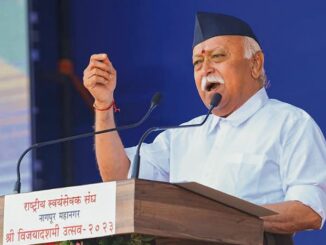
    In his Dussehra address at the Ramlila Maidan on October 24, PM Narendra Modi called for the uprooting of casteism and regionalism that threatened to fracture the unity of ‘Maa Bharati’. RSS chief Mohan Bhagwat, while addressing the Sangh’s annual Vijayadashami event in Nagpur, attacked ‘cultural Marxism’ or ‘wokeism’ that presumably controlled the media and universities. These forces, he said, were selfish, discriminatory and deceitful; they disrupted social cohesion, orderliness, morality, beneficence, culture, dignity and restraint in the world; they plunged education, culture, politics and social environment into confusion, chaos and corruption.

    The script sounds familiar. It seeks to suppress alternative perspectives, and thus make room for only one ideology, one sort of politics and one worldview which does not tolerate challenges. Ironically, thinkers who sought ‘a better world’, from Greek philosopher Plato to Sir Thomas More, to the utopian socialists from Robert Owen to Saint Simon, were skeptical of politics. They disapproved of factionalism, instability and contingency. Karl Marx’s socialist society and Gandhi’s notion of Swaraj are held to be utopias. The difference between an authoritarian project and a utopia is one of intent. The former seeks absolute power. The latter yearns for an ideal society in which humans can live a full life.

    In 1516, Sir Thomas More coined the term utopia to denote a society better than the one he lived in — in the court and then the jail of Henry the Eighth in 16th-century England. This work reflected the concerns of classical political thought that strove to seek the best order of human life. Gandhi’s search for a village republic was motivated by a sharp critique of Western industrial civilization, which focused on materiality and bodily well-being. This prevented self-knowledge and thus self-governance or Swaraj.

    Authoritarians do not seek a society in which individuals can realize the good life. They leave society as it is, unjust and unhappy. They only want a society where rival perspectives do not enable people to dream of a world that is far, far better than the one they inhabit. Curbing of imagination and the banning of dissent, even if society needs to be critiqued, distinguishes an authoritarian project from a utopia. True, both political projects result in a post-political society. But in political life, the consequences are often unintended. It is the intention that counts. So, let us set aside utopia and examine what authoritarianism does to a plural society.

    In a plural society, humans are distinct in their particularity. Even though ‘I’ am part of the ‘we’, I am distinct because I have different ideas of how our world should be organized. Therefore, some of us join political formations, others social movements, still others associations in civil society, and some rest content with expressing their opinions through social media, op-eds or letters to the editor. Each activity is fulfilling because, as Greek philosopher Aristotle had theorized, human beings are political animals. Politics is not only about elections and ascending to power. It is about agreement and disagreement, and more importantly, about the institutionalization of processes that enable conversations between individuals, groups and the state. Unless I express my particularity and you express yours, we will not realize ourselves as humans who have thoughts, ideas, ideologies and who agree to resolve differences through reasoned public debate. This is what Aristotle sought, a society marked by not only disagreement but also deliberation on how to resolve disagreement.

    Therefore, as eminent philosopher Hannah Arendt suggested in The Human Condition, attempts to subordinate plurality of ideas and action are against ‘democracy’. This inevitably turns into an argument against the essentials of politics. Plurality manifests itself in the public realm of debate and discussion. Attempts to do away with plurality are tantamount to the abolition of the public realm itself. The most obvious escape from plurality is a one-man rule in its many varieties, from outright tyranny of one against all to benevolent despotism. The problem with these forms of government is not that they are cruel, but that they might work too well. Tyrants may be kind and mild in everything. What they have in common is banishment of citizens from the public sphere and the insistence that whereas people mind their business, only rulers should attend to public affairs. Escape from the frailty of human affairs into the solidity of quiet and order has much to recommend it, Arendt suggests, but it is an escape from politics: “The hallmark of all such escapes is the concept of rule, that is, the notion that men can lawfully and politically live together when some are entitled to command and the others forced to obey.”

    Democracy is the only form of government that privileges the notion of a public realm where citizens can metaphorically come together to think of ‘what is’ and ‘what should be’. The process of participating in a discussion is what ancient Greek philosophers called doing politics. Think of how dismal and dreary a world without contestation will be. We can think of such a world in concentration camps, not in the rich plurality of India with its many traditions and varied philosophical doctrines, its colorful religious festivals and regional variety. We would never trade this messy but creative world for a world of order and stability. That world belongs to the graveyard.

    (The author is a political scientist)


  • Democracy should bridge economic chasm

    Democracy should bridge economic chasm

    By Neera Chandhoke

    “Defenders of the market forget that a society that is indifferent to the needs of the deprived breeds its own contradictions. We witnessed an instance of this frustration last month when thousands of restless, thwarted and angry people set train compartments on fire. Their rage is understandable. This is perhaps the beginning of a crisis. The crisis of unemployment will relentlessly exacerbate political discontent.

    The divide: Policy-makers should take into account that a substantial chunk of the population lives beyond the pale of market forces.”

    Poverty is not mere statistics. Statistics indicate that our people live in destitution. There is more, for poverty breeds multiple deprivations. The poor are not only denied access to basic needs, but they are also socially marginalized, politically insignificant in terms of ‘voice’ as distinct from the ‘vote’, dismissed and subjected to intense disrespect in and through the practices of everyday life.

    According to the 2022 Oxfam Report, ‘Inequality Kills’, in 2021, 4.6 crore Indians fell into extreme poverty. In the same year, the wealth of billionaires increased from Rs 23.14 lakh crore to Rs 53.15 lakh crore. The Centre for Monitoring Indian Economy reports that 95 per cent of 3.05 crore Indians, of which 95 per cent are below the age of 29, are unemployed. As many as 1.8 crore of this number is graduates. If we care about our fellow citizens and about how they live, we should take serious note of these numbers. Poverty is not mere statistics. Statistics indicate that our people live in destitution. There is more, for poverty breeds multiple deprivations. The poor are not only denied access to basic needs, but they are also socially marginalized, politically insignificant in terms of ‘voice’ as distinct from the ‘vote’, dismissed and subjected to intense disrespect in and through the practices of everyday life.

    There was a time when policymakers, charged by notions of redistributive justice, focused on progressive taxation, land redistribution, right to work, employment generation, quality of work, education and health of the working class. After the collapse of the socialist world in 1989, they casually abandoned grand visions of a decent society in which people encountered each other as equals, and not as members of two different worlds defined by garish wealth and mind-numbing poverty, respectively. We entered an era marked by the victory of political liberalism; a liberalism that had been pounded out of shape by the economics of neo-liberalism.

    Across the world, the state withdrew from commitment to the well-being of its citizens and transited to what has been called the ‘entrepreneurial’ state. The belief that citizens have to create their own jobs, irrespective of the quality of work, is integral to neo-liberalism. The ideology simply does not recognize that the state throws needy individuals onto the not so tender mercies of the market. Generations of socialist thinkers have told us that the market has place only for those who can buy, and for those who can find buyers for the commodities they offer. It has neither compassion nor need for those who are born into poverty, and who spend their time looking for a handful of grain. We forget these lessons. And defenders of the market forget that a society that is indifferent to the needs of the deprived breeds its own contradictions. We witnessed an instance of this frustration last month when thousands of restless, thwarted and angry young people set train compartments on fire. Their rage is understandable; they cannot find a place in the lower rungs of government services, while other young people drive past in flashy cars, live lives of luxury and inhabit opulent neighborhoods.

    This is, perhaps, the beginning of a crisis. The crisis of unemployment will relentlessly exacerbate political discontent. The former cannot be resolved by sops to reduce poverty. The latter can hardly be resolved by promises of cash transfers during elections. In the debate on equality, the philosophical school of sufficientarianism suggests that people should be given enough to eat; how does it matter if they are unequal? Egalitarians insist that the challenge is not only about giving people enough to eat; it is about the right of everyone to participate in social, economic and political transactions as equals. The objective of equality is to enable people to be authors of their own lives. People can hardly write their own history if they are told condescendingly during elections: ‘Give me your vote and I will give you a thousand or so rupees.’ Is this all India’s power elites owe the poor? Not structural change?

    It is time we take a once valued concept out of the closet, dust it, refashion it to suit our times, and present a picture of the world we should be living in, instead of the world we do live in. The concept is that of social democracy. Social democracy is, as all concepts in political theory are, contested. The most persuasive case for social democracy is offered by Polish philosopher Leszek Kolakowski (1927-2009). The concept, he said, offers no ultimate solution for humankind. It merely speaks of ‘an obstinate will to erode by inches the conditions which produce avoidable suffering, oppression, hunger, wars, racial and national hatred, insatiable greed and vindictive envy.’ These ills of the human condition have to be fought through forms of collective action. Collective action has to concentrate on the antidote to poverty and inequality: social democracy which promotes well-being. Leaders cast, but an occasional eye on the suffering, and charitably extend a thousand rupees here and a thousand there as a personal favor. In a democracy, citizens do not need charity, they have rights to freedom and equality. They do not need the largesse of a medieval monarch, nor do they need to thank him repeatedly. Social democracy lacks the fire and thunder of regressive right-wing politics. It lacks the romantic imagination of a post-revolutionary, perfectly egalitarian world. But it does tell us that a world where little children do not have to beg for cast-off food in bare feet and tattered clothes, is far, far better than the one in which people’s life chances are shaped by inequality. An individual who is unequal to others in society can hardly write her own history. Inequality fosters unfreedom. In history, revolutions have been inspired by freedom, but also equality.

    (The author is a Political Scientist)


  • When govt fails its people

    When govt fails its people

    The onus of protecting lives in the middle of death & destruction is on the citizen

    By Neera Chandhoke

    Sadly, our civil society has been pulverized, courts abdicate their responsibility, and the rule of law is missing.

    Deep anguish, deeper desolation, and immeasurable sadness defeat us as we witness death after death. Death is no longer a stranger, it has become familiar: a neighbor, a visitor, even family. We have looked death in the face and found it merciless. We do not personally know the people who died, we only know how many died. But we do know they left a part of themselves with us and took away a part of us. ‘No man is an island’, wrote English poet John Donne, ‘…any man’s death diminishes me, because I am involved in mankind. And therefore, never send to know for whom the bell tolls, it tolls for thee.’ Sadly, our civil society has been pulverized, courts abdicate their responsibility, and the rule of law is missing. This is a moment of unending grief. It is also a moment for asking hard questions. There is nothing more tragic than avoidable death. Who is responsible? We asked for statesmen, wrote Wole Soyinka, we were sent executioners. Indians asked for statesmen, we got politicians for whom democracy is reducible to elections; a route to grab power and privilege.

    Democracy has disappointed democrats across the world. We had hoped for democracy because this is the form of rule that recognizes the political competence of ordinary people to participate in decision making. Democracy is of value not because of its outcomes, whether peace, increased GDP, or world-class infrastructure, but because of its presumption that every citizen is equal.

    Democrats realized early enough that no one can be equal if she is poor, non-literate, malnourished, unemployed amidst opulent affluence. Political equality has meaning only when the holders of power recognize that people should not be poor/ non-literate/malnourished/ unemployed because that compromises the fundamentals of democracy. A well-conceived educational system, a functioning health infrastructure, jobs, housing and a regular income represent the core of redistributive justice. This notion is not new to India. The Constitution draft, authored by a nine-member committee, with Motilal Nehru as the chairman, conceptualized an integrated system of rights from universal adult suffrage to the right to liberty. Prominence was given to social rights. Motilal Nehru observed that political power could be justified only when it was used to ameliorate poverty, ill health and education through the grant and implementation of social and economic rights. The report obliged a future Parliament of independent India to make suitable laws for the maintenance of health and fitness for work for all citizens, for securing a living wage for all workers, and for the protection of motherhood, welfare of children, and to counter economic consequences of old age, infirmity, and unemployment.

    In the Constituent Assembly, the integrated list of rights was split between the Fundamental Rights Chapter and the Directive Principles of State Policy. Many decades thereon, social rights were given attention only in 2004-2009 by the UPA government headed by PM Manmohan Singh. Aided by a Supreme Court anxious to reclaim its image after its sorry record during the Emergency, and by civil society groups, the UPA-I legislated several social rights. The RTE was made a part of the right to life and granted the status of a fundamental right. However, the right to health was left out. Article 21, which guarantees the right to life, has been interpreted to cover the right to health. The right is thus derived rather than couched in terms of a specific good that all have a right to. In 1946, the committee on public health chaired by Sir Joseph Bhore had recommended that a web of primary health centers be established to focus on preventive and curative measures. Our public health system has functioned poorly. Since 1991, the private sector, promoting health tourism, has stepped into the field in a major way. Dominated by a few corporates, private hospitals are driven by profit. The private sector is uninterested in the concept of delivering health to all through preventive measures and is unconcerned about equity. The present government has devolved responsibility for health to the private sector. Consider the pricing policy of vaccination for the 18-44 age group. The onus of protecting lives in the middle of death and destruction has been placed on the citizen.

    That the focus on curative health has resulted in inadequate health services, is made painfully evident today. Preventive healthcare is related to the establishment of supportive infrastructure: networks of free or reasonably priced services, high literacy rates, exposure to information, social movements, and, above all, political will, as is the case of Tamil Nadu and Kerala. Social activists and scholars have suggested a move away from a policy-oriented approach to health, towards a human rights approach which might manage to secure universal access to health.

    Today, we are paying heavily for privatization and commercialization of a basic precondition to life. The leadership is content with demoting democracy to elections, and to mandates secured by elections. The ruling class might do something about the lives, liberties, education and health of citizens. It might not do anything. The presumption of democracy can be belied by the outcome. Important as elections are, they are not sufficient for ensuring democracy and well-being. Democracy has to be protected by citizen activism in the space of civil society, by the judiciary and by the rule of law. In India, civil society has been pulverized, courts abdicate their responsibility, and the rule of law has gone missing.

    So, when the pandemic massacres, the only agent that can hold a mirror to overweening power is the foreign media, a few newspapers and some online news portals. Leaders continue to lust for power, as those who voted for them gasp for breath. This is not the democracy our forebears fought for and conceived of.

    (The author is a political scientist)