Tag: Nepal

  • Why govts avoid taxing the rich to reduce inequality

    Why govts avoid taxing the rich to reduce inequality

    No government can increase taxes on the rich since they are the fundamental power behind every throne.

    “Of course, the ‘just’ way to reduce public debt is to raise taxes on the rich. After all, they are the people who have gained from the loans that governments have taken over the years. They hold most of this debt in the form of government bonds, directly or through investments in large funds. The more governments borrow, the more they earn on these assets.
    But no government can increase taxes on the rich since they are the fundamental power behind every throne. Any attempt to raise taxes faces serious pushback from powerful sections of the media, which are owned or controlled by big corporates.”

    By Aunindyo Chakravarty

    The world around us is in turmoil and there is blood on the streets. From Nepal to France, through Indonesia and Argentina, governments are being booted out of power and popular leaders are facing protests from disillusioned supporters. The key reason is the growing inability of the average citizen to make ends meet and their governments’ failure to solve their economic problems.

    Almost everywhere, people are losing jobs. Those who are employed work long hours for low pay. Sometimes, like in the US, they work multiple jobs to make ends meet.

    Even successful profit-making companies are sacking people in anticipation of what AI might do to their industry. Often, these are well-paid middle-class employees, who are suddenly faced with financial uncertainty.

    Many governments tried to spend their way out of the crisis — by giving bailouts to corporates and subsidies to people.

    Now, their national debt has ballooned and they are trying to find ways to reduce it. In Europe, Latin America and South-East Asia, governments chose to cut back on spending. They are now paying the price for it.

    In France, Prime Minister Bayrou had to resign after lawmakers defeated his proposals to reduce government expenditure on welfare. In Argentina, President Milei is facing massive street protests after cutting aid to universities and hospitals.

    In Indonesia, President Prabowo’s austerity measures have resulted in violent protests. In Nepal, the Oli government’s expenditure cuts on social security and welfare programs caused widespread resentment, especially since the political class, and their ‘nepo kids’ enjoyed lavish lifestyles.

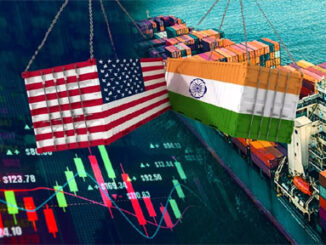
    In the US, Donald Trump has tried to find another path to solving the public debt problem — his infamous Trump tariffs. The key assumption is that tariffs would force exporting nations to reduce their base prices to keep their market share and, at the same time, fill the governments’ coffers.

    As it has turned out, this has only caused a sharp increase in prices in the US and huge job losses. No wonder, Trump’s net approval ratings have been negative since mid-March.

    After his initial attempts to force China to submit to his tariff tantrums failed, Trump has increasingly tried to bully India. Even Trump sympathizers admit that the 50 per cent duty levied on Indian exports, supposedly because we buy Russian oil, makes no sense since the US hasn’t raised tariffs on China, which buys more oil from Russia than we do.

    Trump’s attempt to badger India to open up our market to American agricultural and milk products is nothing but a tactic to score political brownie points among some of his core voters in rural America.

    The Modi government, on the other hand, cannot let American maize, soybean, milk and cheese enter for free because of the political price it might have to pay among India’s farming community.

    So, all Trump has achieved is to push India towards our traditional adversary — China. The bonhomie between Modi, Xi and Putin, captured by cameras and published across the world, was a warning shot fired at the US.

    It is reminiscent of India’s earlier position in the geopolitical space of a bipolar world as a member of the Non-Aligned Movement (NAM), till the USSR collapsed in 1991. At that time, India played the two powers against each other to extract maximum diplomatic value from them.

    This gradually ended as the US emerged as the sole power in the 1990s and established its role as the global Big Brother. Many observers saw India as America’s natural ally as a large market-oriented economy with a democratically elected government.

    Now, the Trump administration seems to have endangered that relationship by openly attacking India’s trade policies. Even though Trump has walked back some of the rhetoric in the past couple of days, things have soured significantly.

    Trump clearly has no answer to how to solve the US’ debt problem. Nor does any other global leader in power. Experts are advising governments to cut expenditure while the people, burdened by high prices and pay cuts, are demanding the exact opposite.

    Of course, the ‘just’ way to reduce public debt is to raise taxes on the rich. After all, they are the people who have gained from the loans that governments have taken over the years. They hold most of this debt in the form of government bonds, directly or through investments in large funds. The more governments borrow, the more they earn on these assets.

    But no government can increase taxes on the rich since they are the fundamental power behind every throne. Any attempt to raise taxes faces serious pushback from powerful sections of the media, which are owned or controlled by big corporates.

    Opinion makers who bat for corporates find easy access to newspaper columns and TV studios, which showcase their views opposing tax hikes. Any political leader who fights on the agenda of taxing the rich finds it impossible to raise funds. S/he also ends up having to deal with a hostile media.

    India, too, is not immune to such pressures. We have the problem of losing a crucial export market, which sustains millions of jobs, especially in textiles, gems and jewelry and shrimp farming. At the same time, our farmers will be hit if we reduce taxes on American farm goods.

    So, we have no option but to play hot and cold with the US and China. We need new markets for our products, which the China bloc might provide. At the same time, we cannot completely alienate the US since our corporates have close business ties with it and our middle class depends heavily on service exports to the US.

    India has no option but to ride it out as things unfold across the world. One thing is for sure: given that we are only at the beginning of the AI revolution, geopolitical and economic uncertainties are not going to disappear anytime soon and we are likely to see many more global realignments in the coming months.

    (Aunindyo Chakravarty is senior economic analyst)

  • India may absorb some of tariff heat for US-bound shipments

    India may absorb some of tariff heat for US-bound shipments

    New Delhi (TIP)- The Centre may partially compensate exporters for their US shipments under Donald Trump’s punitive tariff regime, three people aware of the discussions said.
    With the dawn of steep tariffs, Indian exporters are compelled to reduce prices to stay competitive, which makes a direct hit on their business. The government is now looking to bear 10-15% of the price cuts to help exporters stay in the game, the people cited above said on the condition of anonymity.
    The relief, limited to US-bound consignments, will remain in force until the issue is settled through trade talks, which have been delayed but remain under discussion.
    The proposal is being coordinated between the ministries of finance and commerce to address the mounting pressure on manufacturers and exporters, particularly those in labour-intensive sectors, which are struggling to execute confirmed orders. The Centre may support some of the affected sectors with 10-15% for the price sacrifice they make to keep their US business going, one of the two people cited above said, though the sectors had asked for even higher support. This aid will help exporters continue to execute their orders and keep the manufacturing process going, the person added.
    Given that US importers must pay tariffs on goods imported from India, they are asking their Indian suppliers to reduce prices to compensate for the tariff burden, exporters have said. However, doing so would be an additional burden to the Indian exporter.
    The matter was discussed in separate meetings held on Thursday with finance minister Nirmala Sitharaman and commerce minister Piyush Goyal, where stakeholders highlighted the challenges in meeting deadlines for the upcoming spring season.
    The government has assured that there is no need to worry about the possible impact of the US tariffs on Indian goods exported to the US, stating the issue is being closely looked at.
    The relief package is being explored for labour-intensive goods such as textiles, gems and jewellery, engineering goods, leather and footwear, seafood, among others, the people cited earlier said. “The finance minister sounded positive, stressing that exporters will not be left to face the storm on their own. While she didn’t reveal what specific measures the government is taking, she assured that the government is seized of the matter and will step in to provide support,” said Pankaj Chadha, chairman, Engineering Export Promotion Council. “The 50% tariff undeniably dents cost competitiveness, but it also pushes Indian manufacturers to think beyond pricing. For us, the way forward is twofold-strengthening technology and design leadership so clients see value in performance, and building diversified global linkages that reduce overdependence on any one market,” said Sarvadnya Kulkarni, chief executive officer of General Instruments Consortium, an engineering company. Queries sent to the spokespersons of the Prime Minister’s Office, and the ministries of finance and commerce remained unanswered.
    According to a report by Global Trade Research Initiative, the damage could be substantial if the tariff remains in place for long. Once competitors gain ground in the US market, it will be very difficult for Indian exporters to reclaim lost space, and New Delhi will need to step up its engagement with Washington, it stated. Countries such as China, Vietnam, Mexico, Turkey, and even Pakistan, Nepal, Guatemala and Kenya stand to benefit from the US action, potentially locking India out of key markets even after the tariffs are rolled back.
    As reported by Mint on 21 August, New Delhi is also exploring the possibility of joining China-led Regional Comprehensive Economic Partnership to mitigate potential losses arising from supply chain disruptions amid strained trade relations with the US.
    On Wednesday, Aug 27, Peter Navarro, a top aide to US president Donald Trump, characterized the Russia-Ukraine conflict as “Modi’s war,” arguing that India’s continued purchase of discounted Russian oil is funding Moscow’s military efforts. He also criticized India for its high tariffs and for “getting in bed with authoritarians” by aligning with Russia and China.
    “India, you are getting in bed with authoritarians. China invaded Aksai Chin and all your territory. They are not your friends. And Russia? Come on!” Navarro told Bloomberg Television in an interview.

  • Prime Minister Modi’s foreign visits from 2021-24 cost the nation USD 34,114,449 (Rs 295 cr)’;  USD 7,746,345 (Rs 67 cr ) on trips to 5 countries in 2025: Govt data

    Prime Minister Modi’s foreign visits from 2021-24 cost the nation USD 34,114,449 (Rs 295 cr)’; USD 7,746,345 (Rs 67 cr ) on trips to 5 countries in 2025: Govt data

    NEW DELHI (TIP): Over Rs 67 crore (USD 7,746,345) was incurred on Prime Minister Narendra Modi’s visit to five countries, including the US and France, in 2025, while the total expenditure figures related to his foreign trips from 2021 till 2024 stood at nearly Rs 295 crore (USD 34,114,449) , according to data shared by the government, says a PTI report.

    As per the country-wise and year-wise data, the corresponding figures for Modi’s visits to Mauritius, Cyprus, Canada and Croatia, and Ghana, Trinidad & Tobago, Argentina, Brazil and Namibia this year were not available.

    For these visits, the column for ‘total expenditure’ in the data shared by Minister of State for External Affairs Kirti Vardhan Singh on Thursday, in his written response to a query by TMC MP Derek O’Brien in Rajya Sabha, said, “Bills under settlement. Total expenditure is not yet available.” Of these visits, the costliest one was to France, which incurred over Rs 25 crore (USD 2,890,009) , while the one Modi undertook to the US in June 2023 incurred over Rs 22 crore (USD 2,542,900) .

    On March 20, the ministry had shared data in in Rajya Sabha, according to which nearly Rs 258 crore ( USD 29,821,291) was incurred on 38 foreign visits of Modi between May 2022 and December 2024.

    In 2025, Modi had travelled to France and the US from February 10-13. In Paris, he held bilateral talks with President Emmanuel Macron and attended an AI Summit, while in the US he met and held talks with President Donald Trump, among other engagements.

    According to the data shared, the country-wise figures for these five countries Modi visited in 2025 are–Rs 25,59,82,902 (France); Rs 16,54,84,302 (US); Rs 4,92,81,208 (Thailand); Rs 4,46,21,690 (Sri Lanka) and Rs 15,54,03,792.47 (Saudi Arabia).

    The cumulative figures for the preceding four years are–about Rs 109 crore (2024) spanning 16 countries, including Russia, Ukraine, the US and Brazil; nearly 93 crore (2023); Rs 55.82 crore (2022) and about Rs 36 crore (2021).

    In 2021, Modi visited Bangladesh (Rs 1,00,71,288–total expenditure); the US (Rs 19,63,27,806); Italy (Rs 6,90,49,376); and the UK (Rs 8,57,41,408). His trips in 2022 included visits to Germany (Rs 9,44,41,562); Denmark (Rs 5,47,46,921); France (Rs 1,95,03,918); Nepal (Rs 80,01,483) and Japan (Rs 8,68,99,372), it said. For Modi’s 2023 visit to Egypt, the expenditure on advertising and broadcasting was Rs 11.90 lakh, according to the data.

  • Diwali in US gains official holiday status in Pennsylvania, Texas, New York

    Diwali in US gains official holiday status in Pennsylvania, Texas, New York

    NEW YORK (TIP): As the glow of Diwali approaches, this festival of lights is gaining unprecedented recognition in the United States, showcasing the nation’s commitment to celebrating cultural diversity. With states like Pennsylvania leading the initiative, Diwali is being officially acknowledged, reflecting its growing significance in American society.

    In a historic move, Pennsylvania has become the first state in the US to officially declare Diwali as a public holiday. This decision underscores the state’s commitment to inclusivity and cultural appreciation. The recognition of Diwali not only honors the festival’s significance but also celebrates the diverse communities that partake in its festivities.

    Following Pennsylvania’s lead, Texas has also announced Diwali as an official public holiday. The state’s lively celebrations reflect the importance of the festival, inviting residents to engage in activities that promote hope and goodwill. Texas’s acknowledgment of Diwali exemplifies the growing appreciation for diverse cultural practices across the nation.

    New Jersey has joined the ranks of states celebrating Diwali, showcasing a commitment to fostering cultural diversity. The recognition of this festival of lights in New Jersey highlights the state’s dedication to creating an inclusive environment for its residents and embracing the rich tapestry of cultures that contribute to its identity.

    In New York, known for its cultural diversity, Diwali has been embraced as an official holiday. This recognition allows communities from various backgrounds to come together in joyous celebrations, fostering cultural exchange and unity. New York’s vibrant Diwali events reflect the importance of the festival in bringing people together to share in the spirit of togetherness.

    The celebration of Diwali extends beyond the United States, with numerous countries recognizing it as a public holiday.

    Nations such as Fiji, Malaysia, Mauritius, Nepal, Sri Lanka, Singapore, South Africa, and Trinidad and Tobago honor the festival’s significance and the universal values it represents, showcasing its global appeal and message of light triumphing over darkness.

  • 18 killed as plane slips off runway, crashes at Kathmandu airport; pilot sole survivor

    Kathmandu (TIP): A passenger plane carrying 19 people crashed during takeoff in Kathmandu on July 24, killing 18 and leaving the pilot as the sole survivor, police in the Nepali capital told news agency AFP. The plane belongs to the domestic Saurya airline and was en route to the resort town of Pokhara, an important tourism hub in the Himalayan republic. It crashed at around 11:00 am, with police and firefighters engaged in rescue efforts.
    The Saurya Airlines flight was carrying a two-member crew and 17 of the company’s staff members for a test flight, Nepali police spokesman Dan Bahadur Karki told AFP.
    Police official Basanta Rajauri said authorities have pulled out all 18 bodies. The only survivor was the pilot, who was taken to Kathmandu Medical College Hospital for treatment, said a doctor at the hospital who was not authorised to speak to media. The pilot has injuries to the eyes but is not in any danger, the doctor said, reported News agency AP.
    AP also reported that the bodies have been taken to the T.U. Teaching Hospital in Kathmandu for autopsy. The airline manifest showed there were two pilots and 17 passengers on board, among them there was only one female. The crew and 16 passengers were Nepali nationals with one identified as foreigner, a Yemeni national. Images of the aftermath shared by Nepal’s military showed the plane’s fuselage split apart and burnt to a husk.
    Around a dozen soldiers in camouflage were standing on top of the wreckage, with the surrounding earth coated in fire retardant. The plane crashed at around 11:15 am (0530 GMT), the military said in a statement, adding that the army’s quick response team had been lending assistance with rescue efforts. News portal Khabarhub reported that the airplane had caught fire after skidding on the runway.
    The plane was scheduled to fly on Nepal’s most-trafficked air route between Kathmandu and Pokhara, an important tourism hub in the Himalayan republic.
    Saurya Airlines exclusively flies Bombardier CRJ 200 jets, according to its website.
    Nepal’s air industry has boomed in recent years, carrying goods and people between hard-to-reach areas as well as foreign trekkers and climbers. But it has been plagued by poor safety due to insufficient training and maintenance—issues compounded by the mountainous republic’s treacherous geography. (Agencies)

  • Top leaders of Bangladesh, Sri Lanka, Maldives, 4 other nations likely to attend Modi’s oath ceremony

    New Delhi (TIP): Top leaders of Bangladesh, Sri Lanka, the Maldives, Bhutan, Nepal, Mauritius and Seychelles are likely to attend the swearing-in ceremony of Prime Minister Narendra Modi over the weekend, authoritative sources said on June 6.
    It is learnt that India has already sent invites to Bangladesh Prime Minister Sheikh Hasina, Sri Lankan President Ranil Wickremesinghe and some other leaders of the countries chosen to grace the ceremony.
    Nepalese Prime Minister Pushpa Kamal Dahal ‘Prachanda’, Maldivian President Mohamed Muizzu, Bhutanese Prime Minister Tshering Tobgay, Prime Minister of Mauritius Pravind Jugnauth and President of Seychelles Wavel Ramkalawan are among the leaders being invited to Modi’s swearing-in ceremony.
    Modi is all set to take charge as the prime minister for a historic third consecutive term with the Bharatiya Janata Party-led National Democratic Alliance (NDA) winning 293 seats in the Lok Sabha polls.
    The guest list of foreign leaders for Modi’s swearing-in ceremony was primarily guided by New Delhi’s “Neighbourhood First Policy” and its strategic focus on island nations considered important in the Indian Ocean region, it is learnt.
    Modi is likely to take oath on June 9.
    The invitation to Muizzu assumes significance as it came amid frosty ties between the two countries.
    The ties between India and the Maldives came under severe strain since November last year when Muizzu, known for his pro-China leanings, took charge as Maldivian president.
    Within hours of his oath, he had demanded the withdrawal of Indian military personnel from his country. The Indian military personnel were replaced by civilians earlier this month.
    The media division of President Wickremesinghe’s office on Wednesday said Modi invited him to the swearing-in ceremony during a phone conversation. It said Wickremesinghe accepted the invite.
    “During the conversation, Prime Minister @narendramodi invited President Wickremesinghe to his swearing-in ceremony, which President @RW_UNP accepted,” it said on X.
    Modi also had a phone conversation with Hasina on Wednesday. In the phone conversation, Modi invited Hasina to attend his swearing-in ceremony and she accepted it, diplomatic sources said.
    Modi held separate phone conversations with Prachanda as well as Jugnauth.
    On Thursday, Bhutanese PM Tobgay called up Modi and congratulated him on the victory of the NDA.
    “Prime Minister Tobgay appreciated Prime Minister Modi’s visionary leadership in the last decade, and conveyed his warm wishes for his successful third term,” an Indian readout said.
    “The prime minister thanked prime minister Tobgay for the warm felicitations. The prime minister conveyed that India accords the highest priority to its exemplary partnership with Bhutan,” it said.
    It said India-Bhutan partnership is characterized by utmost trust, goodwill, and mutual understanding at all levels and is reinforced by robust people to people linkages and close economic and development partnership. (PTI)

  • A spiritual leader in Nepal known as ‘Buddha Boy’ arrested on charges of rape and kidnapping

    A spiritual leader in Nepal known as ‘Buddha Boy’ arrested on charges of rape and kidnapping

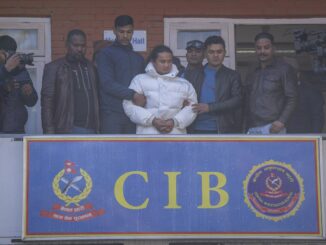
    KATHMANDU (TIP): Nepal police said January 10 they had arrested a spiritual leader whose followers believe him to be a reincarnation of Buddha over allegations of disappearances and rape at his ashrams. Ram Bahadur Bomjan, known as “Buddha Boy” among devotees, became famous as a teenager after followers said he could meditate motionless for months without water, food or sleep. The 33-year-old guru has a devout following but has long been accused of physically and sexually assaulting his followers, and has been hiding from authorities for several years.

    “He was arrested after absconding for several years,” police spokesman Kuber Kadayat told AFP.

    Police apprehended Bomjan in Kathmandu on a warrant issued for his alleged rape of a minor at an ashram in Sarlahi, a district south of the capital.

    They said he was caught with bundles of cash amounting to 30 million Nepali rupees ($225,000) and another $22,500 in foreign currency.

    Accusations of abuse and misconduct against Bomjan stretch back more than a decade.

    Dozens of assault complaints were filed against Bomjan in 2010. He said he beat the victims because they disturbed his meditation.

    An 18-year-old nun accused the guru of raping her at a monastery in 2018.

    Police opened another investigation against him the following year after family members reported the disappearance of four of his devotees from one of his ashrams.

    The whereabouts of the four are still unknown, Dinesh Acharya of the Central Investigation Bureau told reporters on Wednesday.

    “Unless we know what situation the missing are in we are not in a position to call it murder,” he said.

    Before he went on the run, Bomjan still commanded a legion of followers as the allegations against him mounted. At one point tens of thousands of people had gathered to witness his reputed miracles of meditation deep in the jungle.

    While aged 16, Bomjan disappeared for nine months to wander the wilderness of eastern Nepal, prompting a round-the-clock vigil by Buddhist monks who prayed for his safe return. (AFP)

    6.1 magnitude earthquake jolts Afghanistan, tremors in north India

    kabul / NEW DELHI (TIP): An earthquake of magnitude 6.1 struck Afghanistan on January 11 with tremors rippling through parts of north India, the National Centre for Seismology said.

    The epicentre for the quake, which struck at 2.50 pm IST, was 241 kilometres north-northeast of Kabul, it said. It further noted that its depth was registered at 220 kilometres.

    The NCS shared a post on X, stating, “Earthquake of Magnitude:6.1, Occurred on 11-01-2024, 14:50:24 IST, Lat: 36.48 & Long: 70.45, Depth: 220 Km, Location: Afghanistan.”

    The quake triggered panic among people, with many in Delhi and the National Capital Region reporting shaking of furniture. (PTI)

  • Former Secretary General Ban Ki-moon, three veteran diplomats honored with 2023 Diwali ‘Power of One’ Awards at UN

    Former Secretary General Ban Ki-moon, three veteran diplomats honored with 2023 Diwali ‘Power of One’ Awards at UN

    “The ideals of Diwali are the ideals of UN Charter” : Chair of Diwali Foundation USA Ranju Batra

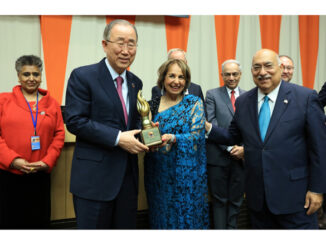
    UNITED NATIONS (TIP): Former UN Secretary General Ban Ki-moon and three veteran diplomats were honored with the annual ‘Diwali Power of One Awards’, hailed as the ‘Oscars of diplomacy’, for their selfless efforts to “help form a more perfect, peaceful, and secure world for all”. The former UN chief was honored with the Lifetime Achievement Award at the 2023 Diwali Stamp — The Power of One Award ceremony organized by the Diwali Foundation USA. The other awardees for the year 2023 are former permanent representative of Bosnia and Herzegovina to the UN Ambassador Mirsada Colakovic, former permanent representative of South Korea to the UN Ambassador Kim Sook and 72nd UN General Assembly president and EU Special Representative for the Belgrade-Pristina Dialogue Miroslav Lajcak. They were honored at a special ceremony held in the UN Headquarters on Monday, December 11.

    Former Secretary General Ban Ki-moon addressing the gathering after receiving the award. Seen, among others, are India’s Permanent Representative to the United Nations, Ambassador Ruchira Kamboj ( extreme left) , Ranju Batra (4th from left), and Ravi Batra (behind Mr. Ban Ki-moon) (Photo : Mohammed Jaffer / SnapsIndia)

    Ban commended the work and “forward-thinking vision” of the Diwali Foundation USA “for advancing vital light in a world of increasing darkness”.

    Ban said the world of today “seems fractured like never before” as he cited the COVID-19 pandemic, climate crisis and regional conflicts, particularly “regional crisis as we see today in the Middle East and Ukraine”.

    “But it is exactly at times such as these that the work of the United Nations is indispensable. The United Nations and its pursuit of peace, human rights and sustainable development exemplifies the values and principles that we should all espouse to replicate,” he said. Ban was the eighth Secretary-General of the United Nations, serving two terms as the world’s top diplomat from January 2007 to December 2016.

    He said that as the world moves into 2024 and beyond, “we share a common destiny illuminated by peace, sustainability and prosperity. Let us work together and expand our unified efforts to realize this shared destiny for all. This is your political responsibility and for me, my moral responsibility as a former Secretary General” and as an awardee of the Power of One honor.

    India’s Permanent Representative to the UN Ambassador Ruchira Kamboj, in her address to the event attended by UN diplomats, envoys, civil society members and policy experts, said that Diwali is a celebration that holds a very special place in the hearts of over a billion Indians across the globe.

    Diwali “is more than just a festival. It is a sentiment that embodies the triumph of light over darkness, knowledge over ignorance and hope over despair”, she said.

    Kamboj said, “as we light the lamps of Diwali, let us remember that every small light, no matter how small, can make a significant difference in dispelling the shadows”.

    Sri Lanka’s Permanent Representative to the UN Ambassador Mohan Pieris said “Deepawali has become truly a secular festival in the world, since its message is not exclusively restricted to any religious creed.

    “This festival has united the global community with the central message that we need more than ever the humanistic ideals to engage the inglorious wars, which are bleeding the innocence of humanity,” he said.

    Pieris underscored that for the world to have peace, it is important that the whole world must be united to save the higher ideals of humanity, which have evolved since the millennium in various religious traditions.

    Chair of Diwali Foundation USA Ranju Batra, who had spearheaded efforts for over seven years to get a commemorative ‘Forever Diwali’ stamp issued by the US Postal Service in 2016, said: “Diwali is a message of peace.” She said her journey for the Diwali stamp is seen as a “metaphor of peace and harnessing its power to promote excellence in diplomacy. The ideals of Diwali are the ideals of UN Charter”.

    She noted that the 2023 Power of One awardees have clearly demonstrated that “one person can make a difference”. The Diwali stamp celebration is not of a religion or nation but of the spirit of harmonious inclusiveness and cross-cultural understanding that all religions deserve, she said.

    Eminent Indian-American attorney and Chair of National Advisory Council South Asian Affairs and moderator of the award ceremony Ravi Batra said the UN transcends borders and boundaries.

    “The need to acknowledge excellence is critical, generally, but in diplomacy, which is on life support in today’s world, it is essential and that’s how these awards are – the Power of One,” he said, adding that they honor “world class diplomats who have changed the world by what they did”.

    Awardees and organizers of Power of One Awards (Photo : Mohammed Jaffer / SnapsIndia)

    Hailed as the ‘Oscars of Diplomacy’, the awards are presented to former Permanent Representatives or former high-level members of the UN Secretariat or member state, or soon to be “former”, who have “toiled selflessly to help form a more perfect, peaceful and secure world for all”.

    The 2023 Award ceremony was co-organized by the Diwali Foundation USA and Delegation of the European Union to the United Nations, and the Permanent Missions of Chile, Eritrea, Georgia, India, Kazakhstan, Kiribati, Morocco, Oman and Sri Lanka to the United Nations. The co-sponsors included the Permanent Mission to the United Nations of Albania, Armenia, Austria, Azerbaijan, Belarus, Bhutan, Cyprus, France, Germany, Ghana, Hungary, Iraq, Israel, Kuwait, Kyrgyzstan, Malaysia, Mexico, Nepal, Philippines, South Korea, South Africa, Spain, Tajikistan, Thailand, Turkiye, Turkmenistan, Ukraine, United Kingdom, United States, Uzbekistan, Vietnam and Palestine, and International Atomic Energy Agency (IAEA-NY) among others.

    Diwali Foundation USA was established in 2017 to promote a peaceful and consensus-based process to achieve societal “good, as befits the high hopes and ideals of humanity enshrined in the United Nations Charter”.

    The Foundation established ‘The Power of One’ awards to celebrate and highlight the important work done in a peaceful manner, especially at the United Nations.

    Previous honorees include former UN assistant secretary general and deputy executive director of UN Women, Lakshmi Puri, former UK Ambassador to the UN, Matthew Rycroft, former permanent representative of Georgia to the UN, Kaha Imnadze, and former permanent representative of Grenada to the UN Keisha McGuire.
    (Source: PTI)

    The traditional lamp lighting . Mr. & Mrs. Ban Ki-moon with organizers of Power of One Award lighted the lamp. (Photo : Mohammed Jaffer / SnapsIndia)
  • Guru Nanak: The eternal traveler

    Guru Nanak: The eternal traveler

    By Navtej Sarna

    In a unique example of spiritual wanderlust, Guru Nanak spent more than 20 years on the road, spreading his message of love, compassion and equality of man. At a time when there were no quick or sophisticated means of travel, he undertook four long journeys, called udasis, signifying detachment. Though scholars have laid out detailed routes that he may have used, concrete evidence of the exact order of his travels is difficult to find. Indications of the places he visited as well as his experiences are contained in the janam-sakhis, written some decades after his passing. Some details can also be discerned from Guru Nanak’s own hymns as well as in the writings of Bhai Gurdas, the scholar and amanuensis who first inscribed the Adi Granth in Guru Arjan’s presence. Bhai Gurdas’s poetic vision describes Nanak’s immense travels thus: Babe tare char chak/ nau khand prithvi sacha dhoa (The Baba traversed the nine regions of the earth, as far as the land stretched).
    It is believed that Guru Nanak certainly travelled as far as Assam in the east, present-day Sri Lanka in the south, Mount Kailash in the north and Mecca-Medina in the west. Some speculative accounts take Nanak even further afield. His mission took him to snowy heights and across burning deserts, through little villages and mighty capitals, among the ordinary as well as learned, to fairs, festivals, to temples, mosques, khanaqahs. These travels gave him an opportunity to observe the workings of the religions of the day in actual practice and to debate and discuss these matters of the spirit with sages and seers and also to dispel ignorance and blind ritualism, of which there was no dearth. Bhai Gurdas puts it thus: Dithe Hindu Turaki sabhi pir paikambari kaumi katele/ Andhi andhe khuhe thele (I saw Hindus and Muslims, holy men of all kinds/ The blind pushing the blind into a well).
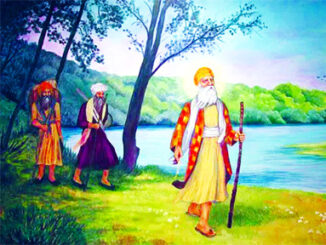
    Today, gurudwaras and shrines mark Nanak’s travels to these far-flung places; local legends further establish the fact that the Guru indeed travelled extensively. Nanak was accompanied by Mardana on his travels, who carried and played the rabab, and also became an interesting protagonist of the many sakhis that are attached to these travels. One cycle of janam-sakhis and several illustrations show another companion, Bhai Bala.
    According to some sources, Guru Nanak dressed in strange clothes that could not be identified with any sect and symbolised the universality of his message. He wore a loose long shirt of a Muslim dervish but of brownish-red colour of the Hindu sanyasi. Around his waist he wore a white cloth belt like a fakir. A short turban Babe bhek banaia udasi ki riti chalai/ Charhia sodhan dharth lukai (The Baba donned robes, and in the tradition of detachment/ Went to put humanity on the right path) partly covered a qalandar’s conical cap in the manner of Sufi wanderers. His slippers were often of two different colours and designs. Sometimes it is said he wore a garland of human bones around his neck. As Bhai Gurdas wrote: Guru Nanak’s first journey took him to the east, as far as Assam and Dhaka. On the way, he visited places of pilgrimage, including Haridwar, Ayodhya, Varanasi, Kedarnath, Badrinath and Gaya. The janam-sakhis tell several tales of his discourses with learned yogis.
    He also visited the Jagannath temple in Puri in Orissa. This temple is known for its annual procession when the idol is mounted on a huge chariot and the multitudes that gather vie with each other for the privilege of pulling the chariot. Here is one version of what happened there: when Guru Nanak and Mardana camped near the temple, their hymns and music attracted several devotees on their way to the temple, annoying the priests. One day, the chief priest came to Nanak and invited him to join the aarti (evening prayer) in the temple and Guru Nanak readily accompanied him. It was a beautiful ceremony, conducted at dusk. The priest placed earthen lamps filled with ghee on a bejeweled salver decorated with flower petals and sweet incense. They lit the wicks and swung the salver pendulum-like in front of the image while the congregation sang hymns, blew conches and tolled the bells. Nanak sat unmoved through the ceremony, and when the priests expressed their anger and surprise, he responded with a song now part of the Granth Sahib.
    The song describes the celestial aarti in which the sky, the sun, the moon, the stars, the wind, the forests and the unstruck music pay obeisance to the great Creator. This, according to Nanak, was the true aarti that could be offered to God:
    The sky the salver, the sun and moon the lamps, The stars studding the heavens are the pearls
    The fragrance of sandal is the incense Fanned by the winds, all for thee The great forests are the flowers
    What a beautiful aarti is being performed For you, O destroyer of fear.
    The second journey took Guru Nanak south, to present-day Sri Lanka. He was accompanied by two Jat followers: Saido and Gheho.
    The third udasi of Guru Nanak was to the north. He travelled widely in the Himalayas—several scholars have traced his steps to Himachal Pradesh, J&K, Uttar Pradesh, Sikkim, Ladakh and even Nepal and Tibet. The central event of this northern udasi is the visit to Mt Sumer, recorded in all the janam-sakhis and also by Bhai Gurdas—Mt Sumer is said to be none other than Mt Kailash, the abode of Shiv and Parvati. There took place his meeting with 84 siddhas, among them the ancient souls Goraknath, Machendranath and Charpat Nath, or perhaps their spiritual successors, who had meditated long and deep and possessed great power and wisdom.
    In Bhai Gurdas’s version of the meeting, the siddhas express amazement at seeing Nanak: O youthful one! What power brings you to these heights? Who is that you worship? And Guru Nanak replied: the eternal Lord alone.
    The siddhas ask him how the world below fared. Guru Nanak made no secret of what he felt. He said darkness, sin and injustice had taken over the world. Corruption was rampant; the fence itself had begun to eat the crop.
    Sidh chhapi baithe parabati kaunu jagat kau par utara (The wise siddhas have escaped into the remote caves and mountains—who will then redeem the world?)
    Guru Nanak had several meetings with siddhas and yogis, in particular with those of the kanphata (split-eared) sect. His discourse with these holy men, in question-and-answer form, is contained in his Siddha
    Gosht, comprised of 73 verses in the Granth Sahib. The entire discourse is conducted in a spirit of humility, intellectual inquiry and tolerance. In this discourse, the siddhas argue that it was not possible to be part of the world and follow the path of meditation and spirituality. Nanak replied that one had to be as a lotus or a duck—to stay in the water but still remain dry. One had to be part of the world and yet be unaffected by it through meditation on His name. The fourth udasi took Guru Nanak to the west and to Islamic countries and important centres such as Mecca and Baghdad. It is said that he dressed in a blue robe in the manner of a Haji and carried a book, a staff and a small carpet for saying his prayers.
    Phir Baba gaia Baghdad no bahari kia asthana/ Ik baba akal rupu duja rababi Mardana (Then Baba went to Baghdad and camped outside the city/ He himself one with the Timeless, and his rabab player Mardana).
    Baghdad was then a great centre of Islamic learning, art and culture. On the outskirts of the city, in a graveyard, Mardana strummed the strings of his rabab in holy melody and Nanak sang hymns. When this was reported to the Pir-e-dastgir of Baghdad as being against the teachings of Islam, he came out to meet Nanak and inquired: Puchhia phirikai Dastgir kaun phakir kis ka ghariana (What faith do you belong to, and what sect of fakirs do you come from)? Mardana replied: Nanak kal vich aia rab phakir iko pahichana/ Dharth akash chahudis jana (Nanak has come to this world in kalyug/ He has rejected all fakirs except the Supreme Being, who is all pervasive—in the heavens, the earth and all four directions).
    During his stay in Baghdad, the Guru also met another pir known as Bahlol who had several discourses with him. Finally, Bahlol and his son became followers of Nanak, who then stayed there for about four months. A shrine in Baghdad, also known as the tomb of Bahlol, marks the visit of Guru Nanak and his association with Bahlol.
    After these four long journeys, Guru Nanak settled down at Kartarpur on the banks of the river Ravi. He discarded his travelling robes and put on the garb of a householder. It was time to give practical shape to his ideals and to show that true salvation lies in righteous living in this world, not in renunciation. A community of men of all faiths and callings, high and low, gathered around him. Several important traditions, including those of spiritual gatherings to listen to the praise of the Creator and the langar, or communal kitchen, were born here. It was here too that Guru Nanak gave up his body in 1539 after anointing Lehna, or Guru Angad, as his spiritual successor. (Navtej Sarna is a former ambassador of India to the US and author of several books, including The Book of Nanak)
    Source: India Today

  • For an expanse of blue, with air so clean 

    For an expanse of blue, with air so clean 

    On International Day of Clean Air for Blue Skies (September 7), there is urgent need to address risks posed by pollution

    • By Benno Boer, Srishti Kumar, Neha Midha

    “The world is not just grappling with climate change, but also with another silent killer — air pollution. Global health statistics reveal a disturbing scenario with lung cancer claiming 10 million deaths worldwide in 2020, as stated in the World Health Organization (WHO) factsheet published in 2023. This could soar by another 3.2 million by 2050 according to a report, ‘Mapping of global, regional and national incidence, mortality and mortality-to-incidence ratio of lung cancer in 2020 and 2050’, by the Indian National Institute of Health. South Asia, home to two billion people, is also home to nine of the world’s 10 most polluted cities, including Delhi, where the air quality continues to pose a perilous long-term threat putting its inhabitants at risk each day. While policy measures have led to statistical improvements in the Air Quality Index (AQI), the health risks associated with Delhi’s polluted air persist. Delhi is knocked to its knees every winter facing hazardous levels of air pollution.”

    Youngsters around the world are taking charge of environmental advocacy, running marathons, and tracking real time data of air quality, creating environmental awareness. But the absence of a specific Sustainable Development Goal (SDG) for ‘Clean Air to Breathe’ indicates a lack of global attention.

    Dr. Benno Boer

    According to UN Secretary-General António Guterres, the earth has entered the era of global boiling. Scorching heatwaves, devastating floods and erratic weather patterns are stark reminders for an urgent need to address the triple-planetary crisis of biodiversity loss, climate change and pollution.

    The world is not just grappling with climate change, but also with another silent killer — air pollution. Global health statistics reveal a disturbing scenario with lung cancer claiming 10 million deaths worldwide in 2020, as stated in the World Health Organization (WHO) factsheet published in 2023. This could soar by another 3.2 million by 2050 according to a report, ‘Mapping of global, regional and national incidence, mortality and mortality-to-incidence ratio of lung cancer in 2020 and 2050’, by the Indian National Institute of Health. South Asia, home to two billion people, is also home to nine of the world’s 10 most polluted cities, including Delhi, where the air quality continues to pose a perilous long-term threat putting its inhabitants at risk each day. While policy measures have led to statistical improvements in the Air Quality Index (AQI), the health risks associated with Delhi’s polluted air persist. Delhi is knocked to its knees every winter facing hazardous levels of air pollution.

    Lung cancer, cardiovascular disorders, respiratory ailments, and mental health issues continue to destroy lives. Delhi’s air, a lethal mix of SO2 (sulphur dioxide) and NOX (nitrogen oxides), along with high particulate matter concentrations (2.5 or even 10µg/m3), carbon monoxide and ozone, deprive over 30 million residents of their human right to breathe clean air.

    The air pollution toll is troublesome especially for immunocompromised individuals, pregnant women, children, and the elderly. As per a Lancet Report, 1.67 million pollution-related deaths were attributed to air pollution in India in 2019, accounting for a staggering 17.8% of the total deaths in the country.

    Efforts to combat this crisis are already being made. State governments, research institutions, and NGOs are pioneering solutions such as the PUSA Decomposer, developed by the Indian Agricultural Research Institute (IARI), employing biotechnology to address agricultural pollution. State-level policies such as GRAP 3 (Graded Rapid Action Plan), monitoring air quality in hotspots, and establishing Green War Rooms, have shown some potential. Many innovative startups involving young entrepreneurs are turning agricultural waste into valuable products.

    Viable solutions

    Acknowledging the existence of air pollution remains the primary step towards solutions. Next comes a debate on viable solutions and actions, many of which are already known. Eventually, these best practices need to be implemented. Without implementation, the best laid out plans will not lead to any improvement. Globally, cities such as Ljubljana (Slovenia), Accra (Ghana), Seville (Spain), Bogota (Colombia), Medellin (Colombia), epitomize the power of prioritizing human health and environmental sustainability. Car-free zones, green spaces, smart urban designs, electrified public transportation, nature-based solutions, and innovative biotechnology demonstrate positive results. China’s shift to clean energy and e-mobility after battling severe pollution, Indonesia’s project on ‘Carbon Efficient Farming’ assessing biomass to reduce CO2 emissions, Thailand and Vietnam undertaking measures to reduce open straw burning, are all gleams of hope.

    UNESCO’s initiatives to combat air pollution include implementing an internal carbon tax on all flight tickets, and investing in emission reduction measures. The World Air Quality Project allows residents to make informed decisions by real time Air Quality data. In collaboration with UNEP, environmentally conscious practices have been introduced such as digital working via the ‘Virtual Meetings’ project. Clean-Air-For-Schools is spreading education among all for clean air. Other laudable activities include switching to electric vehicles, replacing lighting systems to greener LED arrangements, implementing solar powered offices, protecting historical sites by developing strategies to curb air pollution, and effective green solutions ( urban forests, parks, green corridors).

    Youngsters around the world are taking charge of environmental advocacy, running marathons, and tracking real time data of air quality, creating environmental awareness. But the absence of a specific Sustainable Development Goal (SDG) for ‘Clean Air to Breathe’ indicates a lack of global attention.

    However, in 2019, laying emphasis on the interest of the international community for clean air, and the need to improve air quality, the UN General Assembly decided to designate September 7 as the International Day of Clean Air for Blue Skies. Nevertheless, clean air remains a long stride in many mega-cities and other places. We hope that a concerted action to systematically improve the air quality including in Delhi will receive priority attention. The problem has been caused by people, so it should be people who will find and apply solutions, supported by innovative adequate air quality policies and action plans. As we inhale the consequences of our actions, the ultimate question beckons: are we the torchbearers of change for the future of our planet or will we be silent bystanders who let pollution script a tragic ending?

    (Benno Böer is the Chief of the Natural Sciences Unit, UNESCO Multisectoral Regional Office for Bangladesh, Bhutan, India, Maldives, Nepal and Sri Lanka. Neha Midha is the National Programme Officer, UNESCO Multisectoral Regional Office for Bangladesh, Bhutan, India, Maldives, Nepal and Sri Lanka. Srishti Kumar is a UNESCO Natural Sciences Intern. UNESCO is a member of Team UN in India, together helping deliver on the Sustainable Development Goals)

  • Nepal Prime Minister Pushpa Kamal Prachanda’s wife Sita Dahal passes away

    Nepal Prime Minister Pushpa Kamal Prachanda’s wife Sita Dahal passes away

    KATHMANDU (TIP): Sita Dahal, wife of Prime Minister Pushpa Kamal Dahal ‘Prachanda’, passed on July 12 after suffering from a rare neurological condition for a long time. She was 69.
    Sita, who has been ill for a long time passed away Wednesday at Norvic International Hospital in Kathmandu. She was undergoing treatment at the hospital, where the doctors confirmed her death at 8. 33 am, according to his press coordinator Surya Kiran Sharma.
    She was suffering from Progressive Supranuclear Palsy (PSP), Parkinson, diabetes and hypertension diseases, according to a bulletin issued by the hospital. She was taken to the hospital on Wednesday after her health condition turned serious.
    Progressive supranuclear palsy is a rare neurological condition that can cause problems with balance, movement, vision, speech and swallowing.
    Sita Dahal married Pushpa Kamal Dahal, better known by his nom de guerre Prachanda (“The Fierce One”), more than half a century ago when both were teenagers. Few details about their lives are on the public record, but Sita was by her husband’s side when he launched a decade-long insurgency against the government in 1996.
    Sita was serving as an adviser to her husband’s Nepal Communist Party (Maoist Center), which entered mainstream parliamentary politics after the insurgency ended in 2006. “Our entire party is shocked by the tragic death of Comrade Sita Dahal,” the party said in a statement.
    Sita “played a coordinating role as the parent of the entire party during the stormy years of the civil war, to resolve challenges, crises and disputes within the party”, the statement added.
    Prime Minister Prachanda and wife Sita had three daughters and one son. Their eldest daughter Gyanu Dahal and son Prakash Dahal have already passed away.
    She is survived by Prime Minister Prachanda and two daughters, Renu and Ganga. Renu Dahal is currently serving as Mayor of Bharatpur Metropolitan City. (Agencies)

  • A Crusade for a World Without Childhood Blindness

    Prof. Indrajit S. Saluja

    The Eye Foundation of America extended its crusade for a World without Childhood Blindness when it reached out to Guatemala, a nation in Central America which has a population of 18 million. A study for the eye health of people in Central America says: “Blindness prevention programs should focus on accessibility to eye examinations, cataract surgeries, control of infectious studies, and spectacles distribution.”. From April 20 to 23, 2023, EFA took the first step of examining eyes.

    The Eye Foundation of America held eye examination camps at four locations in Guatemala and examined 256 patients from April 20 to April 23, 2023. Dr. V. K Raju, an eminent ophthalmologist based in Morgantown, West Virginia who founded the Eye Foundation of America some four decades ago, with a mission to rid the world of childhood blindness, conducted the eye examination, and identified around 72 cases of Cataract and other eye problems. Surgery for cataract is likely to take place in October, according to India’s Ambassador to Guatemala Mr. Manoj Mohapatra who was instrumental in organizing the camps in cooperation with the local government authorities.

    Prof. Indrajit Saluja, publisher and editor of The Indian Panorama coordinated between the Eye Foundation of America and the Indian Embassy in Guatemala. The eye examination camps are being seen as India’s efforts at extending a friendly hand to Guatemala in the field of medical care. India is already extending support to Guatemala in pharmaceuticals.

    Prof. Indrajit Saluja, editor and publisher of The Indian Panorama who is an ardent supporter of the Eye Foundation of America and who was instrumental in bringing Dr Raju and Ambassador Manoj Mohapatra together for the eye examination projects, accompanied Dr. V.K. Raju.

    At the breakfast meeting hosted by H.E. Manoj Mohapatra, India’s Ambassador to Guatemala. L to R: Dr. VK Raju, Mr. Kenneth Ordoñez, Ms. Diana Brown, Ambassador Manoj Mohapatra, Prof. Indrajit Saluja, and Dr. Edgar Lopez.

    Ambassador Manoj Mohapatra hosted a breakfast meeting at which Dr. V.K. Raju was introduced to local Rotarians Mr. Kenneth Ordoñez and Ms. Diana Brown, and Dr. Edgar Lopez.
    Introducing Dr. Raju, Prof. Indrajit Saluja said: “He has been running the Eye Foundation of America for four decades. He is an eminent ophthalmologist, much honored and awarded. He has been organizing eye camps in Africa, in India, and in India’s neighboring countries like Nepal and Bangladesh.

    Dr. Raju has a dream. And I wish that dream is fulfilled during his lifetime. He dreams of a world free from childhood blindness. And he has been devoting his time and investing his earnings into realizing his dream. He often says that if rotary can realize the dream of eradicating polio from the face of the planet, why can’t we fulfil the dream of removing childhood blindness from the face of the planet. You see, if somebody gets a cataract at the age of 60, he may have 20 or 30 years to live, not that much pain for him. But you think of a child of 5 or 10 years, and he goes blind. He has a lifespan of 80 years. He will be a burden on himself, a burden on his family, a burden on the community, and everybody.

    Prof. Indrajit S Saluja and Ambassador Manoj Mohapatra discussing the arrangements and program for the eye examination camps.

    Dr. Raju keeps reminding everyone that 80% of our learning comes through vision. See how important vision is. Dr. VK Raju shared his thoughts with the group. He emphasizes the need of 3 wills- political will, professional will and people’s will. If they join things will happen. Otherwise, yes, a little tidbit happens, and you put it into newspapers and all that, but really nothing happens.

    A view of Eye Examination camp site at Tecpan

    Dr. Raju also pointed out the need to have local surgeons to perform surgery. Ambassador Mohapatra spoke about a doctor from New York who visits Guatemala routinely to provide medical assistance here. He said the local people assist him and he is doing a god job. He said he was certain that once Dr. Raju is known in Guatemala people will come forward to assist him. For now, the ambassador said he would ensure initial assistance and help is provided to the Eye Foundation of America. The ambassador spoke about the cooperation he secured for the eye camps from the local municipalities.

    Dr. VK Raju examining patients.

    Dr. VK Raju examining patients.Dr. Raju, himself a Rotarian and an admirer of Rotary ethics, appreciated the commitment of the Rotary Club in Guatemala to provide all assistance and help in organizing the next camps at which Dr. Raju will be directing surgery on the patients identified at the initial eye examination camps. He thanked Rotarians Ms. Diana Brown and Mr. Kenneth Ordonez, who were present for a discussion at the breakfast hosted by Ambassador Mohapatra on April 19, 2023.

    Dr. Raju presenting a plaque to Isabel who received it on behalf of Major of Tecpan Obisco Puac.
    Isabel and volunteers with Dr. Raju, Prof. Saluja, Raul, Social Secretary to Ambassador of India and Danny from the Embassy of India.
    Dr. Raju presenting a plaque to Major of Chiquimula Roland Aquino.
    Volunteers with Dr. Raju

    Another gentleman who Dr. Raju thanked profusely is Dr Edgar Lopez who promised to stand by the Eye Foundation of America in all its efforts to fulfil its mission to have a world without childhood blindness.
    Dr. VK Raju told The Indian Panorama that his visit to Guatemala could not have taken place without the cooperation of H. E. Manoj Mohapatra, India’s ambassador to Guatemala who engaged with the local Rotary Club and the local government to extend support to the project.

    He also expressed his gratitude to the majors of Tecpan, Chiquimula, and Flores, and the Congresswoman of Puerto Barrios, and her young daughter who is seeking election to Congress for their great help.
    Dr. Raju expressed his appreciation for the volunteers at each camp location who gave their best. The interpreters did a fantastic job facilitating a dialogue between the doctor and the patients.
    Dr. Raju had special thanks reserved for the Ambassador’s social secretary Raul and Danny at the wheels of the vehicle who extended assistance ungrudgingly all through the long trips over four days.
    Above all, Dr. Raju said, he was grateful to the patients who came in large numbers and waited patiently for their turn to be examined. He said he would love to see them on a follow up visit.

    Eye Examination camp at Puerto Barrios: a section of the patients.
    Dr. VK Raju examining patients.
    Dr. Raju presenting a plaque to Ms. Thelma Ramirez, Congresswoman, Izabal.
    Eye Examination camp at Flores Peten: a section of the patients.
    Volunteers with Dr. Raju
  • Nepal police arrest 10 Indians for illegally acquiring citizenship cards

    Nepal police arrest 10 Indians for illegally acquiring citizenship cards

    Kathmandu (TIP): Ten Indian nationals, including three women, have been arrested here for allegedly acquiring Nepali citizenship cards illegally by producing fake documents, police said.
    A Kathmandu Valley Crime Investigation Office team apprehended the Indian nationals, all hailing from Bihar, from various parts of Kathmandu on may 8, Deputy Superintendent of Police Ravindra Regmi said.
    Of those arrested, seven were males, while three were females. The Kathmandu Valley Police Office revealed their identities at a press conference at its office on Sunday. The Indian nationals were found to have obtained the Nepali citizenship certificates on different dates from the district administration offices of Rupandehi, Bara and Parsa districts by producing fake documents, Regmi said. Police said those arrested have lived in Nepal for a long time, some since as far back as 2006, The Kathmandu Post newspaper reported.
    The arrests took place after a three-month-long investigation, and those apprehended were engaged in the business of making sweets and ran sweet shops in Nepal, MyRepublica newspaper quoted the police as saying.
    Nepali citizenship certificates, voter identity cards, Indian passports and Aadhar cards were also seized from those arrested, police said. The Indian nationals have been identified as Bharat Prasad Gupta, 55; Rahul Gupta, 30; Gyanmati Devi Gupta, 50; Gopal Gupta, 39; Ram Sundar Gupta, 44; Ram Prabesh Gupta, 43; Bharat Gupta, 46; Snehalata Gupta, 42; Mindevi Gupta, 49, and Rajesh Kumar Gupta, 52, all of them are from Bihar and currently reside in different parts of the Kathmandu Valley. (PTI)

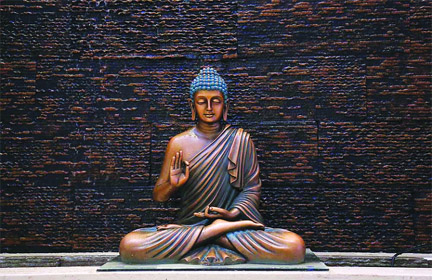
  • Buddha Purnima

    Buddha Purnima

    Also known as Buddha Jayanti or Vaisakhi Buddha Purnima or Vesak, the festival of Buddha Purnima is based on the Asian lunisolar calendar and marks the birth of Gautama Buddha. It is celebrated with great fervour in India, Sri Lanka, Nepal, Bhutan, Tibet and numerous other South East Asian countries including Thailand, Tibet, China, Korea, Laos, Vietnam, Mongolia, Cambodia and Indonesia.
    he birthday of Gautam Buddha, the founder of Buddhism, is celebrated as Buddha Purnima across the world since he was born as Prince Siddhartha Gautama on the Purnima Tithi (full moon day) in 563 BC in Lumbini (modern day Nepal). In Hinduism, Buddha is considered as the ninth avatar of Lord Vishnu hence, this day is commemorated by Buddhists and Hindus all over the world.
    In Theravada Buddhism, it is also observed as the day when Buddha, born as Prince Siddhartha Gautama (c. 563-483 BCE) attained Nirvana (salvation) under the Mahabodhi tree at Bodh Gaya, Bihar, as well as his death anniversary. Gautama Buddha preached Dharma (duty), non violence, harmony and kindness. He left his worldly possessions and princedom at the age of 30 to lead a life searching for the truth, seeking penance in the hopes of liberating himself from suffering (duhkha).
    Devotees of Buddha visit temples, light candles and incense sticks, pray and offer sweets and fruits before the statue of Lord Buddha. Sermons on the life and teachings of Buddha are held and attended by followers all over. People usually dress in white, do not consume non-vegetarian food and distribute kheer, as according to Buddhist lore, on this day a woman named Sujata had offered Buddha a bowl of milk porridge.
    Many followers also free caged birds on this day as a symbol of empathy and compassion for all living beings, one of the most important teachings of Lord Buddha. In India, a large fair takes place in Sarnath, Uttar Pradesh, a major Buddhist pilgrimage site where Buddha is said to have delivered his first sermon after attaining enlightenment.
    Celebrations around the world
    Japan
    The festival in Japan is based on a different legend that says, a dragon appeared in the sky on Buddha’s birthday and poured soma over him, which is a Vedic ritual drink. In the modern arena, Japan celebrates Vesak by pouring amacha, a sweet tea on statues.
    Nepal
    Nepal is home to Lumbini-birthplace of Buddha, and Swayambhu-the holy temple for Buddhists also known as the Monkey Temple. The main door of Swayambhu is opened only on this day; hence, people from all over Kathmandu valley are stimulated by the event. Pilgrims across the world gather in thousands to celebrate Buddha’s birthday at his birthplace.
    Sri Lanka
    Sri Lanka celebrates Vesak for about one week! During this time, the selling of alcohol and fresh meat is prohibited with abattoirs also being closed. The celebrations here include giving of alms and erection of pandals wherein each pandal illustrates a story from the Jataka Tales. Food stalls are set up by Buddhist devotees that provide eatables and drinks to passersby. Also birds, insects and animals are released by the thousands in what is known as a ‘symbolic act of liberation’; of giving freedom to those who are in captivity, imprisoned, or tortured against their will.
    Apart from these, other Asian countries like Korea, Vietnam, Malaysia, Indonesia, and Singapore also participate in processions and prayers by monks and make this day a true symbol of spirituality.
    What Do People Do?
    Many Buddhists visit temples on Vesak to listen to monks give talks and recite ancient verses. Devout Buddhists may spend all day in one or more temples. Some temples display a small statue of Buddha as a baby. The statue is placed in a basin filled with water and decorated with flowers. Visitors to the temple pour water over the statue. This symbolizes a pure and new beginning.
    Many Buddhists pay special attention to Buddha’s teachings during Vesak. They may wear white robes and only eat vegetarian food on and around Vesak. Many people also give money, food or goods to organizations that help the poor, the elderly and those who are sick. Caged animals are bought and set free to display care for all living creatures, as preached by Buddha.
    Government offices, post offices and banks are closed in India on Vesak. Stores and other businesses and organizations may be closed or have reduced opening hours. Transport is usually unaffected as many locals travel for religious celebrations.
    Background
    Gautama Buddha was a spiritual teacher in India. Many scholars are uncertain when he lived. It is believed that Buddha was born at some time between sixth and fourth centuries BCE. Opinions among scholars are generally divided between those who place Buddha’s death about 480 BCE and those who place it as much as a century later.
    Buddha was an influential spiritual teacher during and after his lifetime. Many Buddhists see him as the Supreme Buddha. Festivals to honor Buddha were held for many centuries. The decision to celebrate Vesak as the Buddha’s birthday was formalized at the first conference of the World Fellowship of Buddhists. This conference was held in Colombo, Sri Lanka, in May, 1950. The date was fixed as the day of the full moon in May. Different Buddhist communities may celebrate Vesak on different dates in years when there are two full moons in May. This is because the Buddhist lunar calendar can be interpreted in different ways.
    Symbols
    The dharmacakra or dharma wheel is a symbol often seen during Vesak. It is a wooden wheel with eight spokes. The wheel represents Buddha’s teaching on the path to enlightenment. The eight spokes symbolize the noble eightfold path of Buddhism.

  • Six people missing in Nepal while picking precious Himalayan herb

    Six people missing in Nepal while picking precious Himalayan herb

    KATHMANDU (TIP): At least six people, including two women, have gone missing in Nepal while picking up a precious Himalayan herb meant for vitality, as avalanches struck two remote mountainous regions of the country, police said on May 3. Yarshagumba is a half herb and half insect, believed to have the power to increase vitality and sexual energy. The herb, also known as caterpillar fungus, is found in the high Himalayas.
    An avalanche occurred on Tuesday in the mountainous area of the Darchula district, burying 12 people who had set up tents to collect the herb.
    Out of those buried, seven were rescued alive with the help of security personnel and local people.
    However, four men and one woman could not be located till Wednesday afternoon, according to the police.
    A team of 25 security personnel was headed to the incident site, The Himalayan Times newspaper quoted Deputy Superintendent of Police Deputy Iswori Dutta Bhatta as saying.
    “It takes an hour for us to reach there. Then only we will know the ground realities”, DSP Bhatta, who was on the way to the avalanche site, said.
    In a separate incident, a 32-year-old woman went missing in the Bajhang district after an avalanche swept her while she was picking up Yarshagumba, police said.
    An additional team of police was dispatched to the area to conduct the search and rescue operation.
    Yarshagumba costs at least Rs 50,000 per kg in the Nepalese market and has high demand in the international market. (PTI)

  • China may play spoilsport

    China may play spoilsport

    • India prepares to host G20, SCO summits amidst regional rivalries

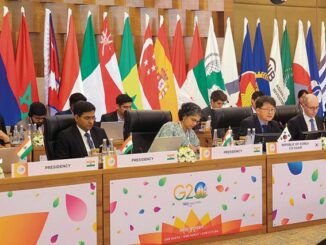
     “The G20 Summit will be bringing together leaders of countries which constitute two-thirds of the world’s population, while providing 90% of global GDP and 80% of global trade. The year 2023 is set to become the most complex and busy period in India’s diplomatic history. It is also going to be a period when the country’s logistical and organizational strengths will be tested. The forthcoming summits will test our ability in bringing countries together in a constructive and harmonious cooperation at the highest level. The summits are coming in the wake of tensions arising from the military standoff in Arunachal Pradesh.

    The issue of special interest will be whether Xi Jinping will participate in the forthcoming summits in the background of the current state of Sino-Indian ties.”

    By G Parthasarathy

    India’s foreign policy and national security establishments are going to be deeply tied up this year in meetings with members of the Shanghai Cooperation Organisation (SCO) and the G20 grouping. They will have to meticulously prepare for the summit meetings which India will be hosting later this year. The SCO includes eight members, six ‘Dialogue Partners’, and four ‘Observer States’. The G20 Summit will be bringing together leaders of countries which constitute two-thirds of the world’s population, while providing 90% of global GDP and 80% of global trade. The year 2023 is set to become the most complex and busy period in India’s diplomatic history. It is also going to be a period when the country’s logistical and organizational strengths will be tested. The forthcoming summits will test our ability in bringing countries together in a constructive and harmonious cooperation at the highest level. The summits are coming in the wake of tensions arising from the military standoff in Arunachal Pradesh.

    The issue of special interest will be whether Xi Jinping will participate in the forthcoming summits in the background of the current state of Sino-Indian ties.

    There are a few points that New Delhi should bear in mind. It will enjoy unstinted support in the conferences from virtually all members of the G20 and Quad. Both Pakistan and China will be present in the SCO. Pakistan is now engrossed in dealing with its collapsing economy. It also has serious problems with Taliban-ruled Afghanistan, and its own jihadis, the Tehreek-e-Taliban, across its 2,600 km border with Afghanistan and Iran. Given Afghanistan’s strategic location abutting Central Asia, China is keen to secure access to its mineral resources and keep in touch with its radical Islamist Taliban regime, especially in the light of its own tensions with its disaffected Uighur Muslims.

    Chinese President Xi Jinping has displayed continuing hostility towards India. China is focusing attention on the joint production of its much-touted JF-17 fighter aircraft in Pakistan and in strengthening the Pakistan navy. The Gwadar Port in Balochistan has a growing Chinese presence, but Pakistan has more serious problems to deal with, with its dwindling foreign exchange resources. In the meantime, the IMF is insisting on stringent conditions before international assistance can flow in. Even Saudi Arabia and the UAE, which have always been more than generous in bailing out Pakistan, are now making it clear that they will open their purse strings only after Pakistan fully meets IMF conditionalities. Across the world, many governments are recognizing that the economic mess that Pakistan is now in flows from its own blunders.

    There has, meanwhile, been a growing feeling in India that much of the tensions with China flow from deliberate actions of the Xi Jinping government, despite India having rolled out the red carpet during his India visit. It has been interesting to see a comprehensive assessment of India’s policies by Liu Zongyi of the Shanghai Institute of International Studies. Liu is one of China’s most prominent experts on South Asian studies. He has visited both India and Pakistan. In a recent article, which has received due attention in academic circles in our eastern neighborhood, he has bluntly spelt out what China thinks about India and its policies. Senior scholars in China do not speak out of turn. They are a convenient medium to convey the thinking of the country’s Communist Party and government.

    His study, titled ‘India’s Rising Great Power Strategy’, is multifaceted. On India’s domestic political issues, it alludes to the ascendancy of ‘Hindu nationalism’. On economic issues, he describes the ‘Make in India’ strategy as an effort to take over China’s place in the global supply chain. India’s strategy, according to him, will be to target China by building bases in Indian Ocean states, advancing the integration of India’s armed forces and improving border infrastructure, including in the Andaman and Nicobar Islands. It also includes building military bases by India in small Indian Ocean islands.

    In his conclusion, he notes: ‘Thus, the biggest divide between India and China is no longer related to border issues. In fact, border issues have now been instrumentalized. For the Indians, the biggest issue between India and China is the battle for the regional and global order. It is a geopolitical conflict, because India is a country that places a lot of emphasis on the idea of spheres of influence.’ Regarding India hosting the G20 and Quad summits, he notes: ‘Ultimately, the G20 Summit cannot be a success without China’s active participation. Even though the West lavishes praise on India, and even though India presents itself as the so-called poster child of developing countries, and the leader of the South, it will most certainly not succeed without China’s support.’ One cannot think of this as anything but a warning, bordering on threat.

    Liu betrays an obsession with the growth of India-US relations. He avers that it is India’s strategy to work with the US to undermine and counter China’s Belt and Road Initiative to prevent the emergence of a ‘China led’ regional order. This is accompanied by his strong justification of recent Chinese military intrusions in Ladakh and Arunachal Pradesh. Liu expresses serious concerns about India’s relations with the US and its involvement in groupings like Quad and I2U2. He conveniently forgets how China has been deliberately seeking to undermine India’s relations with neighbors across South Asia, notably with Sri Lanka, Bangladesh, Nepal and the Maldives. He even forgets the impact of China’s continuing and growing military relations with Rawalpindi, including its transfer of nuclear weapons and missile capabilities to Pakistan.

    Under these circumstances, the issue of special interest in the coming months will be whether Xi Jinping will participate in the forthcoming summits in the background of the current state of Sino-Indian relations, and the widespread concerns in India about his assertive policies.

    (The author is Chancellor, Jammu Central University & Former High Commissioner to Pakistan)

  • Nepal’s newly-appointed PM Prachanda wins vote of confidence in House of Representatives

    Nepal’s newly-appointed PM Prachanda wins vote of confidence in House of Representatives

    Kathmandu (TIP): Nepal’s newly-appointed Prime Minister Pushpa Kamal Dahal ‘Prachanda’ on January 10 won the vote of confidence in the House of Representatives. The 68-year-old CPN-Maoist Centre leader was sworn in as the Prime Minister for the third time on December 26 last year after he dramatically walked out of the pre-poll alliance led by the Nepali Congress and joined hands with opposition leader K P Sharma Oli. Out of the 270 members in the House of Representatives (HoR) present during the voting, 268 voted in favour of Prime Minister Prachanda, while 2 voted against him.

    Pashupati Shamsher JB Rana, the senior-most member of the House, who chaired the meeting, said that the HoR passed the vote of confidence proposal moved by Prachanda. Rana, who chaired the meeting did not vote, while four other lawmakers were absent.

    Prachanda needed only 138 votes in the 275-member parliament to continue his term as the prime minister. (PTI)

  • SOUTH ASIAN HOUSE PARTNERS WITH SXSW @ 2023 FEST

    Founders of SAH
    (Left to Right) – Jitin Hingorani, Monika Samtani, Rohi Mirza Pandya & Kirtana Banskota. (Photo: Satwic Mudigulam)

    By Mabel Pais

    South Asian House (SAH), for the first time, partners with South By South West® (SXSW®) Film Fest 2023, a Festival held for 37 years. SAH will convene at Fourth and Co. in the iconic Warehouse District of downtown Austin, six blocks from SXSW® event headquarters.

    There will be two full days of programming on March 11 and 12, 2023 of this innovative initiative to highlight, recognize, and appreciate South Asians from seven countries – India, Nepal, Pakistan, Bangladesh, Sri Lanka, Bhutan, and Maldives – as well as accomplished members of the diaspora.

    Programs will range from panel discussions on women in film, business tech, and climate change to curated sets of live and electronic music to a Reel Deal session, Comedy Hour, Industry Leadership Sessions, Mental Health Corner, Queer/Dalit Visual Art NFTs, and Desi Drag Brunch to a red carpet, awards ceremony on Oscar® Sunday recognizing South Asian Trailblazers in Cinema.

    The initiative is the brainchild of veteran producers, curators, and programmers Rohi Mirza Pandya (Box Office Guru Media & Desipina), Monika Samtani (Ms. Media & The Fem Word), Jitin Hingorani (Jingo Media & DFW South Asian Film Festival), and Kirtana Banskota (Banskota Productions & Nepal America Film Society).

    Follow @southasianhouse on Instagram or sign up to receive updates through the website, southasianhouse.com.

    (Mabel Pais writes on The Arts and Entertainment, Social Issues, Health & Wellness, Cuisine and Spirituality)

  • India abstains on UNHRC resolution to investigate human rights violations, crimes in Russia-Ukraine war

    India abstains on UNHRC resolution to investigate human rights violations, crimes in Russia-Ukraine war

    The resolution was adopted with 32 votes in favor, two against (Russia and Eritrea) and 13 abstentions, including India, China, Pakistan, Sudan and Venezuela

    GENEVA/ UNITED NATIONS (TIP): India on Friday, March 4,  abstained in the UN Human Rights Council on a vote to urgently establish an independent international commission of inquiry to investigate alleged human rights violations and related crimes following Russia’s military operation in Ukraine. The 47-member Council voted on a draft resolution on the ‘Situation of human rights in Ukraine stemming from the Russian aggression.’ The resolution was adopted with 32 votes in favor, two against (Russia and Eritrea) and 13 abstentions, including India, China, Pakistan, Sudan and Venezuela.

    The countries voting in favor included France, Germany, Japan, Nepal, UAE, UK and the US.

    The resolution, which strongly condemned Russia’s aggression against Ukraine, decides to “urgently establish an independent international commission of inquiry” to “investigate all alleged violations and abuses of human rights and violations of international humanitarian law, and related crimes, in the context of the Russian Federation’s aggression against Ukraine, and to establish the facts, circumstances, and root causes of any such violations and abuses.”

    A day before the resolution was adopted, India said at the Urgent Debate Thursday regarding the human rights situation in Ukraine at the 49th Human Rights Council Session in Geneva that it is greatly concerned over the steadily worsening humanitarian situation in Ukraine.

    India urged for an immediate cessation of violence and an end to hostilities. “No solution can ever be arrived at the cost of human lives. Dialogue and diplomacy are the only solution for settling differences and disputes,” India said.

    India called for respect and protection of human rights of people in Ukraine and safe humanitarian access to conflict zones.

    “We are also deeply concerned over the safety and security of thousands of Indian nationals, including young Indian students, who are still stranded in Ukraine. We are working together with neighboring States for their evacuation,” it said.Three human rights experts will be appointed to the Commission of Inquiry by the President of the Human Rights Council for an initial duration of one year. The Commission will be mandated to “identify, where possible, those individuals and entities responsible for violations or abuses of human rights or violations of international humanitarian law, or other related crimes, in Ukraine, with a view to ensuring that those responsible are held accountable.’ The resolution expressed grave concern at the ongoing human rights and humanitarian crisis in Ukraine and calls on Russia to “immediately end its human rights violations and abuses and violations of international humanitarian law in Ukraine”.

    It also calls for the “swift and verifiable” withdrawal of Russian troops and Russian-backed armed groups from the entire territory of Ukraine, within its internationally recognized borders.  India has abstained on two resolutions on Ukraine in the 15-nation Security Council and one in the 193-member General Assembly in the last one week. The UN General Assembly this week overwhelmingly voted to condemn Russian aggression against Ukraine and demanded that Moscow “completely and unconditionally” withdraw all of its military forces from the territory of Ukraine. India abstained on the resolution, which received 141 votes in favor, five against and a total of 35 abstentions.

    (Source: PTI)

  • India in history this Week-December 31, 2021, to january 6, 2022

    India in history this Week-December 31, 2021, to january 6, 2022

    31 DECEMBER

    1925       Hindi writer Shrilal Shukla, born for satire, was born.

    1984       Rajiv Gandhi became Prime Minister and Congress President for the first time.

    1802       The Maratha ruler Peshwa Bajirao II came under the protection of the British.

    1866       Chief Minister of Bihar and freedom fighter Krishna Ballabh Sahai was born.

    1926     Renowned Indian writer, historian, best orator and scholar Vishwanath Kashinath Rajwade died.

    1929    Congress workers led by Mahatma Gandhi started the movement for complete self-rule in Lahore.

    01 JANUARY

    2001       Calcutta was officially named Kolkata.

    1971       Broadcasting of cigarette advertisements on television was banned.

    1950       Rahat Indouri, famous Urdu poet and lyricist was born.

    2020       India’s first Chief of Defense Staff General Bipin Rawat, who took charge (CDS) on 1 January, 2020

    02 JANUARY

    1978       Air India had a Boeing 747 accident. All 213 people aboard this plane were killed.

    1757       British troops captured the city of Calcutta (now Kolkata) in India.

    1954       Bharat Ratna Award was started.

    03 JANUARY

    2009       Rajasthan Chief Minister Ashok Gehlot won the trust vote in the Vidhan Sabha.

    2005       USA announces Rs 6.2 crore assistance to provide clean drinking water to tsunami victims in Tamil Nadu.

    1995       360 people died in a fierce fire in a school in Dabwali, Haryana.

    1968       Launch of ‘Maneka’, the country’s first meteorological rocket.

    1943       For the first time, information about missing people was broadcast on television.

    1929       Mahatma Gandhi met Lord Irwin.

    1901       Brahmacharya Ashram opened in Shanti Niketan.

    1984       Ravindra Nath Tagore inaugurated the ‘Pausha Mela’ at Shanti Niketan.

    1998       Bangladesh refused to hand over India to ULFA general secretary Anoop Chetia.

    04 JANUARY

    1994       Rahul Dev Burman (RD Burman) famous music composer of Hindi films passed away.

    1972       Institute of Criminology and Forensic Science inaugurated in New Delhi.

    1966       India-Pakistan Conference between Prime Minister of India Lal Bahadur Shastri and General Ayub Khan of Pakistan begins.

    05 JANUARY

    2014       Indian communication satellite GSAT-14 was successfully placed into orbit.

    2009       Omar Abdullah, President of National Conference, sworn in as Chief Minister of Jammu and Kashmir.

    2006       India and Nepal extend the duration of the transit treaty by 3 months.

    1957       Central Sales Tax Act comes into effect.

    1955       Birth of West Bengal Chief Minister Mamata Banerjee in Calcutta (now Kolkata).

    1941       Birth of cricketer Mansoor Ali Khan Pataudi in Bhopal.

    1934       Birth of Bharatiya Janata Party leader Murli Manohar Joshi.

    1890       Advocate Gyanendra Mohan Tagore died.

    1671       Chhatrapati Shivaji Maharaj captured the Salhar region from the Mughals.

    1659       Aurangzegb defeated Shah Shuja in the Battle of Khajwah.

    06 JANUARY

    1966       Oscar-winning Indian composer AR Rahman was born.

    1967       Allah Rakha Rahman, who created a new place in the world of music, was born.

    1959       One of the all-rounders of the country, Kapil Dev was born on this day.

    1932       Famous Hindi writer Kamleshwar was born.

    1928       Indian playwright and theatergoer Vijay Tendulkar was born.

    1885       Bharatendu Harishchandra, one of the leading Hindi poets and writers of modern India, died.

    1918       Bharata Vyas, the famous lyricist of Bollywood, was born.

  • India in history this Week-December 10 to December 16, 2021

    India in history this Week-December 10 to December 16, 2021

    10 DECEMBER

    1878       The freedom fighter leader G. Rajagopalachari was born.

    1878       Birth of Muhammad Ali Johar, one of the founders of Jamia Millia Islamia in Rampur.

    2001       Dada Muni, one of the stalwarts of Indian cinema, said goodbye to the world.

    1992       The first hovercraft service of the country was started in Gujarat.

    1998       Amartya Sen was awarded the Nobel Prize for Economics in Stockholm.

    11 DECEMBER

    1911       Dilip Kumar, one of the greatest actors of Indian cinema, was born.

    1935       Former President of the country Pranab Mukherjee was born in Birbhum in West Bengal.

    1969       Vishwanath Anand, the emperor of chess, was born.

    2011       Pandit Ravi Shankar died.

    1845       First Anglo-Sikh War: The Sikh army crossed the Sutlej River in Punjab.

    1858       Bankim Chandra Chattopadhyay and Yadunath Bose became the first Bachelor of Arts subjects from the University of Calcutta.

    1946       Rajendra Prasad was appointed the President of the Constituent Assembly.

    1967       In western India, a magnitude 6.5 earthquake killed 170 people.

    1687       The East India Company formed a municipal corporation in Madras (India).

    12 DECEMBER

    1911       The capital of India was shifted from Calcutta to Delhi.

    1971       All the facilities provided to the former kings by the Indian Parliament were canceled.

    1992       Giant Buddha statue was installed in Hyderabad’s Hussain Sagar lake.

    1996       Signing of 30-year treaty on the sharing of Ganga water between India and Bangladesh.

    2001       India gave two cheetah helicopters and weapons to Nepal.

    1964       Famous Hindi poet and litterateur Maithilesharan Gupta died.

    13 DECEMBER

    1232       Iltutmish, the ruler of the Ghulam dynasty, captured Gwalior.

    2001       The Indian Parliament was attacked by terrorists.

    1921       The Banaras Hindu University was inaugurated by the ‘Prince of Wales’.

    1955       India and the Soviet Union accepted the Panchsheel agreement.

    1961       Mansoor Ali Khan Pataudi started his Test match career against England in Delhi.

    1998       Mahatma Ramchandra Veer was awarded the “Bhai Hanuman Prasad Poddar Rashtra Seva” award from the Bada Bazaar Library in Kolkata.

    2008       For the fifth phase of Jammu and Kashmir, 57% polling was held in 11 assembly constituencies.

    2012       In the final match of the blind Twenty20 World Cup, the Indian cricket team defeated Pakistan by 30 runs to take the title of world winner.

    1955       Former Chief Minister of Goa Manohar Parrikar was born.

    2000       Former captain of the Indian cricket team, Vijay Samuel Hazare became the first person to receive the ‘Castrol Lifetime Achievement Award’.

    14 DECEMBER

    1924       Director, producer, showman Raj Kapoor was born.

    1901       Mahatma Gandhi reached Rajkot via Porbandar.

    1960       The Organization for Economic Cooperation and Development (OECD) was established.

    2005       11 Hindus are condemned with life imprisonment for their involvement in the killing of Muslims in the 2002 Gujarat violence.

    2011       Poisonous liquor banned in India kills 166 people in West Bengal.

    15 DECEMBER

    1950       The iron man Sardar Vallabhbhai Patel died.

    1749       Chhatrapati Shivaji’s grandson Shahu died.

    1953       India’s S. Vijayalakshmi Pandit was elected the first woman president of the eighth session of the United Nations General Assembly.

    1991       Filmmaker Satyajit Ray was awarded a Special Oscar for his achievements in the cinema world.

    16 DECEMBER

    1985       The country’s first fast breeder nuclear react started functioning in Kalpakkam.

    1971       Bangladesh separated from Pakistan and became an independent nation after agreeing to a cease-fire between India and Pakistan.

    1993       ‘Education for all’ conference starts in New Delhi.

    2004       Doordarshan’s free to air DTH service ‘DD Direct +; Was launched by the Prime Minister.

    1903       The Taj Mahal Palace Hotel in Mumbai was opened for guests.

    2012       In New Delhi, a woman was gang-raped in a bus, leading to public protests against the Government of India and the Government of Delhi.

    1937       Hawa Singh, one of the best boxers in India, was born.

  • Indian American US Air Force physician among 10 chosen by NASA for as astronauts future missions

    Indian American US Air Force physician among 10 chosen by NASA for as astronauts future missions

    HOUSTON (TIP): Indian American physician Anil Menon, a lieutenant colonel at the US Air Force, has been selected by NASA along with nine others to be astronauts for future missions, the American space agency has announced.

    Menon, 45, was born and raised in Minneapolis, Minnesota, to Ukrainian and Indian immigrants. He was SpaceX’s first flight surgeon, helping to launch the company’s first humans to space during NASA’s SpaceX Demo-2 mission and building a medical organization to support the human system during future missions. In a statement, NASA announced that it has chosen 10 new astronaut candidates from a field of more than 12,000 applicants to represent the US and work for humanity’s benefit in space.

    NASA Administrator Bill Nelson introduced the members of the 2021 astronaut class, the first new class in four years, during a Monday, December 6 event at Ellington Field near NASA’s Johnson Space Center in Houston.

    “Today we welcome 10 new explorers, 10 members of the Artemis generation, NASA’s 2021 astronaut candidate class,” Nelson said. “Alone, each candidate has ‘the right stuff,’ but together they represent the creed of our country: E pluribus Unum—out of many, one,” he said. The astronaut candidates will report for duty at Johnson in January 2022 to begin two years of training. Astronaut candidate training falls into five major categories: operating and maintaining the International Space Station’s complex systems, training for spacewalks, developing complex robotics skills, safely operating a T-38 training jet, and Russian language skills.

    Upon completion, they could be assigned to missions that involve performing research aboard the space station, launching from American soil on spacecraft built by commercial companies, as well as deep space missions to destinations including the Moon on NASA’s Orion spacecraft and Space Launch System rocket.

    “Each of you has amazing backgrounds,” Pam Melroy, former NASA astronaut and NASA’s deputy administrator, told the candidates. “You bring diversity in so many forms to our astronaut corps and you stepped up to one of the highest and most exciting forms of public service.” Applicants included US citizens from all 50 states, the District of Columbia, and US territories Puerto Rico, Guam, the Virgin Islands, and Northern Mariana Islands.

    For the first time ever, NASA required candidates to hold a master’s degree in a STEM field and used an online assessment tool. The women and men selected for the new astronaut class represent the diversity of America and the career paths that can lead to a place in America’s astronaut corps.

    Menon previously served NASA as the crew flight surgeon for various expeditions taking astronauts to the International Space Station. He is an actively practicing emergency medicine physician with fellowship training in wilderness and aerospace medicine. As a physician, he was a first responder during the 2010 earthquake in Haiti, 2015 earthquake in Nepal, and the 2011 Reno Air Show accident. In the Air Force, Menon supported the 45th Space Wing as a flight surgeon and the 173rd Fighter Wing, where he logged over 100 sorties in the F-15 fighter jet and transported over 100 patients as part of the critical care air transport team.

  • India in history this Week- December 3 to December 9, 2021

    India in history this Week- December 3 to December 9, 2021

    03 DECEMBER

    1844       The first President of the country Dr. Rajendra Prasad was born.

    1751       Battle of Arnie in India (Second Carnatic War): A British East India Company-led army under Robert Clive defeats a very large Franco-Indian army under the command of Rana Sahib at Archana.

    1796       Baji Rao II was made the Peshwa of the Maratha Empire. He was the last Peshwa of the Maratha Empire.

    1889       The youngest hanged revolutionary, Khudiram Bose, was born in the independence movement.

    1915       A magnitude 6.5 earthquake in Bhutan and Arunachal Pradesh killed 170 people and destroyed many homes.

    1971       The Emergency came into force in the country after the war between India and Pakistan started.

    1979       Hockey magician Major Dhyanchand  died.

    2004       India and Pakistan agreed to restore rail connectivity between Munabav and Khokhrapar after 40 years.

    2011       Film actor Dev Anand died.

    1984       Leaking toxic gas from the Union Carbide factory in Bhopal killed at least 3000 people and caused several thousands of physical deformities.

    1959       India and Nepal signed the agreement of Gandak Irrigation and Power Project.

    1967       India’s first rocket (Rohini RH 75) was launched from Thumba.

    2008       Chief Minister of Maharashtra Vilasrao Deshmukh resigned from his post on the day after the terrorist incident of 23 November in Mumbai.

    04 DECEMBER

    2008       Renowned historian Romila Thapar was chosen for the Cluj honor.

    1888       Birth of historian Ramesh Chandra Majumdar.

    1860       Agustino Lawrenceo of Margao, Goa, received a doctorate in chemistry from the University of Paris. He became the first Indian to pursue a doctorate from a foreign university.

    1899       For the first time, the vaccine of typhoid was used to protect humans from this disease.

    1919       The twelfth Prime Minister of India, Indra Kumar Gujral was born.

    1910       Ramaswamy Venkataraman, the eighth president of India, was born.

    1971       The Indian Navy attacked the Pakistani Navy and Karachi.

    05 DECEMBER

    1955       The STD service that provides long distance telephone calls to every home came into existence on this day in 1955.

    1971       India recognized Bangladesh as a country.

    1895       The birth of Josh Malihabadi, the famous Urdu poet of India and Pakistan.

    1941       Famous Indian female painter Amrita Shergill died in Lahore. Many of his artworks were appreciated worldwide.

    1969       The birth of Anjali Bhagwat, the famous shooter who has illuminated the name of India in the world in shooting.

    1998       Russia agrees to give ‘Krivak class’ multi-purpose warship to Indian Navy.

    1999       Yukta Mukhi took the title of Miss World to her name.

    1657       Shah Jahan’s younger son Murad proclaimed himself king.

    1943       Japanese airplane bombed Kolkata.

    1950       Freedom fighter, poet, yogi and philosopher Arvind Ghosh died in Puducherry.

    1950       Sikkim became a protected state of India.

    06 DECEMBER

    1732       Warren Hastings, the first Governor General of the East India Company, was born.

    1907       The first incident of dacoity related to India’s freedom struggle took place at Chingaripota railway station.

    1992       Babri Masjid in Ayodhya was demolished by fierce Hindu kar sevaks. After this, riots broke out in many states of India.

    1907       The first incident of dacoity related to India’s freedom struggle took place at Chingaripota railway station.

    1956       Bahujan political leader and constitution builder Babasaheb Bhimrao Ambedkar died.

    1987       MiG-29 joined the Indian Air Force, renamed ‘Baz’.

    07 DECEMBER

    1949       Indian Armed Forces Flag Day is celebrated.

    1782       Hyder Ali, the ruler of Mysore died.

    1825       The first steam-powered ship ‘Enterprise reached Kolkata.

    1856       The ‘Hindu widow’ was officially married for the first time in the country.

    1995       India launched communication satellite INSAT-2C.

    2003       Raman Singh holds the post of Chief Minister of Chhattisgarh.

    2008       Indian golfer Jeev Milkha Singh won the Japan Tour title.

    2016       Famous Indian actor, comedian, political satirist, playwright, film director and advocate Cho Ramaswamy passed away.

    08 DECEMBER

    1875       The great liberal leader Tej Bahadur Sapru was born in Aligarh.

    1879       The great revolutionary Yatindra Nath Mukherjee aka Barrier Jatin was born.

    1900       Pandit Uday Shankar, born dancer and dance director of modern dance of India, was born.

    2002       Gomutra was patented by the United States after India’s traditional bio-wealth, neem, turmeric and berries.

    2005       The Red Cross and Red Crescent Society accepted a red crystal of diamond shape in the white background as a new additional symbol.

    1967       The first submarine INS Kalwari was inducted into the Indian Navy.

    1990       Uday Shankar, the famous Indian classical dance dancer, dance director and ballet producer was born.

    1947       Parmanand, the great revolutionary brother of the Indian freedom struggle, died.

    09 DECEMBER

    1946       The first meeting of the Constituent Assembly that made the country’s highest law was on this day.

    1946       UPA Chairperson Sonia Gandhi was born.

    1971       During the Liberation War, the Indian Army had pierced the air campaign Meghna Heli Bridge.

    1484       The great poet and saint Surdas was born.

    1758       The thirteen-month-long war of Madras began in India. This was the most dangerous war between Britain and France in India.

    1898       Belur Math was established in Kolkata.

    2001       United National Party leader Ranil Vikram Singhe was sworn in as the Prime Minister of Sri Lanka.

    1825       Rao Tula Ram, a prominent hero of the Sepoy Mutiny was born.

  • Nepal’s new foreign min wants friendly ties with India, China

    Nepal’s new foreign min wants friendly ties with India, China

    Kathmandu (TIP): Nepal’s newly-appointed Foreign Minister Narayan Khadka said on Wednesday that he would work towards maintaining friendly and balanced relations with India and China and forge national consensus with political parties on matters of foreign relations. Khadka, 72, was sworn in as the Minister for Foreign Affairs on Wednesday. President Bidya Devi Bhandari administered the oath of office and secrecy to Khadka in a ceremony at the Rashtrapati Bhawan, Shital Niwas, in the presence of Prime Minister Sher Bahadur Deuba.

    Talking to reporters after assuming the office, Khadka said he would work towards ensuring friendly, amicable and balanced relations with both the immediate neighbours — India and China. Arguing that the foreign policy of a country is not specific to any political party, the senior Nepali Congress leader said he would work towards forging national consensus with other political parties on matters of foreign relations, a website reported.

    He also said the issue of the Millennium Challenge Corporation (MCC) Compact Agreement would also be resolved, keeping in view the country’s larger interests.

    Under the US $500 million MCC programme, the US government would provide grant assistance which would mainly be utilised on strengthening Nepal’s transmission line to facilitate the export of hydro-electricity to India in the near future and also improve the country’s road networks.

    Khadka is the fifth minister to be appointed in the Deuba government, which was formed on July 13. With his appointment, there are now seven ministers in the government, including Deuba, and one minister of state. — PTI

  • 38 people killed, 51 injured in rain-triggered landslides, floods in Nepal

    Kathmandu (TIP): Flash floods and landslides triggered by torrential rains across Nepal have left at least 38 people dead, including seven children, and wounded over 50 others in the last 20 days, the Home Ministry said on July 5. The ministry said 51 people sustained injuries and 24 people, including three children, have gone missing in the incidents of floods and landslides in different parts of the country.

    Similarly, 1,250 people have been evacuated from different parts of the country that were hit by the natural disaster, it said.

    Five people were killed in Sindhupalchowk district, four killed in Doti district, three each in Gorkha and Rolpa, two each in Chitawan, Tanhun, Pyuthan and Rautahat, one each in Lalitpur, Khotang, Saptari, Kavre, Dhading, Sindhuli, Jumla, Arghakhachi, Dang, Palpa, Kaski, Kalikot, Panchthar, Bajhang and Bajur districts, the ministry said.  (PTI)