Tag: Nepal

  • Nepal asks climbers to clean quake-littered Everest camp

    Nepal asks climbers to clean quake-littered Everest camp

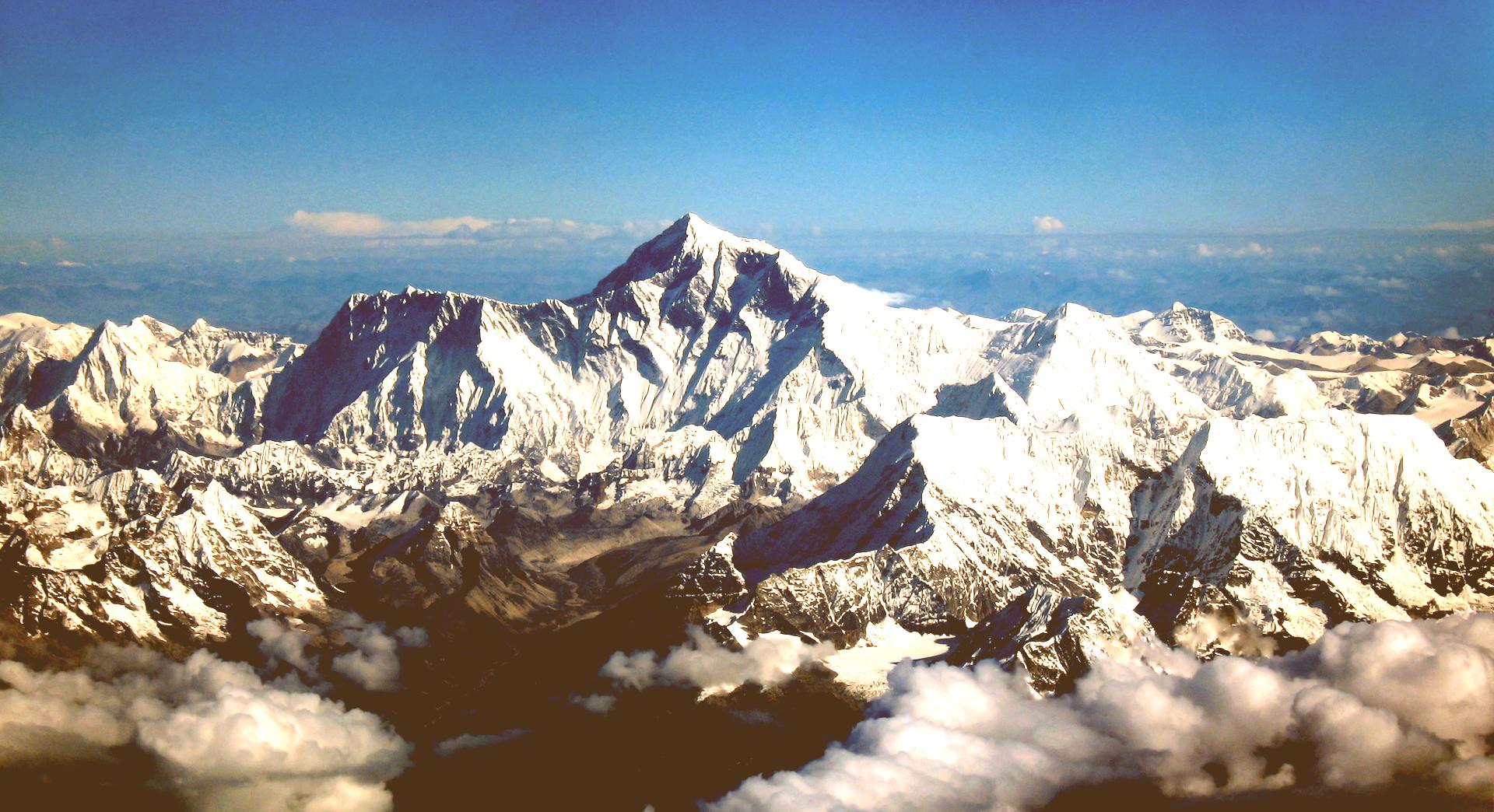
    KATHMANDU (TIP): Nepal is urging climbers on Mount Everest, the world’s highest peak, to help remove garbage from a camp abandoned two years ago after an earthquake triggered avalanches killing 18 people, as officials prepare to handle a rush of climbers.

    Tourism and mountain climbing are the main sources of income for the Himalayan nation and make up 4 percent of its economy. Climbing is recovering from a series of earthquakes in 2015 that killed a total of 9,000 people.

    Ten huge canvas bags each capable of holding 80 kg (176 lbs) of trash are to be placed at the ruined site of Camp Two on Mount Everest for climbers to deposit garbage they have retrieved, said Tourism Department official Durga Dutta Dhakal.

    “This way we hope to bring down the trash without any extra cost, using helicopters that return empty after dumping climbing ropes at the high camp,” he told Reuters on Wednesday.

    The helicopters operate during the climbing season that typically runs from March to May to dump climbing ropes.

    Sherpas would be paid to pick up the trash, said veteran climber Russell Brice, a New Zealander who runs the Himalayan Experience guiding company. “We will pay $2 for each kilo of trash the sherpas bring down,” Brice said.

    Mountaineers have removed more than 16 tonnes of trash from Everest in the past, but there are no estimates of how much still litters the mountain.

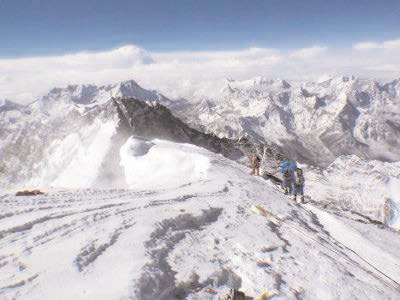
    Camp Two, located at 6,400 metres (21,000 feet) above sea level above the treacherous Khumbu Icefall known for crevasses and avalanches, is a major camping site for climbers of Mount Everest and Lhotse, the world’s fourth highest peak.

    More than 600 people scaled the 8,850-metre (29,035-foot) Everest summit last year from the Nepali and Chinese sides.

    Hiking officials expect the number to swell this season as many mountaineers, whose $11,000 per-person permits received two-year extensions after the quake, are expected to return.

    A group of hiking companies that sponsor climbers said it was trying to boost coordination between teams at high camps to avoid long queues of climbers forming in the mountain’s “Death Zone”.

    “This will reduce crowding, minimize risks and improve safety,” Dambar Parajuli, chief of the Expedition Operators’ Association, told Reuters. (Reuters)

  • US Universities Register Drop In Indian Student Applications, Finds Survey

    US Universities Register Drop In Indian Student Applications, Finds Survey

    Washington: US universities have registered a hefty drop in the number of applications from Indian students amid a spate of hate crimes and fear about potential changes to visa policies by the Trump administration, found a survey. According to the preliminary results of the survey of more than 250 American colleges and universities conducted by six top American higher education groups, students from India this fall registered a 26 per cent decline in undergraduate applications and 15 per cent decline has been reported in graduate applications.

    The full version of the ‘Open Doors 2016’ report is slated to be released later this week. These higher educational institutions reported a drop of an average of 40 per cent application from international students.

    The report said that India and China currently make up 47 per cent of US international student enrollment, with almost half a million Indian and Chinese students studying in the US.

    China reported a drop of 25 per cent application in undergraduate studies and 32 per cent from graduate studies, said the survey report.

    The survey was conducted jointly by American Association of Collegiate Registrars and Admissions Officers, the Institute of International Education, Association of International Educators, the National Association for College Admission Counseling (NACAC) and its focus subgroup International Association for College Admission Counseling (ACAC).

    The most frequently noted concerns of international students and their families, as reported by institution-based professionals, include perception of a rise in student visa denials at US embassies and consulates in China, India and Nepal and perception that the climate in the US is now less welcoming to individuals from other countries.

    It also includes concerns that benefits and restrictions around visas could change, especially around the ability to travel, re-entry after travel, and employment opportunities and concerns that the Executive Order travel ban might expand to include additional countries.

    “I’d say the rhetoric and actual executive orders are definitely having a chilling effect on decisions by current applicants/admitted students, and by extension are likely to affect future applicants as well,” Wim Wiewel, Portland State’s president, who was recently in India told Inside Higher Education.

    “India’s demonetisation policy and the weakness of the value of the rupee against the dollar,” are other factors according to Wiewel, the news report said.

    The Portland University has registered 27 per cent drop in the number of Indian students this fall.

    “However, we were struck by how much US higher education is still considered the holy grail, and that especially in the southern half of India almost every middle class family seems to have a relative in the US… Thus, if nothing too bad happens in the future we will recover from this, but people are watching,” he noted.

    A lot of universities are concerned about declines in master’s students from India, John J Wood, the senior associate vice provost for international education, at the State University of New York at Buffalo, was quoted as saying by Inside Higher Education.

    “A lot of the master’s students coming from India are ultimately hoping to get on the job market here through OPT (Optional Practical Training) and eventually H-1B,” Wood said.

    The optional practical training programme allows international students to work for one to three years on their student visas after graduation.

    “There’s a lot of fear and anxiety about potential changes to H-1B and/or OPT that would limit their opportunities. Making the decision to invest in a master’s program when the uncertainty on the other end is there is an issue for a lot of students in India,” he was quoted as saying by the report.

    Recent killing of an Indian engineer in Kansas and other hate crime is another factor that would have an impact on application of students from India, Woo said.

    “Those events affect us, whether we like it or not. The impact is not just going to be on Indian nationals. It could impact other students from other countries who may now be concerned about coming,” Ahmad Ezzeddine, associate vice president for educational outreach and international programs, at Wayne State University, told a media outlet that focuses on higher education.

  • Nepal to hold first local elections in 20 years

    Nepal to hold first local elections in 20 years

    KATHMANDU (TIP): Nepal will hold its first local elections in two decades in May, the government has announced, a key moment in the country’s fraught transition to democracy. The impoverished Himalayan nation emerged from a brutal decade-long civil war in 2006, which brought the end of the 240-year-old Hindu monarchy and transformed it into a secular republic.

    But deep political divides have prevented it from implementing a new constitution that paves the way for elections, but which the minority Madhesi community says leaves them politically marginalised. “The government has taken a historic decision. The election will be held in a single phase across the country,” Prime Minister Pushpa Kamal Dahal said following a late night cabinet meeting on Monday.

    “Election is compulsory for safeguarding all agendas and implementing the constitution for the functioning of democracy.” Local polls will be held on May 14, paving the way for provincial and then national elections later in the year. The Madhesis, who live in the densely populated Terai plains bordering India, want the constitution to be amended first and have pledged to protest against the polls.

  • Centre clears Rs 5,700-crore hydro project to be set up in Nepal

    Centre clears Rs 5,700-crore hydro project to be set up in Nepal

    NEW DELHI (TIP): The government on Feb 22 approved a 900 MW hydro power project to be set up in Sankhuwasabha district of Nepal at a cost of Rs 5,723.72 crore.

    The decision to approve the Arun-III project was taken at a meeting of the Cabinet Committee on Economic Affairs headed by Prime Minister Narendra Modi here on Wednesday.

    “The Cabinet today approved setting up of Arun-III project at an estimated cost of Rs 5,723.72 crore. The project is expected to achieve financial closure by September this year. The projected will be implemented within five years,” power minister Piyush Goyal told reporters at a briefing here.

    The project is being implemented by a 100 per cent subsidiary of state-run SJVN Ltd. SJVN Ltd is joint venture between Central and Himachal Pradesh governments with shareholding of 64.46 per cent and 25.51 per cent, respectively. “Union Cabinet has approved the project and its investment. It was awaited. The project is being implemented by 100 per cent subsidiary of SJVN Ltd,” SJVN Ltd chairman and managing director RN Misra said.

    The subsidiary SJVN Arun-3 Power Development Company Pvt Ltd (SAPDC) was incorporated and registered on April 25, 2013 as a private limited company under Nepal’s Companies Act.

    -PTI

  • Strike paralyses normal life in  Nepal, 100 arrested

    Strike paralyses normal life in Nepal, 100 arrested

    KATHMANDU (TIP): Normal life has been affected in Nepal as a Maoist faction imposed a nationwide strike to pressurise the government to ensure food security and lower the prices of essential goods, with police arresting more than 100 people for vandalising vehicles and forcing shops to close.

    The strike was called by the Netra Bikram Chand-led CPN (Maoist). Most of the educational institutions remained closed in Kathmandu and shops remained partially closed.

    Most of the public vehicles, including taxis, were off the road.

    Maoist cadres vandalised vehicles in different parts of the country.

    The police arrested at least 100 cadres belonging to the CPN-Maoist (Chanda), a smaller faction of Maoist party, who were involved in vandalising shops and vehicles to enforce the shut down, the police said.

    Media reports said that the party was demanding food guarantee of the people and opposing price hike of the consumer goods.

    A large number of security personnel have been deployed in the capital city streets to prevent any untoward incident.

    The agitators torched a parked taxi and two motorcycles as they defied the strike, according to the police. (PTI)

  • Nepal drains dangerous glacial lake near Mount Everest

    Nepal drains dangerous glacial lake near Mount Everest

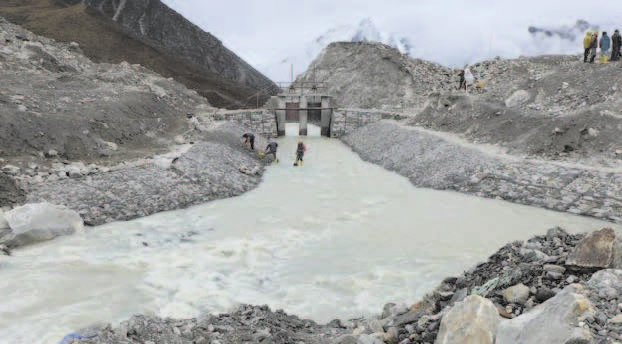
    KATHMANDU (TIP): Nepal has successfully drained part of a giant glacial lake near Mount Everest, averting risk of a disastrous flood that could have threatened thousands of lives, officials said on Nov 1.

    Scientists say climate change is causing Himalayan glaciers to melt at an alarming rate, creating huge glacial lakes which could burst their banks and devastate mountain communities.

    Imja Tsho, located at an altitude of 5,010 metres (16,437 feet), just 10 kilometres (6.2 miles) south of the world’s highest peak, is the fastest-growing glacial lake in Nepal.

    The Himalayan nation was devastated by a 7.8-magnitude earthquake last year, raising alarm about about the risks of flash flooding from glacial lakes.

    “Draining the lake was on the priority of the government because of its high risk. We have successfully mitigated a disaster right now,” Top Bahadur Khatri, the project manager of the Community Based Flood and Glacial Lake Outburst Risk Reduction Project, told AFP.

    Khatri said that the lake, nearly 150 metres deep, had its water lowered by 3.5 metres after six months of rigorous work — draining more than five million cubic metres of water.

    The Nepal government worked together with United Nations Development Programme (UNDP) to drain the lake.

    A team of 40 Nepal army personnel and more than 100 local high altitude workers worked in shifts since April to complete the project, airlifting or using yaks to transport the equipment.

    “A 45-metres long tunnel was constructed to aid outflow of the lake downstream. We have also installed a mechanical gate to control the discharge,” said Lieutenant Colonel Bharat Lal Shrestha, who led the army team. “Because of the wind, snow and thin air, we could work only two or three hours a day. It was a challenging task,” he told AFP.

    The surface area covered by the lake expanded from 0.4 to 1.01 square kilometres between 1984 and 2009, triggering concerns that it may breach its banks and flood villages downstream.

    Experts say that a flood+ would have a catastrophic impact on the lives of more than 50,000 people living in nearby villages and even in southern districts of the country.

    As part of the project, early warning systems have also been installed in villages downstream.

    “Our plan is to now replicate the work in other high-risk glacial lakes,” Khatri said. Nepal is home to some 3,000 glacial lakes. In 2014 a major international study warned that glaciers in the Everest region could shrink by 70 percent or disappear entirely by the end of the century, owing to climate change.

    A study published by the Kathmandu-based International Centre for Integrated Mountain Development used satellite imagery to show how Nepal’s glaciers had already shrunk by nearly a quarter between 1977 and 2010. (AFP)

  • Nepal lifts ban on allowing migrant workers to Afghanistan

    Nepal lifts ban on allowing migrant workers to Afghanistan

    KATHMANDU (TIP): Nepal will allow its nationals to go to war-torn Afghanistan for work, a labour ministry official said on Oct 27, ending an almost four-month ban imposed after 13 Nepali security guards were killed by a Taliban suicide bomber in the Afghan capital.

    Labour Ministry spokesperson Govinda Mani Bhurtel said employers would have to make adequate security arrangements for their stay, travel and work before Nepali nationals were given a work permit by the government to leave Nepal.

    “We’ll allow our people to go to Afghanistan to work only with foreign missions and international companies located inside the Green Zone which is considered safe,” Bhurtel told the Thomson Reuters Foundation.

    “Their security and safety must be ensured by the employers,” he said, adding the organisations included UN agencies and embassies of the United States, Britain and Canada.

    Nepalis are still banned from working in other conflict hotspots such as Iraq, Libya and Syria, Bhurtel said.

    The impoverished Himalayan nation, which relies heavily on remittances from its migrant workers, imposed the ban after 13 Nepalis and two Indians who were security guards at the Canadian Embassy in Kabul were killed while on a bus on June 23.

    Nepal, one of the world’s 10 poorest countries, is still reeling from two devastating earthquakes in 2015 that killed nearly 9,000 people.

    Political instability since a decade-long civil conflict ended in 2006 has discouraged investment, stunted growth and curtailed job creation — forcing hundreds of thousands of Nepalis to migrate overseas in search of work.

  • Nepal lifts ban on allowing migrant workers to Afghanistan

    Nepal lifts ban on allowing migrant workers to Afghanistan

    KATHMANDU (TIP): Nepal will allow its nationals to go to war-torn Afghanistan for work, a labour ministry official said on October 20, ending an almost four-month ban imposed after 13 Nepali security guards were killed by a Taliban suicide bomber in the Afghan capital.

    Labour Ministry spokesperson Govinda Mani Bhurtel said employers would have to make adequate security arrangements for their stay, travel and work before Nepali nationals were given a work permit by the government to leave Nepal.

    “We’ll allow our people to go to Afghanistan to work only with foreign missions and international companies located inside the Green Zone which is considered safe,” Bhurtel told the Thomson Reuters Foundation.

    “Their security and safety must be ensured by the employers,” he said, adding the organisations included UN agencies and embassies of the United States, Britain and Canada.

    Nepalis are still banned from working in other conflict hotspots such as Iraq, Libya and Syria, Bhurtel said.

    The impoverished Himalayan nation, which relies heavily on remittances from its migrant workers, imposed the ban after 13 Nepalis and two Indians who were security guards at the Canadian Embassy in Kabul were killed while on a bus on June 23.

    Nepal, one of the world’s 10 poorest countries, is still reeling from two devastating earthquakes in 2015 that killed nearly 9,000 people.

    Political instability since a decade-long civil conflict ended in 2006 has discouraged investment, stunted growth and curtailed job creation –forcing hundreds of thousands of Nepalis to migrate overseas in search of work.

    More than four million of the country’s 28 million population are working mainly in the Middle East, South Korea and Malaysia as guards, drivers, construction workers or domestic staff –sending home remittances which make up nearly 30 percent of the country’s annual gross domestic product.

    But many also face abuses such as a lack of freedom of movement, long working hours, unsafe working conditions and withholding of their salaries, activists say, adding that many are trafficked through India and then onward to these countries.

    Bhurtel said it was imperative that employers take full responsibility for their overseas workers and ensure all provisions are made to ensure their safety.

    “If there is an accident or attack on workers the employing company must pay compensation and make arrangements for their evacuation to Nepal during emergencies,” said Bhurtel.

    (Reuters)

  • India woos new Nepal PM Prachanda to claw back ground from China

    India woos new Nepal PM Prachanda to claw back ground from China

    NEW DELHI/KATHMANDU (TIP): India is likely to offer Nepal’s new prime minister help building an east-west railway line and better access to its ports on his first visit this week, as it tries to regain ground lost recently to China.

    Prachanda+ , a former Maoist rebel commander, has chosen New Delhi as his first foreign stop, seeking to rebalance ties that chilled under his pro-China predecessor. KP Oli had sealed trade deals that sought to reduce landlocked Nepal’s economic dependence on India.

    “Relations with India have become frosty for some time. I want to remove the bitterness,” Prachanda told reporters on Tuesday evening in Kathmandu, adding India now “wants to help Nepal, which is in difficulties.”

    Nepal has yet to complete a political transition after a decade-long insurgency and weeks of deadly street protests that brought down the monarchy nearly a decade ago.

  • MUST-VISIT DESTINATIONS IN #UTTARAKHAND

    MUST-VISIT DESTINATIONS IN #UTTARAKHAND

    Uttarakhand is one of the most beautiful northern states of India located on the southern slope of the Himalayan range. Mighty Himalayan peaks and glaciers are on its north where it borders Tibet. Nepal is on its east, Indian state of Uttar Pradesh is on south and Himachal Pradesh lies on its west and northwest. 65%of its area is covered by dense forests that are home to Royal Bengal tiger, leopards and many other endangered animal and plant species. The glaciers of two of the most important rivers—Ganga and Yamuna—are located here.

    It has something to offer to every kind of traveller. For wildlife lovers, Jim Corbett National Park—the oldest national park of the Indian subcontinent is a must visit. Many rare Himalayan birds can also be spotted here besides Pangot and Sattal. For adventure seekers there are some of India’s best trekking trails like Valley Of Flowers, Roopkund, and Chopta-Chandrashila. It also provides immense opportunities for adventure sports, such as skiing at Auli and white water rafting at Shivpuri. Popularly known as the ‘Land of Gods’, it is home to numerous holy places like Gangotri, Yamnotri, Kedarnath, Badrinath, Rishkesh and Haridwar. Therefore, thousands of pilgrims throng the state every year. Amazing hill stations like Chakrata, Mukteshwar, Dhanaulti and Munsiyari make Uttarakhand a sought after tourist destination for leisure trips. Here’s a list of destinations in Uttarakhand that every nature lover would love to visit.

    CHAKRATA

    Having breakfast with the view of snow-covered Himalayan peaks on a lazy morning while soft rays of winter sun embrace your body and soul while cool breeze kisses you is something city people always crave for. Chakrata located at a distance of 330 km from Delhi, is a tiny hamlet which is a perfect place to do so. There are two routes to drive from Delhi to Chakrata, one is via Panipat and Kurukshetra and the second one is via Loni and Saharanpur, which supposedly is more beautiful and has less traffic.

    uttarakhandChakrata is a small cantonment town in Dehradun district resting at an elevation of about 7500 ft. The town gets a magnificent view of the snow covered Himalayas and is covered in deodar, Himalayan oak and rhododendron forest. Many day trips to places like Deoban, Koti, Kanasar can be done with Chakrata as base. There are some easy treks also around Chakrata that your hotel guys can arrange for you. There are not many hotels in the area so make sure to book your accommodation in advance. Chakrata is a year round destination; the winter season is perfect to experience snow, greenery is at its best during the monsoon season and the summer season too is quite pleasant.

    AULI

    Auli is one of the most beautiful places of Uttarakhand. Bordered by snow-covered Himalayan peaks, Auli is enveloped in dense golden oak and pine forest with green meadows and slopes ranging from a height of 2519 m to 3049 m. It is considered to be a world-class spot for skiing. GMVN winter resort here provides skiing facility, besides ski training for aspirants. Almost from everywhere in Auli, you can enjoy stunning views of the lofty mountain ranges—Nanda Devi, Mana Paravat and Kamat.

    The golden rays of sun on the snow-laden peaks fill the atmosphere with a divine glow. The 3rd highest peak of the world—Nanda Devi gleams like the crown of the region. There is an open cable-car to go up to the spot where skiing is done. Even if you do not want to ski, you have plenty of things to do. Climb up the slopes, play with snow, ride a sledge and who knows you might feel like trying skiing too. The best time to visit Auli is in between December and March.

    CORBETT

    Spread across an area of 520.8 sq km, Jim Corbett National Park is located in Nainital district of Uttarakhand. It is the oldest national park, and is named after Jim Corbett who was the main person behind this establishment. The park is divided in 5 zones—Bijrani, Jhirna, Durgadevi, Dhikala, Sitavani—and is inhabited by royal Bengal tiger, leopard, jungle cat, barking deer, hog deer, cheetal, sloth bears, otters, Himalayan goral, Indian pangolins, langur and many other wild animals. Many rare birds can also be spotted in the region.

    Gorgeous Corbett National Park is one of the favourite destinations equally for wildlife lovers and weekenders. It is just 235 km away from capital city and can be reached in couple of hours. It features splendid landscapes and offers a good amalgam of hills, rivers, forests, marshlands and grasslands. The park is open from the months of November through June. The park is kept closed in the monsoon season as the roads inside the park get washed away due to rain. After the monsoon season, repair work starts and ends only by November.

    MUKTESHWAR

    Staying in middle of fruit orchards in tents and eating garden fresh meals while looking at the Himalayan peaks covered in fresh snow are a few of the many beautiful memories I have of Mukteshwar. You can walk through the dense pine forest and enjoy stunning views of the mighty mountains. Situated at an altitude of 7500 ft in the lap of Kumaon hills, Mukteshwar is an ideal nature get away from Delhi. It just takes 7 hrs from Delhi to reach Mukteshwar via Gajraula, Rampur, Haldwani and Bhowali. Summer months (March to July) are the best months to visit Mukteshwar. If you want to experience snow, visit during Jan or Feb when the whole area is covered in snow and looks stunningly beautiful. If you happen to visit this place around the month of June, the harvesting season, you’d find many fruits like peaches, plum and apricot. And if you still did not have your fill, Mukteshwar has many fruit orchards and you might get lucky to get offered the fruits just plucked from the trees by villagers. The taste of crunchy fresh peaches plucked from a road side tree of an orchard that belonged to a generous local who gladly offered us to pluck as many as we want, is still fresh in my mouth. Mukteshwar has recently got very popular among those looking for holidays in offbeat destinations and hence there is a wide range of options to stay starting from camps to budget hotels to boutique hotels.

    KAUSANI

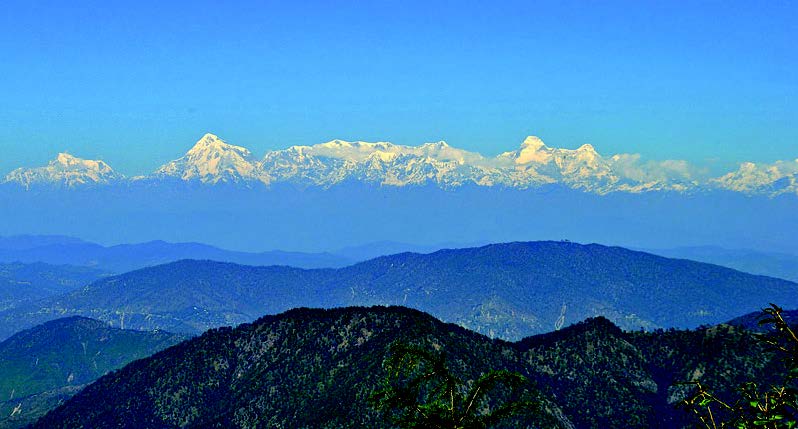
    Kausani is a quiet little town in the Kumaon region of Uttaranchal, 420 km away from Delhi. It offers breathtaking panoramic views of the snow-capped peaks of Panchchuli, Nandakot, Nanda Devi, Trishul, Nanda Gunti and Chaukhamba. If weather is favorable you might witness the best sunrise of your life here with soft golden light of morning sun creating magic over the peaks. This can be best witnessed from the GMVN guesthouse some 2 km away from the main town. There are many attractions close by of which Anasakti Ashram, Tea Estate and factory, Rudhradhari Falls and caves, and Burha Pinnath are the prominent ones.

    Gandhiji stayed at Anasakti Ashram for 2 weeks. It is also known by the name Gandhi Ashram and is just 1 km away from the main town. It is basically a simple cottage engrossed with the teachings of the Mahatma. A part of this ashram offers accommodation too. The Tea Estate and factory is only 3 km away from Kausani towards Baijnath.

  • AmeriCares Responding to India Floods

    AmeriCares Responding to India Floods

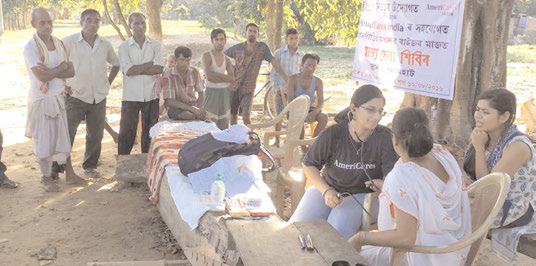
    STAMFORD, CT (TIP): AmeriCares is deploying medical teams to Assam and Bihar, where relentless flooding has killed more than 90 people and forced nearly 1 million into relief camps. The first teams, organized by the AmeriCares India office in Mumbai, are already on the ground in some of the worst-affected areas, delivering medicines and treating survivors.

    AmeriCares is focused on ensuring families affected by the floods have access to critical primary care services, including medication, as well as health and hygiene products that will help prevent the spread of communicable diseases. The emergency response and global health nonprofit is also delivering water purification supplies in areas without access to clean water.

    “Waterborne diseases are always a major concern after severe flooding,” said Shripad Desai, managing director of AmeriCares India. “We are working to ensure survivors have access to essential medicine and safe drinking water to help prevent the spread of infectious disease.”

    After two straight years of drought, heavy monsoon rains uprooted trees, damaged swaths of land and snapped telephone lines. Landslides and heavy rains have blocked highways and submerged homes in several feet of water.

    AmeriCares has been aiding survivors of natural disasters, political conflict and extreme poverty around the world for nearly 40 years, saving lives and building healthier futures for people in crisis. AmeriCares India provides emergency medical and humanitarian aid in response to floods, cyclones, earthquakes and other disasters. Most recently, the AmeriCares India team responded to the Nepal Earthquake, the 2015 flooding in Tamil Nadu and the 2014 flooding in Jammu and Kashmir. AmeriCares India also provides health education, supports health workforce safety programs and operates seven mobile medical clinics that provide free primary care services at 130 locations throughout the slums of Mumbai.

    To make a donation to AmeriCares India Disaster Relief Fund, please go to americares.org/IndiaRelief

  • 33 killed, 28 injured as crowded bus veers off Nepal highway

    33 killed, 28 injured as crowded bus veers off Nepal highway

    KATHMANDU, NEPAL: An overcrowded bus veered off a mountain highway in Nepal on Monday, killing at least 33 people and injuring 28 others in one of the country’s deadliest bus crashes in recent years.

    Injured people were brought by helicopter to Kathmandu and were being treated in two hospitals, Home Ministry official Chiranjivi Nepal said.

    The bus, which was carrying local passengers to the capital, veered off Arniko highway and rolled about 150 meters (500 feet). Parts of the bus, bodies and luggage were scattered on the forested slopes below the highway.

    Army and police rescuers were combing the slopes near Deurali village, 80 kilometers (50 miles) east of the capital.

    Police is still trying to determine the cause of the crash. The highway is wide enough for two vehicles to pass but has sharp turns and no guard rails. Nepal’s mountainous terrain, extreme weather and poorly maintained roads and vehicles often make for treacherous travel conditions. Much of the bus crashes in the country happen during the rainy monsoon season that begins in June and ends in September.(PTI)

  • Dipa Karmakar recommended for Khel Ratna after Olympics performance: Reports

    Dipa Karmakar recommended for Khel Ratna after Olympics performance: Reports

    RIO DE JANEIRO (TIP):Two of India’s 2016 Olympians, gymnast Dipa Karmakar+ and shooter Jitu Rai, have been recommended for this year’s Rajiv Gandhi Khel Ratna award, India’s highest honour in sports.

    The Khel Ratna is traditionally awarded to one Indian sportsperson each year. The most recent recipient is Sania Mirza.

    It is learnt that Dipa Karmakar’s name was not on the list but her Olympics performance not only vaulted her in the reckoning for this year’s Rajiv Gandhi Khel Ratna but may also fetch her coach Biseshwar Nandi a Dronacharya award.

    “My daughter couldn’t get an Olympic medal. But we are very happy to know that her name has been recommended for the Rajiv Gandhi Khel Ratna award. This is the highest award for a sportsperson. I am sure she will bring home the gold medal for our country at the 2020 Olympics,” Dipa’s father Dulal Karmakar said.

    “Biseshwar Nandi’s name for Dronacharya Award was sent to the ministry before the deadline ended and before the commencement of the Olympic Games. After Dipa’s Olympics performance, he should get the award,” PTI reported quoting a source.

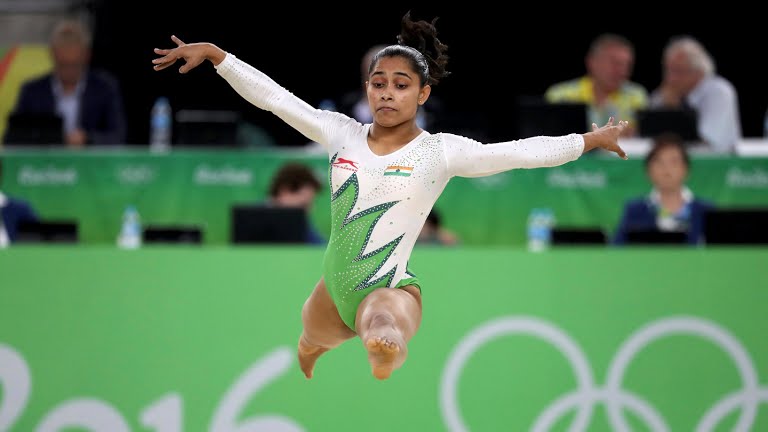
    At her maiden Olympics – in which she became India’s first gymnast at the Summer Games in 52 years – the 23-year-old Dipa+ qualified for the vault final were she finished fourth with a score of 15.006 – well past her previous best – and missed a bronze medal by just 0.150 points. Dipa was at third place after her second attempt at the Produnova but slipped to fourth after the final contestant, American Simone Biles, put in an outstanding performance to win gold with a score of 15.966.

    Dipa had earlier created history by winning bronze in the 2014 Glasgow Commonwealth Games, becoming the first Indian woman gymnast to win a medal. Later that year she won bronze at the Asian Championships in Hiroshima. In 2015, this daughter of a weightlifting coach won five gold medals at the National Games in Kerala – in individual all-round, table vault, balancing beam, uneven parallel bars and floor exercises and was one of the top medal winners at the event. Later in the year, she won a bronze medal at the Asian Artistic Gymnastics Championships in Japan.

    Rai+ , ranked third in the world in the men’s 10m air pistol, was one of just two Indian shooters in Rio de Janeiro to make the final of their respective events (the other being Abhinav Bindra, who came within 0.1 of winning a second Olympic medal). Rai, 29, finished eighth out of eighth in the men’s 10m air pistol event, having claimed sixth place with 580 points across six series during the qualification round.

    A 2014 Asian Games and Commonwealth Games gold medalist as well as two-time ISSF World Cup medalist, the Nepal-born shooter was viewed as a genuine medal contender at his first Olympic appearance but stumbled in the final. (PTI)

  • Ekal Vidyalaya’s Phenomenal Fund-Raising Success in 2016

    Ekal Vidyalaya’s Phenomenal Fund-Raising Success in 2016

    NEW YORK (TIP): As India is emerging as an economic power on the world stage, there is another contrarian reality by its side which is quite unsettling. Even in this technologically advance new millennium, there are tens of thousands rural-tribal areas in India, which are yet to be touched by the existential necessities and amenities, that we all routinely take for granted. Many of these areas seem frozen in time. There are noapproachable roads nor basic educational or healthcare facilitieswithin their reach. “Ekal Vidyalaya Foundation”,has been supporting functional-literacy, healthcare, and integral development in such places, for past 27 years. As of now, there are 53,000 Ekal-schools(and counting), in almost 30 statesthroughout India, including in Nepal & Jammu-Kashmir. For just $365, Ekal is able to provide education and healthcare trainingto a group of 30-40 children (termed as one Ekal school) for the entire year. The main objective of this social-venture is not only to eradicate illiteracy, but also, to empower these rural lives by providing sustainable village-based skills. ‘Ekal’ achieves this objective by raising funds, primarily in India and USA.

    Every year Ekal-USA, hosts a series of fund-raising concerts, between February and June, in all major U.S. metropolises by bringing well-known Artistes from India. In addition, the funds are also raised by direct appeals to consistent, major donors. In recently concluded fund-raising efforts, ‘Ekal’ hosted 62 concerts, all across U.S. through its satellite ‘Chapters’. According to Dr. Jawahar Taunk, Regional President of Florida, $400,000 was raised in his region alone. Through concerts only, Ekal has raised more than $4 Million so far this year. In addition, for newly initiated ‘Endowment Fund’, $1 Million has been pledged by couple of generous donors in U.S. and Canada. A handful of entrepreneurs have also picked up their own specific projects based on necessities in certain areas. Inspired by Hon. PM Modi’s clarion call for ‘Clean-India’ campaign, Himanshu Shah of ‘Shah Capital’, has taken responsibility to make a cluster of villages ‘environmentally clean’ by devoting his personal resources. Moreover, considering30% of total funds come into Ekal-coffer, each year, during November-December, Ekal is pretty confident to cross $7.5 Million mark, this year, just for USA alone. This is also a great tribute its 1,000 strong selfless dedicated volunteers in USA.

    Ekal Vidyalaya 1This year ‘Ekal’ had invited two groups of artistes to headline its various events. One group was headed by ‘Rajdeep Chatterjee & Pallabi Roy Chowdhuri’ and another was headed by ‘Anand Vinod & Vibhavari Yadav’. All the concerts pulled record crowds everywhereconfirming, once again, not only the popularity of the quality programming by Ekal, but also, people’s overwhelming support to this divine cause. All concerts were preceded by DVD-briefing on Ekal’s major activities and futuristic plans. During the concerts, the peoplewere also treated to highly focus ‘Power-Point’ presentation that depicted Ekal’s historic progress from its inception, allocation of funds and the model for accountability, at every level. It is worth noting that Ekal renders its services without any credence to caste, creed, religion and region and its overhead is in single digit.

    Iconic CEO of ‘ZEETV’, Dr. Subhash Chandra’s induction as the Chairman of ‘Ekal Global’ has been a boon to “Ekal Abhiyan” in attracting major industrial houses and entrepreneurs. Earlier this year, while releasing Subhash Chandra’s autobiographical book, ‘ZEE Factor’, Hon.PM Modi also lauded Ekal’s awe-inspiring comprehensive rural work as a role model for other organizations to follow. Now, Students and young adults around the country are also gravitating to Ekal to play a key role in this ‘people’s movement’. Earlier this year, “Health Foundation for Rural India (‘HFRI’)”, a health wing of “Ekal Abhiyan” had taken a group of Medical student from USA to Indian villages under its ‘Internship Program’. The rationale behind it was, not only to acquaint them with unique healthcare problems in rural areas,but also, to groom them for selfless service for these neglected masses. Every month, new donors are coming on board to support Ekal as they realize that it is the largest grass-root NGO movement of its kind, globally undertaken by Indians and NRIs. Ekal is in dozen countries, including in some ‘Middle-East’ regions. For your support and participation in ‘Ekal Movement’, kindly visit its web www.ekal.org.

    (Press Release by Prakash Waghmare)

  • Five Nepalese injured in Kabul attack brought to Apollo hospital

    Five Nepalese injured in Kabul attack brought to Apollo hospital

    NEW DELHI (TIP): Five Nepalese guards, injured in a suicide attack in Kabul two days ago, are under treatment at the city-based Indraprastha Apollo Hospital, hospital authorities confirmed on June 23.

    “We have received five Nepalese patients who were working as private security guards in Kabul. They are being treated for blast related injuries,” a senior authority of Apollo told IANS.

    The injured Nepalese worked for private security company Sabre International to guard the Canadian embassy in Kabul.

    On Monday, 12 Nepalese security guards were killed in a suicide blast targeting their minibus in Kabul. Nine other people were wounded, including five Nepalese and four Afghans.

    The bodies of the 12 Nepalese guards killed were on Wednesday flown to Nepal in a special chartered flight.

  • Mars crater named after quake-hit village in Nepal

    Mars crater named after quake-hit village in Nepal

    LONDON (TIP): A nearly 10-kilometre wide crater on Mars has been named after one of the villages worst hit by the devastating earthquakes in Nepal last year.

    The International Astronomical Union has named the crater after Langtang, also a popular trekking site. At least 215 people were killed in Langtang when a quake-triggered avalanche submerged the village.

    The IAU Working Group for Planetary System Nomenclature approved the name on June 14, the BBC reported. The researcher behind the move, Tjalling de Haas, said it was “a tribute” to the Nepali village.

    de Haas, who studies Mars’s physical geography at Utrecht University in the Netherlands, told the BBC that he chose Langtang because his colleague had worked there while studying Himalayan glaciers.

    “It was his base camp for a long period, so we said maybe it’s a nice tribute to call (the crater) Langtang,” he said. Langtang was a “scientifically important” crater. “The marks on the top of the crater wall were probably water flows, and below them you can see ridges – the remains of former glaciers.”


  • Strike shuts down schools, markets and transport in Nepal

    Strike shuts down schools, markets and transport in Nepal

    KATHMANDU, NEPAL (TIP): A general strike called by a small communist party demanding that the government release its supporters detained after previous protests has shut down schools, markets and transportation in Nepal.

    Police says 28 more supporters of the Nepal Communist Party Maoist were arrested as they attempted to enforce the general strike forcing vehicles off the streets in Kathmandu.

    They torched a taxi and vandalized a public van in Kathmandu but no one was hurt.

    The party which is a splinter group of the main Maoist party that is part of the government. The Maoists are former communist rebels who fought government troops for 10 years before entering mainstream politics in 2006.

    Security has been stepped up and riot police are guarding the main streets of Kathmandu.

    (AP)

  • Paying the ultimate price on Mount Everest

    Paying the ultimate price on Mount Everest

    KATHMANDU/NEW DELHI (TIP): On his way down from the top of Mount Everest, Indian mountaineer Nava Kumar Phukon saw the woman sway from side to side – a classic sign of severe mountain sickness – as snow and fog reduced visibility to less than 10 feet (3 metres).

    Phukon’s sherpa guide later told him the woman was 34-year-old Australian Maria Strydom, who died last Saturday on the high slopes of Everest after making a failed push for the summit.

    “The sherpa who was trying to help her told me: ‘She is going to die’,” Phukon said after returning to Kathmandu from his own exhausting but successful summit bid.

    “I did not have any extra oxygen, clothes or food, not even water to offer to her,” Phukon said. “I was so weak myself.”

    Reuters could not independently confirm that it was the same woman, although both the sherpa guides worked for the same agency Seven Summit Treks and knew each other.

    Three deaths in as many days on the world’s tallest mountain have renewed safety concerns after eager climbers flocked to the 8,850-metre (29,035-foot) summit for the first time since last year when an avalanche triggered by a magnitude-7.8 earthquake struck Base Camp, and all expeditions ground to a halt.

    A Dutch national, also with Seven Summit Treks, died last Friday in the notorious ‘death zone’ where the air is so thin that only the fittest can survive without bottled oxygen, while an Indian perished on Sunday due to exhaustion. Two other Indian climbers have been missing since Saturday, and are feared dead.

    Officials from Seven Summit Treks said 13 sherpas bringing Strydom’s body down the mountain had encountered heavy snowfall at about 7,700 metres on Tuesday. When the weather improves they will resume the rescue, and her body will be flown to Kathmandu later this week, before the spring climbing season shuts with the onset of the monsoon.

    Deaths are not uncommon on Everest and the number of fatalities this year is close to average. But experts say the lure of reaching the highest point on Earth is increasingly attracting less experienced climbers served by agencies hungry for business.

    “Climbers are careless and confused about their strength and preparedness,” said 30-year old Indian Ratnesh Pandey after summiting Everest on Saturday, without naming anyone.

    He said temperatures plummeted to minus 30 degrees Celsius (minus 22 Fahrenheit) near the top, while fierce winds closed many of the “weather windows” in the upper reaches, making this year’s journey particularly tough.

    Scaling Everest is far from the world’s most treacherous climb from a technical perspective. Mountaineering expert Alan Arnette estimates deaths at about 3 per cent of attempts, against one in four on Annapurna, a Nepalese massif with its main peak surpassing 8,000 metres.

  • Nepal to honour 9 hero Sherpas on International Everest Day

    Nepal to honour 9 hero Sherpas on International Everest Day

    KATHMANDU (TIP): Nine Sherpa ‘icefall doctors’, who risked their lives to fix ropes on the Mount Everest after last year’s devastating earthquakes, will be honoured by Prime Minister K P Sharma Oli on May 29 which is being celebrated as the 9th International Everest Day .

    The Sherpas will be given a cash award of Rs 50,000 each along with certificates of appreciation by the Prime Minister, said Ang Tshering Sherpa, president of Nepal Mountaineering Association (NMA).

    “Had they not fixed the ropes before this climbing season, scaling the Everest after last year’s devastating earthquake would not have been possible,” he said. “They staked their lives to fix the ropes working hard day and night,” he added.

    ‘Icefall doctors’ build bridges using aluminum ladders to cross deep crevasses and set ropes for mountaineers to clip their harnesses into over dangerous sections.

    The nine Sherpas were the first persons to climb the world’s highest peak on May 11, after a gap of two years.

    “It was a very difficult task as the ropes had to be fixed from the base camp to the 8,848-metre summit risking their lives,” he said.

    There were altogether 150 people involved in fixing the routes from the base camp at an altitude of 5,970 metres to the peak situated at 8,848 metres. However, only nine of them had reached above 8,000-metre altitude.

    “The diameter of the rope is nine mm and it is very weighty to carry above 8,000 metre, which was a very arduous task,” he said.

    Expeditions were halted since 2014, when 16 Sherpa guides were killed in an avalanche near the base camp of the Everest.

    In 2015, 18 climbers died while attempting to scale the Everest as they were swept away by a powerful avalanche triggered by the great earthquake. The route between Everest’s base camp, across the notorious Khumbu icefall, to the peak was also damaged.

    The Khumbu region situated just above the base camp is a steep section of a glacier shaped like a frozen waterfall and is one of the most dangerous portions of a route, which is followed by a majority of mountaineers, to ascend the Everest peak.

  • BJP MP’s Nepal attack triggers war of words

    NEW DELHI (TIP): BJP and Congress MPs had an angry exchange over Nepal on May 11 after BJP member Nishikant Dubey mounted a sharp attack on the country in the Lok Sabha. Dubey said Nepal, a “small country which is dependent on India” is now seeking to “threaten” India after getting support from China. Congress members, led by Jyotiraditya Scindia, protested against Dubey’s remark, saying a neighbouring country should not be spoken about in such language. This led to counter protests by BJP, with Dubey alleging that it was the “wrong” policies pursued by former PMs Jawaharlal Nehru, Indira Gandhi and Rajiv Gandhi towards Nepal that had created the present problem. Raising the issue during zero hour, Dubey also made a strong pitch for erecting a fence along the Indo-Nepal border. Dubey said the porous border had turned Nepal into a “nerve centre” of anti-India forces, “which was also witnessed during the IC-814 hijack”. The attack came in the backdrop of a slide in Indo-Nepal ties in recent months.(PTI)

  • Nepal gets first woman chief justice, sign of changing attitudes

    Nepal gets first woman chief justice, sign of changing attitudes

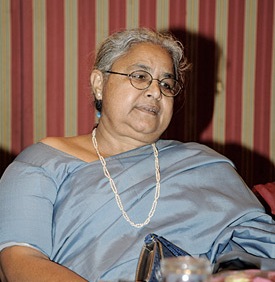
    KATHMANDU (TIP): Sushila Karki became the first female acting Chief Justice of Nepal’s Supreme Court on April 13, ending the male domination of top posts in the judiciary. The Himalayan nation, though still a deeply patriarchal society, is becoming increasingly inclusive, following the end of 10 years of civil war in 2006 and the abolition of the 239-year-old feudal monarchy two years later.

    In September last year, a specially elected Constituent Assembly approved the first post-monarchical constitution, which gave women the right to “proportional inclusion” in all government organs.

    It also guaranteed equal property rights to daughters and required that the president and vice-president be from different genders and communities.

    The Constitutional Council headed by Prime Minister K.P. Oli recommended the appointment of Karki, 63, to replace Kalyan Shrestha, who retired on Tuesday.

  • China’s Nepal deal meant to tap Indian market

    China’s Nepal deal meant to tap Indian market

    BEIJING (TIP): China is looking at its recent deal on cross-border railway with Nepal as a starting point to tap the vast Indian market in future. It plans to extend the railway line from the China-Nepal border in order to connect with the Indian Railways at a later date, according to a government-run Chinese think tank.

    “The purpose is to connect the whole region. We hope to link the Chinese border to Nepal, and from there to India, Bangladesh and Myanmar,” Hu Shisheng, director of the Institute of South and Southeast Asian and Oceanic Studies, told TNN in an interview.

    “It would be possible to reach the Arabian Sea, and even the Indian Ocean through this route in future,” Hu said.

    China last week entered into a range of agreements with the visiting Nepal prime Minister K.P. Prasad Oli. They include plans to build a cross-border railway, and establish a rail network inside Nepal to connect its three major cities, Kathmandu, Pokhara and Lalitpur.

    “We also expect to shift some of the Chinese manufacturing capacity to Nepal where it may be less expensive to produce,” Hu said.

    But Oli’s critics see his moves in Beijing in a different vein. He is upset about the recent blockade on the India-Nepal border, which had resulted in severe shortages of petroleum and other essential commodities in Nepal.

    “Oli is merely trying to irritate India, and send a signal to New Delhi that he will open up an alternative route. But this is politics. He does not have a long-term plan to implement agreements signed with China,” Amreesh Singh, a member of parliament of the opposition Nepali Congress, told TNN.

    For China, the blockade in Nepal’s southern border and bitterness it caused against India in Nepal was an opportunity to move in. China quickly opened up its crossing in Nepal’s northern border, which had earlier been damaged by earthquake. It dispatched some amount of petroleum products to Nepal to ease shortages.

    “If the southern part of Nepal is blocked, then Nepalis can get some contribution and assistance from China in its northern side,” Hu said.

    China has also agreed to revive an unfulfilled promise of funding the construction of the Pokhara airport, and help Nepal in repairs of three major highways. The two countries have also taken the initial step to discuss a future free trade agreement.

    Pramod Jaiswal, senior research officer at Institute of Peace and Conflict Studies in New Delhi, said China is unlikely to start implementing the agreements it has signed with Nepal very soon.

    “China is not very keen on the tiny market of Nepal. It really wants a big share of the Indian market for its goods. It will do nothing in Nepal that would make India uncomfortable,” he said.

    Jaiswal said China will take carefully calibrated steps in Nepal keeping a close eye on India’s reactions.

    An important point is whether Oli has the mandate to implement the agreements he has signed in Beijing. Even when he was in China last week, an important partner in his coalition government, the United Communist Party of Nepal (Maoist) threatened to withdraw support on the plea that little has been done to construct shelters for one million people affected by earthquake that shook the Himalayan nation in April last year.

  • Nepal army chief leaves on China visit

    Nepal army chief leaves on China visit

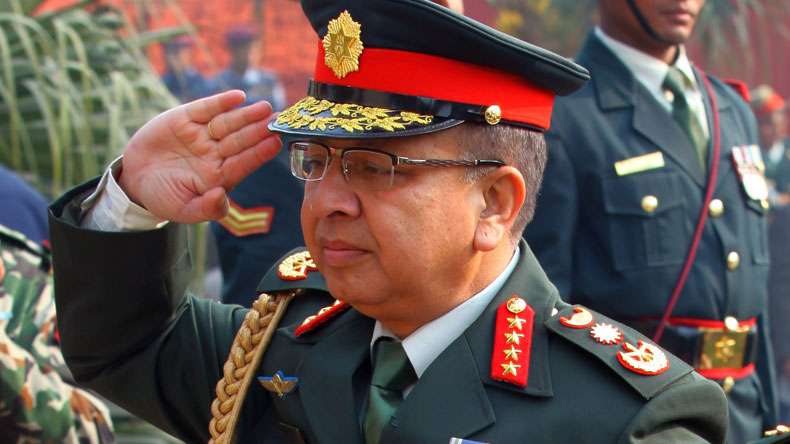
    KATHMANDU (TIP): The Nepal army chief, General Rajendra Chhetri left on a week-long visit of China on Sunday, the day Prime Minister KP Sharma Oli returns from his official tour of the neighbouring country. This is Chhetri’s second foreign visit since September last year when he was appointed the chief of the army staff.

    One of his mandates has been to strengthen military ties with Nepal’s powerful northern neighbour.

    China would increase slots of military training for the Nepal army, said a statement from the Nepal army.

    General Chhetri’s visit to China is taking place exactly two months after his trip to India, where he was conferred with the honorary rank of general of the Indian Army. According to Nepal army spokesperson Tara Bahadur Karki, the visit is aimed purely at strengthening the relations between the national defence forces of the two neighbouring countries. No long-term deal is on the cards, he said. Since the abolition of century-old monarchy in Nepal, China is looking for political stability in Nepal to anchor its relations with its smaller neighbour.

    Pro Shree Dhar Khatrai, an expert in international relations, says that China is still seeking a stable political force in Nepal and in that respect it had tried to establish relations with Maoists in the past and with the Communist Party of Nepal (Unified Marxist-Leninist) later.

  • Nepal can be a bridge between China and India: Xi Jinping

    Nepal can be a bridge between China and India: Xi Jinping

    BEIJING (TIP): Nepal can be a bridge between China and India, President Xi Jinping said and asserted that it is in the common interest of the “two big neighbours” that Nepal enjoys stability and development.

    “Nepal can be a bridge between China and India,” Xi told visiting Prime Minister K P Oli when the Nepalese leader called on him here after a landmark transit agreement was signed between the two countries that will reduce Nepal’s dependence on India for supplies.

    On his maiden visit to China close on the heels of his recent visit to India, Oli held wide-ranging talks with Chinese Premier Li Keqiang and called on President Xi.

    Talking about the trilateral China-Nepal-India relationship, Xi said he hopes Nepal will benefit from development in China and India.

  • SUSHMA SWARAJ WRAPS UP FRUITFUL NEPAL VISIT

    SUSHMA SWARAJ WRAPS UP FRUITFUL NEPAL VISIT

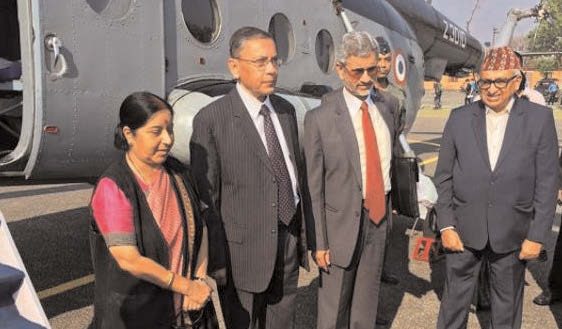
    POKHARA (TIP): External affairs minister Sushma Swaraj left Pokharan on Friday after attending the SAARC ministerial meeting in Nepal.

    Swaraj also held the first bilateral meet with her Pakistani counterpart after the Pathankot terror attack.

    After wrapping up her three-day visit, Swaraj left Pokhara on an Mi17 chopper for Gorakhpur, Uttar Pradesh from where she will head to Delhi on a special flight.

    She announced on Thursday that a Pakistani Joint Investigation Team (JIT)?will arrive in India on March 27 to probe the Pathankot terror attack.

    The assault figured very high in the over 20-minute meeting between Swaraj and Pakistani counterpart, Sartaj Aziz, the first political-level engagement between the two sides after the January 2 terror attack on an Indian Air Force base in Pathankot.

    Swaraj accepted Pakistan’s invitation for Prime Minister Narendra Modi to visit Islamabad for the SAARC Summit, to be held from November 9-10 this year.

    She pitched for unleashing “collective strength” of SAARC, underlined the need for a South Asian Economic Union with greater connectivity and progress on pending agreements.