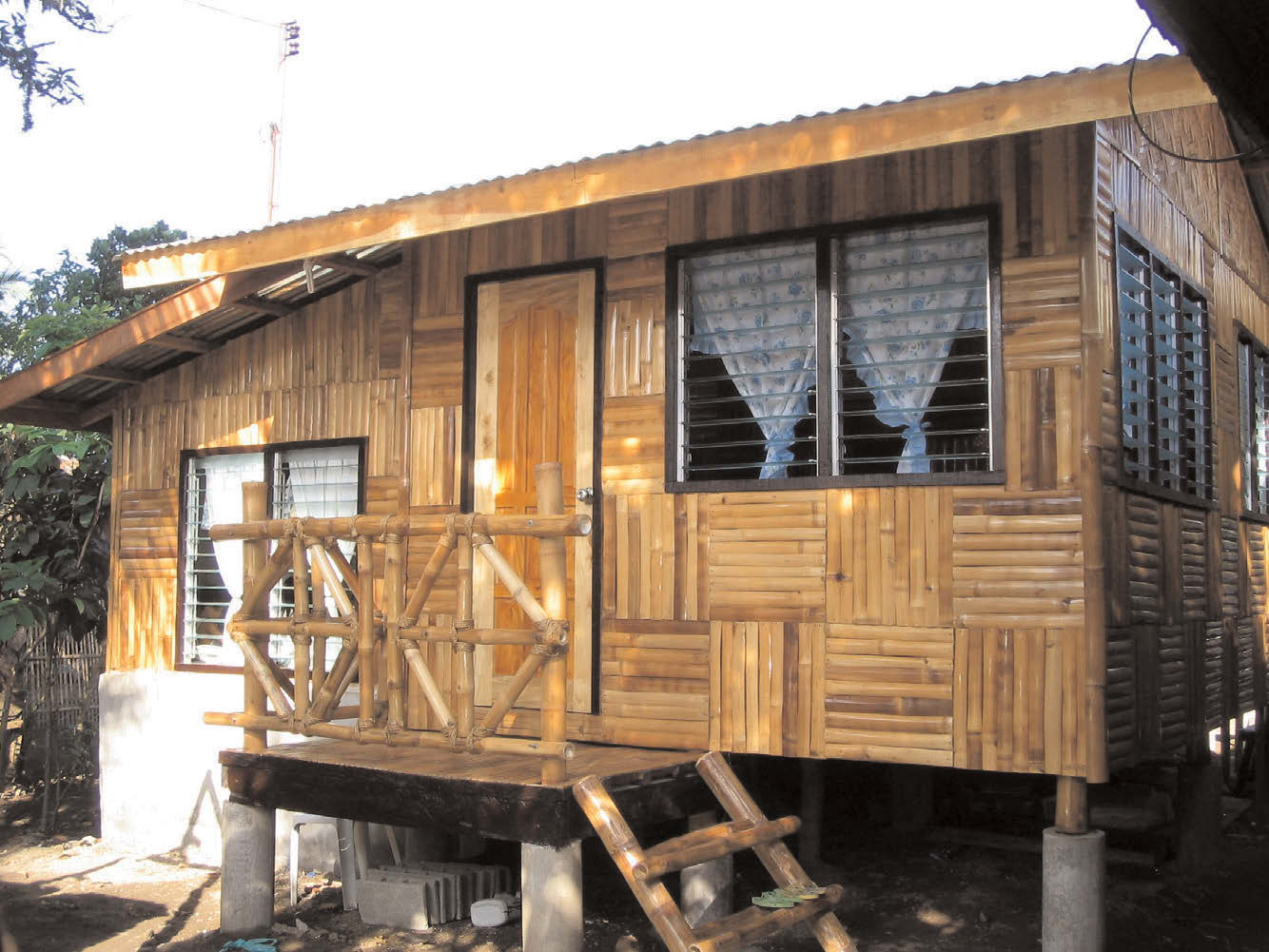
KATHMANDU (TIP): In an effort to address Nepal’s post-earthquake housing crisis, a new initiative is underway to harness the Himalayan country’s abundant bamboo resource to rebuild its devastated communities and promote sustainable livelihoods.
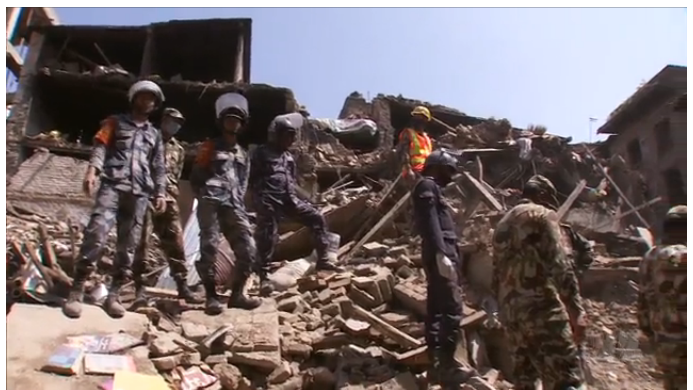
On April 25, 2015, a massive earthquake left around 1,500 people dead and over 300,000 Nepalese homeless. Over 730,000 structures affected by the quake are now in need of upgrading, an official said.
The initiative is funded by the Common Fund for Commodities (CFC) and implemented by the International Network for Bamboo and Rattan (INBAR) in partnership with the Nepal government, the International Centre for Integrated Mountain Development (ICIMOD), and ABARI, a research and design firm that promotes the use of natural material in contemporary design practices.
The current CFC project will build 150 homes and 10 transitional schools by May 2016.
The project has got government validation, including approval for the bamboo-based school design.
“Building schools with bamboo is both climate-smart and economically viable. This bamboo-based school design promotes the use of local materials, integrates traditional values and can help strengthen the local economy,” said Madhav Karki of ABARI.
The sustainable use of Nepal’s bamboo forests spread over 63,000 hectares will help generate local employment, reduce vulnerability to future quakes as bamboo has higher tensile strength than steel and greater compressive strength than concrete, remove the need for imports as construction material will be sourced locally, and protect foreign currency reserves.
A national workshop on ‘Bamboo for Sustainable Post-Disaster Reconstruction in Nepal’ was held in Kathmandu on Tuesday, which emphasised the importance of bamboo in reconstruction efforts to stakeholders ranging from ministers and government officials to industry experts and representatives of non-governmental organisations and civil society.
During the workshop, participants highlighted various post-disaster programmes currently undertaken in Nepal and discussed potential opportunities to scale up and incorporate CFC project models into larger post-disaster reconstruction programmes.
“The sustainable use of bamboo in reconstruction efforts can help Nepal build back better,” said Basanta Shrestha, director of strategic cooperation at the ICIMOD.
He also highlighted the Centre’s ongoing support to earthquake recovery and reconstruction through the development of an integrated information platform, support to hazard mapping and assessments, development of a framework for resilient livelihoods in quake-affected areas, and setting up a ‘smart mountain community’ model village.
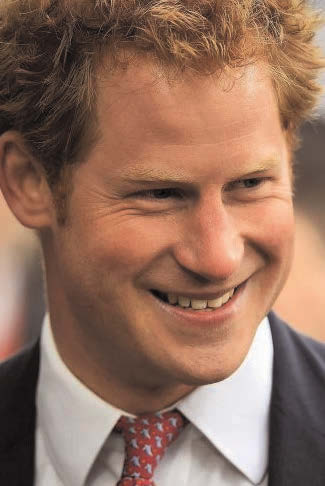
LONDON (TIP): Britain’s Prince Harry will travel to Kathmandu next month on a maiden visit to Nepal and meet people affected by last year’s devastating earthquakes.
The prince will visit Nepal between March 20 and 23.
“Prince Harry is really looking forward to his first trip to Nepal. It is a country he has long wanted to visit,” a Kensington Palace spokesperson said today.
“The Prince has been moved by the stories of resilience of the Nepali people following the earthquakes last year and is now eager to learn more about their country and culture,” the spokesman said.
Harry, the fifth-in-line to the British throne, will meet survivors of last April’s earthquake in the region, which claimed over 9,000 lives.
“With Britain and Nepal currently celebrating 200 years of cooperation, Prince Harry will experience the strength of the relationship and traditional warmth of the Nepali welcome,” the spokesperson said.
The 31-year-old royal will also take part in a trek and visit a national park. The tour will begin and conclude in Kathmandu, where he will meet President Bidhya Devi Bhandari.
Having served alongside Gurkhas in Afghanistan, the prince will visit the British Gurkha Camp in Pokhara, where he will commend the bravery and service to the Crown of an “exceptional group of soldiers”, the ‘Evening Standard’ reported.
His visit to South Asia is expected to coincide with that of his older brother, Prince William, to India and Bhutan.
The exact dates and details of the visit by Prince William and wife Kate have not been announced yet but they are expected to make their first visit to the Taj Mahal in Agra during the tour.
KATHMANDU (TIP): Emergency workers have found the bodies of 19 people killed when their plane crashed into a mountainside in western Nepal with the loss of all 23 passengers and crew, police said on Feb 25. Police and army returned to the crash site at first light after abandoning recovery efforts late on Wednesday due to bad weather in the remote Himalayan district where the Twin Otter turboprop aircraft came down. The site in Myagdi district is around 16,000 feet (4,900 metres) high in the Himalayas and can only be reached on foot or by helicopter. “We are on a search mission here to find the bodies of all the victims,” police superintendent Chhabi Lal Joshi told AFP by phone from the site of the crash, the latest in a series of fatal aviation accidents in the impoverished Himalayan nation.
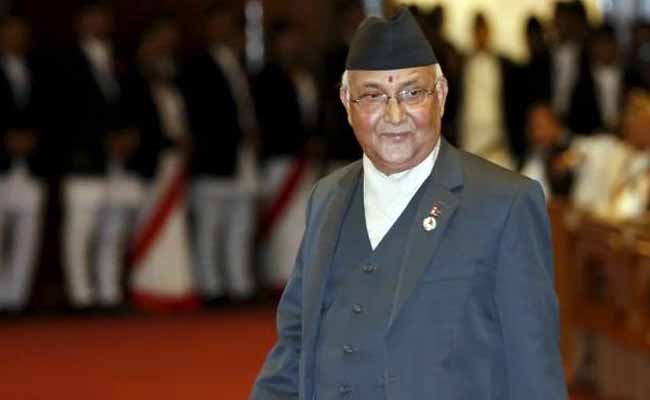
KATHMANDU (TIP): Promising to end Nepal’s internal problems soon, Prime Minister KP Oli on Tuesday said the proposed political committee to address the demands of the Madhesis will be formed before his fence-mending India visit this week.
Underlining that the Constitution is not an “unchangeable document”, Oli, while addressing the Parliament, said, “It is necessary to take forward the Constitution amendment motion based on the actual necessity and suggestions put forth by the political committee.”
Oli said the proposed political committee to address the demands of the Madhesis would be formed prior to his departure to India on February 19, the Kathmandu Post reported.
He said Nepal’s internal problems will be resolved soon as the committee would come up with its suggestions on federal state border demarcation within three months.
The prime minister reiterated that the new Constitution has institutionalised the federal democratic republic and the rights of people.
Oli also informed the Parliament about his maiden visit to India and said the trip would be focused on improving ties that had soured recently.
Oli, who is leaving on Friday for a six-day visit to India, said he will focus on promoting national interest during his upcoming trip. He said he will not sign any agreement undermining national interest during his visit.
The prime minister said he will utilise the tour as an opportunity to mend ties.
“My visit will focus on further enhancing the friendly ties with India,” he said, adding that, “Nepal and India are (ready) for a fresh beginning of their age-old bond.”
Oli said any “misunderstanding” between the two countries will be cleared during his visit.
The Prime Minister will lead a 46-member delegation that will include Deputy Prime Minister and Foreign Minister Kamal Thapa, Finance Minister Bishnu Poudyal and Energy Minister Top Bahadur Rayamajhi. Over 20 businessmen will also be part of his delegation.
KATHMANDU: India’s external affairs minister Sushma Swaraj will travel to Kathmandu later on Tuesday to offer condolences on the passing of former Prime Minister Sushil Koriala, deputy prime minister and minister for foreign affairs Kamal Thapa said here.
Officials told IANS that Sushma Swaraj will land here at 5pm (Nepali time) and will fly back to New Delhi later in the evening.
She will meet Prime Minister K P Sharma Oli, Gopal Khanal, the foreign relations advisor to Oli, said.
India’s National Security advisor Ajit Doval, Congress leader Anand Sharma and Communist Party of India (Marxist) leader Sita Ram Yechuri will accompany Swaraj.
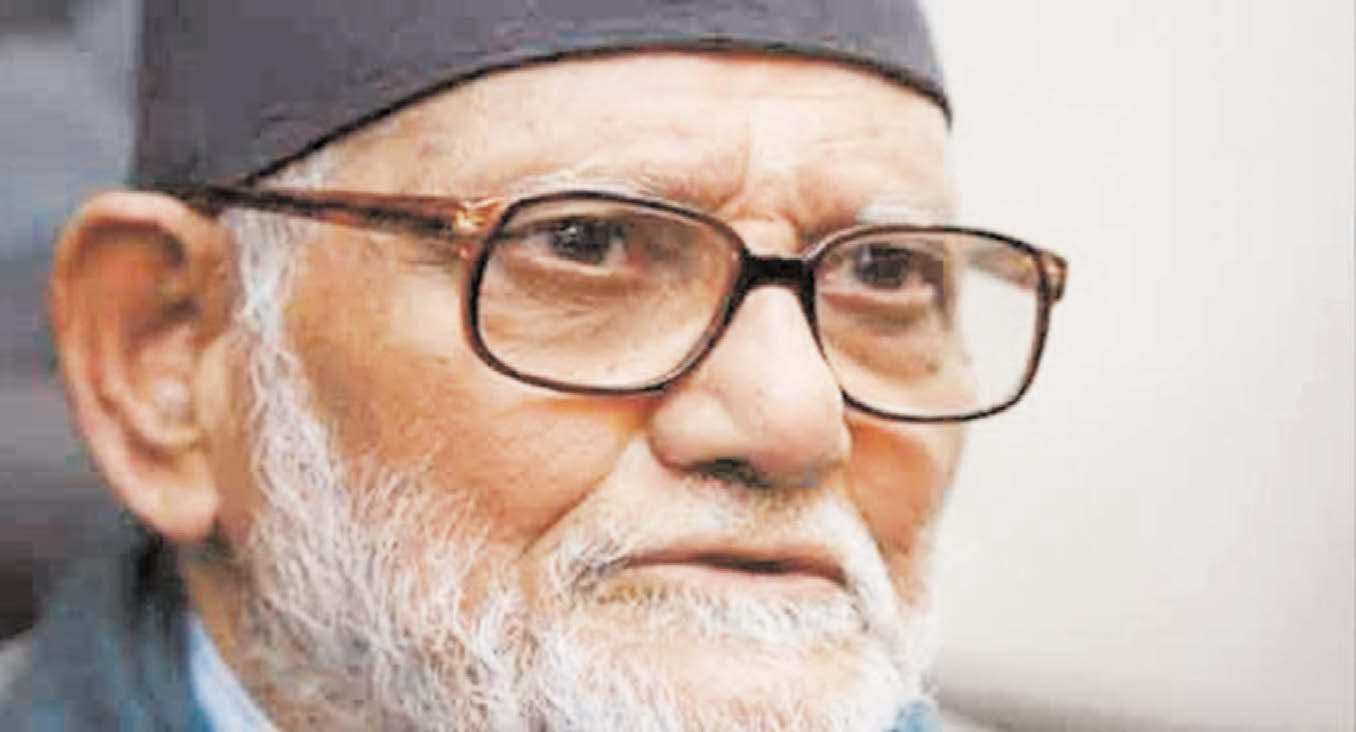
KATHMANDU (TIP) : Former Prime Minister of Nepal and Nepali Congress president Sushil Koirala passed away due to Pneumonia at his residence early on February 12. He was 79.
Koirala, who was elected Prime Minister of Nepal on February 10, 2014, died at his residence in Maharajgunj in the outskirt of capital Kathmandu at 12.50 am (local time), Nepali Congress general secretary Prakash Man Singh told PTI.
He had returned from the US after undergoing a successful treatment for the lung cancer and is credited with promulgating the new constitution of Nepal in September last year.
Koirala was suffering from Chronic Obstructive Pulmonary Disease (COPD) and he succumbed to the disease.
His body will be taken to party’s central office at sanepa, Kathmandu and kept there for last tributes from party cadres and others, Singh said.
Born in Banaras, India, Koirala entered politics in 1954 and was in political exile in India for 16 years following the royal takeover of 1960.
He also spent three years in Indian prisons for his involvement in a plane
KATHMANDU (TIP): An unwieldy coalition of lawmakers trying to implement Nepal’s first democratic constitution is finding common cause with protesting minority groups, isolating Prime Minister KP Oli and increasing the risk his government could fall this spring.
Oli, of the leftist Communist Party of Nepal (Unified Marxist-Leninist), promised to resolve simmering tensions in the southern plains and lift a blockade of the Indian border when he was voted in to power almost four months ago.
Yet sporadic violence, in which more than 50 people have died since August, continues in the Himalayan nation with police shooting dead three demonstrators last month.
Protest leaders say the heavy-handed police tactics show the government is not sincere about finding a solution, while in Kathmandu residents have to choose between queuing for hours for fuel and gas and paying exorbitant prices on the black market.
“There are reports that corruption is rising and the government is not able to meet expectations of the people,” said Dinanath Sharma, a spokesman for the Maoist party that props up Oli’s fragile coalition.
Oli, 63, heads a fractious cabinet with no less than six deputy premiers – one a royalist bent on reinstating the monarchy and another the leader of a party representing minority Madhesis who has yet to sign the constitution.
Relations with India have deteriorated further since New Delhi tried and failed last September to delay the promulgation of the constitution so that dissenters – many with family ties across the border – could be brought on board.
Oli’s hostile rhetoric has annoyed New Delhi, said a former diplomat, even as increased cooperation between Indian and Nepali officials has eased the impact of the blockade in recent weeks.
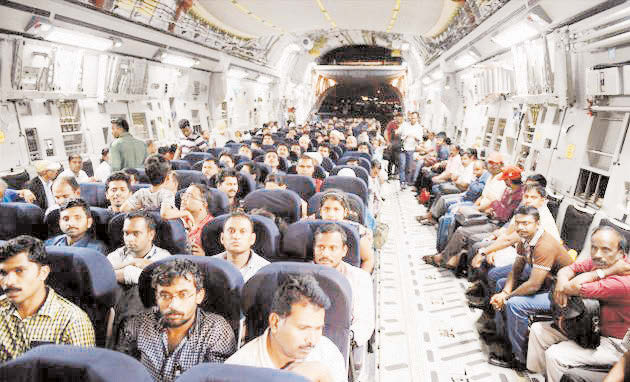
AIRLIFT: “Whatever you might think of the Indian government, when it comes to expatriate citi-zens in conflict zones, our diplomats go to great extents to ensure their safety.” Picture shows Indian nationals stranded in Yemen being evacuated from Djibouti on board an Indian Air Force aircraft. (Photo courtesy PTI)
Many people involved in the massive evacuation of Indian expatriates from Kuwait in 1990 are disappointed at the mischaracterization of the role of the politicians, diplomats and airline officials in Airlift, a new Hindi film based on that incident. While film-makers have dramatic license to set fiction against facts, diplomats are rightly upset that the story of the biggest ever air evacuation in history, carried out by a resource-strapped government in the throes of political and economic crises, has deliberately painted foreign service officers in negative light.
K.P. Fabian, who headed the Gulf desk at the Ministry of External Affairs (MEA) during that episode, is quoted in this newspaper as saying “young people who are watching this film are getting a wrong impression of their history”. Nirupama Rao, former Foreign Secretary, criticized the production of falling short on its research. Even the MEA’s official spokesperson stepped in to set the record straight. It is unfortunate that the producers felt the need to reinforce popular prejudices of uncaring bureaucrats in that one area where that prejudice could not be more wrong.
Whatever you might think of the Indian government, when it comes to expatriate citizens in conflict zones, our diplomats go to great extents to ensure their safety. The airlift from Kuwait is only the biggest and the most famous one – more recently Indian diplomats and armed forces coordinated mass evacuations from Lebanon (in 2006), Libya (2011) and Yemen (2015). This is a job our diplomats, armed forces and airline officials do well, and it is unfair and self-defeating to cast them in poor light.
The damage, however, is done. But the public interest arising from the movie and the debate over the accuracy of its portrayal of the government’s role is a good opportunity to focus on the issue of diaspora security.
Indians around the world
According to government figures, as of January 2015, there were 11 million Non-Resident Indians (NRIs) and 17 million Persons of Indian Origin (PIOs) around the world. The largest populations were in the Gulf, the United States, United Kingdom, Southeast Asia and Nepal. On the thin end, there were seven Indians in North Korea, two in Nauru and one in Micronesia.
Until the turn of the century, the government’s relationship with overseas Indians has been twofold. Indian citizens (NRIs) were treated differently from ethnic Indians holding other citizenships. While the government concerned itself with the former, the latter were encouraged to be loyal and upstanding citizens of their respective countries.
In the recently released Netaji Files, in 1960, Prithi Singh, India’s envoy to Malaya, reminds headquarters that “our own expressed policy has been to encourage persons of Indian origin, domiciled abroad, to absorb themselves into the life of these countries and I feel that any step which we might take which helps them to maintain rigidly their emotional and/or communal links with India, actually prevents them from giving their whole-hearted loyalty to the countries of their adoption”.
This policy has served India and overseas Indians well. If the Indian diaspora is highly successful and integrated into the societies around the world, it is in part due to the fact that the loyalties of persons of Indian origin are beyond doubt. They might retain Indian customs and faith, but they bat for the interests of the country they are citizens of.
Courting the diaspora
The longstanding policy began to shift in the 1990s, with India looking East and West initially due to economic adversity and subsequently due to opportunity. The Atal Bihari Vajpayee government put the courtship on a formal footing with a high-level committee recommending the long-term visas under a PIO Card Scheme, a grand conference and recognition in the form of awards. The United Progressive Alliance government constituted an entire ministry for overseas Indians which, wisely, the Narendra Modi government has recently decided to merge back into the MEA.
No Prime Minister has gone so far out to court overseas Indians as Narendra Modi. Reaching out to the humble construction worker, the middle-class professional and the wealthy elite has galvanized the emotional links NRIs have with their home country. Mr. Modi has reinforced the growing feeling among NRIs since the turn of the century that India is a great country to be from.
Mr. Modi’s highly publicized engagement of overseas Indians changes the tenor of the government’s old policy to downplay their emotional links to India. It is for the Prime Minister to decide what the new policy should be. What we should recognize is that change comes with risks that need to be managed.
First, to the extent that New Delhi is seen to engage NRIs and protect their interests in foreign countries, foreign governments will not consider it an intrusion in their politics. However, if New Delhi begins to speak out on behalf of ethnic Indians who are not Indian citizens, then the interventions are likely to encounter resistance. In 2007, Malaysian politicians reacted viciously when Indian politicians made comments critical of Kuala Lumpur’s strong-arm tactics against its Indian minorities.
The modern world is constructed on the Westphalian model, where sovereign states relinquished their right to intercede on behalf of their religious and ethnic kin in other sovereign states. To violate this norm risks inviting any number of foreign interventions into our own domestic affairs.
Second, the reputation that PIOs have cultivated over several decades for being loyal citizens of the countries they live in can come under a shadow. In many parts of the non-Western world, countries are still reconciling with their nationhood and identity.
Any suspicion, even at the margin, of PIOs having multiple loyalties can be detrimental to their interests. Notice how the Singapore government insisted that only NRIs attend Mr. Modi’s public event, demarcating the line between its own citizens of Indian ethnicity and expatriates with Indian citizenship.
Airlifts of the future
Finally, the airlifts and naval evacuations of the future might be more complex in a context where there is a conflation of NRIs, PIO card-holders and other ethnic Indians with foreign citizenships. During crises when time and resources are tight, who should Indian diplomats priorities? Will they have moral grounds to put non-citizens on a lower priority than citizens? If they do, what impact will it have on the Indian government’s reputation and the expectations it has created? New Delhi ought to review the political and security risks to its diaspora populations and create the capacity to act in their interests should the need arise.
It is unclear if India’s overstretched diplomatic corps has been tasked with paying greater attention to multilateral arrangements, institutions and agreements that pertain to diaspora-related interventions.
Similarly, the external intelligence establishment needs to be reoriented towards gathering and analyzing information relating to the threats that diaspora populations might face. The conceptual move from defending the homeland to defending the diaspora needs a concomitant retooling of government machinery.
Diaspora security will require more naval ships, wider patrolling, foreign berthing and outposts. Military heavy lifting capacity apart, it will also require policy measures, like for instance, license conditions in civil aviation requiring private airlines to put their aircraft and crew at the government’s disposal during emergencies.
The commitments that India makes require the state to have the capacity to redeem them. If we widen the scope of our commitments, we must invest in the capacity to carry out the airlifts of the future.
By Nitin Pai - The author is director of the Takshashila Institution, an independent think tank and school of public policy.
KATHMANDU (TIP): Nepal may have some differences with India but can never show enmity towards the country, deputy prime minister CP Mainali said on January 27, in a climbdown from his earlier hardline stance.
“There may be some differences with India and the relations may pass through ups and downs, but it can be resolved through mutual dialogue and understanding,” he said at a symposium organized by Nepal-India Friendship Society to mark India’s 67th Republic Day here.
His remarks come amid an ongoing political crisis in Nepal involving madhesis, largely of Indian-origin, who have led a violent protest demanding more representation and are opposed to a seven provincial structure in the new Constitution that divides their ancestral homeland.
Nepal will pursue good neighbourly relations with both India and China, Mainali said as he extended best wishes to the people and government of India on the occasion.
His statements today are in stark contrast to his stance reflected in November last year when Mainali had accused India of trying to disintegrate the country and annex the Terai region.
He had also referred to the blockade of key border trade points with India by madhesis, saying it was part of Indian conspiracy to annex the Terai by disintegrating it from the rest of the country.
Echoing similar sentiments over a robust bond, Indian ambassador to Nepal Ranjit Rae said that no one can shake the strong foundation of Nepal-India relations, though there may be some misunderstanding from time to time, which can be cleared through dialogue.
India wants peace, stability and development in Nepal, he said, adding that the internal problems of Nepal can be resolved through peaceful negotiations.
Nepal and India should pursue the agenda of development as both the countries have abundant human and natural resources, he said.
Speaking at the same function, former prime minister and coordinator of Naya Shakti Nepal, Baburam Bhattarai underlined the need for youths of both the countries to collaborate and cooperate for their mutual benefit and prosperity.
He advised the leaders of both Nepal and India to change their perception and realize their past mistakes in view of the current stalemate, adding “there is a need to give new a perspective to the bilateral relations in the present changing situation”.
“India should come out of its Cold War-era security perception and Nepal should free itself from the mentality of feeling insecured from its ‘big neighbour’ while dealing with each other … Development, rather than security should be the top agenda in the relations between the two neighbouring countries,” Bhattarai said, adding that Nepal should try to benefit from its two economic powers India and China.
KATHMANDU (TIP): Nepal’s last monarch Gyanendra Shah has not paid his electricity dues for the last 10 years, the state-owned Nepal Electricity Authority said on Wednesday.
Gyanendra, after vacating the Narayan Hiti Royal Palace here in 2008, has been living in Nagarjuna Palace, a royal property on the northern outskirts of the Kathmandu Valley.
He has not been paying the electricity dues for the Nagarjuna Palace which he has been occupying since he left the Narayan Hiti royal palace, a Nepal Electricity Authority (NEA) official said.
NEA assistant director Mukunda Man Chitrakar, who looks after auditing at the NEA, told media persons here that the staff at Nagarjuna Palace have repeatedly refused to acknowledge any letter sent by NEA raising the isue of unpaid power dues. The NEA, he said, has run up a loss of Rs 7 million in the last 10 years. After the staff refused to receive NEA’s letters, the electricity authority knocked the doors of Nirmal Niwas, another palace in Kathmandu in which Gyanendra used to live as former royal highness until the infamous royal massacre in Nepal in 2001.
KATHMANDU (TIP): Nepal’s agitating Madhesi Front and the three major parties on Janyary 5 formed a task force to find a common ground and narrow their differences over the new Constitution in a bid to end the political crisis and the shortage of essential goods due to prolonged protests.
Hridayesh Tripathi of Terai Madhes Democratic Party, Rajendra Shrestha of Federal Democratic Forum Nepal and Ram Naresh Raya, senior leader of Terai Madhes Sadhbhawana Party, are the members of the task force.
However, Rajendra Mahato-led Sadbhawana Party, one of the constituents of the four-party United Democratic Madhesi Front (UDMF), has not been included in the panel.
Mahato was injured in a baton charge by police in Biratnagar last week; his party has announced fresh protest programmes, demanding apology for the attack on its chairman.
The major political parties — Nepali Congress, CPN-UML and UCPN (Maoist) — had on Sunday proposed to the UDMF a task force to find a common ground on demands put forth by the Madhesi leaders.
Madhesis, who share strong cultural and family bonds with Indians, demand a re-demarcation of provinces, fixing of electoral constituencies on the basis of population and proportional representation.
The major parties have appointed Mahesh Acharya of the Nepali Congress (NC), Bhim Rawal of the CPN-UML and Krishna Bahadur Mahara of the UCPN (Maoist) to the panel.
Building upon Prime Minister Narendra Modi’s initiative of inviting all SAARC leaders to his swearing-in ceremony in May 2014, the neighbourhood continued to be the primary focus of India’s foreign policy in 2015. While relations with Pakistan and Nepal remained on a tricky path, there was some forward movement in the ties with Bangladesh, Afghanistan, Bhutan, Maldives and Myanmar. Relations between India and Sri Lanka more or less maintained a status quo.
Nepal
It began with an upswing in the ties but the relationship were strained by the time the year came to an end. Bilateral ties with Nepal took a hit after the neighbouring country promulgated a new Constitution. India argued that the new Constitution did not take into account the concerns of all sections of the population, particularly the Madhesis who enjoy close ties with India. However, Nepal did not pay heed to India’s protests and rebuked it for interfering in the country’s internal affairs.
Earlier when Nepal was hit by a massive earthquake on April 25, India responded to the calamity and helped Nepal by launching its largest disaster response abroad, Operation Maitri. During External Affairs Minister Sushma Swaraj’s visit to Kathmandu in June, India pledged $1 billion grant for the reconstruction of the quake-hit country.
Pakistan
File image of Narendra Modi with Pakistan PM Nawaz Sharif
Ties with Pakistan did not see any forward movement in the past one year despite two meetings between Modi and his Pakistani counterpart Nawaz Sharif. While pushing for better relations, India has maintained that talks are possible only in an atmosphere that is free of terror and violence.
Sharif and Modi first met on the sidelines of the BRICS summit in Ufa in Russia. The two sides unveiled a five-point agenda to address concerns on terrorism and to promote people-to-people contact. Despite a number of hurdles including on account of terror attacks in the aftermath of Ufa, and cancellation of initial round of NSA-level talks, a significant breakthrough was achieved in December with the NSAs meeting in Bangkok, followed by Swaraj’s visit to Islamabad for the Heart of Asia Conference.
Bangladesh
Prime Minister Narendra Modi and Bangladesh Prime Minister Sheikh Hasina shake hands in Dhaka, Bangladesh, Saturday, June 6, 2015.
Modi’s visit to Bangladesh in June saw the exchange of instruments of ratification of the landmark land boundary agreement. It was a relief for over 50,000 people living in 162 enclaves across both countries as India and Bangladesh swapped enclaves, bringing to an end the 68-year-old boundary dispute. The June 6-7 visit of PM Modi also saw India-Bangladesh developmental cooperation scaling new heights, with India pledging a $2 billion Line of Credit for Bangladesh. The two countries took a host of steps to enhance trade and connectivity, including the launch of two new bus services. The two countries are a part of the sub-regional cooperation between Bangladesh, Bhutan, India and Nepal to enhance connectivity and regional integration.
Sri Lanka
Not much change taken place in the ties between India and Sri Lanka in the year gone by. Within months of the newly-elected Sri Lankan President Maithripala Sirisena taking charge of the island nation, two-way visits were held by the leaders and foreign ministers of the two countries. During Modi’s visit to Sri Lanka in March, India pledged $318 million Line of Credit for railway upgradation (New Delhi’s development assistance is already about $1.6 billion), unveiled a currency swap agreement of US $1.5 billion to help stabilise the Sri Lankan rupee and to develop Trincomalee as a regional petroleum hub with the cooperation of Lanka IOC (Indian Oil Corp’s subsidiary in Sri Lanka) and Ceylon Petroleum Corporation.
Both countries also signed four pacts regarding visa exemption for official passport holders, youth exchanges, customs agreement (to address trade concerns and reduce non-tariff barriers) and the construction of the Rabindranath Tagore auditorium at the Ruhuna University with India’s aid.
Afghanistan
Amid the backdrop of the unfolding transition in Afghanistan, India sustained its engagement with the war-torn country. During the visit of Afghan President Ashraf Ghani in April 2015, India reiterated its commitment to the reconstruction of the strife-torn country. The two sides focused on working towards a more liberalised business visa regime. Afghanistan welcomed India’s decision to extend the 1000 scholarships per year scheme by another 5 years as part of capacity building initiatives. India continues its assistance to the construction of the India-Afghanistan Friendship (Salma) Dam in Herat, expected to be completed in the first half of 2016. The Parliament Building in Kabul constructed with Indian assistance has already been completed as well as on the Doshi and Charikar power stations. But the resurgence of Taliban and Pakistan’s continued support to the group remain a huge hindrance. Taliban has regained control of large swathes of land in Afghanistan in the last few months and is now in a position to threaten the elected government once again.
Bhutan
India’s all-weather friendship with Bhutan continued on an upward curve. The visit of Bhutan’s Prime Minister Tshering Tobgay to India in January focused on optimising cooperation in the field of hydropower – the centerpiece of economic cooperation between the two countries. The two sides reiterated their commitment to the 10,000 MW initiative and in this context, to the early implementation of the four JV-model projects, totaling 2120 MW.
Maldives
India also engaged with the Maldives leadership despite political volatility in the island country. This was reflected in the meeting between the foreign ministers of India and the Maldives on the sidelines of the UN summit in New York in September. External Affairs Minister Sushma Swaraj followed it up with a visit to the island nation from October 10-11 to reinvigorate ties.
Myanmar
Bilateral relations with Myanmar improved with the first India-Myanmar Joint Consultative Commission (JCC) meeting held in New Delhi on July 16, 2015. Steps were taken to further enhance the existing air connectivity, extending a$500 million Line of Credit to the Government of Myanmar for development priorities, and a commitment to enhance the regional and sub-regional cooperation under the BCIM-EC and the BIMSTEC framework. India also played an instrumental role in providing disaster relief support to Myanmar in response to widespread floods and landslides caused by Cyclone Komen.
KATHMANDU (TIP): Nepal will grant free visas to visitors from neighbouring China as the Himalayan nation seeks to rebuild its tourist industry after two devastating earthquakes in April that killed nearly 9,000 people. The first of Nepal’s tremors struck during the peak of the tourist season, forcing thousands of visitors to flee early while thousands of others cancelled. China – the second-largest source of tourists to Nepal – was one of several countries that subsequently warned their citizens to stay away. (AP)
4.2-magnitude tremor rocks central Nepal
KATHMANDU (TIP): A mild tremor measuring 4.2 on the Richter scale rocked central Nepal on Monday.
The aftershock was recorded at 3.52am with epicentre at Dolakha district, 85km east of Kathmandu, according to the National Seismological Centre.
A total 420 aftershocks with 4 or more magnitude have been recorded following the Gorkha earthquake of April 25 that killed nearly 9,000 people.
A 4.1-magnitude aftershock had been felt with Dolakha epicenter five days ago. (PTI)
KATHMANDU (TIP): A mild tremor measuring 4.2 on the Richter scale rocked central Nepal on Monday.
The aftershock was recorded at 3.52am with epicentre at Dolakha district, 85km east of Kathmandu, according to the National Seismological Centre.
A total 420 aftershocks with 4 or more magnitude have been recorded following the Gorkha earthquake of April 25 that killed nearly 9,000 people.
A 4.1-magnitude aftershock had been felt with Dolakha epicenter five days ago. (PTI)
Nepal to woo Chinese tourists with free visas
KATHMANDU (TIP): Nepal will grant free visas to visitors from neighbouring China as the Himalayan nation seeks to rebuild its tourist industry after two devastating earthquakes in April that killed nearly 9,000 people. The first of Nepal’s tremors struck during the peak of the tourist season, forcing thousands of visitors to flee early while thousands of others cancelled. China – the second-largest source of tourists to Nepal – was one of several countries that subsequently warned their citizens to stay away. (AP)
KATHMANDU (TIP): Nepal’s parliament on Wednesday passed a long-delayed law to pave the way for rebuilding after April’s massive earthquake, ending months of bickering that paralysed reconstruction despite donor pledges of billions in aid.
The 7.8-magnitude quake killed almost 8,900 people and destroyed more than half a million homes. Thousands of victims still live in tents eight months later due to the government’s failure to spend a $4.1 billion reconstruction fund.
“I announce that the bill related to reconstruction of earthquake-affected infrastructure… has been passed unanimously,” Speaker Onsari Gharti Magar said in parliament.
The government vowed in June to set up a National Reconstruction Authority (NRA) to oversee rebuilding and ensure that all aid went to victims, as part of its bid to attract funding from sceptical foreign donors.
But political wrangling between the ruling CPN-UML party and the opposition Nepali Congress over the leadership of the new body prevented the bill conferring legal status on the NRA from being passed.
The final vote paving the way for the NRA, which will process all aid funds, followed weeks of closed-door negotiations.
A spokesman for the ruling party told AFP the government would work fast to set up the new state body to avoid further delays in rebuilding.
“The bill has been passed through a political consensus… There were some disagreements among the parties, but things will now move forward quickly,” said CPN-UML spokesman Pradeep Gyawali.
Quake victims have so far received just $150 in compensation per household, while the government has promised an additional $2,000 once the NRA is set up and able to disburse funds. (AFP)
DALLAS, TX (TIP): The 2nd annual DFW South Asian Film Festival kicks off its programming
from February 19th to 21st, 2016, at locations in downtown Dallas and Plano. The opening night film, Miss India America, will screen on Friday, Feb. 19th at the Hoglund Foundation Theater of the Perot Museum of Nature and Science, followed by a red carpet and cocktail reception at the T. Boone Pickens Life Then and Now Hall (4th floor of the Perot Museum). The rest of the specially-curated line-up will be showcased at the Angelika Film Center in Plano (Shops at Legacy) on Feb. 20th and 21st, followed by panel discussions with attending filmmakers, after-parties and networking events, all taking place in Plano.
JINGO Media, a Dallas and NYC-based, public relations and events management boutique firm, produces the annual festival of South Asian independent cinema in North Texas. The second iteration of the festival boasts more than a dozen curated shorts, documentaries and feature films that focus on issues affecting the South Asian (India, Pakistan, Nepal, Bangladesh and Sri Lanka) sub-continent, as well as explore the lives and stories of the South Asian Diaspora in the United States.
“In our second year, we are stepping up our game,” said JINGO Media Principal/CEO Jitin Hingorani. “Our team of curators has spent the year traveling to other South Asian film festivals around the world, including Toronto, New York, Chicago, Los Angeles and Goa, India, to secure the most meaningful and relevant programming for North Texas audiences. We are certain that our community will leave these films entertained, elated and educated.”
The festival’s opening night film is the Texas premiere of wife/husband creative team Meera Simhan (actor/co-writer) and Ravi Kapoor’s (director/co-writer) award-winning, cross-cultural comedy Miss India America. Set against the backdrop of the Indian beauty pageant world in Los Angeles, the film stars Texas native Tiya Sircar and Hannah Simone (of television series New Girl fame), along with a supporting cast of talented South Asian actors. Produced by Megha Kadakia and Saurabh Kikani, the film “establishes an authentic tone that pays respect to Indian cultural norms, while poking gentle fun at these traditions,” raves The Hollywood Reporter.
In addition to the opening night, centerpiece and closing night films, the festival will also showcase thought-provoking, edgy shorts and docs, along with women’s programming, men’s programming, LGBT programming and family programming. “All-access” festival passes, which provide admission to all of the films, networking events and after parties, are currently available on www.dfwsaff.com for the early-bird price of $125 before January 15th, after which the price increases to $150. Individual screenings are $15 per person, but limited tickets will be available at the theater. Every week starting in December, ONE film from the line-up will be revealed on the festival’s Facebook page and the entire festival lineup will be available by mid-January on the festival’s web site.
KATHMANDU (TIP): Police in Nepal detained about 50 activists protesting outside the Indian Embassy on Thursday to demand an end to a monthslong blockade of supplies from India. The protesters held banners demanding India halt the border blockade, calling it a “crime against humanity.”
Police said they would be released later Dec 10. India has restricted fuel, medicine and other supplies for Nepal since the ethnic Madhesi group in the country’s south began protesting a new constitution adopted in September.
Members of the ethnic group say the constitution unfairly divides Nepal into seven states with borders that cut through their ancestral homeland. India has close cultural ties with the group and has asked Nepal to consider its demands for a bigger state, more seats in Parliament and greater local authority. Landlocked Nepal gets most of its fuel from India, as well as many other goods including medicine.
Protesters have blocked a key border point with India, and Nepalese officials say imports through other border points where there are no protests are difficult. India denies it has imposed a blockade. At least 50 people have been killed in the protests since August.
NEW DELHI (TIP) Visiting Nepal Deputy Prime Minister & Foreign Minister Kamal Thapa met Indian leaders at New Delhi on December 4. He extensively briefed them on the current Nepal crisis.
Nepal Ambassador in India Deep Kumar Upadhyay hosted a dinner meeting at the Barakhamba Road located Nepal Embassy in New Delhi. Where the DPM & FM Nepal Kamal Thapa was the Chief Guest.
The meeting was attended by Indian Members of Parliament namely Sitaram Yechury (CPI-M), Pawan Verma (BSP), D. Raja (CPI), Tariq Anwar & D.P. Tripathi (NCP), Arjun R. Meghwal & Jagdambika Pal (BJP) and Senior BJP Leader Vijay Jolly.
The Nepali leader raised the issue of gas & fuel shortage in Nepal due to the ongoing Madheshi Aandolan, aided and abetted by India. The economic blockade of Nepal resulting in a humanitarian crisis due to severe winters in the Himalayan state was raised in the meeting. The promulgation of new Nepal constitution was globally welcomed but India’s luke warm response was termed unfortunate by the visiting Nepali leader Kamal Thapa.
The Indian leaders gave a patient hearing to the visiting Nepal DPM. The BJP MPs Arjun Meghwal & Jagdambika Pal categorically stated that India had not imposed any blockade of Nepal. The Indian PM Narendra Modi is committed for a peaceful & progressive Nepal stated BJP MPs.
BJP leader Vijay Jolly raised the issue of anti India demonstrations and expressed strong opposition to burning effigies of the Indian PM in Kathmandu. The solution to the Nepal crisis is in Kathmandu & not in UN, Switzerland or in New Delhi stated Vijay Jolly diplomatically to the visiting Nepal leader. Jolly stressed that the Nepal crisis has to be resolved thru talks negotiations & accommodation with all.
The Indian opposition MPs stated that they would raise the issue in the current parliament session. The meeting ended on a cordial note. And sumptuous dinner was served to all.
KATHMANDU (TIP): Nepal’s Indian-origin Madhesi leaders on Monday submitted their 11-point demand to the goverment during their first meeting with Prime Minister KP Sharma Oli to end the political logjam, but no breakthrough emerged from the tripartite talks attended by Opposition Nepali Congress.
After the talks, the government and the Madhesis said there was no agreement but the talks were headed in positive direction and they have agreed to meet again on December 2.
The government and opposition parties will sit for talks again ahead of the Wednesday meeting to forge a common stance on the demands presented by the Madhesi parties.
During the meeting today “both the sides agreed to resolve the issues relating to the Madhesi parties through bilateral and trilateral dialogue,” said Oli’s press advisor Pramod Dahal. This was the first meeting between Oli and representatives of agitating Madhesi parties.
Oli drew the attention of Madhesi leaders to the serious crisis facing the country due to the nearly three-month-long agitation by them near the border trading points with India. (PTI)
KATHMANDU (TIP): Large white tents and tin shacks scatter the hills near Kathmandu. They house some of the thousands who lost their homes in the devastating earthquake in April -and are the most visible sign of lagging recovery efforts.
Those efforts have slowed even further recently . For the past two months, Nepal’s southern ethnic minority , the Madhesi, has been barring the entry of trucks of fuel and essential goods from India as part of protests demanding greater rights under Nepal’s new constitution. The blockade has left this Himalayan-locked country with shortages of fuel and cooking gas, medicines, and increasingly , basic relief supplies like tents and blankets -even as winter approaches.
“It’s been one thing after another (holding up relief). First the monsoon, then the holiday season, and now the fuel blockade,” said Bhushan Tuladhar, a regional technical advisor to UN-Habitat, whose sanitation programme in quakehit areas has been affected by shortages in construction material. If the crisis continues, warned Oxfam, Unicef and other relief groups recently, relief could grind to a complete halt. Quake relief aside, fuel shortages have affected every aspect of daily life.
Kathmandu has become a city of queues -mile-long lines for petrol and diesel, winding snakes for LPG cylinders.Commuting is a challenge: Public buses are overcrowded, taxi prices have shot up and many schools have shut. A black market in petrol is flourishing, and is the main reason you still see private vehicles on the road. One journalist told me that her family lives near the border and drives over into India to get fuel. A young pharmacist at Sumeru Hospital in Lalitpur said he pays `250 for a litre of petrol, three times the gas station price.
Like other hospitals, Sumeru is running low on injectable antibiotics and lifesaving drugs. “If this continues, we’re going to be in real trouble,” the pharmacist said. Tourism, an economic mainstay, has also been hit. At Club Himalaya, a resort in Nagarkot, a hill station one hour from Kathmandu, many rooms are empty .
The resort manager blamed higher transport prices and fewer vehicles plying. In Kathmandu, the government is selling discounted firewood for cooking but that doesn’t help apartment-dwellers or small cafes.At a tiny eatery in the Patan area, dishes disappear from the menu every day . Noodles are difficult to procure so no more noodle dishes. A cup of tea costs five rupees more now -sugar prices are up, said owner Mahesh Panday .
A few other eateries display “no gas” menus and one institutional canteen even labels theirs the “The Modi Menu”-a reflection of how much Nepalis blame India for the crisis.
The Indian government supports the demands of the Madhesis, who are culturally tied to India, for greater rights and representation. But Indian officials have denied helping the blockade. No body here believes that; Nepal PM K P Sharma Oli even described India’s role as “more inhumane than a war”.
Remarkably , Indians still encounter little hostility or anger on the ground. One local journalist asks what regular Indians think of the situation: I don’t tell him that most are oblivious to the crisis in relations with one of their closest neighbours -a crisis that comes just a few months after India earned enormous goodwill for its help in post-quake rescue and relief.
“Relations between India and Nepal were at such a high (after the quake)… all that is lost,” Swarnim Wagle, a recent member of the National Planning Commission, told me.”Nepali people just cannot reconcile such generosity then with the level of interference today .” Still, he blamed both governments for botching up, and downplayed Nepal’s turn to China for fuel and emergency supplies. “There is feeling that we need to wean away from excessive dependence on India,” Wagle said. Yet “there’s no option but to salvage the India-Nepal relationship,” he added. “We have a shared future.”
KATHMANDU (TIP): Bindu Ghimire’s chemotherapy appointment is approaching, but supplies of the drugs the 61-year-old desperately needs are in short supply as a political crisis in her native Nepal deepens.
Protests at the border with India have already led to crippling fuel shortages in the landlocked Himalayan nation, and now medical supplies are also running short.
“So far, the medicine had been available, but the pharmacy is not sure if they can provide it next time,” the 61-year-old’s son Shashi Shekhar Ghimire told AFP.
“I don’t know what I will do if we don’t get it,” said Ghimire, whose mother has stage two colon cancer and needs a chemotherapy session every 21 days.
“It is getting very difficult.”
Nepal is heavily dependent on its giant neighbour for fuel and other supplies, but little cargo has crossed the border since protests against a new constitution broke out in late September.
Demonstrators from the Madhesi ethnic minority have been blockading the main Birgunj crossing ever since, protesting a new constitution they say leaves them politically marginalized.
Movement across other border checkpoints has also slowed to a crawl, prompting fuel rationing and forcing the government to start selling firewood as residents run out of cooking gas.
Who is to blame for all this is a matter of dispute.
Nepal’s government accuses India, which has criticized the new constitution, of retaliating with an “unofficial blockade” — a charge New Delhi denies.
“The issues facing Nepal are political in nature. They are internal to Nepal and the Nepalese leadership has to resolve them through dialogue with agitating parties,” said Indian foreign ministry spokesman Vikas Swarup at a briefing on Thursday.
Whatever the explanation, the Nepal Chemists and Druggists Association says around 350 cargo trucks carrying medicines are stranded at the key crossing point.
“We are suffering from a shortage of imported life-saving injections and vaccines,” said Mrigendra Shrestha, president of the association.
“Medicines are crucial. We are now trying to airlift emergency supplies.”
Meanwhile the head of Bir Hospital — Nepal’s oldest —said both fuel and vital drugs were running short.
“Operations have become difficult without fuel. If this blockade continues, we will have a medical crisis on our hands,” Swayam Prakash Pandit told AFP. (Source: AFP)
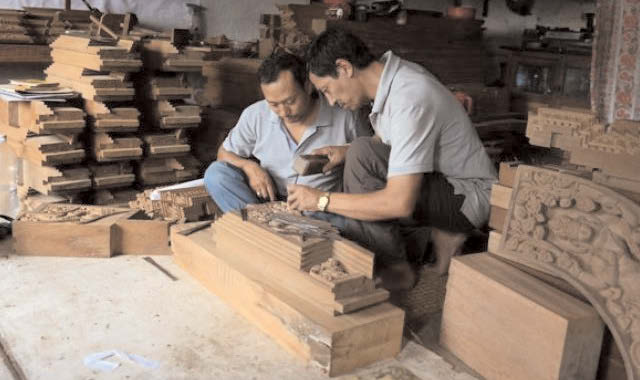
BHAKTAPUR (TIP): In a dusty studio, Indra Kaji Shilpakar painstakingly carves intricate patterns into a wooden panel, one of a small group of highly-skilled craftsmen Nepal is relying on to rebuild its cultural heritage after April’s major earthquake.
But Shilpakar, a master craftsman who learned at the hands of his father and uncle as a young boy, is one of a dying breed.
The wood-carvers, stone-sculptors and metal-workers who created the spectacular temples and palaces of the Kathmandu Valley were once feted as far away as China, and paid handsomely from the royal purse.
But over the decades their social status has fallen along with the money they are able to earn from their craft, and many young Nepalis are now rejecting the family trade to seek better paid work.
That has left the country short of skills crucial for rebuilding the centuries-old monuments of the Kathmandu Valley lost in the April 25 quake.
It is a problem made worse by the fact that these crafts have historically been the exclusive and jealously guarded preserve of a few families belonging to the Newar ethnic group indigenous to the Valley.
Shilpakar, a slight, softly-spoken man of 52, says all his male relatives as far back as anyone can remember have worked with wood, producing the intricately carved panels that grace Nepal’s temples and traditional homes.
“But many in the new generation want different jobs, office jobs,” he told AFP in his studio in the historic city of Bhaktapur, where he is working on the restoration of a classic three-tiered wooden pagoda temple from the 17th century.
“Even in my own family, there are people who have not continued with the work that requires a high level of skill, because it doesn’t pay,” said Shilpakar, whose uncle’s family has moved to the more lucrative furniture business.
“There isn’t much respect in Nepal –we are considered as workers, not artists. That is not the view of the UN cultural agency UNESCO, which describes the stone, timber and bronze craftsmanship of the Newars as among the most highly-developed in the world.
Many of the palaces and temples they created date back to the period between the 12th and 18th centuries when the Valley – a World Heritage site – was divided into the three kingdoms of Kathmandu, Patan and Bhaktapur.
Eager to lure back tourists, the government reopened the former Durbar (Royal) Squares of all three cities in June, despite warnings from UNESCO that this could cause further damage to the monuments.
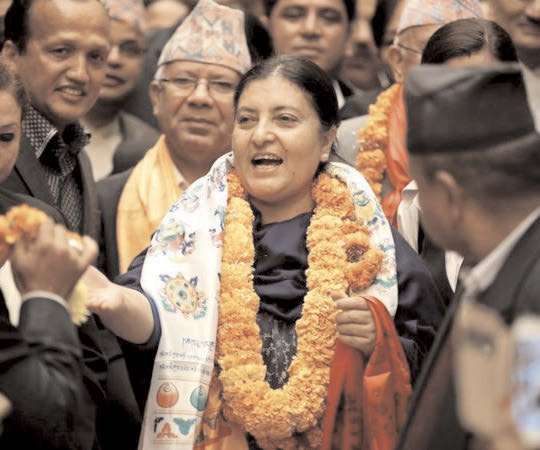
KATHMANDU (TIP): Nepal’s parliament has elected a Communist leader who has long campaigned for women’s rights as the Himalayan nation’s first female President.
Parliament speaker Onsari Gharti announced that Bidhya Devi Bhandari of the Communist Party of Nepal Unified Marxist-Leninist received 327 votes against her opponent’s 214 in parliament on Wednesday.
Bhandari is the deputy leader of the party led by Prime Minister Khadga Prasad Oli. He was elected earlier this month and leads a coalition government.
Bhandari is Nepal’s second president since the Himalayan nation was turned into a republic after abolishing the centuries-old monarchy. Ram Baran Yadav remained president for seven years because it took that long for the constitution to be prepared and adopted.
KATHMANDU (TIP): The Indian government may have agreed to ease the transit of some trucks into Nepal but the annual Dasain (Dussehra) festival this year will be a subdued affair in the Himalayan country. Food and fuel are still premium items, while the K P Oli government is being asked to push through amendments to a constitution that would accommodate the aspirations of the Madhesis.
Nepal, which attracted praise from global activists for being sensitive to LGBT persons in the constitution, is now getting flak from human rights organizations for the indiscriminate killings in the Terai throughout August and September.In a new report, Human Rights Watch has said Nepali authorities “should immediately investigate and bring to justice those responsible for killings and other violations during ongoing protests over the constitutional debate”.
“While the drafting of a rights-respecting constitution is an emotional issue in Nepal, disagreements cannot be resolved by committing serious human rights abuses,” said Brad Adams, Asia director at Human Rights Watch. The government sees some ray of hope after talks between the Indian leadership and foreign minister Kamal Thapa, who said, “Indian leaders have assured me that there will be no obstructions in the flow of trucks to Nepal from the points that are not blocked.” (Source TNN)
WASHINGTON (TIP): Citing the example of American India Foundation (AIF), dedicated to catalyzing social and economic change in India, an Indian-American business and philanthropy leader has advised donors to treat philanthropy as an investment.
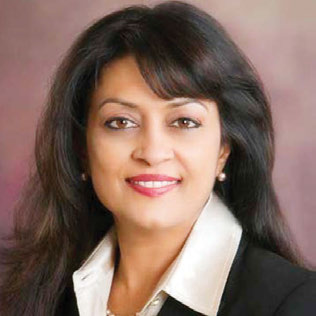
If one wants to do philanthropy “properly,” one has “to treat it like an investment requiring thorough due diligence and regular goals and metrics tracking and assessment,” AIF Chair Lata Krishnan said in Washington at an event over the weekend.
AIF has more than 200 people in India who “source and screen” projects, monitor them while they are being implemented and deliver values to “investors,” she said delivering the second American Bazaar Philanthropy Lecture.
The essence of philanthropy is listening to those in need, she said. “It isn’t about what we want to get done,” said Ms Krishnan. “It is about those who are underprivileged and in need;(and finding out) what do they want, and how can we best deliver that.”
Ms Krishnan, who co-founded two enormously successful companies with her husband Ajay Shah, stressed the need for bringing business-oriented values to philanthropy, which, she said, is one of the two core things AIF focuses on.
Ms Krishnan and Mr. Shah along with a friend, bootstrapped SMART Modular Technologies “with only $110,000 in angel funding” in the early 1990s. By 1995, when the duo took the company public, the firm had more than $1 billion in revenue. They sold the company in 2002.
Currently, she is the chief financial officer of Shah Capital Partners, which invests in technology companies.
Earlier Ms Krishnan was introduced by US Assistant Secretary for Commerce for Global Markets, Arun M Kumar, one of the highest ranking Indian Americans in the Obama administration.
“She has pursued with the American India Foundation, a model, a concept of how the diaspora can support development in India in a very organized and professional way,” he said.
The philanthropy lecture was part of the second American Bazaar Philanthropy Dialogue, whose mission is to bring together stakeholders in the Indian American and South Asian American Philanthropy community.
The organizations represented included Sehgal Foundation, AIF, Pratham, Ekal Vidyalaya, Global Wheels Foundation, and Association of Indian Muslims, among others.
Besides Indian American entrepreneur and philanthropist Frank Islam, who was presented the American Bazaar Philanthropy award, the Dialogue also honored three young philanthropists from the South Asian American community.
They were: Shreya Bhatia, a 17-year-old senior at Thomas Jefferson High School for Science and Technology in Fairfax, Neev Saraf, an 8-year-old from Laurel, Maryland, and Swetha Prabhakaran, of Ashburn, Virginia.
Ms Bhatia raised $7,000 for the Insight Memory Care Centre, a Fairfax facility dedicated to providing care, support and education to individuals afflicted with the Alzheimer’s disease.
Saraf raised nearly $40,000 for the Nepal earthquake victims earlier this year.
Prabhakaran, a 15-year-old junior at Thomas Jefferson, is the founder and CEO of Everybody Code Now! a non-profit working to empower the next generation of youth to become engineers.
Signup to our Newsletter!
Don’t miss out on all the happenings around the world